

The integration site of the APP transgene in the J20 mouse model of Alzheimer's disease
The DOI matches its Crossref record.
Abstract
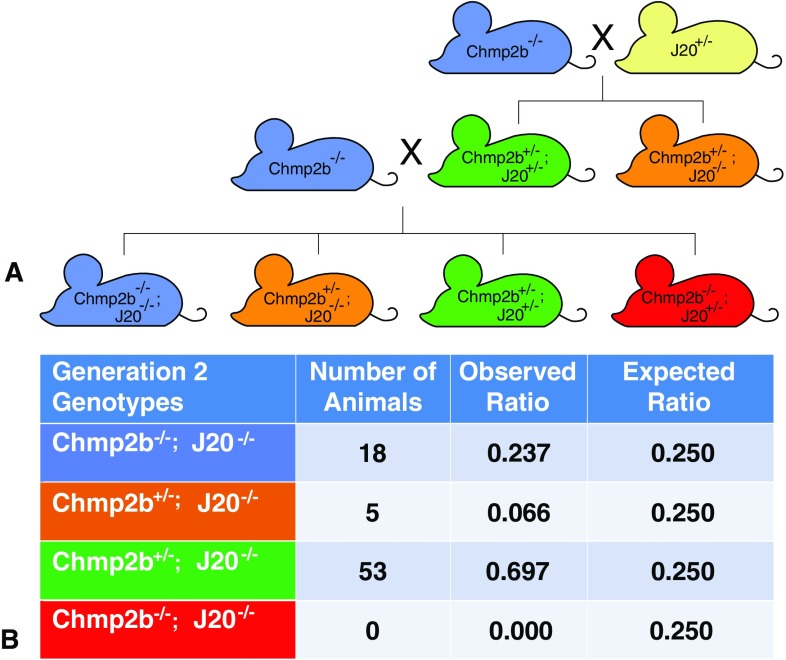
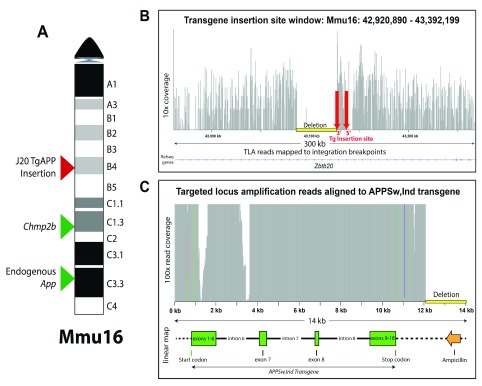
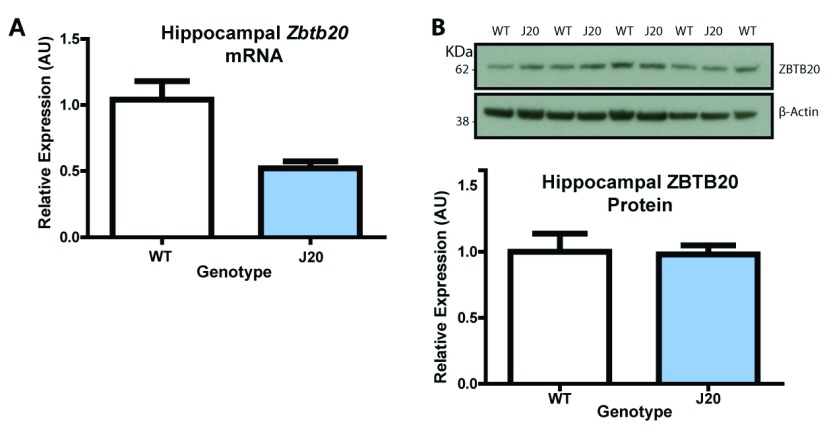
Background: Transgenic animal models are a widely used and powerful tool to investigate human disease and develop therapeutic interventions. Making a transgenic mouse involves random integration of exogenous DNA into the host genome that can have the effect of disrupting endogenous gene expression. The J20 mouse model of Alzheimer’s disease (AD) is a transgenic overexpresser of human APP with familial AD mutations and has been extensively utilised in preclinical studies and our aim was to determine the genomic location of the J20 transgene insertion. Methods: We used a combination of breeding strategy and Targeted Locus Amplification with deep sequencing to identify the insertion site of the J20 transgene array. To assess RNA and protein expression of Zbtb20, we used qRT-PCR and Western Blotting. Results: We demonstrate that the J20 transgene construct has inserted within the genetic locus of endogenous mouse gene Zbtb20 on chromosome 16 in an array , disrupting expression of mRNA from this gene in adult hippocampal tissue, while expression of Zbtb20 protein remains unchanged. We note that the endogenous mouse App gene also lies on chromosome 16, although 42 Mb from the Zbtb20 locus. Conclusions: These data will be useful for future studies utilising this popular model of AD, particularly those investigating gene interactions between the J20 APP transgene and other genes present on Mmu16 in the mouse.
Overview
The claims and statistics of this paper haven’t been checked yet.
Free: it reads the open-access text and checks the first 5 claims that cite a source we can check. Create a free account to check every claim.
Integrity signals
Registry
Cites
Statistics
Figures
Verification
Claims the paper makes
The claims and statistics of this paper haven’t been checked yet.
Free: it reads the open-access text and checks the first 5 claims that cite a source we can check. Create a free account to check every claim.
Claims other papers make about this one
Each is checked against this paper’s own text: does it say what the citing paper says it does?
In the citing paper
“We would like to emphasize here that the genome editing technology is applicable only to KI animals because transgene(s) are generally inserted into multiple loci in a random manner in the overexpressing transgenic animals.68”
From Human MAPT knockin mouse models of frontotemporal dementia for the neurodegenerative research community (2025) · cites this paper as [68]
Self-check
Percentages, sums and reported differences re-computed from the paper’s own numbers.
The self-check needs the paper’s full text.
Citations
Cites
No references could be resolved yet.
Research works printed but not linked: 34
- Bishop JO Smith P: Mechanism of chromosomal integration of microinjected DNA. Mol Biol Med. 1989; 6(4): 283– 298. 2695741
- Blake JA Eppig JT Kadin JA: Mouse Genome Database (MGD)-2017: community knowledge resource for the laboratory mouse. Nucleic Acids Res. 2017; 45(D1): D723– D729. 10.1093/nar/gkw1040 27899570 PMC5210536 · DOI · Paper page
- Cordeddu V Redeker B Stellacci E: Mutations in ZBTB20 cause Primrose syndrome. Nat Genet. 2014; 46(8): 815– 817. 10.1038/ng.3035 25017102 · DOI
- de Vree PJ de Wit E Yilmaz M: Targeted sequencing by proximity ligation for comprehensive variant detection and local haplotyping. Nat Biotechnol. 2014; 32(10): 1– 9. 10.1038/nbt.2959 25129690 · DOI · Paper page
- Games D Adams D Alessandrini R: Alzheimer-type neuropathology in transgenic mice overexpressing V717F beta-amyloid precursor protein. Nature. 1995; 373(6514): 523– 527. 10.1038/373523a0 7845465 · DOI · Paper page
- Ghazi-Noori S Froud KE Mizielinska S: Progressive neuronal inclusion formation and axonal degeneration in CHMP2B mutant transgenic mice. Brain. 2012; 135(Pt 3): 819– 832. 10.1093/brain/aws006 22366797 · DOI · Paper page
- Harris JA Devidze N Halabisky B: Many neuronal and behavioral impairments in transgenic mouse models of Alzheimer’s disease are independent of caspase cleavage of the amyloid precursor protein. J Neurosci. 2010; 30(1): 372– 381. 10.1523/JNEUROSCI.5341-09.2010 20053918 PMC3064502 · DOI · Paper page
- Haruyama N Cho A Kulkarni AB: Overview: engineering transgenic constructs and mice. Curr Protoc Cell Biol.(Hoboken, NJ, USA: John Wiley & Sons, Inc.), 2009; Chapter 19: Unit 19.10. 10.1002/0471143030.cb1910s42 19283728 PMC2743315 · DOI · Paper page
- Hong S Beja-Glasser VF Nfonoyim BM: Complement and microglia mediate early synapse loss in Alzheimer mouse models. Science. 2016; 352(6286): 712– 716. 10.1126/science.aad8373 27033548 PMC5094372 · DOI · Paper page
- Hooli BV Kovacs-Vajna ZM Mullin K: Rare autosomal copy number variations in early-onset familial Alzheimer’s disease. Mol Psychiatry. 2014; 19(6): 676– 681. 10.1038/mp.2013.77 23752245 · DOI · Paper page
- Jacobsen JC Erdin S Chiang C: Potential molecular consequences of transgene integration: The R6/2 mouse example. Sci Rep. 2017; 7: 41120. 10.1038/srep41120 28120936 PMC5264158 · DOI
- Mattioli F Piton A Gérard B: Novel de novo mutations in ZBTB20 in Primrose syndrome with congenital hypothyroidism. Am J Med Genet Part A. 2016; 170(6): 1626– 1629. 10.1002/ajmg.a.37645 27061120 · doi:10.1002/ajmg.a.37645
- Moore RC Lee IY Silverman GL: Ataxia in prion protein (PrP)-deficient mice is associated with upregulation of the novel PrP-like protein doppel. J Mol Biol. 1999; 292(4): 797– 817. 10.1006/jmbi.1999.3108 10525406 · DOI · Paper page
- Mucke L Masliah E Yu GQ: High-level neuronal expression of abeta 1-42 in wild-type human amyloid protein precursor transgenic mice: synaptotoxicity without plaque formation. J Neurosci. 2000; 20(11): 4050– 4058. 10.1523/JNEUROSCI.20-11-04050.2000 10818140 PMC6772621 · DOI · Paper page
- Mullan M Crawford F Axelman K: A pathogenic mutation for probable Alzheimer’s disease in the APP gene at the N-terminus of beta-amyloid. Nat Genet. 1992; 1(5): 345– 347. 10.1038/ng0892-345 1302033 · DOI · Paper page
- Murrell J Farlow M Ghetti B: A mutation in the amyloid precursor protein associated with hereditary Alzheimer’s disease. Science. 1991; 254(5028): 97– 99. 10.1126/science.1925564 1925564 · DOI · Paper page
- Nielsen JV Blom JB Noraberg J: Zbtb20-Induced CA1 Pyramidal Neuron Development and Area Enlargement in the Cerebral Midline Cortex of Mice. Cereb Cortex. 2010; 20(8): 1904– 1914. 10.1093/cercor/bhp261 19955470 · DOI · Paper page
- Palop JJ Mucke L: Network abnormalities and interneuron dysfunction in Alzheimer disease. Nat Rev Neurosci. 2016; 17(12): 777– 792. 10.1038/nrn.2016.141 27829687 PMC8162106 · DOI · Paper page
- Palop JJ Chin J Roberson ED: Aberrant excitatory neuronal activity and compensatory remodeling of inhibitory hippocampal circuits in mouse models of Alzheimer’s disease. Neuron. 2007; 55(5): 697– 711. 10.1016/j.neuron.2007.07.025 17785178 PMC8055171 · DOI · Paper page
- Rasmussen MB Nielsen JV Lourenço CM: Neurodevelopmental disorders associated with dosage imbalance of ZBTB20 correlate with the morbidity spectrum of ZBTB20 candidate target genes. J Med Genet. 2014; 51(9): 605– 613. 10.1136/jmedgenet-2014-102535 25062845 · DOI
- Roberson ED Scearce-Levie K Palop JJ: Reducing endogenous tau ameliorates amyloid beta-induced deficits in an Alzheimer’s disease mouse model. Science. 2007; 316(5825): 750– 754. 10.1126/science.1141736 17478722 · DOI · Paper page
- Robinson JT Thorvaldsdóttir H Winckler W: Integrative genomics viewer. Nat Biotechnol. 2011; 29(1): 24– 26. 10.1038/nbt.1754 21221095 PMC3346182 · DOI · Paper page
- Rockenstein EM McConlogue L Tan H: Levels and alternative splicing of amyloid beta protein precursor (APP) transcripts in brains of APP transgenic mice and humans with Alzheimer’s disease. J Biol Chem. 1995; 270(47): 28257– 28267. 10.1074/jbc.270.47.28257 7499323 · DOI · Paper page
- Sanchez PE Zhu L Verret L: Levetiracetam suppresses neuronal network dysfunction and reverses synaptic and cognitive deficits in an Alzheimer’s disease model. Proc Natl Acad Sci U S A. 2012; 109(42): E2895– 903. 10.1073/pnas.1121081109 22869752 PMC3479491 · DOI · Paper page
- Sasahara M Fries JW Raines EW: PDGF B-chain in neurons of the central nervous system, posterior pituitary, and in a transgenic model. Cell. 1991; 64(1): 217– 227. 10.1016/0092-8674(91)90223-L 1986868 · DOI · Paper page
- Schwanhäusser B Busse D Li N: Global quantification of mammalian gene expression control. Nature. 2011; 473(7374): 337– 342. 10.1038/nature10098 21593866 · DOI · Paper page
- Schwanhäusser B Busse D Li N: Corrigendum: Global quantification of mammalian gene expression control. Nature. 2013; 495(7439): 126– 127. 10.1038/nature11848 23407496 · DOI · Paper page
- Skibinski G Parkinson NJ Brown JM: Mutations in the endosomal ESCRTIII-complex subunit CHMP2B in frontotemporal dementia. Nat Genet. 2005; 37(8): 806– 808. 10.1038/ng1609 16041373 · DOI · Paper page
- Sutherland AP Zhang H Zhang Y: Zinc finger protein Zbtb20 is essential for postnatal survival and glucose homeostasis. Mol Cell Biol. 2009; 29(10): 2804– 2815. 10.1128/MCB.01667-08 19273596 PMC2682054 · DOI
- Tosh JL: J20 Transgene Mapping. 2017 10.17605/OSF.IO/4UGZF · doi:10.17605/osf.io/4ugzf
- Truett GE Heeger P Mynatt RL: Preparation of PCR-quality mouse genomic DNA with hot sodium hydroxide and tris (HotSHOT). BioTechniques. 2000; 29(1): 52, 54. 10.2144/00291bm09 10907076 · DOI · Paper page
- Wilhelm M Schlegl J Hahne H: Mass-spectrometry-based draft of the human proteome. Nature. 2014; 509(7502): 582– 587. 10.1038/nature13319 24870543 · DOI · Paper page
- Xie Z Zhang H Tsai W: Zinc finger protein ZBTB20 is a key repressor of alpha-fetoprotein gene transcription in liver. Proc Natl Acad Sci U S A. 2008; 105(31): 10859– 10864. 10.1073/pnas.0800647105 18669658 PMC2504784 · DOI · Paper page
- Yan BW Zhao YF Cao WG: Mechanism of random integration of foreign DNA in transgenic mice. Transgenic Res. 2013; 22(5): 983– 992. 10.1007/s11248-013-9701-z 23483296 · DOI
Cited by
Goodwin, L. O., Splinter, E., Davis, T. L., Urban, R., He, H., Braun, R. E., Chesler, E. J., Kumar, V., van Min, M., Ndukum, J., et al. (2019) · Genome Research · doi:10.1101/gr.233866.117 · Cited by 205
Johnson, E. C. B., Ho, K., Yu, G.-Q., Das, M., Sanchez, P. E., Djukic, B., Lopez, I., Yu, X., Gill, M., Zhang, W., et al. (2020) · Molecular Neurodegeneration · doi:10.1186/s13024-020-00393-5 · Cited by 73
Self-citationRodent Modeling of Alzheimer's Disease in Down Syndrome: In vivo and ex vivo Approaches
Farrell, C., Mumford, P., & Wiseman, F. K. (2022) · Frontiers in Neuroscience · doi:10.3389/fnins.2022.909669 · Cited by 22
Self-citationMorito, T., Qi, M., Kamano, N., Sasaguri, H., Bez, S., Foiani, M., Duff, K., Benner, S., Endo, T., Hama, H., et al. (2025) · Cell Reports Methods · doi:10.1016/j.crmeth.2025.101024 · Cited by 18
Metadata
- Authors
- Tosh, J. L., Rickman, M., Rhymes, E., Norona, F. E., Clayton, E., Mucke, L., Isaacs, A. M., Fisher, E. M. C., & Wiseman, F. K.
- Venue
- Wellcome Open Research
- Publisher
- F1000 Research Ltd
- Published
- 2017-09-13
- Volume
- 2
- Pages
- 84
- ISSN
- 2398-502X
- PMC
- PMC5645710
- Cited by
- 21
- References
- 0
- Language
- en
- Update notices
- new_version (2018-10-10)
- Funders
- Alzheimer's Society (192(ALZSOC-PhD-2013-001))
- Medical Research Council (MR/J004022/1)
- Alzheimer’s Research UK (ARUK-PPG2014B-5)
- Wellcome Trust (098330)
About these checks
Registry, retraction, Cites and statistics results are computed, not judged, with one exception: a printed reference that no index lists is read once by a model before it counts as a citation error. Claims are extracted by a model and kept only when their quote appears verbatim in the text; each cited source is then checked, with a model’s help, for whether it says what the claim relies on. Those verdicts can be wrong — read the claim’s quote and the cited source before relying on one.
Statistics and arithmetic are recomputed, not judged.
Confidence bands are shown only for fields calibrated on our annotated test set. None is calibrated yet, so no band is shown.
What counts as a claim ›How we measure confidence ›How we check this ›
Are you an author, or do you see a problem with this page? Request a review
How to cite
Cite CoChat for the checks on this page, and the paper for its own findings.
- This page
- CoChat. (2026). Citation check: The integration site of the APP transgene in the J20 mouse model of Alzheimer's disease. https://app.cochat.ai/papers/10.12688/wellcomeopenres.12237.1
- The paper
- Tosh, J. L., Rickman, M., Rhymes, E., Norona, F. E., Clayton, E., Mucke, L., Isaacs, A. M., Fisher, E. M. C., & Wiseman, F. K. (2017). The integration site of the APP transgene in the J20 mouse model of Alzheimer's disease. Wellcome Open Research. https://doi.org/10.12688/wellcomeopenres.12237.1
Data sources
Bibliographic data: Semantic Scholar, OpenAlex, Crossref.
Contains information from the Semantic Scholar Academic Graph Datasets, made available under the ODC Attribution License (ODC-BY 1.0).
Semantic Scholar’s data is described in: Kinney, R., et al. (2023). The Semantic Scholar Open Data Platform. arXiv:2301.10140.
