

The DOI matches its Crossref record; 321 of the 321 references it cites were found in a registry or an index.
The Confrontation between General Relativity and Experiment
Open accessAbstract
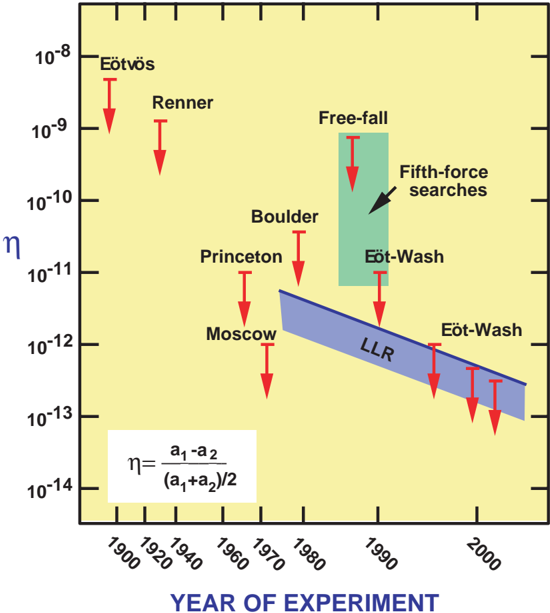
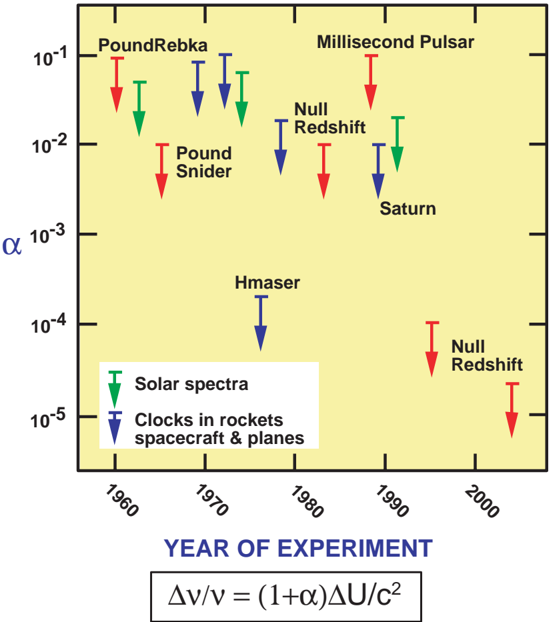
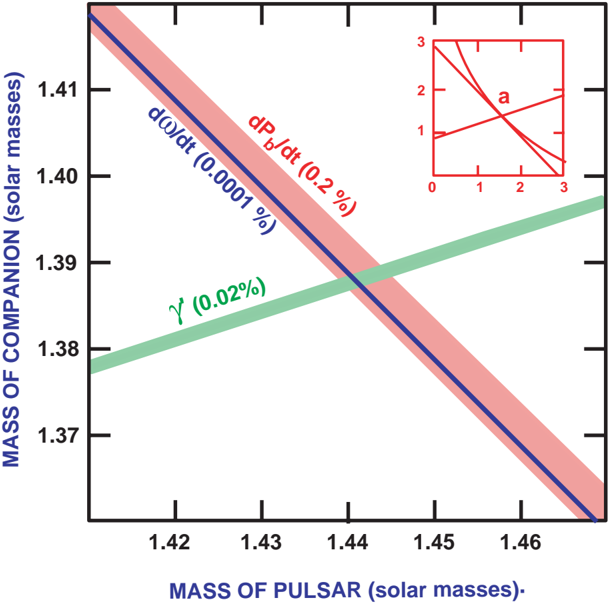
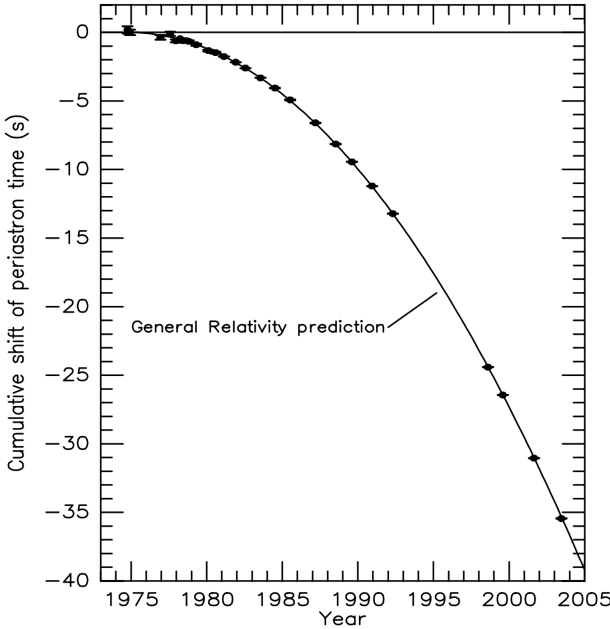
The status of experimental tests of general relativity and of theoretical frameworks for analyzing them is reviewed. Einstein’s equivalence principle (EEP) is well supported by experiments such as the Eötvös experiment, tests of special relativity, and the gravitational redshift experiment. Ongoing tests of EEP and of the inverse square law are searching for new interactions arising from unification or quantum gravity. Tests of general relativity at the post-Newtonian level have reached high precision, including the light deflection, the Shapiro time delay, the perihelion advance of Mercury, and the Nordtvedt effect in lunar motion. Gravitational wave damping has been detected in an amount that agrees with general relativity to better than half a percent using the Hulse-Taylor binary pulsar, and other binary pulsar systems have yielded other tests, especially of strong-field effects. When direct observation of gravitational radiation from astrophysical sources begins, new tests of general relativity will be possible.
Overview
The claims and statistics of this paper haven’t been checked yet.
Run the check — free, no account needed. It reads the open-access text and checks the sources it cites.
Integrity signals
Registry
Cites
Statistics
Figures



Verification
Claims the paper makes
The claims and statistics of this paper haven’t been checked yet.
Run the check — free, no account needed. It reads the open-access text and checks the sources it cites.
Claims other papers make about this one
Each is checked against this paper’s own text: does it say what the citing paper says it does?
The source backs part of the claim, not all of it — or backs it for a different population, condition or comparison.
In the citing paper
“The assumption of a metric coupling is actually well tested in the Solar system through 4 types of experiments; see Will (1993Will ( , 2006) ) for a detailed discussion and Peik et al. (2021), Herrmann and Ra ¨tzel (2023) for recent developments on quantum tests of relativity.”
From Fundamental constants: from measurement to the universe, a window on gravitation and cosmology (2025) · cites this paper as Will 2006
Experimental — accuracy not yet measuredIn the citing paper
“Its is a general formalism that introduces 10 phenomenological parameters to describe any possible deviation from General Relativity at the first post-Newtonian order (Will 1993(Will , 2006)); see also Blanchet 2006 for a review on higher orders.”
From Fundamental constants: from measurement to the universe, a window on gravitation and cosmology (2025) · cites this paper as Will 2006
Self-check
Percentages, sums and reported differences re-computed from the paper’s own numbers.
The self-check needs the paper’s full text.
Citations
Cites
Large Mass Hierarchy from a Small Extra Dimension
Randall, L., & Sundrum, R. (1999) · Physical Review Letters · doi:10.1103/physrevlett.83.3370 · Cited by 9,227
An Alternative to Compactification
Randall, L., & Sundrum, R. (1999) · Physical Review Letters · doi:10.1103/physrevlett.83.4690 · Cited by 7,217
Eidelman, S., Hayes, K. G., Olive, K. A., Aguilar-Benitez, M., Amsler, C., Asner, D., Babu, K. S., Barnett, R. M., Beringer, J., Burchat, P. R., et al. (2004) · Physics Letters B · doi:10.1016/j.physletb.2004.06.001 · Cited by 6,673
The hierarchy problem and new dimensions at a millimeter
Arkani–Hamed, N., Dimopoulos, S., & Dvali, G. (1998) · Physics Letters B · doi:10.1016/s0370-2693(98)00466-3 · Cited by 6,563
New dimensions at a millimeter to a fermi and superstrings at a TeV
Antoniadis, I., Arkani-Hamed, N., Dimopoulos, S., & Dvali, G. (1998) · Physics Letters B · doi:10.1016/s0370-2693(98)00860-0 · Cited by 3,915
Theory and Experiment in Gravitational Physics
Will, C. M. (2018) · doi:10.1017/9781316338612 · Cited by 3,637
Self-citationTheory and Experiment in Gravitational Physics
Will, C. M. (1993) · doi:10.1017/cbo9780511564246 · Cited by 3,632
Self-citationGravitation and Cosmology: Principles and Applications of the General Theory of Relativity
Weinberg, S., & Dicke, R. H. (1973) · American Journal of Physics · doi:10.1119/1.1987308 · Cited by 3,103
Lorentz-violating extension of the standard model
Colladay, D., & Kostelecký, V. A. (1998) · Physical Review D · doi:10.1103/physrevd.58.116002 · Cited by 2,403
LIGO: The Laser Interferometer Gravitational-Wave Observatory
Abramovici, A., Althouse, W. E., Drever, R. W. P., Gürsel, Y., Kawamura, S., Raab, F. J., Shoemaker, D., Sievers, L., Spero, R. E., Thorne, K. S., et al. (1992) · Science · doi:10.1126/science.256.5055.325 · Cited by 2,244
Research works printed but not linked: 12
- Brillet, A., “VIRGO — Status Report, November 1997”, in Coccia, E., Veneziano, G., and Pizzella, G., eds., Second Edoardo Amaldi Conference on Gravitational Waves, Proceedings of the conference, held at CERN, Switzerland, 1–4 July, 1997, vol. 4 of Edoardo Amaldi Foundation Series, 86–96, (World Scientific, Singapore; River Edge, U.S.A., 1998). 6.1
- Dicke, R.H., “Experimental relativity”, in DeWitt, C.M., and DeWitt, B.S., eds., Relativity, Groups and Topology. Relativité, Groupes et Topologie, Lectures delivered at Les Houches during the 1963 session of the Summer School of Theoretical Physics, University of Grenoble, 165–313, (Gordon and Breach, New York, U.S.A., 1964). 2.1
- Fritschel, P., “The LIGO project: Progress and plans”, in Coccia, E., Veneziano, G., and Pizzella, G., eds., Second Edoardo Amaldi Conference on Gravitational Waves, Proceedings of the conference, held at CERN, Switzerland, 1–4 July, 1997, Edoardo Amaldi Foundation Series, 74–85, (World Scientific, Singapore; River Edge, U.S.A., 1998). 6.1
- Froeschlé, M., Mignard, F., and Arenou, F., “Determination of the PPN parameter γ with the Hipparcos data”, in Proceedings from the Hipparcos Venice’ 97 Symposium, Proceedings of the symposium held on 13–16 May 1997, (ESA, Noordwijk, Netherlands, 1997). URL (cited on 15 January 2001): http://astro.estec.esa.nl/Hipparcos/venice.html. 3.4.1
- Kopeikin, S.M., “Comments on the paper by S. Samuel “On the speed of gravity and the Jupiter/Quasar measurement””, (January, 2005). URL (cited on 15 February 2006): http://arXiv.org/abs/gr-qc/0501001. 3.4.3 · arXiv
- Misner, C.W., Thorne, K.S., and Wheeler, J.A., Gravitation, (W.H. Freeman, San Francisco, U.S.A., 1973). 3.1.1, 3.2, 4.3
- Müller, J., Schneider, M., Nordtvedt, K., and Vokrouhlický, D., “What can LLR provide to relativity?”, in Piran, T., ed., The Eighth Marcel Grossmann Meeting on Recent Developments in Theoretical and Experimental General Relativity, Gravitation and Relativistic Field Theories, Proceedings of the meeting held at the Hebrew University of Jerusalem, June 22–27, 1997, 1151–1153, (World Scientific, Singapore, 1999). 3.6.1, 3.6.3
- Paterno, L., Sofia, S., and di Mauro, M.P., “The rotation of the Sun’s core”, Astron. Astrophys., 314, 940–946, (1996). 3.5
- Ries, J.C., Eanes, R.J., Tapley, B.D., and Peterson, G.E., “Prospects for an Improved Lense-Thirring Test with SLR and the GRACE Gravity Mission”, in Noomen, R., Klosko, S., Noll, C., and Pearlman, M., eds., Proceedings of the 13th International Workshop on Laser Ranging: Science Session and Full Proceedings CD-ROM, “Toward Millimeter Accuracy” Workshop held in Washington, DC, October 07–11, 2002, NASA Conference Proceedings, 211–248. NASA, (2003). URL (cited on 22 February 2006): http://cddis.gsfc.nasa.gov/lw13/lw_proceedings.html. 3.7.1
- Thorne, K.S., “Gravitational radiation”, in Hawking, S.W., and Israel, W., eds., Three Hundred Years of Gravitation, 330–458, (Cambridge University Press, Cambridge, U.K.; New York, U.S.A., 1987). 4.5
- Will, C.M., “Experimental gravitation from Newton’s Principia to Einstein’s general relativity”, in Hawking, S.W., and Israel, W., eds., Three Hundred Years of Gravitation, 80–127, (Cambridge University Press, Cambridge, U.K.; New York, U.S.A., 1987). 1
- Will, C.M., Was Einstein Right?: Putting General Relativity to the Test, (Basic Books, New York, U.S.A., 1993), 2nd edition. 1
Cited by
Modified gravity and cosmology
Clifton, T., Ferreira, P. G., Padilla, A., & Skordis, C. (2012) · Physics Reports · doi:10.1016/j.physrep.2012.01.001 · Cited by 4,146
De Felice, A., & Tsujikawa, S. (2010) · Living Reviews in Relativity · doi:10.12942/lrr-2010-3 · Cited by 3,871
A Massive Pulsar in a Compact Relativistic Binary
Antoniadis, J., Freire, P. C. C., Wex, N., Tauris, T. M., Lynch, R. S., van Kerkwijk, M. H., Kramer, M., Bassa, C., Dhillon, V. S., Driebe, T., et al. (2013) · Science · doi:10.1126/science.1233232 · Cited by 3,831
Capozziello, S., & De Laurentis, M. (2011) · Physics Reports · doi:10.1016/j.physrep.2011.09.003 · Cited by 3,321
Planck 2018 results: I. Overview and the cosmological legacy of Planck
Planck Collaboration, Aghanim, N., Akrami, Y., Arroja, F., Ashdown, M., Aumont, J., Baccigalupi, C., Ballardini, M., Banday, A. J., Barreiro, R. B., et al. (2020) · Astronomy & Astrophysics · doi:10.1051/0004-6361/201833880 · Cited by 1,635
Metadata
- Authors
- Will, C. M.
- Affiliations
- Washington University in St. Louis (US)
- Corresponding author
- Will, Clifford M.
- ORCID
- Will, Clifford M.
- Venue
- Living Reviews in Relativity
- Published
- 2006-03-27
- Volume
- 9
- Issue
- 1
- ISSN
- 1433-8351 (ISSN-L)
- 2367-3613
- OpenAlex
- W4246028735
- Cited by
- 1,606
- References
- 299
- Citations by year
- 2026: 21 · 2025: 42 · 2024: 46 · 2023: 50 · 2022: 54 · 2021: 72 · 2020: 64 · 2019: 109 · 2018: 51 · 2017: 68 · 2016: 107 · 2015: 121 · 2014: 128 · 2013: 130 · 2012: 123
- FWCI
- 6.85
- Type
- journal article
- Language
- en
- Update notices
- new_version (2014-06-11)
- Open access
- diamond
- doi.org
- Licence
- cc-by
- creativecommons.org/licenses/by/4.0 (tdm)
- creativecommons.org/licenses/by/4.0 (vor)
- Locations
- Living Reviews in Relativity (publishedVersion, cc-by)
- arXiv (Cornell University) (publishedVersion)
- Europe PMC (PubMed Central) (publishedVersion)
- CERN Document Server (European Organization for Nuclear Research) (submittedVersion)
- arXiv (Cornell University)
- Funders
- National Aeronautics and Space Administration
- Centre National de la Recherche Scientifique
- Topics
- Physical Sciences › Physics and Astronomy › Astronomy and Astrophysics › Pulsars and Gravitational Waves Research
- Physical Sciences › Physics and Astronomy › Astronomy and Astrophysics › Relativity and Gravitational Theory
- Physical Sciences › Physics and Astronomy › Astronomy and Astrophysics › Cosmology and Gravitation Theories
- Keywords
- general relativity, tests of general relativity, equivalence principle, Eötvös experiment, gravitational redshift, inverse-square law, post-Newtonian tests, light deflection, Shapiro delay, Nordtvedt effect, gravitational wave damping, Hulse-Taylor binary pulsar, strong-field tests, quantum gravity, unification
About these checks
Registry, retraction, Cites and statistics results are computed, not judged, with one exception: a printed reference that no index lists is read once by a model before it counts as a citation error. Claims are extracted by a model and kept only when their quote appears verbatim in the text; each cited source is then checked, with a model’s help, for whether it says what the claim relies on. Those verdicts can be wrong — read the claim’s quote and the cited source before relying on one.
Statistics and arithmetic are recomputed, not judged.
Confidence bands are shown only for fields calibrated on our annotated test set. None is calibrated yet, so no band is shown.
What counts as a claim ›How we measure confidence ›How we check this ›
Are you an author, or do you see a problem with this page? Request a review
How to cite
Cite CoChat for the checks on this page, and the paper for its own findings.
- This page
- CoChat. (2026). Citation check: The Confrontation between General Relativity and Experiment. https://app.cochat.ai/papers/10.12942/lrr-2006-3
- The paper
- Will, C. M. (2006). The Confrontation between General Relativity and Experiment. Living Reviews in Relativity. https://doi.org/10.12942/lrr-2006-3
Data sources
Bibliographic data: Semantic Scholar, OpenAlex, Crossref.
Contains information from the Semantic Scholar Academic Graph Datasets, made available under the ODC Attribution License (ODC-BY 1.0).
Semantic Scholar’s data is described in: Kinney, R., et al. (2023). The Semantic Scholar Open Data Platform. arXiv:2301.10140.
