

Correction: Germline Stem Cell Gene PIWIL2 Mediates DNA Repair through Relaxation of Chromatin
Open accessThe DOI matches its Crossref record; 60 of the 60 references it cites were found in a registry or an index.
Abstract
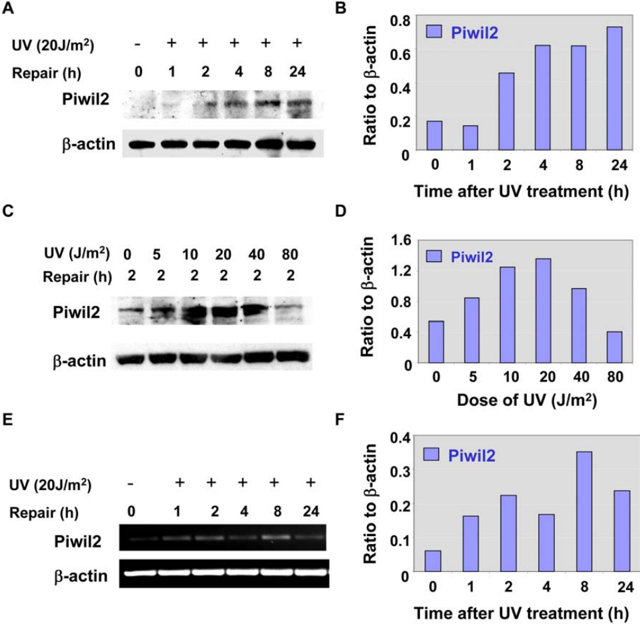
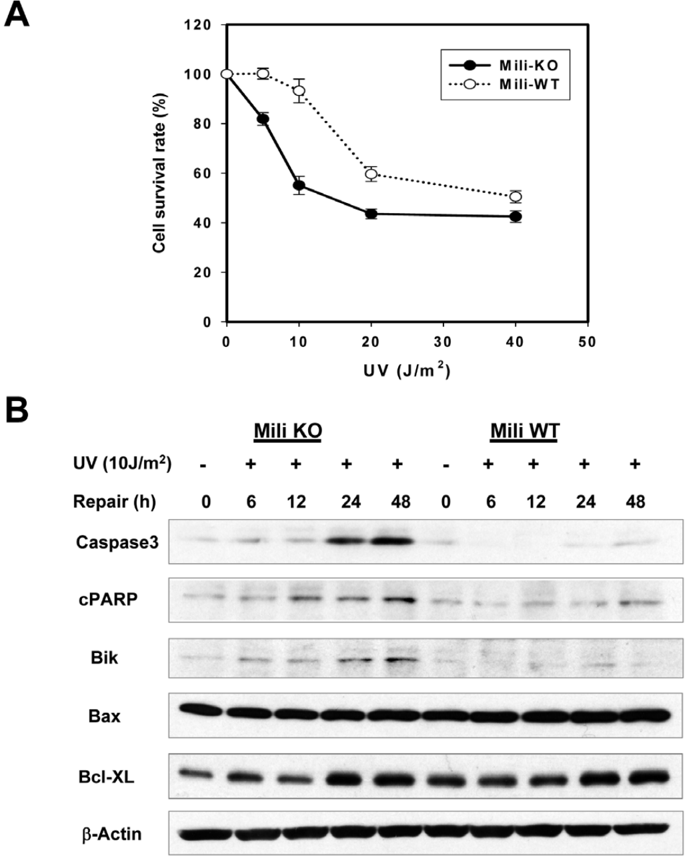
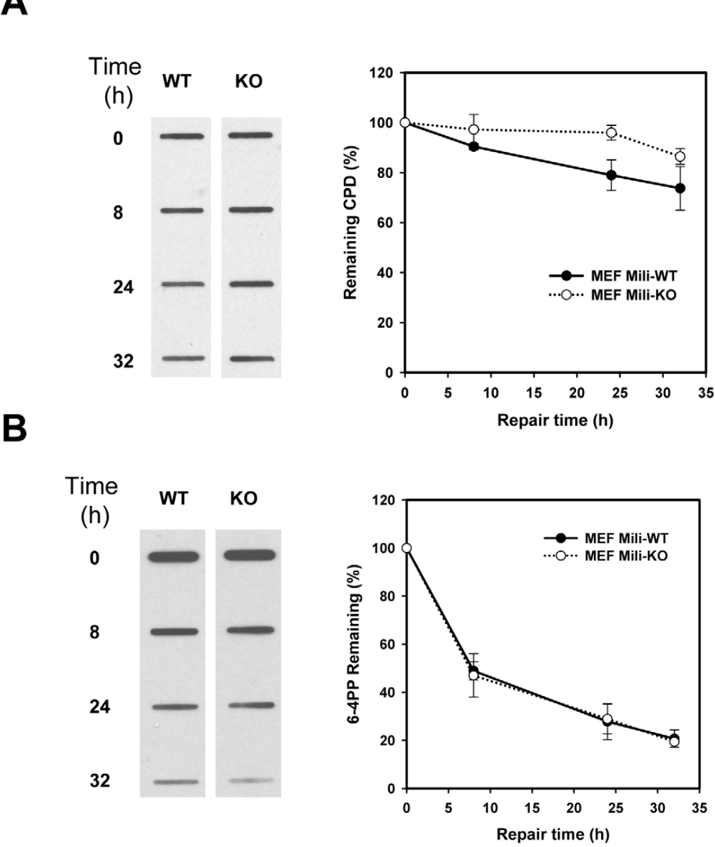
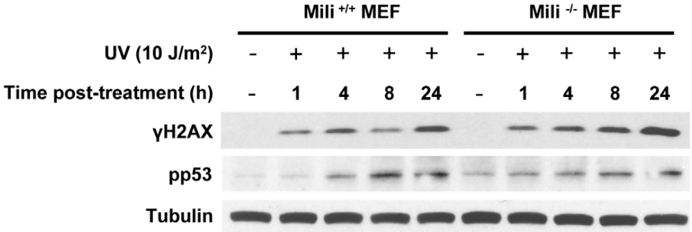
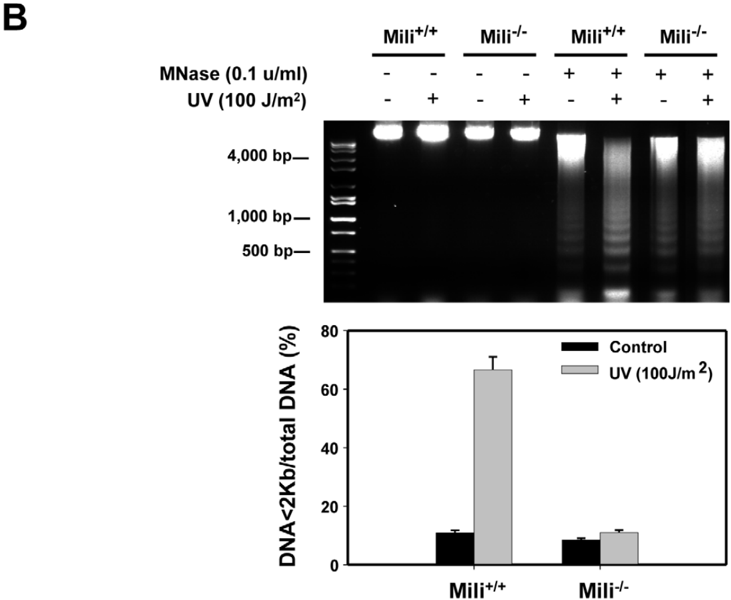
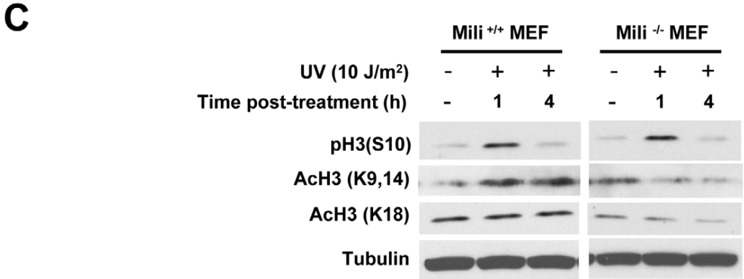
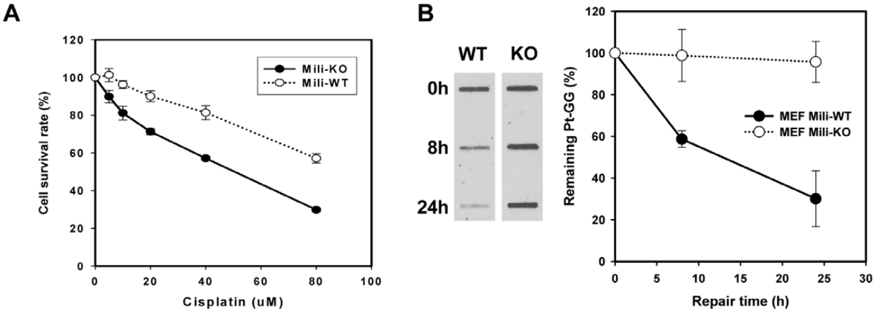
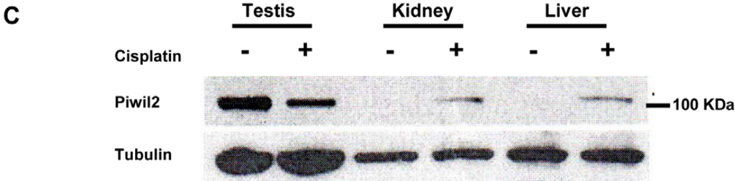
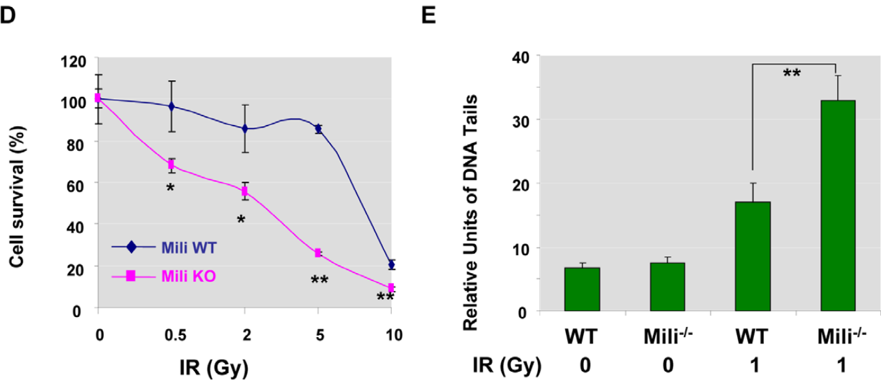
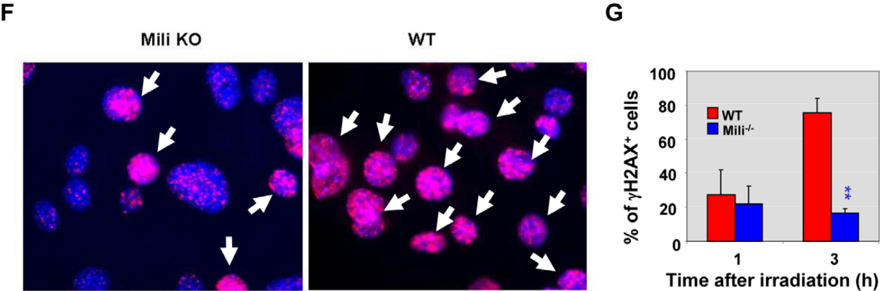
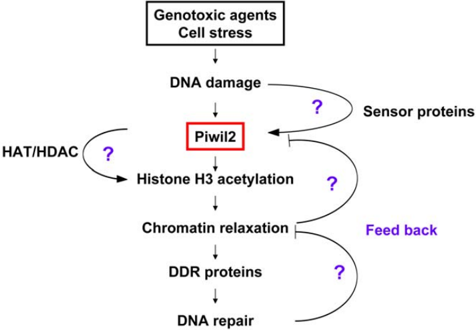
DNA damage response (DDR) is an intrinsic barrier of cell to tumorigenesis initiated by genotoxic agents.However, the mechanisms underlying the DDR are not completely understood despite of extensive investigation.Recently, we have reported that ectopic expression of germline stem cell gene PIWIL2 is associated with tumor stem cell development, although the underlying mechanisms are largely unknown.Here we show that PIWIL2 is required for the repair of DNAdamage induced by various types of genotoxic agents.Upon ultraviolet (UV) irradiation, silenced PIWIL2 gene in normal human fibroblasts was transiently activated after treatment with UV light.This activation was associated with DNA repair, because Piwil2-deficienct mouse embryonic fibroblasts (mili -/-MEFs) were defective in cyclobutane pyrimidine dimers (CPD) repair after UV treatment.As a result, the UV-treated mili -/-MEFs were more susceptible to apoptosis, as characterized by increased levels of DNA damage-associated apoptotic proteins, such as active caspase-3, cleaved Poly (ADP-ribose) polymerase (PARP) and Bik.The impaired DNA repair in the mili -/-MEFs was associated with the reductions of histone H3 acetylation and chromatin relaxation, although the DDR pathway downstream chromatin relaxation appeared not to be directly affected by Piwil2.Moreover, guanine-guanine (Pt- [GG]) and double strand break (DSB) repair were also defective in the mili -/-MEFs treated by genotoxic chemicals Cisplatin and ionizing radiation (IR), respectively.The results indicate that Piwil2 can mediate DNA repair through an axis of Piwil2 R histone acetylation R chromatin relaxation upstream DDR pathways.The findings reveal a new role for Piwil2 in DNA repair and suggest that Piwil2 may act as a gatekeeper against DNA damage-mediated tumorigenesis.
Overview
The claims and statistics of this paper haven’t been checked yet.
Free: it reads the open-access text and checks the first 5 claims that cite a source we can check. Create a free account to check every claim.
Integrity signals
Registry
Cites
Statistics
Figures
Verification
Claims the paper makes
The claims and statistics of this paper haven’t been checked yet.
Free: it reads the open-access text and checks the first 5 claims that cite a source we can check. Create a free account to check every claim.
Claims other papers make about this one
Each is checked against this paper’s own text: does it say what the citing paper says it does?
In the citing paper
“A complete repair of 6–4PP was observed in previous studies with synthetic compounds not related to vitamin D3 [84,85].”
Self-check
Percentages, sums and reported differences re-computed from the paper’s own numbers.
The self-check needs the paper’s full text.
Citations
Cites
Molecular cloning: A laboratory manual
Deininger, P. (1990) · Analytical Biochemistry · doi:10.1016/0003-2697(90)90595-z · Cited by 84,682
Proceedings of the National Academy of Sciences of the United States of America
Dowling, J. E., & Wald, G. (2009) · Nutrition Reviews · doi:10.1111/j.1753-4887.1981.tb06752.x · Cited by 17,893
The Proceedings of the National Academy of Sciences
Richards, J. W. (1915) · Science · doi:10.1126/science.42.1074.161 · Cited by 13,983
Rapid and simple method for purification of nucleic acids
Boom, R., Sol, C. J., Salimans, M. M., Jansen, C. L., Wertheim-van Dillen, P. M., & van der Noordaa, J. (1990) · Journal of Clinical Microbiology · doi:10.1128/jcm.28.3.495-503.1990 · Cited by 5,266
DNA damage response as a candidate anti-cancer barrier in early human tumorigenesis
Bartkova, J., Hořejší, Z., Koed, K., Krämer, A., Tort, F., Zieger, K., Guldberg, P., Sehested, M., Nesland, J. M., Lukas, C., et al. (2005) · Nature · doi:10.1038/nature03482 · Cited by 2,688
UV-induced DNA damage and repair: a review
Sinha, R. P., & Häder, D.-P. (2002) · Photochemical & Photobiological Sciences · doi:10.1039/b201230h · Cited by 1,978
An Oncogene-Induced DNA Damage Model for Cancer Development
Halazonetis, T. D., Gorgoulis, V. G., & Bartek, J. (2008) · Science · doi:10.1126/science.1140735 · Cited by 1,851
A novel class of small RNAs bind to MILI protein in mouse testes
Aravin, A., Gaidatzis, D., Pfeffer, S., Lagos-Quintana, M., Landgraf, P., Iovino, N., Morris, P., Brownstein, M. J., Kuramochi-Miyagawa, S., Nakano, T., et al. (2006) · Nature · doi:10.1038/nature04916 · Cited by 1,516
Sensing and repairing DNA double-strand breaks
Jackson, S. P. (2002) · Carcinogenesis · doi:10.1093/carcin/23.5.687 · Cited by 1,128
Kuramochi-Miyagawa, S., Watanabe, T., Gotoh, K., Totoki, Y., Toyoda, A., Ikawa, M., Asada, N., Kojima, K., Yamaguchi, Y., Ijiri, T. W., et al. (2008) · Genes & Development · doi:10.1101/gad.1640708 · Cited by 925
A novel class of small RNAs in mouse spermatogenic cells
Grivna, S. T., Beyret, E., Wang, Z., & Lin, H. (2006) · Genes & Development · doi:10.1101/gad.1434406 · Cited by 855
DNA damage checkpoints: from initiation to recovery or adaptation
Bartek, J., & Lukas, J. (2007) · Current Opinion in Cell Biology · doi:10.1016/j.ceb.2007.02.009 · Cited by 784
Ziv, Y., Bielopolski, D., Galanty, Y., Lukas, C., Taya, Y., Schultz, D. C., Lukas, J., Bekker-Jensen, S., Bartek, J., & Shiloh, Y. (2006) · Nature Cell Biology · doi:10.1038/ncb1446 · Cited by 735
Apoptosis-inducing factor mediates poly(ADP-ribose) (PAR) polymer-induced cell death
Yu, S.-W., Andrabi, S. A., Wang, H., Kim, N. S., Poirier, G. G., Dawson, T. M., & Dawson, V. L. (2006) · Proceedings of the National Academy of Sciences · doi:10.1073/pnas.0606528103 · Cited by 718
Murr, R., Loizou, J. I., Yang, Y.-G., Cuenin, C., Li, H., Wang, Z.-Q., & Herceg, Z. (2006) · Nature Cell Biology · doi:10.1038/ncb1343 · Cited by 613
Song, J.-J., Liu, J., Tolia, N. H., Schneiderman, J., Smith, S. K., Martienssen, R. A., Hannon, G. J., & Joshua-Tor, L. (2003) · Nature Structural & Molecular Biology · doi:10.1038/nsb1016 · Cited by 575
DNA‐damage repair; the good, the bad, and the ugly
Hakem, R. (2008) · The EMBO Journal · doi:10.1038/emboj.2008.15 · Cited by 549
DNA damage signalling guards against activated oncogenes and tumour progression
Bartek, J., Bartkova, J., & Lukas, J. (2007) · Oncogene · doi:10.1038/sj.onc.1210881 · Cited by 521
Enhanced Histone Acetylation and Transcription: A Dynamic Perspective
Clayton, A. L., Hazzalin, C. A., & Mahadevan, L. C. (2006) · Molecular Cell · doi:10.1016/j.molcel.2006.06.017 · Cited by 473
Multiple Drug Resistance in Cancer Revisited: The Cancer Stem Cell Hypothesis
Donnenberg, V. S., & Donnenberg, A. D. (2005) · The Journal of Clinical Pharmacology · doi:10.1177/0091270005276905 · Cited by 457
Cerutti, L., Mian, N., & Bateman, A. (2000) · Trends in Biochemical Sciences · doi:10.1016/s0968-0004(00)01641-8 · Cited by 431
An epigenetic activation role of Piwi and a Piwi-associated piRNA in Drosophila melanogaster
Yin, H., & Lin, H. (2007) · Nature · doi:10.1038/nature06263 · Cited by 426
Grivna, S. T., Pyhtila, B., & Lin, H. (2006) · Proceedings of the National Academy of Sciences · doi:10.1073/pnas.0605506103 · Cited by 327
ATM, ATR and DNA-PK: initiators of the cellular genotoxic stress responses
Yang, J. (2003) · Carcinogenesis · doi:10.1093/carcin/bgg137 · Cited by 274
Thoma, F. (1999) · The EMBO Journal · doi:10.1093/emboj/18.23.6585 · Cited by 270
Two mouse piwi-related genes: miwi and mili
Kuramochi-Miyagawa, S., Kimura, T., Yomogida, K., Kuroiwa, A., Tadokoro, Y., Fujita, Y., Sato, M., Matsuda, Y., & Nakano, T. (2001) · Mechanisms of Development · doi:10.1016/s0925-4773(01)00499-3 · Cited by 269
Small RNAs just got bigger: Piwi-interacting RNAs (piRNAs) in mammalian testes
Kim, V. N. (2006) · Genes & Development · doi:10.1101/gad.1456106 · Cited by 266
Cellular responses to DNA damage: cell-cycle checkpoints, apoptosis and the roles of p53 and ATM.
Enoch, T., & Norbury, C. (1995) · Trends in Biochemical Sciences · doi:10.1016/s0968-0004(00)89093-3 · Cited by 261
Lee, J. H., Schütte, D., Wulf, G., Füzesi, L., Radzun, H.-J., Schweyer, S., Engel, W., & Nayernia, K. (2006) · Human Molecular Genetics · doi:10.1093/hmg/ddi430 · Cited by 251
p53 is a chromatin accessibility factor for nucleotide excision repair of DNA damage
Rubbi, C. P. (2003) · The EMBO Journal · doi:10.1093/emboj/cdg082 · Cited by 232
Unhavaithaya, Y., Hao, Y., Beyret, E., Yin, H., Kuramochi-Miyagawa, S., Nakano, T., & Lin, H. (2009) · Journal of Biological Chemistry · doi:10.1074/jbc.m809104200 · Cited by 222
Hanasoge, S., & Ljungman, M. (2007) · Carcinogenesis · doi:10.1093/carcin/bgm157 · Cited by 216
Liu, Y. (2001) · Carcinogenesis · doi:10.1093/carcin/22.6.851 · Cited by 184
Garinis, G. A., Mitchell, J. R., Moorhouse, M. J., Hanada, K., de Waard, H., Vandeputte, D., Jans, J., Brand, K., Smid, M., van der Spek, P. J., et al. (2005) · The EMBO Journal · doi:10.1038/sj.emboj.7600849 · Cited by 163
Bartek, J., Lukas, J., & Bartkova, J. (2007) · Cell Cycle · doi:10.4161/cc.6.19.4754 · Cited by 149
Cisplatin: Synthesis, antitumour activity and mechanism of action
Reedijk, J., & Lohman, P. H. M. (1985) · Pharmacy World & Science · doi:10.1007/bf02307573 · Cited by 140
Lans, H., Marteijn, J. A., Schumacher, B., Hoeijmakers, J. H. J., Jansen, G., & Vermeulen, W. (2010) · PLoS Genetics · doi:10.1371/journal.pgen.1000941 · Cited by 131
Ling (2009) · Oncology Reports · doi:10.3892/or_00000545 · Cited by 127
The DNA Damage Signaling Pathway Connects Oncogenic Stress to Cellular Senescence
Mallette, F. A., & Ferbeyre, G. (2007) · Cell Cycle · doi:10.4161/cc.6.15.4516 · Cited by 125
Lee, J. H., Jung, C., Javadian-Elyaderani, P., Schweyer, S., Schütte, D., Shoukier, M., Karimi‐Busheri, F., Weinfeld, M., Rasouli‐Nia, A., Hengstler, J. G., et al. (2010) · Cancer Research · doi:10.1158/0008-5472.can-09-2670 · Cited by 124
Chromatin remodeling finds its place in the DNA double-strand break response
Pandita, T. K., & Richardson, C. (2009) · Nucleic Acids Research · doi:10.1093/nar/gkn1071 · Cited by 122
Coultas, L., Bouillet, P., Stanley, E. G., Brodnicki, T. C., Adams, J. M., & Strasser, A. (2004) · Molecular and Cellular Biology · doi:10.1128/mcb.24.4.1570-1581.2004 · Cited by 115
Liedert, B. (2006) · Nucleic Acids Research · doi:10.1093/nar/gkl051 · Cited by 115
The international journal of biochemistry
ScienceDirect (1994) · Cited by 112
Precancerous Stem Cells Have the Potential for both Benign and Malignant Differentiation
Chen, L., Shen, R., Ye, Y., Pu, X.-A., Liu, X., Duan, W., Wen, J., Zimmerer, J., Wang, Y., Liu, Y., et al. (2007) · PLoS ONE · doi:10.1371/journal.pone.0000293 · Cited by 110
Self-citationPrecancerous Stem Cells Can Serve As Tumor Vasculogenic Progenitors
Shen, R. Z., Ye, Y., Chen, L., Yan, Q., Barsky, S. H., & Gao, J. (2008) · PLoS ONE · doi:10.1371/journal.pone.0001652 · Cited by 107
Self-citationCancer stem cells: the lessons from pre‐cancerous stem cells
Gao, J. (2008) · Journal of Cellular and Molecular Medicine · doi:10.1111/j.1582-4934.2007.00170.x · Cited by 107
Self-citationStem cell protein Piwil2 modulates expression of murine spermatogonial stem cell expressed genes
Lee, J. H., Engel, W., & Nayernia, K. (2005) · Molecular Reproduction and Development · doi:10.1002/mrd.20391 · Cited by 100
Thomas, D. C., Okumoto, D. S., Sancar, A., & Bohr, V. A. (1989) · Journal of Biological Chemistry · doi:10.1016/s0021-9258(19)84671-9 · Cited by 94
Identification of Piwil2-Like (PL2L) Proteins that Promote Tumorigenesis
Yin, Y., Yin, D.-T., Chen, L., Zhou, Q., Shen, R. Z., He, G., Yan, Q., Tong, Z., Issekutz, A. C., Shapiro, C. L., et al. (2010) · PLoS ONE · doi:10.1371/journal.pone.0013406 · Cited by 86
Self-citationHur, J., Chesnes, J., Coser, K. R., Lee, R. S., Geck, P., Isselbacher, K. J., & Shioda, T. (2004) · Proceedings of the National Academy of Sciences · doi:10.1073/pnas.0307337101 · Cited by 78
Ogawa, Y., Aizawa, S., Shirakawa, H., & Yoshida, M. (1995) · Journal of Biological Chemistry · doi:10.1074/jbc.270.16.9272 · Cited by 72
Micrococcal nuclease: Its specificity and use for chromatin analysis
Telford, D. J., & Stewart, B. W. (1989) · International Journal of Biochemistry · doi:10.1016/0020-711x(89)90100-6 · Cited by 62
Kuo, W.-H. W., Wang, Y., Wong, R. P. C., Campos, E. I., & Li, G. (2007) · Experimental Cell Research · doi:10.1016/j.yexcr.2007.02.010 · Cited by 61
Drug Discovery Today: Disease Models
Törnell, J., & McCulloch, A. D. (2000) · Cited by 59
DNA Damage Checkpoints and Cancer
Shimada, M., & Nakanishi, M. (2006) · Journal of Molecular Histology · doi:10.1007/s10735-006-9039-4 · Cited by 57
Chromatin and DNA repair: the benefits of relaxation
Downey, M., & Durocher, D. (2006) · Nature Cell Biology · doi:10.1038/ncb0106-9 · Cited by 43
Dose-Rate Effect for DNA Damage Induced by Ionizing Radiation in Human Tumor Cells
de Almodóvar, J. M. R., Bush, C., Peacock, J. H., Steel, G. G., Whitaker, S. J., McMillan, T. J., & de Almodóvar, J. M. R. (1994) · Radiation Research · doi:10.2307/3578771 · Cited by 41
Epigenetic progenitors in tumor initiation and development
Gao, J., & Zhou, Q. (2009) · Drug Discovery Today Disease Models · doi:10.1016/j.ddmod.2009.01.001 · Cited by 9
Self-citationCisplatin-DNA damage in p21WAF1/Cip1 deficient mouse keratinocytes exposed to cisplatin
van Gijssel, H. E., Leil, T. A., Weinberg, W. C., Divi, R. L., Olivero, O. A., & Poirier, M. C. (2006) · Mutagenesis · doi:10.1093/mutage/gel050 · Cited by 7
Cited by
Chaiprasongsuk, A., Janjetovic, Z., Kim, T.-K., Jarrett, S. G., D'Orazio, J. A., Holick, M. F., Tang, E. K. Y., Tuckey, R. C., Panich, U., Li, W., et al. (2019) · Redox Biology · doi:10.1016/j.redox.2019.101206 · Cited by 146
Identification of piRNAs in Hela cells by massive parallel sequencing
Lu, Y., Li, C., Zhang, K., Sun, H., Tao, D., Liu, Y., Zhang, S., & Ma, Y. (2010) · BMB Reports · doi:10.5483/bmbrep.2010.43.9.635 · Cited by 72
Emerging roles for PIWI proteins in cancer
Tan, Y., Liu, L., Liao, M., Zhang, C., Hu, S., Mei, Z., Gu, M., & Li, X. (2015) · Acta Biochimica et Biophysica Sinica · doi:10.1093/abbs/gmv018 · Cited by 72
PIWI-interacting RNAs: Critical roles and therapeutic targets in cancer
Zhou, J., Xie, H., Liu, J., Huang, R., Xiang, Y., Tian, D., & Bian, E. (2023) · Cancer Letters · doi:10.1016/j.canlet.2023.216189 · Cited by 48
Characterization of the novel tumor-suppressor geneCCDC67in papillary thyroid carcinoma
Yin, D.-T., Xu, J., Lei, M., Li, H., Wang, Y., Liu, Z., Zhou, Y., & Xing, M. (2015) · Oncotarget · doi:10.18632/oncotarget.6709 · Cited by 37
Self-citation
Metadata
- Authors
- Yin, D.-T., Wang, Q., Chen, L., Liu, M.-Y., Han, C., Yan, Q., Shen, R., He, G., Duan, W., Li, J.-J., Wani, A., & Gao, J.-X.
- Affiliations
- The Ohio State University Wexner Medical Center (US)
- University of California Davis Medical Center (US)
- Venue
- PLoS ONE
- Publisher
- Public Library of Science (PLoS)
- Published
- 2011-11-30
- Volume
- 6
- Issue
- 11
- ISSN
- 1932-6203 (ISSN-L)
- PMC
- PMC3228704
- OpenAlex
- W2014489344
- Cited by
- 19
- References
- 60
- Citations by year
- 2023: 2 · 2022: 1 · 2021: 1 · 2020: 2 · 2019: 1 · 2018: 1 · 2017: 1 · 2016: 1 · 2015: 4 · 2014: 1 · 2013: 3
- Type
- journal article
- Language
- en
- Open access
- gold
- doi.org
- Locations
- PLoS ONE (publishedVersion, cc-by)
- Europe PMC (PubMed Central) (publishedVersion, cc-by)
- PubMed Central (publishedVersion, cc-by)
- DOAJ (DOAJ: Directory of Open Access Journals) (submittedVersion, cc-by-sa)
- Funders
- Yale University
- Dalhousie University
- China Scholarship Council
- Zhengzhou University
- National Cancer Institute
- Topics
- Life Sciences › Biochemistry, Genetics and Molecular Biology › Molecular Biology › DNA Repair Mechanisms
- Life Sciences › Biochemistry, Genetics and Molecular Biology › Molecular Biology › Epigenetics and DNA Methylation
- Life Sciences › Biochemistry, Genetics and Molecular Biology › Molecular Biology › Chromatin Remodeling and Cancer
- Keywords
- PIWIL2, DNA repair, DNA damage response, chromatin relaxation, histone H3 acetylation, UV-induced DNA damage, cyclobutane pyrimidine dimers, DNA double-strand break repair, cisplatin, ionizing radiation, apoptosis, cancer stem cells, germline stem cells, carcinogenesis
About these checks
Registry, retraction, Cites and statistics results are computed, not judged, with one exception: a printed reference that no index lists is read once by a model before it counts as a citation error. Claims are extracted by a model and kept only when their quote appears verbatim in the text; each cited source is then checked, with a model’s help, for whether it says what the claim relies on. Those verdicts can be wrong — read the claim’s quote and the cited source before relying on one.
Statistics and arithmetic are recomputed, not judged.
Confidence bands are shown only for fields calibrated on our annotated test set. None is calibrated yet, so no band is shown.
What counts as a claim ›How we measure confidence ›How we check this ›
Are you an author, or do you see a problem with this page? Request a review
Data sources
Bibliographic data: Semantic Scholar, OpenAlex, Crossref.
Contains information from the Semantic Scholar Academic Graph Datasets, made available under the ODC Attribution License (ODC-BY 1.0).
Semantic Scholar’s data is described in: Kinney, R., et al. (2023). The Semantic Scholar Open Data Platform. arXiv:2301.10140.
