

Vaccine Hesitancy: Clarifying a Theoretical Framework for an Ambiguous Notion
Open accessThe DOI matches its Crossref record; 45 of the 46 references it cites were found in a registry or an index; none of the 43 sources its claims cite is checked for support yet.
Abstract
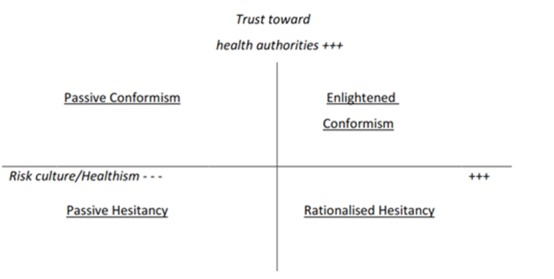
Today, according to many public health experts, public confidence in vaccines is waning. The term "vaccine hesitancy" (VH) is increasingly used to describe the spread of such vaccine reluctance. But VH is an ambiguous notion and its theoretical background appears uncertain. To clarify this concept, we first review the current definitions of VH in the public health literature and examine its most prominent characteristics. VH has been defined as a set of beliefs, attitudes, or behaviours, or some combination of them, shared by a large and heterogeneous portion of the population and including people who exhibit reluctant conformism (they may either decline a vaccine, delay it or accept it despite their doubts) and vaccine-specific behaviours. Secondly, we underline some of the ambiguities of this notion and argue that it is more a catchall category than a real concept. We also call into question the usefulness of understanding VH as an intermediate position along a continuum ranging from anti-vaccine to pro-vaccine attitudes, and we discuss its qualification as a belief, attitude or behaviour. Thirdly, we propose a theoretical framework, based on previous literature and taking into account some major structural features of contemporary societies, that considers VH as a kind of decision-making process that depends on people's level of commitment to healthism/risk culture and on their level of confidence in the health authorities and mainstream medicine.
Overview
CoChat Summary
TL;DR
This paper argues that “vaccine hesitancy” is currently too ambiguous to function as a clear concept, because existing definitions mix beliefs, attitudes, behaviors, and decision processes. The authors propose instead a two-axis framework in which vaccine hesitancy is a decision-making process shaped by commitment to healthism/risk culture and confidence in health authorities and mainstream medicine.
Key findings
- The paper states that VH has been defined in the literature as “a set of beliefs, attitudes, or behaviours, or some combination of them,” and that it includes people showing “reluctant conformism” who may decline, delay, or accept vaccines despite doubts.
- The authors argue VH is “more a catchall category than a real concept,” and that the common pro-vaccine to anti-vaccine continuum is not a good way to position it.
- They propose a framework with two axes: commitment to healthism/risk culture and confidence toward health authorities and mainstream medicine; they present example quadrants for “erratic VH” and more “rationalised” or deliberative VH.
- The paper cites survey results on trust in France: only 38% of French respondents had confidence that authorities handled the 2009 H1N1 episode for their safety, and only 34% believed the information released was true.
Methods
- Conceptual/theoretical paper: the authors review current public-health definitions of vaccine hesitancy and examine their main characteristics and ambiguities.
- They synthesize prior literature and examples from previous studies to build a proposed theoretical model, rather than reporting new empirical data.
- They use a two-dimension map to organize vaccine-hesitancy profiles and discuss how different vaccines and contexts may fall within it.
Limitations
- The paper does not present original empirical testing of the proposed framework; this is evident from the text.
- The authors explicitly note that the notion of VH lacks consistence and is used inconsistently across studies, which hampers research and interventions.
- The framework is proposed as a supplement to prior SAGE work, but the paper does not validate the model empirically; this is evident from the text.
Model-written summary. Check it against the paper before relying on it.
Integrity signals
Registry
Cites
Statistics
Figures
Verification
Claims the paper makes
0 Valid · 0 Not valid · 22 Not checked · 26 Own results and interpretations
In the paper
“Gilkey et al. 26 observed that forgoing vaccines was more common among parents more attentive to their children's health and nutrition, and others underline the weight of rational assessment and the importance of perceived control among people who were reluctant to be vaccinated against the H1N1 influenza 16 , 27.”
§ Vaccine Hesitancy: Clarifying a Theoretical Framework for an Ambiguous Notion > A theoretical model for VH
What the sources say
- Not matchedcites [26] Gilkey MB, McRee AL, Brewer NT. (2013) Forgone vaccination during childhood and adolescence: Finding of a statewide survey of parents. Prev Med 56: 202-206. PMC3582706 23295175
We don’t have this paper’s reference list.
plainstates an association- Asserted: passes — The authors put it forward as true.
- Checkable: passes — It can be checked against evidence.
- Load-bearing: passes — The paper’s conclusions depend on it.
- Based: passes — The paper gives a reason why it holds.
- Not matched
None of the sources cited for this claim could be matched to a paper, so there is nothing to check it against.
In the paper
“Moreover, some previous empirical studies have found quite contrasting profiles of attitudes among those who could be categorised as vaccine-hesitant 13 , 14.”
§ Vaccine Hesitancy: Clarifying a Theoretical Framework for an Ambiguous Notion > The ambiguities of current definitions of VH.
What the sources say
- Not matchedcites [13] Gust D, Brown C, Sheedy K, Hibbs B, Weaver D, Nowak G. (2005) Immunization attitudes and beliefs among parents: beyond a dichotomous perspective. Am J Health Behav 29(1): 81-92. 15604052
We don’t have this paper’s reference list.
- Not matchedcites [14] Velan B, Boyko V, Lerner-Geva L, Ziv A, Yagar Y, Kaplan G. (2012) Individualism, acceptance and differentiation as attitude traits in the public’s response to vaccination. Hum Vaccin Immunother 8(9): 1272-1282. PMC3579908 22894959
We don’t have this paper’s reference list.
plain- Asserted: passes — The authors put it forward as true.
- Checkable: passes — It can be checked against evidence.
- Load-bearing: passes — The paper’s conclusions depend on it.
- Based: passes — The paper gives a reason why it holds.
- Not matched
None of the sources cited for this claim could be matched to a paper, so there is nothing to check it against.
In the paper
“Definitions that try to describe VH as it is used by researchers tend to be very broad and to embrace heterogeneous people/situations and many different explanatory factors (including historic, political and socio-cultural contexts, as well as individual/social group influences 5 , 6 , 9).”
§ Vaccine Hesitancy: Clarifying a Theoretical Framework for an Ambiguous Notion > The ambiguities of current definitions of VH.
What the sources say
- Not matchedcites [5] Dubé E, Laberge C, Guay M, Bramadat P, Roy R, Bettinger J. (2013) Vaccine hesitancy: an overview. Hum Vaccin Immunother 9(8): 1763‑1773. PMC3906279 23584253
We don’t have this paper’s reference list.
- Not matchedcites [6] Gowda C, Dempsey AF. (2013) The rise (and fall?) of parental vaccine hesitancy. Hum Vaccin Immunother 9(8): 1755-1762. PMC3906278 23744504
We don’t have this paper’s reference list.
- Not matchedcites [9] Limb M. (2011) "Vaccine hesitancy" means scientists need to be more honest about risks. BMJ 15;342: d2479. 21498466
We don’t have this paper’s reference list.
plain- Asserted: passes — The authors put it forward as true.
- Checkable: passes — It can be checked against evidence.
- Load-bearing: passes — The paper’s conclusions depend on it.
- Based: passes — The paper gives a reason why it holds.
- Not matched
None of the sources cited for this claim have been checked yet.
In the paper
“The link between healthism and VH is quite obvious in several studies.”
§ Vaccine Hesitancy: Clarifying a Theoretical Framework for an Ambiguous Notion > A theoretical model for VH
boostedstates an association- Asserted: passes — The authors put it forward as true.
- Checkable: passes — It can be checked against evidence.
- Load-bearing: unclear — It is unclear whether the paper’s conclusions depend on it.
- Based: passes — The paper gives a reason why it holds.
A conclusion the paper draws from its own results — it cites no other source for it, so there is none to check. The quote shows it is in the paper.
In the paper
“Nevertheless, using this continuum to describe VH is not self-evident.”
§ Vaccine Hesitancy: Clarifying a Theoretical Framework for an Ambiguous Notion > Two issues raised by the VH definitions: what is VH, and where to position it?
plain- Asserted: passes — The authors put it forward as true.
- Checkable: unclear — It is unclear whether it could be checked against evidence.
- Load-bearing: passes — The paper’s conclusions depend on it.
- Based: passes — The paper gives a reason why it holds.
7 more claims
Create a free account to see all 48 claims and to verify the 26 references still open.
- Probably not a substantial claim. 28
- It may state two separate claims as one. 17
Citations
Cites
Risk Society, Towards a New Modernity
Leiss, W., Beck, U., Ritter, M., Lash, S., & Wynne, B. (1994) · Canadian Journal of Sociology / Cahiers canadiens de sociologie · doi:10.2307/3341155 · Cited by 12,546
Giddens, A. (2023) · Social Theory Re-Wired · doi:10.4324/9781003320609-62 · Cited by 4,813
Risk Society: Towards a New Modernity
Wallman, S., Beck, U., & Ritter, M. (1995) · The Journal of the Royal Anthropological Institute · doi:10.2307/3034709 · Cited by 3,065
Naissance de la biopolitique : cours au collège de France (1978-1979)
Foucault, M., Ewald, F., Fontana, A., & Senellart, M. (2004) · Cited by 2,556
Larson, H. J., Jarrett, C., Eckersberger, E., Smith, D. M. D., & Paterson, P. (2014) · Vaccine · doi:10.1016/j.vaccine.2014.01.081 · Cited by 2,254
Self-citationVaccine hesitancy: An overview
Dubé, E., Laberge, C., Guay, M., Bramadat, P., Roy, R., & Bettinger, J. A. (2013) · Human Vaccines & Immunotherapeutics · doi:10.4161/hv.24657 · Cited by 2,172
(2016) · Social Theory Re-Wired · doi:10.4324/9781315775357-68 · Cited by 1,815
The Imperative of Health: Public Health and the Regulated Body
Lupton, D. (1995) · SAGE Publications Ltd eBooks · doi:10.4135/9781446221976 · Cited by 1,268
Attitudes to vaccination: A critical review
Yaqub, O., Castle-Clarke, S., Sevdalis, N., & Chataway, J. (2014) · Social Science & Medicine · doi:10.1016/j.socscimed.2014.04.018 · Cited by 1,089
The imperative of health: public health and the regulated body
(1996) · Choice Reviews Online · doi:10.5860/choice.33-3358 · Cited by 1,067
Cited by
Increasing Vaccination: Putting Psychological Science Into Action
Brewer, N. T., Chapman, G. B., Rothman, A. J., Leask, J., & Kempe, A. (2017) · Psychological Science in the Public Interest · doi:10.1177/1529100618760521 · Cited by 1,233
Larson, H. J., Gakidou, E., & Murray, C. J. L. (2022) · New England Journal of Medicine · doi:10.1056/nejmra2106441 · Cited by 510
Self-citationThe vaccine hesitancy scale: Psychometric properties and validation
Shapiro, G. K., Tatar, O., Dube, E., Amsel, R., Knauper, B., Naz, A., Perez, S., & Rosberger, Z. (2018) · Vaccine · doi:10.1016/j.vaccine.2017.12.043 · Cited by 470
“Peretti-Watel et al. (2015) have criticized the ambiguity of the available definitions for vaccine hesitancy, and has theorized vaccine hesitancy as a decision-making process that depends on one’s level of commitment to health (or risk) culture as well as one’s confidence in health authorities and…”
BackgroundWard, J. K., Alleaume, C., Peretti-Watel, P., Peretti-Watel, P., Seror, V., Cortaredona, S., Launay, O., Raude, J., Verger, P., Beck, F., et al. (2020) · Social Science & Medicine · doi:10.1016/j.socscimed.2020.113414 · Cited by 419
Self-citationJamison, A. M., Quinn, S. C., & Freimuth, V. S. (2019) · Social Science & Medicine · doi:10.1016/j.socscimed.2018.12.020 · Cited by 384
“Scholars worldwide have embraced this framework, but conceptual ambiguities remain, particularly related to the role of trust (Peretti-Watel et al., 2015).”
BackgroundAn epidemic of uncertainty: rumors, conspiracy theories and vaccine hesitancy
Pertwee, E., Simas, C., & Larson, H. J. (2022) · Nature Medicine · doi:10.1038/s41591-022-01728-z · Cited by 354
Self-citationVerger, P., Fressard, L., Collange, F., Gautier, A., Jestin, C., Launay, O., Raude, J., Pulcini, C., & Peretti-Watel, P. (2015) · EBioMedicine · doi:10.1016/j.ebiom.2015.06.018 · Cited by 341
“Second, GPs' self-reported recommendation frequency may also reflect in part the degree to which they are favorable to vaccines (Larson et al., 2014; Peretti-Watel et al., 2015).”
BackgroundSelf-citationBarriers to childhood immunization in sub-Saharan Africa: a systematic review
Bangura, J. B., Xiao, S., Qiu, D., Ouyang, F., & Chen, L. (2020) · BMC Public Health · doi:10.1186/s12889-020-09169-4 · Cited by 340
“A published article exploring vaccine hesitancy stated that various attitudes seems to result into specific categories; for instance, vaccine refusal attitude could be as a result of having little or no knowledge about vaccine, lack of trust on the vaccine or it could as well linked to financial limitations [64].”
BackgroundQuinn, S. C., Jamison, A. M., An, J., Hancock, G. R., & Freimuth, V. S. (2019) · Vaccine · doi:10.1016/j.vaccine.2019.01.033 · Cited by 309
Semantic network analysis of vaccine sentiment in online social media
Kang, G. J., Ewing-Nelson, S. R., Mackey, L., Schlitt, J. T., Marathe, A., Abbas, K. M., & Swarup, S. (2017) · Vaccine · doi:10.1016/j.vaccine.2017.05.052 · Cited by 269
“Vaccine hesitancy refers to a combination of beliefs, attitudes, and behaviors that influence an individual’s decision to vaccinate despite vaccine availability; these behaviors include refusal, delay, or reluctant acceptance despite having active concerns [2,3].”
BackgroundA systematic literature review to clarify the concept of vaccine hesitancy
Bussink-Voorend, D., Hautvast, J. L. A., Vandeberg, L., Visser, O., & Hulscher, M. E. J. L. (2022) · Nature Human Behaviour · doi:10.1038/s41562-022-01431-6 · Cited by 260
Restoring confidence in vaccines in the COVID-19 era
Verger, P., & Dubé, E. (2020) · Expert Review of Vaccines · doi:10.1080/14760584.2020.1825945 · Cited by 221
“trust’, is required not only for laypeople but also for healthcare professionals [8,12].”
BackgroundSelf-citationDubé, E., Gagnon, D., MacDonald, N., Bocquier, A., Peretti-Watel, P., & Verger, P. (2018) · Expert Review of Vaccines · doi:10.1080/14760584.2018.1541406 · Cited by 220
“These authors have proposed to define vaccine hesitancy as a decision-making process that occurs along two axes: the 'level of confidence in the health authorities and mainstream medicine' and 'healthism/risk aversion' [51].”
BackgroundSelf-citationSallam, M., Dababseh, D., Eid, H., Hasan, H., Taim, D., Al-Mahzoum, K., Al-Haidar, A., Yaseen, A., Ababneh, N. A., Assaf, A., et al. (2021) · International Journal of Environmental Research and Public Health · doi:10.3390/ijerph18052407 · Cited by 200
Factors associated with incomplete or delayed vaccination across countries: A systematic review
Tauil, M. D. C., Sato, A. P. S., & Waldman, E. A. (2016) · Vaccine · doi:10.1016/j.vaccine.2016.04.016 · Cited by 196
Vaccine hesitancy and anti-vaccination in the time of COVID-19: A Google Trends analysis
Pullan, S., & Dey, M. (2021) · Vaccine · doi:10.1016/j.vaccine.2021.03.019 · Cited by 182
“Anti-vaccination is regarded here as the opinions and actions against vaccination use, which itself may be considered a downstream effect of vaccine hesitancy [10].”
“Do-it-yourself”: Vaccine rejection and complementary and alternative medicine (CAM)
Attwell, K., Ward, P. R., Meyer, S. B., Rokkas, P. J., & Leask, J. (2018) · Social Science & Medicine · doi:10.1016/j.socscimed.2017.11.022 · Cited by 171
Dzinamarira, T., Nachipo, B., Phiri, B., & Musuka, G. (2021) · Vaccines · doi:10.3390/vaccines9030250 · Cited by 171
“Despite all the public health successes in reducing the spread of infectious diseases through vaccines, a large portion of the global population still expresses concerns about the safety, efficacy, and need for vaccines, a phenomenon known as vaccine hesitancy [21].”
BackgroundQuantifying the rise of vaccine opposition on Twitter during the COVID-19 pandemic
Bonnevie, E., Gallegos-Jeffrey, A., Goldbarg, J., Byrd, B., & Smyser, J. (2021) · Journal of Communication in Healthcare · doi:10.1080/17538068.2020.1858222 · Cited by 164
“Vaccine beliefs are a spectrum, with supportive and opposing beliefs existing as a range, rather than separate states of thought [52].”
BackgroundDubé, E., Gagnon, D., Ouakki, M., Bettinger, J. A., Guay, M., Halperin, S., Wilson, K., Graham, J., Witteman, H. O., MacDonald, S., et al. (2016) · PLOS ONE · doi:10.1371/journal.pone.0156118 · Cited by 163
“Two groups of people—those who are “uncertain but very interested and committed in vaccination issues are prone to information seeking and long and balanced decision-making”, and those who have “no definite opinion, little knowledge and little interest about vaccination issues and who randomly forget or delay some vac…”
BackgroundAlsanafi, M., & Sallam, M. (2021) · Vaccines · doi:10.3390/vaccines9070701 · Cited by 167
“defined vaccine hesitancy as “a decision-making process that depends on people’s level of commitment to healthism/risk culture and on their level of confidence toward health authorities and mainstream medicine” [20].”
BackgroundCooper, S., Schmidt, B., Sambala, E. Z., Swartz, A., Colvin, C. J., Leon, N., & Wiysonge, C. S. (2021) · Cochrane Database of Systematic Reviews · doi:10.1002/14651858.cd013265.pub2 · Cited by 218
Rey, D., Fressard, L., Cortaredona, S., Bocquier, A., Gautier, A., Peretti‐Watel, P., Verger, P., & on behalf of the Baromètre santé 2016 group (2018) · Eurosurveillance · doi:10.2807/1560-7917.es.2018.23.17.17-00816 · Cited by 161
“Indeed, some studies show an association between VH and low socio-economic status [4,17], as we observed among PAG.”
BackgroundSelf-citationQuinn, S. C., Jamison, A., Musa, D., Hilyard, K. M., & Freimuth, V. S. (2016) · PLoS Currents · doi:10.1371/currents.outbreaks.3e4a5ea39d8620494e2a2c874a3c4201 · Cited by 144
Vaccine hesitancy and coercion: all eyes on France
Ward, J. K., Peretti‐Watel, P., Bocquier, A., Seror, V., & Verger, P. (2019) · Nature Immunology · doi:10.1038/s41590-019-0488-9 · Cited by 131
Self-citationPeretti‐Watel, P., Ward, J. K., Vergélys, C., Bocquier, A., Raude, J., & Verger, P. (2019) · Sociology of Health & Illness · doi:10.1111/1467-9566.12902 · Cited by 155
Self-citationCOVID-19 vaccine acceptance among adults in four major US metropolitan areas and nationwide
El-Mohandes, A. A. E., White, T. M., Wyka, K., Rauh, L. D., Rabin, K. H., Kimball, S. H., Ratzan, S. C., & Lazarus, J. V. (2021) · Scientific Reports · doi:10.1038/s41598-021-00794-6 · Cited by 117
Marzo, R. R., Ahmad, A., Islam, M. S., Essar, M. Y., Heidler, P., King, I. R., Thiyagarajan, A., Jermsittiparsert, K., Songwathana, K., Younus, D. A., et al. (2022) · PLoS neglected tropical diseases · doi:10.1371/journal.pntd.0010103 · Cited by 114
“Vaccine hesitancy is defined as an individual’s unwillingness to take the vaccines despite their availability [13].”
BackgroundHossain, M. B., Alam, M. Z., Islam, M. S., Sultan, S., Faysal, M. M., Rima, S., Hossain, M. A., & Mamun, A. A. (2021) · PLoS ONE · doi:10.1371/journal.pone.0260821 · Cited by 107
“The Muslims had more hesitancy about the receipt of coronavirus vaccination in the current study.”
BackgroundInfluentialThe role of religiosity in COVID-19 vaccine hesitancy
Garcia, L. L., & Yap, J. F. C. (2021) · Journal of Public Health · doi:10.1093/pubmed/fdab192 · Cited by 99
Kalam, M. A., Davis, T., Shano, S., Uddin, M. N., Islam, M. A., Kanwagi, R., Islam, A., Hassan, M. M., & Larson, H. J. (2021) · PLoS ONE · doi:10.1371/journal.pone.0256496 · Cited by 116
“In alignment with what Patrick et al (56) showed regarding 340 perceived risk as structural feature of vaccine decision, Acceptors of this study were also more likely to 341 believe that it would be “very serious” if someone in their household got COVID-19.”
BackgroundSelf-citationVaccine Hesitancy and Online Information: The Influence of Digital Networks
Getman, R., Helmi, M. F., Roberts, H., Yansane, A., Cutler, D., & Seymour, B. A. (2017) · Health Education & Behavior · doi:10.1177/1090198117739673 · Cited by 114
Verger, P., Collange, F., Fressard, L., Bocquier, A., Gautier, A., Pulcini, C., Raude, J., & Peretti‐Watel, P. (2016) · Eurosurveillance · doi:10.2807/1560-7917.es.2016.21.47.30406 · Cited by 114
“However, because VH is multidimensional (vaccine recommendation behaviour, perceptions of vaccine risks and usefulness) [14], this finding did not allow us to estimate its prevalence directly.”
BackgroundSelf-citationBocquier, A., Fressard, L., Cortaredona, S., Zaytseva, A., Ward, J. K., Gautier, A., Peretti‐Watel, P., & Verger, P. (2018) · Vaccine · doi:10.1016/j.vaccine.2018.10.085 · Cited by 106
Self-citationFactors That Affect E-Learning Platforms after the Spread of COVID-19: Post Acceptance Study
Al-Maroof, R. S., Alhumaid, K. F., Akour, I. A., & Salloum, S. A. (2021) · Data · doi:10.3390/data6050049 · Cited by 117
General practitioners’ attitudes and behaviors toward HPV vaccination: A French national survey
Collange, F., Fressard, L., Pulcini, C., Sebbah, R., Peretti‐Watel, P., & Verger, P. (2016) · Vaccine · doi:10.1016/j.vaccine.2015.12.054 · Cited by 107
Self-citationDu, F., Chantler, T., Francis, M. R., Sun, F. Y., Zhang, X., Han, K., Rodewald, L. E., Yu, H., Tu, S., Larson, H. J., et al. (2020) · Vaccine · doi:10.1016/j.vaccine.2020.09.075 · Cited by 93
Self-citationNeufeind, J., Betsch, C., Habersaat, K. B., Eckardt, M., Schmid, P., & Wichmann, O. (2020) · Vaccine · doi:10.1016/j.vaccine.2020.04.052 · Cited by 104
Raude, J., Fressard, L., Gautier, A., Pulcini, C., Peretti‐Watel, P., & Verger, P. (2016) · Expert Review of Vaccines · doi:10.1080/14760584.2016.1184092 · Cited by 91
Self-citationButter, S., McGlinchey, E., Berry, E., & Armour, C. (2021) · British Journal of Health Psychology · doi:10.1111/bjhp.12530 · Cited by 100
Psychosocial and demographic characteristics relating to vaccine attitudes in Australia
Rozbroj, T., Lyons, A., & Lucke, J. C. (2018) · Patient Education and Counseling · doi:10.1016/j.pec.2018.08.027 · Cited by 88
“But hesitancy is an ambiguous “catchall category”, which potentially lumps together contrasting attributes [43].”
BackgroundWiley, K. E., Leask, J., Attwell, K., Helps, C., Degeling, C., Ward, P., & Carter, S. M. (2020) · Social Science & Medicine · doi:10.1016/j.socscimed.2020.113259 · Cited by 91
Why France is making eight new vaccines mandatory
Ward, J. K., Colgrove, J. K., & Verger, P. (2018) · Vaccine · doi:10.1016/j.vaccine.2018.02.095 · Cited by 83
“Vaccine hesitancy refers to attitudes towards vaccines that occupy an intermediate position along a continuum ranging from anti-vaccine to pro-vaccine attitudes [4].”
BackgroundSelf-citationWard, J. K. (2016) · Social Science & Medicine · doi:10.1016/j.socscimed.2016.05.003 · Cited by 93
Self-citationThe social specificities of hostility toward vaccination against Covid-19 in France
Bajos, N., Spire, A., Silberzan, L., & for the EPICOV study group (2022) · PLoS ONE · doi:10.1371/journal.pone.0262192 · Cited by 85
“To study vaccine reluctance, it is important to distinguish vaccine refusal from vaccine hesitancy, defined as "a kind of decision-making process that depends on people’s level of commitment to healthism/risk culture and on their level of confidence in the health authorities and mainstream medicine" [7].”
BackgroundKuhn, R., Henwood, B. F., Lawton, A., Kleva, M., Murali, K., King, C., & Gelberg, L. (2021) · PLoS ONE · doi:10.1371/journal.pone.0255246 · Cited by 77
“Behavioral models of vaccine hesitancy highlight the complex role of threat perception, activation and trust in vaccine decisions [11, 12].”
BackgroundDeml, M. J., Jafflin, K. G., Merten, S., Huber, B. M., Buhl, A., Frau, E., Mettraux, V., Sonderegger, J., Kliem, P. S. C., Cattalani, R., et al. (2019) · BMJ Open · doi:10.1136/bmjopen-2019-032218 · Cited by 103
Siu, J. Y., Fung, T. K. F., & Leung, H. M. (2019) · International Journal for Equity in Health · doi:10.1186/s12939-019-1052-9 · Cited by 74
Meyer, S. B., Violette, R., Aggarwal, R., Simeoni, M., MacDougall, H. A., & Waite, N. M. (2019) · Vaccine · doi:10.1016/j.vaccine.2019.02.028 · Cited by 66
Parental Vaccine Hesitancy in Quebec (Canada)
Dubé, È., Gagnon, D., Zhou, Z., & Deceuninck, G. (2016) · PLoS Currents · doi:10.1371/currents.outbreaks.9e239605f4d320c6ad27ce2aea5aaad2 · Cited by 83
Deml, M. J., Notter, J., Kliem, P. S. C., Buhl, A., Huber, B. M., Pfeiffer, C., Burton‐Jeangros, C., & TARR, P. E. (2019) · Social Science & Medicine · doi:10.1016/j.socscimed.2019.112556 · Cited by 72
Determinants of the COVID-19 vaccine hesitancy spectrum
Piltch-Loeb, R. N., Silver, D., Kim, Y., Norris, H., McNeill, E., & Abramson, D. M. (2022) · PLoS ONE · doi:10.1371/journal.pone.0267734 · Cited by 55
“A growing body of literature has determined that vaccine hesitancy is a complex decisionmaking process influenced by experience, risk perception, culture, confidence in authorities and medicine [3, 4].”
Qualitative Assessment of Vaccine Hesitancy in Romania
Miko, D., Costache, C. A., Colosi, H. A., Neculicioiu, V. S., & Colosi, I. A. (2019) · Medicina · doi:10.3390/medicina55060282 · Cited by 63
“to bring some perspective and point out some of the limits of the vaccine hesitancy definition [15].”
BackgroundDevelopment of Valid and Reliable Scale of Vaccine Hesitancy in Turkish Language
Kılınçarslan, M. G., Sarıgül, B., Toraman, Ç., & Şahin, E. M. (2020) · Konuralp Tıp Dergisi · doi:10.18521/ktd.693711 · Cited by 86
“There are studies commenting that it would be wrong to express the vaccine hesitancy by just behaviors, namely “vaccine refusal” (6), because even some of the vaccine recipients may have vaccine hesitancy (7).”
BackgroundSundaram, N., Duckett, K., Yung, C. F., Thoon, K. C., Sidharta, S., Venkatachalam, I., Chow, A. L., & Yoong, J. (2018) · Vaccine · doi:10.1016/j.vaccine.2018.02.102 · Cited by 57
“However, this definition is limited insofar as it does not adequately address the link between attitudinal factors and behaviour [16,17].”
BackgroundInstitutional mistrust and child vaccination coverage in Africa
Stoop, N., Hirvonen, K., & Maystadt, J.-F. (2021) · BMJ Global Health · doi:10.1136/bmjgh-2020-004595 · Cited by 63
Epistemic divides and ontological confusions: The psychology of vaccine scepticism
Browne, M. (2018) · Human Vaccines & Immunotherapeutics · doi:10.1080/21645515.2018.1480244 · Cited by 61
“Before beginning, we must mention that terms like vaccine hesitancy or vaccine scepticism have suffered from an unfortunate lack of consistency in their use.(4) Negative attitudes have been conflated with ambivalence or lack of knowledge, and likewise, the distinction between attitudes and behaviour is sometimes lost.”
Backgroundten Kate, J., de Koster, W., & van der Waal, J. (2021) · Journal of Health and Social Behavior · doi:10.1177/0022146520986118 · Cited by 56
“Most extant studies only focus on people who reject vaccinations, but as several authors have indicated (e.g., Peretti-Watel et al. 2015; Wiley et al. 2020), it is crucial to distinguish between vaccine hesitancy and vaccine rejection because the underlying reasons may differ.”
BackgroundPublic Willingness and Hesitancy to Take the COVID-19 Vaccine in Afghanistan
Nemat, A., Bahez, A., Salih, M., Raufi, N. K., Noor, N. A. S., Essar, M. Y., Ehsan, E., & Asady, A. (2021) · American Journal of Tropical Medicine and Hygiene · doi:10.4269/ajtmh.21-0231 · Cited by 46
The Impact of Socioeconomic Status, Perceived Threat and Healthism on Vaccine Hesitancy
Kirbiš, A. (2023) · Sustainability · doi:10.3390/su15076107 · Cited by 58
To close the childhood immunization gap, we need a richer understanding of parents' decision-making
Corben, P., & Leask, J. (2016) · Human Vaccines & Immunotherapeutics · doi:10.1080/21645515.2016.1221553 · Cited by 59
“In contrast to the WHOSAGE framework, Peretti-Watel et al.(53) recast vaccine hesi-”
ResultVaccine Safety and Surveillance for Adverse Events Following Immunization (AEFI) in India
Joshi, J., Das, M. K., Polpakara, D., Aneja, S., Agarwal, M., & Arora, N. K. (2017) · The Indian Journal of Pediatrics · doi:10.1007/s12098-017-2532-9 · Cited by 62
Vaccine Hesitancy: Drivers and How the Allergy Community Can Help
Turner, P., Larson, H. J., Dubé, È., & Fisher, A. (2021) · The Journal of Allergy and Clinical Immunology In Practice · doi:10.1016/j.jaip.2021.06.035 · Cited by 56
Self-citationAlsanafi, M., Salim, N. A., & Sallam, M. (2023) · Human Vaccines & Immunotherapeutics · doi:10.1080/21645515.2023.2194772 · Cited by 48
“The current study suffered from inevitable limitations including the cross-sectional design which should be considered in the interpretation of the results since vaccine hesitancy/ rejection is a time- and context-specific phenomenon.(62) Additionally, the history of HPV vaccine uptake was selfreported with the absenc…”
BackgroundDisgust as an emotional driver of vaccine attitudes and uptake? A mediation analysis
Luz, P. M., Brown, H. E., & Struchiner, C. J. (2019) · Epidemiology and Infection · doi:10.1017/s0950268819000517 · Cited by 54
Addressing vaccine hesitancy requires an ethically consistent health strategy
Williamson, L., & Glaab, H. (2018) · BMC Medical Ethics · doi:10.1186/s12910-018-0322-1 · Cited by 55
“those who are informed, but seek to supplement their knowledge, can be vaccine hesitant [6, 7].”
BackgroundInfluentialMahameed, H., Al-Mahzoum, K., AlRaie, L. A., Aburumman, R., Al-Naimat, H., Al-Hiary, S. S., Barakat, M. M., Al‐Tammemi, A. B., Salim, N. A., & Sallam, M. (2023) · Vaccines · doi:10.3390/vaccines11050897 · Cited by 46
“Vaccination hesitancy, defined as the reluctance to be vaccinated despite the availability of vaccination services, represents a major global public health challenge [4,5].”
BackgroundBehavioral and Attitudinal Correlates of Trusted Sources of COVID-19 Vaccine Information in the US
Latkin, C. A., Dayton, L., Miller, J., Yi, G. T., Jaleel, A., Nwosu, C. C., Yang, P., & Falade-Nwulia, O. O. (2021) · Behavioral Sciences · doi:10.3390/bs11040056 · Cited by 45
“However, although trust in vaccine information sources may be an important component in vaccine hesitancy, it is not the only component [27].”
BackgroundCOVID-19 Vaccine Hesitancy in the Month Following the Start of the Vaccination Process
Cotfas, L., Delcea, C., & Gherai, R. (2021) · International Journal of Environmental Research and Public Health · doi:10.3390/ijerph181910438 · Cited by 45
Martinelli, M., & Veltri, G. (2021) · Social Science & Medicine · doi:10.1016/j.socscimed.2021.114403 · Cited by 58
Access to HPV vaccination in Japan: Increasing social trust to regain vaccine confidence
Kunitoki, K., Funato, M., Mitsunami, M., Kinoshita, T., & Reich, M. R. (2021) · Vaccine · doi:10.1016/j.vaccine.2021.08.085 · Cited by 61
Dubé, È., & MacDonald, N. E. (2016) · Elsevier eBooks · doi:10.1016/b978-0-12-802174-3.00026-6 · Cited by 53
Oleksy, T., Wnuk, A., Gambin, M., Łyś, A. E., Bargiel-Matusiewicz, K. M., & Pisula, E. (2022) · Personality and Individual Differences · doi:10.1016/j.paid.2022.111524 · Cited by 61
Exploring enablers and barriers toward COVID-19 vaccine acceptance among Arabs: A qualitative study
Elbarazi, I., Yacoub, M. A., Reyad, O. A., Abdou, M. S. M., Elhadi, Y. A. M., Kheirallah, K. A., Ababneh, B. F., Hamada, B. A., Saeh, H. M. E., Ali, N., et al. (2022) · International Journal of Disaster Risk Reduction · doi:10.1016/j.ijdrr.2022.103304 · Cited by 41
“[32] argued that the idea of a continuum might not be appropriate when 115”
BackgroundVaccine hesitancy as self-determination: an Israeli perspective
Velan, B. (2016) · Israel Journal of Health Policy Research · doi:10.1186/s13584-016-0071-x · Cited by 38
“In the year 2015 alone, ~75 articles dealing with vaccine hesitancy were published, including more than 10 comprehensive reviews and meta-analyses (for a representative sample of these publications, please see references [1–5]).”
BackgroundContent Themes and Influential Voices Within Vaccine Opposition on Twitter, 2019
Bonnevie, E., Goldbarg, J., Gallegos-Jeffrey, A., Rosenberg, S. D., Wartella, E. A., & Smyser, J. (2020) · American Journal of Public Health · doi:10.2105/ajph.2020.305901 · Cited by 39
Schmidtke, K. A., Kudrna, L., Noufaily, A., Stallard, N., Skrybant, M., Russell, S., & Clarke, A. (2022) · Social Science & Medicine · doi:10.1016/j.socscimed.2022.115218 · Cited by 44
The politics of picking: Selective vaccinators and population-level policy
Attwell, K. (2018) · SSM - Population Health · doi:10.1016/j.ssmph.2018.100342 · Cited by 35
Rozbroj, T., Lyons, A., & Lucke, J. C. (2019) · Journal of Community Health · doi:10.1007/s10900-019-00723-9 · Cited by 50
“We divided parents with hesitant attitudes into three smaller groups because research shows that hesitancy can comprise disparate attitudes to vaccines [4, 31, 36], and may require more nuanced measurement [4].”
BackgroundThe Concordance of Parent and Child Immunization
Robison, S. G., & Osborn, A. W. (2017) · PEDIATRICS · doi:10.1542/peds.2016-2883 · Cited by 38
Gauna, F., Verger, P., Fressard, L., Jardin, M., Ward, J. K., & Peretti‐Watel, P. (2023) · BMC Public Health · doi:10.1186/s12889-023-15334-2 · Cited by 38
“This reflects the specificity of contemporary VH, which is often not guided by a general attitude toward vaccination, but that instead takes the specificities of each vaccine and each context into account [17, 30].”
BackgroundSelf-citationChutiyami, M., Saravanakumar, P., Bello, U. M., Salihu, D., Adeleye, K. K., Kolo, M. A., Dawa, K. K., Hamina, D., Bhandari, P., Sulaiman, S. K., et al. (2024) · Infection · doi:10.1007/s15010-024-02196-y · Cited by 48
“Evidence from the literature suggests that the lack of willingness to vaccinate may be due to a lack of knowledge, indifference, and irregular vaccination behavior [82].”
BackgroundEthics of Vaccination in Childhood—A Framework Based on the Four Principles of Biomedical Ethics
Rus, M., & Grošelj, U. (2021) · Vaccines · doi:10.3390/vaccines9020113 · Cited by 51
Orr, D., & Baram‐Tsabari, A. (2018) · Journal of Microbiology and Biology Education · doi:10.1128/jmbe.v19i1.1500 · Cited by 38
“As noted in the introduction, public confidence in vaccines is waning (57).”
BackgroundUnderstanding vaccine mistrust: From perception bias to controversies
Ward, J. K., & Peretti‐Watel, P. (2020) · Revue Française de Sociologie · doi:10.3917/rfs.612.0243 · Cited by 46
Self-citationHopes, hesitancy and the risky business of vaccine development
Calnan, M., & Douglass, T. (2020) · Health Risk & Society · doi:10.1080/13698575.2020.1846687 · Cited by 44
“A number of studies indicate the centrality of (dis)trust in the institutions and individual actors responsible for vaccination (Attwell et al., 2017; Peretti-Watel et al., 2015).”
Background“I’m not an antivaxxer, but…”: Spurious and authentic diversity among vaccine critical activists
Cafiero, F., Guille-Escuret, P., & Ward, J. K. (2020) · Social Networks · doi:10.1016/j.socnet.2020.11.004 · Cited by 35
“Recent research on vaccination behaviors shows that, in most cases, negative attitudes do not consist in radical rejection of vaccination in general (“antivaccinationism”) but rather in diffuse suspicion, schedule delays or rejection of a limited number of vaccines perceived as controversial (“vaccine hesitancy”) (5,…”
BackgroundSelf-citationPhysicians’ decision processes about the HPV vaccine: A qualitative study
Bouchez, M., Ward, J. K., Bocquier, A., Benamouzig, D., Peretti‐Watel, P., Seror, V., & Verger, P. (2020) · Vaccine · doi:10.1016/j.vaccine.2020.12.019 · Cited by 39
Self-citationKarafillakis, E., Peretti‐Watel, P., Verger, P., Chantler, T., & Larson, H. J. (2022) · Vaccine · doi:10.1016/j.vaccine.2022.01.028 · Cited by 40
“While vaccination decisions have often been described as the main consequence of an individual’s representation of the risks and benefits of vaccination, these representations are also shaped by societal issues such as trust [1,2,12,14,15].”
BackgroundSelf-citationConditionality of COVID-19 vaccine acceptance in European countries
Heyerdahl, L. W., Vray, M., Lana, B., Tvardik, N., Gobat, N., Wanat, M., Tonkin-Crine, S. K., Anthierens, S., Goossens, H., & Giles‐Vernick, T. (2022) · Vaccine · doi:10.1016/j.vaccine.2022.01.054 · Cited by 36
“Vaccine acceptance is a complex, ‘‘multi-layered” process [8], influenced by contextual factors [9,10] that include past vaccine experience, shared perceptions of disease severity [11], experiences with the health system [12], and trust in authorities [13].”
Ward, J. K., Crépin, L., Bauquier, C., Vergélys, C., Bocquier, A., Verger, P., & Peretti‐Watel, P. (2017) · Health Risk & Society · doi:10.1080/13698575.2017.1299856 · Cited by 39
“…some vaccines (Caille-Brillet et al., 2013; Casiday, Cresswell, Wilson, & Panter-Brick, 2006; Department of Health, 2004; Gangarosa et al., 1998; Peretti-Watel et al., 2014; Smith, Ellenberg, Bell, & Rubin, 2008) as well as in the pervasiveness of distrust towards public health authorities and…”
BackgroundInfluentialSelf-citationSocioeconomic factors influencing childhood vaccination in two northern Italian regions
Anello, P., Cestari, L., Baldovin, T., Simonato, L., Frasca, G., Caranci, N., Pascucci, M. G., Valent, F., & Canova, C. (2017) · Vaccine · doi:10.1016/j.vaccine.2017.07.058 · Cited by 38
Deml, M. J., Buhl, A., Notter, J., Kliem, P. S. C., Huber, B. M., Pfeiffer, C., Burton‐Jeangros, C., & TARR, P. E. (2020) · Social Science & Medicine · doi:10.1016/j.socscimed.2020.112946 · Cited by 39
Alleaume, C., Verger, P., Dib, F., Ward, J. K., Launay, O., & Peretti‐Watel, P. (2021) · Human Vaccines & Immunotherapeutics · doi:10.1080/21645515.2021.1893069 · Cited by 36
“vaccine hesitants).(26) Considering that vaccine hesitancy has been found to be correlated with unfavorable perception of vaccines’ risk–benefit balance,(22) vaccine hesitancy should therefore be investigated in further research among both people who present a negative attitude toward a future COVID-19 vaccine and peo…”
BackgroundSelf-citationDal, A., & Tokdemir, E. (2022) · Political Behavior · doi:10.1007/s11109-022-09793-3 · Cited by 40
Cooper, S., Schmidt, B., Sambala, E. Z., Swartz, A., Colvin, C. J., Leon, N., Betsch, C., & Wiysonge, C. S. (2019) · Cochrane Database of Systematic Reviews · doi:10.1002/14651858.cd013265 · Cited by 34
Nair, A. T., Nayar, K. R., Koya, S. F., Abraham, M., Lordson, J., Grace, C., Sreekumar, S., Chembon, P., Swarnam, K., Pillai, A. M., et al. (2021) · Health Research Policy and Systems · doi:10.1186/s12961-021-00698-x · Cited by 43
“Anti-vaccine lobbyists use "rhetorical arguments to give the appearance of legitimate debate and unresolved debate about matters generally considered to be settled" and in the process, use and create untrue reports, views, expert opinions and results to maintain the "conspiracy theory" regarding vaccination [31, 32, 3…”
BackgroundCOVID-19 Vaccination: Concerns About Its Accessibility, Affordability, and Acceptability
Ali, I., Ali, S., & Iqbal, S. (2021) · Frontiers in Medicine · doi:10.3389/fmed.2021.647294 · Cited by 28
““Vaccine hesitancy” can be defined as a set of beliefs, attitudes, and behaviors that many people hold to decline, delay, or doubt a vaccine (18).”
BackgroundRoberti, J. E., Ini, N., Belizán, M., & Alonso, J. P. (2024) · Cadernos de Saúde Pública · doi:10.1590/0102-311xen165023 · Cited by 43
“However, criticism has been raised, including concerns about the operationalization of vaccine hesitancy in research 12,13 , its oversimplification of vaccine decision-making, and the potential for stigmatization of hesitant individuals 14 .”
BackgroundHeyerdahl, L. W., Pugliese‐Garcia, M., Nkwemu, S., Tembo, T., Mwamba, C., Démolis, R., Chilengi, R., Gessner, B. D., Guillermet, É., & Sharma, A. (2019) · BMC Infectious Diseases · doi:10.1186/s12879-019-4072-6 · Cited by 28
“Given the small number of discussions with those self-reported receiving both doses, we may have missed those completely opposed to OCV, who may still have fully vaccinated [53].”
Background
Metadata
- Authors
- Peretti-Watel, P., Ward, J. K., Schulz, W. S., Verger, P., & Larson, H. J.
- Affiliations
- INSERM, UMR912 (SESSTIM), 13006, Marseille, France; Aix Marseille University, UMR_S912, IRD, 13006, Marseille, France; ORS PACA, Southeastern Health Regional Observatory, 13006, Marseille, France
- Inserm (FR)
- London School of Hygiene & Tropical Medicine (GB)
- Venue
- PLoS Currents
- Publisher
- Public Library of Science (PLoS)
- Published
- 2015
- Volume
- 7
- Issue
- 7
- ISSN
- 2157-3999 (ISSN-L)
- PMC
- PMC4353679
- OpenAlex
- W2132007272
- Cited by
- 343
- References
- 46
- Citations by year
- 2026: 14 · 2025: 29 · 2024: 36 · 2023: 66 · 2022: 53 · 2021: 47 · 2020: 30 · 2019: 16 · 2018: 20 · 2017: 15 · 2016: 14 · 2015: 2
- FWCI
- 21.12
- Type
- journal article
- Language
- en
- Open access
- bronze
- doi.org
- Locations
- PLoS Currents (publishedVersion)
- Europe PMC (PubMed Central) (publishedVersion, cc-by)
- PubMed Central (publishedVersion, cc-by)
- PubMed (publishedVersion)
- LSHTM Research Online (London School of Hygiene and Tropical Medicine) (acceptedVersion)
- HAL (submittedVersion)
- Funders
- Agence Nationale de Sécurité du Médicament et des Produits de Santé (2013S064)
- Topics
- Social Sciences › Health › Vaccine Coverage and Hesitancy
- Social Sciences › Sociology and Political Science › Risk Perception and Management
- Social Sciences › Sociology and Political Science › Misinformation and Its Impacts
- Keywords
- vaccine hesitancy, theoretical framework, vaccine refusal, anti-vaccine attitudes, delayed vaccination, decision-making, healthism, risk culture, trust in health authorities, trust in medicine, conceptual ambiguity
About these checks
Registry, retraction, Cites and statistics results are computed, not judged, with one exception: a printed reference that no index lists is read once by a model before it counts as a citation error. Claims are extracted by a model and kept only when their quote appears verbatim in the text; each cited source is then checked, with a model’s help, for whether it says what the claim relies on. Those verdicts can be wrong — read the claim’s quote and the cited source before relying on one.
A language model drew the claims from the paper on 2026-10-10, under version 3 of the claim definition (model deepseek-v4.1-flash, prompt extract-v3).
A second model labelled each claim on 2026-10-10 (model jev-1.13-20260917, definition revision gold-guideline-v0.2).
Statistics and arithmetic are recomputed, not judged.
Confidence bands are shown only for fields calibrated on our annotated test set. None is calibrated yet, so no band is shown.
What counts as a claim ›How we measure confidence ›How we check this ›
Are you an author, or do you see a problem with this page? Request a review
Data sources
Bibliographic data: Semantic Scholar, OpenAlex, Crossref.
Contains information from the Semantic Scholar Academic Graph Datasets, made available under the ODC Attribution License (ODC-BY 1.0).
Semantic Scholar’s data is described in: Kinney, R., et al. (2023). The Semantic Scholar Open Data Platform. arXiv:2301.10140.
