

Vaccine Hesitancy: Clarifying a Theoretical Framework for an Ambiguous Notion
Open accessThe DOI matches its Crossref record; 45 of the 46 references it cites were found in a registry or an index; none of the 43 sources its claims cite is checked for support yet.
Abstract
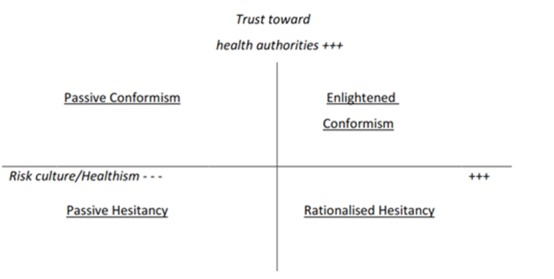
Today, according to many public health experts, public confidence in vaccines is waning. The term "vaccine hesitancy" (VH) is increasingly used to describe the spread of such vaccine reluctance. But VH is an ambiguous notion and its theoretical background appears uncertain. To clarify this concept, we first review the current definitions of VH in the public health literature and examine its most prominent characteristics. VH has been defined as a set of beliefs, attitudes, or behaviours, or some combination of them, shared by a large and heterogeneous portion of the population and including people who exhibit reluctant conformism (they may either decline a vaccine, delay it or accept it despite their doubts) and vaccine-specific behaviours. Secondly, we underline some of the ambiguities of this notion and argue that it is more a catchall category than a real concept. We also call into question the usefulness of understanding VH as an intermediate position along a continuum ranging from anti-vaccine to pro-vaccine attitudes, and we discuss its qualification as a belief, attitude or behaviour. Thirdly, we propose a theoretical framework, based on previous literature and taking into account some major structural features of contemporary societies, that considers VH as a kind of decision-making process that depends on people's level of commitment to healthism/risk culture and on their level of confidence in the health authorities and mainstream medicine.
Overview
CoChat Summary
TL;DR
This paper argues that “vaccine hesitancy” is currently too ambiguous to function as a clear concept, because existing definitions mix beliefs, attitudes, behaviors, and decision processes. The authors propose instead a two-axis framework in which vaccine hesitancy is a decision-making process shaped by commitment to healthism/risk culture and confidence in health authorities and mainstream medicine.
Key findings
- The paper states that VH has been defined in the literature as “a set of beliefs, attitudes, or behaviours, or some combination of them,” and that it includes people showing “reluctant conformism” who may decline, delay, or accept vaccines despite doubts.
- The authors argue VH is “more a catchall category than a real concept,” and that the common pro-vaccine to anti-vaccine continuum is not a good way to position it.
- They propose a framework with two axes: commitment to healthism/risk culture and confidence toward health authorities and mainstream medicine; they present example quadrants for “erratic VH” and more “rationalised” or deliberative VH.
- The paper cites survey results on trust in France: only 38% of French respondents had confidence that authorities handled the 2009 H1N1 episode for their safety, and only 34% believed the information released was true.
Methods
- Conceptual/theoretical paper: the authors review current public-health definitions of vaccine hesitancy and examine their main characteristics and ambiguities.
- They synthesize prior literature and examples from previous studies to build a proposed theoretical model, rather than reporting new empirical data.
- They use a two-dimension map to organize vaccine-hesitancy profiles and discuss how different vaccines and contexts may fall within it.
Limitations
- The paper does not present original empirical testing of the proposed framework; this is evident from the text.
- The authors explicitly note that the notion of VH lacks consistence and is used inconsistently across studies, which hampers research and interventions.
- The framework is proposed as a supplement to prior SAGE work, but the paper does not validate the model empirically; this is evident from the text.
Model-written summary. Check it against the paper before relying on it.
Integrity signals
Registry
Cites
Statistics
Figures
Verification
Claims the paper makes
0 Valid · 0 Not valid · 22 Not checked · 26 Own results and interpretations
In the paper
“Gilkey et al. 26 observed that forgoing vaccines was more common among parents more attentive to their children's health and nutrition, and others underline the weight of rational assessment and the importance of perceived control among people who were reluctant to be vaccinated against the H1N1 influenza 16 , 27.”
§ Vaccine Hesitancy: Clarifying a Theoretical Framework for an Ambiguous Notion > A theoretical model for VH
What the sources say
- Not matchedcites [26] Gilkey MB, McRee AL, Brewer NT. (2013) Forgone vaccination during childhood and adolescence: Finding of a statewide survey of parents. Prev Med 56: 202-206. PMC3582706 23295175
We don’t have this paper’s reference list.
plainstates an association- Asserted: passes — The authors put it forward as true.
- Checkable: passes — It can be checked against evidence.
- Load-bearing: passes — The paper’s conclusions depend on it.
- Based: passes — The paper gives a reason why it holds.
- Not matched
None of the sources cited for this claim could be matched to a paper, so there is nothing to check it against.
In the paper
“Moreover, some previous empirical studies have found quite contrasting profiles of attitudes among those who could be categorised as vaccine-hesitant 13 , 14.”
§ Vaccine Hesitancy: Clarifying a Theoretical Framework for an Ambiguous Notion > The ambiguities of current definitions of VH.
What the sources say
- Not matchedcites [13] Gust D, Brown C, Sheedy K, Hibbs B, Weaver D, Nowak G. (2005) Immunization attitudes and beliefs among parents: beyond a dichotomous perspective. Am J Health Behav 29(1): 81-92. 15604052
We don’t have this paper’s reference list.
- Not matchedcites [14] Velan B, Boyko V, Lerner-Geva L, Ziv A, Yagar Y, Kaplan G. (2012) Individualism, acceptance and differentiation as attitude traits in the public’s response to vaccination. Hum Vaccin Immunother 8(9): 1272-1282. PMC3579908 22894959
We don’t have this paper’s reference list.
plain- Asserted: passes — The authors put it forward as true.
- Checkable: passes — It can be checked against evidence.
- Load-bearing: passes — The paper’s conclusions depend on it.
- Based: passes — The paper gives a reason why it holds.
- Not matched
None of the sources cited for this claim could be matched to a paper, so there is nothing to check it against.
In the paper
“Definitions that try to describe VH as it is used by researchers tend to be very broad and to embrace heterogeneous people/situations and many different explanatory factors (including historic, political and socio-cultural contexts, as well as individual/social group influences 5 , 6 , 9).”
§ Vaccine Hesitancy: Clarifying a Theoretical Framework for an Ambiguous Notion > The ambiguities of current definitions of VH.
What the sources say
- Not matchedcites [5] Dubé E, Laberge C, Guay M, Bramadat P, Roy R, Bettinger J. (2013) Vaccine hesitancy: an overview. Hum Vaccin Immunother 9(8): 1763‑1773. PMC3906279 23584253
We don’t have this paper’s reference list.
- Not matchedcites [6] Gowda C, Dempsey AF. (2013) The rise (and fall?) of parental vaccine hesitancy. Hum Vaccin Immunother 9(8): 1755-1762. PMC3906278 23744504
We don’t have this paper’s reference list.
- Not matchedcites [9] Limb M. (2011) "Vaccine hesitancy" means scientists need to be more honest about risks. BMJ 15;342: d2479. 21498466
We don’t have this paper’s reference list.
plain- Asserted: passes — The authors put it forward as true.
- Checkable: passes — It can be checked against evidence.
- Load-bearing: passes — The paper’s conclusions depend on it.
- Based: passes — The paper gives a reason why it holds.
- Not matched
None of the sources cited for this claim have been checked yet.
In the paper
“The link between healthism and VH is quite obvious in several studies.”
§ Vaccine Hesitancy: Clarifying a Theoretical Framework for an Ambiguous Notion > A theoretical model for VH
boostedstates an association- Asserted: passes — The authors put it forward as true.
- Checkable: passes — It can be checked against evidence.
- Load-bearing: unclear — It is unclear whether the paper’s conclusions depend on it.
- Based: passes — The paper gives a reason why it holds.
A conclusion the paper draws from its own results — it cites no other source for it, so there is none to check. The quote shows it is in the paper.
In the paper
“Nevertheless, using this continuum to describe VH is not self-evident.”
§ Vaccine Hesitancy: Clarifying a Theoretical Framework for an Ambiguous Notion > Two issues raised by the VH definitions: what is VH, and where to position it?
plain- Asserted: passes — The authors put it forward as true.
- Checkable: unclear — It is unclear whether it could be checked against evidence.
- Load-bearing: passes — The paper’s conclusions depend on it.
- Based: passes — The paper gives a reason why it holds.
7 more claims
Create a free account to see all 48 claims and to verify the 26 references still open.
- Probably not a substantial claim. 28
- It may state two separate claims as one. 17
Citations
Cites
Risk Society, Towards a New Modernity
Leiss, W., Beck, U., Ritter, M., Lash, S., & Wynne, B. (1994) · Canadian Journal of Sociology / Cahiers canadiens de sociologie · doi:10.2307/3341155 · Cited by 12,546
Giddens, A. (2023) · Social Theory Re-Wired · doi:10.4324/9781003320609-62 · Cited by 4,813
Risk Society: Towards a New Modernity
Wallman, S., Beck, U., & Ritter, M. (1995) · The Journal of the Royal Anthropological Institute · doi:10.2307/3034709 · Cited by 3,065
Naissance de la biopolitique : cours au collège de France (1978-1979)
Foucault, M., Ewald, F., Fontana, A., & Senellart, M. (2004) · Cited by 2,556
Larson, H. J., Jarrett, C., Eckersberger, E., Smith, D. M. D., & Paterson, P. (2014) · Vaccine · doi:10.1016/j.vaccine.2014.01.081 · Cited by 2,254
Self-citationVaccine hesitancy: An overview
Dubé, E., Laberge, C., Guay, M., Bramadat, P., Roy, R., & Bettinger, J. A. (2013) · Human Vaccines & Immunotherapeutics · doi:10.4161/hv.24657 · Cited by 2,172
(2016) · Social Theory Re-Wired · doi:10.4324/9781315775357-68 · Cited by 1,815
The Imperative of Health: Public Health and the Regulated Body
Lupton, D. (1995) · SAGE Publications Ltd eBooks · doi:10.4135/9781446221976 · Cited by 1,268
Attitudes to vaccination: A critical review
Yaqub, O., Castle-Clarke, S., Sevdalis, N., & Chataway, J. (2014) · Social Science & Medicine · doi:10.1016/j.socscimed.2014.04.018 · Cited by 1,089
The imperative of health: public health and the regulated body
(1996) · Choice Reviews Online · doi:10.5860/choice.33-3358 · Cited by 1,067
Cited by
Items 101–200 of 338
The continuum of influenza vaccine hesitancy among nursing professionals in Hong Kong
Lau, L. H. W., Lee, S. S., & Wong, N. S. (2020) · Vaccine · doi:10.1016/j.vaccine.2020.08.038 · Cited by 30
Song, I., & Lee, S. H. (2023) · BMC Public Health · doi:10.1186/s12889-023-15182-0 · Cited by 34
“Some regarded vaccine hesitancy as an “ambiguous notion” that encompasses a set of behavior, beliefs, and attitudes towards vaccination [4].”
BackgroundMethodVelan, B., & Yadgar, Y. (2017) · Israel Journal of Health Policy Research · doi:10.1186/s13584-017-0153-4 · Cited by 28
“Compliance with vaccination is compromised by growing hesitancy [1, 2] increased skepticism [3, 4] and exposure to anti vaccination movements [5, 6].”
BackgroundHilário, A. P., Scavarda, A., Numerato, D., Mendonça, J., Cardano, M., Marhánková, J. H., Gariglio, L., Vuolanto, P. H., Anderson, A., Auvinen, P., et al. (2023) · Qualitative Health Research · doi:10.1177/10497323231196439 · Cited by 36
“For example, Peretti-Watel and colleagues refer to vaccine hesitancy as a combination of beliefs, attitudes and behaviours, both considering parents who reluctantly conform (who may accept immunization despite their doubts) or adopt vaccine-speci fi c behaviours (Peretti-Watel et al., 2015).”
BackgroundCarolan, K., Verran, J., Crossley, M., Redfern, J., Whitton, N., & Amos, M. (2018) · PLoS ONE · doi:10.1371/journal.pone.0190984 · Cited by 34
“However, recent arguments [11, 12] suggest that public health efforts to address issues of vaccine hesitancy [6, 13, 14] (as opposed to active resistance) may prove beneficial in terms of maintaining coverage.”
BackgroundPereira, B. D. C. S., Fehl, A. G., Finkelstein, S. R., Jiga‐Boy, G. M., & Caserotti, M. (2021) · Psychology and Marketing · doi:10.1002/mar.21629 · Cited by 30
Liu, M., Cui, T., Wang, Q., Han, Y., Han, Y., Yang, L., Shi, N., Yi, Y., & Jin, H. (2022) · Human Vaccines & Immunotherapeutics · doi:10.1080/21645515.2022.2026136 · Cited by 30
Coulaud, P.-J., Ablona, A., Bolduc, N., Fast, D., Bertrand, K., Ward, J. K., Greyson, D. L., Jauffret‐Roustide, M., & Knight, R. (2022) · Vaccine · doi:10.1016/j.vaccine.2022.02.085 · Cited by 29
“As described in the literature on the continuum of vaccine hesitancy [33,42,43], the difference in the level of hesitancy between the ‘‘unconvinced” and ‘‘refusal” groups may be associated with distinct demographic and behavioural factors.”
Self-citationLosing trust: Processes of vaccine hesitancy in parents’ narratives
Nurmi, J., & Jaakola, J. (2023) · Social Science & Medicine · doi:10.1016/j.socscimed.2023.116064 · Cited by 39
Moon, K., Riege, A., Gourdon-Kanhukamwe, A., & Vallée-Tourangeau, G. (2021) · Journal of Experimental Psychology Applied · doi:10.1037/xap0000348 · Cited by 27
COVID-19 vaccine delay: An examination of United States residents’ intention to delay vaccine uptake
Latkin, C. A., Dayton, L., Yi, G. T., Jaleel, A., Nwosu, C. C., & Limaye, R. J. (2021) · Human Vaccines & Immunotherapeutics · doi:10.1080/21645515.2021.1917234 · Cited by 24
“A review by Peretti-Watel et al.(8) posits two domains of vaccine hesitancy, one on decisionmaking based on individuals’ risk assessment and another on trust toward health authorities.”
MethodOliver, K., Raut, A., Pierre, S., Silvera, L., Boulos, A., Gale, A., Baum, A., Chory, A., Davis, N. J., D'Souza, D. P., et al. (2022) · BMJ Open · doi:10.1136/bmjopen-2021-053641 · Cited by 29
Hesitancy, Trust and Individualism in Vaccination Decision-Making
Suk, J. E., Lopalco, P. L., & Celentano, L. P. (2015) · PLoS Currents · doi:10.1371/currents.outbreaks.49dba84ad4146de33706b1f131d7caa3 · Cited by 64
Gooding, K., Phiri, M. M., Peterson, I., Parker, M. J., & Desmond, N. (2018) · Social Science & Medicine · doi:10.1016/j.socscimed.2018.07.040 · Cited by 37
Global COVID-19 vaccination challenges: Inequity of access and vaccine hesitancy
Dagovetz, M., Momchilov, K., Blank, L., Khorsandi, J., Rizzo, A., Khabbache, H., Sitibondo, A., Gómez-Salgado, J. C., Chirico, F., & Batra, K. (2025) · Journal of Medicine Surgery and Public Health · doi:10.1016/j.glmedi.2025.100197 · Cited by 39
Hyland, P., Vallières, F., Hartman, T. K., McKay, R., Butter, S., Bentall, R. P., McBride, O., Shevlin, M. E., Bennett, K. M., Mason, L., et al. (2021) · PLoS ONE · doi:10.1371/journal.pone.0258871 · Cited by 28
“While the extant research literature details many distinct socio-demographic and psychological indicators of vaccine hesitancy generally [6, 53, 54], and a burgeoning literature has begun to list those common to COVID-19 vaccines specifically [10, 16, 55], studies describing characteristics associated with stability o…”
BackgroundModelling anti-vaccine sentiment as a cultural pathogen
Mehta, R. S., & Rosenberg, N. A. (2020) · Evolutionary Human Sciences · doi:10.1017/ehs.2020.17 · Cited by 27
“It treats pro-vaccine transitions as individual decisions without social influence, reflecting results that the complex phenomenon of anti-vaccine sentiment (Dubé et al., 2015; Peretti-Watel et al., 2015) behaves more like a contagion than does pro-vaccine sentiment (Salathé et al.”
BackgroundCooper, S., Schmidt, B., Ryan, J., Leon, N., Mavundza, E. J., Burnett, R. J., Tanywe, A. C., & Wiysonge, C. S. (2019) · Cochrane Database of Systematic Reviews · doi:10.1002/14651858.cd013430 · Cited by 33
Anti-Vaccine Attitudes among Adults in the U.S. during the COVID-19 Pandemic after Vaccine Rollout
Choi, J., Lieff, S. A., Meltzer, G., Grivel, M. M., Chang, V. W., Yang, L. H., & Jarlais, D. C. D. (2022) · Vaccines · doi:10.3390/vaccines10060933 · Cited by 28
Behavioral and Social Drivers of COVID-19 Vaccination in the United States, August–November 2021
Bonner, K., Vashist, K., Abad, N. S., Kriss, J. L., Meng, L. M., Lee, J. T., Wilhelm, E., Lu, P.-J., Carter, R. J., Boone, K. D., et al. (2023) · American Journal of Preventive Medicine · doi:10.1016/j.amepre.2023.01.014 · Cited by 27
A national survey of COVID-19 vaccine acceptance in Nigeria
Al-Mustapha, A. I., Okechukwu, O., Olayinka, A. A., Muhammed, O. R., Oyewo, M., Owoicho, S. A., Abubakar, A. T., Olabisi, A., Jibril, A., Ereh, S. E., et al. (2022) · Vaccine · doi:10.1016/j.vaccine.2022.06.050 · Cited by 29
Knowledge advances and gaps on the demand side of vaccination
Cooper, S., Okeibunor, J., Wiyeh, A. B., & Wiysonge, C. S. (2018) · The Lancet Infectious Diseases · doi:10.1016/s1473-3099(18)30733-3 · Cited by 25
Taking stock of vaccine hesitancy among migrants: a scoping review protocol
Tankwanchi, A. B. S., Jaca, A., Larson, H. J., Wiysonge, C. S., & Vermund, S. H. (2020) · BMJ Open · doi:10.1136/bmjopen-2019-035225 · Cited by 25
Self-citationPsychometric properties of the adapted measles vaccine hesitancy scale in Sudan
Sabahelzain, M. M., Dubé, È., Moukhyer, M. E., Larson, H. J., van den Borne, B. H. P., & Bosma, H. (2020) · PLoS ONE · doi:10.1371/journal.pone.0237171 · Cited by 24
“Vaccine hesitancy is complex and multi-dimensional [7, 16, 20, 24].”
BackgroundSelf-citationParental and provider vaccine hesitancy and non-timely childhood vaccination in Switzerland
Jafflin, K. G., Deml, M. J., Schwendener, C. L., Kiener, L. M., Delfino, A., Gafner, R., Schudel, S., Mäusezahl, M., Berger, C., Huber, B. M., et al. (2022) · Vaccine · doi:10.1016/j.vaccine.2022.04.044 · Cited by 24
Shades of doubt: Measuring and classifying vaccination confidence in Europe
Rughiniş, C., Vulpe, S., Flaherty, M. G., & Vasile, S. (2022) · Vaccine · doi:10.1016/j.vaccine.2022.09.039 · Cited by 23
Vaccine information seeking on social Q&A services
Sharon, A. J., Yom‐Tov, E., & Baram‐Tsabari, A. (2020) · Vaccine · doi:10.1016/j.vaccine.2020.02.010 · Cited by 25
“other community members to voluntarily answer questions about vaccine-related questions, as an outreach effort promoting the scientific and medical consensus, meaning that it probably attracts askers who have a high level of trust in health authorities, a key predictor of vaccine hesitancy (Peretti-Watel et al., 2015).”
BackgroundWard, J. K., Alleaume, C., & Peretti‐Watel, P. (2020) · doi:10.31235/osf.io/xphe9 · Cited by 21
Self-citationHagen, L., FOX, A. M., O’Leary, H., Dyson, D., Walker, K. K., Lengacher, C. A., & Hernandez, R. (2022) · JMIR Infodemiology · doi:10.2196/34231 · Cited by 27
Older adults' acceptance of the COVID ‐19 vaccine: Application of the health belief model
Ibrahim, F. M., Fadila, D. E. S., & Elmawla, D. A. (2023) · Nursing Open · doi:10.1002/nop2.1954 · Cited by 27
Vaccination acceptability in the French general population and related determinants, 2000–2021
Vaux, S., Gautier, A., Nassany, O., & Bonmarin, I. (2023) · Vaccine · doi:10.1016/j.vaccine.2023.08.062 · Cited by 23
McKinley, C. J., Olivier, E., & Ward, J. K. (2023) · Vaccines · doi:10.3390/vaccines11081319 · Cited by 23
“have called for clarifying this terminology [7,8], a definition commonly utilized refers to vaccine hesitancy as a “delay in acceptance or refusal of vaccines despite the availability of services” [9] (p.”
BackgroundSelf-citationSaunders, C. H., Sierpe, A., Stevens, G., Elwyn, G. J., Cantrell, M., Engel, J., Gonzalez, M., Hayward, M., Huebner, J., Johnson, L. C., et al. (2022) · Journal of Medical Internet Research · doi:10.2196/38359 · Cited by 23
“We conceived this intervention within a broader comparative effectiveness trial with 2 interventions guided by the theoretical framework by Peretti-Watel et al for vaccine hesitancy, which considers vaccine hesitancy a decision-making process, not a static state [18,19].”
Zanobini, P., Lorini, C., Caini, S., Lastrucci, V., Masocco, M., Minardi, V., Possenti, V., Mereu, G., Cecconi, R., & Bonaccorsi, G. (2022) · International Journal of Environmental Research and Public Health · doi:10.3390/ijerph19116925 · Cited by 23
COVID-19 vaccine hesitancy scale and its association with actual COVID-19 vaccine uptake in Israel
Grossman‐Giron, A., Bitan, D. T., Shemesh, S., Mayer, Y., Shiffman, N., & Bloch, Y. (2023) · Vaccine · doi:10.1016/j.vaccine.2023.01.044 · Cited by 23
“Taken together, these findings indicate that the C19-VHS has a similar factor structure to that of the VHS [8,18], and resonate with theoretical formulations of vaccine hesitancy as comprising confidence in health authorities and mainstream medicine and the level of health risk\benefit assessment [27].”
Zhuang, J., & Cobb, C. G. (2022) · Journal of Health Communication · doi:10.1080/10810730.2022.2107739 · Cited by 19
“Moreover, researchers also argue that not only does vaccine hesitancy affect vaccination decisions, it is also related to an array of vaccinerelated behaviors, such as seeking vaccine-relatied information (Peretti-Watel et al., 2015).”
BackgroundKhoury, G., Ward, J. K., Mancini, J., et al. (2024) · JMIR Public Health and Surveillance · doi:10.2196/45837 · Cited by 17
“…effect of the ability and propensity to look for information regarding health has been well documented by work on the relationship between healthism—the tendency for individuals to exercise control over their own choices in order to maximize their life expectancy—and vaccine hesitancy [27].”
BackgroundSelf-citationPullagura, G. R., Violette, R., Houle, S. K. D., & Waite, N. M. (2020) · Canadian Pharmacists Journal / Revue des Pharmaciens du Canada · doi:10.1177/1715163520960744 · Cited by 21
“Instead, it recognizes vaccine decision-making as a complex, context-specific and dynamic process, wherein individuals may display an array of attitudes or behaviours as they transition across a spectrum of possibilities in response to a variety of influences between complete acceptance and refusal.(14-16) While VH ca…”
BackgroundCOVID-19 Vaccine Hesitancy among U.S. Veterans Experiencing Homelessness in Transitional Housing
Gin, J. L., Balut, M. D., & Dobalian, A. (2022) · International Journal of Environmental Research and Public Health · doi:10.3390/ijerph192315863 · Cited by 16
“Vaccine reluctance has previously been linked to confidence (distrust), complacency (lack of perception of seriousness), and convenience (perceived barriers to access) [38,44,45], all of which are highly prevalent barriers among people experiencing homelessness.”
BackgroundAlshehri, S., & Sallam, M. (2023) · Human Vaccines & Immunotherapeutics · doi:10.1080/21645515.2023.2275962 · Cited by 18
“37,38 39–42 The correlated factors included fear of vaccine side effects, medical mistrust, complacency toward the disease risks, constraints limiting access of vaccines, and vaccine-related conspiracy beliefs.”
BackgroundXu, Y., Cao, Y., Ma, Y., Zhao, Y., Jiang, H. L., Lu, J., Zhao, C., & Quan, C. (2021) · Frontiers in Neurology · doi:10.3389/fneur.2021.717111 · Cited by 17
Cooper, S., Schmidt, B., Jama, N. A., Ryan, J., Leon, N., Mavundza, E. J., Burnett, R. J., Tanywe, A. C., & Wiysonge, C. S. (2025) · Cochrane Database of Systematic Reviews · doi:10.1002/14651858.cd013430.pub2 · Cited by 47
Pavić, Ž., & Šuljok, A. (2022) · PLoS ONE · doi:10.1371/journal.pone.0264722 · Cited by 18
“When it comes to gender, our results are in line with the majority of studies indicating that vaccine hesitancy is more likely to be found among women [17, 60], even though inverse findings can also be found [61].”
ResultGarrison, A., Fressard, L., Karlsson, L. C., Soveri, A., Fasce, A., Lewandowsky, S., Schmid, P., Gagneur, A., Dubé, È., & Verger, P. (2022) · Expert Review of Vaccines · doi:10.1080/14760584.2022.2108800 · Cited by 18
“(10) Reluctant trust is conceptualized to describe the ‘leap of faith’ that people make about expert systems and technologies that are not under their direct scrutiny [20].”
BackgroundSelf-citationHesitação vacinal contra a COVID-19 na América Latina e África: uma revisão de escopo
Gonçalves, B. A., Matos, C. C. D. S. A., Ferreira, J. V. D. S., Itagyba, R. F., Moço, V. R., & Couto, M. T. (2023) · Cadernos de Saúde Pública · doi:10.1590/0102-311xpt041423 · Cited by 36
L’hésitation vaccinale : une perspective psychosociologique
Raude, J. (2016) · Bulletin de l Académie Nationale de Médecine · doi:10.1016/s0001-4079(19)30751-4 · Cited by 32
Kalam, M. A., Davis, T. P., Shano, S., Uddin, N., Islam, M. A., Kanwagi, R., Islam, A., Hassan, M. M., & Larson, H. J. (2021) · medRxiv · doi:10.1101/2021.04.23.21255974 · Cited by 15
Self-citationPerspectives Associated with Human Papillomavirus Vaccination in Adults: A Qualitative Study
Cernasev, A., Hohmeier, K. C., Oyedeji, O., Hagemann, T. M., Kintziger, K. W., Wisdom, T., & Gatwood, J. D. (2023) · Vaccines · doi:10.3390/vaccines11040850 · Cited by 15
“Due to the ambiguities in the concept of vaccine hesitancy and the heterogeneity in the causes of this phenomenon, there is no widely accepted theoretical framework for this topic [20].”
BackgroundPsychosocial dimensions of vaccine hesitancy: A systematic review
Rizzo, M., Gattino, S., Trombetta, T., Calandri, E., & Piccoli, N. D. (2024) · Journal of Community Psychology · doi:10.1002/jcop.23133 · Cited by 16
Sallam, M., Kherfan, T., Al‐Farajat, A., Nemrawi, L., Atawneh, N., Fram, R., Al‐Tammemi, A. B., Barakat, M., & Fram, K. (2025) · Health Science Reports · doi:10.1002/hsr2.70319 · Cited by 12
Schellenberg, N., Petrucka, P. M., Leurer, M. D., & Crizzle, A. M. (2023) · Travel Medicine and Infectious Disease · doi:10.1016/j.tmaid.2023.102584 · Cited by 19
Huang, L., Eiden, A. L., He, L., Annan, A., Wang, S., Wang, J., Manion, F. J., Wang, X., Du, J., & Yao, L. (2024) · JMIR Medical Informatics · doi:10.2196/57164 · Cited by 17
“There is a myriad of reasons for vaccine hesitancy, including personal or familial beliefs, concerns about adverse reactions or efficacy, and skepticism toward government and vaccine manufacturers [6,10-17].”
BackgroundNurses’ Influenza Vaccination and Hesitancy: A Systematic Review of Qualitative Literature
Pinatel, N., Plotton, C., Pozzetto, B., & Gocko, X. (2022) · Vaccines · doi:10.3390/vaccines10070997 · Cited by 15
“The decision-making process of VH people is unusual because this process differs from people who have full confidence and from those who reject all forms of vaccine [2].”
BackgroundIt is essential to connect: Evaluating a Science Communication Boot Camp
Hoffmann-Longtin, K. J., Wisner, R. L., & Organ, J. M. (2022) · The Anatomical Record · doi:10.1002/ar.24894 · Cited by 15
Aechtner, T. (2020) · Public Understanding of Science · doi:10.1177/0963662520963258 · Cited by 14
“The term vaccine hesitancy has been used in a variety of different and sometimes ambiguous ways to refer to attitudes, beliefs, behaviors, and decision-making processes associated with vaccination (Peretti-Watel et al., 2015).”
BackgroundChildhood Vaccine Hesitancy as an Interaction‐Based Phenomenon
Scavarda, A., Cardano, M., & Gariglio, L. (2025) · Sociology of Health & Illness · doi:10.1111/1467-9566.70036 · Cited by 13
Context matters: How to research vaccine attitudes and uptake after the COVID-19 crisis
Ward, J. K., Peretti‐Watel, P., Dubé, È., Verger, P., & Attwell, K. (2024) · Human Vaccines & Immunotherapeutics · doi:10.1080/21645515.2024.2367268 · Cited by 15
Self-citationCOVID-19 Vaccination Rollout: Aspects of Acceptability in South Africa
Steenberg, B., Myburgh, N., Sokani, A., Ngwenya, N., Mutevedzi, P. C., & Madhi, S. A. (2022) · Vaccines · doi:10.3390/vaccines10091379 · Cited by 10
“As such, vaccine hesitancy is a decision-making process informed by individuals’ commitment to health, risk, culture, and their level of confidence in health authorities and medicine [35].”
BackgroundA national survey of parents’ views on childhood vaccinations in Ireland
Marron, L., Ferenczi, A., O’Brien, K. M., Cotter, S. M., Jessop, L., Morrissey, Y., & Migone, C. (2023) · Vaccine · doi:10.1016/j.vaccine.2023.05.004 · Cited by 12
Baral, P., Ahmed, T., Fernandez, P. A., Peters, M. A., Drouard, S. H. P., Muhoza, P., Mwinnyaa, G., Mwansambo, C. W., Nzelu, C. E., Tassembedo, M., et al. (2023) · PLoS ONE · doi:10.1371/journal.pone.0288124 · Cited by 11
Doubt in store: vaccine hesitancy among grocery workers during the COVID-19 pandemic
Mayer, B., Helm, S., Heinz, E., Barnett, M. A., & Arora, M. (2022) · Journal of Behavioral Medicine · doi:10.1007/s10865-021-00276-0 · Cited by 12
High rates of COVID-19 vaccine refusal among Afghan pregnant women: a cross sectional study
Nemat, A., Yaftali, S., Danishmand, T. J., Nemat, H., Raufi, N. K., & Asady, A. (2022) · Scientific Reports · doi:10.1038/s41598-022-18497-x · Cited by 10
Al‐Taie, A., & YILMAZ, Z. K. (2023) · Vacunas · doi:10.1016/j.vacun.2023.06.006 · Cited by 9
Han, Y., Wang, Q., Zhao, S., Wang, J., Dong, S., Cui, T., Liu, M., Shi, N., Yang, L., Han, Y., et al. (2021) · Expert Review of Vaccines · doi:10.1080/14760584.2022.2008247 · Cited by 13
“Some scholars have proposed that vaccine hesitancy should be measured as an attitude, behavior, or a combination [31,32].”
BackgroundInfluentialHesitant but vaccinated: Lessons learned from hesitant adopters
Willis, D. E., Moore, R. A., Purvis, R. S., & McElfish, P. A. (2024) · Vaccine · doi:10.1016/j.vaccine.2024.07.036 · Cited by 11
Kimotho, S. G. (2025) · BMJ Public Health · doi:10.1136/bmjph-2024-001601 · Cited by 13
“I'm not sure what diseases they protect against or how effective they are’ (Murang'a—IDI: Participant 20).”
Adaptation and validation of the Turkish version of the vaccine hesitancy 5 point Likert Scale
Aslan, K. T., Ay, P., Kaş, D., Tosun, F., Yürükcü, İ., KEKEÇ, M. E., Şahin, M. F., & Kaya, Ç. A. (2021) · Human Vaccines & Immunotherapeutics · doi:10.1080/21645515.2021.1953347 · Cited by 17
“The two subscales were consistent with the theoretical framework of “healthism/risk culture” and “level of confidence in health authorities and mainstream medicine” proposed by Peretti-Watel et al.(28)Also, a similar two-factor structure was revealed in the studies conducted by Shapiro et al.”
ResultPirolli, P. L. T., Lebiere, C. J., & Orr, M. (2023) · Frontiers in Psychology · doi:10.3389/fpsyg.2022.981983 · Cited by 10
Kohler, R. E., Wagner, R. B., Careaga, K., Vega, J., Btoush, R. M., Greene, K. L., & Kantor, L. M. (2023) · Vaccines · doi:10.3390/vaccines11061096 · Cited by 13
Iova, C. F., Bădău, D., Daina, M. D., Șuteu, C. L., & Daina, L. (2023) · Vaccines · doi:10.3390/vaccines11121736 · Cited by 14
“As Larson et al. point out in a recently published article, VH is “an attitude or feeling”, while vaccination is an “action” that is then objectified in vaccine coverage [5–9].”
BackgroundProtière, C., Fiorentino, M., Sow, A., Préau, M., Mora, M., Fressard, L., Meyer, L., Lelièvre, J., Lambotte, O., Spire, B., et al. (2020) · AIDS · doi:10.1097/qad.0000000000002530 · Cited by 9
Improving Adult Vaccination Status in the United States
Valdez, R. B., & Romero, K. S. (2021) · Healthcare · doi:10.3390/healthcare9111411 · Cited by 10
“Vaccine hesitancy remains a persistent global threat that is beginning to be better understood [29,30] because of recent work regarding COVID-19 vaccination hesitancy.”
BackgroundExploring Vaccine Hesitancy Through an Artist–Scientist Collaboration
Koski, K., & Holst, J. (2017) · Journal of Bioethical Inquiry · doi:10.1007/s11673-017-9798-5 · Cited by 9
Understanding COVID-19 vaccine hesitancy in Canada
Corsten, C., Vang, Z. M., Gold, I., Goldenberg, M. J., Juárez, F. P.-G., Weinstock, D., Smith, M. J., Krajden, O., & Solomonova, E. (2023) · Vaccine · doi:10.1016/j.vaccine.2023.10.058 · Cited by 11
Li, X., Zhang, F., Li, M., Lin, C., Shi, K., & Yang, F. (2024) · BMC Public Health · doi:10.1186/s12889-024-19303-1 · Cited by 10
“The AVHS was developed by Peretti-Watel et al. in 2015 as an extension of the Vaccine Hesitancy Scale [33].”
MethodPerceived Social Norms and Vaccine Hesitancy
Dempsey, R. C., & Wood, A. M. (2025) · Current Directions in Psychological Science · doi:10.1177/09637214251340023 · Cited by 13
“Vaccine hesitancy is imprecisely defined, lacks testable theories, and refers to a range of attitudes, beliefs, intentions, and behaviors (Betsch et al., 2018; Peretti-Watel et al., 2015).”
Views and Challenges of COVID-19 Vaccination in the Primary Health Care Sector. A Qualitative Study
Μουδάτσου, Μ., Stavropoulou, A., Rovithis, M., & Koukouli, S. (2023) · Vaccines · doi:10.3390/vaccines11040803 · Cited by 9
“Trust in science and technology may explain acquiescence to COVID-19 vaccination [51].”
BackgroundCOVID-19 vaccine hesitancy in Latin America and Africa: a scoping review
Gonçalves, B. A., Matos, C. C. D. S. A., Ferreira, J. V. D. S., Itagyba, R. F., Moço, V. R., & Couto, M. T. (2023) · Cadernos de Saúde Pública · doi:10.1590/0102-311xen041423 · Cited by 15
Partial Social Integration as a Predictor of COVID-19 Vaccine Rejection and Distress Indicators
Eshel, Y., Kimhi, S., Marciano, H., & Adini, B. B. (2022) · Frontiers in Public Health · doi:10.3389/fpubh.2022.900070 · Cited by 8
Mendonça, J., & Hilário, A. P. (2023) · Societies · doi:10.3390/soc13080184 · Cited by 14
Parents’ malevolent personification of mass vaccination solidifies vaccine hesitancy
Noyman-Veksler, G., Greenberg, D., Grotto, I., & Shahar, G. (2020) · Journal of Health Psychology · doi:10.1177/1359105320903475 · Cited by 8
Drobniewski, F. A., Ashmi, M., Kusuma, D., Ahmad, R., Naumovas, D., Juozapaitė, D., Toscano, C., Perea, E., Abecasis, A. B., Viveiros, M., et al. (2025) · Scientific Reports · doi:10.1038/s41598-025-17507-y · Cited by 12
““Complacency” is the individual evaluation of the risks and benefits of vaccines where in relation to VH there is a tendency to over-estimate vaccination risks whilst under-estimating the risks of the vaccine-preventable disease 13,16 .”
Cotfas, L., Crăciun, L., Delcea, C., Florescu, M., Kovacs, E.-R., Molănescu, A. G., & Orzan, M. (2023) · Vaccines · doi:10.3390/vaccines11081381 · Cited by 7
“We have not interfered with the process by which the users have posted their opinions on Twitter, as the extraction process has been made after the tweets have been posted by the users.”
BackgroundNewman, P. A., Dinh, D. A., Massaquoi, N., Williams, C. C., Lacombe‐Duncan, A., Tepjan, S., & Nyoni, T. (2024) · Human Vaccines & Immunotherapeutics · doi:10.1080/21645515.2023.2301189 · Cited by 9
“…and social contexts that emerged as foundational to the COVID-19 vaccination experiences and perspectives of individuals occupying intersectional marginalized identities support the need for critical assessment and reconceptualization of “vaccine hesitancy” 14,28,29 and trust in vaccination.”
BackgroundMus, M., Kreijkamp‐Kaspers, S., McGuire, T., Deckx, L., & van Driel, M. (2016) · Australian and New Zealand Journal of Public Health · doi:10.1111/1753-6405.12607 · Cited by 7
Sagoe, D., Ogunbode, C. A., Antwi, P., Knizek, B. L., Awaleh, Z., & Dadzie, O. E. (2022) · Frontiers in Psychology · doi:10.3389/fpsyg.2022.908917 · Cited by 7
“Theoretical models of behavioral initiation and change such as the integrative model of behavioral prediction (Fishbein, 2000, 2008), the socio-ecological model (Brofenbreener, 1979), and the vaccine hesitancy model (Peretti-Watel et al., 2015) emphasize the significance of personal (e.”
BackgroundWillingness of Saudi Adults to Receive a COVID-19 Vaccine Booster Dose
Alshahrani, N. Z., Ridda, I., Rashid, H., Alzahrani, F., Othman, L. M. B., & Alzaydani, H. A. (2023) · Sustainability · doi:10.3390/su15020920 · Cited by 7
Saitoh, A., Oku, H., Katsuta, T., Kamiya, H., Ishikawa, Y., Takaku, M., & Saitoh, A. (2024) · Vaccines · doi:10.3390/vaccines12121310 · Cited by 8
Orievulu, K. S., Frampton, S., Matthews, P. C., Mpanza, N., Mjilo, T., Nxumalo, S., Hordern, J., & Seeley, J. (2025) · BMC Public Health · doi:10.1186/s12889-025-22181-w · Cited by 8
“Indeed, the problem of vaccine confidence transcends the COVID-19 context globally, and it is well captured in the literature [2, 3, 7, 16, 60, 67, 68].”
Deml, M. J., Dietrich, L. G., Wingeier, B., Etter, G., Gallmann, C., Berger, C., Suggs, L. S., Huber, B. M., & TARR, P. E. (2020) · Journal of Clinical Medicine · doi:10.3390/jcm9020592 · Cited by 7
COVID-19 vaccine adoption and hesitancy among older Veterans
Wyte‐Lake, T., Levy, C. R., Hovsepian, S., Mudoh, Y., Schmitz, C., & Dobalian, A. (2022) · BMC Public Health · doi:10.1186/s12889-022-13882-7 · Cited by 7
“In understanding vaccine hesitancy as a continuum, [3] this study illustrates key factors concerning confidence and convenience that emerged to help understand the success of VA in its early vaccination efforts in this GeriPACT sample.”
BackgroundInfluentialChevallard, M., Adinolfi, A., Belloli, L., Casu, C., Cicco, M. D., Destefani, C., Rosa, B. D., Gentile, M. G., Filippini, D. A., Luisi, A., et al. (2022) · Clinical Rheumatology · doi:10.1007/s10067-022-06380-z · Cited by 6
“In addition, provider-related and healthcare system–related factors were also identified, such as vaccine hesitancy (a catch-all category of delay and/or refusal of vaccine uptake and potential decision-making category) and promotion of opinions and actions against vaccination use [22, 23].”
BackgroundIssaris, V., Kalogerakos, G., & Milas, G. P. (2023) · Journal of Religion and Health · doi:10.1007/s10943-023-01759-x · Cited by 6
“In Judaism and Buddhism higher vaccination rates were observed (Peretti-Watel et al., 2015).”
BackgroundShen, A. K., Browne, S., Srivastava, T., Kornides, M. L., & Tan, A. S. L. (2023) · Vaccine · doi:10.1016/j.vaccine.2023.02.015 · Cited by 7
“Although related to one another, attitudes and beliefs about vaccination may differ from intent to vaccinate and actual behaviors, particularly depending on the interaction with contextual factors in a pandemic, highlighting the complexity of determinants to accepting vaccination and potential differences among COVID-…”
COVID-19 Vaccine Uptake and Hesitancy in a Latino Agricultural Community
Rosado, J. I., Costero, J. M., & Wang, Y. (2023) · Health Education & Behavior · doi:10.1177/10901981231167893 · Cited by 6
Artna, E., Abi-Jaoudé, A., Sockalingam, S., Perry, C., Johnson, A., Wun, C., Kozloff, N., Henderson, J. L., LEVINSON, A. J., & Buchman, D. Z. (2024) · BMJ Open · doi:10.1136/bmjopen-2023-080707 · Cited by 7
Trust, Information Sources and the Impact on Decision‐Making: The Example of Vaccination
Dubé, È., & Gagnon, D. (2018) · Wiley eBooks · doi:10.1002/9781119549741.ch3 · Cited by 11
Marhánková, J. H. (2025) · European Societies · doi:10.1162/euso_a_00029 · Cited by 4
Non-vaccination of dogs is linked to uncompleted COVID-19 vaccination protocols of owners
Zanon, I. P., Campos, J. V. F., de Castro, Y. G., de Souza, T. G. V., do Amarante, V. S., de Oliveira, C. S. F., Nicolino, R. R., & Silva, R. O. S. (2023) · Preventive Veterinary Medicine · doi:10.1016/j.prevetmed.2023.106093 · Cited by 7
Brosset, E., Fressard, L., Cogordan, C., Bocquier, A., Velter, A., Annequin, M., Bourrelly, M., Constance, J., Michels, D., Mora, M., et al. (2023) · Human Vaccines & Immunotherapeutics · doi:10.1080/21645515.2023.2293489 · Cited by 5
“12,20 Previous studies of HBV, HAV, and HPV vaccines among MSM have focused not on VH prevalence but rather on vaccine acceptability (i.e. willingness to be vaccinated), vaccination uptake, and associated factors, without taking perceptions of these diseases and vaccines into account.”
BackgroundSelf-citation
Metadata
- Authors
- Peretti-Watel, P., Ward, J. K., Schulz, W. S., Verger, P., & Larson, H. J.
- Affiliations
- INSERM, UMR912 (SESSTIM), 13006, Marseille, France; Aix Marseille University, UMR_S912, IRD, 13006, Marseille, France; ORS PACA, Southeastern Health Regional Observatory, 13006, Marseille, France
- Inserm (FR)
- London School of Hygiene & Tropical Medicine (GB)
- Venue
- PLoS Currents
- Publisher
- Public Library of Science (PLoS)
- Published
- 2015
- Volume
- 7
- Issue
- 7
- ISSN
- 2157-3999 (ISSN-L)
- PMC
- PMC4353679
- OpenAlex
- W2132007272
- Cited by
- 343
- References
- 46
- Citations by year
- 2026: 14 · 2025: 29 · 2024: 36 · 2023: 66 · 2022: 53 · 2021: 47 · 2020: 30 · 2019: 16 · 2018: 20 · 2017: 15 · 2016: 14 · 2015: 2
- FWCI
- 21.12
- Type
- journal article
- Language
- en
- Open access
- bronze
- doi.org
- Locations
- PLoS Currents (publishedVersion)
- Europe PMC (PubMed Central) (publishedVersion, cc-by)
- PubMed Central (publishedVersion, cc-by)
- PubMed (publishedVersion)
- LSHTM Research Online (London School of Hygiene and Tropical Medicine) (acceptedVersion)
- HAL (submittedVersion)
- Funders
- Agence Nationale de Sécurité du Médicament et des Produits de Santé (2013S064)
- Topics
- Social Sciences › Health › Vaccine Coverage and Hesitancy
- Social Sciences › Sociology and Political Science › Risk Perception and Management
- Social Sciences › Sociology and Political Science › Misinformation and Its Impacts
- Keywords
- vaccine hesitancy, theoretical framework, vaccine refusal, anti-vaccine attitudes, delayed vaccination, decision-making, healthism, risk culture, trust in health authorities, trust in medicine, conceptual ambiguity
About these checks
Registry, retraction, Cites and statistics results are computed, not judged, with one exception: a printed reference that no index lists is read once by a model before it counts as a citation error. Claims are extracted by a model and kept only when their quote appears verbatim in the text; each cited source is then checked, with a model’s help, for whether it says what the claim relies on. Those verdicts can be wrong — read the claim’s quote and the cited source before relying on one.
A language model drew the claims from the paper on 2026-10-10, under version 3 of the claim definition (model deepseek-v4.1-flash, prompt extract-v3).
A second model labelled each claim on 2026-10-10 (model jev-1.13-20260917, definition revision gold-guideline-v0.2).
Statistics and arithmetic are recomputed, not judged.
Confidence bands are shown only for fields calibrated on our annotated test set. None is calibrated yet, so no band is shown.
What counts as a claim ›How we measure confidence ›How we check this ›
Are you an author, or do you see a problem with this page? Request a review
Data sources
Bibliographic data: Semantic Scholar, OpenAlex, Crossref.
Contains information from the Semantic Scholar Academic Graph Datasets, made available under the ODC Attribution License (ODC-BY 1.0).
Semantic Scholar’s data is described in: Kinney, R., et al. (2023). The Semantic Scholar Open Data Platform. arXiv:2301.10140.
