

Evolution of Phosphoregulation: Comparison of Phosphorylation Patterns across Yeast Species
Open accessThe DOI matches its Crossref record; 61 of the 61 references it cites were found in a registry or an index.
Abstract
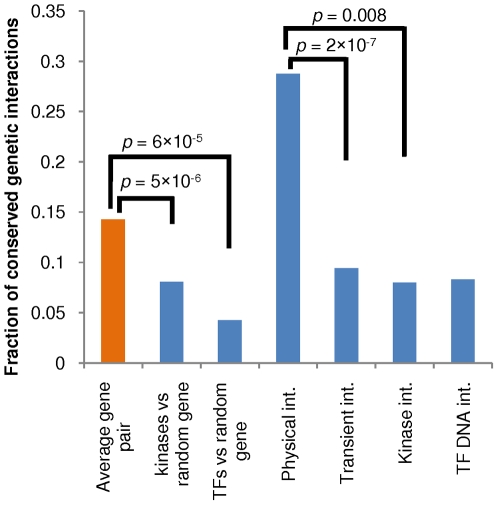
The extent by which different cellular components generate phenotypic diversity is an ongoing debate in evolutionary biology that is yet to be addressed by quantitative comparative studies. We conducted an in vivo mass-spectrometry study of the phosphoproteomes of three yeast species (Saccharomyces cerevisiae, Candida albicans, and Schizosaccharomyces pombe) in order to quantify the evolutionary rate of change of phosphorylation. We estimate that kinase-substrate interactions change, at most, two orders of magnitude more slowly than transcription factor (TF)-promoter interactions. Our computational analysis linking kinases to putative substrates recapitulates known phosphoregulation events and provides putative evolutionary histories for the kinase regulation of protein complexes across 11 yeast species. To validate these trends, we used the E-MAP approach to analyze over 2,000 quantitative genetic interactions in S. cerevisiae and Sc. pombe, which demonstrated that protein kinases, and to a greater extent TFs, show lower than average conservation of genetic interactions. We propose therefore that protein kinases are an important source of phenotypic diversity.
Overview
The claims and statistics of this paper haven’t been checked yet.
Free: it reads the open-access text and checks the first 5 claims that cite a source we can check. Create a free account to check every claim.
Integrity signals
Registry
Cites
Statistics
Figures
Verification
Claims the paper makes
The claims and statistics of this paper haven’t been checked yet.
Free: it reads the open-access text and checks the first 5 claims that cite a source we can check. Create a free account to check every claim.
Claims other papers make about this one
Each is checked against this paper’s own text: does it say what the citing paper says it does?
In the citing paper
“A global analysis of the C. albicans phosphoproteome showed that Chs2 is phosphorylated on S222 (Beltrao et al., 2009). This result was confirmed by our own independent phosphoproteomic analysis (Fig. S1).”
From Cell wall protection by the Candida albicans class I chitin synthases (2015) · cites this paper as Beltrao et al., 2009
Self-check
Percentages, sums and reported differences re-computed from the paper’s own numbers.
The self-check needs the paper’s full text.
Citations
Cites
BioGRID: a general repository for interaction datasets
Stark, C. (2006) · Nucleic Acids Research · doi:10.1093/nar/gkj109 · Cited by 3,960 · cited 3×
“Physical protein–protein interactions were obtained from BioGRID database [45] version number 2.”
Global analysis of protein expression in yeast
Ghaemmaghami, S., Huh, W.-K., Bower, K., Howson, R. W., Belle, A., Dephoure, N., O'Shea, E. K., & Weissman, J. S. (2003) · Nature · doi:10.1038/nature02046 · Cited by 3,750 · cited 1×
“cerevisiae [30].”
Global landscape of protein complexes in the yeast Saccharomyces cerevisiae
Krogan, N. J., Cagney, G., Yu, H., Zhong, G., Guo, X., Ignatchenko, A., Li, J., Pu, S., Datta, N., Tikuisis, A. P., et al. (2006) · Nature · doi:10.1038/nature04670 · Cited by 2,952 · cited 2×
“Recently, methods have been developed to detect protein–protein interactions in high-throughput fashion [12–16].”
Self-citationProteome survey reveals modularity of the yeast cell machinery
Gavin, A.-C., Aloy, P., Grandi, P., Krause, R., Boesche, M., Marzioch, M., Rau, C., Jensen, L. J., Bastuck, S., Dümpelfeld, B., et al. (2006) · Nature · doi:10.1038/nature04532 · Cited by 2,575 · cited 2×
“Recently, methods have been developed to detect protein–protein interactions in high-throughput fashion [12–16].”
Transcriptional regulatory code of a eukaryotic genome
Harbison, C. T., Gordon, D. B., Lee, T. I., Rinaldi, N. J., Macisaac, K. D., Danford, T. W., Hannett, N. M., Tagne, J.-B., Reynolds, D. B., Yoo, J., et al. (2004) · Nature · doi:10.1038/nature02800 · Cited by 2,143 · cited 1×
“TF–promoter interactions were obtained from Harbison and colleagues [61].”
Global Mapping of the Yeast Genetic Interaction Network
Tong, A. H. Y., Lesage, G., Bader, G. D., Ding, H., Xu, H., Xin, X., Young, J., Berriz, G. F., Brost, R. L., Chang, M., et al. (2004) · Science · doi:10.1126/science.1091317 · Cited by 2,095
Self-citationEvo-Devo and an Expanding Evolutionary Synthesis: A Genetic Theory of Morphological Evolution
Carroll, S. B. (2008) · Cell · doi:10.1016/j.cell.2008.06.030 · Cited by 2,067 · cited 2×
“There has been a long-standing debate, in particular in the field of developmental biology, as to the types of adaptive mutations that contribute most to phenotypic changes [54,59].”
Dujon, B., Sherman, D., Fischer, G., Durrens, P., Casaregola, S., Lafontaine, I., de Montigny, J., Marck, C., Neuvéglise, C., Talla, E., et al. (2004) · Nature · doi:10.1038/nature02579 · Cited by 1,623 · cited 1×
“of genomic variation across species [1–4].”
Proof and evolutionary analysis of ancient genome duplication in the yeast Saccharomyces cerevisiae
Kellis, M., Birren, B. W., & Lander, E. S. (2004) · Nature · doi:10.1038/nature02424 · Cited by 1,522
High-Quality Binary Protein Interaction Map of the Yeast Interactome Network
Yu, H., Braun, P., Yıldırım, M. A., Lemmens, I., Venkatesan, K., Sahalie, J., Hirozane-Kishikawa, T., Gebreab, F., Li, N., Simonis, N., et al. (2008) · Science · doi:10.1126/science.1158684 · Cited by 1,392
Cited by
Items 101–186 of 186
Wang, Z., Wang, J., Liu, J., Ying, S., Peng, X., & Feng, M. (2016) · PLoS ONE · doi:10.1371/journal.pone.0153007 · Cited by 22
“cerevisiae, Candida albicans and Aspergillus nidulans [30, 31].”
Wang, L., Zheng, W., Zhao, H., & Deng, M. (2013) · PLoS Genetics · doi:10.1371/journal.pgen.1003414 · Cited by 21
“To understand the epistatic interaction between Vms1 and HOG pathway, we investigated the upstream regulators of Vms1.”
BackgroundInfluentialActivation and inhibition of Snf1 kinase activity by phosphorylation within the activation loop
McCartney, R. R., Garnar-Wortzel, L., Chandrashekarappa, D. G., & Schmidt, M. C. (2016) · Biochimica et Biophysica Acta (BBA) - Proteins and Proteomics · doi:10.1016/j.bbapap.2016.08.007 · Cited by 24
Huang, Z., Wang, H., Wang, Y., & Wang, Y. (2014) · Eukaryotic Cell · doi:10.1128/ec.00231-14 · Cited by 20
“albicans Gyp1 is phosphorylated in vivo (37) at serine residues predicted to be PKA substrates (38).”
BackgroundNucleosome Remodeling by Fun30SMARCAD1 in the DNA Damage Response
Bantele, S. C. S., & Pfander, B. (2019) · Frontiers in Molecular Biosciences · doi:10.3389/fmolb.2019.00078 · Cited by 24
“, 1999), several genetic interaction screens with DNA repair mutants (Krogan et al., 2003, 2006; Collins et al., 2007; Beltrao et al., 2009; Costanzo et al., 2010), a screen for mutants affecting gene targeting (Chen et al.”
BackgroundGlobal comparative structural analysis of responses to protein phosphorylation
Marrero, M. C., Mello, V., Sartori, P., & Beltrão, P. (2024) · bioRxiv · doi:10.1038/s41467-025-64116-4 · Cited by 16
“Phosphorylation sites are largely identified based on short sequence logos, although contextual information is also considered.”
Wakade, R. S., Ristow, L. C., Stamnes, M. A., Kumar, A., & Krysan, D. J. (2020) · mBio · doi:10.1128/mbio.01900-20 · Cited by 20
Cyclin-Dependent Kinase 8 Regulates Mitotic Commitment in Fission Yeast
Szilágyi, Z., Bányai, G., López, M. D., McInerny, C., & Gustafsson, C. M. (2012) · Molecular and Cellular Biology · doi:10.1128/mcb.06316-11 · Cited by 19
“Interestingly, two of these sites, S322 and S375, are also phosphorylated in vivo, as demonstrated by a recent phosphoproteome analysis (7), suggesting that these sites could be specific targets of Cdk8 phosphorylation in vitro.”
BackgroundChamberlain, M. D., Wells, L. A., Lisovsky, A., Guo, H., Isserlin, R., Talior‐Volodarsky, I., Mahou, R., Emili, A., & Sefton, M. V. (2015) · Proceedings of the National Academy of Sciences · doi:10.1073/pnas.1508826112 · Cited by 21
“S1); these are the expected percentages (15, 16) and validate the TiO2 column as an unbiased method for the enrichment of phosphopeptides.”
MethodEvaluating Experimental Bias and Completeness in Comparative Phosphoproteomics Analysis
Boekhorst, J., Boersema, P. J., Tops, B. B. J., van Breukelen, B., Heck, A. J. R., & Snel, . (2011) · PLoS ONE · doi:10.1371/journal.pone.0023276 · Cited by 16
“interactions are an important source of phenotypic diversity [2].”
BackgroundEvolution, dynamics and dysregulation of kinase signalling
Ochoa, D., Bradley, D. T. C., & Beltrão, P. (2018) · Current Opinion in Structural Biology · doi:10.1016/j.sbi.2017.12.008 · Cited by 20
Evolutionary Systems Biology: Historical and Philosophical Perspectives on an Emerging Synthesis
O’Malley, M. A. (2012) · Advances in experimental medicine and biology · doi:10.1007/978-1-4614-3567-9_1 · Cited by 19
“Efforts to fathom relationships between sequence and regulatory programs contribute new knowledge about the evolution of systems of regulation [90–93].”
BackgroundDissecting phosphorylation networks: lessons learned from yeast
Mok, J., Zhu, X., & Snyder, M. P. (2011) · Expert Review of Proteomics · doi:10.1586/epr.11.64 · Cited by 19
Drosophila Protein Kinase CK2: Genetics, Regulatory Complexity and Emerging Roles during Development
Bandyopadhyay, M., Arbet, S., Bishop, C. P., & Bidwai, A. P. (2016) · Pharmaceuticals · doi:10.3390/ph10010004 · Cited by 16
Gerbeth, C., Mikropoulou, D., & Meisinger, C. (2013) · FEBS Journal · doi:10.1111/febs.12445 · Cited by 16
Kim, H. S., Mukhopadhyay, R., Rothbart, S. B., Silva, A. C., Vanoosthuyse, V., Radovani, E., Kislinger, T., Roguev, A., Ryan, C. J., Xu, J., et al. (2014) · Cell Reports · doi:10.1016/j.celrep.2014.01.029 · Cited by 17
“This kinase-substrate relationship appears conserved across evolution, with proteomic analyses identifying phosphopeptides corresponding to consensus CKII substrates on the non-SMC subunits of budding yeast condensin (Bazile et al., 2010; Beltrao et al., 2009; Smolka et al., 2007).”
BackgroundSelf-citationDavanture, M., Dumur, J., Bataillé‐Simoneau, N., Campion, C., Valot, B., Zivy, M., Simoneau, P., & Fillinger, S. (2014) · PROTEOMICS · doi:10.1002/pmic.201300541 · Cited by 15
“Only few papers report on global identification of phosphoproteins in nonmodel fungi [7, 8], whereas numerous studies describe the development of phosphoproteomics in several yeast species (reviewed in [9, 10]), but also in plants [11].”
BackgroundWang, Z., & Shen, Y. (2016) · Mycology: An International Journal on Fungal Biology · doi:10.1080/21501203.2016.1221862 · Cited by 15
“2008), serine/threonine protein kinase Ppk18 (Beltrao et al. 2009) and a G-protein coupled receptor, Git3, which can activate the adenylate cyclase activity (Wang et al.”
BackgroundInsights regarding fungal phosphoproteomic analysis
Ribeiro, L. F. C., Chelius, C. L., Harris, S. D., & Marten, M. R. (2017) · Fungal Genetics and Biology · doi:10.1016/j.fgb.2017.03.003 · Cited by 14
Computational Analysis of Phosphoproteomics: Progresses and Perspectives
Ren, J. M., Gao, X., Liu, Z., Cao, J., Ma, Q., & Xue, Y. (2011) · Current Protein and Peptide Science · doi:10.2174/1389203711109070591 · Cited by 14
“…the evolution of KSRs is rapid and similar as transcription factor-promoter interactions, with a much slower rate of two orders of magnitude, while a statistically significant divergence of genetic interactions of PKs proposed that phosphorylation evolution have an impact on species fitness [112].”
BackgroundCdk1 promotes cytokinesis in fission yeast through activation of the septation initiation network
Rachfall, N., Johnson, A. E., Mehta, S., Chen, J., & Gould, K. L. (2014) · Molecular Biology of the Cell · doi:10.1091/mbc.e14-04-0936 · Cited by 17
“…(“kissing nuclei,” a) and elongated, multinucleate cells either with (c) or without (b) septum (Figure 2A and residues—serines 326, 499 and 533—were identified previously to be phosphorylated in Byr4 via global in vivo phosphoproteomics studies (Wilson-Grady et al., 2008; Beltrao et al., 2009).”
BackgroundConservation and divergence of known apicomplexan transcriptional regulons
Essien, K., & Stoeckert, C. J. (2010) · BMC Genomics · doi:10.1186/1471-2164-11-147 · Cited by 14
“In an examination of fungus-specific predicted transcriptional regulators it was noted that the budding yeast Saccharomyces cerevisiae and the fission yeast Schizosaccharomyces pombe, which are separated by 400-600 million years of evolution [18], share only 15% of fungal-specific regulators [19].”
BackgroundVenâncio, T. M., Balaji, S., Geetha, S., & Aravind, L. (2010) · Molecular BioSystems · doi:10.1039/c002567b · Cited by 14
Suppressing calcineurin activity increases the toxicity of Cry2Ab to Helicoverpa armigera
Wei, J., Yang, S., Zhou, S., Liu, S., Cao, P., Liu, X., Du, M., & An, S. (2021) · Pest Management Science · doi:10.1002/ps.6243 · Cited by 13
Prediction of Functionally Important Phospho-Regulatory Events in Xenopus laevis Oocytes
Johnson, J. R., Santos, S. D. M., Johnson, T. L., Pieper, U., Strumillo, M., Wagih, O. M., Šali, A., Krogan, N. J., & Beltrão, P. (2015) · PLoS Computational Biology · doi:10.1371/journal.pcbi.1004362 · Cited by 13
“Previous studies have noted that regulation by protein phosphorylation can diverge quickly during evolution [5–7,9,10].”
BackgroundSelf-citationAnalysing signalling networks by mass spectrometry
Jørgensen, C., & Locard‐Paulet, M. (2012) · Amino Acids · doi:10.1007/s00726-012-1293-z · Cited by 14
“In addition to increasing our understanding of signalling dynamics, several of these studies have provided the foundation for evolutionary analysis, which have brought novel aspects to our interpretation of the mechanisms that regulate signalling fidelity (Tan et al. 2009; Levy et al. 2010; Gnad et al. 2010; Beltrao e…”
BackgroundComputational systems approach towards phosphoproteomics and their downstream regulation
Xiao, D., Chen, C., & Yang, P. (2022) · PROTEOMICS · doi:10.1002/pmic.202200068 · Cited by 13
“For example, Beltrao et al. [112] showed that functional phospho-sites were significantly more constrained across species compared to non-functional ones, highlighting the importance of incorporating evolutionary information when estimating the functional impact of phosphorylation on a given site.”
BackgroundSub1 and Maf1, Two Effectors of RNA Polymerase III, Are Involved in the Yeast Quiescence Cycle
Acker, J., Nguyen, N.-T.-T., Vandamme, M., Tavenet, A., Briand‐Suleau, A., & Conesa, C. (2014) · PLoS ONE · doi:10.1371/journal.pone.0114587 · Cited by 12
“Interestingly, genetic interactions have been found between Sod1 and Sub1 [26, 27].”
BackgroundAn omics perspective of protein disorder
Bellay, J., Michaut, M., Kim, T. P., Han, S., Çolak, R., Myers, C. L., & Kim, P. M. (2011) · Molecular BioSystems · doi:10.1039/c1mb05235g · Cited by 12
Quantitative proteomics of model organisms
Feng, Y., Cappelletti, V., & Picotti, P. (2017) · Current Opinion in Systems Biology · doi:10.1016/j.coisb.2017.09.004 · Cited by 13
Rewiring MAP kinases in Saccharomyces cerevisiae to regulate novel targets through ubiquitination
Groves, B., Khakhar, A., Nadel, C. M., Gardner, R. G., & Seelig, G. (2016) · eLife · doi:10.7554/elife.15200 · Cited by 11
“The proteomes of Saccharomyces cerevisiae and humans have ~3500 and >50,000 phosphorylation sites, respectively (Hornbeck et al., 2015, 2012; Beltrao et al., 2009).”
BackgroundJiang, P., Zheng, S., & Lü, L. (2018) · Frontiers in Microbiology · doi:10.3389/fmicb.2018.00988 · Cited by 11
“…Microbiology | www.frontiersin.org 10 May 2018 | Volume 9 | Article 988 S. pombe, it has been identified that the pdb1 deletion mutant was lethal after spore germination without cell division and with elongated germ tubes (Cavan and MacDonald, 1994; Beltrao et al., 2009; Kettenbach et al., 2015).”
BackgroundPřevorovský, M., Atkinson, S. R., Ptáčková, M., McLean, J. R., Gould, K. L., Folk, P., Půta, F., & Bähler, J. (2011) · PLoS ONE · doi:10.1371/journal.pone.0023650 · Cited by 13
“Consistent with this idea, we have here experimentally identified 16 phosphorylation sites throughout the N-terminal region of Cbf12 (including a site reported in a recent proteomics study [51]).”
BackgroundSánchez, A., Roguev, A., Krogan, N. J., & Russell, P. R. (2015) · G3 Genes Genomes Genetics · doi:10.1534/g3.115.017251 · Cited by 11
“For the budding yeast rtt107D E-MAP, the 33 SSL genes (Collins et al. 2007) were compared with a background population consisting of all genes in budding yeast (File S3).”
BackgroundMethodSelf-citationMiao, B., Xiao, Q., Chen, W., Li, Y., & Wang, Z. (2018) · BMC Genomics · doi:10.1186/s12864-018-4661-6 · Cited by 11
“Based on the observation that genetic interactions between kinases and substrates were altered at a higher rate than average genes among three species of yeast, it was postulated that the evolution of phosphorylation regulation made crucial contribution to phenotypic fitness just as transcriptional regulation [2].”
BackgroundAucher, W., Becker, E., Ma, É., Miron, S. M., Martel, A., Ochsenbein, F., Marsolier‐Kergoat, M., & Guérois, R. (2010) · Molecular & Cellular Proteomics · doi:10.1074/mcp.m110.003319 · Cited by 18
“However, high evolutionary rates for the regions containing these linear motifs may hamper their recognition across remotely related species (47, 71).”
BackgroundMethodComparative Interaction Networks: Bridging Genotype to Phenotype
Beltrão, P., Ryan, C. J., & Krogan, N. J. (2012) · Advances in experimental medicine and biology · doi:10.1007/978-1-4614-3567-9_7 · Cited by 12
“In fact, phosphosites [36, 38], phosphoproteins [34], and kinase–substrate interactions [35] are poorly conserved across species, and this divergence has been linked with the subfunctionalization of duplicated genes [39, 40].”
BackgroundSelf-citationGhorai, P., Irfan, M., Narula, A., & Datta, A. (2018) · Applied Microbiology and Biotechnology · doi:10.1007/s00253-018-9303-z · Cited by 13
Comparison of phosphorylation patterns across eukaryotes by discriminative N-gram analysis
Frades, I., Resjö, S., & Andréasson, E. (2015) · BMC Bioinformatics · doi:10.1186/s12859-015-0657-2 · Cited by 11
“Cross-species comparative studies of genetic interactions performed by Beltrao et al. [10] revealed that kinases show a faster than average rate of functional divergence.”
BackgroundCrosstalk between casein kinase II and Ste20-related kinase Nak1
Čipák, L., Gupta, S. V., Rajovic, I., Jin, Q., Anrather, D., Ammerer, G., McCollum, D., & Gregáň, J. (2013) · Cell Cycle · doi:10.4161/cc.24095 · Cited by 9
Where Do Phosphosites Come from and Where Do They Go after Gene Duplication?
Diss, G., Freschi, L., & Landry, C. R. (2012) · International Journal of Evolutionary Biology · doi:10.1155/2012/843167 · Cited by 9
“Hindawi Publishing Corporation International Journal of Evolutionary Biology Volume 2012, Article ID 843167, 8 pages doi:10.1155/2012/843167”
InfluentialKaganovich, M., & Snyder, M. P. (2011) · Journal of Proteome Research · doi:10.1021/pr201065k · Cited by 9
A Survey on Evolutionary Analysis in PPI Networks
Jancura, P., & Marchiori, E. (2012) · IntechOpen eBooks · doi:10.5772/37313 · Cited by 9
“Beltrao et al. (2009) also observed that stable interactions are more conserved than transient interactions, by studying evolution of interactions involved in phosphoregulation.”
BackgroundInsights into molecular evolution from yeast genomics
Zarin, T., & Moses, A. M. (2014) · Yeast · doi:10.1002/yea.3018 · Cited by 10
“At further evolutionary distances, some modi fi cations and interactions show high levels of divergence (Beltrao et al ., 2009; Holt et al ., 2009; Sun et al ., 2012), while other protein – protein interactions evolve much more slowly (Qian et al ., 2011).”
BackgroundMedzihradszky, K. F., & Trinidad, J. C. (2011) · Journal of the American Society for Mass Spectrometry · doi:10.1007/s13361-011-0216-7 · Cited by 8
“Our observation was further supported by numerous quadrupole collision cell CID spectra featuring this unusual fragment ion (Table 1, [7–9]).”
BackgroundResultSelf-citationShibazaki, M., Kato, A., Takeshima, K., Ito, J., Suganami, M., Koyanagi, N., Maruzuru, Y., Sato, K., & Kawaguchi, Y. (2020) · Journal of Virology · doi:10.1128/jvi.01055-20 · Cited by 7
“prominent factor of phenotypic diversity for organismal evolution (3, 4).”
BackgroundDeb, B., George, I. A., Sharma, J. N., & Kumar, P. (2019) · Methods in molecular biology · doi:10.1007/978-1-4939-9744-2_10 · Cited by 6
Profiling of Phosphatidylinositol 3-Kinase (PI3K) Proteins in Insulin Signaling Pathway
Chakraborty, C., Doss, C. G. P., Bhatia, R., & Agoramoorthy, G. (2015) · Applied Biochemistry and Biotechnology · doi:10.1007/s12010-015-1515-4 · Cited by 6
“disordered regions [34, 35] and quickly alter during the course of evolution [36–38].”
BackgroundPopulation perspectives on functional genomic variation in yeast
Skelly, D. A., & Magwene, P. M. (2015) · Briefings in Functional Genomics · doi:10.1093/bfgp/elv044 · Cited by 6
“among distantly related yeast species [92].”
Enabling Technologies for Yeast Proteome Analysis
Rees, J. S., & Lilley, K. S. (2011) · Methods in molecular biology · doi:10.1007/978-1-61779-173-4_10 · Cited by 6
McLean, J. R., Kouranti, I., & Gould, K. L. (2010) · Journal of Proteome Research · doi:10.1021/pr100985s · Cited by 5
Sánchez, A., Gadaleta, M. C., Limbo, O., & Russell, P. R. (2017) · PLoS Genetics · doi:10.1371/journal.pgen.1007013 · Cited by 6
“111 112 RESULTS 113 Brc1 binding to γH2A is critical in pnk1∆ cells 114 Epistatic mini-array profiling (E-MAP) screens identified synergistic negative genetic interactions 115 involving brc1∆ and pnk1∆, indicating that Brc1 helps to maintain cell viability when Pnk1 activity 116 is lost (13, 29, 30).”
BackgroundExpanding interactome analyses beyond model eukaryotes
James, K., Wipat, A., & Cockell, S. (2022) · Briefings in Functional Genomics · doi:10.1093/bfgp/elac007 · Cited by 7
Vlastaridis, P., Oliver, S. G., de Peer, Y. V., & Amoutzias, G. D. (2016) · Lecture notes in computer science · doi:10.1007/978-3-319-44332-4_15 · Cited by 4
Bioinformatics Analysis of Functional Associations of PTMs
Mínguez, P., & Bork, P. (2017) · Methods in molecular biology · doi:10.1007/978-1-4939-6783-4_14 · Cited by 6
Integrating Cdk Signaling in Candida albicans Environmental Sensing Networks
de Aldana, C. R. V., & Correa‐Bordes, J. (2011) · Topics in current genetics · doi:10.1007/978-3-642-22916-9_5 · Cited by 4
“cerevisiae and Schizosaccharomyces pombe) suggest that protein kinases probably contribute to a substantial extent to the evolution and generation of phenotypic diversity (Beltrao et al. 2009).”
BackgroundResultInfluentialSUB1 Plays a Negative Role during Starvation Induced Sporulation Program in Saccharomyces cerevisiae
Gupta, R., Sadhale, P. P., & Vijayraghavan, U. (2015) · PLoS ONE · doi:10.1371/journal.pone.0132350 · Cited by 4
“Genome-wide genetic interaction screens performed with vegetatively growing haploid cells, report Sub1 interaction with several members of Set3C histone deacetylase complex, Set3C, including SET3 [27,30],HOS2 [27,29,30],HST1 [28], SNT1 [27,30] and SIF2 [30,28].”
BackgroundPlant-derived antifungal compounds trigger a common transcriptional response
Wang, Z. (2017) · Infection Genetics and Evolution · doi:10.1016/j.meegid.2017.06.014 · Cited by 4
“…response to antifungal compounds treatment is identified by of differentially expressed genes is represented in Venn diagram by the intersection of the genes identified 5 biological processes that are up-regulated in response to antifungal antifungal's mechanism of action (Beltrao et al., 2009).”
BackgroundBrooker, H. R., Baker, K., Ezcurra, M., Laissue, P. P., Wang, L., Geeves, M. A., Tullet, J. M. A., & Mulvihill, D. P. (2025) · Cytoskeleton · doi:10.1002/cm.22026 · Cited by 3
DNA Sequence Characteristics and Phylogenetics of Putative Imprinted Genes on Bovine Chromosome 29
Bamidele, O., Omitogun, O. G., & Imumorin, I. G. (2015) · Journal of Agricultural Science · doi:10.5539/jas.v7n8p131 · Cited by 3
Activation of polarized cell growth by inhibition of cell polarityPreprint
Geymonat, M., Chessel, A., Dodgson, J., Punter, H., Horns, F., Csikász‐Nagy, A., & Salas, R. E. C. (2018) · bioRxiv (Cold Spring Harbor Laboratory) · doi:10.1101/402990 · Cited by 3
“…is controlled by phosphorylation (Fievet et al., 2004; Hirao et al., 1996; Kissil et al., 2002; Nakamura et al., 1995; Pietromonaco et al., 1998; Yonemura et al., 2002) and Tea3 itself is predicted to be a phospho-protein (Beltrao et al., 2009; Carpy et al., 2014; Wilson-Grady et al., 2008).”
BackgroundResultÖlmezer, G., Klein, D., & Rass, U. (2015) · DNA repair · doi:10.1016/j.dnarep.2015.05.006 · Cited by 3
Annan, R. B., Lee, A. Y., Reid, I. D., Sayad, A., Whiteway, M. S., Hallett, M. T., & Thomas, D. Y. (2009) · PLoS ONE · doi:10.1371/journal.pone.0008279 · Cited by 3
“substrate relationships [12].”
Change for the Better: Phosphoregulation of Proteins Drives Evolution
Mair, W. B. (2009) · PLoS Biology · doi:10.1371/journal.pbio.1000127 · Cited by 2
Jastrzebska, Z., Kamińska, J., Chełstowska, A., Domanska, A., Rzepnikowska, W., Sitkiewicz, E., Cholbinski, P., Gourlay, C. W., Płochocka, D., & Żołądek, T. (2015) · European Journal of Cell Biology · doi:10.1016/j.ejcb.2015.10.005 · Cited by 3
Xing, L., An, Y., Shi, G., Yan, J., Xie, P., Qu, Z., Zhang, Z., Liu, Z., Pan, D., & Xu, Y. (2016) · Journal of Biological Chemistry · doi:10.1074/jbc.m116.751214 · Cited by 2
“These results are consistent those of other studies in which protein kinases and phosphorylation have been reported to provide important sources of phenotypic diversity (37, 38).”
ResultPadmanabhan, S., Sanyal, K., & Dubey, D. D. (2018) · bioRxiv (Cold Spring Harbor Laboratory) · doi:10.1101/430892 · Cited by 1
Mitotic Phosphorylation of Swi6/ HP1 Regulates Its Chromatin Binding and Chromosome Segregation
Yoshimura, Y., Hayashi, A., Tanaka, M., Suzuki‐Matsubara, M., Nakagawa, R., Nishibuchi, G., Tagami, H., Oki, M., & Nakayama, J. (2025) · The FASEB Journal · doi:10.1096/fj.202500384r · Cited by 1
Pathogenicity of a minimal organism: Role of protein phosphorylation in Mycoplasma pneumoniae
Schmidl, S. R. (2010) · eDiss (Georg-August-Universität Göttingen) · doi:10.53846/goediss-412 · Cited by 1
Characterization of specific domains of the cellulose and chitin synthases from pathogenic oomycetes
Brown, C. (2015) · DiVA (Digitala Vetenskapliga Arkivet) · Cited by 3
Investigating the mechanisms of action of the SNF2-homolog protein Fun30
Awad, S. M. (2011) · OpenGrey (Institut de l'Information Scientifique et Technique) · Cited by 1
GPCR Signal Transduction: Evolution by Gene Duplication
McMullen, T. P., Brown, R. I., Nahid, M. A., Sahu, A., Güler, A. D., & Deppmann, C. D. (2018) · Wiley eBooks · doi:10.1002/9780470015902.a0028190 · Cited by 1
ACE2 y la regulación de la separación celular en Candida albicans
Calderón-Noreña, D. (2013) · Gredos (University of Salamanca) · doi:10.14201/gredos.121344
Methods for Large‐Scale Identification of Protein Kinase Substrate Networks
Ketelaar, K. J., & Wallace, I. S. (2015) · Wiley eBooks · doi:10.1002/9783527683031.ch11
Muers, M. R. (2009) · Nature Reviews Genetics · doi:10.1038/nrg2639
Conservation and structural analysis of the Xenopus laevis phospho-proteomePreprint
Johnson, J. R., Santos, S. D. M., Johnson, T. L., Pieper, U., Šali, A., Krogan, N. J., & Beltrão, P. (2014) · bioRxiv (Cold Spring Harbor Laboratory) · doi:10.1101/009100
Self-citationAnalysis of High Throughput Genomic Datasets Across Species
Zinman, G. (2012) · Cited by 1
Mediator and cell cycle regulation
Bányai, G. (2015) · Gothenburg University Publications Electronic Archive (Gothenburg University)
Structure-aided detection of functional innovation in protein phylogenies
Adams, J. B. (2016) · UWSpace (University of Waterloo)
Tan, S. H. (2012) · TSpace (University of Toronto)
Molecular cloning, sequence analysis and tissue expression of bovine imprinted ASCL2 gene
Bamidele, O., Donato, M. D., PETERS, S. O., Omitogun, O. G., & Imumorin, I. G. (2017) · South African Journal of Animal Science · doi:10.4314/sajas.v47i6.9
“It is an epigenetic mechanism for posttranslation modification of gene function and activity (Beltrao et al., 2009).”
BackgroundEvolutionary, structural and functional features of cellular signalling networks
Lang, B. (2013) · Apollo (University of Cambridge) · doi:10.17863/cam.39120
“The conservation of the phosphorylated state could then be due to shared subcellular localisation or conserved protein-protein interactions that frequently allow these phosphorylation substrates to come into contact with kinases (Beltrao et al., 2009).”
(2009) · Yeast · doi:10.1002/yea.1627
Jose, J., Borgne, M. L., Pinna, L., & Montenarh, M. (2017) · MDPI eBooks · doi:10.3390/books978-3-03842-413-0
Metadata
- Authors
- Beltrao, P., Trinidad, J. C., Fiedler, D., Roguev, A., Lim, W. A., Shokat, K. M., Burlingame, A. L., & Krogan, N. J.
- Affiliations
- University of California, San Francisco (US)
- Howard Hughes Medical Institute (US)
- QB3 (US)
- National Institutes of Health (US)
- Corresponding author
- Krogan, Nevan J.
- ORCID
- Venue
- PLoS Biology
- Publisher
- Public Library of Science (PLoS)
- Published
- 2009-06-23
- Volume
- 7
- Issue
- 6
- Pages
- e1000134
- ISSN
- 1544-9173 (ISSN-L)
- 1545-7885
- PMC
- PMC2691599
- OpenAlex
- W2040709819
- Cited by
- 188
- References
- 61
- Citations by year
- 2025: 3 · 2024: 1 · 2022: 2 · 2021: 3 · 2020: 4 · 2019: 6 · 2018: 11 · 2017: 13 · 2016: 14 · 2015: 19 · 2014: 19 · 2013: 14 · 2012: 21
- FWCI
- 10.59
- Type
- journal article
- Language
- en
- Update notices
- correction (2009-11-25)
- Open access
- gold
- doi.org
- Locations
- PLoS Biology (publishedVersion, cc-by)
- PubMed Central (publishedVersion, cc-by)
- PubMed (publishedVersion)
- DOAJ (DOAJ: Directory of Open Access Journals) (submittedVersion, cc-by-sa)
- eScholarship (California Digital Library) (submittedVersion)
- Figshare (submittedVersion, cc-by)
- Repository for Publications and Research Data (ETH Zurich) (submittedVersion, cc-by)
- ETH Zürich Research Collection (cc-by)
- Funders
- National Institutes of Health
- National Institute of General Medical Sciences (R01GM084448, R01GM084279)
- Topics
- Life Sciences › Biochemistry, Genetics and Molecular Biology › Molecular Biology › Fungal and yeast genetics research
- Physical Sciences › Chemistry › Spectroscopy › Advanced Proteomics Techniques and Applications
- Life Sciences › Biochemistry, Genetics and Molecular Biology › Molecular Biology › Bioinformatics and Genomic Networks
- Keywords
- phosphoregulation, phosphorylation, phosphoproteome, protein kinases, transcription factors, kinase-substrate interactions, phenotypic diversity, evolutionary rates, Saccharomyces cerevisiae, Candida albicans, Schizosaccharomyces pombe, genetic interactions, protein complexes, comparative genomics
- MeSH terms
- Candida albicans, DNA, Fungal, Genes, Fungal, Multienzyme Complexes, Phosphorylation, Phosphotransferases, Saccharomyces cerevisiae, Schizosaccharomyces, Species Specificity, Transcription Factors, Signal Transduction, Gene Expression Regulation, Fungal, Evolution, Molecular, Proteome, Tandem Mass Spectrometry
About these checks
Registry, retraction, Cites and statistics results are computed, not judged, with one exception: a printed reference that no index lists is read once by a model before it counts as a citation error. Claims are extracted by a model and kept only when their quote appears verbatim in the text; each cited source is then checked, with a model’s help, for whether it says what the claim relies on. Those verdicts can be wrong — read the claim’s quote and the cited source before relying on one.
Statistics and arithmetic are recomputed, not judged.
Confidence bands are shown only for fields calibrated on our annotated test set. None is calibrated yet, so no band is shown.
What counts as a claim ›How we measure confidence ›How we check this ›
Are you an author, or do you see a problem with this page? Request a review
Data sources
Bibliographic data: Semantic Scholar, OpenAlex, Crossref.
Contains information from the Semantic Scholar Academic Graph Datasets, made available under the ODC Attribution License (ODC-BY 1.0).
Semantic Scholar’s data is described in: Kinney, R., et al. (2023). The Semantic Scholar Open Data Platform. arXiv:2301.10140.
