

Anti-science kills: from Soviet embrace of pseudoscience to accelerated attacks on US biomedicine.
Open accessThe DOI matches its Crossref record; 29 of the 33 references it cites were found in a registry or an index.
Abstract
The United States witnessed an unprecedented politicization of biomedical science starting in 2015 that has exploded into a complex, multimodal anti-science empire operating through mass media, political elections, legislation, and even health systems. Anti-science activities now pervade the daily lives of many Americans, and threaten to infect other parts of the world. We can attribute the deaths of tens of thousands of Americans from COVID-19, measles, and other vaccine-preventable diseases to anti-science. The acceleration of anti-science activities demands not only new responses and approaches but also international coordination. Vaccines and other biomedical advances will not be sufficient to halt COVID-19 or future potentially catastrophic illnesses, unless we simultaneously counter anti-science aggression.
Overview
The claims and statistics of this paper haven’t been checked yet.
Free: it reads the open-access text and checks the first 5 claims that cite a source we can check. Create a free account to check every claim.
Integrity signals
Registry
Cites
Statistics
Figures
Verification
Claims the paper makes
The claims and statistics of this paper haven’t been checked yet.
Free: it reads the open-access text and checks the first 5 claims that cite a source we can check. Create a free account to check every claim.
Claims other papers make about this one
Each is checked against this paper’s own text: does it say what the citing paper says it does?
The check wasn’t confident either way, so it gives no verdict — never disputed.
In the citing paper
“More than 160 million doses of the Sinovac whole inactivated virus vaccine 7 were sent to countries globally, but without review by a stringent regulatory authority as defined by the WHO.”
From Restoring Vaccine Diplomacy (2021) · cites this paper as [7]
Experimental — accuracy not yet measured
Self-check
Percentages, sums and reported differences re-computed from the paper’s own numbers.
The self-check needs the paper’s full text.
Citations
Cites
WHO Coronavirus Disease (COVID-19) Dashboard
(2020) · Bangladesh Physiotherapy Journal · doi:10.46945/bpj.10.1.03.01 · Cited by 3,806
Weaponized health communication: Twitter bots and Russian trolls amplify the vaccine debate
Broniatowski, D. A., Jamison, A. M., Qi, S., AlKulaib, L., Chen, T., Benton, A., Quinn, S. C., & Dredze, M. (2018) · American Journal of Public Health · doi:10.2105/ajph.2018.304567 · Cited by 1,149 · cited 2×
“An irony is that a parallel and vast Russian anti-vaccine internet campaign is helping to undermine public confidence in vaccines [14], with Sputnik V potentially swept into the disinformation vortex as collateral damage.”
BackgroundLogunov, D. Y., Dolzhikova, I. V., Zubkova, O. V., Tukhvatulin, A. I., Shcheblyakov, D. V., Dzharullaeva, A. S., Grousova, D. M., Erokhova, A. S., Kovyrshina, A. V., Botikov, A. G., et al. (2020) · The Lancet · doi:10.1016/s0140-6736(20)31866-3 · Cited by 1,055 · cited 1×
“For example, the Russian adenovirus-vectored COVID-19 vaccine has shown some promise in published Phase I trials [12], although its rapid registration ahead of Phase III or pivotal studies, together with propaganda calling it “Sputnik V,” raises concerns surrounding its quality control or assurances [13].”
BackgroundModeling COVID-19 scenarios for the United States
IHME COVID-19 Forecasting Team, Reiner, R. C., Barber, R. M., Collins, J. K., Zheng, P., Adolph, C., Albright, J., Antony, C. M., Aravkin, A. Y., Bachmeier, S. D., et al. (2021) · Nature Medicine · doi:10.1038/s41591-020-1132-9 · Cited by 556 · cited 2×
“Their estimates indicate that more than 510,000 Americans could lose their lives by February 28, 2021 [1], representing more than a doubling of the current estimates of 220,000 deaths (although not all groups agree with these estimates).”
BackgroundMethodNORTH ATLANTIC TREATY ORGANIZATION
IGNARSKI, J. S. (1983) · Regional Cooperation, Organizations and Problems · doi:10.1016/b978-0-444-86237-2.50079-2 · Cited by 422
Medical populism and the COVID-19 pandemic
Lasco, G. (2020) · Global Public Health · doi:10.1080/17441692.2020.1807581 · Cited by 313
City, P. S. M. M. (2020) · Saudi Medical Journal · doi:10.15537/1658-3175.7640 · Cited by 301 · cited 1×
“In this respect, there are several efforts to introduce legislation on this front in several states [31] Globally, through the 2020 United Nations (UN) General Assembly, WHO and other UN agencies launched plans to fight a growing “infodemic” through the dissemination of accurate and evidence-based scientific informati…”
BackgroundOlive, J. K., Hotez, P. J., Damania, A., & Nolan, M. S. (2018) · PLOS Medicine · doi:10.1371/journal.pmed.1002578 · Cited by 283 · cited 1×
“The number of children denied access to their vaccines required for school entry increased significantly in Texas and other western states [20,21].”
BackgroundSelf-citationVaccine Rejection and Hesitancy: A Review and Call to Action
Smith, T. C. (2017) · Open Forum Infectious Diseases · doi:10.1093/ofid/ofx146 · Cited by 208
Lancet COVID-19 Commission Statement on the occasion of the 75th session of the UN General Assembly
Sachs, J. D., Abdool Karim, S., Aknin, L., Allen, J., Brosbøl, K., Cuevas Barron, G., Daszak, P., Espinosa, M. F., Gaspar, V., Gaviria, A., et al. (2020) · The Lancet · doi:10.1016/s0140-6736(20)31927-9 · Cited by 171 · cited 1×
“These government-led antiscience campaigns, since known as “medical populism,” combined multiple strategies: obscuring the gravity of the COVID-19 pandemic, dismissing the severity of COVID-19, hyping miracle cures, and inflating or “spectacularizing” the abilities of Presidents Trump, Bolsonaro, or Duterte to fight t…”
BackgroundSelf-citation
Research works printed but not linked: 2
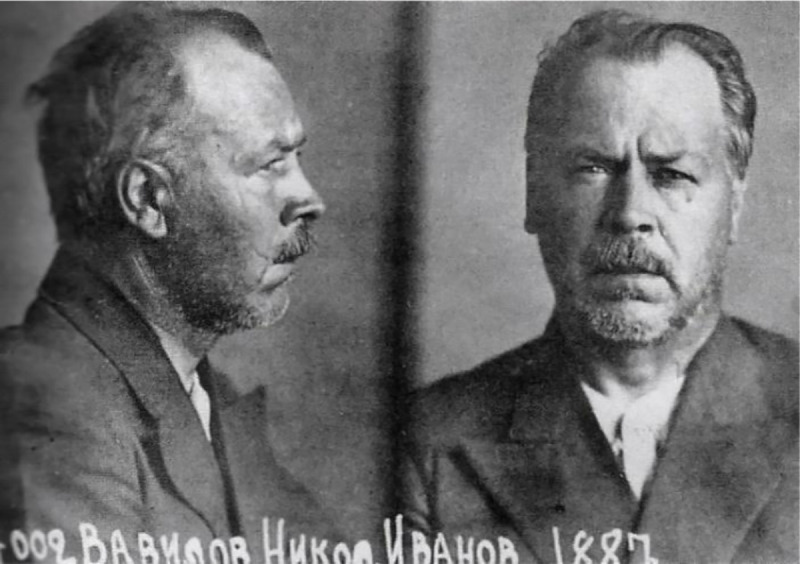
- Pringle P. The Murder of Nikolai Vavilov. New York, NY: Simon & Schuster; 2008.
- Sullivan ME. Alternative facts: Creationist Educational Policy and the Trump Administration. National Law Review; 10 (331) 2020 [cited 2020 Nov 26]. Available https://www.natlawreview.com/article/alternative-facts-classroom-creationist-educational-policy-and-trump-administration
Cited by
More Than Words: Leaders’ Speech and Risky Behavior during a Pandemic
Ajzenman, N., Cavalcanti, T., & Da Mata, D. (2020) · SSRN Electronic Journal · doi:10.2139/ssrn.3582908 · Cited by 169
“The Brazilian president’s COVID-19 rhetoric was widely deemed as anti-scientific by medicine scholars (Hotez, 2021), economists (Sachs, 2020), the media (The Guardian, 2020) and members of the scientific community (Scientific American, 2020).”
Social media trust: Fighting misinformation in the time of crisis
Shahbazi, M., & Bunker, D. (2024) · International Journal of Information Management · doi:10.1016/j.ijinfomgt.2024.102780 · Cited by 126
More than Words: Leaders’ Speech and Risky Behavior during a Pandemic
Ajzenman, N., Cavalcanti, T. V. D. V., & Mata, D. D. (2023) · American Economic Journal Economic Policy · doi:10.1257/pol.20210284 · Cited by 93
Pandemic Preparedness and Response: Lessons From COVID-19
Fauci, A. S., & Folkers, G. K. (2023) · The Journal of Infectious Diseases · doi:10.1093/infdis/jiad095 · Cited by 81
America’s deadly flirtation with antiscience and the medical freedom movement
Hotez, P. J. (2021) · Journal of Clinical Investigation · doi:10.1172/jci149072 · Cited by 65
Self-citationHotez, P. J., & Narayan, K. M. V. (2021) · JAMA · doi:10.1001/jama.2021.7439 · Cited by 56
Self-citationRazor sharp: The role of Occam's razor in science
McFadden, J. (2023) · Annals of the New York Academy of Sciences · doi:10.1111/nyas.15086 · Cited by 41
Mounting antiscience aggression in the United States
Hotez, P. J. (2021) · PLoS Biology · doi:10.1371/journal.pbio.3001369 · Cited by 33
Self-citationTrust in COVID ‐19 public health information
Verma, N., Fleischmann, K. R., Zhou, L., Xie, B., Lee, M. K., Rich, K., Shiroma, K., Jia, C., & Zimmerman, T. (2022) · Journal of the Association for Information Science and Technology · doi:10.1002/asi.24712 · Cited by 30
“…given airtime to polarizing statements by political figures, unsubstantiated and xenophobic conspiracy theories about the origins of COVID-19 (Hotez, 2021), andmisinformed opinions—often either overly alarming or overly optimistic—by public figures with greater public following than…”
BackgroundMasters, R. K., Woolf, S. H., & Aron, L. Y. (2022) · The Journals of Gerontology Series B · doi:10.1093/geronb/gbac028 · Cited by 27
“…leadership and infrastructure (Mendenhall, 2020; Samet et al., 2017), the quality and consistency of public health messaging and communications (Finset et al., 2020; OECD, 2020; Shah, 2020), and Americans’ trust in public health officials and agencies (Hotez, 2021; Weiss & Paasche-Orlow, 2020).”
Darwin's illegitimate children: How body language experts undermine Darwin's legacy
Denault, V., & Zloteanu, M. (2022) · Evolutionary Human Sciences · doi:10.1017/ehs.2022.50 · Cited by 28
“While the issue of misinformation about health can result in severe consequences (Hotez, 2020; Rocha et al., 2021), and is more frequently discussed than the issue of misinformation about non-verbal behaviour, the latter also has real-world implications, even outside of justice systems, for…”
BackgroundCOVID-19 vaccines and the pandemic: lessons learnt for other neglected diseases and future threats
Hotez, P. J., Gilbert, S. C., Saville, M. K., Privor-Dumm, L. A., Karim, S. S. A., Thompson, D., Excler, J., & Kim, J. H. (2023) · BMJ Global Health · doi:10.1136/bmjgh-2023-011883 · Cited by 22
Self-citationBrush, G. J., Guo, X., Hunting, A., & Frethey‐Bentham, C. (2023) · Journal of Macromarketing · doi:10.1177/02761467231182300 · Cited by 20
“A lack of belief in science in fl uenced vaccine hesitancy, which has implications – higher death rates are attributed to anti-scienti fi c beliefs (Hotez 2021).”
BackgroundCommunicating science and protecting scientists in a time of political instability
Hotez, P. J. (2022) · Trends in Molecular Medicine · doi:10.1016/j.molmed.2022.01.001 · Cited by 19
“For me, the answer is relatively straightforward: the antivaccine movement is a killer [3], and we have the knowledge, intellectual heft, and humanitarian obligation to confront it.”
BackgroundSelf-citationNeural and Cognitive Underpinnings of Counterintuitive Science and Math Reasoning in Adolescence
Dumontheil, I., Brookman‐Byrne, A., Tolmie, A. K., & Mareschal, D. (2022) · Journal of Cognitive Neuroscience · doi:10.1162/jocn_a_01854 · Cited by 19
“These concepts can be abstract, such as thermodynamics, the cellular basis of life, or probabilities, and a poor conceptual understanding can have real-world ramifications for both experts and the rest of the population (e.g., Hotez, 2021; Menge et al., 2018).”
BackgroundAlsmadi, I. M., Rice, N. M., & O’Brien, M. J. (2022) · Computational and Mathematical Organization Theory · doi:10.1007/s10588-022-09369-w · Cited by 18
“…to the spread of misinformation, there have been numerous confirmed reports of disinformation campaigns directed and implemented by several state actors, including Russia, China, and Iran (Gradon 2020; Bright et al. 2020; Dubow-itz and Ghasseminejad 2020; Hotez 2021; Horawalavithana et al. 2021 ).”
Social innovation that connects people to coasts in the Anthropocene
Celliers, L., Costa, M. M., Rölfer, L., Aswani, S., & Ferse, S. C. A. (2023) · Cambridge Prisms Coastal Futures · doi:10.1017/cft.2023.12 · Cited by 16
Science tikkun: Science for humanity in an age of aggression
Hotez, P. J. (2021) · The FASEB Journal · doi:10.1096/fj.202101604 · Cited by 14
Self-citationJang, S., Lee, S. K., & Connelly, S. (2022) · Human Vaccines & Immunotherapeutics · doi:10.1080/21645515.2022.2132752 · Cited by 17
Hotez, P. J. (2021) · EClinicalMedicine · doi:10.1016/j.eclinm.2020.100711 · Cited by 12
“It also attempted to attribute the deaths from COVID-19 to other causes or co-morbid conditions such as diabetes or obesity, while downplaying the importance of masks or social distancing, or even encouraging defiance of such measures in defense of “health freedom” [6].”
Self-citationPalmer, L. R. J., Sumanapala, D. K., Mareschal, D., Dumontheil, I., & the UnLocke Team (2025) · Journal of Cognitive Neuroscience · doi:10.1162/jocn_a_02303 · Cited by 10
“…skills, not only for personal growth, career opportunities (e.g., Waite & McDonald, 2019; Walker & Zhu, 2013), and economic and technological advancements (e.g., Hanushek & Woessmann, 2008) but also for tackling global challenges, such as climate change and public health crises (e.g., Hotez, 2021).”
García‐Arch, J., Barberia, I., Rodríguez‐Ferreiro, J., & Fuentemilla, L. (2022) · International Journal of Environmental Research and Public Health · doi:10.3390/ijerph192215154 · Cited by 9
“One of the best examples of the impact of these practices comes from health-related pseudosciences, which have produced unjustified investments of public money [1], dangerous interference with medical treatments [2], and have been associated with a number of deaths in recent years [3].”
BackgroundPotter, D. A., Thomas, A., & Rugo, H. S. (2021) · Clinical Cancer Research · doi:10.1158/1078-0432.ccr-21-1133 · Cited by 10
“At times, prominent leaders may express opinions in the media about COVID-19 and vaccination that contradict scientific guidance of the NIH, CDC, or FDA, thereby entering the space of patient safety without the required credentials (32).”
BackgroundProgress in vaccine development for infectious diseases—a Keystone Symposia report
Cable, J., Graham, B. S., Koup, R. A., Seder, R. A., Karikó, K., Pardi, N., Barouch, D. H., Sharma, B., Rauch, S., Nachbagauer, R., et al. (2023) · Annals of the New York Academy of Sciences · doi:10.1111/nyas.14975 · Cited by 8
Self-citationCovid-19: a disaster five years in the making
Hotez, P. J. (2021) · BMJ · doi:10.1136/bmj.n657 · Cited by 7
Self-citationCasadevall, A., & Fang, F. C. (2024) · mBio · doi:10.1128/mbio.00746-24 · Cited by 7
Cognition and Conspiracy Theories
Мусолфф, А. (2025) · Cambridge University Press eBooks · doi:10.1017/9781009660662 · Cited by 6
Carley, K. M. (2022) · Advanced sciences and technologies for security applications · doi:10.1007/978-3-030-94825-2_1 · Cited by 6
Health economic analyses of secondary vaccine effects: a systematic review and policy insights
Thompson, K. M., & Badizadegan, K. (2021) · Expert Review of Vaccines · doi:10.1080/14760584.2022.2017287 · Cited by 5
“Current politicization of vaccines and the amplification of any discussions of vaccine risks/uncertainty by social media may contribute to the erosion of trust in the system and to the increase in vaccine hesitancy [122,123].”
BackgroundPublic attitudes towards social media field experiments
Straub, V. J., Burton, J. W., Geers, M., & Lorenz-Spreen, P. (2024) · Scientific Reports · doi:10.1038/s41598-024-76948-z · Cited by 5
“…(or enhance) the public’s trust in science seem necessary to ensure that important, timely discoveries are well-received when communicated, as demonstrated by the real-world harms that have been induced by anti-science attitudes and lacking trust in vaccine and climate science domains 18,19 .”
BackgroundDenault, V. (2023) · International Journal of Qualitative Studies in Education · doi:10.1080/09518398.2023.2178687 · Cited by 4
“However, understanding this process is of paramount importance because pseudoscientific claims not only threaten the proper course of court proceedings, but also, as evidenced by the COVID-19 pandemic, endanger public health and kill people (Hotez, 2021; Teovanovi (cid:1) c et al., 2021).”
BackgroundAnti‐science conspiracies pose new threats to US biomedicine in 2023
Hotez, P. J. (2023) · FASEB BioAdvances · doi:10.1096/fba.2023-00032 · Cited by 4
Self-citationOn the Opportunities and Risks of Examining the Genetics of Entrepreneurship
Heller, B., Erlich, Y., Kariv, D., & Maaravi, Y. (2022) · Genes · doi:10.3390/genes13122208 · Cited by 3
“Nevertheless, given the history of eugenics [71] and the negative social impact of pseudoscientific thoughts regarding genetics [72], we urge entrepreneurial genetics researchers to be wary of the possibility of harmful misuses and misunderstandings of their findings.”
BackgroundHenrique, D. S. G., Kucharavy, A., & Guerraoui, R. (2023) · arXiv · doi:10.48550/arxiv.2304.08968 · Cited by 2
“Undercover social influence and harassment with economical [38], political [27], and military goals [15] is a welldeveloped and highly active industry [9,3].”
BackgroundKlinga, M., & Lundgren, M. (2024) · Journal of International Crisis and Risk Communication Research · doi:10.56801/jicrcr.v7.i1.5 · Cited by 3
Essa, F. A. (2026) · Elsevier eBooks · doi:10.1016/b978-0-443-27550-0.00012-2 · Cited by 2
Rahtz, D. R., Shultz, C. J., & Sirgy, M. J. (2022) · Community quality-of-life and well-being · doi:10.1007/978-3-030-98152-5_27 · Cited by 4
Bernhard, M. H., & O’Neill, D. I. (2021) · Perspectives on Politics · doi:10.1017/s1537592721000797 · Cited by 2
Duarte, E. S., Mota, A. T., de Carvalho, J. R., Xavier, R. C., & Souza, P. V. S. (2021) · Physics Education · doi:10.1088/1361-6552/ac1a05 · Cited by 2
“Flat Earth movement is being defended once again by people who are unaware of scientific procedures and insist on defending opinions without scientific evidence [6–10].”
Making it personal: science communication for the masses
Sullivan, W. J., Strathdee, S. A., & Hotez, P. J. (2021) · Trends in Parasitology · doi:10.1016/j.pt.2021.05.010 · Cited by 2
Self-citationColonial Privilege and COVID-19
Blume, A. W. (2022) · International and cultural psychology/International and cultural psychology series · doi:10.1007/978-3-030-92825-4_9 · Cited by 2
Barry, J. J., & Men, L. R. (2025) · Health Communication · doi:10.1080/10410236.2025.2499962 · Cited by 1
“…in the U.S. President Donald Trump downplayed the seriousness of the disease at the start of the pandemic, and to varying degrees throughout the remainder of his first term, plus the “anti-science pursuits” of the Trump White House and Coronavirus Task Force caused “serious harm” (Hotez, 2021).”
Anchored and Propagated Updating Within Pseudoscientific Belief Systems
García‐Arch, J., Ballestero‐Arnau, M., Barberia, I., & Rodríguez-Ferreiro, J. (2026) · Annals of the New York Academy of Sciences · doi:10.1111/nyas.70229 · Cited by 1
Specialty Grand Challenge for Brain Disease Mechanisms
Boison, D. (2021) · Frontiers in Molecular Neuroscience · doi:10.3389/fnmol.2021.689903 · Cited by 1
“…in countries where leaders have discredited scientific knowledge and findings, by downplaying the impacts of the pandemic, by promoting easy and scientifically unfounded solutions or treatments, and by forging divisions between believers and nonbelievers of science (Lasco, 2020; Hotez, 2021).”
BackgroundJalali, F. M., Gheibi, M., Reza, A., Amir, T., & Zahra, K. (2021) · Annals of Biomedical Science and Engineering · doi:10.29328/journal.abse.1001013 · Cited by 1
“Some of the public health challenges associated with waterborne risks related diseases are listed below [14-19].”
BackgroundPrecursory Prevention: Togetherness for Better Health
Gregorio, D. I. (2022) · American Journal of Preventive Medicine · doi:10.1016/j.amepre.2022.04.029 · Cited by 1
“Contempt for science, bolstered by a multimodal conglomerate of economic, political, and social forces, blurs the distinctions between information, disinformation, and infotainment.(4) Expertise, once the by-product of training and skill, is now proffered to influencers who under 'illusions of explanatory depth'(5) am…”
BackgroundPseudociencias: Una nueva amenaza al proyecto humanista secular
García-Belaunde, V., & Gayozzo, P. (2023) · Desde el Sur Revista de Ciencias Humanas y Sociales de la Universidad Científica del Sur · doi:10.21142/des-1502-2023-0026 · Cited by 1
Three things we can do now to reduce the risk of avian influenza spillovers
Yeh, K. B., Bahnfleth, W. P., Bradforda, E., Cardona, C. J., Coleman, K. K., Hudson, P. J., Dadonaite, B., Hutchins, R. J., Maresso, A. W., MacIntyre, C. R., et al. (2025) · Proceedings of the National Academy of Sciences · doi:10.1073/pnas.2503565122 · Cited by 1
La COVID-19, la ciencia y la pseudociencia, un yin-yang peligroso
Universidad de San Martín de Porres, F. D. M. H. L., Caparó, F. L., Fujita, R., & Universidad de San Martín de Porres, F. D. M. H. L. (2021) · Horizonte Médico (Lima) · doi:10.24265/horizmed.2021.v21n2.01
Gómez‐Marín, J. E. (2021) · Hechos Microbiológicos · doi:10.17533/udea.hm.v12n2a01
Recommendation: Social innovation that connects people to coasts in the Anthropocene — R2/PR11
Celliers, L., Costa, M. M., Rölfer, L., et al. (2023) · Cambridge Prisms Coastal Futures · doi:10.1017/cft.2023.12.pr11
Decision: Social innovation that connects people to coasts in the Anthropocene — R2/PR12
Celliers, L., Costa, M. M., Rölfer, L., et al. (2023) · Cambridge Prisms Coastal Futures · doi:10.1017/cft.2023.12.pr12
Author comment: Social innovation that connects people to coasts in the Anthropocene — R2/PR10
Celliers, L. (2023) · Cambridge Prisms Coastal Futures · doi:10.1017/cft.2023.12.pr10
Decision: Social innovation that connects people to coasts in the Anthropocene — R0/PR5
Celliers, L., Costa, M. M., Rölfer, L., et al. (2022) · Cambridge Prisms Coastal Futures · doi:10.1017/cft.2023.12.pr5
Review: Social innovation that connects people to coasts in the Anthropocene — R0/PR2
Celliers, L., Costa, M. M., Rölfer, L., et al. (2022) · Cambridge Prisms Coastal Futures · doi:10.1017/cft.2023.12.pr2
Author comment: Social innovation that connects people to coasts in the Anthropocene — R0/PR1
Celliers, L. (2022) · Cambridge Prisms Coastal Futures · doi:10.1017/cft.2023.12.pr1
Decision: Social innovation that connects people to coasts in the Anthropocene — R1/PR9
Celliers, L., Costa, M. M., Rölfer, L., et al. (2023) · Cambridge Prisms Coastal Futures · doi:10.1017/cft.2023.12.pr9
Author comment: Social innovation that connects people to coasts in the Anthropocene — R1/PR6
Celliers, L. (2022) · Cambridge Prisms Coastal Futures · doi:10.1017/cft.2023.12.pr6
Recommendation: Social innovation that connects people to coasts in the Anthropocene — R1/PR8
Celliers, L., Costa, M. M., Rölfer, L., et al. (2023) · Cambridge Prisms Coastal Futures · doi:10.1017/cft.2023.12.pr8
Review: Social innovation that connects people to coasts in the Anthropocene — R1/PR7
Celliers, L., Costa, M. M., Rölfer, L., et al. (2022) · Cambridge Prisms Coastal Futures · doi:10.1017/cft.2023.12.pr7
Review: Social innovation that connects people to coasts in the Anthropocene — R0/PR3
Celliers, L., Costa, M. M., Rölfer, L., et al. (2022) · Cambridge Prisms Coastal Futures · doi:10.1017/cft.2023.12.pr3
Recommendation: Social innovation that connects people to coasts in the Anthropocene — R0/PR4
Celliers, L., Costa, M. M., Rölfer, L., et al. (2022) · Cambridge Prisms Coastal Futures · doi:10.1017/cft.2023.12.pr4
O impacto do negacionismo científico na relação médico-paciente
Dumont, G. D. M., Alves, É. M., da Silva, J. L., & Amâncio, N. D. F. G. (2023) · Peer Review · doi:10.53660/1661.prw3238
A ascensão letal da anticiência: advertência de um cientista
Hotez, P. J. (2025) · Editora FIOCRUZ eBooks · doi:10.7476/9786557083017
Self-citationHotez, P. J. (2025) · Editora FIOCRUZ eBooks · doi:10.7476/9786557083017.0001
Self-citationTempos Difíceis para Ser Cientista
Hotez, P. J. (2025) · Editora FIOCRUZ eBooks · doi:10.7476/9786557083017.0006
Self-citationA Mais Árdua Comunicação Pública da Ciência de Todos os Tempos
Hotez, P. J. (2025) · Editora FIOCRUZ eBooks · doi:10.7476/9786557083017.0008
Self-citationUm Ecossistema Político Anticiência
Hotez, P. J. (2025) · Editora FIOCRUZ eBooks · doi:10.7476/9786557083017.0005
Self-citationA Propaganda sobre Liberdade de Escolha em Saúde nos Estados Unidos
Hotez, P. J. (2025) · Editora FIOCRUZ eBooks · doi:10.7476/9786557083017.0003
Self-citationUm Exército de Patriotas se Volta contra os Cientistas
Hotez, P. J. (2025) · Editora FIOCRUZ eBooks · doi:10.7476/9786557083017.0002
Self-citationO Manual de Estratégias Autoritárias
Hotez, P. J. (2025) · Editora FIOCRUZ eBooks · doi:10.7476/9786557083017.0007
Self-citationCentro Meridional da Lei da Pobreza para Cientistas
Hotez, P. J. (2025) · Editora FIOCRUZ eBooks · doi:10.7476/9786557083017.0009
Self-citationHotez, P. J. (2025) · Editora FIOCRUZ eBooks · doi:10.7476/9786557083017.0004
Self-citationUsing Machine Learning to Detect Scientific Misinformation
Impey, C., Danehy, A., Wenger, M. C., & Buxner, S. R. (2025) · Astronomy Education Journal · doi:10.32374/2025.5.1.138aer
Eight Basic Literacies for Librarians: A New Normal Agenda for Librarianship Education
Mon, L. M. (2021) · Scholar Commons (University of South Carolina)
Extraterrestrial Intelligent Life: What The Public Believes
Impey, C. D. (2024) · Proceedings of the International Astronomical Union · doi:10.1017/s1743921324001959
McCrimmon, T., Sangova, F., Sirojiddinova, M., Philbin, M. M., Sommer, M., Metsch, L. R., Jonbekov, J., & Weine, S. M. (2026) · AIDS Education and Prevention · doi:10.1521/aeap.2026.38.2.115
Metadata
- Authors
- Hotez, P. J.
- Affiliations
- Baylor University (US)
- Corresponding author
- Hotez, Peter J.
- ORCID
- Hotez, Peter J.
- Venue
- PLOS Biology
- Publisher
- Public Library of Science (PLoS)
- Published
- 2021-01-28
- Volume
- 19
- Issue
- 1
- Pages
- e3001068
- ISSN
- 1544-9173 (ISSN-L)
- 1545-7885
- PMC
- PMC7842901
- OpenAlex
- W3123077924
- Cited by
- 73
- References
- 33
- Citations by year
- 2026: 2 · 2025: 14 · 2024: 4 · 2023: 16 · 2022: 21 · 2021: 15
- FWCI
- 46.54
- Type
- journal article
- Language
- en
- Open access
- gold
- doi.org
- Licence
- Locations
- PLoS Biology (publishedVersion, cc-by)
- PubMed Central (publishedVersion, cc-by)
- PubMed (publishedVersion)
- DOAJ (DOAJ: Directory of Open Access Journals) (submittedVersion, cc-by-sa)
- Rice Research Repository (Rice University) (submittedVersion)
- Topics
- Social Sciences › Political Science and International Relations › Science and Science Education
- Social Sciences › Sociology and Political Science › Misinformation and Its Impacts
- Social Sciences › Health › Vaccine Coverage and Hesitancy
- Keywords
- anti-science, politicization of science, pseudoscience, anti-vaccine movement, COVID-19 pandemic, measles, vaccine-preventable diseases, biomedical research, science policy, international coordination
- MeSH terms
- Vaccination Refusal, COVID-19, SARS-CoV-2, Pseudoscience, Humans, Health Knowledge, Attitudes, Practice, Politics, Public Opinion, United States, USSR, Vaccination
About these checks
Registry, retraction, Cites and statistics results are computed, not judged, with one exception: a printed reference that no index lists is read once by a model before it counts as a citation error. Claims are extracted by a model and kept only when their quote appears verbatim in the text; each cited source is then checked, with a model’s help, for whether it says what the claim relies on. Those verdicts can be wrong — read the claim’s quote and the cited source before relying on one.
Statistics and arithmetic are recomputed, not judged.
Confidence bands are shown only for fields calibrated on our annotated test set. None is calibrated yet, so no band is shown.
What counts as a claim ›How we measure confidence ›How we check this ›
Are you an author, or do you see a problem with this page? Request a review
Data sources
Bibliographic data: Semantic Scholar, OpenAlex, Crossref.
Contains information from the Semantic Scholar Academic Graph Datasets, made available under the ODC Attribution License (ODC-BY 1.0).
Semantic Scholar’s data is described in: Kinney, R., et al. (2023). The Semantic Scholar Open Data Platform. arXiv:2301.10140.
