

The DOI matches its Crossref record; 64 of the 65 references it cites were found in a registry or an index.
Discovering Motifs in Ranked Lists of DNA Sequences
Open accessAbstract
Computational methods for discovery of sequence elements that are enriched in a target set compared with a background set are fundamental in molecular biology research. One example is the discovery of transcription factor binding motifs that are inferred from ChIP-chip (chromatin immuno-precipitation on a microarray) measurements. Several major challenges in sequence motif discovery still require consideration: (i) the need for a principled approach to partitioning the data into target and background sets; (ii) the lack of rigorous models and of an exact p-value for measuring motif enrichment; (iii) the need for an appropriate framework for accounting for motif multiplicity; (iv) the tendency, in many of the existing methods, to report presumably significant motifs even when applied to randomly generated data. In this paper we present a statistical framework for discovering enriched sequence elements in ranked lists that resolves these four issues. We demonstrate the implementation of this framework in a software application, termed DRIM (discovery of rank imbalanced motifs), which identifies sequence motifs in lists of ranked DNA sequences. We applied DRIM to ChIP-chip and CpG methylation data and obtained the following results. (i) Identification of 50 novel putative transcription factor (TF) binding sites in yeast ChIP-chip data. The biological function of some of them was further investigated to gain new insights on transcription regulation networks in yeast. For example, our discoveries enable the elucidation of the network of the TF ARO80. Another finding concerns a systematic TF binding enhancement to sequences containing CA repeats. (ii) Discovery of novel motifs in human cancer CpG methylation data. Remarkably, most of these motifs are similar to DNA sequence elements bound by the Polycomb complex that promotes histone methylation. Our findings thus support a model in which histone methylation and CpG methylation are mechanistically linked. Overall, we demonstrate that the statistical framework embodied in the DRIM software tool is highly effective for identifying regulatory sequence elements in a variety of applications ranging from expression and ChIP-chip to CpG methylation data. DRIM is publicly available at http://bioinfo.cs.technion.ac.il/drim.
Overview
The claims and statistics of this paper haven’t been checked yet.
Run the check — free, no account needed. It reads the open-access text and checks the sources it cites.
Integrity signals
Registry
Cites
Statistics
Figures
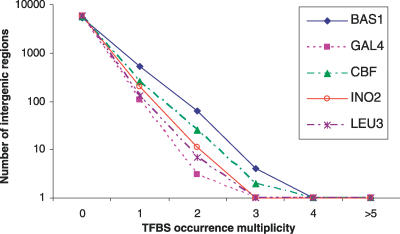
Verification
Claims the paper makes
The claims and statistics of this paper haven’t been checked yet.
Run the check — free, no account needed. It reads the open-access text and checks the sources it cites.
Claims other papers make about this one
Each is checked against this paper’s own text: does it say what the citing paper says it does?
In the citing paper
“These were enriched for specialized programs across ages: Embryonic epithelia upregulated genes for developmental processes (Figure 3K, S3K), while aged epithelia upregulated host-defense programs (Figure 3L, FDR q-value < 0.01, GOrilla (Eden et al., 2007, 2009;Baruch et al., 2014).”
From A cellular and spatial map of the choroid plexus across brain ventricles and ages (2021) · cites this paper as Eden et al., 2007
Self-check
Percentages, sums and reported differences re-computed from the paper’s own numbers.
The self-check needs the paper’s full text.
Citations
Cites
Gene Ontology: tool for the unification of biology
Ashburner, M., Ball, C. A., Blake, J. A., Botstein, D., Butler, H., Cherry, J. M., Davis, A. P., Dolinski, K., Dwight, S. S., Eppig, J. T., et al. (2000) · Nature Genetics · doi:10.1038/75556 · Cited by 43,206
Fitting a mixture model by expectation maximization to discover motifs in biopolymers.
Bailey, T. L., & Elkan, C. (1994) · PubMed · Cited by 4,982
Transcriptional Regulatory Networks in Saccharomyces cerevisiae
Lee, T. I., Rinaldi, N. J., Robert, F., Odom, D. T., Bar-Joseph, Z., Gerber, G. K., Hannett, N. M., Harbison, C. T., Thompson, C. M., Simon, I., et al. (2002) · Science · doi:10.1126/science.1075090 · Cited by 2,956
Control of Developmental Regulators by Polycomb in Human Embryonic Stem Cells
Lee, T. I., Jenner, R. G., Boyer, L. A., Guenther, M. G., Levine, S. S., Kumar, R., Chevalier, B. S., Johnstone, S. E., Cole, M. F., Isono, K., et al. (2006) · Cell · doi:10.1016/j.cell.2006.02.043 · Cited by 2,296
The Polycomb group protein EZH2 directly controls DNA methylation
Viré, E., Brenner, C., Deplus, R., Blanchon, L., Fraga, M., Didelot, C., Morey, L., Van Eynde, A., Bernard, D., Vanderwinden, J.-M., et al. (2006) · Nature · doi:10.1038/nature04431 · Cited by 2,204
Transcriptional regulatory code of a eukaryotic genome
Harbison, C. T., Gordon, D. B., Lee, T. I., Rinaldi, N. J., MacIsaac, K. D., Danford, T., Hannett, N. M., Tagne, J., Reynolds, D. B., Yoo, J. Y., et al. (2004) · Nature · doi:10.1038/nature02800 · Cited by 2,135
Boyle, E. I., Weng, S., Gollub, J., Jin, H., Botstein, D., Cherry, J. M., & Sherlock, G. (2004) · Bioinformatics · doi:10.1093/bioinformatics/bth456 · Cited by 2,067
Molecular classification of cutaneous malignant melanoma by gene expression profiling
Bittner, M. L., Meltzer, P. S., Chen, Y., Jiang, Y. Y., Seftor, E. A., Hendrix, M. J. C., Radmacher, M. D., Simon, R., Zohar Yakhini, B., Ben‐Dor, A., et al. (2000) · Nature · doi:10.1038/35020115 · Cited by 1,989
Genome-Wide Location and Function of DNA Binding Proteins
Ren, B., Robert, F., Wyrick, J. J., Aparicio, O. M., Jennings, E. G., Simon, I., Zeitlinger, J., Schreiber, J., Hannett, N. M., Kanin, E. I., et al. (2000) · Science · doi:10.1126/science.290.5500.2306 · Cited by 1,768
Control of Pancreas and Liver Gene Expression by HNF Transcription Factors
Odom, D. T., Zizlsperger, N., Gordon, D. B., Bell, G. W., Rinaldi, N. J., Murray, H. L., Volkert, T. L., Schreiber, J., Rolfe, A., Gifford, D. K., et al. (2004) · Science · doi:10.1126/science.1089769 · Cited by 1,348
Genome-wide mapping of Polycomb target genes unravels their roles in cell fate transitionsPreprint
Bracken, A. P., Dietrich, N., Pasini, D., Hansen, K. H., & Helin, K. (2006) · Genes & Development · doi:10.1101/gad.381706 · Cited by 1,286
Assessing computational tools for the discovery of transcription factor binding sites
Tompa, M., Li, N., Bailey, T. L., Church, G. M., De Moor, B., Eskin, E., Favorov, A. V., Frith, M. C., Fu, Y., Kent, W. J., et al. (2005) · Nature Biotechnology · doi:10.1038/nbt1053 · Cited by 1,268
Zhang, X., Odom, D. T., Koo, S.-H., Conkright, M. D., Canettieri, G., Best, J., Chen, H., Jenner, R., Herbolsheimer, E., Jacobsen, E., et al. (2005) · Proceedings of the National Academy of Sciences · doi:10.1073/pnas.0501076102 · Cited by 992
Roth, F. P., Hughes, J. D., Estep, P. W., & Church, G. M. (1998) · Nature Biotechnology · doi:10.1038/nbt1098-939 · Cited by 939
BIOPROSPECTOR: DISCOVERING CONSERVED DNA MOTIFS IN UPSTREAM REGULATORY REGIONS OF CO-EXPRESSED GENES
Liu, X., Brutlag, D. L., & Liu, J. S. (2000) · Pacific Symposium on Biocomputing (PSB) · doi:10.1142/9789814447362_0014 · Cited by 823
Tissue Classification with Gene Expression Profiles
Ben‐Dor, A., Bruhn, L., Friedman, N., Nachman, I., Schummer, M., & Yakhini, Z. (2000) · Journal of Computational Biology · doi:10.1089/106652700750050943 · Cited by 743
Regulatory element detection using correlation with expression
Bussemaker, H. J., Li, H., & Siggia, E. D. (2001) · Nature Genetics · doi:10.1038/84792 · Cited by 721
Liu, X. S., Brutlag, D. L., & Liu, J. S. (2002) · Nature Biotechnology · doi:10.1038/nbt717 · Cited by 670
Buck, M. J., & Lieb, J. D. (2004) · Genomics · doi:10.1016/j.ygeno.2003.11.004 · Cited by 613
Evidence for an instructive mechanism of de novo methylation in cancer cells
Keshet, I., Schlesinger, Y., Farkash, S., Rand, E., Hecht, M., Segal, E., Pikarsky, E., Young, R. A., Niveleau, A., Cedar, H., et al. (2006) · Nature Genetics · doi:10.1038/ng1719 · Cited by 483
Hallikas, O. K., Palin, K., Sinjushina, N., Rautiainen, R., Partanen, J. M., Ukkonen, E., & Taipale, J. (2006) · Cell · doi:10.1016/j.cell.2005.10.042 · Cited by 469
Biotechnological production of 2-phenylethanol
Etschmann, M. M. W., Bluemke, W., Sell, D., & Schrader, J. (2002) · Applied Microbiology and Biotechnology · doi:10.1007/s00253-002-0992-x · Cited by 435
Levine, S. S., Weiss, A., Erdjument‐Bromage, H., Shao, Z., Tempst, P., & Kingston, R. E. (2002) · Molecular and Cellular Biology · doi:10.1128/mcb.22.17.6070-6078.2002 · Cited by 388
Gibbs Recursive Sampler: finding transcription factor binding sites
Thompson, W. A. (2003) · Nucleic Acids Research · doi:10.1093/nar/gkg608 · Cited by 318
Computational prediction of transcription-factor binding site locations.
Bulyk, M. L. (2003) · Genome biology · doi:10.1186/gb-2003-5-1-201 · Cited by 314
Predicting aberrant CpG island methylation
Feltus, F. A., Lee, E. K., Costello, J., Plass, C., & Vertino, P. M. (2003) · Proceedings of the National Academy of Sciences · doi:10.1073/pnas.2037852100 · Cited by 281
Genome-Wide Prediction of Polycomb/Trithorax Response Elements in Drosophila melanogaster
Ringrose, L., Rehmsmeier, M., Dura, J., & Paro, R. (2003) · Developmental Cell · doi:10.1016/s1534-5807(03)00337-x · Cited by 261
Sinha, S. (2003) · Nucleic Acids Research · doi:10.1093/nar/gkg618 · Cited by 257
Limitations and potentials of current motif discovery algorithms
Hu, J., Li, Y., & Kihara, D. (2005) · Nucleic Acids Research · doi:10.1093/nar/gki791 · Cited by 240
ANN-SPEC: A METHOD FOR DISCOVERING TRANSCRIPTION FACTOR BINDING SITES WITH IMPROVED SPECIFICITY
Workman, C. T., & Stormo, G. D. (1999) · Pacific Symposium on Biocomputing (PSB) · doi:10.1142/9789814447331_0044 · Cited by 238
Strutt, H. L., Cavalli, G., & Paro, R. (1997) · The EMBO Journal · doi:10.1093/emboj/16.12.3621 · Cited by 229
Bock, C., Paulsen, M., Tierling, S., Mikeska, T., Lengauer, T., & Walter, J. (2006) · PLoS Genetics · doi:10.1371/journal.pgen.0020026 · Cited by 222
Discovery of novel transcription factor binding sites by statistical overrepresentation
Sinha, S. (2002) · Nucleic Acids Research · doi:10.1093/nar/gkf669 · Cited by 216
Vuralhan, Z., de Morais, M. A., Tai, S. L., Piper, M. D. W., & Pronk, J. T. (2003) · Applied and Environmental Microbiology · doi:10.1128/aem.69.8.4534-4541.2003 · Cited by 206
Modeling dependencies in protein-DNA binding sites
Barash, Y., Elidan, G., Friedman, N., & Kaplan, T. (2003) · Research in Computational Molecular Biology · doi:10.1145/640075.640079 · Cited by 203
A statistical method for finding transcription factor binding sites.
Sinha, S., & Tompa, M. (2000) · PubMed · Cited by 198
Kittleson, M. M., Minhas, K. M., Irizarry, R. A., Ye, S. Q., Edness, G., Breton, E., Conte, J. V., Tomaselli, G. F., Garcia, J. G. N., & Hare, J. M. (2005) · Physiological Genomics · doi:10.1152/physiolgenomics.00255.2004 · Cited by 173
Identification of transcription factor binding sites with variable-order Bayesian networks
Ben‐Gal, I., Shani, A., Gohr, A., Grau, J., Arviv, S., Shmilovici, A., Posch, S., & Große, I. (2005) · Computer applications in the biosciences · doi:10.1093/bioinformatics/bti410 · Cited by 170
Displaying the in formation contents of structural RNA alignments: the structure logos
Gorodkin, J., Heyer, L. J., Brunak, S., & Storomo, G. D. (1997) · Computer applications in the biosciences · doi:10.1093/bioinformatics/13.6.583 · Cited by 169
Practical Strategies for Discovering Regulatory DNA Sequence Motifs
MacIsaac, K. D., & Fraenkel, E. (2006) · PLoS Computational Biology · doi:10.1371/journal.pcbi.0020036 · Cited by 167
Transcriptional Induction by Aromatic Amino Acids in Saccharomyces cerevisiae
Iraqui, I., VISSERS, S., André, B., & Urrestarazu, A. (1999) · Molecular and Cellular Biology · doi:10.1128/mcb.19.5.3360 · Cited by 143
De novo cis-regulatory module elicitation for eukaryotic genomes
Gupta, M., & Liu, J. S. (2005) · Proceedings of the National Academy of Sciences · doi:10.1073/pnas.0408743102 · Cited by 138
Blaiseau, P.-L., Isnard, A., Surdin-Kerjan, Y., & Thomas, D. (1997) · Molecular and Cellular Biology · doi:10.1128/mcb.17.7.3640 · Cited by 128
Multiple transcriptional activation complexes tether the yeast activator Met4 to DNA
Blaiseau, P.-L., & Thomas, D. (1998) · The EMBO Journal · doi:10.1093/emboj/17.21.6327 · Cited by 122
Oligonucleotide‐based microarray for DNA methylation analysis: Principles and applications
Shi, H., Maier, S., Nimmrich, I., Yan, P. S., Caldwell, C. W., Olek, A., & Huang, T. H. ‐. (2002) · Journal of Cellular Biochemistry · doi:10.1002/jcb.10313 · Cited by 114
Jensen, L. J., & Knudsen, S. (2000) · Bioinformatics · doi:10.1093/bioinformatics/16.4.326 · Cited by 110
Zhu, Z., Pilpel, Y., & Church, G. M. (2002) · Journal of Molecular Biology · doi:10.1016/s0022-2836(02)00026-8 · Cited by 101
A Simple Hyper-Geometric Approach for Discovering Putative Transcription Factor Binding Sites
Barash, Y., Bejerano, G., & Friedman, N. (2001) · Lecture notes in computer science · doi:10.1007/3-540-44696-6_22 · Cited by 94
Mining ChIP-chip data for transcription factor and cofactor binding sites
Smith, A. D., Sumazin, P., Das, D., & Zhang, M. Q. (2005) · Bioinformatics · doi:10.1093/bioinformatics/bti1043 · Cited by 87
J�nger, M., & Thienel, S. (2000) · Software Practice and Experience · doi:10.1002/1097-024x(200009)30:11 · Cited by 86
Anderson, S. F., Steber, C. M., Esposito, R. E., & Coleman, J. E. (1995) · Protein Science · doi:10.1002/pro.5560040918 · Cited by 72
Deremble, C., & Lavery, R. (2005) · Current Opinion in Structural Biology · doi:10.1016/j.sbi.2005.01.018 · Cited by 63
A boosting approach for motif modeling using ChIP-chip data
Hong, P., Liu, X. S., Zhou, Q., Lu, X., Liu, J. S., & Wong, W. H. (2005) · Computer applications in the biosciences · doi:10.1093/bioinformatics/bti402 · Cited by 61
Adaptively inferring human transcriptional subnetworks
Das, D., Nahle, Z. A., & Zhang, M. Q. (2006) · Molecular Systems Biology · doi:10.1038/msb4100067 · Cited by 61
GOLEM: an interactive graph-based gene-ontology navigation and analysis tool
Sealfon, R. S., Hibbs, M. A., Huttenhower, C., Myers, C. L., & Troyanskaya, O. G. (2006) · BMC Bioinformatics · doi:10.1186/1471-2105-7-443 · Cited by 58
Stubb: a program for discovery and analysis of cis-regulatory modules
Sinha, S., Liang, Y., & Siggia, E. D. (2006) · Nucleic Acids Research · doi:10.1093/nar/gkl224 · Cited by 55
Ben‐Dor, A., Friedman, N., & Yakhini, Z. (2000) · Cited by 48
Regulatory element detection using correlation with expression (abstract only)
Bussemaker, H. J., Li, H., & Siggia, E. D. (2001) · doi:10.1145/369133.369174 · Cited by 35
Scoring functions for transcription factor binding site prediction
Friberg, M. T., von Rohr, P., & Gonnet, G. H. (2005) · BMC Bioinformatics · doi:10.1186/1471-2105-6-84 · Cited by 24
Nussinov, R. (1986) · Biochimica et Biophysica Acta (BBA) - Gene Structure and Expression · doi:10.1016/0167-4781(86)90106-5 · Cited by 20
Using Expression Data to Discover RNA and DNA Regulatory Sequence Motifs
Zilberstein, C. B.-Z., Eskin, E., & Zohar Yakhini, B. (2005) · Lecture notes in computer science · doi:10.1007/978-3-540-32280-1_7 · Cited by 13
An improved map of conserved regulatory sites for Saccharomyces cerevisiae
MacIsaac, K. D., Wang, T., Gordon, D. B., Gifford, D. K., Stormo, G. D., & Fraenkel, E. (2006) · BMC Bioinformatics · doi:10.1186/1471-2105-7-113 · Cited by 9
Cis-acting sequences that affect the expression of the human fetal gamma-globin genes.
Anagnou, N. P., Moulton, A. D., Keller, G. M., Karlsson, S., Papayannopoulou, T., Stamatoyannopoulos, G., & Nienhuis, A. W. (1985) · PubMed · Cited by 8
Bradford, I., Winter, R. M., Evans, C. R., & Bard, J. (2004) · Bioinformatics · doi:10.1093/bioinformatics/bti017 · Cited by 4
Cited by
Sorted by citations
Molecular and genetic properties of tumors associated with local immune cytolytic activity
Rooney, M. S., Shukla, S. A., Wu, C. J., Getz, G., & Hacohen, N. (2015) · Cell · doi:10.1016/j.cell.2014.12.033 · Cited by 3,825
GOrilla: a tool for discovery and visualization of enriched GO terms in ranked gene lists
Eden, E., Navon, R., Steinfeld, I., Lipson, D., & Yakhini, Z. (2009) · BMC Bioinformatics · doi:10.1186/1471-2105-10-48 · Cited by 3,356
Host microbiota constantly control maturation and function of microglia in the CNS
Erny, D., Hrabě de Angelis, A. L., Jaitin, D., Wieghofer, P., Staszewski, O., David, E., Keren-Shaul, H., Mahlakoiv, T., Jakobshagen, K., Buch, T., et al. (2015) · Nature Neuroscience · doi:10.1038/nn.4030 · Cited by 3,569
Microglia development follows a stepwise program to regulate brain homeostasis
Matcovitch-Natan, O., Winter, D. R., Giladi, A., Vargas Aguilar, S., Spinrad, A., Sarrazin, S., Ben-Yehuda, H., David, E., Zelada González, F., Perrin, P., et al. (2016) · Science · doi:10.1126/science.aad8670 · Cited by 1,180
Reyfman, P. A., Walter, J. M., Joshi, N., Anekalla, K. R., McQuattie-Pimentel, A. C., Chiu, S., Fernandez, R., Akbarpour, M., Chen, C.-I., Ren, Z., et al. (2019) · American Journal of Respiratory and Critical Care Medicine · doi:10.1164/rccm.201712-2410oc · Cited by 1,203
Metadata
- Authors
- Eden, E., Lipson, D., Yogev, S., & Yakhini, Z.
- Affiliations
- Technion – Israel Institute of Technology (IL)
- Corresponding author
- Eden, Eran
- ORCID
- Lipson, Doron
- Venue
- PLoS Computational Biology
- Publisher
- Public Library of Science (PLoS)
- Published
- 2007-03-23
- Volume
- 3
- Issue
- 3
- Pages
- e39
- ISSN
- 1553-734X (ISSN-L)
- 1553-7358
- PMC
- PMC1829477
- OpenAlex
- W1981093360
- Cited by
- 696
- References
- 65
- Citations by year
- 2026: 18 · 2025: 25 · 2024: 23 · 2023: 44 · 2022: 42 · 2021: 80 · 2020: 54 · 2019: 57 · 2018: 53 · 2017: 52 · 2016: 53 · 2015: 36 · 2014: 31 · 2013: 41 · 2012: 22
- FWCI
- 6.49
- Type
- journal article
- Language
- en
- Open access
- gold
- doi.org
- Locations
- PLoS Computational Biology (publishedVersion, cc-by)
- Europe PMC (PubMed Central) (publishedVersion, cc-by)
- PubMed Central (publishedVersion, cc-by)
- PubMed (publishedVersion)
- DOAJ (DOAJ: Directory of Open Access Journals) (submittedVersion, cc-by-sa)
- Figshare (submittedVersion, cc-by)
- Funders
- Hebrew University of Jerusalem
- Topics
- Life Sciences › Biochemistry, Genetics and Molecular Biology › Molecular Biology › Genomics and Chromatin Dynamics
- Life Sciences › Biochemistry, Genetics and Molecular Biology › Molecular Biology › Genomics and Phylogenetic Studies
- Life Sciences › Biochemistry, Genetics and Molecular Biology › Molecular Biology › Bioinformatics and Genomic Networks
- Keywords
- motif discovery, ranked lists, transcription factor binding sites, ChIP-chip, CpG methylation, motif enrichment, Polycomb complexes, histone methylation, CA repeats
- MeSH terms
- Algorithms, Base Sequence, Molecular Sequence Data, Regulatory Sequences, Nucleic Acid, Sequence Homology, Nucleic Acid, Software, Sequence Alignment, Conserved Sequence, Sequence Analysis, DNA, CpG Islands, DNA Methylation, Chromatin Immunoprecipitation
About these checks
Registry, retraction, Cites and statistics results are computed, not judged, with one exception: a printed reference that no index lists is read once by a model before it counts as a citation error. Claims are extracted by a model and kept only when their quote appears verbatim in the text; each cited source is then checked, with a model’s help, for whether it says what the claim relies on. Those verdicts can be wrong — read the claim’s quote and the cited source before relying on one.
Statistics and arithmetic are recomputed, not judged.
Confidence bands are shown only for fields calibrated on our annotated test set. None is calibrated yet, so no band is shown.
What counts as a claim ›How we measure confidence ›How we check this ›
Are you an author, or do you see a problem with this page? Request a review
