

Parameter Estimation and Model Selection in Computational Biology
Open accessThe DOI matches its Crossref record; 45 of the 48 references it cites were found in a registry or an index; 1 of the 13 sources its claims cite were checked for support.
Abstract
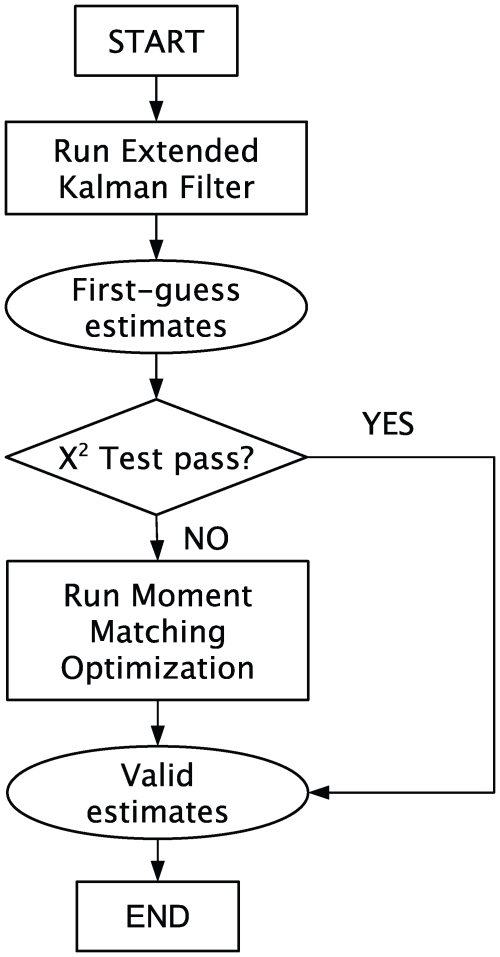
A central challenge in computational modeling of biological systems is the determination of the model parameters. Typically, only a fraction of the parameters (such as kinetic rate constants) are experimentally measured, while the rest are often fitted. The fitting process is usually based on experimental time course measurements of observables, which are used to assign parameter values that minimize some measure of the error between these measurements and the corresponding model prediction. The measurements, which can come from immunoblotting assays, fluorescent markers, etc., tend to be very noisy and taken at a limited number of time points. In this work we present a new approach to the problem of parameter selection of biological models. We show how one can use a dynamic recursive estimator, known as extended Kalman filter, to arrive at estimates of the model parameters. The proposed method follows. First, we use a variation of the Kalman filter that is particularly well suited to biological applications to obtain a first guess for the unknown parameters. Secondly, we employ an a posteriori identifiability test to check the reliability of the estimates. Finally, we solve an optimization problem to refine the first guess in case it should not be accurate enough. The final estimates are guaranteed to be statistically consistent with the measurements. Furthermore, we show how the same tools can be used to discriminate among alternate models of the same biological process. We demonstrate these ideas by applying our methods to two examples, namely a model of the heat shock response in E. coli, and a model of a synthetic gene regulation system. The methods presented are quite general and may be applied to a wide class of biological systems where noisy measurements are used for parameter estimation or model selection.
Overview
CoChat Summary
TL;DR
The paper proposes a three-stage method for parameter estimation and model selection in biological ODE models: constrained hybrid extended Kalman filtering, an a posteriori variance/identifiability test, and moment-matching refinement. It demonstrates the approach on an E. coli heat shock model and a generalized repressilator model, where moment matching passed the statistical test while least-squares and genetic-algorithm fits failed.
Key findings
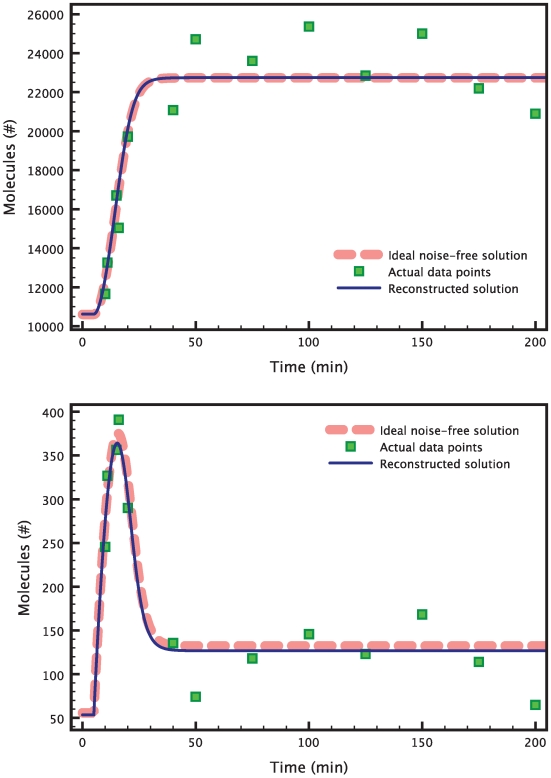
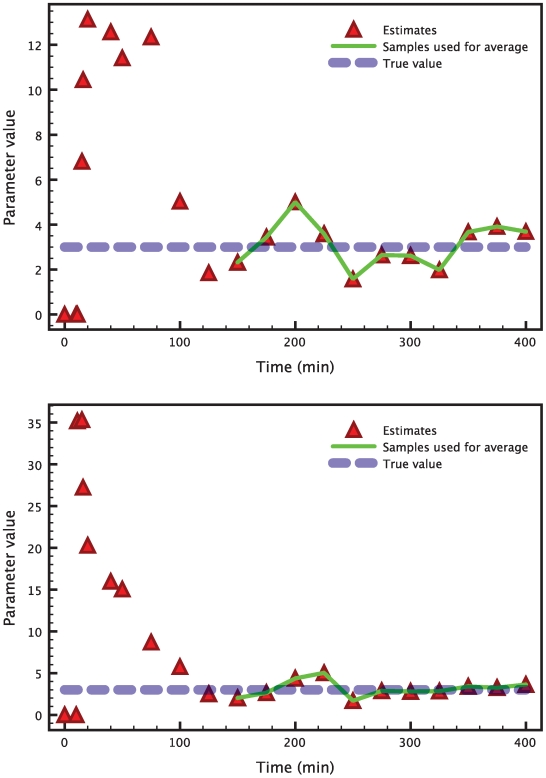
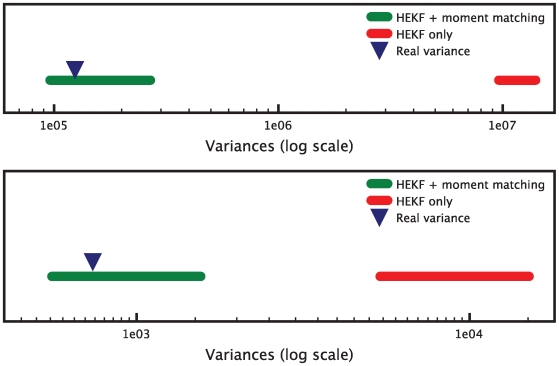
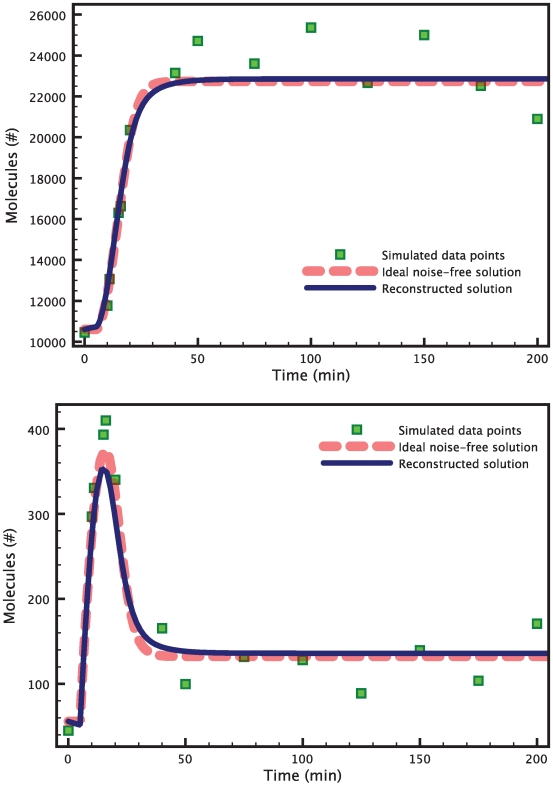
- In the small-parameter heat shock case, the HEKF estimated two parameters whose true value was 3 for both; the text reports the estimation as very accurate despite high noise, and the a posteriori identifiability test at confidence coefficient 0.95 passed for both measurement-noise components.
- For the 6-parameter heat shock case, a single HEKF run failed the identifiability test; moment-matching refinement with BFGS found a minimum after 1560 iterations with cost 0.14 in about 3 hours on a MacBook Pro with a single 2.6 GHz processor, and the refined estimates passed the test.
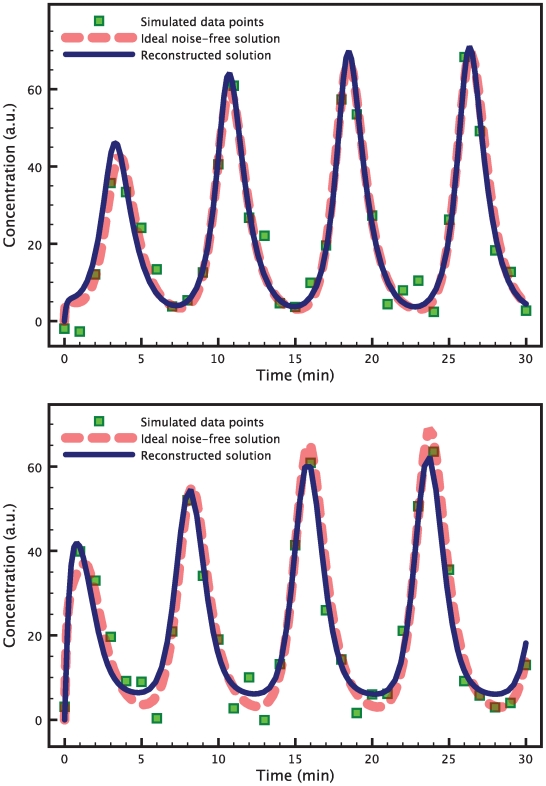
- For the 18-parameter repressilator model, a single HEKF run failed the test; moment-matching refinement with BFGS took 720 iterations (about 26 minutes) and passed all three components, whereas Levenberg-Marquardt least-squares (129 iterations, about 3 minutes) and a genetic algorithm (101 iterations, about 4 minutes) failed.
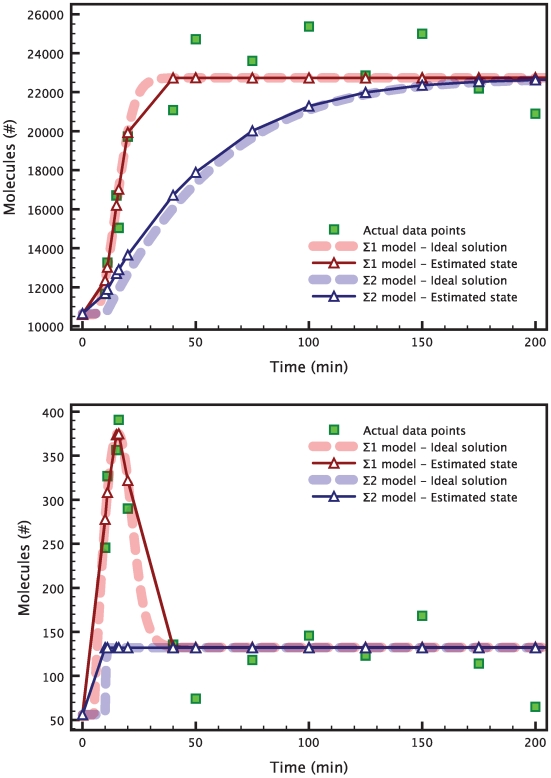
- For model selection in the heat shock example, only model \(M_1\) produced variance interval estimates containing the real measurement-noise variances; model \(M_2\), which lacks the spike in the sigma factor, was rejected as inconsistent with the measurements.
Methods
- The model is written as a continuous-time ODE state-space system; parameters are treated as constant states via state extension, and a constrained hybrid extended Kalman filter (HEKF) handles continuous-time dynamics with discrete-time measurements and equality/inequality constraints solved as quadratic programming.
- An a posteriori identifiability test estimates measurement-noise variances from residuals, forms point and interval estimates using the chi-square distribution, and rejects estimates whose intervals do not contain the known real noise variances; if the test fails, a moment-matching optimization minimizes mean and variance mismatch, typically with BFGS.
- Model selection runs the HEKF on candidate models, computes measurement-noise variance estimates for each, discards models whose interval estimates exclude the real variances, and selects the model whose variances match best; examples use simulated noisy data from an E. coli heat shock model (2 and 6 parameters; 22 data points in the small case) and a generalized repressilator model (18 parameters; 30 equally spaced mRNA data points).
Limitations
- The paper states that the extended Kalman filter is not generally optimal for nonlinear systems, may diverge or give biased estimates, can suffer from loss of observability/non-uniqueness after state extension, and is subject to numerical ill-conditioning in covariance propagation; initial estimates too far off can also cause problems.
- The paper states that the process-noise covariance is chosen by the user, the measurement-noise statistics are assumed known, the moment-matching weights are user-selected, and the refinement optimization can be computationally expensive (e.g., about 3 hours for the 6-parameter heat shock case).
- Evident from the text: the demonstrations use in silico simulated measurements rather than real experimental data, and many numerical entries in the tables and some reported percentages are missing from the provided text, limiting independent verification of the exact estimates.
Model-written summary. Check it against the paper before relying on it.
Integrity signals
Registry
Cites
Statistics
Figures
Verification
Claims the paper makes
1 Valid · 1 Not valid · 11 Not checked · 41 Own results and interpretations
Every source the paper cites for this claim was checked and supports it.
In the paper
“These and similar results indicate that the search for the exact individual values of the parameters is a hopeless task in most cases [6].”
§ Parameter Estimation and Model Selection in Computational Biology > Introduction
What the sources say
- Supportedcites [6] M Ashyraliyev, 2008, Parameter estimation and determinability analysis applied to Drosophila gap gene circuits., BMC Systems Biology source
The Background (page unavailable) says that determining all parameters accurately is usually not possible in practice. The Results and Discussion, under Parameter Determinability (page unavailable), further report that no parameter in the analyzed model could be determined individually to the chosen accuracy. Together, these support the citing sentence’s general point without implying that every parameter is indeterminable. (LLM, conf=0.90)
hedged- Asserted: passes — The authors put it forward as true.
- Checkable: passes — It can be checked against evidence.
- Load-bearing: passes — The paper’s conclusions depend on it.
- Based: passes — The paper gives a reason why it holds.
- Supported
A result the paper reports from its own data — it cites no other source for it, so there is none to check. The quote shows it is in the paper.
In the paper
“As in the large parameter space case for the heat shock model, a single run of the HEKF produces estimates that do not satisfy the identifiability test.”
§ Parameter Estimation and Model Selection in Computational Biology > Results > The repressilator
plainstates a causeSingle case- Asserted: passes — The authors put it forward as true.
- Checkable: passes — It can be checked against evidence.
- Load-bearing: passes — The paper’s conclusions depend on it.
- Based: passes — The paper gives a reason why it holds.
A result the paper reports from its own data — it cites no other source for it, so there is none to check. The quote shows it is in the paper.
In the paper
“It is clear that only produces results that are compatible with the measurements.”
§ Parameter Estimation and Model Selection in Computational Biology > Results > A model of the heat shock response in E. coli
boosted- Asserted: passes — The authors put it forward as true.
- Checkable: passes — It can be checked against evidence.
- Load-bearing: passes — The paper’s conclusions depend on it.
- Based: passes — The paper gives a reason why it holds.
A result the paper reports from its own data — it cites no other source for it, so there is none to check. The quote shows it is in the paper.
In the paper
“After a transient, the estimates keep oscillating around the true values of the parameters.”
§ Parameter Estimation and Model Selection in Computational Biology > Results > A model of the heat shock response in E. coli
plainstates an associationSingle case- Asserted: passes — The authors put it forward as true.
- Checkable: passes — It can be checked against evidence.
- Load-bearing: unclear — It is unclear whether the paper’s conclusions depend on it.
- Based: passes — The paper gives a reason why it holds.
A result the paper reports from its own data — it cites no other source for it, so there is none to check. The quote shows it is in the paper.
In the paper
“In this new example, a single run of the HEKF produces values that do not satisfy the identifiability test.”
§ Parameter Estimation and Model Selection in Computational Biology > Results > A model of the heat shock response in E. coli
plainSingle case- Asserted: passes — The authors put it forward as true.
- Checkable: passes — It can be checked against evidence.
- Load-bearing: passes — The paper’s conclusions depend on it.
- Based: passes — The paper gives a reason why it holds.
25 more claims
Create a free account to see all 54 claims and to verify the 12 references still open.
- Probably not a substantial claim. 10
- It may state two separate claims as one. 14
- The quote only partly states this claim. 3
Claims other papers make about this one
Each is checked against this paper’s own text: does it say what the citing paper says it does?
In the citing paper
“The resulting approach may be used for obtaining more accurate estimates of the parameters as well as for model selection.”
From Reverse engineering and identification in systems biology: strategies, perspectives and challenges (2014) · cites this paper as [143]
In the citing paper
“To address the issues of sparse and noisy data, Lillacci & Khammash [143] propose a combination of an extended Kalman filter (a recursive estimator well known in control engineering) with a posteriori identifiability tests and moment-matching optimization.”
From Reverse engineering and identification in systems biology: strategies, perspectives and challenges (2014) · cites this paper as [143]
Self-check
Percentages, sums and reported differences re-computed from the paper’s own numbers.
Each contradiction between two passages listed here was confirmed by an independent check.
Rated minor: it would not touch a result — a value no result rests on, a p-value that stays on the same side of the significance level, or a conflict that is clerical, resolved elsewhere in the paper, or outside its own findings.
In the paper
§ Parameter Estimation and Model Selection in Computational Biology > Results > A model of the heat shock response in E. coli
“we compute the point and interval estimates of the variances of the two components of the measurement noise according to (13) and (15) respectively.”
§ Parameter Estimation and Model Selection in Computational Biology > Methods > An a posteriori identifiability test
“Then, is in the interval(14)with a probability of .”
Citations
Cites
Optimization by Simulated Annealing
Kirkpatrick, S., Gelatt, C. D., & Vecchi, M. P. (1983) · Science · doi:10.1126/science.220.4598.671 · Cited by 45,134 · cited 1×
“Much research has been conducted on the applications to computational biology models of several optimization techniques, such as linear and nonlinear leastsquares fitting [3], simulated annealing [4], genetic algorithms [5], and evolutionary computation [6,7].”
BackgroundProbability, Random Variables, and Stochastic Processes.
Abrahams, J., & Papoulis, A. (1984) · Journal of the American Statistical Association · doi:10.2307/2288754 · Cited by 16,226
Probability, Random Variables, and Stochastic Processes
Miller, I. (1966) · Technometrics · doi:10.1080/00401706.1966.10490365 · Cited by 8,452
Practical Methods of Optimization
Fletcher, R. (2000) · Wiley eBooks · doi:10.1002/9781118723203 · Cited by 7,605
Optimal State Estimation: Kalman, H∞, and Nonlinear Approaches
Simon, D. (2006) · doi:10.1002/0470045345 · Cited by 4,875
A synthetic oscillatory network of transcriptional regulators
Elowitz, M. B., & Leibler, S. (2000) · Nature · doi:10.1038/35002125 · Cited by 4,630 · cited 1×
“The original model of Elowitz and Leibler [39] consists of six equations with four parameters, where all the three genes have the same production and degradation rates, and are affected in the same way by the corresponding repressor.”
BackgroundAnderson, B. D. O., Moore, J. B., & Eslami, M. (1982) · IEEE Transactions on Systems Man and Cybernetics · Cited by 3,195
(2007) · Springer eBooks · doi:10.1007/978-0-387-71107-2 · Cited by 2,687
Srinivas, M., & Patnaik, L. M. (1994) · Computer · doi:10.1109/2.294849 · Cited by 2,180 · cited 1×
“Much research has been conducted on the applications to computational biology models of several optimization techniques, such as linear and nonlinear leastsquares fitting [3], simulated annealing [4], genetic algorithms [5], and evolutionary computation [6,7].”
BackgroundGill, P. E., Murray, W., & Wright, M. H. (2019) · doi:10.1137/1.9781611975604 · Cited by 1,737
Cited by
Systems biology informed deep learning for inferring parameters and hidden dynamics
Yazdani, A., Lu, L., Raissi, M., & Karniadakis, G. E. (2020) · PLOS Computational Biology · doi:10.1371/journal.pcbi.1007575 · Cited by 329
The Virtual Brain Integrates Computational Modeling and Multimodal Neuroimaging
Ritter, P., Schirner, M., McIntosh, A. R., & Jirsa, V. K. (2013) · Brain Connectivity · doi:10.1089/brain.2012.0120 · Cited by 268
“In the context of biological systems, this problem has been addressed by an approach that combines extended Kalman filtering with a posteriori calculated measures of accuracy of the estimation process based on a v 2 variance test on measurement noise (Lillacci and Khammash, 2010).”
Weak SINDy for partial differential equations
Messenger, D. A., & Bortz, D. M. (2021) · Journal of Computational Physics · doi:10.1016/j.jcp.2021.110525 · Cited by 243
“In the last 20 years, substantial developments have been made at the interface of applied mathematics and statistics to design data-driven model selection algorithms that are both statistically rigorous and computationally efficient (see [4, 11, 12, 21, 23, 24] for both theory and applications).”
BackgroundReverse engineering and identification in systems biology: strategies, perspectives and challenges
Villaverde, A. F., & Banga, J. R. (2014) · Journal of The Royal Society Interface · doi:10.1098/rsif.2013.0505 · Cited by 229
Interval Observers for Time-Varying Discrete-Time Systems
Efimov, D., Perruquetti, W., Raissi, T., & Zolghadri, A. (2013) · IEEE Transactions on Automatic Control · doi:10.1109/tac.2013.2263936 · Cited by 205
Automated adaptive inference of phenomenological dynamical models
Daniels, B. C., & Nemenman, I. (2015) · Nature Communications · doi:10.1038/ncomms9133 · Cited by 194
“…control methods are well established in statistical inference 26 and in choosing a systems biology model for data from a finite set of models 27–29 , we believe that they have not been used yet in the context of inferring complex, nonlinear dynamics from an infinite, complete set of all…”
Modelling approaches for studying the microbiome
Kumar, M., Ji, B., Zengler, K., & Nielsen, J. (2019) · Nature Microbiology · doi:10.1038/s41564-019-0491-9 · Cited by 193
Chase, J. G., Preiser, J.-C., Dickson, J. L., Pironet, A., Chiew, Y. S., Pretty, C. G., Shaw, G. M., Benyo, B., Moeller, K., Safaei, S., et al. (2018) · BioMedical Engineering OnLine · doi:10.1186/s12938-018-0455-y · Cited by 189
“In conclusion, this requirement further constrains the potential model structures and organisation, as the model must include such a sensitivity and it must be mathematically identifiable from the clinically available data [114, 177–184].”
BackgroundMethodSensitivity analysis methods in the biomedical sciences
Qian, G., & Mahdi, A. (2020) · Mathematical Biosciences · doi:10.1016/j.mbs.2020.108306 · Cited by 169
“Model parameters can also be approximated collectively through data fitting, rather than direct measurement [98].”
BackgroundWeak SINDy: Galerkin-Based Data-Driven Model Selection
Messenger, D. A., & Bortz, D. M. (2021) · Multiscale Modeling and Simulation · doi:10.1137/20m1343166 · Cited by 300
“In the last 20 years, there has been substantial work in this area at the interface between applied mathematics and statistics (see [3, 8, 9, 13, 15, 16] for both theory and applications).”
BackgroundParameter Estimation Using Metaheuristics in Systems Biology: A Comprehensive Review
Sun, J., Garibaldi, J. M., & Hodgman, C. T. (2011) · IEEE Transactions on Computational Biology and Bioinformatics · doi:10.1109/tcbb.2011.63 · Cited by 184
“Another important problem is the parameter identifiability problem [11], [12], [93], [171].”
BackgroundA Comparison and Catalog of Intrinsic Tumor Growth Models
Sarapata, E., & de Pillis, L. G. (2014) · Bulletin of Mathematical Biology · doi:10.1007/s11538-014-9986-y · Cited by 168
Tripathi, J. P., Abbas, S., & Thakur, M. (2014) · Nonlinear Dynamics · doi:10.1007/s11071-014-1859-2 · Cited by 148
“The parameter estimation [41,42] can be done using one of the many well-established algorithms such as trial-and-error processes, numerical optimization techniques such as conjugate gradient method, trust region methods and genetic algorithms (see [43–45]).”
MethodPant, S., Fabrèges, B., Gerbeau, J.-F., & Vignon-Clementel, I. E. (2014) · International Journal for Numerical Methods in Biomedical Engineering · doi:10.1002/cnm.2692 · Cited by 137
“This is based on the analysis presented in [44] where it is argued that running the forward model with the estimated parameters and taking its difference with the observations generates discrete realisations of the observation noise.”
MethodParameter uncertainty in biochemical models described by ordinary differential equations
Vanlier, J., Tiemann, C. A., Hilbers, P. A. J., & van Riel, N. A. W. (2013) · Mathematical Biosciences · doi:10.1016/j.mbs.2013.03.006 · Cited by 116
“We provide an introduction to some of the techniques available as well as give an overview of the state-of-the-art methods for parameter uncertainty analysis [12–17].”
MethodStochastic simulation in systems biology
Székely, T., & Burrage, K. (2014) · Computational and Structural Biotechnology Journal · doi:10.1016/j.csbj.2014.10.003 · Cited by 139
Model selection for hybrid dynamical systems via sparse regression
Mangan, N. M., Askham, T., Brunton, S. L., Kutz, J. N., & Proctor, J. L. (2019) · Proceedings of the Royal Society A Mathematical Physical and Engineering Sciences · doi:10.1098/rspa.2018.0534 · Cited by 131
“Typically, model selection procedures rely on physical principles and expert intuition to postulate a small set of candidate models; information theoretic approaches evaluate the goodness-of-fit to data amongst these models and penalizing over-fitting [5, 6, 7, 8, 9].”
MethodDaniels, B. C., & Nemenman, I. (2015) · PLOS ONE · doi:10.1371/journal.pone.0119821 · Cited by 95
“Instead, one often seeks a priori information to constrain the search space to simpler ad hocmodels of the underlying complex processes [2, 4, 8].”
BackgroundBayesian parameter estimation for dynamical models in systems biology
Linden-Santangeli, N. J., Krämer, B., & Rangamani, P. (2022) · PLoS Computational Biology · doi:10.1371/journal.pcbi.1010651 · Cited by 113
“Similarly, the parameter estimation and model selection method in [30] accounts for model form uncertainty with extended Kalman filtering but does not provide complete uncertainty estimates because it takes a frequentist approach for parameter estimation.”
BackgroundMethodComputational systems biology in disease modeling and control, review and perspectives
Yue, R., & Dutta, A. (2022) · npj Systems Biology and Applications · doi:10.1038/s41540-022-00247-4 · Cited by 120
“Identi fi ability checks the reliability of the estimates and assesses how well the model explains experimental data 144,149 .”
BackgroundErguler, K., & Stumpf, M. P. H. (2011) · Molecular BioSystems · doi:10.1039/c0mb00107d · Cited by 91
A New Hybrid Firefly Algorithm for Complex and Nonlinear Problem
Abdullah, A., Deris, S., Mohamad, M. S., & Hashim, S. Z. M. (2012) · Advances in intelligent and soft computing · doi:10.1007/978-3-642-28765-7_81 · Cited by 88
Hsiao, V., Swaminathan, A., & Murray, R. M. (2018) · IEEE Control Systems · doi:10.1109/mcs.2018.2810459 · Cited by 98
“However, [52] demonstrated that, in a biological setting, matching the noise characteristics of the filter, in addition to fitting the trajectory to measured data, can help resolve parameter degeneracy.”
BackgroundSingh, A. V., Varma, M., Rai, M., Singh, S. P., Bansod, G., Laux, P., & Luch, A. (2024) · Advanced Intelligent Systems · doi:10.1002/aisy.202300366 · Cited by 101
Properties of cell death models calibrated and compared using Bayesian approaches
Eydgahi, H., Chen, W. W., Muhlich, J. L., Vitkup, D., Tsitsiklis, J. N., & Sorger, P. K. (2013) · Molecular Systems Biology · doi:10.1038/msb.2012.69 · Cited by 84
“It is therefore necessary to estimate parameters (Mendes and Kell, 1998) by minimizing the difference between model trajectories and experimental data using methods such as genetic algorithms (Srinivas and Patnaik, 1994), Bayesian sampling (Battogtokh et al, 2002; Flaherty et al, 2008; Klinke, 2009; Xu et al, 2010) or…”
MethodModeling cell population dynamics
Charlebois, D. A., & Balázsi, G. (2018) · In Silico Biology · doi:10.3233/isb-180470 · Cited by 100
“The problems with optimization 794 methods are that they can be computationally expen795 sive and may not perform well on noisy data sets 796 [153].”
MethodBenchmark problems for dynamic modeling of intracellular processes
Hass, H., Loos, C., Raimúndez, E., Timmer, J., Hasenauer, J., & Kreutz, C. (2019) · Bioinformatics · doi:10.1093/bioinformatics/btz020 · Cited by 93
“However, they are often not welltested in realistic application settings and, therefore, their performance benefits or limitations are unknown (Degasperi et al., 2017; Hug et al., 2013; Lillacci and Khammash, 2010; Maier et al., 2016; Raue et al., 2013; Stapor et al., 2018; Vyshemirsky and Girolami, 2008).”
BackgroundComputational models in the age of large datasets
O’Leary, T., Sutton, A. C., & Marder, E. (2015) · Current Opinion in Neurobiology · doi:10.1016/j.conb.2015.01.006 · Cited by 80
“There are fundamental reasons why it is challenging to fit large numbers of parameters in biological models [9 ,25].”
BackgroundAbdollahi, H., Yousefirizi, F., Shiri, I., Brosch-Lenz, J., Mollaheydar, E., Fele‐Paranj, A., Shi, K., Zaidi, H., Alberts, I., Soltani, M., et al. (2024) · Theranostics · doi:10.7150/thno.93973 · Cited by 78
Iterative experiment design guides the characterization of a light-inducible gene expression circuit
Ruess, J., Parise, F., Milias‐Argeitis, A., Khammash, M., & Lygeros, J. (2015) · Proceedings of the National Academy of Sciences · doi:10.1073/pnas.1423947112 · Cited by 72
“2): d dt ~μeðt; γÞ=Aðγ,uðt; γ, LeÞÞ~μeðt; γÞ+Bðγ,uðt; γ, LeÞÞ, [3] where ~μeðt; γÞ is a vector that comprises the moments up to a desired order (in our case four) of the joint distribution of the molecule counts and the parameter kM at time t for an experiment e characterized by the light sequence Le.”
InfluentialSelf-citationFrequently asked questions about nonlinear dynamics and empirical dynamic modelling
Munch, S. B., Brias, A., Sugihara, G., & Rogers, T. L. (2019) · ICES Journal of Marine Science · doi:10.1093/icesjms/fsz209 · Cited by 66
Simulation Algorithms for Computational Systems Biology
Marchetti, L., Priami, C., & Thanh, V. H. (2017) · Texts in theoretical computer science · doi:10.1007/978-3-319-63113-4 · Cited by 59
A mathematical model of non-photochemical quenching to study short-term light memory in plants
Matuszyńska, A., Heidari, S., Jahns, P., & Ebenhöh, O. (2016) · Biochimica et Biophysica Acta (BBA) - Bioenergetics · doi:10.1016/j.bbabio.2016.09.003 · Cited by 57
Model‐based design of experiments for cellular processes
Chakrabarty, A., Buzzard, G. T., & Rundell, A. E. (2013) · WIREs Systems Biology and Medicine · doi:10.1002/wsbm.1204 · Cited by 56
Detecting abnormality in heart dynamics from multifractal analysis of ECG signals
Shekatkar, S. M., Kotriwar, Y., Harikrishnan, K. P., & Ambika, G. (2017) · Scientific Reports · doi:10.1038/s41598-017-15498-z · Cited by 67
“A mathematical representation of their complexity using dynamical equations is most often not realizable due to the many interacting variables and uncertain parameters involved (11, 12).”
Dresch, J. M., Liu, X., Arnosti, D. N., & Ay, A. (2010) · BMC Systems Biology · doi:10.1186/1752-0509-4-142 · Cited by 51
“With this analysis, new iterative parameter estimation and model selection techniques can be designed and implemented [17,32].”
MethodBayesian Model Comparison and Parameter Inference in Systems Biology Using Nested Sampling
Pullen, N., & Morris, R. J. (2014) · PLoS ONE · doi:10.1371/journal.pone.0088419 · Cited by 51
“An effective method for parameter estimation is the Kalman filter technique, and recent variations of this method have been shown to perform well for examples of biological models [11,12].”
MethodAn Evolutionary Firefly Algorithm for the Estimation of Nonlinear Biological Model Parameters
Abdullah, A., Deris, S., Anwar, S., & Arjunan, S. N. V. (2013) · PLoS ONE · doi:10.1371/journal.pone.0056310 · Cited by 53
“To handle noisy data, statistical based methods have received considerable attention [1], [8].”
BackgroundMethodInfluentialSunnåker, M., Zamora-Sillero, E., Dechant, R., Ludwig, C., Busetto, A. G., Wagner, A., & Stelling, J. (2013) · Science Signaling · doi:10.1126/scisignal.2003621 · Cited by 48
“Hence, although the model is relatively small [note that “small model” is not well defined by the community; see, for example, (28)] and the general topology is well characterized, a detailed mechanistic understanding requires the analysis of a model ensemble that is too large to handle manually.”
BackgroundHashemi, M., Vattikonda, A. N., Ší́p, V., Diaz-Pier, S., Peyser, A., Wang, H., Guye, M., Bartoloméi, F., Woodman, M., & Jirsa, V. (2021) · PLoS Computational Biology · doi:10.1371/journal.pcbi.1009129 · Cited by 45
Optimization Algorithms for Computational Systems Biology
Reali, F., Priami, C., & Marchetti, L. (2017) · Frontiers in Applied Mathematics and Statistics · doi:10.3389/fams.2017.00006 · Cited by 55
Parameter estimation and identifiability in a neural population model for electro-cortical activity
Hartoyo, A., Cadusch, P. J., Liley, D. T. J., & Hicks, D. G. (2019) · PLoS Computational Biology · doi:10.1371/journal.pcbi.1006694 · Cited by 49
Simultaneous model discrimination and parameter estimation in dynamic models of cellular systems
Rodriguez-Fernández, M., Rehberg, M., Kremling, A., & Banga, J. R. (2013) · BMC Systems Biology · doi:10.1186/1752-0509-7-76 · Cited by 48
Moment estimation for chemically reacting systems by extended Kalman filtering
Ruess, J., Milias‐Argeitis, A., Summers, S., & Lygeros, J. (2011) · The Journal of Chemical Physics · doi:10.1063/1.3654135 · Cited by 39
State and parameter estimation of the heat shock response system using Kalman and particle filters
Liu, X., & Niranjan, M. (2012) · Bioinformatics · doi:10.1093/bioinformatics/bts161 · Cited by 44
“Sometimes, such parameters may not have direct biological interpretations and are used as approximations (Lillacci and Khammash, 2010).”
BackgroundTensor methods for parameter estimation and bifurcation analysis of stochastic reaction networks
Liao, S., Vejchodský, T., & Radek Erban, A. (2015) · Journal of The Royal Society Interface · doi:10.1098/rsif.2015.0233 · Cited by 48
“We consider that the distance measure J ( ^ S , S (cid:5) ) in table 3 is defined using a moment-matching procedure [32,33]: where n ^ m is the number of samples.”
MethodEstimation methods for heterogeneous cell population models in systems biology
Waldherr, S. (2018) · Journal of The Royal Society Interface · doi:10.1098/rsif.2018.0530 · Cited by 47
Wentworth, M. T., Smith, R. C., & Banks, H. T. (2016) · SIAM/ASA Journal on Uncertainty Quantification · doi:10.1137/15m1008245 · Cited by 42
“Readers are referred to [10] for a case study illustrating the use of sensitivity analysis for a rice model, and [13, 23] for examples of parameter selection in computational and systems biology.”
Vavoulis, D. V., Straub, V. A., Aston, J. A. D., & Feng, J. (2012) · PLoS Computational Biology · doi:10.1371/journal.pcbi.1002401 · Cited by 44
“An emerging trend in parameter estimation methodologies for models in Computational Biology is to recast parameter estimation as an inference problem in hidden dynamical systems and then adopt standard Computational Statistics techniques to resolve it [27,28].”
Models for Cell-Free Synthetic Biology: Make Prototyping Easier, Better, and Faster
Koch, M., Faulon, J., & Borkowski, O. (2018) · Frontiers in Bioengineering and Biotechnology · doi:10.3389/fbioe.2018.00182 · Cited by 37
Deep reinforcement learning for optimal experimental design in biology
Treloar, N. J., Braniff, N., Ingalls, B., & Barnes, C. P. (2022) · PLoS Computational Biology · doi:10.1371/journal.pcbi.1010695 · Cited by 47
“Furthermore, characterisation experiments can be resource-intensive and time consuming; efficient use of experimental effort is critical.”
Hashemi, M., Hutt, A., Buhry, L., & SLEIGH, J. W. (2018) · Neuroinformatics · doi:10.1007/s12021-018-9369-x · Cited by 33
“However, the former approach is more complex and 50 more expensive in terms of computational cost than the 51 latter (Lillacci and Khammash 2010).”
State and parameter estimation for nonlinear biological phenomena modeled by S-systems
Mansouri, M. M., Nounou, H. N., Nounou, M. N., & Datta, A. A. (2014) · Digital Signal Processing · doi:10.1016/j.dsp.2014.01.012 · Cited by 36
“Lillacci and Khammash in [12] presented a new approach to the problem of parameter estimation of biological models using extended Kalman filter.”
MethodNutrition Research and the Impact of Computational Systems Biology
Auley, M. T. M. (2013) · Journal of Computer Science & Systems Biology · doi:10.4172/jcsb.1000122 · Cited by 38
“For example, an extended Kalman filter, for determining estimates of model parameters has been suggested as a means of overcoming this challenge [86,87].”
BackgroundFox, Z., Neuert, G., & Munsky, B. E. (2016) · The Journal of Chemical Physics · doi:10.1063/1.4960505 · Cited by 34
Ling, H., Samarasinghe, S., & Kulasiri, D. (2013) · Biosystems · doi:10.1016/j.biosystems.2013.08.004 · Cited by 33
Modeling Intracellular Signaling Underlying Striatal Function in Health and Disease
Nair, A. G., Gutierrez‐Arenas, O., Eriksson, O., Jauhiainen, A., Blackwell, K. T., & Kotaleski, J. H. (2014) · Progress in molecular biology and translational science · doi:10.1016/b978-0-12-397897-4.00013-9 · Cited by 36
“There is a lot to learn from the field of systems biology, where automatic parameter estimation is an increasingly used procedure.(35,36) Here, different local and global optimization tech-”
MethodIn-silico experiments of zebrafish behaviour: modeling swimming in three dimensions
Mwaffo, V., Butail, S., & Porfiri, M. (2017) · Scientific Reports · doi:10.1038/srep39877 · Cited by 36
“Fish are simulated using Eqs (14), (15) and (16), that is, by Euler integrating the stochastic differential equations to obtain fish heading velocity at each time step.”
MethodInfluentialRenardy, M., Yi, T., Xiu, D., & Chou, C. (2018) · PLoS Computational Biology · doi:10.1371/journal.pcbi.1006181 · Cited by 34
Modeling of xenobiotic transport and metabolism in virtual hepatic lobule models
Fu, X., Sluka, J. P., Clendenon, S. G., Dunn, K. W., Wang, Z., Klaunig, J. E., & Glazier, J. A. (2018) · PLoS ONE · doi:10.1371/journal.pone.0198060 · Cited by 30
Shi, Z., & O’Brien, W. (2018) · Energy and Buildings · doi:10.1016/j.enbuild.2018.11.024 · Cited by 32
Extended Kalman Filtering Projection Method to Reduce the 3σ Noise Value of Optical Biosensors
Li, K., Gupta, R., Drayton, A., Barth, I., Conteduca, D., Reardon, C., Dholakia, K., & Krauss, T. F. (2020) · ACS Sensors · doi:10.1021/acssensors.0c01484 · Cited by 33
A global parallel model based design of experiments method to minimize model output uncertainty
Bazil, J. N., Buzzard, G. T., & Rundell, A. E. (2012) · Bulletin of Mathematical Biology · doi:10.1007/s11538-011-9686-9 · Cited by 28
“…Cho et al. (2003), Kutalik et al. (2004), Joshi et al. (2006), Rodriguez-Fernandez et al. (2006), Gutenkunst et al. (2007), Chu and Hahn (2008), Lillacci and Khammash (2010), Van Derlinden et al. (2010) and/or discriminate between rival models as focused on in Box and Hill (1967), Pritchard…”
BackgroundThe Local Edge Machine: inference of dynamic models of gene regulation
McGoff, K. A., Guo, X., Deckard, A., Kelliher, C., Leman, A. R., Francey, L. J., Hogenesch, J. B., Haase, S. B., & Harer, J. (2016) · Genome biology · doi:10.1186/s13059-016-1076-z · Cited by 27
“However, using such time-course transcriptome data to infer the structure of transcription networks is considered a major problem in computational biology [6, 7].”
BackgroundA systematic evaluation of the evidence for perceptual control theory in tracking studies
Parker, M. G., Willett, A. B. S., Tyson, S. F., Weightman, A., & Mansell, W. (2020) · Neuroscience & Biobehavioral Reviews · doi:10.1016/j.neubiorev.2020.02.030 · Cited by 27
Kessels, B. M., Fey, R. H. B., & van de Wouw, N. (2023) · Nonlinear Dynamics · doi:10.1007/s11071-023-08354-5 · Cited by 33
“Examples are the vanilla [35], extended [36,37], and unscented Kalman filter [38–40], Gaussian filters [41, 42], and particle filters [43].”
BackgroundGiampiccolo, S., Reali, F., Fochesato, A., Iacca, G., & Marchetti, L. (2024) · npj Systems Biology and Applications · doi:10.1038/s41540-024-00460-3 · Cited by 47
“The prevailing approach to parameter estimation involves optimizing the model dynamics to align with experimental data [8,9].”
MethodBordon, J., Moškon, M., Zimic, N., & Mraz, M. (2015) · IEEE Transactions on Computational Biology and Bioinformatics · doi:10.1109/tcbb.2015.2424424 · Cited by 30
“Recently computational models present an indispensable tool that can be used for the design, optimization and in silico veri.”
MethodKügler, P. (2012) · PLoS ONE · doi:10.1371/journal.pone.0043001 · Cited by 32
“inference, [20] compares probability density or cumulative density functions obtained from the data with their counterparts constructed from repeated realizations of the Gillespie algorithm, and [21], [22], [23] sequentially compare time series data with the solution of the macroscopic rate equation when applying exte…”
MethodShin, S., Venturelli, O. S., & Zavala, V. M. (2019) · PLoS Computational Biology · doi:10.1371/journal.pcbi.1006828 · Cited by 28
Mol, M., Patole, M. S., & Singh, S. (2013) · Biochimica et Biophysica Acta (BBA) - General Subjects · doi:10.1016/j.bbagen.2013.08.018 · Cited by 29
“the unknown parameters are determined indirectly using computational biology tools [30,31].”
BackgroundInferring microbial interaction networks from metagenomic data using SgLV-EKF algorithm
AlShawaqfeh, M. K., Serpedin, E., & Younes, A. B. (2017) · BMC Genomics · doi:10.1186/s12864-017-3605-x · Cited by 31
“Although EKF has had success in several biological applications such as gene regulatory networks, signaling pathways and metabolic networks [31–33], it has not been applied to estimate the microbial interaction network from metagenomic time series data.”
MethodDynamic compensation, parameter identifiability, and equivariances
Sontag, E. D. (2017) · PLoS Computational Biology · doi:10.1371/journal.pcbi.1005447 · Cited by 34
A distribution‐matching method for parameter estimation and model selection in computational biology
Lillacci, G., & Khammash, M. (2012) · International Journal of Robust and Nonlinear Control · doi:10.1002/rnc.2794 · Cited by 28
“The gray dash-dot line is the fit computed using the moment matching approach of [26].”
MethodInfluentialSelf-citationPitt, J. A., & Banga, J. R. (2019) · BMC Bioinformatics · doi:10.1186/s12859-019-2630-y · Cited by 31
“We consider the particular parameter estimation formulation studied by [69] with dynamics given by Eqs.”
MethodA Framework for the Study of Multiple Realizations: The Importance of Levels of Analysis
Overgaard, M. S., & Mogensen, J. (2011) · Frontiers in Psychology · doi:10.3389/fpsyg.2011.00079 · Cited by 31
Trzaskoma, P., Jung, S., Pękowska, A., Bohrer, C. H., Wang, X., Naz, F., Dell’Orso, S., du Bois, W., Olivera, A., Vartak, S. V., et al. (2024) · Science Advances · doi:10.1126/sciadv.adl4893 · Cited by 28
Numerical algebraic geometry for model selection and its application to the life sciences
Gross, E. L., Davis, B., Ho, K. L., Bates, D. J., & Harrington, H. A. (2016) · Journal of The Royal Society Interface · doi:10.1098/rsif.2016.0256 · Cited by 26
“By this, we simply mean that one should search for real points in the intersection just described, e.g., using the method of [5].”
InfluentialWu, Q., Smith‐Miles, K., & Tian, T. (2014) · BMC Bioinformatics · doi:10.1186/1471-2105-15-s12-s3 · Cited by 26
“Using optimization methods, the inferred set of parameters produces the best fit between simulations and experimental data [12,13]. which have been successfully applied for biological systems, however, there are still some limitations with these methods such as the problem of high computational…”
MethodSystems Biology and Synthetic Biology: A New Epoch for Toxicology Research
Auley, M. T. M., Choi, H., Mooney, K. M., Paul, E., & Miller, V. M. (2015) · Advances in Toxicology · doi:10.1155/2015/575403 · Cited by 25
A unified framework for estimating parameters of kinetic biological models
Baker, S. M., Poskar, C. H., Schreiber, F., & Junker, B. H. (2015) · BMC Bioinformatics · doi:10.1186/s12859-015-0500-9 · Cited by 24
“In the Kalman filter, and its non-linear variants, parameter identifiability is typically addressed in the view of observability [12].”
BackgroundMethodKessels, B. M., Fey, R. H. B., & van de Wouw, N. (2024) · Nonlinear Dynamics · doi:10.1007/s11071-024-10608-9 · Cited by 29
A Bayesian Approach to Extracting Kinetic Information from Artificial Enzymatic Networks
Baltussen, M. G., van de Wiel, J., Regueiro, C. L. F., Jakštaitė, ., & Huck, W. T. S. (2022) · Analytical Chemistry · doi:10.1021/acs.analchem.2c00659 · Cited by 23
Leppävuori, J., Domach, M. M., & Biegler, L. T. (2011) · Industrial & Engineering Chemistry Research · doi:10.1021/ie201020g · Cited by 21
Building Predictive Models of Genetic Circuits Using the Principle of Maximum Caliber
Firman, T., Balázsi, G., & Ghosh, K. (2017) · Biophysical Journal · doi:10.1016/j.bpj.2017.08.057 · Cited by 22
“Furthermore, these approaches can involve too many parameters that can fit the same data with multiple models, creating additional challenges for efficient parameter estimation (11).”
BackgroundStrategies for calibrating models of biology
Read, M. N., Alden, K., Timmis, J., & Andrews, P. S. (2018) · Briefings in Bioinformatics · doi:10.1093/bib/bby092 · Cited by 28
“Automated calibration approaches include the use of heuristic search algorithms [17,18], Bayesian methods such as Markov chain Monte Carlo and maximum likelihood [4,19], Kalman filters [20], and standard curve fitting techniques [21,22].”
BackgroundMethodZieringer, J., & Takors, R. (2018) · Computational and Structural Biotechnology Journal · doi:10.1016/j.csbj.2018.06.002 · Cited by 21
A general model-based causal inference method overcomes the curse of synchrony and indirect effect
Park, S. H., Ha, S., & Kim, J. K. (2023) · Nature Communications · doi:10.1038/s41467-023-39983-4 · Cited by 27
Quantitative characterization and analysis of the dynamic NF-κB response in microglia
Sheppard, P. W., Sun, X., Emery, J. F., Giffard, R. G., & Khammash, M. (2011) · BMC Bioinformatics · doi:10.1186/1471-2105-12-276 · Cited by 19
“A second objective function used the chi-square test statistic computed from Fisher’s method (c(2)F), an adaptation of the moment-matching algorithm proposed in [23].”
MethodInfluentialSelf-citationThe simulation approach in synthetic biology
Gramelsberger, G. (2013) · Studies in History and Philosophy of Science Part C Studies in History and Philosophy of Biological and Biomedical Sciences · doi:10.1016/j.shpsc.2013.03.010 · Cited by 19
Hasegawa, T., Yamaguchi, R., Nagasaki, M., Miyano, S., & Imoto, S. (2014) · PLoS ONE · doi:10.1371/journal.pone.0105942 · Cited by 20
“, extended Kalman filter [52], unscented Kalman filter [53,54] and particle filter [55], which utilize approximation techniques, have been applied to obtain posterior probability densities of hidden state and parameters [13,24,48,49,56].”
MethodParameter synthesis for polynomial biological models
Dreossi, T., & Dang, T. (2014) · International Conference on Hybrid Systems: computation and control · doi:10.1145/2562059.2562123 · Cited by 20
“Parameter estimation is also formulated as a problem of state estimation from output sequences (by considering the parameters as additional state variables with derivatives equal to 0) [20].”
BackgroundPopulation-Based vs. Single Point Search Meta-Heuristics for a PID Controller Tuning
Roeva, O. N., Slavov, T. N., & Fidanova, S. S. (2013) · Advances in computational intelligence and robotics book series · doi:10.4018/978-1-4666-4450-2.ch007 · Cited by 18
Sanabria, F., Daniels, C. W., Gupta, T. A., & Santos, C. (2019) · Behavioural Processes · doi:10.1016/j.beproc.2019.103952 · Cited by 18
“Specifying rules like these facilitates the distinction between structural aspects of the model—which define it— and parameters of that structure—which may vary between instantiations of the model (Lillacci and Khammash, 2010).”
BackgroundAn Improved Swarm Optimization for Parameter Estimation and Biological Model Selection
Abdullah, A., Deris, S., Mohamad, M. S., & Anwar, S. (2013) · PLoS ONE · doi:10.1371/journal.pone.0061258 · Cited by 19
“Model Selection Due to the various uncertainties of the experimental environment, it is important to choose a plausible model that may perform consistent predictions according to the given experimental data [6], [37].”
BackgroundMethodInfluentialHeidary, Z., Ghaisari, J., Moein, S., & Javanmard, S. H. (2020) · PLoS ONE · doi:10.1371/journal.pone.0232965 · Cited by 24
Jung, J., Byeon, D., Jung, S., & Lee, W. (2019) · Entomological Research · doi:10.1111/1748-5967.12398 · Cited by 17
“Estimation of initial parameter values The estimation of parameter values is the most difficult step in modeling as it significantly affects model accuracy (Lillacci & Khammash 2010).”
BackgroundMultiobjective Identification of a Feedback Synthetic Gene Circuit
Boada, Y., Vignoni, A., & Picó, J. (2019) · IEEE Transactions on Control Systems Technology · doi:10.1109/tcst.2018.2885694 · Cited by 19
“03 min−1; using the plasmid vector pBR322 with [15, 20] copies/cell, we estimated CI = 17 ∗ 61.”
MethodDeng, Z., & Tian, T. (2014) · BMC Bioinformatics · doi:10.1186/1471-2105-15-256 · Cited by 17
“Moreover, this reverse-engineering problem has been extended from parameter estimation to model selection [4,5].”
MethodModeling, Simulating, and Parameter Fitting of Biochemical Kinetic Experiments
Goulet, D. (2016) · SIAM Review · doi:10.1137/151004707 · Cited by 17
Metadata
- Authors
- Lillacci, G., & Khammash, M.
- Affiliations
- University of California, Santa Barbara (US)
- Corresponding author
- Khammash, Mustafa
- Venue
- PLoS Computational Biology
- Publisher
- Public Library of Science (PLoS)
- Published
- 2010-03-05
- Volume
- 6
- Issue
- 3
- Pages
- e1000696
- ISSN
- 1553-734X (ISSN-L)
- 1553-7358
- PMC
- PMC2832681
- OpenAlex
- W2044278781
- Semantic Scholar
- 9a362ed58bcf80e6191bf963bfb5cc5a48f26719
- Cited by
- 325
- References
- 48
- Citations by year
- 2026: 4 · 2025: 13 · 2024: 18 · 2023: 11 · 2022: 16 · 2021: 24 · 2020: 21 · 2019: 29 · 2018: 27 · 2017: 21 · 2016: 19 · 2015: 28 · 2014: 29 · 2013: 34 · 2012: 14
- FWCI
- 8.46
- Type
- journal article
- Language
- en
- Open access
- gold
- doi.org
- Locations
- PLoS Computational Biology (publishedVersion, cc-by)
- PubMed Central (publishedVersion, cc-by)
- PubMed (publishedVersion)
- RePEc: Research Papers in Economics (submittedVersion)
- DOAJ (DOAJ: Directory of Open Access Journals) (submittedVersion, cc-by-sa)
- Figshare (submittedVersion, cc-by)
- Funders
- National Science Foundation (0802008, DAAD19-03-D-0004, 0835847)
- Deutscher Akademischer Austauschdienst
- National Institutes of Health
- National Institute of General Medical Sciences (R01GM049831)
- Division of Electrical, Communications and Cyber Systems (0835847, ECCS-0802008)
- Army Research Office (DAAD 19-03-D-0004, ECCS-0835847)
- Institute for Collaborative Biotechnologies (ECCS-0835847, DAAD19-03-D-0004)
- Topics
- Life Sciences › Biochemistry, Genetics and Molecular Biology › Molecular Biology › Gene Regulatory Network Analysis
- Physical Sciences › Engineering › Control and Systems Engineering › Control Systems and Identification
- Life Sciences › Biochemistry, Genetics and Molecular Biology › Molecular Biology › Microbial Metabolic Engineering and Bioproduction
- Keywords
- parameter estimation, model selection, extended Kalman filter, recursive parameter estimation, identifiability, heat shock response, Escherichia coli, synthetic gene regulation, rate constants, mathematical biology
- MeSH terms
- Algorithms, Animals, Computer Simulation, Gene Expression Regulation, Humans, Models, Biological, Signal Transduction, Proteome, Systems Biology
About these checks
Registry, retraction, Cites and statistics results are computed, not judged, with one exception: a printed reference that no index lists is read once by a model before it counts as a citation error. Claims are extracted by a model and kept only when their quote appears verbatim in the text; each cited source is then checked, with a model’s help, for whether it says what the claim relies on. Those verdicts can be wrong — read the claim’s quote and the cited source before relying on one.
A language model drew the claims from the paper on 2026-10-05, under version 3 of the claim definition (model deepseek-v4.1-flash, prompt extract-v3).
A second model labelled each claim on 2026-10-05 (model jev-1.13-20260917, definition revision gold-guideline-v0.2).
Cited sources are checked with a language model’s help (gpt-6-sol).
Statistics and arithmetic are recomputed, not judged.
Confidence bands are shown only for fields calibrated on our annotated test set. None is calibrated yet, so no band is shown.
What counts as a claim ›How we measure confidence ›How we check this ›
Are you an author, or do you see a problem with this page? Request a review
Data sources
Bibliographic data: Semantic Scholar, OpenAlex, Crossref.
Contains information from the Semantic Scholar Academic Graph Datasets, made available under the ODC Attribution License (ODC-BY 1.0).
Semantic Scholar’s data is described in: Kinney, R., et al. (2023). The Semantic Scholar Open Data Platform. arXiv:2301.10140.
