

The DOI matches its Crossref record; 56 of the 56 references it cites were found in a registry or an index.
DOGS: Reaction-Driven de novo Design of Bioactive Compounds
Open accessAbstract
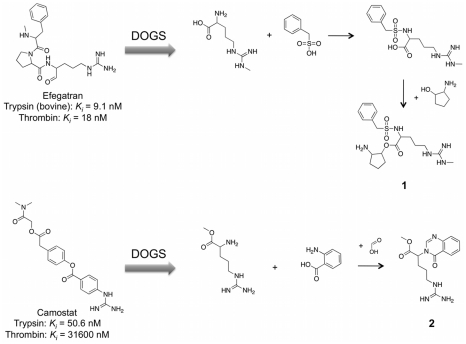
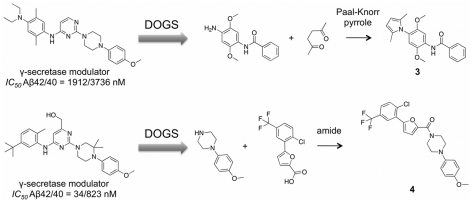
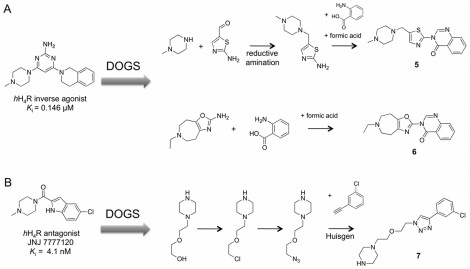
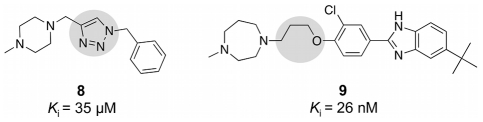
We present a computational method for the reaction-based de novo design of drug-like molecules. The software DOGS (Design of Genuine Structures) features a ligand-based strategy for automated 'in silico' assembly of potentially novel bioactive compounds. The quality of the designed compounds is assessed by a graph kernel method measuring their similarity to known bioactive reference ligands in terms of structural and pharmacophoric features. We implemented a deterministic compound construction procedure that explicitly considers compound synthesizability, based on a compilation of 25'144 readily available synthetic building blocks and 58 established reaction principles. This enables the software to suggest a synthesis route for each designed compound. Two prospective case studies are presented together with details on the algorithm and its implementation. De novo designed ligand candidates for the human histamine H₄ receptor and γ-secretase were synthesized as suggested by the software. The computational approach proved to be suitable for scaffold-hopping from known ligands to novel chemotypes, and for generating bioactive molecules with drug-like properties.
Overview
The claims and statistics of this paper haven’t been checked yet.
Run the check — free, no account needed. It reads the open-access text and checks the sources it cites.
Integrity signals
Registry
Cites
Statistics
Figures
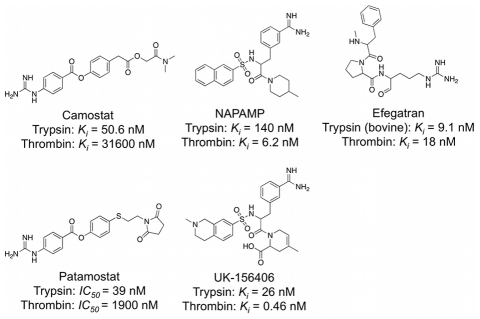
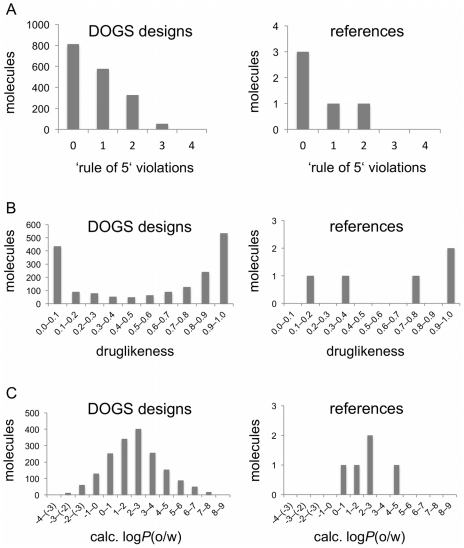
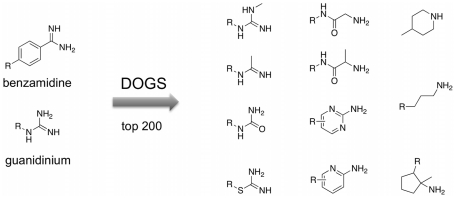
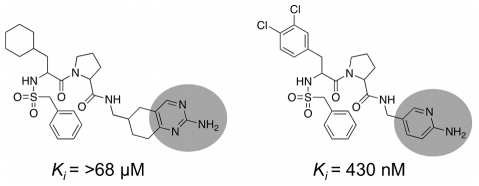
Verification
Claims the paper makes
The claims and statistics of this paper haven’t been checked yet.
Run the check — free, no account needed. It reads the open-access text and checks the sources it cites.
Claims other papers make about this one
Each is checked against this paper’s own text: does it say what the citing paper says it does?
In the citing paper
“This algorithm applies 58 well-established chemical transformation rules to a set of 25144 readily available synthetic blocks from the Sigma-Aldrich catalog.”
From QSAR without borders (2020) · cites this paper as [154]
Self-check
Percentages, sums and reported differences re-computed from the paper’s own numbers.
The self-check needs the paper’s full text.
Citations
Cites
Lipinski, C. A., Lombardo, F., Dominy, B. W., & Feeney, P. J. (2001) · Advanced Drug Delivery Reviews · doi:10.1016/s0169-409x(00)00129-0 · Cited by 18,139
Lipinski, C. A., Lombardo, F., Dominy, B. W., & Feeney, P. J. (1997) · Advanced Drug Delivery Reviews · doi:10.1016/s0169-409x(96)00423-1 · Cited by 11,484
Partition coefficients and their uses
Leo, A., Hansch, C., & Elkins, D. R. (1971) · Chemical Reviews · doi:10.1021/cr60274a001 · Cited by 4,253 · cited 1×
“A common parameter closely related to lipophilicity is the octanol-water partition coefficient (logP(o/w)) [28].”
BackgroundZINC − A Free Database of Commercially Available Compounds for Virtual Screening
Irwin, J. J., & Shoichet, B. K. (2005) · Journal of Chemical Information and Modeling · doi:10.1021/ci049714+ · Cited by 4,058 · cited 1×
“Louis, MO 63103, USA) catalog containing 56,878 chemical building blocks was downloaded from the ZINC database [16,17].”
MethodLipinski, C. A., Lombardo, F., Dominy, B. W., & Feeney, P. J. (2012) · Advanced Drug Delivery Reviews · doi:10.1016/j.addr.2012.09.019 · Cited by 3,720 · cited 1×
“of Lipinski’s ‘rule of 5’ [25] were recorded for the 1’767 molecules using a descriptor implemented in the software MOE.”
MethodA subset of NSAIDs lower amyloidogenic Aβ42 independently of cyclooxygenase activity
Weggen, S., Eriksen, J. L., Das, P., Sagi, S. A., Wang, R., Pietrzik, C. U., Findlay, K. A., Smith, T. E., Murphy, M. P., Bulter, T., et al. (2001) · Nature · doi:10.1038/35102591 · Cited by 1,388 · cited 1×
“c-Secretase modulators shift the product ratio of APP processing from the highly amyloidogenic Ab42 peptides towards shorter Ab fragments with a lower propensity to aggregate like Ab38 [31,33].”
BackgroundSelf-citationTrypsin Cleaves Exclusively C-terminal to Arginine and Lysine Residues
Olsen, J. V., Ong, S., & Mann, M. (2004) · Molecular & Cellular Proteomics · doi:10.1074/mcp.t400003-mcp200 · Cited by 1,309 · cited 3×
“S1 pocket during peptide bond cleavage [30].”
BackgroundInfluentialThe Chemistry Development Kit (CDK): An Open-Source Java Library for Chemo- and Bioinformatics
Steinbeck, C., Han, Y., Kühn, S., Horlacher, O., Luttmann, E., & Willighagen, E. (2003) · Journal of Chemical Information and Computer Sciences · doi:10.1021/ci025584y · Cited by 1,111 · cited 1×
“2) [23,24].”
Alzheimer's disease: strategies for disease modification
Citron, M. (2010) · Nature Reviews Drug Discovery · doi:10.1038/nrd2896 · Cited by 1,075
Computer-based de novo design of drug-like molecules
Schneider, G., & Fechner, U. (2005) · Nature Reviews Drug Discovery · doi:10.1038/nrd1799 · Cited by 956
Self-citation
Cited by
Sorted by citations
Items 101–200 of 257
De novo design and optimization of Aurora A kinase inhibitors
Rodrigues, T., Roudnicky, F., Koch, C. P., Kudoh, T., Reker, D., Detmar, M. J., & Schneider, G. (2013) · Chemical Science · doi:10.1039/c2sc21842a · Cited by 24
Self-citationNovel approaches to map small molecule–target interactions
Kapoor, S., Waldmann, H., & Ziegler, S. (2016) · Bioorganic & Medicinal Chemistry · doi:10.1016/j.bmc.2016.05.020 · Cited by 26
A Pareto Algorithm for Efficient De Novo Design of Multi‐functional Molecules
Daeyaert, F. F. D., & Deem, M. W. (2016) · Molecular Informatics · doi:10.1002/minf.201600044 · Cited by 26
Kaneko, H. (2018) · Molecular Informatics · doi:10.1002/minf.201800088 · Cited by 25
Steering Target Selectivity and Potency by Fragment‐Based De Novo Drug Design
Rodrigues, T., Kudoh, T., Roudnicky, F., Lim, Y. F., Lin, Y., Koch, C. P., Seno, M., Detmar, M. J., & Schneider, G. (2013) · Angewandte Chemie International Edition · doi:10.1002/anie.201304847 · Cited by 23
Self-citationNandi, S., Bhaduri, S., Das, D., Ghosh, P., Mandal, M., & Mitra, P. (2024) · Molecular Pharmaceutics · doi:10.1021/acs.molpharmaceut.3c01161 · Cited by 28
Designing molecules with autoencoder networks
Ilnicka, A., & Schneider, G. (2023) · Nature Computational Science · doi:10.1038/s43588-023-00548-6 · Cited by 25
“MoleculeChef adopts a unique approach to molecular graph generation 80 that borrows from rule-based molecular design using chemical transformations 81 .”
MethodSelf-citationChong, L. C., Gandhi, G., Lee, J. M., Yeo, W. W. Y., & Choi, S. B. (2021) · International Journal of Molecular Sciences · doi:10.3390/ijms22168962 · Cited by 23
Prediction of Compound Synthesis Accessibility Based on Reaction Knowledge Graph
Li, B., & Chen, H. (2022) · Molecules · doi:10.3390/molecules27031039 · Cited by 23
Towards the Next Generation of Computational Chemogenomics Tools
Rognan, D. (2013) · Molecular Informatics · doi:10.1002/minf.201300054 · Cited by 21
Scaffold hopping from synthetic RXR modulators by virtual screening and de novo design
Merk, D., Grisoni, F., Friedrich, L., Gelžinytė, E., & Schneider, G. (2018) · MedChemComm · doi:10.1039/c8md00134k · Cited by 21
Self-citationShi, T., Huang, S., Chen, L., Heng, Y., Kuang, Z., Xu, L., & Hu, M. Y. (2020) · Chemometrics and Intelligent Laboratory Systems · doi:10.1016/j.chemolab.2020.104122 · Cited by 21
IADE: a system for intelligent automatic design of bioisosteric analogs
Ertl, P., & Lewis, R. A. (2012) · Journal of Computer-Aided Molecular Design · doi:10.1007/s10822-012-9609-3 · Cited by 21
NAOMInext – Synthetically feasible fragment growing in a structure-based design context
Sommer, K., Flachsenberg, F., & Rarey, M. (2018) · European Journal of Medicinal Chemistry · doi:10.1016/j.ejmech.2018.11.075 · Cited by 25
Comprehensive assessment of deep generative architectures for de novo drug design
Wang, M., Sun, H., Wang, J., Pang, J., Chai, X., Xu, L., Li, H., Cao, D., & Hou, T. (2021) · Briefings in Bioinformatics · doi:10.1093/bib/bbab544 · Cited by 18
Equivariant 3D-Conditional Diffusion Model for De Novo Drug Design
Jia, Z., Yi, H.-C., & You, Z. (2024) · IEEE Journal of Biomedical and Health Informatics · doi:10.1109/jbhi.2024.3491318 · Cited by 23
“Although there are a large number of models designed to explore chemical space [14], [15], [16], LBDD models still suffer from insufficient generalization capabilities and do not easily guide compound discovery [17] in the real world.”
Bioinformatics and Cheminformatics Tools in Early Drug Discovery
Parikh, P. K., Savjani, J., Gajjar, A. K., & Chhabria, M. T. (2023) · Wiley eBooks · doi:10.1002/9781119865728.ch8 · Cited by 18
Applicability Domains and Consistent Structure Generation
Kaneko, H., & Funatsu, K. (2016) · Molecular Informatics · doi:10.1002/minf.201600032 · Cited by 17
Protein Structure-Based Organic Chemistry-Driven Ligand Design from Ultralarge Chemical Spaces
Sindt, F., Seyller, A., Eguida, M., & Rognan, D. (2024) · ACS Central Science · doi:10.1021/acscentsci.3c01521 · Cited by 18
Nakamura, S., Yasuo, N., & Sekijima, M. (2025) · Communications Chemistry · doi:10.1038/s42004-025-01437-x · Cited by 21
De novo Molecular Design with Generative Long Short-term Memory
Grisoni, F., & Schneider, G. (2019) · CHIMIA International Journal for Chemistry · doi:10.2533/chimia.2019.1006 · Cited by 18
Self-citationTambunan, U. S. F., Parikesit, A. A., Ghifari, A. S., & Satriyanto, C. P. (2015) · Arabian Journal of Chemistry · doi:10.1016/j.arabjc.2015.07.010 · Cited by 15
Multistep Reaction Based De Novo Drug Design: Generating Synthetically Feasible Design Ideas
Masek, B. B., Baker, D. S., Dorfman, R. J., Dubrucq, K., Francis, V. C., Nagy, S., Richey, B. L., & Soltanshahi, F. (2016) · Journal of Chemical Information and Modeling · doi:10.1021/acs.jcim.5b00697 · Cited by 17
Control of Synthetic Feasibility of Compounds Generated with CReM
Полищук, П. Г. (2020) · Journal of Chemical Information and Modeling · doi:10.1021/acs.jcim.0c00792 · Cited by 22
RENATE: A Pseudo‐retrosynthetic Tool for Synthetically Accessible de novo Design
Ghiandoni, G. M., Bodkin, M. J., Chen, B., Hristozov, D., Wallace, J. E. A., Webster, J., & Gillet, V. J. (2021) · Molecular Informatics · doi:10.1002/minf.202100207 · Cited by 17
SynLlama: Generating Synthesizable Molecules and Their Analogs with Large Language Models
Sun, K., Bagni, D., Cavanagh, J. M., Wang, Y., Sawyer, J. M., Zhou, B., Gritsevskiy, A., Zhang, O., & Head-Gordon, T. (2025) · ACS Central Science · doi:10.1021/acscentsci.5c01285 · Cited by 33
“…1(a), our defined chemical space for training consists of molecules that can be synthesized in at most five steps with 229,579 Enamine building blocks 20 (BBs) and 91 well-validated organic reactions (RXNs) selected by Gao et al. 48 from the works of Hartenfeller et al. 59 and Button et al. 60 .”
Enhancing reaction-based de novo design using a multi-label reaction class recommender
Ghiandoni, G. M., Bodkin, M. J., Chen, B., Hristozov, D., Wallace, J. E. A., Webster, J., & Gillet, V. J. (2020) · Journal of Computer-Aided Molecular Design · doi:10.1007/s10822-020-00300-6 · Cited by 16
“A signiicant advance in de novo design methods was the introduction of reaction-based methods in which the issue of synthetic accessibility is addressed directly [3, 4].”
MethodSynthesis-Aware Generation of Structural Analogues
Dolfus, U., Briem, H., & Rarey, M. (2022) · Journal of Chemical Information and Modeling · doi:10.1021/acs.jcim.2c00246 · Cited by 16
Global reactivity models are impactful in industrial synthesis applications
Neves, P., McClure, K. J., Verhoeven, J., Dyubankova, N., Ирекович, Н. Р., Gedich, A., Menon, S., Shi, Z., & Wegner, J. K. (2023) · Journal of Cheminformatics · doi:10.1186/s13321-023-00685-0 · Cited by 23
“Current approaches often rely on empirical “robust reactions” expert system rules e.g. DOGS [1] and Enamine REAL 1 .”
MethodTransmol: repurposing a language model for molecular generation
Zhumagambetov, R., Molnár, F., Peshkov, V. A., & Fazli, S. (2021) · RSC Advances · doi:10.1039/d1ra03086h · Cited by 16
Ring system-based chemical graph generation for de novo molecular design
Miyao, T., Kaneko, H., & Funatsu, K. (2016) · Journal of Computer-Aided Molecular Design · doi:10.1007/s10822-016-9916-1 · Cited by 16
“The objective of DOGS is to generate novel structures similar to a query molecule in terms of potential pharmacophoric points (PPPs) relations.”
MethodInfluentialRevisiting De Novo Drug Design: Receptor Based Pharmacophore Screening
Harikishore, A., Baek, K., & Yoon, H. S. (2014) · Current Topics in Medicinal Chemistry · doi:10.2174/1568026614666140929115506 · Cited by 16
“Numerous studies done for improving docking and scoring in particular pose prediction have shown that by combining results from multiple scoring functions, evolving consensus yields better results than the use of single scoring function [14-19].”
BackgroundExploring Topological Pharmacophore Graphs for Scaffold Hopping
Nakano, H., Miyao, T., & Funatsu, K. (2020) · Journal of Chemical Information and Modeling · doi:10.1021/acs.jcim.0c00098 · Cited by 15
Computer‐aided evaluation and exploration of chemical spaces constrained by reaction pathways
Levin, I., Fortunato, M., Tan, K. L., & Coley, C. W. (2023) · AIChE Journal · doi:10.1002/aic.18234 · Cited by 14
Sparse Topological Pharmacophore Graphs for Interpretable Scaffold Hopping
Nakano, H., Miyao, T., Jasial, S., & Funatsu, K. (2021) · Journal of Chemical Information and Modeling · doi:10.1021/acs.jcim.1c00409 · Cited by 14
Artificial Intelligence in Compound Design
Grebner, C., Matter, H., & Heßler, G. (2021) · Methods in molecular biology · doi:10.1007/978-1-0716-1787-8_15 · Cited by 17
Sauer, S., Matter, H., Heßler, G., & Grebner, C. (2022) · Frontiers in Chemistry · doi:10.3389/fchem.2022.1012507 · Cited by 14
“As the identi fi cation of chemical motifs is often not restricted by availability of building blocks or pre-de fi ned chemical reactions, designed molecules are often challenging to synthesize (Hartenfeller et al., 2012; Gao and Coley, 2020).”
BackgroundIn silico design of chiral dimers to direct the synthesis of a chiral zeolite
Daeyaert, F. F. D., & Deem, M. W. (2018) · Molecular Physics · doi:10.1080/00268976.2018.1492747 · Cited by 13
De NovoDesign: From Models to Molecules
Schneider, G., & Baringhaus, K. H. (2013) · Wiley eBooks · doi:10.1002/9783527677016.ch1 · Cited by 14
Self-citationExploring the GDB-13 Chemical Space Using Deep Generative ModelsPreprint
Arús‐Pous, J., Blaschke, T., Ulander, S., Reymond, J., Chen, H., & Engkvist, O. (2018) · ChemRxiv · doi:10.26434/chemrxiv.7172849 · Cited by 18
RetroTransformDB: A Dataset of Generic Transforms for Retrosynthetic Analysis
Avramova, S., Kochev, N. T., & Angelov, P. (2018) · Data · doi:10.3390/data3020014 · Cited by 12
Advances in the Exploration of the Epigenetic Relevant Chemical Space
Prado‐Romero, D. L., & Medina‐Franco, J. L. (2021) · ACS Omega · doi:10.1021/acsomega.1c03389 · Cited by 12
Gantzer, P., Creton, B., & Nieto‐Draghi, C. (2021) · Journal of Chemical Information and Modeling · doi:10.1021/acs.jcim.1c00803 · Cited by 13
Autonome Entdeckung in den chemischen Wissenschaften, Teil I: Fortschritt
Coley, C. W., Eyke, N. S., & Jensen, K. F. (2019) · Angewandte Chemie · doi:10.1002/ange.201909987 · Cited by 12
Searching for Recursively Defined Generic Chemical Patterns in Nonenumerated Fragment Spaces
Ehrlich, H., Henzler, A. M., & Rarey, M. (2013) · Journal of Chemical Information and Modeling · doi:10.1021/ci400107k · Cited by 12
Wang, M., Wu, Z., Wang, J., Weng, G., Kang, Y., Pan, P., Li, D., Deng, Y., Yao, X., Bing, Z., et al. (2024) · Journal of Chemical Information and Modeling · doi:10.1021/acs.jcim.3c01964 · Cited by 13
Friedrich, L., Rodrigues, T., Neuhaus, C. S., Schneider, P., & Schneider, G. (2016) · Angewandte Chemie · doi:10.1002/ange.201601941 · Cited by 11
Self-citationAdvances in structure-based drug design
Jhinjharia, D., Kaushik, A. C., & Sahi, S. (2021) · Elsevier eBooks · doi:10.1016/b978-0-12-821748-1.00009-9 · Cited by 11
Krishnan, S. R., Bung, N., Srinivasan, R., & Roy, A. (2024) · Journal of Molecular Graphics and Modelling · doi:10.1016/j.jmgm.2024.108734 · Cited by 11
De Novo Design of Ligands Using Computational Methods
Suryanarayanan, V., Panwar, U., Chandra, I., & Singh, S. K. (2018) · Methods in molecular biology · doi:10.1007/978-1-4939-7756-7_5 · Cited by 12
Shape-Based Descriptors for Efficient Structure-Based Fragment Growing
Penner, P., Martiny, V. Y., Gohier, A., Gastreich, M., Ducrot, P., Brown, D., & Rarey, M. (2020) · Journal of Chemical Information and Modeling · doi:10.1021/acs.jcim.0c00920 · Cited by 13
Repurposing de novo designed entities reveals phosphodiesterase 3B and cathepsin L modulators
Rodrigues, T., Lin, Y., Hartenfeller, M., Renner, S., Lim, Y. F., & Schneider, G. (2015) · Chemical Communications · doi:10.1039/c5cc01376c · Cited by 10
Self-citationMehrdimensionales De‐novo‐Moleküldesign durch adaptive Fragmentauswahl
Reutlinger, M., Rodrigues, T., Schneider, P., & Schneider, G. (2014) · Angewandte Chemie · doi:10.1002/ange.201310864 · Cited by 10
Self-citationBort, W., Mazitov, D., Horvath, D., Bonachéra, F., Lin, A., Marcou, G., Baskin, I. I., Madzhidov, T., & Varnek, A. A. (2022) · Journal of Chemical Information and Modeling · doi:10.1021/acs.jcim.2c01086 · Cited by 14
Reaction Templates: Bridging Synthesis Knowledge and Artificial Intelligence
Chen, S., Noh, J., Jang, J., Kim, S.-M., Gu, G. H., & Jung, Y. (2024) · Accounts of Chemical Research · doi:10.1021/acs.accounts.4c00261 · Cited by 10
Lin, A., Che, C., Jiang, A., Qi, C., Glaviano, A., Zhao, Z., Zhang, Z., Liu, Z., Zhou, Z., Cheng, Q., et al. (2025) · Advanced Science · doi:10.1002/advs.202507764 · Cited by 11
Artificial Intelligence in De novo Drug Design: Are We Still There?
Kumar, R., Sharma, A., Alexiou, A. T., & Ashraf, G. M. (2022) · Current Topics in Medicinal Chemistry · doi:10.2174/1568026623666221017143244 · Cited by 11
Whittingham, H., & Ashenden, S. K. (2021) · Elsevier eBooks · doi:10.1016/b978-0-12-820045-2.00006-4 · Cited by 11
Multidimensional De Novo Design Reveals 5‐HT2B Receptor‐Selective Ligands
Rodrigues, T., Hauser, N., Reker, D., Reutlinger, M., Wunderlin, T., Hamon, J., Koch, G., & Schneider, G. (2014) · Angewandte Chemie · doi:10.1002/ange.201410201 · Cited by 9
Self-citationSpänkuch, B., Keppner, S., Lange, L. D., Rodrigues, T., Zettl, H., Koch, C. P., Reutlinger, M., Hartenfeller, M., Schneider, P., & Schneider, G. (2012) · Angewandte Chemie · doi:10.1002/ange.201206897 · Cited by 9
Self-citationSearching for Substructures in Fragment Spaces
Ehrlich, H., Volkamer, A., & Rarey, M. (2012) · Journal of Chemical Information and Modeling · doi:10.1021/ci300283a · Cited by 9
OOMMPPAA: A Tool To Aid Directed Synthesis by the Combined Analysis of Activity and Structural Data
Bradley, A. R., Wall, I. D., Green, D. V. S., Deane, C. M., & Marsden, B. D. (2014) · Journal of Chemical Information and Modeling · doi:10.1021/ci500245d · Cited by 9
Molecular Scaffold Hopping via Holistic Molecular Representation
Grisoni, F., & Schneider, G. (2021) · Methods in molecular biology · doi:10.1007/978-1-0716-1209-5_2 · Cited by 11
Self-citationParatexts and Documentary Practices
Weber, N., & Thomer, A. K. (2014) · Advances in human and social aspects of technology book series · doi:10.4018/978-1-4666-6002-1.ch005 · Cited by 9
Generating Bioactive Natural Product-inspired Molecules with Machine Intelligence
Schneider, P., Altmann, K., & Schneider, G. (2022) · CHIMIA International Journal for Chemistry · doi:10.2533/chimia.2022.396 · Cited by 9
Self-citationEvers, A., Heßler, G., Wang, L.-H., Werrel, S., Monecke, P., & Matter, H. (2013) · Journal of Medicinal Chemistry · doi:10.1021/jm400404v · Cited by 8
Fragment‐Based De Novo Design Reveals a Small‐Molecule Inhibitor of Helicobacter Pylori HtrA
Perna, A. M., Rodrigues, T., Schmidt, T. P., Böhm, M., Stutz, K., Reker, D., Pfeiffer, B., Altmann, K., Backert, S., Weßler, S., et al. (2015) · Angewandte Chemie · doi:10.1002/ange.201504035 · Cited by 8
Self-citationReMODE: a deep learning-based web server for target-specific drug design
Wang, M., Wang, J., Weng, G., Kang, Y., Pan, P., Li, D., Deng, Y., Li, H., Hsieh, C., & Hou, T. (2022) · Journal of Cheminformatics · doi:10.1186/s13321-022-00665-w · Cited by 8
“During the last decades, various traditional de novo drug design approaches have been developed, and they can be divided into two categories: structure-based [6–11] and ligand-based [12–14].”
BackgroundComputational-aided design of a library of lactams through a diversity-oriented synthesis strategy
Saldívar‐González, F. I., Lenci, E., Calugi, L., Medina‐Franco, J. L., & Trabocchi, A. (2020) · Bioorganic & Medicinal Chemistry · doi:10.1016/j.bmc.2020.115539 · Cited by 8
Friedrich, L., Byrne, R., Treder, A., Singh, I., Bauer, C. A., Gudermann, T. W., y Schnitzler, M. M., Storch, U., & Schneider, G. (2020) · ChemMedChem · doi:10.1002/cmdc.202000017 · Cited by 8
Self-citationChemoDOTS: a web server to design chemistry-driven focused libraries
Hoffer, L., Charifi-Hoareau, G., Barelier, S., Betzi, S., Miller, T. W., Morelli, X., & Roche, P. (2024) · Nucleic Acids Research · doi:10.1093/nar/gkae326 · Cited by 8
“These reactions have been implemented in several approaches including DOGS ( 25 ), CROSS ( 26 ), PINGUI / SCUBIDOO ( 27 ,28 ), AutoCouple ( 29 ), NAOMINEXT ( 30 ), CHIPMUNK ( 31 ), SwissDrugDe-sign ( 32 ), AutoGrow4 ( 33 ), OpenChemLib ( 34 ) and eXplore ( 35 ).”
Makkawi, A., Beker, W., Wołos, A., Manna, S., Roszak, R., Szymkuć, S., Moskal, M., Koshevarnikov, A., Molga, K., Żądło‐Dobrowolska, A., et al. (2025) · Chemical Science · doi:10.1039/d5sc00070j · Cited by 7
Steering Target Selectivity and Potency by Fragment‐Based De Novo Drug Design
Rodrigues, T., Kudoh, T., Roudnicky, F., Lim, Y. F., Lin, Y., Koch, C. P., Seno, M., Detmar, M. J., & Schneider, G. (2013) · Angewandte Chemie · doi:10.1002/ange.201304847 · Cited by 7
Self-citationDas, A., Nandi, A., Kumari, V., & Alvala, M. (2023) · BENTHAM SCIENCE PUBLISHERS eBooks · doi:10.2174/9789815179934123010008 · Cited by 7
Closing the Execution Gap in Generative AI for Chemicals and Materials: Freeways or Safeguards
Subramanian, A., Gao, W., Barzilay, R., Grossman, J. C., Jaakkola, T., Jegelka, S., Li, M., Li, J., Matusik, W., Olivetti, E., et al. (2024) · An MIT Exploration of Generative AI · doi:10.21428/e4baedd9.92e511e3 · Cited by 7
Capturing and applying knowledge to guide compound optimisation
Segall, M., Mansley, T. E., Hunt, P. A., & Champness, E. J. (2019) · Drug Discovery Today · doi:10.1016/j.drudis.2019.02.004 · Cited by 7
“Software such as DOGS (Design of Genuine Structures) [20] work by exploring a space of available reagents and reactions and then combining the reagents in multiple steps to generate new compounds.”
BackgroundFragment-to-lead tailored in silico design
Rachman, M. M., Piticchio, S. G., Majewski, M., & Barril, X. (2021) · Drug Discovery Today Technologies · doi:10.1016/j.ddtec.2021.08.005 · Cited by 6
MultiobjectiveDe NovoDesign of Synthetically Accessible Compounds
Gillet, V. J., Bodkin, M. J., & Hristozov, D. (2013) · doi:10.1002/9783527677016.ch11 · Cited by 7
Scaffold Hopping andDe NovoDrug Design
Chakraborty, S., Chakraborty, S., Sarkar, B., Ghosh, R., Roy, S., Singh, N. K., & Rakshit, G. (2024) · Wiley eBooks · doi:10.1002/9781394249190.ch9 · Cited by 7
<Review> A Mini-review on Chemoinformatics Approaches for Drug Discovery
Kawashita, N., Yamasaki, H., Miyao, T., Kawai, K., Sakae, Y., Ishikawa, T., Mori, K., Nakamura, S., & Kaneko, H. (2015) · Journal of Computer Aided Chemistry · doi:10.2751/jcac.16.15 · Cited by 6
Machine Learning and Computational Chemistry for the Endocannabinoid System
Atz, K., Guba, W., Grether, U., & Schneider, G. (2022) · Methods in molecular biology · doi:10.1007/978-1-0716-2728-0_39 · Cited by 6
Self-citationFSees: Customized Enumeration of Chemical Subspaces with Limited Main Memory Consumption
Lauck, F., & Rarey, M. (2016) · Journal of Chemical Information and Modeling · doi:10.1021/acs.jcim.6b00117 · Cited by 6
Scoring of de novo Designed Chemical Entities by Macromolecular Target Prediction
Button, A. L., Hiss, J. A., Schneider, P., & Schneider, G. (2016) · Molecular Informatics · doi:10.1002/minf.201600110 · Cited by 6
Self-citationChemical Similarity and Substructure Searches
Koch, O., Kriege, N. M., & Humbeck, L. (2018) · Elsevier eBooks · doi:10.1016/b978-0-12-809633-8.20195-7 · Cited by 6
Scaffold-Hopped Compound Identification by Ligand-Based Approaches with a Prospective Affinity Test
Maeda, I., Tamura, S., Ogura, Y., Serizawa, T., Shimada, T., Kunimoto, R., & Miyao, T. (2024) · Journal of Chemical Information and Modeling · doi:10.1021/acs.jcim.4c00342 · Cited by 5
“9,10 In the category of 3D representations, weighted holistic atom localization and entity shape (WHALES) 11,12 was developed with an application of selecting SH compounds from a set of synthetic molecules against a natural product template molecule.”
Singh, S., Kumar, S., Quadir, S. S., Bhandari, S., Baniya, B., Joshi, G., Jain, C. P., & Choudhary, D. K. (2025) · Journal of Pharmaceutical Innovation · doi:10.1007/s12247-025-09940-3 · Cited by 6
“Hartenfeller et al. (2012) came up with an algorithm that used template structures for in silico design.”
De‐novo‐Fragmententwurf für die Wirkstoffforschung und chemische Biologie
Rodrigues, T., Reker, D., Welin, M., Caldera, M., Brunner, C., Gabernet, G., Schneider, P., Walse, B., & Schneider, G. (2015) · Angewandte Chemie · doi:10.1002/ange.201508055 · Cited by 5
Self-citationRecent advances on computational approach towards potential drug discovery against leishmaniasis
Joshi, T., Sharma, P., Joshi, T., Mathpal, S., Pandey, S. C., Pandey, A., & Chandra, S. (2021) · Elsevier eBooks · doi:10.1016/b978-0-12-822800-5.00009-3 · Cited by 4
Naeem, A., Suhail, M., Basit, A., Yali, L., Xia, Z. M., Qin, Z., & Ming, Y. (2023) · Elsevier eBooks · doi:10.1016/b978-0-323-89925-3.00019-8 · Cited by 5
Hähnke, V. D., Todoroff, N. K., Rodrigues, T., & Schneider, G. (2012) · Future Medicinal Chemistry · doi:10.4155/fmc.12.148 · Cited by 5
Self-citationCoping with Combinatorial Space in Molecular Design
Lauck, F., & Rarey, M. (2013) · doi:10.1002/9783527677016.ch14 · Cited by 5
Molecular De Novo Design through Deep Reinforcement LearningPreprint
Olivecrona, M., Blaschke, T., Engkvist, O., & Chen, H. (2017) · arXiv (Cornell University) · doi:10.48550/arxiv.1704.07555 · Cited by 5
“In contrast, the ligand based approach is to generate a large virtual library of chemical structures, and search this chemical space using a scoring function that typically takes into account several properties such as DMPK profiles, synthetic accessibility, bioactivity, and query structure similarity [4, 5].”
BackgroundDe Novo Design of Organic Structure Directing Agents for the Synthesis of Zeolites
Daeyaert, F. F. D., & Deem, M. W. (2023) · Wiley eBooks · doi:10.1002/9781119819783.ch2 · Cited by 6
Gangwal, A., Ansari, A., Siddique, M. U. M., Sawale, J. A., Padmane, S. P., & Wadekar, R. R. (2026) · Chemical Biology & Drug Design · doi:10.1111/cbdd.70372 · Cited by 6
“…provides a robust framework for incorporating practical synthetic feasibility into molecular de-sign, confirming its scaffold-hopping and drug-like design capability by successfully generating bioactive compounds targeting γ-secretase and the human histamine H₄ receptor (Hartenfeller et al. 2012).”
Sharma, T., Mohapatra, S., Dash, R., Rath, B., & Sahoo, C. R. (2022) · Elsevier eBooks · doi:10.1016/b978-0-323-90608-1.00004-6 · Cited by 4
Full Modification Control over Retrosynthetic Routes for Guided Optimization of Lead Structures
Dolfus, U., Briem, H., Gutermuth, T., & Rarey, M. (2023) · Journal of Chemical Information and Modeling · doi:10.1021/acs.jcim.3c01155 · Cited by 4
Neural Network Potentials for Enabling Advanced Small-Molecule Drug Discovery and Generative Design
Barnett, S., & Chodera, J. D. (2024) · GEN Biotechnology · doi:10.1089/genbio.2024.0011 · Cited by 4
“45,46 Around the same time, researchers began leveraging early neural architectures (e.g., recurrent neural networks) to generate bioactive ligands in silico .”
Chemoinformatic approaches for navigating large chemical spaces
Vogt, M. (2024) · Expert Opinion on Drug Discovery · doi:10.1080/17460441.2024.2313475 · Cited by 4
“These methods are knowledge-based in nature relying on common chemical fragments, established synthetic reactions [72], and common chemical transformations [73].”
MethodMultitarget Drug Design for Neurodegenerative Diseases
Catto, M., Trisciuzzi, D., Alberga, D., Mangiatordi, G. F., & Nicolotti, O. (2018) · Methods in pharmacology and toxicology · doi:10.1007/7653_2018_17 · Cited by 4
Computational Methods for Multi-Target Drug Designing Against Mycobacterium tuberculosis
Srivastava, G., Tiwari, A., & Sharma, A. K. (2018) · Methods in pharmacology and toxicology · doi:10.1007/7653_2018_19 · Cited by 5
Metadata
- Authors
- Hartenfeller, M., Zettl, H., Walter, M., Rupp, M., Reisen, F., Proschak, E., Weggen, S., Stark, H., & Schneider, G.
- Affiliations
- ETH Zurich (CH)
- Goethe University Frankfurt (DE)
- Heinrich Heine University Düsseldorf (DE)
- Corresponding author
- Schneider, Gisbert
- Venue
- PLoS Computational Biology
- Publisher
- Public Library of Science (PLoS)
- Published
- 2012-02-16
- Volume
- 8
- Issue
- 2
- Pages
- e1002380
- ISSN
- 1553-734X (ISSN-L)
- 1553-7358
- PMC
- PMC3280956
- OpenAlex
- W2052933929
- Cited by
- 251
- References
- 56
- Citations by year
- 2026: 3 · 2025: 13 · 2024: 27 · 2023: 16 · 2022: 25 · 2021: 31 · 2020: 25 · 2019: 23 · 2018: 17 · 2017: 9 · 2016: 15 · 2015: 11 · 2014: 12 · 2013: 17 · 2012: 6
- FWCI
- 15.80
- Type
- journal article
- Language
- en
- Open access
- gold
- doi.org
- Locations
- PLoS Computational Biology (publishedVersion, cc-by)
- PubMed Central (publishedVersion, cc-by)
- PubMed (publishedVersion)
- Repository for Publications and Research Data (ETH Zurich) (publishedVersion, cc-by)
- KOPS (University of Konstanz) (submittedVersion, cc-by)
- DOAJ (DOAJ: Directory of Open Access Journals) (submittedVersion)
- Figshare (submittedVersion, cc-by)
- Publication Server of Goethe University Frankfurt am Main (Goethe University Frankfurt) (submittedVersion, cc-by)
- ETH Zürich Research Collection (cc-by)
- Funders
- Deutsche Forschungsgemeinschaft (BM0806)
- Ministry of Education, India
- Topics
- Life Sciences › Pharmacology, Toxicology and Pharmaceutics › Drug Discovery › Computational Drug Discovery Methods
- Physical Sciences › Chemistry › Organic Chemistry › Synthesis and Characterization of Heterocyclic Compounds
- Physical Sciences › Chemistry › Organic Chemistry › Chemical Synthesis and Analysis
- Keywords
- de novo drug design, ligand-based drug design, synthetic building blocks, scaffold hopping, histamine H4 receptor, gamma-secretase, bioactive compounds, drug-likeness
- MeSH terms
- Receptors, Histamine H4, Algorithms, Automation, Computers, Humans, Ligands, Models, Chemical, Receptors, Histamine, Software, Technology, Pharmaceutical, Drug Design, Models, Statistical, Molecular Structure, Computational Biology, Receptors, G-Protein-Coupled, Amyloid Precursor Protein Secretases
About these checks
Registry, retraction, Cites and statistics results are computed, not judged, with one exception: a printed reference that no index lists is read once by a model before it counts as a citation error. Claims are extracted by a model and kept only when their quote appears verbatim in the text; each cited source is then checked, with a model’s help, for whether it says what the claim relies on. Those verdicts can be wrong — read the claim’s quote and the cited source before relying on one.
Statistics and arithmetic are recomputed, not judged.
Confidence bands are shown only for fields calibrated on our annotated test set. None is calibrated yet, so no band is shown.
What counts as a claim ›How we measure confidence ›How we check this ›
Are you an author, or do you see a problem with this page? Request a review
