

Integrative Analysis of Circadian Transcriptome and Metabolic Network Reveals the Role of De Novo Purine Synthesis in Circadian Control of Cell Cycle
The DOI matches its Crossref record; 10 of the 10 references it cites were found in a registry or an index.
Overview
The claims and statistics of this paper haven’t been checked yet.
Free: it reads the open-access text and checks the first 5 claims that cite a source we can check. Create a free account to check every claim.
Integrity signals
Registry
Cites
Statistics
Figures
Verification
Claims the paper makes
The claims and statistics of this paper haven’t been checked yet.
Free: it reads the open-access text and checks the first 5 claims that cite a source we can check. Create a free account to check every claim.
Claims other papers make about this one
Each is checked against this paper’s own text: does it say what the citing paper says it does?
In the citing paper
“We identified 190 significantly upregulated iridophore-specific proteins, including those encoded by the established iridophore marker genes pnp4a, slc2a15a, gmps, impdh1b, gpnmb and alx4a”
From Genetic control over biogenic crystal morphogenesis in zebrafish (2025) · cites this paper as [33]
Self-check
Percentages, sums and reported differences re-computed from the paper’s own numbers.
The self-check needs the paper’s full text.
Citations
Cites
Circadian integration of metabolism and energetics
Bass, J., & Takahashi, J. S. (2010) · Science · doi:10.1126/science.1195027 · Cited by 1,910 · cited 1×
“Recently, there has been considerable interest in how various metabolic processes are controlled by circadian clock [33].”
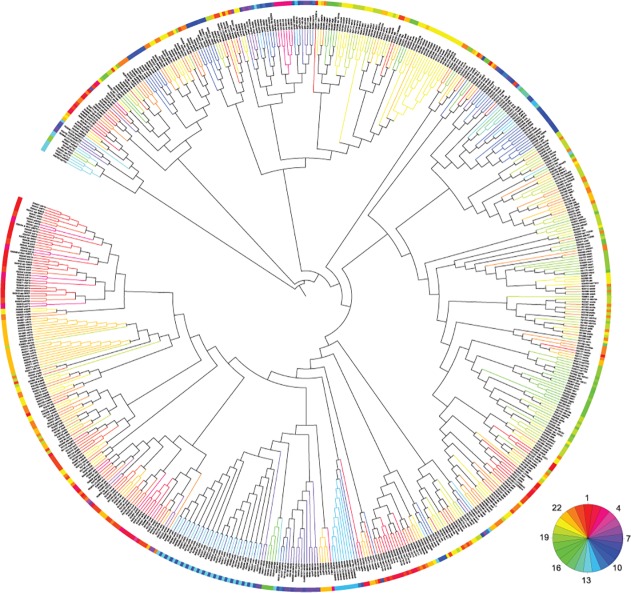
BackgroundInteractive Tree Of Life v2: online annotation and display of phylogenetic trees made easy
Letunic, I., & Bork, P. (2011) · Nucleic Acids Research · doi:10.1093/nar/gkr201 · Cited by 1,457
Leber congenital amaurosis: Genes, proteins and disease mechanisms
den Hollander, A. I., Roepman, R., Koenekoop, R. K., & Cremers, F. P. M. (2008) · Progress in Retinal and Eye Research · doi:10.1016/j.preteyeres.2008.05.003 · Cited by 811 · cited 3×
“Among the two IMPDH homologs that have been described in humans, IMPDH1 is linked to several types of severe retinal degeneration including retinitis pigmentosa and Leber congenital amaurosis (LCA) [45].”
BackgroundInfluentialGery, S., Komatsu, N., Baldjyan, L., Yu, A., Koo, D., & Koeffler, H. P. (2006) · Molecular Cell · doi:10.1016/j.molcel.2006.03.038 · Cited by 630
Reversible compartmentalization of de novo purine biosynthetic complexes in living cells
An, S., Kumar, R., Sheets, E. D., & Benkovic, S. J. (2008) · Science · doi:10.1126/science.1152241 · Cited by 585
Metabolism and cancer: the circadian clock connection
Sahar, S., & Sassone-Corsi, P. (2009) · Nature Reviews Cancer · doi:10.1038/nrc2747 · Cited by 551 · cited 1×
“Metabolism-based research in circadian rhythms represents a potentially important contribution to our understanding of circadian output functions [57].”
BackgroundThe circadian molecular clock creates epidermal stem cell heterogeneity
Janich, P., Pascual, G., Merlos-Suárez, A., Batlle, E., Ripperger, J., Albrecht, U., Cheng, H.-Y. M., Obrietan, K., Di Croce, L., & Benitah, S. A. (2011) · Nature · doi:10.1038/nature10649 · Cited by 326 · cited 1×
“In mammals, there are also reports of circadian clock regulation in epidermal cells [54] and hematopoietic stem cells [55].”
BackgroundCRX ChIP-seq reveals the cis-regulatory architecture of mouse photoreceptors
Corbo, J. C., Lawrence, K. A., Karlstetter, M., Myers, C. A., Abdelaziz, M., Dirkes, W., Weigelt, K., Seifert, M., Benes, V., Fritsche, L. G., et al. (2010) · Genome Research · doi:10.1101/gr.109405.110 · Cited by 219
Driving the cell cycle through metabolism
Cai, L., & Tu, B. P. (2012) · Annual Review of Cell and Developmental Biology · doi:10.1146/annurev-cellbio-092910-154010 · Cited by 140
Ng, A., Uribe, R. A., Yieh, L., Nuckels, R., & Gross, J. M. (2009) · Development · doi:10.1242/dev.038315 · Cited by 87
Research works printed but not linked: 58
- Bolige A, Hagiwara S-Y, Zhang Y, Goto K (2005) Circadian G2 arrest as related to circadian gating of cell population growth in Euglena. Plant Cell Physiol 46: 931– 936. 15821024 · DOI
- Carre IA, Edmunds LN Jr. (1993) Oscillator control of cell division in Euglena: cyclic AMP oscillations mediate the phasing of the cell division cycle by the circadian clock. J Cell Sci 104 (Pt 4): 1163– 1173. 8391014 · DOI · Paper page
- Hagiwara S-y, Bolige A, Zhang Y, Takahashi M, Yamagishi A, et al (2002) Circadian gating of photoinduction of commitment to cell-cycle transitions in relation to photoperiodic control of cell reproduction in Euglena. Photochem Photobiol 76: 105– 115. 12126300 · doi:10.1562/0031-8655(2002)076<0105:cgopoc>2.0.co;2
- Yang Q, Pando BF, Dong GG, Golden SS, van Oudenaarden A (2010) Circadian gating of the cell cycle revealed in single cyanobacterial cells. Science 327: 1522– 1526. 10.1126/science.1181759 20299597 PMC3118046 · DOI
- Morf J, Schibler U (2010) Circadian cell-cycle progression: cracking open the gate. Cell 140: 458– 459. 10.1016/j.cell.2010.02.002 20178739 · doi:10.1016/j.cell.2010.02.002
- Dong G, Yang Q, Wang Q, Kim YI, Wood TL, et al (2010) Elevated ATPase activity of KaiC applies a circadian checkpoint on cell division in Synechococcus elongatus. Cell 140: 529– 539. 10.1016/j.cell.2009.12.042 20178745 PMC3031423 · DOI · Paper page
- Kondo T, Mori T, Lebedeva NV, Aoki S, Ishiura M, et al (1997) Circadian rhythms in rapidly dividing cyanobacteria. Science 275: 224– 227. 8985018 · DOI · Paper page
- Bjarnason GA, Jordan RC, Sothern RB (1999) Circadian variation in the expression of cell-cycle proteins in human oral epithelium. Am J Pathol 154: 613– 622. 10027418 PMC1849996 · DOI · Paper page
- Matsuo T, Yamaguchi S, Mitsui S, Emi A, Shimoda F, et al (2003) Control mechanism of the circadian clock for timing of cell division in vivo. Science 302: 255– 259. 12934012 · DOI · Paper page
- Weigl Y, Ashkenazi IE, Peleg L (2013) Rhythmic profiles of cell cycle and circadian clock gene transcripts in mice: a possible association between two periodic systems. J Exp Biol 216: 2276– 2282. 10.1242/jeb.081729 23531816 · DOI
- Nagoshi E, Saini C, Bauer C, Laroche T, Naef F, et al (2004) Circadian gene expression in individual fibroblasts: cell-autonomous and self-sustained oscillators pass time to daughter cells. Cell 119: 693– 705. 15550250 · DOI · Paper page
- Levi F, Filipski E, Iurisci I, Li XM, Innominato P (2007) Cross-talks between circadian timing system and cell division cycle determine cancer biology and therapeutics. Cold Spring Harb Symp Quant Biol 72: 465– 475. 10.1101/sqb.2007.72.030 18419306 · DOI
- Gauger MA, Sancar A (2005) Cryptochrome, circadian cycle, cell cycle checkpoints, and cancer. Cancer Res 65: 6828– 6834. 16061665 · DOI · Paper page
- Lahti T, Merikanto I, Partonen T (2012) Circadian clock disruptions and the risk of cancer. Ann Med 44: 847– 853. 10.3109/07853890.2012.727018 23072403 · DOI
- Fu L, Pelicano H, Liu J, Huang P, Lee C (2002) The circadian gene Period2 plays an important role in tumor suppression and DNA damage response in vivo. Cell 111: 41– 50. 12372299 · DOI · Paper page
- Grechez-Cassiau A, Rayet B, Guillaumond F, Teboul M, Delaunay F (2008) The circadian clock component BMAL1 is a critical regulator of p21WAF1/CIP1 expression and hepatocyte proliferation. J Biol Chem 283: 4535– 4542. 18086663 · DOI · Paper page
- Destici E, Oklejewicz M, Saito S, van der Horst GT (2011) Mammalian cryptochromes impinge on cell cycle progression in a circadian clock-independent manner. Cell Cycle 10: 3788– 3797. 10.4161/cc.10.21.17974 22033214 · DOI
- Borgs L, Beukelaers P, Vandenbosch R, Belachew S, Nguyen L, et al (2009) Cell "circadian" cycle: new role for mammalian core clock genes. Cell Cycle 8: 832– 837. 19221497 · DOI · Paper page
- Gerard C, Goldbeter A (2009) Temporal self-organization of the cyclin/Cdk network driving the mammalian cell cycle. Proc Natl Acad Sci U S A 106: 21643– 21648. 10.1073/pnas.0903827106 20007375 PMC2799800 · DOI · Paper page
- Gerard C, Goldbeter A (2012) Entrainment of the mammalian cell cycle by the circadian clock: modeling two coupled cellular rhythms. PLoS Comput Biol 8: e1002516 10.1371/journal.pcbi.1002516 22693436 PMC3364934 · DOI
- Idda ML, Kage E, Lopez-Olmeda JF, Mracek P, Foulkes NS, et al (2012) Circadian timing of injury-induced cell proliferation in zebrafish. PLoS One 7: e34203 10.1371/journal.pone.0034203 22479565 PMC3315524 · DOI
- Griniatsos J, Michail OP, Theocharis S, Arvelakis A, Papaconstantinou I, et al (2006) Circadian variation in expression of G1 phase cyclins D1 and E and cyclin-dependent kinase inhibitors p16 and p21 in human bowel mucosa. World J Gastroenterol 12: 2109– 2114. 16610066 PMC4087694 · DOI
- Feillet C, Krusche P, Tamanini F, Janssens RC, Downey MJ, et al (2014) Phase locking and multiple oscillating attractors for the coupled mammalian clock and cell cycle. Proc Natl Acad Sci U S A 111: 9828– 9833. 10.1073/pnas.1320474111 24958884 PMC4103330 · DOI · Paper page
- Bieler J, Cannavo R, Gustafson K, Gobet C, Gatfield D, et al (2014) Robust synchronization of coupled circadian and cell cycle oscillators in single mammalian cells. Mol Syst Biol 10: 739 10.15252/msb.20145218 25028488 PMC4299496 · DOI · Paper page
- Dekens MP, Santoriello C, Vallone D, Grassi G, Whitmore D, et al (2003) Light regulates the cell cycle in zebrafish. Curr Biol 13: 2051– 2057. 14653994 · DOI · Paper page
- Tamai TK, Young LC, Cox CA, Whitmore D (2012) Light acts on the zebrafish circadian clock to suppress rhythmic mitosis and cell proliferation. J Biol Rhythms 27: 226– 236. 10.1177/0748730412440861 22653891 · DOI
- Peyric E, Moore HA, Whitmore D (2013) Circadian clock regulation of the cell cycle in the zebrafish intestine. PLoS One 8: e73209 10.1371/journal.pone.0073209 24013905 PMC3754960 · DOI
- Hirayama J, Cardone L, Doi M, Sassone-Corsi P (2005) Common pathways in circadian and cell cycle clocks: light-dependent activation of Fos/AP-1 in zebrafish controls CRY-1a and WEE-1. Proc Natl Acad Sci U S A 102: 10194– 10199. 16000406 PMC1177375 · DOI
- Dickmeis T, Lahiri K, Nica G, Vallone D, Santoriello C, et al (2007) Glucocorticoids play a key role in circadian cell cycle rhythms. PLoS Biol 5: e78 10.1371/journal.pbio.0050078 17373855 PMC1828142 · DOI · Paper page
- Ricatti MJ, Battista AG, Zorrilla Zubilete M, Faillace MP (2011) Purinergic signals regulate daily S-phase cell activity in the ciliary marginal zone of the zebrafish retina. J Biol Rhythms 26: 107– 117. 10.1177/0748730410395528 21454291 · DOI
- Laranjeiro R, Tamai TK, Peyric E, Krusche P, Ott S, et al (2013) Cyclin-dependent kinase inhibitor p20 controls circadian cell-cycle timing. Proc Natl Acad Sci U S A 110: 6835– 6840. 10.1073/pnas.1217912110 23569261 PMC3637774 · DOI
- Lunt SY, Vander Heiden MG (2011) Aerobic glycolysis: meeting the metabolic requirements of cell proliferation. Annu Rev Cell Dev Biol 27: 441– 464. 10.1146/annurev-cellbio-092910-154237 21985671 · DOI · Paper page
- Moncada S, Higgs EA, Colombo SL (2012) Fulfilling the metabolic requirements for cell proliferation. Biochem J 446: 1– 7. 10.1042/BJ20120427 22835215 · DOI · Paper page
- Jayaram HN, Cooney DA, Grusch M, Krupitza G (1999) Consequences of IMP dehydrogenase inhibition, and its relationship to cancer and apoptosis. Curr Med Chem 6: 561– 574. 10390601 · doi:10.2174/092986730607220401122851
- Li Y, Li G, Wang H, Du J, Yan J (2013) Analysis of a gene regulatory cascade mediating circadian rhythm in zebrafish. PLoS Comput Biol 9: e1002940 10.1371/journal.pcbi.1002940 23468616 PMC3585402 · DOI
- Schellenberger J, Park JO, Conrad TM, Palsson BO (2010) BiGG: a Biochemical Genetic and Genomic knowledgebase of large scale metabolic reconstructions. BMC Bioinformatics 11: 213 10.1186/1471-2105-11-213 20426874 PMC2874806 · DOI · Paper page
- Kanehisa M, Goto S, Sato Y, Kawashima M, Furumichi M, et al (2014) Data, information, knowledge and principle: back to metabolism in KEGG. Nucleic Acids Res 42: D199– 205. 10.1093/nar/gkt1076 24214961 PMC3965122 · DOI · Paper page
- Kanehisa M, Goto S (2000) KEGG: kyoto encyclopedia of genes and genomes. Nucleic Acids Res 28: 27– 30. 10592173 PMC102409 · DOI · Paper page
- Letunic I, Bork P (2007) Interactive Tree Of Life (iTOL): an online tool for phylogenetic tree display and annotation. Bioinformatics 23: 127– 128. 17050570 · DOI · Paper page
- Kimmel CB, Ballard WW, Kimmel SR, Ullmann B, Schilling TF (1995) Stages of embryonic development of the zebrafish. Dev Dyn 203: 253– 310. 8589427 · DOI · Paper page
- Yi W, Clark PM, Mason DE, Keenan MC, Hill C, et al (2012) Phosphofructokinase 1 glycosylation regulates cell growth and metabolism. Science 337: 975– 980. 10.1126/science.1222278 22923583 PMC3534962 · DOI · Paper page
- Wang Q, Bailey CG, Ng C, Tiffen J, Thoeng A, et al (2011) Androgen receptor and nutrient signaling pathways coordinate the demand for increased amino acid transport during prostate cancer progression. Cancer Res 71: 7525– 7536. 10.1158/0008-5472.CAN-11-1821 22007000 · DOI · Paper page
- Rey G, Cesbron F, Rougemont J, Reinke H, Brunner M, et al (2011) Genome-wide and phase-specific DNA-binding rhythms of BMAL1 control circadian output functions in mouse liver. PLoS Biol 9: e1000595 10.1371/journal.pbio.1000595 21364973 PMC3043000 · DOI · Paper page
- Fustin JM, Doi M, Yamada H, Komatsu R, Shimba S, et al (2012) Rhythmic nucleotide synthesis in the liver: temporal segregation of metabolites. Cell Rep 1: 341– 349. 10.1016/j.celrep.2012.03.001 22832226 · DOI · Paper page
- Wu XR, Zhong HB, Song JB, Damoiseaux R, Yang Z, et al (2006) Mycophenolic acid is a potent inhibitor of angiogenesis. Arterioscler Thromb Vasc Biol 26: 2414– 2416. 16990565 · doi:10.1161/01.atv.0000238361.07225.fc
- Karpowicz P, Zhang Y, Hogenesch JB, Emery P, Perrimon N (2013) The circadian clock gates the intestinal stem cell regenerative state. Cell Rep 3: 996– 1004. 10.1016/j.celrep.2013.03.016 23583176 PMC3982394 · DOI · Paper page
- Mendez-Ferrer S, Lucas D, Battista M, Frenette PS (2008) Haematopoietic stem cell release is regulated by circadian oscillations. Nature 452: 442– 447. 10.1038/nature06685 18256599 · DOI · Paper page
- Natsumeda Y, Ohno S, Kawasaki H, Konno Y, Weber G, et al (1990) Two distinct cDNAs for human IMP dehydrogenase. J Biol Chem 265: 5292– 5295. 1969416 · doi:10.1016/s0021-9258(19)34120-1
- He Y, Mou Z, Li W, Liu B, Fu T, et al (2009) Identification of IMPDH2 as a tumor-associated antigen in colorectal cancer using immunoproteomics analysis. Int J Colorectal Dis 24: 1271– 1279. 10.1007/s00384-009-0759-2 19597826 · DOI
- Winnicki W, Weigel G, Sunder-Plassmann G, Bajari T, Winter B, et al (2010) An inosine 5'-monophosphate dehydrogenase 2 single-nucleotide polymorphism impairs the effect of mycophenolic acid. Pharmacogenomics J 10: 70– 76. 10.1038/tpj.2009.43 19770842 · DOI
- Toubiana J, Rossi A-L, Grimaldi D, Belaidouni N, Chafey P, et al (2011) IMPDHII protein inhibits Toll-like receptor 2-mediated activation of NF-kappaB. J Biol Chem 286: 23319– 23333. 10.1074/jbc.M110.201210 21460227 PMC3123097 · DOI
- Lesch M, Nyhan WL (1964) A Familial Disorder of Uric Acid Metabolism and Central Nervous System Function. Am J Med 36: 561– 570. 14142409 · DOI · Paper page
- Li L, Li P, Chaurasia SS, Gao Y, Carr AL, et al (2008) Clock is required for maintaining the circadian rhythms of opsin mRNA expression in photoreceptor cells. J Biol Chem 283: 31673– 31678. 10.1074/jbc.M803875200 18687681 PMC2581545 · DOI
- Janik M, Kleinhans FW, Hagedorn M (2000) Microinjection of cryoprotectants into the yolk of zebrafish embryos (Brachydanio rerio). Biol Reprod 62: 146– 146. 11017758
- Langmead B, Trapnell C, Pop M, Salzberg SL (2009) Ultrafast and memory-efficient alignment of short DNA sequences to the human genome. Genome Biol 10: R25 10.1186/gb-2009-10-3-r25 19261174 PMC2690996 · DOI · Paper page
- Kim D, Pertea G, Trapnell C, Pimentel H, Kelley R, et al (2013) TopHat2: accurate alignment of transcriptomes in the presence of insertions, deletions and gene fusions. Genome Biol 14: R36 10.1186/gb-2013-14-4-r36 23618408 PMC4053844 · DOI · Paper page
- Trapnell C, Hendrickson DG, Sauvageau M, Goff L, Rinn JL, et al (2013) Differential analysis of gene regulation at transcript resolution with RNA-seq. Nat Biotechnol 31: 46– 53. 10.1038/nbt.2450 23222703 PMC3869392 · DOI · Paper page
- Rist MJ, Muhle-Goll C, Gorling B, Bub A, Heissler S, et al (2013) Influence of Freezing and Storage Procedure on Human Urine Samples in NMR-Based Metabolomics. Metabolites 3: 243– 258. 10.3390/metabo3020243 24957990 PMC3901271 · DOI
Cited by
Clock Regulation of Metabolites Reveals Coupling between Transcription and Metabolism
Krishnaiah, S. Y., Wu, G., Altman, B. J., Growe, J., Rhoades, S. D., Coldren, F., Venkataraman, A., Olarerin-George, A. O., Francey, L. J., Mukherjee, S., et al. (2017) · Cell Metabolism · doi:10.1016/j.cmet.2017.03.019 · Cited by 215
Genetic control over biogenic crystal morphogenesis in zebrafish
Deis, R., Lerer-Goldshtein, T., Baiko, O., Eyal, Z., Brenman-Begin, D., Goldsmith, M., Kaufmann, S., Heinig, U., Dong, Y., Lushchekina, S., et al. (2025) · Nature Chemical Biology · doi:10.1038/s41589-024-01722-1 · Cited by 24
“15,30,33,38–40) (Fig.”
Lysosome-related organelles orchestrate guanine crystal formation in pigment cells
Gorelick-Ashkenazi, A., Barzilay, Y., Lerer-Goldshtein, T., Olender, T., Eyal, Z., Glaser, M., Broder, Y., Mishol, N., Deis, R., Kedmi, M., et al. (2026) · Proceedings of the National Academy of Sciences · doi:10.1073/pnas.2524305123 · Cited by 1
Metadata
- Authors
- Li, Y., Li, G., Görling, B., Luy, B., Du, J., & Yan, J.
- Venue
- PLOS Computational Biology
- Publisher
- Public Library of Science (PLoS)
- Published
- 2015-02-25
- Volume
- 11
- Issue
- 2
- Pages
- e1004086
- ISSN
- 1553-7358
- PMC
- PMC4340947
- Cited by
- 34
- References
- 10
- Language
- en
About these checks
Registry, retraction, Cites and statistics results are computed, not judged, with one exception: a printed reference that no index lists is read once by a model before it counts as a citation error. Claims are extracted by a model and kept only when their quote appears verbatim in the text; each cited source is then checked, with a model’s help, for whether it says what the claim relies on. Those verdicts can be wrong — read the claim’s quote and the cited source before relying on one.
Statistics and arithmetic are recomputed, not judged.
Confidence bands are shown only for fields calibrated on our annotated test set. None is calibrated yet, so no band is shown.
What counts as a claim ›How we measure confidence ›How we check this ›
Are you an author, or do you see a problem with this page? Request a review
How to cite
Cite CoChat for the checks on this page, and the paper for its own findings.
- This page
- CoChat. (2026). Citation check: Integrative Analysis of Circadian Transcriptome and Metabolic Network Reveals the Role of De Novo Purine Synthesis in Circadian Control of Cell Cycle. https://app.cochat.ai/papers/10.1371/journal.pcbi.1004086
- The paper
- Li, Y., Li, G., Görling, B., Luy, B., Du, J., & Yan, J. (2015). Integrative Analysis of Circadian Transcriptome and Metabolic Network Reveals the Role of De Novo Purine Synthesis in Circadian Control of Cell Cycle. PLOS Computational Biology. https://doi.org/10.1371/journal.pcbi.1004086
Data sources
Bibliographic data: Semantic Scholar, OpenAlex, Crossref.
Contains information from the Semantic Scholar Academic Graph Datasets, made available under the ODC Attribution License (ODC-BY 1.0).
Semantic Scholar’s data is described in: Kinney, R., et al. (2023). The Semantic Scholar Open Data Platform. arXiv:2301.10140.
