

The DOI matches its Crossref record; 62 of the 64 references it cites were found in a registry or an index.
Bat detective—Deep learning tools for bat acoustic signal detection
Open accessPublished version of a preprint
Abstract
Passive acoustic sensing has emerged as a powerful tool for quantifying anthropogenic impacts on biodiversity, especially for echolocating bat species. To better assess bat population trends there is a critical need for accurate, reliable, and open source tools that allow the detection and classification of bat calls in large collections of audio recordings. The majority of existing tools are commercial or have focused on the species classification task, neglecting the important problem of first localizing echolocation calls in audio which is particularly problematic in noisy recordings. We developed a convolutional neural network based open-source pipeline for detecting ultrasonic, full-spectrum, search-phase calls produced by echolocating bats. Our deep learning algorithms were trained on full-spectrum ultrasonic audio collected along road-transects across Europe and labelled by citizen scientists from www.batdetective.org. When compared to other existing algorithms and commercial systems, we show significantly higher detection performance of search-phase echolocation calls with our test sets. As an example application, we ran our detection pipeline on bat monitoring data collected over five years from Jersey (UK), and compared results to a widely-used commercial system. Our detection pipeline can be used for the automatic detection and monitoring of bat populations, and further facilitates their use as indicator species on a large scale. Our proposed pipeline makes only a small number of bat specific design decisions, and with appropriate training data it could be applied to detecting other species in audio. A crucial novelty of our work is showing that with careful, non-trivial, design and implementation considerations, state-of-the-art deep learning methods can be used for accurate and efficient monitoring in audio.
Overview
The claims and statistics of this paper haven’t been checked yet.
Run the check — free, no account needed. It reads the open-access text and checks the sources it cites.
Integrity signals
Registry
Cites
Statistics
Figures
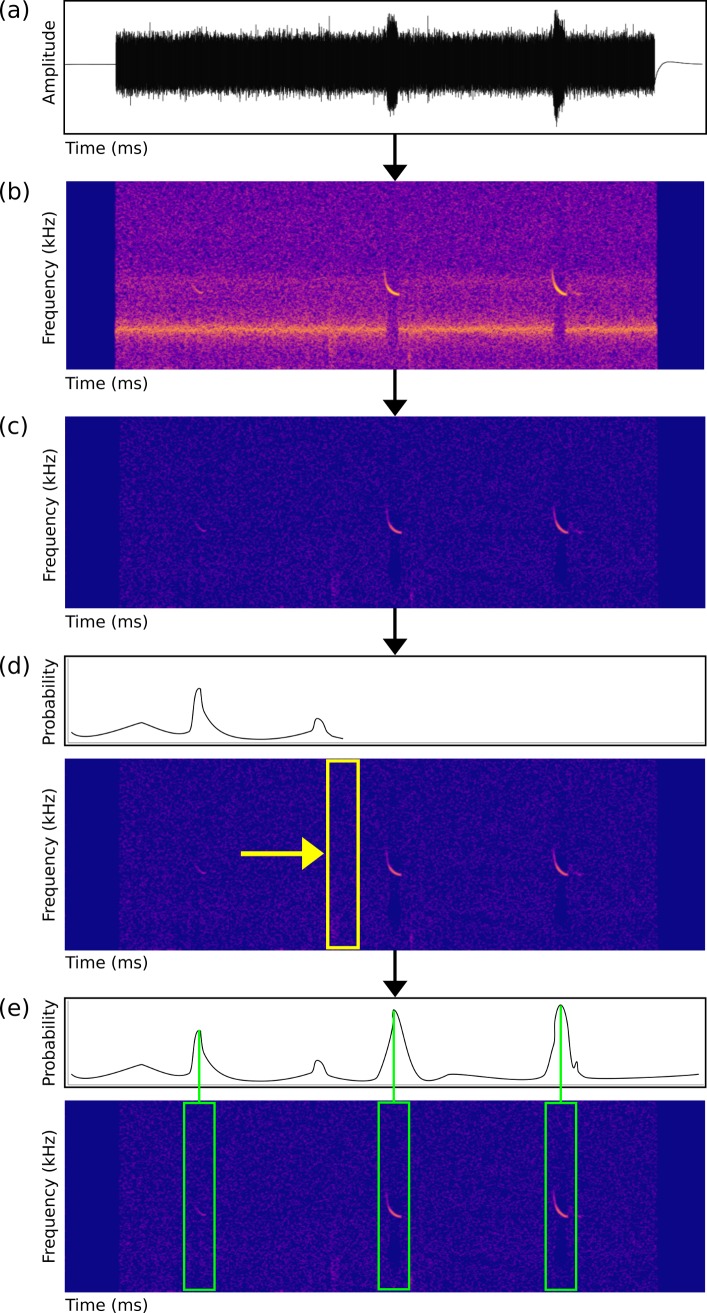
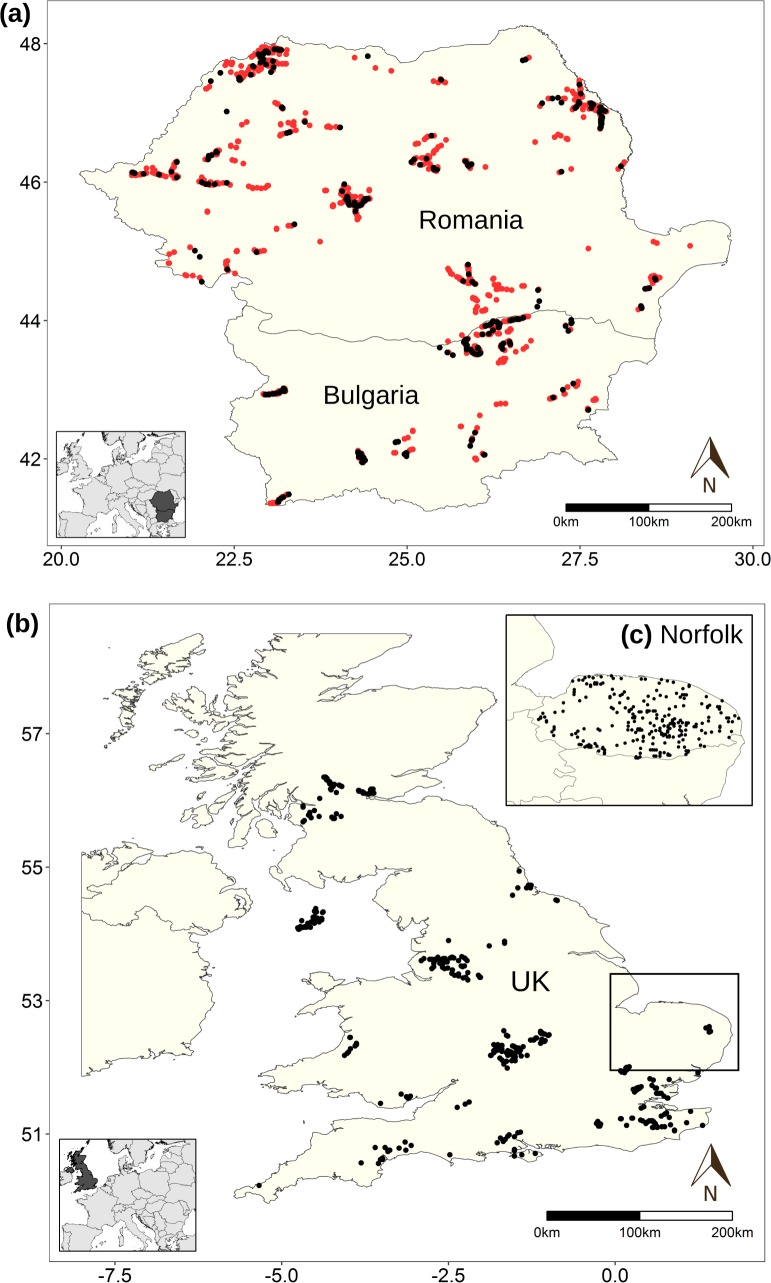
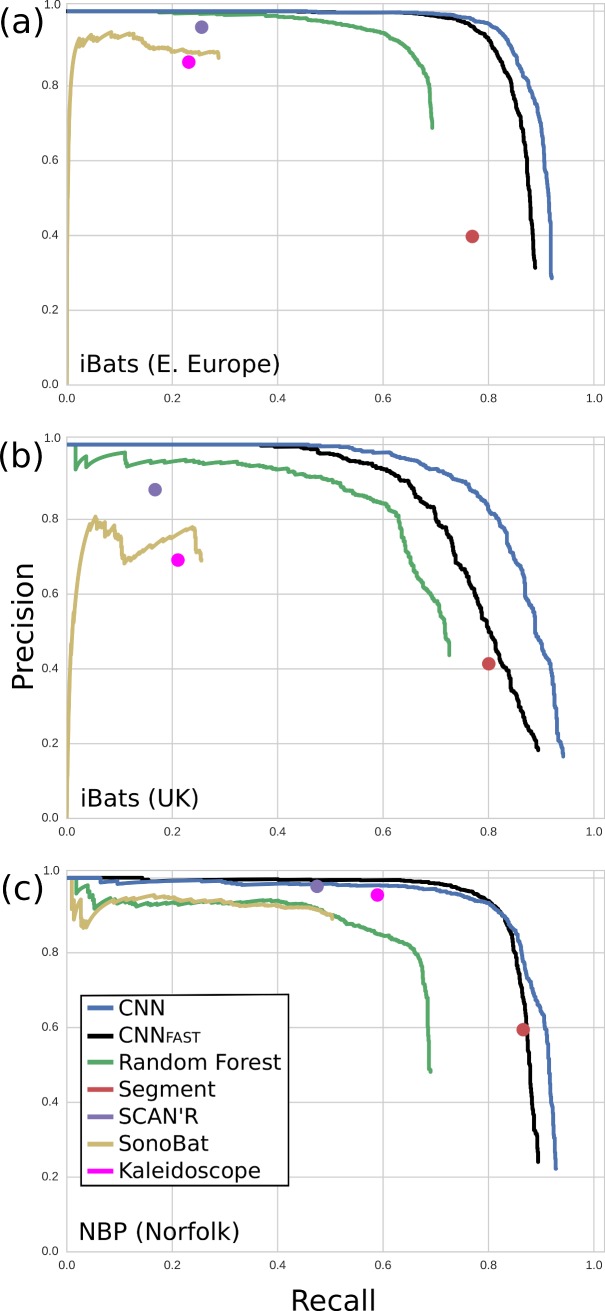
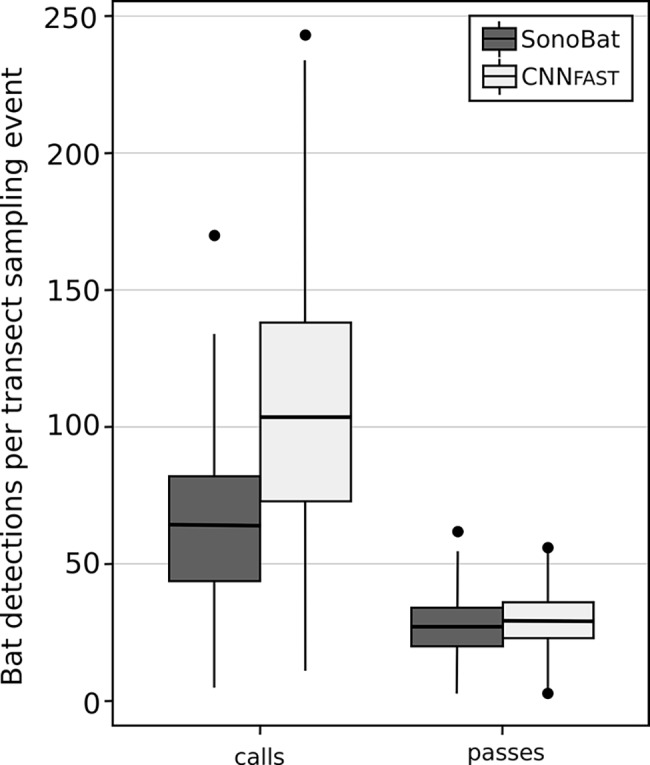
Verification
Claims the paper makes
The claims and statistics of this paper haven’t been checked yet.
Run the check — free, no account needed. It reads the open-access text and checks the sources it cites.
Claims other papers make about this one
Each is checked against this paper’s own text: does it say what the citing paper says it does?
In the citing paper
“For these reasons, detecting and classifying animal species with DL for the purpose of population estimates is becoming increasingly popular for images52,53, acoustic spectrograms95, and videos96.”
From Perspectives in machine learning for wildlife conservation (2022) · cites this paper as [95]
Self-check
Percentages, sums and reported differences re-computed from the paper’s own numbers.
The self-check needs the paper’s full text.
Citations
Cites
R: A Language and Environment for Statistical Computing
R Core Team (2000) · doi:10.32614/r.manuals · Cited by 355,893
Breiman, L. (2001) · Machine Learning · doi:10.1023/a:1010933404324 · Cited by 133,538
ImageNet classification with deep convolutional neural networks
Krizhevsky, A., Sutskever, I., & Hinton, G. E. (2017) · Communications of the ACM · doi:10.1145/3065386 · Cited by 112,155
Hochreiter, S., & Schmidhuber, J. (1997) · Neural Computation · doi:10.1162/neco.1997.9.8.1735 · Cited by 102,318
Fitting Linear Mixed-Effects Models Using lme4
Bates, D., Mächler, M., Bolker, B., & Walker, S. (2015) · Journal of Statistical Software · doi:10.18637/jss.v067.i01 · Cited by 86,835
Gradient-based learning applied to document recognition
Lecun, Y., Bottou, L., Bengio, Y., & Haffner, P. (1998) · Proceedings of the IEEE · doi:10.1109/5.726791 · Cited by 58,805
Rich Feature Hierarchies for Accurate Object Detection and Semantic Segmentation
Girshick, R., Donahue, J., Darrell, T., & Malik, J. (2014) · 2014 IEEE Conference on Computer Vision and Pattern Recognition · doi:10.1109/cvpr.2014.81 · Cited by 32,684
The pascal visual object classes (VOC) challenge
Everingham, M., Van Gool, L., Williams, C. K. I., Winn, J., & Zisserman, A. (2010) · International Journal of Computer Vision · doi:10.1007/s11263-009-0275-4 · Cited by 19,599
Hinton, G., Deng, L., Yu, D., Dahl, G., Mohamed, A.-R., Jaitly, N., Senior, A., Vanhoucke, V., Nguyen, P., Sainath, T., et al. (2012) · IEEE Signal Processing Magazine · doi:10.1109/msp.2012.2205597 · Cited by 10,260
Fitting Linear Mixed-Effects Models Using lme4Preprint
Bates, D. M., Maechler, M., Bolker, B. M., & Walker, S. (2014) · arXiv (Cornell University) · doi:10.3929/ethz-b-000105397 · Cited by 9,435
Biodiversity loss and its impact on humanity
Cardinale, B. J., Duffy, J. E., Gonzalez, A., Hooper, D. U., Perrings, C., Venail, P., Narwani, A., Mace, G. M., Tilman, D., Wardle, D. A., et al. (2012) · Nature · doi:10.1038/nature11148 · Cited by 7,457 · cited 1×
“There is a critical need for robust and accurate tools to scale up biodiversity monitoring and to manage the impact of anthropogenic change (Cardinale et al. 2012; Turner 2014).”
BackgroundWaveNet: a generative model for raw audio
Oord, A. V. D., Dieleman, S., Zen, H., Simonyan, K., Vinyals, O., Graves, A., Kalchbrenner, N., Senior, A., & Kavukcuoglu, K. (2016) · arXiv · doi:10.48550/arxiv.1609.03499 · Cited by 4,911
CNN architectures for large-scale audio classification
Hershey, S., Chaudhuri, S., Ellis, D. P. W., Gemmeke, J. F., Jansen, A., Moore, R. C., Plakal, M., Platt, D., Saurous, R. A., Seybold, B., et al. (2017) · IEEE International Conference on Acoustics Speech and Signal Processing · doi:10.1109/icassp.2017.7952132 · Cited by 2,733
Environmental sound classification with convolutional neural networks
Piczak, K. J. (2015) · Machine learning for signal processing ... · doi:10.1109/mlsp.2015.7324337 · Cited by 1,019
Assessing data quality in citizen science
Kosmala, M., Wiggins, A., Swanson, A., & Simmons, B. D. (2016) · Frontiers in Ecology and the Environment · doi:10.1002/fee.1436 · Cited by 992
Estimating animal population density using passive acoustics
Marques, T. A., Thomas, L., Martin, S. W., Mellinger, D. K., Ward, J. A., Moretti, D. J., Harris, D., & Tyack, P. L. (2013) · Biological Reviews · doi:10.1111/brv.12001 · Cited by 746
From spatial orientation to food acquisition in echolocating bats
Schnitzler, H., Moss, C. F., & Denzinger, A. (2003) · Trends in Ecology & Evolution · doi:10.1016/s0169-5347(03)00185-x · Cited by 746
The multidimensional wisdom of crowds
Welinder, P., Branson, S., Belongie, S., & Perona, P. (2010) · CaltechAUTHORS (California Institute of Technology) · Cited by 742
Rapid Acoustic Survey for Biodiversity Appraisal
Sueur, J., Pavoine, S., Hamerlynck, O., & Duvail, S. (2008) · PLoS ONE · doi:10.1371/journal.pone.0004065 · Cited by 689
Blumstein, D. T., Mennill, D. J., Clemins, P. J., Girod, L., Yao, K., Patricelli, G. L., Deppe, J. L., Krakauer, A. H., Clark, C. W., Cortopassi, K. A., et al. (2011) · Journal of Applied Ecology · doi:10.1111/j.1365-2664.2011.01993.x · Cited by 657
Merchant, N. D., Fristrup, K. M., Johnson, M. P., Tyack, P. L., Witt, M. J., Blondel, P., & Parks, S. E. (2014) · Methods in Ecology and Evolution · doi:10.1111/2041-210x.12330 · Cited by 539
Real-time bioacoustics monitoring and automated species identification
Aide, T. M., Corrada-Bravo, C., Campos-Cerqueira, M., Milan, C., Vega, G., & Alvarez, R. (2013) · PeerJ · doi:10.7717/peerj.103 · Cited by 487
Russo, D., & Jones, G. (2002) · Journal of Zoology · doi:10.1017/s0952836902001231 · Cited by 383
Parsons, S. E., & Jones, G. (2000) · Journal of Experimental Biology · doi:10.1242/jeb.203.17.2641 · Cited by 346
Self-citationAcoustic sequences in non‐human animals: a tutorial review and prospectus
Kershenbaum, A., Blumstein, D. T., Roch, M. A., Akçay, Ç., Backus, G., Bee, M. A., Bohn, K., Cao, Y., Carter, G., Cäsar, C., et al. (2016) · Biological Reviews · doi:10.1111/brv.12160 · Cited by 337
Stowell, D., & Plumbley, M. D. (2014) · PeerJ · doi:10.7717/peerj.488 · Cited by 295
Turner, W. (2014) · Science · doi:10.1126/science.1256014 · Cited by 258
Swanson, A., Kosmala, M., Lintott, C., & Packer, C. (2016) · Conservation Biology · doi:10.1111/cobi.12695 · Cited by 251
Russo, D., & Voigt, C. C. (2016) · Ecological Indicators · doi:10.1016/j.ecolind.2016.02.036 · Cited by 216
Do you hear what I hear? Implications of detector selection for acoustic monitoring of bats
Adams, A. M., Jantzen, M. K., Hamilton, R., & Fenton, M. B. (2012) · Methods in Ecology and Evolution · doi:10.1111/j.2041-210x.2012.00244.x · Cited by 198
A continental‐scale tool for acoustic identification of E uropean bats
Walters, C. L., Freeman, R., Collen, A., Dietz, C., Fenton, M. B., Jones, G., Obrist, M. К., Puechmaille, S. J., Sattler, T. L., Siemers, B. M., et al. (2012) · Journal of Applied Ecology · doi:10.1111/j.1365-2664.2012.02182.x · Cited by 183
Self-citationBarlow, K. E., Briggs, P. A., Haysom, K. A., HUTSON, A. M., Lechiara, N. L., Racey, P. A., Walsh, A. L., & Langton, S. D. (2014) · Biological Conservation · doi:10.1016/j.biocon.2014.11.022 · Cited by 182
Self-citationA plan for the North American Bat Monitoring Program (NABat)
Loeb, S. C., Rodhouse, T. J., Ellison, L. E., Lausen, C. L., Reichard, J. D., Irvine, K. M., Ingersoll, T. E., Coleman, J. T. H., Thogmartin, W. E., Sauer, J. R., et al. (2015) · doi:10.2737/srs-gtr-208 · Cited by 178
Stevenson, B. C., Borchers, D. L., Altwegg, R., Swift, R., Gillespie, D. M., & Measey, J. G. (2014) · Methods in Ecology and Evolution · doi:10.1111/2041-210x.12291 · Cited by 144
Rydell, J., Nyman, S., Eklöf, J., Jones, G., & Russo, D. (2017) · Ecological Indicators · doi:10.1016/j.ecolind.2017.03.023 · Cited by 141
Bird detection in audio: A survey and a challenge
Stowell, D., Wood, M., Stylianou, Y., & Glotin, H. (2016) · Machine learning for signal processing ... · doi:10.1109/mlsp.2016.7738875 · Cited by 140
Azam, C., Viol, I. L., Julien, J., Bas, Y., & Kerbiriou, C. (2016) · Landscape Ecology · doi:10.1007/s10980-016-0417-3 · Cited by 124
A comparison of supervised learning techniques in the classification of bat echolocation calls
Armitage, D. W., & Ober, H. K. (2010) · Ecological Informatics · doi:10.1016/j.ecoinf.2010.08.001 · Cited by 123
Solo: an open source, customizable and inexpensive audio recorder for bioacoustic research
Whytock, R. C., & Christie, J. (2016) · Methods in Ecology and Evolution · doi:10.1111/2041-210x.12678 · Cited by 122
Tadarida: A Toolbox for Animal Detection on Acoustic Recordings
Bas, Y., Bas, D., & Julien, J.-F. (2017) · Journal of Open Research Software · doi:10.5334/jors.154 · Cited by 109
Everyday bat vocalizations contain information about emitter, addressee, context, and behavior
Prat, Y., Taub, M., & Yovel, Y. (2016) · Scientific Reports · doi:10.1038/srep39419 · Cited by 106
Bat evolution, ecology, and conservation
(2014) · Choice Reviews Online · doi:10.5860/choice.51-4435 · Cited by 103
Newson, S. E., Evans, H. E., & Gillings, S. (2015) · Biological Conservation · doi:10.1016/j.biocon.2015.06.009 · Cited by 99
Self-citationSkowronski, M. D., & Harris, J. G. (2006) · The Journal of the Acoustical Society of America · doi:10.1121/1.2166948 · Cited by 82
Jennings, N., Parsons, S. E., & Pocock, M. J. O. (2008) · Canadian Journal of Zoology · doi:10.1139/z08-009 · Cited by 73
Self-citationUse of Large‐Scale Acoustic Monitoring to Assess Anthropogenic Pressures on Orthoptera Communities
Penone, C., Viol, I. L., Pellissier, V., Julien, J., Bas, Y., & Kerbiriou, C. (2013) · Conservation Biology · doi:10.1111/cobi.12083 · Cited by 70
A generalised random encounter model for estimating animal density with remote sensor data
Lucas, T. C. D., Moorcroft, E. A., Freeman, R., Rowcliffe, J. M., & Jones, K. E. (2015) · Methods in Ecology and Evolution · doi:10.1111/2041-210x.12346 · Cited by 69
Self-citationAcoustic identification of Mexican bats based on taxonomic and ecological constraints on call design
Zamora‐Gutierrez, V., López‐González, C., González, M. C., Fenton, M. B., Jones, G., Kalko, E. K. V., Puechmaille, S. J., Stathopoulos, V., & Jones, K. E. (2016) · Methods in Ecology and Evolution · doi:10.1111/2041-210x.12556 · Cited by 65
Self-citationIndicator Bats Program: A System for the Global Acoustic Monitoring of Bats
Jones, K. E., Russ, J., Bashta, A., Bilhari, Z., Catto, C. M. C., Csősz, I., Gorbachev, A., Győrfi, P., Hughes, A. C., Ivashkiv, I., et al. (2013) · Wiley eBooks · doi:10.1002/9781118490747.ch10 · Cited by 63
Self-citationRoche, N., Langton, S., Aughney, T., Russ, J. M., Marnell, F., Lynn, D., & Catto, C. M. C. (2011) · Animal Conservation · doi:10.1111/j.1469-1795.2011.00470.x · Cited by 63
Self-citationChallenges of Using Bioacoustics to Globally Monitor Bats
Walters, C. L., Collen, A., Lucas, T. C. D., Mroz, K., Sayer, C. A., & Jones, K. E. (2013) · Springer eBooks · doi:10.1007/978-1-4614-7397-8_23 · Cited by 62
Self-citationAccounting for false‐positive acoustic detections of bats using occupancy models
Clement, M. J., Rodhouse, T. J., Ormsbee, P. C., Szewczak, J. M., & Nichols, J. D. (2014) · Journal of Applied Ecology · doi:10.1111/1365-2664.12303 · Cited by 59
Biodiversity Monitoring and Conservation
(2013) · Wiley eBooks · doi:10.1002/9781118490747 · Cited by 48
Lintott, P. R., Bunnefeld, N., Minderman, J., Fuentes‐Montemayor, E., Mayhew, R. J., Olley, L., & Park, K. J. (2015) · PLoS ONE · doi:10.1371/journal.pone.0126850 · Cited by 38
The effect of call libraries and acoustic filters on the identification of bat echolocation
Clement, M. J., Murray, K. L., Solick, D. I., & Gruver, J. C. (2014) · Ecology and Evolution · doi:10.1002/ece3.1201 · Cited by 36
Evaluation of Mobile Acoustic Techniques for Bat Population Monitoring
Whitby, M. D., Carter, T. C., Britzke, E. R., & Bergeson, S. M. (2014) · Acta Chiropterologica · doi:10.3161/150811014x683417 · Cited by 32
Operator bias in software‐aided bat call identification
Fritsch, G., & Bruckner, A. (2014) · Ecology and Evolution · doi:10.1002/ece3.1122 · Cited by 29
Towards Automatic Large-Scale Identification of Birds in Audio Recordings
Lasseck, M. (2015) · Lecture notes in computer science · doi:10.1007/978-3-319-24027-5_39 · Cited by 21
Bat Echolocation Call Identification for Biodiversity Monitoring: A Probabilistic Approach
Stathopoulos, V., Zamora‐Gutierrez, V., Jones, K. E., & Girolami, M. (2017) · Journal of the Royal Statistical Society Series C (Applied Statistics) · doi:10.1111/rssc.12217 · Cited by 21
Self-citationBat Evolution, Ecology, and Conservation
Foley, G. J., McLeod, T. G., Yeo, K. Z., & Brigham, R. M. (2015) · Journal of Mammalogy · doi:10.1093/jmammal/gyu020 · Cited by 17
Skowronski, M. D., & Fenton, M. B. (2008) · The Journal of the Acoustical Society of America · doi:10.1121/1.2896752 · Cited by 14
(2014) · doi:10.4230/oasics.slate.2021.16 · Cited by 1
Research works printed but not linked: 3
- Salamon J, Bello JP. Deep convolutional neural networks and data augmentation for environmental sound classification. arXiv preprint arXiv:160804363. 2016.
- Goeau H, Glotin H, Vellinga W-P, Planque R, Joly A, editors. LifeCLEF Bird Identification Task 2016. The Arrival of Deep Learning. Working Notes of CLEF 2016-Conference and Labs of the Evaluation forum; 2016; Évora, Portugal.
- Walters CL, Browning E, Jones KE. iBats Jersey Review. London, UK: 2016.
Cited by
Sorted by citations
Perspectives in machine learning for wildlife conservation
Tuia, D., Kellenberger, B., Beery, S., Costelloe, B. R., Zuffi, S., Risse, B., Mathis, A., Mathis, M. W., van Langevelde, F., Burghardt, T., et al. (2022) · Nature Communications · doi:10.1038/s41467-022-27980-y · Cited by 740
Emerging opportunities and challenges for passive acoustics in ecological assessment and monitoring
Gibb, R., Browning, E., Glover‐Kapfer, P., & Jones, K. E. (2018) · Methods in Ecology and Evolution · doi:10.1111/2041-210x.13101 · Cited by 753
Self-citationApplications for deep learning in ecology
Christin, S., Hervet, É., & Lecomte, N. (2019) · Methods in Ecology and Evolution · doi:10.1111/2041-210x.13256 · Cited by 724
A review of the major threats and challenges to global bat conservation
Frick, W. F., Kingston, T., & Flanders, J. R. (2019) · Annals of the New York Academy of Sciences · doi:10.1111/nyas.14045 · Cited by 734
Machine learning in acoustics: Theory and applications
Bianco, M. J., Gerstoft, P., Traer, J., Ozanich, E., Roch, M. A., Gannot, S., & Deledalle, C.-A. (2019) · The Journal of the Acoustical Society of America · doi:10.1121/1.5133944 · Cited by 609
Metadata
- Authors
- Mac Aodha, O., Gibb, R., Barlow, K. E., Browning, E., Firman, M., Freeman, R., Harder, B., Kinsey, L., Mead, G. R., Newson, S. E., Pandourski, I., Parsons, S., Russ, J., Szodoray-Paradi, A., Szodoray-Paradi, F., Tilova, E., Girolami, M., Brostow, G., & Jones, K. E.
- Affiliations
- University College London (GB)
- Bat Conservation Trust (GB)
- Zoological Society of London (GB)
- British Trust for Ornithology (GB)
- Bulgarian Academy of Sciences (BG)
- Queensland University of Technology (AU)
- Imperial College London (GB)
- Corresponding author
- Jones, Kate E.
- ORCID
- Venue
- PLOS Computational Biology
- Publisher
- Public Library of Science (PLoS)
- Published
- 2018-03-08
- Volume
- 14
- Issue
- 3
- Pages
- e1005995
- ISSN
- 1553-734X (ISSN-L)
- 1553-7358
- PMC
- PMC5843167
- OpenAlex
- W2922355292
- Cited by
- 216
- References
- 64
- Citations by year
- 2026: 22 · 2025: 27 · 2024: 20 · 2023: 26 · 2022: 35 · 2021: 27 · 2020: 25 · 2019: 26 · 2018: 8
- FWCI
- 18.16
- Type
- journal article
- Language
- en
- Open access
- gold
- doi.org
- Licence
- Locations
- PLoS Computational Biology (publishedVersion, cc-by)
- PubMed Central (publishedVersion, cc-by)
- PubMed (publishedVersion)
- Edinburgh Research Explorer (University of Edinburgh) (publishedVersion, cc-by)
- RePEc: Research Papers in Economics (submittedVersion)
- DOAJ (DOAJ: Directory of Open Access Journals) (submittedVersion, cc-by-sa)
- Figshare (submittedVersion, cc-by)
- Spiral (Imperial College London) (submittedVersion, cc-by)
- Funders
- Engineering and Physical Sciences Research Council (EP/K015664/1, EP/K503745/1)
- Natural Environment Research Council (NE/P016677/1)
- Darwin Initiative (15003, 161333, EIDPR075)
- Philip Leverhulme Prize
- Topics
- Life Sciences › Agricultural and Biological Sciences › Ecology, Evolution, Behavior and Systematics › Bat Biology and Ecology Studies
- Physical Sciences › Computer Science › Signal Processing › Music and Audio Processing
- Life Sciences › Agricultural and Biological Sciences › Ecology, Evolution, Behavior and Systematics › Animal Vocal Communication and Behavior
- Keywords
- bat echolocation calls, convolutional neural networks, passive acoustic monitoring, bat population monitoring, citizen science, Jersey
- MeSH terms
- Machine Learning, Algorithms, Animals, Chiroptera, Echolocation, Environmental Monitoring, Signal Processing, Computer-Assisted, Zoology, Neural Networks, Computer, Computational Biology, Endangered Species
About these checks
Registry, retraction, Cites and statistics results are computed, not judged, with one exception: a printed reference that no index lists is read once by a model before it counts as a citation error. Claims are extracted by a model and kept only when their quote appears verbatim in the text; each cited source is then checked, with a model’s help, for whether it says what the claim relies on. Those verdicts can be wrong — read the claim’s quote and the cited source before relying on one.
Statistics and arithmetic are recomputed, not judged.
Confidence bands are shown only for fields calibrated on our annotated test set. None is calibrated yet, so no band is shown.
What counts as a claim ›How we measure confidence ›How we check this ›
Are you an author, or do you see a problem with this page? Request a review
