

Diverse patients’ attitudes towards Artificial Intelligence (AI) in diagnosis
Open accessThe DOI matches its Crossref record; 39 of the 39 references it cites were found in a registry or an index.
Abstract
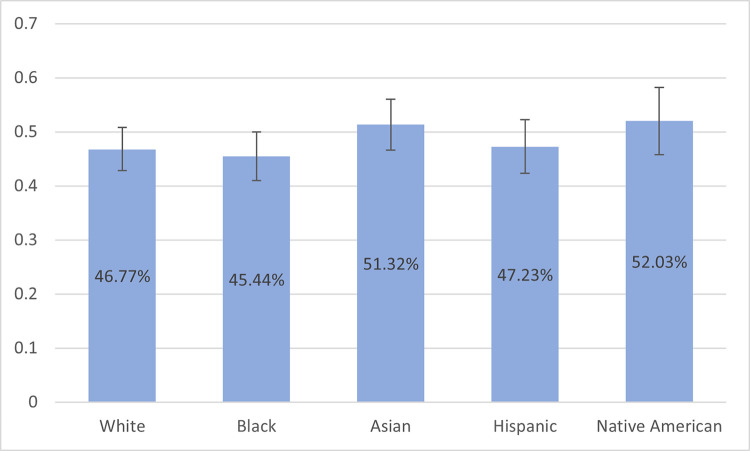
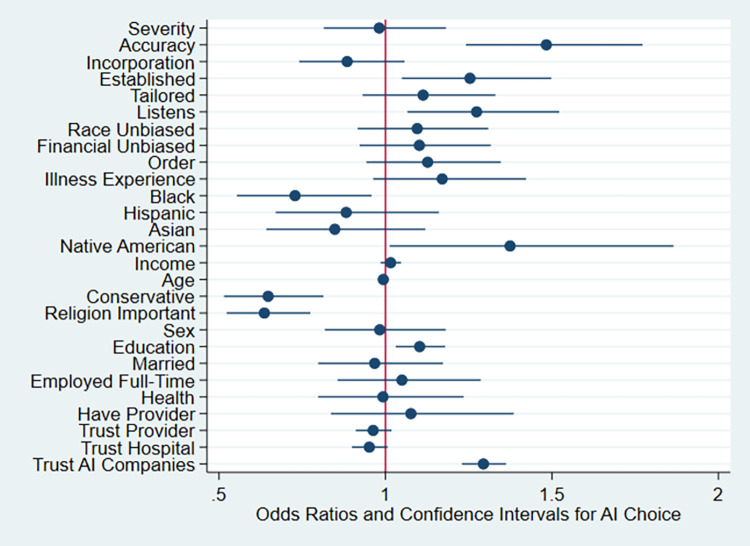
Artificial intelligence (AI) has the potential to improve diagnostic accuracy. Yet people are often reluctant to trust automated systems, and some patient populations may be particularly distrusting. We sought to determine how diverse patient populations feel about the use of AI diagnostic tools, and whether framing and informing the choice affects uptake. To construct and pretest our materials, we conducted structured interviews with a diverse set of actual patients. We then conducted a pre-registered (osf.io/9y26x), randomized, blinded survey experiment in factorial design. A survey firm provided n = 2675 responses, oversampling minoritized populations. Clinical vignettes were randomly manipulated in eight variables with two levels each: disease severity (leukemia versus sleep apnea), whether AI is proven more accurate than human specialists, whether the AI clinic is personalized to the patient through listening and/or tailoring, whether the AI clinic avoids racial and/or financial biases, whether the Primary Care Physician (PCP) promises to explain and incorporate the advice, and whether the PCP nudges the patient towards AI as the established, recommended, and easy choice. Our main outcome measure was selection of AI clinic or human physician specialist clinic (binary, “AI uptake”). We found that with weighting representative to the U.S. population, respondents were almost evenly split (52.9% chose human doctor and 47.1% chose AI clinic). In unweighted experimental contrasts of respondents who met pre-registered criteria for engagement, a PCP’s explanation that AI has proven superior accuracy increased uptake (OR = 1.48, CI 1.24–1.77, p < .001), as did a PCP’s nudge towards AI as the established choice (OR = 1.25, CI: 1.05–1.50, p = .013), as did reassurance that the AI clinic had trained counselors to listen to the patient’s unique perspectives (OR = 1.27, CI: 1.07–1.52, p = .008). Disease severity (leukemia versus sleep apnea) and other manipulations did not affect AI uptake significantly. Compared to White respondents, Black respondents selected AI less often (OR = .73, CI: .55-.96, p = .023) and Native Americans selected it more often (OR: 1.37, CI: 1.01–1.87, p = .041). Older respondents were less likely to choose AI (OR: .99, CI: .987-.999, p = .03), as were those who identified as politically conservative (OR: .65, CI: .52-.81, p < .001) or viewed religion as important (OR: .64, CI: .52-.77, p < .001). For each unit increase in education, the odds are 1.10 greater for selecting an AI provider (OR: 1.10, CI: 1.03–1.18, p = .004). While many patients appear resistant to the use of AI, accuracy information, nudges and a listening patient experience may help increase acceptance. To ensure that the benefits of AI are secured in clinical practice, future research on best methods of physician incorporation and patient decision making is required.
Overview
The claims and statistics of this paper haven’t been checked yet.
Free: it reads the open-access text and checks the first 5 claims that cite a source we can check. Create a free account to check every claim.
Integrity signals
Registry
Cites
Statistics
Figures
Verification
Claims the paper makes
The claims and statistics of this paper haven’t been checked yet.
Free: it reads the open-access text and checks the first 5 claims that cite a source we can check. Create a free account to check every claim.
Claims other papers make about this one
Each is checked against this paper’s own text: does it say what the citing paper says it does?
In the citing paper
“A study of patient attitudes toward AI showed the importance of accountability in gaining patient trust when using AI in healthcare101.”
From Adopting and expanding ethical principles for generative artificial intelligence from military to healthcare (2023) · cites this paper as [101]
Self-check
Percentages, sums and reported differences re-computed from the paper’s own numbers.
The self-check needs the paper’s full text.
Citations
Cites
Algorithm aversion: People erroneously avoid algorithms after seeing them err.
Dietvorst, B. J., Simmons, J. P., & Massey, C. (2015) · Journal of Experimental Psychology: General · doi:10.1037/xge0000033 · Cited by 3,232 · cited 2×
“Despite the promise of AI, there is broad public skepticism about AI in a range of domains from transportation to criminal justice to healthcare [4,5].”
BackgroundResultAlgorithm appreciation: People prefer algorithmic to human judgment
Logg, J. M., Minson, J. A., & Moore, D. A. (2019) · Organizational Behavior and Human Decision Processes · doi:10.1016/j.obhdp.2018.12.005 · Cited by 2,061
Resistance to Medical Artificial Intelligence
Longoni, C., Bonezzi, A., & Morewedge, C. K. (2019) · Journal of Consumer Research · doi:10.1093/jcr/ucz013 · Cited by 2,015 · cited 1×
“More recently, in a series of studies, patients were less willing to schedule an appointment to be diagnosed by a robot, and they were willing to pay significantly more money for a human provider, with a reported perception that AI providers are less able to account for patients’ unique characteristics [10].”
BackgroundTask-Dependent Algorithm Aversion
Castelo, N., Bos, M. W., & Lehmann, D. R. (2019) · Journal of Marketing Research · doi:10.1177/0022243719851788 · Cited by 1,500
Task-Dependent Algorithm Aversion
Castelo, N., Bos, M. W., Bos, M. W., Lehmann, D. R., & Lehmann, D. R. (2019) · Springer eBooks · doi:10.1007/978-3-031-88067-4_21 · Cited by 1,441
Validating vignette and conjoint survey experiments against real-world behavior
Hainmueller, J., Hangartner, D., & Yamamoto, T. (2015) · Proceedings of the National Academy of Sciences · doi:10.1073/pnas.1416587112 · Cited by 1,344 · cited 1×
“Prior work has shown that vignette experiments can have external validity [33,34] but it may be harder for respondents to predict their own decisions in peculiar situations they have not experienced and where emotional salience is high.”
BackgroundBias in data‐driven artificial intelligence systems—An introductory survey
Ntoutsi, E., Fafalios, P., Gadiraju, U., Iosifidis, V., Nejdl, W., Vidal, M., Ruggieri, S., Turini, F., Papadopoulos, S., Krasanakis, E., et al. (2020) · WIREs Data Mining and Knowledge Discovery · doi:10.1002/widm.1356 · Cited by 1,043 · cited 1×
“Although initial forays into algorithmic decisions gave rise to similar concerns [26], AI systems may be rigorously designed, tested, and continuously monitored to minimize racial or financial biases in healthcare [27,28].”
BackgroundLinking primary care performance to outcomes of care.
Safran, D. G., Taira, D. A., Rogers, W. H., Kosinski, M. R., Ware, J. E., & Tarlov, A. R. (1998) · PubMed · Cited by 877
Dirani, K. M., Abadi, M., Alizadeh, A., Barhate, B., Garza, R. C., Gunasekara, N., Ibrahim, G., & Majzun, Z. (2020) · Human Resource Development International · doi:10.1080/13678868.2020.1780078 · Cited by 709
Street, R. L., O'Malley, K. J., Cooper, L. A., & Haidet, P. (2008) · The Annals of Family Medicine · doi:10.1370/afm.821 · Cited by 678
Research works printed but not linked: 2
- Woods AK. Robophobia. Univ Colo Law Rev. 2021; 93: 1.
- Meehl P. Clinical vs. statistical prediction: a theoretical analysis and a review of the evidence. Brattleboro, VT: Echo Point Books and Media; 1954.
Cited by
Understanding Liability Risk from Using Health Care Artificial Intelligence Tools
Mello, M. M., & Guha, N. (2024) · New England Journal of Medicine · doi:10.1056/nejmhle2308901 · Cited by 155
Oniani, D., Hilsman, J., Peng, Y., Poropatich, R. K., Pamplin, J. C., Legault, G. L., & Wang, Y. (2023) · npj Digital Medicine · doi:10.1038/s41746-023-00965-x · Cited by 143
Multinational Attitudes Toward AI in Health Care and Diagnostics Among Hospital Patients
Busch, F., Hoffmann, L., Xu, L., Zhang, L. J., Hu, B., García-Juárez, I., Toapanta-Yanchapaxi, L. N., Gorelik, N., Gorelik, V., Rodriguez-Granillo, G. A., et al. (2025) · JAMA Network Open · doi:10.1001/jamanetworkopen.2025.14452 · Cited by 124
Machine Learning and Artificial Intelligence in the Multi-Omics Approach to Gut Microbiota
Rozera, T., Pasolli, E., Segata, N., & Ianiro, G. (2025) · Gastroenterology · doi:10.1053/j.gastro.2025.02.035 · Cited by 112
Designing AI‐augmented healthcare delivery systems for physician buy‐in and patient acceptance
Dai, T., & TAYUR, S. R. (2022) · Production and Operations Management · doi:10.1111/poms.13850 · Cited by 112
Trust in AI-assisted health systems and AI’s trust in humans
Sagona, M., Dai, T., Macis, M., & Darden, M. (2025) · npj Health Systems · doi:10.1038/s44401-025-00016-5 · Cited by 71
Kuo, R. Y. L., Freethy, A., Smith, J. H., Hill, R., Joanna, C., Jerome, D., Harriss, E., Collins, G. S., Tutton, E., & Furniss, D. (2024) · EClinicalMedicine · doi:10.1016/j.eclinm.2024.102555 · Cited by 59
Huang, L., Huhulea, E. N., Abraham, E., Bienenstock, R., Aifuwa, E., Hirani, R., Schulhof, A., Tiwari, R. K., & Etienne, M. (2025) · Medicina · doi:10.3390/medicina61020358 · Cited by 68
Wang, B., Asan, O., & Zhang, Y. (2023) · International Journal of Medical Informatics · doi:10.1016/j.ijmedinf.2023.105301 · Cited by 55
Artificial intelligence tool development: what clinicians need to know?
Chew, B.-H., & Ngiam, K. Y. (2025) · BMC Medicine · doi:10.1186/s12916-025-04076-0 · Cited by 41
“However, all this AI advancement is not without great challenges from development to deployment [19–21], integration in clinical workflows [22, 23] and influences on doctor ‒ patient consultation [24, 25].”
The Future of Artificial Intelligence in Mental Health Nursing Practice: An Integrative Review
Milasan, L. H., & Scott, D. (2025) · International Journal of Mental Health Nursing · doi:10.1111/inm.70003 · Cited by 68
Anxiety about artificial intelligence from patient and doctor-physician
Li, W., & Liu, X. (2024) · Patient Education and Counseling · doi:10.1016/j.pec.2024.108619 · Cited by 54
Factors for Patient Trust and Acceptance of Medical Artificial Intelligence
Bracic, A., Spector‐Bagdady, K., Towle, S., Zhang, R., James, C. A., & Price, W. N., II (2026) · JAMA Network Open · doi:10.1001/jamanetworkopen.2026.0815 · Cited by 45
Ethical Application of Generative Artificial Intelligence in Medicine
Hasan, S. S., Fury, M. S., Woo, J. J., Kunze, K. N., & Ramkumar, P. N. (2024) · Arthroscopy The Journal of Arthroscopic and Related Surgery · doi:10.1016/j.arthro.2024.12.011 · Cited by 52
Emotionally adaptive support: a narrative review of affective computing for mental health
Schlicher, M., Li, Y., Murthy, S. M. K., Sun, Q., & Schuller, B. W. (2025) · Frontiers in Digital Health · doi:10.3389/fdgth.2025.1657031 · Cited by 62
Chen, C., & Cui, Z. (2025) · Journal of Medical Internet Research · doi:10.2196/66083 · Cited by 46
Islam, S. (2025) · BMC Oral Health · doi:10.1186/s12903-025-06069-0 · Cited by 27
“This outcome contradicts prior studies suggesting that patients placed greater trust in human practitioners than in AI systems [17].”
Ethical and practical challenges of generative AI in healthcare and proposed solutions: a survey
Tung, T., Hasnaeen, S. M. N., & Zhao, X. (2025) · Frontiers in Digital Health · doi:10.3389/fdgth.2025.1692517 · Cited by 44
Advancing Clinical Practice: The Potential of Multimodal Technology in Modern Medicine
Artsi, Y., Sorin, V., Glicksberg, B. S., Nadkarni, G. N., & Klang, E. (2024) · Journal of Clinical Medicine · doi:10.3390/jcm13206246 · Cited by 28
Twelve tips for developing and implementing AI curriculum for undergraduate medical education
Kim, D.-H., Kang, Y. J., & Lee, Y. (2025) · Medical Education Online · doi:10.1080/10872981.2025.2585637 · Cited by 32
Hamad, N. I., El‐Ashry, A. M., Ibrahim, I. M., & Hassan, E. A. (2024) · Teaching and learning in nursing · doi:10.1016/j.teln.2024.12.017 · Cited by 30
Haimson, O. L., Mayworm, S. R., Ingber, A. S., & Andalibi, N. (2025) · Proceedings of the 2025 ACM Conference on Fairness, Accountability, and Transparency · doi:10.1145/3715275.3732081 · Cited by 25
Artificial intelligence, medications, pharmacogenomics, and ethics
Haga, S. B. (2024) · Pharmacogenomics · doi:10.1080/14622416.2024.2428587 · Cited by 33
AI in medical diagnosis: A contextualised study of patient motivations and concerns
Hajiheydari, N., Delgosha, M. S., & Saheb, T. (2025) · Social Science & Medicine · doi:10.1016/j.socscimed.2025.117850 · Cited by 22
BrAInVision: A hybrid explainable Artificial Intelligence framework for brain MRI analysis
Gagliardi, M., Maurmo, D., Ruga, T., Vocaturo, E., & Zumpano, E. (2025) · Image and Vision Computing · doi:10.1016/j.imavis.2025.105629 · Cited by 26
New Guidance on Responsible Use of AI
Palmieri, S., Robertson, C. T., & Cohen, I. G. (2025) · JAMA · doi:10.1001/jama.2025.23059 · Cited by 25
Self-citationTo err is human: Bias salience can help overcome resistance to medical AI
Isaac, M. S., Wang, R. J.-H., Napper, L. E., & Marsh, J. K. (2024) · Computers in Human Behavior · doi:10.1016/j.chb.2024.108402 · Cited by 27
Sobkowich, K. E. (2025) · American Journal of Veterinary Research · doi:10.2460/ajvr.24.09.0275 · Cited by 26
Ethics and Algorithms to Navigate AI’s Emerging Role in Organ Transplantation
Salybekov, A. A., Yerkos, A., Sedlmayr, M., & Wolfien, M. (2025) · Journal of Clinical Medicine · doi:10.3390/jcm14082775 · Cited by 20
The Role of Artificial Intelligence in Chronic Liver Diseases and Liver Transplantation
Spann, A., Strauss, A. T., Davis, S. E., & Bhat, M. (2025) · Gastroenterology · doi:10.1053/j.gastro.2025.05.012 · Cited by 24
Nuñez, J.-J., Leung, B. O., Ho, C., Ng, R. T., & Bates, A. T. (2024) · Communications Medicine · doi:10.1038/s43856-024-00495-x · Cited by 22
Shaban, M., Osman, Y. M. M., Mohamed, N. A., & Shaban, M. M. (2025) · BMC Nursing · doi:10.1186/s12912-025-03585-w · Cited by 27
Ohde, J. W., Thompson, A., Liu, Z., Rost, L. M., Overgaard, J. D., Tan, J. Y. E., Overgaard, S. M., Sarmiento, R. F., Ke, Y., Liew, J. C. K., et al. (2026) · npj Digital Medicine · doi:10.1038/s41746-026-02554-0 · Cited by 23
McGhee, K. N., Barrett, D. J., Safarini, O., Elkassem, A. M. A., Eddins, J. T., Smith, A. D., & Rothenberg, S. (2025) · Journal of Imaging Informatics in Medicine · doi:10.1007/s10278-025-01629-w · Cited by 15
Artificial Intelligence for Cardiovascular Care in Action
Biswas, D., Thangaraj, P., Pedroso, A. F., Ogunniyi, M. O., Maddox, T. M., Ahmad, F. S., & Khera, R. (2025) · JACC Advances · doi:10.1016/j.jacadv.2025.102307 · Cited by 21
Ruben, M. A., Blanch‐Hartigan, D., & Hall, J. A. (2025) · Journal of General Internal Medicine · doi:10.1007/s11606-025-10068-w · Cited by 31
Hudecek, M. F. C., Lermer, E., Gaube, S., Cecil, J., Heiss, S. F., & Batz, F. (2024) · Computers in Human Behavior Artificial Humans · doi:10.1016/j.chbah.2024.100046 · Cited by 23
Mucci, A., Green, W. M., & Hill, L. H. (2024) · New Directions for Adult and Continuing Education · doi:10.1002/ace.20521 · Cited by 28
Governance of High-Risk AI Systems in Healthcare and Credit Scoring
Bartsch, S. C., Behn, O., Benlian, A., Brownsword, R., Bücker, S., Düwell, M., Formánek, N., Jungtäubl, M., Leyer, M., Richter, A., et al. (2025) · Business & Information Systems Engineering · doi:10.1007/s12599-025-00944-4 · Cited by 30
Li, Y., Shao, S., Milling, M., & Schuller, B. W. (2025) · Frontiers in Computer Science · doi:10.3389/fcomp.2025.1629725 · Cited by 23
Attitudes of older patients toward artificial intelligence in decision-making in healthcare
Rony, M. K. K., Deb, T. R., Khatun, M. T., Nesa, L., Begum, J., Afrin, M., Noor, M. A., Akter, M. R., Khatun, M. A., Begum, M. H., et al. (2025) · Journal of Medicine Surgery and Public Health · doi:10.1016/j.glmedi.2025.100193 · Cited by 19
Schneider, D., Liedtke, W., Klausen, A. D., Lipprandt, M., Funer, F., Bratan, T., Heyen, N. B., Aichinger, H., & Langanke, M. (2025) · Digital Health · doi:10.1177/20552076251339522 · Cited by 19
Spector‐Bagdady, K. (2025) · The American Journal of Bioethics · doi:10.1080/15265161.2025.2554770 · Cited by 13
The Role of Artificial Intelligence in Shaping the Doctor–Patient Relationship: A Narrative Review
Merlo, E. M., Sparacino, G., Silvestro, O., Giacobello, M. L., Meduri, A., Casciaro, M., Gangemi, S., & Martino, G. (2026) · Healthcare · doi:10.3390/healthcare14040481 · Cited by 18
Reshadi, M. S., & Chehragh, A. M. (2025) · AI & Society · doi:10.1007/s00146-024-02178-6 · Cited by 26
Differences between human and artificial/augmented intelligence in medicine
Monteith, S., Glenn, T., Geddes, J. R., Achtyes, E. D., Whybrow, P. C., & Bauer, M. (2024) · Computers in Human Behavior Artificial Humans · doi:10.1016/j.chbah.2024.100084 · Cited by 21
Fathi, M., Vakili, K. G., Hajibeygi, R., Bahrami, A., Behzad, S., Tafazolimoghadam, A., Aghabozorgi, H., Eshraghi, R., Bhatt, V. V., & Gholamrezanezhad, A. (2024) · Clinical Imaging · doi:10.1016/j.clinimag.2024.110356 · Cited by 12
Financial capacity assessments and AI: A Greek drama for geriatric psychiatry?
Giannouli, V. (2023) · International Journal of Geriatric Psychiatry · doi:10.1002/gps.6008 · Cited by 12
Artificial intelligence in allergy practice: Digital transformation and the future of clinical care
Díaz, S. N. G., Morais‐Almeida, M., Ansotegui, I. J., Macouzet-Sánchez, C., Azuara, Y. G. O., Camarena-Galván, J., & Alanís-Alvarez, J. M. (2025) · World Allergy Organization Journal · doi:10.1016/j.waojou.2025.101078 · Cited by 11
Associating attitudes towards AI and ambiguity: The distinction of acceptance and fear of AI
Hitsuwari, J., & Takano, R. (2025) · Acta Psychologica · doi:10.1016/j.actpsy.2025.105581 · Cited by 15
Comparing code-free and bespoke deep learning approaches in ophthalmology
Wong, C. Y. T., O’Byrne, C., Taribagil, P., Liu, T., Antaki, F., & Keane, P. A. (2024) · Graefe s Archive for Clinical and Experimental Ophthalmology · doi:10.1007/s00417-024-06432-x · Cited by 10
Pharmacy Futures: Summit on Artificial Intelligence in Pharmacy Practice
Luchen, G. G., Fera, T., Anderson, S. V., & Chen, D. C. (2024) · American Journal of Health-System Pharmacy · doi:10.1093/ajhp/zxae279 · Cited by 10
Kuppanda, P. M., Janda, M., Soyer, H. P., & Caffery, L. J. (2025) · Journal of Investigative Dermatology · doi:10.1016/j.jid.2025.01.013 · Cited by 11
Wang, B., Shibo, B. W., & Kafle, J. (2025) · Journal of Health Communication · doi:10.1080/10810730.2025.2540864 · Cited by 13
Listening to Patients’ Voices on the Use of AI in Health Care: Cross-Sectional Study
Chandrasekaran, R., Takale, L., & Moustakas, E. (2025) · Journal of Medical Internet Research · doi:10.2196/77501 · Cited by 9
Madanay, F. L., O’Donohue, L. S., & Zikmund‐Fisher, B. J. (2025) · Journal of Medical Internet Research · doi:10.2196/68823 · Cited by 8
Public trust of AI in healthcare in South Africa: results of a survey
Thaldar, D. W., & Bottomley, D. (2025) · BMC Medical Ethics · doi:10.1186/s12910-025-01272-8 · Cited by 16
Trust, experience, and innovation: Key factors shaping American attitudes about AI
Palm, R. I., Kingsland, J. T., & Bolsen, T. (2025) · Public Understanding of Science · doi:10.1177/09636625251372510 · Cited by 9
Shi, H., Huang, J., Jin, Y., & Han, M. (2026) · Journal of Medical Internet Research · doi:10.2196/80581 · Cited by 10
Kim, B., Ryan, K., & Kim, J. P. (2024) · Journal of Medical Ethics · doi:10.1136/jme-2024-110080 · Cited by 10
Cultural Competence in AI-Driven Health Information
Zahabi, A., & Abas, I. H. (2025) · Advances in computational intelligence and robotics book series · doi:10.4018/979-8-3693-5837-5.ch005 · Cited by 8
Artificial Intelligence-Driven Nephrology: The Role of Large Language Models in Kidney Care
Zoccali, C., Floyd, L., Cseprekál, O., Eisenga, M. F., Mirioğlu, Ş., Caravaca‐Fontán, F., & Mallamaci, F. (2025) · American Journal of Nephrology · doi:10.1159/000548208 · Cited by 10
Russ, P. G., Mross, P. M., Kräling, G., Lechner, F., Eldakar, M., Schlicker, N., Bedenbender, S., Brouwer, S., Zantvoort, K., Jerrentrup, A., et al. (2025) · Frontiers in Digital Health · doi:10.3389/fdgth.2025.1657583 · Cited by 6
Agarwal, R., & Gao, G. G. (2024) · North Carolina Medical Journal · doi:10.18043/001c.120565 · Cited by 9
Convolutional Neural Network Model for Diabetic Retinopathy Feature Extraction and Classification
Subramanian, S., & Gilpin, L. H. (2024) · Journal of Student Research · doi:10.47611/jsrhs.v13i1.6093 · Cited by 7
Spector‐Bagdady, K., & London, A. J. (2025) · The American Journal of Bioethics · doi:10.1080/15265161.2025.2458424 · Cited by 5
Applications of Artificial Intelligence in Dermatology
Arza, A., Lebhar, J., & Lipoff, J. B. (2025) · Dermatologic Clinics · doi:10.1016/j.det.2025.05.003 · Cited by 7
Patient Attitude on the Application of Artificial Intelligence in Diabetes Care
Masrom, M. B., Krisnan, L., Yahya, Y., & Kaundan, M. K. (2024) · International Conference on Artificial Intelligence and Data Sciences (AiDAS) · doi:10.1109/aidas63860.2024.10730338 · Cited by 4
Exploring policy and regulations of clinical AI systems: Views from patients with chronic diseases
Wang, B., Asan, O., & Alelyani, T. (2025) · Health Policy and Technology · doi:10.1016/j.hlpt.2025.101035 · Cited by 6
Integrated artificial intelligence in healthcare and the patient’s experience of care
Ogundare, O., Owadokun, T., Ogundare, T., Ekpo, P., Nguyen, H. L., & Bello, S. (2025) · Scientific Reports · doi:10.1038/s41598-025-07581-7 · Cited by 7
Vo, V., Woode, M. E., Carter, S. M., Degeling, C., & Chen, G. (2025) · Value in Health · doi:10.1016/j.jval.2025.06.013 · Cited by 8
Omori, M., Basnayake, P., Keogh, L. A., Frazer, H. M. L., Kunicki, K., & Lippey, J. (2025) · Health Expectations · doi:10.1111/hex.70415 · Cited by 5
Patient Perspectives on AI- and XR-Enabled Telemedicine: A Cross-Sectional Survey in Romania
Levai, C. M., Nussbaum, L. A., Popa, D. I., Burtic, S.-R., Căpăstraru, B. F., & Jugănaru, I. (2025) · Healthcare · doi:10.3390/healthcare13212672 · Cited by 5
Witt, C. M., Murphy, C., Graca, S., Angell, C., Gale, M. K., Lam, C. S., Napadow, V., Izawa, R., Woo, S., Zick, S. M., et al. (2025) · Journal of Integrative and Complementary Medicine · doi:10.1177/27683605251389440 · Cited by 4
WiseMind: a knowledge-guided multi-agent framework for accurate and empathetic psychiatric diagnosis
Wu, Y., Wan, G., Li, J., Zhao, S., Ma, L., Ye, T., Zhang, M., Pop, I., Zhang, Y., & Chen, J. (2026) · npj Digital Medicine · doi:10.1038/s41746-026-02559-9 · Cited by 22
KUŞCU, F. N. (2026) · International Journal of Public Health · doi:10.3389/ijph.2026.1609194 · Cited by 4
Kirchberger, M. C. (2026) · JMIR Formative Research · doi:10.2196/89123 · Cited by 3
Pesapane, F., Depretto, C., Rotili, A., Penco, S., Monzani, D., Grasso, R., Nicosia, L., Mallardi, C., D’Amelio, L., Carriero, S., et al. (2026) · European Radiology · doi:10.1007/s00330-026-12405-x · Cited by 4
Tang, Z., Ma, W., Bai, Z., Liang, J., & Xie, Y. (2026) · Frontiers in Public Health · doi:10.3389/fpubh.2026.1839898 · Cited by 4
Arango, S. D., Flynn, J. C., Zeitlin, J. H., Payne, S. H., Miller, A. J., & Weir, T. B. (2025) · The Journal Of Hand Surgery · doi:10.1016/j.jhsa.2025.01.004 · Cited by 5
Why we should talk about institutional (dis)trustworthiness and medical machine learning
Proost, M. D., & Pozzi, G. (2024) · Medicine Health Care and Philosophy · doi:10.1007/s11019-024-10235-6 · Cited by 3
Using Artificial Intelligence and Machine Learning to Promote Child Health Equity
Cheung, R., Butler, M., Cooper, C., & Dhanoa, H. (2025) · PEDIATRICS · doi:10.1542/peds.2025-070739l · Cited by 5
Pesapane, F., Giambersio, E., Rotili, A., Grasso, R., Gaeta, A., Battaglia, O., Conti, L., Pizzoli, S. F. M., Raimondi, S., Gandini, S., et al. (2026) · JCO Clinical Cancer Informatics · doi:10.1200/cci-25-00210 · Cited by 3
Ning, W., & Essien, E. J. (2026) · International Journal of Human-Computer Interaction · doi:10.1080/10447318.2026.2638542 · Cited by 2
Parhi, R., Jena, G. K., Garg, A., Dhobi, M., & Mondal, S. (2026) · Journal of Holistic Integrative Pharmacy · doi:10.1016/j.jhip.2026.03.002 · Cited by 3
Sassi, Z., Eickmann, S., Roller, R., Osmanodja, B., Spencker, J. J., Ömeroğlu, Ö. E., Burchardt, A., Hahn, M., Dabrock, P., Möller, S., et al. (2026) · Journal of Medical Internet Research · doi:10.2196/83195 · Cited by 4
Health literacy and attitudes toward clinical AI: a cross-sectional study in Istanbul
SÖNMEZ, K. (2026) · Frontiers in Digital Health · doi:10.3389/fdgth.2026.1771286 · Cited by 3
Lim, Y. X., Ming, L. C., Ng, N. C., Leow, S., & Ingle, R. G. (2026) · Discover Computing · doi:10.1007/s10791-026-10205-x · Cited by 3
Ding, W., & Wang, J. (2026) · Journal of Medical Internet Research · doi:10.2196/95072 · Cited by 3
Sobieski, M., Grata-Borkowska, U. T., & Bujnowska–Fedak, M. M. (2024) · Brain Sciences · doi:10.3390/brainsci14040388 · Cited by 5
Artificial Intelligence in Primary Care—Transforming Hong Kong Breast Cancer Screening
Chu, T. K. C., & Lui, L. (2025) · Quality of life in Asia · doi:10.1007/978-981-96-0817-1_37 · Cited by 3
Sun, S., Lu, L. X., Lu, S. F., & Gu, W. (2024) · SSRN Electronic Journal · doi:10.2139/ssrn.4966406 · Cited by 9
Fujita, W., Sakamoto, A., Sato, E., KANEKO, T., & Kagiyama, N. (2025) · Juntendō Igaku/Juntendo igaku · doi:10.14789/ejmj.jmj25-0019-r · Cited by 13
Mehta, M. (2025) · American Journal of Health-System Pharmacy · doi:10.1093/ajhp/zxaf309 · Cited by 1
AutoSIGHT: Automatic Eye Tracking-based System for Immediate Grading of Human experTise
Dowling, B., Porubcin, J., & Czajka, A. (2025) · IEEE Symposium on Visual Languages and Human-Centric Computing (VL/HCC) · doi:10.1109/vl-hcc65237.2025.00046 · Cited by 2
Maguire-Wilkerson, A., Parent, H., Tao, J., & Chan, P. A. (2026) · International Journal of STD & AIDS · doi:10.1177/09564624251411095 · Cited by 1
Nagel, J., Hollmann, K., Alt, A. K., Renner, T. J., & Conzelmann, A. (2026) · Digital Health · doi:10.1177/20552076251410978 · Cited by 2
Trends in perception of generative AI in healthcare by US adult demographics and political identity
Rader, B. M., Gertz, A., Cantor, J., McBain, R. K., & Brownstein, J. S. (2026) · Health Affairs Scholar · doi:10.1093/haschl/qxag148 · Cited by 1
Vasileiou, M., Wakefield, V., Dadswell, C., & Edwards, S. J. (2026) · Health Technology Assessment · doi:10.3310/gjse4912 · Cited by 1
Inojosa, H., Masanneck, L., Voigt, I., Schriefer, D., von Hörsten, N., Wenk, J., Gašparović, I., Haase, R., Meuth, S. G., Huttner, H. B., et al. (2026) · PLOS Digital Health · doi:10.1371/journal.pdig.0001236 · Cited by 1
Metadata
- Authors
- Robertson, C., Woods, A., Bergstrand, K., Findley, J., Balser, C., & Slepian, M. J.
- Affiliations
- Boston University (US)
- University of Arizona (US)
- The University of Texas at Arlington (US)
- Corresponding author
- Robertson, Christopher
- Woods, Andrew
- Bergstrand, Kelly
- Findley, Jess
- Balser, Cayley
- Slepian, Marvin J.
- ORCID
- Venue
- PLOS Digital Health
- Publisher
- Public Library of Science (PLoS)
- Published
- 2023-05-19
- Volume
- 2
- Issue
- 5
- Pages
- e0000237
- ISSN
- 2767-3170 (ISSN-L)
- PMC
- PMC10198520
- OpenAlex
- W4377115728
- Cited by
- 158
- References
- 38
- Citations by year
- 2026: 66 · 2025: 60 · 2024: 27 · 2023: 4
- FWCI
- 6.27
- Type
- journal article
- Language
- en
- Open access
- gold
- doi.org
- Licence
- Locations
- PLOS Digital Health (publishedVersion, cc-by)
- SSRN Electronic Journal (acceptedVersion)
- PubMed Central (publishedVersion, cc-by)
- PubMed (publishedVersion)
- bepress Legal Repository (submittedVersion, cc-by-nc-sa)
- RePEc: Research Papers in Economics (submittedVersion)
- DOAJ (DOAJ: Directory of Open Access Journals) (submittedVersion, cc-by-sa)
- Funders
- National Heart, Lung, and Blood Institute (3R25HL126140-05S1)
- Topics
- Health Sciences › Medicine › Health Informatics › Artificial Intelligence in Healthcare and Education
- Health Sciences › Health Professions › General Health Professions › Patient-Provider Communication in Healthcare
- Physical Sciences › Computer Science › Artificial Intelligence › Ethics and Social Impacts of AI
- Keywords
- AI-assisted diagnosis, patient attitudes, trust in automation, primary care physician role, nudging, racial and ethnic disparities, patient-centered care, clinical vignettes, older adults, Black patients, Native American patients, sleep apnea, leukemia, diagnostic accuracy, health equity
About these checks
Registry, retraction, Cites and statistics results are computed, not judged, with one exception: a printed reference that no index lists is read once by a model before it counts as a citation error. Claims are extracted by a model and kept only when their quote appears verbatim in the text; each cited source is then checked, with a model’s help, for whether it says what the claim relies on. Those verdicts can be wrong — read the claim’s quote and the cited source before relying on one.
Statistics and arithmetic are recomputed, not judged.
Confidence bands are shown only for fields calibrated on our annotated test set. None is calibrated yet, so no band is shown.
What counts as a claim ›How we measure confidence ›How we check this ›
Are you an author, or do you see a problem with this page? Request a review
Data sources
Bibliographic data: Semantic Scholar, OpenAlex, Crossref.
Contains information from the Semantic Scholar Academic Graph Datasets, made available under the ODC Attribution License (ODC-BY 1.0).
Semantic Scholar’s data is described in: Kinney, R., et al. (2023). The Semantic Scholar Open Data Platform. arXiv:2301.10140.
