

Diverse patients’ attitudes towards Artificial Intelligence (AI) in diagnosis
Open accessThe DOI matches its Crossref record; 39 of the 39 references it cites were found in a registry or an index.
Abstract
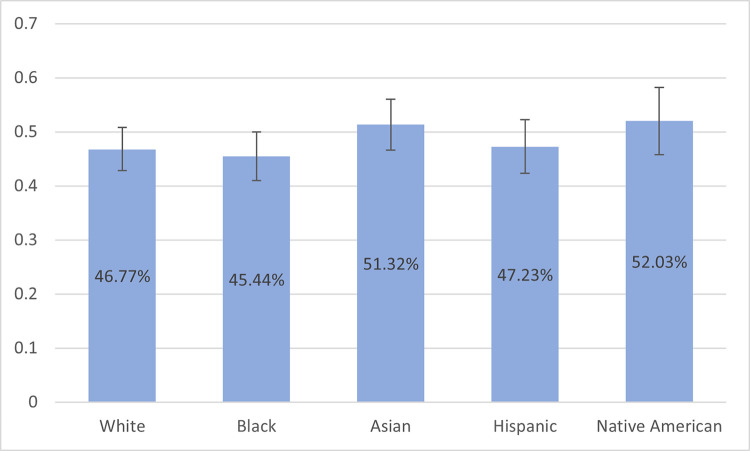
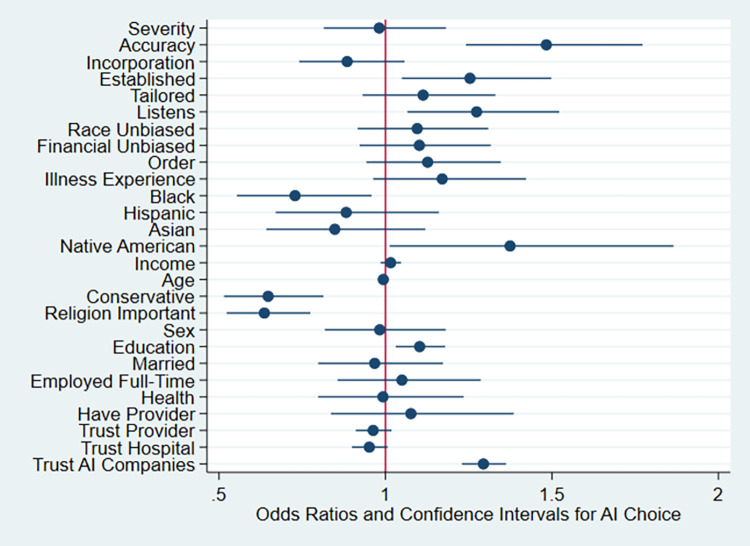
Artificial intelligence (AI) has the potential to improve diagnostic accuracy. Yet people are often reluctant to trust automated systems, and some patient populations may be particularly distrusting. We sought to determine how diverse patient populations feel about the use of AI diagnostic tools, and whether framing and informing the choice affects uptake. To construct and pretest our materials, we conducted structured interviews with a diverse set of actual patients. We then conducted a pre-registered (osf.io/9y26x), randomized, blinded survey experiment in factorial design. A survey firm provided n = 2675 responses, oversampling minoritized populations. Clinical vignettes were randomly manipulated in eight variables with two levels each: disease severity (leukemia versus sleep apnea), whether AI is proven more accurate than human specialists, whether the AI clinic is personalized to the patient through listening and/or tailoring, whether the AI clinic avoids racial and/or financial biases, whether the Primary Care Physician (PCP) promises to explain and incorporate the advice, and whether the PCP nudges the patient towards AI as the established, recommended, and easy choice. Our main outcome measure was selection of AI clinic or human physician specialist clinic (binary, “AI uptake”). We found that with weighting representative to the U.S. population, respondents were almost evenly split (52.9% chose human doctor and 47.1% chose AI clinic). In unweighted experimental contrasts of respondents who met pre-registered criteria for engagement, a PCP’s explanation that AI has proven superior accuracy increased uptake (OR = 1.48, CI 1.24–1.77, p < .001), as did a PCP’s nudge towards AI as the established choice (OR = 1.25, CI: 1.05–1.50, p = .013), as did reassurance that the AI clinic had trained counselors to listen to the patient’s unique perspectives (OR = 1.27, CI: 1.07–1.52, p = .008). Disease severity (leukemia versus sleep apnea) and other manipulations did not affect AI uptake significantly. Compared to White respondents, Black respondents selected AI less often (OR = .73, CI: .55-.96, p = .023) and Native Americans selected it more often (OR: 1.37, CI: 1.01–1.87, p = .041). Older respondents were less likely to choose AI (OR: .99, CI: .987-.999, p = .03), as were those who identified as politically conservative (OR: .65, CI: .52-.81, p < .001) or viewed religion as important (OR: .64, CI: .52-.77, p < .001). For each unit increase in education, the odds are 1.10 greater for selecting an AI provider (OR: 1.10, CI: 1.03–1.18, p = .004). While many patients appear resistant to the use of AI, accuracy information, nudges and a listening patient experience may help increase acceptance. To ensure that the benefits of AI are secured in clinical practice, future research on best methods of physician incorporation and patient decision making is required.
Overview
The claims and statistics of this paper haven’t been checked yet.
Free: it reads the open-access text and checks the first 5 claims that cite a source we can check. Create a free account to check every claim.
Integrity signals
Registry
Cites
Statistics
Figures
Verification
Claims the paper makes
The claims and statistics of this paper haven’t been checked yet.
Free: it reads the open-access text and checks the first 5 claims that cite a source we can check. Create a free account to check every claim.
Claims other papers make about this one
Each is checked against this paper’s own text: does it say what the citing paper says it does?
In the citing paper
“A study of patient attitudes toward AI showed the importance of accountability in gaining patient trust when using AI in healthcare101.”
From Adopting and expanding ethical principles for generative artificial intelligence from military to healthcare (2023) · cites this paper as [101]
Self-check
Percentages, sums and reported differences re-computed from the paper’s own numbers.
The self-check needs the paper’s full text.
Citations
Cites
Algorithm aversion: People erroneously avoid algorithms after seeing them err.
Dietvorst, B. J., Simmons, J. P., & Massey, C. (2015) · Journal of Experimental Psychology: General · doi:10.1037/xge0000033 · Cited by 3,232 · cited 2×
“Despite the promise of AI, there is broad public skepticism about AI in a range of domains from transportation to criminal justice to healthcare [4,5].”
BackgroundResultAlgorithm appreciation: People prefer algorithmic to human judgment
Logg, J. M., Minson, J. A., & Moore, D. A. (2019) · Organizational Behavior and Human Decision Processes · doi:10.1016/j.obhdp.2018.12.005 · Cited by 2,061
Resistance to Medical Artificial Intelligence
Longoni, C., Bonezzi, A., & Morewedge, C. K. (2019) · Journal of Consumer Research · doi:10.1093/jcr/ucz013 · Cited by 2,015 · cited 1×
“More recently, in a series of studies, patients were less willing to schedule an appointment to be diagnosed by a robot, and they were willing to pay significantly more money for a human provider, with a reported perception that AI providers are less able to account for patients’ unique characteristics [10].”
BackgroundTask-Dependent Algorithm Aversion
Castelo, N., Bos, M. W., & Lehmann, D. R. (2019) · Journal of Marketing Research · doi:10.1177/0022243719851788 · Cited by 1,500
Task-Dependent Algorithm Aversion
Castelo, N., Bos, M. W., Bos, M. W., Lehmann, D. R., & Lehmann, D. R. (2019) · Springer eBooks · doi:10.1007/978-3-031-88067-4_21 · Cited by 1,441
Validating vignette and conjoint survey experiments against real-world behavior
Hainmueller, J., Hangartner, D., & Yamamoto, T. (2015) · Proceedings of the National Academy of Sciences · doi:10.1073/pnas.1416587112 · Cited by 1,344 · cited 1×
“Prior work has shown that vignette experiments can have external validity [33,34] but it may be harder for respondents to predict their own decisions in peculiar situations they have not experienced and where emotional salience is high.”
BackgroundBias in data‐driven artificial intelligence systems—An introductory survey
Ntoutsi, E., Fafalios, P., Gadiraju, U., Iosifidis, V., Nejdl, W., Vidal, M., Ruggieri, S., Turini, F., Papadopoulos, S., Krasanakis, E., et al. (2020) · WIREs Data Mining and Knowledge Discovery · doi:10.1002/widm.1356 · Cited by 1,043 · cited 1×
“Although initial forays into algorithmic decisions gave rise to similar concerns [26], AI systems may be rigorously designed, tested, and continuously monitored to minimize racial or financial biases in healthcare [27,28].”
BackgroundLinking primary care performance to outcomes of care.
Safran, D. G., Taira, D. A., Rogers, W. H., Kosinski, M. R., Ware, J. E., & Tarlov, A. R. (1998) · PubMed · Cited by 877
Dirani, K. M., Abadi, M., Alizadeh, A., Barhate, B., Garza, R. C., Gunasekara, N., Ibrahim, G., & Majzun, Z. (2020) · Human Resource Development International · doi:10.1080/13678868.2020.1780078 · Cited by 709
Street, R. L., O'Malley, K. J., Cooper, L. A., & Haidet, P. (2008) · The Annals of Family Medicine · doi:10.1370/afm.821 · Cited by 678
Research works printed but not linked: 2
- Woods AK. Robophobia. Univ Colo Law Rev. 2021; 93: 1.
- Meehl P. Clinical vs. statistical prediction: a theoretical analysis and a review of the evidence. Brattleboro, VT: Echo Point Books and Media; 1954.
Cited by
Items 101–158 of 158
Al-Dabbas, Z., Khandakji, L., Al-Shatarat, N., Alqaisiah, H., Ibrahim, Y., Awed, T., Baik, H., Dawoud, M., Ali, R. A.-H., Telfah, Z., et al. (2026) · PLOS Digital Health · doi:10.1371/journal.pdig.0001285 · Cited by 1
Hopkins, H. S., Bianchi, J., Cevidanes, L., Puntillo, A. M., Tai, M., Goy, R., Hemm, F., Relic, Z., Alvetro, L., Brothers, M., et al. (2026) · American Journal of Orthodontics and Dentofacial Orthopedics · doi:10.1016/j.ajodo.2026.04.008 · Cited by 1
Hammadeh, B. M., Talafha, M., Al-Haddad, Z., Radi, R., Faqeeh, T. J., Hussein, A. M., & Ghanem, R. (2026) · Journal of Robotic Surgery · doi:10.1007/s11701-026-04075-0 · Cited by 1
Digital technologies and pulmonary medicine
UPSON, S. M., Kusupati, V., & Bime, C. (2023) · Elsevier eBooks · doi:10.1016/b978-0-12-824010-6.00071-x
Americans' Distrust in AI-assisted Diagnosis Surpasses Partisanship and Demographic Lines (Preprint)Preprint
decisions, Z. A., & decisions, Z. A. (2024) · doi:10.2196/preprints.66083
Discussion of Artificial Intelligence Innovations and Challenges for Paramedicine
Amoako, R. D. (2025) · IntechOpen eBooks · doi:10.5772/intechopen.115530 · Cited by 1
Islam, S. (2024) · Research Square · doi:10.21203/rs.3.rs-5358981/v1
Filiz, I., Kirchhoff, F., Nahmer, T., & Spiwoks, M. (2024) · doi:10.46850/sofia.9783947850099
Na, D. G., Yoon, Y. S., & Kim, J. H. (2024) · Journal of Retina · doi:10.21561/jor.2024.9.2.119
Technology in veterinary practice
Davies, G. (2025) · Companion animal · doi:10.12968/coan.2025.0019
Technische Grundlagen der Künstlichen Intelligenz
Kather, J. N. (2025) · Springer eBooks · doi:10.1007/978-3-662-71042-5_2
ChatGPT Performance as Patient-Facing Triaging Tool in Oncology
Chan, L. Y. S., Bosi, C., Peiffer, D. S., Matossian, M. D., Poland, S., Howard, F. M., & Pusztai, L. (2025) · JCO oncology advances. · doi:10.1200/oa-25-00069 · Cited by 1
Yadav, B., Patel, R., & Prajapati, B. G. (2025) · Elsevier eBooks · doi:10.1016/b978-0-443-43823-3.00014-5
Wong, M., Lau, Y. Y. J., & Lam, C. Y. (2025) · Springer eBooks · doi:10.1007/978-981-97-1788-0_5-1 · Cited by 1
Clinton, S., Foss, A. J. E., & Bloomfield, P. S. (2026) · Eye Open · doi:10.1038/s44440-025-00011-7 · Cited by 1
Exploring service user attitudes towards mental health technologies
Fitzpatrick, P. J., Dhondt, N., Thuery, G., O’Brien, D., Ledden, K., Young, G. W., Gillan, C. M., Harkin, A., & Kelly, J. R. (2026) · Irish Journal of Psychological Medicine · doi:10.1017/ipm.2026.10170
Furey, P. (2026) · Journal of Paramedic Practice · doi:10.12968/jpar.2026.0005
Lee, S. H. (2026) · Healthcare · doi:10.3390/healthcare14030371 · Cited by 3
Public perceptions of AI-assisted cancer care in Abu Dhabi, UAE: A cross-sectional survey
Ghemrawi, R., Sakkal, M., Kayed, K., Mousa, W., & Khair, M. (2026) · Supportive Care in Cancer · doi:10.1007/s00520-026-10389-4 · Cited by 1
IA para diagnóstico asistido en salud: precisión, sesgos y adopción clínica
Alencastro, J. A. P., Frausto, J. J. P., Villarruel, C. L. N., & Dominguez, A. O. (2026) · Bastcorp International Journal. · doi:10.62943/bij.v5n1.2026.467
Artificial intelligence: Moving fast, understanding slowly. Are we leading or just reacting?
Currie, G. M. (2026) · Radiography · doi:10.1016/j.radi.2026.103385
Beaumont, H., Iannessi, A., Louis, T., Pacilè, S., & Fillard, P. (2026) · Frontiers in Oncology · doi:10.3389/fonc.2026.1737940
On the purpose of artificial intelligence in critical care medicine
Drudi, C., Matta, S. C., Lee, H., O’Donoghue, S. C., D’Couto, H. T., Hamza, A., Gutiérrez, C. A., Nakasi, R., Byers, J., Tumukunde, M., et al. (2026) · Journal of Translational Critical Care Medicine · doi:10.1097/jtccm-d-25-00021
Acceptable accuracy for medical AI: a survey of physicians and the general population in Sweden
Arvidsson, R., Widén, J., Al-Naasan, L., Gunnarsson, R. K., Nymberg, P., Blease, C., Moberg, A. B., Sundvall, P., Wikberg, C., & Sundemo, D. S. (2026) · BMJ Health & Care Informatics · doi:10.1136/bmjhci-2025-101899
Dong, S., Cai, Q., Ye, J., Chen, Y., Zhao, R., & Ming, W. (2026) · doi:10.2196/preprints.96448
Khan, S. U. R. S. (2026) · International Journal of Biosciences (IJB) · doi:10.12692/ijb/28.4.8-16 · Cited by 2
Jiang, F., Hou, S., Huang, Q., Zhao, R., & Tang, Y. (2026) · Healthcare · doi:10.3390/healthcare14081022
Patients and donors trust in data authorization for AI-based medical research
Grimaldi, L., Bovi, E., Tagliente, S., Caltagirone, C., Giardina, E., & Sancesario, G. M. (2026) · Scientific Reports · doi:10.1038/s41598-026-51247-x
Volkers, M., & Bohnet-Joschko, S. (2026) · Gesundheitsökonomie & Qualitätsmanagement · doi:10.1055/a-2849-3279
Dobson, R., Stowell, M., Tane, T., Style, R., Hiini, K., & Whittaker, R. (2026) · Journal of Primary Health Care · doi:10.1071/hc26041
AI as an Epistemic Technology: Navigating Ethics in Practice in Cases of Distributed Decision Making
Maslen, S., & Hayes, J. (2026) · Springer eBooks · doi:10.1007/978-3-032-20002-0_12
Qazi, S., Khan, I. A., Waleed, M., Ahmad, A., Qarni, O., Abdullah, M. W., Jehan, A. M., Khattak, A., Aamir, A., & Mazhar, M. A. (2026) · Medical Education Online · doi:10.1080/10872981.2026.2673253 · Cited by 1
From pixels to prediction: improving imaging through AI in rheumatology
Mandl, P., Baraliakos, X., Bouget, V., Böhm, P., Brom, M., Deman, M., Hügle, T., Kleyer, A., Langs, G., Miendrova, A., et al. (2026) · EULAR Rheumatology Open · doi:10.1016/j.ero.2026.100203
Raj, P., Hoang, N. H., & Liang, Z. (2026) · doi:10.2196/preprints.105710
Pruski, M., Rollings, J., & Withers, K. L. (2026) · doi:10.2196/preprints.105450
Understanding OB/GYN Physicians’ Perceptions Towards the Use of AI in Menopausal Care
Appah, A., Manvi, S., Smith, D. L., Ismail, A., & Kaonga, N. (2026) · ACM Interactive Health Conference · doi:10.1145/3786579.3804969
Keleher, M., Morgan, A., Baig, K., Tsang, A., & Chiasson, S. (2026) · Lecture notes in computer science · doi:10.1007/978-3-032-29723-5_26
Wong, M., Lau, Y. Y. J., & Lam, C. Y. (2026) · Springer eBooks · doi:10.1007/978-981-95-2175-3_5
Piispanen, J.-R., Kauttonen, J., Alamäki, A. V., & Rousi, R. A. (2026) · International Journal of Medical Informatics · doi:10.1016/j.ijmedinf.2026.106625
Rahman, M. M., Yankouskaya, A., Alshakhsi, S. A. A., Babiker, A., Liebherr, M., & Ali, R. (2026) · SN Computer Science · doi:10.1007/s42979-026-05214-y
Dong, S., Cai, Q., Ye, J., Chen, Y., Zhao, R., & Ming, W. (2026) · JMIR Human Factors · doi:10.2196/96448
In Algorithms We Trust? Stakeholder Perspectives on Algorithmic and AI-Based Survival Calculators
Hurley, M. E., Kostick, K. M., Smith, J. N., Smolenski, J., Dexter, R., & Blumenthal‐Barby, J. (2026) · AJOB Empirical Bioethics · doi:10.1080/23294515.2026.2718056 · Cited by 1
Ambient Artificial Intelligence Scribes in Ambulatory Care: Patient Acceptability and Trust
Nguyen, O. T., Afshar, M., Jaeb, M. A., Baumann, M. R., Resnik, F., Sullivan, A. G., Wills, G., Dambach, J., Mrotek, L. A., Quinn, M., et al. (2026) · Applied Clinical Informatics · doi:10.1055/a-2936-9935
Lei, Q.-K., Wu, T.-X., Zhang, C.-L., & Zheng, Y. (2026) · Liver Research · doi:10.1016/j.livres.2026.08.001
Park, J., Kim, M., & Lee, S. (2025) · Journal of Artificial Intelligence for Healthcare Systems · doi:10.68159/m157017581
Muller, O., Pałubska, J., Rafałowska, Z., Rutz, S., Wojtala, A., Kret, J., Wyrostkiewicz, A., Sadkowski, A., Bigda, P., Gdula, J., et al. (2026) · International Journal of Innovative Technologies in Social Science · doi:10.31435/ijitss.3(51).2026.6008
Nawaz, S., Nawaz, L., Ali, H., Yaqoob, M., & Saeed, M. M. (2026) · Digital Medicine · doi:10.1097/dm-2026-00028
Alhassani, N. D., Alsahli, S., Almajnoni, M., Albeladi, L., Alharbi, O., Aloufi, S., Alghamdi, L., & Almalki, A. (2026) · doi:10.2196/preprints.111141
Dina, V., Țenț, P. A., Maghiar, A.-T., Bodog, R. F., Grecu, T., Cretu, O. M., Maghiar, L., Bodog, F., Căiță, G. A., Şandor, M. I., et al. (2026) · Healthcare · doi:10.3390/healthcare14183030
Hussein, M. F., Othman, S. S., Ismail, G. M., Abdelmoneim, S. A., Naguib, M., El-Shishtawy, M., Gebreal, A., Hassan, M. Z. A., Alshehri, M. M., Alabdo, N., et al. (2026) · International Journal of Medical Informatics · doi:10.1016/j.ijmedinf.2026.106726 · Cited by 1
Mathura, S., Merwin, E. R., Gonzalez, G. M., Miller, Z. N., Berger, L., Keebler, J. R., & Lazzara, E. H. (2026) · Work · doi:10.1177/10519815261487994
Lenze, N. R., & Goldstein, C. A. (2026) · Sleep Medicine Clinics · doi:10.1016/j.jsmc.2026.08.020
Reis, M., Choi, J., Kim, Y. J., Luan, Y. L., Lyu, P., & Reis, F. (2026) · npj Digital Medicine · doi:10.1038/s41746-026-03361-3
Pruski, M., Rollings, J., & Withers, K. L. (2026) · Frontiers in Digital Health · doi:10.3389/fdgth.2026.1927799 · Cited by 1
DesRoches, C. M., Norris, A., Barr, J., Vaughan, W., Ruparel, R., Liu, Y., Thompson, M. J., & Stevens, J. P. (2026) · medRxiv · doi:10.64898/2026.10.15.26365669
Selvi, Ö., Yılmaz, A., Yalman, S., Korkmaz, Ö., & Altun, H. (2026) · Healthcare · doi:10.3390/healthcare14203520
Ma, C., Hoerner, N., & Meckel, M. (2026) · Computers in Human Behavior Artificial Humans · doi:10.1016/j.chbah.2026.100410
Chimonas, S. C., Lipitz‐Snyderman, A., Prey, J. E., Kuperman, G. J., & Polubriaginof, F. C. G. (2026) · JCO Clinical Cancer Informatics · doi:10.1200/cci-26-00098
Metadata
- Authors
- Robertson, C., Woods, A., Bergstrand, K., Findley, J., Balser, C., & Slepian, M. J.
- Affiliations
- Boston University (US)
- University of Arizona (US)
- The University of Texas at Arlington (US)
- Corresponding author
- Robertson, Christopher
- Woods, Andrew
- Bergstrand, Kelly
- Findley, Jess
- Balser, Cayley
- Slepian, Marvin J.
- ORCID
- Venue
- PLOS Digital Health
- Publisher
- Public Library of Science (PLoS)
- Published
- 2023-05-19
- Volume
- 2
- Issue
- 5
- Pages
- e0000237
- ISSN
- 2767-3170 (ISSN-L)
- PMC
- PMC10198520
- OpenAlex
- W4377115728
- Cited by
- 158
- References
- 38
- Citations by year
- 2026: 66 · 2025: 60 · 2024: 27 · 2023: 4
- FWCI
- 6.27
- Type
- journal article
- Language
- en
- Open access
- gold
- doi.org
- Licence
- Locations
- PLOS Digital Health (publishedVersion, cc-by)
- SSRN Electronic Journal (acceptedVersion)
- PubMed Central (publishedVersion, cc-by)
- PubMed (publishedVersion)
- bepress Legal Repository (submittedVersion, cc-by-nc-sa)
- RePEc: Research Papers in Economics (submittedVersion)
- DOAJ (DOAJ: Directory of Open Access Journals) (submittedVersion, cc-by-sa)
- Funders
- National Heart, Lung, and Blood Institute (3R25HL126140-05S1)
- Topics
- Health Sciences › Medicine › Health Informatics › Artificial Intelligence in Healthcare and Education
- Health Sciences › Health Professions › General Health Professions › Patient-Provider Communication in Healthcare
- Physical Sciences › Computer Science › Artificial Intelligence › Ethics and Social Impacts of AI
- Keywords
- AI-assisted diagnosis, patient attitudes, trust in automation, primary care physician role, nudging, racial and ethnic disparities, patient-centered care, clinical vignettes, older adults, Black patients, Native American patients, sleep apnea, leukemia, diagnostic accuracy, health equity
About these checks
Registry, retraction, Cites and statistics results are computed, not judged, with one exception: a printed reference that no index lists is read once by a model before it counts as a citation error. Claims are extracted by a model and kept only when their quote appears verbatim in the text; each cited source is then checked, with a model’s help, for whether it says what the claim relies on. Those verdicts can be wrong — read the claim’s quote and the cited source before relying on one.
Statistics and arithmetic are recomputed, not judged.
Confidence bands are shown only for fields calibrated on our annotated test set. None is calibrated yet, so no band is shown.
What counts as a claim ›How we measure confidence ›How we check this ›
Are you an author, or do you see a problem with this page? Request a review
Data sources
Bibliographic data: Semantic Scholar, OpenAlex, Crossref.
Contains information from the Semantic Scholar Academic Graph Datasets, made available under the ODC Attribution License (ODC-BY 1.0).
Semantic Scholar’s data is described in: Kinney, R., et al. (2023). The Semantic Scholar Open Data Platform. arXiv:2301.10140.
