

A Mouse Model of the Human Fragile X Syndrome I304N Mutation
Open accessThe DOI matches its Crossref record; 93 of the 94 references it cites were found in a registry or an index.
Abstract
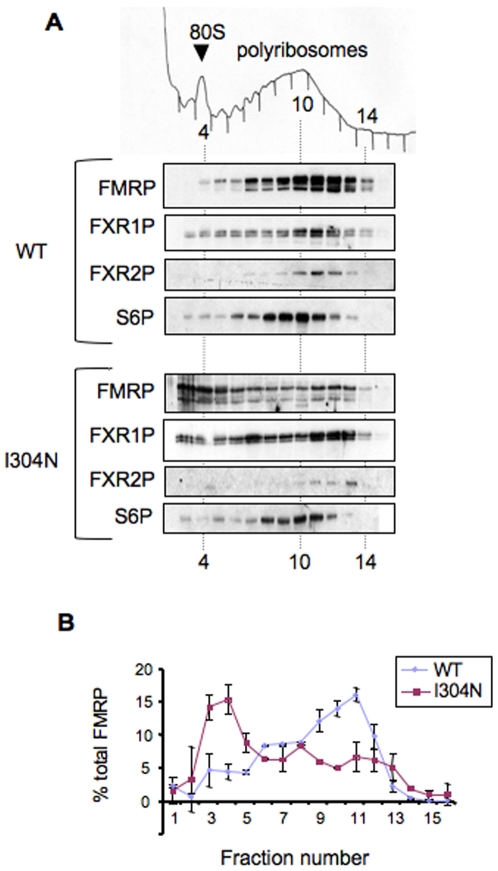
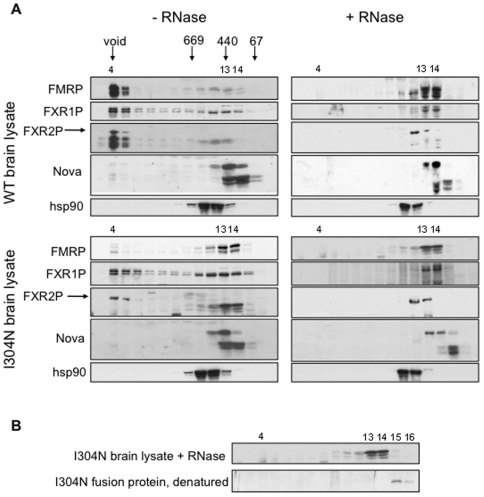
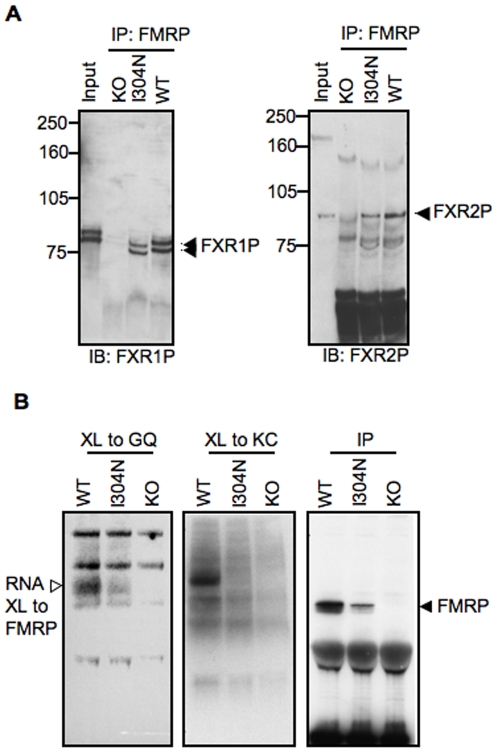
The mental retardation, autistic features, and behavioral abnormalities characteristic of the Fragile X mental retardation syndrome result from the loss of function of the RNA-binding protein FMRP. The disease is usually caused by a triplet repeat expansion in the 5'UTR of the FMR1 gene. This leads to loss of function through transcriptional gene silencing, pointing to a key function for FMRP, but precluding genetic identification of critical activities within the protein. Moreover, antisense transcripts (FMR4, ASFMR1) in the same locus have been reported to be silenced by the repeat expansion. Missense mutations offer one means of confirming a central role for FMRP in the disease, but to date, only a single such patient has been described. This patient harbors an isoleucine to asparagine mutation (I304N) in the second FMRP KH-type RNA-binding domain, however, this single case report was complicated because the patient harbored a superimposed familial liver disease. To address these issues, we have generated a new Fragile X Syndrome mouse model in which the endogenous Fmr1 gene harbors the I304N mutation. These mice phenocopy the symptoms of Fragile X Syndrome in the existing Fmr1-null mouse, as assessed by testicular size, behavioral phenotyping, and electrophysiological assays of synaptic plasticity. I304N FMRP retains some functions, but has specifically lost RNA binding and polyribosome association; moreover, levels of the mutant protein are markedly reduced in the brain specifically at a time when synapses are forming postnatally. These data suggest that loss of FMRP function, particularly in KH2-mediated RNA binding and in synaptic plasticity, play critical roles in pathogenesis of the Fragile X Syndrome and establish a new model for studying the disorder.
Overview
The claims and statistics of this paper haven’t been checked yet.
Free: it reads the open-access text and checks the first 5 claims that cite a source we can check. Create a free account to check every claim.
Integrity signals
Registry
Cites
Statistics
Figures
Verification
Claims the paper makes
The claims and statistics of this paper haven’t been checked yet.
Free: it reads the open-access text and checks the first 5 claims that cite a source we can check. Create a free account to check every claim.
Claims other papers make about this one
Each is checked against this paper’s own text: does it say what the citing paper says it does?
In the citing paper
“a missense mutation in the second RNA binding domain (I304N) abolishes FMRP polyribosome association (Zang et al., 2009; Feng et al., 1997a) and causes a Fragile X phenotype in mice (Zang et al., 2009) and humans (DeBoulle et al., 1993).”
From FMRP Stalls Ribosomal Translocation on mRNAs Linked to Synaptic Function and Autism (2011) · cites this paper as Zang et al., 2009
In the citing paper
“Studies of Fmr1 knockout (KO) and I304N mice have documented a number of defects in synaptic plasticity (Pfeiffer and Huber, 2009; Zang et al., 2009).”
From FMRP Stalls Ribosomal Translocation on mRNAs Linked to Synaptic Function and Autism (2011) · cites this paper as Zang et al., 2009
Self-check
Percentages, sums and reported differences re-computed from the paper’s own numbers.
The self-check needs the paper’s full text.
Citations
Cites
Shrestha, S., & Offer, S. M. (2016) · Medical Epigenetics · doi:10.1159/000444713 · Cited by 8,914
Switching from Repression to Activation: MicroRNAs Can Up-Regulate Translation
Vasudevan, S., Tong, Y., & Steitz, J. A. (2007) · Science · doi:10.1126/science.1149460 · Cited by 2,822 · cited 1×
“Moreover, FMRP, and the related protein FXR1P, associate with components of the RNA-induced silencing complex (RISC) in Drosophila and mammalian cells [29–32], and FXR1P is required to mediate miRNA-dependent translational activation in tissue culture cells [33,34].”
BackgroundMutations of the X-linked genes encoding neuroligins NLGN3 and NLGN4 are associated with autism
Study, P. A. R. I. S., Jamain, S., Quach, H., Betancur, C., Råstam, M., Colineaux, C., Gillberg, I. C., Soderstrom, H., Giros, B., Leboyer, M., et al. (2003) · Nature Genetics · doi:10.1038/ng1136 · Cited by 1,851 · cited 1×
“in genes including neuroligin-3 [1,2], neurexin-1 [3], shank 3 [4],”
BackgroundDurand, C. M., Betancur, C., Boeckers, T. M., Bockmann, J., Chaste, P., Fauchereau, F., Nygren, G., Rastam, M., Gillberg, I. C., Anckarsäter, H., et al. (2007) · Nature Genetics · doi:10.1038/ng1933 · Cited by 1,602 · cited 1×
“in genes including neuroligin-3 [1,2], neurexin-1 [3], shank 3 [4],”
BackgroundAltered synaptic plasticity in a mouse model of fragile X mental retardation
Huber, K. M., Gallagher, S. M., Warren, S. T., & Bear, M. F. (2002) · Proceedings of the National Academy of Sciences · doi:10.1073/pnas.122205699 · Cited by 1,349 · cited 3×
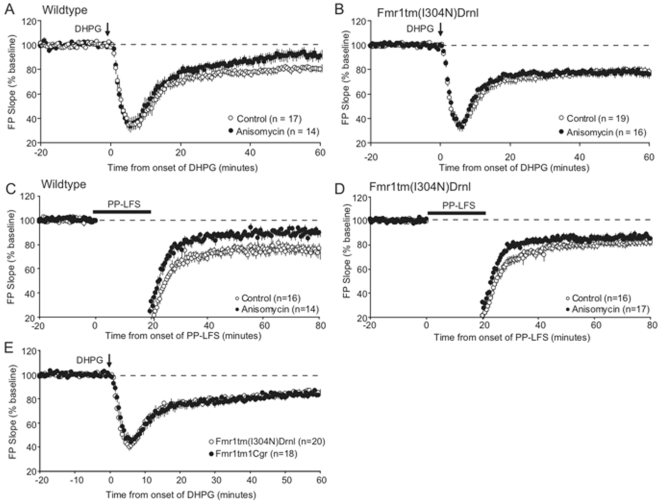
“In Fmr1 null mice, mGluR-LTD elicited by either an mGluR agonist (DHPG) or electrical stimulation of Schaffer collateral inputs to CA1 neurons (paired pulse low frequency stimulation (PP-LFS)) is enhanced [11], and no longer requires protein synthesis [60,61].”
BackgroundSelf-citationCLIP Identifies Nova-Regulated RNA Networks in the Brain
Ule, J., Jensen, K. B., Ruggiu, M., Mele, A., Ule, A., & Darnell, R. B. (2003) · Science · doi:10.1126/science.1090095 · Cited by 1,120 · cited 1×
“-α-GTP. RNAs were gel purified on denaturing gels and spiked into 100ul S2 brain lysate prepared as for polyribosome analysis from 2 month old mice of the indicated genotype. RNAs were incubated with the brain lysates for 15 min at room temperature and then UV crosslinked as described”
MethodSelf-citationBrown, V., Jin, P., Ceman, S., Darnell, J. C., O'Donnell, W. T., Tenenbaum, S. A., Jin, X., Feng, Y., Wilkinson, K. D., Keene, J. D., et al. (2001) · Cell · doi:10.1016/s0092-8674(01)00568-2 · Cited by 1,109 · cited 2×
“This experiment has been repeated several times and with different antibodies to FMRP (Chemicon ab2160 (1C3), 2F5 [84], and 7G1-1 [85] with consistent results.”
MethodSelf-citationAbnormal dendritic spines in fragile X knockout mice: Maturation and pruning deficits
Comery, T. A., Harris, J. B., Willems, P. J., Oostra, B. A., Irwin, S. A., Weiler, I. J., & Greenough, W. T. (1997) · Proceedings of the National Academy of Sciences · doi:10.1073/pnas.94.10.5401 · Cited by 1,046 · cited 1×
“This mouse has defects in synaptic plasticity [11–18] and long, thin dendritic spines [19,20] similar to those found in human brain [21,22].”
BackgroundFmr1 knockout mice: A model to study fragile X mental retardation
THEDUTCHBELGIANFRAGILEXCONSOR (1994) · Cell · doi:10.1016/0092-8674(94)90569-x · Cited by 1,035
A Neuroligin-3 Mutation Implicated in Autism Increases Inhibitory Synaptic Transmission in Mice
Tabuchi, K., Blundell, J., Etherton, M. R., Hammer, R. E., Liu, X., Powell, C. M., & Südhof, T. C. (2007) · Science · doi:10.1126/science.1146221 · Cited by 997 · cited 1×
“in genes including neuroligin-3 [1,2], neurexin-1 [3], shank 3 [4],”
Background
Cited by
Items 101–134 of 134
Zhenyu, W., Li, M., Duan, D., Han, J., Qiao, C., Zhou, H., Li, X., Zhou, S., & Xin, W. (2025) · Scientific Reports · doi:10.1038/s41598-025-00819-4 · Cited by 6
FMRP drives mRNP targets into translationally silenced complexes
Kurosaki, T., Cho, H., Abshire, E. T., Pröschel, C., Mitsutomi, S., Sato, H., Simko, E. A. J., Fraser, C. S., Sakano, H., & Maquat, L. E. (2025) · Molecular Cell · doi:10.1016/j.molcel.2025.06.012 · Cited by 7
Chivchibashi-Pavlova, D., & Bratoeva, K. Z. (2025) · Veterinární Medicína · doi:10.17221/87/2024-vetmed · Cited by 6
“Thus, Fmr1-mutant mice show difficulties with social interactions, repetitive and stereotypic behaviours, and reduced anxiety, hyperactivity, and seizures (Zang et al. 2009; Oddi et al. 2015).”
Epidemiology of Fragile X Syndrome
Sherman, S. L., & Hunter, J. E. (2017) · Elsevier eBooks · doi:10.1016/b978-0-12-804461-2.00004-4 · Cited by 6
Gynandroblastome et syndrome de l’X Fragile. À propos d’un cas
Lejeune, J., Gallon, F., Quirin, I., & Grignon, Y. (2011) · Gynécologie Obstétrique & Fertilité · doi:10.1016/j.gyobfe.2011.01.004 · Cited by 3
Unfolding neurodevelopmental disorders: Found in translation
Ting, J. T., & Feng, G. (2011) · Nature Medicine · doi:10.1038/nm.2553 · Cited by 5
Gingrich, E. C., Shepard, K. A., Mitchell, M. E., Sawicka, K., Darnell, J. C., & Akins, M. R. (2018) · bioRxiv (Cold Spring Harbor Laboratory) · doi:10.1101/462168 · Cited by 3
“Monoclonal primary antibodies were generated in house from hybridoma supernatants and included 1G2 anti-FXR2P (1:300)(Zang et al., 2009), A42 anti-FXR2P (1:500)(Zhang et al., 1995), Y10b anti-rRNA (1:1000)(Garden et al., 1994; Lerner et al., 1981), and 2F5-1 anti-FMRP (1:500)(Christie et al., 2009;…”
BackgroundInfluentialSelf-citationJeong, H., González‐Fernández, E., Crawley, I., Coakley, J. M., Hwang, J., Martin, D. D. O., Bamji, S. X., Kim, J., Kang, S. H., & Thomas, G. M. (2025) · eLife · doi:10.7554/elife.97151.3 · Cited by 5
Gene Therapy for Fragile X Syndrome, Challenges, and Promises
Velinov, M. T. (2025) · The Journal of Gene Medicine · doi:10.1002/jgm.70049 · Cited by 2
Stackpole, E. E., Akins, M. R., Ivshina, M. P., Murthy, A. C., Fawzi, N. L., & Fallon, J. R. (2019) · Biology Open · doi:10.1242/bio.046383 · Cited by 2
D’Incal, C. P., Dierckx, B., Vingerhoets, C., van Haelst, M. M., Annear, D. J., Dijck, A. V., Bastini, L., Konings, A., Elinck, E., Mateiu, L. M., et al. (2025) · European Journal of Human Genetics · doi:10.1038/s41431-025-01967-x · Cited by 1
“…that the c.500A>C (p.Gln167Pro) FMR1 missense variant is causative for a FXS phenotype with deregulated transcriptome-methylome signatures characteristic for the syndrome and illustrates the use of an ID gene panel as a complementary diagnostic tool in case of a negative CGG repeat expansion test.”
Epigenetic causes of intellectual disability—the fragile X syndrome paradigm
Tabolacci, E., & Neri, G. (2016) · Elsevier eBooks · doi:10.1016/b978-0-12-800226-1.00006-x · Cited by 1
Laroui, A., Rojas, D., Bouhour, S., Proteau-Lemieux, M., Galarneau, L., Benachenhou, S., Abolghasemi, A., Plantefève, R., Mallet, P., Corbin, F., et al. (2025) · Journal of Lipid Research · doi:10.1016/j.jlr.2025.100787 · Cited by 1
Epigenetic causes of intellectual disability—the fragile X syndrome paradigm
Tabolacci, E., & Neri, G. (2024) · Elsevier eBooks · doi:10.1016/b978-0-443-18516-8.00007-7 · Cited by 1
Variabilidade do domínio KH-2 da proteína do retardo mental do X frágil (FMRP)
Velloso, F. J. (2013) · Digital Library of Theses and Dissertations (Universidade de São Paulo) · doi:10.11606/t.41.2013.tde-21032014-090729
Levantamento de proteínas candidatas a ativadoras do splicing do éxon 12 do gene FMR1
de Campos, M. V. (2014) · Digital Library of Theses and Dissertations (Universidade de São Paulo) · doi:10.11606/d.41.2014.tde-26082014-152426
Corrêa, J. D. C. (2014) · Digital Library of Theses and Dissertations (Universidade de São Paulo) · doi:10.11606/t.41.2014.tde-01092014-085006
What Mechanisms Induce Methylation of FMR1 Gene Full Mutation? A Still Unanswered Question
Tabolacci, E., & Neri, G. (2016) · Epigenetics and human health · doi:10.1007/978-3-319-27186-6_8
Molecular Mechanisms Regulating Local Protein Translation During Homeostatic Synaptic Plasticity
Soden, M. E. (2010) · eScholarship (California Digital Library)
Denman, R. B. (2011) · Results and problems in cell differentiation · doi:10.1007/978-3-642-21649-7_19
“Another important mouse model of FXS not recounted here is the Fmrp-I304N mutant mouse (Zang et al. 2009).”
Background整合分析脆性X染色体综合征患者来源的诱导多能干细胞在神经元分化中的转录组变化
薛, 志., 江, 赐., 范, 国., 祝, 献., 陆, 平., 曾, 桥., 陈, 啸., & 冯, 云. (2016) · Scientia Sinica Vitae · doi:10.1360/n052016-00329 · Cited by 1
Davidovic, L. (2013) · Faculty Opinions – Post-Publication Peer Review of the Biomedical Literature · doi:10.3410/f.718169565.793487178
Zheng, T. (2013) · Faculty Opinions – Post-Publication Peer Review of the Biomedical Literature · doi:10.3410/f.718123015.793486030
Nairn, A. C., & Wiseman, S. L. (2011) · Faculty Opinions – Post-Publication Peer Review of the Biomedical Literature · doi:10.3410/f.12154956.13994054
Yotova, A. Y. (2024) · Publication Server of Goethe University Frankfurt am Main (Goethe University Frankfurt) · doi:10.21248/gups.85791 · Cited by 2
Brain Diseases Associated with Unstable Repeats
Shelly, K. E., Allen, E. G., & Jin, P. (2024) · Oxford University Press eBooks · doi:10.1093/med/9780197676592.003.0011 · Cited by 1
Jeong, H., González‐Fernández, E., Crawley, I., Coakley, J. M., Hwang, J., Martin, D. D. O., Bamji, S. X., Kim, J., Kang, S. H., & Thomas, G. M. (2025) · eLife · doi:10.7554/elife.97151.2
Gurijala, A. R., Rushton, E., Leahy, S. N., Nelson, N., Tessier, C. R., & Broadie, K. S. (2025) · Disease Models & Mechanisms · doi:10.1242/dmm.052183 · Cited by 1
“However, Drosophila I304N model studies also demonstrate only partial loss of function (Zang et al., 2009; Wang et al., 2008; Wan et al., 2000) and not the heightened defects characterizing Patient 2.”
InfluentialDissecting the role of calcium signaling in Fragile X syndrome
Castagnola, S. (2019) · theses.fr (ABES) · doi:10.70675/3d35096bz79d0z46edz8a70zb783a8f60257
Pathophysiological consequences of a Fragile X missense mutation
Garcia, M. P. (2020) · theses.fr (ABES) · doi:10.70675/b8e86263z5926z4a83zbaf6z0f61bf2d15f9
BKCa channels as therapeutic targets in neurodevelopmental disorders : focus on acoustic dysfunction
Ferraguto, C. (2024) · theses.fr (ABES) · doi:10.70675/38217611z1b01z43f4zb4b0z72d28aca79c3
Pathophysiology of the FMRP-R138Q Fragile X Syndrome missense mutation in mice
Chato-Astrain, I. (2025) · theses.fr (ABES) · doi:10.70675/ce8d1ccfz4554z4c55z8782z624e392f72a1
Vasagam, J. M., Kannan, B., Jayaseelan, V. P., & Arumugam, P. (2026) · Dental and Medical Problems · doi:10.17219/dmp/185583
Metadata
- Authors
- Zang, J. B., Nosyreva, E. D., Spencer, C. M., Volk, L. J., Musunuru, K., Zhong, R., Stone, E. F., Yuva-Paylor, L. A., Huber, K. M., Paylor, R., Darnell, J. C., & Darnell, R. B.
- Affiliations
- Rockefeller University (US)
- The University of Texas Southwestern Medical Center (US)
- Baylor College of Medicine (US)
- Howard Hughes Medical Institute (US)
- Corresponding author
- Darnell, Jennifer C.
- ORCID
- Venue
- PLoS Genetics
- Publisher
- Public Library of Science (PLoS)
- Published
- 2009-12-11
- Volume
- 5
- Issue
- 12
- Pages
- e1000758
- ISSN
- 1553-7390 (ISSN-L)
- 1553-7404
- PMC
- PMC2779495
- OpenAlex
- W1975841935
- Cited by
- 138
- References
- 94
- Citations by year
- 2025: 11 · 2024: 8 · 2023: 5 · 2022: 4 · 2021: 5 · 2020: 7 · 2019: 12 · 2018: 8 · 2017: 8 · 2016: 8 · 2015: 6 · 2014: 8 · 2013: 19 · 2012: 10
- FWCI
- 5.62
- Type
- journal article
- Language
- en
- Open access
- gold
- doi.org
- Locations
- PLoS Genetics (publishedVersion, cc-by)
- PubMed Central (publishedVersion, cc-by)
- PubMed (publishedVersion)
- DOAJ (DOAJ: Directory of Open Access Journals) (submittedVersion, cc-by-sa)
- Figshare (submittedVersion, cc-by)
- Funders
- Howard Hughes Medical Institute
- Autism Speaks
- National Institutes of Health (IA 52242, R01 NS34389, NS34389)
- Directorate for Biological Sciences
- National Institute of General Medical Sciences (GM 07739, T32GM007739)
- National Institute of Neurological Disorders and Stroke (R01NS040955, R01 NS34389, R01NS045711, R01 NS40955, R01NS034389)
- Eunice Kennedy Shriver National Institute of Child Health and Human Development (R01HD052731, R01HD040647)
- Topics
- Life Sciences › Biochemistry, Genetics and Molecular Biology › Genetics › Genetics and Neurodevelopmental Disorders
- Life Sciences › Neuroscience › Cellular and Molecular Neuroscience › Neuroscience and Neuropharmacology Research
- Life Sciences › Neuroscience › Cellular and Molecular Neuroscience › Genetic Neurodegenerative Diseases
- Keywords
- fragile X syndrome, FMRP, mouse model, FMR1 gene, RNA binding, synaptic plasticity, testicular volume, intellectual disability, autism spectrum disorder
- MeSH terms
- Animals, Behavior, Animal, Disease Models, Animal, Fragile X Syndrome, Hippocampus, Humans, Neuronal Plasticity, Phenotype, Mutation, Missense, Mice, Fragile X Messenger Ribonucleoprotein 1
About these checks
Registry, retraction, Cites and statistics results are computed, not judged, with one exception: a printed reference that no index lists is read once by a model before it counts as a citation error. Claims are extracted by a model and kept only when their quote appears verbatim in the text; each cited source is then checked, with a model’s help, for whether it says what the claim relies on. Those verdicts can be wrong — read the claim’s quote and the cited source before relying on one.
Statistics and arithmetic are recomputed, not judged.
Confidence bands are shown only for fields calibrated on our annotated test set. None is calibrated yet, so no band is shown.
What counts as a claim ›How we measure confidence ›How we check this ›
Are you an author, or do you see a problem with this page? Request a review
Data sources
Bibliographic data: Semantic Scholar, OpenAlex, Crossref.
Contains information from the Semantic Scholar Academic Graph Datasets, made available under the ODC Attribution License (ODC-BY 1.0).
Semantic Scholar’s data is described in: Kinney, R., et al. (2023). The Semantic Scholar Open Data Platform. arXiv:2301.10140.
