

The DOI matches its Crossref record; 61 of the 61 references it cites were found in a registry or an index.
Genome-Wide Copy Number Variation in Epilepsy: Novel Susceptibility Loci in Idiopathic Generalized and Focal Epilepsies
Open accessAbstract
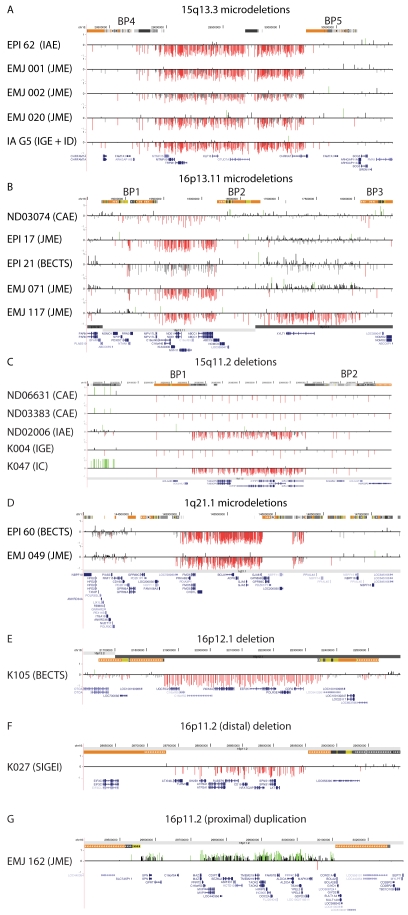
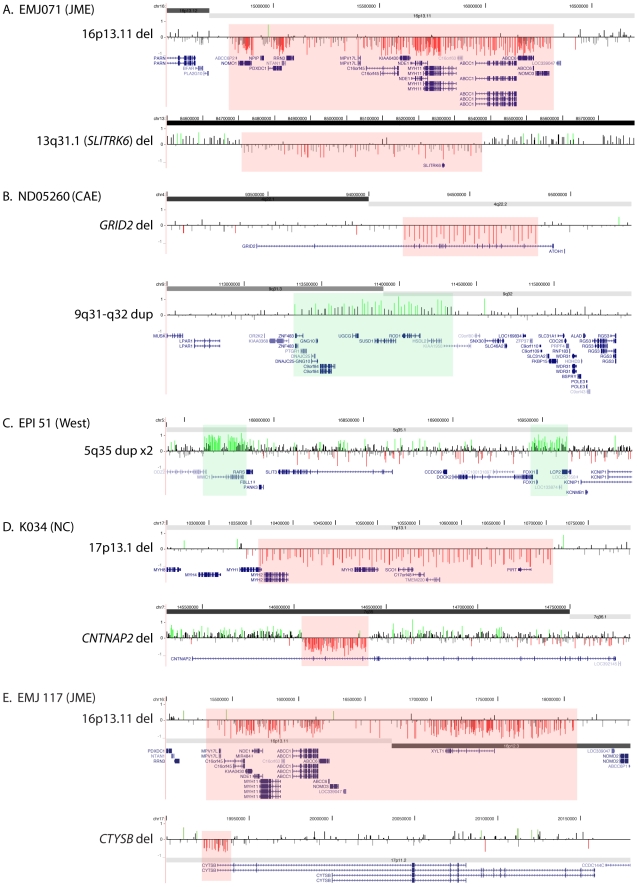
Epilepsy is one of the most common neurological disorders in humans with a prevalence of 1% and a lifetime incidence of 3%. Several genes have been identified in rare autosomal dominant and severe sporadic forms of epilepsy, but the genetic cause is unknown in the vast majority of cases. Copy number variants (CNVs) are known to play an important role in the genetic etiology of many neurodevelopmental disorders, including intellectual disability (ID), autism, and schizophrenia. Genome-wide studies of copy number variation in epilepsy have not been performed. We have applied whole-genome oligonucleotide array comparative genomic hybridization to a cohort of 517 individuals with various idiopathic, non-lesional epilepsies. We detected one or more rare genic CNVs in 8.9% of affected individuals that are not present in 2,493 controls; five individuals had two rare CNVs. We identified CNVs in genes previously implicated in other neurodevelopmental disorders, including two deletions in AUTS2 and one deletion in CNTNAP2. Therefore, our findings indicate that rare CNVs are likely to contribute to a broad range of generalized and focal epilepsies. In addition, we find that 2.9% of patients carry deletions at 15q11.2, 15q13.3, or 16p13.11, genomic hotspots previously associated with ID, autism, or schizophrenia. In summary, our findings suggest common etiological factors for seemingly diverse diseases such as ID, autism, schizophrenia, and epilepsy.
Overview
The claims and statistics of this paper haven’t been checked yet.
Run the check — free, no account needed. It reads the open-access text and checks the sources it cites.
Integrity signals
Registry
Cites
Statistics
Figures
Verification
Claims the paper makes
The claims and statistics of this paper haven’t been checked yet.
Run the check — free, no account needed. It reads the open-access text and checks the sources it cites.
Claims other papers make about this one
Each is checked against this paper’s own text: does it say what the citing paper says it does?
In the citing paper
“More directly, rare variation in CNTNAP2, including CNVs, other structural disruptions and deleterious sequence variation, has been identified in subjects with autism, epilepsy, intellectual disability, Pitt-Hopkins-like syndrome, schizophrenia and Tourette syndrome (42–48), albeit with differing degrees of evidence for effect on these traits.”
From Individual common variants exert weak effects on the risk for autism spectrum disorders (2012) · cites this paper as [45]
Self-check
Percentages, sums and reported differences re-computed from the paper’s own numbers.
The self-check needs the paper’s full text.
Citations
Cites
Global variation in copy number in the human genome
Redon, R., Ishikawa, S., Fitch, K. R., Feuk, L., Perry, G. H., Andrews, T. D., Fiegler, H., Shapero, M. H., Carson, A. R., Chen, W., et al. (2006) · Nature · doi:10.1038/nature05329 · Cited by 4,377
Strong association of de novo copy number mutations with autism
Sebat, J., Lakshmi, B., Malhotra, D., Troge, J., Lese-Martin, C., Walsh, T., Yamrom, B., Yoon, S., Krasnitz, A., Kendall, J., et al. (2007) · Science · doi:10.1126/science.1138659 · Cited by 2,795
Structural Variation of Chromosomes in Autism Spectrum Disorder
Marshall, C. R., Noor, A., Vincent, J. B., Lionel, A. C., Feuk, L., Skaug, J., Shago, M., Moessner, R., Pinto, D., Ren, Y., et al. (2008) · The American Journal of Human Genetics · doi:10.1016/j.ajhg.2007.12.009 · Cited by 1,815 · cited 2×
“2 Mb), which has been associated with autism, developmental delay and schizophrenia [10–12,14,27,35,37].”
BackgroundSelf-citationRare Structural Variants Disrupt Multiple Genes in Neurodevelopmental Pathways in Schizophrenia
Walsh, T., McClellan, J. M., McCarthy, S. E., Addington, A. M., Pierce, S. B., Cooper, G. M., Nord, A. S., Kusenda, M., Malhotra, D., Bhandari, A., et al. (2008) · Science · doi:10.1126/science.1155174 · Cited by 1,800
Self-citationLarge recurrent microdeletions associated with schizophrenia.
GROUP, Stefansson, H., Rujescu, D., Cichon, S., Pietiläinen, O. P. H., Ingason, A., Steinberg, S., Fossdal, R., Sigurdsson, E., Sigmundsson, T., et al. (2008) · Nature · doi:10.1038/nature07229 · Cited by 1,745
Association between Microdeletion and Microduplication at 16p11.2 and Autism
Weiss, L. A., Shen, Y., Korn, J. M., Arking, D. E., Miller, D. T., Fossdal, R., Saemundsen, E., Stefansson, H., Ferreira, M. A. R., Green, T., et al. (2008) · New England Journal of Medicine · doi:10.1056/nejmoa075974 · Cited by 1,666
Rare chromosomal deletions and duplications increase risk of schizophrenia
The International Schizophrenia Consortium (2008) · Nature · doi:10.1038/nature07239 · Cited by 1,475
Mapping autism risk loci using genetic linkage and chromosomal rearrangements
The Autism Genome Project Consortium (2007) · Nature Genetics · doi:10.1038/ng1985 · Cited by 1,402
Recent Segmental Duplications in the Human Genome
Bailey, J. A., Gu, Z., Clark, R. A., Reinert, K., Samonte, R. V., Schwartz, S., Adams, M. D., Myers, E. W., Li, P. W., & Eichler, E. E. (2002) · Science · doi:10.1126/science.1072047 · Cited by 1,355
Self-citation
Research works printed but not linked: 1
- I Helbig, 2009, 15q13.3 microdeletions increase risk of idiopathic generalized epilepsy., Nat Genet, 41, 160, 10.1038/ng.292 · DOI · Paper page
Cited by
Sorted by citations
Items 301–400 of 469
Autozygome maps dispensable DNA and reveals potential selective bias against nullizygosity
Khalak, H. G., Wakil, S. M., Imtiaz, F., Ramzan, K., Baz, B., Al‐Mostafa, A., Hagos, S. T., Alzahrani, F., Dhaim, N. A., Abu‐Safieh, L., et al. (2012) · Genetics in Medicine · doi:10.1038/gim.2011.28 · Cited by 11
Evidence for the multiple hits genetic theory for inherited language impairment: a case study
Centanni, T. M., Green, J. R., Iuzzini-Seigel, J., Bartlett, C. W., & Hogan, T. P. (2015) · Frontiers in Genetics · doi:10.3389/fgene.2015.00272 · Cited by 10
Epileptic syndromes: From clinic to genetic.
Tafakhori, A., Aghamollaii, V., Faghihi‐Kashani, S., Sarraf, P., & Habibi, L. (2015) · PubMed Central · Cited by 10
Malformations of Cortical Development
Dobyns, W. B., Leventer, R. J., & Guerrini, R. (2017) · Elsevier eBooks · doi:10.1016/b978-0-323-37101-8.00029-1 · Cited by 10
Li, J., Hojlo, M. A., Chennuri, S., Gujral, N., Paterson, H. L., Shefchek, K., Genetti, C. A., Cohn, E. L., Sewalk, K. C., Garvey, E. A., et al. (2021) · Journal of Medical Internet Research · doi:10.2196/21023 · Cited by 10
Andres, E. M., Neely, H., Hafeez, H., Yasmin, T., Kausar, F., Basra, M. A. R., & Raza, M. H. (2021) · Meta Gene · doi:10.1016/j.mgene.2021.100966 · Cited by 11
Opportunities and Challenges for Genome Sequencing in the Clinic
Cavalleri, G. L., & Delanty, N. (2012) · Advances in protein chemistry and structural biology · doi:10.1016/b978-0-12-394287-6.00003-3 · Cited by 11
Chromosome 16p13.11 Microdeletion Syndrome in a Newborn: A Case Study
Smith, A. E., Jnah, A. J., & Newberry, D. (2018) · Neonatal Network The Journal of Neonatal Nursing · doi:10.1891/0730-0832.37.5.303 · Cited by 10
Jensen, M., Tyryshkina, A., Pizzo, L., Smolen, C., Das, M., Huber, E., Krishnan, A., & Girirajan, S. (2021) · Genome Medicine · doi:10.1186/s13073-021-00982-z · Cited by 10
Distinct Epileptogenic Mechanisms Associated with Seizures in Wolf-Hirschhorn Syndrome
Corrêa, T., Côrrea, M. M., & Santos-Rebouças, C. B. (2022) · Molecular Neurobiology · doi:10.1007/s12035-022-02792-9 · Cited by 9
Jiang, X.-L., Liang, B., Zhao, W., Lin, N., Huang, H., Cai, M., & Xu, L. (2023) · The Journal of Maternal-Fetal & Neonatal Medicine · doi:10.1080/14767058.2023.2262700 · Cited by 9
Disentangling mechanisms behind the pleiotropic effects of proximal 16p11.2 BP4-5 CNVs
Auwerx, C., Moix, S., Kutalik, Z., & Reymond, A. (2024) · The American Journal of Human Genetics · doi:10.1016/j.ajhg.2024.08.014 · Cited by 10
Kirov, A., Dimova, P. S., Тодорова, А., Mefford, H. C., Todorov, T., Saraylieva, G., Bojinova, V., Mitev, V., & Helbig, I. (2013) · Epilepsy Research · doi:10.1016/j.eplepsyres.2012.10.013 · Cited by 9
Self-citationBosque, J. R., Gómez‐Nieto, R., Hormigo, S., Herrero-Turrión, M. J., Díaz-Casado, M. E., Sancho, C., & López, D. E. (2019) · Epilepsy & Behavior · doi:10.1016/j.yebeh.2019.106594 · Cited by 10
Persico, A. M. (2013) · Elsevier eBooks · doi:10.1016/b978-0-12-397267-5.00045-5 · Cited by 9
Global characterization of copy number variants in epilepsy patients from whole genome sequencingPreprint
Monlong, J., Girard, S., Meloche, C., Cadieux‐Dion, M., Andrade, D. M., Lafrenière, R. G., Gravel, M., Spiegelman, D., Dionne‐Laporte, A., Boelman, C. G., et al. (2017) · bioRxiv (Cold Spring Harbor Laboratory) · doi:10.1101/199224 · Cited by 9
Jalaiei, A., Asadi, M. R., Daneshmandpour, Y., Rezazadeh, M., & Ghafouri‐Fard, S. (2024) · Journal of Neurochemistry · doi:10.1111/jnc.16200 · Cited by 8
Genetic mechanisms in generalized epilepsies
Wang, X., Rao, X., Zhang, J., & Gan, J. (2023) · Acta Epileptologica · doi:10.1186/s42494-023-00118-3 · Cited by 9
Iyer, K. R., Clarke, S. L., Guarischi‐Sousa, R., Gjoni, K., Heath, A. S., Young, E. P., Stitziel, N. O., Laurie, C. A., Broome, J., Khan, A., et al. (2025) · Journal of the American Heart Association · doi:10.1161/jaha.124.036499 · Cited by 8
16p13.11 Microdeletion in a Patient With Hemiconvulsion-Hemiplegia-Epilepsy Syndrome
Miteff, C., Smith, R. L., Bain, N. L., Subramanian, G. M., Brown, J. E., & Kamien, B. (2014) · Journal of Child Neurology · doi:10.1177/0883073813516382 · Cited by 8
Clinical and molecular delineation of a 16p13.2p13.13 microduplication
Tassano, E., Alpigiani, M. G., Calcagno, A., Salvati, P., Miglio, L. D., Fiorio, P., Cuoco, C., & Gimelli, G. (2015) · European Journal of Medical Genetics · doi:10.1016/j.ejmg.2014.12.016 · Cited by 8
Connecting Signaling Pathways Underlying Communication to ASD Vulnerability
Lepp, S., Anderson, A. G., & Konopka, G. (2013) · International review of neurobiology · doi:10.1016/b978-0-12-418700-9.00004-6 · Cited by 8
Garcı́a, J. L., Corchete, L. A., Marcos‐Alcalde, Í., Gómez‐Puertas, P., Fons, C., & Lazo, P. A. (2021) · Human Genomics · doi:10.1186/s40246-021-00309-4 · Cited by 8
Generalized, focal, and combined epilepsies in families: New evidence for distinct genetic factors
Ellis, C. A., Ottman, R., Epstein, M. P., & Berkovic, S. F. (2020) · Epilepsia · doi:10.1111/epi.16732 · Cited by 8
Moustafa, M., Abokrysha, N. T., El-Desoukey, N. A., Amin, D. G., Mounir, N., & Labib, D. M. (2020) · The Egyptian Journal of Neurology Psychiatry and Neurosurgery · doi:10.1186/s41983-020-00214-y · Cited by 7
Palumbi, R., Ponzi, E., Micella, S., Pascali, M., Bucci, R., Gentile, M., Margari, L., & Simone, M. (2024) · Frontiers in Genetics · doi:10.3389/fgene.2024.1429185 · Cited by 7
Bradshaw, N. J. (2016) · Neuroscience · doi:10.1016/j.neuroscience.2016.03.018 · Cited by 8
Tassano, E., Santis, L. D., Corona, M., Parmigiani, S., Zanetti, D., Porta, S., Gimelli, G., & Cuoco, C. (2015) · Molecular Cytogenetics · doi:10.1186/s13039-015-0115-x · Cited by 7
Translation of genetic findings to clinical practice in juvenile myoclonic epilepsy
Thomas, R. H., Chung, S., Hamandi, K., Rees, M. I., & Kerr, M. (2012) · Epilepsy & Behavior · doi:10.1016/j.yebeh.2012.09.006 · Cited by 6
Assessment of burden and segregation profiles of CNVs in patients with epilepsy
Moreau, C., Tremblay, F., Wolking, S., Girard, A., Laprise, C., Hamdan, F. F., Michaud, J. L., Minassian, B. A., Cossette, P., & Girard, S. (2022) · Annals of Clinical and Translational Neurology · doi:10.1002/acn3.51598 · Cited by 6
New technologies in molecular genetics
Helbig, I. (2014) · Progress in brain research · doi:10.1016/b978-0-444-63326-2.00013-2 · Cited by 6
Self-citationAyaz, A., Gezdirici, A., Güleç, E. Y., OZALP, Ö., Köseoğlu, A. H., Doğru, Z., & Yalcintepe, S. (2022) · Medeniyet Medical Journal · doi:10.4274/mmj.galenos.2022.70962 · Cited by 6
Genetic causes of rare and common epilepsies: What should the epileptologist know?
Lesca, G., Baumgartner, T. R., Monin, P., Dominicis, A. D., Kunz, W. S., & Specchio, N. (2022) · European Journal of Medical Genetics · doi:10.1016/j.ejmg.2022.104570 · Cited by 6
Language and Communication Deficits in Chromosome 16p11.2 Deletion Syndrome
Jiménez-Romero, M. S., Fernández-Urquiza, M., & Benítez‐Burraco, A. (2022) · Journal of Speech Language and Hearing Research · doi:10.1044/2022_jslhr-22-00160 · Cited by 7
van Bon, B. W. M., Mefford, H. C., & Vries, B. B. A. D. (2015) · Europe PMC (PubMed Central) · Cited by 6
Self-citationRecruitment for genetic studies of epilepsy
Misiewicz, S., & Winawer, M. R. (2012) · Epilepsy Research · doi:10.1016/j.eplepsyres.2012.03.011 · Cited by 6
Investigating adults with early-onset epilepsy and intellectual or physical disability
Nashef, L. A. M., Singh, R., Moran, N. F., & Murphy, E. (2019) · Practical Neurology · doi:10.1136/practneurol-2018-001965 · Cited by 6
The high frequency of chromosomal copy number variations and candidate genes in epilepsy patients
Albuz, B., Özdemir, Ö., & Sılan, F. (2021) · Clinical Neurology and Neurosurgery · doi:10.1016/j.clineuro.2021.106487 · Cited by 6
Idiopathische generalisierte Epilepsien
Weber, Y., Sander, T., & Lerche, H. (2011) · Clinical Epileptology · doi:10.1007/s10309-011-0168-8 · Cited by 6
Naudhani, S., Ahmad, A., Bazai, F. K., Pervez, M. T., Zafar, A., Shah, S. A., Raheem, N., Baloch, A. H., Mushtaq, M., & Daud, S. (2023) · Molecular Syndromology · doi:10.1159/000529427 · Cited by 5
GStream: Improving SNP and CNV Coverage on Genome-Wide Association Studies
Alonso, A., Marsal, S., Tortosa, R., Canela‐Xandri, O., & Julià, A. (2013) · PLoS ONE · doi:10.1371/journal.pone.0068822 · Cited by 5
Submicroscopic aberrations of chromosome 16 in prenatal diagnosis
Wu, X., Xu, L., Li, Y., Lin, N., Su, L., Cai, M., Xie, X., Zheng, L., Huang, H., & Lin, Y. (2019) · Molecular Cytogenetics · doi:10.1186/s13039-019-0448-y · Cited by 5
Genetic modifiers of epilepsy: A narrative review
Rizvi, S., Raza, S. T., & Mahdi, F. (2025) · Molecular and Cellular Neuroscience · doi:10.1016/j.mcn.2025.104038 · Cited by 4
A channel for precision diagnosis and treatment in genetic epilepsy
Poduri, A. (2014) · Annals of Neurology · doi:10.1002/ana.24243 · Cited by 4
Clarifying the role of the 22q11.2 microdeletion in juvenile myoclonic epilepsy
Helbig, I., Hartmann, C., & Mefford, H. C. (2013) · Epilepsy & Behavior · doi:10.1016/j.yebeh.2013.08.032 · Cited by 4
Self-citationGenetic variations and associated pathophysiology in the management of epilepsy
Dibbens, L. M., & Mulley (2011) · The Application of Clinical Genetics · doi:10.2147/tacg.s7407 · Cited by 4
Ferraro, T. N. (2014) · Expert Review of Neurotherapeutics · doi:10.1586/14737175.2014.888651 · Cited by 4
What Epilepsy Comorbidities Are Important to Model in the Laboratory? Clinical Perspectives
Shorvon, S. D. (2014) · Advances in experimental medicine and biology · doi:10.1007/978-94-017-8914-1_21 · Cited by 4
NeuroArray : A Customized aCGH for the Analysis of Copy Number Variations in Neurological Disorders
Cognata, V. L., Morello, G., Gentile, G., Cavalcanti, F., Cittadella, R., Conforti, F. L., Marco, E. V. D., Magariello, A., Muglia, M., Patitucci, A., et al. (2018) · Current Genomics · doi:10.2174/1389202919666180404105451 · Cited by 4
Lee, S. H., Kim, B. R., & Kim, Y. O. (2022) · Science Progress · doi:10.1177/00368504221131233 · Cited by 4
Jiang, J., Chen, X., Liu, W., Zhao, Y. M., Guan, Y., Han, Y., Wang, F., Lu, J., Yu, Z., Du, Z., et al. (2012) · Europe PMC (PubMed Central) · doi:10.3969/j.issn.1673-5374.2012.02.003 · Cited by 4
Johnson, M. R. (2011) · Epilepsia · doi:10.1111/j.1528-1167.2010.02791.x · Cited by 4
Auts2 enhances neurogenesis and promotes expansion of the cerebral cortex
Boucherie, C., Alkailani, M. I., Jossin, Y., Ruiz-Reig, N., Mahdi, A., Aldaalis, A., Aittaleb, M., & Tissir, F. (2024) · Journal of Advanced Research · doi:10.1016/j.jare.2024.07.012 · Cited by 4
A crash course in genomics for epilepsy clinicians
Moloney, P. B., & Delanty, N. (2025) · Epilepsy & Behavior · doi:10.1016/j.yebeh.2025.110553 · Cited by 3
Asadollahi, M., Roozbeh, M., Edalatkhah, A., Roozbeh, M., Mirzaei, N., Rostami, M., & Simani, L. (2021) · International Clinical Neuroscience Journal · doi:10.34172/icnj.2021.17 · Cited by 3
Arutiunian, V., Opdahl, M., Sullivan, C. A. W., Santhosh, M., Neuhaus, E., Borland, H., Bernier, R., Bookheimer, S. Y., Dapretto, M., Jack, A., et al. (2025) · Biological Psychiatry Cognitive Neuroscience and Neuroimaging · doi:10.1016/j.bpsc.2025.10.001 · Cited by 3
Partial deletion of DEPDC 5 in a child with focal epilepsy
Bonaglia, M. C., Giorda, R., Epifanio, R., Bertuzzo, S., Marelli, S., Gérard, M., Andrieux, J., Zanotta, N., & Zucca, C. (2016) · Epilepsia Open · doi:10.1002/epi4.12012 · Cited by 3
Gauld, C., Poisson, A., Reversat, J., Peyroux, É., Houdayer-Robert, F., Rossi, M., Lesca, G., Sanlaville, D., & Demily, C. (2021) · BMC Psychiatry · doi:10.1186/s12888-021-03342-8 · Cited by 4
Genetics of Parkinson’s Disease: The Role of Copy Number Variations
Cognata, V. L., D’Agata, V., Cavalcanti, F., & Cavallaro, S. (2016) · InTech eBooks · doi:10.5772/62881 · Cited by 3
Dissecting the complexity of CNV pathogenicity: insights from Drosophila and zebrafish models
Yusuff, T., Kellaris, G., Girirajan, S., & Katsanis, N. (2021) · Current Opinion in Genetics & Development · doi:10.1016/j.gde.2021.02.013 · Cited by 3
DeepGenePrior: A deep learning model for prioritizing genes affected by copy number variants
Rahaie, Z., Rabiee, H. R., & Alinejad‐Rokny, H. (2023) · PLoS Computational Biology · doi:10.1371/journal.pcbi.1011249 · Cited by 3
Daquin, G., & Bonini, F. (2024) · Revue Neurologique · doi:10.1016/j.neurol.2023.11.010 · Cited by 3
Copy number variants associated with epilepsy from gene expression microarrays
Wang, D., Li, X., Jia, S., Wang, Y., Wang, Z., Song, X., & Liu, L. (2015) · Journal of Clinical Neuroscience · doi:10.1016/j.jocn.2015.05.033 · Cited by 3
Excellent outcome with de novo 15q13.3 microdeletion causing infantile spasms—A further patient
Allen, N. M., Conroy, J., Shahwan, A., Ennis, S., Lynch, B., Lynch, S. A., & King, M. D. (2014) · American Journal of Medical Genetics Part A · doi:10.1002/ajmg.a.36532 · Cited by 3
When the face says it all: dysmorphology in identifying syndromic causes of epilepsy
Dixit, A., & Suri, M. (2016) · Practical Neurology · doi:10.1136/practneurol-2015-001247 · Cited by 3
Genetics of Neuromuscular Disorders
Chung, W. K. (2014) · Elsevier eBooks · doi:10.1016/b978-0-12-417044-5.00002-0 · Cited by 3
Ia, D., Vorsanova, S. G., Куринная, О. С., Vasin, K. S., Voinova, V. Y., Zelenova, M. A., Kolotii, A. D., Kravets, V. S., Булатникова, М. А., Bank, P. S. C., et al. (2020) · RESEARCH RESULTS IN BIOMEDICINE · doi:10.18413/2658-6533-2020-6-2-0-3 · Cited by 3
The genetic architecture of neurodevelopmental disordersPreprint
Mitchell, K. J. (2014) · bioRxiv (Cold Spring Harbor Laboratory) · doi:10.1101/009449 · Cited by 3
Molecular Architecture and Neurobiology of the Epilepsies
Dhindsa, R. S., Lowenstein, D. H., & Goldstein, D. B. (2016) · Elsevier eBooks · doi:10.1016/b978-0-12-800105-9.00037-8 · Cited by 2
Kaufman, L., Noor, A., Ayub, M., & John, B. (2011) · InTech eBooks · doi:10.5772/18481 · Cited by 2
Lepagnol-Bestel, A.-M., Loe-Mie, Y., Bensaid, M., & Simonneau, M. (2024) · Genes & Diseases · doi:10.1016/j.gendis.2024.101440 · Cited by 2
Intracellular Pathways Associated with Neuronal Survival and Death in Epilepsy
Rivera-Cervantes, M. C., Feria‐Velasco, A., Junyent, F., Camins, A., & Beas‐Zárate, C. (2013) · Springer eBooks · doi:10.1007/978-1-4614-6464-8_6 · Cited by 2
Phenotypes and epidemiology of rare neurodevelopmental disorders
van Balkom, I. D. C. (2012) · Cited by 2
Myoklonisch-astatische Epilepsie
Doege, C., Kleiss, R., Stephani, U., & von Spiczak, S. (2014) · Clinical Epileptology · doi:10.1007/s10309-013-0357-8 · Cited by 2
Self-citationPuentes, A. A., Repáraz-Andrade, A., García, A. D. C., Barca, O., Salgado‐Barreira, Á., del Campo-Pérez, V., & Lorenzo, J. R. F. (2019) · Neuropediatrics · doi:10.1055/s-0039-1685216 · Cited by 2
Deletion of c16orf45 in zebrafish results in a low fertilization rate and increased thigmotaxis
Li, T., Li, F., Lin, J., Zhang, Y., Zhang, Q., Sun, Y., Chen, X., Xu, M., Wang, X., & Li, Q. (2020) · Developmental Psychobiology · doi:10.1002/dev.21984 · Cited by 2
Olson, H. E., & Poduri, A. (2014) · Epilepsy · doi:10.1002/9781118456989.ch22 · Cited by 2
NRF1 Association with AUTS2-Polycomb Mediates Specific Gene Activation in the BrainPreprint
Liu, S., Aldinger, K. A., Cheng, C. V., Kiyama, T., Dave, M., McNamara, H. K., Caraffi, S. G., Ivanovski, I. P., Errichiello, E., Zweier, C., et al. (2021) · bioRxiv (Cold Spring Harbor Laboratory) · doi:10.1101/2021.03.30.437620 · Cited by 2
Somatic co‐morbidities in epilepsy
Nový, J. (2015) · UCL Discovery (University College London) · Cited by 2
CNTNAP2: isoform- and context-specific functions in neurological disorders and cancer
Ye, Y., Zhu, L., & Wang, D. (2026) · Frontiers in Cellular Neuroscience · doi:10.3389/fncel.2026.1803486 · Cited by 1
Excitation/inhibition balance subtypes in autism and their genetic, neural, and clinical profiles
Arutiunian, V., Sullivan, C. A. W., Santhosh, M., Neuhaus, E., Borland, H., Bernier, R., Bookheimer, S. Y., Dapretto, M., Jack, A., Jeste, S., et al. (2026) · Journal of Neural Transmission · doi:10.1007/s00702-026-03283-0 · Cited by 1
Buttermore, E. D., Anderson, N. C., Chen, P.-F., Makhortova, N. R., Kim, K. H., Wafa, S. M. A., Dwyer, S., Micozzi, J. M., Winden, K. D., Zhang, B., et al. (2022) · Frontiers in Psychiatry · doi:10.3389/fpsyt.2022.924956 · Cited by 1
Genome-wide rare copy number variations potentially associated with drug resistance in epilepsy
Chakraborty, A., Kumar, K., Tripathi, S., Yadav, N., Chandra, P. S., Banerjee, J., Dixit, A. B., & Tripathi, M. (2026) · Scientific Reports · doi:10.1038/s41598-026-42657-y · Cited by 1
Microdeletions in 16p11.2 and 13q31.3 associated with developmental delay and generalized overgrowth
George, A. M., Taylor, J., & Love, D. R. (2012) · Genetics and Molecular Research · doi:10.4238/2012.september.3.1 · Cited by 1
Die historische Entwicklung genetischer Epilepsiediagnostik
Heyne, H., & Lemke, J. R. (2015) · Clinical Epileptology · doi:10.1007/s10309-015-0031-4 · Cited by 1
Lo‐Castro, A., & Curatolo, P. (2014) · Cited by 1
A genetic window to auditory-verbal problems in bipolar disorder
Benítez‐Burraco, A. (2020) · Psychiatric Genetics · doi:10.1097/ypg.0000000000000265 · Cited by 1
Ketogenic Diet and Epigenetic Mechanisms of Epileptogenesis
Murugan, M., Tescarollo, F. C., & Boison, D. (2022) · Oxford University Press eBooks · doi:10.1093/med/9780197501207.003.0025 · Cited by 1
Emerging Technologies to Study Long Non-coding RNAs
Jahaniani, F., Rao, V., Nevins, S. A., Spacek, D. V., Bharadwaj, N., Reuter, J., & Snyder, M. P. (2013) · Springer eBooks · doi:10.1007/978-1-4614-8621-3_7 · Cited by 1
Correlation between interictal cerebral glucose hypometabolism and IQ in children with epilepsy
Tang, Z., Chen, Z., Zhai, Q., Hao, Y., Zhang, Y., & Zeng, X.-L. (2013) · Epilepsy & Behavior · doi:10.1016/j.yebeh.2013.10.028 · Cited by 1
IQ level in children with epilepsy: familial, genetic, and seizure‐related factors
Prentkowski, E., & Dunn, D. W. (2013) · Developmental Medicine & Child Neurology · doi:10.1111/dmcn.12053 · Cited by 1
Strategies for studying the epilepsy genome
Ferraro, T. N., Serratosa, J. M., Pal, D. K., Rouleau, G. A., & Buono, R. J. (2010) · Epilepsia · doi:10.1111/j.1528-1167.2010.02844.x · Cited by 1
Genomic Tics in Tourette Syndrome
Mullé, J. G., & Warren, S. T. (2012) · Biological Psychiatry · doi:10.1016/j.biopsych.2011.12.017 · Cited by 1
Guzmán-Jiménez, D. E., Flores-Ramírez, E. L., & Velasco-Monroy, A. L. (2019) · Revista Médica Del Hospital General De México · doi:10.24875/hgmx.m19000001 · Cited by 1
Molecular genetic management of epilepsy
Lewis‐Smith, D., Craig, D. P., Thomas, N., Hamandi, K., & Thomas, R. H. (2019) · Elsevier eBooks · doi:10.1016/b978-0-12-809356-6.00016-2 · Cited by 1
Epilepsy genetics—considerations for clinical practice today and for the future
Goldman, A. M., & Noebels, J. L. (2020) · Elsevier eBooks · doi:10.1016/b978-0-12-813866-3.00017-5 · Cited by 1
Genetic Aspects of Human Epilepsy
Prasad, A. N., & Prasad, C. (2014) · Elsevier eBooks · doi:10.1016/b978-0-12-801238-3.05588-4 · Cited by 1
Genetic studies of the common epilepsies: genome-wide association studies in the partial epilepsies
Catarino, C. B. (2014) · UCL Discovery (University College London) · Cited by 1
Copy Number Variations in Structural Brain Malformations
Kariminejad, R. (2012) · Universitätsbibliothek der FU Berlin Hochschulschriftenstelle u. Dokumentenserver · doi:10.17169/refubium-11951 · Cited by 1
Genetic Counselling in Epilepsy
Zara, F. (2009) · Wiley eBooks · doi:10.1002/9781444316667.ch27 · Cited by 1
Metadata
- Authors
- Mefford, H. C., Muhle, H., Ostertag, P., von Spiczak, S., Buysse, K., Baker, C., Franke, A., Malafosse, A., Genton, P., Thomas, P., Gurnett, C. A., Schreiber, S., Bassuk, A. G., Guipponi, M., Stephani, U., Helbig, I., & Eichler, E. E.
- Affiliations
- University of Washington (US)
- Christian-Albrechts-Universität zu Kiel (DE)
- Ghent University Hospital (BE)
- University of Geneva (CH)
- Henri Gastaut Hospital (FR)
- Hôpital Pasteur (FR)
- Washington University in St. Louis (US)
- University of Iowa (US)
- Howard Hughes Medical Institute (US)
- Corresponding author
- Mefford, Heather C.
- ORCID
- Venue
- PLoS Genetics
- Publisher
- Public Library of Science (PLoS)
- Published
- 2010-05-20
- Volume
- 6
- Issue
- 5
- Pages
- e1000962
- ISSN
- 1553-7390 (ISSN-L)
- 1553-7404
- PMC
- PMC2873910
- OpenAlex
- W2003479128
- Cited by
- 474
- References
- 61
- Citations by year
- 2026: 8 · 2025: 6 · 2024: 17 · 2023: 7 · 2022: 20 · 2021: 33 · 2020: 21 · 2019: 21 · 2018: 16 · 2017: 28 · 2016: 22 · 2015: 48 · 2014: 45 · 2013: 61 · 2012: 51
- FWCI
- 32.35
- Type
- journal article
- Language
- en
- Open access
- gold
- doi.org
- Locations
- PLoS Genetics (publishedVersion, cc-by)
- Europe PMC (PubMed Central) (publishedVersion, cc-by)
- PubMed Central (publishedVersion, cc-by)
- PubMed (publishedVersion)
- Archive ouverte UNIGE (University of Geneva) (acceptedVersion, other-oa)
- Radboud Repository (Radboud University) (submittedVersion, other-oa)
- DOAJ (DOAJ: Directory of Open Access Journals) (submittedVersion, cc-by-sa)
- Radboud Repository (Radboud University) (submittedVersion)
- Archive ouverte UNIGE (University of Geneva) (submittedVersion, cc-by)
- Funders
- Howard Hughes Medical Institute
- Burroughs Wellcome Fund
- National Institutes of Health
- National Institute of Neurological Disorders and Stroke (R01NS064159, NS064159)
- Eunice Kennedy Shriver National Institute of Child Health and Human Development (HD043376, HD043569, K12HD043376, R01HD043569)
- Topics
- Life Sciences › Biochemistry, Genetics and Molecular Biology › Genetics › Genomic variations and chromosomal abnormalities
- Health Sciences › Medicine › Clinical Neurology › Epilepsy research and treatment
- Life Sciences › Biochemistry, Genetics and Molecular Biology › Genetics › Genetics and Neurodevelopmental Disorders
- Keywords
- copy number variation, epilepsy, idiopathic generalized epilepsy, focal epilepsy, AUTS2, CNTNAP2, 15q11.2, 15q13.3, neurodevelopmental disorders, intellectual disability, autism spectrum disorder, schizophrenia
- MeSH terms
- Epilepsy, Humans, Genetic Variation, Genome, Gene Dosage, Genetic Predisposition to Disease
About these checks
Registry, retraction, Cites and statistics results are computed, not judged, with one exception: a printed reference that no index lists is read once by a model before it counts as a citation error. Claims are extracted by a model and kept only when their quote appears verbatim in the text; each cited source is then checked, with a model’s help, for whether it says what the claim relies on. Those verdicts can be wrong — read the claim’s quote and the cited source before relying on one.
Statistics and arithmetic are recomputed, not judged.
Confidence bands are shown only for fields calibrated on our annotated test set. None is calibrated yet, so no band is shown.
What counts as a claim ›How we measure confidence ›How we check this ›
Are you an author, or do you see a problem with this page? Request a review
