

A Comprehensive Map of Mobile Element Insertion Polymorphisms in Humans
Open accessThe DOI matches its Crossref record; 76 of the 78 references it cites were found in a registry or an index.
Abstract
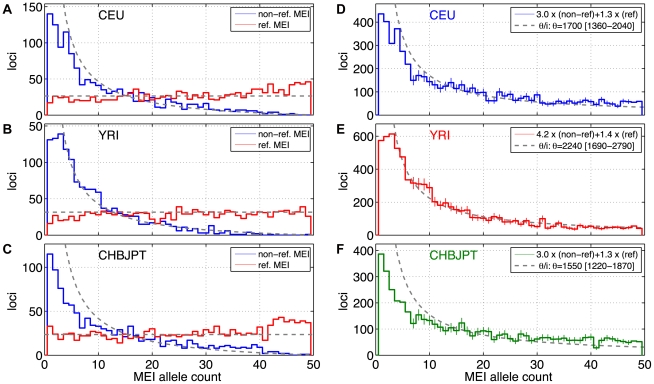
As a consequence of the accumulation of insertion events over evolutionary time, mobile elements now comprise nearly half of the human genome. The Alu, L1, and SVA mobile element families are still duplicating, generating variation between individual genomes. Mobile element insertions (MEI) have been identified as causes for genetic diseases, including hemophilia, neurofibromatosis, and various cancers. Here we present a comprehensive map of 7,380 MEI polymorphisms from the 1000 Genomes Project whole-genome sequencing data of 185 samples in three major populations detected with two detection methods. This catalog enables us to systematically study mutation rates, population segregation, genomic distribution, and functional properties of MEI polymorphisms and to compare MEI to SNP variation from the same individuals. Population allele frequencies of MEI and SNPs are described, broadly, by the same neutral ancestral processes despite vastly different mutation mechanisms and rates, except in coding regions where MEI are virtually absent, presumably due to strong negative selection. A direct comparison of MEI and SNP diversity levels suggests a differential mobile element insertion rate among populations.
Overview
The claims and statistics of this paper haven’t been checked yet.
Free: it reads the open-access text and checks the first 5 claims that cite a source we can check. Create a free account to check every claim.
Integrity signals
Registry
Cites
Statistics
Figures




Verification
Claims the paper makes
The claims and statistics of this paper haven’t been checked yet.
Free: it reads the open-access text and checks the first 5 claims that cite a source we can check. Create a free account to check every claim.
Claims other papers make about this one
Each is checked against this paper’s own text: does it say what the citing paper says it does?
The source backs part of the claim, not all of it — or backs it for a different population, condition or comparison.
In the citing paper
“Most germline KNR insertions (~75%) are present in a single copy per cell as well, since most are in the heterozygous state in individuals of the population.”
From Resolving rates of mutation in the brain using single-neuron genomics (2016) · cites this paper as Stewart et al., 2011
Experimental — accuracy not yet measuredIn the citing paper
“This shows that most KNR insertions in an individual are heterozygous and present in a single copy per cell.”
From Resolving rates of mutation in the brain using single-neuron genomics (2016) · cites this paper as Stewart et al., 2011
Self-check
Percentages, sums and reported differences re-computed from the paper’s own numbers.
The self-check needs the paper’s full text.
Citations
Cites
The Art of Computer Programming
Knuth, D. E. (1968) · Cited by 16,319
Statistical method for testing the neutral mutation hypothesis by DNA polymorphism.
Tajima, F. (1989) · Genetics · doi:10.1093/genetics/123.3.585 · Cited by 13,941
<tt>BLAT</tt> —The <tt>BLAST</tt> -Like Alignment Tool
Kent, W. J. (2002) · Genome Research · doi:10.1101/gr.229202 · Cited by 8,480 · cited 3×
“We then used BLAT [49] to map assembled contigs back to the build 36.3 human reference to identify the boundaries of the inserted sequence.”
MethodInfluentialBase-Calling of Automated Sequencer Traces Using Phred. I. Accuracy Assessment
Ewing, B., Hillier, L., Wendl, M. C., & Green, P. (1998) · Genome Research · doi:10.1101/gr.8.3.175 · Cited by 6,967
Base-Calling of Automated Sequencer Traces Using Phred. II. Error Probabilities
Ewing, B., & Green, P. (1998) · Genome Research · doi:10.1101/gr.8.3.186 · Cited by 5,439 · cited 1×
“The allele count spectra were compared to the standard neutral model”
MethodPrinciples of Population Genetics.
Cormack, R. M., Hartl, D. L., & Clark, A. G. (1990) · Biometrics · doi:10.2307/2531471 · Cited by 5,242
Global variation in copy number in the human genome
Redon, R., Ishikawa, S., Fitch, K. R., Feuk, L., Perry, G. H., Andrews, T. D., Fiegler, H., Shapero, M. H., Carson, A. R., Chen, W., et al. (2006) · Nature · doi:10.1038/nature05329 · Cited by 4,288
On the number of segregating sites in genetical models without recombination
Watterson, G. A. (1975) · Theoretical Population Biology · doi:10.1016/0040-5809(75)90020-9 · Cited by 3,915
Evolutionary Rate at the Molecular Level
KIMURA, M. (1968) · Nature · doi:10.1038/217624a0 · Cited by 3,737
Accurate whole human genome sequencing using reversible terminator chemistry
Bentley, D. R., Balasubramanian, S., Swerdlow, H. P., Smith, G. P., Milton, J., Brown, C. G., Hall, K. P., Evers, D. J., Barnes, C. L., Bignell, H. R., et al. (2008) · Nature · doi:10.1038/nature07517 · Cited by 3,684
Research works printed but not linked: 1
- Genomes Project Consortium 2010 Towards a comprehensive map of human sequence variation. Nature
Cited by
Items 101–200 of 315
Khazina, E., & Weichenrieder, O. (2018) · eLife · doi:10.7554/elife.34960 · Cited by 46
The Role of SINE-VNTR-Alu (SVA) Retrotransposons in Shaping the Human Genome
Gianfrancesco, O., Geary, B., Savage, A. L., Billingsley, K. J., Bubb, V. J., & Quinn, J. P. (2019) · International Journal of Molecular Sciences · doi:10.3390/ijms20235977 · Cited by 48
Jitterbug: somatic and germline transposon insertion detection at single-nucleotide resolution
Hénaff, E., Zapata, L., Casacuberta, J., & Ossowski, S. (2015) · BMC Genomics · doi:10.1186/s12864-015-1975-5 · Cited by 53
Kahyo, T., Tao, H., Shinmura, K., Yamada, H., Mori, H., Funai, K., Kurabe, N., Suzuki, M., Tanahashi, M., Niwa, H., et al. (2013) · Carcinogenesis · doi:10.1093/carcin/bgt253 · Cited by 45
Cao, X., Zhang, Y., Payer, L. M., Lords, H. J., Steranka, J. P., Burns, K. H., & Xing, J. (2020) · Genome biology · doi:10.1186/s13059-020-02101-4 · Cited by 46
Self-citationChen, X., & Li, D. (2019) · Bioinformatics · doi:10.1093/bioinformatics/btz205 · Cited by 41
Isbel, L., & Whitelaw, E. (2012) · BioEssays · doi:10.1002/bies.201200056 · Cited by 35
“Germ line LINE-1 retrotransposon (L1) retrotransposition is observed in approximately 1 in 100 live births, creating substantial genetic variation in the population [26, 27] and disease [28, 29].”
BackgroundSteranka, J. P., Tang, Z., Grivainis, M., Huang, C. R. L., Payer, L. M., do Rego, F. O. R., Miller, T. L. A., Galante, P. A. F., Ramaswami, S., Heguy, A., et al. (2019) · Mobile DNA · doi:10.1186/s13100-019-0148-5 · Cited by 40
A pipeline for complete characterization of complex germline rearrangements from long DNA reads
Mitsuhashi, S., Ohori, S., Katoh, K., Frith, M. C., & Matsumoto, N. (2020) · Genome Medicine · doi:10.1186/s13073-020-00762-1 · Cited by 40
Machine learning reveals bilateral distribution of somatic L1 insertions in human neurons and glia
Zhu, X., Zhou, B., Pattni, R., Gleason, K., Tan, C., Kalinowski, A., Sloan, S. A., Fiston-Lavier, A.-S., Mariani, J., Petrov, D. A., et al. (2021) · Nature Neuroscience · doi:10.1038/s41593-020-00767-4 · Cited by 38
Self-citationAlu insertion variants alter gene transcript levels
Payer, L. M., Steranka, J. P., Kryatova, M. S., Grillo, G., Lupien, M., Rocha, P. P., & Burns, K. H. (2021) · Genome Research · doi:10.1101/gr.261305.120 · Cited by 40
Zhao, P., Li, J., Kang, H., Wang, H., Fan, Z., Yin, Z., Wang, J., Zhang, Q., Wang, Z., & Liu, J. (2016) · Scientific Reports · doi:10.1038/srep18501 · Cited by 48
Pugacheva, E. M., Teplyakov, E., Wu, Q., Li, J., Chen, C., Meng, C., Liu, J., Robinson, S., Loukinov, D., Boukaba, A., et al. (2016) · Epigenetics & Chromatin · doi:10.1186/s13072-016-0084-2 · Cited by 36
Ruggiero, R. P., Bourgeois, Y., & Boissinot, S. (2017) · Frontiers in Genetics · doi:10.3389/fgene.2017.00044 · Cited by 37
Lei, M., Liang, D., Yang, Y., Mitsuhashi, S., Katoh, K., Miyake, N., Frith, M. C., Wu, L., & Matsumoto, N. (2020) · Journal of Human Genetics · doi:10.1038/s10038-020-0754-6 · Cited by 32
The Simons Genome Diversity Project: A Global Analysis of Mobile Element Diversity
Watkins, W. S., Feusier, J. E., Thomas, J., Goubert, C., Mallick, S., & Jorde, L. B. (2020) · Genome Biology and Evolution · doi:10.1093/gbe/evaa086 · Cited by 33
Self-citationDiscovery and characterization of Alu repeat sequences via precise local read assembly
Halo, J. V., Baron, A., Diroff, N. M., & Kidd, J. M. (2015) · Nucleic Acids Research · doi:10.1093/nar/gkv1089 · Cited by 38
Transposable elements in cancer as a by-product of stress-induced evolvability
Mourier, T., Nielsen, L. P., Hansen, A. J., & Willerslev, E. (2014) · Frontiers in Genetics · doi:10.3389/fgene.2014.00156 · Cited by 32
Mechanisms of disease-associated SINE-VNTR-Alus
Pfaff, A. L., Singleton, L. M., & Kõks, S. (2022) · Experimental Biology and Medicine · doi:10.1177/15353702221082612 · Cited by 36
Population and clinical genetics of human transposable elements in the (post) genomic era
Rishishwar, L., Wang, L., Clayton, E. A., Mariño‐Ramírez, L., McDonald, J. F., & Jordan, I. K. (2017) · Mobile Genetic Elements · doi:10.1080/2159256x.2017.1280116 · Cited by 32
Jiang, J., Yu, J., Li, J., Li, J., Fan, Z., Niu, L., Deng, J., Yue, B., & Li, J. (2016) · PLoS ONE · doi:10.1371/journal.pone.0154665 · Cited by 35
On the Importance to Acknowledge Transposable Elements in Epigenomic Analyses
Lerat, E., Casacuberta, J., Chaparro, C., & Vieira, C. P. (2019) · Genes · doi:10.3390/genes10040258 · Cited by 30
The Challenge of Next Generation Sequencing in the Context of Neuromuscular Diseases
Lek, M., & MacArthur, D. G. (2014) · Journal of Neuromuscular Diseases · doi:10.3233/jnd-140032 · Cited by 33
Detecting Alu insertions from high-throughput sequencing data
David, M., Mustafa, H., & Brudno, M. (2013) · Nucleic Acids Research · doi:10.1093/nar/gkt612 · Cited by 28
Forward genetic screen of human transposase genomic rearrangements
Henssen, A. G., Jiang, E., Zhuang, J., Pinello, L., Socci, N. D., Koche, R. P., Gönen, M., Villasante, C. M., Armstrong, S. A., Bauer, D. E., et al. (2016) · BMC Genomics · doi:10.1186/s12864-016-2877-x · Cited by 28
Transposable elements that have recently been mobile in the human genome
Autio, M. I., Amin, T. B., Perrin, A., Wong, J. Y., Foo, R., & Prabhakar, S. (2021) · BMC Genomics · doi:10.1186/s12864-021-08085-0 · Cited by 24
Gerdes, P., Lim, S. M., Ewing, A. D., Larcombe, M. R., Chan, D. L.-K., Sanchez-Luque, F. J., Walker, L., Carleton, A. L., James, C., Knaupp, A. S., et al. (2022) · Nature Communications · doi:10.1038/s41467-022-35180-x · Cited by 30
Kuhn, A., Ong, Y. M., Cheng, C., Wong, T. Y., Quake, S. R., & Burkholder, W. F. (2014) · Proceedings of the National Academy of Sciences · doi:10.1073/pnas.1401532111 · Cited by 30
Alu expression in human cell lines and their retrotranspositional potential
Oler, A. J., Traina-Dorge, S., Derbes, R. S., Canella, D., Cairns, B., & Roy‐Engel, A. M. (2012) · Mobile DNA · doi:10.1186/1759-8753-3-11 · Cited by 28
Xue, A. T., Ruggiero, R. P., Hickerson, M. J., & Boissinot, S. (2018) · Genome Biology and Evolution · doi:10.1093/gbe/evy083 · Cited by 28
Dynamic Methylation of an L1 Transduction Family during Reprogramming and Neurodifferentiation
Salvador‐Palomeque, C., Sanchez-Luque, F. J., Fortuna, P. R. J., Ewing, A. D., Wolvetang, E. J., Richardson, S. R., & Faulkner, G. J. (2019) · Molecular and Cellular Biology · doi:10.1128/mcb.00499-18 · Cited by 28
Soto‐Calderón, I. D., Clark, N. J., Halo, J. V., DiMattio, K. M., Jensen‐Seaman, M. I., & Anthony, N. M. (2014) · Molecular Phylogenetics and Evolution · doi:10.1016/j.ympev.2014.08.018 · Cited by 24
Sanchez-Luque, F. J., Richardson, S. R., & Faulkner, G. J. (2016) · Methods in molecular biology · doi:10.1007/978-1-4939-3372-3_4 · Cited by 26
Retroelement-derived RNA and its role in the brain
Evans, T. A., & Erwin, J. A. (2020) · Seminars in Cell and Developmental Biology · doi:10.1016/j.semcdb.2020.11.001 · Cited by 28
Genomics and epigenetics guided identification of tissue-specific genomic safe harbors
Shrestha, D., Bag, A., Wu, R., Zhang, Y., Tang, X., Qi, Q., Xing, J., & Cheng, Y. (2022) · Genome biology · doi:10.1186/s13059-022-02770-3 · Cited by 37
Self-citationA tale of an A-tail: The lifeline of a SINE
Roy‐Engel, A. M. (2012) · Mobile Genetic Elements · doi:10.4161/mge.23204 · Cited by 25
Wijngaard, R., Demidov, G. M., O’Gorman, L., Corominas, J., Yaldız, B., Steyaert, W., de Boer, E., Vissers, L. E. L. M., Kamsteeg, E., Pfundt, R., et al. (2023) · European Journal of Human Genetics · doi:10.1038/s41431-023-01478-7 · Cited by 31
Functional impact of the human mobilome
Babatz, T. D., & Burns, K. H. (2013) · Current Opinion in Genetics & Development · doi:10.1016/j.gde.2013.02.007 · Cited by 26
Somatic retrotransposition is infrequent in glioblastomas
Achanta, P., Steranka, J. P., Tang, Z., Rodić, N., Sharma, R., Yang, W. R., Ma, S., Grivainis, M., Huang, C. R. L., Schneider, A. M., et al. (2016) · Mobile DNA · doi:10.1186/s13100-016-0077-5 · Cited by 27
rMETL: sensitive mobile element insertion detection with long read realignment
Jiang, T., Liu, B., Li, J., & Wang, Y. (2019) · Bioinformatics · doi:10.1093/bioinformatics/btz106 · Cited by 25
Bogaerts-Márquez, M., Barrón, M. G., Fiston-Lavier, A.-S., Vendrell‐Mir, P., Castanera, R., Casacuberta, J., & González, J. (2019) · Bioinformatics · doi:10.1093/bioinformatics/btz727 · Cited by 23
Rajaby, R., & Sung, W.-K. K. (2018) · Nucleic Acids Research · doi:10.1093/nar/gky685 · Cited by 20
Escaramís, G., Tornador, C., Bassaganyas, L., Rabionet, R., Tubío, J. M. C., Martinez‐Fundichely, A., Cáceres, M., Gut, M., Ossowski, S., & Estivill, X. (2013) · PLoS ONE · doi:10.1371/journal.pone.0063377 · Cited by 26
Wang, X., Zhang, Y., Wang, L., Pan, Z., He, S., Gao, Q., Chen, B., Gong, W., & Du, X. (2020) · BMC Genomics · doi:10.1186/s12864-020-6723-9 · Cited by 24
Kaplun, L., Krautz‐Peterson, G., Neerman, N., Stanley, C. M., Hussey, S., Folwick, M., McGarry, A., Weiss, S., & Kaplun, A. (2023) · Frontiers in Genetics · doi:10.3389/fgene.2023.1145285 · Cited by 26
How do mammalian transposons induce genetic variation? A conceptual framework
Akagi, K., Li, J., & Symer, D. E. (2013) · BioEssays · doi:10.1002/bies.201200133 · Cited by 22
Retrophylogenomics in rorquals indicate large ancestral population sizes and a rapid radiation
Lammers, F., Blumer, M., Rücklé, C., & Nilsson, M. A. (2019) · Mobile DNA · doi:10.1186/s13100-018-0143-2 · Cited by 23
Is somatic retrotransposition a parasitic or symbiotic phenomenon?
Upton, K. R., Baillie, J. K., & Faulkner, G. J. (2011) · Mobile Genetic Elements · doi:10.4161/mge.18422 · Cited by 19
Günther, S., Elert‐Dobkowska, E., Soehn, A. S., Hinreiner, S., Yoon, G., Heller, R., Hellenbroich, Y., Hübner, C. A., Ray, P. N., Hehr, U., et al. (2016) · Human Mutation · doi:10.1002/humu.23000 · Cited by 20
Tang, W., & Liang, P. (2019) · Genome Biology and Evolution · doi:10.1093/gbe/evz234 · Cited by 18
Detecting dispersed duplications in high-throughput sequencing data using a database-free approach
Kroon, M., Lameijer, E.-W., Lakenberg, N., Hehir‐Kwa, J. Y., Thung, D. T., Slagboom, P. E., Kok, J. N., & Ye, K. (2015) · Bioinformatics · doi:10.1093/bioinformatics/btv621 · Cited by 18
TypeTE: a tool to genotype mobile element insertions from whole genome resequencing data
Goubert, C., Thomas, J., Payer, L. M., Kidd, J. M., Feusier, J. E., Watkins, W. S., Burns, K. H., Jorde, L. B., & Feschotte, C. (2020) · Nucleic Acids Research · doi:10.1093/nar/gkaa074 · Cited by 18
Self-citationRodriguez-Martin, B., Alvarez, E. G., Baez-Ortega, A., Zamora, J., Supek, F., Demeulemeester, J., Santamarina, M., Ju, Y. S., Temes, J., Garcia-Souto, D., et al. (2017) · bioRxiv (Cold Spring Harbor Laboratory) · doi:10.1101/179705 · Cited by 17
Self-citationAhmed, M., Li, W. J., & Liang, P. (2013) · Mobile DNA · doi:10.1186/1759-8753-4-25 · Cited by 16
Walker, J. A., Jordan, V. E., Storer, J. M., Steely, C. J., Gonzalez-Quiroga, P., Beckstrom, T. O., Rewerts, L. C., Romain, C. P. S., Rockwell, C. E., Rogers, J., et al. (2019) · Mobile DNA · doi:10.1186/s13100-019-0187-y · Cited by 17
Self-citationReading LINE s within the cocaine addicted brain
Doyle, G. A. R., Doucet-O’Hare, T. T., Hammond, M. J., Crist, R. C., Ewing, A. D., Ferraro, T. N., Mash, D. C., Kazazian, H. H., & Berrettini, W. H. (2017) · Brain and Behavior · doi:10.1002/brb3.678 · Cited by 14
A high throughput screen for active human transposable elements
Kvikstad, E. M., Piazza, P., Taylor, J. C., & Lunter, G. A. (2018) · BMC Genomics · doi:10.1186/s12864-018-4485-4 · Cited by 16
PRE-1 Revealed Previous Unknown Introgression Events in Eurasian Boars during the Middle Pleistocene
Zhao, P., Du, H., Jiang, L., Zheng, X., Feng, W., Diao, C., Zhou, L., Liu, G. E., Zhang, H., Chamba, Y., et al. (2020) · Genome Biology and Evolution · doi:10.1093/gbe/evaa142 · Cited by 23
Young SINEs in pig genomes impact gene regulation, genetic diversity, and complex traits
Zhao, P., Gu, L., Gao, Y., Pan, Z., Liu, L., Li, X., Zhou, H., Yu, D., Han, X., Qian, L., et al. (2023) · Communications Biology · doi:10.1038/s42003-023-05234-x · Cited by 19
Discovery of rare, diagnostic AluYb8/9 elements in diverse human populations
Feusier, J. E., Witherspoon, D. J., Watkins, W. S., Goubert, C., Sasani, T. A., & Jorde, L. B. (2017) · Mobile DNA · doi:10.1186/s13100-017-0093-0 · Cited by 17
Self-citationSurVIndel: improving CNV calling from high-throughput sequencing data through statistical testing
Rajaby, R., & Sung, W.-K. K. (2019) · Bioinformatics · doi:10.1093/bioinformatics/btz261 · Cited by 14
Identification and Genotyping of Transposable Element Insertions From Genome Sequencing Data
Chu, C., Zhao, B., Park, P. J., & Lee, E. A. (2020) · Current Protocols in Human Genetics · doi:10.1002/cphg.102 · Cited by 19
Magrinelli, F., Rocca, C., Simone, R., Chiozzi, R. Z., Jaunmuktane, Z., Mencacci, N. E., Tinazzi, M., Jayawant, S., Nemeth, A. H., Demidov, G. M., et al. (2022) · Movement Disorders · doi:10.1002/mds.29280 · Cited by 15
AluMine: alignment-free method for the discovery of polymorphic Alu element insertions
Puurand, T., Kukushkina, V., Pajuste, F., & Remm, M. (2019) · Mobile DNA · doi:10.1186/s13100-019-0174-3 · Cited by 16
Insertion and deletion polymorphisms of the ancient AluS family in the human genome
Kryatova, M. S., Steranka, J. P., Burns, K. H., & Payer, L. M. (2017) · Mobile DNA · doi:10.1186/s13100-017-0089-9 · Cited by 13
Breakpoint junction features of seven DMD deletion mutations
Keegan, N., Wilton, S. D., & Fletcher, S. (2019) · Human Genome Variation · doi:10.1038/s41439-019-0070-x · Cited by 15
Ohori, S., Tsuburaya, R. S., Kinoshita, M., Miyagi, E., Mizuguchi, T., Mitsuhashi, S., Frith, M. C., & Matsumoto, N. (2021) · Journal of Human Genetics · doi:10.1038/s10038-020-00893-8 · Cited by 13
Synergistic epistasis of the deleterious effects of transposable elements
Lee, Y. C. G. (2021) · Genetics · doi:10.1093/genetics/iyab211 · Cited by 17
Arokium, H., Kamata, M., Kim, S., Kim, N., Liang, M., Presson, A. P., & Chen, I. S. Y. (2014) · PLoS ONE · doi:10.1371/journal.pone.0108682 · Cited by 14
Saylor, B., Elliott, T. A., Linquist, S., Kremer, S. C., Gregory, T. R., & Cottenie, K. (2013) · Genome · doi:10.1139/gen-2012-0162 · Cited by 15
Yu, Q., Zhang, W., Zhang, X., Zeng, Y., Wang, Y., Wang, Y., Xu, L., Huang, X., Li, N., Zhou, X., et al. (2017) · GigaScience · doi:10.1093/gigascience/gix066 · Cited by 13
Rosenkrantz, J. L., Brandorff, J. E., Raghib, S., Kapadia, A., Vaine, C. A., Bragg, D. C., Farmiloe, G., & Jacobs, F. M. J. (2024) · Proceedings of the National Academy of Sciences · doi:10.1073/pnas.2401217121 · Cited by 14
Analysis of lineage-specific Alu subfamilies in the genome of the olive baboon, Papio anubis
Steely, C. J., Baker, J. N., Walker, J. A., Loupe, C. D., & Batzer, M. A. (2018) · Mobile DNA · doi:10.1186/s13100-018-0115-6 · Cited by 11
Self-citationContribution and therapeutic implications of retroelement insertions in ataxia telangiectasia
Zhao, B., Nguyen, M. A., Woo, S., Kim, J., Yu, T. W., & Lee, E. A. (2023) · The American Journal of Human Genetics · doi:10.1016/j.ajhg.2023.09.008 · Cited by 11
A polymorphic Alu insertion that mediates distinct disease-associated deletions
Jahić, A., Erichsen, A. K., Deufel, T., Tallaksen, C. M. E., & Beetz, C. (2016) · European Journal of Human Genetics · doi:10.1038/ejhg.2016.20 · Cited by 11
PAIR: polymorphic Alu insertion recognition
Sveinbjörnsson, J. I., & Halldórsson, B. V. (2012) · BMC Bioinformatics · doi:10.1186/1471-2105-13-s6-s7 · Cited by 10
Grande, F. D., Jamilloux, V., Choisne, N., Calchera, A., Rolshausen, G., Petersen, M., Schulz, M., Nilsson, M. A., & Schmitt, I. (2021) · Biology · doi:10.3390/biology11010024 · Cited by 9
Retrotransposon insertions associated with risk of neurologic and psychiatric diseases
Ahn, H. W., Worman, Z., Lechsinska, A., Payer, L. M., Wang, T., Malik, N., Li, W., Burns, K. H., Nath, A., & Levin, H. L. (2022) · EMBO Reports · doi:10.15252/embr.202255197 · Cited by 10
Evolutionary insights from profiling LINE-1 activity at allelic resolution in a single human genome
Yang, L., Metzger, G. A., Valle, R. P. D., Rubalcaba, D. D., & McLaughlin, R. N. (2023) · The EMBO Journal · doi:10.1038/s44318-023-00007-y · Cited by 13
Study of Transposable Elements and Their Genomic Impact
Muñoz-López, M., Vilar‐Astasio, R., Tristán-Ramos, P., Lopez‐Ruiz, C., & Garcia-Perez, J. L. (2016) · Methods in molecular biology · doi:10.1007/978-1-4939-3372-3_1 · Cited by 17
A proposal for the reference-based annotation of de novo transposable element insertions
Bergman, C. (2012) · Mobile Genetic Elements · doi:10.4161/mge.19479 · Cited by 10
Lannes, R., Rizzon, C., & Lerat, E. (2019) · Genes · doi:10.3390/genes10030249 · Cited by 12
Mangoni, D., Mazzetti, A., Ansaloni, F., Simi, A., Tartaglia, G. G., Pandolfini, L., Gustincich, S., & Sanges, R. (2024) · BioEssays · doi:10.1002/bies.202400125 · Cited by 10
Nguyen, L., Ajredini, R., Guo, S., Romano, L. E. L., Tomas, R. F., Bell, L. R., Ranum, P. T., Zu, T., Báñez-Coronel, M., Kelley, C. P., et al. (2025) · Proceedings of the National Academy of Sciences · doi:10.1073/pnas.2416885122 · Cited by 10
Human transposon insertion profiling by sequencing (TIPseq) to map LINE-1 insertions in single cells
McKerrow, W., Tang, Z., Steranka, J. P., Payer, L. M., Boeke, J. D., Keefe, D. L., Fenyö, D., Burns, K. H., & Liu, C. (2020) · Philosophical Transactions of the Royal Society B Biological Sciences · doi:10.1098/rstb.2019.0335 · Cited by 10
The Role of Recombination in the Origin and Evolution of Alu Subfamilies
Teixeira-Silva, A., Silva, R. M., Carneiro, J., Amorim, A., & Azevedo, L. (2013) · PLoS ONE · doi:10.1371/journal.pone.0064884 · Cited by 12
Gene Losses in the Human Genome
Quintana‐Murci, L. (2012) · Science · doi:10.1126/science.1219299 · Cited by 9
Transposable element-mediated rearrangements are prevalent in human genomesPreprint
Balachandran, P., Walawalkar, I. A., Flores, J. I., Dayton, J. N., Audano, P. A., & Beck, C. R. (2022) · bioRxiv (Cold Spring Harbor Laboratory) · doi:10.1101/2022.06.16.496479 · Cited by 9
Reprever: resolving low-copy duplicated sequences using template driven assembly
Kim, S., Medvedev, P., Paton, T., & Bafna, V. (2013) · Nucleic Acids Research · doi:10.1093/nar/gkt339 · Cited by 7
Alu elements in primates are preferentially lost from areas of high GC content
Hellen, E., & Brookfield, J. F. Y. (2013) · PeerJ · doi:10.7717/peerj.78 · Cited by 11
Next-generation sequencing-based detection of germline L1-mediated transductions
Tica, J., Lee, E., Untergasser, A., Meiers, S., Garfield, D. A., Gökçümen, Ö., Furlong, E. E. M., Park, P. J., Stütz, A. M., & Korbel, J. O. (2016) · BMC Genomics · doi:10.1186/s12864-016-2670-x · Cited by 8
Self-citationEvidence for DNA Sequence Encoding of an Accessible Nucleosomal Array across Vertebrates
Brunet, F., Audit, B., Drillon, G., Argoul, F., Volff, J., & Arnéodo, A. (2018) · Biophysical Journal · doi:10.1016/j.bpj.2018.02.025 · Cited by 11
Daniel, C., Buémi, A., Mazuel, L., Ouagne, D., & Charlet, J. (2009) · Studies in health technology and informatics · doi:10.3233/978-1-60750-044-5-205 · Cited by 11
Insertion variants missing in the human reference genome are widespread among human populations
Lee, Y., Lee, J.-Y., Kim, J., & Kim, Y.-J. (2020) · BMC Biology · doi:10.1186/s12915-020-00894-1 · Cited by 9
Lucas‐Lledó, J. I., Vicente-Salvador, D., Aguado, C., & Cáceres, M. (2014) · BMC Bioinformatics · doi:10.1186/1471-2105-15-163 · Cited by 7
Related Endogenous Retrovirus-K Elements Harbor Distinct Protease Active Site Motifs
Turnbull, M., & Douville, R. N. (2018) · Frontiers in Microbiology · doi:10.3389/fmicb.2018.01577 · Cited by 7
Human L1 Transposition Dynamics Unraveled with Functional Data Analysis
Chen, D., Cremona, M. A., Qi, Z., Mitra, R. D., Chiaromonte, F., & Makova, K. D. (2020) · Molecular Biology and Evolution · doi:10.1093/molbev/msaa194 · Cited by 11
A Map of 3′ DNA Transduction Variants Mediated by Non-LTR Retroelements on 3202 Human Genomes
Halabian, R., & Makałowski, W. (2022) · Biology · doi:10.3390/biology11071032 · Cited by 6
Lee, H., Min, J. W., Mun, S., & Han, K. (2022) · Life · doi:10.3390/life12101583 · Cited by 10
Webber, D. M., Li, M., MacLeod, S. L., Tang, X., Levy, J. W., Karim, M. A., Erickson, S. W., Hobbs, C. A., & Study, T. N. B. D. P. (2023) · Genes · doi:10.3390/genes14010180 · Cited by 8
Metadata
- Authors
- Stewart, C., Kural, D., Strömberg, M. P., Walker, J. A., Konkel, M. K., Stütz, A. M., Urban, A. E., Grubert, F., Lam, H. Y. K., Lee, W.-P., Busby, M., Indap, A. R., Garrison, E., Huff, C., Xing, J., Snyder, M. P., Jorde, L. B., Batzer, M. A., Korbel, J. O., Marth, G. T., & 1000 Genomes Project
- Affiliations
- Boston College (US)
- Louisiana State University (US)
- European Molecular Biology Laboratory (DE)
- Stanford University (US)
- University of Utah (US)
- ORCID
- Venue
- PLoS Genetics
- Publisher
- Public Library of Science (PLoS)
- Published
- 2011-08-18
- Volume
- 7
- Issue
- 8
- Pages
- e1002236
- ISSN
- 1553-7390 (ISSN-L)
- 1553-7404
- PMC
- PMC3158055
- OpenAlex
- W2091687746
- Cited by
- 307
- References
- 78
- Citations by year
- 2026: 3 · 2025: 8 · 2024: 4 · 2023: 13 · 2022: 17 · 2021: 13 · 2020: 33 · 2019: 29 · 2018: 20 · 2017: 26 · 2016: 24 · 2015: 28 · 2014: 29 · 2013: 32 · 2012: 22
- FWCI
- 33.82
- Type
- journal article
- Language
- en
- Open access
- gold
- doi.org
- Locations
- PLoS Genetics (publishedVersion, cc-by)
- Europe PMC (PubMed Central) (publishedVersion, cc-by)
- PubMed Central (publishedVersion, cc-by)
- PubMed (publishedVersion)
- Civil War Book Review (submittedVersion)
- DOAJ (DOAJ: Directory of Open Access Journals) (submittedVersion, cc-by-sa)
- Figshare (submittedVersion, cc-by)
- Funders
- Wellcome Trust (085532)
- National Institutes of Health
- National Human Genome Research Institute (HG005552, K99HG005846, R01HG004719, RC2HG005552, HG004719)
- National Institute of General Medical Sciences (R01GM059290, R01 GM59290)
- Topics
- Life Sciences › Biochemistry, Genetics and Molecular Biology › Genetics › Chromosomal and Genetic Variations
- Life Sciences › Biochemistry, Genetics and Molecular Biology › Genetics › Genomic variations and chromosomal abnormalities
- Life Sciences › Biochemistry, Genetics and Molecular Biology › Genetics › Genome Rearrangement Algorithms
- Keywords
- mobile element insertions, insertion polymorphism, Alu elements, LINE-1 retrotransposons, SVA retrotransposon, human genome, 1000 Genomes Project, population allele frequencies, mutation rate, population segregation, negative selection, hemophilia, neurofibromatosis, cancer
- MeSH terms
- DNA Transposable Elements, Gene Frequency, Genotype, Heterozygote, Humans, Genome, Human, Mutagenesis, Insertional, Polymorphism, Single Nucleotide, Mutation Rate
About these checks
Registry, retraction, Cites and statistics results are computed, not judged, with one exception: a printed reference that no index lists is read once by a model before it counts as a citation error. Claims are extracted by a model and kept only when their quote appears verbatim in the text; each cited source is then checked, with a model’s help, for whether it says what the claim relies on. Those verdicts can be wrong — read the claim’s quote and the cited source before relying on one.
Statistics and arithmetic are recomputed, not judged.
Confidence bands are shown only for fields calibrated on our annotated test set. None is calibrated yet, so no band is shown.
What counts as a claim ›How we measure confidence ›How we check this ›
Are you an author, or do you see a problem with this page? Request a review
Data sources
Bibliographic data: Semantic Scholar, OpenAlex, Crossref.
Contains information from the Semantic Scholar Academic Graph Datasets, made available under the ODC Attribution License (ODC-BY 1.0).
Semantic Scholar’s data is described in: Kinney, R., et al. (2023). The Semantic Scholar Open Data Platform. arXiv:2301.10140.
