

A Comprehensive Map of Mobile Element Insertion Polymorphisms in Humans
Open accessThe DOI matches its Crossref record; 76 of the 78 references it cites were found in a registry or an index.
Abstract
As a consequence of the accumulation of insertion events over evolutionary time, mobile elements now comprise nearly half of the human genome. The Alu, L1, and SVA mobile element families are still duplicating, generating variation between individual genomes. Mobile element insertions (MEI) have been identified as causes for genetic diseases, including hemophilia, neurofibromatosis, and various cancers. Here we present a comprehensive map of 7,380 MEI polymorphisms from the 1000 Genomes Project whole-genome sequencing data of 185 samples in three major populations detected with two detection methods. This catalog enables us to systematically study mutation rates, population segregation, genomic distribution, and functional properties of MEI polymorphisms and to compare MEI to SNP variation from the same individuals. Population allele frequencies of MEI and SNPs are described, broadly, by the same neutral ancestral processes despite vastly different mutation mechanisms and rates, except in coding regions where MEI are virtually absent, presumably due to strong negative selection. A direct comparison of MEI and SNP diversity levels suggests a differential mobile element insertion rate among populations.
Overview
The claims and statistics of this paper haven’t been checked yet.
Free: it reads the open-access text and checks the first 5 claims that cite a source we can check. Create a free account to check every claim.
Integrity signals
Registry
Cites
Statistics
Figures




Verification
Claims the paper makes
The claims and statistics of this paper haven’t been checked yet.
Free: it reads the open-access text and checks the first 5 claims that cite a source we can check. Create a free account to check every claim.
Claims other papers make about this one
Each is checked against this paper’s own text: does it say what the citing paper says it does?
The source backs part of the claim, not all of it — or backs it for a different population, condition or comparison.
In the citing paper
“Most germline KNR insertions (~75%) are present in a single copy per cell as well, since most are in the heterozygous state in individuals of the population.”
From Resolving rates of mutation in the brain using single-neuron genomics (2016) · cites this paper as Stewart et al., 2011
Experimental — accuracy not yet measuredIn the citing paper
“This shows that most KNR insertions in an individual are heterozygous and present in a single copy per cell.”
From Resolving rates of mutation in the brain using single-neuron genomics (2016) · cites this paper as Stewart et al., 2011
Self-check
Percentages, sums and reported differences re-computed from the paper’s own numbers.
The self-check needs the paper’s full text.
Citations
Cites
The Art of Computer Programming
Knuth, D. E. (1968) · Cited by 16,319
Statistical method for testing the neutral mutation hypothesis by DNA polymorphism.
Tajima, F. (1989) · Genetics · doi:10.1093/genetics/123.3.585 · Cited by 13,941
<tt>BLAT</tt> —The <tt>BLAST</tt> -Like Alignment Tool
Kent, W. J. (2002) · Genome Research · doi:10.1101/gr.229202 · Cited by 8,480 · cited 3×
“We then used BLAT [49] to map assembled contigs back to the build 36.3 human reference to identify the boundaries of the inserted sequence.”
MethodInfluentialBase-Calling of Automated Sequencer Traces Using Phred. I. Accuracy Assessment
Ewing, B., Hillier, L., Wendl, M. C., & Green, P. (1998) · Genome Research · doi:10.1101/gr.8.3.175 · Cited by 6,967
Base-Calling of Automated Sequencer Traces Using Phred. II. Error Probabilities
Ewing, B., & Green, P. (1998) · Genome Research · doi:10.1101/gr.8.3.186 · Cited by 5,439 · cited 1×
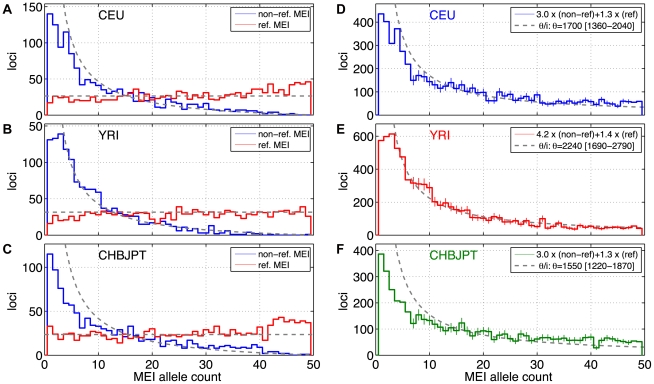
“The allele count spectra were compared to the standard neutral model”
MethodPrinciples of Population Genetics.
Cormack, R. M., Hartl, D. L., & Clark, A. G. (1990) · Biometrics · doi:10.2307/2531471 · Cited by 5,242
Global variation in copy number in the human genome
Redon, R., Ishikawa, S., Fitch, K. R., Feuk, L., Perry, G. H., Andrews, T. D., Fiegler, H., Shapero, M. H., Carson, A. R., Chen, W., et al. (2006) · Nature · doi:10.1038/nature05329 · Cited by 4,288
On the number of segregating sites in genetical models without recombination
Watterson, G. A. (1975) · Theoretical Population Biology · doi:10.1016/0040-5809(75)90020-9 · Cited by 3,915
Evolutionary Rate at the Molecular Level
KIMURA, M. (1968) · Nature · doi:10.1038/217624a0 · Cited by 3,737
Accurate whole human genome sequencing using reversible terminator chemistry
Bentley, D. R., Balasubramanian, S., Swerdlow, H. P., Smith, G. P., Milton, J., Brown, C. G., Hall, K. P., Evers, D. J., Barnes, C. L., Bignell, H. R., et al. (2008) · Nature · doi:10.1038/nature07517 · Cited by 3,684
Research works printed but not linked: 1
- Genomes Project Consortium 2010 Towards a comprehensive map of human sequence variation. Nature
Cited by
Items 201–300 of 315
Devine, S. E. (2023) · Genes · doi:10.3390/genes14101923 · Cited by 9
Ashouri, S., Wong, J. H., Nakagawa, H., Shimada, M., Tokunaga, K., & Fujimoto, A. (2021) · Human Genetics · doi:10.1007/s00439-021-02291-2 · Cited by 6
Thomas, C., Oehl‐Huber, K., Bens, S., Soschinski, P., Koch, A., Nemes, K., Oyen, F., Kordes, U., Kool, M., Frühwald, M. C., et al. (2021) · Genes Chromosomes and Cancer · doi:10.1002/gcc.22954 · Cited by 8
Faber-Hammond, J. J., & Brown, K. H. (2016) · Human Genetics · doi:10.1007/s00439-016-1667-5 · Cited by 9
Ha, H., Loh, J. W., & Xing, J. (2016) · Mobile DNA · doi:10.1186/s13100-016-0072-x · Cited by 10
Self-citationMastana, S. S., Bhatti, J. S., Singh, P., Wiles, A., & Holland, J. (2017) · Annals of Human Biology · doi:10.1080/03014460.2017.1302507 · Cited by 6
GINOM: A statistical framework for assessing interval overlap of multiple genomic features
Bryner, D., Criscione, S., Leith, A., Huynh, Q. Q., Huffer, F., & Neretti, N. (2017) · PLoS Computational Biology · doi:10.1371/journal.pcbi.1005586 · Cited by 6
PopAlu: population-scale detection of Alu polymorphisms
Qian, Y., Kehr, B., & Halldórsson, B. V. (2015) · PeerJ · doi:10.7717/peerj.1269 · Cited by 7
Cardelli, M., & Marchegiani, F. (2013) · Current Pharmaceutical Design · doi:10.2174/1381612811319090021 · Cited by 7
Mutation induction in the mouse and human germline
Dubrova, Y. E. (2016) · Russian Journal of Genetics · doi:10.1134/s1022795416010038 · Cited by 7
Genetic analysis of novel Alu insertion polymorphisms in selected indian populations
Laybourn, S., Akam, E. C., Cox, N. J., Singh, P., & Mastana, S. S. (2016) · American Journal of Human Biology · doi:10.1002/ajhb.22881 · Cited by 6
Characterization of LINE-1 transposons in a human genome at allelic resolutionPreprint
Yang, L., Metzger, G. A., & McLaughlin, R. N. (2019) · bioRxiv (Cold Spring Harbor Laboratory) · doi:10.1101/594200 · Cited by 6
Loh, J. W., Ha, H., Lin, T., Sun, N., Burns, K. H., & Xing, J. (2020) · Mobile DNA · doi:10.1186/s13100-020-00207-x · Cited by 6
Self-citationRecently Integrated Alu Elements in Capuchin Monkeys: A Resource for Cebus/Sapajus Genomics
Storer, J. M., Walker, J. A., Rockwell, C. E., Mores, G., Beckstrom, T. O., Orkin, J. D., Melin, A. D., Phillips, K. A., Roos, C., & Batzer, M. A. (2022) · Genes · doi:10.3390/genes13040572 · Cited by 5
Self-citationOkay, K., Varış, P. Ü., Miral, S., Pavlopoulou, A., Oktay, Y., & Karakülah, G. (2022) · Journal of Autism and Developmental Disorders · doi:10.1007/s10803-022-05636-6 · Cited by 5
Lee, W.-P., Wu, J., & Marth, G. (2014) · Cancer Informatics · doi:10.4137/cin.s13979 · Cited by 5
Self-citationIdentification of novel exonic mobile element insertions in epithelial ovarian cancers
Hayano, T., YAMADA, S., Hosomichi, K., Nakaoka, H., Yoshihara, K., Adachi, S., Kashima, K., Tanaka, K., Enomoto, T., & Inoue, I. (2015) · Human Genome Variation · doi:10.1038/hgv.2015.30 · Cited by 5
Sensitivity of the polyDetect computational pipeline for phylogenetic analyses
Storer, J. M., Walker, J. A., Jordan, V. E., & Batzer, M. A. (2019) · Analytical Biochemistry · doi:10.1016/j.ab.2019.113516 · Cited by 5
Self-citationSeqURE – a new copy-capture based method for sequencing of unknown Retroposition events
Komkov, A. Y., Urazbakhtin, S. Z., Saliutina, M. V., Komech, E. A., Shelygin, Y. A., Nugmanov, G. A., Шубин, В. П., Smirnova, A., Bobrov, M. Y., Цуканов, А. С., et al. (2020) · Mobile DNA · doi:10.1186/s13100-020-00228-6 · Cited by 5
Wang, C., Lei, B., Bao, Y., Wang, Z., Chen, C., Zhang, Y., Qin, S., Sun, T., Tang, Z., & Liu, Y. (2025) · iScience · doi:10.1016/j.isci.2025.112049 · Cited by 9
Linear Decay of Retrotransposon Antisense Bias across Genes Is Contingent upon Tissue Specificity
Linker, S. B., & Hedges, D. J. (2013) · PLoS ONE · doi:10.1371/journal.pone.0079402 · Cited by 3
Neural Transposition in the Drosophila Brain
Waddell, S., Barnstedt, O., & Treiber, C. D. (2014) · Advances in genetics · doi:10.1016/b978-0-12-800222-3.00004-8 · Cited by 6
Alu master copies serve as the drivers of differential SINE transposition in recent primate genomes
Tang, W., & Liang, P. (2020) · Analytical Biochemistry · doi:10.1016/j.ab.2020.113825 · Cited by 4
Kim, G. H., Kwon, S. Y., Lee, S.-Y., Seong, K. M., Kim, J., & Lim, S. (2020) · International Journal of Legal Medicine · doi:10.1007/s00414-020-02429-3 · Cited by 4
Transposable element insertions in 1000 Swedish individuals
Sæther, K. B., Nilsson, D., Thonberg, H., Tham, E., Ameur, A., Eisfeldt, J., & Lindstrand, A. (2023) · PLoS ONE · doi:10.1371/journal.pone.0289346 · Cited by 5
Assembly and characterization of novelAluinserts detected from next-generation sequencing data
Mustafa, H., David, M., & Brudno, M. (2014) · Mobile Genetic Elements · doi:10.4161/21592543.2014.969584 · Cited by 4
A map of mobile DNA insertions in the NCI-60 human cancer cell panel
Zampella, J. G., Rodić, N., Yang, W. R., Huang, C. R. L., Welch, J. A., Gnanakkan, V. P., Cornish, T. C., Boeke, J. D., & Burns, K. H. (2016) · Mobile DNA · doi:10.1186/s13100-016-0078-4 · Cited by 7
An advanced enrichment method for rare somatic retroelement insertions sequencing
Komkov, A. Y., Nugmanov, G., Salutina, M., Minervina, A., Khodosevich, K., Lebedev, Y. B., & Mamedov, I. Z. (2018) · Mobile DNA · doi:10.1186/s13100-018-0136-1 · Cited by 4
Wong, K., Adams, D. J., & Keane, T. (2013) · Genome biology · doi:10.1186/gb-2013-14-3-108 · Cited by 4
Library Construction for High-Throughput Mobile Element Identification and Genotyping
Ha, H., Wang, N., & Xing, J. (2015) · Methods in molecular biology · doi:10.1007/7651_2015_265 · Cited by 4
Self-citationRecently Mobilised Transposons in the Human Genome
Saha, P. S., & An, W. (2019) · Wiley eBooks · doi:10.1002/9780470015902.a0020837 · Cited by 4
Genome-wide analysis of mobile element insertions in human genomesPreprint
Niu, Y., Teng, X., Shi, Y., Li, Y., Tang, Y., Zhang, P., Luo, H., Kang, Q., Initiative, T. H., Xu, T., et al. (2021) · bioRxiv (Cold Spring Harbor Laboratory) · doi:10.1101/2021.01.22.427873 · Cited by 4
Borges-Monroy, R., Chu, C., Dias, C., Choi, J., Lee, S., Gao, Y., Shin, T., Park, P. J., Walsh, C. A., & Lee, E. A. (2021) · bioRxiv (Cold Spring Harbor Laboratory) · doi:10.1101/2021.01.29.428895 · Cited by 4
Pan-cancer analysis reveals multifaceted roles of retrotransposon-fusion RNAsPreprint
Lee, B., Park, J., Voshall, A., Maury, E. A., Kang, Y., Kim, Y. J., Lee, J.-Y., Shim, H.-R., Kim, H.-J., Lee, J. W., et al. (2023) · bioRxiv (Cold Spring Harbor Laboratory) · doi:10.1101/2023.10.16.562422 · Cited by 7
Structural and transduction patterns of human-specific polymorphic SVA insertions
Kirby, A. E., Loftus, M. G., Golba, E., Abel, H., Ashraf, H., Audano, P. A., Basile, A. O., Bonder, M. J., Brand, H., Byrska‐Bishop, M. S., et al. (2025) · Mobile DNA · doi:10.1186/s13100-025-00373-w · Cited by 3
Self-citationOwl Monkey Alu Insertion Polymorphisms and Aotus Phylogenetics
Storer, J. M., Walker, J. A., Rewerts, L. C., Brown, M. A., Beckstrom, T. O., Herke, S. W., Roos, C., & Batzer, M. A. (2022) · Genes · doi:10.3390/genes13112069 · Cited by 4
Self-citationWang, C., Lei, B., & Liu, Y. (2023) · Animals · doi:10.3390/ani13223581 · Cited by 7
Rubanova, N., Singh, D., Barolle, L., Chalvet, F., Netter, S., Poidevin, M., Servant, N., Bardin, A. J., & Siudeja, K. (2025) · Nucleic Acids Research · doi:10.1093/nar/gkaf485 · Cited by 5
Identification of human-specific AluS elements through comparative genomics
Lee, J., Kim, Y., Mun, S., Kim, H., & Han, K. (2014) · Gene · doi:10.1016/j.gene.2014.11.005 · Cited by 3
Lee, W., Wu, J., & Marth, G. (2015) · Cancer Informatics · doi:10.4137/cin.s24657 · Cited by 4
Self-citationGenome-Wide Analysis of Transposition Using Next Generation Sequencing Technologies
Baidouri, M. E., & Panaud, O. (2012) · Topics in current genetics · doi:10.1007/978-3-642-31842-9_4 · Cited by 5
Genetics and Population Analysis
Tsetsos, F., Drineas, P., & Paschou, P. (2018) · Elsevier eBooks · doi:10.1016/b978-0-12-809633-8.20114-3 · Cited by 4
Rocañín-Arjó, A., Botigué, L. R., Esteban, E., Thèves, C., Evdokimova, L. E., Федорова, С. А., Gibert, M., Crubézy, É., & Moral, P. (2013) · Anthropologischer Anzeiger · doi:10.1127/0003-5548/2013/0296 · Cited by 3
Gallus, S., Lammers, F., & Nilsson, M. A. (2016) · Genome Biology and Evolution · doi:10.1093/gbe/evw159 · Cited by 3
The Mobilisation of Processed Transcripts in Germline and Somatic Tissues
Ewing, A. D. (2017) · Springer eBooks · doi:10.1007/978-3-319-48344-3_4 · Cited by 3
Investigating mobile element variations by statistical genetics
Kojima, S. (2024) · Human Genome Variation · doi:10.1038/s41439-024-00280-1 · Cited by 3
Singh, G., Talwar, I., Sandhu, H. S., Matharoo, K., & Bhanwer, A. J. S. (2017) · Legal Medicine · doi:10.1016/j.legalmed.2017.02.003 · Cited by 2
Willard, H. F. (2012) · Elsevier eBooks · doi:10.1016/b978-0-12-382227-7.00001-x · Cited by 4
Chen, X., Bourque, G., & Goubert, C. (2022) · Methods in molecular biology · doi:10.1007/978-1-0716-2883-6_4 · Cited by 1
cuteHap: Haplotype‐Aware Structural Variant Detection in Phased Long‐Read Sequencing Data
Cao, S., Liu, Y., Cui, M., Gao, R., Guo, W., Wang, G., Wang, Y., & Jiang, T. (2026) · Advanced Science · doi:10.1002/advs.202519314 · Cited by 2
Howler monkey Platy-1 and Alu SINEs: a resource for Alouatta genomics
Walker, J. A., Storer, J. M., Massey, S. O., Beckstrom, T. O., Ray, D. A., & Batzer, M. A. (2026) · Mobile DNA · doi:10.1186/s13100-026-00402-2 · Cited by 1
Self-citationKass, D. H. (2013) · Journal of Forensic Research · doi:10.4172/2157-7145.1000200 · Cited by 1
Jahić, A., Hinreiner, S., Emberger, W., Hehr, U., Zuchner, S. L., & Beetz, C. (2016) · Human Mutation · doi:10.1002/humu.23162 · Cited by 1
Genetic portrait of North-West Indian population based on X chromosome Alu insertion markers
Singh, G., Sandhu, H. S., Srinivas, Y., Matharoo, K., & Bhanwer, A. J. S. (2019) · International Journal of Legal Medicine · doi:10.1007/s00414-019-02238-3 · Cited by 1
Clark, A. G., Barbash, D. A., Lower, S. E., & Dion-Coté, A.-M. (2020) · MDPI eBooks · doi:10.3390/books978-3-03928-367-5 · Cited by 1
Zhao, P., Gu, L., Gao, Y., Pan, Z., Liu, L., Li, X., Zhou, H., Yu, D., Han, X., LiChun, Q., et al. (2022) · bioRxiv (Cold Spring Harbor Laboratory) · doi:10.1101/2022.02.07.479475 · Cited by 1
Recent Non-LTR Retrotransposon Activity Predicts Cancer Prevalence in MammalsPreprint
Fard, V. N., & Tollis, M. (2025) · bioRxiv (Cold Spring Harbor Laboratory) · doi:10.1101/2025.08.30.673284 · Cited by 1
Kuhn, A., Ong, Y. M., Quake, S. R., & Burkholder, W. F. (2015) · BMC Genomics · doi:10.1186/s12864-015-1700-4 · Cited by 1
Retrotransposon mobilization in cancer genomesPreprint
Ballinger, T. J., Ewing, A. D., & Haussler, D. H. (2015) · arXiv (Cornell University) · doi:10.48550/arxiv.1501.04268
Navarro, F. C. P. (2014) · Digital Library of Theses and Dissertations (Universidade de São Paulo) · doi:10.11606/t.46.2014.tde-23012015-110608
Examining Selective Pressures Shaping Retrotransposon Distribution Within Genes
Linker, S. B. (2014)
HUMAN GENOME VARIATIONS AND EVOLUTION WITH A FOCUS ON THE ANALYSIS OF TRANSPOSABLE ELEMENTS
Ahmed, M. (2014) · Brock University Digital Repository (Brock University)
Inherited and de novo variation in human genomes
Francioli, L. C. (2015) · Utrecht University Repository (Utrecht University)
Linker, S. B., & Hedges, D. J. (2014) · PLoS ONE · doi:10.1371/annotation/dfa05103-fc65-4f07-b30f-72a6e91613ff
Bars, B., & Laia (2013) · LA Referencia (Red Federada de Repositorios Institucionales de Publicaciones Científicas) · Cited by 1
Retrotransposon Contribution to Genomic Plasticity
Doucet-O’Hare, T. T., & Kazazian, H. H. (2017) · Springer eBooks · doi:10.1007/978-3-319-48344-3_3
Xue, A. T. (2017) · CUNY Academic Works (City University of New York)
An Analysis of Alu Elements in Baboons
Steely, C. J. (2018) · Louisiana State University · doi:10.31390/gradschool_dissertations.4529
SQuIRE: Software for Quantifying Interspersed Repeat ElementsPreprint
Yang, W. R., Ardeljan, D., Pacyna, C. N., Payer, L. M., & Burns, K. H. (2018) · bioRxiv (Cold Spring Harbor Laboratory) · doi:10.1101/313999
Chen, X., & Li, D. (2018) · bioRxiv (Cold Spring Harbor Laboratory) · doi:10.1101/332833
rMETL: sensitive mobile element insertion detection with long read realignmentPreprint
Jiang, T., Liu, B., & Wang, Y. (2018) · bioRxiv (Cold Spring Harbor Laboratory) · doi:10.1101/421560
Evolution of Alu Elements in the Saimiri and Papio Lineages of Primates
Baker, J. (2018) · Louisiana State University · doi:10.31390/gradschool_dissertations.4511
What makes humans human? a review of important genetic differences between chimpanzees and humans
Cormier, D. T., Berry, A. B., Rhodes, M., & Copeland, J. M. (2017) · Journal of Student Research · doi:10.47611/jsr.v6i2.291
L1 is dynamic during neurogenesis
Salvador‐Palomeque, C. (2019) · The University of Queensland · doi:10.14264/uql.2020.75
Tang, W., & Liang, P. (2020) · bioRxiv (Cold Spring Harbor Laboratory) · doi:10.1101/2020.03.19.999144
The role of mobile elements in recent primate genomes
Tang, W. (2020) · Brock University Digital Repository (Brock University)
Brakeleer, S. D., Grève, J. D., & Teugels, E. (2020) · bioRxiv (Cold Spring Harbor Laboratory) · doi:10.1101/2020.06.04.123240
Large structural variation discovery using long reads with several degrees of error
Ebren, E. (2020) · Bilkent University Institutional Repository (Bilkent University)
Developing SQuIRE to map the landscape of interspersed repeat expression
Yang, W. R. (2018)
Muotri, A. R. (2019) · Faculty Opinions – Post-Publication Peer Review of the Biomedical Literature · doi:10.3410/f.733101774.793560530
Ashouri, S., Wong, J. H., Nakagawa, H., Shimada, M., Tokunaga, K., & Fujimoto, A. (2021) · Research Square · doi:10.21203/rs.3.rs-203007/v1
EscaramÃs, G. R., Tornador, C., Bassaganyas, L., Rabionet, R., Tubío, J. M. C., Martinez‐Fundichely, A., Cáceres, M., Gut, M., Ossowski, S., & Estivill, X. (2013) · PLoS ONE · doi:10.1371/annotation/6444bc1a-3501-482e-8cbe-a27ebc66b153
(2011) · Nature Reviews Genetics · doi:10.1038/nrg3077
Alu Retrotransposition Event in SPAST Gene as a Novel Cause of Hereditary Spastic Paraplegia
Chen, Y., Wang, M., Qiu, Y., Yuan, R., Wang, N., Lin, X., & Chen, W. (2023) · Movement Disorders · doi:10.1002/mds.29522
Rosenkrantz, J. L., Raghib, S., Brandorff, J. E., Kapadia, A., Vaine, C. A., Bragg, D., Farmiloe, G., & Jacobs, F. M. J. (2023) · bioRxiv · doi:10.1101/2023.10.20.563263 · Cited by 4
Wang, X., Zhang, Y., Wang, L., Pan, Z., He, S., Gao, Q., Chen, B., Gong, W., & Du, X. (2020) · Figshare · doi:10.6084/m9.figshare.12246425
Wang, X., Zhang, Y., Wang, L., Pan, Z., He, S., Gao, Q., Chen, B., Gong, W., & Du, X. (2020) · Figshare · doi:10.6084/m9.figshare.12246446
Wang, X., Zhang, Y., Wang, L., Pan, Z., He, S., Gao, Q., Chen, B., Gong, W., & Du, X. (2020) · Figshare · doi:10.6084/m9.figshare.12246440
Wang, X., Zhang, Y., Wang, L., Pan, Z., He, S., Gao, Q., Chen, B., Gong, W., & Du, X. (2020) · Figshare · doi:10.6084/m9.figshare.12246452
Wang, X., Zhang, Y., Wang, L., Pan, Z., He, S., Gao, Q., Chen, B., Gong, W., & Du, X. (2020) · Figshare · doi:10.6084/m9.figshare.12246434
Wang, X., Zhang, Y., Wang, L., Pan, Z., He, S., Gao, Q., Chen, B., Gong, W., & Du, X. (2020) · Figshare · doi:10.6084/m9.figshare.12246458
Metadata
- Authors
- Stewart, C., Kural, D., Strömberg, M. P., Walker, J. A., Konkel, M. K., Stütz, A. M., Urban, A. E., Grubert, F., Lam, H. Y. K., Lee, W.-P., Busby, M., Indap, A. R., Garrison, E., Huff, C., Xing, J., Snyder, M. P., Jorde, L. B., Batzer, M. A., Korbel, J. O., Marth, G. T., & 1000 Genomes Project
- Affiliations
- Boston College (US)
- Louisiana State University (US)
- European Molecular Biology Laboratory (DE)
- Stanford University (US)
- University of Utah (US)
- ORCID
- Venue
- PLoS Genetics
- Publisher
- Public Library of Science (PLoS)
- Published
- 2011-08-18
- Volume
- 7
- Issue
- 8
- Pages
- e1002236
- ISSN
- 1553-7390 (ISSN-L)
- 1553-7404
- PMC
- PMC3158055
- OpenAlex
- W2091687746
- Cited by
- 307
- References
- 78
- Citations by year
- 2026: 3 · 2025: 8 · 2024: 4 · 2023: 13 · 2022: 17 · 2021: 13 · 2020: 33 · 2019: 29 · 2018: 20 · 2017: 26 · 2016: 24 · 2015: 28 · 2014: 29 · 2013: 32 · 2012: 22
- FWCI
- 33.82
- Type
- journal article
- Language
- en
- Open access
- gold
- doi.org
- Locations
- PLoS Genetics (publishedVersion, cc-by)
- Europe PMC (PubMed Central) (publishedVersion, cc-by)
- PubMed Central (publishedVersion, cc-by)
- PubMed (publishedVersion)
- Civil War Book Review (submittedVersion)
- DOAJ (DOAJ: Directory of Open Access Journals) (submittedVersion, cc-by-sa)
- Figshare (submittedVersion, cc-by)
- Funders
- Wellcome Trust (085532)
- National Institutes of Health
- National Human Genome Research Institute (HG005552, K99HG005846, R01HG004719, RC2HG005552, HG004719)
- National Institute of General Medical Sciences (R01GM059290, R01 GM59290)
- Topics
- Life Sciences › Biochemistry, Genetics and Molecular Biology › Genetics › Chromosomal and Genetic Variations
- Life Sciences › Biochemistry, Genetics and Molecular Biology › Genetics › Genomic variations and chromosomal abnormalities
- Life Sciences › Biochemistry, Genetics and Molecular Biology › Genetics › Genome Rearrangement Algorithms
- Keywords
- mobile element insertions, insertion polymorphism, Alu elements, LINE-1 retrotransposons, SVA retrotransposon, human genome, 1000 Genomes Project, population allele frequencies, mutation rate, population segregation, negative selection, hemophilia, neurofibromatosis, cancer
- MeSH terms
- DNA Transposable Elements, Gene Frequency, Genotype, Heterozygote, Humans, Genome, Human, Mutagenesis, Insertional, Polymorphism, Single Nucleotide, Mutation Rate
About these checks
Registry, retraction, Cites and statistics results are computed, not judged, with one exception: a printed reference that no index lists is read once by a model before it counts as a citation error. Claims are extracted by a model and kept only when their quote appears verbatim in the text; each cited source is then checked, with a model’s help, for whether it says what the claim relies on. Those verdicts can be wrong — read the claim’s quote and the cited source before relying on one.
Statistics and arithmetic are recomputed, not judged.
Confidence bands are shown only for fields calibrated on our annotated test set. None is calibrated yet, so no band is shown.
What counts as a claim ›How we measure confidence ›How we check this ›
Are you an author, or do you see a problem with this page? Request a review
Data sources
Bibliographic data: Semantic Scholar, OpenAlex, Crossref.
Contains information from the Semantic Scholar Academic Graph Datasets, made available under the ODC Attribution License (ODC-BY 1.0).
Semantic Scholar’s data is described in: Kinney, R., et al. (2023). The Semantic Scholar Open Data Platform. arXiv:2301.10140.
