

The DOI matches its Crossref record; 41 of the 41 references it cites were found in a registry or an index.
Zelda Binding in the Early Drosophila melanogaster Embryo Marks Regions Subsequently Activated at the Maternal-to-Zygotic Transition
Open accessAbstract
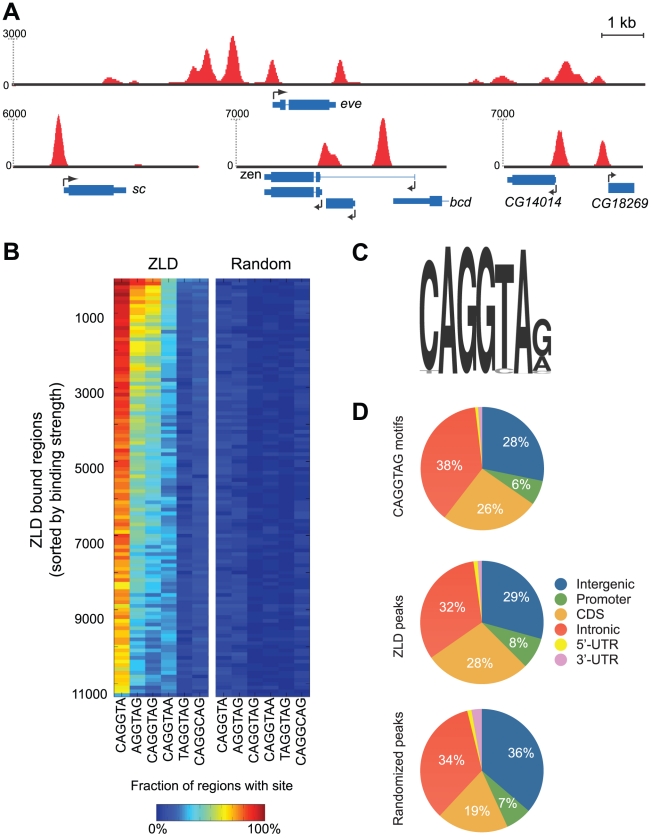
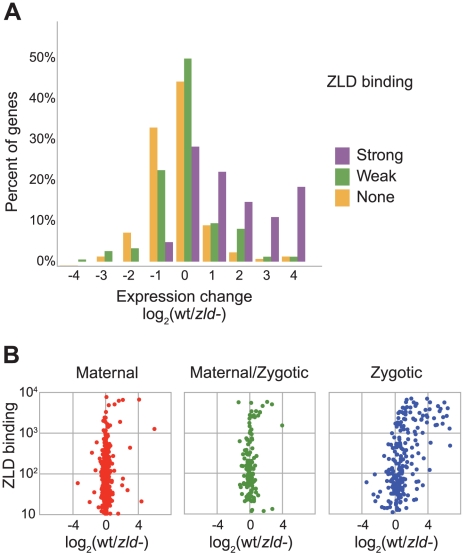
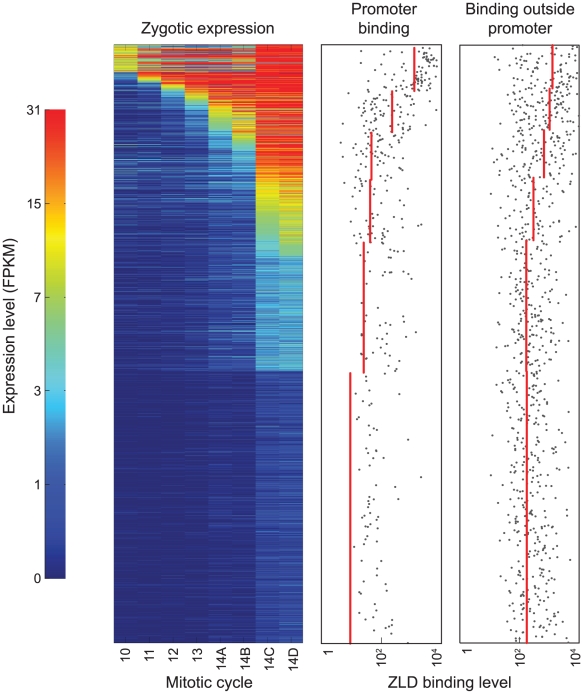
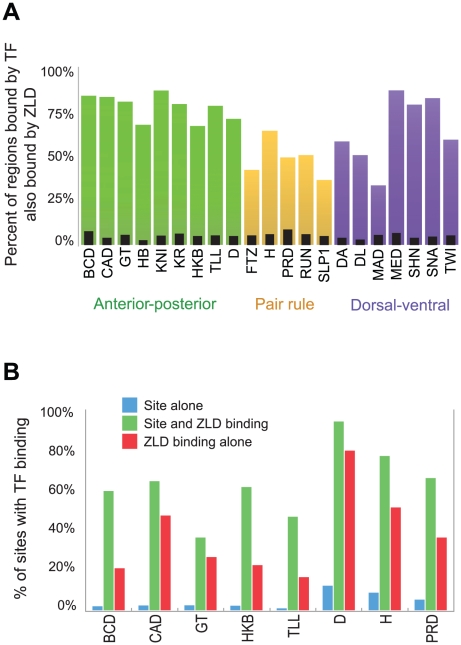
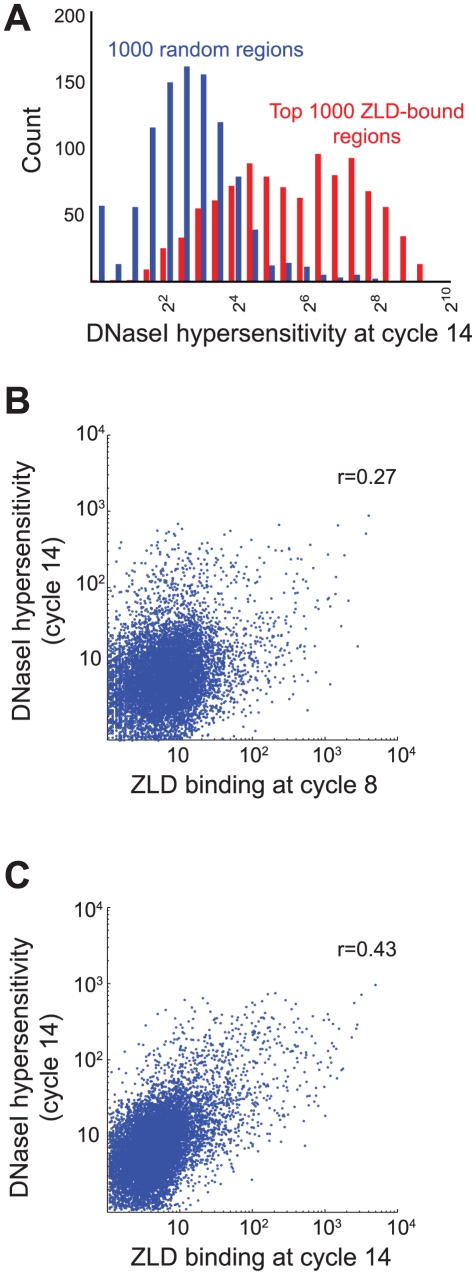
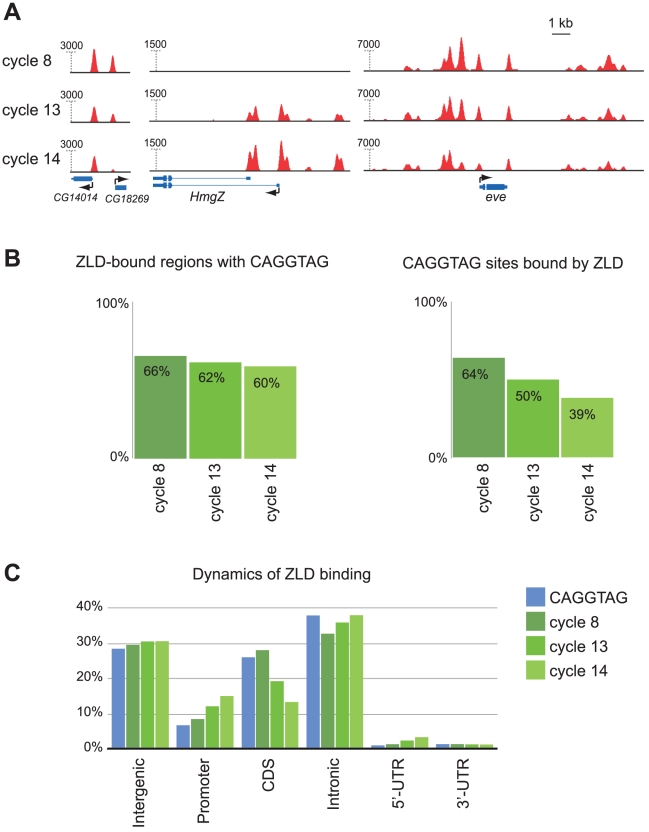
The earliest stages of development in most metazoans are driven by maternally deposited proteins and mRNAs, with widespread transcriptional activation of the zygotic genome occurring hours after fertilization, at a period known as the maternal-to-zygotic transition (MZT). In Drosophila, the MZT is preceded by the transcription of a small number of genes that initiate sex determination, patterning, and other early developmental processes; and the zinc-finger protein Zelda (ZLD) plays a key role in their transcriptional activation. To better understand the mechanisms of ZLD activation and the range of its targets, we used chromatin immunoprecipitation coupled with high-throughput sequencing (ChIP-Seq) to map regions bound by ZLD before (mitotic cycle 8), during (mitotic cycle 13), and after (late mitotic cycle 14) the MZT. Although only a handful of genes are transcribed prior to mitotic cycle 10, we identified thousands of regions bound by ZLD in cycle 8 embryos, most of which remain bound through mitotic cycle 14. As expected, early ZLD-bound regions include the promoters and enhancers of genes transcribed at this early stage. However, we also observed ZLD bound at cycle 8 to the promoters of roughly a thousand genes whose first transcription does not occur until the MZT and to virtually all of the thousands of known and presumed enhancers bound at cycle 14 by transcription factors that regulate patterned gene activation during the MZT. The association between early ZLD binding and MZT activity is so strong that ZLD binding alone can be used to identify active promoters and regulatory sequences with high specificity and selectivity. This strong early association of ZLD with regions not active until the MZT suggests that ZLD is not only required for the earliest wave of transcription but also plays a major role in activating the genome at the MZT.
Overview
The claims and statistics of this paper haven’t been checked yet.
Run the check — free, no account needed. It reads the open-access text and checks the sources it cites.
Integrity signals
Registry
Cites
Statistics
Figures
Verification
Claims the paper makes
The claims and statistics of this paper haven’t been checked yet.
Run the check — free, no account needed. It reads the open-access text and checks the sources it cites.
Claims other papers make about this one
Each is checked against this paper’s own text: does it say what the citing paper says it does?
The source backs part of the claim, not all of it — or backs it for a different population, condition or comparison.
In the citing paper
“In Drosophila, the Zinc Finger Early Drosophila Activator (Zelda) is critical for lowering the nucleosome barrier at enhancers for genes driving zygotic gene activation [33–35].”
From Transcriptional enhancers and their communication with gene promoters (2021) · cites this paper as [34]
Experimental — accuracy not yet measured
Self-check
Percentages, sums and reported differences re-computed from the paper’s own numbers.
The self-check needs the paper’s full text.
Citations
Cites
Ultrafast and memory-efficient alignment of short DNA sequences to the human genome.
Langmead, B., Trapnell, C., Pop, M., & Salzberg, S. L. (2009) · Genome Biology · doi:10.1186/gb-2009-10-3-r25 · Cited by 21,849
A bivalent chromatin structure marks key developmental genes in embryonic stem cells
Bernstein, B. E., Mikkelsen, T. S., Xie, X., Kamal, M., Huebert, D. J., Cuff, J., Fry, B., Meissner, A., Wernig, M., Plath, K., et al. (2006) · Cell · doi:10.1016/j.cell.2006.02.041 · Cited by 5,361
Fitting a mixture model by expectation maximization to discover motifs in biopolymers.
Bailey, T. L., & Elkan, C. (1994) · PubMed · Cited by 4,982
Genome-wide maps of chromatin state in pluripotent and lineage-committed cells
Mikkelsen, T. S., Ku, M., Jaffe, D. B., Issac, B., Lieberman, E., Giannoukos, G., Alvarez, P., Brockman, W., Kim, T.-K., Koche, R. P., et al. (2007) · Nature · doi:10.1038/nature06008 · Cited by 4,129
A unique chromatin signature uncovers early developmental enhancers in humans
Rada-Iglesias, A., Bajpai, R., Swigut, T., Brugmann, S. A., Flynn, R. A., & Wysocka, J. (2011) · Nature · doi:10.1038/nature09692 · Cited by 2,233
Identification of Functional Elements and Regulatory Circuits by Drosophila modENCODE
Roy, S., Ernst, J., Kharchenko, P. V., Kheradpour, P., Nègre, N., Eaton, M. L., Landolin, J. M., Bristow, C. A., Ma, L., Lin, M. F., et al. (2010) · Science · doi:10.1126/science.1198374 · Cited by 1,242
The maternal-to-zygotic transition: a play in two acts
Tadros, W., & Lipshitz, H. D. (2009) · Development · doi:10.1242/dev.033183 · Cited by 1,226
Opening of Compacted Chromatin by Early Developmental Transcription Factors HNF3 (FoxA) and GATA-4
Cirillo, L. A., Lin, F. R., Cuesta, I., Friedman, D., Jarník, M., & Zaret, K. S. (2002) · Molecular Cell · doi:10.1016/s1097-2765(02)00459-8 · Cited by 1,188
Controlling the elongation phase of transcription with P-TEFb
Peterlin, B. M., & Price, D. H. (2006) · Molecular Cell · doi:10.1016/j.molcel.2006.06.014 · Cited by 1,144
Foe, V. E., & Alberts, B. (1983) · Journal of Cell Science · doi:10.1242/jcs.61.1.31 · Cited by 1,056
A major developmental transition in early xenopus embryos: II. control of the onset of transcription
Newport, J., & Kirschner, M. (1982) · Cell · doi:10.1016/0092-8674(82)90273-2 · Cited by 1,055
FlyBase: enhancing Drosophila Gene Ontology annotations
Tweedie, S., Ashburner, M., Falls, K. M., Leyland, P. C., McQuilton, P., Marygold, S. J., Millburn, G., Osumi-Sutherland, D., Schroeder, A., Seal, R. L., et al. (2008) · Nucleic Acids Research · doi:10.1093/nar/gkn788 · Cited by 715
Open chromatin in pluripotency and reprogramming
Gaspar‐Maia, A., Alajem, A., Meshorer, E., & Ramalho‐Santos, M. (2010) · Nature Reviews Molecular Cell Biology · doi:10.1038/nrm3036 · Cited by 599
Hepatic specification of the gut endoderm in vitro: cell signaling and transcriptional control.Preprint
Gualdi, R., Bossard, P., Zheng, M., Hamada, Y., Coleman, J. R., & Zaret, K. S. (1996) · Genes & Development · doi:10.1101/gad.10.13.1670 · Cited by 590
Pavesi, G., Mereghetti, P., Mauri, G., & Pesole, G. (2004) · Nucleic Acids Research · doi:10.1093/nar/gkh465 · Cited by 493
Transcription Factors Bind Thousands of Active and Inactive Regions in the Drosophila Blastoderm
Li, X., MacArthur, S., Bourgon, R., Nix, D. A., Pollard, D. A., Iyer, V. N., Hechmer, A., Simirenko, L., Stapleton, M., Hendriks, C. L. L., et al. (2008) · PLoS Biology · doi:10.1371/journal.pbio.0060027 · Cited by 485
Self-citationThe zinc-finger protein Zelda is a key activator of the early zygotic genome in Drosophila
Liang, H.-L., Nien, C.-Y., Liu, H.-Y., Metzstein, M. M., Kirov, N., & Rushlow, C. (2008) · Nature · doi:10.1038/nature07388 · Cited by 478
Ultrastructural patterns of RNA synthesis during early embryogenesis of drosophila melanogaster
McKnight, S. L., & Miller Jr., O. L. (1976) · Cell · doi:10.1016/0092-8674(76)90014-3 · Cited by 400
Chromatin signature of embryonic pluripotency is established during genome activation
Vastenhouw, N. L., Zhang, Y., Woods, I. G., Imam, F. B., Regev, A., Liu, X. S., Rinn, J. L., & Schier, A. F. (2010) · Nature · doi:10.1038/nature08866 · Cited by 379
Functional Anatomy of Polycomb and Trithorax Chromatin Landscapes in Drosophila Embryos
Schuettengruber, B., Ganapathi, M., Leblanc, B., Portoso, M., Jaschek, R., Tolhuis, B., van Lohuizen, M., Tanay, A., & Cavalli, G. (2009) · PLoS Biology · doi:10.1371/journal.pbio.1000013 · Cited by 339
MacArthur, S., Li, X., Li, J. J., Brown, J. B., Chu, H. C., Zeng, L., Grondona, B. P., Hechmer, A., Simirenko, L., Keränen, S. V. E., et al. (2009) · Genome biology · doi:10.1186/gb-2009-10-7-r80 · Cited by 333
Self-citationMaternal BRG1 regulates zygotic genome activation in the mousePreprint
Bultman, S. J., Gebuhr, T. C., Pan, H., Svoboda, P., Schultz, R. M., & Magnuson, T. (2006) · Genes & Development · doi:10.1101/gad.1435106 · Cited by 330
Drosophila ORC localizes to open chromatin and marks sites of cohesin complex loadingPreprint
MacAlpine, H. K., Gordân, R., Powell, S., Hartemink, A. J., & MacAlpine, D. M. (2009) · Genome Research · doi:10.1101/gr.097873.109 · Cited by 289
Unmasking Activation of the Zygotic Genome Using Chromosomal Deletions in the Drosophila Embryo
De Renzis, S., Elemento, O., Tavazoie, S., & Wieschaus, E. F. (2007) · PLoS Biology · doi:10.1371/journal.pbio.0050117 · Cited by 265
DNA topology, not DNA sequence, is a critical determinant for Drosophila ORC–DNA binding
Remus, D., Beall, E. L., & Botchan, M. R. (2004) · The EMBO Journal · doi:10.1038/sj.emboj.7600077 · Cited by 263
Self-citationA Hierarchy of H3K4me3 and H3K27me3 Acquisition in Spatial Gene Regulation in Xenopus Embryos
Akkers, R. C., van Heeringen, S. J., Jacobi, U. G., Janssen‐Megens, E. M., Françoijs, K., Stunnenberg, H. G., & Veenstra, G. J. C. (2009) · Developmental Cell · doi:10.1016/j.devcel.2009.08.005 · Cited by 253
Structure and function of a transcriptional network activated by the MAPK Hog1
Capaldi, A. P., Kaplan, T., Liu, Y., Habib, N., Regev, A., Friedman, N., & O’Shea, E. K. (2008) · Nature Genetics · doi:10.1038/ng.235 · Cited by 230
Self-citationLi, X.-Y., Thomas, S., Sabo, P. J., Eisen, M. B., Stamatoyannopoulos, J. A., & Biggin, M. D. (2011) · Genome Biology · doi:10.1186/gb-2011-12-4-r34 · Cited by 217
Self-citationβ-Catenin/Tcf-regulated transcription prior to the midblastula transition
Yang, J., Tan, C. L., Darken, R. S., Wilson, P. A., & Klein, P. S. (2002) · Development · doi:10.1242/dev.00150 · Cited by 211
Lott, S. E., Villalta, J. E., Schroth, G. P., Luo, S. J., Tonkin, L. A., & Eisen, M. B. (2011) · PLoS Biology · doi:10.1371/journal.pbio.1000590 · Cited by 204
Self-citationModeling dependencies in protein-DNA binding sites
Barash, Y., Elidan, G., Friedman, N., & Kaplan, T. (2003) · Research in Computational Molecular Biology · doi:10.1145/640075.640079 · Cited by 203
Self-citationBradley, R. K., Li, X., Trapnell, C., Davidson, S. M., Pachter, L. S., Chu, H. C., Tonkin, L. A., Biggin, M. D., & Eisen, M. B. (2010) · PLoS Biology · doi:10.1371/journal.pbio.1000343 · Cited by 197
Self-citationDynamic reprogramming of chromatin accessibility during Drosophilaembryo development
Thomas, S., Li, X., Sabo, P. J., Sandstrom, R. S., Thurman, R. E., Canfield, T. K., Giste, E., Fisher, W., Hammonds, A. S., Celniker, S., et al. (2011) · Genome biology · doi:10.1186/gb-2011-12-5-r43 · Cited by 176
Self-citationBlythe, S. A., Cha, S., Tadjuidje, E., Heasman, J., & Klein, P. S. (2010) · Developmental Cell · doi:10.1016/j.devcel.2010.07.007 · Cited by 173
Kaplan, T., Li, X., Sabo, P. J., Thomas, S., Stamatoyannopoulos, J. A., Biggin, M. D., & Eisen, M. B. (2011) · PLoS Genetics · doi:10.1371/journal.pgen.1001290 · Cited by 166
Self-citationPritchard, D. K., & Schubiger, G. (1996) · Genes & Development · doi:10.1101/gad.10.9.1131 · Cited by 164
Rates of synthesis of major classes of RNA in Drosophila embryos
Anderson, K. V., & Lengyel, J. A. (1979) · Developmental Biology · doi:10.1016/0012-1606(79)90018-6 · Cited by 164
The TAGteam DNA motif controls the timing of Drosophila pre-blastoderm transcription
Bosch, J. R. T., Benavides, J. A., & Cline, T. W. (2006) · Development · doi:10.1242/dev.02373 · Cited by 161
Grainyhead and Zelda compete for binding to the promoters of the earliest-expressed Drosophila genes
Harrison, M. M., Botchan, M. R., & Cline, T. W. (2010) · Developmental Biology · doi:10.1016/j.ydbio.2010.06.026 · Cited by 90
Self-citationStaudt, N. D., Fellert, S., Chung, H., Jäckle, H., & Vorbrüggen, G. (2006) · Molecular Biology of the Cell · doi:10.1091/mbc.e05-11-1056 · Cited by 64
STAT Is an Essential Activator of the Zygotic Genome in the Early Drosophila Embryo
Tsurumi, A., Fan, X., Li, J., Larson, K., LaFrance, R. M., & Li, W. X. (2011) · PLoS Genetics · doi:10.1371/journal.pgen.1002086 · Cited by 59
Cited by
Sorted by citations
Transcription factors: from enhancer binding to developmental control
Spitz, F., & Furlong, E. E. M. (2012) · Nature Reviews Genetics · doi:10.1038/nrg3207 · Cited by 2,227
Modification of Enhancer Chromatin: What, How, and Why?
Calo, E., & Wysocka, J. (2013) · Molecular Cell · doi:10.1016/j.molcel.2013.01.038 · Cited by 1,457
Hendrickson, P. G., Dorais, J., Grow, E. J., Whiddon, J. L., Lim, J.-W., Wike, C. L., Weaver, B. D., Pflueger, C., Emery, B. R., Wilcox, A. L., et al. (2017) · Nature Genetics · doi:10.1038/ng.3844 · Cited by 731
Zygotic Genome Activation During the Maternal-to-Zygotic Transition
Lee, M. T., Bonneau, A. R., & Giráldez, A. J. (2014) · Annual Review of Cell and Developmental Biology · doi:10.1146/annurev-cellbio-100913-013027 · Cited by 668
Pioneer transcription factors in cell reprogrammingPreprint
Iwafuchi, M., & Zaret, K. S. (2014) · Genes & Development · doi:10.1101/gad.253443.114 · Cited by 613
Metadata
- Authors
- Harrison, M. M., Li, X.-Y., Kaplan, T., Botchan, M. R., & Eisen, M. B.
- Affiliations
- University of California, Berkeley (US)
- QB3 (US)
- Corresponding author
- Eisen, Michael B.
- Venue
- PLoS Genetics
- Publisher
- Public Library of Science (PLoS)
- Published
- 2011-10-20
- Volume
- 7
- Issue
- 10
- Pages
- e1002266
- ISSN
- 1553-7390 (ISSN-L)
- 1553-7404
- PMC
- PMC3197655
- OpenAlex
- W2004533772
- Cited by
- 338
- References
- 41
- Citations by year
- 2026: 14 · 2025: 17 · 2024: 23 · 2023: 23 · 2022: 20 · 2021: 27 · 2020: 23 · 2019: 26 · 2018: 24 · 2017: 31 · 2016: 20 · 2015: 22 · 2014: 20 · 2013: 28 · 2012: 18
- FWCI
- 8.84
- Type
- journal article
- Language
- en
- Open access
- gold
- doi.org
- Locations
- PLoS Genetics (publishedVersion, cc-by)
- Europe PMC (PubMed Central) (publishedVersion, cc-by)
- PubMed Central (publishedVersion, cc-by)
- PubMed (publishedVersion)
- DOAJ (DOAJ: Directory of Open Access Journals) (submittedVersion, cc-by-sa)
- Figshare (submittedVersion, cc-by)
- Funders
- Howard Hughes Medical Institute
- National Institutes of Health (CA30490)
- National Human Genome Research Institute (HG002779, R01HG002779)
- National Cancer Institute (R37 CA3049, R37CA030490)
- Topics
- Life Sciences › Biochemistry, Genetics and Molecular Biology › Molecular Biology › Genomics and Chromatin Dynamics
- Life Sciences › Biochemistry, Genetics and Molecular Biology › Molecular Biology › Developmental Biology and Gene Regulation
- Life Sciences › Biochemistry, Genetics and Molecular Biology › Molecular Biology › Epigenetics and DNA Methylation
- Keywords
- Zelda, maternal-to-zygotic transition, Drosophila melanogaster embryo, transcriptional activation, enhancer binding, promoter binding, mitotic cycle, chromatin binding, sex determination
- MeSH terms
- Animals, Drosophila melanogaster, Female, Mitosis, Nuclear Proteins, Promoter Regions, Genetic, Protein Binding, Transcription Factors, Transcription, Genetic, Zygote, Transcriptional Activation, Genome, Gene Expression Regulation, Developmental, Body Patterning, Sex Determination Processes, Drosophila Proteins, Embryonic Development, Chromatin Immunoprecipitation
About these checks
Registry, retraction, Cites and statistics results are computed, not judged, with one exception: a printed reference that no index lists is read once by a model before it counts as a citation error. Claims are extracted by a model and kept only when their quote appears verbatim in the text; each cited source is then checked, with a model’s help, for whether it says what the claim relies on. Those verdicts can be wrong — read the claim’s quote and the cited source before relying on one.
Statistics and arithmetic are recomputed, not judged.
Confidence bands are shown only for fields calibrated on our annotated test set. None is calibrated yet, so no band is shown.
What counts as a claim ›How we measure confidence ›How we check this ›
Are you an author, or do you see a problem with this page? Request a review
