

Dissection of Pol II Trigger Loop Function and Pol II Activity–Dependent Control of Start Site Selection In Vivo
Open accessThe DOI matches its Crossref record; 113 of the 113 references it cites were found in a registry or an index.
Abstract
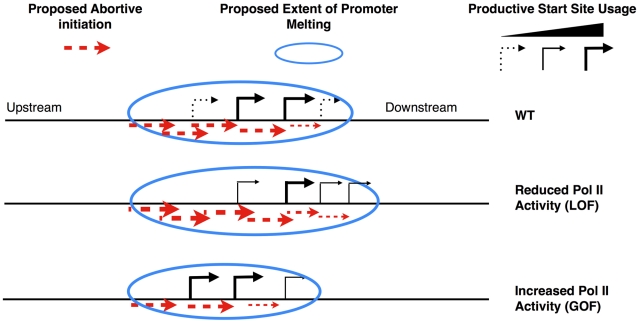
Structural and biochemical studies have revealed the importance of a conserved, mobile domain of RNA Polymerase II (Pol II), the Trigger Loop (TL), in substrate selection and catalysis. The relative contributions of different residues within the TL to Pol II function and how Pol II activity defects correlate with gene expression alteration in vivo are unknown. Using Saccharomyces cerevisiae Pol II as a model, we uncover complex genetic relationships between mutated TL residues by combinatorial analysis of multiply substituted TL variants. We show that in vitro biochemical activity is highly predictive of in vivo transcription phenotypes, suggesting direct relationships between phenotypes and Pol II activity. Interestingly, while multiple TL residues function together to promote proper transcription, individual residues can be separated into distinct functional classes likely relevant to the TL mechanism. In vivo, Pol II activity defects disrupt regulation of the GTP-sensitive IMD2 gene, explaining sensitivities to GTP-production inhibitors, but contrasting with commonly cited models for this sensitivity in the literature. Our data provide support for an existing model whereby Pol II transcriptional activity provides a proxy for direct sensing of NTP levels in vivo leading to IMD2 activation. Finally, we connect Pol II activity to transcription start site selection in vivo, implicating the Pol II active site and transcription itself as a driver for start site scanning, contravening current models for this process.
Overview
The claims and statistics of this paper haven’t been checked yet.
Free: it reads the open-access text and checks the first 5 claims that cite a source we can check. Create a free account to check every claim.
Integrity signals
Registry
Cites
Statistics
Figures
. Scoring of phenotypic strength is based on visual inspection of (A). C. Distribution of gal10Δ56 suppression (Gal resistance) or enhancement (Gal super-sensitivity) among TL substitutions. Scoring of phenotypic strength is based on visual inspection of (A). *Indicates strength of gal10Δ56 suppression is likely underestimated due to confounding generic growth defects. D. Distribution of MPA phenotypes among TL substitutions. Scoring of phenotypic strength is based on visual inspection of (A). E. Distribution of lys2-128∂ suppression (Spt− phenotype scored as Lys+) among TL substitutions. Scoring of phenotypic strength is based on visual inspection of (A).](https://figures.cochat.ai/paper-figures/af9c278915a04a3ca513db4808f687c2/dissection-of-pol-ii-trigger-loop-function-and-pol-ii-activitydependent-control-figure-2.jpg)


Verification
Claims the paper makes
The claims and statistics of this paper haven’t been checked yet.
Free: it reads the open-access text and checks the first 5 claims that cite a source we can check. Create a free account to check every claim.
Claims other papers make about this one
Each is checked against this paper’s own text: does it say what the citing paper says it does?
The cited source says what the claim attributes to it.
In the citing paper
“In budding yeast, RNA Pol II speed controls the use of differential TSSs, with fast RNA Pol II mutants shifting to upstream TSSs, while slow RNA Pol II mutants shift to downstream TSSs (Kaplan et al, 2012; Braberg et al, 2013; Qiu et al, 2020).”
From RNA polymerase II speed: a key player in controlling and adapting transcriptome composition (2021) · cites this paper as Kaplan et al, 2012
Self-check
Percentages, sums and reported differences re-computed from the paper’s own numbers.
The self-check needs the paper’s full text.
Citations
Cites
The PyMOL Molecular Graphics System
DeLano, W. L. (2002) · Medical Entomology and Zoology · Cited by 18,147
Methods in yeast genetics : a Cold Spring Harbor Laboratory course manual
Amberg, D. C., Burke, D. J., & Strathern, J. N. (2005) · Cited by 1,803
The Tandem Affinity Purification (TAP) Method: A General Procedure of Protein Complex Purification
Puig, O., Caspary, F., Rigaut, G., Rutz, B., Bouveret, E., Bragado-Nilsson, E., Wilm, M., & Séraphin, B. (2001) · Methods · doi:10.1006/meth.2001.1183 · Cited by 1,783
[10] 5-Fluoroorotic acid as a selective agent in yeast molecular genetics
Boeke, J. D., Trueheart, J., Natsoulis, G., & Fink, G. R. (1987) · Methods in Enzymology · doi:10.1016/0076-6879(87)54076-9 · Cited by 1,368
A rapid and simple method for preparation of RNA from Saccharomyces cerevisiae
Schmitt, M. E., Brown, T. A., & Trumpower, B. L. (1990) · Nucleic Acids Research · doi:10.1093/nar/18.10.3091 · Cited by 1,338
Structural Basis of Transcription: RNA Polymerase II at 2.8 Ångstrom Resolution
Cramer, P., Bushnell, D. A., & Kornberg, R. D. (2001) · Science · doi:10.1126/science.1059493 · Cited by 1,247
Structural Basis of Transcription: An RNA Polymerase II Elongation Complex at 3.3 Å Resolution
Gnatt, A. L., Cramer, P., Fu, J., Bushnell, D. A., & Kornberg, R. D. (2001) · Science · doi:10.1126/science.1059495 · Cited by 903
The chromatin-specific transcription elongation factor FACT comprises human SPT16 and SSRP1 proteins
Orphanides, G., Wu, W.-H., Lane, W. S., Hampsey, M., & Reinberg, D. (1999) · Nature · doi:10.1038/22350 · Cited by 554
Otero, G., Fellows, J., Li, Y., de Bizemont, T., Dirac, A. M. G., Gustafsson, C. M., Erdjument-Bromage, H., Tempst, P., & Svejstrup, J. Q. (1999) · Molecular Cell · doi:10.1016/s1097-2765(00)80179-3 · Cited by 482
A Novel Histone Acetyltransferase Is an Integral Subunit of Elongating RNA Polymerase II Holoenzyme
Wittschieben, B. Ø., Otero, G., de Bizemont, T., Fellows, J., Erdjument-Bromage, H., Ohba, R., Li, Y., Allis, C. D., Tempst, P., & Svejstrup, J. Q. (1999) · Molecular Cell · doi:10.1016/s1097-2765(00)80194-x · Cited by 463
Hartzog, G. A., Wada, T., Handa, H., & Winston, F. (1998) · Genes & Development · doi:10.1101/gad.12.3.357 · Cited by 461
Structural Basis of Transcription: Role of the Trigger Loop in Substrate Specificity and Catalysis
Wang, D., Bushnell, D. A., Westover, K. D., Kaplan, C. D., & Kornberg, R. D. (2006) · Cell · doi:10.1016/j.cell.2006.11.023 · Cited by 451
Self-citationComplete RNA Polymerase II Elongation Complex Structure and Its Interactions with NTP and TFIIS
Kettenberger, H., Armache, K.-J., & Cramer, P. (2004) · Molecular Cell · doi:10.1016/j.molcel.2004.11.040 · Cited by 437
Structural basis for substrate loading in bacterial RNA polymerase
Vassylyev, D. G., Vassylyeva, M. N., Zhang, J., Palangat, M., Artsimovitch, I., & Landick, R. (2007) · Nature · doi:10.1038/nature05931 · Cited by 365
Distinction and Relationship between Elongation Rate and Processivity of RNA Polymerase II In Vivo
Mason, P. B., & Struhl, K. (2005) · Molecular Cell · doi:10.1016/j.molcel.2005.02.017 · Cited by 359
Architecture of the RNA Polymerase II-TFIIS Complex and Implications for mRNA Cleavage
Kettenberger, H., Armache, K.-J., & Cramer, P. (2003) · Cell · doi:10.1016/s0092-8674(03)00598-1 · Cited by 355
A Ratchet Mechanism of Transcription Elongation and Its Control
Bar-Nahum, G., Epshtein, V., Ruckenstein, A. E., Rafikov, R., Mustaev, A., & Nudler, E. (2005) · Cell · doi:10.1016/j.cell.2004.11.045 · Cited by 350
MUTATIONS AFFECTING TY-MEDIATED EXPRESSION OF THE HIS4 GENE OF SACCHAROMYCES CEREVISIAE
Winston, F., Chaleff, D. T., Valent, B., & Fink, G. R. (1984) · Genetics · doi:10.1093/genetics/107.2.179 · Cited by 346
Grigull, J., Mnaimneh, S., Pootoolal, J., Robinson, M. D., & Hughes, T. R. (2004) · Molecular and Cellular Biology · doi:10.1128/mcb.24.12.5534-5547.2004 · Cited by 342
Histone H2B Ubiquitylation Is Associated with Elongating RNA Polymerase II
Xiao, T., Kao, C.-F., Krogan, N. J., Sun, Z.-W., Greenblatt, J. F., Osley, M. A., & Strahl, B. D. (2005) · Molecular and Cellular Biology · doi:10.1128/mcb.25.2.637-651.2005 · Cited by 338
Genome-Wide Distribution of Yeast RNA Polymerase II and Its Control by Sen1 Helicase
Steinmetz, E. J., Warren, C. L., Kuehner, J. N., Panbehi, B., Ansari, A. Z., & Brow, D. A. (2006) · Molecular Cell · doi:10.1016/j.molcel.2006.10.023 · Cited by 323
Structural Basis of Transcription
Westover, K. D., Bushnell, D. A., & Kornberg, R. D. (2004) · Cell · doi:10.1016/j.cell.2004.10.016 · Cited by 319
Functional redundancy and structural polymorphism in the large subunit of RNA polymerase II
Nonet, M., Sweetser, D., & Young, R. A. (1987) · Cell · doi:10.1016/0092-8674(87)90517-4 · Cited by 294
MOLECULAR MECHANISMS OF TRANSCRIPTIONAL REGULATION IN YEAST
Struhl, K. (1989) · Annual Review of Biochemistry · doi:10.1146/annurev.bi.58.070189.005155 · Cited by 271
Brueckner, F., & Cramer, P. (2008) · Nature Structural & Molecular Biology · doi:10.1038/nsmb.1458 · Cited by 259
6-Azauracil inhibition of GTP biosynthesis in Saccharomyces cerevisiae
Exinger, F., & Lacroute, F. (1992) · Current Genetics · doi:10.1007/bf00351735 · Cited by 250
Kaplan, C. D., Larsson, K.-M., & Kornberg, R. D. (2008) · Molecular Cell · doi:10.1016/j.molcel.2008.04.023 · Cited by 246
Self-citationMolecular mechanisms of transcriptional regulation in yeast
STRUHL, K. (1990) · Cell Biology International Reports · doi:10.1016/0309-1651(90)90128-l · Cited by 225
Nucleic acid polymerases use a general acid for nucleotidyl transfer
Castro, C., Smidansky, E. D., Arnold, J. J., Maksimchuk, K. R., Moustafa, I., Uchida, A., Götte, M., Konigsberg, W., & Cameron, C. E. (2009) · Nature Structural & Molecular Biology · doi:10.1038/nsmb.1540 · Cited by 219
Toulokhonov, I., Zhang, J., Palangat, M., & Landick, R. (2007) · Molecular Cell · doi:10.1016/j.molcel.2007.06.008 · Cited by 200
Pinto, I., Ware, D. E., & Hampsey, M. (1992) · Cell · doi:10.1016/0092-8674(92)90040-j · Cited by 200
Sydow, J. F., Brueckner, F., Cheung, A. C. M., Damsma, G. E., Dengl, S., Lehmann, E., Vassylyev, D., & Cramer, P. (2009) · Molecular Cell · doi:10.1016/j.molcel.2009.06.002 · Cited by 182
Malone, E. A., Clark, C. D., Chiang, A., & Winston, F. (1991) · Molecular and Cellular Biology · doi:10.1128/mcb.11.11.5710 · Cited by 169
HOWE, K. J., KANE, C. M., & ARES, M. (2003) · RNA · doi:10.1261/rna.5390803 · Cited by 169
Kireeva, M. L., Nedialkov, Y. A., Cremona, G. H., Purtov, Y. A., Lubkowska, L., Malagon, F., Burton, Z. F., Strathern, J. N., & Kashlev, M. (2008) · Molecular Cell · doi:10.1016/j.molcel.2008.04.017 · Cited by 162
Schwabish, M. A., & Struhl, K. (2007) · Molecular and Cellular Biology · doi:10.1128/mcb.00717-07 · Cited by 158
Regulation of a Eukaryotic Gene by GTP-Dependent Start Site Selection and Transcription Attenuation
Kuehner, J. N., & Brow, D. A. (2008) · Molecular Cell · doi:10.1016/j.molcel.2008.05.018 · Cited by 157
Bur1 Kinase Is Required for Efficient Transcription Elongation by RNA Polymerase II
Keogh, M.-C., Podolny, V., & Buratowski, S. (2003) · Molecular and Cellular Biology · doi:10.1128/mcb.23.19.7005-7018.2003 · Cited by 157
DNA Melting on Yeast RNA Polymerase II Promoters
Giardina, C., & Lis, J. T. (1993) · Science · doi:10.1126/science.8342041 · Cited by 155
Structural Basis of Transcription Inhibition by Antibiotic Streptolydigin
Temiakov, D., Zenkin, N., Vassylyeva, M. N., Perederina, A. A., Tahirov, T. H., Kashkina, E., Savkina, M. V., Zorov, S. D., Nikiforov, V., Igarashi, N., et al. (2005) · Molecular Cell · doi:10.1016/j.molcel.2005.07.020 · Cited by 150
Role of the RNA polymerase trigger loop in catalysis and pausing
Zhang, J., Palangat, M., & Landick, R. (2010) · Nature Structural & Molecular Biology · doi:10.1038/nsmb.1732 · Cited by 145
Prelich, G., & Winston, F. (1993) · Genetics · doi:10.1093/genetics/135.3.665 · Cited by 144
Crystal structure of bacterial RNA polymerase bound with a transcription inhibitor protein
Tagami, S., Sekine, S., Kumarevel, T., Hino, N., Murayama, Y., Kamegamori, S., Yamamoto, M., Sakamoto, K., & Yokoyama, S. (2010) · Nature · doi:10.1038/nature09573 · Cited by 144
Genetic interaction between transcription elongation factor TFIIS and RNA polymerase II.
Archambault, J., Lacroute, F., Ruet, A., & Friesen, J. D. (1992) · Molecular and Cellular Biology · doi:10.1128/mcb.12.9.4142 · Cited by 139
Pinto, I., Wu, W. H., Na, J. G., & Hampsey, M. (1994) · Journal of Biological Chemistry · doi:10.1016/s0021-9258(18)43851-3 · Cited by 136
Simchen, G., Winston, F., Styles, C. A., & Fink, G. R. (1984) · Proceedings of the National Academy of Sciences · doi:10.1073/pnas.81.8.2431 · Cited by 134
Inhibition of orotidylic acid decarboxylase, a primary site of carcinostasis by 6-azauracil
Handschumacher, R. E., & Pasternak, C. A. (1958) · Biochimica et Biophysica Acta · doi:10.1016/0006-3002(58)90088-x · Cited by 131
Greger, I. H., & Proudfoot, N. J. (1998) · The EMBO Journal · doi:10.1093/emboj/17.16.4771 · Cited by 126
Shaw, R. J., & Reines, D. (2000) · Molecular and Cellular Biology · doi:10.1128/mcb.20.20.7427-7437.2000 · Cited by 124
Pascual‐García, P., Govind, C. K., Queralt, E., Cuenca-Bono, B., Llopis, A., Chávez, S., Hinnebusch, A. G., & Rodríguez‐Navarro, S. (2008) · Genes & Development · doi:10.1101/gad.483308 · Cited by 122
Ginsburg, D. S., Govind, C. K., & Hinnebusch, A. G. (2009) · Molecular and Cellular Biology · doi:10.1128/mcb.01033-09 · Cited by 112
Thiebaut, M., Colin, J., Neil, H., Jacquier, A., Séraphin, B., Lacroute, F., & Libri, D. (2008) · Molecular Cell · doi:10.1016/j.molcel.2008.08.010 · Cited by 108
Lindstrom, D. L., & Hartzog, G. A. (2001) · Genetics · doi:10.1093/genetics/159.2.487 · Cited by 108
RNA polymerase II subunit RPB9 is required for accurate start site selection.
Hull, M. W., McKune, K., & Woychik, N. A. (1995) · Genes & Development · doi:10.1101/gad.9.4.481 · Cited by 108
Stepwise mechanism for transcription fidelity
Yuzenkova, Y., Bochkareva, A., Tadigotla, V. R., Roghanian, M., Zorov, S., Severinov, K., & Zenkin, N. (2010) · BMC Biology · doi:10.1186/1741-7007-8-54 · Cited by 105
The yeast general transcription factor TFIIA is composed of two polypeptide subunits.
Ranish, J. A., & Hahn, S. (1991) · Journal of Biological Chemistry · doi:10.1016/s0021-9258(18)55000-6 · Cited by 102
Mutations in the Saccharomyces cerevisiae RPB1 Gene Conferring Hypersensitivity to 6-Azauracil
Malagon, F., Kireeva, M. L., Shafer, B. K., Lubkowska, L., Kashlev, M., & Strathern, J. N. (2006) · Genetics · doi:10.1534/genetics.105.052415 · Cited by 99
Desmoucelles, C., Pinson, B., Saint-Marc, C., & Daignan-Fornier, B. (2002) · Journal of Biological Chemistry · doi:10.1074/jbc.m111433200 · Cited by 97
Kaplan, C. D., Holland, M. J., & Winston, F. (2005) · Journal of Biological Chemistry · doi:10.1074/jbc.m411108200 · Cited by 95
Self-citationStructural basis of initial RNA polymerase II transcription: Initial RNA Pol II transcription
Cheung, A. C. M., Sainsbury, S., & Cramer, P. (2011) · The EMBO Journal · doi:10.1038/emboj.2011.396 · Cited by 95
RNA Polymerase II Subunit Rpb9 Regulates Transcription Elongation in Vivo
Hemming, S. A., Jansma, D. B., Macgregor, P. F., Goryachev, A., Friesen, J. D., & Edwards, A. M. (2000) · Journal of Biological Chemistry · doi:10.1074/jbc.m004721200 · Cited by 94
Powell, W., & Reines, D. (1996) · Journal of Biological Chemistry · doi:10.1074/jbc.271.12.6866 · Cited by 93
Kuehner, J. N., & Brow, D. A. (2006) · Journal of Biological Chemistry · doi:10.1074/jbc.m601937200 · Cited by 92
Bridge helix and trigger loop perturbations generate superactive RNA polymerases
Tan, L., Wiesler, S., Trzaska, D., Carney, H. C., & Weinzierl, R. O. (2008) · Journal of Biology · doi:10.1186/jbiol98 · Cited by 91
Eichner, J., Chen, H., Warfield, L., & Hahn, S. (2009) · The EMBO Journal · doi:10.1038/emboj.2009.386 · Cited by 89
Npl3 is an antagonist of mRNA 3′ end formation by RNA polymerase II
Bucheli, M. E., & Buratowski, S. (2005) · The EMBO Journal · doi:10.1038/sj.emboj.7600687 · Cited by 89
Weilbaecher, R., Hebron, C., Feng, G., & Landick, R. (1994) · Genes & Development · doi:10.1101/gad.8.23.2913 · Cited by 89
Sun, M., Larivière, L., Dengl, S., Mayer, A., & Cramer, P. (2010) · Journal of Biological Chemistry · doi:10.1074/jbc.m110.144568 · Cited by 87
Wu, W.-H., Pinto, I., Chen, B.-S., & Hampsey, M. (1999) · Genetics · doi:10.1093/genetics/153.2.643 · Cited by 84
RNA polymerase II subunit Rpb9 is important for transcriptional fidelity in vivo
Nesser, N. K., Peterson, D. O., & Hawley, D. K. (2006) · Proceedings of the National Academy of Sciences · doi:10.1073/pnas.0511330103 · Cited by 84
Greger, I. H., Aranda, A., & Proudfoot, N. J. (2000) · Proceedings of the National Academy of Sciences · doi:10.1073/pnas.140217697 · Cited by 83
Engineering of elongation complexes of bacterial and yeast RNA polymerases.
Komissarova, N., Kireeva, M., Becker, J., Sidorenkov, I., & Kashlev, M. (2003) · Methods in Enzymology · doi:10.1016/s0076-6879(03)71017-9 · Cited by 82
Berroteran, R. W., Ware, D. E., & Hampsey, M. (1994) · Molecular and Cellular Biology · doi:10.1128/mcb.14.1.226 · Cited by 82
Hyle, J. W., Shaw, R. J., & Reines, D. (2003) · Journal of Biological Chemistry · doi:10.1074/jbc.m303736200 · Cited by 82
Rpb9 Subunit Controls Transcription Fidelity by Delaying NTP Sequestration in RNA Polymerase II
Walmacq, C., Kireeva, M. L., Irvin, J., Nedialkov, Y., Lubkowska, L., Malagon, F., Strathern, J. N., & Kashlev, M. (2009) · Journal of Biological Chemistry · doi:10.1074/jbc.m109.006908 · Cited by 82
Jenks, M. H., O'Rourke, T. W., & Reines, D. (2008) · Molecular and Cellular Biology · doi:10.1128/mcb.00380-08 · Cited by 81
Schneider, S., Pei, Y., Shuman, S., & Schwer, B. (2010) · Molecular and Cellular Biology · doi:10.1128/mcb.00116-10 · Cited by 80
Initiation Complex Structure and Promoter Proofreading
Liu, X., Bushnell, D. A., Silva, D., Huang, X., & Kornberg, R. D. (2011) · Science · doi:10.1126/science.1206629 · Cited by 80
Initiation by Yeast RNA Polymerase II at the Adenoviral Major Late Promoter in Vitro
Lue, N. F., Flanagan, P. M., Sugimoto, K., & Kornberg, R. D. (1989) · Science · doi:10.1126/science.2510298 · Cited by 78
Riles, L., Shaw, R. J., Johnston, M., & Reines, D. (2004) · Yeast · doi:10.1002/yea.1068 · Cited by 77
Du, H.-N., Fingerman, I. M., & Briggs, S. D. (2008) · Genes & Development · doi:10.1101/gad.1700008 · Cited by 72
Central role of the RNA polymerase trigger loop in intrinsic RNA hydrolysis
Yuzenkova, Y., & Zenkin, N. (2010) · Proceedings of the National Academy of Sciences · doi:10.1073/pnas.0914424107 · Cited by 72
A DNA-tethered cleavage probe reveals the path for promoter DNA in the yeast preinitiation complex
Miller, G., & Hahn, S. (2006) · Nature Structural & Molecular Biology · doi:10.1038/nsmb1117 · Cited by 72
Huang, X., Wang, D., Weiss, D. R., Bushnell, D. A., Kornberg, R. D., & Levitt, M. (2010) · Proceedings of the National Academy of Sciences · doi:10.1073/pnas.1009898107 · Cited by 72
Cho, E., & Buratowski, S. (1999) · Journal of Biological Chemistry · doi:10.1074/jbc.274.36.25807 · Cited by 68
Ghazy, M. A., Brodie, S. A., Ammerman, M. L., Ziegler, L. M., & Ponticelli, A. S. (2004) · Molecular and Cellular Biology · doi:10.1128/mcb.24.24.10975-10985.2004 · Cited by 67
Sun, Z. W., & Hampsey, M. (1995) · Proceedings of the National Academy of Sciences · doi:10.1073/pnas.92.8.3127 · Cited by 63
Bucheli, M. E., He, X., Kaplan, C. D., Moore, C. L., & Buratowski, S. (2007) · RNA · doi:10.1261/rna.607207 · Cited by 63
Self-citationTFIIS Enhances Transcriptional Elongation through an Artificial Arrest Site In Vivo
Kulish, D., & Struhl, K. (2001) · Molecular and Cellular Biology · doi:10.1128/mcb.21.13.4162-4168.2001 · Cited by 62
Shaw, R. J., Wilson, J. L., Smith, K. T., & Reines, D. (2001) · Journal of Biological Chemistry · doi:10.1074/jbc.m105075200 · Cited by 61
Discrimination against Deoxyribonucleotide Substrates by Bacterial RNA Polymerase
Svetlov, V., Vassylyev, D. G., & Artsimovitch, I. (2004) · Journal of Biological Chemistry · doi:10.1074/jbc.c400316200 · Cited by 61
Pappas, D. L., & Hampsey, M. (2000) · Molecular and Cellular Biology · doi:10.1128/mcb.20.22.8343-8351.2000 · Cited by 59
Schizosacharomyces pombe RNA polymerase II at 3.6-Å resolution
Spåhr, H., Calero, G. A., Bushnell, D. A., & Kornberg, R. D. (2009) · Proceedings of the National Academy of Sciences · doi:10.1073/pnas.0903361106 · Cited by 58
Sun, Z. (1996) · Nucleic Acids Research · doi:10.1093/nar/24.13.2560 · Cited by 58
Song, Y.-H., & Ahn, S. (2009) · Journal of Biological Chemistry · doi:10.1074/jbc.m109.039255 · Cited by 55
Role of a small RNA pol II subunit in TATA to transcription start site spacing
Furter‐Graves, E. M., Hall, B. D., & Furter, R. (1994) · Nucleic Acids Research · doi:10.1093/nar/22.23.4932 · Cited by 52
Architecture of the Yeast RNA Polymerase II Open Complex and Regulation of Activity by TFIIF
Fishburn, J., & Hahn, S. (2011) · Molecular and Cellular Biology · doi:10.1128/mcb.06242-11 · Cited by 52
Hekmatpanah, D. S., & Young, R. A. (1991) · Molecular and Cellular Biology · doi:10.1128/mcb.11.11.5781 · Cited by 51
Koyama, H., Ito, T., Nakanishi, T., & Sekimizu, K. (2007) · Genes to Cells · doi:10.1111/j.1365-2443.2007.01072.x · Cited by 51
Wu, J., Awrey, D. E., Edwards, A. M., Archambault, J., & Friesen, J. D. (1996) · Proceedings of the National Academy of Sciences · doi:10.1073/pnas.93.21.11552 · Cited by 50
mRNA Capping Enzyme Activity Is Coupled to an Early Transcription Elongation
Kim, H., Jeong, S.-H., Heo, J.-H., Jeong, S.-J., Kim, S., Youn, H., Han, J.-W., Lee, H.-W., & Cho, E. (2004) · Molecular and Cellular Biology · doi:10.1128/mcb.24.14.6184-6193.2004 · Cited by 47
Functions of Saccharomyces cerevisiae TFIIF during Transcription Start Site Utilization
Khaperskyy, D. A., Ammerman, M. L., Majovski, R. C., & Ponticelli, A. S. (2008) · Molecular and Cellular Biology · doi:10.1128/mcb.02272-07 · Cited by 44
Freire-Picos, M. Á. (2005) · Nucleic Acids Research · doi:10.1093/nar/gki825 · Cited by 43
Kwapisz, M., Wéry, M., Despres, D., Ghavi-Helm, Y., Soutourina, J., Thuriaux, P., & Lacroute, F. (2008) · The EMBO Journal · doi:10.1038/emboj.2008.165 · Cited by 39
Mycophenolic acid and its mechanism of action in cancer and psoriasis.
Sweeney, M. J. (1977) · PubMed · Cited by 32
Translocation after Synthesis of a Four-Nucleotide RNA Commits RNA Polymerase II to Promoter Escape
Kugel, J. F., & Goodrich, J. A. (2002) · Molecular and Cellular Biology · doi:10.1128/mcb.22.3.762-773.2002 · Cited by 31
Dissection of the molecular basis of mycophenolate resistance in Saccharomyces cerevisiae
Jenks, M. H., & Reines, D. (2005) · Yeast · doi:10.1002/yea.1300 · Cited by 30
Majovski, R. C., Khaperskyy, D. A., Ghazy, M. A., & Ponticelli, A. S. (2005) · Journal of Biological Chemistry · doi:10.1074/jbc.m502932200 · Cited by 29
The role of TFIIB-RNA polymerase II interaction in start site selection in yeast cells
Zhang, D. Y. (2002) · Nucleic Acids Research · doi:10.1093/nar/gkf422 · Cited by 28
Stimulation of Transcription by Mutations Affecting Conserved Regions of RNA Polymerase II
Archambault, J., Jansma, D. B., Kawasoe, J. H., Arndt, K. T., Greenblatt, J., & Friesen, J. D. (1998) · Journal of Bacteriology · doi:10.1128/jb.180.10.2590-2598.1998 · Cited by 26
Use of RNA Yeast Polymerase II Mutants in Studying Transcription Elongation
Reines, D. (2003) · Methods in enzymology on CD-ROM/Methods in enzymology · doi:10.1016/s0076-6879(03)71021-0 · Cited by 19
Yeast Pol II start‐site selection: the long and the short of it
Corden, J. L. (2008) · EMBO Reports · doi:10.1038/embor.2008.192 · Cited by 15
The architecture of RNA polymerase fidelity
Kaplan, C. D. (2010) · BMC Biology · doi:10.1186/1741-7007-8-85 · Cited by 14
Self-citation
Cited by
Splicing of Nascent RNA Coincides with Intron Exit from RNA Polymerase II
Carrillo Oesterreich, F., Herzel, L., Straube, K., Hujer, K., Howard, J., & Neugebauer, K. M. (2016) · Cell · doi:10.1016/j.cell.2016.02.045 · Cited by 227
RNA polymerase II speed: a key player in controlling and adapting transcriptome composition
Muniz, L., Nicolas, E., & Trouche, D. (2021) · The EMBO Journal · doi:10.15252/embj.2020105740 · Cited by 198
“In budding yeast, RNA Pol II speed controls the use of differential TSSs, with fast RNA Pol II mutants shifting to upstream TSSs, while slow RNA Pol II mutants shift to downstream TSSs (Kaplan et al , 2012; Braberg et al , 2013; Qiu et al , 2020).”
RNA polymerase II transcription: Structure and mechanism
Liu, X., Bushnell, D. A., & Kornberg, R. D. (2013) · Biochimica et Biophysica Acta (BBA) - Gene Regulatory Mechanisms · doi:10.1016/j.bbagrm.2012.09.003 · Cited by 146
Structural insights into transcription initiation by RNA polymerase II
Grünberg, S., & Hahn, S. (2013) · Trends in Biochemical Sciences · doi:10.1016/j.tibs.2013.09.002 · Cited by 149
Transcription Dynamics in Living Cells
Lenstra, T. L., Rodriguez, J., Chen, H., & Larson, D. R. (2016) · Annual Review of Biophysics · doi:10.1146/annurev-biophys-062215-010838 · Cited by 183
Metadata
- Authors
- Kaplan, C. D., Jin, H., Zhang, I. L., & Belyanin, A.
- Affiliations
- Texas A&M University (US)
- University of Wisconsin System (US)
- Bowdoin College (US)
- Corresponding author
- Kaplan, Craig D.
- ORCID
- Kaplan, Craig D.
- Venue
- PLoS Genetics
- Publisher
- Public Library of Science (PLoS)
- Published
- 2012-04-12
- Volume
- 8
- Issue
- 4
- Pages
- e1002627
- ISSN
- 1553-7390 (ISSN-L)
- 1553-7404
- PMC
- PMC3325174
- OpenAlex
- W2067438466
- Cited by
- 97
- References
- 113
- Citations by year
- 2026: 4 · 2025: 4 · 2024: 6 · 2023: 5 · 2022: 7 · 2021: 6 · 2020: 8 · 2019: 6 · 2018: 2 · 2017: 10 · 2016: 10 · 2015: 3 · 2014: 7 · 2013: 12 · 2012: 7
- FWCI
- 3.73
- Type
- journal article
- Language
- en
- Open access
- gold
- doi.org
- Locations
- PLoS Genetics (publishedVersion, cc-by)
- Europe PMC (PubMed Central) (publishedVersion, cc-by)
- PubMed Central (publishedVersion, cc-by)
- PubMed (publishedVersion)
- DOAJ (DOAJ: Directory of Open Access Journals) (submittedVersion, cc-by-sa)
- Figshare (submittedVersion, cc-by)
- OakTrust (Texas A&M University Libraries) (submittedVersion)
- Funders
- National Science Foundation (0851611)
- National Institutes of Health
- National Institute of General Medical Sciences (GM036659, F32GM077787, R01GM097260, R37GM036659, R01GM036659, GM097260)
- Topics
- Life Sciences › Biochemistry, Genetics and Molecular Biology › Molecular Biology › Genomics and Chromatin Dynamics
- Life Sciences › Biochemistry, Genetics and Molecular Biology › Molecular Biology › Nuclear Structure and Function
- Life Sciences › Biochemistry, Genetics and Molecular Biology › Molecular Biology › Fungal and yeast genetics research
- Keywords
- RNA polymerase II, trigger loop, transcription start site selection, Saccharomyces cerevisiae, transcriptional regulation, gene expression
- MeSH terms
- Catalysis, Guanosine Triphosphate, IMP Dehydrogenase, Models, Genetic, Mutation, RNA Polymerase II, Saccharomyces cerevisiae, Substrate Specificity, Transcription, Genetic, Gene Expression Regulation, Fungal, Catalytic Domain, Transcription Initiation Site, Saccharomyces cerevisiae Proteins
About these checks
Registry, retraction, Cites and statistics results are computed, not judged, with one exception: a printed reference that no index lists is read once by a model before it counts as a citation error. Claims are extracted by a model and kept only when their quote appears verbatim in the text; each cited source is then checked, with a model’s help, for whether it says what the claim relies on. Those verdicts can be wrong — read the claim’s quote and the cited source before relying on one.
Statistics and arithmetic are recomputed, not judged.
Confidence bands are shown only for fields calibrated on our annotated test set. None is calibrated yet, so no band is shown.
What counts as a claim ›How we measure confidence ›How we check this ›
Are you an author, or do you see a problem with this page? Request a review
Data sources
Bibliographic data: Semantic Scholar, OpenAlex, Crossref.
Contains information from the Semantic Scholar Academic Graph Datasets, made available under the ODC Attribution License (ODC-BY 1.0).
Semantic Scholar’s data is described in: Kinney, R., et al. (2023). The Semantic Scholar Open Data Platform. arXiv:2301.10140.
