

Dissection of Pol II Trigger Loop Function and Pol II Activity–Dependent Control of Start Site Selection In Vivo
Open accessThe DOI matches its Crossref record; 113 of the 113 references it cites were found in a registry or an index.
Abstract
Structural and biochemical studies have revealed the importance of a conserved, mobile domain of RNA Polymerase II (Pol II), the Trigger Loop (TL), in substrate selection and catalysis. The relative contributions of different residues within the TL to Pol II function and how Pol II activity defects correlate with gene expression alteration in vivo are unknown. Using Saccharomyces cerevisiae Pol II as a model, we uncover complex genetic relationships between mutated TL residues by combinatorial analysis of multiply substituted TL variants. We show that in vitro biochemical activity is highly predictive of in vivo transcription phenotypes, suggesting direct relationships between phenotypes and Pol II activity. Interestingly, while multiple TL residues function together to promote proper transcription, individual residues can be separated into distinct functional classes likely relevant to the TL mechanism. In vivo, Pol II activity defects disrupt regulation of the GTP-sensitive IMD2 gene, explaining sensitivities to GTP-production inhibitors, but contrasting with commonly cited models for this sensitivity in the literature. Our data provide support for an existing model whereby Pol II transcriptional activity provides a proxy for direct sensing of NTP levels in vivo leading to IMD2 activation. Finally, we connect Pol II activity to transcription start site selection in vivo, implicating the Pol II active site and transcription itself as a driver for start site scanning, contravening current models for this process.
Overview
The claims and statistics of this paper haven’t been checked yet.
Free: it reads the open-access text and checks the first 5 claims that cite a source we can check. Create a free account to check every claim.
Integrity signals
Registry
Cites
Statistics
Figures
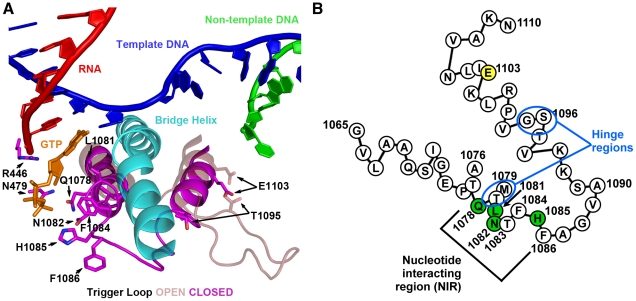
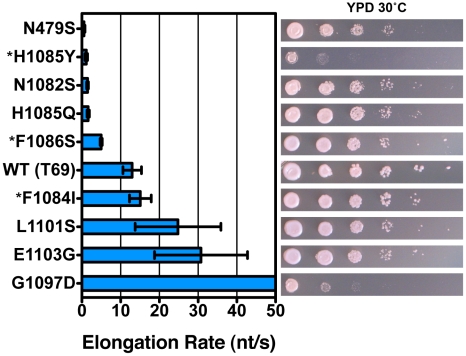
. Scoring of phenotypic strength is based on visual inspection of (A). C. Distribution of gal10Δ56 suppression (Gal resistance) or enhancement (Gal super-sensitivity) among TL substitutions. Scoring of phenotypic strength is based on visual inspection of (A). *Indicates strength of gal10Δ56 suppression is likely underestimated due to confounding generic growth defects. D. Distribution of MPA phenotypes among TL substitutions. Scoring of phenotypic strength is based on visual inspection of (A). E. Distribution of lys2-128∂ suppression (Spt− phenotype scored as Lys+) among TL substitutions. Scoring of phenotypic strength is based on visual inspection of (A).](https://figures.cochat.ai/paper-figures/af9c278915a04a3ca513db4808f687c2/dissection-of-pol-ii-trigger-loop-function-and-pol-ii-activitydependent-control-figure-2.jpg)
Verification
Claims the paper makes
The claims and statistics of this paper haven’t been checked yet.
Free: it reads the open-access text and checks the first 5 claims that cite a source we can check. Create a free account to check every claim.
Claims other papers make about this one
Each is checked against this paper’s own text: does it say what the citing paper says it does?
The cited source says what the claim attributes to it.
In the citing paper
“In budding yeast, RNA Pol II speed controls the use of differential TSSs, with fast RNA Pol II mutants shifting to upstream TSSs, while slow RNA Pol II mutants shift to downstream TSSs (Kaplan et al, 2012; Braberg et al, 2013; Qiu et al, 2020).”
From RNA polymerase II speed: a key player in controlling and adapting transcriptome composition (2021) · cites this paper as Kaplan et al, 2012
Self-check
Percentages, sums and reported differences re-computed from the paper’s own numbers.
The self-check needs the paper’s full text.
Citations
Cites
The PyMOL Molecular Graphics System
DeLano, W. L. (2002) · Medical Entomology and Zoology · Cited by 18,147
Methods in yeast genetics : a Cold Spring Harbor Laboratory course manual
Amberg, D. C., Burke, D. J., & Strathern, J. N. (2005) · Cited by 1,803
The Tandem Affinity Purification (TAP) Method: A General Procedure of Protein Complex Purification
Puig, O., Caspary, F., Rigaut, G., Rutz, B., Bouveret, E., Bragado-Nilsson, E., Wilm, M., & Séraphin, B. (2001) · Methods · doi:10.1006/meth.2001.1183 · Cited by 1,783
[10] 5-Fluoroorotic acid as a selective agent in yeast molecular genetics
Boeke, J. D., Trueheart, J., Natsoulis, G., & Fink, G. R. (1987) · Methods in Enzymology · doi:10.1016/0076-6879(87)54076-9 · Cited by 1,368
A rapid and simple method for preparation of RNA from Saccharomyces cerevisiae
Schmitt, M. E., Brown, T. A., & Trumpower, B. L. (1990) · Nucleic Acids Research · doi:10.1093/nar/18.10.3091 · Cited by 1,338
Structural Basis of Transcription: RNA Polymerase II at 2.8 Ångstrom Resolution
Cramer, P., Bushnell, D. A., & Kornberg, R. D. (2001) · Science · doi:10.1126/science.1059493 · Cited by 1,247
Structural Basis of Transcription: An RNA Polymerase II Elongation Complex at 3.3 Å Resolution
Gnatt, A. L., Cramer, P., Fu, J., Bushnell, D. A., & Kornberg, R. D. (2001) · Science · doi:10.1126/science.1059495 · Cited by 903
The chromatin-specific transcription elongation factor FACT comprises human SPT16 and SSRP1 proteins
Orphanides, G., Wu, W.-H., Lane, W. S., Hampsey, M., & Reinberg, D. (1999) · Nature · doi:10.1038/22350 · Cited by 554
Otero, G., Fellows, J., Li, Y., de Bizemont, T., Dirac, A. M. G., Gustafsson, C. M., Erdjument-Bromage, H., Tempst, P., & Svejstrup, J. Q. (1999) · Molecular Cell · doi:10.1016/s1097-2765(00)80179-3 · Cited by 482
A Novel Histone Acetyltransferase Is an Integral Subunit of Elongating RNA Polymerase II Holoenzyme
Wittschieben, B. Ø., Otero, G., de Bizemont, T., Fellows, J., Erdjument-Bromage, H., Ohba, R., Li, Y., Allis, C. D., Tempst, P., & Svejstrup, J. Q. (1999) · Molecular Cell · doi:10.1016/s1097-2765(00)80194-x · Cited by 463
Cited by
Splicing of Nascent RNA Coincides with Intron Exit from RNA Polymerase II
Carrillo Oesterreich, F., Herzel, L., Straube, K., Hujer, K., Howard, J., & Neugebauer, K. M. (2016) · Cell · doi:10.1016/j.cell.2016.02.045 · Cited by 227
RNA polymerase II speed: a key player in controlling and adapting transcriptome composition
Muniz, L., Nicolas, E., & Trouche, D. (2021) · The EMBO Journal · doi:10.15252/embj.2020105740 · Cited by 198
“In budding yeast, RNA Pol II speed controls the use of differential TSSs, with fast RNA Pol II mutants shifting to upstream TSSs, while slow RNA Pol II mutants shift to downstream TSSs (Kaplan et al , 2012; Braberg et al , 2013; Qiu et al , 2020).”
RNA polymerase II transcription: Structure and mechanism
Liu, X., Bushnell, D. A., & Kornberg, R. D. (2013) · Biochimica et Biophysica Acta (BBA) - Gene Regulatory Mechanisms · doi:10.1016/j.bbagrm.2012.09.003 · Cited by 146
Structural insights into transcription initiation by RNA polymerase II
Grünberg, S., & Hahn, S. (2013) · Trends in Biochemical Sciences · doi:10.1016/j.tibs.2013.09.002 · Cited by 149
Transcription Dynamics in Living Cells
Lenstra, T. L., Rodriguez, J., Chen, H., & Larson, D. R. (2016) · Annual Review of Biophysics · doi:10.1146/annurev-biophys-062215-010838 · Cited by 183
Millisecond dynamics of RNA polymerase II translocation at atomic resolution
Silva, D.-A., Weiss, D. R., Pardo Avila, F., Da, L.-T., Levitt, M., Wang, D., & Huang, X. (2014) · Proceedings of the National Academy of Sciences · doi:10.1073/pnas.1315751111 · Cited by 143
Larson, M. H., Zhou, J., Kaplan, C. D., Palangat, M., Kornberg, R. D., Landick, R., & Block, S. M. (2012) · Proceedings of the National Academy of Sciences · doi:10.1073/pnas.1200939109 · Cited by 139
Self-citationFrom Structure to Systems: High-Resolution, Quantitative Genetic Analysis of RNA Polymerase II
Braberg, H., Jin, H., Moehle, E. A., Chan, Y. A., Wang, S., Shales, M., Benschop, J. J., Morris, J. H., Qiu, C., Hu, F., et al. (2013) · Cell · doi:10.1016/j.cell.2013.07.033 · Cited by 143
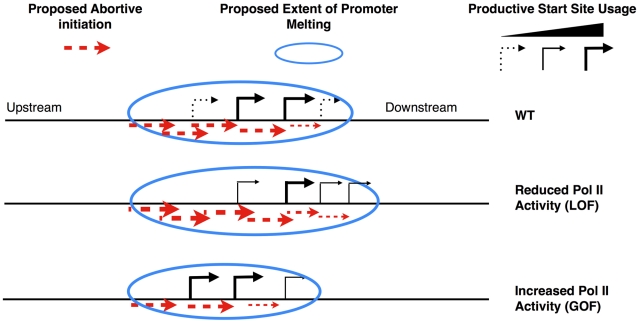
“Our recent work has implicated changes in RNAPII activity with the alteration of start site selection in vivo (Kaplan et al., 2012) (Figure 4).”
InfluentialSelf-citationKinetic Competition between RNA Polymerase II and Sen1-Dependent Transcription Termination
Hazelbaker, D. Z., Marquardt, S., Wlotzka, W., & Buratowski, S. (2013) · Molecular Cell · doi:10.1016/j.molcel.2012.10.014 · Cited by 128
The Writers, Readers, and Functions of the RNA Polymerase II C-Terminal Domain Code
Jeronimo, C., Bataille, A. R., & Robert, F. (2013) · Chemical Reviews · doi:10.1021/cr4001397 · Cited by 114
Pause & go: from the discovery of RNA polymerase pausing to its functional implications
Mayer, A., Landry, H. M., & Churchman, L. S. (2017) · Current Opinion in Cell Biology · doi:10.1016/j.ceb.2017.03.002 · Cited by 125
Transcription rate strongly affects splicing fidelity and cotranscriptionality in budding yeast
Aslanzadeh, V., Huang, Y., Sanguinetti, G., & Beggs, J. D. (2018) · Genome Research · doi:10.1101/gr.225615.117 · Cited by 109
Barnes, C. O., Calero, M., Malik, I., Graham, B. W., Spahr, H., Lin, G., Cohen, A. E., Brown, I. S., Zhang, Q., Pullara, F., et al. (2015) · Molecular Cell · doi:10.1016/j.molcel.2015.06.034 · Cited by 99
Self-citationFong, N., Saldi, T., Sheridan, R. M., Cortazar, M. A., & Bentley, D. L. (2017) · Molecular Cell · doi:10.1016/j.molcel.2017.04.016 · Cited by 98
Kellinger, M. W., Park, G. Y., Chong, J. P. C., Lippard, S. J., & Wang, D. (2013) · Journal of the American Chemical Society · doi:10.1021/ja405475y · Cited by 79
Haijes, H. A., Koster, M. J. E., Rehmann, H., Li, D., Hakonarson, H. H., Cappuccio, G., Hančárová, M., Lehalle, D., Reardon, W., Schaefer, G. B., et al. (2019) · The American Journal of Human Genetics · doi:10.1016/j.ajhg.2019.06.016 · Cited by 75
Mishanina, T. V., Palo, M. Z., Nayak, D., Mooney, R. A., & Landick, R. C. (2017) · Proceedings of the National Academy of Sciences · doi:10.1073/pnas.1702383114 · Cited by 69
Adventures in time and space: Splicing efficiency and RNA polymerase II elongation rate
Moehle, E. A., Braberg, H., Krogan, N. J., & Guthrie, C. (2014) · RNA Biology · doi:10.4161/rna.28646 · Cited by 48
Kaplan, C. D. (2013) · Biochimica et Biophysica Acta (BBA) - Gene Regulatory Mechanisms · doi:10.1016/j.bbagrm.2012.09.007 · Cited by 47
Self-citationA Two-State Model for the Dynamics of the Pyrophosphate Ion Release in Bacterial RNA Polymerase
Da, L.-T., Pardo Avila, F., Wang, D., & Huang, X. (2013) · PLoS Computational Biology · doi:10.1371/journal.pcbi.1003020 · Cited by 54
Windgassen, T. A., Mooney, R. A., Nayak, D., Palangat, M., Zhang, J., & Landick, R. C. (2014) · Nucleic Acids Research · doi:10.1093/nar/gku997 · Cited by 55
Cryo-EM structure of TFIIH/Rad4–Rad23–Rad33 in damaged DNA opening in nucleotide excision repair
van Eeuwen, T., Shim, Y., Kim, H. J., Zhao, T., Basu, S., Garcia, B. A., Kaplan, C. D., Min, J., & Murakami, K. (2021) · Nature Communications · doi:10.1038/s41467-021-23684-x · Cited by 54
Self-citationTrigger loop folding determines transcription rate of Escherichia coli’s RNA polymerase
Mejia, Y. X., Nudler, E., & Bustamante, C. (2014) · Proceedings of the National Academy of Sciences · doi:10.1073/pnas.1421067112 · Cited by 53
Uncoupling Promoter Opening from Start-Site Scanning
Murakami, K., Mattei, P.-J., Davis, R. E., Jin, H., Kaplan, C. D., & Kornberg, R. D. (2015) · Molecular Cell · doi:10.1016/j.molcel.2015.05.021 · Cited by 42
Self-citationClosing and opening of the RNA polymerase trigger loop
Mazumder, A., Lin, M., Kapanidis, A. N., & Ebright, R. H. (2020) · Proceedings of the National Academy of Sciences · doi:10.1073/pnas.1920427117 · Cited by 49
The transcriptional elongation rate regulates alternative polyadenylation in yeast
Geisberg, J. V., Moqtaderi, Z., & Struhl, K. (2020) · eLife · doi:10.7554/elife.59810 · Cited by 45
The RNA polymerase trigger loop functions in all three phases of the transcription cycle
Fouqueau, T., Zeller, M. E., Cheung, A. C. M., Cramer, P., & Thomm, M. (2013) · Nucleic Acids Research · doi:10.1093/nar/gkt433 · Cited by 50
In vitro analysis of RNA polymerase II elongation complex dynamics
Joo, Y. J., Ficarro, S. B., Chun, Y., Marto, J. A., & Buratowski, S. (2019) · Genes & Development · doi:10.1101/gad.324202.119 · Cited by 44
“Similar TSS effects are seen with certain TFIIB mutants and RNApII mutants that slow elongation rate (Kaplan et al., 2012).”
Universal promoter scanning by Pol II during transcription initiation in Saccharomyces cerevisiae
Qiu, C., Jin, H., Vvedenskaya, I., Llenas, J. A., Zhao, T., Malik, I., Visbisky, A. M., Schwartz, S. L., Cui, P., Čabart, P., et al. (2020) · Genome Biology · doi:10.1186/s13059-020-02040-0 · Cited by 43
“S4a) while H1085Y shows the converse (Additional file 1: Fig.”
BackgroundInfluentialSelf-citationKireeva, M. L., Opron, K., Seibold, S. A., Domecq, C., Cukier, R. I., Coulombe, B., Kashlev, M., & Burton, Z. F. (2012) · BMC Biophysics · doi:10.1186/2046-1682-5-11 · Cited by 44
Energetic and Structural Details of the Trigger-Loop Closing Transition in RNA Polymerase II
Wang, B., Predeus, A. V., Burton, Z. F., & Feig, M. (2013) · Biophysical Journal · doi:10.1016/j.bpj.2013.05.060 · Cited by 42
Organismal benefits of transcription speed control at gene boundaries
Leng, X., Ivanov, M., Kindgren, P., Malik, I., Thieffry, A., Brodersen, P., Sandelin, A., Kaplan, C. D., & Marquardt, S. (2020) · The EMBO Reports · doi:10.15252/embr.201949315 · Cited by 40
“Yeast strains, media, and primer extension analysis Yeast media are prepared as described [27].”
InfluentialSelf-citationHigh-Resolution Phenotypic Landscape of the RNA Polymerase II Trigger Loop
Qiu, C., Erinne, O. C., Dave, J. M., Cui, P., Jin, H., Muthukrishnan, N., Tang, L. K., Babu, S. G., Lam, K. C., Vandeventer, P. J., et al. (2016) · PLOS Genetics · doi:10.1371/journal.pgen.1006321 · Cited by 36
Self-citationViktorovskaya, O., Engel, K. L., French, S. L., Cui, P., Vandeventer, P. J., Pavlovic, E. M., Beyer, A. L., Kaplan, C. D., & Schneider, D. A. (2013) · Cell Reports · doi:10.1016/j.celrep.2013.07.044 · Cited by 38
Self-citationFishburn, J., Galburt, E. A., & Hahn, S. (2016) · Journal of Biological Chemistry · doi:10.1074/jbc.m116.724583 · Cited by 37
Wide-ranging and unexpected consequences of altered Pol II catalytic activity in vivo
Malik, I., Qiu, C., Snavely, T., & Kaplan, C. D. (2017) · Nucleic Acids Research · doi:10.1093/nar/gkx037 · Cited by 30
Self-citationPatrick, K. L., Ryan, C. J., Xu, J., Lipp, J., Nissen, K. E., Roguev, A., Shales, M., Krogan, N. J., & Guthrie, C. (2015) · PLoS Genetics · doi:10.1371/journal.pgen.1005074 · Cited by 34
Plant terminators: the unsung heroes of gene expression
de Felippes, F. F., & Waterhouse, P. M. (2022) · Journal of Experimental Botany · doi:10.1093/jxb/erac467 · Cited by 34
mRNA initiation and termination are spatially coordinated
Calvo-Roitberg, E., Carroll, C. L., Kim, G., Sanabria, V. C., Venev, S. V., Mick, S. T., Paquette, J. D., Urióstegui-Arcos, M., Dekker, J., Fiszbein, A., et al. (2025) · Science · doi:10.1126/science.ado8279 · Cited by 32
Yang, C., Fujiwara, R., Kim, H. J., Basnet, P., Zhu, Y., Colón, J. J. G., Steimle, S., Garcia, B. A., Kaplan, C. D., & Murakami, K. (2022) · Molecular Cell · doi:10.1016/j.molcel.2021.12.020 · Cited by 31
Self-citationHansen, A. W., Arora, P., Khayat, M. M., Smith, L. J., Lewis, A. M., Rossetti, L. Z., Jayaseelan, J. C., Cristian, I., Haynes, D., DiTroia, S. P., et al. (2020) · Human Genetics and Genomics Advances · doi:10.1016/j.xhgg.2020.100014 · Cited by 27
Self-citationSub1 associates with Spt5 and influences RNA polymerase II transcription elongation rate
García, A., Collin, A., & Calvo, O. (2012) · Molecular Biology of the Cell · doi:10.1091/mbc.e12-04-0331 · Cited by 25
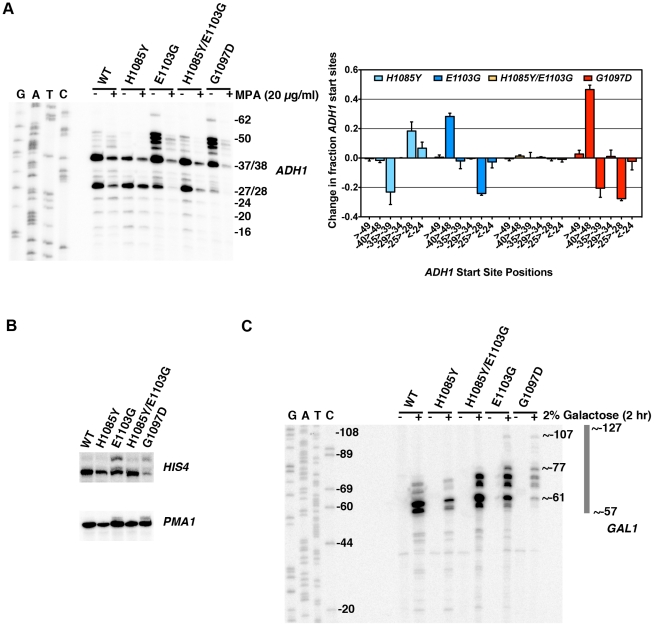
“Indeed, recently it was shown that Rpb1 mutations in the trigger loop cause sensitivity or resistance to MPA, which correlates with a shift to upstream or downstream IMD2 start sites and with increased or reduced elongation rates, respectively (Kaplan et al., 2012).”
BackgroundČabart, P., Jin, H., Li, L., & Kaplan, C. D. (2014) · Transcription · doi:10.4161/trns.28869 · Cited by 26
Self-citationA Genetic Assay for Transcription Errors Reveals Multilayer Control of RNA Polymerase II Fidelity
Irvin, J. D., Kireeva, M. L., Gotte, D., Shafer, B. K., Huang, I., Kashlev, M., & Strathern, J. N. (2014) · PLoS Genetics · doi:10.1371/journal.pgen.1004532 · Cited by 25
Milligan, L., Sayou, C., Tuck, A., Auchynnikava, T., Reid, J. E., Alexander, R., Alves, F. D. L., Allshire, R., Spanos, C., Rappsilber, J., et al. (2017) · eLife · doi:10.7554/elife.27082 · Cited by 23
Thiolutin has complex effects in vivo but is a direct inhibitor of RNA polymerase II in vitro
Qiu, C., Arora, P., Malik, I., LaPeruta, A. J., Pavlovic, E. M., Ugochukwu, S., Naik, M. T., & Kaplan, C. D. (2024) · Nucleic Acids Research · doi:10.1093/nar/gkad1258 · Cited by 23
Self-citationConnell, Z., Parnell, T. J., McCullough, L. L., Hill, C. P., & Formosa, T. (2021) · Nucleic Acids Research · doi:10.1093/nar/gkab1262 · Cited by 21
The RNA Polymerase Factory and Archaeal Transcription
Weinzierl, R. O. J. (2013) · Chemical Reviews · doi:10.1021/cr400148k · Cited by 19
Rijal, K., & Maraia, R. J. (2016) · PLoS Genetics · doi:10.1371/journal.pgen.1006253 · Cited by 19
Wang, B., Sexton, R. E., & Feig, M. (2017) · Biochimica et Biophysica Acta (BBA) - Gene Regulatory Mechanisms · doi:10.1016/j.bbagrm.2017.02.008 · Cited by 18
Zhu, Y., Vvedenskaya, I. O., Sze, S., Nickels, B. E., & Kaplan, C. D. (2024) · Nature Structural & Molecular Biology · doi:10.1038/s41594-023-01171-9 · Cited by 17
Self-citationRNA Polymerase II Activity Control of Gene Expression and Involvement in Disease
Kuldell, J. C., & Kaplan, C. D. (2024) · Journal of Molecular Biology · doi:10.1016/j.jmb.2024.168770 · Cited by 16
Self-citationUnarta, I. C., Goonetilleke, E. C., Wang, D., & Huang, X. (2022) · Journal of Biological Chemistry · doi:10.1016/j.jbc.2022.102844 · Cited by 16
RNA Polymerase II Trigger Loop Mobility
Kaster, B. C., Knippa, K., Kaplan, C. D., & Peterson, D. O. (2016) · Journal of Biological Chemistry · doi:10.1074/jbc.m116.714394 · Cited by 16
Self-citationGenetic dissection of the RNA polymerase II transcription cycle
Chou, S., Alexander, A. K., Rice, E. J., Choate, L. A., Cohen, P. E., & Danko, C. G. (2022) · eLife · doi:10.7554/elife.78458 · Cited by 16
Lin, G., Barnes, C. O., Weiss, S. C., Dutagaci, B., Qiu, C., Feig, M., Song, J., Lyubimov, A. Y., Cohen, A. E., Kaplan, C. D., et al. (2024) · Proceedings of the National Academy of Sciences · doi:10.1073/pnas.2318527121 · Cited by 15
Self-citationJin, H., & Kaplan, C. D. (2015) · G3 Genes Genomes Genetics · doi:10.1534/g3.114.015180 · Cited by 15
Self-citationCaban, M., Strapagiel, D., Dziadek, J., Korycka‐Machała, M., & Grzelak, A. (2016) · Current Microbiology · doi:10.1007/s00284-016-1039-3 · Cited by 14
Wang, J., Dong, H., Chionh, Y. H., McBee, M. E., Sirirungruang, S., Cunningham, R. P., Shi, P., & Dedon, P. C. (2016) · Nucleic Acids Research · doi:10.1093/nar/gkw572 · Cited by 13
Zhao, T., Vvedenskaya, I. O., Lai, W., Basu, S., Pugh, B. F., Nickels, B. E., & Kaplan, C. D. (2021) · eLife · doi:10.7554/elife.71013 · Cited by 13
Self-citationEvans, D. R., Qiao, Y., Trost, B., Calli, K., Martell, S., Jones, S. J. M., Scherer, S. W., & Lewis, M. E. S. (2022) · Genes · doi:10.3390/genes13030470 · Cited by 13
Transient-State Kinetic Analysis of the RNA Polymerase II Nucleotide Incorporation Mechanism
Carter, Z. I., Jacobs, R. Q., Schneider, D. A., & Lucius, A. L. (2022) · Biochemistry · doi:10.1021/acs.biochem.2c00608 · Cited by 12
Inhibition of transcription leads to rewiring of locus-specific chromatin proteomes
Poramba‐Liyanage, D. W., Korthout, T., Cucinotta, C. E., van Kruijsbergen, I., van Welsem, T., Atmioui, D. E., Ovaa, H., Tsukiyama, T., & van Leeuwen, F. (2020) · Genome Research · doi:10.1101/gr.256255.119 · Cited by 12
Turner, R. E., Harrison, P. F., Swaminathan, A., Kraupner-Taylor, C. A., Curtis, M. J., Goldie, B. J., See, M., Peterson, A. L., Schittenhelm, R. B., Powell, D., et al. (2021) · eLife · doi:10.7554/elife.65331 · Cited by 12
Palo, M. Z., Zhu, J., Mishanina, T. V., & Landick, R. C. (2021) · Biochemistry · doi:10.1021/acs.biochem.1c00528 · Cited by 11
Cui, P., Jin, H., Vutukuru, M. R., & Kaplan, C. D. (2016) · G3 Genes Genomes Genetics · doi:10.1534/g3.116.030346 · Cited by 10
Self-citationMaitra, N., Anandhakumar, J., Blank, H. M., Kaplan, C. D., & Polymenis, M. (2019) · G3 Genes Genomes Genetics · doi:10.1534/g3.118.200854 · Cited by 10
Self-citationFlap endonuclease Rad27 cleaves the RNA of R-loop structures to suppress telomere recombination
Liu, C.-C., Chan, H., Su, G.-C., Hsieh, Y.-Z., Lei, K., Kato, T., Yu, T.-Y., Kao, Y.-W., Cheng, T., Chi, P., et al. (2023) · Nucleic Acids Research · doi:10.1093/nar/gkad236 · Cited by 10
Roßbach, S., & Ochsenfeld, C. (2017) · Journal of Chemical Theory and Computation · doi:10.1021/acs.jctc.7b00157 · Cited by 9
Functional assays for transcription mechanisms in high-throughput
Qiu, C., & Kaplan, C. D. (2019) · Methods · doi:10.1016/j.ymeth.2019.02.017 · Cited by 9
Self-citationZhang, L., Jiang, H., Sheong, F. K., Pardo‐Ávila, F., Cheung, P. P., & Huang, X. (2016) · Methods in enzymology on CD-ROM/Methods in enzymology · doi:10.1016/bs.mie.2016.05.026 · Cited by 9
Elongation rate of RNA polymerase II affects pausing patterns across 3′ UTRs
Khitun, A., Brion, C., Moqtaderi, Z., Geisberg, J. V., Churchman, L. S., & Struhl, K. (2023) · Journal of Biological Chemistry · doi:10.1016/j.jbc.2023.105289 · Cited by 8
Kubicek, C. E., Chisholm, R. D., Takayama, S., & Hawley, D. K. (2013) · G3 Genes Genomes Genetics · doi:10.1534/g3.112.004531 · Cited by 8
Revisiting the window of opportunity for cotranscriptional splicing in budding yeast
Aslanzadeh, V., & Beggs, J. D. (2020) · RNA · doi:10.1261/rna.075895.120 · Cited by 8
Dutagaci, B., Duan, B., Qiu, C., Kaplan, C. D., & Feig, M. (2023) · PLOS Computational Biology · doi:10.1371/journal.pcbi.1010999 · Cited by 7
Self-citationBassett, J., Rimel, J. K., Basu, S., Basnet, P., Luo, J., Engel, K. L., Nagel, M., Woyciehowsky, A., Ebmeier, C. C., Kaplan, C. D., et al. (2022) · Journal of Biological Chemistry · doi:10.1016/j.jbc.2022.102433 · Cited by 7
Self-citationWidespread epistasis shapes RNA polymerase II active site function and evolution
Duan, B., Qiu, C., Sze, S., & Kaplan, C. D. (2025) · Nature Communications · doi:10.1038/s41467-025-63304-6 · Cited by 6
Self-citationPardo‐Ávila, F., Da, L., WANG, Y., & Huang, X. (2013) · Journal of Theoretical and Computational Chemistry · doi:10.1142/s0219633613410058 · Cited by 5
Transcription start site scanning requires the fungi-specific hydrophobic loop of Tfb3
Yang, C., Basnet, P., Sharmin, S., Shen, H., Kaplan, C. D., & Murakami, K. (2024) · Nucleic Acids Research · doi:10.1093/nar/gkae805 · Cited by 4
Self-citationAdaptive transcription-splicing resynchronization upon losing an essential splicing factor
Chang, S., Wang, H.-K., Tung, L., & Chang, T. (2018) · Nature Ecology & Evolution · doi:10.1038/s41559-018-0684-2 · Cited by 4
Pan, Y., Liu, M., Ruan, C., Peng, M., Hao, M., Zhang, Q., Xue, J., Niu, Y.-L., Li, N., Guan, H., et al. (2025) · Nature Structural & Molecular Biology · doi:10.1038/s41594-024-01453-w · Cited by 3
Basnet, P., Zhu, Y., Vvedenskaya, I. O., Arora, P., Hammer, S. E., McVicar, B. R., Alex, S. A., Nickels, B. E., & Kaplan, C. D. (2026) · Genetics · doi:10.1093/genetics/iyag003 · Cited by 3
Self-citationLi, Q., Yi, G., Wu, Y., Xu, S., Chong, J., Huang, X., Zhang, P., & Wang, D. (2026) · Molecular Cell · doi:10.1016/j.molcel.2026.04.007 · Cited by 3
Bushnell, D. A., & Kornberg, R. D. (2013) · Nucleic acids and molecular biology · doi:10.1007/978-3-642-39796-7_12 · Cited by 2
Arora, P., Brennan, K. F., Warner, M. H., & Kaplan, C. D. (2026) · Genetics · doi:10.1093/genetics/iyag034 · Cited by 1
Self-citationXu, J., Liao, Q., Wang, J., Yang, Y., Zou, Y., Bie, Y., & Wang, Z. (2026) · Proceedings of the National Academy of Sciences · doi:10.1073/pnas.2613025123 · Cited by 1
Investigation of the nucleotide triphosphate diffusion into the active site of RNA polymerase
Genin, N. E. (2016) · doi:10.25560/67702 · Cited by 1
Higher-order epistasis within Pol II trigger loop haplotypes
Duan, B., Qiu, C., Lockless, S. W., Sze, S., & Kaplan, C. D. (2024) · Genetics · doi:10.1093/genetics/iyae172 · Cited by 1
Self-citationCreation and Characterization of Rpb1 Mutants in RNA Polymerase II in Yeast
Severson, M. C. (2017) · Scholars' Bank (University of Oregon) · Cited by 1
Aslanzadeh, V., Huang, Y., Sanguinetti, G., & Beggs, J. D. (2018) · Genome Research · doi:10.1101/gr.236265.118 · Cited by 1
Procesos que regulan la transcripción en eucariotas
Martínez, A. G. (2012) · Gredos (University of Salamanca) · doi:10.14201/gredos.121359
DNA:RNA hybrid genome-wide profiling and links to genomic instability
Chan, Y. A. (2014) · cIRcle (University of British Columbia) · doi:10.14288/1.0166897
Role of RPB9 in RNA Polymerase II Fidelity
Knippa, K. (2013) · OakTrust (Texas A&M University Libraries)
Nucleosome Repositioning Underlies Gene Expression Dynamics
Nocetti, N. (2016) · eCommons (Cornell University)
MECHANISTIC INSIGHTS INTO EUKARYOTIC TRANSCRIPTION USING NOVEL CRYSTALLOGRAPHIC TECHNIQUES
Barnes, C. O. (2017) · D-Scholarship@Pitt (University of Pittsburgh)
Roßbach, S. (2017) · Elektronische Hochschulschriften der LMU München (Ludwig-Maximilians-Universität München) · doi:10.5282/edoc.20891
Tuning the RNAPII elongation rate is required for optimal pre-mRNA splicing efficiency and fidelity
Aslanzadeh, V. (2017) · ERA
Dienemann, C. (2019) · eDiss (Georg-August-Universität Göttingen) · doi:10.53846/goediss-7215
Mostales, J. C. (2019) · Scholars' Bank (University of Oregon)
Analyzing Co-transcriptional Processing by Nanopore Sequencing
Drexler, H. L. (2019) · Digital Access to Scholarship at Harvard (DASH) (Harvard University)
Metadata
- Authors
- Kaplan, C. D., Jin, H., Zhang, I. L., & Belyanin, A.
- Affiliations
- Texas A&M University (US)
- University of Wisconsin System (US)
- Bowdoin College (US)
- Corresponding author
- Kaplan, Craig D.
- ORCID
- Kaplan, Craig D.
- Venue
- PLoS Genetics
- Publisher
- Public Library of Science (PLoS)
- Published
- 2012-04-12
- Volume
- 8
- Issue
- 4
- Pages
- e1002627
- ISSN
- 1553-7390 (ISSN-L)
- 1553-7404
- PMC
- PMC3325174
- OpenAlex
- W2067438466
- Cited by
- 97
- References
- 113
- Citations by year
- 2026: 4 · 2025: 4 · 2024: 6 · 2023: 5 · 2022: 7 · 2021: 6 · 2020: 8 · 2019: 6 · 2018: 2 · 2017: 10 · 2016: 10 · 2015: 3 · 2014: 7 · 2013: 12 · 2012: 7
- FWCI
- 3.73
- Type
- journal article
- Language
- en
- Open access
- gold
- doi.org
- Locations
- PLoS Genetics (publishedVersion, cc-by)
- Europe PMC (PubMed Central) (publishedVersion, cc-by)
- PubMed Central (publishedVersion, cc-by)
- PubMed (publishedVersion)
- DOAJ (DOAJ: Directory of Open Access Journals) (submittedVersion, cc-by-sa)
- Figshare (submittedVersion, cc-by)
- OakTrust (Texas A&M University Libraries) (submittedVersion)
- Funders
- National Science Foundation (0851611)
- National Institutes of Health
- National Institute of General Medical Sciences (GM036659, F32GM077787, R01GM097260, R37GM036659, R01GM036659, GM097260)
- Topics
- Life Sciences › Biochemistry, Genetics and Molecular Biology › Molecular Biology › Genomics and Chromatin Dynamics
- Life Sciences › Biochemistry, Genetics and Molecular Biology › Molecular Biology › Nuclear Structure and Function
- Life Sciences › Biochemistry, Genetics and Molecular Biology › Molecular Biology › Fungal and yeast genetics research
- Keywords
- RNA polymerase II, trigger loop, transcription start site selection, Saccharomyces cerevisiae, transcriptional regulation, gene expression
- MeSH terms
- Catalysis, Guanosine Triphosphate, IMP Dehydrogenase, Models, Genetic, Mutation, RNA Polymerase II, Saccharomyces cerevisiae, Substrate Specificity, Transcription, Genetic, Gene Expression Regulation, Fungal, Catalytic Domain, Transcription Initiation Site, Saccharomyces cerevisiae Proteins
About these checks
Registry, retraction, Cites and statistics results are computed, not judged, with one exception: a printed reference that no index lists is read once by a model before it counts as a citation error. Claims are extracted by a model and kept only when their quote appears verbatim in the text; each cited source is then checked, with a model’s help, for whether it says what the claim relies on. Those verdicts can be wrong — read the claim’s quote and the cited source before relying on one.
Statistics and arithmetic are recomputed, not judged.
Confidence bands are shown only for fields calibrated on our annotated test set. None is calibrated yet, so no band is shown.
What counts as a claim ›How we measure confidence ›How we check this ›
Are you an author, or do you see a problem with this page? Request a review
Data sources
Bibliographic data: Semantic Scholar, OpenAlex, Crossref.
Contains information from the Semantic Scholar Academic Graph Datasets, made available under the ODC Attribution License (ODC-BY 1.0).
Semantic Scholar’s data is described in: Kinney, R., et al. (2023). The Semantic Scholar Open Data Platform. arXiv:2301.10140.
