

The DOI matches its Crossref record; 67 of the 67 references it cites were found in a registry or an index.
Oxidative Stress Is Not a Major Contributor to Somatic Mitochondrial DNA Mutations
Open accessAbstract
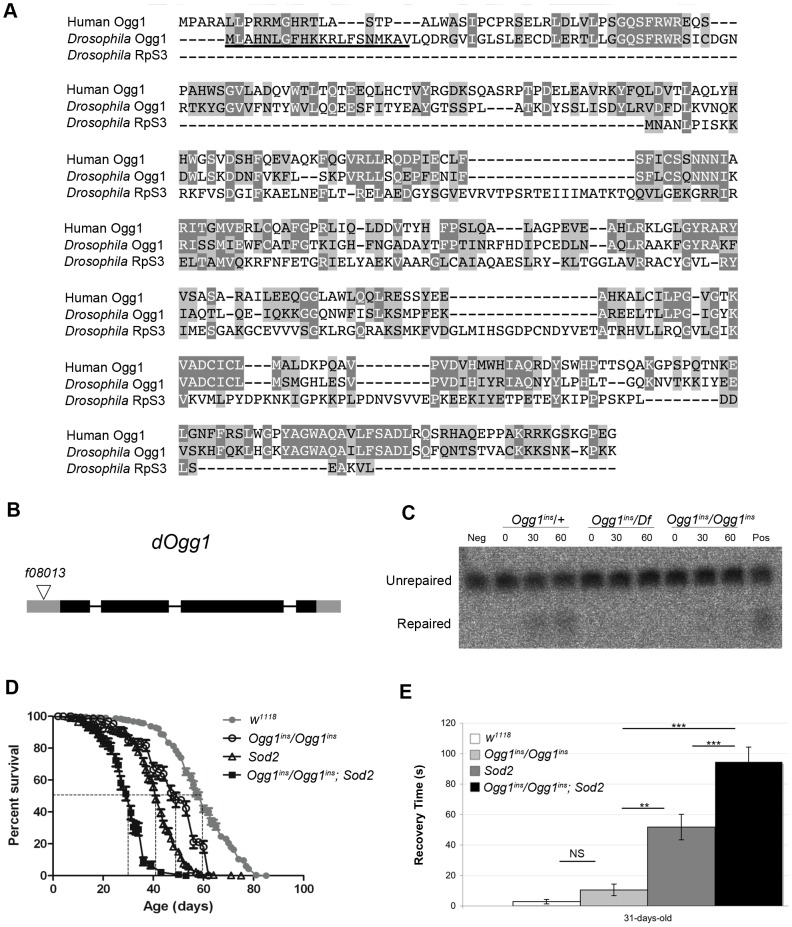
The accumulation of somatic mitochondrial DNA (mtDNA) mutations is implicated in aging and common diseases of the elderly, including cancer and neurodegenerative disease. However, the mechanisms that influence the frequency of somatic mtDNA mutations are poorly understood. To develop a simple invertebrate model system to address this matter, we used the Random Mutation Capture (RMC) assay to characterize the age-dependent frequency and distribution of mtDNA mutations in the fruit fly Drosophila melanogaster. Because oxidative stress is a major suspect in the age-dependent accumulation of somatic mtDNA mutations, we also used the RMC assay to explore the influence of oxidative stress on the somatic mtDNA mutation frequency. We found that many of the features associated with mtDNA mutations in vertebrates are conserved in Drosophila, including a comparable somatic mtDNA mutation frequency (∼10(-5)), an increased frequency of mtDNA mutations with age, and a prevalence of transition mutations. Only a small fraction of the mtDNA mutations detected in young or old animals were G∶C to T∶A transversions, a signature of oxidative damage, and loss-of-function mutations in the mitochondrial superoxide dismutase, Sod2, had no detectable influence on the somatic mtDNA mutation frequency. Moreover, a loss-of-function mutation in Ogg1, which encodes a DNA repair enzyme that removes oxidatively damaged deoxyguanosine residues (8-hydroxy-2'-deoxyguanosine), did not significantly influence the somatic mtDNA mutation frequency of Sod2 mutants. Together, these findings indicate that oxidative stress is not a major cause of somatic mtDNA mutations. Our data instead suggests that somatic mtDNA mutations arise primarily from errors that occur during mtDNA replication. Further studies using Drosophila should aid in the identification of factors that influence the frequency of somatic mtDNA mutations.
Overview
The claims and statistics of this paper haven’t been checked yet.
Run the check — free, no account needed. It reads the open-access text and checks the sources it cites.
Integrity signals
Registry
Cites
Statistics
Figures
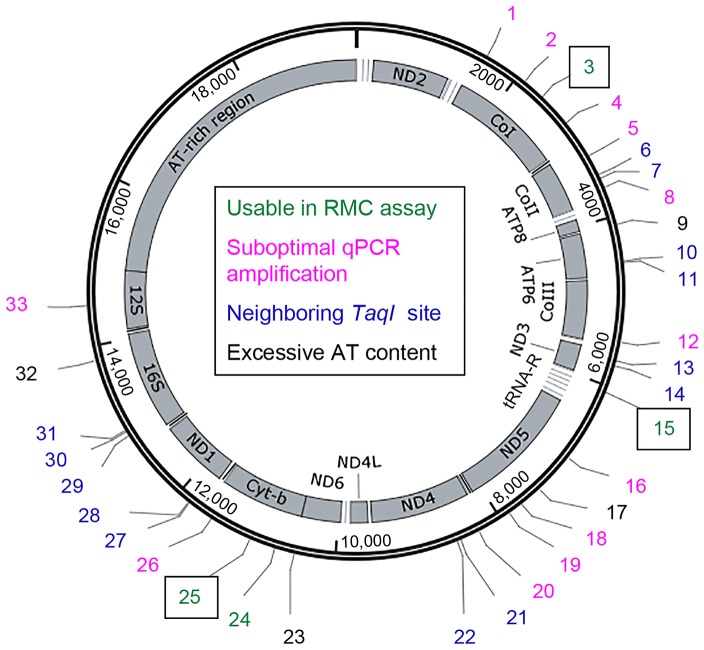
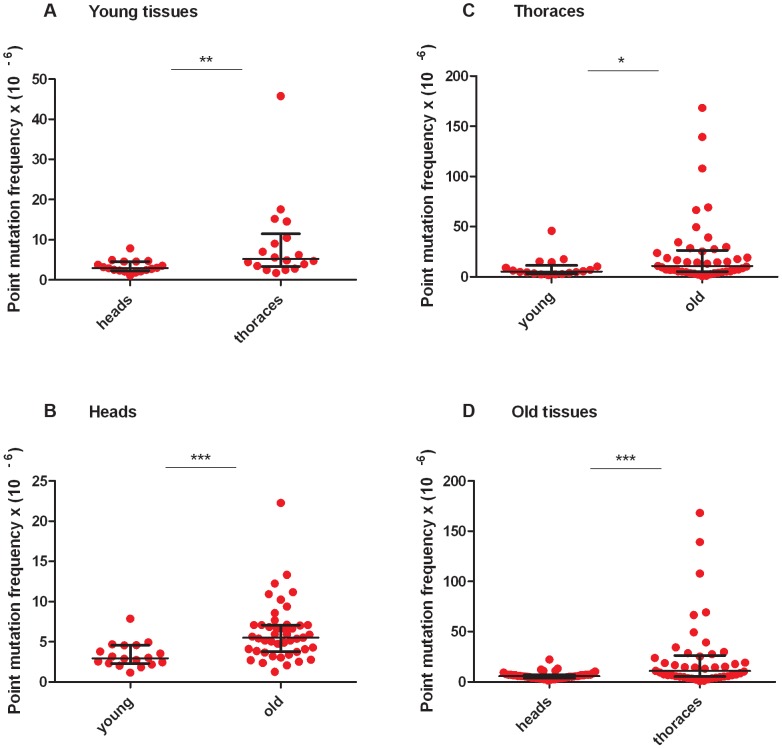
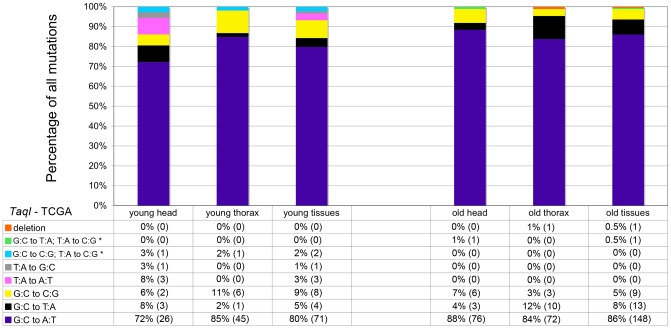
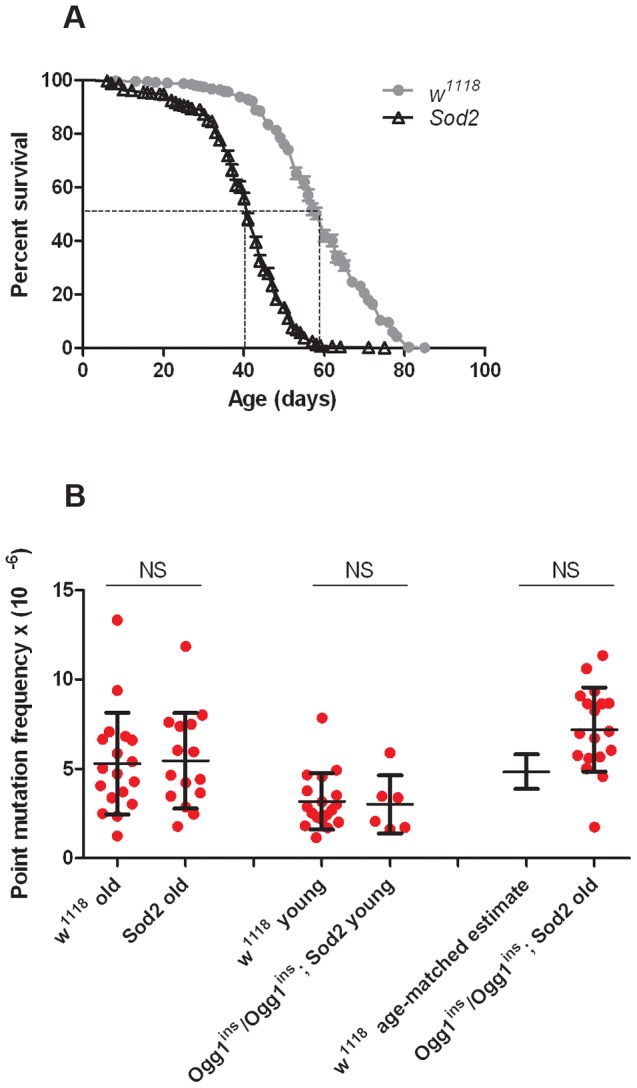
Verification
Claims the paper makes
The claims and statistics of this paper haven’t been checked yet.
Run the check — free, no account needed. It reads the open-access text and checks the sources it cites.
Claims other papers make about this one
Each is checked against this paper’s own text: does it say what the citing paper says it does?
In the citing paper
“Conversely, G:C to T:A transversions are only a small fraction of the mutations found in aged Drosophila (Itsara et al., 2014) or humans (Kennedy et al., 2013; Zheng et al., 2006).”
From Role of the mitochondrial DNA replication machinery in mitochondrial DNA mutagenesis, aging and age-related diseases (2017) · cites this paper as Itsara et al., 2014
Self-check
Percentages, sums and reported differences re-computed from the paper’s own numbers.
The self-check needs the paper’s full text.
Citations
Cites
Fast, scalable generation of high‐quality protein multiple sequence alignments using Clustal Omega
Sievers, F., Wilm, A., Dineen, D. G., Gibson, T. J., Karplus, K. J., Li, W., López, R., McWilliam, H., Remmert, M., Söding, J., et al. (2011) · Molecular Systems Biology · doi:10.1038/msb.2011.75 · Cited by 15,426
Primer3 on the WWW for General Users and for Biologist Programmers
Rozen, S., & Skaletsky, H. (2003) · Humana Press eBooks · doi:10.1385/1-59259-192-2:365 · Cited by 15,068
Aging: a theory based on free radical and radiation chemistry
Harman, D. (1956) · Journal of Gerontology · doi:10.1093/geronj/11.3.298 · Cited by 8,567
How mitochondria produce reactive oxygen species
Murphy, M. P. (2009) · Biochemical Journal · doi:10.1042/bj20081386 · Cited by 8,207
Next-generation DNA sequencing
Shendure, J., & Ji, H. (2008) · Nature Biotechnology · doi:10.1038/nbt1486 · Cited by 4,509
Boore, J. L. (1999) · Nucleic Acids Research · doi:10.1093/nar/27.8.1767 · Cited by 3,715
Wallace, D. C. (2012) · Nature Reviews Cancer · doi:10.1038/nrc3365 · Cited by 2,404
The Biologic Clock: The Mitochondria?
Harman, D. (1972) · Journal of the American Geriatrics Society · doi:10.1111/j.1532-5415.1972.tb00787.x · Cited by 2,026
The Role of Mitochondria in Apoptosis
Wang, C., & Youle, R. J. (2009) · Annual Review of Genetics · doi:10.1146/annurev-genet-102108-134850 · Cited by 1,987
Mitochondria: More Than Just a Powerhouse
McBride, H. M., Neuspiel, M., & Wasiak, S. (2006) · Current Biology · doi:10.1016/j.cub.2006.06.054 · Cited by 1,985
Cited by
Sorted by citations
Mammalian Mitochondria and Aging: An Update
Kauppila, T. E. S., Kauppila, J. H. K., & Larsson, N.-G. (2017) · Cell Metabolism · doi:10.1016/j.cmet.2016.09.017 · Cited by 578
Inflammaging and Oxidative Stress in Human Diseases: From Molecular Mechanisms to Novel Treatments
Zuo, L., Prather, E. R., Stetskiv, M., Garrison, D. E., Meade, J. R., Peace, T. I., & Zhou, T. (2019) · International Journal of Molecular Sciences · doi:10.3390/ijms20184472 · Cited by 560
Mitochondrial quality control mechanisms as molecular targets in cardiac ageing
Picca, A., Mankowski, R. T., Burman, J. L., Donisi, L., Js, K., Marzetti, E., & Leeuwenburgh, C. (2018) · Nature Reviews Cardiology · doi:10.1038/s41569-018-0059-z · Cited by 399
Expanding roles of superoxide dismutases in cell regulation and cancer
Che, M., Wang, R., Li, X., Wang, H., & Zheng, X. F. S. (2015) · Drug Discovery Today · doi:10.1016/j.drudis.2015.10.001 · Cited by 273
Mikhed, Y., Daiber, A., & Steven, S. (2015) · International Journal of Molecular Sciences · doi:10.3390/ijms160715918 · Cited by 257
Metadata
- Authors
- Itsara, L. S., Kennedy, S. R., Fox, E. J., Yu, S., Hewitt, J. J., Sanchez-Contreras, M., Cardozo-Pelaez, F., & Pallanck, L. J.
- Affiliations
- University of Washington (US)
- Corresponding author
- Pallanck, Leo J.
- Venue
- PLoS Genetics
- Publisher
- Public Library of Science (PLoS)
- Published
- 2014-02-06
- Volume
- 10
- Issue
- 2
- Pages
- e1003974
- ISSN
- 1553-7390 (ISSN-L)
- 1553-7404
- PMC
- PMC3916223
- OpenAlex
- W2012998724
- Cited by
- 173
- References
- 67
- Citations by year
- 2026: 8 · 2025: 12 · 2024: 6 · 2023: 7 · 2022: 20 · 2021: 11 · 2020: 18 · 2019: 16 · 2018: 15 · 2017: 18 · 2016: 15 · 2015: 19 · 2014: 7
- FWCI
- 8.07
- Type
- journal article
- Language
- en
- Open access
- gold
- doi.org
- Locations
- PLoS Genetics (publishedVersion, cc-by)
- Europe PMC (PubMed Central) (publishedVersion, cc-by)
- PubMed Central (publishedVersion, cc-by)
- PubMed (publishedVersion)
- DOAJ (DOAJ: Directory of Open Access Journals) (submittedVersion, cc-by-sa)
- Figshare (submittedVersion, cc-by)
- Funders
- Muscular Dystrophy Association
- National Institute on Aging (T32AG000057, P01AG001751, AG013280, P30AG013280)
- National Cancer Institute
- National Institute of General Medical Sciences (R01GM104990, R01GM086394)
- National Institute of Neurological Disorders and Stroke (F31NS071857)
- Topics
- Life Sciences › Biochemistry, Genetics and Molecular Biology › Molecular Biology › Mitochondrial Function and Pathology
- Life Sciences › Biochemistry, Genetics and Molecular Biology › Aging › Genetics, Aging, and Longevity in Model Organisms
- Life Sciences › Biochemistry, Genetics and Molecular Biology › Molecular Biology › DNA Repair Mechanisms
- Keywords
- somatic mitochondrial DNA mutations, oxidative stress, aging, Drosophila melanogaster, transition mutations, transversions, OGG1, DNA repair, 8-hydroxy-2'-deoxyguanosine
- MeSH terms
- Superoxide Dismutase 2, Aging, Animals, DNA Repair, DNA, Mitochondrial, Drosophila melanogaster, Humans, Mitochondria, Mutation, Superoxide Dismutase, Reactive Oxygen Species, Oxidative Stress, Models, Animal, Drosophila Proteins, DNA Glycosylases, Mutation Rate
About these checks
Registry, retraction, Cites and statistics results are computed, not judged, with one exception: a printed reference that no index lists is read once by a model before it counts as a citation error. Claims are extracted by a model and kept only when their quote appears verbatim in the text; each cited source is then checked, with a model’s help, for whether it says what the claim relies on. Those verdicts can be wrong — read the claim’s quote and the cited source before relying on one.
Statistics and arithmetic are recomputed, not judged.
Confidence bands are shown only for fields calibrated on our annotated test set. None is calibrated yet, so no band is shown.
What counts as a claim ›How we measure confidence ›How we check this ›
Are you an author, or do you see a problem with this page? Request a review
