

The DOI matches its Crossref record; 60 of the 60 references it cites were found in a registry or an index.
Bovine Host Genetic Variation Influences Rumen Microbial Methane Production with Best Selection Criterion for Low Methane Emitting and Efficiently Feed Converting Hosts Based on Metagenomic Gene Abundance
Open accessAbstract
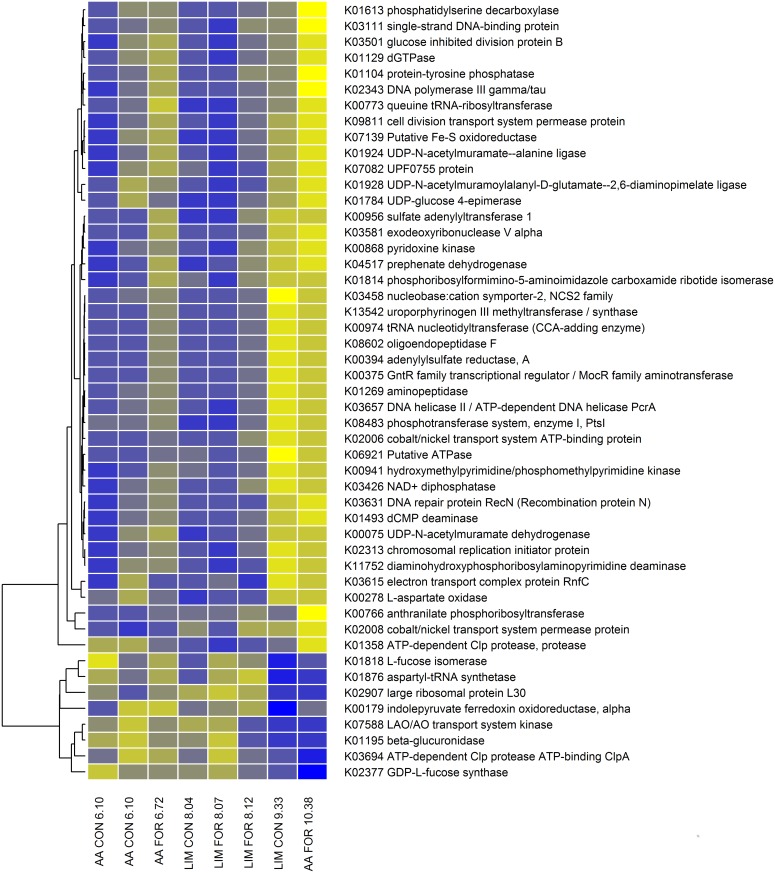
Methane produced by methanogenic archaea in ruminants contributes significantly to anthropogenic greenhouse gas emissions. The host genetic link controlling microbial methane production is unknown and appropriate genetic selection strategies are not developed. We used sire progeny group differences to estimate the host genetic influence on rumen microbial methane production in a factorial experiment consisting of crossbred breed types and diets. Rumen metagenomic profiling was undertaken to investigate links between microbial genes and methane emissions or feed conversion efficiency. Sire progeny groups differed significantly in their methane emissions measured in respiration chambers. Ranking of the sire progeny groups based on methane emissions or relative archaeal abundance was consistent overall and within diet, suggesting that archaeal abundance in ruminal digesta is under host genetic control and can be used to genetically select animals without measuring methane directly. In the metagenomic analysis of rumen contents, we identified 3970 microbial genes of which 20 and 49 genes were significantly associated with methane emissions and feed conversion efficiency respectively. These explained 81% and 86% of the respective variation and were clustered in distinct functional gene networks. Methanogenesis genes (e.g. mcrA and fmdB) were associated with methane emissions, whilst host-microbiome cross talk genes (e.g. TSTA3 and FucI) were associated with feed conversion efficiency. These results strengthen the idea that the host animal controls its own microbiota to a significant extent and open up the implementation of effective breeding strategies using rumen microbial gene abundance as a predictor for difficult-to-measure traits on a large number of hosts. Generally, the results provide a proof of principle to use the relative abundance of microbial genes in the gastrointestinal tract of different species to predict their influence on traits e.g. human metabolism, health and behaviour, as well as to understand the genetic link between host and microbiome.
Overview
The claims and statistics of this paper haven’t been checked yet.
Run the check — free, no account needed. It reads the open-access text and checks the sources it cites.
Integrity signals
Registry
Cites
Statistics
Figures
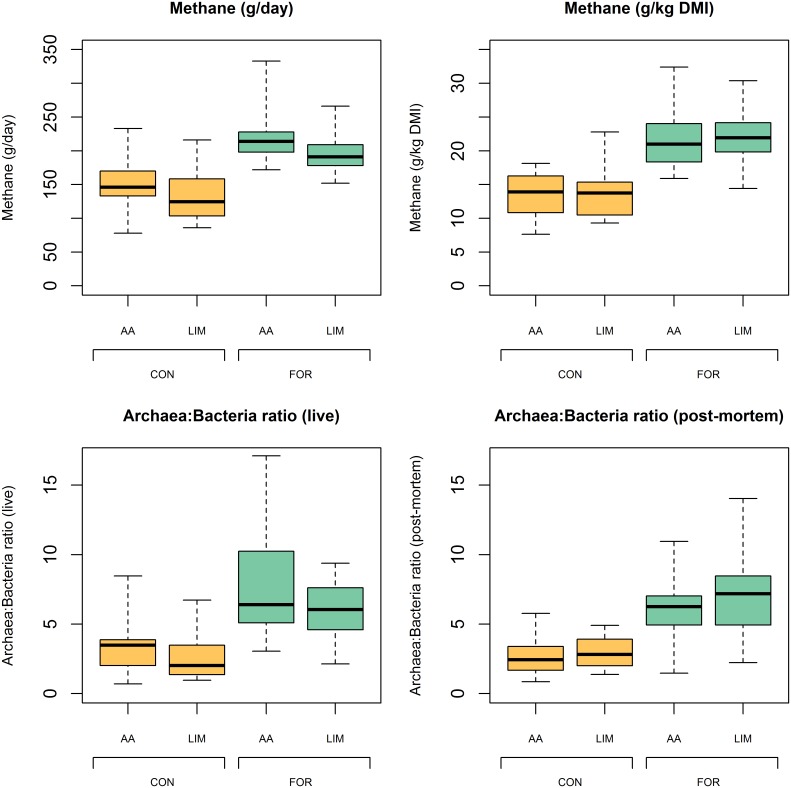
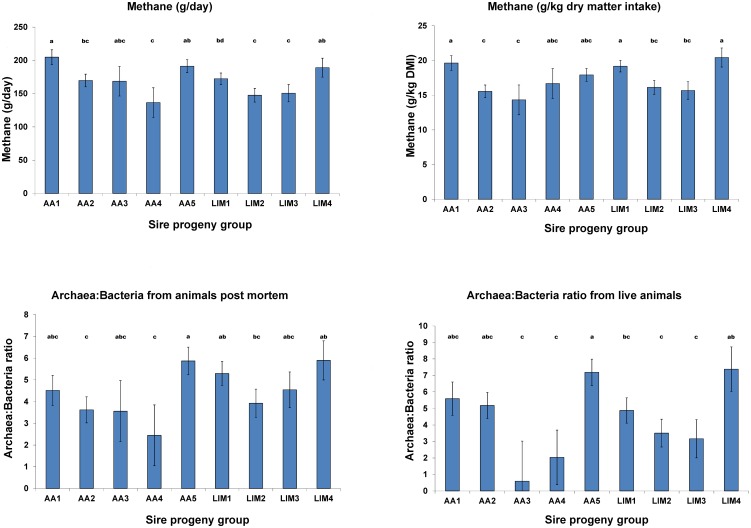
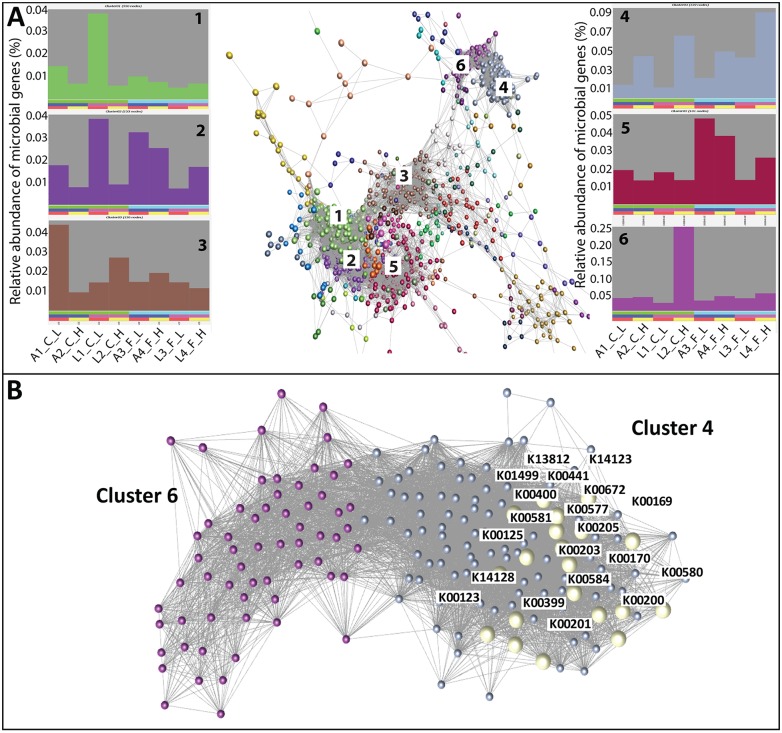
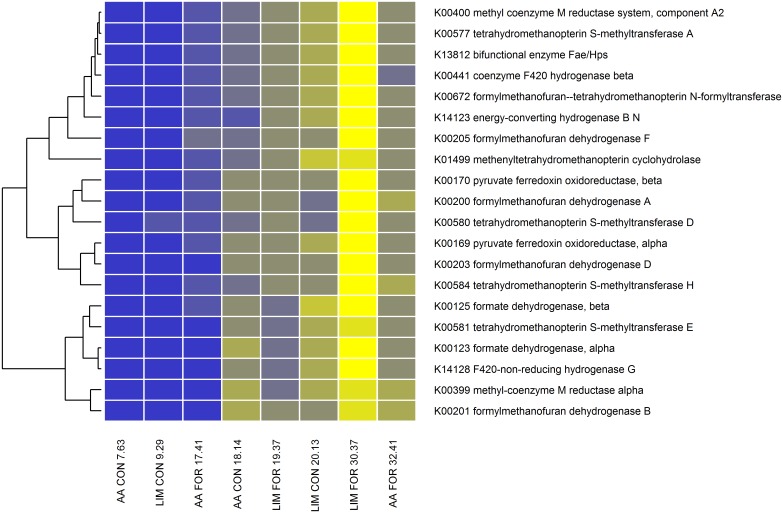
Verification
Claims the paper makes
The claims and statistics of this paper haven’t been checked yet.
Run the check — free, no account needed. It reads the open-access text and checks the sources it cites.
Claims other papers make about this one
Each is checked against this paper’s own text: does it say what the citing paper says it does?
In the citing paper
“In a beef cattle experiment, Roehe et al. (2016) ranked beef sire progeny groups based on relative archaeal abundance and reported that group ranking remained consistent overall and within diet, suggesting that archaeal abundance in ruminal digesta is also, in part under host genetic control.”
From Addressing global ruminant agricultural challenges through understanding the rumen microbiome: past, present, and future (2018) · cites this paper as Roehe et al., 2016
In the citing paper
“Recent work using metagenomics and/or metatranscriptomics has confirmed significant relationships between the abundances of key rumen microbial genes and feed efficiency (Roehe et al., 2016; Shabat et al., 2016; Li and Guan, 2017) and/or methane production (Roehe et al., 2016).”
From Addressing global ruminant agricultural challenges through understanding the rumen microbiome: past, present, and future (2018) · cites this paper as Roehe et al., 2016
In the citing paper
“We are only in the early stages of applying these approaches to the rumen microbiome, and while network scaffolds for specific animal studies have been generated (Roehe et al., 2016), large-scale, integrative models have yet to be developed.”
From Addressing global ruminant agricultural challenges through understanding the rumen microbiome: past, present, and future (2018) · cites this paper as Roehe et al., 2016
Self-check
Percentages, sums and reported differences re-computed from the paper’s own numbers.
The self-check needs the paper’s full text.
Citations
Cites
Food Security: The Challenge of Feeding 9 Billion People
Godfray, H. C. J., Beddington, J. R., Crute, I. R., Haddad, L., Lawrence, D., Muir, J. F., Pretty, J., Robinson, S., Thomas, S. M., & Toulmin, C. (2010) · Science · doi:10.1126/science.1185383 · Cited by 11,943
Host–microbe interactions have shaped the genetic architecture of inflammatory bowel disease
The International IBD Genetics Consortium (IIBDGC), Jostins, L., Ripke, S., Weersma, R. K., Duerr, R. H., McGovern, D. P., Hui, K. Y., Lee, J. C., Philip Schumm, L., Sharma, Y., et al. (2012) · Nature · doi:10.1038/nature11582 · Cited by 4,722
Indigenous bacteria from the gut microbiota regulate host serotonin biosynthesis
Yano, J. M., Yu, K., Donaldson, G. P., Shastri, G. G., Ann, P., Ma, L., Nagler, C. R., Ismagilov, R. F., Mazmanian, S. K., & Hsiao, E. Y. (2015) · Cell · doi:10.1016/j.cell.2015.02.047 · Cited by 3,614
Human Genetics Shape the Gut Microbiome
Goodrich, J. K., Waters, J. L., Poole, A. C., Sutter, J. L., Koren, O., Blekhman, R., Beaumont, M., Van Treuren, W., Knight, R., Bell, J. T., et al. (2014) · Cell · doi:10.1016/j.cell.2014.09.053 · Cited by 3,164
Johnson, K. A., & Johnson, D. E. (1995) · Journal of Animal Science · doi:10.2527/1995.7382483x · Cited by 2,714 · cited 1×
“The loss of feed gross energy as methane has been estimated at 2 to 12% [4].”
Hobson, P. N., & Stewart, C. S. (1997) · Springer eBooks · doi:10.1007/978-94-009-1453-7 · Cited by 2,159
H OW H OST -M ICROBIAL I NTERACTIONS S HAPE THE N UTRIENT E NVIRONMENT OF THE M AMMALIAN I NTESTINE
Hooper, L. V., Midtvedt, T., & Gordon, J. I. (2002) · Annual Review of Nutrition · doi:10.1146/annurev.nutr.22.011602.092259 · Cited by 1,623
How informative is the mouse for human gut microbiota research?
Nguyen, T. L. A., Vieira-Silva, S., Liston, A., & Raes, J. (2015) · Disease Models & Mechanisms · doi:10.1242/dmm.017400 · Cited by 1,334
Benson, A. K., Kelly, S. A., Legge, R., Ma, F., Low, S. J., Kim, J., Zhang, M., Oh, P. L., Nehrenberg, D., Hua, K., et al. (2010) · Proceedings of the National Academy of Sciences · doi:10.1073/pnas.1007028107 · Cited by 1,314
Hristov, A. N., Oh, J., Firkins, J. L., Dijkstra, J., Kebreab, E., Waghorn, G. C., Makkar, H. P. S., Adesogan, A. T., Yang, W. Z., Lee, C., et al. (2013) · Journal of Animal Science · doi:10.2527/jas.2013-6583 · Cited by 1,086
Cited by
Sorted by citations
Scientists’ warning to humanity: microorganisms and climate change
Cavicchioli, R., Ripple, W. J., Timmis, K. N., Azam, F., Bakken, L. R., Baylis, M., Behrenfeld, M. J., Boëtius, A., Boyd, P. W., Classen, A. T., et al. (2019) · Nature Reviews Microbiology · doi:10.1038/s41579-019-0222-5 · Cited by 2,154
Genetic determinants of the gut microbiome in UK twins
Goodrich, J. K., Davenport, E. R., Beaumont, M., Jackson, M. A., Knight, R., Ober, C., Spector, T. D., Bell, J. T., Clark, A. G., & Ley, R. E. (2016) · Cell Host & Microbe · doi:10.1016/j.chom.2016.04.017 · Cited by 1,048
Cultivation and sequencing of rumen microbiome members from the Hungate1000 Collection
Hungate1000 project collaborators, Seshadri, R., Leahy, S. C., Attwood, G. T., Teh, K. H., Lambie, S. C., Cookson, A. L., Eloe-Fadrosh, E. A., Pavlopoulos, G. A., Hadjithomas, M., et al. (2018) · Nature Biotechnology · doi:10.1038/nbt.4110 · Cited by 624
Stewart, R. D., Auffret, M. D., Warr, A., Walker, A. W., Roehe, R., & Watson, M. (2019) · Nature Biotechnology · doi:10.1038/s41587-019-0202-3 · Cited by 611
Assembly of 913 microbial genomes from metagenomic sequencing of the cow rumen
Stewart, R. D., Auffret, M. D., Warr, A., Wiser, A. H., Press, M. O., Langford, K. W., Liachko, I., Snelling, T. J., Dewhurst, R. J., Walker, A. W., et al. (2018) · Nature Communications · doi:10.1038/s41467-018-03317-6 · Cited by 559
Metadata
- Authors
- Roehe, R., Dewhurst, R. J., Duthie, C.-A., Rooke, J. A., McKain, N., Ross, D. W., Hyslop, J. J., Waterhouse, A., Freeman, T. C., Watson, M., & Wallace, R. J.
- Affiliations
- Scotland's Rural College (GB)
- University of Aberdeen (GB)
- Roslin Institute (GB)
- Corresponding author
- Roehe, Rainer
- ORCID
- Venue
- PLoS Genetics
- Publisher
- Public Library of Science (PLoS)
- Published
- 2016-02-18
- Volume
- 12
- Issue
- 2
- Pages
- e1005846
- ISSN
- 1553-7390 (ISSN-L)
- 1553-7404
- PMC
- PMC4758630
- OpenAlex
- W2275915069
- Cited by
- 359
- References
- 60
- Citations by year
- 2026: 29 · 2025: 27 · 2024: 33 · 2023: 33 · 2022: 30 · 2021: 39 · 2020: 51 · 2019: 33 · 2018: 42 · 2017: 32 · 2016: 10
- FWCI
- 81.88
- Type
- journal article
- Language
- en
- Open access
- gold
- doi.org
- Licence
- Locations
- PLoS Genetics (publishedVersion, cc-by)
- Europe PMC (PubMed Central) (publishedVersion, cc-by)
- PubMed Central (publishedVersion, cc-by)
- PubMed (publishedVersion)
- Aberdeen University Research Archive (Aberdeen University) (submittedVersion)
- DOAJ (DOAJ: Directory of Open Access Journals) (submittedVersion, cc-by-sa)
- Figshare (submittedVersion, cc-by)
- Edinburgh Research Explorer (University of Edinburgh) (submittedVersion, cc-by)
- Funders
- Scottish Government
- Department for Environment, Food and Rural Affairs, UK Government
- Directorate for Biological Sciences
- Medical Research Council (MR/K001744/1)
- Biotechnology and Biological Sciences Research Council (BBS/E/D/05191132, BB/J004235/1, BBS/E/D/20211553, BBS/E/D/20211552, BBS/E/D/20211550, BBS/E/D/20211551, BB/N016742/1, BB/ J004243/1, BB/N01720X/1, BB/I001107/1, BBS/E/D/20310000)
- Natural Environment Research Council (NBAF010003)
- Topics
- Life Sciences › Agricultural and Biological Sciences › Animal Science and Zoology › Ruminant Nutrition and Digestive Physiology
- Life Sciences › Biochemistry, Genetics and Molecular Biology › Genetics › Genetic and phenotypic traits in livestock
- Physical Sciences › Energy › Renewable Energy, Sustainability and the Environment › Anaerobic Digestion and Biogas Production
- Keywords
- host genetic variation, methanogenic archaea, feed efficiency, rumen metagenomics, microbial gene abundance, diet effects, mcrA, host-microbiome interactions, genetic selection, livestock greenhouse gas emissions
- MeSH terms
- Animals, Animal Feed, Animal Nutritional Physiological Phenomena, Archaea, Cattle, Female, Male, Methane, Rumen, Genetic Variation, Metagenomics, Microbiota
About these checks
Registry, retraction, Cites and statistics results are computed, not judged, with one exception: a printed reference that no index lists is read once by a model before it counts as a citation error. Claims are extracted by a model and kept only when their quote appears verbatim in the text; each cited source is then checked, with a model’s help, for whether it says what the claim relies on. Those verdicts can be wrong — read the claim’s quote and the cited source before relying on one.
Statistics and arithmetic are recomputed, not judged.
Confidence bands are shown only for fields calibrated on our annotated test set. None is calibrated yet, so no band is shown.
What counts as a claim ›How we measure confidence ›How we check this ›
Are you an author, or do you see a problem with this page? Request a review
