

The DOI matches its Crossref record; 156 of the 156 references it cites were found in a registry or an index.
Genetic compensation: A phenomenon in search of mechanisms
Open accessAbstract
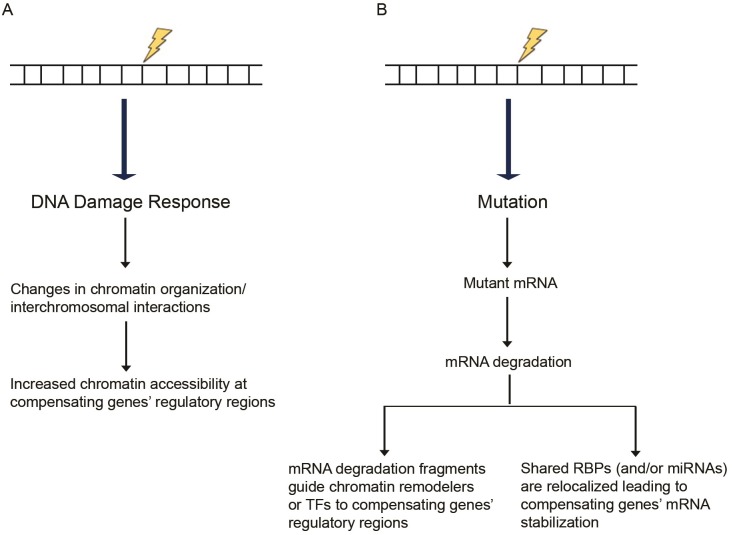
Several recent studies in a number of model systems including zebrafish, Arabidopsis, and mouse have revealed phenotypic differences between knockouts (i.e., mutants) and knockdowns (e.g., antisense-treated animals). These differences have been attributed to a number of reasons including off-target effects of the antisense reagents. An alternative explanation was recently proposed based on a zebrafish study reporting that genetic compensation was observed in egfl7 mutant but not knockdown animals. Dosage compensation was first reported in Drosophila in 1932, and genetic compensation in response to a gene knockout was first reported in yeast in 1969. Since then, genetic compensation has been documented many times in a number of model organisms; however, our understanding of the underlying molecular mechanisms remains limited. In this review, we revisit studies reporting genetic compensation in higher eukaryotes and outline possible molecular mechanisms, which may include both transcriptional and posttranscriptional processes.
Overview
The claims and statistics of this paper haven’t been checked yet.
Run the check — free, no account needed. It reads the open-access text and checks the sources it cites.
Integrity signals
Registry
Cites
Statistics
Figures
Verification
Claims the paper makes
The claims and statistics of this paper haven’t been checked yet.
Run the check — free, no account needed. It reads the open-access text and checks the sources it cites.
Claims other papers make about this one
Each is checked against this paper’s own text: does it say what the citing paper says it does?
In the citing paper
“Even in the case of a true gene knockout, however, the time required for a single cell clone to propagate might be sufficient for cells to establish genetic compensation, thereby altering expression patterns of related proteins to make up for the loss of one protein [4].”
From Advances in targeted degradation of endogenous proteins (2019) · cites this paper as [4]
Self-check
Percentages, sums and reported differences re-computed from the paper’s own numbers.
The self-check needs the paper’s full text.
Citations
Cites
Network biology: understanding the cell's functional organization
Barabási, A.-L., & Oltvai, Z. N. (2004) · Nature Reviews Genetics · doi:10.1038/nrg1272 · Cited by 7,903
(2008) · doi:10.1038/nrg2290 · Cited by 5,199
Functional profiling of the Saccharomyces cerevisiae genome
Giaever, G., Chu, A. M., Ni, L., Connelly, C., Riles, L., Véronneau, S., Dow, S., Lucau-Danila, A., Anderson, K., André, B., et al. (2002) · Nature · doi:10.1038/nature00935 · Cited by 4,316
Gene Action in the X-chromosome of the Mouse (Mus musculus L.)
LYON, M. F. (1961) · Nature · doi:10.1038/190372a0 · Cited by 3,978
The Transcriptional Landscape of the Mammalian Genome
Carninci, P., Kasukawa, T., Katayama, S., Gough, J., Frith, M. C., Maeda, N., Oyama, R., Ravasi, T., Lenhard, B., Wells, C. A., et al. (2005) · Science · doi:10.1126/science.1112014 · Cited by 3,492
Nature, Nurture, or Chance: Stochastic Gene Expression and Its Consequences
Raj, A., & van Oudenaarden, A. (2008) · Cell · doi:10.1016/j.cell.2008.09.050 · Cited by 2,593
Antisense Transcription in the Mammalian Transcriptome
Katayama, S., Tomaru, Y., Kasukawa, T., Waki, K., Nakanishi, M., Nakamura, M., Nishida, H., Yap, C.-S., Suzuki, M., Kawai, J., et al. (2005) · Science · doi:10.1126/science.1112009 · Cited by 1,699
MicroRNAs and their targets: recognition, regulation and an emerging reciprocal relationship
Pasquinelli, A. E. (2012) · Nature Reviews Genetics · doi:10.1038/nrg3162 · Cited by 1,642
Aquaporin-4 deletion in mice reduces brain edema after acute water intoxication and ischemic stroke
Manley, G. T., Fujimura, M., Ma, T., Noshita, N., Filiz, F., Bollen, A. W., Chan, P. H., & Verkman, A. S. (2000) · Nature Medicine · doi:10.1038/72256 · Cited by 1,501
RNA‐binding proteins and post‐transcriptional gene regulation
Glisovic, T., Bachorik, J. L., Yong, J., & Dreyfuss, G. (2008) · FEBS Letters · doi:10.1016/j.febslet.2008.03.004 · Cited by 1,398
MicroRNA-10a binds the 5’UTR of ribosomal protein mRNAs and enhances their translation
Ørom, U. A., Nielsen, F. C., & Lund, A. H. (2008) · Molecular Cell · doi:10.1016/j.molcel.2008.05.001 · Cited by 1,384
RNA regulons: coordination of post-transcriptional events
Keene, J. D. (2007) · Nature Reviews Genetics · doi:10.1038/nrg2111 · Cited by 1,321
MicroRNA-373 induces expression of genes with complementary promoter sequences
Place, R. F., Li, L., Pookot, D., Noonan, E. J., & Dahiya, R. (2008) · Proceedings of the National Academy of Sciences · doi:10.1073/pnas.0707594105 · Cited by 1,266
Dynamic m6A mRNA methylation directs translational control of heat shock response
Zhou, J. L., Wan, J., Gao, X., Zhang, X., Jaffrey, S. R., & Qian, S. (2015) · Nature · doi:10.1038/nature15377 · Cited by 1,228
Genetic compensation induced by deleterious mutations but not gene knockdowns
Rossi, A., Kontarakis, Z., Gerri, C., Nolte, H., Hölper, S., Krüger, M., & Stainier, D. Y. R. (2015) · Nature · doi:10.1038/nature14580 · Cited by 1,226
Self-citationHigh-throughput discovery of novel developmental phenotypes
The International Mouse Phenotyping Consortium, Dickinson, M. E., Flenniken, A. M., Ji, X., Teboul, L., Wong, M. D., White, J. K., Meehan, T. F., Weninger, W. J., Westerberg, H., et al. (2016) · Nature · doi:10.1038/nature19356 · Cited by 1,196
Jackson, A. L., & Linsley, P. S. (2009) · Nature Reviews Drug Discovery · doi:10.1038/nrd3010 · Cited by 1,126
Canalization of Development and Genetic Assimilation of Acquired Characters
Waddington, C. H. (1959) · Nature · doi:10.1038/1831654a0 · Cited by 1,109
Cdk1 is sufficient to drive the mammalian cell cycle
Santamarı́a, D., Barrière, C., Cerqueira, A., Hunt, S. L., Tardy, C., Newton, K., Cáceres, J. F., Dubus, P. R., Malumbres, M., & Barbacid, M. (2007) · Nature · doi:10.1038/nature06046 · Cited by 1,096
p53 Activation by Knockdown Technologies
Robu, M. E., Larson, J. D., Nasevicius, A., Beiraghi, S., Brenner, C., Farber, S. A., & Ekker, S. C. (2005) · PLoS Genetics · doi:10.1371/journal.pgen.0030078 · Cited by 1,049
Barr, M. L., & Bertram, E. G. (1949) · Nature · doi:10.1038/163676a0 · Cited by 1,030
Transcriptome-wide Mapping Reveals Widespread Dynamic-Regulated Pseudouridylation of ncRNA and mRNA
Schwartz, S., Bernstein, D. A., Mumbach, M. R., Jovanović, M., Herbst, R. H., León-Ricardo, B. X., Engreitz, J., Guttman, M., Satija, R., Lander, E. S., et al. (2014) · Cell · doi:10.1016/j.cell.2014.08.028 · Cited by 1,013
Calvo, S. E., Pagliarini, D. J., & Mootha, V. K. (2009) · Proceedings of the National Academy of Sciences · doi:10.1073/pnas.0810916106 · Cited by 914
Nonsense-mediated mRNA decay: an intricate machinery that shapes transcriptomes
Lykke‐Andersen, S., & Jensen, T. H. (2015) · Nature Reviews Molecular Cell Biology · doi:10.1038/nrm4063 · Cited by 843
Altered microtubule organization in small-calibre axons of mice lacking tau protein
Harada, A., Oguchi, K., Okabe, S., Kuno, J., Terada, S., Ohshima, T., Sato-Yoshitake, R., Takei, Y., Noda, T., & Hirokawa, N. (1994) · Nature · doi:10.1038/369488a0 · Cited by 802
Kok, F. O., Shin, M., Ni, C., Gupta, A., Grosse, A. S., van Impel, A., Kirchmaier, B. C., Peterson-Maduro, J., Kourkoulis, G., Male, I., et al. (2014) · Developmental Cell · doi:10.1016/j.devcel.2014.11.018 · Cited by 789
Small dsRNAs induce transcriptional activation in human cells
Li, L., Okino, S. T., Zhao, H., Pookot, D., Place, R. F., Urakami, S., Enokida, H., & Dahiya, R. (2006) · Proceedings of the National Academy of Sciences · doi:10.1073/pnas.0607015103 · Cited by 779
Gadd45a promotes epigenetic gene activation by repair-mediated DNA demethylation
Barreto, G., Schäfer, A., Marhold, J., Stach, D., Swaminathan, S. K., Handa, V., Doederlein, G., Maltry, N., Wu, W., Lyko, F., et al. (2007) · Nature · doi:10.1038/nature05515 · Cited by 771
Essential function of histone deacetylase 1 in proliferation control and CDK inhibitor repression
Lagger, G., O'Carroll, D., Rembold, M., Khier, H., Tischler, J., Weitzer, G., Schuettengruber, B., Hauser, C., Brunmeir, R., Jenuwein, T., et al. (2002) · The EMBO Journal · doi:10.1093/emboj/21.11.2672 · Cited by 760
Utrophin–dystrophin-deficient mice as a model for Duchenne muscular dystrophy
Deconinck, A. E., Rafael, J. A., Skinner, J. A., Brown, S. C., Potter, A. C., Metzinger, L., Watt, D. J., Dickson, J. G., Tinsley, J. M., & Davies, K. E. (1997) · Cell · doi:10.1016/s0092-8674(00)80532-2 · Cited by 752
Aquaporin‐4 facilitates reabsorption of excess fluid in vasogenic brain edema
Papadopoulos, M. C., Manley, G. T., Krishna, S., & Verkman, A. S. (2004) · The FASEB Journal · doi:10.1096/fj.04-1723fje · Cited by 749
Upstream Open Reading Frames as Regulators of mRNA Translation
Morris, D. R., & Geballe, A. P. (2000) · Molecular and Cellular Biology · doi:10.1128/mcb.20.23.8635-8642.2000 · Cited by 736
Ziv, Y., Bielopolski, D., Galanty, Y., Lukas, C., Taya, Y., Schultz, D. C., Lukas, J., Bekker-Jensen, S., Bartek, J., & Shiloh, Y. (2006) · Nature Cell Biology · doi:10.1038/ncb1446 · Cited by 735
Gerber, A. P., Herschlag, D., & Brown, P. O. (2004) · PLoS Biology · doi:10.1371/journal.pbio.0020079 · Cited by 670
Inhibition of neurite polarity by tau antisense oligonucleotides in primary cerebellar neurons
Cáceres, A., & Kosik, K. S. (1990) · Nature · doi:10.1038/343461a0 · Cited by 656
Widespread occurrence of antisense transcription in the human genome
Yelin, R., Dahary, D., Sorek, R., Levanon, E. Y., Goldstein, O., Shoshan, A., Diber, A., Biton, S., Tamir, Y., Khosravi, R., et al. (2003) · Nature Biotechnology · doi:10.1038/nbt808 · Cited by 646
Variability in gene expression underlies incomplete penetrance
Raj, A., Rifkin, S. A., Andersen, E. C., & van Oudenaarden, A. (2010) · Nature · doi:10.1038/nature08781 · Cited by 642
Chambeyron, S., & Bickmore, W. A. (2004) · Genes & Development · doi:10.1101/gad.292104 · Cited by 618
Multiple upstream AUG codons mediate translational control of GCN4
Mueller, P. P., & Hinnebusch, A. G. (1986) · Cell · doi:10.1016/0092-8674(86)90384-3 · Cited by 600
Modifier genes in mice and humans
Nadeau, J. H. (2001) · Nature Reviews Genetics · doi:10.1038/35056009 · Cited by 576
A Role for Small RNAs in DNA Double-Strand Break Repair
Wei, W., Ba, Z., Gao, M., Wu, Y., Ma, Y., Amiard, S., White, C. I., Danielsen, J. M. R., Yang, Y., & Qi, Y. (2012) · Cell · doi:10.1016/j.cell.2012.03.002 · Cited by 575
Site-specific DICER and DROSHA RNA products control the DNA-damage response
Francia, S., Michelini, F., Saxena, A., Tang, D. T. P., de Hoon, M., Anelli, V., Mione, M., Carninci, P., & di Fagagna, F. D. (2012) · Nature · doi:10.1038/nature11179 · Cited by 553
Acute mutation of retinoblastoma gene function is sufficient for cell cycle re-entry
Sage, J., Miller, A. L., Pérez-Mancera, P. A., Wysocki, J. M., & Jacks, T. (2003) · Nature · doi:10.1038/nature01764 · Cited by 538
Activating gene expression in mammalian cells with promoter-targeted duplex RNAs
Janowski, B. A., Younger, S. T., Hardy, D. B., Ram, R. R., Huffman, K. E., & Corey, D. R. (2007) · Nature Chemical Biology · doi:10.1038/nchembio860 · Cited by 521
Genome-wide generation and systematic phenotyping of knockout mice reveals new roles for many genes.
White, J. K., Gerdin, A.-K., Karp, N. A., Ryder, E., Buljan, M., Bussell, J. N., Salisbury, J., Clare, S., Ingham, N. J., Podrini, C., et al. (2013) · Cell · doi:10.1016/j.cell.2013.06.022 · Cited by 509
Dawlaty, M. M., Ganz, K., Powell, B. E., Hu, Y.-C., Markoulaki, S., Cheng, A. W., Gao, Q., Kim, J., Choi, S.-W., Page, D. C., et al. (2011) · Cell stem cell · doi:10.1016/j.stem.2011.07.010 · Cited by 508
Dosage compensation in mammals: fine-tuning the expression of the X chromosomePreprint
Heard, É., & Distèche, C. M. (2006) · Genes & Development · doi:10.1101/gad.1422906 · Cited by 504
Eukaryotic mRNPs May Represent Posttranscriptional Operons
Keene, J. D., & Tenenbaum, S. A. (2002) · Molecular Cell · doi:10.1016/s1097-2765(02)00559-2 · Cited by 462
Genetical control of stability in development
Mather, K. (1953) · Heredity · doi:10.1038/hdy.1953.41 · Cited by 457
Ma, T., Yang, B., Gillespie, A. M., Carlson, E. J., Epstein, C. J., & Verkman, A. S. (1997) · Journal of Clinical Investigation · doi:10.1172/jci231 · Cited by 446
Transcriptional regulatory functions of nuclear long noncoding RNAs
Vance, K. W., & Ponting, C. P. (2014) · Trends in Genetics · doi:10.1016/j.tig.2014.06.001 · Cited by 434
CRISPR knockout screening outperforms shRNA and CRISPRi in identifying essential genes
Evers, B., Jastrzebski, K., Heijmans, J. P. M., Grernrum, W., Beijersbergen, R. L., & Bernards, R. (2016) · Nature Biotechnology · doi:10.1038/nbt.3536 · Cited by 431
Variability in gene expression underlies incomplete penetrance
van Oudenaarden, A., Rifkin, S. A., Raj, A., & Andersen, E. C. (2010) · DSpace@MIT (Massachusetts Institute of Technology) · Cited by 424
Systematic comparison of CRISPR/Cas9 and RNAi screens for essential genes
Morgens, D. W., Deans, R. M., Li, A., & Bassik, M. C. (2016) · Nature Biotechnology · doi:10.1038/nbt.3567 · Cited by 398
CD44 Regulates Hematopoietic Progenitor Distribution, Granuloma Formation, and Tumorigenicity
Schmits, R., Filmus, J., Gerwin, N., Senaldi, G., Kiefer, F., Kündig, T. M., Wakeham, A. C., Shahinian, A., Catzavelos, C., Rak, J. W., et al. (1997) · Blood · doi:10.1182/blood.v90.6.2217 · Cited by 390
A Drosophila Genetic Resource of Mutants to Study Mechanisms Underlying Human Genetic Diseases
Yamamoto, S., Jaiswal, M., Charng, W., Gambin, T., Karaca, E., Mirzaa, G., Wiszniewski, W. K., Sandoval, H., Haelterman, N. A. T., Xiong, B., et al. (2014) · Cell · doi:10.1016/j.cell.2014.09.002 · Cited by 383
Bowerman, B. A., Eaton, B. A., & Priess, J. R. (1992) · Cell · doi:10.1016/0092-8674(92)90078-q · Cited by 374
Valentine, R., Dawson, W. O., Hu, C., Shah, K. M., Owen, T. J., Date, K. L., Pinheiro-Maia, S., Shao, J., Arrand, J. R., Young, L. S., et al. (2010) · Molecular Cancer · doi:10.1186/1476-4598-9-1 · Cited by 353
β-Actin specifically controls cell growth, migration, and the G-actin pool
Bunnell, T. M., Burbach, B. J., Shimizu, Y., & Ervasti, J. M. (2011) · Molecular Biology of the Cell · doi:10.1091/mbc.e11-06-0582 · Cited by 345
Auxin binding protein 1 (ABP1) is not required for either auxin signaling or Arabidopsis development
Gao, Y., Zhang, Y., Zhang, D., Dai, X., Estelle, M. A., & Zhao, Y. (2015) · Proceedings of the National Academy of Sciences · doi:10.1073/pnas.1500365112 · Cited by 339
Requirement for cyclin D3 in lymphocyte development and T cell leukemias
Sicińska, E., Aifantis, I., Cam, L. L., Swat, W., Borowski, C., Yu, Q., Ferrando, A. A., Levin, S. D., Geng, Y., von Boehmer, H., et al. (2003) · Cancer Cell · doi:10.1016/s1535-6108(03)00301-5 · Cited by 338
Generation of APLP2 KO Mice and Early Postnatal Lethality in APLP2/APP Double KO Mice
von Koch, C. S., Zheng, H., Chen, H., Trumbauer, M. E., Thinakaran, G., der Ploeg, L. H. T. V., Price, D. L., & Sisodia, S. S. (1997) · Neurobiology of Aging · doi:10.1016/s0197-4580(97)00151-6 · Cited by 336
Davidson, E., & Levin, M. G. (2005) · Proceedings of the National Academy of Sciences · doi:10.1073/pnas.0502024102 · Cited by 326
Over 20% of human transcripts might form sense-antisense pairs
Chen, J. (2004) · Nucleic Acids Research · doi:10.1093/nar/gkh818 · Cited by 325
Li, L., Lyu, X., Hou, C., Takenaka, N., Nguyen, H. Q., Ong, C., Cubeñas-Potts, C., Hu, M., Lei, E. P., Bosco, G., et al. (2015) · Molecular Cell · doi:10.1016/j.molcel.2015.02.023 · Cited by 315
Analysis of 589,306 genomes identifies individuals resilient to severe Mendelian childhood diseases
Chen, R., Shi, L., Hakenberg, J., Naughton, B., Sklar, P., Zhang, J., Zhou, H., Tian, L., Prakash, O., Lemire, M., et al. (2016) · Nature Biotechnology · doi:10.1038/nbt.3514 · Cited by 310
Arabidopsis gene knockout: phenotypes wanted
Bouché, N. (2001) · Current Opinion in Plant Biology · doi:10.1016/s1369-5266(00)00145-x · Cited by 302
Chromatin dynamics and the preservation of genetic information
Downs, J. A., Nussenzweig, M. C., & Nussenzweig, A. (2007) · Nature · doi:10.1038/nature05980 · Cited by 296
Meller, V. H., Wu, K. H., Roman, G., Kuroda, M. I., & Davis, R. L. (1997) · Cell · doi:10.1016/s0092-8674(00)81885-1 · Cited by 288
Health and population effects of rare gene knockouts in adult humans with related parents
Narasimhan, V. M., Hunt, K. A., Mason, D., Baker, C. L., Karczewski, K. J., Barnes, M. R., Barnett, A. H., Bates, C., Bellary, S., Bockett, N. A., et al. (2016) · Science · doi:10.1126/science.aac8624 · Cited by 286
Theodosiou, M., Widmaier, M., Böttcher, R. T., Rognoni, E., Veelders, M., Bharadwaj, M., Lambacher, A., Austen, K., Müller, D. J., Zent, R., et al. (2016) · eLife · doi:10.7554/elife.10130 · Cited by 279
Ribosome profiling reveals resemblance between long non-coding RNAs and 5′ leaders of coding RNAs
Chew, G.-L., Pauli, A., Rinn, J. L., Regev, A., Schier, A. F., & Valen, E. (2013) · Development · doi:10.1242/dev.098343 · Cited by 275
Antisense transcripts are targets for activating small RNAs
Schwartz, J. C., Younger, S. T., Nguyen, N.-B., Hardy, D. B., Monia, B. P., Corey, D. R., & Janowski, B. A. (2008) · Nature Structural & Molecular Biology · doi:10.1038/nsmb.1444 · Cited by 273
Development of mice expressing a single D-type cyclin
Ciemerych, M. A., Kenney, A. M., Sicinska, E., Kalaszczynska, I., Bronson, R. T., Rowitch, D. H., Gardner, H., & Sicinski, P. (2002) · Genes & Development · doi:10.1101/gad.1023602 · Cited by 267
RNA Induction and Inheritance of Epigenetic Cardiac Hypertrophy in the Mouse
Wagner, K., Wagner, N., Ghanbarian, H., Grandjean, V., Gounon, P., Cuzin, F., & Rassoulzadegan, M. (2008) · Developmental Cell · doi:10.1016/j.devcel.2008.03.009 · Cited by 264
Pyruvate Kinase Isoform Expression Alters Nucleotide Synthesis to Impact Cell Proliferation
Lunt, S. Y., Muralidhar, V., Hosios, A. M., Israelsen, W. J., Gui, D. Y., Newhouse, L., Ogrodzinski, M. P., Hecht, V. C., Xu, K., Acevedo, P. N. M., et al. (2014) · Molecular Cell · doi:10.1016/j.molcel.2014.10.027 · Cited by 263
Antisense Transcripts With FANTOM2 Clone Set and Their Implications for Gene RegulationPreprint
Kiyosawa, H., Yamanaka, I., Osato, N., Kondo, S., RIKEN GER Group, GSLMembers, & Hayashizaki, Y. (2003) · Genome Research · doi:10.1101/gr.982903 · Cited by 254
uAUG and uORFs in human and rodent 5′untranslated mRNAs
Iacono, M., Mignone, F., & Pesole, G. (2005) · Gene · doi:10.1016/j.gene.2004.11.041 · Cited by 244
Loss-of-function genetic tools for animal models: cross-species and cross-platform differences
Housden, B. E., Muhar, M., Gemberling, M. P., Gersbach, C. A., Stainier, D. Y. R., Seydoux, G., Mohr, S. E., Zuber, J. A., & Perrimon, N. (2016) · Nature Reviews Genetics · doi:10.1038/nrg.2016.118 · Cited by 225
Self-citationAn NMD Pathway in Yeast Involving Accelerated Deadenylation and Exosome-Mediated 3′→5′ Degradation
Mitchell, P., & Tollervey, D. W. (2003) · Molecular Cell · doi:10.1016/s1097-2765(03)00190-4 · Cited by 222
Identification of a large set of rare complete human knockouts
Sulem, P., Helgason, H., Oddson, A., Stefansson, H., Gudjonsson, S. A., Zink, F., Hjartarson, E., Sigurdsson, G. T., Jonasdottir, A., Jonasdottir, A., et al. (2015) · Nature Genetics · doi:10.1038/ng.3243 · Cited by 220
Genes Expressed in Neurons of Adult Male Drosophila
Amrein, H., & Axel, R. (1997) · Cell · doi:10.1016/s0092-8674(00)81886-3 · Cited by 218
Allele‐specific histone lysine methylation marks regulatory regions at imprinted mouse genes
Fournier, C., Goto, Y., Ballestar, E., Delaval, K., Hever, A. M., Esteller, M., & Feil, R. (2002) · The EMBO Journal · doi:10.1093/emboj/cdf655 · Cited by 217
Triggering neural differentiation of ES cells by subtype switching of importin-α
Yasuhara, N., Shibazaki, N., Tanaka, S., Nagai, M., Kamikawa, Y. F., Oe, S., Asally, M., Kamachi, Y., Kondoh, H., & Yoneda, Y. (2006) · Nature Cell Biology · doi:10.1038/ncb1521 · Cited by 207
Franke, A., & Baker, B. S. (1999) · Molecular Cell · doi:10.1016/s1097-2765(00)80193-8 · Cited by 206
Sequence-non-specific effects of RNA interference triggers and microRNA regulators
Olejniczak, M., Galka-Marciniak, P., & Krzyżosiak, W. J. (2009) · Nucleic Acids Research · doi:10.1093/nar/gkp829 · Cited by 204
Problems and paradigms: Redundancies, development and the flow of information
Tautz, D. (1992) · BioEssays · doi:10.1002/bies.950140410 · Cited by 202
Genome-wide Consequences of Deleting Any Single Gene
Teng, X., Dayhoff-Brannigan, M., Cheng, W., Gilbert, C. E., Sing, C. N., Diny, N. L., Wheelan, S. J., Dunham, M. J., Boeke, J. D., Pineda, F. J., et al. (2013) · Molecular Cell · doi:10.1016/j.molcel.2013.09.026 · Cited by 199
Analysis of microRNA-target interactions across diverse cancer types
Skanderup, A. J., Silber, J., Harinath, G., Huse, J. T., Schultz, N. D., & Sander, C. (2013) · Nature Structural & Molecular Biology · doi:10.1038/nsmb.2678 · Cited by 197
Mukherjee, A. S., & Beermann, W. (1965) · Nature · doi:10.1038/207785a0 · Cited by 196
Protin, U., Schweighoffer, T., Jochum, W., & Hilberg, F. (1999) · The Journal of Immunology · doi:10.4049/jimmunol.163.9.4917 · Cited by 194
Cáceres, A., Potrebic, S., & Kosik, K. S. (1991) · Journal of Neuroscience · doi:10.1523/jneurosci.11-06-01515.1991 · Cited by 193
Cerebellar histogenesis is disturbed in mice lacking cyclin D2
Huard, J. M. T., Forster, C. L., Carter, M. L., Siciński, P., & Ross, M. E. (1999) · Development · doi:10.1242/dev.126.9.1927 · Cited by 193
Nedvetzki, S., Gonen, E., Assayag, N., Reich, R., Williams, R. O., Thurmond, R. L., Huang, J.-F., Neudecker, B. A., Wang, F.-S., Turley, E. A., et al. (2004) · Proceedings of the National Academy of Sciences · doi:10.1073/pnas.0407378102 · Cited by 193
Braun, N., Wyrzykowska, J., Müller, P., David, K. M., Couch, D., Perrot‐Rechenmann, C., & Fleming, A. J. (2008) · The Plant Cell · doi:10.1105/tpc.108.059048 · Cited by 180
Lin, M.-L., Park, J.-H., Nishidate, T., Nakamura, Y., & Katagiri, T. (2007) · Breast Cancer Research · doi:10.1186/bcr1650 · Cited by 169
Nicchia, G. P., Srinivas, M., Li, W., Brosnan, C. F., Frigeri, A., & Spray, D. C. (2005) · The FASEB Journal · doi:10.1096/fj.04-3281fje · Cited by 162
Functional redundancy of the muscle-specific transcription factors Myf5 and myogenin
Wang, Y., Schnegelsberg, P. N. J., Dausman, J. A., & Jaenisch, R. (1996) · Nature · doi:10.1038/379823a0 · Cited by 159
Rapid and dynamic transcriptome regulation by RNA editing and RNA modifications
Licht, K., & Jantsch, M. F. (2016) · The Journal of Cell Biology · doi:10.1083/jcb.201511041 · Cited by 154
Germline loss of PKM2 promotes metabolic distress and hepatocellular carcinomaPreprint
Dayton, T. L., Gocheva, V., Miller, K. M., Israelsen, W. J., Bhutkar, A. J., Clish, C. B., Davidson, S. M., Luengo, A., Bronson, R. T., Jacks, T., et al. (2016) · Genes & Development · doi:10.1101/gad.278549.116 · Cited by 154
Lin, A., Giuliano, C. J., Sayles, N. M., & Sheltzer, J. M. (2017) · eLife · doi:10.7554/elife.24179 · Cited by 147
No‐go decay: a quality control mechanism for RNA in translation
Harigaya, Y., & Parker, R. (2010) · Wiley Interdisciplinary Reviews - RNA · doi:10.1002/wrna.17 · Cited by 143
Inhibition of cell expansion by rapid ABP1-mediated auxin effect on microtubules
Chen, X., Grandont, L., Li, H., Hauschild, R., Paque, S., Abuzeineh, A., Bertrand-Rakusova, H., Benková, E., Perrot‐Rechenmann, C., & Friml, J. (2014) · Nature · doi:10.1038/nature13889 · Cited by 143
O’Leary, M. N., Schreiber, K. H., Zhang, Y., Duc, A. E., Rao, S., Hale, J. S., Academia, E. C., Shah, S. R., Morton, J., Holstein, C. A., et al. (2013) · PLoS Genetics · doi:10.1371/journal.pgen.1003708 · Cited by 141
A direct role for small non-coding RNAs in DNA damage response
di Fagagna, F. D. (2013) · Trends in Cell Biology · doi:10.1016/j.tcb.2013.09.008 · Cited by 132
Acute Versus Chronic Loss of Mammalian Azi1/Cep131 Results in Distinct Ciliary Phenotypes
Hall, E. A., Keighren, M., Ford, M. J., Davey, T., Jarman, A. P., Smith, L. B., Jackson, I. J., & Mill, P. (2013) · PLoS Genetics · doi:10.1371/journal.pgen.1003928 · Cited by 130
Post-transcriptional operons and regulons co-ordinating gene expression
Keene, J. D., & Lager, P. J. (2005) · Chromosome Research · doi:10.1007/s10577-005-0848-1 · Cited by 124
Wang, R., Li, C., & Deng, C. (2010) · International Journal of Biological Sciences · doi:10.7150/ijbs.6.682 · Cited by 123
Speers, C. W., Zhao, S. G., Kothari, V., Santola, A., Liu, M., Wilder-Romans, K., Evans, J. R., Batra, N., Bartelink, H. G. M. M., Hayes, D. F., et al. (2016) · Clinical Cancer Research · doi:10.1158/1078-0432.ccr-15-2711 · Cited by 122
MELK is an oncogenic kinase essential for mitotic progression in basal-like breast cancer cells
Wang, Y., Lee, Y., Baitsch, L., Huang, A., Xiang, Y., Tong, H., Lako, A., Von, T., Choi, C. H., Lim, E., et al. (2014) · eLife · doi:10.7554/elife.01763 · Cited by 118
Lam, E. W. ‐., Glassford, J., Banerji, L., Thomas, N. S. B., Siciński, P., & Klaus, G. G. B. (2000) · Journal of Biological Chemistry · doi:10.1074/jbc.275.5.3479 · Cited by 114
Jurkin, J., Zupkovitz, G., Lagger, S., Grausenburger, R., Hagelkrüys, A., Kenner, L., & Seiser, C. (2011) · Cell Cycle · doi:10.4161/cc.10.3.14712 · Cited by 112
Transcriptional and phenotypic comparisons of Ppara knockout and siRNA knockdown mice
Souza, A. T. D., Dai, X., Spencer, A. G., Reppen, T. W., Menzie, A. M., Roesch, P. L., He, Y. D., Caguyong, M. J., Bloomer, S., Herweijer, H., et al. (2006) · Nucleic Acids Research · doi:10.1093/nar/gkl609 · Cited by 110
Jackson, J. G., & Pereira-Smith, O. M. (2006) · Molecular and Cellular Biology · doi:10.1128/mcb.26.7.2501-2510.2006 · Cited by 108
Williams, J. A. R., Ni, H., Haynes, A., Manley, S., Li, Y., Jaeschke, H., & Ding, W. (2015) · Journal of Biological Chemistry · doi:10.1074/jbc.m114.602284 · Cited by 101
Baek, S. T., Kerjan, G., Bielas, S. L., Lee, J. E., Fenstermaker, A. G., Novarino, G., & Gleeson, J. G. (2014) · Neuron · doi:10.1016/j.neuron.2014.04.036 · Cited by 98
Freudenberg, J., Ghosh, S., Lackford, B. L., Yellaboina, S., Zheng, X., Li, R., Cuddapah, S., Wade, P. A., Hu, G., & Jothi, R. (2011) · Nucleic Acids Research · doi:10.1093/nar/gkr1253 · Cited by 98
Cohen, R., Yokoi, T., Holland, J. P., Pepper, A. E., & Holland, M. J. (1987) · Molecular and Cellular Biology · doi:10.1128/mcb.7.8.2753-2761.1987 · Cited by 92
Law, D. J., Allen, D. L., & Tidball, J. G. (1994) · Journal of Cell Science · doi:10.1242/jcs.107.6.1477 · Cited by 90
Wang, J., Wang, Q., Cui, Y., Liu, Z. Y., Zhao, W., Wang, C. L., Dong, Y., Hou, L., Hu, G., Luo, C., et al. (2011) · Journal of Neuro-Oncology · doi:10.1007/s11060-011-0692-4 · Cited by 89
Cells Lacking β-Actin are Genetically Reprogrammed and Maintain Conditional Migratory Capacity*
Tondeleir, D., Lambrechts, A., Müller, M., Jonckheere, V., Doll, T., Vandamme, D., Bakkali, K., Waterschoot, D., Lemaistre, M., Debeir, O., et al. (2012) · Molecular & Cellular Proteomics · doi:10.1074/mcp.m111.015099 · Cited by 88
Cadigan, K. M., Grossniklaus, U., & Gehring, W. J. (1994) · Proceedings of the National Academy of Sciences · doi:10.1073/pnas.91.14.6324 · Cited by 86
Seiberlich, V., Bauer, N. G., Schwarz, L., Ffrench‐Constant, C., Goldbaum, O., & Richter‐Landsberg, C. (2015) · Glia · doi:10.1002/glia.22832 · Cited by 84
Hebbard, L., Maurer, J., Miller, A., Lesperance, J., Hassell, J. A., Oshima, R. G., & Terskikh, A. V. (2010) · Cancer Research · doi:10.1158/0008-5472.can-10-1295 · Cited by 82
Daude, N., Wohlgemuth, S. L., Brown, R. J., Pitstick, R., Gapeshina, H., Yang, J., Carlson, G. A., & Westaway, D. A. (2012) · Proceedings of the National Academy of Sciences · doi:10.1073/pnas.1202130109 · Cited by 75
Allele-specific histone modifications regulate expression of the Dlk1–Gtl2 imprinted domain
Carr, M. S., Yevtodiyenko, A., Schmidt, C. L., & Schmidt, J. V. (2006) · Genomics · doi:10.1016/j.ygeno.2006.10.005 · Cited by 72
Mulligan, G., Wong, J., & Jacks, T. (1998) · Molecular and Cellular Biology · doi:10.1128/mcb.18.1.206 · Cited by 72
The Histone Code Regulating Expression of the Imprinted MouseIgf2rGene
Yang, Y., Li, T., Vu, T. H., Ulaner, G. A., Hu, J., & Hoffman, A. R. (2003) · Endocrinology · doi:10.1210/en.2003-0798 · Cited by 71
The prion or the related Shadoo protein is required for early mouse embryogenesis
Young, R. A., Passet, B., Vilotte, M., Cribiu, E.-P., Béringue, V., Provost, F. L., Laude, H., & Vilotte, J. (2009) · FEBS Letters · doi:10.1016/j.febslet.2009.09.027 · Cited by 67
A Specific Role for Cyclin D1 in Mammary Gland Development
Siciński, P., & Weinberg, R. A. (1997) · Journal of Mammary Gland Biology and Neoplasia · doi:10.1023/a:1026391128117 · Cited by 64
Drosophila abl and genetic redundancy in signal transduction
HOFFMANN, F. (1991) · Trends in Genetics · doi:10.1016/0168-9525(91)90254-f · Cited by 62
González‐Gaitán, M., Rothe, M., Wimmer, E. A., Taubert, H., & Jäckle, H. (1994) · Proceedings of the National Academy of Sciences · doi:10.1073/pnas.91.18.8567 · Cited by 58
Notch signaling functions in lymphatic valve formation
Murtomaki, A., Uh, M. K., Kitajewski, C., Zhao, J., Nagasaki, T., Shawber, C. J., & Kitajewski, J. (2014) · Development · doi:10.1242/dev.101188 · Cited by 55
FGFR3 Deficiency Causes Multiple Chondroma-like Lesions by Upregulating Hedgehog Signaling
Zhou, S., Xie, Y., Tang, J., Huang, J., Huang, Q., Xu, W., Wang, Z., Luo, F., Wang, Q., Chen, H., et al. (2015) · PLoS Genetics · doi:10.1371/journal.pgen.1005214 · Cited by 53
Shatirishvili, M., Burk, A., Franz, C. M., Pace, G., Kastilan, T., Breuhahn, K., Hinterseer, E., Dierich, A., Bakiri, L., Wagner, E. F., et al. (2016) · Cell Death and Disease · doi:10.1038/cddis.2016.342 · Cited by 51
Stuckenholz, C. (1999) · Trends in Genetics · doi:10.1016/s0168-9525(99)01855-7 · Cited by 50
Reversible suppression of an essential gene in adult mice using transgenic RNA interference
McJunkin, K., Mazurek, A., Premsrirut, P. K., Zuber, J. A., Dow, L. E., Simon, J. M., Stillman, B., & Lowe, S. W. (2011) · Proceedings of the National Academy of Sciences · doi:10.1073/pnas.1104097108 · Cited by 49
The role of antisense long noncoding RNA in small RNA-triggered gene activation
Zhang, X., Li, H., Burnett, J., & Rossi, J. J. (2014) · RNA · doi:10.1261/rna.043968.113 · Cited by 46
Law, S. H. W., & Sargent, T. D. (2014) · PLoS ONE · doi:10.1371/journal.pone.0100268 · Cited by 45
Cyclin D2 and the CDK substrate p220NPAT are required for self‐renewal of human embryonic stem cells
Becker, K. A., Ghule, P. N., Lian, J. B., Stein, J. L., van Wijnen, A. J., & Stein, G. S. (2009) · Journal of Cellular Physiology · doi:10.1002/jcp.21967 · Cited by 44
Seno, M. M. G., Graham, I. R., Athanasopoulos, T., Trollet, C., Pohlschmidt, M., Crompton, M. R., & Dickson, G. (2008) · Human Molecular Genetics · doi:10.1093/hmg/ddn162 · Cited by 44
Differential roles of cyclin D1 and D3 in pancreatic ductal adenocarcinoma
Radulovich, N., Pham, N., Strumpf, D., Leung, L., Xie, W., Jurišica, I., & Tsao, M. (2010) · Molecular Cancer · doi:10.1186/1476-4598-9-24 · Cited by 43
The nonessentiality of essential genes in yeast provides therapeutic insights into a human diseasePreprint
Chen, P., Wang, D., Chen, H., Zhou, Z., & He, X. (2016) · Genome Research · doi:10.1101/gr.205955.116 · Cited by 42
Kuwano, Y., Rabinovic, A., Srikantan, S., Gorospe, M., & Demple, B. (2009) · Molecular and Cellular Biology · doi:10.1128/mcb.01495-08 · Cited by 39
Normal brain development in importin-α5 deficient-mice
Shmidt, T., Hampich, F., Ridders, M., Schultrich, S., Hans, V., Tenner, K., Vilianovich, L., Qadri, F., Alenina, N. V., Hartmann, E., et al. (2007) · Nature Cell Biology · doi:10.1038/ncb1207-1337 · Cited by 38
Messenger RNA Surveillance Systems Monitoring Proper Translation Termination
Akimitsu, N. (2007) · The Journal of Biochemistry · doi:10.1093/jb/mvm204 · Cited by 38
Relative importance of βcyto- and γcyto-actin in primary mouse embryonic fibroblasts
Patrinostro, X., O’Rourke, A. R., Chamberlain, C. M., Moriarity, B. S., Perrin, B. J., & Ervasti, J. M. (2017) · Molecular Biology of the Cell · doi:10.1091/mbc.e16-07-0503 · Cited by 37
Schuermann, A., Helker, C. S., & Herzog, W. (2015) · Angiogenesis · doi:10.1007/s10456-015-9473-6 · Cited by 35
Probing Yeast Polarity with Acute, Reversible, Optogenetic Inhibition of Protein Function
Jost, A. P.-T., & Weiner, O. D. (2015) · ACS Synthetic Biology · doi:10.1021/acssynbio.5b00053 · Cited by 34
Changes in Nuclease Sensitivity of Mammalian Cells after Irradiation with 60 Co γ-rays
Takahashi, K., & Kaneko, I. (1985) · International Journal of Radiation Biology and Related Studies in Physics Chemistry and Medicine · doi:10.1080/09553008514551391 · Cited by 29
p21 gene knock down does not identify genetic effectors seen with gene knock out
Karakas, B., Weeraratna, A. T., Abukhdeir, A. M., Konishi, H., Gustin, J. P., Vitolo, M. I., Bachman, K. E., & Park, B. H. (2007) · Cancer Biology & Therapy · doi:10.4161/cbt.6.7.4202 · Cited by 24
Small RNA-directed epigenetic programming of embryonic stem cell cardiac differentiation
Ghanbarian, H., Wagner, N., Michiels, J., Cuzin, F., Wagner, K., & Rassoulzadegan, M. (2017) · Scientific Reports · doi:10.1038/srep41799 · Cited by 22
IL‐1β enhances cell adhesion to degraded fibronectin
Rajshankar, D., Downey, G. P., & McCulloch, C. A. (2012) · The FASEB Journal · doi:10.1096/fj.12-207381 · Cited by 21
Biological Implications and Regulatory Mechanisms of Long-range Chromosomal Interactions
Wei, Z., Huang, D., Gao, F., Chang, W.-H., An, W., Coetzee, G. A., Wang, K., & Lu, W. (2013) · Journal of Biological Chemistry · doi:10.1074/jbc.r113.485292 · Cited by 20
Sequence-non-specific effects generated by various types of RNA interference triggers
Olejniczak, M., Urbanek-Trzeciak, M. O., Jaworska, E., Witucki, Ł., Szcześniak, M. W., Makałowska, I., & Krzyżosiak, W. J. (2015) · Biochimica et Biophysica Acta (BBA) - Gene Regulatory Mechanisms · doi:10.1016/j.bbagrm.2015.11.005 · Cited by 19
Genomic Imprinting – A Model for Roles of Histone Modifications in Epigenetic Control
McEwen, K. R., & Ferguson‐Smith, A. C. (2008) · Epigenomics · doi:10.1007/978-1-4020-9187-2_14 · Cited by 8
Research works printed but not linked: 2
- Muller HJ, editor Further studies on the nature and causes of gene mutations. Proceedings of the 6th International Congress of Genetics; 1932.
- A Hagelkruys, 2014, A single allele of Hdac2 but not Hdac1 is sufficient for normal mouse brain development in the absence of its paralog, Development (Cambridge, England), 141, 604, 10.1242/dev.100487 · DOI · Paper page
Cited by
Sorted by citations
Genetic compensation triggered by mutant mRNA degradation
El-Brolosy, M. A., Kontarakis, Z., Rossi, A., Kuenne, C., Günther, S., Fukuda, N., Kikhi, K., Boezio, G. L. M., Takacs, C. M., Lai, S.-L., et al. (2019) · Nature · doi:10.1038/s41586-019-1064-z · Cited by 1,028
Self-citationIGF-Binding Proteins: Why Do They Exist and Why Are There So Many?
Allard, J. B., & Duan, C. (2018) · Frontiers in Endocrinology · doi:10.3389/fendo.2018.00117 · Cited by 517
The molecular biology of FMRP: new insights into fragile X syndrome
Richter, J. D., & Zhao, X. (2021) · Nature Reviews Neuroscience · doi:10.1038/s41583-021-00432-0 · Cited by 390
Incomplete Penetrance and Variable Expressivity: From Clinical Studies to Population Cohorts
Kingdom, R., & Wright, C. F. (2022) · Frontiers in Genetics · doi:10.3389/fgene.2022.920390 · Cited by 326
MALAT1 Long Non-Coding RNA: Functional Implications
Arun, G., Aggarwal, D., & Spector, D. L. (2020) · Non-Coding RNA · doi:10.3390/ncrna6020022 · Cited by 278
Metadata
- Authors
- El-Brolosy, M. A., & Stainier, D. Y. R.
- Affiliations
- Max Planck Institute for Heart and Lung Research (DE)
- Corresponding author
- Stainier, Didier Y. R.
- Venue
- PLOS Genetics
- Publisher
- Public Library of Science (PLoS)
- Published
- 2017-07-13
- Volume
- 13
- Issue
- 7
- Pages
- e1006780
- ISSN
- 1553-7390 (ISSN-L)
- 1553-7404
- PMC
- PMC5509088
- OpenAlex
- W2735720719
- Cited by
- 829
- References
- 156
- Citations by year
- 2026: 60 · 2025: 84 · 2024: 89 · 2023: 91 · 2022: 114 · 2021: 109 · 2020: 120 · 2019: 104 · 2018: 54 · 2017: 4
- FWCI
- 7.22
- Type
- journal article
- Language
- en
- Open access
- gold
- doi.org
- Licence
- Locations
- PLoS Genetics (publishedVersion, cc-by)
- Europe PMC (PubMed Central) (publishedVersion, cc-by)
- PubMed Central (publishedVersion, cc-by)
- PubMed (publishedVersion)
- DOAJ (DOAJ: Directory of Open Access Journals) (submittedVersion, cc-by-sa)
- MPG.PuRe (Max Planck Society) (submittedVersion)
- Funders
- Deutsche Forschungsgemeinschaft
- Max-Planck-Gesellschaft
- Topics
- Life Sciences › Biochemistry, Genetics and Molecular Biology › Molecular Biology › Developmental Biology and Gene Regulation
- Life Sciences › Biochemistry, Genetics and Molecular Biology › Molecular Biology › RNA Research and Splicing
- Life Sciences › Biochemistry, Genetics and Molecular Biology › Cell Biology › Zebrafish Biomedical Research Applications
- Keywords
- genetic compensation, dosage compensation, gene knockout, gene knockdown, off-target effects, EGFL7, transcriptional regulation, post-transcriptional regulation, molecular mechanisms
- MeSH terms
- Animals, Dosage Compensation, Genetic, Drosophila, Transcription, Genetic, Zebrafish, Arabidopsis, Models, Animal, Zebrafish Proteins, Mutant Proteins, Mice, Gene Knockdown Techniques, Gene Knockout Techniques
About these checks
Registry, retraction, Cites and statistics results are computed, not judged, with one exception: a printed reference that no index lists is read once by a model before it counts as a citation error. Claims are extracted by a model and kept only when their quote appears verbatim in the text; each cited source is then checked, with a model’s help, for whether it says what the claim relies on. Those verdicts can be wrong — read the claim’s quote and the cited source before relying on one.
Statistics and arithmetic are recomputed, not judged.
Confidence bands are shown only for fields calibrated on our annotated test set. None is calibrated yet, so no band is shown.
What counts as a claim ›How we measure confidence ›How we check this ›
Are you an author, or do you see a problem with this page? Request a review
