

Determinants of Disease Presentation and Outcome during Cryptococcosis: The CryptoA/D Study
Open accessThe DOI matches its Crossref record; 60 of the 62 references it cites were found in a registry or an index.
Abstract
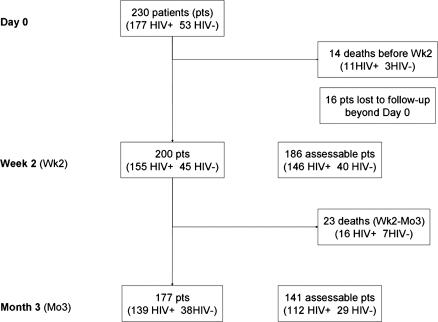
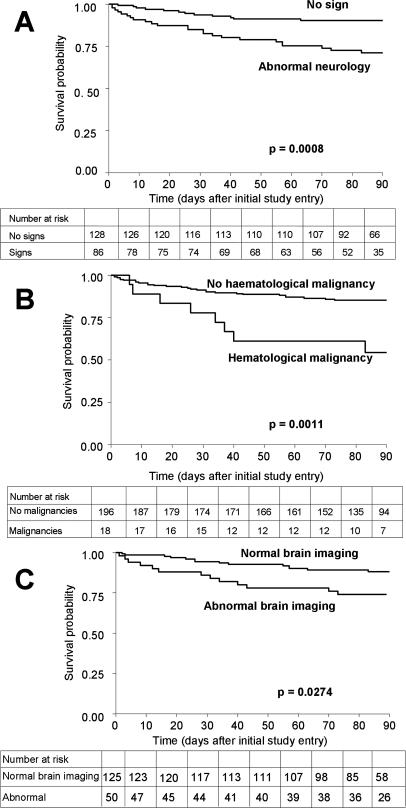
BACKGROUND: Cryptococcosis is a life-threatening opportunistic fungal infection in both HIV-positive and -negative patients. Information on clinical presentation and therapeutic guidelines, derived mostly from clinical trials performed before introduction of highly active antiretroviral therapy in patients with cryptococcal meningoencephalitis, is missing data on extrameningeal involvement and infections by serotype D as opposed to serotype A of Cryptococcus neoformans. METHODS AND FINDINGS: The prospective multicenter study CryptoA/D was designed in France (1997-2001) to analyse the factors influencing clinical presentation and outcome without the bias of inclusion into therapeutic trials. Of the 230 patients enrolled, 177 (77%) were HIV-positive, 50 (22%) were female, and 161 (72.5%) were infected with serotype A. Based on culture results at baseline, cryptococcosis was more severe in men, in HIV-positive patients, and in patients infected with serotype A. Factors independently associated with mycological failure at week 2 independent of HIV status were initial dissemination (OR, 2.4 [95% confidence interval (CI), 1.2-4.9]), high (>1:512) serum antigen titre (OR, 2.6 [1.3-5.4]), and lack of flucytosine during induction therapy (OR, 3.8 [1.9-7.8]). The three-month survival was shorter in patients with abnormal neurology or brain imaging at baseline, and in those with haematological malignancy. CONCLUSIONS: Thus sex, HIV status, and infecting serotype are major determinants of presentation and outcome during cryptococcosis. We propose a modification of current guidelines for the initial management of cryptococcosis based on systematic fungal burden evaluation.
Overview
The claims and statistics of this paper haven’t been checked yet.
Free: it reads the open-access text and checks the first 5 claims that cite a source we can check. Create a free account to check every claim.
Integrity signals
Registry
Cites
Statistics
Figures
Verification
Claims the paper makes
The claims and statistics of this paper haven’t been checked yet.
Free: it reads the open-access text and checks the first 5 claims that cite a source we can check. Create a free account to check every claim.
Claims other papers make about this one
Each is checked against this paper’s own text: does it say what the citing paper says it does?
In the citing paper
“Early studies have demonstrated that brain infections occur following fungemia, and that there is a direct correlation between the severity of the infection and the magnitude of fungemia [70–72].”
From Mechanisms of fungal dissemination (2021) · cites this paper as [72]
Self-check
Percentages, sums and reported differences re-computed from the paper’s own numbers.
The self-check needs the paper’s full text.
Citations
Cites
No adjustments are needed for multiple comparisons.
Rothman, K. J. (1990) · Epidemiology · doi:10.1097/00001648-199001000-00010 · Cited by 5,965 · cited 1×
“Finally, the question of multiple comparisons adjustment is a subject of debate in epidemiological research [30,34], arising because of the increased risk of type I errors (findings of false significance) when numerous hypotheses are tested simultaneously at set pvalues.”
BackgroundCastro, K. G., Ward, J. W., Slutsker, L., Buehler, J. W., Jaffe, H. W., Berkelman, R. L., & Curran, J. W. (1993) · Clinical Infectious Diseases · doi:10.1093/clinids/17.4.802 · Cited by 4,349
J Antimicrob Chemother 1994; 33: 350–351
O'SHAUGHNESSY, E. M., & DAS, S. S. (1994) · Journal of Antimicrobial Chemotherapy · doi:10.1093/jac/33.2.350 · Cited by 3,746
Multiple significance tests: the Bonferroni method
Bland, J. M., & Altman, D. G. (1995) · BMJ · doi:10.1136/bmj.310.6973.170 · Cited by 3,341 · cited 1×
“Finally, the question of multiple comparisons adjustment is a subject of debate in epidemiological research [30,34], arising because of the increased risk of type I errors (findings of false significance) when numerous hypotheses are tested simultaneously at set pvalues.”
Do multiple outcome measures require p-value adjustment?
Feise, R. J. (2002) · BMC Medical Research Methodology · doi:10.1186/1471-2288-2-8 · Cited by 1,299 · cited 1×
“We thus limited the adjustment to the main outcomes and engaged other comparisons to present exploratory but relevant results [35].”
ResultCryptococcosis in the era of AIDS--100 years after the discovery of Cryptococcus neoformans
Mitchell, T. G., & Perfect, J. R. (1995) · Clinical Microbiology Reviews · doi:10.1128/cmr.8.4.515 · Cited by 1,213 · cited 2×
“Only small series of computerized tomographies or magnetic resonance imaging of the brain have been published so far, and none has clearly addressed the relationship between cerebral lesions and prognosis [1].”
BackgroundPractice Guidelines for the Management of Cryptococcal Disease
Saag, M. S., Graybill, R. J., Larsen, R. A., Pappas, P. G., Perfect, J. R., Powderly, W. G., Sobel, J. D., Dismukes, W. E., & Mycoses Study Group Cryptococcal Subproject (2000) · Clinical Infectious Diseases · doi:10.1086/313757 · Cited by 1,105
(1993) · JAMA: The Journal of the American Medical Association · doi:10.1001/jama.1993.03500040022009 · Cited by 958
Bennett, J. E., Dismukes, W. E., Duma, R. J., Medoff, G., Sande, M. A., Gallis, H., Leonard, J., Fields, B. T., Bradshaw, M., Haywood, H., et al. (1979) · New England Journal of Medicine · doi:10.1056/nejm197907193010303 · Cited by 863 · cited 3×
“Flucytosine prescription has been associated with toxicity [19,24,48], but lower dosages and monitoring of plasma drug levels can prevent this problem.”
BackgroundMethodTreatment of Cryptococcal Meningitis Associated with the Acquired Immunodeficiency Syndrome
van der Horst, C. M., Saag, M. S., Cloud, G. A., Hamill, R. J., Graybill, J. R., Sobel, J. D., Johnson, P. C., Tuazon, C. U., Kerkering, T., Moskovitz, B. L., et al. (1997) · New England Journal of Medicine · doi:10.1056/nejm199707033370103 · Cited by 820
Research works printed but not linked: 1
- Chrétien, 2002, J Infect Dis, 186, 522
Cited by
Items 101–200 of 425
Hagen, F., Hare, R. K., Meis, J. F. G. M., & Arendrup, M. C. (2016) · Mycoses · doi:10.1111/myc.12507 · Cited by 54
Lanternier, F., Chandesris, M.-O., Poirée, S., Bougnoux, M.-E., Mechai, F., Mamzer-Bruneel, M.-F., Viard, J.-P., Galmiche-Rolland, L., Lecuit, M., & Lortholary, O. (2007) · American Journal of Transplantation · doi:10.1111/j.1600-6143.2007.01994.x · Cited by 53
“neoformans fungemia (7), the patient received amphotericin B (1 mg/kg/day) and 5-fluorocytosine for 2 weeks and was then switched to fluconazole (400 mg after haemodialysis).”
BackgroundSelf-citationMcMullan, B. J., Sorrell, T. C., & Chen, S. C.-A. (2013) · Future Microbiology · doi:10.2217/fmb.13.123 · Cited by 48
“neoformans infection in HIVinfected hosts [58], a high cryptococcal load (serum CRAG titer ≥512) and abnormal neurological find ings at presentation were not associated with increased mortality [9].”
BackgroundMora, D. J., Fortunato, L. R., Andrade-Silva, L. E., Paim, K. F., Rocha, I. H., Vasconcelos, R. R., Silva-Teixeira, D. N., Nascentes, G. A. N., & Silva-Vergara, M. L. (2015) · PLoS ONE · doi:10.1371/journal.pone.0120297 · Cited by 53
“Most of them were adult male, median age, presenting late HIV diagnosis and severe and disseminated fungal disease at admission [15,36,37].”
BackgroundThe spectrum of opportunistic diseases complicating sarcoidosis
Jamilloux, Y., Valeyre, D., Lortholary, O., Bernard, C., Kerever, S., Lelièvre, L., Néel, A., Broussolle, C., & Sève, P. (2014) · Autoimmunity Reviews · doi:10.1016/j.autrev.2014.10.006 · Cited by 53
Self-citationMora, D. J., Colombo, E. R. D. C., Paim, K. F., Andrade-Silva, L. E., Nascentes, G. A. N., & Silva-Vergara, M. L. (2011) · Mycopathologia · doi:10.1007/s11046-011-9504-9 · Cited by 53
Noninvasive Testing and Surrogate Markers in Invasive Fungal Diseases
Thompson, G. R., Boulware, D. R., Bahr, N. C., Clancy, C. J., Harrison, T. S., Kauffman, C. A., Le, T. P., Miceli, M. H., Mylonakis, E. E., Nguyen, M. H., et al. (2022) · Open Forum Infectious Diseases · doi:10.1093/ofid/ofac112 · Cited by 52
“The ability to provide a semiquantitative CrAg titer provides prognostic information, as high titers are correlated with high burden of disease and predict poor prognosis [13, 14].”
BackgroundChow, E. D., Liu, O. W., O’Brien, S., & Madhani, H. D. (2007) · Current Genetics · doi:10.1007/s00294-007-0147-9 · Cited by 52
“C. neoformans var neoformans (primarily serotype D) is more commonly found in Europe and is less likely to cause severe disease (Dromer et al. 2007).”
BackgroundInfluentialZaragoza, O. (2011) · Frontiers in Microbiology · doi:10.3389/fmicb.2011.00181 · Cited by 46
“Although its incidence in countries where the highly active antiretroviral therapy (HAART) is available has decreased, its associated mortality is still high (Dromer et al., 2007).”
BackgroundMeda, J., Kalluvya, S. E., Downs, J. A., Chofle, A. A., Seni, J., Kidenya, B. R., Fitzgerald, D. W., & Peck, R. N. (2014) · JAIDS Journal of Acquired Immune Deficiency Syndromes · doi:10.1097/qai.0000000000000147 · Cited by 51
“Despite the significant reduction in mortality associated with our hospital’s new intensive ICP management protocol, the 45% mortality observed in the study group compared with mortality rates of ;10%–20% achieved in developed countries indicates room for improvement.(1,9,10) Importantly, both historical controls and…”
BackgroundResultChang, C. C., Hall, V. G., Cooper, C. M., Grigoriadis, G., Beardsley, J., Sorrell, T. C., & Heath, C. H. (2021) · Internal Medicine Journal · doi:10.1111/imj.15590 · Cited by 53
Day, J. N., Hoang, T. N., Duong, A. V., Hong, C. T. T., Diep, P. T., Campbell, J. I., Sieu, T. P. M., Hien, T. T., Bui, T., Boni, M. F., et al. (2011) · Journal of Clinical Microbiology · doi:10.1128/jcm.01985-10 · Cited by 47
Panepinto, J. C., Komperda, K. W., Hacham, M., Shin, S., Liu, X., & Williamson, P. R. (2007) · Infection and Immunity · doi:10.1128/iai.00536-07 · Cited by 47
“Infections by the yeast-like fungus Cryptococcus neoformans are a significant cause of complications in transplant recipients, patients with hematologic malignancies, patients on chemotherapy, and human immunodeficiency virus (HIV) patients (10).”
BackgroundYang, F., Gritsenko, V., Lu, H., Zhen, C., Gao, L., Berman, J., & Jiang, Y.-Y. (2021) · Microbiology Spectrum · doi:10.1128/spectrum.00723-21 · Cited by 49
Ayats, J., Martín‐Mazuelos, E., Pemán, J., Quindós, G., Sánchez, F., García‐Rodríguez, J., Guarro, J., Guinea, J., Linares, M. J. P., Pontón, J., et al. (2010) · Enfermedades Infecciosas y Microbiología Clínica · doi:10.1016/j.eimc.2010.08.005 · Cited by 51
Chen, M., Zhou, J., Li, J., Li, M., Sun, J., Fang, W., Al‐Hatmi, A. M. S., Xu, J., Boekhout, T., Liao, W. Q., et al. (2016) · Mycoses · doi:10.1111/myc.12497 · Cited by 48
Fever of Unknown Origin in HIV/AIDS Patients
Hot, A., Schmulewitz, L., Viard, J., & Lortholary, O. (2007) · Infectious Disease Clinics of North America · doi:10.1016/j.idc.2007.08.003 · Cited by 46
“Fungemia is seen in 40% of these cases, whereas urine culture is positive in 25% [56].”
BackgroundSelf-citationCryptococcosis (Cryptococcus neoformans and Cryptococcus gattii)
Perfect, J. R. (2015) · Elsevier eBooks · doi:10.1016/b978-1-4557-4801-3.00264-2 · Cited by 46
Huang, H., Li, F., Han, H., Lv, Q.-Z., Xu, X., Li, N., 王顺春, Xu, J., & Jia, X. (2018) · Frontiers in Immunology · doi:10.3389/fimmu.2018.01781 · Cited by 46
Approaches to Antifungal Therapies and Their Effectiveness among Patients with Cryptococcosis
Bratton, E. W., El Husseini, N., Chastain, C. A., Lee, M. S., Poole, C., Stürmer, T., Weber, D. J., Juliano, J. J., & Perfect, J. R. (2013) · Antimicrobial Agents and Chemotherapy · doi:10.1128/aac.01800-12 · Cited by 42
Methamphetamine Enhances Cryptococcus neoformans Pulmonary Infection and Dissemination to the Brain
Patel, D., Desai, G. M., Frases, S., Cordero, R. J. B., DeLeon-Rodriguez, C. M., Eugenin, E. A., Nosanchuk, J. D., & Martinez, L. R. (2013) · mBio · doi:10.1128/mbio.00400-13 · Cited by 43
Molecular typing of clinical Cryptococcus neoformans isolates collected in Germany from 2004 to 2010
Sanchini, A., Smith, I. M., Sedlacek, L., Schwarz, R., Tintelnot, K., & Rickerts, V. (2014) · Medical Microbiology and Immunology · doi:10.1007/s00430-014-0341-6 · Cited by 43
Imaging characterization of cryptococcal meningoencephalitis
Xia, S., Li, X., & Li, H. (2016) · Radiology of Infectious Diseases · doi:10.1016/j.jrid.2016.05.003 · Cited by 43
An Overview of Sex Bias in C. neoformans Infections
Guess, T. E., Rosen, J. A., & McClelland, E. E. (2018) · Journal of Fungi · doi:10.3390/jof4020049 · Cited by 44
“Of the 230 patients enrolled in the study, 78% were male and 62% were both male and HIV+ [59].”
BackgroundInfluentialAnalyses of Pediatric Isolates of Cryptococcus neoformans from South Africa
Miglia, K. J., Govender, N. P., Rossouw, J., Meiring, S. T., & Mitchell, T. G. (2010) · Journal of Clinical Microbiology · doi:10.1128/jcm.01277-10 · Cited by 42
“neoformans occurred among adult males (2, 6, 9, 10, 14, 16, 23, 40, 54).”
BackgroundGassiep, I., McDougall, D. A. J., Douglas, J., Francis, R. S., & Playford, E. G. (2016) · Transplant Infectious Disease · doi:10.1111/tid.12639 · Cited by 42
Genotypic diversity and clinical outcome of cryptococcosis in renal transplant recipients in Brazil
Ponzio, V., Chen, Y., Rodrigues, A. M., Tenor, J. L., Toffaletti, D. L., Medina-Pestana, J. O., Colombo, A. L., & Perfect, J. R. (2019) · Emerging Microbes & Infections · doi:10.1080/22221751.2018.1562849 · Cited by 38
Schelenz, S., Barnes, R. A., Kibbler, C. C., Jones, B., & Denning, D. W. (2009) · Journal of Infection · doi:10.1016/j.jinf.2008.12.006 · Cited by 38
Wiederhold, N. P., Najvar, L. K., Bocanegra, R. A., Kirkpatrick, W. R., Sorrell, T. C., & Patterson, T. F. (2012) · Antimicrobial Agents and Chemotherapy · doi:10.1128/aac.01624-12 · Cited by 38
“The Centers for Disease Control and Prevention have estimated that in HIV/ AIDS patients the global burden of cryptococcosis is 1 million cases annually (3), while other studies have reported the 3-month mortality for the treatment of acute cryptococcal meningoencephalitis to be approximately 20% (4, 5).”
BackgroundEnvironmental Factors That Contribute to the Maintenance of Cryptococcus neoformans Pathogenesis
Maliehe, M., Ntoi, M. A., Lahiri, S., Folorunso, O. S., Ogundeji, A. O., Pohl, C. H., & Sebolai, O. M. (2020) · Microorganisms · doi:10.3390/microorganisms8020180 · Cited by 37
Chen, S.-F., Lu, C., Lui, C., Huang, C.-R., Chuang, Y., Tan, T., Tsai, N., Chang, C., Tsai, W., & Chang, W. (2011) · BMC Neurology · doi:10.1186/1471-2377-11-12 · Cited by 36
“Although many factors including positive cryptococcal antigenemia detection may influence the appearance and presentations of clinical CM [ 20 ,21], in patients with HIV-negative CM, little is known about the duration between the contact with C. neoformans and the occurrence of clinical symptoms as well as the duratio…”
BackgroundCapsule Enlargement in Cryptococcus neoformans Is Dependent on Mitochondrial Activity
Trevijano‐Contador, N., Rossi, S. A., Alves, E. C., Landín-Ferreiroa, S., & Zaragoza, Ó. (2017) · Frontiers in Microbiology · doi:10.3389/fmicb.2017.01423 · Cited by 36
“…of highly active antiretroviral therapy, the incidence has been controlled in developed countries, although the associated mortality remains high (Mirza et al., 2003; Friedman et al., 2005; Lortholary et al., 2006; Chottanapund et al., 2007; Dromer et al., 2007; Jongwutiwes et al., 2007).”
BackgroundInvasive fungal infections in liver diseases
Barros, N., Rosenblatt, R. E., Phipps, M. M., Fomin, V. G., & Mansour, M. K. (2023) · Hepatology Communications · doi:10.1097/hc9.0000000000000216 · Cited by 35
Osawa, R., Alexander, B. D., Lortholary, O., Dromer, F., Forrest, G. N., Lyon, G. M., Somani, J., Gupta, K. L., Busto, R. D., Pruett, T. L., et al. (2009) · Transplantation · doi:10.1097/tp.0b013e3181bcda41 · Cited by 35
“Fungemia likewise is an evidence for dissemination and severity of disease (17, 18).”
BackgroundSelf-citationFungal Infections in Transplant and Oncology Patients
Person, A. K., Kontoyiannis, D. P., & Alexander, B. D. (2011) · Hematology/Oncology Clinics of North America · doi:10.1016/j.hoc.2010.11.013 · Cited by 33
“In addition, flucytosine levels need to be monitored closely to avoid toxicity and side effects.(117) A gradual decrease in corticosteroids is another common management strategy; however, development of immune reconstitution syndrome (IRIS) in this setting has been seen and may be difficult to distinguish”
Phenotypic Switching of Cryptococcus neoformans and Cryptococcus gattii
Jain, N., & Fries, B. C. (2008) · Mycopathologia · doi:10.1007/s11046-008-9137-9 · Cited by 33
“neoformans has a comparable environmental and clinical distribution worldwide and in some areas such as sub-Saharan Africa up to 20% of the isolates are serotype D strains [ 15 , 16].”
BackgroundCryptococcosis in non-HIV/non-transplant patients: A Brazilian case series
Lomes, N. R., Melhem, M. D. S. C., Szeszs, M. W., Martins, M. D. A., & Buccheri, R. (2016) · Medical Mycology · doi:10.1093/mmy/myw021 · Cited by 33
Bertout, S., Drakulovski, P., Kouanfack, C., Krasteva, D., Ngouana, T. K., Dunyach‐Remy, C., Mabou, J. D., Aghokeng, A. F., Delaporte, É., Koulla‐Shiro, S., et al. (2012) · Clinical Microbiology and Infection · doi:10.1111/1469-0691.12019 · Cited by 31
Management of Cryptococcal Meningitis in Sub-Saharan Africa
Jackson, A., & Hosseinipour, M. C. (2010) · Current HIV/AIDS Reports · doi:10.1007/s11904-010-0052-6 · Cited by 31
“When added to AmB, 5-FC has also been shown to be associated with a lower rate of treatment failure at 2 weeks than AmB alone [10, 20 ].”
Management of Cryptococcal Meningitis in AIDS: The Need for Specific Studies in Developing Countries
Lortholary, O. (2007) · Clinical Infectious Diseases · doi:10.1086/518583 · Cited by 31
“Recent data obtained by the French Cryptococcosis Study Group [6] have suggested that the observation of any evidence of cryptococcosis on the basis of positive antigen detection, the presence of encapsulated yeasts during direct examination or histological analysis, and/ or the isolation of C. neoformans from any bod…”
BackgroundSelf-citationInfectious encephalitis: Management without etiological diagnosis 48 hours after onset
Fillâtre, P., Crabol, Y., Morand, P., Piroth, L., Honnorat, J., Stahl, J. ‐., & Lecuit, M. (2017) · Médecine et Maladies Infectieuses · doi:10.1016/j.medmal.2017.02.004 · Cited by 31
“The serum antigen test was postive in 25/29 of cases (86%); thus indicating the dissemination f the fungal infection [138].”
BackgroundCryptococcus genetic diversity and mixed infections in Ivorian HIV patients: A follow up study
Kassi, F. K., Drakulovski, P., Bellet, V., Roger, F., Chabrol, A., Krasteva, D., Doumbia, A., Landman, R., Kakou, A. R., Reynes, J., et al. (2019) · PLoS neglected tropical diseases · doi:10.1371/journal.pntd.0007812 · Cited by 31
Bratton, E. W., Husseini, N. E., Chastain, C. A., Lee, M. S., Poole, C., rmer, T. S. ⁄., Juliano, J. J., Weber, D. J., & Perfect, J. R. (2012) · PLoS ONE · doi:10.1371/annotation/a94bc542-6682-4579-a315-57019cef7e0e · Cited by 31
Management of Cryptococcosis: How Are We Doing?
Perfect, J. R. (2007) · PLoS Medicine · doi:10.1371/journal.pmed.0040047 · Cited by 30
Bataineh, M. T. A., Sutton, D. A., Fothergill, A. W., & Wiederhold, N. P. (2015) · Infectious Disease Clinics of North America · doi:10.1016/j.idc.2015.10.014 · Cited by 30
Vogan, A. A., Khankhet, J., Samarasinghe, H., & Xu, J. (2016) · G3 Genes Genomes Genetics · doi:10.1534/g3.116.029595 · Cited by 30
“C. neoformansmost commonly causes life threatening disease and is more virulent in a mouse model (Kwon-Chung et al. 1992), whereas C. deneoformans is more likely to cause cutaneous infection (Dromer et al. 2007).”
BackgroundBamba, S., Lortholary, O., Sawadogo, A. B., Millogo, A., Guiguemdé, R. T., & Bretagne, S. (2012) · AIDS · doi:10.1097/qad.0b013e328352d1d8 · Cited by 30
Self-citationMicosis sistémicas en pacientes con virus de la inmunodeficiencia humana/sida
Rodríguez‐Cerdeira, C., Arenas, R., Moreno‐Coutiño, G., Vásquez, E., Fernández, R., & Chang, P. (2012) · Actas Dermo-Sifiliográficas · doi:10.1016/j.ad.2012.06.017 · Cited by 30
Pitfalls in Serological Diagnosis ofCryptococcus gattiiInfections
Tintelnot, K., Hagen, F., Han, C. O., Seibold, M., Rickerts, V., & Boekhout, T. (2015) · Medical Mycology · doi:10.1093/mmy/myv061 · Cited by 29
Yao, Z.-W., Xu, L., Shen, C., & Lin, D. (2014) · European Journal of Clinical Microbiology & Infectious Diseases · doi:10.1007/s10096-014-2074-2 · Cited by 29
Treatment of cryptococcal meningitis in Peruvian AIDS Patients using amphotericin B and fluconazole
Dammert, P., Bustamante, B., Ticona, E., Llanos‐Cuentas, A., Huaroto, L., Chávez, V., & Campos, P. E. (2008) · Journal of Infection · doi:10.1016/j.jinf.2008.06.020 · Cited by 29
Spec, A., Mejía-Chew, C., Powderly, W. G., & Cornely, O. A. (2018) · Open Forum Infectious Diseases · doi:10.1093/ofid/ofy299 · Cited by 29
“A lumbar puncture (LP) should be done in immunocompetent individuals who have CNS symptoms (headache, neck stiffness, confusion, ataxia, urinary incontinency, vomiting, photophobia) and in all patients with an underlying immunosuppression who have evidence of cryptococcal disease (ie, positive blood cultures, serum Cr…”
BackgroundPerfect, J. R. (2010) · Elsevier eBooks · doi:10.1016/b978-0-443-06839-3.00263-0 · Cited by 29
Sun, D., Zhang, M., Liu, G., Wu, H., Li, C., Zhou, H., Zhang, X., & Shi, M. (2016) · European Journal of Immunology · doi:10.1002/eji.201546239 · Cited by 28
Zhong, Y., Zhou, Z., Fang, X., Peng, F., & Zhang, W. (2017) · European Journal of Clinical Microbiology & Infectious Diseases · doi:10.1007/s10096-017-2941-8 · Cited by 28
“Cryptococcal meningitis (CM) is caused by Cryptococcus neoformans, which is an encapsulated yeast and ubiquitous in soil and avian guano [1, 2].”
BackgroundWiederhold, N. P., Najvar, L. K., Garvey, E. P., Brand, S. R., Xu, X., Ottinger, E. A., Alimardanov, A., Cradock, J., Behnke, M., Hoekstra, W. J., et al. (2018) · Antimicrobial Agents and Chemotherapy · doi:10.1128/aac.01071-18 · Cited by 27
Lizarazo, J., Chaves, O., Peña, Y., Escandón, P., Agudelo, C. I., & Castañeda, E. (2012) · Acta Médica Colombiana · doi:10.36104/amc.2012.597 · Cited by 27
New Insights in the Prevention, Diagnosis, and Treatment of Cryptococcal Meningitis
Jackson, A., & van der Horst, C. (2012) · Current HIV/AIDS Reports · doi:10.1007/s11904-012-0127-7 · Cited by 27
“AmB plus 5FC is associated with a lower rate of treatment failure (death or positive CSF culture) at 2 weeks than AmB alone in a large, prospective, unselected, but uncontrolled study [36].”
BackgroundCharacterization of Phenotypic Switching in Cryptococcus neoformans Biofilms
Martinez, L. R., Ibom, D. C., Casadevall, A., & Fries, B. C. (2008) · Mycopathologia · doi:10.1007/s11046-008-9133-0 · Cited by 27
Jain, N., Li, L., Hsueh, Y.-P., Guerrero, A., Heitman, J., Goldman, D. L., & Fries, B. C. (2008) · Infection and Immunity · doi:10.1128/iai.01079-08 · Cited by 27
“Cryptococcus neoformans is a major fungal pathogen in patients with AIDS or other diseases that result in impaired T-cell immunity (11, 44).”
BackgroundUnusual presentations of nervous system infection by Cryptococcus neoformans
Searls, D. E., Sico, J. J., Omay, S. B., Bannykh, S., Kuohung, V., & Baehring, J. M. (2009) · Clinical Neurology and Neurosurgery · doi:10.1016/j.clineuro.2009.05.007 · Cited by 27
Williams, C. C., Gregory, J., & Usher, J. (2024) · Microbiology · doi:10.1099/mic.0.001512 · Cited by 27
He, X., Shi, X., Puthiyakunnon, S., Zhang, L., Zeng, Q., Li, Y., Boddu, S., Qiu, J., Lai, Z., Ma, C., et al. (2016) · Journal of Biomedical Science · doi:10.1186/s12929-016-0247-2 · Cited by 27
“(1) Cn can survive in phagocytic cells via active phagosomal extrusion and spread to the phagocytes [59, 60]; (2) The incidence rate of fungemia and meningoencephalitis is higher in HIV-1-infected patients than that in HIV-1-negative patients because HIV-1 can cause severe monocyte dysfunction in host [61–63]; (3) Cn…”
BackgroundWiederhold, N. P., Xu, X., Wang, A., Najvar, L. K., Garvey, E. P., Ottinger, E. A., Alimardanov, A., Cradock, J., Behnke, M., Hoekstra, W. J., et al. (2018) · Antimicrobial Agents and Chemotherapy · doi:10.1128/aac.01315-18 · Cited by 24
Mortality After Cryptococcal Infection in the Modern Antiretroviral Therapy Era
Hevey, M. A., Presti, R. M., O’Halloran, J. A., Larson, L., Raval, K., Powderly, W. G., & Spec, A. (2019) · JAIDS Journal of Acquired Immune Deficiency Syndromes · doi:10.1097/qai.0000000000002095 · Cited by 26
Lee, H. H., Carmichael, D. J., Ríbeiro, V., Parisi, D. N., Munzen, M. E., Niño, C. L. C., Hamed, M. F., Kaur, E., Mishra, A., Patel, J., et al. (2023) · PLoS Pathogens · doi:10.1371/journal.ppat.1010941 · Cited by 25
“During cryptococcosis, fungemia is detected in about 50% of HIV-infected patients [5].”
BackgroundPriest, S. J., Coelho, M. A., Mixão, V., Clancey, S. A., Xu, Y., Sun, S., Gabaldón, T., & Heitman, J. (2021) · PLoS Genetics · doi:10.1371/journal.pgen.1008871 · Cited by 26
Sorrell, T. C., Chen, S. C. ‐., Phillips, P., & Marr, K. A. (2014) · ASM Press eBooks · doi:10.1128/9781555816858.ch44 · Cited by 25
Characteristics and specificities of Cryptococcus infections in French Guiana, 1998–2008
Debourgogne, A., Iriart, X., Blanchet, D., Véron, V., Boukhari, R., Nacher, M., Carme, B., & Aznar, C. (2011) · Medical Mycology · doi:10.3109/13693786.2011.584198 · Cited by 25
Gassiep, I., Douglas, J., Emeto, T. I., Crawley, K., & Playford, E. G. (2018) · Mycoses · doi:10.1111/myc.12783 · Cited by 25
Systemic Fungal Infections in Patients with human inmunodeficiency virus
Rodríguez‐Cerdeira, C., Arenas, R., Moreno‐Coutiño, G., Vásquez, E., Fernández, R., & Chang, P. (2014) · Actas Dermo-Sifiliográficas · doi:10.1016/j.adengl.2012.06.032 · Cited by 25
New Insights Into Cryptococcus Spp. Biology and Cryptococcal Meningitis
Temfack, E., Boyer‐Chammard, T., Lawrence, D. S., Dellière, S., Loyse, A., Lanternier, F., Alanio, A., & Lortholary, O. (2019) · Current Neurology and Neuroscience Reports · doi:10.1007/s11910-019-0993-0 · Cited by 24
Self-citationCryptoccocal meningitis and HIV in the era of HAART in Côte d’Ivoire
Aoussi, E., Ehui, E., Dembélé, J. P., Kolia-Diafouka, P., Elloh, N. F., Ouattara, S. I., Tanon, K. A., Doumbia, A., Adoubryn, K. D., Eholié, S. P., et al. (2012) · Médecine et Maladies Infectieuses · doi:10.1016/j.medmal.2012.05.012 · Cited by 24
Vedia, L. D., Arechavala, A. I., Calderón, M. I., Maiolo, E., Rodríguez, A., Lista, N., Virgilio, E. D., Cisneros, J. C., & Prieto, R. (2013) · Infection · doi:10.1007/s15010-013-0538-4 · Cited by 23
Aimless mutants of Cryptococcus neoformans: Failure to disseminate
Griffiths, E., Kretschmer, M., & Kronstad, J. W. (2012) · Fungal Biology Reviews · doi:10.1016/j.fbr.2012.02.004 · Cited by 23
“The Trojan horse approach involves the phagocytosis of fungal cells in the blood or, proximal to brain vasculature endothelial cells, by phagocytes which transport the pathogen to the parenchyma (Casadevall, 2010; Dromer et al., 2007).”
BackgroundFrola, C. E., Guelfand, L. I., Blugerman, G. A., Szyld, E. G., Kaufman, S. C., Cahn, P. E., Sued, O. G., & Pérez, H. (2017) · PLoS ONE · doi:10.1371/journal.pone.0178721 · Cited by 23
Hamed, M. F., Enriquez, V., Munzen, M. E., Niño, C. L. C., Mihu, M. R., Khoshbouei, H., Alviña, K., & Martinez, L. R. (2023) · PLoS neglected tropical diseases · doi:10.1371/journal.pntd.0011068 · Cited by 22
“During cryptococcosis, fungemia is detected in ~50% of HIV-infected patients [8], correlates experimentally with dissemination and brain invasion [9], and is an independent parameter of early mycological failure in humans [8].”
BackgroundLa cryptococcose au cours de l’infection à VIH
Fane, M. E., Badaoui, L., Ouladlahsen, A., Sodqi, M., Marih, L., Chakib, A., & Filali, K. M. E. (2015) · Journal de Mycologie Médicale · doi:10.1016/j.mycmed.2015.09.008 · Cited by 22
Jones, T. H., McClelland, E. E., McFeeters, H., & McFeeters, R. L. (2017) · Frontiers in Microbiology · doi:10.3389/fmicb.2017.00755 · Cited by 22
“Cryptococcal strains used were: (serotype A) H99S (Janbon et al., 2014), KN99a, KN99α, and Botswana clinical isolates B5, B15, B18, and B45 (Bisson et al., 2008); (serotype D) 24067, JEC21, B3501, B3502, Cap67, and clinical isolates AD3-80, AD5-33, AD7-17, AD11-23, AD11-75, AD11-77, AD12-15, AD12-22, and AD12-27 (Drom…”
InfluentialSomerville, L. K., Henderson, A. P. D., Chen, S. C.-A., & Kok, J. (2014) · Medical Mycology Case Reports · doi:10.1016/j.mmcr.2014.12.003 · Cited by 21
“C. neoformans, subsequently identified on canavanine-glycine-bromothymol blue agar, was cultured.”
BackgroundBoulware, D. R., & Rhein, J. (2012) · Neurobehavioral HIV Medicine · doi:10.2147/nbhiv.s24748 · Cited by 21
“34,35 Furthermore, concomitant pulmonary involvement is an independent risk factor for mortality in cryptococcal disease.”
Fluconazole resistance is not a predictor of poor outcome in patients with cryptococcosis
Vena, A., Muñóz, P., Guinea, J., Escribano, P., Peláez, T., Valerio, M., Bonache, F., Gago, S., Álvarez‐Uría, A., & Bouza, E. (2018) · Mycoses · doi:10.1111/myc.12847 · Cited by 20
Guess, T. E., Rosen, J. A., Castro-Lopez, N., Wormley, F. L., & McClelland, E. E. (2019) · Biology of Sex Differences · doi:10.1186/s13293-019-0258-2 · Cited by 20
Tsai, H., Shi, M. ‐., Lee, S. S. ‐., Wann, S. R., Tai, M. H., & Chen, Y. ‐. (2010) · Clinical Microbiology and Infection · doi:10.1111/j.1469-0691.2010.03393.x · Cited by 19
“The case mortality rate is relatively high and survivors may suffer from long-term, severe neurological sequelae [1–4].”
de Oliveira, L., Melhem, M. D. S. C., Buccheri, R., Chagas, O. J., Vidal, J. E., & Díaz-Quijano, F. A. (2022) · BMC Infectious Diseases · doi:10.1186/s12879-022-07118-7 · Cited by 19
Cryptococcosis, A Risk for Immunocompromised and Immunocompetent Individuals
da Costa, M. M., Teixeira, F. M., Schalcher, T. R., de Brito, M. T. F. M., Valério, E. D. S., & Monteiro, M. C. (2013) · The Open Epidemiology Journal · doi:10.2174/1874297101306010009 · Cited by 19
“It is worrying that, despite access to advanced medical care and the availability of HAART, the mortality rate of acute cryptococcal meningoencephalitis after 3 months of treatment is approximately 20% [94,95].”
BackgroundPaccoud, O., Desnos‐Ollivier, M., Persat, F., Demar, M., Sitbon, K., Bellanger, A., Bonhomme, J., Bonnal, C., Botterel, F., Bougnoux, M., et al. (2024) · Clinical Microbiology and Infection · doi:10.1016/j.cmi.2024.03.031 · Cited by 18
Self-citationChen, C., Sy, H., Lin, L.-J., Yen, H.-C., WANG, S., Chen, W., Chen, Y.-M., & Chang, Y. (2015) · The Journal of venomous animals and toxins including tropical diseases · doi:10.1186/s40409-015-0012-0 · Cited by 18
“A previous analysis of 52 patients with cryptococcemia diagnosed during 1981 and 2001 in Taiwan showed that cirrhosis and severity of sepsis were associated with 30-day mortality [26].”
BackgroundMethodXia, S., Li, X., Shi, Y., Liu, J., Zhang, M., Gu, T., Pan, S., Song, L., Xu, J., Sun, Y., et al. (2016) · Medicine · doi:10.1097/md.0000000000002654 · Cited by 18
Cryptococcosis in Renal Transplant Recipients: A Single-Center Experience
Marques, S., Carmo, R., Ferreira, I. C., Bustorff, M., Sampaio, S., & Pestana, M. (2016) · Transplantation Proceedings · doi:10.1016/j.transproceed.2016.06.006 · Cited by 18
Pool, A., Lowder, L. J., Wu, Y., Forrester, K., & Rumbaugh, J. A. (2013) · Journal of NeuroVirology · doi:10.1007/s13365-013-0169-7 · Cited by 18
The role of glycosylphosphatidylinositol (gpi) anchored proteins in Cryptococcus neoformans
Snelders, E., Moyrand, F., Sturny-Leclère, A., Vernel-Pauillac, F., Volant, S., Janbon, G., & Alanio, A. (2022) · Microbes and Infection · doi:10.1016/j.micinf.2022.105016 · Cited by 17
Zhou, Z., Zhu, C., Ip, M., Liu, M., Zhu, Z., Liu, R., Li, X., Zeng, L., & Wu, W. (2022) · Frontiers in Microbiology · doi:10.3389/fmicb.2022.942940 · Cited by 18
van der Torre, M. H., Andrews, R. A. J., Hooker, E., Rankin, A., & Dodd, S. (2022) · Clinical Infection in Practice · doi:10.1016/j.clinpr.2022.100154 · Cited by 17
Namie, H., Takazono, T., Hidaka, Y., Morimoto, S., Ito, Y., Nakada, N., Ashizawa, N., Hirayama, T., Takeda, K., Iwanaga, N., et al. (2023) · Mycoses · doi:10.1111/myc.13658 · Cited by 17
“The 90-day mortality rate of CM in non-HIV patients was 25.4%, similar to previous reports, 2,3,20 and was significantly higher compared with that in HIV patients (25.4% vs. 6.3%, p = .0002).”
ResultInfluentialAging as an emergent factor that contributes to phenotypic variation in Cryptococcus neoformans
Bouklas, T., & Fries, B. C. (2014) · Fungal Genetics and Biology · doi:10.1016/j.fgb.2014.10.004 · Cited by 17
Opportunistic Infections of the Central Nervous System in the Transplant Patient
Cohen, B. A., & Stosor, V. (2013) · Current Neurology and Neuroscience Reports · doi:10.1007/s11910-013-0376-x · Cited by 17
Pai, M. P., Sakoğlu, Ü., Peterson, S. L., Lyons, C. R., & Sood, R. (2008) · Journal of Cerebral Blood Flow & Metabolism · doi:10.1038/jcbfm.2008.144 · Cited by 17
Diagnostic and therapeutic strategies in cryptococcosis: impact on outcome
Boyer‐Chammard, T., Temfack, E., Lortholary, O., & Alanio, A. (2018) · Memórias do Instituto Oswaldo Cruz · doi:10.1590/0074-02760180050 · Cited by 16
“Sensitivity of this technique is around 86% (Kambugu et al. 2008, Boulware et al. 2014b) but can be lower in HIV-negative patients in association with a low fungal burden (Dromer et al. 2007).”
BackgroundMethodResultInfluentialSelf-citationSauters, T. J. C., Roth, C., Murray, D., Sun, S., Averette, A. F., Onyishi, C. U., May, R. C., Heitman, J., & Magwene, P. M. (2023) · PLoS Pathogens · doi:10.1371/journal.ppat.1011763 · Cited by 16
Metadata
- Authors
- Dromer, F., Mathoulin-Pélissier, S., Launay, O., Lortholary, O., & the French Cryptococcosis Study Group
- Affiliations
- Centre National de la Recherche Scientifique (FR)
- Hôpital Cochin (FR)
- Hôpital Necker-Enfants Malades (FR)
- Corresponding author
- Dromer, Françoise
- Venue
- PLoS Medicine
- Publisher
- Public Library of Science (PLoS)
- Published
- 2007-02-06
- Volume
- 4
- Issue
- 2
- Pages
- e21
- ISSN
- 1549-1277 (ISSN-L)
- 1549-1676
- PMC
- PMC1808080
- OpenAlex
- W2064009861
- Cited by
- 374
- References
- 62
- Citations by year
- 2026: 4 · 2025: 8 · 2024: 12 · 2023: 19 · 2022: 15 · 2021: 11 · 2020: 16 · 2019: 15 · 2018: 17 · 2017: 24 · 2016: 34 · 2015: 17 · 2014: 26 · 2013: 24 · 2012: 27
- FWCI
- 19.95
- Type
- journal article
- Language
- en
- Open access
- gold
- doi.org
- Locations
- PLoS Medicine (publishedVersion, cc-by)
- PubMed Central (publishedVersion, cc-by)
- PubMed (publishedVersion)
- DOAJ (DOAJ: Directory of Open Access Journals) (submittedVersion, cc-by-sa)
- Figshare (submittedVersion, cc-by)
- Funders
- Styrelsen för Internationellt Utvecklingssamarbete
- Sidaction
- Topics
- Health Sciences › Medicine › Infectious Diseases › Fungal Infections and Studies
- Health Sciences › Medicine › Infectious Diseases › Infectious Diseases and Tuberculosis
- Health Sciences › Medicine › Infectious Diseases › Antifungal resistance and susceptibility
- Keywords
- cryptococcosis, serotype D, cryptococcal meningoencephalitis, HIV infection, clinical features, treatment outcomes, serum cryptococcal antigen, 5-fluorocytosine, survival, sex differences, hematologic malignancies, fungal burden
- MeSH terms
- Adult, Amphotericin B, Antifungal Agents, Cryptococcosis, Cryptococcus neoformans, Female, Flucytosine, France, Humans, Male, Meningoencephalitis, Prospective Studies, Severity of Illness Index, Treatment Outcome, AIDS-Related Opportunistic Infections
About these checks
Registry, retraction, Cites and statistics results are computed, not judged, with one exception: a printed reference that no index lists is read once by a model before it counts as a citation error. Claims are extracted by a model and kept only when their quote appears verbatim in the text; each cited source is then checked, with a model’s help, for whether it says what the claim relies on. Those verdicts can be wrong — read the claim’s quote and the cited source before relying on one.
Statistics and arithmetic are recomputed, not judged.
Confidence bands are shown only for fields calibrated on our annotated test set. None is calibrated yet, so no band is shown.
What counts as a claim ›How we measure confidence ›How we check this ›
Are you an author, or do you see a problem with this page? Request a review
Data sources
Bibliographic data: Semantic Scholar, OpenAlex, Crossref.
Contains information from the Semantic Scholar Academic Graph Datasets, made available under the ODC Attribution License (ODC-BY 1.0).
Semantic Scholar’s data is described in: Kinney, R., et al. (2023). The Semantic Scholar Open Data Platform. arXiv:2301.10140.
