

Determinants of Disease Presentation and Outcome during Cryptococcosis: The CryptoA/D Study
Open accessThe DOI matches its Crossref record; 60 of the 62 references it cites were found in a registry or an index.
Abstract
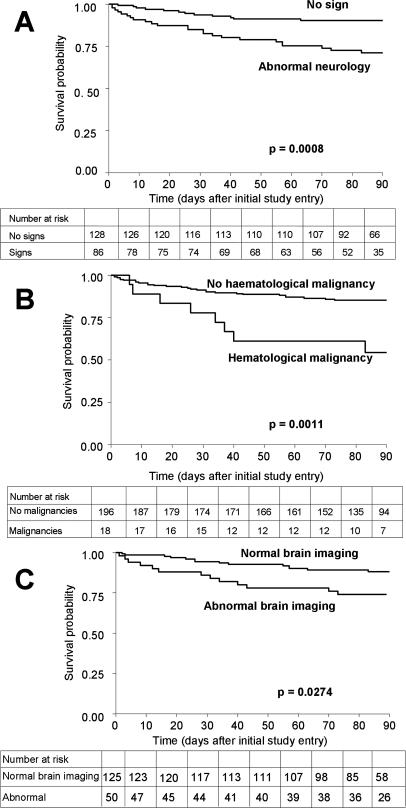
BACKGROUND: Cryptococcosis is a life-threatening opportunistic fungal infection in both HIV-positive and -negative patients. Information on clinical presentation and therapeutic guidelines, derived mostly from clinical trials performed before introduction of highly active antiretroviral therapy in patients with cryptococcal meningoencephalitis, is missing data on extrameningeal involvement and infections by serotype D as opposed to serotype A of Cryptococcus neoformans. METHODS AND FINDINGS: The prospective multicenter study CryptoA/D was designed in France (1997-2001) to analyse the factors influencing clinical presentation and outcome without the bias of inclusion into therapeutic trials. Of the 230 patients enrolled, 177 (77%) were HIV-positive, 50 (22%) were female, and 161 (72.5%) were infected with serotype A. Based on culture results at baseline, cryptococcosis was more severe in men, in HIV-positive patients, and in patients infected with serotype A. Factors independently associated with mycological failure at week 2 independent of HIV status were initial dissemination (OR, 2.4 [95% confidence interval (CI), 1.2-4.9]), high (>1:512) serum antigen titre (OR, 2.6 [1.3-5.4]), and lack of flucytosine during induction therapy (OR, 3.8 [1.9-7.8]). The three-month survival was shorter in patients with abnormal neurology or brain imaging at baseline, and in those with haematological malignancy. CONCLUSIONS: Thus sex, HIV status, and infecting serotype are major determinants of presentation and outcome during cryptococcosis. We propose a modification of current guidelines for the initial management of cryptococcosis based on systematic fungal burden evaluation.
Overview
The claims and statistics of this paper haven’t been checked yet.
Free: it reads the open-access text and checks the first 5 claims that cite a source we can check. Create a free account to check every claim.
Integrity signals
Registry
Cites
Statistics
Figures
Verification
Claims the paper makes
The claims and statistics of this paper haven’t been checked yet.
Free: it reads the open-access text and checks the first 5 claims that cite a source we can check. Create a free account to check every claim.
Claims other papers make about this one
Each is checked against this paper’s own text: does it say what the citing paper says it does?
In the citing paper
“Early studies have demonstrated that brain infections occur following fungemia, and that there is a direct correlation between the severity of the infection and the magnitude of fungemia [70–72].”
From Mechanisms of fungal dissemination (2021) · cites this paper as [72]
Self-check
Percentages, sums and reported differences re-computed from the paper’s own numbers.
The self-check needs the paper’s full text.
Citations
Cites
No adjustments are needed for multiple comparisons.
Rothman, K. J. (1990) · Epidemiology · doi:10.1097/00001648-199001000-00010 · Cited by 5,965 · cited 1×
“Finally, the question of multiple comparisons adjustment is a subject of debate in epidemiological research [30,34], arising because of the increased risk of type I errors (findings of false significance) when numerous hypotheses are tested simultaneously at set pvalues.”
BackgroundCastro, K. G., Ward, J. W., Slutsker, L., Buehler, J. W., Jaffe, H. W., Berkelman, R. L., & Curran, J. W. (1993) · Clinical Infectious Diseases · doi:10.1093/clinids/17.4.802 · Cited by 4,349
J Antimicrob Chemother 1994; 33: 350–351
O'SHAUGHNESSY, E. M., & DAS, S. S. (1994) · Journal of Antimicrobial Chemotherapy · doi:10.1093/jac/33.2.350 · Cited by 3,746
Multiple significance tests: the Bonferroni method
Bland, J. M., & Altman, D. G. (1995) · BMJ · doi:10.1136/bmj.310.6973.170 · Cited by 3,341 · cited 1×
“Finally, the question of multiple comparisons adjustment is a subject of debate in epidemiological research [30,34], arising because of the increased risk of type I errors (findings of false significance) when numerous hypotheses are tested simultaneously at set pvalues.”
Do multiple outcome measures require p-value adjustment?
Feise, R. J. (2002) · BMC Medical Research Methodology · doi:10.1186/1471-2288-2-8 · Cited by 1,299 · cited 1×
“We thus limited the adjustment to the main outcomes and engaged other comparisons to present exploratory but relevant results [35].”
ResultCryptococcosis in the era of AIDS--100 years after the discovery of Cryptococcus neoformans
Mitchell, T. G., & Perfect, J. R. (1995) · Clinical Microbiology Reviews · doi:10.1128/cmr.8.4.515 · Cited by 1,213 · cited 2×
“Only small series of computerized tomographies or magnetic resonance imaging of the brain have been published so far, and none has clearly addressed the relationship between cerebral lesions and prognosis [1].”
BackgroundPractice Guidelines for the Management of Cryptococcal Disease
Saag, M. S., Graybill, R. J., Larsen, R. A., Pappas, P. G., Perfect, J. R., Powderly, W. G., Sobel, J. D., Dismukes, W. E., & Mycoses Study Group Cryptococcal Subproject (2000) · Clinical Infectious Diseases · doi:10.1086/313757 · Cited by 1,105
(1993) · JAMA: The Journal of the American Medical Association · doi:10.1001/jama.1993.03500040022009 · Cited by 958
Bennett, J. E., Dismukes, W. E., Duma, R. J., Medoff, G., Sande, M. A., Gallis, H., Leonard, J., Fields, B. T., Bradshaw, M., Haywood, H., et al. (1979) · New England Journal of Medicine · doi:10.1056/nejm197907193010303 · Cited by 863 · cited 3×
“Flucytosine prescription has been associated with toxicity [19,24,48], but lower dosages and monitoring of plasma drug levels can prevent this problem.”
BackgroundMethodTreatment of Cryptococcal Meningitis Associated with the Acquired Immunodeficiency Syndrome
van der Horst, C. M., Saag, M. S., Cloud, G. A., Hamill, R. J., Graybill, J. R., Sobel, J. D., Johnson, P. C., Tuazon, C. U., Kerkering, T., Moskovitz, B. L., et al. (1997) · New England Journal of Medicine · doi:10.1056/nejm199707033370103 · Cited by 820
Research works printed but not linked: 1
- Chrétien, 2002, J Infect Dis, 186, 522
Cited by
Perfect, J. R., Dismukes, W. E., Dromer, F., Goldman, D. L., Graybill, J. R., Hamill, R. J., Harrison, T. S., Larsen, R. A., Lortholary, O., Nguyen, M.-H., et al. (2010) · Clinical Infectious Diseases · doi:10.1086/649858 · Cited by 2,660
“coccal meningoencephalitis approximates 20% [14, 15].”
MethodSelf-citationMaziarz, E. K., & Perfect, J. R. (2016) · Infectious Disease Clinics of North America · doi:10.1016/j.idc.2015.10.006 · Cited by 698
Recognition of seven species in the Cryptococcus gattii/Cryptococcus neoformans species complex
Hagen, F., Khayhan, K., Theelen, B., Kolecka, A., Polacheck, I., Sionov, E., Falk, R., Parnmen, S., Lumbsch, H. T., & Boekhout, T. (2015) · Fungal Genetics and Biology · doi:10.1016/j.fgb.2015.02.009 · Cited by 687
Charlier, C., Perrodeau, É., Leclercq, A., Cazenave, B., Pilmis, B., Henry, B., Lopes, A., Maury, M. M., Moura, A., Goffinet, F., et al. (2017) · The Lancet Infectious Diseases · doi:10.1016/s1473-3099(16)30521-7 · Cited by 581
Self-citationCombination Antifungal Therapy for Cryptococcal Meningitis
Day, J. N., Chau, T. T. H., Wolbers, M., Mai, P. P., Dung, N. T., Mai, N. H., Phu, N. H., Nghia, H. D., Phong, N. D., Thai, C. Q., et al. (2013) · New England Journal of Medicine · doi:10.1056/nejmoa1110404 · Cited by 545
“Grades 3 and 4 20 (20) 22 (22) 13 (13) 0.”
Cryptococcal meningitis: epidemiology, immunology, diagnosis and therapy
Williamson, P. R., Jarvis, J. N., Panackal, A. A., Fisher, M. C., Molloy, S. F., Loyse, A., & Harrison, T. S. (2017) · Nature Reviews Neurology · doi:10.1038/nrneurol.2016.167 · Cited by 480
(2014) · doi:10.1128/cmr.00126-13 · Cited by 437
Population-Based Analysis of Invasive Fungal Infections, France, 2001–2010
Bitar, D., Lortholary, O., Le Strat, Y., Nicolau, J., Coignard, B., Tattevin, P., Che, D., & Dromer, F. (2014) · Emerging Infectious Diseases · doi:10.3201/eid2007.140087 · Cited by 426
Self-citationEvidence of a Role for Monocytes in Dissemination and Brain Invasion by Cryptococcus neoformans
Charlier, C., Nielsen, K., Daou, S., Brigitte, M., Chretien, F., & Dromer, F. (2009) · Infection and Immunity · doi:10.1128/iai.01065-08 · Cited by 362
“Third, HIV-infected patients have monocyte dysfunction resulting in reduced anticryptococcal activity (19, 38) and present with a much higher rate of fungemia and meningoencephalitis than that for HIV-negative patients (15).”
BackgroundInfluentialSelf-citationSpores as Infectious Propagules of Cryptococcus neoformans
Velagapudi, R., Hsueh, Y.-P., Geunes-Boyer, S., Wright, J. R., & Heitman, J. (2009) · Infection and Immunity · doi:10.1128/iai.00542-09 · Cited by 327
“C. neoformans var. neoformans (serotype D) strains account for 5% of infections worldwide, but serotype AD hybrids cause up to 20% of clinical infections in Europe (2, 9, 31).”
BackgroundChang, C. C., Harrison, T. S., Bicanic, T. A., Chayakulkeeree, M., Sorrell, T. C., Warris, A., Hagen, F., Spec, A., Oladele, R., Govender, N. P., et al. (2024) · The Lancet Infectious Diseases · doi:10.1016/s1473-3099(23)00731-4 · Cited by 326
Self-citationKambugu, A., Meya, D. B., Rhein, J., O’Brien, M., Janoff, E. N., Ronald, A. R., Kamya, M. R., Mayanja‐Kizza, H., Sande, M. A., Bohjanen, P. R., et al. (2008) · Clinical Infectious Diseases · doi:10.1086/587667 · Cited by 300
“A significant proportion of patients had altered mental status (38%), similar to the experience in France (33%) but much higher than the 10%– 12% rate in reports from the United States [7, 22].”
ResultPulmonary cryptococcosis: A review of pathobiology and clinical aspects
Setianingrum, F., Rautemaa-Richardson, R., & Denning, D. W. (2019) · Medical Mycology · doi:10.1093/mmy/myy086 · Cited by 289
MOFENSON, L. M., Brady, M. T., Danner, S. P., Dominguez, K. L., Hazra, R., Handelsman, E. L., Havens, P. L., Nesheim, S. R., Read, J. S., Serchuck, L. K., et al. (2009) · PubMed · Cited by 293
Marchetti, O., Lamoth, F., Mikulska, M., Viscoli, C., Verweij, P., Bretagne, S., & Groups, A. T. E. C. O. I. I. L. (. L. W. (2012) · Bone Marrow Transplantation · doi:10.1038/bmt.2011.178 · Cited by 275
Brizendine, K. D., Baddley, J. W., & Pappas, P. G. (2013) · PLoS ONE · doi:10.1371/journal.pone.0060431 · Cited by 265
“Work in France evaluating 230 patients enrolled from 1997–2001 identified neurological signs and symptoms, abnormal neuroimaging, and hematological malignancy as predictors of 90-day mortality [26], [27].”
BackgroundInvasive fungal infections in solid organ transplant recipients
Gavaldà, J., Meije, Y., Fortún, J., Roilides, E., Saliba, F., Lortholary, O., Muñoz, P., Grossi, P., & Cuenca-Estrella, M. (2014) · Clinical Microbiology and Infection · doi:10.1111/1469-0691.12660 · Cited by 232
“Therefore, false-negatives for serum antigen detection can be observed in SOT recipients even in the context of disseminated disease [67].”
BackgroundSelf-citationPrimary immunodeficiencies underlying fungal infections
Lanternier, F., Cypowyj, S., Picard, C., Bustamante, J., Lortholary, O., Casanova, J.-L., & Puel, A. (2013) · Current Opinion in Pediatrics · doi:10.1097/mop.0000000000000031 · Cited by 230
Self-citationConsenso em criptococose: 2008
Moretti, M. L., Resende, M. R., Lazéra, M. D. S., Colombo, A. L., & Shikanai‐Yasuda, M. A. (2008) · Revista da Sociedade Brasileira de Medicina Tropical · doi:10.1590/s0037-86822008000500022 · Cited by 224
Singh, N., Dromer, F., Perfect, J. R., & Lortholary, O. (2008) · Clinical Infectious Diseases · doi:10.1086/592690 · Cited by 222
“Other studies have documented lower rates of fungemia; of 11 SOT recipients in the French Cryptococcal A/D study [29], 8 had meningoencephalitis, 3 had urinary tract infection, and none had fungemia.”
BackgroundResultInfluentialSelf-citationPulmonary infections in HIV-infected patients: an update in the 21st century
Benito, N., Moreno, A., Miro, J. M., & Torres, A. (2012) · European Respiratory Journal · doi:10.1183/09031936.00200210 · Cited by 218
Resistance to antifungals that target CYP51
Parker, J. E., Warrilow, A. G. S., Price, C. L., Mullins, J. G. L., Kelly, D. E., & Kelly, S. L. (2014) · Journal of Chemical Biology · doi:10.1007/s12154-014-0121-1 · Cited by 204
“Even after administering the recommended treatment, 3-month mortality rates of 10 to 20 % are common [130, 131].”
BackgroundCryptococcal Interactions with the Host Immune System
Voelz, K., & May, R. C. (2010) · Eukaryotic Cell · doi:10.1128/ec.00039-10 · Cited by 202
Bratton, E. W., El Husseini, N., Chastain, C. A., Lee, M. S., Poole, C., Stürmer, T., Juliano, J. J., Weber, D. J., & Perfect, J. R. (2012) · PLoS ONE · doi:10.1371/journal.pone.0043582 · Cited by 202
“Similar to previous studies, most of these patients had profound CD4 lymphocytopenia and a majority of these patients (76%) had elevated intracranial pressure [16,17,41,42].”
ResultChen, S. C.-A., Slavin, M. A., Heath, C. H., Playford, E. G., Byth, K., Marriott, D., Kidd, S. E., Bak, N., Currie, B., Hajkowicz, K., et al. (2012) · Clinical Infectious Diseases · doi:10.1093/cid/cis529 · Cited by 201
“abnormal neurology and hematological malignancy were associated with reduced 3-month survival [15].”
BackgroundResultSingh, N., Huprikar, S., Burdette, S. D., Morris, M. I., Blair, J. E., & Wheat, L. J. (2012) · American Journal of Transplantation · doi:10.1111/j.1600-6143.2012.04100.x · Cited by 190
Epidemiology of infectious encephalitis causes in 2016
Boucher, A., Herrmann, J. L., Morand, P., Buzelé, R., Crabol, Y., Stahl, J. P., & Mailles, A. (2017) · Médecine et Maladies Infectieuses · doi:10.1016/j.medmal.2017.02.003 · Cited by 185
Baddley, J. W., Perfect, J. R., Oster, R. A., Larsen, R. A., Pankey, G. A., Henderson, H., Haas, D. W., Kauffman, C. A., Patel, R., Zaas, A. K., et al. (2008) · European Journal of Clinical Microbiology & Infectious Diseases · doi:10.1007/s10096-008-0529-z · Cited by 171
“Although none of the patients with meningitis had a negative serum antigen in our study, it is important to note that serum cryptococcal antigen testing may be negative in patients with meningitis [ 27 ].”
BackgroundSingh, N., Alexander, B. D., Lortholary, O., Dromer, F., Gupta, K. L., John, G. T., del Busto, R., Klintmalm, G. B., Somani, J., Lyon, G. M., et al. (2008) · Clinical Infectious Diseases · doi:10.1086/524738 · Cited by 169
“High serum cryptococcal antigen titer was a prognostic factor for poor outcomes (40) and persistently high serum cryptococcal antigen titers correlated significantly with the risk of relapse in HIV-infected patients with cryptococcosis(41).”
BackgroundSelf-citationLoulergue, P., Bastides, F., Baudouin, V., Chandenier, J., Mariani-Kurkdjian, P., Dupont, B., Viard, J.-P., Dromer, F., & Lortholary, O. (2007) · Emerging Infectious Diseases · doi:10.3201/eid1311.070665 · Cited by 149
“neoformans, whereas both are present in the environment in countries where the prevalence of HIV infection is high (9).”
BackgroundSelf-citationChapter 5 Virulence in Cryptococcus Species
Ma, H., & May, R. C. (2009) · Advances in applied microbiology · doi:10.1016/s0065-2164(08)01005-8 · Cited by 170
“5% over the next 10 weeks (Dromer et al., 2007).”
Baddley, J. W., Forrest, G. N., & Practice, T. A. I. D. C. O. (2019) · Clinical Transplantation · doi:10.1111/ctr.13543 · Cited by 169
Loyse, A., Dromer, F., Day, J., Lortholary, O., & Harrison, T. S. (2013) · Journal of Antimicrobial Chemotherapy · doi:10.1093/jac/dkt221 · Cited by 158
Self-citationNicola, A. M., Robertson, E. J., Albuquerque, P., Derengowski, L. D. S., & Casadevall, A. (2011) · mBio · doi:10.1128/mbio.00167-11 · Cited by 135
Major Role for Amphotericin B–Flucytosine Combination in Severe Cryptococcosis
Dromer, F., Bernede-Bauduin, C., Guillemot, D., Lortholary, O., & for the French Cryptococcosis Study Group (2008) · PLoS ONE · doi:10.1371/journal.pone.0002870 · Cited by 144
“Using data from a prospective observational cohort of HIV-positive and -negative patients treated in France for cryptococcosis with or without CNS involvement, we previously showed that lack of 5FC was an independent factor of mycological failure at Wk2 whatever the HIV status and the clinical presentation at baseline”
MethodSelf-citationEpidemiology of Cryptococcus and cryptococcosis in China
Fang, W., Fa, Z., & Liao, W. (2015) · Fungal Genetics and Biology · doi:10.1016/j.fgb.2014.10.017 · Cited by 140
Micol, R., Lortholary, O., Sar, B., Laureillard, D., Ngeth, C., Dousset, J., Chanroeun, H., Ferradini, L., Guerin, P. J., Dromer, F., et al. (2007) · JAIDS Journal of Acquired Immune Deficiency Syndromes · doi:10.1097/qai.0b013e31811ed32c · Cited by 148
“neoformans culture (in blood, CSF, or urine), or positive India ink direct examination of CSF.(9) CM was defined by positivity of at least 1 test on a CSF sample (direct, culture, or CPS detection).”
MethodSelf-citationCryptococcal meningitis in non-HIV-infected patients in a Chinese tertiary care hospital, 1997–2007
Zhu, L., Wu, J., Xu, B., Ou, X., Zhang, Q., & Weng, X. (2010) · Medical Mycology · doi:10.3109/13693780903437876 · Cited by 146
New Insights into HIV/AIDS-Associated Cryptococcosis
Antinori, S. (2013) · ISRN AIDS · doi:10.1155/2013/471363 · Cited by 110
“Moreover, a 5-FC prescription shorter than 14 days was one of the variables independently associated with treatment failure at 3 months of follow-up confirming the results of the study of van der Horst [20, 76].”
BackgroundResultInfluentialSangalli-Leite, F., Scorzoni, L., Mesa-Arango, A. C., Casas, C., Herrero, E., Mendes‐Giannini, M. J. S., Rodríguez-Tudela, J. L., Cuenca‐Estrella, M., & Zaragoza, Ó. (2011) · Microbes and Infection · doi:10.1016/j.micinf.2011.01.015 · Cited by 132
Clinical Utility of the Cryptococcal Antigen Lateral Flow Assay in a Diagnostic Mycology Laboratory
McMullan, B. J., Halliday, C., Sorrell, T. C., Judd, D., Sleiman, S., Marriott, D., Olma, T., & Chen, S. C.-A. (2012) · PLoS ONE · doi:10.1371/journal.pone.0049541 · Cited by 127
“Serum or CSF titres greater than 512, when tested by LA or EIA, have been correlated with mycological failure at two weeks [23] and high serum or CSF titres during therapy have been associated with relapse in HIV-infected patients [9].”
BackgroundCryptococcus neoformans Host Adaptation: Toward Biological Evidence of Dormancy
Alanio, A., Vernel-Pauillac, F., Sturny-Leclère, A., & Dromer, F. (2015) · mBio · doi:10.1128/mbio.02580-14 · Cited by 119
Self-citationLong term mortality and disability in Cryptococcal Meningitis: a systematic literature review.
Pasquier, E., Kunda, J. L., Beaudrap, P. D., Loyse, A., Temfack, E., Molloy, S. F., Harrison, T. S., & Lortholary, O. (2017) · Clinical Infectious Diseases · doi:10.1093/cid/cix870 · Cited by 131
“Beyond mortality, CM survivors may experience longterm (≥3 months after CM diagnosis) neurological and sensorial impairment, resulting in disability and poor quality of life [7, 10].”
BackgroundInfluentialSelf-citationPaim, K. F., Andrade-Silva, L. E., Fonseca, F. M., Ferreira, T. B., Mora, D. J., Andrade-Silva, J., Khan, A., Dao, A., Reis, E. C., de Almeida, M. T. G., et al. (2017) · PLoS neglected tropical diseases · doi:10.1371/journal.pntd.0005223 · Cited by 129
Mechanisms of fungal dissemination
Strickland, A. B., & Shi, M. (2021) · Cellular and Molecular Life Sciences · doi:10.1007/s00018-020-03736-z · Cited by 127
Vidal, J. E., & Boulware, D. R. (2015) · Revista do Instituto de Medicina Tropical de São Paulo · doi:10.1590/s0036-46652015000700008 · Cited by 127
“Prognostic factors associated with mortality Several risk factors for treatment failure or mortality have been reported elsewhere for AIDS-associated cryptococcal meningitis (DROMER et al., 2007; CHARLIER et al., 2008; BICANIC et al., 2009; JARVIS et al., 2014; VIDAL et al., 2012).”
BackgroundInfluentialAntifungal Therapy and Management of Complications of Cryptococcosis due to Cryptococcus gattii
Chen, S. C.-A., Korman, T. M., Slavin, M. A., Marriott, D., Byth, K., Bak, N., Currie, B. J., Hajkowicz, K., Heath, C. H., Kidd, S., et al. (2013) · Clinical Infectious Diseases · doi:10.1093/cid/cit341 · Cited by 116
Lee, Y., Wang, J., Sun, H., & Chen, Y. (2011) · Journal of Microbiology Immunology and Infection · doi:10.1016/j.jmii.2010.08.011 · Cited by 125
“Generally, the 3-month mortality rate during management of acute cryptococcal meningoencephalitis approximates 20% despite access to advanced medical care and the availability of highly active antiretroviral therapy.(19,20) In HIV-negative patients, overall mortality rates have varied from 9 to 31%.”
BackgroundCryptococcus neoformans can form titan-like cells in vitro in response to multiple signals
Trevijano-Contador, N., de Oliveira, H. C., García-Rodas, R., Rossi, S. A., Llorente, I., Zaballos, Á., Janbon, G., Ariño, J., & Zaragoza, Ó. (2018) · PLoS Pathogens · doi:10.1371/journal.ppat.1007007 · Cited by 124
“Although the incidence has significantly decreased in developed countries due to the introduction of antiretroviral therapy (ART), associated mortality remains high [3, 4].”
BackgroundTemfack, E., Bigna, J. J., Spijker, R., Loyse, A., Chiller, T. M., Pappas, P. G., Perfect, J. R., Sorell, T. C., Harrison, T. S., Cohen, J. F., et al. (2020) · Clinical Infectious Diseases · doi:10.1093/cid/ciaa1243 · Cited by 123
Self-citationAlanio, A., Desnos-Ollivier, M., & Dromer, F. (2011) · mBio · doi:10.1128/mbio.00158-11 · Cited by 112
Self-citationLitvintseva, A. P., Carbone, I., Rossouw, J., Thakur, R., Govender, N. P., & Mitchell, T. G. (2011) · PLoS ONE · doi:10.1371/journal.pone.0019688 · Cited by 107
“Patients in North America and Europe have better access to treatment of both HIV and cryptococcosis, and the incidence of cryptococcosis is much lower, but mortality still approaches 40% [5,6].”
BackgroundCharlier, C., Dromer, F., Lévêque, C., Chartier, L., Cordoliani, Y., Fontanet, A. L., Launay, O., Lortholary, O., & for the French Cryptococcosis Study Group (2008) · PLoS ONE · doi:10.1371/journal.pone.0001950 · Cited by 119
“We analysed the radiological features of cerebral cryptococcosis in a large prospective cohort of HIV-infected patients in the HAART era and compared brain images with parameters assessing disease severity [3].”
BackgroundMethodInfluentialSelf-citationSiberry, G. K., Abzug, M. J., Nachman, S., Brady, M. T., Dominguez, K. L., Handelsman, E. L., MOFENSON, L. M., Nesheim, S. R., Health, N. I. O., Prevention, C. F. D. C. A., et al. (2013) · The Pediatric Infectious Disease Journal · doi:10.1097/01.inf.0000437856.09540.11 · Cited by 120
Sun, H., Wagener, M. M., & Singh, N. (2009) · Clinical Infectious Diseases · doi:10.1086/598936 · Cited by 114
“A total of 507 SOT recipients with cryptococcosis were identified; these included 187 case patients in the prior cohort and 320 in the current cohort [1, 13–78].”
BackgroundRhodes, J., Desjardins, C. A., Sykes, S. M., Beale, M. A., Vanhove, M., Sakthikumar, S., Chen, Y., Gujja, S., Saif, S., Chowdhary, A., et al. (2017) · Genetics · doi:10.1534/genetics.117.203836 · Cited by 94
“French isolates were collected during the Crypto A/D study (Dromer et al. 2007).”
Khayhan, K., Hagen, F., Pan, W., Simwami, S., Fisher, M. C., Wahyuningsih, R., Chakrabarti, A., Chowdhary, A., Ikeda, R., Taj-Aldeen, S. J., et al. (2013) · PLoS ONE · doi:10.1371/journal.pone.0072222 · Cited by 99
“Immigrants and tourists in Europe showed the same phenomenon of being infected by strains that were obtained from their home-country [31,46,67].”
BackgroundInfluentialMixed Infections and In Vivo Evolution in the Human Fungal Pathogen Cryptococcus neoformans
Desnos-Ollivier, M., Patel, S., Spaulding, A. R., Charlier, C., Garcia-Hermoso, D., Nielsen, K., & Dromer, F. (2010) · mBio · doi:10.1128/mbio.00091-10 · Cited by 97
“neoformans unpurified original cultures had been stored during the CryptoA/D study (30).”
BackgroundMethodSelf-citationThe Role of Host Gender in the Pathogenesis of Cryptococcus neoformans Infections
McClelland, E. E., Hobbs, L. M., Rivera, J., Casadevall, A., Potts, W. K., Smith, J. M. B., & Ory, J. J. (2013) · PLoS ONE · doi:10.1371/journal.pone.0063632 · Cited by 98
“Fungaemia, disseminated infection and mean serum antigen titer are all significantly higher in males than females with cryptococcosis [13].”
BackgroundMany Globally Isolated AD Hybrid Strains of Cryptococcus neoformans Originated in Africa
Litvintseva, A. P., Lin, X., Templeton, I., Heitman, J., & Mitchell, T. G. (2007) · PLoS Pathogens · doi:10.1371/journal.ppat.0030114 · Cited by 96
“More than 90% of clinical isolates from patients with cryptococcosis are strains of serotype A. Strains of serotype D are also found globally, but they are more prevalent in Europe [14].”
InfluentialCryptococcosis in Solid Organ Transplantation
Baddley, J. W., & Forrest, G. N. (2013) · American Journal of Transplantation · doi:10.1111/ajt.12116 · Cited by 95
“In patients with CNS disease, disseminated disease or severe respiratory disease, fungicidal therapy with a polyene and flucytosine is recommended (41,42,62) (I).”
BackgroundArendrup, M. C., Billé, J., Dannaoui, É., Ruhnke, M., Heussel, C. P., & Kibbler, C. C. (2012) · Bone Marrow Transplantation · doi:10.1038/bmt.2011.246 · Cited by 95
Unrecognized Pretransplant and Donor‐Derived Cryptococcal Disease in Organ Transplant Recipients
Sun, H., Alexander, B. D., Lortholary, O., Dromer, F., Forrest, G. N., Lyon, G. M., Somani, J., Gupta, K. L., Busto, R. D., Pruett, T. L., et al. (2010) · Clinical Infectious Diseases · doi:10.1086/656584 · Cited by 94
“Serum or cerebrospinal fluid (CSF) cryptococcal antigen titer 1:512 was considered to represent high fungal load, as reported elsewhere [13, 14].”
BackgroundSelf-citationLiao, C., Chi, C.-Y., Wang, Y.-J., Tseng, S.-W., Chou, C.-H., Ho, C., Lin, P., Ho, M., & Wang, J.-H. (2012) · Journal of Microbiology Immunology and Infection · doi:10.1016/j.jmii.2011.12.005 · Cited by 93
Cryptococcosis in Solid Organ Transplant Recipients
Singh, N., & Forrest, G. N. (2009) · American Journal of Transplantation · doi:10.1111/j.1600-6143.2009.02911.x · Cited by 88
“In patients with neurologic and disseminated disease and severe respiratory disease fungicidal therapy with a polyene and flucytosine is recommended (46,60) (I).”
BackgroundCombination Antifungal Therapy for Cryptococcal Meningitis
(2013) · New England Journal of Medicine · doi:10.1056/nejmc1305981 · Cited by 78
Shirley, R. M., & Baddley, J. W. (2009) · Current Opinion in Pulmonary Medicine · doi:10.1097/mcp.0b013e328329268d · Cited by 87
Fungal dissemination is limited by liver macrophage filtration of the blood
Sun, D., Sun, P., Li, H., Zhang, M., Liu, G., Strickland, A. B., Chen, Y., Fu, Y., Xu, J., Yosri, M., et al. (2019) · Nature Communications · doi:10.1038/s41467-019-12381-5 · Cited by 83
Epidemiology and management of cryptococcal meningitis: developments and challenges
Pukkila-Worley, R., & Mylonakis, E. (2008) · Expert Opinion on Pharmacotherapy · doi:10.1517/14656566.9.4.551 · Cited by 75
“These data are consistent with two separate studies, which found that a CSF or serum cryptococcal antigen titer greater than 1:512 was independently associated with mycologic failure at 2 weeks [16,23] .”
BackgroundResultGenetic Diversity and Genomic Plasticity of Cryptococcus neoformans AD Hybrid Strains
Li, W., Averette, A. F., Desnos-Ollivier, M., Ni, M., Dromer, F., & Heitman, J. (2012) · G3 Genes|Genomes|Genetics · doi:10.1534/g3.111.001255 · Cited by 69
“95% of human infections (Mitchell and Perfect 1995), whereas serotype D is mostly found in Europe but has a sporadic global distribution (Dromer et al. 2007).”
BackgroundSelf-citationSystemic mycoses in immunodepressed patients (AIDS)
Ramos‐e‐Silva, M., Lima, C. M. O., Schechtman, R. C., Trope, B. M., & Carneiro, S. C. D. S. (2012) · Clinics in Dermatology · doi:10.1016/j.clindermatol.2012.01.008 · Cited by 78
Martin‐Blondel, G., Delobel, P., Blancher, A., Massip, P., Marchou, B., Liblau, R., & Mars, L. T. (2011) · Brain · doi:10.1093/brain/awq365 · Cited by 78
“Fungus-associated neuro-immune reconstitution inflammatory syndrome Cryptococcus neoformans is the major causative agent of fungal meningoencephalitis in HIV-infected patients (Helbok et al., 2006; Dromer et al., 2007).”
BackgroundLiposomal amphotericin B: what is its role in 2008?
Lanternier, F., & Lortholary, O. (2008) · Clinical Microbiology and Infection · doi:10.1111/j.1469-0691.2008.01984.x · Cited by 78
Self-citationTseng, H.-K., Liu, C.-P., Ho, M.-W., Lu, P.-L., Lo, H.-J., Lin, Y.-H., Cho, W.-L., Chen, Y.-C., & the Taiwan Infectious Diseases Study Network (TIDSnet) for cryptococcosis (2013) · PLoS ONE · doi:10.1371/journal.pone.0061921 · Cited by 75
“French cohort [19] and 18% in Mexican [20].”
BackgroundSingh, N., Lortholary, O., Dromer, F., Alexander, B. D., Gupta, K. L., John, G. T., Busto, R. D., Klintmalm, G. B., Somani, J., Lyon, G. M., et al. (2008) · Transplantation · doi:10.1097/tp.0b013e3181814e76 · Cited by 76
“Previous reports mainly in nontransplant setting have also documented poor outcomes in patients with CNS cryptococcal lesions with mortality rates ranging from 20% to 50% (8, 10, 17, 26, 31).”
BackgroundResultSelf-citationParadoxical roles of alveolar macrophages in the host response to Cryptococcus neoformans
McQuiston, T. J., & Williamson, P. R. (2012) · Journal of Infection and Chemotherapy · doi:10.1007/s10156-011-0306-2 · Cited by 62
“In addition, acute cryptococcal meningoencephalitis still has a three-month mortality rate of approximately 20% even in patients undergoing advance medical treatment [6].”
BackgroundWarrilow, A. G. S., Parker, J. E., Price, C. L., Nes, W. D., Garvey, E. P., Hoekstra, W. J., Schotzinger, R. J., Kelly, D. E., & Kelly, S. L. (2016) · Antimicrobial Agents and Chemotherapy · doi:10.1128/aac.00349-16 · Cited by 75
Cryptococcosis Serotypes Impact Outcome and Provide Evidence of Cryptococcus neoformans Speciation
Desnos‐Ollivier, M., Patel, S., Raoux‐Barbot, D., Heitman, J., Dromer, F., The French Cryptococcosis Study Group, Achard, J., Chabasse, D., Bouchara, J., Bland, S., et al. (2015) · mBio · doi:10.1128/mbio.00311-15 · Cited by 75
Self-citationEarly mortality and cause of deaths in patients using HAART in Brazil and the United States
Grinsztejn, B. G. J., Veloso, V. G., Friedman, R. K., Moreira, R. I., Luz, P. M., Campos, D. P., Pilotto, J. H., Cardoso, S. W., Keruly, J. C., & Moore, R. D. (2009) · AIDS · doi:10.1097/qad.0b013e32832ec494 · Cited by 76
“The lack of fluocytosine, which remains the agent of choice for use in combination with amphotericin B during the initial therapy, has already been identified as a factor associated with poorer treatment outcomes [27].”
BackgroundDormancy in Cryptococcus neoformans: 60 years of accumulating evidence
Alanio, A. (2020) · Journal of Clinical Investigation · doi:10.1172/jci136223 · Cited by 73
“Fems 737 Microbiol Rev 2008;32(1):56–106.”
BackgroundInfluentialVidal, J. E., de Oliveira, A. C. P., Dauar, R. F. B., & Boulware, D. R. (2013) · The Brazilian Journal of Infectious Diseases · doi:10.1016/j.bjid.2012.10.020 · Cited by 72
Intron retention-dependent gene regulation in Cryptococcus neoformans
Gonzalez-Hilarion, S., Paulet, D., Lee, K.-T., Hon, C.-C., Lechat, P., Mogensen, E. G., Moyrand, F., Proux, C., Barboux, R., Bussotti, G., et al. (2016) · Scientific Reports · doi:10.1038/srep32252 · Cited by 73
Investigating Clinical Issues by Genotyping of Medically Important Fungi: Why and How?
Alanio, A., Desnos‐Ollivier, M., Garcia‐Hermoso, D., & Bretagne, S. (2017) · Clinical Microbiology Reviews · doi:10.1128/cmr.00043-16 · Cited by 71
New clinical phenotypes of fungal infections in special hosts
Pilmis, B., Puel, A., Lortholary, O., & Lanternier, F. (2016) · Clinical Microbiology and Infection · doi:10.1016/j.cmi.2016.05.016 · Cited by 68
Self-citationCoussement, J., Heath, C. H., Roberts, M. B., Lane, R. J., Spelman, T. D., Smibert, O. C., Longhitano, A., Morrissey, O., Nield, B., Tripathy, M., et al. (2023) · Clinical Infectious Diseases · doi:10.1093/cid/ciad321 · Cited by 69
Extensive Genetic Diversity within the Dutch Clinical Cryptococcus neoformans Population
Hagen, F., Zaragozí, M. T. I., Meis, J. F. G. M., Chew, W. H. M., Curfs-Breuker, I., Mouton, J. W., Hoepelman, A. I. M., Spanjaard, L., Verweij, P. E., Kampinga, G. A., et al. (2012) · Journal of Clinical Microbiology · doi:10.1128/jcm.06750-11 · Cited by 68
Recommendations for the treatment of established fungal infections
Thursky, K., Playford, E. G., Seymour, J. F., Sorrell, T. C., Ellis, D. H., Guy, S., Gilroy, N. M., Chu, J., & Shaw, D. (2008) · Internal Medicine Journal · doi:10.1111/j.1445-5994.2008.01725.x · Cited by 70
Antinori, S., Ridolfo, A., Fasan, M., Magni, C. F., Galimberti, L., Milazzo, L., Sollima, S., Adorni, F., Giuliani, G., Galli, M., et al. (2008) · HIV Medicine · doi:10.1111/j.1468-1293.2008.00645.x · Cited by 67
Fungal Infections in Transplant and Oncology Patients
Person, A. K., Kontoyiannis, D. P., & Alexander, B. D. (2010) · Infectious Disease Clinics of North America · doi:10.1016/j.idc.2010.01.002 · Cited by 61
Gusa, A., Williams, J. D., Cho, J.-E., Averette, A. F., Sun, S., Shouse, E. M., Heitman, J., Alspaugh, J. A., & Jinks-Robertson, S. (2020) · Proceedings of the National Academy of Sciences · doi:10.1073/pnas.2001451117 · Cited by 65
Indicator disease‐guided testing for HIV – the next step for Europe?
Gazzard, B., Clumeck, N., Monforte, A. D., & Lundgren, J. D. (2008) · HIV Medicine · doi:10.1111/j.1468-1293.2008.00592.x · Cited by 65
Sun, H., Alexander, B. D., Lortholary, O., Dromer, F., Forrest, G. N., Lyon, G. M., Somani, J., Gupta, K. L., Busto, R. D., Pruett, T. L., et al. (2009) · Clinical Infectious Diseases · doi:10.1086/647948 · Cited by 64
“CSF or serum cryptococcal antigen level 11:512 was considered to represent high fungal load, as reported elsewhere [13, 14].”
BackgroundSelf-citationMa, Q., Yao, J., Yuan, S., Liu, H., Wei, N., Zhang, J., & Shan, W. (2019) · BMC Infectious Diseases · doi:10.1186/s12879-019-3744-6 · Cited by 63
Managing cryptococcosis in the immunocompromised host
Jarvis, J. N., Dromer, F., Harrison, T. S., & Lortholary, O. (2008) · Current Opinion in Infectious Diseases · doi:10.1097/qco.0b013e3283177f6c · Cited by 62
Self-citationBen‐Abdallah, M., Sturny-Leclère, A., Avé, P., Louise, A., Moyrand, F., Weih, F., Janbon, G., & Mémet, S. (2012) · PLoS Pathogens · doi:10.1371/journal.ppat.1002555 · Cited by 61
“Cryptococcus neoformans is a facultative intracellular pathogen that is the most common cause of systemic fungal infections leading to meningoencephalitis in immunocompromised patients, and notably in people infected with HIV [1,2].”
BackgroundTreatment of cryptococcal meningitis in resource limited settings
Sloan, D. J., Dedicoat, M. J., & Lalloo, D. G. (2009) · Current Opinion in Infectious Diseases · doi:10.1097/qco.0b013e32832fa214 · Cited by 55
Integrated therapy for HIV and cryptococcosis
Srichatrapimuk, S., & Sungkanuparph, S. (2016) · AIDS Research and Therapy · doi:10.1186/s12981-016-0126-7 · Cited by 61
Datta, K., Lees, A., & Pirofski, L.-A. (2008) · Clinical and Vaccine Immunology · doi:10.1128/cvi.00130-08 · Cited by 53
“High serum GXM levels can have a prognostic value in human immunodeficiency virusassociated cryptococcosis (21, 37), but low GXM levels often are poor predictors of clinical status (3, 13, 58).”
BackgroundCryptococcosis in sarcoidosis: cryptOsarc, a comparative study of 18 cases
Bernard, C., Maucort‐Boulch, D., Varron, L., Charlier, C., Sitbon, K., Freymond, N., Bouhour, D., Hot, A., Masquelet, A., Valeyre, D., et al. (2013) · QJM · doi:10.1093/qjmed/hct052 · Cited by 58
“674 Kidney 1 (6) 0 (0) Skin 4 (22) 9 (25) 0.”
Self-citationFan, X., Xiao, M., Chen, S., Kong, F., Dou, H., Wang, H., Xiao, Y., Kang, M., Sun, Z., Hu, Z., et al. (2016) · Clinical Microbiology and Infection · doi:10.1016/j.cmi.2016.07.008 · Cited by 56
Metadata
- Authors
- Dromer, F., Mathoulin-Pélissier, S., Launay, O., Lortholary, O., & the French Cryptococcosis Study Group
- Affiliations
- Centre National de la Recherche Scientifique (FR)
- Hôpital Cochin (FR)
- Hôpital Necker-Enfants Malades (FR)
- Corresponding author
- Dromer, Françoise
- Venue
- PLoS Medicine
- Publisher
- Public Library of Science (PLoS)
- Published
- 2007-02-06
- Volume
- 4
- Issue
- 2
- Pages
- e21
- ISSN
- 1549-1277 (ISSN-L)
- 1549-1676
- PMC
- PMC1808080
- OpenAlex
- W2064009861
- Cited by
- 374
- References
- 62
- Citations by year
- 2026: 4 · 2025: 8 · 2024: 12 · 2023: 19 · 2022: 15 · 2021: 11 · 2020: 16 · 2019: 15 · 2018: 17 · 2017: 24 · 2016: 34 · 2015: 17 · 2014: 26 · 2013: 24 · 2012: 27
- FWCI
- 19.95
- Type
- journal article
- Language
- en
- Open access
- gold
- doi.org
- Locations
- PLoS Medicine (publishedVersion, cc-by)
- PubMed Central (publishedVersion, cc-by)
- PubMed (publishedVersion)
- DOAJ (DOAJ: Directory of Open Access Journals) (submittedVersion, cc-by-sa)
- Figshare (submittedVersion, cc-by)
- Funders
- Styrelsen för Internationellt Utvecklingssamarbete
- Sidaction
- Topics
- Health Sciences › Medicine › Infectious Diseases › Fungal Infections and Studies
- Health Sciences › Medicine › Infectious Diseases › Infectious Diseases and Tuberculosis
- Health Sciences › Medicine › Infectious Diseases › Antifungal resistance and susceptibility
- Keywords
- cryptococcosis, serotype D, cryptococcal meningoencephalitis, HIV infection, clinical features, treatment outcomes, serum cryptococcal antigen, 5-fluorocytosine, survival, sex differences, hematologic malignancies, fungal burden
- MeSH terms
- Adult, Amphotericin B, Antifungal Agents, Cryptococcosis, Cryptococcus neoformans, Female, Flucytosine, France, Humans, Male, Meningoencephalitis, Prospective Studies, Severity of Illness Index, Treatment Outcome, AIDS-Related Opportunistic Infections
About these checks
Registry, retraction, Cites and statistics results are computed, not judged, with one exception: a printed reference that no index lists is read once by a model before it counts as a citation error. Claims are extracted by a model and kept only when their quote appears verbatim in the text; each cited source is then checked, with a model’s help, for whether it says what the claim relies on. Those verdicts can be wrong — read the claim’s quote and the cited source before relying on one.
Statistics and arithmetic are recomputed, not judged.
Confidence bands are shown only for fields calibrated on our annotated test set. None is calibrated yet, so no band is shown.
What counts as a claim ›How we measure confidence ›How we check this ›
Are you an author, or do you see a problem with this page? Request a review
Data sources
Bibliographic data: Semantic Scholar, OpenAlex, Crossref.
Contains information from the Semantic Scholar Academic Graph Datasets, made available under the ODC Attribution License (ODC-BY 1.0).
Semantic Scholar’s data is described in: Kinney, R., et al. (2023). The Semantic Scholar Open Data Platform. arXiv:2301.10140.
