

Determinants of Disease Presentation and Outcome during Cryptococcosis: The CryptoA/D Study
Open accessThe DOI matches its Crossref record; 60 of the 62 references it cites were found in a registry or an index.
Abstract
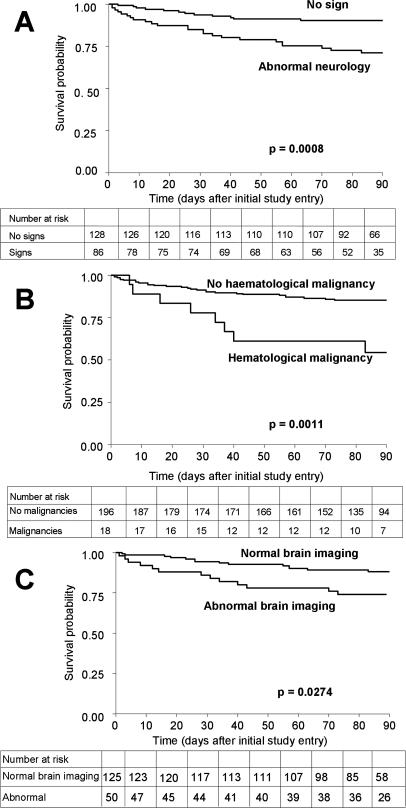
BACKGROUND: Cryptococcosis is a life-threatening opportunistic fungal infection in both HIV-positive and -negative patients. Information on clinical presentation and therapeutic guidelines, derived mostly from clinical trials performed before introduction of highly active antiretroviral therapy in patients with cryptococcal meningoencephalitis, is missing data on extrameningeal involvement and infections by serotype D as opposed to serotype A of Cryptococcus neoformans. METHODS AND FINDINGS: The prospective multicenter study CryptoA/D was designed in France (1997-2001) to analyse the factors influencing clinical presentation and outcome without the bias of inclusion into therapeutic trials. Of the 230 patients enrolled, 177 (77%) were HIV-positive, 50 (22%) were female, and 161 (72.5%) were infected with serotype A. Based on culture results at baseline, cryptococcosis was more severe in men, in HIV-positive patients, and in patients infected with serotype A. Factors independently associated with mycological failure at week 2 independent of HIV status were initial dissemination (OR, 2.4 [95% confidence interval (CI), 1.2-4.9]), high (>1:512) serum antigen titre (OR, 2.6 [1.3-5.4]), and lack of flucytosine during induction therapy (OR, 3.8 [1.9-7.8]). The three-month survival was shorter in patients with abnormal neurology or brain imaging at baseline, and in those with haematological malignancy. CONCLUSIONS: Thus sex, HIV status, and infecting serotype are major determinants of presentation and outcome during cryptococcosis. We propose a modification of current guidelines for the initial management of cryptococcosis based on systematic fungal burden evaluation.
Overview
The claims and statistics of this paper haven’t been checked yet.
Free: it reads the open-access text and checks the first 5 claims that cite a source we can check. Create a free account to check every claim.
Integrity signals
Registry
Cites
Statistics
Figures
Verification
Claims the paper makes
The claims and statistics of this paper haven’t been checked yet.
Free: it reads the open-access text and checks the first 5 claims that cite a source we can check. Create a free account to check every claim.
Claims other papers make about this one
Each is checked against this paper’s own text: does it say what the citing paper says it does?
In the citing paper
“Early studies have demonstrated that brain infections occur following fungemia, and that there is a direct correlation between the severity of the infection and the magnitude of fungemia [70–72].”
From Mechanisms of fungal dissemination (2021) · cites this paper as [72]
Self-check
Percentages, sums and reported differences re-computed from the paper’s own numbers.
The self-check needs the paper’s full text.
Citations
Cites
No adjustments are needed for multiple comparisons.
Rothman, K. J. (1990) · Epidemiology · doi:10.1097/00001648-199001000-00010 · Cited by 5,965 · cited 1×
“Finally, the question of multiple comparisons adjustment is a subject of debate in epidemiological research [30,34], arising because of the increased risk of type I errors (findings of false significance) when numerous hypotheses are tested simultaneously at set pvalues.”
BackgroundCastro, K. G., Ward, J. W., Slutsker, L., Buehler, J. W., Jaffe, H. W., Berkelman, R. L., & Curran, J. W. (1993) · Clinical Infectious Diseases · doi:10.1093/clinids/17.4.802 · Cited by 4,349
J Antimicrob Chemother 1994; 33: 350–351
O'SHAUGHNESSY, E. M., & DAS, S. S. (1994) · Journal of Antimicrobial Chemotherapy · doi:10.1093/jac/33.2.350 · Cited by 3,746
Multiple significance tests: the Bonferroni method
Bland, J. M., & Altman, D. G. (1995) · BMJ · doi:10.1136/bmj.310.6973.170 · Cited by 3,341 · cited 1×
“Finally, the question of multiple comparisons adjustment is a subject of debate in epidemiological research [30,34], arising because of the increased risk of type I errors (findings of false significance) when numerous hypotheses are tested simultaneously at set pvalues.”
Do multiple outcome measures require p-value adjustment?
Feise, R. J. (2002) · BMC Medical Research Methodology · doi:10.1186/1471-2288-2-8 · Cited by 1,299 · cited 1×
“We thus limited the adjustment to the main outcomes and engaged other comparisons to present exploratory but relevant results [35].”
ResultCryptococcosis in the era of AIDS--100 years after the discovery of Cryptococcus neoformans
Mitchell, T. G., & Perfect, J. R. (1995) · Clinical Microbiology Reviews · doi:10.1128/cmr.8.4.515 · Cited by 1,213 · cited 2×
“Only small series of computerized tomographies or magnetic resonance imaging of the brain have been published so far, and none has clearly addressed the relationship between cerebral lesions and prognosis [1].”
BackgroundPractice Guidelines for the Management of Cryptococcal Disease
Saag, M. S., Graybill, R. J., Larsen, R. A., Pappas, P. G., Perfect, J. R., Powderly, W. G., Sobel, J. D., Dismukes, W. E., & Mycoses Study Group Cryptococcal Subproject (2000) · Clinical Infectious Diseases · doi:10.1086/313757 · Cited by 1,105
(1993) · JAMA: The Journal of the American Medical Association · doi:10.1001/jama.1993.03500040022009 · Cited by 958
Bennett, J. E., Dismukes, W. E., Duma, R. J., Medoff, G., Sande, M. A., Gallis, H., Leonard, J., Fields, B. T., Bradshaw, M., Haywood, H., et al. (1979) · New England Journal of Medicine · doi:10.1056/nejm197907193010303 · Cited by 863 · cited 3×
“Flucytosine prescription has been associated with toxicity [19,24,48], but lower dosages and monitoring of plasma drug levels can prevent this problem.”
BackgroundMethodTreatment of Cryptococcal Meningitis Associated with the Acquired Immunodeficiency Syndrome
van der Horst, C. M., Saag, M. S., Cloud, G. A., Hamill, R. J., Graybill, J. R., Sobel, J. D., Johnson, P. C., Tuazon, C. U., Kerkering, T., Moskovitz, B. L., et al. (1997) · New England Journal of Medicine · doi:10.1056/nejm199707033370103 · Cited by 820
Research works printed but not linked: 1
- Chrétien, 2002, J Infect Dis, 186, 522
Cited by
Items 201–300 of 425
Paccoud, O., Desnos‐Ollivier, M., Cassaing, S., Sitbon, K., Alanio, A., Bellanger, A., Bonnal, C., Bonhomme, J., Botterel, F., Bougnoux, M., et al. (2023) · Open Forum Infectious Diseases · doi:10.1093/ofid/ofad658 · Cited by 16
Self-citationCRYPTOCOCCAL meningitis in a HIV negative newly diagnosed diabetic patient: a CASE report
Owuor, H. O., & Chege, P. (2019) · BMC Infectious Diseases · doi:10.1186/s12879-018-3625-4 · Cited by 16
Liu, L., Guo, L., Liu, Y., Chen, T., Li, S., Yang, Y., & Liu, G. (2017) · European Journal of Pediatrics · doi:10.1007/s00431-017-2974-0 · Cited by 16
A New Overview of Sex Bias in Fungal Infections
Rao, H. H., & McClelland, E. E. (2024) · Journal of Fungi · doi:10.3390/jof10090607 · Cited by 15
“This research corroborates similar findings that show increased immune responses in females in response to other fungal pathogens [18,19].”
ResultWald‐Dickler, N., & Blodget, E. (2017) · Current Opinion in Organ Transplantation · doi:10.1097/mot.0000000000000426 · Cited by 15
Outcomes of cryptococcosis in renal transplant recipients in a less‐resourced health care system
Ponzio, V., Camargo, L. F. A., Medina-Pestana, J. O., Perfect, J. R., & Colombo, A. L. (2018) · Transplant Infectious Disease · doi:10.1111/tid.12910 · Cited by 15
Boyles, T. H., Gatley, E., Wasserman, S. A., & Meintjes, G. (2016) · JAIDS Journal of Acquired Immune Deficiency Syndromes · doi:10.1097/qai.0000000000001183 · Cited by 15
Consideraciones sobre la criptococosis en los pacientes con sida
Lizarazo, J., & Castañeda, E. (2012) · Infectio · doi:10.1016/s0123-9392(12)70032-2 · Cited by 15
Liu, J., Liu, J., Su, X., Yang, L., Wang, Y., Wang, A., Xu, X., Li, M., Jiang, Y., & Peng, F. (2022) · BMC Neurology · doi:10.1186/s12883-022-02803-1 · Cited by 14
“There are two possible reasons for these differences: (1) the sources of the enrolled cases were not identical (one was from the Third A liated Hospital of Sun Yat Sen University, and the other was from the Third A liated Hospital of Sun Yat Sen University and Jiangxi Chest Hospital); (2) the time spans of patient inc…”
BackgroundMethodResultInfluentialInfections fongiques pulmonaires chez les patients séropositifs pour le VIH
Denis, B., & Lortholary, O. (2013) · Revue des Maladies Respiratoires · doi:10.1016/j.rmr.2013.02.005 · Cited by 14
Self-citationDonor transmission of Cryptococcus neoformans presenting late after renal transplantation
MacEwen, C., Ryan, A., & Winearls, C. G. (2013) · Clinical Kidney Journal · doi:10.1093/ckj/sft006 · Cited by 14
“One investigator found that abnormal neuroimaging as well as abnormal baseline neurology (including disordered mentation) was predictive of mortality in cryptococcal meningitis, but the proportion of SOT recipients in this study was small [20].”
BackgroundCachay, E. R., Caperna, J., Sitapati, A. M., Jafari, H., Kandel, S., & Mathews, W. C. (2010) · AIDS Research and Therapy · doi:10.1186/1742-6405-7-29 · Cited by 14
“AIDS related cryptococcal meningitis (in the absence of immune reconstitution) is often clinically characterized by a massive fungal burden with minimal CSF pleocytosis but with elevated CSF pressure [6,7].”
BackgroundNascimento, É., Vitali, L. H., Tonani, L., Kress, M. R. V. Z., Takayanagui, O. M., & Martínez, R. (2016) · American Journal of Tropical Medicine and Hygiene · doi:10.4269/ajtmh.15-0595 · Cited by 14
Pharmacotherapy of cryptococcosis
Ritter, M. L., & Goldman, D. L. (2009) · Expert Opinion on Pharmacotherapy · doi:10.1517/14656560903200642 · Cited by 13
“(2009) 10(15) 2435 CSF white blood cell count < 20/μl, an initial CSF or serum cryptococcal antigen titer > 1:1024, extraneural sites of infection or a high opening pressure on lumbar puncture, abnormal brain imaging and altered mentation [36-38].”
BackgroundEvaluation and management of the swollen optic disk in cryptococcal meningitis
Rigi, M., Khan, K., Smith, S. V., Suleiman, A., & Lee, A. G. (2016) · Survey of Ophthalmology · doi:10.1016/j.survophthal.2016.10.004 · Cited by 13
Treatment of cryptococcosis in the setting of HIV coinfection
Khawcharoenporn, T., Apisarnthanarak, A., & Mundy, L. M. (2007) · Expert Review of Anti-infective Therapy · doi:10.1586/14787210.5.6.1019 · Cited by 14
Dollo, I., Marih, L., Fane, M. E., Essebbani, M., Sodqi, M., Ouladlahsen, A., Chakib, A., Kadioui, F. E., Hamdani, A. R. T., Mabrouki, M. J. E., et al. (2016) · Journal de Mycologie Médicale · doi:10.1016/j.mycmed.2016.06.004 · Cited by 13
“[2] Dromer F, Mathoulin-Pélissier S, Launay O, Lortholary O, French Cryptococcosis Study Group.”
BackgroundBaseline Serum C-Reactive Protein Level Predicts Mortality in Cryptococcal Meningitis
Chesdachai, S., Engen, N. W., Rhein, J., Tugume, L., Kandole, T. K., Abassi, M., Ssebambulidde, K., Kasibante, J., Williams, D. A., Skipper, C. P., et al. (2020) · Open Forum Infectious Diseases · doi:10.1093/ofid/ofaa530 · Cited by 12
“Previous studies have shown that low Glasgow Coma Scale score reflects high severity of disease and unfavorable outcome [28, 29].”
ResultHoang, L., Philips, P., & Galanis, E. (2011) · Clinical Microbiology Newsletter · doi:10.1016/j.clinmicnews.2011.11.003 · Cited by 12
Chen, M., Li, X., Shaoxi, W., Tang, X., Feng, B.-W., Yao, Z., Pan, W., Liao, W., & Quan, Z. (2010) · Frontiers of Medicine · doi:10.1007/s11684-010-0011-z · Cited by 12
Torres, R. G., Etchebehere, R. M., Adad, S. J., Micheletti, A. R., Ribeiro, B. D. M., Silva, L. E. A., Mora, D. J., Paim, K. F., & Silva-Vergara, M. L. (2016) · American Journal of Tropical Medicine and Hygiene · doi:10.4269/ajtmh.16-0148 · Cited by 12
“cal and laboratorial markers associated to a poor outcome, evidencing a severe and disseminated fungal infection together with advanced immunodeficiency.(8,9,25)”
BackgroundYang, H., Yin, F., Xiao, T., Gan, S., Zou, P., Peng, J., & Wu, L. (2020) · International Journal of Infectious Diseases · doi:10.1016/j.ijid.2020.03.068 · Cited by 12
Kryptokokkose: Kasuistiken, Epidemiologie und Therapiestrategien
Mischnik, A., Klein, S., Tintelnot, K., Zimmermann, S., & Rickerts, V. (2013) · DMW - Deutsche Medizinische Wochenschrift · doi:10.1055/s-0033-1343285 · Cited by 12
Santos, S. R. D., Stempinski, P. R., de Araújo, M. V., Rojas, K., Gerbig, G. R., Lopes, L. C. L., Smith, D. F. Q., Wear, M. P., & Casadevall, A. (2025) · mBio · doi:10.1128/mbio.02646-25 · Cited by 11
Bertout, S., Laroche, L., Roger, F., Krasteva, D., Drakulovski, P., & Bellet, V. (2023) · Pathogens · doi:10.3390/pathogens12060758 · Cited by 11
“Despite treatment, the risk of death in PLHIV remains approximately 20 to 30% in developed countries and can reach 70% in developing countries [3,8,9].”
BackgroundChadli, S., Aghrouch, M., Taqarort, N., Malmoussi, M., Ouagari, Z., Moustaoui, F., Bourouache, M., & Oulkheir, S. (2017) · Journal de Mycologie Médicale · doi:10.1016/j.mycmed.2017.10.006 · Cited by 11
Backx, M., White, P. L., & Barnes, R. (2014) · British Journal of Hospital Medicine · doi:10.12968/hmed.2014.75.5.271 · Cited by 11
“However, it should be noted that data within the haematology oncology population are lacking with the majority of data derived from studies involving HIVpositive patients and solid organ transplant recipients (Antinori et al, 2001; Dromer et al, 2007; Chuang et al, 2008).”
BackgroundOutcome of HIV-1-associated cryptococcal meningitis, Denmark 1988–2008
Mathiesen, I. H. M., Knudsen, J. D., Gerstoft, J., Cowan, S. A., & Benfield, T. (2011) · Scandinavian Journal of Infectious Diseases · doi:10.3109/00365548.2011.611168 · Cited by 11
Unusual Fungal Infections in Renal Transplant Recipients
Eswarappa, M., Varma, P. V., Madhyastha, R., Reddy, S., Gireesh, M., Gurudev, K., Mysorekar, V. V., & Hemanth, B. (2015) · Case Reports in Transplantation · doi:10.1155/2015/292307 · Cited by 11
“Patient ultimately succumbed to the underlying illness.”
Santana, R. D. C., Schiave, L. A., Quaglio, A. S. D. S., de Gaitani, C. M., & Martínez, R. (2017) · Mycopathologia · doi:10.1007/s11046-017-0165-1 · Cited by 11
Comparative Pharmacokinetics of Continuous and Conventional Intrathecal Amphotericin B in Rabbits
Fang, M., Lü, T. M., Ma, A. D., Wang, L., Li, G., Qiu, A. Z., Pan, Z. Y., Wang, Y. Y., & Liu, X. J. (2012) · Antimicrobial Agents and Chemotherapy · doi:10.1128/aac.00304-12 · Cited by 11
Liu, J., Lu, Y., Liu, J., Liang, J., Zhang, Q., Li, H., Zhong, X., Bu, H., Wang, Z., Fan, L., et al. (2023) · European Journal of Clinical Microbiology & Infectious Diseases · doi:10.1007/s10096-023-04653-2 · Cited by 10
“Fungal burden has been associated with mortality in CM patients [17, 28–32].”
BackgroundMaziarz, E. K., & Perfect, J. R. (2023) · Springer eBooks · doi:10.1007/978-3-031-35803-6_16 · Cited by 10
Duration of systemic antifungal therapy for patients with invasive fungal diseases: A reassessment
Gressens, S. B., Rouzaud, C., Lamoth, F., Calandra, T., Lanternier, F., & Lortholary, O. (2025) · Molecular Aspects of Medicine · doi:10.1016/j.mam.2025.101347 · Cited by 10
Self-citationTyping Species of Cryptococcus and Epidemiology of Cryptococcosis
Mitchell, T. G., & Litvintseva, A. P. (2009) · Springer eBooks · doi:10.1007/978-3-642-03150-2_8 · Cited by 10
Kushima, Y., 滝澤, 秀., Machida, Y., Umetsu, T., Ikeda, N., Miyoshi, M., Chibana, K., Shimizu, Y., Takemasa, A., & Ishii, Y. (2017) · Internal Medicine · doi:10.2169/internalmedicine.9020-17 · Cited by 10
“A serum cryptococcal antigen titer 1:512 is a poor prognostic factor (27), and the Infectious Diseases Society of America recommends that these patients be equally treated for central nervous system diseases (28).”
BackgroundCryptococcosis, lymphoproliferative disorders and modern day chemotherapy regimens
Slavin, M. A., & Chen, S. C.-A. (2012) · Leukemia & lymphoma/Leukemia and lymphoma · doi:10.3109/10428194.2012.736987 · Cited by 10
Qin, J., Nong, L., Zhu, Q., Huang, Z., Wu, F., & Li, S. (2024) · Neurology and Therapy · doi:10.1007/s40120-024-00610-z · Cited by 9
Prével, R., Guillotin, V., Imbert, S., Blanco, P., Delhaès, L., & Duffau, P. (2022) · Frontiers in Medicine · doi:10.3389/fmed.2022.836886 · Cited by 9
Analysis of asthma patients for cryptococcal seroreactivity in an urban German area
Grahnert, A., Müller, U., von Buttlar, H., Treudler, R., & Alber, G. (2015) · Medical Mycology · doi:10.1093/mmy/myv024 · Cited by 9
“It was reported that males with cryptococcosis are significantly higher affected as females with cryptococcosis as measured by fungaemia, disseminated infection and mean serum antigen titer [32].”
BackgroundPilmis, B., Bougnoux, M., Guéry, R., Senghor, Y., Monnier, A. L., Lanternier, F., Bretagne, S., Alanio, A., & Lortholary, O. (2020) · Transplant Infectious Disease · doi:10.1111/tid.13263 · Cited by 9
“[4] In this study according to other studies, CSF cultures were more frequently positive for Cryptococcus neoformans in HIV-positive than in HIV-negative patients.[4,17,18] Furthermore, in a study by Brizendine et al, HIV-positive patients exhibited more CNS disease and positive blood cultures than organ transplant re…”
BackgroundResultInfluentialSelf-citationClinical characteristics and evaluation of the incidence of cryptococcosis in Finland 2004–2018
Toivonen, A., Eriksson, M., Friberg, N., Hautala, T., Kääriäinen, S., Leppäaho‐Lakka, J., Mikkola, J., Nieminen, T., Oksi, J., Salonen, J. H., et al. (2021) · Scandinavian Journal of Infectious Diseases · doi:10.1080/23744235.2021.1922753 · Cited by 9
Invasion of Cryptococcus into the Central Nervous System
Dromer, F., & Levitz, S. M. (2014) · ASM Press eBooks · doi:10.1128/9781555816858.ch34 · Cited by 9
Self-citationAssociations antifongiques dans les infections fongiques invasives
Gellen‐Dautremer, J., Lanternier, F., Dannaoui, É., & Lortholary, O. (2009) · La Revue de Médecine Interne · doi:10.1016/j.revmed.2009.02.027 · Cited by 9
Self-citationOriginal Research: Risk Factors for Mortality from Primary Cryptococcosis in Patients with HIV
Sajadi, M. M., Roddy, K. M., Chan‐Tack, K. M., & Forrest, G. N. (2009) · Postgraduate Medicine · doi:10.3810/pgm.2009.03.1983 · Cited by 9
“Our fi nding is, however, consistent with the 32% and 39% pulmonary involvement noted in 2 other studies.(8,32) The majority of our patients did not undergo bronchcoscopy; however, 22% of patients with pulmonary infi ltrates had cryptococcal pneumonia confi rmed by bronchoscopy.”
ResultClinical Features, Diagnosis, and Outcome of Encephalitis in French Guiana
Roux, A., Houcke, S., Sanna, A., Mathien, C., Mayence, C., Gueneau, R., Liégeon, G., Walter, G., Résière, D., Elenga, N., et al. (2018) · American Journal of Tropical Medicine and Hygiene · doi:10.4269/ajtmh.18-0308 · Cited by 9
Coussement, J., Heath, C. H., Roberts, M. B., Lane, R. J., Spelman, T. D., Smibert, O. C., Longhitano, A., Morrissey, C. O., Nield, B., Tripathy, M., et al. (2024) · Clinical Infectious Diseases · doi:10.1093/cid/ciae630 · Cited by 8
Enriquez, V., Munzen, M. E., Porras, L. M., Niño, C. L. C., Yu, F., Alviña, K., Ramos, R. L., Dores, M. R., Giusti‐Rodríguez, P., & Martinez, L. R. (2025) · Journal of Neuroinflammation · doi:10.1186/s12974-025-03384-9 · Cited by 8
“During cryptococcosis, fungemia is detected in ∼ 50% of HIV-infected patients [3], and this correlates experimentally with systemic dissemination [4], which is an independent parameter of early mycological failure in humans [3].”
Vidal, J. E., Moraes, C. D. A., de Siqueira, R. E. B., Miranda, N. B., Marcusso, R. M. N., Boulware, D. R., & de Oliveira, A. C. P. (2020) · Mycopathologia · doi:10.1007/s11046-020-00512-2 · Cited by 8
Combination Therapy for HIV-Associated Cryptococcal Meningitis—A Success Story
Hurt, W. J., Harrison, T. S., Molloy, S. F., & Bicanic, T. A. (2021) · Journal of Fungi · doi:10.3390/jof7121098 · Cited by 8
“The inclusion of 5-FC in any regimen was also independently associated with CSF sterilisation at two weeks [59].”
BackgroundMiwa, T., Okamoto, K., Ikeuchi, K., Yamamoto, S., Okugawa, S., Ichida, A., Akamatsu, N., Hasegawa, K., & Tsutsumi, T. (2024) · Open Forum Infectious Diseases · doi:10.1093/ofid/ofae255 · Cited by 8
“Male sex was proposed as a risk factor for the development of cryptococcosis by a previous study [32].”
Khayhan, K., Hagen, F., Norkaew, T., Puengchan, T., Boekhout, T., & Sriburee, P. (2017) · Mycopathologia · doi:10.1007/s11046-016-0067-7 · Cited by 9
de Bouillé, J. G., Epelboin, L., Hénaff, F., Migaud, M., Abboud, P., Blanchet, D., Aznar, C., Djossou, F., Lortholary, O., Elenga, N., et al. (2022) · Frontiers in Immunology · doi:10.3389/fimmu.2022.881352 · Cited by 8
Self-citationFries, B. C., & Cox, G. M. (2014) · ASM Press eBooks · doi:10.1128/9781555816858.ch38 · Cited by 8
Fungal Infections Among Patients with AIDS
Lortholary, O., & Dupont, B. (2010) · Springer eBooks · doi:10.1007/978-1-4419-6640-7_31 · Cited by 8
Self-citationVingt-deux cas de cryptococcose neuromeningée en Tunisie
Kaouech, E., Kallel, K., Belhadj, S., Anane, S., Chaabane, T. B., Fadhl, K. B., Khedher, A., Meddeb, B., Lakhal, S. B., & Chaker, E. (2009) · Médecine et Maladies Infectieuses · doi:10.1016/j.medmal.2009.02.004 · Cited by 8
Cabello, A., Alen, J. F., Gadea, I., Mahíllo, I., Górgolas, M., & Guerrero, M. L. F. (2016) · Medicina Clínica · doi:10.1016/j.medcli.2015.11.045 · Cited by 8
Zhu, Q., Long, Q., Wei, C., Chen, J., Nong, L., Qin, J., Huang, Z., Zheng, Y., & Li, S. (2024) · Journal of Microbiology Immunology and Infection · doi:10.1016/j.jmii.2024.08.009 · Cited by 7
Investigation of CryptoPS LFA-positive sera in patients at risk of cryptococcosis
Aissaoui, N., Benhadid-Brahmi, Y., Sturny-Leclère, A., Hamane, S., Payet, E., Bonnal, C., Munier, A., Denis, B., & Alanio, A. (2022) · Medical Mycology · doi:10.1093/mmy/myac078 · Cited by 7
Song, W., Shen, Y., Wang, Z., Qi, T., Liu, L., Zhang, R.-F., Wang, J., Tang, Y., Chen, J., Sun, J., et al. (2020) · Chinese Medical Journal · doi:10.1097/cm9.0000000000001191 · Cited by 7
“CSF fungal burden, altered mental status, and rate of yeast clearance have been shown to predict mortality in many studies.([12-15]) Consistent with previous studies, we found altered mental status as a risk factor for 8-week mortality.”
ResultLiu, J., Liu, J., Qin, B., Yao, S., Wang, A., Yang, L., Su, Z., Xu, X., Jiang, Y., & Peng, F. (2022) · Frontiers in Immunology · doi:10.3389/fimmu.2022.823021 · Cited by 7
Access to flucytosine for the treatment of HIV-associated cryptococcal meningitis in Africa
Temfack, E., & Lortholary, O. (2022) · The Lancet Infectious Diseases · doi:10.1016/s1473-3099(22)00315-2 · Cited by 7
Self-citationInfections fongiques au cours de l'infection par le virus de l'immunodéficience humaine
Charles, P., Loulergue, P., Viard, J., Dromer, F., & Lortholary, O. (2007) · EMC-Maladies infectieuses/Encyclopédie médico-chirurgicale. Maladies infectieuses · doi:10.1016/s1166-8598(07)45920-8 · Cited by 7
Self-citationCanessa, J. C., Cabrera, D. M., Eskenazi, J., & Samalvides, F. (2011) · World Journal of AIDS · doi:10.4236/wja.2011.11002 · Cited by 7
“prospective study where a 1/512 cut point was proposed as a predictor of therapeutic failure at day 14 [10].”
BackgroundInfluentialCentral nervous system infections in the systemic vasculitides
Ye, S., & Yang, C. (2008) · Current Opinion in Neurology · doi:10.1097/wco.0b013e3283013983 · Cited by 7
Intracellular parasitism of macrophages by Cryptococcus.
Ma, H. (2009) · University of Birmingham Institutional Research Archive (University of Birmingham) · Cited by 7
Alanazi, A. H., Chastain, D. B., Rudraraju, M., Parvathagiri, V., Shan, S., Lin, X., Henao‐Martínez, A. F., Franco‐Paredes, C., Narayanan, S. P., & Somanath, P. R. (2023) · European Journal of Pharmacology · doi:10.1016/j.ejphar.2023.176177 · Cited by 6
Teixeira, J. C., de Oliveira, V. F., Gomes, H. R., Ribeiro, S. M., de Araújo, E. D. M. P. A., da Cruz, I. C. L. V., Taborda, M., Magri, A. S. G. K., Vidal, J. E., Nastri, A. C. D. S. S., et al. (2024) · Mycoses · doi:10.1111/myc.13767 · Cited by 6
Review: The application of corticosteroids in cryptococcal meningitis
Liu, J., Liu, J., Yang, L., Xu, X., Qin, B., Jiang, Y., & Peng, F. (2023) · Journal de Mycologie Médicale · doi:10.1016/j.mycmed.2023.101364 · Cited by 6
Orsini, J., Blaak, C., Mahmoud, D., & Jeong, Y.-G. (2015) · Journal of Community Hospital Internal Medicine Perspectives · doi:10.3402/jchimp.v5.26098 · Cited by 6
“Besides, initial empiric antimicrobial therapy did not include amphotericin-B or 5-flucytosine, which has been described as risk factor for adverse outcome (16, 21).”
BackgroundTsai, W., Lien, C.-Y., Lee, J., Huang, C.-R., Tsai, N., Chang, C., Lu, C., & Chang, W. (2019) · Journal of Clinical Neuroscience · doi:10.1016/j.jocn.2019.06.015 · Cited by 6
Cryptococcal meningoencephalitis. Epidemiology and mortality risk factors in pre- and post-HAART era
Cabello, A., Alen, J. F., Gadea, I., Mahíllo, I., Górgolas, M., & Guerrero, M. L. F. (2016) · Medicina Clínica (English Edition) · doi:10.1016/j.medcle.2016.06.030 · Cited by 6
Hoffman, M. J., & Stosor, V. (2014) · Cancer treatment and research · doi:10.1007/978-3-319-04220-6_9 · Cited by 6
Wilbur, L., & Heyborne, R. (2009) · Cases Journal · doi:10.1186/1757-1626-2-60 · Cited by 6
Yeung, C. M., & Fabbri, N. (2023) · Skeletal Radiology · doi:10.1007/s00256-023-04442-0 · Cited by 5
“Similarly, other reviews of cryptococcosis in HIV-negative patients have demonstrated malignancy, corticosteroid use, cirrhosis, and organ transplant to be risk factors [6, 7].”
Varela, K., Mahmud, H. A., Arman, H. D., Martinez, L. R., Wakeman, C. A., & Yoshimoto, F. K. (2022) · Journal of Natural Products · doi:10.1021/acs.jnatprod.1c01101 · Cited by 5
Kessel, J. M., Rossaert, A.-C., Lingscheid, T., Grothe, J. H., Harrer, T., Wyen, C., Tominski, D., Bollinger, T., Kehr, A. K., Kalbitz, S., et al. (2024) · International Journal of Medical Microbiology · doi:10.1016/j.ijmm.2024.151614 · Cited by 5
Management of Cryptococcal Meningoencephalitis in Both Developed and Developing Countries
Jarvis, J. N., Bicanic, T. A., & Harrison, T. S. (2014) · ASM Press eBooks · doi:10.1128/9781555816858.ch42 · Cited by 5
Nodules multiples du visage révélant une cryptococcose disséminée chez un patient immunocompétent
Rachadi, H., Senouci, K., Lyagoubi, M., Benzekri, A., Mansouri, S., Ramli, I. P., Ismaïli, N., Hassam, B., & Benzekri, L. (2016) · Annales de Dermatologie et de Vénéréologie · doi:10.1016/j.annder.2015.12.019 · Cited by 5
Defining standards of CARE for invasive fungal diseases in solid organ transplant patients
García‐Vidal, C., Carratalà, J., & Lortholary, O. (2019) · Journal of Antimicrobial Chemotherapy · doi:10.1093/jac/dkz039 · Cited by 5
Self-citationJoe, K. K., Mukuku, O. K., Lwamba, G. K., & Wembonyama, S. O. (2021) · Journal of Neurology & Stroke · doi:10.15406/jnsk.2021.11.00459 · Cited by 5
Management of Cryptococcosis in Transplant Candidates and Recipients
Baddley, J. W., & Forrest, G. N. (2021) · Springer eBooks · doi:10.1007/978-3-030-25869-6_47 · Cited by 5
Managing Infections in Patients With Hematological Malignancies
Kleinberg, M. E. (2009) · Humana Press eBooks · doi:10.1007/978-1-59745-415-5 · Cited by 5
Chalkias, S. G., Doweiko, J. P., & Eliopoulos, G. M. (2014) · Open Forum Infectious Diseases · doi:10.1093/ofid/ofu008 · Cited by 5
“cephalitis remains high, up to 20%, despite treatment with antifungal agents [8].”
BackgroundLes infections opportunistes au cours de la sarcoïdose
Jamilloux, Y., Bernard, C., Lortholary, O., Kerever, S., Lelièvre, L., Gerfaud‐Valentin, M., Broussolle, C., Valeyre, D., & Sève, P. (2016) · La Revue de Médecine Interne · doi:10.1016/j.revmed.2016.08.011 · Cited by 5
Self-citationGiacomelli, A., & Antinori, S. (2021) · Elsevier eBooks · doi:10.1016/b978-0-12-818731-9.00125-7 · Cited by 5
Sangalli-Leite, F. (2010) · doi:10.5016/dt000618647 · Cited by 5
Clinical Characteristics of Patients with Cryptococcal Meningitis in Hokkaido: A Case Series
Tarisawa, M., Kano, T., Ishimaru, T., Nomura, T., Mizushima, K., Horiuchi, K., Takahashi‐Iwata, I., Ura, S., Minami, N., Hozen, H., et al. (2023) · Internal Medicine · doi:10.2169/internalmedicine.1944-23 · Cited by 4
“CSF findings, imaging findings, and other prognostic factors in the present study were similar to those previously reported (11, 12).”
Allergen1 regulates polysaccharide structure in C ryptococcus neoformans
Jain, N., Cordero, R. J. B., Casadevall, A., & Fries, B. C. (2013) · Molecular Microbiology · doi:10.1111/mmi.12216 · Cited by 4
Page, K. R., Chaisson, R. E., & Sande, M. A. (2008) · Elsevier eBooks · doi:10.1016/b978-1-4160-2882-6.50038-1 · Cited by 4
Chang, S.-H., Hsu, J.-W., Chen, S.-C., & Chan, L.-P. (2009) · 內科學誌 · doi:10.6314/jimt.2009.20(2).12 · Cited by 4
Harrabi, H., Medhaffar, M., Kammoun, L., Maaloul, I., Ayadi, L., & Elloumi, M. (2010) · Journal de Mycologie Médicale · doi:10.1016/j.mycmed.2010.07.001 · Cited by 4
Persistent Cryptococcal Brain Infection despite Prolonged Immunorecovery in an HIV-Positive Patient
Wingfield, T., Baxter, J., Herwadkar, A., du Plessis, D., Blanchard, T. J., Vilar, F. J., & Varma, A. R. (2014) · Case Reports in Neurological Medicine · doi:10.1155/2014/164826 · Cited by 4
“HIV causes depletion of T cell immunity allowing infection by, most commonly, Cryptococcus neoformans (var grubii or neoformans) [2, 3].”
BackgroundInvasive Fungal Infection in Primary Immunodeficiencies Other Than Chronic Granulomatous Disease
Garraffo, A., Pilmis, B., Toubiana, J., Puel, A., Mahlaoui, N., Blanche, S., Lortholary, O., & Lanternier, F. (2017) · Current Fungal Infection Reports · doi:10.1007/s12281-017-0273-x · Cited by 4
Self-citationKhan, N., & Hiesgen, J. (2017) · South African Journal of Radiology · doi:10.4102/sajr.v21i2.1215 · Cited by 4
Akazawa, H., Hagiya, H., Koyama, T., & Otsuka, F. (2024) · Mycopathologia · doi:10.1007/s11046-023-00814-1 · Cited by 4
“However, to the best of our knowledge, only a few studies have investigated the epidemiology and clinical characteristics of disseminated cryptococcosis in HIV-negative populations [8, 18].”
BackgroundFungal infections of the central nervous system
Hamill, R. J. (2009) · Elsevier eBooks · doi:10.1016/b978-1-4160-5680-5.00028-1 · Cited by 4
Whittington, A., & Wang, P. (2010) · Medical Mycology · doi:10.3109/13693786.2010.512618 · Cited by 4
Mahadevan, A., & Krishna, S. S. (2019) · Springer eBooks · doi:10.1007/978-3-030-06088-6_12 · Cited by 4
Cryptococcal Meningitis and Systemic Lupus Erythematosus
Antinori, S., Corbellino, M., Galimberti, L., Ridolfo, A., & Milazzo, L. (2014) · Journal of Emergency Medicine · doi:10.1016/j.jemermed.2013.08.144 · Cited by 4
Metadata
- Authors
- Dromer, F., Mathoulin-Pélissier, S., Launay, O., Lortholary, O., & the French Cryptococcosis Study Group
- Affiliations
- Centre National de la Recherche Scientifique (FR)
- Hôpital Cochin (FR)
- Hôpital Necker-Enfants Malades (FR)
- Corresponding author
- Dromer, Françoise
- Venue
- PLoS Medicine
- Publisher
- Public Library of Science (PLoS)
- Published
- 2007-02-06
- Volume
- 4
- Issue
- 2
- Pages
- e21
- ISSN
- 1549-1277 (ISSN-L)
- 1549-1676
- PMC
- PMC1808080
- OpenAlex
- W2064009861
- Cited by
- 374
- References
- 62
- Citations by year
- 2026: 4 · 2025: 8 · 2024: 12 · 2023: 19 · 2022: 15 · 2021: 11 · 2020: 16 · 2019: 15 · 2018: 17 · 2017: 24 · 2016: 34 · 2015: 17 · 2014: 26 · 2013: 24 · 2012: 27
- FWCI
- 19.95
- Type
- journal article
- Language
- en
- Open access
- gold
- doi.org
- Locations
- PLoS Medicine (publishedVersion, cc-by)
- PubMed Central (publishedVersion, cc-by)
- PubMed (publishedVersion)
- DOAJ (DOAJ: Directory of Open Access Journals) (submittedVersion, cc-by-sa)
- Figshare (submittedVersion, cc-by)
- Funders
- Styrelsen för Internationellt Utvecklingssamarbete
- Sidaction
- Topics
- Health Sciences › Medicine › Infectious Diseases › Fungal Infections and Studies
- Health Sciences › Medicine › Infectious Diseases › Infectious Diseases and Tuberculosis
- Health Sciences › Medicine › Infectious Diseases › Antifungal resistance and susceptibility
- Keywords
- cryptococcosis, serotype D, cryptococcal meningoencephalitis, HIV infection, clinical features, treatment outcomes, serum cryptococcal antigen, 5-fluorocytosine, survival, sex differences, hematologic malignancies, fungal burden
- MeSH terms
- Adult, Amphotericin B, Antifungal Agents, Cryptococcosis, Cryptococcus neoformans, Female, Flucytosine, France, Humans, Male, Meningoencephalitis, Prospective Studies, Severity of Illness Index, Treatment Outcome, AIDS-Related Opportunistic Infections
About these checks
Registry, retraction, Cites and statistics results are computed, not judged, with one exception: a printed reference that no index lists is read once by a model before it counts as a citation error. Claims are extracted by a model and kept only when their quote appears verbatim in the text; each cited source is then checked, with a model’s help, for whether it says what the claim relies on. Those verdicts can be wrong — read the claim’s quote and the cited source before relying on one.
Statistics and arithmetic are recomputed, not judged.
Confidence bands are shown only for fields calibrated on our annotated test set. None is calibrated yet, so no band is shown.
What counts as a claim ›How we measure confidence ›How we check this ›
Are you an author, or do you see a problem with this page? Request a review
Data sources
Bibliographic data: Semantic Scholar, OpenAlex, Crossref.
Contains information from the Semantic Scholar Academic Graph Datasets, made available under the ODC Attribution License (ODC-BY 1.0).
Semantic Scholar’s data is described in: Kinney, R., et al. (2023). The Semantic Scholar Open Data Platform. arXiv:2301.10140.
