

The DOI matches its Crossref record; 32 of the 32 references it cites were found in a registry or an index.
Detection of Intracellular Bacterial Communities in Human Urinary Tract Infection
Open accessAbstract
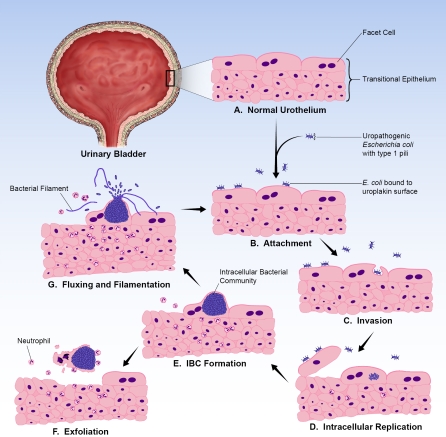
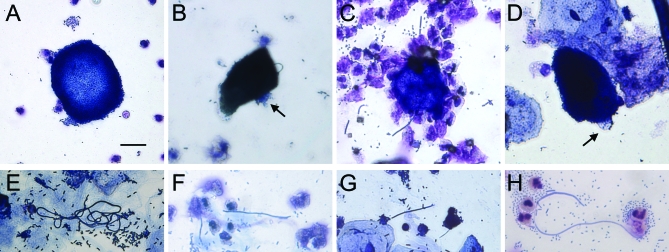
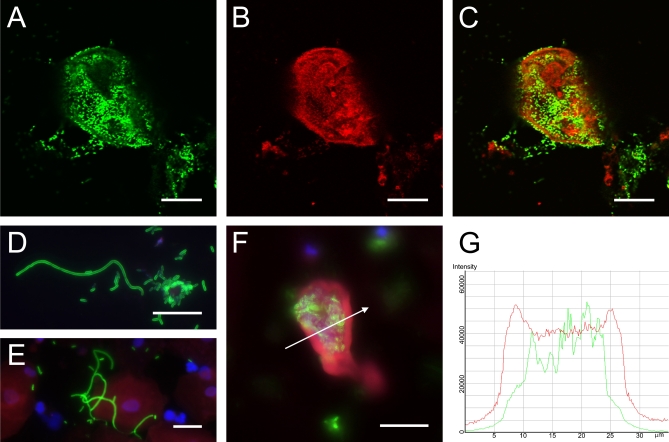
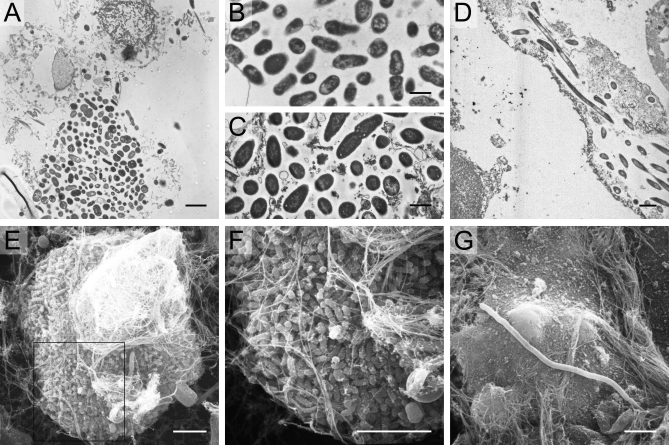
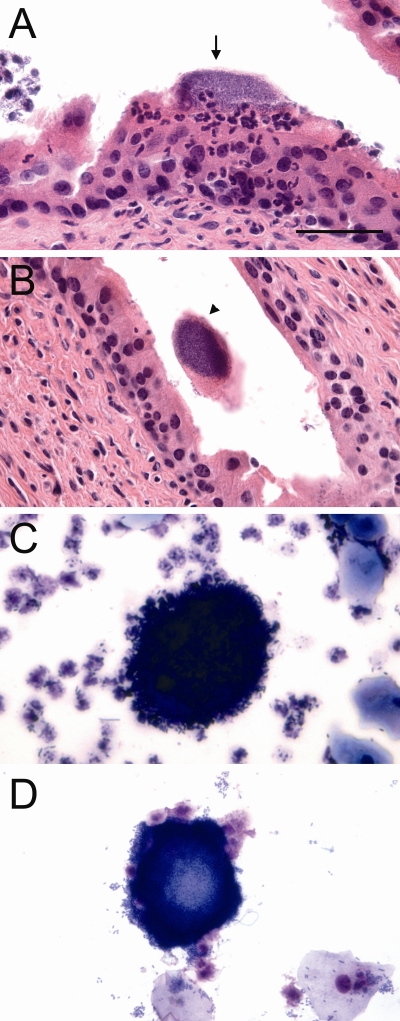
BACKGROUND: Urinary tract infections (UTIs) are one of the most common bacterial infections and are predominantly caused by uropathogenic Escherichia coli (UPEC). While UTIs are typically considered extracellular infections, it has been recently demonstrated that UPEC bind to, invade, and replicate within the murine bladder urothelium to form intracellular bacterial communities (IBCs). These IBCs dissociate and bacteria flux out of bladder facet cells, some with filamentous morphology, and ultimately establish quiescent intracellular reservoirs that can seed recurrent infection. This IBC pathogenic cycle has not yet been investigated in humans. In this study we sought to determine whether evidence of an IBC pathway could be found in urine specimens from women with acute UTI. METHODS AND FINDINGS: We collected midstream, clean-catch urine specimens from 80 young healthy women with acute uncomplicated cystitis and 20 asymptomatic women with a history of UTI. Investigators were blinded to culture results and clinical history. Samples were analyzed by light microscopy, immunofluorescence, and electron microscopy for evidence of exfoliated IBCs and filamentous bacteria. Evidence of IBCs was found in 14 of 80 (18%) urines from women with UTI. Filamentous bacteria were found in 33 of 80 (41%) urines from women with UTI. None of the 20 urines from the asymptomatic comparative group showed evidence of IBCs or filaments. Filamentous bacteria were present in all 14 of the urines with IBCs compared to 19 (29%) of 66 samples with no evidence of IBCs (p < 0.001). Of 65 urines from patients with E. coli infections, 14 (22%) had evidence of IBCs and 29 (45%) had filamentous bacteria, while none of the gram-positive infections had IBCs or filamentous bacteria. CONCLUSIONS: The presence of exfoliated IBCs and filamentous bacteria in the urines of women with acute cystitis suggests that the IBC pathogenic pathway characterized in the murine model may occur in humans. The findings support the occurrence of an intracellular bacterial niche in some women with cystitis that may have important implications for UTI recurrence and treatment.
Overview
The claims and statistics of this paper haven’t been checked yet.
Run the check — free, no account needed. It reads the open-access text and checks the sources it cites.
Integrity signals
Registry
Cites
Statistics
Figures
Verification
Claims the paper makes
The claims and statistics of this paper haven’t been checked yet.
Run the check — free, no account needed. It reads the open-access text and checks the sources it cites.
Claims other papers make about this one
Each is checked against this paper’s own text: does it say what the citing paper says it does?
The source backs part of the claim, not all of it — or backs it for a different population, condition or comparison.
In the citing paper
“IBCs have long been reported in the urine of patients with acute cystitis; however, they have not been detected in the urine of patients with acute episodes of rUTIs [25].”
From Vaginal microbiota and urinary tract infections in women: the protective role of vaginal lactobacilli in counteracting urinary tract infections occurrence and recurrence (2026) · cites this paper as [25]
Experimental — accuracy not yet measured
Self-check
Percentages, sums and reported differences re-computed from the paper’s own numbers.
The self-check needs the paper’s full text.
Citations
Cites
Epidemiology of urinary tract infections: incidence, morbidity, and economic costs
Foxman, B. (2002) · The American Journal of Medicine · doi:10.1016/s0002-9343(02)01054-9 · Cited by 1,935 · cited 1×
“Urinary tract infections (UTIs) affect nearly 13 million women annually in the United States alone and can result in significant costs and morbidity [1–5].”
Intracellular Bacterial Biofilm-Like Pods in Urinary Tract Infections
Anderson, G. G., Palermo, J. J., Schilling, J. D., Roth, R. A., Heuser, J., & Hultgren, S. J. (2003) · Science · doi:10.1126/science.1084550 · Cited by 1,175 · cited 1×
“This intracellular niche is conducive to UPEC replication and formation of intracellular bacterial communities (IBCs) with biofilm-like properties [13].”
Self-citationJawetz, E. (2016) · Pediatric Care Online · doi:10.1542/aap.ppcqr.396241 · Cited by 999
Induction and Evasion of Host Defenses by Type 1-Piliated Uropathogenic Escherichia coli
Mulvey, M. A., López-Boado, Y. S., Wilson, C. L., Roth, R. A., Parks, W. C., Heuser, J., & Hultgren, S. J. (1998) · Science · doi:10.1126/science.282.5393.1494 · Cited by 971
Self-citationMulvey, M. A., Schilling, J. D., & Hultgren, S. J. (2001) · Infection and Immunity · doi:10.1128/iai.69.7.4572-4579.2001 · Cited by 863 · cited 3×
“Ultimately, UPEC are able to form quiescent intracellular reservoirs composed of small rosettes of bacteria within Lamp-1–positive endocytic vesicles that can persist for several weeks protected from antibiotics and, presumably, undetected by the host immune system [15,19,20].”
Self-citationType 1 pilus‐mediated bacterial invasion of bladder epithelial cells
Martinez, J. J., Mulvey, M. A., Schilling, J. D., Pinkner, J. S., & Hultgren, S. J. (2000) · The EMBO Journal · doi:10.1093/emboj/19.12.2803 · Cited by 784 · cited 4×
“coli antibody (1:200) followed by 18 nm colloidal goldconjugated anti-rabbit IgG (1:30, Jackson ImmunoResearch Laboratories) [16].”
InfluentialSelf-citationDiagnosis of Coliform Infection in Acutely Dysuric Women
Stamm, W. E., Counts, G. W., Running, K. R., Fihn, S., Turck, M., & Holmes, K. K. (1982) · New England Journal of Medicine · doi:10.1056/nejm198208193070802 · Cited by 760
Self-citationDIAGNOSIS AND TREATMENT OF UNCOMPLICATED URINARY TRACT INFECTION
Hooton, T. M., & Stamm, W. E. (1997) · Infectious Disease Clinics of North America · doi:10.1016/s0891-5520(05)70373-1 · Cited by 739 · cited 1×
“Urinary tract infections (UTIs) affect nearly 13 million women annually in the United States alone and can result in significant costs and morbidity [1–5].”
Self-citationA Prospective Study of Risk Factors for Symptomatic Urinary Tract Infection in Young Women
Hooton, T. M., Scholes, D., Hughes, J. P., Winter, C., Roberts, P. L., Stapleton, A. E., Stergachis, A. S., & Stamm, W. E. (1996) · New England Journal of Medicine · doi:10.1056/nejm199608153350703 · Cited by 732 · cited 1×
“Urinary tract infections (UTIs) affect nearly 13 million women annually in the United States alone and can result in significant costs and morbidity [1–5].”
Self-citationThe etiology of urinary tract infection: Traditional and emerging pathogens
Ronald, A. (2003) · Disease-a-Month · doi:10.1067/mda.2003.8 · Cited by 656
Research works printed but not linked: 29
- Griebling, 2007, Urologic Diseases in America, 587
- Foxman, 2002, Am J Med, 113, 5S
- Hooton, 1996, N Engl J Med, 335, 468
- Hooton, 1997, Infect Dis Clin North Am, 11, 551
- Ronald, 1991, Med Clin North Am, 75, 299
- Ronald, 2001, Int J Antimicrob Agents, 17, 343
- Kunin, 1980, JAMA, 243, 134
- Foxman, 1990, Am J Public Health, 80, 331
- Ikaheimo, 1996, Clin Infect Dis, 22, 91
- Foxman, 1995, J Infect Dis, 172, 1536
- Russo, 1995, J Infect Dis, 172, 440
- Anderson, 2003, Science, 301, 105
- Justice, 2004, Proc Natl Acad Sci U S A, 101, 1333
- Mulvey, 2001, Infect Immun, 69, 4572
- Martinez, 2000, EMBO J, 19, 2803
- Mulvey, 1998, Science, 282, 1494
- Wright, 2007, Cell Microbiol, 9, 2230
- Mysorekar, 2006, Proc Natl Acad Sci U S A, 103, 14170
- Schilling, 2002, Infect Immun, 70, 7042
- Stamm, 1982, N Engl J Med, 307, 463
- Elliott, 1985, J Infect, 11, 191
- Feldmann, 2007, Infect Immun, 75, 3183
- Garofalo, 2007, Infect Immun, 75, 52
- Justice, 2006, Proc Natl Acad Sci U S A, 103, 19884
- Schoemaker, 1984, J Bacteriol, 158, 551
- Chen, 2006, Proc Natl Acad Sci U S A, 103, 5977
- Bran, 1972, N Engl J Med, 286, 626
- Buckley, 1978, N Engl J Med, 298, 321
- Hooton, 1991, JAMA, 265, 64
Cited by
Sorted by citations
Items 501–600 of 650
Ittensohn, J., Hemberger, J., Griffiths, H., Keller, M., Albrecht, S., & Miethke, T. (2021) · Pathogens · doi:10.3390/pathogens10050549 · Cited by 2
“Filamentation of UPECs was also observed in vitro upon infection of human bladder epithelial cells and in the urine of females with urinary tract infections, indicating that this bacterial escape mechanism is also operative in infected humans [31,32].”
BackgroundCharacterization of a UPEC DegS Mutant in vitro and in vivo
Bradley, I. C., & Danka, E. S. (2015) · Journal of Emerging Investigators · doi:10.59720/14-034 · Cited by 2
Emphysematous Pyelonephritis and Diabetes Mellitus
Bale, C., Mhaske, S., Purandare, V. B., Kulkarni, A., Chavan, A., Vyas, N., & Purandare, B. D. (2023) · Chronicle of Diabetes Research and Practice · doi:10.4103/cdrp.cdrp_cdrp_12_22 · Cited by 2
Nosocomial Infections in Patients with Human Immunodeficiency Virus (HIV)
Perovic, O., & Singh, A. (2011) · InTech eBooks · doi:10.5772/21683 · Cited by 2
Microbiota and the Urogenital Tract, Pathogenesis, and Therapies
Tungland, B. C. (2018) · Elsevier eBooks · doi:10.1016/b978-0-12-814649-1.00014-4 · Cited by 2
Yang, E., Chee, J. L. Y., Duraiswamy, S., Chen, S., Lees, K., & Chen, S. L. (2019) · Journal of Visualized Experiments · doi:10.3791/58829 · Cited by 2
The SOS Response Modulates Bacterial Pathogenesis
Bertok, D. Ž. (2016) · Wiley eBooks · doi:10.1002/9781119004813.ch52 · Cited by 2
Geilich, B. (2016) · doi:10.17760/d20237471 · Cited by 2
Roughening instability of growing 3D bacterial coloniesPreprint
Martínez-Calvo, A., Bhattacharjee, T., Bay, R. K., Luu, H. N., Hancock, A. M., Wingreen, N. S., & Datta, S. S. (2022) · bioRxiv (Cold Spring Harbor Laboratory) · doi:10.1101/2022.05.09.491177 · Cited by 2
Canton, T., Durand, M., Baulier, E., Pasquali, C., Câlin, R., Ingersoll, M. A., & Rousseau, M. (2025) · bioRxiv (Cold Spring Harbor Laboratory) · doi:10.1101/2025.04.04.647233 · Cited by 2
Jõers, A., Putrinš, M., Kaldalu, N., Luidalepp, H., & Tenson, T. (2019) · Springer eBooks · doi:10.1007/978-3-030-25241-0_9 · Cited by 1
Clabots, C., THURAS, P. D., & Johnson, J. R. (2024) · Frontiers in Microbiology · doi:10.3389/fmicb.2024.1409272 · Cited by 1
“Biofilm-embedded bacterial colonies within uroepithelial cells are a recently recognized potential explanation for some same-strain recurrent UTIs, analogous to classic factors such as infected calculi and chronic prostatitis (Mulvey et al., 2001; Rosen et al., 2007).”
Chao, T., Christie, A. L., Alhalabi, F., & Zimmern, P. E. (2024) · Urology · doi:10.1016/j.urology.2024.10.072 · Cited by 1
Hiyama, Y., Shindo, T., Takahashi, A., Fukuta, F., Maehana, T., Tachikawa, K., Hashimoto, K., Kobayashi, K., Tanaka, T., Takahashi, S., et al. (2025) · Journal of Infection and Chemotherapy · doi:10.1016/j.jiac.2025.102624 · Cited by 1
The virulence regulator bvgS controls nutrient-induced filamentation in Bordetella avium
Perslow, N. G., Meadows-Graves, S. J., & Luallen, R. J. (2025) · Journal of Bacteriology · doi:10.1128/jb.00030-25 · Cited by 1
“Gram-negative bacteria like Escherichia coli , Salmonella enterica , and Yersinia pestis have previously been identified to utilize filamentation as a potential virulence phenotype (14–16).”
Dehvari, A., Bameri, Z., Karam, M. R. A., Kord, E., Oloomi, M., Zahedani, S. S., Habibi, M., & Hashemzahi, Z. (2026) · International Journal of Microbiology · doi:10.1155/ijm/9663212 · Cited by 1
Bacterial biofilms and antimicrobial resistance: a global threat
Yaki, L. M. (2026) · Discover Bacteria. · doi:10.1007/s44351-025-00035-5 · Cited by 2
“Adhesion and Entry into Host Cells: Some bacteria, for example, UPEC, can define the origins of intracellular biofilm formation upon adherence to bladder epithelial cells and their subsequent invasion into the cells [42].”
Pandey, S., Aravaanan, A. S. K., Bhaskar, E. M., & Silambanan, S. (2026) · World Journal of Experimental Medicine · doi:10.5493/wjem.v16.i2.119306 · Cited by 1
E. coli bacteraemia: a brief overview
Woodward, S. (2015) · British Journal of Nursing · doi:10.12968/bjon.2015.24.3.158 · Cited by 1
URINARY TRACT INFECTION IN CHILDREN
Margieva, T. V., Komarova, O. V., Kostushina, I. S., Yakhyaeva, G. Т., Mazo, A., Vashurina, T. V., & Zrobok, O. A. (2014) · Педиатрическая фармакология · doi:10.15690/pf.v11i4.1077 · Cited by 1
Catheter –Associated Urinary Tract Infection, Management, And Preventions
Mustafa, M., Tamin, J., & Muniandy, R. K. (2014) · IOSR Journal of Pharmacy (IOSRPHR) · doi:10.9790/3013-0409020026 · Cited by 1
Top Ten Strategies for Reducing CAUTIs
Vollman, K. M. (2014) · Cited by 1
Bacterial Strategies for Survival in the Host
Tischler, A. D., & McKinney, J. D. (2014) · ASM Press eBooks · doi:10.1128/9781555816872.ch34 · Cited by 1
Özer, A. (2013) · OhioLink ETD Center (Ohio Library and Information Network) · Cited by 1
N° 250-Infection Récurrente Des Voies Urinaires
Epp, A., & Larochelle, A. (2017) · Journal of Obstetrics and Gynaecology Canada · doi:10.1016/j.jogc.2017.08.022 · Cited by 1
Bacterial Bindance: Adhesins and Their Engagement to Host
Maresso, A. W. (2019) · Springer eBooks · doi:10.1007/978-3-030-20464-8_7 · Cited by 1
Леонидовна, М. И., Некрасова, И. В., Orlova, E. G., Gorbunova, O. L., & Ширшев, С. В. (2020) · Russian Journal of Infection and Immunity · doi:10.15789/2220-7619-ivi-1146 · Cited by 1
“UPEC имеет несколько факторов вирулентности, которые позволяют им колонизировать поверхность слизистых оболочек, образовывать биопленки или биопленкоподобные внутриклеточные сообщества в эпителиальных клетках, используя гемолизины, фимбрии, липо полисахариды, секретируемые белки, капсулы и системы потребления железа […”
Investigation of FimH adhesin among Enterobacter spp. isolates and their role in biofilm formation
Abdul-Razzaq, M. S., Bunyan, A. P. D. I. A., & Al-Dahmoshi, H. O. M. (2013) · Al-Qadisiyah Journal Of Pure Science · Cited by 1
Innate Immune Responses to Bladder Infection
Hayes, B. W., & Abraham, S. N. (2016) · ASM Press eBooks · doi:10.1128/9781555817404.ch22 · Cited by 1
New Strategies for the Prevention of Urinary Tract Infections by Uropathogenic Escherichia coli
Xicohtencatl‐Cortés, J., Ochoa, S. A., Cruz‐Córdova, A., Flores-Oropeza, M. A., & Hernández‐Castro, R. (2023) · IntechOpen eBooks · doi:10.5772/intechopen.108911 · Cited by 1
Hawas, S., Qin, J., Wiedbrauk, S., Fairfull‐Smith, K. E., & Totsika, M. (2023) · Antibiotics · doi:10.3390/antibiotics12101479 · Cited by 1
“While these have largely been observed in mouse UTI models and patient urine [4,47], several in vitro culture models have reported the presence of structures similar to IBCs [30,48].”
BackgroundPrevention strategies for urinary tract infection
Anand Raj, P., & Julliyan Dilleban, A. (2023) · World Journal of Biology Pharmacy and Health Sciences · doi:10.30574/wjbphs.2023.16.1.0431 · Cited by 1
Le infezioni delle vie urinarie
Foschi, N., Bientinesi, R., Palermo, G., Pinto, F., Bassi, P. F., & Sacco, E. (2014) · Urologia Journal · doi:10.5301/uro.5000080 · Cited by 4
Microbial inflammatory diseases of the urinary system in children
Budnik, T. V. (2019) · Modern pediatrics Ukraine · doi:10.15574/sp.2019.104.57 · Cited by 1
Association of lewis phenotype blood groups with recurrent urinary tract infection in female
Al-Mukhtar, N. J. H., Salman, A. R. S. A., & AL-khafag, K. H. A. (2017) · AL-QADISIYAH MEDICAL JOURNAL · doi:10.28922/qmj.2013.9.16.132-148 · Cited by 1
Stavropoulos, M., Thakare, N., Venieris, P., Liakouras, C., Deliveliotis, C. N., & Chrisofos, M. (2021) · LUTS Lower Urinary Tract Symptoms · doi:10.1111/luts.12410 · Cited by 1
Sub-Inhibitory Antibiotics Enhance Virulence, Persistence, and Pathogenesis of Uropathogens
Goneau, L. W. (2014) · Scholarship@Western (Western University) · Cited by 1
Yang, E., Chee, J. L. Y., Duraiswamy, S., Chen, S., Lees, K., & Chen, S. L. (2019) · Journal of Visualized Experiments · doi:10.3791/58829-v · Cited by 1
dos Santos, F. F. T. (2011) · doi:10.71781/4890 · Cited by 1
Untersuchung auf das Vorkommen intrazellulärer Escherichia coli im Endometrium der Stute
Mayer, V. (2011) · Elektronische Hochschulschriften der LMU München (Ludwig-Maximilians-Universität München) · doi:10.5282/edoc.12926 · Cited by 1
O’Connell, D. J. (2008) · Nature Reviews Microbiology · doi:10.1038/nrmicro1846 · Cited by 1
Antimicrobial Prophylaxis for Recurrent Urinary Tract Infection
Park, M. G., & Cho, D. Y. (2014) · Korean Journal of Urogenital Tract Infection and Inflammation · doi:10.14777/kjutii.2014.9.1.1 · Cited by 1
Using Natural Products to Treat Resistant and Persistent Bacterial Infections
Deering, R. W. (2017) · doi:10.23860/diss-deering-robert-2017 · Cited by 1
EVALUATING NATURAL PRODUCT LIBRARIES WITH EMPHASIS ON IN VITRO PERMEABILITY WORKFLOWS
Kirk, R. D. (2021) · Digital Commons - URI (University of Rhode Island) · doi:10.23860/diss-kirk-riley-2021 · Cited by 1
Dabral, D., Ghosh, H., Niwa, M., Hirayama, T., de Boer, R., de Vos, M. G. J., & van den Bogaart, G. (2022) · bioRxiv (Cold Spring Harbor Laboratory) · doi:10.1101/2022.05.29.493834 · Cited by 1
Farhana, F., Mosaddek, N., Islam, M. S., Hossain, N., Sarker, A., Mukta, T. R., Akter, R., Rizvi, R., Rakibul, H. K. M., Ansary, E. A. F., et al. (2022) · Research Square · doi:10.21203/rs.3.rs-1947807/v1 · Cited by 1
Gunathilake, K. K., Dewasmika, P., Sandaruwan, M., Neelawala, D., Madhumali, D., Dissanayake, N., Priynatha, R., Prasada, P. V. P., & Dissanayake, D. A. (2023) · SSRN Electronic Journal · doi:10.2139/ssrn.4601825 · Cited by 1
Conservation Of The Intracellular Bacterial Community Pathogenic Pathway In Urinary Tract Infection
Rosen, D. (2010) · Open Scholarship Institutional Repository (Washington University in St. Louis) · doi:10.7936/k7xk8cj7
“007 WBCs – median (min-max) § WBCs/μl 200 (10-2400) 75 (0-2400) 0.”
BackgroundSelf-citationYrjänäinen, H. (2009) · UTUPub (University of Turku)
Regulation of factors contributing to virulence in Escherichia coli
Mitra, A. (2008) · University Libraries (University of Maryland)
Mechanisms of microbial-host interaction during asymptomatic bacteriuria
Grönberg-Hernández, J. (2013) · Lund University Publications (Lund University)
Painful bladder syndrome: Is consensus possible?
Kaufman, M. R., Scarpero, H. M., & Dmochowski, R. R. (2009) · Current Prostate Reports · doi:10.1007/s11918-009-0025-7
“The International Continence Society recently defi ned a similar clinical condition under the auspices of IC/painful bladder syndrome (IC/PBS), with preference to the recommended term of PBS including IC [ 2 ].”
BackgroundMethodPainful bladder syndrome: Is consensus possible?
Kaufman, M. R., Scarpero, H. M., & Dmochowski, R. R. (2009) · Current Bladder Dysfunction Reports · doi:10.1007/s11884-009-0013-3
“The International Continence Society recently defi ned a similar clinical condition under the auspices of IC/painful bladder syndrome (IC/PBS), with preference to the recommended term of PBS including IC [ 2 ].”
BackgroundMethodRamos, N. (2011) · University of the Sunshine Coast · doi:10.25907/00187
Infectious Diseases: Urinary Tract Infections (Bacterial)
Stemler, K. M., & Mysorekar, I. U. (2014) · Elsevier eBooks · doi:10.1016/b978-0-12-386456-7.05417-4
Pathogenic Mechanisms of Uropathogens
Chanyi, R. M., Burton, J. P., & Cadieux, P. A. (2015) · Springer eBooks · doi:10.1007/978-3-319-17732-8_3
Infection récurrente des voies urinaires
Epp, A., Larochelle, A., Lovatsis, D., Walter, J.-E., Easton, W. A., Epp, A., Farrell, S. A., Girouard, L., Gupta, C., Harvey, M., et al. (2010) · Journal of Obstetrics and Gynaecology Canada · doi:10.1016/s1701-2163(16)34718-1
INTERNATIONAL SPINAL CORD INJURY URINARY TRACT INFECTION BASIC DATA SET - Version 1.0
Goetz, L. L., Cardenas, D. D., Kennelly, M., Lee, B. S. B., Linsenmeyer, T. A., Moser, C. E., & Pannek, J. (2012)
Danka, E. S. (2015) · Open Scholarship Institutional Repository (Washington University in St. Louis) · doi:10.7936/k7v12327
“This may be due in part to the fact that the inoculum consists of bacteria in stationary phase, and ompA has been shown to be downregulated during stationary phase [29].”
BackgroundMolecular Modeling in Drug Design
Wade, R. C., & Salo‐Ahen, O. M. H. (2019) · MDPI eBooks · doi:10.3390/books978-3-03897-615-8
during Acute and Chronic Urinary Tract Infection 2
Schwartz, D. J., Chen, S. L., Hultgren, S. J., Patrick, C. C., & Euclid, S. (2011)
Self-citationMahmood, B. (2017) · Bangladesh Journal of Infectious Diseases · doi:10.3329/bjid.v3i2.33824
Urologic Applications of the Microbiota in Multiple Sclerosis
May, D. N., & Togami, J. M. (2018) · Current Bladder Dysfunction Reports · doi:10.1007/s11884-018-0461-8
The limits of evidence for urinary tract infection management in adults
Schwartz, I. S., & Ronald, A. (2014) · doi:10.2217/fmeb2013.13.274
Yu, Y., Singh, H., Tsitrin, T., Bekele, S., Moncera, K. J., Sikorski, P. M., Torralba, M., Morrow, L. E., Wolcott, R. D., Nelson, K. E., et al. (2018) · bioRxiv (Cold Spring Harbor Laboratory) · doi:10.1101/388389
A Review of Common Methods Used to Exclude Infection in Patients with Lower Urinary Tract Symptoms
Gill, K. (2017) · Experimental Techniques in Urology & Nephrology · doi:10.31031/etun.2017.01.000505
“Abbreviations: LUTS: Lower Urinary Tract Symptoms; UTI: Urinary Tract Infection; PPV: Positive Predictive Value; NPV: Negative Predictive Valve; CSU : Catheter Specimen of Urine Experimental Techniques in Urology & Nephrology 2/3 Exp Tech Urol Nephrol How to cite this article: Kiren G, Govind D.”
BackgroundInfluentialYu, Y., Singh, H., Tsitrin, T., Kwon, K., Bekele, S., Eguez, R. V., Lin, Y.-H., Sikorski, P. M., Moncera, K. J., Torralba, M., et al. (2019) · bioRxiv (Cold Spring Harbor Laboratory) · doi:10.1101/637819
DiBiasio, E. C., Ranson, H. J., Johnson, J. R., Rowley, D. C., Cohen, P. S., & Camberg, J. L. (2019) · bioRxiv (Cold Spring Harbor Laboratory) · doi:10.1101/830877
Evaluation of potential antidiabetic and antibacterial activities of Bolivian nutraceutical plants
Santander, Z., & Tatiana, S. (2019) · Figshare
Cystitis and urethral syndromes
Chambers, S. T. (2010) · Elsevier eBooks · doi:10.1016/b978-0-323-04579-7.00053-8
Kumar, M., & Prince, L. (2020) · Journal of Scientific Research · doi:10.3329/jsr.v12i3.44368
Biofilms et rhumatismes inflammatoires chroniques
Berthelot, J., Darrieutort‐Laffite, C., Goff, B. L., Corvec, S., & Maugars, Y. (2020) · Revue du Rhumatisme · doi:10.1016/j.rhum.2020.06.002
Risk Factors Associated with Recurrent Urinary Tract Infection Caused by Escherichia coli
Kim, Y. A., Kang, E. W., Seo, Y. H., & Lee, K. (2021) · Annals of Clinical Microbiology · doi:10.5145/acm.2021.24.1.2
Role of Secretory Leukocyte Protease Inhibitor in Urinary Tract Infection
Rosen, A. (2021) · Open Scholarship Institutional Repository (Washington University in St. Louis) · doi:10.7936/xdn6-v130
Dolle, R. E., Mydock-McGrane, L. K., Janetka, J. W., Hammill, J. T., Guy, R. K., Debnath, A., Cheuka, P. M., Manach, C. L., Chibale, K., Elhammer, Å. P., et al. (2021) · Burger's Medicinal Chemistry and Drug Discovery · doi:10.1002/0471266949.bmc288
John, S., & Mahesh, A. R. (2021) · Journal of Drug Delivery and Therapeutics · doi:10.22270/jddt.v11i5.5003
Peptide nucleic acid probes & in situ hybridisation
Culora, G. A., Wilkins, B. S., Brown, T., & Jones, D. B. (2000) · ePrints Soton (University of Southampton)
Tillotson, G. (2013) · Faculty Opinions – Post-Publication Peer Review of the Biomedical Literature · doi:10.3410/f.718180354.793487091
Mazzoli, S. (2015) · Encyclopedia of Inflammatory Diseases · doi:10.1007/978-3-0348-0620-6_82-1
Pathoadaptive Mutations in UropathogenicEscherichia coli
Sokurenko, E. V. (2016) · ASM Press eBooks · doi:10.1128/9781555817404.ch15 · Cited by 1
Mazzoli, S. (2016) · Compendium of Inflammatory Diseases · doi:10.1007/978-3-7643-8550-7_82
Hsieh, M. H. (2011) · The Journal of Urology · doi:10.1016/j.juro.2011.07.128
Faculty Opinions recommendation of ATP-Dependent Persister Formation in Escherichia coli.
Bumann, D. (2019) · Faculty Opinions – Post-Publication Peer Review of the Biomedical Literature · doi:10.3410/f.727286675.793566037
Joseph, S. (2022) · International journal of high school research · doi:10.36838/v4i3.7
Alhamadani, Y. S. T. (2022) · Muthanna Journal of Pure Science · doi:10.52113/2/09.01.2022/1-11
Peterson, E., Söderström, B., Prins, N., Le, G. H. B., Hartley‐Tassell, L. E., Evenhuis, C. R., Grønnemose, R. B., Andersen, T. E., Møller‐Jensen, J., Iosifidis, G., et al. (2022) · bioRxiv (Cold Spring Harbor Laboratory) · doi:10.1101/2022.11.20.517300
Resistenzentwicklung uropathogener Erreger
Magistro, G. (2022) · Springer Reference Medizin · doi:10.1007/978-3-642-41168-7_247-1
Minakova, A. D., Dzhibladze, T. A., Zuev, V. M., & Дмитриевна, Х. И. (2023) · Journal of obstetrics and women s diseases · doi:10.17816/jowd112084
Bacterial multispecies invasion of human epithelial bladder cellsPreprint
Abell-King, C., Pokhrel, A., Rice, S. A., Duggin, I. G., & Söderström, B. (2023) · bioRxiv (Cold Spring Harbor Laboratory) · doi:10.1101/2023.02.16.528894
(2023) · Microbiology Australia · doi:10.1071/mav44n2
Resistenzentwicklung uropathogener Erreger
Magistro, G. (2023) · Springer Reference Medizin · doi:10.1007/978-3-662-63400-4_247
Impact of Prolonged Antibiotic Treatment on Gut and Kidney Microbiota: Insights from a Rat ModelPreprint
Liu, F., Xu, Z., Lin, H., Tang, Y., Hu, L., Sheng, J., Peng, J. C., Wei, S., Gu, C., Gu, Y., et al. (2023) · Research Square · doi:10.21203/rs.3.rs-3587234/v1
Metadata
- Authors
- Rosen, D. A., Hooton, T. M., Stamm, W. E., Humphrey, P. A., & Hultgren, S. J.
- Affiliations
- Washington University in St. Louis (US)
- University of Miami (US)
- University of Washington (US)
- Venue
- PLoS Medicine
- Publisher
- Public Library of Science (PLoS)
- Published
- 2007-12-18
- Volume
- 4
- Issue
- 12
- Pages
- e329
- ISSN
- 1549-1277 (ISSN-L)
- 1549-1676
- PMC
- PMC2140087
- OpenAlex
- W2118051267
- Cited by
- 651
- References
- 31
- Citations by year
- 2026: 28 · 2025: 33 · 2024: 40 · 2023: 35 · 2022: 35 · 2021: 41 · 2020: 36 · 2019: 36 · 2018: 23 · 2017: 42 · 2016: 55 · 2015: 37 · 2014: 39 · 2013: 42 · 2012: 29
- FWCI
- 16.58
- Type
- journal article
- Language
- en
- Open access
- gold
- doi.org
- Locations
- PLoS Medicine (publishedVersion, cc-by)
- PubMed Central (publishedVersion, cc-by)
- PubMed (publishedVersion)
- Digital Commons@Becker (Washington University School of Medicine) (submittedVersion)
- DOAJ (DOAJ: Directory of Open Access Journals) (submittedVersion, cc-by-sa)
- Funders
- University of Washington
- National Institutes of Health
- National Institute of Diabetes and Digestive and Kidney Diseases (P01DK053369, DK-53369, R01 DK64540, P50DK064540, DK051406, P01 DK53369, DK64540, R01DK051406)
- Office of Research on Women's Health
- Topics
- Health Sciences › Medicine › Urology › Urinary Tract Infections Management
- Life Sciences › Immunology and Microbiology › Microbiology › Escherichia coli research studies
- Life Sciences › Biochemistry, Genetics and Molecular Biology › Molecular Biology › Bacterial biofilms and quorum sensing
- Keywords
- urinary tract infection, intracellular bacterial communities, uropathogenic Escherichia coli, acute uncomplicated cystitis, filamentous bacteria, recurrent urinary tract infection, women, bladder urothelium, human urine
- MeSH terms
- Acute Disease, Adult, Animals, Bacteria, Urinary Bladder, Cystitis, Disease Models, Animal, Escherichia coli Infections, Female, Fluorescent Antibody Technique, Humans, Mice, Inbred C3H, Microscopy, Electron, Scanning, Middle Aged, Recurrence, Urinary Tract Infections, Urine, Case-Control Studies, Urothelium, Mice
About these checks
Registry, retraction, Cites and statistics results are computed, not judged, with one exception: a printed reference that no index lists is read once by a model before it counts as a citation error. Claims are extracted by a model and kept only when their quote appears verbatim in the text; each cited source is then checked, with a model’s help, for whether it says what the claim relies on. Those verdicts can be wrong — read the claim’s quote and the cited source before relying on one.
Statistics and arithmetic are recomputed, not judged.
Confidence bands are shown only for fields calibrated on our annotated test set. None is calibrated yet, so no band is shown.
What counts as a claim ›How we measure confidence ›How we check this ›
Are you an author, or do you see a problem with this page? Request a review
