

The DOI matches its Crossref record; 52 of the 52 references it cites were found in a registry or an index.
Clustered Environments and Randomized Genes: A Fundamental Distinction between Conventional and Genetic Epidemiology
Open accessAbstract
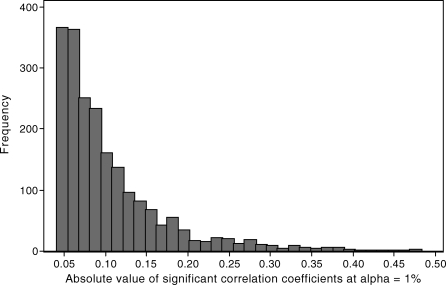
BACKGROUND: In conventional epidemiology confounding of the exposure of interest with lifestyle or socioeconomic factors, and reverse causation whereby disease status influences exposure rather than vice versa, may invalidate causal interpretations of observed associations. Conversely, genetic variants should not be related to the confounding factors that distort associations in conventional observational epidemiological studies. Furthermore, disease onset will not influence genotype. Therefore, it has been suggested that genetic variants that are known to be associated with a modifiable (nongenetic) risk factor can be used to help determine the causal effect of this modifiable risk factor on disease outcomes. This approach, mendelian randomization, is increasingly being applied within epidemiological studies. However, there is debate about the underlying premise that associations between genotypes and disease outcomes are not confounded by other risk factors. We examined the extent to which genetic variants, on the one hand, and nongenetic environmental exposures or phenotypic characteristics on the other, tend to be associated with each other, to assess the degree of confounding that would exist in conventional epidemiological studies compared with mendelian randomization studies. METHODS AND FINDINGS: We estimated pairwise correlations between nongenetic baseline variables and genetic variables in a cross-sectional study comparing the number of correlations that were statistically significant at the 5%, 1%, and 0.01% level (alpha = 0.05, 0.01, and 0.0001, respectively) with the number expected by chance if all variables were in fact uncorrelated, using a two-sided binomial exact test. We demonstrate that behavioural, socioeconomic, and physiological factors are strongly interrelated, with 45% of all possible pairwise associations between 96 nongenetic characteristics (n = 4,560 correlations) being significant at the p < 0.01 level (the ratio of observed to expected significant associations was 45; p-value for difference between observed and expected < 0.000001). Similar findings were observed for other levels of significance. In contrast, genetic variants showed no greater association with each other, or with the 96 behavioural, socioeconomic, and physiological factors, than would be expected by chance. CONCLUSIONS: These data illustrate why observational studies have produced misleading claims regarding potentially causal factors for disease. The findings demonstrate the potential power of a methodology that utilizes genetic variants as indicators of exposure level when studying environmentally modifiable risk factors.
Overview
The claims and statistics of this paper haven’t been checked yet.
Run the check — free, no account needed. It reads the open-access text and checks the sources it cites.
Integrity signals
Registry
Cites
Statistics
Figures
Verification
Claims the paper makes
The claims and statistics of this paper haven’t been checked yet.
Run the check — free, no account needed. It reads the open-access text and checks the sources it cites.
Claims other papers make about this one
Each is checked against this paper’s own text: does it say what the citing paper says it does?
In the citing paper
“MR studies are unlikely to be confounded by the many socioeconomic and lifestyle characteristics that plague conventional observational studies,44”
From Triangulation in aetiological epidemiology (2017) · cites this paper as [44]
Self-check
Percentages, sums and reported differences re-computed from the paper’s own numbers.
The self-check needs the paper’s full text.
Citations
Cites
Genome-wide association study of 14,000 cases of seven common diseases and 3,000 shared controls
The Wellcome Trust Case Control Consortium, Management Committee, Burton, P. R., Clayton, D. G., Cardon, L. R., Craddock, N., Deloukas, P., Duncanson, A., Kwiatkowski, D. P., McCarthy, M. I., et al. (2007) · Nature · doi:10.1038/nature05911 · Cited by 9,442
Self-citationDavey Smith, G., & Ebrahim, S. (2003) · International Journal of Epidemiology · doi:10.1093/ije/dyg070 · Cited by 5,882
Self-citation(1994) · New England Journal of Medicine · doi:10.1056/nejm199404143301501 · Cited by 4,737
The Wellcome Trust Case Control Consortium, U.K.
Mossman, K. (2008) · Scientific American · doi:10.1038/scientificamerican0108-42a · Cited by 2,714
Investigating and dealing with publication and other biases in meta-analysis
Sterne, J. A. C., Egger, M., & Smith, G. D. (2001) · BMJ · doi:10.1136/bmj.323.7304.101 · Cited by 2,225
Self-citationModern Epidemiology 3rd edition
Rothman, K. J., Lash, T. L., & Greenland, S. (1986) · Cited by 1,736
Sterne, J. A. C. (2001) · BMJ · doi:10.1136/bmj.322.7280.226 · Cited by 1,466
Population stratification and spurious allelic association
Cardon, L. R., & Palmer, L. J. (2003) · The Lancet · doi:10.1016/s0140-6736(03)12520-2 · Cited by 1,189
Jaffee, S. R., & Price, T. S. (2002) · Molecular Psychiatry · doi:10.1038/sj.mp.4001950 · Cited by 596
When are observational studies as credible as randomised trials?
Vandenbroucke, J. P. (2004) · The Lancet · doi:10.1016/s0140-6736(04)16261-2 · Cited by 538
Control of confounding of genetic associations in stratified populations
Hoggart, C. J., Parra, E. J., Shriver, M. D., Bonilla, C., Kittles, R. A., Clayton, D. G., & McKeigue, P. M. (2003) · The American Journal of Human Genetics · doi:10.1086/375613 · Cited by 490
Demonstrating stratification in a European American population
Campbell, C. D., Ogburn, E. L., Lunetta, K. L., Lyon, H. N., Freedman, M. L., Groop, L. C., Altshuler, D., Ardlie, K. G., & Hirschhorn, J. N. (2005) · Nature Genetics · doi:10.1038/ng1607 · Cited by 444
Wacholder, S. (2000) · JNCI Journal of the National Cancer Institute · doi:10.1093/jnci/92.14.1151 · Cited by 442
Lawlor, D. A., Smith, G. D., Bruckdorfer, K. R., Kundu, D., & Ebrahim, S. (2004) · The Lancet · doi:10.1016/s0140-6736(04)16260-0 · Cited by 438
Self-citationData dredging, bias, or confounding: They can all get you into the BMJ and the Friday papers
Smith, G. D., & Ebrahim, S. (2002) · BMJ · doi:10.1136/bmj.325.7378.1437 · Cited by 434
Self-citationKhoury, M. J., & Flanders, W. D. (1996) · American Journal of Epidemiology · doi:10.1093/oxfordjournals.aje.a008915 · Cited by 414
Point: population stratification: a problem for case-control studies of candidate-gene associations?
Thomas, D. C., & Witte, J. S. (2002) · PubMed · Cited by 391
Modan, B., Hartge, P. A., Hirsh‐Yechezkel, G., Chetrit, A., Lubin, F., Beller, U., Ben‐Baruch, G., Fishman, A., Menczer, J., Struewing, J. P., et al. (2001) · New England Journal of Medicine · doi:10.1056/nejm200107263450401 · Cited by 385
Ordovás, J. M., Cupples, L. A., Corella, D., Otvos, J. D., Osgood, D. P., Martinez, A. A., Lahoz, C., Coltell, Ó., Wilson, P. W. F., & Schaefer, E. J. (2000) · Arteriosclerosis Thrombosis and Vascular Biology · doi:10.1161/01.atv.20.5.1323 · Cited by 379
Ioannidis, J., & Trikalinos, T. (2005) · Journal of Clinical Epidemiology · doi:10.1016/j.jclinepi.2004.10.019 · Cited by 352
C-reactive protein and its role in metabolic syndrome: mendelian randomisation study
Timpson, N. J., Lawlor, D. A., Harbord, R. M., Gaunt, T. R., Day, I. N. M., Palmer, L. J., Hattersley, A. T., Ebrahim, S. B. J., Lowe, G. D. O., Rumley, A., et al. (2005) · The Lancet · doi:10.1016/s0140-6736(05)67786-0 · Cited by 345
Self-citationPhillips, A. N., & Smith, G. D. (1991) · Journal of Clinical Epidemiology · doi:10.1016/0895-4356(91)90155-3 · Cited by 275 · cited 1×
“We think this is unlikely to be the case in most observational epidemiological studies [26].”
BackgroundSelf-citationWacholder, S., Rothman, N., & Caporaso, N. E. (2002) · PubMed · Cited by 255
Macleod, J., Smith, G. D., Heslop, P., Metcalfe, C. D., Carroll, D., & Hart, C. (2002) · BMJ · doi:10.1136/bmj.324.7348.1247 · Cited by 241
Self-citationLewis, S. J., & Smith, G. D. (2005) · Cancer Epidemiology Biomarkers & Prevention · doi:10.1158/1055-9965.epi-05-0196 · Cited by 234
Self-citationNitsch, D., Molokhia, M., Smeeth, L. L., Stavola, B. L. D., Whittaker, J. C., & Leon, D. A. (2006) · American Journal of Epidemiology · doi:10.1093/aje/kwj062 · Cited by 228
Chatterjee, N., & Carroll, R. J. (2005) · Biometrika · doi:10.1093/biomet/92.2.399 · Cited by 217
Epidemiology—is it time to call it a day?
Smith, G. D., & Ebrahim, S. B. J. (2001) · International Journal of Epidemiology · doi:10.1093/ije/30.1.1 · Cited by 214
Self-citationAssociation of C-Reactive Protein With Blood Pressure and Hypertension
Smith, G. D., Lawlor, D. A., Harbord, R. M., Timpson, N. J., Rumley, A., Lowe, G. D. O., Day, I. N. M., & Ebrahim, S. B. J. (2005) · Arteriosclerosis Thrombosis and Vascular Biology · doi:10.1161/01.atv.0000160351.95181.d0 · Cited by 212
Self-citationConfounding in epidemiological studies: why "independent" effects may not be all they seem.
Smith, G. D., & Phillips, A. N. (1992) · BMJ · doi:10.1136/bmj.305.6856.757 · Cited by 186
Self-citationDesigning and analysing case-control studies to exploit independence of genotype and exposure
Umbach, D. M., & Weinberg, C. R. (1997) · Statistics in Medicine · doi:10.1002/(sici)1097-0258(19970815)16:15 · Cited by 179
Insight into the nature of the CRP–coronary event association using Mendelian randomization
Casas, J. P., Shah, T., Cooper, J. A., Hawe, E., McMahon, A. D., Gaffney, D., Packard, C. J., O’Reilly, D. S. J., Juhan-Vague, I., Yudkin, J. S., et al. (2006) · International Journal of Epidemiology · doi:10.1093/ije/dyl041 · Cited by 172
Dachet, C., Poirier, O., Cambien, F., Chapman, J., & Rouis, M. (2000) · Arteriosclerosis Thrombosis and Vascular Biology · doi:10.1161/01.atv.20.2.507 · Cited by 168
Davey Smith, G., Phillips, A. N., & Neaton, J. D. (1992) · The Lancet · doi:10.1016/0140-6736(92)92242-8 · Cited by 149
Self-citationA Simple and Improved Correction for Population Stratification in Case-Control Studies
Epstein, M. P., Allen, A. S., & Satten, G. A. (2007) · The American Journal of Human Genetics · doi:10.1086/516842 · Cited by 143
Fibrinogen and coronary heart disease: test of causality by ‘Mendelian randomization’
Keavney, B. D., Danesh, J., Parish, S., Palmer, A., Clark, S., Youngman, L. D., Délepine, M., Lathrop, M. G., Peto, R., & Collins, R. (2006) · International Journal of Epidemiology · doi:10.1093/ije/dyl114 · Cited by 142
Bias in relative odds estimation owing to imprecise measurement of correlated exposures
Phillips, A. N., & Smith, G. D. (1992) · Statistics in Medicine · doi:10.1002/sim.4780110712 · Cited by 108
Self-citationDoes Elevated Plasma Fibrinogen Increase the Risk of Coronary Heart Disease?
Smith, G. D., Harbord, R. M., Milton, J., Ebrahim, S. B. J., & Sterne, J. A. C. (2005) · Arteriosclerosis Thrombosis and Vascular Biology · doi:10.1161/01.atv.0000183937.65887.9c · Cited by 94
Self-citationCausality and Probability in the Sciences
Russo, F., & Williamson, J. (2007) · Cited by 80
Genetic Variation and Willingness to Participate in Epidemiologic Research: Data from Three Studies
Bhatti, P., Sigurdson, A. J., WANG, S. S., Chen, J., Rothman, N., Hartge, P. A., Bergen, A. W., & Landi, M. T. (2005) · Cancer Epidemiology Biomarkers & Prevention · doi:10.1158/1055-9965.epi-05-0463 · Cited by 76
Lactase persistence-related genetic variant: population substructure and health outcomes
Smith, G. D., Lawlor, D. A., Timpson, N. J., Baban, J., Kiessling, M., Day, I. N. M., & Ebrahim, S. B. J. (2008) · European Journal of Human Genetics · doi:10.1038/ejhg.2008.156 · Cited by 75
Self-citationPolymorphisms in the CETP gene and association with CETP mass and HDL levels
Thompson, J. F., Lira, M. E., Durham, L. K., Clark, R. W., Bamberger, M. J., & Milos, P. M. (2003) · Atherosclerosis · doi:10.1016/s0021-9150(03)00005-4 · Cited by 63
Capitalizing on Mendelian randomization to assess the effects of treatments
Smith, G. D. (2007) · Journal of the Royal Society of Medicine · doi:10.1177/014107680710000923 · Cited by 60
Self-citationCapitalizing on Mendelian randomization to assess the effects of treatments
Smith, G. D. (2007) · Journal of the Royal Society of Medicine · doi:10.1258/jrsm.100.9.432 · Cited by 60
Self-citationChatterjee, N., Kalaylıoğlu, Z., & Carroll, R. J. (2004) · Genetic Epidemiology · doi:10.1002/gepi.20049 · Cited by 50
Observational versus randomised trial evidence
Khaw, K., Day, N. E., Bingham, S. A., & Wareham, N. J. (2004) · The Lancet · doi:10.1016/s0140-6736(04)16924-9 · Cited by 26
Association of metabolic gene polymorphisms with tobacco consumption in healthy controls
Smits, K. M., Benhamou, S., GARTE, S. J., Weijenberg, M. P., Alamanos, Y., Ambrosone, C. B., Autrup, H. N., Autrup, J. L., Baranova, H., Bathum, L., et al. (2004) · International Journal of Cancer · doi:10.1002/ijc.20114 · Cited by 22
Friedlander, Y., & Leitersdorf, E. (1996) · Genetic Epidemiology · doi:10.1002/(sici)1098-2272(1996)13:2 · Cited by 17
Genetic variation and willingness to participate in epidemiologic research: Data from three studies
Bhatti, P., Sigurdson, A. J., Wang, S. S., Chen, J., Rothman, N., Hartge, P. A., Bergen, A. W., & Landi, M. T. (2005) · Annals of Epidemiology · doi:10.1016/j.annepidem.2005.07.050 · Cited by 16
Observational versus randomised trial evidence
Lawlor, D. A., Smith, G. D., Bruckdorfer, K. R., Kundu, D., & Ebrahim, S. B. J. (2004) · The Lancet · doi:10.1016/s0140-6736(04)16926-2 · Cited by 14
Self-citationObservational versus randomised trial evidence
Lawlor, D. A., Smith, G. D., Bruckdorfer, K. R., Tilling, K., & Ebrahim, S. (2004) · The Lancet · doi:10.1016/s0140-6736(04)16925-0 · Cited by 6
Self-citationShin, J., McNeney, B., & Graham, J. (2007) · Statistical Applications in Genetics and Molecular Biology · doi:10.2202/1544-6115.1270 · Cited by 4
Research works printed but not linked: 45
- Davey Smith, 2001, Int J Epidemiol, 30, 1
- Lawlor, 2004, Lancet, 363, 1724
- Vandenbroucke, 2004, Lancet, 363, 1728
- Phillips, 1992, Stat Med, 11, 953
- Davey Smith, 1992, BMJ, 305, 757
- 1998, Modern epidemiology. 2nd edition
- Sterne, 2001, BMJ, 322, 226
- Sterne, 2001, BMJ, 323, 101
- Macleod, 2002, BMJ, 324, 1247
- Davey Smith, 2003, Int J Epidemiol, 32, 1
- Lewis, 2005, Cancer Epidemiol Biomarkers Prev, 14, 1967
- Casas, 2006, Int J Epidemiol, 35, 922
- Keavney, 2006, Int J Epidemiol, 35, 935
- Timpson, 2005, Lancet, 366, 1954
- Davey Smith, 2005, Arterioscler Thromb Vasc Biol, 25, 2228
- Davey Smith, 2007, J R Soc Med, 100, 432
- Nitsch, 2006, Am J Epidemiol, 163, 397
- Wacholder, 2000, J Natl Cancer Inst, 92, 1151
- Wacholder, 2002, Cancer Epidemiol Biomark Prev, 11, 513
- Thomas, 2002, Cancer Epidemiol Biomark Prev, 11, 505
- Cardon, 2003, Lancet, 361, 598
- Hoggart, 2003, Am J Hum Genet, 72, 1492
- Epstein, 2007, Am J Hum Genet, 80, 921
- Davey Smith, 2005, Arterioscler Thromb Vasc Biol, 25, 1051
- Phillips, 1991, J Clin Epidemiol, 44, 1223
- Davey Smith, 2002, BMJ, 325, 1437
- Davey Smith, 1992, Lancet, 340, 709
- Manson, 1993, Circulation, 88, I-70
- Ioannidis, 2005, J Clin Epidemiol, 58, 543
- Lawlor, 2004, Lancet, 364, 754
- Khoury, 1996, Am J Epidemiol, 144, 207
- Shin, 2007, Stat Appl Genet Mol Biol, 6, 1
- Umbach, 1997, Stat Med, 16, 1731
- Chatterjee, 2005, Biometrika, 92, 399
- Chatterjee, 2005, Genet Epidemiol, 28, 138
- Modan, 2001, N Engl J Med, 345, 235
- Davey Smith, 2007, Eur J Hum Genet
- Campbell, 2005, Nat Genet, 37, 868
- Thompson, 2003, Atherosclerosis, 167, 195
- Dachet, 2000, Arterioscler Thromb Vasc Biol, 20, 507
- Ordovas, 2000, Arterioscler Thromb Vasc Biol, 20, 1323
- Georges, 1996, Genet Epidemiol, 13, 179
- Bhatti, 2005, Cancer Epidemiol Biomarkers Prev, 14, 2449
- Smits, 2004, Int J Cancer, 110, 266
- Jaffee, 2007, Mol Psychiatry, 12, 432
Cited by
Sorted by citations
Mendelian randomization: genetic anchors for causal inference in epidemiological studies
Davey Smith, G., & Hemani, G. (2014) · Human Molecular Genetics · doi:10.1093/hmg/ddu328 · Cited by 4,677
Self-citationMendelian randomization: Using genes as instruments for making causal inferences in epidemiology
Lawlor, D. A., Harbord, R. M., Sterne, J. A. C., Timpson, N., & Davey Smith, G. (2008) · Statistics in Medicine · doi:10.1002/sim.3034 · Cited by 4,618
Self-citationReading Mendelian randomisation studies: a guide, glossary, and checklist for clinicians
Davies, N. M., Holmes, M. V., & Davey Smith, G. (2018) · BMJ · doi:10.1136/bmj.k601 · Cited by 4,404
Sanderson, E., Glymour, M. M., Holmes, M. V., Kang, H., Morrison, J., Munafò, M. R., Palmer, T., Schooling, C. M., Wallace, C., Zhao, Q., et al. (2022) · Nature Reviews Methods Primers · doi:10.1038/s43586-021-00092-5 · Cited by 2,229
Why Most Discovered True Associations Are Inflated
Ioannidis, J. P. A. (2008) · Epidemiology · doi:10.1097/ede.0b013e31818131e7 · Cited by 1,495
Metadata
- Authors
- Smith, G. D., Lawlor, D. A., Harbord, R., Timpson, N., Day, I., & Ebrahim, S.
- Affiliations
- University of Bristol (GB)
- London School of Hygiene & Tropical Medicine (GB)
- Corresponding author
- Smith, George Davey
- Venue
- PLoS Medicine
- Publisher
- Public Library of Science (PLoS)
- Published
- 2007-12-11
- Volume
- 4
- Issue
- 12
- Pages
- e352
- ISSN
- 1549-1277 (ISSN-L)
- 1549-1676
- PMC
- PMC2121108
- OpenAlex
- W2093053972
- Cited by
- 569
- References
- 51
- Citations by year
- 2026: 20 · 2025: 45 · 2024: 74 · 2023: 44 · 2022: 46 · 2021: 30 · 2020: 26 · 2019: 22 · 2018: 22 · 2017: 31 · 2016: 34 · 2015: 18 · 2014: 24 · 2013: 26 · 2012: 23
- FWCI
- 10.35
- Type
- journal article
- Language
- en
- Open access
- gold
- doi.org
- Locations
- PLoS Medicine (publishedVersion, cc-by)
- Europe PMC (PubMed Central) (publishedVersion, cc-by)
- PubMed Central (publishedVersion, cc-by)
- PubMed (publishedVersion)
- LSHTM Research Online (London School of Hygiene and Tropical Medicine) (acceptedVersion)
- DOAJ (DOAJ: Directory of Open Access Journals) (submittedVersion, cc-by-sa)
- Figshare (submittedVersion, cc-by)
- Explore Bristol Research (submittedVersion)
- Funders
- British Heart Foundation
- Medical Research Council
- Topics
- Life Sciences › Biochemistry, Genetics and Molecular Biology › Genetics › Genetic Associations and Epidemiology
- Physical Sciences › Mathematics › Statistics and Probability › Statistical Methods in Epidemiology
- Physical Sciences › Mathematics › Statistics and Probability › Advanced Causal Inference Techniques
- Keywords
- confounding, genetic variants, Mendelian randomization, genetic epidemiology, reverse causality, non-genetic risk factors, socioeconomic factors, behavioral factors, physiological factors, causal inference
- MeSH terms
- Aged, Cross-Sectional Studies, Environment, Epidemiologic Methods, Female, Genotype, United Kingdom, Heart Diseases, Humans, Life Style, Middle Aged, Phenotype, Risk Factors, Socioeconomic Factors, Genetic Variation, Reproducibility of Results, Health Behavior, Confounding Factors, Epidemiologic, Cluster Analysis, Risk Assessment, Genetic Predisposition to Disease, Polymorphism, Single Nucleotide
About these checks
Registry, retraction, Cites and statistics results are computed, not judged, with one exception: a printed reference that no index lists is read once by a model before it counts as a citation error. Claims are extracted by a model and kept only when their quote appears verbatim in the text; each cited source is then checked, with a model’s help, for whether it says what the claim relies on. Those verdicts can be wrong — read the claim’s quote and the cited source before relying on one.
Statistics and arithmetic are recomputed, not judged.
Confidence bands are shown only for fields calibrated on our annotated test set. None is calibrated yet, so no band is shown.
What counts as a claim ›How we measure confidence ›How we check this ›
Are you an author, or do you see a problem with this page? Request a review
