

Estimating the Global Clinical Burden of Plasmodium falciparum Malaria in 2007
Open accessThe DOI matches its Crossref record; 109 of the 110 references it cites were found in a registry or an index.
Abstract
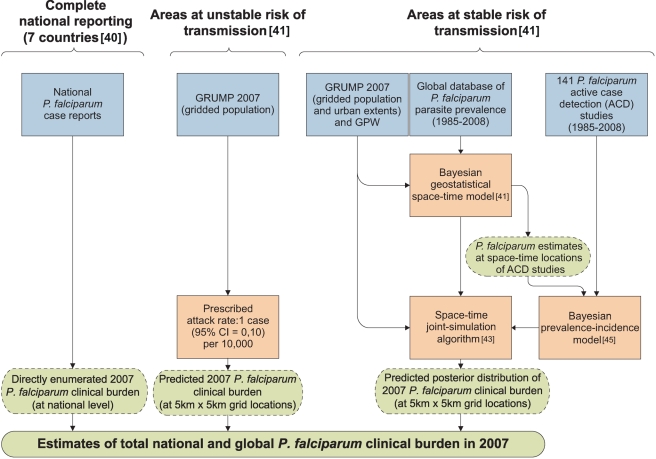
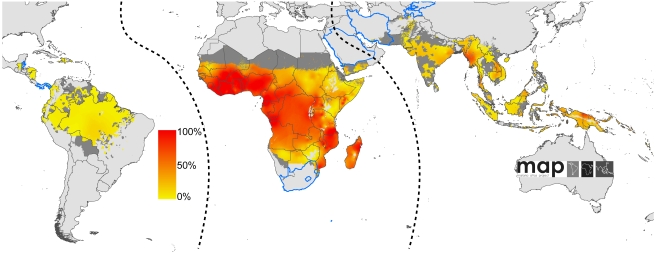
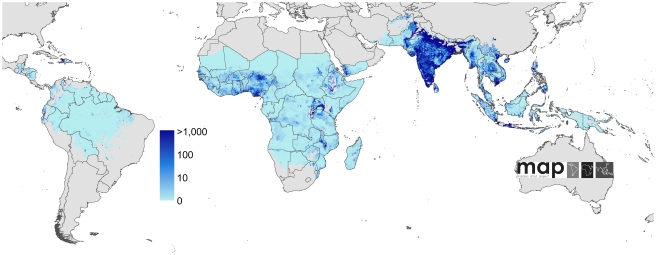
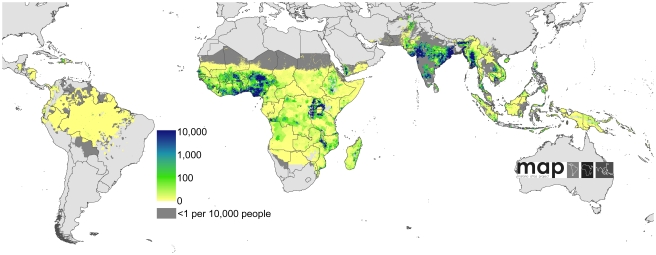
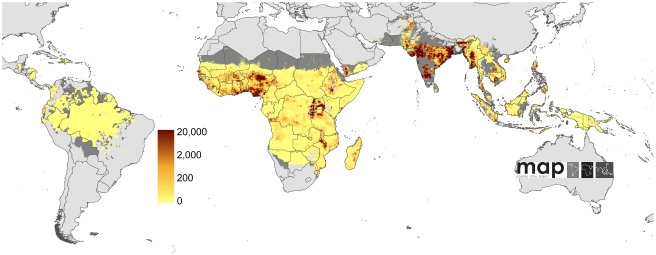
BACKGROUND: The epidemiology of malaria makes surveillance-based methods of estimating its disease burden problematic. Cartographic approaches have provided alternative malaria burden estimates, but there remains widespread misunderstanding about their derivation and fidelity. The aims of this study are to present a new cartographic technique and its application for deriving global clinical burden estimates of Plasmodium falciparum malaria for 2007, and to compare these estimates and their likely precision with those derived under existing surveillance-based approaches. METHODS AND FINDINGS: In seven of the 87 countries endemic for P. falciparum malaria, the health reporting infrastructure was deemed sufficiently rigorous for case reports to be used verbatim. In the remaining countries, the mapped extent of unstable and stable P. falciparum malaria transmission was first determined. Estimates of the plausible incidence range of clinical cases were then calculated within the spatial limits of unstable transmission. A modelled relationship between clinical incidence and prevalence was used, together with new maps of P. falciparum malaria endemicity, to estimate incidence in areas of stable transmission, and geostatistical joint simulation was used to quantify uncertainty in these estimates at national, regional, and global scales. Combining these estimates for all areas of transmission risk resulted in 451 million (95% credible interval 349-552 million) clinical cases of P. falciparum malaria in 2007. Almost all of this burden of morbidity occurred in areas of stable transmission. More than half of all estimated P. falciparum clinical cases and associated uncertainty occurred in India, Nigeria, the Democratic Republic of the Congo (DRC), and Myanmar (Burma), where 1.405 billion people are at risk. Recent surveillance-based methods of burden estimation were then reviewed and discrepancies in national estimates explored. When these cartographically derived national estimates were ranked according to their relative uncertainty and replaced by surveillance-based estimates in the least certain half, 98% of the global clinical burden continued to be estimated by cartographic techniques. CONCLUSIONS AND SIGNIFICANCE: Cartographic approaches to burden estimation provide a globally consistent measure of malaria morbidity of known fidelity, and they represent the only plausible method in those malaria-endemic countries with nonfunctional national surveillance. Unacceptable uncertainty in the clinical burden of malaria in only four countries confounds our ability to evaluate needs and monitor progress toward international targets for malaria control at the global scale. National prevalence surveys in each nation would reduce this uncertainty profoundly. Opportunities for further reducing uncertainty in clinical burden estimates by hybridizing alternative burden estimation procedures are also evaluated.
Overview
The claims and statistics of this paper haven’t been checked yet.
Free: it reads the open-access text and checks the first 5 claims that cite a source we can check. Create a free account to check every claim.
Integrity signals
Registry
Cites
Statistics
Figures
Verification
Claims the paper makes
The claims and statistics of this paper haven’t been checked yet.
Free: it reads the open-access text and checks the first 5 claims that cite a source we can check. Create a free account to check every claim.
Claims other papers make about this one
Each is checked against this paper’s own text: does it say what the citing paper says it does?
The check wasn’t confident either way, so it gives no verdict — never disputed.
In the citing paper
“The available articles indicate that pregnant women infected with P.falciparum and P.vivax have higher plasma concentrations of pro-inflammatory cytokines than their uninfected counterparts [117, 118].”
From Current update on malaria in pregnancy: a systematic review (2025) · cites this paper as [118]
Experimental — accuracy not yet measured
Self-check
Percentages, sums and reported differences re-computed from the paper’s own numbers.
The self-check needs the paper’s full text.
Citations
Cites
Mortality by cause for eight regions of the world: Global Burden of Disease Study
Murray, C. J., & Lopez, A. D. (1997) · The Lancet · doi:10.1016/s0140-6736(96)07493-4 · Cited by 4,043 · cited 1×
“The clinical consequences of Plasmodium falciparum infection have several features that confound traditional approaches to disease burden and disability measurement [10,11].”
BackgroundThe global distribution of clinical episodes of Plasmodium falciparum malaria
Snow, R. W., Guerra, C. A., Noor, A. M., Myint, H. Y., & Hay, S. I. (2005) · Nature · doi:10.1038/nature03342 · Cited by 2,741 · cited 5×
“Africa [1,3,4,6,7] and once before globally [5].”
BackgroundMethodResultInfluentialSelf-citationA new world malaria map: Plasmodium falciparum endemicity in 2010
Gething, P. W., Patil, A. P., Smith, D. L., Guerra, C. A., Elyazar, I. R., Johnston, G. L., Tatem, A. J., & Hay, S. I. (2011) · Malaria Journal · doi:10.1186/1475-2875-10-378 · Cited by 1,146
Self-citationThe neglected burden of Plasmodium vivax malaria
Mendis, K., Sina, B., Marchesini, P., & Carter, R. (2001) · The American Journal of Tropical Medicine and Hygiene · doi:10.4269/ajtmh.2001.64.97 · Cited by 970 · cited 1×
“vivax malaria [109–112], but new, innovative approaches based on an understanding of the clinical epidemiology and better cartography are required to improve upon current efforts to define the burden due to P.”
BackgroundWHO Regional Office for Europe
Tsechkovski, M. (1993) · The Lancet · doi:10.1016/0140-6736(93)91122-3 · Cited by 871
A Climate-based Distribution Model of Malaria Transmission in Sub-Saharan Africa
Craig, M. H., Snow, R. W., & le Sueur, D. (1999) · Parasitology Today · doi:10.1016/s0169-4758(99)01396-4 · Cited by 854 · cited 1×
“In our previous global estimates [5], we adapted a historical, categorical description of malaria endemicity, whilst in Africa we [1,3,4] and others [6,7] have previously used a climate suitability model of the likelihood of stable transmission as an index of differences in transmission intensity [102,103].”
MethodSelf-citationVivax Malaria: Neglected and Not Benign
Price, R. N., Tjitra, E., Guerra, C. A., Yeung, S., White, N. J., & Anstey, N. M. (2007) · The American Journal of Tropical Medicine and Hygiene · doi:10.4269/ajtmh.2007.77.79 · Cited by 838 · cited 1×
“vivax malaria [109–112], but new, innovative approaches based on an understanding of the clinical epidemiology and better cartography are required to improve upon current efforts to define the burden due to P.”
BackgroundSelf-citationSnow, R. W., Craig, M., Deichmann, U., & Marsh, K. (1999) · PubMed · Cited by 735
Self-citationOverdiagnosis of malaria in patients with severe febrile illness in Tanzania: a prospective study
Reyburn, H., Mbatia, R., Drakeley, C., Carneiro, I., Mwakasungula, E., Mwerinde, O., Saganda, K., Shao, J., Kitua, A., Olomi, R., et al. (2004) · BMJ · doi:10.1136/bmj.38251.658229.55 · Cited by 672 · cited 3×
“Fourth, inaccurate diagnoses [21,25,28] might be used to report disease rates, and these errors may be compounded through inadequate and incomplete national reporting systems [29–38].”
BackgroundEvolutionary and Historical Aspects of the Burden of Malaria
Carter, R., & Mendis, K. N. (2002) · Clinical Microbiology Reviews · doi:10.1128/cmr.15.4.564-594.2002 · Cited by 663 · cited 1×
“Estimating the disease burden posed by malaria is an important public health challenge [1–9].”
Background
Research works printed but not linked: 3
- Macdonald G 1957 Local features of malaria. London Oxford University Press 63 99 The epidemiology and control of malaria
- Sharma VP Choudhury DS Ansari MA Malhotra MS Menon PKB 1983 Studies on the true incidence of malaria in Kharkhoda (District Sonepat, Haryana) and Kichha (District Nainital, U.P.) Primary Health Centres. Indian J Malariol 20 21 34
- WHO 2010 Guidelines for the treatment of malaria. Second edition. Geneva, Switzerland World Health Organization 194
Cited by
Items 101–200 of 371
Dynamics of Forest Malaria Transmission in Balaghat District, Madhya Pradesh, India
Singh, N., Chand, S. K., Bharti, P. K., Singh, M. P., Chand, G., Mishra, A. K., Shukla, M. M., Mahulia, M. M., & SHARMA, R. K. (2013) · PLoS ONE · doi:10.1371/journal.pone.0073730 · Cited by 52
“Malaria is a global issue and India contributes substantially to global malaria incidence [1].”
BackgroundGlobal Distribution of the Dominant Vector Species of Malaria
Sinka, M. E. (2013) · InTech eBooks · doi:10.5772/54163 · Cited by 81
“Sub-saharan Africa is, however, home to localities suffering from the highest global malaria transmission levels, and hence, morbidity and mortality of malaria [17, 32, 34-36]; a consequence of the wide spread presence of the most effective and efficient vector currently known, An.”
BackgroundEthnobotanical survey of malaria prophylactic remedies in Odisha, India
Nagendrappa, P. B., Naik, M. P., & Payyappallimana, U. (2013) · Journal of Ethnopharmacology · doi:10.1016/j.jep.2013.02.003 · Cited by 55
Spatial Analysis of Land Cover Determinants of Malaria Incidence in the Ashanti Region, Ghana
Krefis, A. C., Schwarz, N. G., Nkrumah, B., Acquah, S. E. K., Loag, W., Oldeland, J., Sarpong, N., Adu‐Sarkodie, Y., Ranft, U., & May, J. (2011) · PLoS ONE · doi:10.1371/journal.pone.0017905 · Cited by 63
Bayesian Geostatistical Analysis and Prediction of Rhodesian Human African Trypanosomiasis
Wardrop, N. A., Atkinson, P. M., Gething, P. W., Fèvre, E. M., Picozzi, K., Kakembo, A. S. L., & Welburn, S. C. (2010) · PLoS neglected tropical diseases · doi:10.1371/journal.pntd.0000914 · Cited by 50
Self-citationSashidhara, K. V., Singh, S. P., Singh, S. V., Srivastava, R. K., Srivastava, K., Saxena, J. K., & Puri, S. (2012) · European Journal of Medicinal Chemistry · doi:10.1016/j.ejmech.2012.12.019 · Cited by 57
Stensgaard, A.-S., Vounatsou, P., Onapa, A. W., Simonsen, P. E., Pedersen, E. M., Rahbek, C., & Kristensen, T. K. (2011) · Malaria Journal · doi:10.1186/1475-2875-10-298 · Cited by 50
Mapping Malaria Risk in Low Transmission Settings: Challenges and Opportunities
Sturrock, H. J. W., Bennett, A. F., Midekisa, A. A., Gosling, R. D., Gething, P. W., & Greenhouse, B. (2016) · Trends in Parasitology · doi:10.1016/j.pt.2016.05.001 · Cited by 63
Self-citationObare, P., Ogutu, B. R., Adams, M., Odera, J. S., Lilley, K., Dosoo, D., Adhiambo, C., Owusu‐Agyei, S., Binka, F. N., Wanja, E. W., et al. (2013) · Malaria Journal · doi:10.1186/1475-2875-12-113 · Cited by 49
Oguttu, D. W., Matovu, J. K. B., Okumu, D. C., Ario, A. R., Okullo, A. E., Opigo, J., & Nankabirwa, V. (2017) · Malaria Journal · doi:10.1186/s12936-017-1871-3 · Cited by 57
“The country is among others still in the attack stage of malaria control [9, 10].”
BackgroundMethodInfluentialBagamian, K. H., Anderson, J. D., Muhib, F., Cumming, O., Laytner, L. A., Wierzba, T. F., & Rheingans, R. (2019) · The Lancet Global Health · doi:10.1016/s2214-109x(19)30456-5 · Cited by 55
Ecology of parasite-vector interactions
Takken, W., & Koenraadt, C. J. M. (2013) · Wageningen Academic Publishers eBooks · doi:10.3920/978-90-8686-744-8 · Cited by 57
Current update on malaria in pregnancy: a systematic review
Minwuyelet, A., Yewhalaw, D., Siferih, M., & Atenafu, G. (2025) · Tropical Diseases, Travel Medicine and Vaccines · doi:10.1186/s40794-025-00248-1 · Cited by 49
“The available articles indicate that pregnant women infected with P.falciparum and P.vivax have higher plasma concentrations of pro-inflammatory cytokines than their uninfected counterparts [117, 118].”
Sixty years trying to define the malaria burden in Africa: have we made any progress?
Snow, R. W. (2014) · BMC Medicine · doi:10.1186/s12916-014-0227-x · Cited by 46
“Since then adaptations of this approach have been championed by many (including the author), providing new, refined numbers through increasingly complex models and marginal increases in empirical epidemiological data [22-41].”
BackgroundSelf-citationDiouf, I., Rodríguez‐Fonseca, B., Dème, A., Caminade, C., Morse, A. P., Cissé, M., Sy, I., Dia, I., Ermert, V., Ndione, J., et al. (2017) · International Journal of Environmental Research and Public Health · doi:10.3390/ijerph14101119 · Cited by 48
“Beyond these essential factors, malaria transmission risk can be sustained or strengthened by specific environmental and climatic conditions as well as a large range of socio-economic factors for the African countries [7,8].”
BackgroundMesoporous silica nanocarriers encapsulated antimalarials with high therapeutic performance
Amolegbe, S. A., Hirano, Y., Adebayo, J. O., Ademowo, O. G., Balogun, E. A., Obaleye, J. A., Krettli, A. U., Yu, C., & Hayami, S. (2018) · Scientific Reports · doi:10.1038/s41598-018-21351-8 · Cited by 47
Prediction of future malaria hotspots under climate change in sub-Saharan Africa
Semakula, H. M., Song, G., Achuu, S. P., Shen, M., Chen, J., Mukwaya, P. I., Oulu, M., Mwendwa, P., Abalo, J., & Zhang, S. (2017) · Climatic Change · doi:10.1007/s10584-017-1996-y · Cited by 55
“…of blood meal, increases parasite development, affects quality of breeding sites, habitat conditions and nature of malaria transmission (Hay et al. 2010; Takken and Verhulst 2011; Tatem and Smith 2010; Wesolowski et al. 2012) Cattle rearing density Source of blood meal, diverts…”
BackgroundJohnston, G. L., Gething, P. W., Hay, S. I., Smith, D. L., & Fidock, D. A. (2014) · PLoS Computational Biology · doi:10.1371/journal.pcbi.1003434 · Cited by 45
Self-citationPlasmodium vivax Malaria Endemicity in Indonesia in 2010
Elyazar, I., Gething, P. W., Patil, A. P., Rogayah, H., Sariwati, E., Palupi, N. W., Tarmizi, S. N., Kusriastuti, R., Baird, J. K., & Hay, S. I. (2012) · PLoS ONE · doi:10.1371/journal.pone.0037325 · Cited by 45
Self-citationHelminth Parasites Alter Protection againstPlasmodiumInfection
Salazar-Castañón, V. H., Legorreta‐Herrera, M., & Rodríguez‐Sosa, M. (2014) · BioMed Research International · doi:10.1155/2014/913696 · Cited by 54
“…Rodriguez-Sosa1 1 Unidad de Biomedicina, Facultad de Estudios Superiores-Iztacala, Universidad Nacional Autónoma de México, Avenida de los Barrios No. 1, Los Reyes Iztacala, 54090 Tlalnepantla, MEX, Mexico 2 Laboratorio de Inmunologı́a Molecular, Facultad de Estudios Superiores Zaragoza,…”
BackgroundInfluences of the Mosquito Microbiota on Vector Competence
van Tol, S., & Dimopoulos, G. (2016) · Advances in insect physiology · doi:10.1016/bs.aiip.2016.04.006 · Cited by 55
DARC extracellular domain remodeling in maturating reticulocytes explains Plasmodium vivax tropism
Ovchynnikova, E., Aglialoro, F., Bentlage, A. E. H., Vidarsson, G., Salinas, N. D., Lindern, M. V., Tolia, N. H., & van den Akker, E. (2017) · Blood · doi:10.1182/blood-2017-03-774364 · Cited by 45
Mizutani, M., Iyori, M., Blagborough, A. M., Fukumoto, S., Funatsu, T., Sinden, R. E., & Yoshida, S. (2014) · Infection and Immunity · doi:10.1128/iai.02040-14 · Cited by 44
Ezenyi, I. C., Okhale, S., Aboh, M. I., & Adeola, S. O. (2013) · Asian Pacific Journal of Tropical Medicine · doi:10.1016/s1995-7645(13)60018-8 · Cited by 43
Krungkrai, S. R., & Krungkrai, J. (2011) · Asian Pacific Journal of Tropical Biomedicine · doi:10.1016/s2221-1691(11)60034-8 · Cited by 43
The folate metabolic network of Falciparum malaria
Salcedo-Sora, J. E., & Ward, S. A. (2013) · Molecular and Biochemical Parasitology · doi:10.1016/j.molbiopara.2013.02.003 · Cited by 48
Malaria parasites and red cell variants: when a house is not a home
Taylor, S. M., & Fairhurst, R. M. (2014) · Current Opinion in Hematology · doi:10.1097/moh.0000000000000039 · Cited by 48
Krungkrai, S. R., & Krungkrai, J. (2016) · Asian Pacific Journal of Tropical Medicine · doi:10.1016/j.apjtm.2016.04.012 · Cited by 47
The antiplasmodial and radical scavenging activities of flavonoids of Erythrina burttii
Yenesew, A., Akala, H. M., Twinomuhwezi, H., Chepkirui, C., Irungu, B. N., Eyase, F. L., Kamatenesi‐Mugisha, M., Kiremire, B. T., Johnson, J. D., & Waters, N. C. (2012) · Acta Tropica · doi:10.1016/j.actatropica.2012.04.011 · Cited by 41
Sitali, L., Chipeta, J., Miller, J. M., Moonga, H. B., Kumar, N., Moss, W. J., & Michelo, C. (2015) · BMC Infectious Diseases · doi:10.1186/s12879-015-0935-7 · Cited by 40
Plasmodium vivax malaria vaccines: Why are we where we are?
Reyes‐Sandoval, A., & Bachmann, M. F. (2013) · Human Vaccines & Immunotherapeutics · doi:10.4161/hv.26157 · Cited by 40
Prioritising Infectious Disease Mapping
Pigott, D. M., Howes, R. E., Wiebe, A., Battle, K. E., Golding, N., Gething, P. W., Dowell, S. F., Farag, T. H., Garcia, A. J., Kimball, A. M., et al. (2015) · PLoS neglected tropical diseases · doi:10.1371/journal.pntd.0003756 · Cited by 48
Self-citationBuckee, C. O., & Recker, M. (2012) · PLoS Computational Biology · doi:10.1371/journal.pcbi.1002451 · Cited by 43
Cowley, R. N., Leung, S. C., Fisher, N. E., Al‐Helal, M., Berry, N. G., Lawrenson, A. S., Sharma, R., Shone, A. E., Ward, S. A., Biagini, G. A., et al. (2011) · MedChemComm · doi:10.1039/c1md00183c · Cited by 39
Lessons from malaria control to help meet the rising challenge of dengue
Anders, K. L., & Hay, S. I. (2012) · The Lancet Infectious Diseases · doi:10.1016/s1473-3099(12)70246-3 · Cited by 38
Self-citationFeller, T., Thom, P., Koch, N., Spiegel, H., Addai‐Mensah, O., Fischer, R., Reimann, A., Pradel, G., Fendel, R., Schillberg, S., et al. (2013) · PLoS ONE · doi:10.1371/journal.pone.0079920 · Cited by 39
Health Centre Surveys as a Potential Tool for Monitoring Malaria Epidemiology by Area and over Time
Oduro, A. R., Bojang, K., Conway, D. J., Corrah, T., Greenwood, B. M., & Schellenberg, D. M. (2011) · PLoS ONE · doi:10.1371/journal.pone.0026305 · Cited by 40
Haque, U., Magalhães, R. J. S., Mitra, D. K., Kolivras, K. N., Schmidt, W., Haque, R., & Glass, G. E. (2011) · Malaria Journal · doi:10.1186/1475-2875-10-367 · Cited by 40
Friesen, J., Borrmann, S., & Matuschewski, K. (2011) · Antimicrobial Agents and Chemotherapy · doi:10.1128/aac.01717-10 · Cited by 39
Gaye, A., Bousema, T., Gadiaga, L., Ndiath, M. O., Konaté, L., Jawara, M., Faye, O., & Sokhna, C. (2015) · American Journal of Tropical Medicine and Hygiene · doi:10.4269/ajtmh.14-0402 · Cited by 40
Kavunga‐Membo, H., Ilombe, G., Masumu, J. M., Matangila, J. R., Imponge, J., Manzambi, E. Z., Wastenga, F., Ngoyi, D. M., Geertruyden, J. V., & Muyembe, J. J. (2018) · Malaria Journal · doi:10.1186/s12936-018-2480-5 · Cited by 40
Gillet, P., Ngoyi, D. M., Lukuka, A., Kande, V., Atua, B., van Griensven, J., Muyembe, J., Jacobs, J. A., & Lejon, V. (2013) · PLoS neglected tropical diseases · doi:10.1371/journal.pntd.0002180 · Cited by 36
Verbal autopsy methods questioned
Butler, D. (2010) · Nature · doi:10.1038/4671015a · Cited by 37
Baird, J. K. (2013) · Pathogens and Global Health · doi:10.1179/2047772413z.000000000179 · Cited by 41
Singh, N., Singh, M. P., Wylie, B. J., Hussain, M., Kojo, Y. A., Shekhar, C., Sabin, L., Desai, M., Udhayakumar, V, & Hamer, D. H. (2012) · Malaria Journal · doi:10.1186/1475-2875-11-274 · Cited by 34
“6%) of clinical episodes of Plasmodium falciparum and 42% of episodes of Plasmodium vivax globally [1,2].”
BackgroundEstimating malaria transmission through mathematical models
Stuckey, E. M., Smith, T. A., & Chitnis, N. (2013) · Trends in Parasitology · doi:10.1016/j.pt.2013.08.001 · Cited by 36
Asymptomatic Plasmodium malariae infections in children from suburban areas of Yaoundé, Cameroon
Roman, D. N. R., Rosalie, N. N. A., Kumar, A., Luther, K. M. M., Singh, V., & Albert, M. S. (2017) · Parasitology International · doi:10.1016/j.parint.2017.02.009 · Cited by 33
“Dongang Nana Rodrigue Roman, Ngono Ngane Annie Rosalie, Amit Kumar, Koanga Mogtomo Martin Luther, Vineeta Singh, Mouelle Sone Albert PII: S1383-5769(17)30025-9 DOI: doi: 10.1016/j.parint.2017.02.009 Reference: PARINT 1654 To appear in: Parasitology International Received date: 16 January 2017 Revised date: 27 February…”
BackgroundInfluentialHayes, D. J., van Buuren, S., ter Kuile, F. O., Stasinopoulos, D., Rigby, R. A., & Terlouw, D. J. (2014) · Bulletin of the World Health Organization · doi:10.2471/blt.14.139113 · Cited by 36
Leslie, T., Mikhail, A. F. W., Mayan, I., Cundill, B., Anwar, M., Bakhtash, S. H., Mohammed, N., Rahman, H., Zekria, R., Whitty, C. W. M., et al. (2014) · BMJ · doi:10.1136/bmj.g3730 · Cited by 32
Espié, E., Lima, A., Atua, B., Dhorda, M., Flévaud, L., Sompwe, É. M., Palma, P. P., & Guerin, P. J. (2012) · Malaria Journal · doi:10.1186/1475-2875-11-174 · Cited by 32
Battle, K. E., Guerra, C. A., Golding, N., Duda, K. A., Cameron, E., Howes, R. E., Elyazar, I. R. F., Baird, J. K., Reiner, R. C., Gething, P. W., et al. (2015) · Scientific Data · doi:10.1038/sdata.2015.12 · Cited by 30
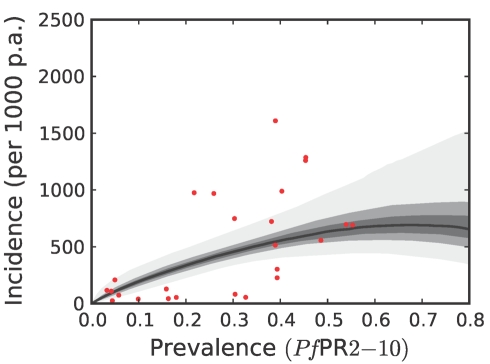
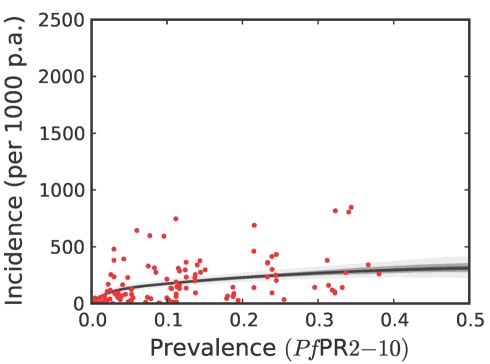
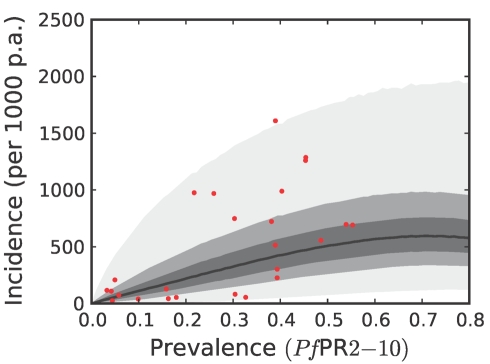
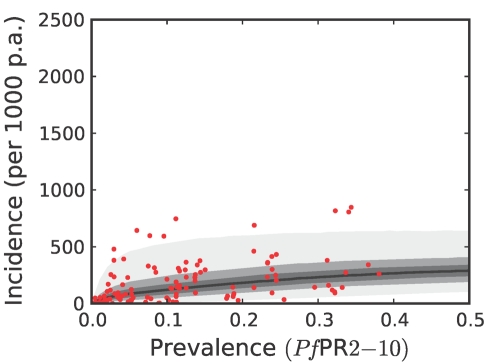
“For regions without accurate reporting in areas stable malaria transmission, a modelled relationship between study-level measures of incidence matched in space and time to prevalence surveys is applied to a smooth endemicity (prevalence) surface 7 and multiplied by a global population grid 4 .”
BackgroundMethodSelf-citationHost immune response in returning travellers infected with malaria
MacMullin, G., Mackenzie, R., Lau, R., Khang, J., Zhang, H., Rajwans, N., Liles, W. C., & Pillai, D. R. (2012) · Malaria Journal · doi:10.1186/1475-2875-11-148 · Cited by 30
Indole and aminoimidazole moieties appear as key structural units in antiplasmodial molecules
Passemar, C., Saléry, M., Soh, P. N., Linas, M.-D., Ahond, A., Poupat, C., & Benoit‐Vical, F. (2011) · Phytomedicine · doi:10.1016/j.phymed.2011.03.010 · Cited by 29
Antimalarial qinghaosu/artemisinin: The therapy worthy of a Nobel Prize
Krungkrai, J., & Krungkrai, S. R. (2016) · Asian Pacific Journal of Tropical Biomedicine · doi:10.1016/j.apjtb.2016.03.010 · Cited by 32
Inferring Plasmodium vivax Transmission Networks from Tempo-Spatial Surveillance Data
Shi, B., Liu, J., Zhou, X., & Yang, G.-J. (2014) · PLoS neglected tropical diseases · doi:10.1371/journal.pntd.0002682 · Cited by 29
Talundzic, E., Maganga, M. B., Masanja, I. M., Peterson, D. S., Udhayakumar, V., & Lucchi, N. W. (2014) · Malaria Journal · doi:10.1186/1475-2875-13-31 · Cited by 29
Malaria Transmission and Spillover across the Peru–Ecuador Border: A Spatiotemporal Analysis
Gunderson, A. K., Kumar, R. E., Recalde-Coronel, G. C., Vasco, L., Valle-Campos, A., Mena, C. F., Zaitchik, B. F., Lescano, A. G., Pan, W., & Janko, M. (2020) · International Journal of Environmental Research and Public Health · doi:10.3390/ijerph17207434 · Cited by 26
Hayes, D. J., Banda, C. G., Alexandra, C.-T., & Terlouw, D. J. (2017) · BMC Infectious Diseases · doi:10.1186/s12879-017-2378-9 · Cited by 26
Phagocytic Uptake of Oxidized Heme Polymer Is Highly Cytotoxic to Macrophages
Deshmukh, R., & Trivedi, V. (2014) · PLoS ONE · doi:10.1371/journal.pone.0103706 · Cited by 26
Anand, N., Kanwar, R. K., Sehgal, R., & Kanwar, J. R. (2015) · Nanomedicine · doi:10.2217/nnm.15.181 · Cited by 27
Malaria vaccine candidate: Design of a multivalent subunit α-helical coiled coil poly-epitope
Olugbile, S. O., Villard, V., Bertholet, S., Jafarshad, A., Kulangara, C., Roussilhon, C., Frank, G., Agak, G. W., Felger, I., Nébié, I., et al. (2011) · Vaccine · doi:10.1016/j.vaccine.2011.06.122 · Cited by 26
Estimating the Burden of Malaria: The Need for Improved Surveillance
Müeller, I., Slutsker, L., & Tanner, M. (2011) · PLoS Medicine · doi:10.1371/journal.pmed.1001144 · Cited by 26
“The other approach uses cartographic methods as exemplified by the Malaria Atlas Project (MAP) [3,4,5] that combine survey data reporting malaria prevalence with case incidence from selected locations to generate global risk maps.”
MethodStevens, K., & Pfeiffer, D. U. (2015) · Spatial and Spatio-temporal Epidemiology · doi:10.1016/j.sste.2015.04.003 · Cited by 30
Fink, G., & Masiye, F. (2012) · Transactions of the Royal Society of Tropical Medicine and Hygiene · doi:10.1016/j.trstmh.2012.07.013 · Cited by 32
Ahmad, S. S., Aziz, N., Butt, A., Shabbir, R., & Erum, S. (2015) · Environmental Monitoring and Assessment · doi:10.1007/s10661-015-4779-9 · Cited by 111
Persistent cognitive impairment after cerebral malaria: models, mechanisms and adjunctive therapies
Zimmerman, G. A., & Castro-Faria-Neto, H. C. (2010) · Expert Review of Anti-infective Therapy · doi:10.1586/eri.10.117 · Cited by 25
Penny, M. A., Maire, N., Bever, C. A., Pemberton-Ross, P. J., Briët, O., Smith, D. L., Gething, P. W., & Smith, T. A. (2015) · Malaria Journal · doi:10.1186/s12936-015-0864-3 · Cited by 27
Self-citationHan, K. T., Lin, K., Myint, M. K., Thi, A., Aye, K. H., Han, Z. Y., Moe, M., Bustos, M. D., Rahman, M. M., Ringwald, P., et al. (2019) · American Journal of Tropical Medicine and Hygiene · doi:10.4269/ajtmh.19-0692 · Cited by 23
Jain, S., Rathore, S., Asad, M., Hossain, M. E., Sinha, D., Datta, G., & Mohmmed, A. (2013) · Cellular Microbiology · doi:10.1111/cmi.12142 · Cited by 23
“Malaria remains a major parasitic disease in the tropical and sub-tropical countries causing 1–2 million deaths globally every year Snow et al., 2005; Hay et al., 2010).”
BackgroundClimate Change and Public Health Policy: Translating the Science
Braks, M. A. H., van Ginkel, R., Wint, W., Sedda, L., & Sprong, H. (2013) · International Journal of Environmental Research and Public Health · doi:10.3390/ijerph110100013 · Cited by 28
Calzada, J. E., Márquez, R., Rigg, C., Victoria, C., Cruz, M. D. L., Chaves, L. F., & Cáceres, L. (2015) · Malaria Journal · doi:10.1186/s12936-015-0987-6 · Cited by 26
Kanyangarara, M., Mamini, E., Mharakurwa, S., Munyati, S. S., Gwanzura, L., Kobayashi, T., Shields, T., Mullany, L. C., Mutambu, S. L., Mason, P. R., et al. (2016) · American Journal of Tropical Medicine and Hygiene · doi:10.4269/ajtmh.15-0847 · Cited by 25
Fairhurst, R. M., & Wellems, T. E. (2015) · Elsevier eBooks · doi:10.1016/b978-1-4557-4801-3.00276-9 · Cited by 31
Nixon, C. P. (2016) · Human Vaccines & Immunotherapeutics · doi:10.1080/21645515.2016.1183076 · Cited by 21
Carrel, M., Patel, J. C., Taylor, S. M., Janko, M., Mwandagalirwa, M. K., Tshefu, A. K., Escalante, A. A., McCollum, A. M., Alam, M. T., Udhayakumar, V., et al. (2014) · Social Science & Medicine · doi:10.1016/j.socscimed.2014.10.037 · Cited by 25
“The Democratic Republic of Congo (DRC) in particular suffers one of the highest burdens of malaria in sub-Saharan Africa: health surveys indicate that over a third of adults in the DRC have malaria parasites in their blood (Hay et al., 2010; Taylor et al., 2011).”
BackgroundMukadi, P., Gillet, P., Lukuka, A., Atua, B., Sheshe, N., Kanza, A., Mayunda, J. B., Mongita, B., Senga, R. K. K., Ngoyi, J., et al. (2013) · Bulletin of the World Health Organization · doi:10.2471/blt.12.112706 · Cited by 22
Sokolova, A. O., Mararenko, A., Rozin, A., Podrumar, A. I., & Gotlieb, V. K. (2017) · Hematology/Oncology and Stem Cell Therapy · doi:10.1016/j.hemonc.2017.09.003 · Cited by 26
Management of Severe Malaria: Results from Recent Trials
Olupot‐Olupot, P., & Maitland, K. (2012) · Advances in experimental medicine and biology · doi:10.1007/978-1-4614-4726-9_20 · Cited by 28
Naing, C. M., Whittaker, M. A., Htet, N. H., Aye, S. N., & Mak, J. W. (2019) · PLoS ONE · doi:10.1371/journal.pone.0225882 · Cited by 24
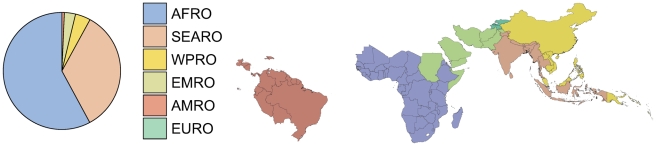
“An operational definition of the Asian region for this particular study covers countries in three regions of Southeast Asia, South Asia and East Asia.”
BackgroundInfluentialErdman, L. K., Petes, C., Lu, Z., Dhabangi, A., Musoke, C., Cserti-Gazdewich, C. M., Lee, C. G., Liles, W. C., Elias, J. A., & Kain, K. C. (2014) · Malaria Journal · doi:10.1186/1475-2875-13-279 · Cited by 21
Nnamani, P. O., Ugwu, A. A., Ibezim, E. C., Kenechukwu, F. C., Akpa, P. A., Ogbonna, J. D., Obitte, N. C., Odo, A. N., Windbergs, M., Lehr, C., et al. (2016) · International Journal of Nanomedicine · doi:10.2147/ijn.s92755 · Cited by 26
“Introduction Malaria remains one of the most serious vector-borne diseases, affecting millions of people, especially in the warmer and wetter regions of the tropics.(1,2) The artemisinin drugs remain the most important and effective against parasites resistant to almost all other classes of drugs.”
BackgroundSevere Childhood Malaria Syndromes Defined by Plasma Proteome Profiles
Burté, F., Brown, B. J., Orimadegun, A. E., Ajetunmobi, W. A., Battaglia, F., Ely, B. K., Afolabi, N. K., Athanasakis, D., Akinkunmi, F., Kowobari, O., et al. (2012) · PLoS ONE · doi:10.1371/journal.pone.0049778 · Cited by 22
P-selectin is a host receptor for Plasmodium MSP7 ligands
Perrin, A. J., Bartholdson, S. J., & Wright, G. J. (2015) · Malaria Journal · doi:10.1186/s12936-015-0750-z · Cited by 18
Kim, S., Nhem, S., Dourng, D., & Ménard, D. (2015) · Malaria Journal · doi:10.1186/s12936-015-0633-3 · Cited by 23
Fong, M. Y., Ahmed, M. A., Wong, S. S., Lau, Y. L., & Sitam, F. T. (2015) · PLoS ONE · doi:10.1371/journal.pone.0137734 · Cited by 21
Bwanika, R., Kato, C. D., Welishe, J., & Mwandah, D. C. (2018) · Allergy Asthma and Clinical Immunology · doi:10.1186/s13223-018-0235-z · Cited by 20
“This scenario is further complicated by the overlapping distribution of parasitic diseases in the tropics [3, 4] among which malaria-helminths co-infections are common [3, 5, 6].”
BackgroundSurveillance based estimation of burden of malaria in India, 2015–2016
Kumar, A., Chaturvedi, H. K., Mohanty, A. K., Sharma, S. K., Malhotra, M. S., & Pandey, A. (2020) · Malaria Journal · doi:10.1186/s12936-020-03223-7 · Cited by 25
White, N. J. (2013) · Elsevier eBooks · doi:10.1016/b978-0-7020-5101-2.00044-3 · Cited by 31
Edlund, S. B., Davis, M., Douglas, J. V., Kershenbaum, A., Waraporn, N., Lessler, J., & Kaufman, J. H. (2012) · Malaria Journal · doi:10.1186/1475-2875-11-331 · Cited by 23
“A number of groups have used numerical simulation and modelling in an attempt to prioritize and inform intervention and control efforts [12-21].”
BackgroundInfluentialSingh, N., Shukla, M. M., Chand, G., Bharti, P. K., Singh, M. P., Shukla, M. K., Mehra, R. K., SHARMA, R. K., & Dash, A. P. (2011) · Transactions of the Royal Society of Tropical Medicine and Hygiene · doi:10.1016/j.trstmh.2010.11.002 · Cited by 19
Rapid whole genome optical mapping of Plasmodium falciparum
Riley, M. C., Kirkup, B. C., Johnson, J. D., Lesho, E. P., & Ockenhouse, C. F. (2011) · Malaria Journal · doi:10.1186/1475-2875-10-252 · Cited by 19
Application of EPS in Agriculture: an Important Natural Resource for Crop Improvement
Awasthi, S. (2017) · Agricultural Research & Technology Open Access Journal · doi:10.19080/artoaj.2017.08.555731 · Cited by 19
Afolabi, O. J., Iyabo, A. S.-O., & Oluwatobiloba, I. O. (2021) · International Archives of Clinical Pharmacology · doi:10.23937/2572-3987.1510024 · Cited by 19
Wang, C., Thakuri, B., Roy, A. K., Mondal, N., Qi, Y., & Chakraborty, A. (2023) · Journal of Environmental Management · doi:10.1016/j.jenvman.2023.117264 · Cited by 25
Sauboin, C., Bellinghen, L.-A. V., de Velde, N. V., & Vlaenderen, I. V. (2015) · Malaria Journal · doi:10.1186/s12936-015-1046-z · Cited by 19
Dobson, A. D. M., & Auld, S. K. J. R. (2016) · The American Naturalist · doi:10.1086/685445 · Cited by 22
Performance evaluation of a popular malaria RDT in Nigeria compared with microscopy
Ajakaye, O. G., & Ibukunoluwa, M. R. (2019) · Journal of Parasitic Diseases · doi:10.1007/s12639-019-01170-y · Cited by 18
Heterogeneity in malaria transmission: underlying factors and implications for disease control
Bousema, T., & Baidjoe, A. Y. (2013) · Wageningen Academic Publishers eBooks · doi:10.3920/978-90-8686-744-8_11 · Cited by 26
Simmons, R., Mboera, L. E. G., Miranda, M. L., Morris, A. M., Stresman, G. H., Turner, E. L., Kramer, R. A., DRAKELEY, C. J., & O’Meara, W. P. (2017) · Malaria Journal · doi:10.1186/s12936-017-1945-2 · Cited by 18
Malaria Vaccine Development Using Synthetic Peptides as a Technical Platform
Corradin, G., Céspedes, N., Verdini, A. S., Kajava, A. V., Arévalo‐Herrera, M., & Herrera, S. (2012) · Advances in immunology · doi:10.1016/b978-0-12-396548-6.00005-6 · Cited by 19
Metadata
- Authors
- Hay, S. I., Okiro, E. A., Gething, P. W., Patil, A. P., Tatem, A. J., Guerra, C. A., & Snow, R. W.
- Affiliations
- Kenya Medical Research Institute (KE)
- University of Oxford (GB)
- University of Florida (US)
- Corresponding author
- Hay, Simon I.
- Snow, Robert W.
- Venue
- PLoS Medicine
- Publisher
- Public Library of Science (PLoS)
- Published
- 2010-06-15
- Volume
- 7
- Issue
- 6
- Pages
- e1000290
- ISSN
- 1549-1277 (ISSN-L)
- 1549-1676
- PMC
- PMC2885984
- OpenAlex
- W2019348373
- Cited by
- 374
- References
- 110
- Citations by year
- 2026: 2 · 2025: 5 · 2024: 5 · 2023: 12 · 2022: 10 · 2021: 13 · 2020: 11 · 2019: 20 · 2018: 12 · 2017: 22 · 2016: 33 · 2015: 36 · 2014: 48 · 2013: 39 · 2012: 45
- FWCI
- 45.94
- Type
- journal article
- Language
- en
- Open access
- gold
- doi.org
- Locations
- PLoS Medicine (publishedVersion, cc-by)
- PubMed Central (publishedVersion, cc-by)
- PubMed (publishedVersion)
- ePrints Soton (University of Southampton) (acceptedVersion)
- DOAJ (DOAJ: Directory of Open Access Journals) (submittedVersion, cc-by-sa)
- Figshare (submittedVersion, cc-by)
- Greater South Information System
- Funders
- Bill and Melinda Gates Foundation (49446)
- Amazon Web Services
- Wellcome Trust (086166, 079080, 079091)
- Topics
- Health Sciences › Medicine › Public Health, Environmental and Occupational Health › Malaria Research and Control
- Health Sciences › Medicine › Public Health, Environmental and Occupational Health › Mosquito-borne diseases and control
- Health Sciences › Medicine › Public Health, Environmental and Occupational Health › Travel-related health issues
- Keywords
- falciparum malaria, global malaria burden, malaria endemicity, uncertainty quantification, malaria surveillance, malaria morbidity, India, Nigeria, Democratic Republic of the Congo, Myanmar, prevalence survey
- MeSH terms
- Humans, Models, Biological, Population Surveillance, Global Health, Reproducibility of Results, Incidence, Prevalence, Malaria, Falciparum, Endemic Diseases, Uncertainty
About these checks
Registry, retraction, Cites and statistics results are computed, not judged, with one exception: a printed reference that no index lists is read once by a model before it counts as a citation error. Claims are extracted by a model and kept only when their quote appears verbatim in the text; each cited source is then checked, with a model’s help, for whether it says what the claim relies on. Those verdicts can be wrong — read the claim’s quote and the cited source before relying on one.
Statistics and arithmetic are recomputed, not judged.
Confidence bands are shown only for fields calibrated on our annotated test set. None is calibrated yet, so no band is shown.
What counts as a claim ›How we measure confidence ›How we check this ›
Are you an author, or do you see a problem with this page? Request a review
Data sources
Bibliographic data: Semantic Scholar, OpenAlex, Crossref.
Contains information from the Semantic Scholar Academic Graph Datasets, made available under the ODC Attribution License (ODC-BY 1.0).
Semantic Scholar’s data is described in: Kinney, R., et al. (2023). The Semantic Scholar Open Data Platform. arXiv:2301.10140.
