

Estimating the Global Clinical Burden of Plasmodium falciparum Malaria in 2007
Open accessThe DOI matches its Crossref record; 109 of the 110 references it cites were found in a registry or an index.
Abstract
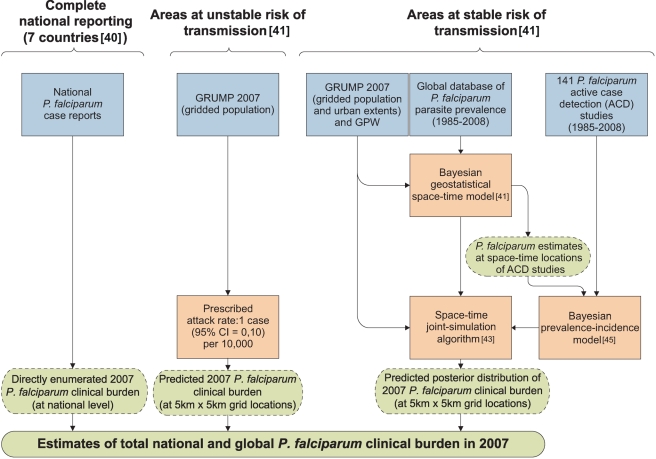
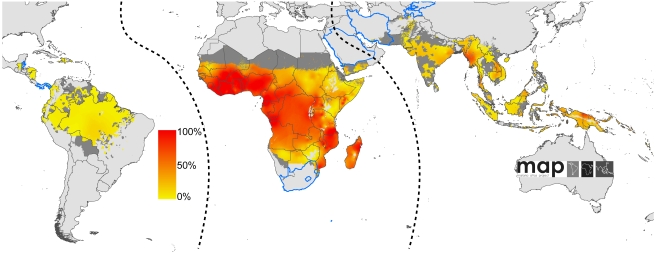
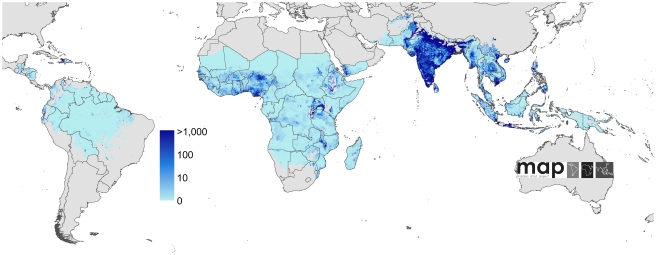
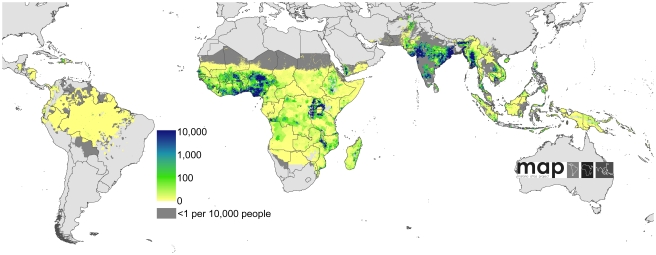
BACKGROUND: The epidemiology of malaria makes surveillance-based methods of estimating its disease burden problematic. Cartographic approaches have provided alternative malaria burden estimates, but there remains widespread misunderstanding about their derivation and fidelity. The aims of this study are to present a new cartographic technique and its application for deriving global clinical burden estimates of Plasmodium falciparum malaria for 2007, and to compare these estimates and their likely precision with those derived under existing surveillance-based approaches. METHODS AND FINDINGS: In seven of the 87 countries endemic for P. falciparum malaria, the health reporting infrastructure was deemed sufficiently rigorous for case reports to be used verbatim. In the remaining countries, the mapped extent of unstable and stable P. falciparum malaria transmission was first determined. Estimates of the plausible incidence range of clinical cases were then calculated within the spatial limits of unstable transmission. A modelled relationship between clinical incidence and prevalence was used, together with new maps of P. falciparum malaria endemicity, to estimate incidence in areas of stable transmission, and geostatistical joint simulation was used to quantify uncertainty in these estimates at national, regional, and global scales. Combining these estimates for all areas of transmission risk resulted in 451 million (95% credible interval 349-552 million) clinical cases of P. falciparum malaria in 2007. Almost all of this burden of morbidity occurred in areas of stable transmission. More than half of all estimated P. falciparum clinical cases and associated uncertainty occurred in India, Nigeria, the Democratic Republic of the Congo (DRC), and Myanmar (Burma), where 1.405 billion people are at risk. Recent surveillance-based methods of burden estimation were then reviewed and discrepancies in national estimates explored. When these cartographically derived national estimates were ranked according to their relative uncertainty and replaced by surveillance-based estimates in the least certain half, 98% of the global clinical burden continued to be estimated by cartographic techniques. CONCLUSIONS AND SIGNIFICANCE: Cartographic approaches to burden estimation provide a globally consistent measure of malaria morbidity of known fidelity, and they represent the only plausible method in those malaria-endemic countries with nonfunctional national surveillance. Unacceptable uncertainty in the clinical burden of malaria in only four countries confounds our ability to evaluate needs and monitor progress toward international targets for malaria control at the global scale. National prevalence surveys in each nation would reduce this uncertainty profoundly. Opportunities for further reducing uncertainty in clinical burden estimates by hybridizing alternative burden estimation procedures are also evaluated.
Overview
The claims and statistics of this paper haven’t been checked yet.
Free: it reads the open-access text and checks the first 5 claims that cite a source we can check. Create a free account to check every claim.
Integrity signals
Registry
Cites
Statistics
Figures
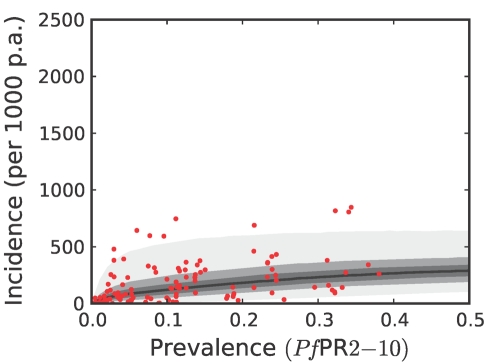
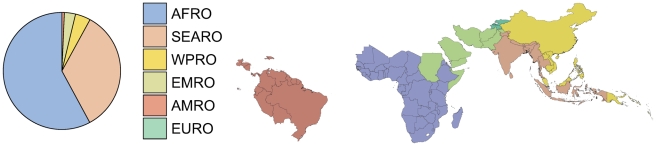
Verification
Claims the paper makes
The claims and statistics of this paper haven’t been checked yet.
Free: it reads the open-access text and checks the first 5 claims that cite a source we can check. Create a free account to check every claim.
Claims other papers make about this one
Each is checked against this paper’s own text: does it say what the citing paper says it does?
The check wasn’t confident either way, so it gives no verdict — never disputed.
In the citing paper
“The available articles indicate that pregnant women infected with P.falciparum and P.vivax have higher plasma concentrations of pro-inflammatory cytokines than their uninfected counterparts [117, 118].”
From Current update on malaria in pregnancy: a systematic review (2025) · cites this paper as [118]
Experimental — accuracy not yet measured
Self-check
Percentages, sums and reported differences re-computed from the paper’s own numbers.
The self-check needs the paper’s full text.
Citations
Cites
Mortality by cause for eight regions of the world: Global Burden of Disease Study
Murray, C. J., & Lopez, A. D. (1997) · The Lancet · doi:10.1016/s0140-6736(96)07493-4 · Cited by 4,043 · cited 1×
“The clinical consequences of Plasmodium falciparum infection have several features that confound traditional approaches to disease burden and disability measurement [10,11].”
BackgroundThe global distribution of clinical episodes of Plasmodium falciparum malaria
Snow, R. W., Guerra, C. A., Noor, A. M., Myint, H. Y., & Hay, S. I. (2005) · Nature · doi:10.1038/nature03342 · Cited by 2,741 · cited 5×
“Africa [1,3,4,6,7] and once before globally [5].”
BackgroundMethodResultInfluentialSelf-citationA new world malaria map: Plasmodium falciparum endemicity in 2010
Gething, P. W., Patil, A. P., Smith, D. L., Guerra, C. A., Elyazar, I. R., Johnston, G. L., Tatem, A. J., & Hay, S. I. (2011) · Malaria Journal · doi:10.1186/1475-2875-10-378 · Cited by 1,146
Self-citationThe neglected burden of Plasmodium vivax malaria
Mendis, K., Sina, B., Marchesini, P., & Carter, R. (2001) · The American Journal of Tropical Medicine and Hygiene · doi:10.4269/ajtmh.2001.64.97 · Cited by 970 · cited 1×
“vivax malaria [109–112], but new, innovative approaches based on an understanding of the clinical epidemiology and better cartography are required to improve upon current efforts to define the burden due to P.”
BackgroundWHO Regional Office for Europe
Tsechkovski, M. (1993) · The Lancet · doi:10.1016/0140-6736(93)91122-3 · Cited by 871
A Climate-based Distribution Model of Malaria Transmission in Sub-Saharan Africa
Craig, M. H., Snow, R. W., & le Sueur, D. (1999) · Parasitology Today · doi:10.1016/s0169-4758(99)01396-4 · Cited by 854 · cited 1×
“In our previous global estimates [5], we adapted a historical, categorical description of malaria endemicity, whilst in Africa we [1,3,4] and others [6,7] have previously used a climate suitability model of the likelihood of stable transmission as an index of differences in transmission intensity [102,103].”
MethodSelf-citationVivax Malaria: Neglected and Not Benign
Price, R. N., Tjitra, E., Guerra, C. A., Yeung, S., White, N. J., & Anstey, N. M. (2007) · The American Journal of Tropical Medicine and Hygiene · doi:10.4269/ajtmh.2007.77.79 · Cited by 838 · cited 1×
“vivax malaria [109–112], but new, innovative approaches based on an understanding of the clinical epidemiology and better cartography are required to improve upon current efforts to define the burden due to P.”
BackgroundSelf-citationSnow, R. W., Craig, M., Deichmann, U., & Marsh, K. (1999) · PubMed · Cited by 735
Self-citationOverdiagnosis of malaria in patients with severe febrile illness in Tanzania: a prospective study
Reyburn, H., Mbatia, R., Drakeley, C., Carneiro, I., Mwakasungula, E., Mwerinde, O., Saganda, K., Shao, J., Kitua, A., Olomi, R., et al. (2004) · BMJ · doi:10.1136/bmj.38251.658229.55 · Cited by 672 · cited 3×
“Fourth, inaccurate diagnoses [21,25,28] might be used to report disease rates, and these errors may be compounded through inadequate and incomplete national reporting systems [29–38].”
BackgroundEvolutionary and Historical Aspects of the Burden of Malaria
Carter, R., & Mendis, K. N. (2002) · Clinical Microbiology Reviews · doi:10.1128/cmr.15.4.564-594.2002 · Cited by 663 · cited 1×
“Estimating the disease burden posed by malaria is an important public health challenge [1–9].”
Background
Research works printed but not linked: 3
- Macdonald G 1957 Local features of malaria. London Oxford University Press 63 99 The epidemiology and control of malaria
- Sharma VP Choudhury DS Ansari MA Malhotra MS Menon PKB 1983 Studies on the true incidence of malaria in Kharkhoda (District Sonepat, Haryana) and Kichha (District Nainital, U.P.) Primary Health Centres. Indian J Malariol 20 21 34
- WHO 2010 Guidelines for the treatment of malaria. Second edition. Geneva, Switzerland World Health Organization 194
Cited by
Items 201–300 of 371
Hempel, C., Hoyer, N., Kildemoes, A. O., Jendresen, C., & Kurtzhals, J. A. L. (2014) · Frontiers in Immunology · doi:10.3389/fimmu.2014.00291 · Cited by 16
“INTRODUCTION Cerebral malaria (CM) is one of the most severe complications of malaria causing substantial morbidity and mortality mainly in Sub-Saharan Africa (1).”
BackgroundSalcedo-Sora, J. E., & Auley, M. T. M. (2016) · Molecular BioSystems · doi:10.1039/c5mb00801h · Cited by 16
Mpimbaza, A., Miles, M., Sserwanga, A., Kigozi, R. N., Wanzira, H., Rubahika, D., Nasr, S., Kapella, B. K., Yoon, S. S., Chang, M., et al. (2014) · American Journal of Tropical Medicine and Hygiene · doi:10.4269/ajtmh.14-0284 · Cited by 16
Transmission dynamics & epidemiology of malaria in two tribal districts in Madhya Pradesh, India
Chand, G., Chaudhary, N. K., Soan, V., Kaushal, L. S., SHARMA, R. K., & Singh, N. (2015) · The Indian Journal of Medical Research · doi:10.4103/0971-5916.159513 · Cited by 17
Climate Change Is Increasing the Risk of the Reemergence of Malaria in Romania
Ivanescu, L. M., Bodale, I., Florescu, S.-A., Roman, C., Acatrinei, D. M., & Miron, L. D. (2016) · BioMed Research International · doi:10.1155/2016/8560519 · Cited by 16
Hospital-derived antibody profiles of malaria patients in Southwest India
Venkatesh, A., Jain, A., Davies, H. T. O., Periera, L., Maki, J. N., Gomes, E., Felgner, P. L., Srivastava, S., Patankar, S., & Rathod, P. K. (2019) · Malaria Journal · doi:10.1186/s12936-019-2771-5 · Cited by 16
“To disease control experts, NAI, especially in children can be useful for estimating areas with on-going transmission and varying disease burden [25].”
Namusoke, F., Ntale, M., Wahlgren, M., Kironde, F., & Mirembe, F. M. (2012) · Malaria Journal · doi:10.1186/1475-2875-11-310 · Cited by 15
Molecular Determinants for Subcellular Trafficking of the Malarial Sheddase PfSUB2
Child, M. A., Harris, P. K., Collins, C. R., Martinez, C., Yeoh, S., & Blackman, M. J. (2013) · Traffic · doi:10.1111/tra.12092 · Cited by 15
Plasmodium knowlesi: Emergent Human Malaria in Southeast Asia
Lee, K.-S., & Vythilingam, I. (2013) · Springer eBooks · doi:10.1007/978-3-7091-1553-4_2 · Cited by 18
Crowell, V., Yukich, J. O., Briët, O., Ross, A. J., & Smith, T. A. (2013) · PLoS ONE · doi:10.1371/journal.pone.0057297 · Cited by 14
Miura, K., Zhou, H., Diouf, A., Tullo, G., Moretz, S. E., Aebig, J. A., Fay, M. P., Miller, L. H., Doumbo, O. K., Sagara, I., et al. (2011) · Vaccine · doi:10.1016/j.vaccine.2011.01.043 · Cited by 14
Estimating malaria disease burden in the Asia-Pacific
Maude, R. J., Mercado, C. E. G., Rowley, J., Ekapirat, N., & Dondorp, A. M. (2019) · Wellcome Open Research · doi:10.12688/wellcomeopenres.15164.1 · Cited by 14
Imprasittichail, W., Roytrakul, S., Krungkrai, S. R., & Krungkrail, J. (2014) · Asian Pacific Journal of Tropical Medicine · doi:10.1016/s1995-7645(14)60018-3 · Cited by 14
Mizutani, M., Fukumoto, S., Soubeiga, A. P., Soga, A., Iyori, M., & Yoshida, S. (2016) · Malaria Journal · doi:10.1186/s12936-016-1297-3 · Cited by 16
Salazar-Castañón, V. H., Juárez‐Avelar, I., Legorreta‐Herrera, M., Govezensky, T., & Rodríguez‐Sosa, M. (2018) · Parasitology Research · doi:10.1007/s00436-018-5965-9 · Cited by 15
“In particular, helminth and Plasmodium infections coexist in malaria-endemic regions, where this disease is the main cause of morbidity and mortality (Hay et al. 2010).”
BackgroundDefining the relationship between Plasmodium vivax parasite rate and clinical disease
Battle, K. E., Cameron, E., Guerra, C. A., Golding, N., Duda, K. A., Howes, R. E., Elyazar, I., Price, R. N., Baird, J. K., Reiner, R. C., et al. (2015) · Malaria Journal · doi:10.1186/s12936-015-0706-3 · Cited by 15
Self-citationSynergistic and antagonistic interactions between bednets and vaccines in the control of malaria
Artzy‐Randrup, Y., Dobson, A. P., & Pascual, M. (2015) · Proceedings of the National Academy of Sciences · doi:10.1073/pnas.1409467112 · Cited by 12
McCord, G. C., & Anttila-Hughes, J. (2017) · American Journal of Tropical Medicine and Hygiene · doi:10.4269/ajtmh.16-0602 · Cited by 13
The Spread of Mosquito-Borne Diseases: A Major and Global Public Health Problem
Vega-Rúa, A., & Okech, B. A. (2019) · Springer eBooks · doi:10.1007/978-3-030-05060-3_1 · Cited by 17
“More than 3 million cases of malaria occur in the Americas, of which 39% were reportedly due to P. falciparum (Hay et al. 2010).”
BackgroundAutomated counting for Plasmodium falciparum cytoadherence experiments
Paton, D. G., Faragher, B. E., Mustaffa, K. M. F., Szestak, T., Barrett, S. D., & Craig, A. G. (2011) · Malaria Journal · doi:10.1186/1475-2875-10-91 · Cited by 11
“Plasmodium falciparum malaria remains a major burden in terms of its contribution to morbidity and mortality in resource poor countries [1].”
BackgroundEmploying the Mosquito Microflora for Disease Control
Blumberg, B. J., Short, S. M., & Dimopoulos, G. (2015) · Elsevier eBooks · doi:10.1016/b978-0-12-800246-9.00015-6 · Cited by 13
Mac, P. A., Fatima, A. H., Amuga, G. A., Prerna, T., & Airiohuodion, P. E. (2019) · International Journal of Tropical Diseases · doi:10.23937/ijtd-2017/1710014 · Cited by 18
da Silva, M. A., Veloso, M. P., Reis, K. D. S., Passarini, G. M., dos Santos, A. P. D. A., Martinez, L. D. N., Fokoue, H. H., Kato, M. J., Teles, C. B. G., & Kuehn, C. C. (2020) · Parasitology Research · doi:10.1007/s00436-020-06681-9 · Cited by 12
Analysis of a Malaria Transmission Model with Vaccination Proportion and Vaccine-Induced Immunity
Naandam, S. M., Chataa, P., & Gogovi, G. K. (2025) · Mathematical and Computational Applications · doi:10.3390/mca30010015 · Cited by 11
Nagendrappa, P. B., Subramani, P. A., Naik, M. P., Mahajan, V., Gay, F., Mathur, A., Susanta, G., & Venkatasubramanian, P. (2016) · Journal of Intercultural Ethnopharmacology · doi:10.5455/jice.20161112021406 · Cited by 12
Recasting the theory of mosquito-borne pathogen transmission dynamics and control
Smith, D. L., Perkins, T. A., Reiner, R. C., Barker, C. M., Niu, T., Chaves, L. F., Ellis, A. M., George, D. B., Le Menach, A., Pulliam, J. R. C., et al. (2014) · Transactions of the Royal Society of Tropical Medicine and Hygiene · doi:10.1093/trstmh/tru026 · Cited by 190
Self-citationNutritional Frameworks in Malaria
Kim, H. H., Goheen, M. M., & Bei, A. K. (2020) · Springer eBooks · doi:10.1007/978-3-030-56913-6_11 · Cited by 11
Malaria Endemicity in the Rural Communities of Ebonyi State, Nigeria
Nwele, D. E., Onyali, I. O., Iwueze, O. M., Elom, M. O., & Uguru, O. E. (2022) · Korean Journal of Parasitology · doi:10.3347/kjp.2022.60.3.173 · Cited by 9
Climate Change and Public Health Policy
Smith, J. A., Vargo, J., & Hoverter, S. P. (2017) · The Journal of Law Medicine & Ethics · doi:10.1177/1073110517703332 · Cited by 10
de Abreu, A. V., Rondina, M. T., Weyrich, A. S., & Zimmerman, G. A. (2012) · Elsevier eBooks · doi:10.1016/b978-0-12-387837-3.00036-5 · Cited by 10
Nampota-Nkomba, N., Nyirenda, O. M., Mallewa, J., Chimalizeni, Y. F., Dzabala, N., Fay, M. P., Gopalakrishnan, M., Laurens, M. B., O'Brien, N. F., Miller, L. H., et al. (2024) · Trials · doi:10.1186/s13063-023-07808-w · Cited by 8
“Cerebral malaria (CM), defined as an otherwise unexplained coma in someone with Plasmodium falciparum (Pf) parasitemia, is the most lethal form of severe malaria [1, 2].”
BackgroundSubudhi, A. K., Boopathi, P. A., Middha, S., Acharya, J., Rao, S. N., Mugasimangalam, R. C., Sirohi, P., Kochar, S. K., Kochar, D. K., & Das, A. (2016) · Genomics Data · doi:10.1016/j.gdata.2016.07.006 · Cited by 8
“Malaria elimination programs remain challenged due to the emergence and reemergence of drug resistant parasites and inability to develop an effective vaccine [11,14].”
BackgroundIbrahim, Z. Y., Uzairu, A., Shallangwa, G. A., & Abechi, S. E. (2021) · Heliyon · doi:10.1016/j.heliyon.2021.e05924 · Cited by 8
Dalrymple, D. G. (2010) · Cited by 9
Afolabi, M. O., Adetifa, J. U., Imoukhuede, E. B., Viebig, N. K., Kampmann, B., & Bojang, K. (2014) · American Journal of Tropical Medicine and Hygiene · doi:10.4269/ajtmh.13-0615 · Cited by 9
Lhouvum, K., Ramakrishnan, V., & Trivedi, V. (2013) · Journal of Molecular Graphics and Modelling · doi:10.1016/j.jmgm.2013.03.008 · Cited by 7
Curtidor, H., Arévalo‐Pinzón, G., Bermúdez, A., Calderón, D., Vanegas, M., Patiño, L. C., Patarroyo, M. A., & Patarroyo, M. E. (2011) · Amino Acids · doi:10.1007/s00726-011-1087-8 · Cited by 7
“A vaccine is urgently needed for protecting around 3.2 billion people living in high-risk areas, as well as preventing the 300 million cases, and more than 2 million deaths caused by this disease every year (Snow et al. 2005; Hay et al. 2010).”
BackgroundInfluentialQureshi, I. A., Qureshi, M. A., Gudepu, R. K., & Arlappa, N. (2014) · F1000Research · doi:10.12688/f1000research.5632.1 · Cited by 7
Chege, D., Higgins, S. J., McDonald, C. R., Shahabi, K., Huibner, S., Kain, T., Kain, D. C., Kim, C. J., Leung, N., Amin, M., et al. (2013) · JAIDS Journal of Acquired Immune Deficiency Syndromes · doi:10.1097/qai.0000000000000056 · Cited by 7
“2 million deaths each year.(3,4) Evidence from HIV-malaria–coinfected people indicates that this infection may also enhance HIV sexual transmission at a population level, as malaria increases HIV viral levels, which is a known independent risk factor for sexual HIV transmission.”
BackgroundPlasmodium falciparum—Malaria in Pregnant African Immigrants Often Goes Unrecognized
Kantele, A., Siikamäki, H., Hannila‐Handelberg, T., Laitinen, K., & Rombo, L. (2012) · Journal of Travel Medicine · doi:10.1111/j.1708-8305.2012.00651.x · Cited by 10
Oduma, C. O., Ombok, M., Zhao, X., Huwe, T., Ondigo, B. N., Kazura, J. W., Grieco, J. P., Achee, N. L., Liu, F., Ochomo, E., et al. (2023) · PLOS Global Public Health · doi:10.1371/journal.pgph.0001505 · Cited by 7
Carcinogenic parasites: insights into the epidemiology and possible mechanisms of cancer
Rather, S. A., Wani, Z. A., Mustafa, R. A., Bharti, P., Kousar, R., Ashraf, M. V., Ahmad, S., Shah, A. A., & Khan, M. A. H. (2025) · Mutagenesis · doi:10.1093/mutage/geaf007 · Cited by 7
Malaria Pre-elimination Assessment in Eastern Indonesia
Hutagalung, J., Kusnanto, H., Supargiyono, Hamim, S. A., Satyagraha, A., Rintis, N., Triwibowo, A., Prihatin, M. T., Purwono, Ida, D., et al. (2016) · Outbreak Surveillance Investigation & Response (OSIR) Journal · doi:10.59096/osir.v9i1.263221 · Cited by 6
Yadav, C. P., Gupta, S. K., Bharti, P. K., Rahi, M., Faizi, N., & Sharma, A. K. (2022) · PLOS Global Public Health · doi:10.1371/journal.pgph.0000326 · Cited by 6
Strachinaru, D. I. C., Wauters, A., Esbroeck, M. V., Strachinaru, M., Vanbrabant, P., & Soentjens, P. H. P. (2021) · Tropical Medicine and Infectious Disease · doi:10.3390/tropicalmed6030125 · Cited by 6
Arróspide, N., Hijar, G., de Mora, D., Diaz-Cortéz, C. E., Veloz, R., Gutiérrez, S., & Cabezas, C. (2014) · Revista Peruana de Medicina Experimental y Salud Pública · doi:10.17843/rpmesp.2014.312.47 · Cited by 6
Deforestation, Malaria and Infant Mortality in IndonesiaPreprint
Chakrabarti, A. (2018) · SSRN Electronic Journal · doi:10.2139/ssrn.3257339 · Cited by 6
Århem, K. J., Gysin, N., Nielsen, H. V., Surya, A., & Hellgren, U. (2015) · Journal of Travel Medicine · doi:10.1111/jtm.12233 · Cited by 5
Molecular Determinants of Artemisinin Resistance in k13 Gene of Plasmodium falciparum
Lin, Z., & Zaw, M. T. (2015) · British Microbiology Research Journal · doi:10.9734/bmrj/2015/18776 · Cited by 5
Evidence supporting the use of Combretum nigricans as an antimalarial agent in ethnomedicine
Chinedu, E., Akah, P. A., Ofili, C. C., Agatemor, U. M.-M., Ameh, S. F., Jacob, D. L., & Onah, I. A. (2021) · International Journal of Current Research in Physiology and Pharmacology (IJCRPP) · doi:10.31878/ijcrpp.2021.52.02 · Cited by 5
Ebrahimzadeh, A., Mohammadi, S. S., & Jamshidi, A. (2014) · Jundishapur Journal of Microbiology · doi:10.5812/jjm.9829 · Cited by 5
Zhuang, Y., Potchen, M. J., Kampondeni, S. D., Tivarus, M. E., Birbeck, G. L., & Zhong, J. (2017) · Magnetic Resonance Imaging · doi:10.1016/j.mri.2017.10.001 · Cited by 5
Sharma, R., & Gupta, R. S. (2019) · Genes · doi:10.3390/genes10070490 · Cited by 7
“Malaria is widely prevalent in Sub-Saharan Africa, Asia, and Latin America and in the year 2016 alone, 216 million people were infected with the disease leading to over 400,000 deaths [13,68,69,75].”
BackgroundSogandji, N., Stevenson, A., Luo, M. Y., Gao, Q., & Maude, R. J. (2024) · Malaria Journal · doi:10.1186/s12936-024-05200-w · Cited by 4
An adjusted bed net coverage indicator with estimations for 23 African countries
Vanderelst, D. F., & Speybroeck, N. (2013) · Malaria Journal · doi:10.1186/1475-2875-12-457 · Cited by 4
Ayogu, E. E., Victoria, U. C., Christian, M., & Okechukwu, N. (2016) · Journal of Applied Pharmaceutical Science · doi:10.7324/japs.2016.60403 · Cited by 4
Hodgson, J. A. (2016) · Springer eBooks · doi:10.1007/978-3-319-33822-4_10 · Cited by 5
Malaria Four-year Epidemiological Trends in Sistan and Baluchistan Province, Iran
Norouzinezhad, F., Ghaffari, F., Raeisi, A., Norouzinejad, A., & Kaveh, F. (2017) · Electronic physician · doi:10.19082/3660 · Cited by 4
“It is a major threat to global health, resulting in approximately 300–500 million clinical cases and 1-3 million deaths each year, mainly among children (2).”
BackgroundMavondo, G. A., Mkhwanazi, B. N., Mhlanga, C., Dangarembizi, R., Mukonowenzou, N. C., Mzingwane, M. L., & Mavondo, J. (2019) · Springer eBooks · doi:10.1007/978-981-13-8763-0_23 · Cited by 4
Reddy, S., & Singh, S. K. (2019) · Indian Journal of Pharmacology · doi:10.4103/ijp.ijp_535_19 · Cited by 4
“[3] Although efforts were made to develop vaccines and medicines to fight malaria, there is still a problem with vaccine escape and drug resistance.[4] What remains in dearth is how plasmodium genetic variation can result in drug resistance or can provide new drug targets.”
Takashima, E., Kanoi, B. N., Nagaoka, H., Morita, M., Hassan, I., Palacpac, N., Egwang, T. G., Horii, T., Gitaka, J., & Tsuboi, T. (2022) · Frontiers in Immunology · doi:10.3389/fimmu.2022.887219 · Cited by 4
“org 8 The need for continued development of robust malaria intervention tools including vaccines across different malaria endemicities (46) calls for “flexible” definitions of clinical malaria (47).”
BackgroundTransfusion-transmitted malaria and bacterial infections in a malaria endemic region
Owusu-Ofori, A. K. (2012) · University of Liverpool · doi:10.17638/00006173 · Cited by 8
Eugene-Ezebilo, D. N., & Ezebilo, E. E. (2014) · Asian Pacific Journal of Tropical Medicine · doi:10.1016/s1995-7645(14)60212-1 · Cited by 4
Modugu, N. R., & Mehta, G. (2018) · The Journal of Organic Chemistry · doi:10.1021/acs.joc.8b01389 · Cited by 4
Sheokand, P. K., Yamaryo‐Botté, Y., Thakur, V., Banday, M. M., Asad, M., Botté, C. Y., & Mohmmed, A. (2021) · bioRxiv (Cold Spring Harbor Laboratory) · doi:10.1101/2021.07.01.450682 · Cited by 4
“falciparum controls lipid synthesis and consequent formation of daughter cells by: (1) favoring massive generation and storage of FA building blocks through the synthesis of DAG and TAG; and (2) timely allowing the generation of structural phospholipids for merozoite formation through the utilization of FA from DAG an…”
Background‘Desert Malaria’: An Emerging New Paradigm
Tyagi, B. K. (2023) · Springer eBooks · doi:10.1007/978-981-19-7693-3_1 · Cited by 2
Tropical Health and Sustainability
Baird, J. K. (2012) · Springer eBooks · doi:10.1007/978-1-4614-5719-0_11 · Cited by 4
Ebrahimzadeh, A., Mohammadi, S. S., Polshekan, M., Jamshidi, A., & Mehravaran, A. (2014) · DOAJ (DOAJ: Directory of Open Access Journals) · Cited by 3
Malaria: What are the Needs for Diagnosis, Treatment and Control?
Molla, E., & Ayele, B. (2016) · Biology and Medicine · doi:10.4172/0974-8369.1000320 · Cited by 4
Identification of natural peptides as a new class of antimalarial drugs by i in silico i approaches
Samy, R. P., Foo, S. L., Franco, O. L., Stiles, B. G., Kumar, A. P., Sethi, G., & Lim, L. H. (2017) · Frontiers in Bioscience-Scholar · doi:10.2741/s475 · Cited by 5
“falciparum have been a concern for the last three decades, due to the possibility that malaria-attributable child mortality will soon double in Eastern and Southern Africa, as well as globally in the near future (4, 20-29).”
BackgroundInfluentialMarket for Artemether‐Lumefantrine to treat childhood malaria in a district of southern Mozambique
Alonso, S., Munguambe, K., & Sicuri, E. (2017) · Health Economics · doi:10.1002/hec.3514 · Cited by 3
Oghogho, U. I., Ekugum, E., Ogbeide, O. K., Idagan, M., Uadia, J. O., & Falodun, A. (2022) · Tropical Journal of Phytochemistry and Pharmaceutical Sciences · doi:10.26538/tjpps/v1i1.3 · Cited by 3
Geoinformatics, spatial epidemiology, and public health
Tsatsaris, A., Kalogeropoulos, K., & Stathopoulos, N. (2023) · Elsevier eBooks · doi:10.1016/b978-0-323-98983-1.00002-8 · Cited by 10
The Parasitism and Tumors Carcinogenesis: A Review Subject
Alshewered, A. S. (2024) · Acta Parasitologica · doi:10.1007/s11686-024-00832-z · Cited by 5
Adel, E. (2014) · Journal of Tropical Diseases · doi:10.4172/2329-891x.1000136 · Cited by 2
Nagendrappa, P. B., Franetich, J., Gay, F., Lorthiois, A., Venkatasubramanian, P., & Mazier, D. (2015) · Asian Pacific Journal of Tropical Biomedicine · doi:10.1016/j.apjtb.2015.09.002 · Cited by 3
“falciparum) and 42% of episodes of Plasmodium vivax globally [2,3] and around 200000 persons die annually from malaria [4].”
BackgroundChemotherapeutics challenges in developing effective treatments for the endemic malarias
Baird, J. K. (2012) · International Journal for Parasitology Drugs and Drug Resistance · doi:10.1016/j.ijpddr.2012.01.004 · Cited by 3
“Resistance to the pyrethroid insecticides threatens the effectiveness of ITNs (Chanda et al., 2011; Himeidan et al., 2011).”
Cumming, B. M., Watson, G. M. F., & Goldring, J. P. D. (2011) · Experimental Parasitology · doi:10.1016/j.exppara.2011.08.001 · Cited by 4
A RETROSPECTIVE EPIDEMIOLOGICAL ANALYSIS OF MALARIA IN SOUTH INDIAN TERTIARY CARE HOSPITAL
Narayana, V., Acharya, D., Suresh, S., Chandrashekar, R., & R, M. V. (2014) · International Research Journal of Pharmacy · doi:10.7897/2230-8407.0510160 · Cited by 3
Economic Impact of Infections and Antibiotics
Alvis‐Guzmán, N., de la Hoz, F., & Pinzón-Redondo, H. (2017) · Springer eBooks · doi:10.1007/978-1-4939-7334-7_2 · Cited by 3
Pathophysiology of Hypoglycemia and Lactic Acidosis in Malaria, The
Yau, H., & Stacpoole, P. W. (2014) · Springer eBooks · doi:10.1007/978-1-4614-8326-7_87 · Cited by 3
Singh, S. (2018) · theses.fr (ABES) · doi:10.70675/e326c611z5bebz4d58zb94ez43f043c8c5d1 · Cited by 6
Hutagalung, J., Kusnanto, H., Supargiyono, S., Purwono, P., Hamim, S. A., Ida, D., Winasti, S. A., Rintis, N., Garjito, T. A., Prihatin, M. T., et al. (2017) · Indonesian Journal of Biotechnology · doi:10.22146/ijbiotech.24194 · Cited by 2
Singh, S. K., & Reddy, M. S. (2021) · Computational Biology and Chemistry · doi:10.1016/j.compbiolchem.2021.107461 · Cited by 2
Mixed infection of Plasmodium vivax and Plasmodium falciparum diagnosed by polymerase chain reaction
Kaur, D., Kaura, T., Kaur, U., & Sehgal, R. (2021) · Journal of The Academy of Clinical Microbiologists · doi:10.4103/jacm.jacm_36_21 · Cited by 1
Govoétchan, R., Oss, R., Sovi, A., & Akogbto, M. (2022) · International Journal of Mosquito Research · doi:10.22271/23487941.2022.v9.i6b.653 · Cited by 2
Roy, A., Thamizhmani, R., Raj, R. V., & Sunish, I. P. (2015) · Asian Pacific Journal of Tropical Disease · doi:10.1016/s2222-1808(14)60807-0 · Cited by 2
Cognitive Impairment and Behavioural Disturbances Following Malaria or HIV Infection in Childhood
Kihara, M., Abubakar, A. A., & Newton, C. R. J. C. (2014) · Springer eBooks · doi:10.1007/978-1-4614-8100-3_21 · Cited by 2
Shuja, M., Salehiniya, H., Khazaei, S., Ayubi, E., Mohammadian, M., Bakeshei, K. A., Dadkah, M., Shuja, M., Valipour, A. A., & Mohammadian-Hafshejani, A. (2016) · DOAJ (DOAJ: Directory of Open Access Journals) · Cited by 2
Erdman, L. K. (2012) · TSpace (University of Toronto) · Cited by 3
The identification of urinary biomarkers for malaria in mouse model
Gao, Y., Li, X., Deng, W., & Wang, H. (2018) · MOJ Proteomics & Bioinformatics · doi:10.15406/mojpb.2018.07.00219 · Cited by 1
Diengou, N. H. (2018) · Journal of Gynecology and Womens Health · doi:10.19080/jgwh.2018.12.555843 · Cited by 1
Evaluation of antiplasmodial potential of Beta vulgaris juice in Plasmodium berghei infected mice
Albohiri, H. H., Al-Zanbagi, N. A., Alzahrani, M. S., Albohairi, S. H., Alsulami, M. N., Abdel‐Gaber, R., Al‐Quraishy, S., & Yehia, R. S. (2022) · Journal of King Saud University - Science · doi:10.1016/j.jksus.2022.101844 · Cited by 3
Amaechi, A. A., Iwunze, J. I., Ogu, E. M., Alisi, G. E., Amarachi, A. P., Nwabueze, J. U., Ginikanwa, O. O., Uzoagba, D. C., & Tony-Nze, C. P. (2025) · Journal of Entomology and Zoology Studies · doi:10.22271/j.ento.2025.v13.i3c.9516 · Cited by 1
Amaechi, A. A., Iwunze, J. I., Ogu, M. E., Awah, P. K., Ogu, O. G., Nwabueze, J. U., & Wofuru, A. C. (2025) · doi:10.52589/rjbls-vbkwjepn · Cited by 1
La malaria en el mundo en 2010: ¿qué hay de nuevo acerca de esta vieja enfermedad?
Lanaspa, M., Renom, M., & Bassat, Q. (2010) · Pediatría Atención Primaria · doi:10.4321/s1139-76322010000600013 · Cited by 2
f Human Malaria Plasmodia Including Plasmodium Knowlesi
Antinori, S., Galimberti, L., Milazzo, L., Corbellino, M., & Sacco, L. (2012) · Cited by 1
Atkinson, S. H., Armitage, A. E., Khandwala, S., Mwangi, T., Uyoga, S. M., Bejon, P. A., Williams, T. N., & Prentice, A. M. (2016) · Cited by 1
Using mathematical model to illustrate the spread of malaria
Kiyeny, S. K. (2014) · Cited by 1
Rakesh, J. G., Rajesh, J. J., Theresa, J. M., Thulasibabu, R., & Pravitha, R. (2018) · International Journal of Current Microbiology and Applied Sciences · doi:10.20546/ijcmas.2018.702.120
Metadata
- Authors
- Hay, S. I., Okiro, E. A., Gething, P. W., Patil, A. P., Tatem, A. J., Guerra, C. A., & Snow, R. W.
- Affiliations
- Kenya Medical Research Institute (KE)
- University of Oxford (GB)
- University of Florida (US)
- Corresponding author
- Hay, Simon I.
- Snow, Robert W.
- Venue
- PLoS Medicine
- Publisher
- Public Library of Science (PLoS)
- Published
- 2010-06-15
- Volume
- 7
- Issue
- 6
- Pages
- e1000290
- ISSN
- 1549-1277 (ISSN-L)
- 1549-1676
- PMC
- PMC2885984
- OpenAlex
- W2019348373
- Cited by
- 374
- References
- 110
- Citations by year
- 2026: 2 · 2025: 5 · 2024: 5 · 2023: 12 · 2022: 10 · 2021: 13 · 2020: 11 · 2019: 20 · 2018: 12 · 2017: 22 · 2016: 33 · 2015: 36 · 2014: 48 · 2013: 39 · 2012: 45
- FWCI
- 45.94
- Type
- journal article
- Language
- en
- Open access
- gold
- doi.org
- Locations
- PLoS Medicine (publishedVersion, cc-by)
- PubMed Central (publishedVersion, cc-by)
- PubMed (publishedVersion)
- ePrints Soton (University of Southampton) (acceptedVersion)
- DOAJ (DOAJ: Directory of Open Access Journals) (submittedVersion, cc-by-sa)
- Figshare (submittedVersion, cc-by)
- Greater South Information System
- Funders
- Bill and Melinda Gates Foundation (49446)
- Amazon Web Services
- Wellcome Trust (086166, 079080, 079091)
- Topics
- Health Sciences › Medicine › Public Health, Environmental and Occupational Health › Malaria Research and Control
- Health Sciences › Medicine › Public Health, Environmental and Occupational Health › Mosquito-borne diseases and control
- Health Sciences › Medicine › Public Health, Environmental and Occupational Health › Travel-related health issues
- Keywords
- falciparum malaria, global malaria burden, malaria endemicity, uncertainty quantification, malaria surveillance, malaria morbidity, India, Nigeria, Democratic Republic of the Congo, Myanmar, prevalence survey
- MeSH terms
- Humans, Models, Biological, Population Surveillance, Global Health, Reproducibility of Results, Incidence, Prevalence, Malaria, Falciparum, Endemic Diseases, Uncertainty
About these checks
Registry, retraction, Cites and statistics results are computed, not judged, with one exception: a printed reference that no index lists is read once by a model before it counts as a citation error. Claims are extracted by a model and kept only when their quote appears verbatim in the text; each cited source is then checked, with a model’s help, for whether it says what the claim relies on. Those verdicts can be wrong — read the claim’s quote and the cited source before relying on one.
Statistics and arithmetic are recomputed, not judged.
Confidence bands are shown only for fields calibrated on our annotated test set. None is calibrated yet, so no band is shown.
What counts as a claim ›How we measure confidence ›How we check this ›
Are you an author, or do you see a problem with this page? Request a review
Data sources
Bibliographic data: Semantic Scholar, OpenAlex, Crossref.
Contains information from the Semantic Scholar Academic Graph Datasets, made available under the ODC Attribution License (ODC-BY 1.0).
Semantic Scholar’s data is described in: Kinney, R., et al. (2023). The Semantic Scholar Open Data Platform. arXiv:2301.10140.
