

Estimating the Global Clinical Burden of Plasmodium falciparum Malaria in 2007
Open accessThe DOI matches its Crossref record; 109 of the 110 references it cites were found in a registry or an index.
Abstract
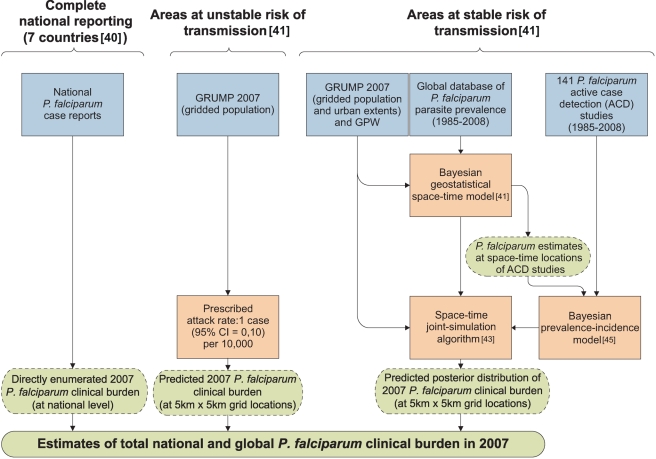
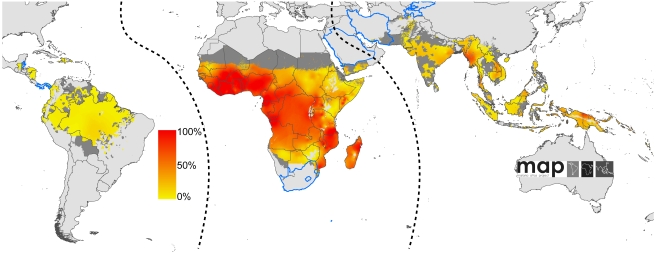
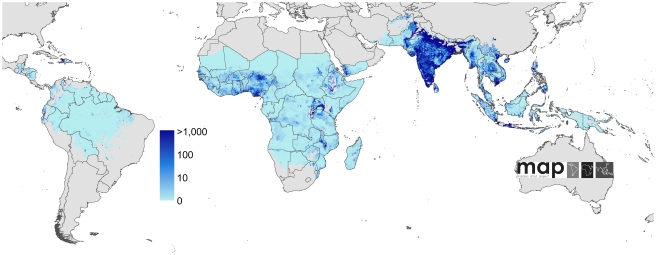
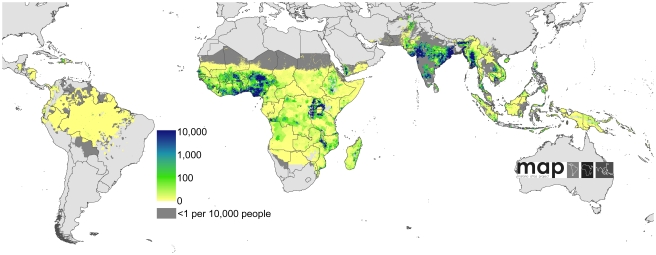
BACKGROUND: The epidemiology of malaria makes surveillance-based methods of estimating its disease burden problematic. Cartographic approaches have provided alternative malaria burden estimates, but there remains widespread misunderstanding about their derivation and fidelity. The aims of this study are to present a new cartographic technique and its application for deriving global clinical burden estimates of Plasmodium falciparum malaria for 2007, and to compare these estimates and their likely precision with those derived under existing surveillance-based approaches. METHODS AND FINDINGS: In seven of the 87 countries endemic for P. falciparum malaria, the health reporting infrastructure was deemed sufficiently rigorous for case reports to be used verbatim. In the remaining countries, the mapped extent of unstable and stable P. falciparum malaria transmission was first determined. Estimates of the plausible incidence range of clinical cases were then calculated within the spatial limits of unstable transmission. A modelled relationship between clinical incidence and prevalence was used, together with new maps of P. falciparum malaria endemicity, to estimate incidence in areas of stable transmission, and geostatistical joint simulation was used to quantify uncertainty in these estimates at national, regional, and global scales. Combining these estimates for all areas of transmission risk resulted in 451 million (95% credible interval 349-552 million) clinical cases of P. falciparum malaria in 2007. Almost all of this burden of morbidity occurred in areas of stable transmission. More than half of all estimated P. falciparum clinical cases and associated uncertainty occurred in India, Nigeria, the Democratic Republic of the Congo (DRC), and Myanmar (Burma), where 1.405 billion people are at risk. Recent surveillance-based methods of burden estimation were then reviewed and discrepancies in national estimates explored. When these cartographically derived national estimates were ranked according to their relative uncertainty and replaced by surveillance-based estimates in the least certain half, 98% of the global clinical burden continued to be estimated by cartographic techniques. CONCLUSIONS AND SIGNIFICANCE: Cartographic approaches to burden estimation provide a globally consistent measure of malaria morbidity of known fidelity, and they represent the only plausible method in those malaria-endemic countries with nonfunctional national surveillance. Unacceptable uncertainty in the clinical burden of malaria in only four countries confounds our ability to evaluate needs and monitor progress toward international targets for malaria control at the global scale. National prevalence surveys in each nation would reduce this uncertainty profoundly. Opportunities for further reducing uncertainty in clinical burden estimates by hybridizing alternative burden estimation procedures are also evaluated.
Overview
The claims and statistics of this paper haven’t been checked yet.
Free: it reads the open-access text and checks the first 5 claims that cite a source we can check. Create a free account to check every claim.
Integrity signals
Registry
Cites
Statistics
Figures
Verification
Claims the paper makes
The claims and statistics of this paper haven’t been checked yet.
Free: it reads the open-access text and checks the first 5 claims that cite a source we can check. Create a free account to check every claim.
Claims other papers make about this one
Each is checked against this paper’s own text: does it say what the citing paper says it does?
The check wasn’t confident either way, so it gives no verdict — never disputed.
In the citing paper
“The available articles indicate that pregnant women infected with P.falciparum and P.vivax have higher plasma concentrations of pro-inflammatory cytokines than their uninfected counterparts [117, 118].”
From Current update on malaria in pregnancy: a systematic review (2025) · cites this paper as [118]
Experimental — accuracy not yet measured
Self-check
Percentages, sums and reported differences re-computed from the paper’s own numbers.
The self-check needs the paper’s full text.
Citations
Cites
Mortality by cause for eight regions of the world: Global Burden of Disease Study
Murray, C. J., & Lopez, A. D. (1997) · The Lancet · doi:10.1016/s0140-6736(96)07493-4 · Cited by 4,043 · cited 1×
“The clinical consequences of Plasmodium falciparum infection have several features that confound traditional approaches to disease burden and disability measurement [10,11].”
BackgroundThe global distribution of clinical episodes of Plasmodium falciparum malaria
Snow, R. W., Guerra, C. A., Noor, A. M., Myint, H. Y., & Hay, S. I. (2005) · Nature · doi:10.1038/nature03342 · Cited by 2,741 · cited 5×
“Africa [1,3,4,6,7] and once before globally [5].”
BackgroundMethodResultInfluentialSelf-citationA new world malaria map: Plasmodium falciparum endemicity in 2010
Gething, P. W., Patil, A. P., Smith, D. L., Guerra, C. A., Elyazar, I. R., Johnston, G. L., Tatem, A. J., & Hay, S. I. (2011) · Malaria Journal · doi:10.1186/1475-2875-10-378 · Cited by 1,146
Self-citationThe neglected burden of Plasmodium vivax malaria
Mendis, K., Sina, B., Marchesini, P., & Carter, R. (2001) · The American Journal of Tropical Medicine and Hygiene · doi:10.4269/ajtmh.2001.64.97 · Cited by 970 · cited 1×
“vivax malaria [109–112], but new, innovative approaches based on an understanding of the clinical epidemiology and better cartography are required to improve upon current efforts to define the burden due to P.”
BackgroundWHO Regional Office for Europe
Tsechkovski, M. (1993) · The Lancet · doi:10.1016/0140-6736(93)91122-3 · Cited by 871
A Climate-based Distribution Model of Malaria Transmission in Sub-Saharan Africa
Craig, M. H., Snow, R. W., & le Sueur, D. (1999) · Parasitology Today · doi:10.1016/s0169-4758(99)01396-4 · Cited by 854 · cited 1×
“In our previous global estimates [5], we adapted a historical, categorical description of malaria endemicity, whilst in Africa we [1,3,4] and others [6,7] have previously used a climate suitability model of the likelihood of stable transmission as an index of differences in transmission intensity [102,103].”
MethodSelf-citationVivax Malaria: Neglected and Not Benign
Price, R. N., Tjitra, E., Guerra, C. A., Yeung, S., White, N. J., & Anstey, N. M. (2007) · The American Journal of Tropical Medicine and Hygiene · doi:10.4269/ajtmh.2007.77.79 · Cited by 838 · cited 1×
“vivax malaria [109–112], but new, innovative approaches based on an understanding of the clinical epidemiology and better cartography are required to improve upon current efforts to define the burden due to P.”
BackgroundSelf-citationSnow, R. W., Craig, M., Deichmann, U., & Marsh, K. (1999) · PubMed · Cited by 735
Self-citationOverdiagnosis of malaria in patients with severe febrile illness in Tanzania: a prospective study
Reyburn, H., Mbatia, R., Drakeley, C., Carneiro, I., Mwakasungula, E., Mwerinde, O., Saganda, K., Shao, J., Kitua, A., Olomi, R., et al. (2004) · BMJ · doi:10.1136/bmj.38251.658229.55 · Cited by 672 · cited 3×
“Fourth, inaccurate diagnoses [21,25,28] might be used to report disease rates, and these errors may be compounded through inadequate and incomplete national reporting systems [29–38].”
BackgroundEvolutionary and Historical Aspects of the Burden of Malaria
Carter, R., & Mendis, K. N. (2002) · Clinical Microbiology Reviews · doi:10.1128/cmr.15.4.564-594.2002 · Cited by 663 · cited 1×
“Estimating the disease burden posed by malaria is an important public health challenge [1–9].”
Background
Research works printed but not linked: 3
- Macdonald G 1957 Local features of malaria. London Oxford University Press 63 99 The epidemiology and control of malaria
- Sharma VP Choudhury DS Ansari MA Malhotra MS Menon PKB 1983 Studies on the true incidence of malaria in Kharkhoda (District Sonepat, Haryana) and Kichha (District Nainital, U.P.) Primary Health Centres. Indian J Malariol 20 21 34
- WHO 2010 Guidelines for the treatment of malaria. Second edition. Geneva, Switzerland World Health Organization 194
Cited by
The global distribution and burden of dengue
Bhatt, S., Gething, P. W., Brady, O. J., Messina, J. P., Farlow, A. W., Moyes, C. L., Drake, J. M., Brownstein, J. S., Hoen, A. G., Sankoh, O., et al. (2013) · Nature · doi:10.1038/nature12060 · Cited by 10,037
“India19,20 alone contributed 34% (33 [24-44] million infections) of the global total.”
Self-citationThe effect of malaria control on Plasmodium falciparum in Africa between 2000 and 2015
Bhatt, S., Weiss, D. J., Cameron, E., Bisanzio, D., Mappin, B., Dalrymple, U., Battle, K. E., Moyes, C. L., Henry, A., Eckhoff, P. A., et al. (2015) · Nature · doi:10.1038/nature15535 · Cited by 3,225
“We estimated ACT and IRS contributed 19 (15-24)% and 13 (11-16)% respectively, although these interventions had larger proportional contributions where their coverage was high (Extended Data Fig.”
BackgroundSelf-citationGlobal malaria mortality between 1980 and 2010: a systematic analysis
Murray, C. J., Rosenfeld, L. C., Lim, S. S., Andrews, K. G., Foreman, K. J., Haring, D., Fullman, N., Naghavi, M., Lozano, R., & Lopez, A. D. (2012) · The Lancet · doi:10.1016/s0140-6736(12)60034-8 · Cited by 1,452
Piel, F. B., Patil, A. P., Howes, R. E., Nyangiri, O. A., Gething, P. W., Dewi, M., Temperley, W. H., Williams, T. N., Weatherall, D. J., & Hay, S. I. (2013) · The Lancet · doi:10.1016/s0140-6736(12)61229-x · Cited by 1,196
Self-citationMurray, C. J. L., Ortblad, K. F., Guinovart, C., Lim, S. S., Wolock, T. M., Roberts, D. A., Dansereau, E. A., Graetz, N., Barber, R. M., Brown, J. C., et al. (2014) · The Lancet · doi:10.1016/s0140-6736(14)60844-8 · Cited by 975
Sinka, M. E., Bangs, M. J., Manguin, S., Coetzee, M., Mbogo, C. M., Hemingway, J., Patil, A. P., Temperley, W. H., Gething, P. W., Kabaria, C. W., et al. (2010) · Parasites & Vectors · doi:10.1186/1756-3305-3-117 · Cited by 761
Self-citationBousema, T., & Drakeley, C. (2011) · Clinical Microbiology Reviews · doi:10.1128/cmr.00051-10 · Cited by 746
“4 billion people are at risk of stable or unstable Plasmodium falciparum transmission (178), with 350 to 500 million clinical episodes and 1 million deaths annually (191).”
BackgroundAsymptomatic malaria infections: detectability, transmissibility and public health relevance
Bousema, T., Okell, L., Felger, I., & Drakeley, C. (2014) · Nature Reviews Microbiology · doi:10.1038/nrmicro3364 · Cited by 696
Sinka, M. E., Bangs, M. J., Manguin, S., Chareonviriyaphap, T., Patil, A. P., Temperley, W. H., Gething, P. W., Elyazar, I. R., Kabaria, C. W., Harbach, R. E., et al. (2011) · Parasites & Vectors · doi:10.1186/1756-3305-4-89 · Cited by 550
“falciparum malaria only) [2], with pockets of medium to high endemicity found in Orissa State (eastern India), western Myanmar and the lowlands of New Guinea [3].”
BackgroundSelf-citationA Long Neglected World Malaria Map: Plasmodium vivax Endemicity in 2010
Gething, P. W., Elyazar, I. R. F., Moyes, C. L., Smith, D. L., Battle, K. E., Guerra, C. A., Patil, A. P., Tatem, A. J., Howes, R. E., Myers, M. F., et al. (2012) · PLoS Neglected Tropical Diseases · doi:10.1371/journal.pntd.0001814 · Cited by 538
Self-citationAsghar, M., Hasselquist, D., Hansson, B., Zehtindjiev, P., Westerdahl, H., & Bensch, S. (2015) · Science · doi:10.1126/science.1261121 · Cited by 514
Characterizing, controlling and eliminating residual malaria transmission
Killeen, G. F. (2014) · Malaria Journal · doi:10.1186/1475-2875-13-330 · Cited by 506
Cardiovascular Disease in the Developing World
Celermajer, D. S., Chow, C. K., Marijon, E., Anstey, N. M., & Woo, K. S. (2012) · Journal of the American College of Cardiology · doi:10.1016/j.jacc.2012.03.074 · Cited by 481
The International Limits and Population at Risk of Plasmodium vivax Transmission in 2009
Guerra, C. A., Howes, R. E., Patil, A. P., Gething, P. W., Van Boeckel, T. P., Temperley, W. H., Kabaria, C. W., Tatem, A. J., Manh, B. H., Elyazar, I. R. F., et al. (2010) · PLoS Neglected Tropical Diseases · doi:10.1371/journal.pntd.0000774 · Cited by 460
Self-citationGlobal Epidemiology of Plasmodium vivax
Howes, R. E., Battle, K. E., Mendis, K. N., Smith, D. L., Cibulskis, R. E., Baird, J. K., & Hay, S. I. (2016) · The American Journal of Tropical Medicine and Hygiene · doi:10.4269/ajtmh.16-0141 · Cited by 418
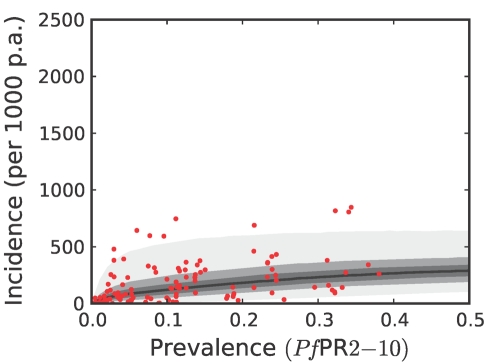
“…can then be derived from the prevalence map by using a model of the relationship between prevalence of infection and clinical incidence.128,129,133–135 Figure 11 represents such a model developed for P. vivax that will be integrated into a cartographic approach to derive E u r op e P M C…”
Self-citationTun, K. M., Imwong, M., Lwin, K. M., Win, A. A., Hlaing, T. M., Hlaing, T., Lin, K., Kyaw, M. P., Plewes, K., Faiz, M. A., et al. (2015) · The Lancet Infectious Diseases · doi:10.1016/s1473-3099(15)70032-0 · Cited by 414
Evidence and Implications of Mortality Associated with Acute Plasmodium vivax Malaria
Baird, J. K. (2013) · Clinical Microbiology Reviews · doi:10.1128/cmr.00074-12 · Cited by 398
“Hay and colleagues (8) estimated 102 million (95% CI 31 to 187 million) clinical attacks caused by P.”
BackgroundMalaria incidence in Myanmar 2005–2014: steady but fragile progress towards elimination
Mu, T. T., Sein, A. A., Kyi, T. T., Min, M., Aung, N. M., Anstey, N. M., Kyaw, M. P., Soe, C., Kyi, M. M., & Hanson, J. (2016) · Malaria Journal · doi:10.1186/s12936-016-1567-0 · Cited by 333
Sinka, M. E., Rubio-Palis, Y., Manguin, S., Patil, A. P., Temperley, W. H., Gething, P. W., Van Boeckel, T., Kabaria, C. W., Harbach, R. E., & Hay, S. I. (2010) · Parasites & Vectors · doi:10.1186/1756-3305-3-72 · Cited by 322
Self-citationGeographical variation in Plasmodium vivax relapse
Battle, K. E., Karhunen, M. S., Bhatt, S., Gething, P. W., Howes, R. E., Golding, N., Van Boeckel, T. P., Messina, J. P., Shanks, G. D., Smith, D. L., et al. (2014) · Malaria Journal · doi:10.1186/1475-2875-13-144 · Cited by 282
Self-citationPoint of care testing for infectious diseases
Chen, H., Liu, K., Li, Z., & Wang, P. (2019) · Clinica Chimica Acta · doi:10.1016/j.cca.2019.03.008 · Cited by 270
Noor, A. M., Kinyoki, D. K., Mundia, C. W., Kabaria, C. W., Mutua, J. W., Alegana, V. A., Fall, I. S., & Snow, R. W. (2014) · The Lancet · doi:10.1016/s0140-6736(13)62566-0 · Cited by 263
Self-citationGlobal mapping of infectious disease
Hay, S. I., Battle, K. E., Pigott, D. M., Smith, D. L., Moyes, C. L., Bhatt, S., Brownstein, J. S., Collier, N., Myers, M. F., George, D. B., et al. (2013) · Philosophical Transactions of the Royal Society B: Biological Sciences · doi:10.1098/rstb.2012.0250 · Cited by 243
Self-citationEstimates of the changing age-burden of Plasmodium falciparum malaria disease in sub-Saharan Africa
Griffin, J. T., Ferguson, N. M., & Ghani, A. C. (2014) · Nature Communications · doi:10.1038/ncomms4136 · Cited by 224
“These all-age estimates are a little lower than those reported by Hay et al. 8 , which are based on the empirical incidence-prevalence relationship estimated by Patil et al. 10 and on prevalence estimates for 2007.”
Gething, P. W., Van Boeckel, T. P., Smith, D. L., Guerra, C. A., Patil, A. P., Snow, R. W., & Hay, S. I. (2011) · Parasites & Vectors · doi:10.1186/1756-3305-4-92 · Cited by 217
“These contemporary maps have, in turn, facilitated assessment of a wide range of measures central to the planning, implementation, and monitoring of disease control including the evaluation of global populations at risk [3,5,6], clinical burden [9], equity in international funding for disease control [10,11], and rela…”
BackgroundSelf-citationCairns, M., Roca-Feltrer, A., Garske, T., Wilson, A. L., Diallo, D., Milligan, P. J., Ghani, A. C., & Greenwood, B. M. (2012) · Nature Communications · doi:10.1038/ncomms1879 · Cited by 186
Lim, S. S., Fullman, N., Stokes, A., Ravishankar, N., Masiye, F., Murray, C. J. L., & Gakidou, E. (2011) · PLoS Medicine · doi:10.1371/journal.pmed.1001091 · Cited by 178
Parasite Infection, Carcinogenesis and Human Malignancy
van Tong, H., Brindley, P. J., Meyer, C. G., & Velavan, T. P. (2017) · EBioMedicine · doi:10.1016/j.ebiom.2016.11.034 · Cited by 173
“Case reports also have suggested a possible association of UGS with other malignant neoplasms such as prostatic adenocarcinoma and squamous cell carcinoma of the cervix (Basilio-de-Oliveira et al., 2002; Helling-Giese et al., 1996).”
BackgroundMalaria Distribution, Prevalence, Drug Resistance and Control in Indonesia
Elyazar, I. R. F., Hay, S. I., & Baird, J. K. (2011) · Advances in Parasitology · doi:10.1016/b978-0-12-385897-9.00002-1 · Cited by 167
Self-citationAgyekum, T. P., Botwe, P. K., Arko-Mensah, J., Issah, I., Acquah, A. A., Hogarh, J. N., Dwomoh, D., Robins, T. G., & Fobil, J. N. (2021) · International Journal of Environmental Research and Public Health · doi:10.3390/ijerph18147255 · Cited by 164
Malaria in India: The Center for the Study of Complex Malaria in India
Das, A., Anvikar, A. R., Cator, L. J., Dhiman, R. C., Eapen, A., Mishra, N., Nagpal, B. N., Nanda, N., Raghavendra, K., Read, A. F., et al. (2012) · Acta Tropica · doi:10.1016/j.actatropica.2011.11.008 · Cited by 162
Kobylinski, K. C., Sylla, M., Chapman, P. L., Sarr, M. D., & Foy, B. D. (2011) · American Journal of Tropical Medicine and Hygiene · doi:10.4269/ajtmh.2011.11-0160 · Cited by 147
Oehring, S. C., Woodcroft, B. J., Moes, S., Wetzel, J., Dietz, O., Pulfer, A., Dekiwadia, C. D., Mäser, P., Flueck, C., Witmer, K., et al. (2012) · Genome biology · doi:10.1186/gb-2012-13-11-r108 · Cited by 145
Worldwide Incidence of Malaria in 2009: Estimates, Time Trends, and a Critique of Methods
Cibulskis, R. E., Aregawi, M., Williams, R., Otten, M., & Dye, C. (2011) · PLoS Medicine · doi:10.1371/journal.pmed.1001142 · Cited by 143
Acestor, N., Cooksey, R., Newton, P. N., Ménard, D., Guerin, P. J., Nakagawa, J., Christophel, E. M., González, I. J., & Bell, D. (2012) · PLoS ONE · doi:10.1371/journal.pone.0044269 · Cited by 165
Claser, C., Malleret, B., Gun, S. Y., Wong, A. Y. W., Chang, Z. W., Teo, P., See, P. C. E., Howland, S. W., Ginhoux, F., & Rénia, L. (2011) · PLoS ONE · doi:10.1371/journal.pone.0018720 · Cited by 143
Balasubramanian, R., Boeckel, T. P. V., Carmeli, Y., Cosgrove, S. E., & Laxminarayan, R. (2023) · PLoS Medicine · doi:10.1371/journal.pmed.1004178 · Cited by 187
Rizzoli, A., Bolzoni, L., Chadwick, E. A., Capelli, G., Montarsi, F., Grisenti, M., de la Puente, J. M., Muñoz, J., Figuerola, J., Soriguer, R., et al. (2015) · Parasites & Vectors · doi:10.1186/s13071-015-0831-4 · Cited by 139
“Mosquitoes are among the most important vectors, and transmit some of the most threatening infectious diseases in the world, such as malaria, dengue fever, Rift Valley fever, and West Nile virus (WNV) [8,9].”
BackgroundMalaria's Many Mates: Past, Present, and Future of the Systematics of the Order Haemosporida
Perkins, S. L. (2014) · Journal of Parasitology · doi:10.1645/13-362.1 · Cited by 154
Vaidya, A. B., Morrisey, J. M., Zhang, Z., Das, S., Daly, T. M., Otto, T. D., Spillman, N. J., Wyvratt, M. J., Siegl, P. K. S., Marfurt, J., et al. (2014) · Nature Communications · doi:10.1038/ncomms6521 · Cited by 136
BIOLOGY OF HUMAN MALARIA PLASMODIA INCLUDING PLASMODIUM KNOWLESI
Antinori, S., Galimberti, L., Milazzo, L., & Corbellino, M. (2012) · Mediterranean Journal of Hematology and Infectious Diseases · doi:10.4084/mjhid.2012.013 · Cited by 134
The Global Public Health Significance of Plasmodium vivax
Battle, K. E., Gething, P. W., Elyazar, I., Moyes, C. L., Sinka, M. E., Howes, R. E., Guerra, C. A., Price, R. N., Baird, J. K., & Hay, S. I. (2012) · Advances in Parasitology/Advances in parasitology · doi:10.1016/b978-0-12-397900-1.00001-3 · Cited by 149
Self-citationTatem, A. J., Adamo, S. B., Bharti, N., Burgert‐Brucker, C. R., Castro, M. C., Dorélien, A., Fink, G., Linard, C., John, M., Montana, L. S., et al. (2012) · Population Health Metrics · doi:10.1186/1478-7954-10-8 · Cited by 139
“Similarly, the numbers at risk of malaria globally in different age groups were estimated by applying national-level adjustments to GRUMP data [5,29,35,36].”
MethodSelf-citationHumphries, D., Mosites, E., Otchere, J., Twum, W. A., Woo, L., Jones-Sanpei, H., Harrison, L. M., Bungiro, R. D., Benham-Pyle, B., Bimi, L., et al. (2011) · The American Society of Tropical Medicine and Hygiene · doi:10.4269/ajtmh.2011.11-0003 · Cited by 122
Fullman, N., Burstein, R., Lim, S. S., Medlin, C. A., & Gakidou, E. E. (2013) · Malaria Journal · doi:10.1186/1475-2875-12-62 · Cited by 137
“These leve ls of malaria transmission risk were classified as: (1) high transmission, wi th a parasite rate in units of PfPR2-10 between 40% and 100%; (2) medium transmission, with a PfPR2-10 between 5% and 40%; and (3) low transmission, as with a PfPR2-10 between 0% and 5% [33,34].”
BackgroundDrame, P. M., Poinsignon, A., Besnard, P., Cornélie, S., Mire, J. L., Toto, J.-C., Foumane, V. N., Dos-Santos, M. A., Sembène, M., Fortes, F., et al. (2010) · PLoS ONE · doi:10.1371/journal.pone.0015596 · Cited by 118
Increase in malaria prevalence and age of at risk population in different areas of Gabon
MCORU team, Mawili-Mboumba, D. P., Bouyou-Akotet, M. K., Kendjo, É., Nzamba, J., Medang, M. O., Mbina, J. R. M., & Kombila, M. (2013) · Malaria Journal · doi:10.1186/1475-2875-12-3 · Cited by 105
Sylla, M., Kobylinski, K. C., Gray, M., Chapman, P. L., Sarr, M. D., Rasgon, J. L., & Foy, B. D. (2010) · Malaria Journal · doi:10.1186/1475-2875-9-365 · Cited by 106
Air travel and vector-borne disease movement
TATEM, A. J., HUANG, Z., DAS, A., QI, Q., ROTH, J., & QIU, Y. (2012) · Parasitology · doi:10.1017/s0031182012000352 · Cited by 105
“…approaches have proven to be effective in tackling these factors, through using community surveys to assess prevalence rates, and geostatistical approaches combined with covariates to predict prevalences at unsampled locations (Brooker et al. 2002; Ferguson et al. 2005; Hay et al. 2010).”
BackgroundSelf-citationLarge-scale spatial population databases in infectious disease research
Linard, C., & Tatem, A. J. (2012) · International Journal of Health Geographics · doi:10.1186/1476-072x-11-7 · Cited by 103
Self-citationMessina, J. P., Taylor, S. M., Meshnick, S. R., Linke, A. M., Tshefu, A. K., Atua, B., Mwandagalirwa, K., & Emch, M. (2011) · Malaria Journal · doi:10.1186/1475-2875-10-161 · Cited by 123
Cameron, E., Battle, K. E., Bhatt, S., Weiss, D. J., Bisanzio, D., Mappin, B., Dalrymple, U., Hay, S. I., Smith, D. L., Griffin, J. T., et al. (2015) · Nature Communications · doi:10.1038/ncomms9170 · Cited by 96
Self-citationThai, K. T. D., & Anders, K. L. (2011) · Experimental Biology and Medicine · doi:10.1258/ebm.2011.010402 · Cited by 120
Tsabang, N., Fokou, P. V. T., Tchokouaha, L. R. Y., Noguem, B., Bakarnga‐Via, I., Nguepi, M. S. D., Nkongmeneck, B. A., & Boyom, F. F. (2011) · Journal of Ethnopharmacology · doi:10.1016/j.jep.2011.10.035 · Cited by 97
Krefis, A. C., Schwarz, N. G., Krüger, A., Fobil, J., Nkrumah, B., Acquah, S., Loag, W., Sarpong, N., Adu-Sarkodie, Y., Ranft, U., et al. (2011) · The American Society of Tropical Medicine and Hygiene · doi:10.4269/ajtmh.2011.10-0381 · Cited by 98
Wind direction and proximity to larval sites determines malaria risk in Kilifi District in Kenya
Midega, J. T., Smith, D. L., Olotu, A., Mwangangi, J. M., Nzovu, J. G., Wambua, J., Nyangweso, G., Mbogo, C. M., Christophides, G. K., Marsh, K., et al. (2012) · Nature Communications · doi:10.1038/ncomms1672 · Cited by 97
Malaria in selected non-Amazonian countries of Latin America
Arevalo-Herrera, M., Quiñones, M. L., Guerra, C., Céspedes, N., Giron, S., Ahumada, M., Piñeros, J. G., Padilla, N., Terrientes, Z., Rosas, Á., et al. (2012) · Acta Tropica · doi:10.1016/j.actatropica.2011.06.008 · Cited by 95
Self-citationPredicting the direct and indirect impacts of climate change on malaria in coastal Kenya
Le, P. V. V., Kumar, P., Ruiz, M. O., Mbogo, C., & Muturi, E. J. (2019) · PLOS ONE · doi:10.1371/journal.pone.0211258 · Cited by 89
Further shrinking the malaria map: how can geospatial science help to achieve malaria elimination?
Clements, A. C., Reid, H. L., Kelly, G. C., & Hay, S. I. (2013) · The Lancet Infectious Diseases · doi:10.1016/s1473-3099(13)70140-3 · Cited by 88
Self-citationA new real-time PCR protocol for detection of avian haemosporidians
Bell, J. A., Weckstein, J. D., Fecchio, A., & Tkach, V. V. (2015) · Parasites & Vectors · doi:10.1186/s13071-015-0993-0 · Cited by 94
Spatial parasite ecology and epidemiology: a review of methods and applications
Pullan, R. L., Sturrock, H. J. W., Magalhães, R. J. S., Clements, A., & BROOKER, S. J. (2012) · Parasitology · doi:10.1017/s0031182012000698 · Cited by 105
“This approach has been extended for mappingmalaria at global scales using a sophisticated two-dimensional space-time random coefficient (Hay et al. 2010), thus simultaneously modelling correlation between data points in both space and time.”
InfluentialLeslie, T., Mikhail, A. F. W., Mayan, I., Anwar, M., Bakhtash, S. H., Nader, M., Chandler, C., Whitty, C. W. M., & Rowland, M. (2012) · BMJ · doi:10.1136/bmj.e4389 · Cited by 84
Ruizendaal, E., Dierickx, S., Peeters Grietens, K., Schallig, H. D., Pagnoni, F., & Mens, P. F. (2014) · Malaria Journal · doi:10.1186/1475-2875-13-229 · Cited by 83
“Recent indications of a decreased malaria transmission in regions in SSA could however lead to lower levels of immunity in the population and might subsequently increase disease susceptibility, also for subjects with low parasitaemia levels [42].”
InfluentialPlants as antimalarial agents in Sub-Saharan Africa
Chinsembu, K. C. (2015) · Acta Tropica · doi:10.1016/j.actatropica.2015.08.009 · Cited by 79
Treatment-seeking rates in malaria endemic countries
Battle, K. E., Bisanzio, D., Gibson, H. S., Bhatt, S., Cameron, E., Weiss, D. J., Mappin, B., Dalrymple, U., Howes, R. E., Hay, S. I., et al. (2016) · Malaria Journal · doi:10.1186/s12936-015-1048-x · Cited by 77
Self-citationThe effects of spatial population dataset choice on estimates of population at risk of disease
Tatem, A. J., Campiz, N., Gething, P. W., Snow, R. W., & Linard, C. (2011) · Population Health Metrics · doi:10.1186/1478-7954-9-4 · Cited by 76
Self-citationSeydel, K. B., Fox, L. L., Glover, S. J., Reeves, M. J., Pensulo, P., Liomba, A. M., Mpakiza, A., Molyneux, M. E., & Taylor, T. E. (2012) · The Journal of Infectious Diseases · doi:10.1093/infdis/jis371 · Cited by 75
Marty, R., Dolan, C. B., Leu, M., & Runfola, D. M. (2017) · BMJ Global Health · doi:10.1136/bmjgh-2016-000129 · Cited by 76
Plasmodium falciparum Malaria Endemicity in Indonesia in 2010
Elyazar, I., Gething, P. W., Patil, A. P., Rogayah, H., Kusriastuti, R., Wismarini, D. M., Tarmizi, S. N., Baird, J. K., & Hay, S. I. (2011) · PLoS ONE · doi:10.1371/journal.pone.0021315 · Cited by 79
Self-citationGüler, J. L., Freeman, D. L., Ahyong, V., Patrapuvich, R., White, J. C., Gujjar, R., Phillips, M. A., DeRisi, J. L., & Rathod, P. K. (2013) · PLoS Pathogens · doi:10.1371/journal.ppat.1003375 · Cited by 68
Howes, R. E., Mioramalala, S. A., Ramiranirina, B., Franchard, T., Rakotorahalahy, A. J., Bisanzio, D., Gething, P. W., Zimmerman, P. A., & Ratsimbasoa, A. C. (2016) · Malaria Journal · doi:10.1186/s12936-016-1556-3 · Cited by 66
Self-citationWoodberry, T., Minigo, G., Piera, K. A., Amante, F. H., Pinzón‐Charry, A., Good, M. F., López, J. A., Engwerda, C. R., McCarthy, J. S., & Anstey, N. M. (2012) · The Journal of Infectious Diseases · doi:10.1093/infdis/jis366 · Cited by 69
Boadu, N. Y., Amuasi, J., Ansong, D., Einsiedel, E. F., Menon, D., & Yanow, S. K. (2016) · Malaria Journal · doi:10.1186/s12936-016-1174-0 · Cited by 76
Malaria mapping: understanding the global endemicity of falciparum and vivax malaria
Dalrymple, U., Mappin, B., & Gething, P. W. (2015) · BMC Medicine · doi:10.1186/s12916-015-0372-x · Cited by 68
Self-citationArama, C., Giusti, P., Boström, S., Dara, V., Traoré, B., Dolo, A., Doumbo, O. K., Varani, S., & Troye‐Blomberg, M. (2011) · PLoS ONE · doi:10.1371/journal.pone.0018319 · Cited by 70
Improving pandemic influenza risk assessment
Russell, C. A., Kasson, P. M., Donis, R. O., Riley, S., Dunbar, J., Rambaut, A., Asher, J., Burke, S., Davis, C. T., Garten, R. J., et al. (2014) · eLife · doi:10.7554/elife.03883 · Cited by 76
“Similarly, the PB2 E627K substitu-tion adapts the viral polymerase to mammalian cells in some viruses ( Long et al., 2013 ) but not others ( Herfst et al., 2010 ), while other viruses have adapted to mammals via different substitutions in PB2 ( Jagger et al., 2010 , Mehle and Doudna, 2009 ; Zhu et…”
Self-citationMakenga, G., Menon, S., Baraka, V., Minja, D. T. R., Nakato, S., Delgado-Ratto, C., Francis, F. T., Lusingu, J., & Geertruyden, J. V. (2020) · Parasite Epidemiology and Control · doi:10.1016/j.parepi.2020.e00188 · Cited by 66
“This underscores the importance of quantifying the impact of control strategies on exposure and infection to inform on improvement and or scale up of effective strategies (Simmons et al., 2017; Hay et al., 2010).”
BackgroundRubach, M. P., Mukemba, J., Florence, S., John, B., Crookston, B., Lopansri, B. K., Yeo, T. W., Piera, K. A., Alder, S. C., Weinberg, J. B., et al. (2012) · PLoS ONE · doi:10.1371/journal.pone.0035985 · Cited by 65
India's invisible malaria burden
Hay, S. I., Gething, P. W., & Snow, R. W. (2010) · The Lancet · doi:10.1016/s0140-6736(10)61084-7 · Cited by 68
Self-citationAtkinson, S. H., Armitage, A. E., Khandwala, S., Mwangi, T. W., Uyoga, S., Bejon, P. A., Williams, T. N., Prentice, A. M., & Drakesmith, H. (2014) · Blood · doi:10.1182/blood-2013-10-533000 · Cited by 64
Malaria prevalence in Mangaluru city area in the southwestern coastal region of India
Dayanand, K. K., Punnath, K., Chandrashekar, V. N., Achur, R., Kakkilaya, S. B., Ghosh, S., Kumari, S., & Gowda, D. (2017) · Malaria Journal · doi:10.1186/s12936-017-2141-0 · Cited by 55
Tatem, A. J., García, A. J., Snow, R. W., Noor, A. M., Gaughan, A. E., Gilbert, M., & Linard, C. (2013) · Population Health Metrics · doi:10.1186/1478-7954-11-11 · Cited by 66
Self-citationHumphries, D., Simms, B. T., Davey, D., Otchere, J., Quagraine, J., Terryah, S., Newton, S., Berg, E., Harrison, L. M., Boakye, D., et al. (2013) · The American Society of Tropical Medicine and Hygiene · doi:10.4269/ajtmh.12-0605 · Cited by 61
Hamid, M. M. A., Remarque, E. J., van Duivenvoorde, L. M., van der Werff, N., Walraven, V., Faber, B. W., Kocken, C. H. M., & Thomas, A. W. (2011) · PLoS ONE · doi:10.1371/journal.pone.0020547 · Cited by 72
Malaria elimination in India and regional implications
Wangdi, K., Gatton, M. L., Kelly, G. C., Banwell, C. L., Dev, V., & Clements, A. (2016) · The Lancet Infectious Diseases · doi:10.1016/s1473-3099(16)30123-2 · Cited by 66
Killeen, G. F., Seyoum, A., Gimnig, J. E., Stevenson, J. C., DRAKELEY, C. J., & Chitnis, N. (2014) · Malaria Journal · doi:10.1186/1475-2875-13-146 · Cited by 66
“falciparum infections [21] and 95% of P.”
Lawford, H., Zurovac, D., O'Reilly, L., Hoibak, S., Cowley, A., Munga, S., Vulule, J., Juma, E., Snow, R. W., & Allan, R. (2011) · Malaria Journal · doi:10.1186/1475-2875-10-281 · Cited by 59
Self-citationConcurrency revisited: increasing and compelling epidemiological evidence
Mah, T. L., & Shelton, J. D. (2011) · Journal of the International AIDS Society · doi:10.1186/1758-2652-14-33 · Cited by 66
Ecological niche and potential distribution of Anopheles arabiensis in Africa in 2050
Drake, J. M., & Beier, J. C. (2014) · Malaria Journal · doi:10.1186/1475-2875-13-213 · Cited by 58
The role of antioxidants treatment on the pathogenesis of malarial infections: a review
Isah, M. B., & Ibrahim, M. A. (2014) · Parasitology Research · doi:10.1007/s00436-014-3804-1 · Cited by 57
“Indeed, anemia is a very important pathological feature of the disease, accounting for around one third of all deaths resulting from malarial infection (Haldar and Mohandas 2009).”
BackgroundSmith, D. L., Klein, E. Y., McKenzie, F. E., & Laxminarayan, R. (2010) · Malaria Journal · doi:10.1186/1475-2875-9-217 · Cited by 57
In Vitro Activity of Antiretroviral Drugs against Plasmodium falciparum
Nsanzabana, C., & Rosenthal, P. J. (2011) · Antimicrobial Agents and Chemotherapy · doi:10.1128/aac.05130-11 · Cited by 57
Severe Morbidity and Mortality Risk From Malaria in the United States, 1985–2011
Hwang, J., Cullen, K. A., Kachur, S. P., Arguin, P. M., & Baird, J. K. (2014) · Open Forum Infectious Diseases · doi:10.1093/ofid/ofu034 · Cited by 60
Fung, C., Beck, J. R., Robertson, S. D., Gubbels, M., & Bradley, P. J. (2012) · Molecular and Biochemical Parasitology · doi:10.1016/j.molbiopara.2012.05.002 · Cited by 57
“Apicomplexans of major importance to human health include the malaria parasite Plasmodium falciparum, which accounts for approximately one million deaths annually [1], and Toxoplasma gondii, a pathogen that chronically infects about one-third of the human population [2].”
BackgroundCoomes, S. M., Pelly, V. S., Kannan, Y., Okoye, I., Czieso, S., Entwistle, L. J., Perez-Lloret, J., Nikolov, N., Potocnik, A. J., Bíró, J., et al. (2015) · PLoS Pathogens · doi:10.1371/journal.ppat.1004994 · Cited by 57
Distribution of Medication Considering Information, Transshipment, and Clustering: Malaria in Malawi
Parvin, H., Beygi, S., Helm, J. E., Larson, P. S., & Oyen, M. P. V. (2017) · Production and Operations Management · doi:10.1111/poms.12826 · Cited by 59
“This general approach is widely used for estimating facility-level incidence of malaria in Malawi and other parts of Africa in the epidemiology and public health literature (see Bennett et al. 2013, Chaulagai et al. 2001, 2005, Dzinjalamala 2009, Hay et al. 2010, Kazembe 2007, Kazembe et al. 2006).”
MethodFriesen, J., & Matuschewski, K. (2011) · Vaccine · doi:10.1016/j.vaccine.2011.07.034 · Cited by 54
The role of antimalarial treatment in the elimination of malaria
Gosling, R. D., Okell, L., Mosha, J. F., & Chandramohan, D. (2011) · Clinical Microbiology and Infection · doi:10.1111/j.1469-0691.2011.03660.x · Cited by 63
Desai, M., Buff, A. M., Khagayi, S., Byass, P., Amek, N., van Eijk, A., Slutsker, L., Vulule, J., Odhiambo, F. O., Phillips-Howard, P. A., et al. (2014) · PLoS ONE · doi:10.1371/journal.pone.0106197 · Cited by 53
Simplified Models of Vector Control Impact upon Malaria Transmission by Zoophagic Mosquitoes
Kiware, S. S., Chitnis, N., Moore, S. J., Devine, G. J., Majambere, S., Merrill, S., & Killeen, G. F. (2012) · PLoS ONE · doi:10.1371/journal.pone.0037661 · Cited by 53
Metadata
- Authors
- Hay, S. I., Okiro, E. A., Gething, P. W., Patil, A. P., Tatem, A. J., Guerra, C. A., & Snow, R. W.
- Affiliations
- Kenya Medical Research Institute (KE)
- University of Oxford (GB)
- University of Florida (US)
- Corresponding author
- Hay, Simon I.
- Snow, Robert W.
- Venue
- PLoS Medicine
- Publisher
- Public Library of Science (PLoS)
- Published
- 2010-06-15
- Volume
- 7
- Issue
- 6
- Pages
- e1000290
- ISSN
- 1549-1277 (ISSN-L)
- 1549-1676
- PMC
- PMC2885984
- OpenAlex
- W2019348373
- Cited by
- 374
- References
- 110
- Citations by year
- 2026: 2 · 2025: 5 · 2024: 5 · 2023: 12 · 2022: 10 · 2021: 13 · 2020: 11 · 2019: 20 · 2018: 12 · 2017: 22 · 2016: 33 · 2015: 36 · 2014: 48 · 2013: 39 · 2012: 45
- FWCI
- 45.94
- Type
- journal article
- Language
- en
- Open access
- gold
- doi.org
- Locations
- PLoS Medicine (publishedVersion, cc-by)
- PubMed Central (publishedVersion, cc-by)
- PubMed (publishedVersion)
- ePrints Soton (University of Southampton) (acceptedVersion)
- DOAJ (DOAJ: Directory of Open Access Journals) (submittedVersion, cc-by-sa)
- Figshare (submittedVersion, cc-by)
- Greater South Information System
- Funders
- Bill and Melinda Gates Foundation (49446)
- Amazon Web Services
- Wellcome Trust (086166, 079080, 079091)
- Topics
- Health Sciences › Medicine › Public Health, Environmental and Occupational Health › Malaria Research and Control
- Health Sciences › Medicine › Public Health, Environmental and Occupational Health › Mosquito-borne diseases and control
- Health Sciences › Medicine › Public Health, Environmental and Occupational Health › Travel-related health issues
- Keywords
- falciparum malaria, global malaria burden, malaria endemicity, uncertainty quantification, malaria surveillance, malaria morbidity, India, Nigeria, Democratic Republic of the Congo, Myanmar, prevalence survey
- MeSH terms
- Humans, Models, Biological, Population Surveillance, Global Health, Reproducibility of Results, Incidence, Prevalence, Malaria, Falciparum, Endemic Diseases, Uncertainty
About these checks
Registry, retraction, Cites and statistics results are computed, not judged, with one exception: a printed reference that no index lists is read once by a model before it counts as a citation error. Claims are extracted by a model and kept only when their quote appears verbatim in the text; each cited source is then checked, with a model’s help, for whether it says what the claim relies on. Those verdicts can be wrong — read the claim’s quote and the cited source before relying on one.
Statistics and arithmetic are recomputed, not judged.
Confidence bands are shown only for fields calibrated on our annotated test set. None is calibrated yet, so no band is shown.
What counts as a claim ›How we measure confidence ›How we check this ›
Are you an author, or do you see a problem with this page? Request a review
Data sources
Bibliographic data: Semantic Scholar, OpenAlex, Crossref.
Contains information from the Semantic Scholar Academic Graph Datasets, made available under the ODC Attribution License (ODC-BY 1.0).
Semantic Scholar’s data is described in: Kinney, R., et al. (2023). The Semantic Scholar Open Data Platform. arXiv:2301.10140.
