

The DOI matches its Crossref record; 62 of the 62 references it cites were found in a registry or an index.
Vitamin D and Risk of Multiple Sclerosis: A Mendelian Randomization Study
Open accessAbstract
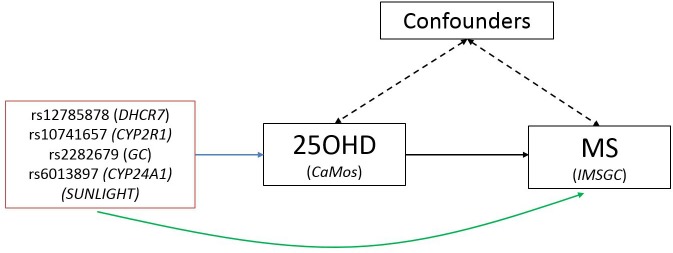
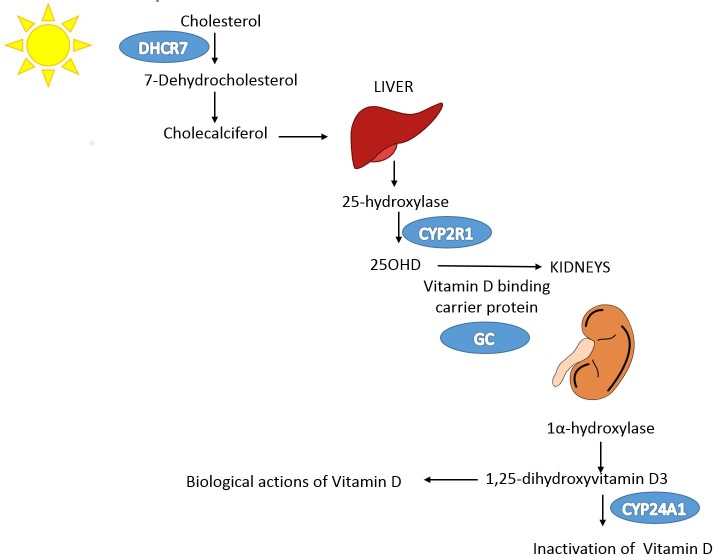
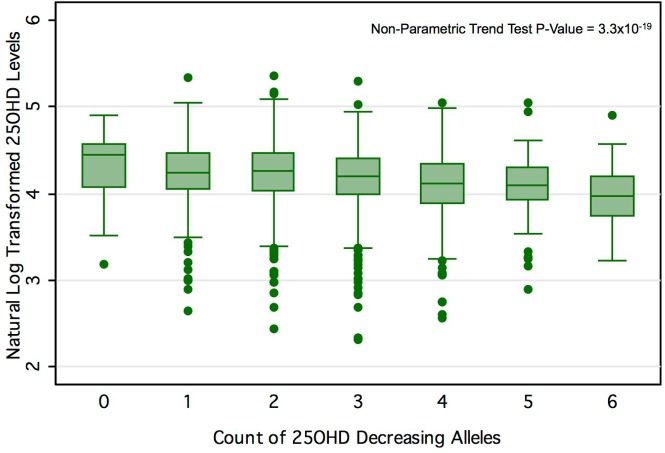
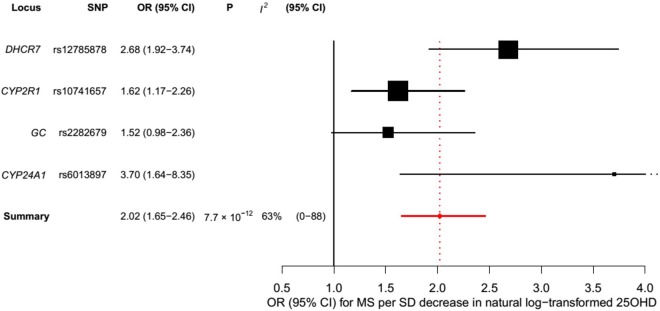
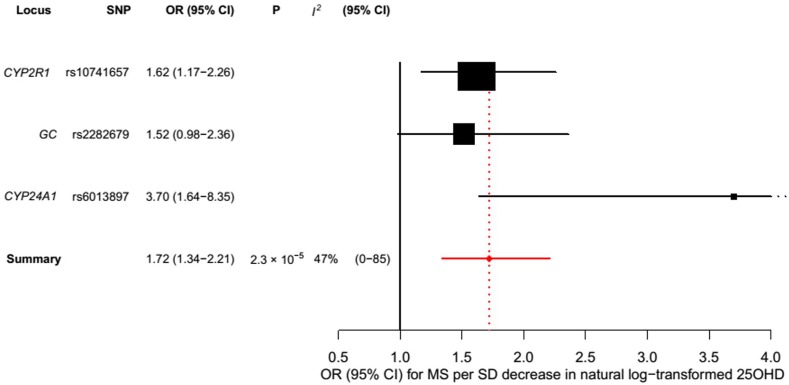
BACKGROUND: Observational studies have demonstrated an association between decreased vitamin D level and risk of multiple sclerosis (MS); however, it remains unclear whether this relationship is causal. We undertook a Mendelian randomization (MR) study to evaluate whether genetically lowered vitamin D level influences the risk of MS. METHODS AND FINDINGS: We identified single nucleotide polymorphisms (SNPs) associated with 25-hydroxyvitamin D (25OHD) level from SUNLIGHT, the largest (n = 33,996) genome-wide association study to date for vitamin D. Four SNPs were genome-wide significant for 25OHD level (p-values ranging from 6 × 10⁻¹⁰ to 2 × 10-109), and all four SNPs lay in, or near, genes strongly implicated in separate mechanisms influencing 25OHD. We then ascertained their effect on 25OHD level in 2,347 participants from a population-based cohort, the Canadian Multicentre Osteoporosis Study, and tested the extent to which the 25OHD-decreasing alleles explained variation in 25OHD level. We found that the count of 25OHD-decreasing alleles across these four SNPs was strongly associated with lower 25OHD level (n = 2,347, F-test statistic = 49.7, p = 2.4 × 10⁻¹²). Next, we conducted an MR study to describe the effect of genetically lowered 25OHD on the odds of MS in the International Multiple Sclerosis Genetics Consortium study, the largest genetic association study to date for MS (including up to 14,498 cases and 24,091 healthy controls). Alleles were weighted by their relative effect on 25OHD level, and sensitivity analyses were performed to test MR assumptions. MR analyses found that each genetically determined one-standard-deviation decrease in log-transformed 25OHD level conferred a 2.0-fold increase in the odds of MS (95% CI: 1.7-2.5; p = 7.7 × 10⁻¹²; I2 = 63%, 95% CI: 0%-88%). This result persisted in sensitivity analyses excluding SNPs possibly influenced by population stratification or pleiotropy (odds ratio [OR] = 1.7, 95% CI: 1.3-2.2; p = 2.3 × 10⁻⁵; I2 = 47%, 95% CI: 0%-85%) and including only SNPs involved in 25OHD synthesis or metabolism (ORsynthesis = 2.1, 95% CI: 1.6-2.6, p = 1 × 10⁻⁹; ORmetabolism = 1.9, 95% CI: 1.3-2.7, p = 0.002). While these sensitivity analyses decreased the possibility that pleiotropy may have biased the results, residual pleiotropy is difficult to exclude entirely. CONCLUSIONS: A genetically lowered 25OHD level is strongly associated with increased susceptibility to MS. Whether vitamin D sufficiency can delay, or prevent, MS onset merits further investigation in long-term randomized controlled trials.
Overview
The claims and statistics of this paper haven’t been checked yet.
Run the check — free, no account needed. It reads the open-access text and checks the sources it cites.
Integrity signals
Registry
Cites
Statistics
Figures
Verification
Claims the paper makes
The claims and statistics of this paper haven’t been checked yet.
Run the check — free, no account needed. It reads the open-access text and checks the sources it cites.
Claims other papers make about this one
Each is checked against this paper’s own text: does it say what the citing paper says it does?
In the citing paper
“These findings suggest an important role of vitamin D in autoantibody production and ASD pathogenesis, perhaps similar to other autoimmune diseases, such as MS and systemic lupus erythematosus [172,174].”
From Vitamin D and Autism Spectrum Disorder: A Literature Review (2016) · cites this paper as [174]
In the citing paper
“For the special case of a one-sample analysis with a binary disease outcome, if the genetic associations with the exposure are estimated in the controls only, then genetic associations with the exposure and outcome will not be correlated, and bias will follow the pattern of the two-sample setting 42 .”
From Guidelines for performing Mendelian randomization investigations (2020) · cites this paper as [42]
In the citing paper
“In this case, the direction and size of the bias varies linearly depending on the degree of overlap (formally, depending on the degree of correlation between the genetic association estimates).”
From Guidelines for performing Mendelian randomization investigations (2020) · cites this paper as [42]
In the citing paper
“However, as several large consortia have overlapping studies, participants may overlap between the datasets used to estimate the genetic associations with the exposure and outcome 42 .”
From Guidelines for performing Mendelian randomization investigations (2020) · cites this paper as [42]
Self-check
Percentages, sums and reported differences re-computed from the paper’s own numbers.
The self-check needs the paper’s full text.
Citations
Cites
Measuring inconsistency in meta-analyses
Higgins, J. P. T., Thompson, S. G., Deeks, J. J., & Altman, D. G. (2003) · BMJ · doi:10.1136/bmj.327.7414.557 · Cited by 63,139
Quantifying heterogeneity in a meta‐analysis
Higgins, J. P. T., & Thompson, S. G. (2002) · Statistics in Medicine · doi:10.1002/sim.1186 · Cited by 36,763
Diagnostic criteria for multiple sclerosis: 2010 revisions to the McDonald criteria
Polman, C. H., Reingold, S. C., Banwell, B., Clanet, M., Cohen, J. A., Filippi, M., Fujihara, K., Havrdova, E., Hutchinson, M., Kappos, L., et al. (2011) · Annals of Neurology · doi:10.1002/ana.22366 · Cited by 9,802
An integrated map of genetic variation from 1,092 human genomes
The 1000 Genomes Project Consortium (2012) · Nature · doi:10.1038/nature11632 · Cited by 7,711
New diagnostic criteria for multiple sclerosis: Guidelines for research protocols
Poser, C. M., Paty, D. W., Scheinberg, L., McDonald, W. I., Davis, F. A., Ebers, G. C., Johnson, K. P., Sibley, W. A., Silberberg, D. H., & Tourtellotte, W. W. (1983) · Annals of Neurology · doi:10.1002/ana.410130302 · Cited by 7,384
McDonald, W. I., Compston, A., Edan, G., Goodkin, D., Hartung, H., Lublin, F. D., McFarland, H. F., Paty, D. W., Polman, C. H., Reingold, S. C., et al. (2001) · Annals of Neurology · doi:10.1002/ana.1032 · Cited by 6,969
Mendelian Randomization Analysis With Multiple Genetic Variants Using Summarized Data
Burgess, S., Butterworth, A., & Thompson, S. G. (2013) · Genetic Epidemiology · doi:10.1002/gepi.21758 · Cited by 6,050
Davey Smith, G., & Ebrahim, S. (2003) · International Journal of Epidemiology · doi:10.1093/ije/dyg070 · Cited by 5,882
Diagnostic criteria for multiple sclerosis: 2005 revisions to the “McDonald Criteria”
Polman, C. H., Reingold, S. C., Edan, G., Filippi, M., Hartung, H., Kappos, L., Lublin, F. D., Metz, L. M., McFarland, H. F., O'Connor, P. W., et al. (2005) · Annals of Neurology · doi:10.1002/ana.20703 · Cited by 5,017
Mendelian randomization: genetic anchors for causal inference in epidemiological studies
Davey Smith, G., & Hemani, G. (2014) · Human Molecular Genetics · doi:10.1093/hmg/ddu328 · Cited by 4,677
Self-citationMendelian randomization: Using genes as instruments for making causal inferences in epidemiology
Lawlor, D. A., Harbord, R. M., Sterne, J. A. C., Timpson, N., & Davey Smith, G. (2008) · Statistics in Medicine · doi:10.1002/sim.3034 · Cited by 4,618
Self-citationSequence Variations in PCSK9, Low LDL, and Protection against Coronary Heart Disease
Cohen, J. C., Boerwinkle, E., Mosley, T. H., & Hobbs, H. H. (2006) · New England Journal of Medicine · doi:10.1056/nejmoa054013 · Cited by 3,181
Willer (2013) · doi:10.1038/ng.2797 · Cited by 2,983
Dietary Reference Intakes for Calcium and Vitamin D
(2018) · American Academy of Pediatrics eBooks · doi:10.1542/9781610021494-part06-dietary_reference_int · Cited by 2,712
Genetic risk and a primary role for cell-mediated immune mechanisms in multiple sclerosis
The International Multiple Sclerosis Genetics Consortium & The Wellcome Trust Case Control Consortium 2 (2011) · Nature · doi:10.1038/nature10251 · Cited by 2,697
Genetic variants in novel pathways influence blood pressure and cardiovascular disease risk
The International Consortium for Blood Pressure Genome-Wide Association Studies (2011) · Nature · doi:10.1038/nature10405 · Cited by 2,033
Common genetic determinants of vitamin D insufficiency: a genome-wide association study
Wang, T. J., Zhang, F., Richards, J. B., Kestenbaum, B. R., van Meurs, J. B. J., Berry, D. J., Kiel, D. P., Streeten, E. A., Ohlsson, C., Koller, D. L., et al. (2010) · The Lancet · doi:10.1016/s0140-6736(10)60588-0 · Cited by 1,562
Self-citationAnalysis of immune-related loci identifies 48 new susceptibility variants for multiple sclerosis
International Multiple Sclerosis Genetics Consortium (IMSGC) (2013) · Nature Genetics · doi:10.1038/ng.2770 · Cited by 1,386
Diagnostic criteria for multiple sclerosis
Poser, C. M., & Brinar, V. V. (2001) · Clinical Neurology and Neurosurgery · doi:10.1016/s0303-8467(00)00125-6 · Cited by 1,282
Patsopoulos, N. A., Εvangelou, Ε., & Ioannidis, J. P. A. (2008) · International Journal of Epidemiology · doi:10.1093/ije/dyn065 · Cited by 1,157
Vitamin D intake and incidence of multiple sclerosis
Munger, K. L., Zhang, S. M., O’Reilly, É. J., Hernán, M. Á., Olek, M. J., Willett, W. C., & Ascherio, A. (2004) · Neurology · doi:10.1212/01.wnl.0000101723.79681.38 · Cited by 1,090
Vimaleswaran, K. S., Berry, D. J., Lu, C., Tikkanen, E., Pilz, S., Hiraki, L. T., Cooper, J. D., Dastani, Z., Li, R., Houston, D. K., et al. (2013) · PLoS Medicine · doi:10.1371/journal.pmed.1001383 · Cited by 1,046
Self-citationGenetically elevated C-reactive protein and ischemic vascular disease
Zacho, J., Tybjærg-Hansen, A., Jensen, J. S., Grande, P., Sillesen, H., & Nordestgaard, B. G. (2008) · New England Journal of Medicine · doi:10.1056/nejmoa0707402 · Cited by 839
The Nonskeletal Effects of Vitamin D: An Endocrine Society Scientific Statement
Rosen, C. J., Adams, J. S., Bikle, D. D., Black, D. M., Demay, M. B., Manson, J. E., Murad, M. H., & Kovács, C. S. (2012) · Endocrine Reviews · doi:10.1210/er.2012-1000 · Cited by 778
Latitude is significantly associated with the prevalence of multiple sclerosis: a meta-analysis
Simpson, S., Blizzard, L., Otahal, P., Van der Mei, I., & Taylor, B. (2011) · Journal of Neurology, Neurosurgery & Psychiatry · doi:10.1136/jnnp.2011.240432 · Cited by 718
Environmental factors and multiple sclerosis
Ebers, G. C. (2008) · The Lancet Neurology · doi:10.1016/s1474-4422(08)70042-5 · Cited by 629
Serum 25-hydroxyvitamin D status of the US population: 1988–1994 compared with 2000–2004
Looker, A. C., Pfeiffer, C. M., Lacher, D. A., Schleicher, R. L., Picciano, M. F., & Yetley, E. A. (2008) · American Journal of Clinical Nutrition · doi:10.3945/ajcn.2008.26182 · Cited by 625
Ramagopalan, S. V., Maugeri, N., Handunnetthi, L., Lincoln, M. R., Orton, S. M., Dyment, D. A., DeLuca, G. C., Herrera, B. M., Chao, M. J., Sadovnick, A. D., et al. (2009) · PLoS Genetics · doi:10.1371/journal.pgen.1000369 · Cited by 540
Dastani, Z., Hivert, M., Timpson, N. J., Perry, J. R. B., Yuan, X., Scott, R. A., Henneman, P., Heid, I. M., Kizer, J. R., Lyytikäinen, L., et al. (2012) · PLoS Genetics · doi:10.1371/journal.pgen.1002607 · Cited by 498
Self-citationAssessing the vitamin D status of the US population
Yetley, E. A. D. (2008) · American Journal of Clinical Nutrition · doi:10.1093/ajcn/88.2.558s · Cited by 408
Osteopathy and resistance to vitamin D toxicity in mice null for vitamin D binding protein
Safadi, F. F., Thornton, P., Magiera, H., Hollis, B. W., Gentile, M., Haddad, J. G., Liebhaber, S. A., & Cooke, N. E. (1999) · Journal of Clinical Investigation · doi:10.1172/jci5244 · Cited by 401
Vimaleswaran, K. S., Cavadino, A., Berry, D. J., Jorde, R., Dieffenbach, A. K., Lu, C., Alves, A. C., Heerspink, H. J. L., Tikkanen, E., Eriksson, J., et al. (2014) · The Lancet Diabetes & Endocrinology · doi:10.1016/s2213-8587(14)70113-5 · Cited by 373
A phase I/II dose-escalation trial of vitamin D3 and calcium in multiple sclerosis
Burton, J. M., Kimball, S., Vieth, R., Bar‐Or, A., Dosch, H. M., Cheung, R., Gagne, D., D'Souza, C., Ursell, M. R., & O'Connor, P. W. (2010) · Neurology · doi:10.1212/wnl.0b013e3181e1cec2 · Cited by 360
Vitamin D status is associated with relapse rate in pediatric‐onset multiple sclerosis
Mowry, E. M., Krupp, L., Milazzo, M. C., Chabas, D., Strober, J. B., Belman, A. L., McDonald, J., Oksenberg, J. R., Bacchetti, P., & Waubant, E. L. (2010) · Annals of Neurology · doi:10.1002/ana.21972 · Cited by 329
Cooper, J. D., Smyth, D. J., Walker, N. M., Stevens, H., Burren, O. S., Wallace, C., Greissl, C., Ramos-Lopez, E., Hyppönen, E., Dunger, D. B., et al. (2011) · Diabetes · doi:10.2337/db10-1656 · Cited by 279
Vitamin D status predicts new brain magnetic resonance imaging activity in multiple sclerosis
Mowry, E. M., Waubant, E. L., McCulloch, C. E., Okuda, D. T., Evangelista, A. A., Lincoln, R., Gourraud, P., Brenneman, D., Owen, M. C., Qualley, P., et al. (2012) · Annals of Neurology · doi:10.1002/ana.23591 · Cited by 271
Bikle, D. D., Siiteri, P. K., Ryzen, E., Haddad, J. G., & GEE, E. (1985) · The Journal of Clinical Endocrinology & Metabolism · doi:10.1210/jcem-61-5-969 · Cited by 259
(2015) · Apple Academic Press eBooks · doi:10.1201/b18536-15 · Cited by 256
Safety of vitamin D3 in adults with multiple sclerosis
Kimball, S., Ursell, M. R., O'Connor, P. W., & Vieth, R. (2007) · American Journal of Clinical Nutrition · doi:10.1093/ajcn/86.3.645 · Cited by 227
Geographic variation of MS incidence in two prospective studies of US women
Hernán, M. Á., Olek, M. J., & Ascherio, A. (1999) · Neurology · doi:10.1212/wnl.53.8.1711 · Cited by 219
Ye, Z., Sharp, S. J., Burgess, S., Scott, R. A., Imamura, F., Langenberg, C., Wareham, N. J., & Forouhi, N. G. (2014) · The Lancet Diabetes & Endocrinology · doi:10.1016/s2213-8587(14)70184-6 · Cited by 190
Summary of evidence-based guideline: Complementary and alternative medicine in multiple sclerosis
Yadav, V., Bever, C. T., Bowen, J. D., Bowling, A. C., Weinstock‐Guttman, B., Cameron, M. H., BOURDETTE, D. N., Gronseth, G., & Narayanaswami, P. (2014) · Neurology · doi:10.1212/wnl.0000000000000250 · Cited by 185
Epidemiology of Multiple Sclerosis
Ramagopalan, S. V., & Sadovnick, A. D. (2011) · Neurologic Clinics · doi:10.1016/j.ncl.2010.12.010 · Cited by 154
Metabolism of vitamin D by human microsomal CYP2R1
Shinkyo, R., Sakaki, T., Kamakura, M., Ohta, M., & Inouye, K. (2004) · Biochemical and Biophysical Research Communications · doi:10.1016/j.bbrc.2004.09.073 · Cited by 154
A structural basis for the unique binding features of the human vitamin D-binding protein
Verboven, C., Rabijns, A., Maeyer, M. D., BAELEN, H. V., Bouillon, R., & Ranter, C. D. (2002) · Nature Structural Biology · doi:10.1038/nsb754 · Cited by 154
Plasma HDL cholesterol and risk of myocardial infarction: a mendelian randomisation study
Voight, B. F., Peloso, G. M., Orho-Melander, M., Frikke-Schmidt, R., Barbalic, M., Jensen, M. K., Hindy, G., Hólm, H., Ding, E. L., Johnson, T., et al. (2012) · The Lancet · doi:10.1016/s0140-6736(12)60312-2 · Cited by 148 · cited 1×
“MR methods have been used previously to investigate the role of high-density lipoprotein [16] and C-reactive protein [17] in predisposition to cardiovascular disease, and have provided strong evidence that PCSK9 inhibition prevents cardiovascular disease [18].”
MethodVitamin D-binding protein controls T cell responses to vitamin D
Kongsbak‐Wismann, M., von Essen, M. R., Levring, T. B., Schjerling, P., Woetmann, A., Ødum, N., Bonefeld, C. M., & Geisler, C. (2014) · BMC Immunology · doi:10.1186/s12865-014-0035-2 · Cited by 116
Genetic Regulation of Vitamin D Levels
Dastani, Z., Li, R., & Richards, J. B. (2012) · Calcified Tissue International · doi:10.1007/s00223-012-9660-z · Cited by 97
The effect of vitamin D-related interventions on multiple sclerosis relapses: a meta-analysis
James, E., Dobson, R., Kühle, J., Baker, D., Giovannoni, G., & Ramagopalan, S. V. (2013) · Multiple Sclerosis Journal · doi:10.1177/1352458513489756 · Cited by 96
Evaluation of Genetic Markers as Instruments for Mendelian Randomization Studies on Vitamin D
Berry, D. J., Vimaleswaran, K. S., Whittaker, J. C., Hingorani, A. D., & Hyppönen, E. (2012) · PLoS ONE · doi:10.1371/journal.pone.0037465 · Cited by 88
Vitamin D-binding protein interacts with Aβ and suppresses Aβ-mediated pathology
Moon, M., Song, H., Hong, H. J., Nam, D. W., Cha, M.-Y., Oh, M. S., Yu, J., Ryu, H., & Mook‐Jung, I. (2012) · Cell Death and Differentiation · doi:10.1038/cdd.2012.161 · Cited by 83
Leong, A., Rehman, W., Dastani, Z., Greenwood, C. M. T., Timpson, N. J., Langsetmo, L., Berger, C., METASTROKE, Fu, L., Wong, B. Y. L., et al. (2014) · PLoS Medicine · doi:10.1371/journal.pmed.1001751 · Cited by 72
Self-citationMultiple sclerosis-associated CLEC16A controls HLA class II expression via late endosome biogenesis
van Luijn, M. M., Kreft, K. L., Jongsma, M. L., Mes, S. W., Wierenga-Wolf, A. F., van Meurs, M., Melief, M.-J., der Kant, R. V., Janssen, L., Janssen, H., et al. (2015) · Brain · doi:10.1093/brain/awv080 · Cited by 68
Mendelian randomisation applied to drug development in cardiovascular disease: a review
Mokry, L. E., Ahmad, O. S., Forgetta, V., Thanassoulis, G., & Richards, J. B. (2014) · Journal of Medical Genetics · doi:10.1136/jmedgenet-2014-102438 · Cited by 67
Self-citationVitamin D intake and incidence of multiple sclerosis
Ebers, G. C., Sadovnick, A. D., & Veith, R. (2004) · Neurology · doi:10.1212/wnl.63.5.939 · Cited by 58
Vitamin D-binding Protein in Cerebrospinal Fluid is Associated with Multiple Sclerosis Progression
Yang, M., Qin, Z., Zhu, Y., Li, Y., Qin, Y., Jing, Y., & Liu, S. (2013) · Molecular Neurobiology · doi:10.1007/s12035-012-8387-1 · Cited by 48
Increased Circulating Levels of Vitamin D Binding Protein in MS Patients
Rinaldi, A. O., Sanseverino, I., Purificato, C., Cortese, A., Mechelli, R., Francisci, S., Salvetti, M., Millefiorini, E., Gessani, S., & Gauzzi, M. C. (2015) · Toxins · doi:10.3390/toxins7010129 · Cited by 43
Faye, L. L., Sun, L., Dimitromanolakis, A., & Bull, S. B. (2011) · Statistics in Medicine · doi:10.1002/sim.4228 · Cited by 38
O’Connell, K., Kelly, S. B., Kinsella, K., Jordan, S., Kenny, O., Murphy, D., Heffernan, E. J., O'Laoide, R., O'Shea, D. B., McKenna, C., et al. (2013) · Trials · doi:10.1186/1745-6215-14-272 · Cited by 22
Browne, R. W., Weinstock‐Guttman, B., Zivadinov, R., Horáková, D., Bodziak, M. L., Tamaño‐Blanco, M., Badgett, D., Týblová, M., Vaněčková, M., Seidl, Z., et al. (2014) · The Journal of Steroid Biochemistry and Molecular Biology · doi:10.1016/j.jsbmb.2014.06.007 · Cited by 17
Tournay's description of anisocoria on lateral gaze: Reaction, myth, or phenomenon?
Fraser, J. A. (2014) · Neurology · doi:10.1212/wnl.0000000000000924 · Cited by 3
Cited by
Sorted by citations
Reading Mendelian randomisation studies: a guide, glossary, and checklist for clinicians
Davies, N. M., Holmes, M. V., & Davey Smith, G. (2018) · BMJ · doi:10.1136/bmj.k601 · Cited by 4,404
Dobson, R., & Giovannoni, G. (2018) · European Journal of Neurology · doi:10.1111/ene.13819 · Cited by 2,381
Guidelines for performing Mendelian randomization investigations
Burgess, S., Smith, G. D., Davies, N. M., Dudbridge, F., Gill, D., Glymour, M. M., Hartwig, F. P., Holmes, M. V., Minelli, C., Relton, C. L., et al. (2019) · Wellcome Open Research · doi:10.12688/wellcomeopenres.15555.1 · Cited by 1,828
Self-citationSkrivankova, V. W., Richmond, R. C., Woolf, B. A. R., Davies, N. M., Swanson, S. A., VanderWeele, T. J., Timpson, N. J., Higgins, J. P. T., Dimou, N., Langenberg, C., et al. (2021) · BMJ · doi:10.1136/bmj.n2233 · Cited by 1,648
Self-citationFilippi, M., Bar-Or, A., Piehl, F., Preziosa, P., Solari, A., Vukusic, S., & Rocca, M. A. (2018) · Nature Reviews Disease Primers · doi:10.1038/s41572-018-0041-4 · Cited by 1,562
Metadata
- Authors
- Mokry, L. E., Ross, S., Ahmad, O. S., Forgetta, V., Smith, G. D., Leong, A., Greenwood, C. M. T., Thanassoulis, G., & Richards, J. B.
- Affiliations
- Jewish General Hospital (CA)
- University of Bristol (GB)
- Harvard University (US)
- McGill University Health Centre (CA)
- King's College London (GB)
- Corresponding author
- Richards, J. Brent
- ORCID
- Venue
- PLOS Medicine
- Publisher
- Public Library of Science (PLoS)
- Published
- 2015-08-25
- Volume
- 12
- Issue
- 8
- Pages
- e1001866
- ISSN
- 1549-1277 (ISSN-L)
- 1549-1676
- PMC
- PMC4549308
- OpenAlex
- W2152795085
- Cited by
- 445
- References
- 61
- Citations by year
- 2026: 15 · 2025: 21 · 2024: 29 · 2023: 48 · 2022: 54 · 2021: 35 · 2020: 45 · 2019: 43 · 2018: 57 · 2017: 49 · 2016: 42 · 2015: 5
- FWCI
- 40.47
- Type
- journal article
- Language
- en
- Update notices
- correction (2016-03-02)
- Open access
- gold
- doi.org
- Licence
- Locations
- PLoS Medicine (publishedVersion, cc-by)
- Europe PMC (PubMed Central) (publishedVersion, cc-by)
- PubMed Central (publishedVersion, cc-by)
- PubMed (publishedVersion)
- Explore Bristol Research (publishedVersion, cc-by)
- Digital Access to Scholarship at Harvard (DASH) (Harvard University) (submittedVersion, cc-by)
- RePEc: Research Papers in Economics (submittedVersion)
- eScholarship@McGill (McGill) (submittedVersion)
- DOAJ (DOAJ: Directory of Open Access Journals) (submittedVersion, cc-by-sa)
- Figshare (submittedVersion, cc-by)
- Bristol Research (University of Bristol) (submittedVersion, cc-by)
- Spiral (Imperial College London) (submittedVersion, cc-by)
- Funders
- Heart and Stroke Foundation of Canada
- Canadian Diabetes Association
- Jewish General Hospital
- Servier
- Canadian Institutes of Health Research (119462_1)
- Topics
- Health Sciences › Medicine › Clinical Neurology › Multiple Sclerosis Research Studies
- Health Sciences › Medicine › Endocrinology, Diabetes and Metabolism › Vitamin D Research Studies
- Life Sciences › Biochemistry, Genetics and Molecular Biology › Genetics › Genetic Associations and Epidemiology
- Keywords
- multiple sclerosis, vitamin D, 25-hydroxyvitamin D, causal relationship, sun exposure, single nucleotide polymorphisms, pleiotropy, population stratification, vitamin D supplementation, disease risk factors
- MeSH terms
- Europe, Humans, Multiple Sclerosis, Risk Factors, Vitamin D Deficiency, Linkage Disequilibrium, Risk Assessment, Polymorphism, Single Nucleotide, Genome-Wide Association Study, Mendelian Randomization Analysis
About these checks
Registry, retraction, Cites and statistics results are computed, not judged, with one exception: a printed reference that no index lists is read once by a model before it counts as a citation error. Claims are extracted by a model and kept only when their quote appears verbatim in the text; each cited source is then checked, with a model’s help, for whether it says what the claim relies on. Those verdicts can be wrong — read the claim’s quote and the cited source before relying on one.
Statistics and arithmetic are recomputed, not judged.
Confidence bands are shown only for fields calibrated on our annotated test set. None is calibrated yet, so no band is shown.
What counts as a claim ›How we measure confidence ›How we check this ›
Are you an author, or do you see a problem with this page? Request a review
