

The DOI matches its Crossref record; 36 of the 36 references it cites were found in a registry or an index.
Genetic assessment of age-associated Alzheimer disease risk: Development and validation of a polygenic hazard score
Open accessPublished version of a preprint
Abstract
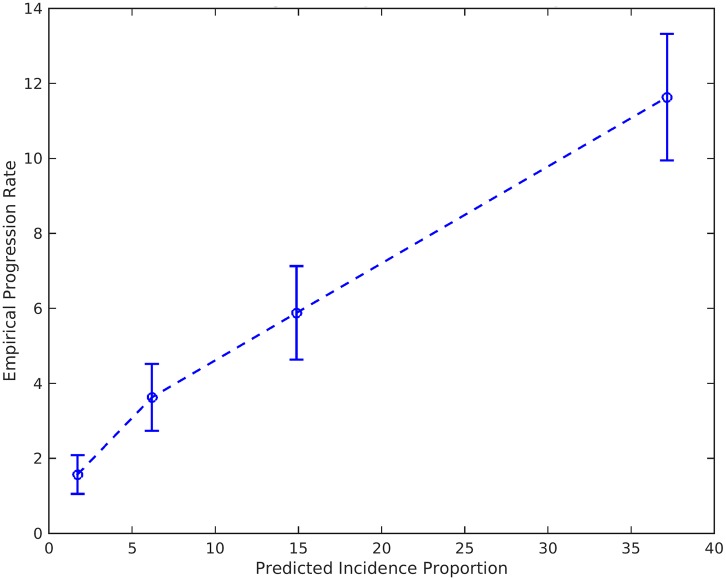
BACKGROUND: Identifying individuals at risk for developing Alzheimer disease (AD) is of utmost importance. Although genetic studies have identified AD-associated SNPs in APOE and other genes, genetic information has not been integrated into an epidemiological framework for risk prediction. METHODS AND FINDINGS: Using genotype data from 17,008 AD cases and 37,154 controls from the International Genomics of Alzheimer's Project (IGAP Stage 1), we identified AD-associated SNPs (at p < 10-5). We then integrated these AD-associated SNPs into a Cox proportional hazard model using genotype data from a subset of 6,409 AD patients and 9,386 older controls from Phase 1 of the Alzheimer's Disease Genetics Consortium (ADGC), providing a polygenic hazard score (PHS) for each participant. By combining population-based incidence rates and the genotype-derived PHS for each individual, we derived estimates of instantaneous risk for developing AD, based on genotype and age, and tested replication in multiple independent cohorts (ADGC Phase 2, National Institute on Aging Alzheimer's Disease Center [NIA ADC], and Alzheimer's Disease Neuroimaging Initiative [ADNI], total n = 20,680). Within the ADGC Phase 1 cohort, individuals in the highest PHS quartile developed AD at a considerably lower age and had the highest yearly AD incidence rate. Among APOE ε3/3 individuals, the PHS modified expected age of AD onset by more than 10 y between the lowest and highest deciles (hazard ratio 3.34, 95% CI 2.62-4.24, p = 1.0 × 10⁻²²). In independent cohorts, the PHS strongly predicted empirical age of AD onset (ADGC Phase 2, r = 0.90, p = 1.1 × 10⁻²⁶) and longitudinal progression from normal aging to AD (NIA ADC, Cochran-Armitage trend test, p = 1.5 × 10⁻¹⁰), and was associated with neuropathology (NIA ADC, Braak stage of neurofibrillary tangles, p = 3.9 × 10⁻⁶, and Consortium to Establish a Registry for Alzheimer's Disease score for neuritic plaques, p = 6.8 × 10⁻⁶) and in vivo markers of AD neurodegeneration (ADNI, volume loss within the entorhinal cortex, p = 6.3 × 10⁻⁶, and hippocampus, p = 7.9 × 10⁻⁵). Additional prospective validation of these results in non-US, non-white, and prospective community-based cohorts is necessary before clinical use. CONCLUSIONS: We have developed a PHS for quantifying individual differences in age-specific genetic risk for AD. Within the cohorts studied here, polygenic architecture plays an important role in modifying AD risk beyond APOE. With thorough validation, quantification of inherited genetic variation may prove useful for stratifying AD risk and as an enrichment strategy in therapeutic trials.
Overview
The claims and statistics of this paper haven’t been checked yet.
Run the check — free, no account needed. It reads the open-access text and checks the sources it cites.
Integrity signals
Registry
Cites
Statistics
Figures
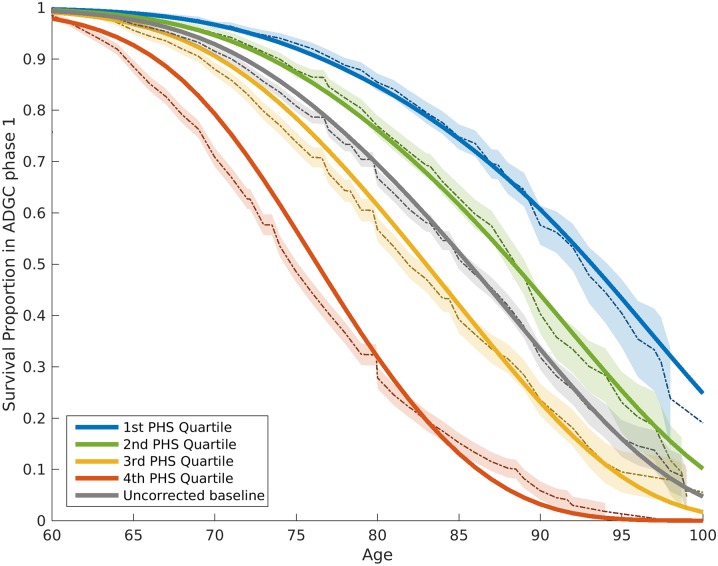
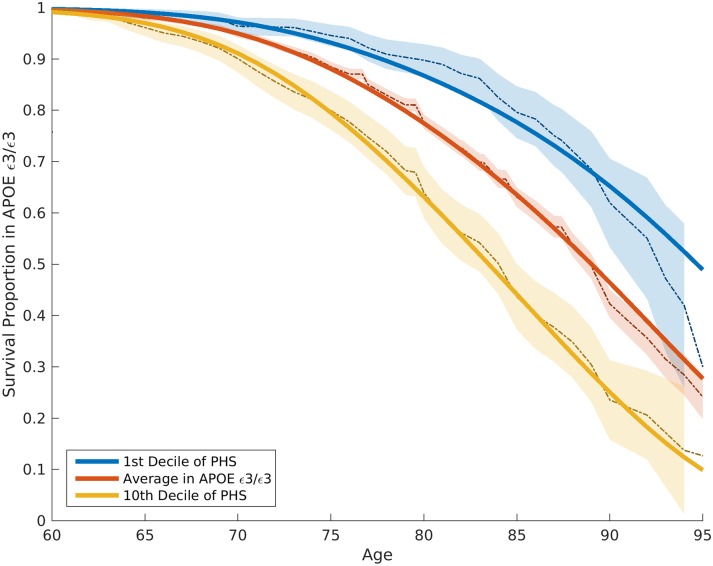
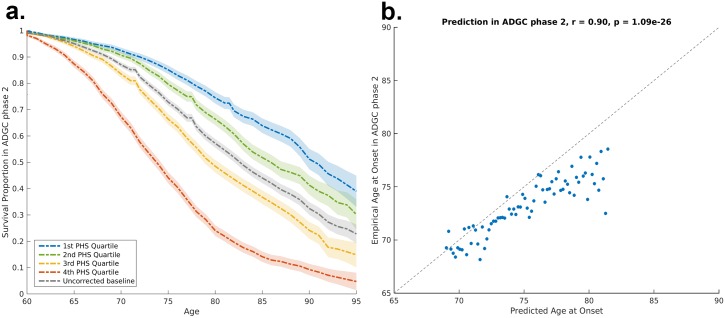
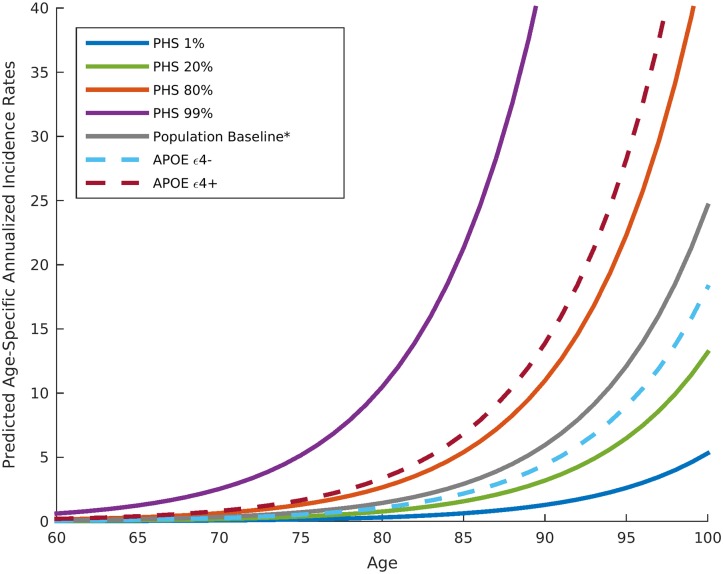
Verification
Claims the paper makes
The claims and statistics of this paper haven’t been checked yet.
Run the check — free, no account needed. It reads the open-access text and checks the sources it cites.
Claims other papers make about this one
Each is checked against this paper’s own text: does it say what the citing paper says it does?
In the citing paper
“risk and seems to provide an improved method for risk prediction over more selective PRS or standard predictors such as APOEε4 alleles, age, and sex [118, 122, 123].”
From Genetic architecture of Alzheimer's disease (2020) · cites this paper as [118]
Self-check
Percentages, sums and reported differences re-computed from the paper’s own numbers.
The self-check needs the paper’s full text.
Citations
Cites
McKhann, G., Drachman, D., Folstein, M., Katzman, R., Price, D., & Stadlan, E. M. (1984) · Neurology · doi:10.1212/wnl.34.7.939 · Cited by 27,915
Neuropathological stageing of Alzheimer-related changes.
Braak, H., & Braak, E. (1991) · Acta Neuropathologica · doi:10.1007/bf00308809 · Cited by 16,123 · cited 1×
“For the neuropathological variables, we examined the Braak stage for neurofibrillary tangles (NFTs) (0, none; I–II, entorhinal; III–IV, limbic; and V–VI, isocortical) [11] and the Consortium to Establish a Registry for Alzheimer’s Disease (CERAD) score for neuritic plaques (none/sparse, moderate, or frequent) [12].”
MethodMirra, S. S., Heyman, A., McKeel, D., Sumi, S. M., Crain, B. J., Brownlee, L. M., Vogel, F. S., Hughes, J. P., Belle, G. V., Berg, L., et al. (1991) · Neurology · doi:10.1212/wnl.41.4.479 · Cited by 4,961
Meta-Analysis of 74,046 Individuals Identifies 11 New Susceptibility Loci for Alzheimer’s Disease
(EADI), E. A. D. I., Lambert, J.-C., (GERAD), G. A. E. R. I. A. D., Alzheimer's Disease Genetic Consortium (ADGC), (CHARGE), C. F. H. A. A. R. I. G. E., Ibrahim-Verbaas, C. A., Harold, D., Naj, A. C., Sims, R., Bellenguez, C., et al. (2013) · Nature Genetics · doi:10.1038/ng.2802 · Cited by 4,336
Self-citationHyman, B. T., Phelps, C. H., Beach, T. G., Bigio, E. H., Cairns, N. J., Carrillo, M. C., Dickson, D. W., Duyckaerts, C., Frosch, M. P., Masliah, E., et al. (2012) · Alzheimer's & Dementia · doi:10.1016/j.jalz.2011.10.007 · Cited by 3,092
Self-citationConsortium to Establish a Registry for Alzheimer's Disease (CERAD)
Fillenbaum, G., & Heyman, A. (2002) · doi:10.1002/0470846410.ch42(iii · Cited by 2,859
Rothman, K. J., Greenland, S., & Lash, T. L. (1998) · Cited by 2,096
Naj, A. C., Jun, G., Beecham, G. W., Wang, L.-S., Vardarajan, B. N., Buros, J., Gallins, P. J., Buxbaum, J. D., Jarvik, G. P., Crane, P. K., et al. (2011) · Nature Genetics · doi:10.1038/ng.801 · Cited by 1,901
Self-citationBrookmeyer, R., Gray, S. G., & Kawas, C. H. (1998) · American Journal of Public Health · doi:10.2105/ajph.88.9.1337 · Cited by 1,802
Genetic Investigation of ANthropometric Traits (GIANT) Consortium, Yang, J., DIAbetes Genetics Replication And Meta-analysis (DIAGRAM) Consortium, Ferreira, T., Morris, A. P., Medland, S. E., Madden, P. A. F., Heath, A. C., Martin, N. G., Montgomery, G. W., et al. (2012) · Nature Genetics · doi:10.1038/ng.2213 · Cited by 1,712
Cited by
Sorted by citations
Items 201–300 of 395
Alzheimer's polygenic hazard score in SuperAgers: SuperGenes or SuperResilience?
Spencer, B. E., Banks, S. J., Dale, A. M., Brewer, J. B., Makowski‐Woidan, B., Weıntraub, S., Mesulam, M. M., Geula, C., & Rogalski, E. J. (2022) · Alzheimer s & Dementia Translational Research & Clinical Interventions · doi:10.1002/trc2.12321 · Cited by 13
Ren, P., Ding, W., Li, S., Liu, G., Luo, M., Zhou, W., Cheng, R., Li, Y., Wang, P., Li, Z., et al. (2022) · Neurobiology of Disease · doi:10.1016/j.nbd.2022.105983 · Cited by 13
“Age at baseline and gender were forced included in the model, the education year, APOE ε 4 genotype and polygenic hazard score (PHS) from prior work (Desikan et al., 2017) were included as candidate variables in the regressions.”
Multipredictor risk models for predicting individual risk of Alzheimer’s disease
Hou, X., Suckling, J., Shen, X., Liu, Y., Zuo, C., Huang, Y., Li, H., Wang, H.-F., Tan, C., Cui, M., et al. (2023) · Journal of Translational Medicine · doi:10.1186/s12967-023-04646-x · Cited by 12
Assessing polyomic risk to predict Alzheimer's disease using a machine learning model
Ngai, T., Willett, J., Waqas, M., Fishbein, L., Choi, Y., Hahn, G., Mullin, K., Lange, C., Hecker, J., Tanzi, R. E., et al. (2024) · Alzheimer s & Dementia · doi:10.1002/alz.14319 · Cited by 12
A Blood Test for Alzheimer's Disease: Progress, Challenges, and Recommendations
Kiddle, S. J., Voyle, N., & Dobson, R. (2018) · UCL Discovery (University College London) · Cited by 12
Using Polygenic Hazard Scores to Predict Age at Onset of Alzheimer’s Disease in Nordic Populations
Motazedi, E., Cheng, W., Thomassen, J. Q., Frei, O., Rongve, A., Athanasiu, L., Bahrami, S., Shadrin, A. A., Ulstein, I. D., Stordal, E., et al. (2022) · Journal of Alzheimer s Disease · doi:10.3233/jad-220174 · Cited by 12
Li, W., Wang, X., Tian, Y., Xu, L., Zhang, L., Shi, D., Feng, X., Lu, R., & Meng, H. (2019) · Journal of Periodontology · doi:10.1002/jper.19-0135 · Cited by 13
Seifert, S. (2021) · Technology Knowledge and Learning · doi:10.1007/s10758-021-09490-w · Cited by 12
Alzheimer's Disease Genetic Risk, Cognition, and Brain Aging in Midlife
Brenowitz, W. D., Fornage, M., Launer, L. J., Habes, M., Davatzikos, C. A., & Yaffe, K. S. (2022) · Annals of Neurology · doi:10.1002/ana.26569 · Cited by 11
Tomaszowski, K.-H., Roy, S., Guerrero, C., Shukla, P. D., Keshvani, C., Chen, Y., Ott, M., Wu, X., Zhang, J., Dinardo, C. D., et al. (2023) · Nature Communications · doi:10.1038/s41467-023-36933-y · Cited by 12
Gao, Y., & Cui, Y. (2024) · Genome Medicine · doi:10.1186/s13073-024-01345-0 · Cited by 13
Cocoş, R., & Popescu, B. O. (2024) · Human Genomics · doi:10.1186/s40246-024-00704-7 · Cited by 17
“…researchers have provided evidence that AD could be modeled as a polygenic disease due to the continuous nature of disease liability [86] and have demonstrated that additional risk variants modify the expected age of AD onset by over a decade among individuals with the APOE ε3/3 genotype [87].”
Effect of polygenic load on striatal dopaminergic deterioration in Parkinson disease
Lee, M. J., Pak, K., Kim, J., Kim, Y. J., Yoon, J., Lee, J., Lyoo, C. H., Park, H. J., Lee, J., & Jung, N. (2019) · Neurology · doi:10.1212/wnl.0000000000007939 · Cited by 11
The effect of sample size on polygenic hazard models for prostate cancer
Karunamuni, R. A., Huynh‐Le, M., Fan, C. C., Eeles, R. A., Easton, D. F., Kote‐Jarai, Z., Olama, A. A. A., Garcia, S. B., Muir, K. R., Grönberg, H., et al. (2020) · European Journal of Human Genetics · doi:10.1038/s41431-020-0664-2 · Cited by 11
Tau polygenic risk scoring: a cost-effective aid for prognostic counseling in Alzheimer’s disease
Ramanan, V. K., Heckman, M. G., Lesnick, T. G., Przybelski, S. A., Cahn, E. J., Kosel, M., Murray, M. E., Mielke, M. M., Botha, H., Graff‐Radford, J., et al. (2022) · Acta Neuropathologica · doi:10.1007/s00401-022-02419-2 · Cited by 10
“While the PRS framework has been applied widely to assess the collective genetic risk of clinically diagnosed probable AD dementia [9, 13], we sought to define a PRS for predicting tau accumulation as a potentially important factor in guiding prognostic clinical counseling.”
MethodBiomedical informatics applications for precision management of neurodegenerative diseases
Miller, J. B., Shan, G., Lombardo, J. M., & Jimenez‐Maggiora, G. A. (2018) · Alzheimer s & Dementia Translational Research & Clinical Interventions · doi:10.1016/j.trci.2018.03.007 · Cited by 11
“, the e4 allele of the apolipoprotein E) [27], the development of AD most likely has a polygenic determination [28].”
BackgroundFONTES, A. S., Pallottini, A. C., Vieira, D. A. D. S., Batista, L. D., Fontanelli, M. D. M., & Fisberg, R. M. (2019) · Revista de Nutrição · doi:10.1590/1678-9865201932e180121 · Cited by 12
Weitzel, M. B., North, B. B., & Waller, D. P. (2020) · Biology of Reproduction · doi:10.1093/biolre/ioaa087 · Cited by 11
Soldan, A., Wang, J., Pettigrew, C. A., Davatzikos, C. A., Erus, G., Hohman, T. J., Dumitrescu, L. C., Bilgel, M., Resnick, S. M., Rivera‐Rivera, L. A., et al. (2024) · Brain Communications · doi:10.1093/braincomms/fcae276 · Cited by 10
Prediction to prevention in Alzheimer's disease and dementia
Dufouil, C., & Glymour, M. M. (2018) · The Lancet Neurology · doi:10.1016/s1474-4422(18)30123-6 · Cited by 10
Assessment of genetic risk for improved clinical-neuropathological correlations
Spencer, B. E., Jennings, R. G., Fan, C. C., & Brewer, J. B. (2020) · Acta Neuropathologica Communications · doi:10.1186/s40478-020-01033-1 · Cited by 10
Immediate verbal recall and familial dementia risk: population-based study of over 4000 twins
Lindgrén, N., Kaprio, J. A., Rinne, J. O., & Vuoksimaa, E. (2018) · Journal of Neurology Neurosurgery & Psychiatry · doi:10.1136/jnnp-2018-319122 · Cited by 10
Siddarth, P., Burggren, A. C., Merrill, D. A., Ercoli, L. M., Mahmood, Z., Barrio, J. R., & Small, G. W. (2018) · PLoS ONE · doi:10.1371/journal.pone.0208358 · Cited by 10
Hatchell, K. E., Lu, Q., Hebbring, S. J., Michos, E. D., Wood, A. C., & Engelman, C. D. (2019) · Human Genetics · doi:10.1007/s00439-019-02049-x · Cited by 10
Liver-Specific Polygenic Risk Score Is Associated with Alzheimer’s Disease Diagnosis
Panyard, D. J., Deming, Y. K., Darst, B. F., Hulle, C. A. V., Zetterberg, H., Blennow, K., Kollmorgen, G., Suridjan, I., Carlsson, C. M., Johnson, S. C., et al. (2023) · Journal of Alzheimer s Disease · doi:10.3233/jad-220599 · Cited by 10
A Breast Cancer Polygenic Risk Score Is Feasible for Risk Stratification in the Norwegian Population
Akdeniz, B. C., Mattingsdal, M., Valentin, M. D., Frei, O., Shadrin, A. A., Puustusmaa, M., Saar, R., Sõber, S., Møller, P., Andreassen, O. A., et al. (2023) · Cancers · doi:10.3390/cancers15164124 · Cited by 9
“One of the possible approaches is to use a Polygenic Hazard Score (PHS) model whose effectiveness has been proven in different age-related complex diseases, such as Alzheimer’s Disease (AD) [39], Parkinson’s disease [40], and Prostate Cancer [41,42], and which is also validated in Nordic samples for AD [43].”
MethodLiu, C., Hou, J., Li, W., Chen, J., Li, Y., Zhang, J., Zhou, W., Zhang, W., Deng, F., Wang, Y., et al. (2023) · Journal of Vascular Surgery Venous and Lymphatic Disorders · doi:10.1016/j.jvsv.2023.08.007 · Cited by 9
Suh, E. H., Lee, G., Jung, S., Wen, Z., Bao, J., Nho, K. T., Huang, H., Davatzikos, C. A., Saykin, A. J., Thompson, P. M., et al. (2023) · Frontiers in Aging Neuroscience · doi:10.3389/fnagi.2023.1281748 · Cited by 8
Zhan, L., Li, J., Jew, B., & Sul, J. H. (2021) · PLoS Genetics · doi:10.1371/journal.pgen.1009772 · Cited by 9
Bakalar, D., Gavrilova, O., Jiang, S. Z., Zhang, H., Roy, S., Williams, S. K., Liu, N., Wisser, S., Usdin, T. B., & Eiden, L. E. (2023) · Journal of Neuroendocrinology · doi:10.1111/jne.13286 · Cited by 10
“Mammals often exhibit these behaviors in restricted or impover-ished environments (e.g., small habitat enclosures 76 ; laboratory cages 77 ).”
BackgroundMulti-Omic Blood Biomarkers as Dynamic Risk Predictors in Late-Onset Alzheimer’s Disease
Bhalala, O. G., Watson, R., & Yassi, N. (2024) · International Journal of Molecular Sciences · doi:10.3390/ijms25021231 · Cited by 10
“In a European-based cohort study, non-APOE ε 4 carriers with a PHS in the tenth decile had an AD age-of-onset 10 years earlier than those in the first decile [30].”
BackgroundReserve and Alzheimer's disease genetic risk: Effects on hospitalization and mortality
Filshtein, T. J., Brenowitz, W. D., Mayeda, E. R., Hohman, T. J., Walter, S., Jones, R. N., Elahi, F. M., & Glymour, M. M. (2019) · Alzheimer s & Dementia · doi:10.1016/j.jalz.2019.04.005 · Cited by 9
“AD-GRS predicts cognitive function [16], memory decline [17], elevated risk of clinical AD [18], age-specific risk for AD [19], and postmortem pathological diagnosis of AD [20].”
BackgroundGenetic predisposition, Aβ misfolding in blood plasma, and Alzheimer’s disease
Stocker, H. R., Nabers, A., Perna, L., Möllers, T., Rujescu, D., Hartmann, A. M., Holleczek, B., Schöttker, B., Stockmann, J., Gerwert, K. B., et al. (2021) · Translational Psychiatry · doi:10.1038/s41398-021-01380-0 · Cited by 9
GenoRisk: A polygenic risk score for Alzheimer's disease
Dickson, S. P., Hendrix, S. B., Brown, B. L., Ridge, P. G., Nicodemus‐Johnson, J., Hardy, M. L., McKeany, A. M., Booth, S. B., Fortna, R. R., Kauwe, J. S. K., et al. (2021) · Alzheimer s & Dementia Translational Research & Clinical Interventions · doi:10.1002/trc2.12211 · Cited by 8
Wang, J., Chen, C., Zhou, J. H., Xu, Z., Xu, L., Li, X., Zhong, Z., Lv, Y., & Shi, X. (2025) · Nature Communications · doi:10.1038/s41467-024-55763-0 · Cited by 8
Reas, E. T., Alderson‐Myers, A., Solders, S. K., Shen, Q., Rivera, C. S., Wang, X., Stiver, J., Banks, S. J., & Graves, J. (2025) · Imaging Neuroscience · doi:10.1162/imag.a.23 · Cited by 11
“The AD PHS was developed to estimate polygenic risk for AD and is associated with age of AD onset ( Desikan et al., 2017).”
Nguyen, H. H. K., Le, H. M., Thang, L. Q., Ngan, D. T. Q., Thoi, N. T., Phuong, N., Hoang, D. M., & Huynh, C. D. (2025) · iScience · doi:10.1016/j.isci.2025.114375 · Cited by 10
Marco, M. D., Manca, R., Kirby, J., Hautbergue, G. M., Blackburn, D. J., Wharton, S. B., Venneri, A., & Initiative, A. D. N. (2020) · Current Alzheimer Research · doi:10.2174/1567205017666201006161800 · Cited by 8
Integrating amyloid imaging and genetics for early risk stratification of Alzheimer's disease
He, B., Wu, R., Sangani, N., Varathan, P., Patania, A., Risacher, S. L., Nho, K. T., Apostolova, L. G., Shen, L., Saykin, A. J., et al. (2024) · Alzheimer s & Dementia · doi:10.1002/alz.14244 · Cited by 6
“…different approaches for comparison: (1) genetic relationship matrix (GRM), and (2) Euclidean distance of polygenic risk scores (PRS) derived similarly as Desikan et al. 23 GRM is the Euclidean distance calculated from the SNP information of the individuals, that is, from the minor allele counts.”
Interaction of CSF α‐synuclein and amyloid beta in cognition and cortical atrophy
Lee, Y., Jeon, S., Kang, S. W., Park, M.-C., Baik, K., Yoo, H. S., Chung, S. J., Jeong, S. H., Jung, J. H., Lee, P. H., et al. (2021) · Alzheimer s & Dementia Diagnosis Assessment & Disease Monitoring · doi:10.1002/dad2.12177 · Cited by 8
BMI1 is associated with CSF amyloid-β and rates of cognitive decline in Alzheimer’s disease
Kim, J. P., Kim, B.-H., Bice, P. J., Seo, S. W., Bennett, D. A., Saykin, A. J., Nho, K. T., & Initiative, A. D. N. (2021) · Alzheimer s Research & Therapy · doi:10.1186/s13195-021-00906-4 · Cited by 7
McGibbon, C. A., Jarrett, P., Handrigan, G. A., B̀ouchard, D. R., Tranchant, C. C., Sexton, A., Yetman, L., Robinson, B., Crapoulet, S., Chamard-Witkowski, L., et al. (2022) · BMJ Open · doi:10.1136/bmjopen-2021-059988 · Cited by 8
Identifying the joint signature of brain atrophy and gene variant scores in Alzheimer’s Disease
Cruciani, F., Aparo, A., Brusini, L., Combi, C., Storti, S. F., Giugno, R., Menegaz, G., & Galazzo, I. B. (2023) · Journal of Biomedical Informatics · doi:10.1016/j.jbi.2023.104569 · Cited by 8
“On the genetic side, features based on PRS [55,56] or Polygenic Hazard Score (PHS) [57] have been proposed, rather than using a series of individual SNPs.”
Zammit, A. R., Bennett, D. A., & Buchman, A. S. (2024) · Frontiers in Aging Neuroscience · doi:10.3389/fnagi.2023.1303912 · Cited by 8
Genomic profiling and diagnostic biomarkers in Alzheimer's disease
Escott‐Price, V., & Jones, L. (2017) · The Lancet Neurology · doi:10.1016/s1474-4422(17)30202-8 · Cited by 8
Zhang, H., Zhu, F., Dodge, H. H., Higgins, G. A., Omenn, G. S., Guan, Y., & Initiative, T. A. D. N. (2018) · GigaScience · doi:10.1093/gigascience/giy085 · Cited by 7
“Recent studies on AD risk factors can be incorporated into the similarity function [11, 74, 75].”
Kosnik, M. B., & Reif, D. M. (2019) · Toxicology and Applied Pharmacology · doi:10.1016/j.taap.2019.114674 · Cited by 8
“These chemicals were enriched for diseases that are understood to have environmental influence and also have variable responses in the population, such as Alzheimer’s disease and diabetes mellitus (Desikan et al., 2017; Kaul and Ali, 2015; Malecki, 2005; Yegambaram et al., 2015).”
BackgroundInterpreting Alzheimer disease polygenic scores
Tan, C. H., & Desikan, R. S. (2018) · Annals of Neurology · doi:10.1002/ana.25164 · Cited by 8
“population to quantify the annualized risk of AD dementia for a single individual.(1) Among cognitively asymptomatic older adults and individuals with mild cognitive impairment, we have shown that PHS predicts rate of clinical and cognitive progression to AD dementia, and strongly correlates with in vivo and postmorte…”
BackgroundIkonnikova, A. Y., Morozova, A. Y., Antonova, O., Ochneva, A., Fedoseeva, E., Abramova, O. V., Emelyanova, M., Filippova, M. A., Morozova, I., Zorkina, Y., et al. (2023) · International Journal of Molecular Sciences · doi:10.3390/ijms241914765 · Cited by 7
Comorbid insomnia and sleep apnea is associated with worse verbal episodic memory in older females
Holloway, B. M., Harding, C. D., DeYoung, P. N., Kwan, C., Avetisyan, L., Lui, K. K., Ancoli‐Israel, S., Banks, S. J., Djonlagic, I. E., & Malhotra, A. (2025) · Journal of Clinical Sleep Medicine · doi:10.5664/jcsm.11902 · Cited by 7
Li, F., Xie, S., Cui, J.-S., Li, Y., Li, T., Wang, Y., & Jia, J. (2024) · The Journal of Prevention of Alzheimer s Disease · doi:10.14283/jpad.2024.29 · Cited by 7
“Consistent with previous findings (13, 44-46), We discovered that individuals with a high genetic risk were more prone to develop LOAD.”
Don, J., Schork, A. J., Glusman, G., Rappaport, N., Cummings, S., Duggan, D. J., Raju, A., Hellberg, K.-L. G., Gunn, S., Monti, S., et al. (2024) · GeroScience · doi:10.1007/s11357-024-01107-1 · Cited by 8
Langham, J., Stamate, D., Wu, C. A., Murtagh, F. D., Morgan, C., Reeves, D., Ashcroft, D. M., Kontopantelis, E., & McMillan, B. (2021) · IEEE International Conference on Bioinformatics and Biomedicine (BIBM) · doi:10.1109/bibm52615.2021.9669363 · Cited by 7
“Alzheimer’s type of dementia over the course of the study [7].”
Novel Functional Genomics Approaches Bridging Neuroscience and Psychiatry
Restrepo-Lozano, J. M., Flores, C., & Silveira, P. P. (2022) · Biological Psychiatry Global Open Science · doi:10.1016/j.bpsgos.2022.07.005 · Cited by 7
Multi-organ imaging-derived polygenic indexes for brain and body healthPreprint
Yang, X., Sullivan, P. F., Li, B., Fan, Z., Ding, D., Shu, J., Guo, Y., Paschou, P., Bao, J., Shen, L., et al. (2023) · medRxiv · doi:10.1101/2023.04.18.23288769 · Cited by 9
Anderson, N. D., D'Amico, D., Rotenberg, S., Addis, D. R., Gillen, J. B., Moore, D. H., Furlano, J. A., Tan, B., Binns, M., Santarossa, M., et al. (2024) · The Journal of Prevention of Alzheimer s Disease · doi:10.14283/jpad.2024.98 · Cited by 9
“Because that approach is only validated for individuals of White European descent (37), DNA will also be stored in anticipation of more inclusive polygenic dementia risk scores.e.g. (38).”
BackgroundMethodPredicting CDR status over 36 months with a recall‐based digital cognitive biomarker
Bruno, D., Zinkunegi, A. J., Bock, J. R., & Initiative, A. D. N. (2024) · Alzheimer s & Dementia · doi:10.1002/alz.14213 · Cited by 6
Assessment of a polygenic hazard score for the onset of pre-clinical Alzheimer’s disease
Vacher, M. A., Doré, V., Porter, T., Milicic, L., Villemagne, V. L., Bourgeat, P., Burnham, S. C., Cox, T. O., Masters, C. L., Rowe, C. C., et al. (2022) · BMC Genomics · doi:10.1186/s12864-022-08617-2 · Cited by 6
“The recent development of polygenic hazard score overcomes this limitation by predicting individuals’ age-specific risk of AD development [9].”
BackgroundMethodInfluentialPala, D., Lee, B., Ning, X., Kim, D., & Shen, L. (2022) · IEEE International Conference on Bioinformatics and Biomedicine (BIBM) · doi:10.1109/bibm55620.2022.9995405 · Cited by 6
Kagerer, S. M., Awasthi, S., Ripke, S., Maceski, A. M., Benkert, P., Fall, A. B., Riederer, P. F., Fischer, P. A., Walitza, S., Grünblatt, E., et al. (2024) · Alzheimer s & Dementia Diagnosis Assessment & Disease Monitoring · doi:10.1002/dad2.12504 · Cited by 6
“11,19,52,53 Yet, PRS in their current application arenotrecommendedtobeappliedassinglemarkerstoassessADrisk.”
BackgroundPrediction of Alzheimer's disease
Alexiou, A. T., Chatzichronis, S., & Ashraf, G. M. (2020) · Elsevier eBooks · doi:10.1016/b978-0-12-815854-8.00023-9 · Cited by 6
Möllers, T., Stocker, H. R., Perna, L., Nabers, A., Rujescu, D., Hartmann, A. M., Holleczek, B., Schöttker, B., Gerwert, K. B., & Brenner, H. (2021) · Alzheimer s & Dementia Diagnosis Assessment & Disease Monitoring · doi:10.1002/dad2.12151 · Cited by 5
Genome-Wide Disease Screening in Early Human Embryos with Primary Template-Directed AmplificationPreprint
Xia, Y., Gonzalez-Pena, V., Klein, D., Luquette, J., Puzon, L., Siddiqui, N., Reddy, V., Park, P. J., Behr, B. R., & Gawad, C. (2021) · bioRxiv (Cold Spring Harbor Laboratory) · doi:10.1101/2021.07.06.451077 · Cited by 6
Najar, J., Thorvaldsson, V., Kern, S., Skoog, J., Wærn, M., Zetterberg, H., Blennow, K., Skoog, I. G., & Zettergren, A. (2023) · Neurobiology of Disease · doi:10.1016/j.nbd.2023.106357 · Cited by 5
“PRSs for AD (AD-PRSs), including the APOE genotype, have been associated with AD, dementia and pathological markers for AD (Chouraki et al., 2016; Desikan et al., 2017; Escott-Price et al., 2019; Escott-Price et al., 2015; Hannon et al., 2020; Leonenko et al., 2019; Licher et al., 2019; Lourida et…”
BackgroundGene‐ and age‐informed screening for preclinical Alzheimer's disease trials
Spencer, B. E., Digma, L. A., Jennings, R. G., Brewer, J. B., & Initiative, A. D. N. (2020) · Alzheimer s & Dementia · doi:10.1002/alz.12207 · Cited by 5
Machine learning identifies novel markers predicting functional decline in older adults
Valerio, K. E., Prieto, S., Hasselbach, A. N., Moody, J. N., Hayes, S. M., Hayes, J. P., & Initiative, A. D. N. (2021) · Brain Communications · doi:10.1093/braincomms/fcab140 · Cited by 5
Polygenic Hazard Score Associated Multimodal Brain Networks Along the Alzheimer’s Disease Continuum
Li, K., Fu, Z., Qi, S., Luo, X., Zeng, Q., Xu, X., Huang, P., Zhang, M., & Calhoun, V. D. (2021) · Frontiers in Aging Neuroscience · doi:10.3389/fnagi.2021.725246 · Cited by 5
“Recently, the polygenic hazard score (PHS), which is calculated by integrating multiple genetic variants (APOE and 31 other genetic variants) (Desikan et al., 2017), is suggested to be a better index for evaluating the global impact of AD susceptibility variants (Mormino et al.”
BackgroundHasan, A., & Afzal, M. (2019) · Multiple Sclerosis and Related Disorders · doi:10.1016/j.msard.2019.05.005 · Cited by 5
Ding, Y., Chen, H., Yan, Y., Qiu, Y., Zhao, A., Li, B., Xu, W. L., & Deng, Y. (2023) · Journal of Alzheimer s Disease Reports · doi:10.3233/adr-230072 · Cited by 5
Genetics of A lzheimer's Disease
Brookes, K. J., & Morgan, K. (2017) · Wiley eBooks · doi:10.1002/9780470015902.a0020228.pub2 · Cited by 6
Wang, X., Wang, X., Edland, S. D., Broce, I., Dale, A. M., Banks, S. J., & Initiative, A. D. N. (2024) · Alzheimer s & Dementia · doi:10.1002/alz.14284 · Cited by 4
Polygenic risk of Alzheimer's disease in the Faroe Islands
Johansen, M., Joensen, S., Restorff, M., Stórá, T., Christy, D., Gustavsson, E. K., Bian, J., Guo, Y. M., Farrer, M. J., & Petersen, M. S. (2022) · European Journal of Neurology · doi:10.1111/ene.15351 · Cited by 4
“Several studies have also shown that individuals with a high genetic risk are more likely to develop LOAD at an earlier age than individuals with a lower genetic risk [7,11,12].”
BackgroundDementia and the Health of the Nation
Larner, A. J. (2018) · In clinical practice · doi:10.1007/978-3-319-75723-0_1 · Cited by 4
Genetic risk score modifies the effect of APOE on risk and age onset of Alzheimer's disease
Shi, Z., Yu, H., Wu, Y., Ford, M., Perschon, C. R., Wang, C., Zheng, S. L., & Xu, J. (2018) · Clinical Genetics · doi:10.1111/cge.13479 · Cited by 4
Jayashree, P. R., Janaka sudha, G., S, S. K., & Robert Wilson, S. (2022) · Health Informatics Journal · doi:10.1177/14604582221082868 · Cited by 5
Ochneva, A., Soloveva, K., Savenkova, V., Ikonnikova, A. Y., Gryadunov, D. A., & Andryushchenko, A. V. (2023) · Consortium Psychiatricum · doi:10.17816/cp716 · Cited by 4
“of the values of this parameter with the risk and age of AD and dementia development [48–50], as well as the rate of MCI progression and the risk of it spilling into AD [51–53].”
BackgroundHahn, G., Prokopenko, D., Hecker, J., Lutz, S. M., Mullin, K., Sejour, L., Hide, W., Vlachos, I. S., DeSantis, S. M., Tanzi, R. E., et al. (2024) · Briefings in Bioinformatics · doi:10.1093/bib/bbae267 · Cited by 4
“The final hazard score model for [9] is likewise given by eq.”
MethodInfluentialHahn, G., Prokopenko, D., Hecker, J., Lutz, S. M., Mullin, K., (ADNI), A. D. N. I., Tanzi, R. E., DeSantis, S. M., & Lange, C. (2024) · Genetic Epidemiology · doi:10.1002/gepi.22581 · Cited by 4
“In Desikan et al. (2017), the authors aim to predict the AD age of onset using a forward stepwise Cox regression with conditional partial likelihood.”
InfluentialDetrimental and synergistic role of epilepsy – Alzheimer’s disease risk factors
Vorobyov, V., & Filippov, M. A. (2019) · Neural Regeneration Research · doi:10.4103/1673-5374.253519 · Cited by 4
Dementia and cognitive decline
Huq, A. J., Eratne, D., & Velakoulis, D. (2024) · Elsevier eBooks · doi:10.1016/b978-0-323-99417-0.00006-9 · Cited by 4
Influence and role of polygenic risk score in the development of 32 complex diseases
Liu, Y., Hou, W., Gao, T., Yan, Y., Wang, T., Zheng, C., & Zeng, P. (2025) · Journal of Global Health · doi:10.7189/jogh.15.04071 · Cited by 3
Alzheimer's disease polygenic risk in early‐ and late‐onset Alzheimer's disease
Pentchev, J. V., Jackson, T., Khan, N., Rosewood, T. J., Huang, Y.-N., Nho, K. T., Saykin, A. J., Eloyan, A., Taurone, A., Thangarajah, M., et al. (2026) · Alzheimer s & Dementia · doi:10.1002/alz.71066 · Cited by 3
Wang, X., Broce, I., Qiu, Y., Deters, K., Fan, C. C., Dale, A. M., Edland, S. D., Banks, S. J., & Initiative, A. D. N. (2023) · Alzheimer s & Dementia · doi:10.1002/alz.12952 · Cited by 3
“14,15 Individuals with high PHS are more likely to develop AD at a younger ageandhavehigheryearlyADincidenceproportions.”
Precision neuroradiology: mapping the nodes and networks that link genes to behaviour
Sugrue, L. P., & Desikan, R. S. (2019) · British Journal of Radiology · doi:10.1259/bjr.20190093 · Cited by 3
Prieto, S., Initiative, A. D. N., Valerio, K. E., Moody, J. N., Hayes, S. M., & Hayes, J. P. (2020) · Journal of Alzheimer s Disease · doi:10.3233/jad-191312 · Cited by 3
“1,854 AD-associated SNPs (at p < 10−5) were identified using genome-wide association study data from 17,008 individuals with AD and 37,154 controls in the International Genomics of Alzheimer’s Project [25, 26].”
InfluentialExome risk score for predicting susceptibility to and severity of isolated thoracic aortic aneurysm
Li, Y., Song, L., Rong, W., Zhang, Y., Yao, X., Fang, X., Li, Y., & Du, J. (2022) · Human Molecular Genetics · doi:10.1093/hmg/ddac099 · Cited by 3
Xu, J., Guan, X., Wen, J., Zhang, M., Xu, X., & Initiative, A. D. N. (2022) · Frontiers in Aging Neuroscience · doi:10.3389/fnagi.2022.943702 · Cited by 3
“, cumulative incidence rate) for developing AD were derived based on genotype and age (Desikan et al., 2017; Tan et al., 2019).”
BackgroundMethodInfluentialThe Radiogenomics of Late-onset Alzheimer Disease
Bonham, L. W., Sirkis, D. W., Hess, C. P., Sugrue, L. P., & Yokoyama, J. S. (2019) · Topics in Magnetic Resonance Imaging · doi:10.1097/rmr.0000000000000222 · Cited by 3
“For a review of the rationale, methods, and theory behind polygenic risk scores, see Sugrue and Desikan104 and Dudbridge.105 In the last three years, a new form of polygenic risk score called a polygenic hazard score has been developed—for additional details see Desikan et al.106 In the following sections, we present…”
BackgroundSex-dependent polygenic effects on the clinical progressions of Alzheimer’s diseasePreprint
Fan, C. C., Banks, S. J., Thompson, W. K., Chen, C., McEvoy, L. K., Tan, C. H., Kukull, W. A., Bennett, D. A. A., Farrer, L. A., Mayeux, R. P., et al. (2019) · bioRxiv (Cold Spring Harbor Laboratory) · doi:10.1101/613893 · Cited by 3
A/T/N polygenic risk score for cognitive decline in old agePreprint
Moore, A. M., Filshtein, T. J., Dumitrescu, L. C., Harrati, A., Elahi, F. M., Mormino, E. C., Deming, Y. K., Kunkle, B. W., Mungas, D., Hedden, T., et al. (2019) · bioRxiv (Cold Spring Harbor Laboratory) · doi:10.1101/838847 · Cited by 3
ECSIT prevents Alzheimer’s disease pathology by regulating neuronal mitochondrial ROS and mitophagyPreprint
Lepelley, A., Vaughn, L. S., Staniszewski, A., Zhang, H., Du, F., Koppensteiner, P., Tomljanovic, Z., Carneiro, F. R. G., Teich, A. F., Ninan, I., et al. (2020) · bioRxiv (Cold Spring Harbor Laboratory) · doi:10.1101/2020.01.09.900407 · Cited by 3
Bakulski, K. M., Vadari, H. S., Faul, J. D., Heeringa, S. G., Kardia, S. L., Langa, K. M., Smith, J. A., Manly, J. J., Mitchell, C. M., Benke, K. S., et al. (2020) · medRxiv · doi:10.1101/2020.02.10.20021667 · Cited by 3
“an age of onset of 95 for the lowest quartile (73).”
BackgroundPolygenic mutations model the pleiotropic disease of Fanconi AnemiaPreprint
Tomaszowski, K.-H., Roy, S., Keshvani, C., Ott, M., Dinardo, C. D., Schindler, D., & Schlacher, K. (2020) · bioRxiv (Cold Spring Harbor Laboratory) · doi:10.1101/2020.09.01.277038 · Cited by 3
Akgün, B., Gulyayev, A. V., Coker, M. M., Hamilton‐Nelson, K. L., Olalusi, O., Adams, L. D., Akinwande, K., Whitehead, P. G., Diala, S., Ogunronbi, M., et al. (2025) · Alzheimer s & Dementia · doi:10.1002/alz.70583 · Cited by 2
Hou, X., Zhang, W., Kang, K., Jin, Y., Ren, P., Wang, L., Li, Z., Li, Y., You, J., Zhang, B., et al. (2026) · Alzheimer s & Dementia · doi:10.1002/alz.71106 · Cited by 2
“28”
Bloch, L., Borys, K., Nensa, F., & Friedrich, C. M. (2026) · NeuroImage · doi:10.1016/j.neuroimage.2026.121813 · Cited by 2
Polygenic resilience score may be sensitive to preclinical Alzheimer’s disease changes
Eissman, J. M., Wells, G., Khan, O. A., Liu, D., Petyuk, V., Gifford, K. A., Dumitrescu, L. C., Jefferson, A. L., & Hohman, T. J. (2022) · Pacific Symposium on Biocomputing (PSB) · doi:10.1142/9789811270611_0041 · Cited by 2
“AMYLOID(1-42), which includes autoantibodies for neo-epitopes of amino acids 1 and 42 of the Aβ1-42 amino acid peptides, ensuring specificity for Aβ1-42 peptides.”
Dressman, D., Tasaki, S., Yu, L., Schneider, J. A., Bennett, D. A. A., Elyaman, W., & Vardarajan, B. N. (2024) · Frontiers in Immunology · doi:10.3389/fimmu.2024.1337831 · Cited by 3
“Individuals with high polygenic risk for AD are also more likely to display biomarkers of advanced AD neuropathology, including higher amyloid signal on positron emission tomography (15,18), reduced volume in hippocampus, amygdala, and entorhinal cortex on magnetic resonance imaging (10,11,15,17,18), increased levels…”
BackgroundResultAhmadi, N., Dratva, M. A., Heyworth, N. C., Wang, X., Blennow, K., Banks, S. J., & Sudermann, E. E. (2024) · The International Journal of Aging and Human Development · doi:10.1177/00914150241253257 · Cited by 2
“Inclusion criteria included female sex at birth, age 65 years or older, a higher risk for AD through a Desikan AD polygenic hazard score in the upper 50th percentile (Desikan et al., 2017), and a telephone Montreal Cognitive Assessment score re fl ective of MCI (score range of 13 – 20).”
Zhuang, X., Xu, G., Amei, A., Cordes, D., Wang, Z., Oh, E. C. T., & Initiative, A. D. N. (2024) · Alzheimer s & Dementia Diagnosis Assessment & Disease Monitoring · doi:10.1002/dad2.12597 · Cited by 2
Metadata
- Authors
- Desikan, R. S., Fan, C. C., Wang, Y., Schork, A. J., Cabral, H. J., Cupples, L. A., Thompson, W. K., Besser, L., Kukull, W. A., Holland, D., Chen, C.-H., Brewer, J. B., Karow, D. S., Kauppi, K., Witoelar, A., Karch, C. M., Bonham, L. W., Yokoyama, J. S., Rosen, H. J., Miller, B. L., Dillon, W. P., Wilson, D. M., Hess, C. P., Pericak-Vance, M., Haines, J. L., Farrer, L. A., Mayeux, R., Hardy, J., Goate, A. M., Hyman, B. T., Schellenberg, G. D., McEvoy, L. K., Andreassen, O. A., & Dale, A. M.
- Affiliations
- University of California, San Francisco (US)
- University of California San Diego (US)
- Oslo University Hospital (NO)
- Boston University (US)
- Sankt Hans Hospital (DK)
- University of Washington (US)
- Washington University in St. Louis (US)
- Case Western Reserve University (US)
- Columbia University (US)
- UCL Queen Square Institute of Neurology (GB)
- Icahn School of Medicine at Mount Sinai (US)
- Massachusetts General Hospital (US)
- University of Pennsylvania (US)
- Corresponding author
- Desikan, Rahul S.
- Andreassen, Ole A.
- Dale, Anders M.
- ORCID
- Desikan, Rahul S.
- Fan, Chun Chieh
- Wang, Yunpeng
- Schork, Andrew J.
- Cabral, Howard J.
- Cupples, L. Adrienne
- Thompson, Wesley K.
- Kukull, Walter A.
- Holland, Dominic
- Chen, Chi-Hua
- Kauppi, Karolina
- Witoelar, Aree
- Karch, Celeste M.
- Bonham, Luke W.
- Yokoyama, Jennifer S.
- Miller, Bruce L.
- Dillon, William P.
- Wilson, David M.
- Hess, Christopher P.
- Haines, Jonathan L.
- Farrer, Lindsay A.
- Mayeux, Richard
- Hardy, John
- Goate, Alison M.
- Hyman, Bradley T.
- Schellenberg, Gerard D.
- McEvoy, Linda K.
- Andreassen, Ole A.
- Dale, Anders M.
- Venue
- PLoS Medicine
- Publisher
- Public Library of Science (PLoS)
- Published
- 2017-03-21
- Volume
- 14
- Issue
- 3
- Pages
- e1002258
- ISSN
- 1549-1277 (ISSN-L)
- 1549-1676
- PMC
- PMC5360219
- OpenAlex
- W2600084629
- Cited by
- 395
- References
- 36
- Citations by year
- 2026: 18 · 2025: 21 · 2024: 39 · 2023: 35 · 2022: 44 · 2021: 64 · 2020: 43 · 2019: 66 · 2018: 44 · 2017: 19
- FWCI
- 34.82
- Type
- journal article
- Language
- en
- Update notices
- correction (2017-03-28)
- Open access
- gold
- doi.org
- Licence
- Locations
- PLoS Medicine (publishedVersion, cc-by)
- bioRxiv (Cold Spring Harbor Laboratory) (acceptedVersion, cc-by-nd)
- PubMed Central (publishedVersion, cc-by)
- PubMed (publishedVersion)
- eScholarship (California Digital Library) (submittedVersion)
- DOAJ (DOAJ: Directory of Open Access Journals) (submittedVersion, cc-by-sa)
- UCL Discovery (University College London) (submittedVersion)
- Figshare (submittedVersion, cc-by)
- Columbia Academic Commons (Columbia University)
- Funders
- National Institutes of Health (NIH-AG046374, K01AG049152, R01MH100351)
- National Alzheimer's Coordinating Center
- Radiological Society of North America
- Foundation of the American Society of Neuroradiology
- Norges Forskningsråd ((#213837, #225989, #223273, #237250/EU JPND)
- South East Norway Health Authority (2013-123)
- Norske Kvinners Sanitetsforening
- KG Jebsen Foundation
- Topics
- Life Sciences › Neuroscience › Cellular and Molecular Neuroscience › Alzheimer's disease research and treatments
- Health Sciences › Medicine › Psychiatry and Mental health › Dementia and Cognitive Impairment Research
- Life Sciences › Biochemistry, Genetics and Molecular Biology › Genetics › Genetic Associations and Epidemiology
- Keywords
- Alzheimer's disease, polygenic hazard score, genetic risk prediction, age of onset, Cox proportional hazards model, neurofibrillary tangles, neuritic plaques, entorhinal cortex atrophy, amygdala atrophy, hippocampal atrophy, APOE ε4, APOE ε2
- MeSH terms
- Aged, Aged, 80 and over, Alzheimer Disease, Apolipoproteins E, Female, Genotype, Humans, Longitudinal Studies, Male, Middle Aged, United States, Geriatric Assessment, Multifactorial Inheritance, Polymorphism, Single Nucleotide
About these checks
Registry, retraction, Cites and statistics results are computed, not judged, with one exception: a printed reference that no index lists is read once by a model before it counts as a citation error. Claims are extracted by a model and kept only when their quote appears verbatim in the text; each cited source is then checked, with a model’s help, for whether it says what the claim relies on. Those verdicts can be wrong — read the claim’s quote and the cited source before relying on one.
Statistics and arithmetic are recomputed, not judged.
Confidence bands are shown only for fields calibrated on our annotated test set. None is calibrated yet, so no band is shown.
What counts as a claim ›How we measure confidence ›How we check this ›
Are you an author, or do you see a problem with this page? Request a review
