

The DOI matches its Crossref record; 36 of the 36 references it cites were found in a registry or an index.
Genetic assessment of age-associated Alzheimer disease risk: Development and validation of a polygenic hazard score
Open accessPublished version of a preprint
Abstract
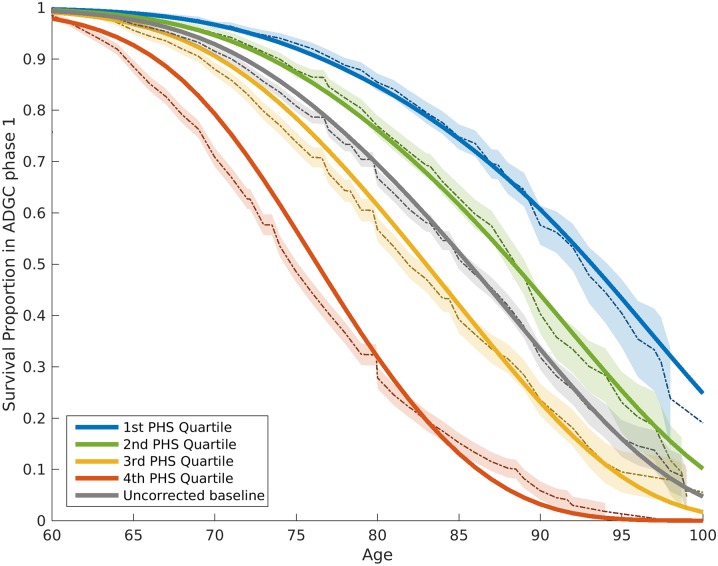
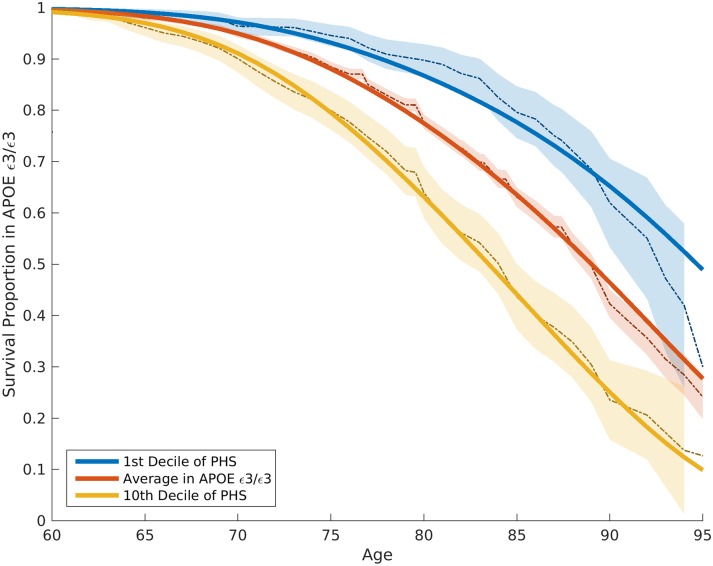
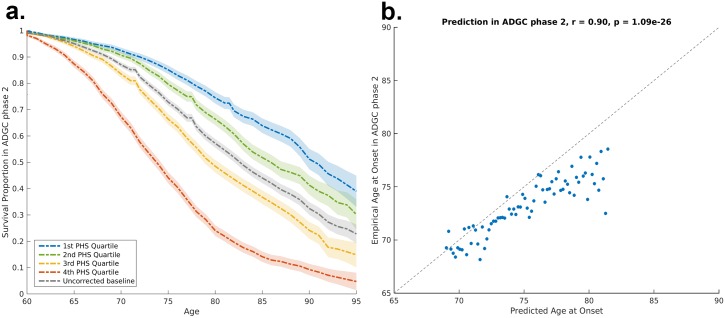
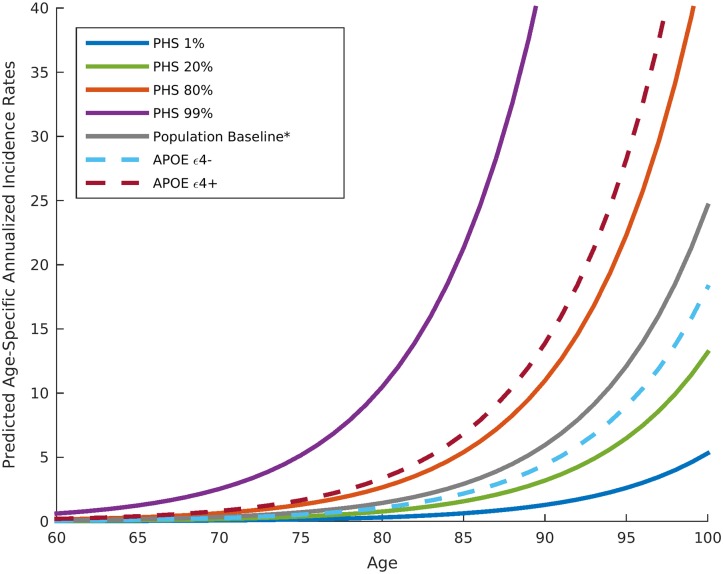
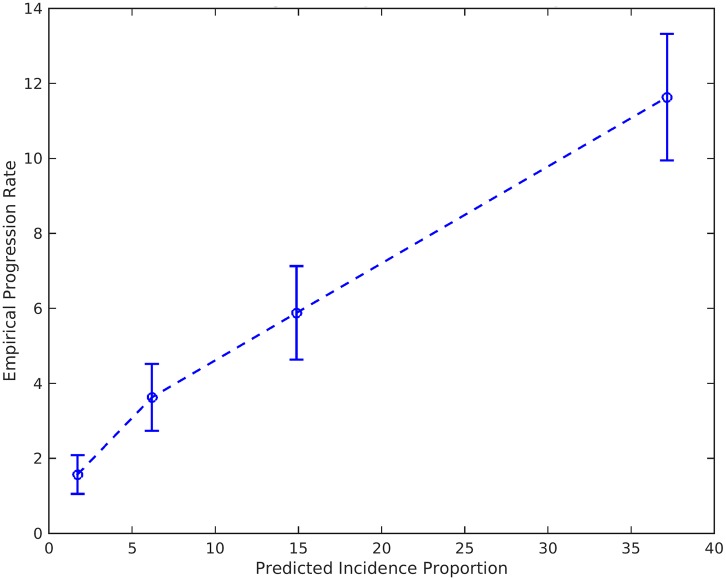
BACKGROUND: Identifying individuals at risk for developing Alzheimer disease (AD) is of utmost importance. Although genetic studies have identified AD-associated SNPs in APOE and other genes, genetic information has not been integrated into an epidemiological framework for risk prediction. METHODS AND FINDINGS: Using genotype data from 17,008 AD cases and 37,154 controls from the International Genomics of Alzheimer's Project (IGAP Stage 1), we identified AD-associated SNPs (at p < 10-5). We then integrated these AD-associated SNPs into a Cox proportional hazard model using genotype data from a subset of 6,409 AD patients and 9,386 older controls from Phase 1 of the Alzheimer's Disease Genetics Consortium (ADGC), providing a polygenic hazard score (PHS) for each participant. By combining population-based incidence rates and the genotype-derived PHS for each individual, we derived estimates of instantaneous risk for developing AD, based on genotype and age, and tested replication in multiple independent cohorts (ADGC Phase 2, National Institute on Aging Alzheimer's Disease Center [NIA ADC], and Alzheimer's Disease Neuroimaging Initiative [ADNI], total n = 20,680). Within the ADGC Phase 1 cohort, individuals in the highest PHS quartile developed AD at a considerably lower age and had the highest yearly AD incidence rate. Among APOE ε3/3 individuals, the PHS modified expected age of AD onset by more than 10 y between the lowest and highest deciles (hazard ratio 3.34, 95% CI 2.62-4.24, p = 1.0 × 10⁻²²). In independent cohorts, the PHS strongly predicted empirical age of AD onset (ADGC Phase 2, r = 0.90, p = 1.1 × 10⁻²⁶) and longitudinal progression from normal aging to AD (NIA ADC, Cochran-Armitage trend test, p = 1.5 × 10⁻¹⁰), and was associated with neuropathology (NIA ADC, Braak stage of neurofibrillary tangles, p = 3.9 × 10⁻⁶, and Consortium to Establish a Registry for Alzheimer's Disease score for neuritic plaques, p = 6.8 × 10⁻⁶) and in vivo markers of AD neurodegeneration (ADNI, volume loss within the entorhinal cortex, p = 6.3 × 10⁻⁶, and hippocampus, p = 7.9 × 10⁻⁵). Additional prospective validation of these results in non-US, non-white, and prospective community-based cohorts is necessary before clinical use. CONCLUSIONS: We have developed a PHS for quantifying individual differences in age-specific genetic risk for AD. Within the cohorts studied here, polygenic architecture plays an important role in modifying AD risk beyond APOE. With thorough validation, quantification of inherited genetic variation may prove useful for stratifying AD risk and as an enrichment strategy in therapeutic trials.
Overview
The claims and statistics of this paper haven’t been checked yet.
Run the check — free, no account needed. It reads the open-access text and checks the sources it cites.
Integrity signals
Registry
Cites
Statistics
Figures
Verification
Claims the paper makes
The claims and statistics of this paper haven’t been checked yet.
Run the check — free, no account needed. It reads the open-access text and checks the sources it cites.
Claims other papers make about this one
Each is checked against this paper’s own text: does it say what the citing paper says it does?
In the citing paper
“risk and seems to provide an improved method for risk prediction over more selective PRS or standard predictors such as APOEε4 alleles, age, and sex [118, 122, 123].”
From Genetic architecture of Alzheimer's disease (2020) · cites this paper as [118]
Self-check
Percentages, sums and reported differences re-computed from the paper’s own numbers.
The self-check needs the paper’s full text.
Citations
Cites
McKhann, G., Drachman, D., Folstein, M., Katzman, R., Price, D., & Stadlan, E. M. (1984) · Neurology · doi:10.1212/wnl.34.7.939 · Cited by 27,915
Neuropathological stageing of Alzheimer-related changes.
Braak, H., & Braak, E. (1991) · Acta Neuropathologica · doi:10.1007/bf00308809 · Cited by 16,123 · cited 1×
“For the neuropathological variables, we examined the Braak stage for neurofibrillary tangles (NFTs) (0, none; I–II, entorhinal; III–IV, limbic; and V–VI, isocortical) [11] and the Consortium to Establish a Registry for Alzheimer’s Disease (CERAD) score for neuritic plaques (none/sparse, moderate, or frequent) [12].”
MethodMirra, S. S., Heyman, A., McKeel, D., Sumi, S. M., Crain, B. J., Brownlee, L. M., Vogel, F. S., Hughes, J. P., Belle, G. V., Berg, L., et al. (1991) · Neurology · doi:10.1212/wnl.41.4.479 · Cited by 4,961
Meta-Analysis of 74,046 Individuals Identifies 11 New Susceptibility Loci for Alzheimer’s Disease
(EADI), E. A. D. I., Lambert, J.-C., (GERAD), G. A. E. R. I. A. D., Alzheimer's Disease Genetic Consortium (ADGC), (CHARGE), C. F. H. A. A. R. I. G. E., Ibrahim-Verbaas, C. A., Harold, D., Naj, A. C., Sims, R., Bellenguez, C., et al. (2013) · Nature Genetics · doi:10.1038/ng.2802 · Cited by 4,336
Self-citationHyman, B. T., Phelps, C. H., Beach, T. G., Bigio, E. H., Cairns, N. J., Carrillo, M. C., Dickson, D. W., Duyckaerts, C., Frosch, M. P., Masliah, E., et al. (2012) · Alzheimer's & Dementia · doi:10.1016/j.jalz.2011.10.007 · Cited by 3,092
Self-citationConsortium to Establish a Registry for Alzheimer's Disease (CERAD)
Fillenbaum, G., & Heyman, A. (2002) · doi:10.1002/0470846410.ch42(iii · Cited by 2,859
Rothman, K. J., Greenland, S., & Lash, T. L. (1998) · Cited by 2,096
Naj, A. C., Jun, G., Beecham, G. W., Wang, L.-S., Vardarajan, B. N., Buros, J., Gallins, P. J., Buxbaum, J. D., Jarvik, G. P., Crane, P. K., et al. (2011) · Nature Genetics · doi:10.1038/ng.801 · Cited by 1,901
Self-citationBrookmeyer, R., Gray, S. G., & Kawas, C. H. (1998) · American Journal of Public Health · doi:10.2105/ajph.88.9.1337 · Cited by 1,802
Genetic Investigation of ANthropometric Traits (GIANT) Consortium, Yang, J., DIAbetes Genetics Replication And Meta-analysis (DIAGRAM) Consortium, Ferreira, T., Morris, A. P., Medland, S. E., Madden, P. A. F., Heath, A. C., Martin, N. G., Montgomery, G. W., et al. (2012) · Nature Genetics · doi:10.1038/ng.2213 · Cited by 1,712
Cited by
Sorted by citations
New insights into the genetic etiology of Alzheimer’s disease and related dementias
Bellenguez, C., Küçükali, F., Jansen, I. E., Kleineidam, L., Moreno-Grau, S., Amin, N., Naj, A. C., Campos-Martin, R., Grenier-Boley, B., Andrade, V., et al. (2022) · Nature Genetics · doi:10.1038/s41588-022-01024-z · Cited by 2,498
The personal and clinical utility of polygenic risk scores
Torkamani, A., Wineinger, N. E., & Topol, E. J. (2018) · Nature Reviews Genetics · doi:10.1038/s41576-018-0018-x · Cited by 1,655
Polygenic risk scores: from research tools to clinical instruments
Lewis, C. M., & Vassos, E. (2020) · Genome Medicine · doi:10.1186/s13073-020-00742-5 · Cited by 1,360
“[61] showed that amongst APOE ε3/3 carriers, PRS modified the expected age of AD onset by more than 10 years between the lowest and highest deciles (hazard ratio 3.”
BackgroundClinical diagnosis of Alzheimer’s disease: Recommendations of the International Working Group
Dubois, B., Villain, N., Frisoni, G. B., Rabinovici, G. D., Sabbagh, M., Cappa, S., Bejanin, A., Bombois, S., Epelbaum, S., Teichmann, M., et al. (2021) · The Lancet Neurology · doi:10.1016/s1474-4422(21)00066-1 · Cited by 1,051
“Such modelling is in its early stages but exemplified through the example of age adjusted polygenic hazard scores 33 .”
BackgroundWightman, D. P., Jansen, I. E., Savage, J. E., Shadrin, A. A., Bahrami, S., Holland, D., Rongve, A., Børte, S., Winsvold, B. S., Drange, O. K., et al. (2021) · Nature Genetics · doi:10.1038/s41588-021-00921-z · Cited by 1,011
Self-citationLópez, J. A., González, H. M., & Léger, G. C. (2019) · Handbook of clinical neurology · doi:10.1016/b978-0-12-804766-8.00013-3 · Cited by 884
Late onset Alzheimer’s disease genetics implicates microglial pathways in disease risk
Efthymiou, A. G., & Goate, A. M. (2017) · Molecular Neurodegeneration · doi:10.1186/s13024-017-0184-x · Cited by 562
Towards clinical utility of polygenic risk scores
Lambert, S. A., Abraham, G., & Inouye, M. (2019) · Human Molecular Genetics · doi:10.1093/hmg/ddz187 · Cited by 586
“Potential clinical utility for PRS Current polygenic scores can explain the majority of heritability for common variants (95) Polygenic Hazard Scores (PHS) to estimate age-of-onset (30) D ow naded rom http/academ ic.”
BackgroundThe probabilistic model of Alzheimer disease: the amyloid hypothesis revised
Frisoni, G. B., Altomare, D., Thal, D. R., Ribaldi, F., van der Kant, R., Ossenkoppele, R., Blennow, K., Cummings, J., van Duijn, C., Nilsson, P. M., et al. (2022) · Nature Reviews Neuroscience · doi:10.1038/s41583-021-00533-w · Cited by 513
The multiplex model of the genetics of Alzheimer's disease
Sims, R., Hill, M., & Williams, J. (2020) · Nature Neuroscience · doi:10.1038/s41593-020-0599-5 · Cited by 466
A clinicopathological approach to the diagnosis of dementia
Elahi, F. M., & Miller, B. L. (2017) · Nature Reviews Neurology · doi:10.1038/nrneurol.2017.96 · Cited by 425
From Basic Science to Clinical Application of Polygenic Risk Scores: A Primer
Wray, N. R., Lin, T., Austin, J., McGrath, J. J., Hickie, I. B., Murray, G. K., & Visscher, P. M. (2021) · JAMA Psychiatry · doi:10.1001/jamapsychiatry.2020.3049 · Cited by 367
Common variants in Alzheimer’s disease and risk stratification by polygenic risk scores
de Rojas, I., Moreno-Grau, S., Tesi, N., Grenier-Boley, B., Andrade, V., Jansen, I. E., Pedersen, N. L., Stringa, N., Zettergren, A., Hernández, I., et al. (2021) · Nature Communications · doi:10.1038/s41467-021-22491-8 · Cited by 324
van der Lee, S. J., Wolters, F. J., Ikram, M. K., Albert Hofman, D., Ikram, M. A., Amin, N., & van Duijn, C. M. (2018) · The Lancet Neurology · doi:10.1016/s1474-4422(18)30053-x · Cited by 317
Risk prediction of late-onset Alzheimer’s disease implies an oligogenic architecture
Zhang, Q., Sidorenko, J., Couvy-Duchesne, B., Marioni, R. E., Wright, M. J., Goate, A. M., Marcora, E., Huang, K.-L., Porter, T., Laws, S. M., et al. (2020) · Nature Communications · doi:10.1038/s41467-020-18534-1 · Cited by 272
Self-citationDai, J., Lv, J., Zhu, M., Wang, Y., Qin, N., Ma, H., He, Y., Zhang, R., Tan, W., Fan, J., et al. (2019) · The Lancet Respiratory Medicine · doi:10.1016/s2213-2600(19)30144-4 · Cited by 267
Holland, D., Frei, O., Desikan, R. S., Fan, C. C., Shadrin, A. A., Smeland, O. B., Sundar, V. S., Thompson, P. M., Andreassen, O. A., & Dale, A. M. (2020) · PLoS Genetics · doi:10.1371/journal.pgen.1008612 · Cited by 239
Neurodegenerative Diseases: Regenerative Mechanisms and Novel Therapeutic Approaches
Hussain, R., Zubair, H., Sarah, P., & Shahab, M. (2018) · Brain Sciences · doi:10.3390/brainsci8090177 · Cited by 244
Morris, G. P., Clark, I. A., & Vissel, B. (2018) · Acta Neuropathologica · doi:10.1007/s00401-018-1918-8 · Cited by 212
“The recently developed polygenic hazard score (PHS) [63] is leading the way in this regard.”
BackgroundSeibert, T. M., Fan, C. C., Wang, Y., Zuber, V., Karunamuni, R. A., Parsons, J. K., Eeles, R. A., Easton, D. F., Kote‐Jarai, Z., Olama, A. A. A., et al. (2018) · BMJ · doi:10.1136/bmj.j5757 · Cited by 215
Duara, R., & Barker, W. (2022) · Neurotherapeutics · doi:10.1007/s13311-022-01185-z · Cited by 187
“To identify genetic risk beyond that of APOE alone [72], several studies have assessed PRS with (APOE-PRS) versus without APOE (nonAPOE-PRS).”
BackgroundPark, C., Ha, J., & Park, S. (2020) · Expert Systems with Applications · doi:10.1016/j.eswa.2019.112873 · Cited by 184
Brain Imaging Genomics: Integrated Analysis and Machine Learning
Shen, L., & Thompson, P. M. (2019) · Proceedings of the IEEE · doi:10.1109/jproc.2019.2947272 · Cited by 178
Rabinovici, G. D. (2019) · Continuum · doi:10.1212/con.0000000000000700 · Cited by 170
A multiomics approach to heterogeneity in Alzheimer’s disease: focused review and roadmap
Badhwar, A., McFall, G. P., Sapkota, S., Black, S. E., Chertkow, H. M., Duchesne, S., Masellis, M., Li, L., Dixon, R. A., & Bellec, P. (2019) · Brain · doi:10.1093/brain/awz384 · Cited by 164
Clinical Research on Alzheimer’s Disease: Progress and Perspectives
Sun, B., Li, W., Zhu, C., Jin, W., Zeng, F., Liu, Y.-H., Bu, X., Zhu, J., Yao, X., & Wang, Y. (2018) · Neuroscience Bulletin · doi:10.1007/s12264-018-0249-z · Cited by 171
Is Alzheimer’s Disease Risk Modifiable?
Serrano‐Pozo, A., & Growdon, J. H. (2019) · Journal of Alzheimer s Disease · doi:10.3233/jad181028 · Cited by 169
“These genetic variants have been used to devise polygenic hazard scores that improve the estimation of the genetic risk for AD beyond the APOE genotype [49].”
Dementia in Latin America: Paving the way toward a regional action plan
Parra, M. A., Báez, S., Sedeño, L., Campo, C. G., Santamaría‐García, H. A., Aprahamian, I., Bertolucci, P. H. F., Bustin, J., Bicalho, M. A. C., Cano, C. A., et al. (2020) · Alzheimer s & Dementia · doi:10.1002/alz.12202 · Cited by 155
Translating genetic risk of Alzheimer’s disease into mechanistic insight and drug targets
Sierksma, A. S. R., Escott‐Price, V., & Strooper, B. D. (2020) · Science · doi:10.1126/science.abb8575 · Cited by 153
“The individual ‘trans’ effects of these peripheral genes are small ( 19 ) but since there are many, they underlie a large part of the heritability ( 20 , 21 ) .”
Dissecting the genetic relationship between cardiovascular risk factors and Alzheimer’s disease
Broce, I. J., Tan, C. H., Fan, C. C., Jansen, I., Savage, J. E., Witoelar, A., Wen, N., Hess, C. P., Dillon, W. P., Glastonbury, C. M., et al. (2019) · Acta Neuropathologica · doi:10.1007/s00401-018-1928-6 · Cited by 140
Self-citationAreas of uncertainties and unmet needs in bipolar disorders: clinical and research perspectives
Bauer, M., Andreassen, O. A., Geddes, J. R., Kessing, L. V., Lewitzka, U., Schulze, T. G., & Vieta, E. (2018) · The Lancet Psychiatry · doi:10.1016/s2215-0366(18)30253-0 · Cited by 145
Protective genes and pathways in Alzheimer’s disease: moving towards precision interventions
Seto, M., Weiner, R. L., Dumitrescu, L., & Hohman, T. J. (2021) · Molecular Neurodegeneration · doi:10.1186/s13024-021-00452-5 · Cited by 135
Liu, G., Peng, J., Liao, Z., Locascio, J. J., Corvol, J.-C., Zhu, F., Dong, X., Maple-Grødem, J., Campbell, M. C., Elbaz, A., et al. (2021) · Nature Genetics · doi:10.1038/s41588-021-00847-6 · Cited by 127
Genetic architecture of Alzheimer's disease
Neuner, S. M., TCW, J., & Goate, A. M. (2020) · Neurobiology of Disease · doi:10.1016/j.nbd.2020.104976 · Cited by 126
Progressive parkinsonism in older adults is related to the burden of mixed brain pathologies
Buchman, A. S., Yu, L., Wilson, R. S., Leurgans, S. E., Nag, S., Shulman, J. M., Barnes, L. L., Schneider, J. A., & Bennett, D. A. (2019) · Neurology · doi:10.1212/wnl.0000000000007315 · Cited by 126
Petrović, S., Arsić, A., Ristić-Medić, D., Cvetković, Z., & Vučić, V. (2020) · Antioxidants · doi:10.3390/antiox9111128 · Cited by 123
“The most common type of NDD is Alzheimer’s disease (AD), accounting for approximately two-thirds of all cases [3].”
BackgroundQuantifying the polygenic contribution to variable expressivity in eleven rare genetic disorders
Oetjens, M. T., Kelly, M., Sturm, A. C., Martin, C. L., & Ledbetter, D. H. (2019) · Nature Communications · doi:10.1038/s41467-019-12869-0 · Cited by 120
Ibáñez, A. M., Yokoyama, J. S., Possin, K. L., Matallana, D., Lopera, F. J., Nitríni, R., Takada, L. T., Custodio, N., Sosa, A. L., Ávila‐Funes, J. A., et al. (2021) · Frontiers in Neurology · doi:10.3389/fneur.2021.631722 · Cited by 114
The Alzheimer's Disease Exposome
Finch, C. E., & Kulminski, A. M. (2019) · Alzheimer s & Dementia · doi:10.1016/j.jalz.2019.06.3914 · Cited by 114
“[159] Desikan RS, Fan CC, Wang Y, Schork AJ, Cabral HJ, Cupples LA, et al.”
BackgroundCOVID‐19 pandemic: a review of smart cities initiatives to face new outbreaks
Costa, D. G., & Peixoto, J. P. J. (2020) · IET Smart Cities · doi:10.1049/iet-smc.2020.0044 · Cited by 110
Ranson, J. M., Rittman, T., Hayat, S. A., Brayne, C., Jessen, F., Blennow, K., van Duijn, C. M., Barkhof, F., Tang, E. Y. H., Mummery, C. J., et al. (2021) · Alzheimer s Research & Therapy · doi:10.1186/s13195-021-00895-4 · Cited by 123
“Combining effects of APOE*4 and common variants allows a precise prediction of the risk and age of onset of AD [22, 45, 46] and pathology in the brain [47].”
BackgroundLicher, S., Leening, M. J. G., Yilmaz, P., Wolters, F. J., Heeringa, J., Bindels, P., Initiative, A. D. N., Vernooij, M. W., Stephan, B. C. M., Steyerberg, E. W., et al. (2018) · American Journal of Psychiatry · doi:10.1176/appi.ajp.2018.18050566 · Cited by 98
“Such markers include subjective memory decline, APOE genotype and neuroimaging (11-14).”
BackgroundPerkins, B. A., Caskey, C. T., Brar, P., Dec, E., Karow, D. S., Kahn, A. M., Hou, Y. C., Shah, N., Boeldt, D., Coughlin, E., et al. (2018) · Proceedings of the National Academy of Sciences · doi:10.1073/pnas.1706096114 · Cited by 104
Heterogeneity of Alzheimer’s disease: consequence for drug trials?
Devi, G., & Scheltens, P. (2018) · Alzheimer's Research & Therapy · doi:10.1186/s13195-018-0455-y · Cited by 102
“Additional stratification, either by known mutations in early-onset patients or using a polygenic hazard ratio in late-onset patients, obtained using disease-associated single nucleotide polymorphisms and APOE status, may further refine populations for therapeutic trials [15].”
BackgroundVaratharajah, Y., Ramanan, V. K., Iyer, R. K., Vemuri, P., Initiative, A. D. N., Weiner, M. W., Aisen, P., Petersen, R. C., Jack, C. R., Saykin, A. J., et al. (2019) · Scientific Reports · doi:10.1038/s41598-019-38793-3 · Cited by 108
Relative risk for Alzheimer disease based on complete family history
Cannon‐Albright, L., Foster, N. L., Schliep, K. C., Farnham, J. M., Teerlink, C. C., Kaddas, H. K., Tschanz, J. T., Corcoran, C., & Kauwe, J. S. K. (2019) · Neurology · doi:10.1212/wnl.0000000000007231 · Cited by 115
Polygenic hazard score: an enrichment marker for Alzheimer’s associated amyloid and tau deposition
Initiative, A. D. N., Tan, C. H., Fan, C. C., Mormino, E. C., Sugrue, L. P., Broce, I., Hess, C. P., Dillon, W. P., Bonham, L. W., Yokoyama, J. S., et al. (2017) · Acta Neuropathologica · doi:10.1007/s00401-017-1789-4 · Cited by 95
Biomarkers of dementia in obstructive sleep apnea
Baril, A., Carrier, J., Lafrenière, A., Warby, S. C., Poirier, J., Osorio, R. S., Ayas, N., Dubé, M., Petit, D., & Gosselin, N. (2018) · Sleep Medicine Reviews · doi:10.1016/j.smrv.2018.08.001 · Cited by 101
Stocker, H. R., Möllers, T., Perna, L., & Brenner, H. (2018) · Translational Psychiatry · doi:10.1038/s41398-018-0221-8 · Cited by 102
Polygenic risk and hazard scores for Alzheimer's disease prediction
Leonenko, G., Sims, R., Shoai, M., Frizzati, A., Bossù, P., Spalletta, G., Fox, N. C., Williams, J. H., Hardy, J., & Escott‐Price, V. (2019) · Annals of Clinical and Translational Neurology · doi:10.1002/acn3.716 · Cited by 99
“PHS was derived for each individual in the GERAD dataset with APOE e2 and e4 risk alleles and the 25 SNPs available in the dataset that were reported in Desikan et al.(10) (see also Table 1).”
MethodResultInfluentialGenomic Predictors of Asthma Phenotypes and Treatment Response
Hernandez‐Pacheco, N., Pino-Yanes, M. D. M., & Flores, C. (2019) · Frontiers in Pediatrics · doi:10.3389/fped.2019.00006 · Cited by 99
Rathore, N., Ramani, S. R., Pantua, H., Payandeh, J., Bhangale, T., Wuster, A., Kapoor, M., Sun, Y., Kapadia, S. B., Gonzalez, L., et al. (2018) · PLOS Genetics · doi:10.1371/journal.pgen.1007427 · Cited by 93
“In addition to reduced disease risk, the C allele of rs1476679 has been associated with age of onset [21] and lower odds of pathologic AD (plaques and tangles) in the ROSMAP study [22].”
BackgroundSelf-citationCerebrospinal Fluid–Basic Concepts Review
Czarniak, N., Kamińska, J., Matowicka-Karna, J., & Koper‐Lenkiewicz, O. M. (2023) · Biomedicines · doi:10.3390/biomedicines11051461 · Cited by 110
Johansson, Å., Andreassen, O. A., Brunak, S., Franks, P. W., Hedman, H., Loos, R. J. F., Meder, B., Melén, E., Wheelock, C. E., & Jacobsson, B. (2023) · Journal of Internal Medicine · doi:10.1111/joim.13640 · Cited by 102
“Prediction models integrating clinical, genetic, and neuroimaging data, have, for example, been developed to accurately predict age of onset in neuropsychiatric diseases [136–138].”
Dementia and aging populations—A global priority for contextualized research and health policy
Brayne, C., & Miller, B. L. (2017) · PLoS Medicine · doi:10.1371/journal.pmed.1002275 · Cited by 93
Dissociable influences of APOE ε4 and polygenic risk of AD dementia on amyloid and cognition
Ge, T., Sabuncu, M. R., Smoller, J. W., Sperling, R. A., Mormino, E. C., & Initiative, A. D. N. (2018) · Neurology · doi:10.1212/wnl.0000000000005415 · Cited by 94
Alzheimer’s disease polygenic risk score as a predictor of conversion from mild-cognitive impairment
Chaudhury, S. R., Brookes, K. J., Patel, T., Fallows, A., Guetta‐Baranes, T., Turton, J. C., Guerreiro, R. J., Brás, J., Hardy, J., Francis, P. T., et al. (2019) · Translational Psychiatry · doi:10.1038/s41398-019-0485-7 · Cited by 94
Polygenic hazard score, amyloid deposition and Alzheimer’s neurodegeneration
Tan, C. H., Bonham, L. W., Fan, C. C., Mormino, E. C., Sugrue, L. P., Broce, I., Hess, C. P., Yokoyama, J. S., Rabinovici, G. D., Miller, B. L., et al. (2018) · Brain · doi:10.1093/brain/awy327 · Cited by 88
Early secure attachment as a protective factor against later cognitive decline and dementia
Walsh, E., Blake, Y., Donati, A., Stoop, R., & von Gunten, A. (2019) · Frontiers in Aging Neuroscience · doi:10.3389/fnagi.2019.00161 · Cited by 84
Fan, J., Tao, W., Li, X., Li, H., Zhang, J., Wei, D., Chen, Y., & Zhang, Z. (2019) · International Journal of Molecular Sciences · doi:10.3390/ijms20051177 · Cited by 87
“As we can see from Table 2, the number of SNPs used to estimate the PGSs is quite different; the number could be as low as three in one study [94] to as high as 31 in another study [172].”
BackgroundMethodZhu, B., Jiang, L., Huang, T., Zhao, Y., Liu, T., Zhong, Y., Li, X., Campos, A., Pomeroy, K., Masliah, E., et al. (2017) · Nature Communications · doi:10.1038/s41467-017-01799-4 · Cited by 71
Polygenic Risk Scores in Alzheimer's Disease: Current Applications and Future Directions
Baker, E., & Escott-Price, V. (2020) · Frontiers in Digital Health · doi:10.3389/fdgth.2020.00014 · Cited by 71
Sex-dependent autosomal effects on clinical progression of Alzheimer’s disease
Fan, C. C., Banks, S. J., Thompson, W. K., Chen, C., McEvoy, L. K., Tan, C. H., Kukull, W. A., Bennett, D. A. A., Farrer, L. A., Mayeux, R. P., et al. (2020) · Brain · doi:10.1093/brain/awaa164 · Cited by 70
Epigenetic Modifications in Alzheimer’s Neuropathology and Therapeutics
Esposito, M. M., & Sherr, G. L. (2019) · Frontiers in Neuroscience · doi:10.3389/fnins.2019.00476 · Cited by 69
Creese, B., Arathimos, R., Brooker, H. J., Aarsland, D., Corbett, A., Lewis, C. M., Ballard, C. G., & Ismail, Z. (2021) · Alzheimer s & Dementia Diagnosis Assessment & Disease Monitoring · doi:10.1002/dad2.12164 · Cited by 69
Polygenic hazard scores in preclinical Alzheimer disease
Tan, C. H., Hyman, B. T., Tan, J. J. X., Hess, C. P., Dillon, W. P., Schellenberg, G. D., Besser, L. M., Kukull, W. A., Kauppi, K., McEvoy, L. K., et al. (2017) · Annals of Neurology · doi:10.1002/ana.25029 · Cited by 68
Okello, E. J., & Mather, J. (2020) · Nutrients · doi:10.3390/nu12041090 · Cited by 67
Zhao, K., Zheng, Q., Dyrba, M., Rittman, T., Li, A., Che, T., Chen, P., Sun, Y., Kang, X., Li, Q., et al. (2022) · Advanced Science · doi:10.1002/advs.202104538 · Cited by 67
Altmann, A., Scelsi, M. A., Shoai, M., de Silva, E., Aksman, L. M., Cash, D. M., Hardy, J., Schott, J. M., & Initiative, A. D. N. (2020) · Brain Communications · doi:10.1093/braincomms/fcz047 · Cited by 65
“A recent conceptual novelty in this domain is the polygenic hazard score (PHS), which seeks to gain predictive power by deriving effect sizes for genetic variants from the time to disease onset in a survival analysis, rather than from wide-spread case– control analyses that are traditionally used (Desikan et al., 2017…”
InfluentialSelf-citationVolmar, C., Salah-Uddin, H., Janczura, K. J., Halley, P., Lambert, G., Wodrich, A. P. K., Manoah, S., Patel, N. H., Sartor, G. C., Mehta, N., et al. (2017) · Proceedings of the National Academy of Sciences · doi:10.1073/pnas.1707544114 · Cited by 66
Kauppi, K., Fan, C. C., McEvoy, L. K., Holland, D., Tan, C. H., Chen, C.-H., Andreassen, O. A., Desikan, R. S., Dale, A. M., & Initiative, T. A. D. N. (2018) · Frontiers in Neuroscience · doi:10.3389/fnins.2018.00260 · Cited by 60
“Using the ADNI dataset, we assessed the potential clinical utility of the recently established age-specific AD PHS (Desikan et al., 2017) to more accurately predict the progression to AD among patients diagnosed with MCI.”
BackgroundMethodInfluentialProgress in Polygenic Composite Scores in Alzheimer’s and Other Complex Diseases
Chasioti, D., Yan, J., Nho, K. T., & Saykin, A. J. (2019) · Trends in Genetics · doi:10.1016/j.tig.2019.02.005 · Cited by 61
Personalized brain models identify neurotransmitter receptor changes in Alzheimer's disease
Khan, A. F., Adewale, Q., Baumeister, T. R., Carbonell, F., Zilles, K., Palomero‐Gallagher, N., Iturria‐Medina, Y., & Initiative, A. D. N. (2021) · Brain · doi:10.1093/brain/awab375 · Cited by 61
The Molecular and Neuropathological Consequences of Genetic Risk for Alzheimer's Dementia
Tasaki, S., Gaiteri, C., Mostafavi, S., Jager, P. L. D., & Bennett, D. A. (2018) · Frontiers in Neuroscience · doi:10.3389/fnins.2018.00699 · Cited by 61
“The other associations became stronger as the number of SNPs included in the AD-PRS increased (Supplementary Figure 1), which indicated polygenic influences from Alzheimer’s dementiaassociated SNPs as suggested previously (Mormino et al., 2016; Desikan et al., 2017).”
BackgroundDeclining incidence of dementia: A national registry‐based study over 20 years
Taudorf, L., Nørgaard, A., Islamoska, S., Jørgensen, K., Laursen, T. M., & Waldemar, G. (2019) · Alzheimer s & Dementia · doi:10.1016/j.jalz.2019.07.006 · Cited by 61
Porter, T., Burnham, S. C., Milicic, L., Savage, G. R., Maruff, P. T., Lim, Y. Y., Li, Q.-X., Ames, D. J., Masters, C. L., Rainey‐Smith, S. R., et al. (2018) · Journal of Alzheimer s Disease · doi:10.3233/jad-180713 · Cited by 59
Initiative*, T. A. D. N., Zettergren, A., Lord, J., Ashton, N. J., Benedet, A. L., Karikari, T. K., Lantero‐Rodriguez, J., Snellman, A., Suárez‐Calvet, M., Proitsi, P., et al. (2021) · Alzheimer s Research & Therapy · doi:10.1186/s13195-020-00754-8 · Cited by 55
Genetics of Alzheimer’s Disease: the Importance of Polygenic and Epistatic Components
Raghavan, N. S., & Tosto, G. (2017) · Current Neurology and Neuroscience Reports · doi:10.1007/s11910-017-0787-1 · Cited by 57
Alzheimer’s Disease: A Molecular View of β-Amyloid Induced Morbific Events
Asik, R. M., Suganthy, N., Aarifa, M. A., Kumar, A., Szigeti, K., Máthé, D., Gulyás, B. Z., Archunan, G., & Padmanabhan, P. (2021) · Biomedicines · doi:10.3390/biomedicines9091126 · Cited by 54
Modifiable cardiovascular risk factors and genetics for targeted prevention of dementia
Rasmussen, I. J., & Frikke‐Schmidt, R. (2023) · European Heart Journal · doi:10.1093/eurheartj/ehad293 · Cited by 55
Identification of genetic heterogeneity of Alzheimer's disease across age
Lo, M., Kauppi, K., Fan, C.-C., Sanyal, N., Reas, E. T., Sundar, V. S., Lee, W., Desikan, R. S., McEvoy, L. K., & Chen, C. (2019) · Neurobiology of Aging · doi:10.1016/j.neurobiolaging.2019.02.022 · Cited by 53
Lupton, M. K., Robinson, G. A., Adam, R. J., Rose, S., Byrne, G. J., Salvado, O., Pachana, N. A., Almeida, O. P., McAloney, K., Gordon, S. D., et al. (2020) · NeuroImage Clinical · doi:10.1016/j.nicl.2020.102527 · Cited by 49
McDade, E. (2022) · CONTINUUM Lifelong Learning in Neurology · doi:10.1212/con.0000000000001131 · Cited by 56
Sex differences in the genetic architecture of Alzheimer’s disease
Dumitrescu, L., Mayeda, E. R., Sharman, K., Moore, A. M., & Hohman, T. J. (2019) · Current Genetic Medicine Reports · doi:10.1007/s40142-019-0157-1 · Cited by 48
Domínguez-Baleón, C., Ong, J., Scherzer, C. R., Rentería, M. E., & Dong, X. (2021) · Scientific Reports · doi:10.1038/s41598-021-93105-y · Cited by 49
Membralin deficiency dysregulates astrocytic glutamate homeostasis, leading to ALS-like impairment
Jiang, L.-L., Zhu, B., Zhao, Y., Li, X., Liu, T., Piña-Crespo, J., Zhou, L., Xu, W., Gómez-Rodríguez, M. J., Yu, H., et al. (2019) · Journal of Clinical Investigation · doi:10.1172/jci127695 · Cited by 51
“Together with other studies that describe AD-associated polymorphisms proximal to the membralin locus (63), it appears that membralin levels are impaired in AD.”
BackgroundClark, K., Leung, Y. Y., Lee, W., Voight, B. F., & Wang, L. (2022) · Journal of Alzheimer s Disease · doi:10.3233/jad-220025 · Cited by 48
Polygenic risk score in postmortem diagnosed sporadic early-onset Alzheimer's disease
Chaudhury, S., Patel, T., Barber, I., Guetta‐Baranes, T., Brookes, K. J., Chappell, S., Turton, J. C., Guerreiro, R. J., Brás, J., Hernandez, D. G., et al. (2017) · Neurobiology of Aging · doi:10.1016/j.neurobiolaging.2017.09.035 · Cited by 49
Gao, X. R., Chiariglione, M., Qin, K., Nuytemans, K., Scharre, D. W., Li, Y.-J., & Martin, E. R. (2023) · Scientific Reports · doi:10.1038/s41598-023-27551-1 · Cited by 45
Genetic risk factors for Alzheimer disease: emerging roles of microglia in disease pathomechanisms
Takatori, S., Wang, W., Iguchi, A., & Tomita, T. (2019) · Advances in Experimental Medicine and Biology · doi:10.1007/978-3-030-05542-4_5 · Cited by 44
Systems healthcare: a holistic paradigm for tomorrow
Fiandaca, M. S., Mapstone, M. E., Connors, E. E., Jacobson, M., Monuki, E. S., Malik, S., Macciardi, F. M., & Federoff, H. J. (2017) · BMC Systems Biology · doi:10.1186/s12918-017-0521-2 · Cited by 49
“In a recent example [60], a continuous polygenic hazard score for age-specific AD risk was derived using GWAS SNP (IGAP) data, APOE status, and population-based AD incidence rates in an ADGC cohort, and then tested in independent postmortem (NACC with neuropathology) and premortem cohorts (ADNI with CSF biomarkers).”
BackgroundMethodRiaz, M., Huq, A. J., Ryan, J. L., Orchard, S. G., Tiller, J. M., Lockery, J. E., Woods, R. L., Wolfe, R. S., Renton, A. E., Goate, A., et al. (2021) · Aging Cell · doi:10.1111/acel.13384 · Cited by 44
“PRS was calculated using 23 common variants (15 genotyped, 8 imputed) associated with AD at genome- wide significance that affect risk independently of APOE (Desikan et al., 2017; Lambert et al., 2013; Ruiz et al., 2014).”
BackgroundMethodInfluentialLargest GWAS (N=1,126,563) of Alzheimer’s Disease Implicates Microglia and Immune CellsPreprint
Wightman, D. P., Jansen, I. E., Savage, J. E., Shadrin, A. A., Bahrami, S., Rongve, A., Børte, S., Winsvold, B. S., Drange, O. K., Martinsen, A. E., et al. (2020) · medRxiv · doi:10.1101/2020.11.20.20235275 · Cited by 42
A review of brain imaging biomarker genomics in Alzheimer’s disease: implementation and perspectives
Li, L., Yu, X., Sheng, C., Jiang, X., Zhang, Q., Han, Y., & Jiang, J. (2022) · Translational Neurodegeneration · doi:10.1186/s40035-022-00315-z · Cited by 40
“[102] reported that the polygenic hazard score was associated with longitudinal MRI-derived volume loss in the entorhinal cortex and hippocampus.”
BackgroundHow Real-World Data Can Facilitate the Development of Precision Medicine Treatment in Psychiatry
Koch, E. M., Pardiñas, A. F., O’Connell, K. S., Selvaggi, P., Camacho-Collados, J., Babić, A., Marshall, S., der Eycken, E. V., Angulo, C., Lu, Y., et al. (2024) · Biological Psychiatry · doi:10.1016/j.biopsych.2024.01.001 · Cited by 48
Sala, A., Nordberg, A. K., Rodriguez‐Vieitez, E., & Initiative, A. D. N. (2020) · Molecular Psychiatry · doi:10.1038/s41380-020-00950-w · Cited by 43
Song, Y., Wang, P., Xu, W., Li, J., Cao, X., Yu, J., & Tan, L. (2018) · Journal of Alzheimer s Disease · doi:10.3233/jad-180476 · Cited by 39
Estimating undetected Ebola spillovers
Glennon, E. E., Jephcott, F. L., Restif, O., & Wood, J. L. N. (2019) · PLoS neglected tropical diseases · doi:10.1371/journal.pntd.0007428 · Cited by 38
Challenge accepted: uncovering the role of rare genetic variants in Alzheimer’s disease
Khani, M., Gibbons, E., Bras, J., & Guerreiro, R. (2022) · Molecular Neurodegeneration · doi:10.1186/s13024-021-00505-9 · Cited by 39
“These scores allow the individualized risk prediction in which an individual's risk for AD is determined by the combinatorial effect of multiple variants acting together across the genome [22].”
BackgroundAvelar‐Pereira, B., Belloy, M. E., O'Hara, R. M., Hosseini, S. M. H., & Initiative, A. D. N. (2022) · Molecular Psychiatry · doi:10.1038/s41380-022-01886-z · Cited by 42
“For additional details, see S2.”
Metadata
- Authors
- Desikan, R. S., Fan, C. C., Wang, Y., Schork, A. J., Cabral, H. J., Cupples, L. A., Thompson, W. K., Besser, L., Kukull, W. A., Holland, D., Chen, C.-H., Brewer, J. B., Karow, D. S., Kauppi, K., Witoelar, A., Karch, C. M., Bonham, L. W., Yokoyama, J. S., Rosen, H. J., Miller, B. L., Dillon, W. P., Wilson, D. M., Hess, C. P., Pericak-Vance, M., Haines, J. L., Farrer, L. A., Mayeux, R., Hardy, J., Goate, A. M., Hyman, B. T., Schellenberg, G. D., McEvoy, L. K., Andreassen, O. A., & Dale, A. M.
- Affiliations
- University of California, San Francisco (US)
- University of California San Diego (US)
- Oslo University Hospital (NO)
- Boston University (US)
- Sankt Hans Hospital (DK)
- University of Washington (US)
- Washington University in St. Louis (US)
- Case Western Reserve University (US)
- Columbia University (US)
- UCL Queen Square Institute of Neurology (GB)
- Icahn School of Medicine at Mount Sinai (US)
- Massachusetts General Hospital (US)
- University of Pennsylvania (US)
- Corresponding author
- Desikan, Rahul S.
- Andreassen, Ole A.
- Dale, Anders M.
- ORCID
- Desikan, Rahul S.
- Fan, Chun Chieh
- Wang, Yunpeng
- Schork, Andrew J.
- Cabral, Howard J.
- Cupples, L. Adrienne
- Thompson, Wesley K.
- Kukull, Walter A.
- Holland, Dominic
- Chen, Chi-Hua
- Kauppi, Karolina
- Witoelar, Aree
- Karch, Celeste M.
- Bonham, Luke W.
- Yokoyama, Jennifer S.
- Miller, Bruce L.
- Dillon, William P.
- Wilson, David M.
- Hess, Christopher P.
- Haines, Jonathan L.
- Farrer, Lindsay A.
- Mayeux, Richard
- Hardy, John
- Goate, Alison M.
- Hyman, Bradley T.
- Schellenberg, Gerard D.
- McEvoy, Linda K.
- Andreassen, Ole A.
- Dale, Anders M.
- Venue
- PLoS Medicine
- Publisher
- Public Library of Science (PLoS)
- Published
- 2017-03-21
- Volume
- 14
- Issue
- 3
- Pages
- e1002258
- ISSN
- 1549-1277 (ISSN-L)
- 1549-1676
- PMC
- PMC5360219
- OpenAlex
- W2600084629
- Cited by
- 395
- References
- 36
- Citations by year
- 2026: 18 · 2025: 21 · 2024: 39 · 2023: 35 · 2022: 44 · 2021: 64 · 2020: 43 · 2019: 66 · 2018: 44 · 2017: 19
- FWCI
- 34.82
- Type
- journal article
- Language
- en
- Update notices
- correction (2017-03-28)
- Open access
- gold
- doi.org
- Licence
- Locations
- PLoS Medicine (publishedVersion, cc-by)
- bioRxiv (Cold Spring Harbor Laboratory) (acceptedVersion, cc-by-nd)
- PubMed Central (publishedVersion, cc-by)
- PubMed (publishedVersion)
- eScholarship (California Digital Library) (submittedVersion)
- DOAJ (DOAJ: Directory of Open Access Journals) (submittedVersion, cc-by-sa)
- UCL Discovery (University College London) (submittedVersion)
- Figshare (submittedVersion, cc-by)
- Columbia Academic Commons (Columbia University)
- Funders
- National Institutes of Health (NIH-AG046374, K01AG049152, R01MH100351)
- National Alzheimer's Coordinating Center
- Radiological Society of North America
- Foundation of the American Society of Neuroradiology
- Norges Forskningsråd ((#213837, #225989, #223273, #237250/EU JPND)
- South East Norway Health Authority (2013-123)
- Norske Kvinners Sanitetsforening
- KG Jebsen Foundation
- Topics
- Life Sciences › Neuroscience › Cellular and Molecular Neuroscience › Alzheimer's disease research and treatments
- Health Sciences › Medicine › Psychiatry and Mental health › Dementia and Cognitive Impairment Research
- Life Sciences › Biochemistry, Genetics and Molecular Biology › Genetics › Genetic Associations and Epidemiology
- Keywords
- Alzheimer's disease, polygenic hazard score, genetic risk prediction, age of onset, Cox proportional hazards model, neurofibrillary tangles, neuritic plaques, entorhinal cortex atrophy, amygdala atrophy, hippocampal atrophy, APOE ε4, APOE ε2
- MeSH terms
- Aged, Aged, 80 and over, Alzheimer Disease, Apolipoproteins E, Female, Genotype, Humans, Longitudinal Studies, Male, Middle Aged, United States, Geriatric Assessment, Multifactorial Inheritance, Polymorphism, Single Nucleotide
About these checks
Registry, retraction, Cites and statistics results are computed, not judged, with one exception: a printed reference that no index lists is read once by a model before it counts as a citation error. Claims are extracted by a model and kept only when their quote appears verbatim in the text; each cited source is then checked, with a model’s help, for whether it says what the claim relies on. Those verdicts can be wrong — read the claim’s quote and the cited source before relying on one.
Statistics and arithmetic are recomputed, not judged.
Confidence bands are shown only for fields calibrated on our annotated test set. None is calibrated yet, so no band is shown.
What counts as a claim ›How we measure confidence ›How we check this ›
Are you an author, or do you see a problem with this page? Request a review
