

Benefit and harm of intensive blood pressure treatment: Derivation and validation of risk models using data from the SPRINT and ACCORD trials
Open accessThe DOI matches its Crossref record; 37 of the 37 references it cites were found in a registry or an index.
Abstract
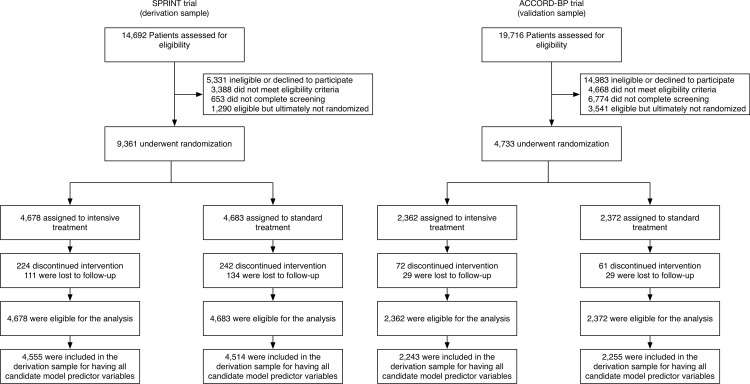
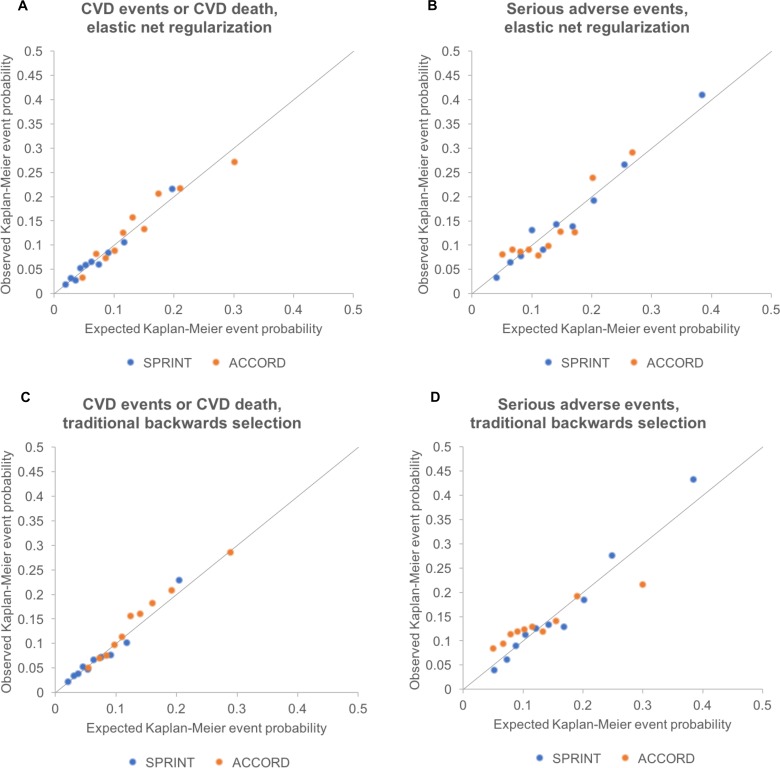
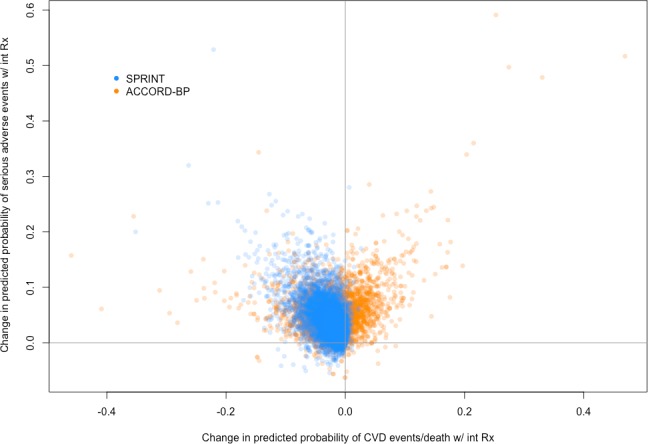
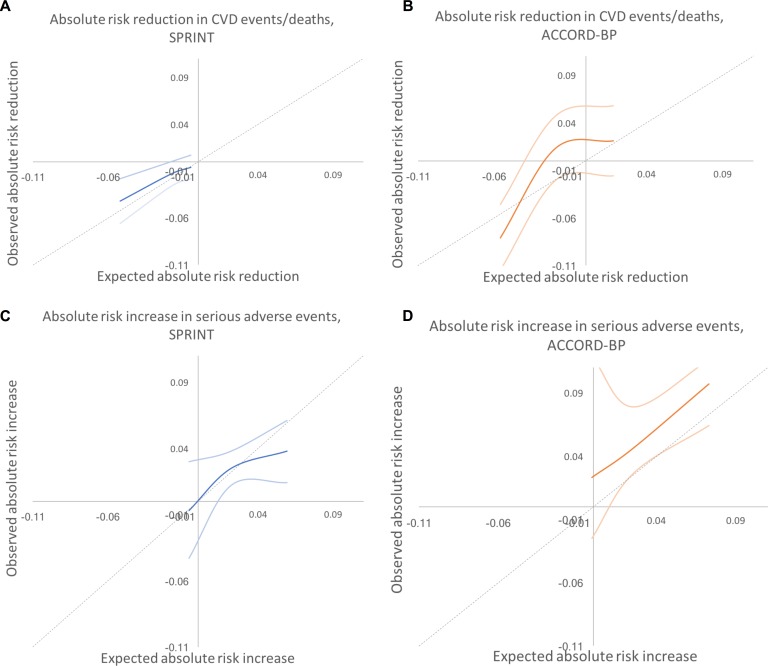
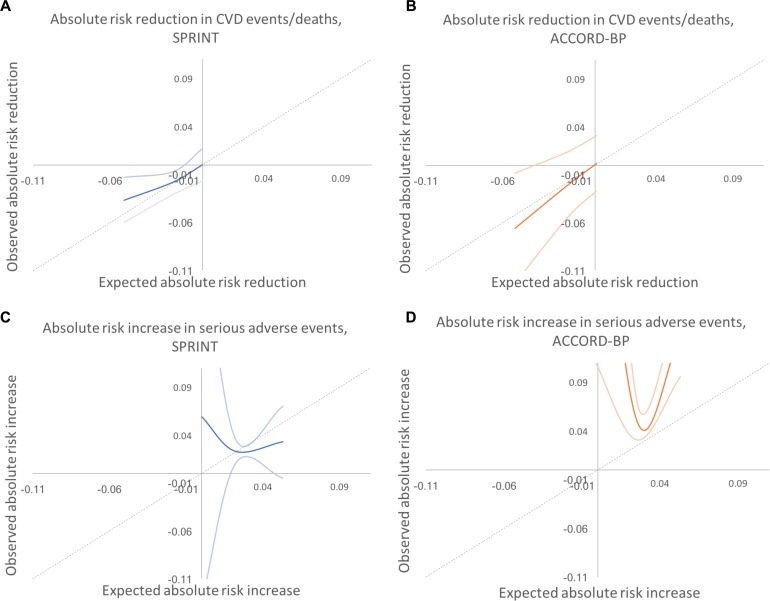
BACKGROUND: Intensive blood pressure (BP) treatment can avert cardiovascular disease (CVD) events but can cause some serious adverse events. We sought to develop and validate risk models for predicting absolute risk difference (increased risk or decreased risk) for CVD events and serious adverse events from intensive BP therapy. A secondary aim was to test if the statistical method of elastic net regularization would improve the estimation of risk models for predicting absolute risk difference, as compared to a traditional backwards variable selection approach. METHODS AND FINDINGS: Cox models were derived from SPRINT trial data and validated on ACCORD-BP trial data to estimate risk of CVD events and serious adverse events; the models included terms for intensive BP treatment and heterogeneous response to intensive treatment. The Cox models were then used to estimate the absolute reduction in probability of CVD events (benefit) and absolute increase in probability of serious adverse events (harm) for each individual from intensive treatment. We compared the method of elastic net regularization, which uses repeated internal cross-validation to select variables and estimate coefficients in the presence of collinearity, to a traditional backwards variable selection approach. Data from 9,069 SPRINT participants with complete data on covariates were utilized for model development, and data from 4,498 ACCORD-BP participants with complete data were utilized for model validation. Participants were exposed to intensive (goal systolic pressure < 120 mm Hg) versus standard (<140 mm Hg) treatment. Two composite primary outcome measures were evaluated: (i) CVD events/deaths (myocardial infarction, acute coronary syndrome, stroke, congestive heart failure, or CVD death), and (ii) serious adverse events (hypotension, syncope, electrolyte abnormalities, bradycardia, or acute kidney injury/failure). The model for CVD chosen through elastic net regularization included interaction terms suggesting that older age, black race, higher diastolic BP, and higher lipids were associated with greater CVD risk reduction benefits from intensive treatment, while current smoking was associated with fewer benefits. The model for serious adverse events chosen through elastic net regularization suggested that male sex, current smoking, statin use, elevated creatinine, and higher lipids were associated with greater risk of serious adverse events from intensive treatment. SPRINT participants in the highest predicted benefit subgroup had a number needed to treat (NNT) of 24 to prevent 1 CVD event/death over 5 years (absolute risk reduction [ARR] = 0.042, 95% CI: 0.018, 0.066; P = 0.001), those in the middle predicted benefit subgroup had a NNT of 76 (ARR = 0.013, 95% CI: -0.0001, 0.026; P = 0.053), and those in the lowest subgroup had no significant risk reduction (ARR = 0.006, 95% CI: -0.007, 0.018; P = 0.71). Those in the highest predicted harm subgroup had a number needed to harm (NNH) of 27 to induce 1 serious adverse event (absolute risk increase [ARI] = 0.038, 95% CI: 0.014, 0.061; P = 0.002), those in the middle predicted harm subgroup had a NNH of 41 (ARI = 0.025, 95% CI: 0.012, 0.038; P < 0.001), and those in the lowest subgroup had no significant risk increase (ARI = -0.007, 95% CI: -0.043, 0.030; P = 0.72). In ACCORD-BP, participants in the highest subgroup of predicted benefit had significant absolute CVD risk reduction, but the overall ACCORD-BP participant sample was skewed towards participants with less predicted benefit and more predicted risk than in SPRINT. The models chosen through traditional backwards selection had similar ability to identify absolute risk difference for CVD as the elastic net models, but poorer ability to correctly identify absolute risk difference for serious adverse events. A key limitation of the analysis is the limited sample size of the ACCORD-BP trial, which expanded confidence intervals for ARI among persons with type 2 diabetes. Additionally, it is not possible to mechanistically explain the physiological relationships explaining the heterogeneous treatment effects captured by the models, since the study was an observational secondary data analysis. CONCLUSIONS: We found that predictive models could help identify subgroups of participants in both SPRINT and ACCORD-BP who had lower versus higher ARRs in CVD events/deaths with intensive BP treatment, and participants who had lower versus higher ARIs in serious adverse events.
Overview
The claims and statistics of this paper haven’t been checked yet.
Free: it reads the open-access text and checks the first 5 claims that cite a source we can check. Create a free account to check every claim.
Integrity signals
Registry
Cites
Statistics
Figures
Verification
Claims the paper makes
The claims and statistics of this paper haven’t been checked yet.
Free: it reads the open-access text and checks the first 5 claims that cite a source we can check. Create a free account to check every claim.
Claims other papers make about this one
Each is checked against this paper’s own text: does it say what the citing paper says it does?
The cited source says what the claim attributes to it.
In the citing paper
“Secondary analyses of ACCORD BP and SPRINT suggest that clinical factors can help determine individuals more likely to bene fi t and less likely to be harmed by intensive blood pressure control (40,41).”
From 10. Cardiovascular Disease and Risk Management: Standards of Care in Diabetes—2023 (2023) · cites this paper as [40]
The cited source says what the claim attributes to it.
In the citing paper
“Secondary analyses of ACCORD BP and SPRINT suggest that clinical factors can help identify individuals more likely to benefit from and less likely to be harmed by intensive blood pressure management (46,47).”
From 10. Cardiovascular Disease and Risk Management: Standards of Care in Diabetes—2025 (2025) · cites this paper as [46]
The cited source says what the claim attributes to it.
In the citing paper
“Secondary analyses of ACCORD BP and SPRINT suggest that clinical factors can help identify individuals more likely to benefit from and less likely to be harmed by intensive blood pressure management (49,50).”
From 10. Cardiovascular Disease and Risk Management: Standards of Care in Diabetes—2026 (2026) · cites this paper as [49]
Self-check
Percentages, sums and reported differences re-computed from the paper’s own numbers.
The self-check needs the paper’s full text.
Citations
Cites
An introduction to ROC analysis
Fawcett, T. (2006) · Pattern Recognition Letters · doi:10.1016/j.patrec.2005.10.010 · Cited by 21,879 · cited 1×
“62] in ACCORD-BP, a meaningfully large difference for serious adverse event discrimination [21,22]) and poorer calibration (slopes of 1.”
BackgroundInformation Theory and an Extension of the Maximum Likelihood Principle
Akaike, H. (1998) · Springer Series in Statistics · doi:10.1007/978-1-4612-1694-0_15 · Cited by 17,781
General Cardiovascular Risk Profile for Use in Primary Care: The Framingham Heart Study
D’Agostino, R. B., Vasan, R. S., Pencina, M. J., Wolf, P. A., Cobain, M., Massaro, J. M., & Kannel, W. B. (2008) · Circulation · doi:10.1161/circulationaha.107.699579 · Cited by 7,491
A Randomized Trial of Intensive versus Standard Blood-Pressure Control
The SPRINT Research Group (2015) · New England Journal of Medicine · doi:10.1056/nejmoa1511939 · Cited by 6,325
Basic principles of ROC analysis
Metz, C. E. (1978) · Seminars in Nuclear Medicine · doi:10.1016/s0001-2998(78)80014-2 · Cited by 6,026 · cited 1×
“62] in ACCORD-BP, a meaningfully large difference for serious adverse event discrimination [21,22]) and poorer calibration (slopes of 1.”
BackgroundEffects of intensive blood-pressure control in type 2 diabetes mellitus
(2010) · New England Journal of Medicine · doi:10.1056/nejmoa1001286 · Cited by 3,598
Collins, G. S., Reitsma, J. B., Altman, D. G., & Moons, K. G. M. (2015) · British Journal of Cancer · doi:10.1038/bjc.2014.639 · Cited by 3,293
Regularization Paths for Cox's Proportional Hazards Model via Coordinate Descent
Simon, N., Friedman, J., Hastie, T., & Tibshirani, R. (2011) · Journal of Statistical Software · doi:10.18637/jss.v039.i05 · Cited by 2,499 · cited 1×
“Elastic net regularization is a statistical approach designed to select models in the context of collinearity, which produces challenges for older stepwise selection approaches [13,16].”
MethodGlobal Burden of Hypertension and Systolic Blood Pressure of at Least 110 to 115 mm Hg, 1990-2015
Forouzanfar, M. H., Liu, P., Roth, G. A., Ng, M., Biryukov, S., Marczak, L., Alexander, L., Estep, K., Hassen Abate, K., Akinyemiju, T. F., et al. (2017) · JAMA · doi:10.1001/jama.2016.19043 · Cited by 2,381
Murray, C. J. L., Barber, R. M., Foreman, K. J., Ozgoren, A. A., Abd-Allah, F., Abera, S. F., Aboyans, V., Abraham, J. P., Abubakar, I., Abu-Raddad, L. J., et al. (2015) · The Lancet · doi:10.1016/s0140-6736(15)61340-x · Cited by 1,964
Self-citation
Research works printed but not linked: 1
- New England Journal of Medicine. SPRINT data analysis challenge Waltham (Massachusetts): Massachusetts Medical Society; 2017 [cited 2017 Apr 17]. Available: https://challenge.nejm.org/pages/home.
Cited by
10. Cardiovascular Disease and Risk Management: Standards of Medical Care in Diabetes—2022
American Diabetes Association Professional Practice Committee (2022) · Diabetes Care · doi:10.2337/dc22-s010 · Cited by 869
“als more likely to benefit and less likely to be harmed by intensive blood pressure control (38,39).”
Background10. Cardiovascular Disease and Risk Management: Standards of Medical Care in Diabetes—2021
American Diabetes Association (2021) · Diabetes Care · doi:10.2337/dc21-s010 · Cited by 495
“Secondary analyses of ACCORD BP and SPRINT suggest that clinical factors can help determine individualsmore likely to benefit and less likely to be harmed by intensive blood pressure control (37,38).”
Method10. Cardiovascular Disease and Risk Management: Standards of Medical Care in Diabetes—2020
American Diabetes Association (2020) · Diabetes Care · doi:10.2337/dc20-s010 · Cited by 487
“Secondary analyses of ACCORD BP and SPRINT suggest that clinical factors can help determine individuals more likely to benefit and less likely to be harmed by intensive blood pressure control (36).”
Personalized evidence based medicine: predictive approaches to heterogeneous treatment effects
Kent, D. M., Steyerberg, E., & van Klaveren, D. (2018) · BMJ · doi:10.1136/bmj.k4245 · Cited by 479
10. Cardiovascular Disease and Risk Management: Standards of Care in Diabetes—2025
American Diabetes Association Professional Practice Committee, ElSayed, N. A., McCoy, R. G., Aleppo, G., Balapattabi, K., Beverly, E. A., Briggs Early, K., Bruemmer, D., Das, S. R., Echouffo-Tcheugui, J. B., et al. (2025) · Diabetes Care · doi:10.2337/dc25-s010 · Cited by 486
10. Cardiovascular Disease and Risk Management: Standards of Medical Care in Diabetes—2019
American Diabetes Association (2019) · Diabetes Care · doi:10.2337/dc19-s010 · Cited by 471
“Secondary analyses of ACCORD BP and SPRINT suggest that clinical factors can help determine individuals more likely to benefit and less likely to be harmed by intensive blood pressure control (36).”
The Predictive Approaches to Treatment effect Heterogeneity (PATH) statement
Kent, D. M., Paulus, J. K., van Klaveren, D., D'Agostino, R., Goodman, S., Hayward, R., Ioannidis, J. P. A., Patrick-Lake, B., Morton, S., Pencina, M., et al. (2020) · Annals of Internal Medicine · doi:10.7326/m18-3667 · Cited by 469
Self-citation10. Cardiovascular Disease and Risk Management: Standards of Care in Diabetes—2023
ElSayed, N. A., Aleppo, G., Aroda, V. R., Bannuru, R. R., Brown, F. M., Bruemmer, D., Collins, B. S., Das, S. R., Hilliard, M. E., Isaacs, D., et al. (2023) · Diabetes Care · doi:10.2337/dc23-s010 · Cited by 465
10. Cardiovascular Disease and Risk Management: Standards of Care in Diabetes—2024
American Diabetes Association Professional Practice Committee, ElSayed, N. A., Aleppo, G., Bannuru, R. R., Bruemmer, D., Collins, B. S., Das, S. R., Ekhlaspour, L., Hilliard, M. E., Johnson, E. L., et al. (2024) · Diabetes Care · doi:10.2337/dc24-s010 · Cited by 438
Privacy-Preserving Generative Deep Neural Networks Support Clinical Data Sharing
Beaulieu-Jones, B. K., Wu, Z. S., Williams, C., Lee, R., Bhavnani, S. P., Byrd, J. B., & Greene, C. S. (2019) · Circulation: Cardiovascular Quality and Outcomes · doi:10.1161/circoutcomes.118.005122 · Cited by 390
Inhaled corticosteroids in COPD: friend or foe?
Agusti, A., Fabbri, L. M., Singh, D., Vestbo, J., Celli, B., Franssen, F. M. E., Rabe, K. F., & Papi, A. (2018) · European Respiratory Journal · doi:10.1183/13993003.01219-2018 · Cited by 229
10. Cardiovascular Disease and Risk Management: Standards of Care in Diabetes—2026
American Diabetes Association Professional Practice Committee for Diabetes*, Bajaj, M., McCoy, R. G., Balapattabi, K., Bannuru, R. R., Bellini, N. J., Bennett, A. K., Beverly, E. A., Briggs Early, K., ChallaSivaKanaka, S., et al. (2026) · Diabetes Care · doi:10.2337/dc26-s010 · Cited by 225
Kent, D. M., van Klaveren, D., Paulus, J. K., D'Agostino, R., Goodman, S., Hayward, R., Ioannidis, J. P. A., Patrick-Lake, B., Morton, S., Pencina, M., et al. (2020) · Annals of Internal Medicine · doi:10.7326/m18-3668 · Cited by 179
Self-citationArvanitis, M., Qi, G., Bhatt, D. L., Post, W. S., Chatterjee, N., Battle, A. J., & McEvoy, J. W. (2020) · Circulation · doi:10.1161/circulationaha.120.049819 · Cited by 121
Guidelines for Cardiovascular Risk Reduction in Patients With Type 2 Diabetes
Kelsey, M. D., Nelson, A. J., Green, J. B., Granger, C. B., Peterson, E. D., McGuire, D. K., & Pagidipati, N. J. (2022) · Journal of the American College of Cardiology · doi:10.1016/j.jacc.2022.02.046 · Cited by 106
Basu, S., Sussman, J. B., Berkowitz, S. A., Hayward, R. A., Bertoni, A. G., Correa, A., Mwasongwe, S. E., & Yudkin, J. S. (2017) · Diabetes Care · doi:10.2337/dc17-2002 · Cited by 100
Self-citationDiagnosis and Treatment of Hypertension in the 2017 ACC/AHA Guidelines and in the Real World
Ioannidis, J. P. A. (2017) · JAMA · doi:10.1001/jama.2017.19672 · Cited by 106
Klaveren, D. V., Balan, T. A., Steyerberg, E. W., & Kent, D. M. (2019) · Journal of Clinical Epidemiology · doi:10.1016/j.jclinepi.2019.05.029 · Cited by 92
“Recalibration using penalized regression techniques may improve the ability of these models to predict treatment benefit [15, 16]; this was well-demonstrated in a reanalysis of the SPRINT trial comparing conventional regression to elastic net regularization (an amalgam of Ridge and Lasso) [17].”
MethodBanerjee, D., Winocour, P. H., Chowdhury, T. A., De, P., Wahba, M. M., Montero, R., Fogarty, D. G., Frankel, A., Karalliedde, J. J., Mark, P. B., et al. (2022) · BMC Nephrology · doi:10.1186/s12882-021-02587-5 · Cited by 108
“However, lowering blood pressure < 130/80 mmHg may be associated with unwanted side effects and individuals should be involved in the decision-making process [199].”
BackgroundPredictive approaches to heterogeneous treatment effects: a scoping review
Rekkas, A., Paulus, J. K., Raman, G., Wong, J. B., Steyerberg, E. W., Rijnbeek, P. R., Kent, D. M., & van Klaveren, D. (2020) · BMC Medical Research Methodology · doi:10.1186/s12874-020-01145-1 · Cited by 77
Oikonomou, E. K., Spatz, E. S., Suchard, M. A., & Khera, R. (2022) · The Lancet Digital Health · doi:10.1016/s2589-7500(22)00170-4 · Cited by 71
Duan, T., Rajpurkar, P., Laird, D., Ng, A. Y., & Basu, S. (2019) · Circulation Cardiovascular Quality and Outcomes · doi:10.1161/circoutcomes.118.005010 · Cited by 59
Self-citationRetractedPatient Selection for Intensive Blood Pressure Management Based on Benefit and Adverse Events
Bress, A. P., Greene, T., Derington, C. G., Shen, J., Xu, Y., Zhang, Y., Ying, J., Bellows, B. K., Cushman, W. C., Whelton, P. K., et al. (2021) · Journal of the American College of Cardiology · doi:10.1016/j.jacc.2021.02.058 · Cited by 50
Self-citationWard, M., Hughes, C., Strain, J., Reilly, R., Cunningham, C. J., Molloy, A. M., Horigan, G., Casey, M. C., McCarroll, K. G., O’Kane, M., et al. (2020) · BMC Medicine · doi:10.1186/s12916-020-01780-x · Cited by 42
Frey, L. R., Gravestock, I., Pichierri, G., Steurer, J., & Burgstaller, J. M. (2019) · Journal of Hypertension · doi:10.1097/hjh.0000000000002176 · Cited by 26
“Lower blood pressure targets require an extensive therapy regime, and the risk of adverse events increases [15].”
BackgroundPreventing false discovery of heterogeneous treatment effect subgroups in randomized trials
Rigdon, J., Baiocchi, M., & Basu, S. (2018) · Trials · doi:10.1186/s13063-018-2774-5 · Cited by 23
Self-citationByrd, J. B., & Brook, R. D. (2019) · Annals of Internal Medicine · doi:10.7326/aitc201905070 · Cited by 26
Generalizing Intensive Blood Pressure Treatment to Adults With Diabetes Mellitus
Berkowitz, S. A., Sussman, J. B., Jonas, D. E., & Basu, S. (2018) · Journal of the American College of Cardiology · doi:10.1016/j.jacc.2018.07.012 · Cited by 21
“Prior work analyzing who benefits most from intensive BP treatment found that non-Hispanic black race/ ethnicity was associated with greater benefit (25).”
BackgroundSelf-citationEarly, N. K., Fairman, K. A., Hagarty, J. M., & Sclar, D. A. (2019) · BMC Geriatrics · doi:10.1186/s12877-019-1202-3 · Cited by 20
Jaeger, B. C., Anstey, D. E., Bress, A. P., Booth, J. N., Butler, M. J., Clark, D., Howard, G., Kalinowski, J., Long, D. L., Ogedegbe, G. G., et al. (2018) · Hypertension · doi:10.1161/hypertensionaha.118.12291 · Cited by 20
Yadlowsky, S., Pellegrini, F., Lionetto, F., Braune, S., & Tian, L. (2020) · Journal of the American Statistical Association · doi:10.1080/01621459.2020.1772080 · Cited by 34
“Recently, Powers et al. (2018) and Wendling et al. (2018) compared a number of approaches for learning this function.”
BackgroundMethodInfluentialRekkas, A., Rijnbeek, P. R., Kent, D. M., Steyerberg, E. W., & Klaveren, D. V. (2023) · BMC Medical Research Methodology · doi:10.1186/s12874-023-01889-6 · Cited by 18
“They can be applied in one stage by directly modeling treatment-covariate interactions, in which case penalization of the interaction effects is needed to reduce the effects of overfitting [8], or in two stages that rely on updating working absolute benefit models [9, 10].”
BackgroundEstimating the optimal individualized treatment rule from a cost‐effectiveness perspective
Xu, Y., Greene, T., Bress, A. P., Sauer, B. C., Bellows, B. K., Zhang, Y., Weintraub, W. S., Moran, A. E., & Shen, J. (2020) · Biometrics · doi:10.1111/biom.13406 · Cited by 25
“Given by the proposedmethod, Figure 3 displays that baseline SBP is the most predictive variable for the optimal CEITR across both WTP values, and this result is concordant with the existing findings that blood pressure is strongly associatedwithCVD risk reduction benefits from intensive treatment and added medical co…”
ResultJamshidian, M. S., Scherzer, R., Estrella, M. M., Kravitz, R. L., Boxer, R. S., Tancredi, D. J., Berry, J. D., de Lemos, J. A., Ginsberg, C., Ix, J. H., et al. (2025) · Journal of the American Geriatrics Society · doi:10.1111/jgs.19395 · Cited by 14
Meid, A. D., Ruff, C., Wirbka, L., Stoll, F., Seidling, H. M., Groll, A., & Haefeli, W. E. (2020) · Clinical Epidemiology · doi:10.2147/clep.s274466 · Cited by 15
Xue, M., Liu, L., Wang, S., Su, Y., Lv, K., Zhang, M., & Yao, H. (2020) · PLoS ONE · doi:10.1371/journal.pone.0236957 · Cited by 13
“Besides, we found that smoking is the risk factor of hypertension, and the harm of nicotine to human endocrine system and vascular system has already been proved [39].”
BackgroundKidney tubule health, mineral metabolism and adverse events in persons with CKD in SPRINT
Ascher, S. B., Scherzer, R., Estrella, M. M., Berry, J. D., de Lemos, J. A., Jotwani, V., Garimella, P. S., Malhotra, R., Bullen, A. L., Katz, R., et al. (2021) · Nephrology Dialysis Transplantation · doi:10.1093/ndt/gfab255 · Cited by 12
Venäläinen, M. S., Klén, R., Mahmoudian, M., Raitakari, O. T., & Elo, L. L. (2020) · Journal of Hypertension · doi:10.1097/hjh.0000000000002282 · Cited by 13
Ascher, S. B., Kravitz, R. L., Scherzer, R., Berry, J. D., de Lemos, J. A., Estrella, M. M., Tancredi, D. J., Killeen, A. A., Ix, J. H., & Shlipak, M. G. (2024) · Journal of the American Heart Association · doi:10.1161/jaha.124.033995 · Cited by 12
Kazantsev, A. N., Lider, R. Y., Korotkikh, A. V., Kazantseva, E. G., Bagdavadze, G. S., Кравчук, В. Н., Шматов, Д. В., Ov, L., Луценко, В. А., Бубаевич, З. А., et al. (2022) · Vascular · doi:10.1177/17085381221140620 · Cited by 10
Derington, C. G., Bress, A. P., Berchie, R. O., Herrick, J. S., Shen, J., Ying, J., Greene, T., Tajeu, G. S., Sakhuja, S., Ruiz‐Negrón, N., et al. (2023) · American Journal of Hypertension · doi:10.1093/ajh/hpad047 · Cited by 9
SPRINT Treatment Among Adults With Chronic Kidney Disease From 2 Large Health Care Systems
Tamura, M. K., Huang, M., An, J., Zhou, M., Niu, F., Sim, J. J., Pajewski, N. M., Gaussoin, S. A., Li, J., Odden, M. C., et al. (2025) · JAMA Network Open · doi:10.1001/jamanetworkopen.2024.53458 · Cited by 9
Dinstag, G., Amar, D., Ingelsson, E., Ashley, E. A., & Ron Shamir, A. (2019) · PLoS ONE · doi:10.1371/journal.pone.0219728 · Cited by 8
Dagan, N., Cohen-Stavi, C. J., Tsadok, M. A., Leibowitz, M., Hoshen, M. B., Karpati, T., Akriv, A., Gofer, I., Gilutz, H., Podjarny, E., et al. (2019) · npj Digital Medicine · doi:10.1038/s41746-019-0156-3 · Cited by 9
Porcher, R., Tran, V.-T., Blacher, J., & Ravaud, P. (2019) · Hypertension · doi:10.1161/hypertensionaha.119.13749 · Cited by 8
“We classified the predicted benefit and harm as low/intermediate/high with the cut points used in Basu et al.(8) Low benefit corresponded to predicted absolute risk reduction in 5-year probabilities of CV event or death (CVD) <1% with intensive treatment as compared with standard treatment, and high benefit to predict…”
BackgroundMethodInfluentialAlborzi, A., Attar, A., Sayadi, M., & Nouri, F. (2021) · Cardiology Research and Practice · doi:10.1155/2021/6635345 · Cited by 6
Li, F., Liu, P., Huang, Y., Li, L., Zhang, S., Yang, Z., Wang, R., Tao, Z., Han, Z., Fan, J., et al. (2021) · Frontiers in Neurology · doi:10.3389/fneur.2021.691886 · Cited by 6
“An elastic net regression model was used to select variables that were potentially related to stroke outcome with cross-validation applied to determine the optimal regularization parameters (16, 17).”
MethodBiomarkers for capturing disease pathology as molecular process hyperstructurePreprint
Lukas, A., Heinzel, A., & Mayer, B. (2019) · bioRxiv (Cold Spring Harbor Laboratory) · doi:10.1101/573402 · Cited by 6
“Aside challenges in developing novel intervention, post-approval analysis of various drugs demonstrates lack of precision, as expressed by suboptimal number needed to treat (NNT) [3,4].”
BackgroundInfluentialSmith, K. C., Gaziano, T. A., Mushlin, A. I., Cutler, D., Menzies, N. A., & Pandya, A. (2025) · Annals of Internal Medicine · doi:10.7326/annals-25-00560 · Cited by 5
Jackevicius, C. A., An, J., Ko, D. T., Ross, J. S., Angraal, S., Wallach, J. D., Koh, M., Song, J., & Krumholz, H. M. (2019) · BMJ Open · doi:10.1136/bmjopen-2018-025936 · Cited by 5
“Just as few meeting abstracts get translated into publications, the SPRINT Challenge submissions may be experiencing the same fate, creating a new form of grey literature.(12) At 1 year after the SPRINT Challenge, few research teams (2/29, 7%) that created risk prediction models have published their results in the pee…”
BackgroundYao, J., Zhang, C., Yang, Y.-S., Xia, F., Chen, Q., & Zhong, G. (2021) · Chinese Medicine · doi:10.1186/s13020-021-00431-4 · Cited by 5
Liu, T., Shen, B.-W., Liu, L.-T., Yang, Z.-C., Wang, S.-Q., Lin, D.-F., Sun, X.-S., Guo, S.-S., Liu, S.-L., Luo, M.-J., et al. (2022) · Radiotherapy and Oncology · doi:10.1016/j.radonc.2021.12.046 · Cited by 5
Shin, J., & Kim, K. (2022) · Clinical Hypertension · doi:10.1186/s40885-022-00202-9 · Cited by 6
“However, the mechanism of heterogeneity on the individual level regarding who will benefit or be harmed is unknown [43].”
BackgroundPayne, Y. A., Sadeh, N., Hitchens, B. K., & Bounoua, N. (2023) · Journal of Urban Health · doi:10.1007/s11524-023-00787-y · Cited by 5
Nguyen, T., Trompet, S., Brodersen, J., Hoogland, J., Debray, T. P. A., Sattar, N. A., Jukema, J. W., & Westendorp, R. G. J. (2022) · European Journal of Preventive Cardiology · doi:10.1093/eurjpc/zwad383 · Cited by 5
Botchway, A., Buhnerkempe, M., Prakash, V., Al‐Akchar, M., Adekola, B., & Flack, J. M. (2020) · American Journal of Hypertension · doi:10.1093/ajh/hpaa010 · Cited by 4
Kazantsev, A. N., Виноградов, Р. А., Черных, К. П., Chernyavsky, M. A., Кравчук, В. Н., Шматов, Д. В., Erofeev, A., Луценко, В. А., Султанов, Р. В., Рашитович, Ш. А., et al. (2021) · S S Korsakov Journal of Neurology and Psychiatry · doi:10.17116/jnevro202112109119 · Cited by 3
Kazantsev, A. N., Виноградов, Р. А., Chernyavsky, M. A., Кравчук, В. Н., Шматов, Д. В., Sorokin, A. A., Erofeev, A. A., Луценко, В. А., Султанов, Р. В., Рашитович, Ш. А., et al. (2022) · Russian Sklifosovsky Journal Emergency Medical Care · doi:10.23934/2223-9022-2021-10-4-649-658 · Cited by 2
Wu, Y., Bai, J., Zhang, M., Shao, F., Yi, H., You, D., & Zhao, Y. K. (2022) · Frontiers in Cardiovascular Medicine · doi:10.3389/fcvm.2022.778756 · Cited by 3
Basu, S., Sussman, J. B., Rigdon, J., Steimle, L. N., Denton, B. T., & Hayward, R. A. (2021) · PLoS Medicine · doi:10.1371/journal.pmed.1003785 · Cited by 2
Self-citationHuo, Y., Li, W., Xu, A., Wang, S., Wang, Y., Xu, J., Guo, R., Zhao, C., & Yan, H. (2026) · Frontiers in Endocrinology · doi:10.3389/fendo.2026.1758234 · Cited by 1
Hypertension – the present and the future for diagnosis
Bostock-Cox, B. (2019) · Independent Nurse · doi:10.12968/indn.2019.1.20 · Cited by 1
Cochrane Corner: Withdrawal of antihypertensive drugs in older people
Reis, F., Alves, M., & Caldeira, D. (2021) · Revista Portuguesa de Cardiologia (English Edition) · doi:10.1016/j.repc.2020.11.008 · Cited by 2
“However, intensive blood pressure treatment can cause adverse events.(11) In particular, older patients are more likely to have comorbidities such as renal impairment, severe polyvascular atherosclerotic disease, and postural hypotension, which may be worsened directly by blood pressure-lowering drugs,(12) as is the r…”
BackgroundPersonnalisation du rapport bénéfice/risque du traitement de l’hypertension artérielle
Porcher, R., & Blacher, J. (2020) · Archives des Maladies du Coeur et des Vaisseaux - Pratique · doi:10.1016/j.amcp.2020.02.013
Aydın, V., Akıcı, A., Sakarya, S., Akman, M., & Fak, A. S. (2020) · TURKISH JOURNAL OF MEDICAL SCIENCES · doi:10.3906/sag-1907-144
“In fact, a recent analysis of SPRINT and ACCORD data reported current smokers to benefit less from the intensive treatment [22].”
BackgroundWilkinson, S. (2020) · LSHTM Research Online (London School of Hygiene and Tropical Medicine) · doi:10.17037/pubs.04656434
Personalizing Medicine: Estimating Heterogeneous Treatment Effects
Duan, T., & Basu, S. (2022) · Cambridge University Press eBooks · doi:10.1017/9781108872188.006
Self-citationSuen, S., Scheinker, D., & Enns, E. A. (2022) · Cambridge University Press eBooks · doi:10.1017/9781108872188.004
A Comprehensive Framework for the Evaluation of Individual Treatment Rules From Observational DataPreprint
Grolleau, F., Petit, F., & Porcher, R. (2022) · arXiv (Cornell University) · doi:10.48550/arxiv.2207.06275
Волеславович, Г. А., Tassybayev, B. B., Sotnikov, A. V., & Nosovich, D. V. (2023) · Медицина: теория и практика · doi:10.56871/mtp.2022.41.92.004
Control integral temprano de la diabetes mellitus tipo 2
Pérez, J. S. (2023) · Diabetes práctica · doi:10.52102/diabet/pract.manejointegral.art2
Cardiovascular Disease and Risk Management
(2025) · American Diabetes Association eBooks · doi:10.2337/9781580408462-ch17
Insulin Resistance and Blood Pressure Control on Cognitive Outcomes
Fan, C., Wang, X., Tao, L., Liao, Y., Jin, L., Shi, Q., Wang, H., Shi, Y., Chang, T., Xue, Y., et al. (2025) · Hypertension · doi:10.1161/hypertensionaha.125.24666 · Cited by 1
Yao, J., Zhang, C., Yang, Y., Fang, X., Chen, Q., & 钟广伟 (2021) · Figshare · doi:10.6084/m9.figshare.13889157
Ward, M., Hughes, C. F., Strain, J. J., Reilly, R., Cunningham, C. J., Molloy, A. M., Horigan, G., Casey, M. C., McCarroll, K. G., O’Kane, M., et al. (2020) · Figshare · doi:10.6084/m9.figshare.13219227
Rekkas, A., Rijnbeek, P. R., Kent, D. M., Steyerberg, E. W., & van Klaveren, D. (2023) · Figshare · doi:10.6084/m9.figshare.22619365
An, J.-Q., He, X., Hao, Q.-Y., Wu, Y., & He, Q. (2026) · Frontiers in Endocrinology · doi:10.3389/fendo.2026.1927610
“This threshold effect parallels observations in the hypertension-mortality literature, where blood pressure intervention bene fi ts emerge primarily in individuals with established cardiovascular risk burden rather than in low-risk normotensive populations (48, 49).”
Metadata
- Authors
- Basu, S., Sussman, J. B., Rigdon, J., Steimle, L., Denton, B. T., & Hayward, R. A.
- Affiliations
- Harvard University (US)
- University of Michigan (US)
- Stanford University (US)
- Corresponding author
- Basu, Sanjay
- Venue
- PLOS Medicine
- Publisher
- Public Library of Science (PLoS)
- Published
- 2017-10-17
- Volume
- 14
- Issue
- 10
- Pages
- e1002410
- ISSN
- 1549-1277 (ISSN-L)
- 1549-1676
- PMC
- PMC5644999
- OpenAlex
- W2766088180
- Cited by
- 77
- References
- 37
- Citations by year
- 2026: 2 · 2025: 6 · 2024: 2 · 2023: 8 · 2022: 12 · 2021: 10 · 2020: 14 · 2019: 15 · 2018: 6 · 2017: 2
- FWCI
- 7.83
- Type
- journal article
- Language
- en
- Update notices
- correction (2021-09-16)
- Open access
- gold
- doi.org
- Licence
- Locations
- PLoS Medicine (publishedVersion, cc-by)
- Europe PMC (PubMed Central) (publishedVersion, cc-by)
- PubMed Central (publishedVersion, cc-by)
- PubMed (publishedVersion)
- Digital Access to Scholarship at Harvard (DASH) (Harvard University) (submittedVersion, cc-by)
- RePEc: Research Papers in Economics (submittedVersion)
- DOAJ (DOAJ: Directory of Open Access Journals) (submittedVersion, cc-by-sa)
- Figshare (submittedVersion, cc-by)
- Funders
- National Center on Minority Health and Health Disparities (DP2MD010478)
- National Institute on Minority Health and Health Disparities (U54MD010724)
- National Heart, Lung, and Blood Institute (K08HL121056)
- National Institute of Diabetes and Digestive and Kidney Diseases (P60DK20572)
- Center for Integrated Healthcare, U.S. Department of Veterans Affairs (IIR 11-088, CDA 13-021)
- Topics
- Health Sciences › Medicine › Cardiology and Cardiovascular Medicine › Blood Pressure and Hypertension Studies
- Health Sciences › Medicine › Cardiology and Cardiovascular Medicine › Cardiovascular Health and Disease Prevention
- Health Sciences › Nursing › Nutrition and Dietetics › Sodium Intake and Health
- Keywords
- intensive blood pressure treatment, cardiovascular events, serious adverse events, risk prediction model, elastic net regularization, feature selection, SPRINT trial, number needed to treat, acute kidney injury, hypotension, statin use, serum lipids, age and race differences, model validation, multicollinearity
- MeSH terms
- Adult, Aged, Aged, 80 and over, Antihypertensive Agents, Blood Pressure, Female, Heart Failure, Humans, Hypertension, Male, Middle Aged, Myocardial Infarction, Risk Factors, Proportional Hazards Models, Treatment Outcome, Hydroxymethylglutaryl-CoA Reductase Inhibitors, Stroke
About these checks
Registry, retraction, Cites and statistics results are computed, not judged, with one exception: a printed reference that no index lists is read once by a model before it counts as a citation error. Claims are extracted by a model and kept only when their quote appears verbatim in the text; each cited source is then checked, with a model’s help, for whether it says what the claim relies on. Those verdicts can be wrong — read the claim’s quote and the cited source before relying on one.
Statistics and arithmetic are recomputed, not judged.
Confidence bands are shown only for fields calibrated on our annotated test set. None is calibrated yet, so no band is shown.
What counts as a claim ›How we measure confidence ›How we check this ›
Are you an author, or do you see a problem with this page? Request a review
Data sources
Bibliographic data: Semantic Scholar, OpenAlex, Crossref.
Contains information from the Semantic Scholar Academic Graph Datasets, made available under the ODC Attribution License (ODC-BY 1.0).
Semantic Scholar’s data is described in: Kinney, R., et al. (2023). The Semantic Scholar Open Data Platform. arXiv:2301.10140.
