

The DOI matches its Crossref record; 58 of the 59 references it cites were found in a registry or an index.
Biodiversity Can Help Prevent Malaria Outbreaks in Tropical Forests
Open accessAbstract
BACKGROUND: Plasmodium vivax is a widely distributed, neglected parasite that can cause malaria and death in tropical areas. It is associated with an estimated 80-300 million cases of malaria worldwide. Brazilian tropical rain forests encompass host- and vector-rich communities, in which two hypothetical mechanisms could play a role in the dynamics of malaria transmission. The first mechanism is the dilution effect caused by presence of wild warm-blooded animals, which can act as dead-end hosts to Plasmodium parasites. The second is diffuse mosquito vector competition, in which vector and non-vector mosquito species compete for blood feeding upon a defensive host. Considering that the World Health Organization Malaria Eradication Research Agenda calls for novel strategies to eliminate malaria transmission locally, we used mathematical modeling to assess those two mechanisms in a pristine tropical rain forest, where the primary vector is present but malaria is absent. METHODOLOGY/PRINCIPAL FINDINGS: The Ross-Macdonald model and a biodiversity-oriented model were parameterized using newly collected data and data from the literature. The basic reproduction number ([Formula: see text]) estimated employing Ross-Macdonald model indicated that malaria cases occur in the study location. However, no malaria cases have been reported since 1980. In contrast, the biodiversity-oriented model corroborated the absence of malaria transmission. In addition, the diffuse competition mechanism was negatively correlated with the risk of malaria transmission, which suggests a protective effect provided by the forest ecosystem. There is a non-linear, unimodal correlation between the mechanism of dead-end transmission of parasites and the risk of malaria transmission, suggesting a protective effect only under certain circumstances (e.g., a high abundance of wild warm-blooded animals). CONCLUSIONS/SIGNIFICANCE: To achieve biological conservation and to eliminate Plasmodium parasites in human populations, the World Health Organization Malaria Eradication Research Agenda should take biodiversity issues into consideration.
Overview
The claims and statistics of this paper haven’t been checked yet.
Run the check — free, no account needed. It reads the open-access text and checks the sources it cites.
Integrity signals
Registry
Cites
Statistics
Figures
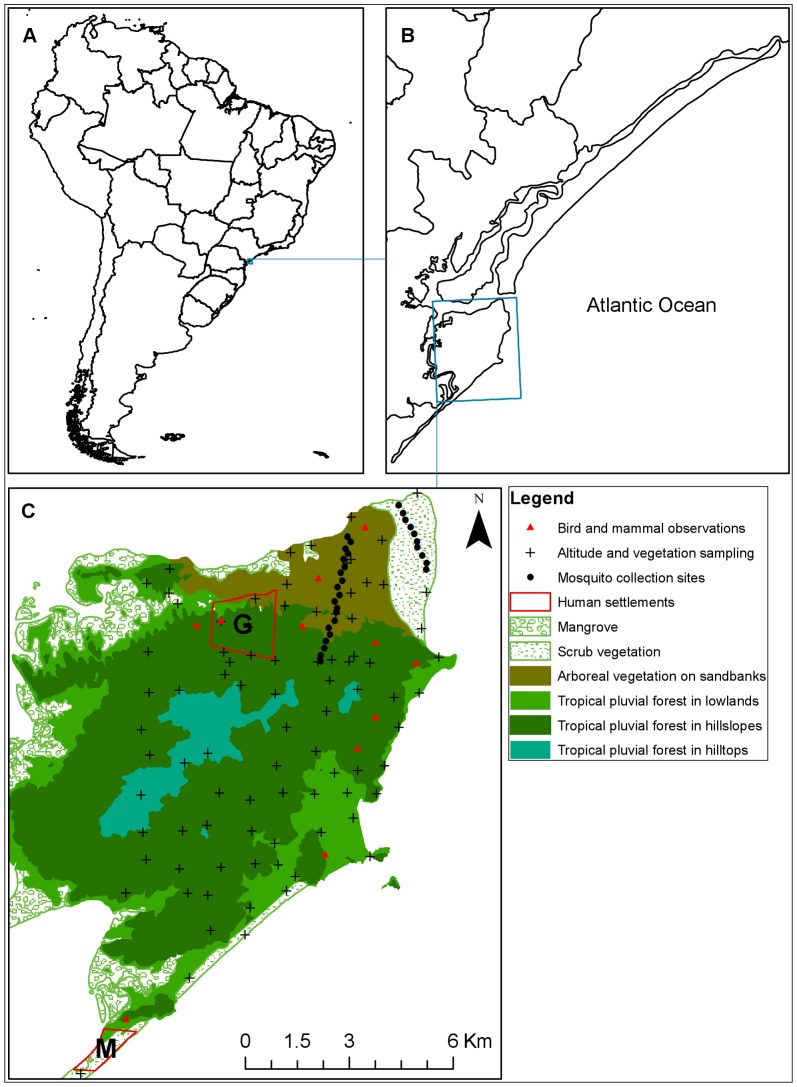
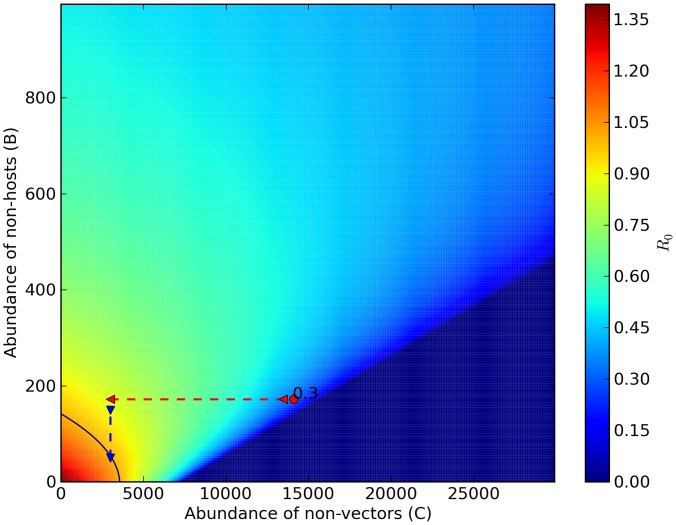
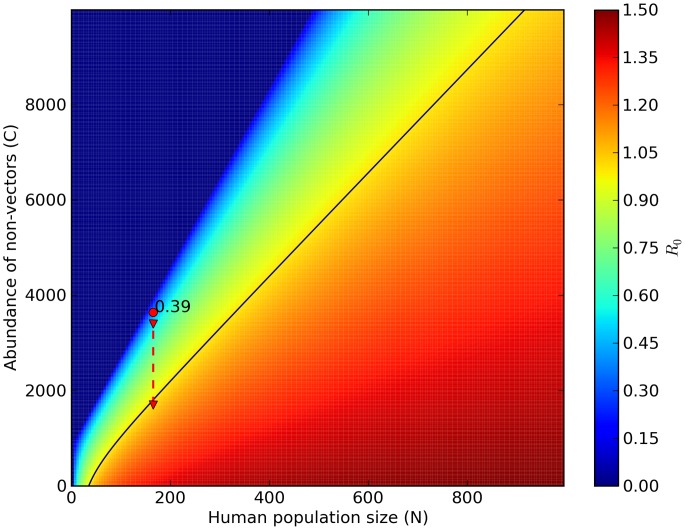
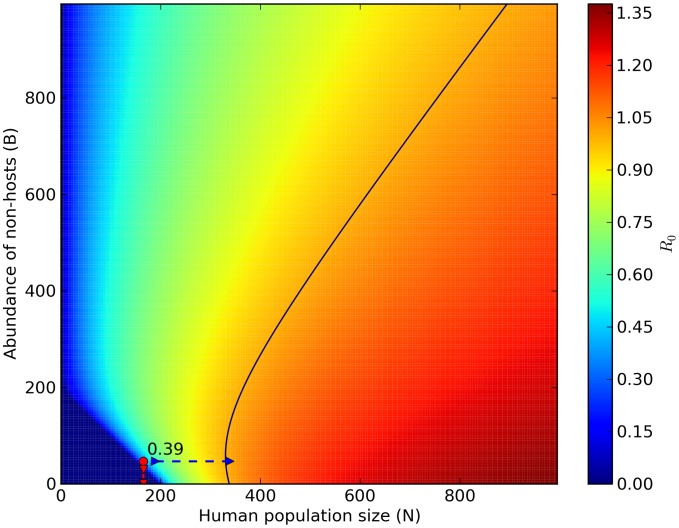
Verification
Claims the paper makes
The claims and statistics of this paper haven’t been checked yet.
Run the check — free, no account needed. It reads the open-access text and checks the sources it cites.
Claims other papers make about this one
Each is checked against this paper’s own text: does it say what the citing paper says it does?
The source backs part of the claim, not all of it — or backs it for a different population, condition or comparison.
In the citing paper
“In more complex systems, notably zoonotic mosquito-borne pathogens with many vectors and many hosts, transmission patterns are affected by the diversity of less-competent or non-competent hosts.91”
From Recasting the theory of mosquito-borne pathogen transmission dynamics and control (2014) · cites this paper as [91]
Experimental — accuracy not yet measuredThe source backs part of the claim, not all of it — or backs it for a different population, condition or comparison.
In the citing paper
“Other frameworks have been developed more recently that show how heterogeneous transmission arises and these lay the foundations for a systematic study of the way these factors vary across systems.91,97”
From Recasting the theory of mosquito-borne pathogen transmission dynamics and control (2014) · cites this paper as [91]
Experimental — accuracy not yet measured
Self-check
Percentages, sums and reported differences re-computed from the paper’s own numbers.
The self-check needs the paper’s full text.
Citations
Cites
Infectious Diseases of Humans: Dynamics and Control
(1992) · Annals of Internal Medicine · doi:10.7326/0003-4819-117-2-174_4 · Cited by 7,819
Infectious Diseases of Humans: Dynamics and Control
Anderson, R. M., & May, R. M. (1991) · doi:10.1093/oso/9780198545996.001.0001 · Cited by 6,179
Weltgesundheitsorganisation (2005) · Cited by 3,799
The diversity–stability debate
McCann, K. S. (2000) · Nature · doi:10.1038/35012234 · Cited by 3,220
Modeling Infectious Diseases in Humans and Animals
Keeling, M. J., & Rohani, P. (2008) · Princeton University Press eBooks · doi:10.1515/9781400841035 · Cited by 2,822
Modeling Infectious Diseases in Humans and Animals
Keeling, M. J., & Rohani, P. (2011) · Princeton University Press eBooks · doi:10.2307/j.ctvcm4gk0 · Cited by 2,771
Impacts of biodiversity on the emergence and transmission of infectious diseases
Keesing, F., Belden, L. K., Daszak, P., Dobson, A., Harvell, C. D., Holt, R. D., Hudson, P., Jolles, A., Jones, K. E., Mitchell, C. E., et al. (2010) · Nature · doi:10.1038/nature09575 · Cited by 2,043
Chitnis, N., Hyman, J. M., & Cushing, J. M. (2008) · Bulletin of Mathematical Biology · doi:10.1007/s11538-008-9299-0 · Cited by 1,839
Global malaria mortality between 1980 and 2010: a systematic analysis
Murray, C. J., Rosenfeld, L. C., Lim, S. S., Andrews, K. G., Foreman, K. J., Haring, D., Fullman, N., Naghavi, M., Lozano, R., & Lopez, A. D. (2012) · The Lancet · doi:10.1016/s0140-6736(12)60034-8 · Cited by 1,452
Niche Overlap and Diffuse Competition
Pianka, E. R. (1974) · Proceedings of the National Academy of Sciences · doi:10.1073/pnas.71.5.2141 · Cited by 1,255
Sinka, M. E., Bangs, M. J., Manguin, S., Coetzee, M., Mbogo, C. M., Hemingway, J., Patil, A. P., Temperley, W. H., Gething, P. W., Kabaria, C. W., et al. (2010) · Parasites & Vectors · doi:10.1186/1756-3305-3-117 · Cited by 761
A Research Agenda to Underpin Malaria Eradication
Alonso, P. L., Brown, G., Arévalo‐Herrera, M., Binka, F. N., Chitnis, C. E., Collins, F., Doumbo, O. K., Greenwood, B. M., Hall, B., Levine, M. M., et al. (2011) · PLoS Medicine · doi:10.1371/journal.pmed.1000406 · Cited by 675
Ross, Macdonald, and a Theory for the Dynamics and Control of Mosquito-Transmitted Pathogens
Smith, D. L., Battle, K. E., Hay, S. I., Barker, C. M., Scott, T. W., & McKenzie, F. E. (2012) · PLoS Pathogens · doi:10.1371/journal.ppat.1002588 · Cited by 631
Sinka, M. E., Bangs, M. J., Manguin, S., Chareonviriyaphap, T., Patil, A. P., Temperley, W. H., Gething, P. W., Elyazar, I. R., Kabaria, C. W., Harbach, R. E., et al. (2011) · Parasites & Vectors · doi:10.1186/1756-3305-4-89 · Cited by 550
Malaria in Brazil: an overview
Oliveira-Ferreira, J., Lacerda, M., Brasil, P., Ladislau, J. L. D. B., Tauil, P. L., & Daniel‐Ribeiro, C. T. (2010) · Malaria Journal · doi:10.1186/1475-2875-9-115 · Cited by 512
Biodiversity series: The function of biodiversity in the ecology of vector-borne zoonotic diseases
Ostfeld, R. S., & Keesing, F. (2000) · Canadian Journal of Zoology · doi:10.1139/z00-172 · Cited by 482
The Atlantic Forest of South America: Biodiversity Status, Threats, and Outlook
Sayre, D. (2003) · Electronic Green Journal · doi:10.5070/g311910541 · Cited by 452
Pangloss revisited: a critique of the dilution effect and the biodiversity-buffers-disease paradigm
Randolph, S., & Dobson, A. D. M. (2012) · Parasitology · doi:10.1017/s0031182012000200 · Cited by 432
Challenges and Opportunities for Biodiversity Conservation in the Brazilian Atlantic Forest
Tabarelli, M., Pinto, L. P., Silva, J. M. C., Hirota, M. M., & Bedê, L. C. (2005) · Conservation Biology · doi:10.1111/j.1523-1739.2005.00694.x · Cited by 377
Ecology: A Prerequisite for Malaria Elimination and Eradication
Ferguson, H. M., Dornhaus, A., Beeche, A., Borgemeister, C., Gottlieb, M., Mulla, M. S., Gimnig, J. E., Fish, D., & Killeen, G. F. (2010) · PLoS Medicine · doi:10.1371/journal.pmed.1000303 · Cited by 374
Sinka, M. E., Rubio-Palis, Y., Manguin, S., Patil, A. P., Temperley, W. H., Gething, P. W., Boeckel, T. P. V., Kabaria, C. W., Harbach, R. E., & Hay, S. I. (2010) · Parasites & Vectors · doi:10.1186/1756-3305-3-72 · Cited by 321
Hosts as ecological traps for the vector of Lyme disease
Keesing, F., Brunner, J. L., Duerr, S., Killilea, M., LoGiudice, K. M., Schmidt, K. A., Vuong, H. B., & Ostfeld, R. S. (2009) · Proceedings of the Royal Society B Biological Sciences · doi:10.1098/rspb.2009.1159 · Cited by 287
A Research Agenda for Malaria Eradication: Vector Control
The malERA Consultative Group on Vector Control (2011) · PLoS Medicine · doi:10.1371/journal.pmed.1000401 · Cited by 273
Malaria risk on the Amazon frontier
Castro, M. C., Monte-Mór, R. L. D. M., Sawyer, D. O., & Singer, B. H. (2006) · Proceedings of the National Academy of Sciences · doi:10.1073/pnas.0510576103 · Cited by 265
Experimental Evidence for Reduced Rodent Diversity Causing Increased Hantavirus Prevalence
Suzán, G., Marcé, E., Giermakowski, J. T., Mills, J. N., Ceballos, G., Ostfeld, R. S., Armién, B., Pascale, J. M., & Yates, T. L. (2009) · PLoS ONE · doi:10.1371/journal.pone.0005461 · Cited by 256
Swaddle, J., & Calos, S. (2008) · PLoS ONE · doi:10.1371/journal.pone.0002488 · Cited by 243
Priority areas for the conservation of Atlantic forest large mammals
Galetti, M., Giacomini, H. C., Bueno, R., Bernardo, C. S. S., Marques, R. M., Bovendorp, R. S., Steffler, C. E., Rubim, P. R. D. S., Gobbo, S. K., Donatti, C. I., et al. (2009) · Biological Conservation · doi:10.1016/j.biocon.2009.01.023 · Cited by 215
Saul, A. J. (2003) · Malaria Journal · doi:10.1186/1475-2875-2-32 · Cited by 202
Conn, J. E., Wilkerson, R. C., Segura, M. D. N. O., de Souza, R. T. L., Schlichting, C. D., Wirtz, R. A., & Póvoa, M. M. (2002) · American Journal of Tropical Medicine and Hygiene · doi:10.4269/ajtmh.2002.66.18 · Cited by 195
Evolutionary forces on Anopheles: what makes a malaria vector?
Cohuet, A., Harris, C. A., Robert, V., & Fontenille, D. (2010) · Trends in Parasitology · doi:10.1016/j.pt.2009.12.001 · Cited by 194
Ostfeld, R. S., Keesing, F., & Eviner, V. T. (2010) · Princeton University Press eBooks · doi:10.1515/9781400837885 · Cited by 192
Blood feeding patterns of mosquitoes: random or structured?
Chaves, L. F., Harrington, L. C., Keogh, C. L., Nguyen, A. M., & Kitron, U. D. (2010) · Frontiers in Zoology · doi:10.1186/1742-9994-7-3 · Cited by 186
The Fate of Tropical Forests: a Matter of Stewardship
Terborgh, J. (2000) · Conservation Biology · doi:10.1046/j.1523-1739.2000.00136.x · Cited by 168
Functionally diverse reef-fish communities ameliorate coral disease
Raymundo, L. J., Halford, A. R., Maypa, A. P., & Kerr, A. M. (2009) · Proceedings of the National Academy of Sciences · doi:10.1073/pnas.0900365106 · Cited by 160
Brazilian Law: Full Speed in Reverse?
Metzger, J. P., Lewinsohn, T. M., Joly, C. A., Verdade, L. M., Martinelli, L. A., & Rodrigues, R. R. (2010) · Science · doi:10.1126/science.329.5989.276-b · Cited by 143
Host Behavior: Its Influence on the Feeding Success of Mosquitoes1
Edman, J. D., & Kale, H. W. (1971) · Annals of the Entomological Society of America · doi:10.1093/aesa/64.2.513 · Cited by 118
Why Is Plasmodium vivax a Neglected Tropical Disease?
Carlton, J. M., Sina, B. J., & Adams, J. H. (2011) · PLoS neglected tropical diseases · doi:10.1371/journal.pntd.0001160 · Cited by 113
Why are some people bitten more than others?
Kelly, D. (2001) · Trends in Parasitology · doi:10.1016/s1471-4922(01)02116-x · Cited by 108
Edman, J. D., Webber, L. A., & Schmid, A. A. (1974) · Journal of Parasitology · doi:10.2307/3278923 · Cited by 106
Epidemiologic aspects of the malaria transmission cycle in an area of very low incidence in Brazil
Cerutti, C., Boulos, M., Coutinho, A. F., Hatab, M. D. C. L., Falqueto, A., Rezende, H. R., Duarte, A. M. R. D. C., Collins, W., & Malafronte, R. S. (2007) · Malaria Journal · doi:10.1186/1475-2875-6-33 · Cited by 102
Revision of the Non-Combed Eyed Siphonaptera
Jordan, K., & Rothschild, N. C. (1908) · Parasitology · doi:10.1017/s0031182000003280 · Cited by 100
Johnson, P. T. J., Lund, P. J., Hartson, R. B., & Yoshino, T. P. (2009) · Proceedings of the Royal Society B Biological Sciences · doi:10.1098/rspb.2008.1718 · Cited by 99
Natural Plasmodium infections in Brazilian wild monkeys: Reservoirs for human infections?
Duarte, A. M. R. D. C., Malafronte, R. D. S., Cerutti, C., Curado, I., de Paiva, B. R., Maeda, A. Y., Yamasaki, T., Summa, M. E. L., Neves, D. D. V. D. D. A., de Oliveira, S. G., et al. (2008) · Acta Tropica · doi:10.1016/j.actatropica.2008.05.020 · Cited by 94
Effects of host diversity on disease dynamics.
Begon, M. E., Ostfeld, R. S., Keesing, F., & Eviner, V. T. (2008) · Cited by 84
Mosquito studies (Diptera, Culicidae). XXIX. A review of the subgenus Kerteszia of Anopheles
Zavortink, T. J. (1973) · Biodiversity Heritage Library (Smithsonian Institution) · Cited by 76
Marrelli, M. T., Malafronte, R. S., Sallum, M. A. M., & Natal, D. (2007) · Malaria Journal · doi:10.1186/1475-2875-6-127 · Cited by 70
Self-citationBromeliad Malaria in Trinidad, British West Indies
Downs, W. G., & Pittendrigh, C. S. (1946) · The American journal of tropical medicine. · doi:10.4269/ajtmh.1946.s1-26.47 · Cited by 63
Curado, I., Malafronte, R. D. S., Duarte, A. M. R. D. C., Kirchgatter, K., Branquinho, M. S., & Galati, E. A. B. (2006) · Acta Tropica · doi:10.1016/j.actatropica.2006.09.010 · Cited by 59
Inoculation and recovery rates in the malaria model of Dietz, Molineaux, and Thomas
Nedelman, J. R. (1984) · Mathematical Biosciences · doi:10.1016/0025-5564(84)90086-5 · Cited by 56
Laporta, G. Z., Ramos, D. G., Ribeiro, M. C., & Sallum, M. A. M. (2011) · Memórias do Instituto Oswaldo Cruz · doi:10.1590/s0074-02762011000900029 · Cited by 44
Self-citationForattini, O. P., Alves, A. D. C., Natal, D., & Santos, J. L. F. (1986) · Revista de Saúde Pública · doi:10.1590/s0034-89101986000100001 · Cited by 41
Couto, R. D., Latorre, M. D. R. D. D. O., Santi, S. M. D., & Natal, D. (2010) · Revista da Sociedade Brasileira de Medicina Tropical · doi:10.1590/s0037-86822010000100012 · Cited by 35
The Environment and Behavior of some Brazilian Mosquitoes.
Shannon, R. C. (1931) · Proceedings of the Entomological Society of Washington · Cited by 28
Suguío, K., & Petri, S. (1973) · Boletim IG · doi:10.11606/issn.2316-8978.v4i0p01-20 · Cited by 28
Indians within Conservation Units: Lessons from the Atlantic Forest
Galetti, M. (2001) · Conservation Biology · doi:10.1046/j.1523-1739.2001.015003798.x · Cited by 25
Ingberman, B., Fusco‐Costa, R., Cheida, C. C., Nakano‐Oliveira, E., Rodrigues, R. G., & Monteiro-Filho, E. L. A. (2010) · Neotropical Primates · doi:10.1896/044.017.0103 · Cited by 4
dos Santos, R. L. C. (2020) · doi:10.11606/t.6.2020.tde-31032020-102041 · Cited by 4
Research works printed but not linked: 8
- RDA Couto, 2010, Autochthonous malaria notified in the State of São Paulo: clinical and epidemiological characteristics from 1980 to 2007, Rev Soc Bras Med Trop, 43, 52
- A Lutz, 1903, Waldmosquitos und waldmalaria, Centralbl Bakt, 33, 282
- LB Smith, 1953, Bromeliad Malaria, Rep Smithson Inst, 1952, 385
- Sawyer DR, Sawyer DO (1992) The malaria transition and the role of social science research. In: Cheng LC, editor. Advancing the Health in Developing Countries: The Role of Social Research. Westport: Auburn House. pp. 105–122.
- Wilson EO (1988) Biodiversity. Washington: National Academy Press. 657 p.
- K Suguiu, 1973, Stratigraphy of the Iguape-Cananéia lagoonal region sedimentary deposits, São Paulo State, Brazil, Bol Inst Geo, 4, 1
- JVE Bernardi, 2005, Spatial study of the vegetation gradient from Cardoso Island State Park, SP, Brazil, Holos Environ, 5, 1
- AP Almeida, 1946, Memória histórica da Ilha do Cardoso, Rev Arq Municipal, 111, 19
Cited by
Sorted by citations
Sandifer, P. A., Sutton‐Grier, A. E., & Ward, B. (2015) · Ecosystem Services · doi:10.1016/j.ecoser.2014.12.007 · Cited by 1,275
Aerts, R., Honnay, O., & Van Nieuwenhuyse, A. (2018) · British Medical Bulletin · doi:10.1093/bmb/ldy021 · Cited by 521
Human health impacts of ecosystem alteration
Myers, S. S., Gaffikin, L., Golden, C. D., Ostfeld, R. S., H. Redford, K., H. Ricketts, T., Turner, W. R., & Osofsky, S. A. (2013) · Proceedings of the National Academy of Sciences · doi:10.1073/pnas.1218656110 · Cited by 501
Connecting Global Priorities: Biodiversity and Human Health, a State of Knowledge Review
Romanelli, C., Cooper, D., Campbell-Lendrum, D. H., Maiero, M., Karesh, W. B., Hunter, D., & Golden, C. D. W. (2015) · CGSPace A Repository of Agricultural Research Outputs (Consultative Group for International Agricultural Research) · doi:10.13140/rg.2.1.3679.6565 · Cited by 421
Parham, P. E., Waldock, J., Christophides, G. K., Hemming, D. L., Agusto, F. B., Evans, K. J., Fefferman, N. H., Gaff, H. D., Gumel, A. B., LaDeau, S. L., et al. (2015) · Philosophical Transactions of the Royal Society B Biological Sciences · doi:10.1098/rstb.2013.0551 · Cited by 344
Metadata
- Authors
- Laporta, G. Z., Prado, P. I. K. L. D., Kraenkel, R. A., Coutinho, R. M., & Sallum, M. A. M.
- Affiliations
- Universidade de São Paulo (BR)
- Universidade Estadual Paulista (Unesp) (BR)
- Corresponding author
- Laporta, Gabriel Zorello
- ORCID
- Venue
- PLoS Neglected Tropical Diseases
- Publisher
- Public Library of Science (PLoS)
- Published
- 2013-03-21
- Volume
- 7
- Issue
- 3
- Pages
- e2139
- ISSN
- 1935-2727 (ISSN-L)
- 1935-2735
- PMC
- PMC3605282
- OpenAlex
- W2084885779
- Cited by
- 108
- References
- 59
- Citations by year
- 2026: 4 · 2025: 4 · 2024: 17 · 2023: 3 · 2022: 10 · 2021: 13 · 2020: 12 · 2019: 10 · 2018: 8 · 2017: 3 · 2016: 4 · 2015: 10 · 2014: 8 · 2013: 2
- FWCI
- 8.18
- Type
- journal article
- Language
- en
- Open access
- gold
- doi.org
- Locations
- PLoS neglected tropical diseases (publishedVersion, cc-by)
- Europe PMC (PubMed Central) (publishedVersion, cc-by)
- PubMed Central (publishedVersion, cc-by)
- PubMed (publishedVersion)
- LA Referencia (Red Federada de Repositorios Institucionales de Publicaciones Científicas) (publishedVersion, other-oa)
- Acervo Digital da Universidade Estadual Paulista (Universidade Estadual Paulista) (submittedVersion, other-oa)
- Americanae (AECID Library) (submittedVersion, other-oa)
- DOAJ (DOAJ: Directory of Open Access Journals) (submittedVersion, cc-by-sa)
- Figshare (submittedVersion, cc-by)
- Funders
- Fundação de Amparo à Pesquisa do Estado de São Paulo (05/53973-0)
- Topics
- Health Sciences › Medicine › Public Health, Environmental and Occupational Health › Malaria Research and Control
- Physical Sciences › Mathematics › Applied Mathematics › Mathematical and Theoretical Epidemiology and Ecology Models
- Health Sciences › Medicine › Public Health, Environmental and Occupational Health › Mosquito-borne diseases and control
- Keywords
- malaria transmission, Plasmodium vivax, biodiversity, dilution effect, dead-end hosts, diffuse competition, tropical rainforest, Ross-Macdonald model, basic reproduction number, malaria eradication, wildlife hosts, mathematical modeling
- MeSH terms
- Animals, Brazil, Disease Outbreaks, Female, Humans, Models, Theoretical, Trees, Tropical Climate, Malaria, Vivax, Disease Transmission, Infectious, Biodiversity
About these checks
Registry, retraction, Cites and statistics results are computed, not judged, with one exception: a printed reference that no index lists is read once by a model before it counts as a citation error. Claims are extracted by a model and kept only when their quote appears verbatim in the text; each cited source is then checked, with a model’s help, for whether it says what the claim relies on. Those verdicts can be wrong — read the claim’s quote and the cited source before relying on one.
Statistics and arithmetic are recomputed, not judged.
Confidence bands are shown only for fields calibrated on our annotated test set. None is calibrated yet, so no band is shown.
What counts as a claim ›How we measure confidence ›How we check this ›
Are you an author, or do you see a problem with this page? Request a review
