

Modulation of Emotional Appraisal by False Physiological Feedback during fMRI
Open accessThe DOI matches its Crossref record; 61 of the 62 references it cites were found in a registry or an index.
Abstract
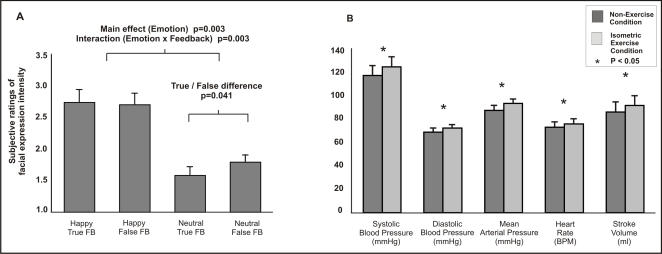
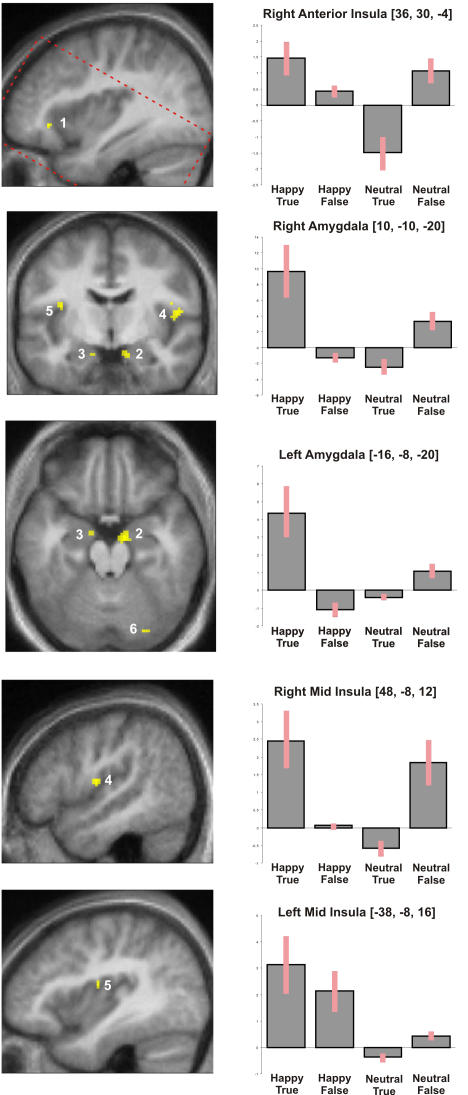
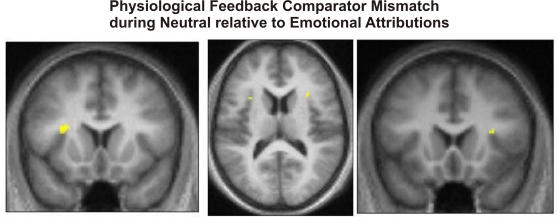
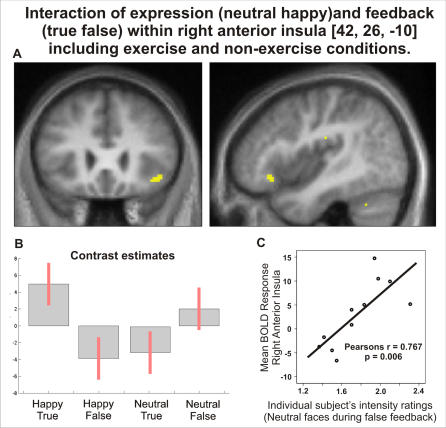
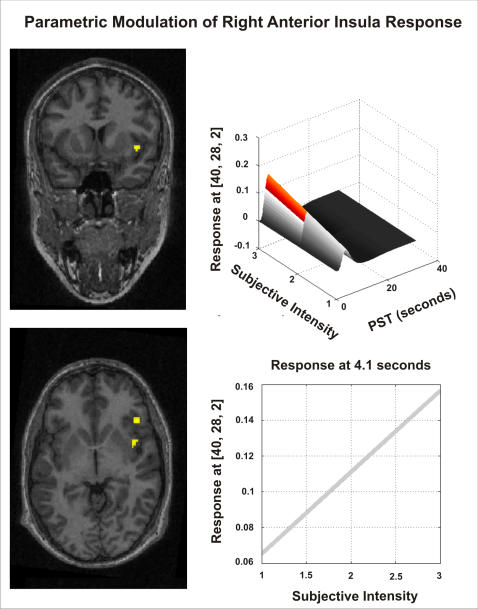
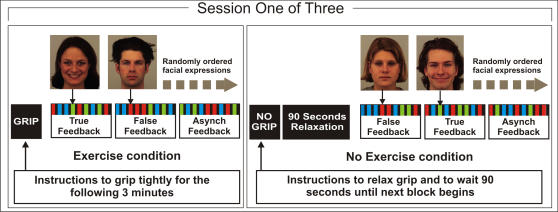
BACKGROUND: James and Lange proposed that emotions are the perception of physiological reactions. Two-level theories of emotion extend this model to suggest that cognitive interpretations of physiological changes shape self-reported emotions. Correspondingly false physiological feedback of evoked or tonic bodily responses can alter emotional attributions. Moreover, anxiety states are proposed to arise from detection of mismatch between actual and anticipated states of physiological arousal. However, the neural underpinnings of these phenomena previously have not been examined. METHODOLOGY/PRINCIPAL FINDINGS: We undertook a functional brain imaging (fMRI) experiment to investigate how both primary and second-order levels of physiological (viscerosensory) representation impact on the processing of external emotional cues. 12 participants were scanned while judging face stimuli during both exercise and non-exercise conditions in the context of true and false auditory feedback of tonic heart rate. We observed that the perceived emotional intensity/salience of neutral faces was enhanced by false feedback of increased heart rate. Regional changes in neural activity corresponding to this behavioural interaction were observed within included right anterior insula, bilateral mid insula, and amygdala. In addition, right anterior insula activity was enhanced during by asynchronous relative to synchronous cardiac feedback even with no change in perceived or actual heart rate suggesting this region serves as a comparator to detect physiological mismatches. Finally, BOLD activity within right anterior insula and amygdala predicted the corresponding changes in perceived intensity ratings at both a group and an individual level. CONCLUSIONS/SIGNIFICANCE: Our findings identify the neural substrates supporting behavioural effects of false physiological feedback, and highlight mechanisms that underlie subjective anxiety states, including the importance of the right anterior insula in guiding second-order "cognitive" representations of bodily arousal state.
Overview
The claims and statistics of this paper haven’t been checked yet.
Free: it reads the open-access text and checks the first 5 claims that cite a source we can check. Create a free account to check every claim.
Integrity signals
Registry
Cites
Statistics
Figures
Verification
Claims the paper makes
The claims and statistics of this paper haven’t been checked yet.
Free: it reads the open-access text and checks the first 5 claims that cite a source we can check. Create a free account to check every claim.
Claims other papers make about this one
Each is checked against this paper’s own text: does it say what the citing paper says it does?
The source backs part of the claim, not all of it — or backs it for a different population, condition or comparison.
In the citing paper
“The region is also implicated in normal affective processing48–51, and emotional symptomatology in psychiatric disorders52–54, notably anxiety55–57.”
From Beyond bendy joints: number of variant connective tissue features predicts neurodivergent characteristics in hypermobile individuals with anxiety (2026) · cites this paper as [56]
Experimental — accuracy not yet measuredThe source backs part of the claim, not all of it — or backs it for a different population, condition or comparison.
In the citing paper
“The experimental induction of mismatch between predicted and actual interoceptive signals by false physiological feedback enhances activation of right AIC (Gray et al., 2007), showing the region to be a comparator”
From An Interoceptive Predictive Coding Model of Conscious Presence (2012) · cites this paper as Gray et al., 2007
Experimental — accuracy not yet measuredThe source backs part of the claim, not all of it — or backs it for a different population, condition or comparison.
In the citing paper
“this AIC activation, in conjunction with amygdala, is associated with an increased emotional salience attributed to previously unthreatening stimuli, consistent with revision of top-down interoceptive predictions in the face of unexplained error”
From An Interoceptive Predictive Coding Model of Conscious Presence (2012) · cites this paper as Gray et al., 2007
Experimental — accuracy not yet measuredThe cited source says what the claim attributes to it.
In the citing paper
“Gray and colleagues, who found that false cardiac feedback led to increased fMRI responses in the right AIC and that enhanced AIC activity during false feedback correlated with increased emotional salience attributed to previously unthreatening stimuli [41].”
From Interoceptive inference, emotion, and the embodied self (2013) · cites this paper as [41]
The cited source says what the claim attributes to it.
In the citing paper
“Emotional disorders like alexithymia are relatively straightforward to explain in terms of atypical interoception, while more complex and heterogeneous constructs like anxiety have been considered in terms of interoceptive prediction error for more than a decade [53,83,101].”
From Active interoceptive inference and the emotional brain (2016) · cites this paper as [101]
Self-check
Percentages, sums and reported differences re-computed from the paper’s own numbers.
The self-check needs the paper’s full text.
Citations
Cites
Ashburner, J., & Friston, K. J. (2005) · NeuroImage · doi:10.1016/j.neuroimage.2005.02.018 · Cited by 7,507
Cognitive, social, and physiological determinants of emotional state.
Schachter, S., & Singer, J. (1962) · Psychological Review · doi:10.1037/h0046234 · Cited by 6,223
Core affect and the psychological construction of emotion.
Russell, J. A. (2003) · Psychological Review · doi:10.1037/0033-295x.110.1.145 · Cited by 6,113
How do you feel? Interoception: The sense of the physiological condition of the body
Craig, A. D. (2002) · Nature Reviews Neuroscience · doi:10.1038/nrn894 · Cited by 6,006 · cited 5×
“junction with orbital and dorsolateral prefrontal cortices [24,26,27,30].”
BackgroundInfluentialNeural systems supporting interoceptive awareness
Critchley, H. D., Wiens, S., Rotshtein, P., Öhman, A., & Dolan, R. J. (2004) · Nature Neuroscience · doi:10.1038/nn1176 · Cited by 3,406 · cited 3×
“In addition, neuroimaging evidence in healthy individuals suggests a specialized role of right anterior insula in conscious awareness of interoceptive state [23,27,30].”
BackgroundSelf-citationInteroception: the sense of the physiological condition of the body
(Bud) Craig, A. (2003) · Current Opinion in Neurobiology · doi:10.1016/s0959-4388(03)00090-4 · Cited by 2,556
Whalen, P. J., Rauch, S. L., Etcoff, N. L., McInerney, S. C., Lee, M. B., & Jenike, M. A. (1998) · The Journal of Neuroscience · doi:10.1523/jneurosci.18-01-00411.1998 · Cited by 2,205 · cited 1×
“Most models ascribe to the amygdala a primary, phenomenological, level within the hierarchy of emotional processing, and amygdala responses can be evoked without the need for conscious appraisal [48–49].”
BackgroundSubcortical and cortical brain activity during the feeling of self-generated emotions
Damasio, A. R., Grabowski, T. J., Bechara, A., Damasio, H., Ponto, L. L. B., Parvizi, J., & Hichwa, R. D. (2000) · Nature Neuroscience · doi:10.1038/79871 · Cited by 2,117 · cited 1×
“the interpretation is that bodily prediction error signals are attributed to ambiguous environmental stimuli and neutral faces become potential threats. Insula activation is observed during other conditions that engender emotional arousal, for example emotional recall”
BackgroundFunctional imaging of ‘theory of mind’
Gallagher, H. L., & Frith, C. D. (2003) · Trends in Cognitive Sciences · doi:10.1016/s1364-6613(02)00025-6 · Cited by 2,092 · cited 1×
“STG activity was modulated by false feedback in a manner that corresponded to the behavioural modulation of emotional intensity consistent with engagement of STG in enhanced top-down (attention-driven) processing of salience from faces [53].”
BackgroundA subcortical pathway to the right amygdala mediating “unseen” fear
Morris, J. S., Öhman, A., & Dolan, R. J. (1999) · Proceedings of the National Academy of Sciences · doi:10.1073/pnas.96.4.1680 · Cited by 1,349
Research works printed but not linked: 1
- Misovich S Charis PC 1974 Information need, affect, and cognition of autonomic activity. Journal of Experimental Social Psychology 10 274 283 · DOI
Cited by
Items 101–170 of 170
Neural correlates of fear: insights from neuroimaging
Critchley, H., & Garfinkel, S. N. (2014) · Neuroscience and Neuroeconomics · doi:10.2147/nan.s35915 · Cited by 27
“75,76”
Self-citationCardiac and Gastric Interoceptive Awareness Have Distinct Neural Substrates
Haruki, Y., & Ogawa, K. (2023) · eNeuro · doi:10.1523/eneuro.0157-22.2023 · Cited by 31
“In experimental settings, accelerated false cardiac feedback, i.e., exaggerated cardiac interoceptive awareness, has been found to alter the emotional salience of neutral faces (Gray et al., 2007) and perceived physical effort (Iodice et al., 2019) by enhancing physiological arousal.”
Gainotti, G. (2021) · Brain Sciences · doi:10.3390/brainsci11121644 · Cited by 61
Xu, M., Tachibana, T., Suzuki, N., Hoshino, E., Terasawa, Y., Miki, N., & Minagawa‐Kawai, Y. (2021) · Biological Psychology · doi:10.1016/j.biopsycho.2021.108172 · Cited by 22
Anxiety - bridging the heart/mind divide
Davies, S., Esler, M., & Nutt, D. J. (2009) · Journal of Psychopharmacology · doi:10.1177/0269881109103800 · Cited by 21
Fiacconi, C. M., Barkley, V., Finger, E. C., Carson, N., Duke, D., Rosenbaum, R. S., Gilboa, A., & Köhler, S. (2014) · Frontiers in Human Neuroscience · doi:10.3389/fnhum.2014.00726 · Cited by 22
“Evidence to support such a link comes from research in healthy individuals showing that affect intensity judgments for faces are sensitive to interoceptive cues that arise from afferent cardiovascular feedback (Gray et al., 2007, 2012).”
BackgroundTihanyi, B. T., & Köteles, F. G. (2017) · Physiology International · doi:10.1556/2060.104.2017.3.4 · Cited by 20
“, false physiological or verbal feedback (1, 13, 16, 17, 25, 39, 44, 62, 64).”
Bähner, K. W., Tabarelli, M., Büdel, B., & Wirth, R. (2020) · Biodiversity and Conservation · doi:10.1007/s10531-020-01996-6 · Cited by 18
Gainotti, G. (2021) · Brain Sciences · doi:10.3390/brainsci11080975 · Cited by 18
The insula, a grey matter of tastes: a volumetric MRI study in dementia with Lewy bodies
Philippi, N., Noblet, V., Hamdaoui, M., Soulier, D., Botzung, A., Ehrhard, E., Cretin, B., Blanc, F., AlphaLewyMA study group, Martin‐Hunyadi, C., et al. (2020) · Alzheimer s Research & Therapy · doi:10.1186/s13195-020-00645-y · Cited by 18
Man, M., Mikheenko, Y., Braesicke, K., Cockcroft, G. J., & Roberts, A. (2011) · The International Journal of Neuropsychopharmacology · doi:10.1017/s1461145711000587 · Cited by 20
“Somatic and autonomic interoceptive feedback arising from these response outputs has been proposed to contribute especially to subjective emotional experience or ‘feelings’ and to influence decision-making, effects dependent on the extent of the individual’s interoceptive awareness (Craig, 2002 ; Critchley, 2009 ; Cri…”
BackgroundOwens, A. P., Low, D. A., Iodice, V., Mathias, C. J., & Critchley, H. (2017) · Elsevier eBooks · doi:10.1016/b978-0-12-809324-5.01799-5 · Cited by 19
Self-citationFrustration control during driving using auditory false heart rate feedback
Ota, K., Fujiwara, K., & Hiraoka, T. (2024) · Transportation Research Part F Traffic Psychology and Behaviour · doi:10.1016/j.trf.2024.01.014 · Cited by 13
Killgore, W. D. S., Sonis, L. A., Rosso, I. M., & Rauch, S. L. (2016) · Psychological Reports · doi:10.1177/0033294115625563 · Cited by 25
Nonlinear neural representation of emotional feelings elicited by dynamic naturalistic stimulation
Viinikainen, M., Glerean, E., Jääskeläinen, I. P., Kettunen, J., Sams, M. E., & Nummenmaa, L. (2012) · Cited by 15
Lang, S. (2016) · Medical Hypotheses · doi:10.1016/j.mehy.2016.11.010 · Cited by 13
Tomaiuolo, F., Cerritelli, F., Pizzi, S. D., Sestieri, C., Paolucci, T., Chiacchiaretta, P., Sensi, S. L., & Ferretti, A. (2024) · NeuroImage Clinical · doi:10.1016/j.nicl.2024.103659 · Cited by 12
“…insula is particularly well-suited for integrating various types of information in sensory processing (Benarroch, 2019), playing a key role in inter-oception, including monitoring sensations crucial for the integrity of the body ’ s internal state, such as arousal levels (Gray et al., 2007).”
BackgroundAuditory Feedback of False Heart Rate for Video Game Experience Improvement
Ogawa, S., Fujiwara, K., & Kano, M. (2020) · IEEE Transactions on Affective Computing · doi:10.1109/taffc.2020.3039874 · Cited by 13
El‐Nabulsi, R. A. (2017) · Qualitative Theory of Dynamical Systems · doi:10.1007/s12346-017-0257-9 · Cited by 11
Giraud, M., Marelli, M., & Nava, E. (2023) · Heliyon · doi:10.1016/j.heliyon.2023.e17864 · Cited by 12
Comparing biological and artificial vision systems: Network measures of functional connectivity
Palmerston, J. B., Zhou, Y., & Chan, R. H. M. (2020) · Neuroscience Letters · doi:10.1016/j.neulet.2020.135407 · Cited by 11
The Constructionist Approach to Emotional Aging: Theoretical Insights and Predictions
Mikkelsen, M. B., & O’Toole, M. S. (2022) · The Journals of Gerontology Series B · doi:10.1093/geronb/gbac048 · Cited by 12
Baroreceptor activity impacts upon controlled but not automatic distractor processing
Pramme, L., Schächinger, H., & Frings, C. (2015) · Biological Psychology · doi:10.1016/j.biopsycho.2015.06.006 · Cited by 12
Critchley, H., & Patchitt, J. (2024) · Current topics in behavioral neurosciences · doi:10.1007/7854_2024_518 · Cited by 51
Self-citationMoreno-Arias, R., & Ardila-Robayo, M. C. (2020) · Animal Biotelemetry · doi:10.1186/s40317-020-00202-2 · Cited by 9
Vocal signals only impact speakers’ own emotions when they are self-attributed
Goupil, L., Johansson, P., Hall, L., & Aucouturier, J. (2021) · Consciousness and Cognition · doi:10.1016/j.concog.2020.103072 · Cited by 13
Emergence of the small-world architecture in neural networks by activity dependent growth
Gafarov, F. M. (2016) · Physica A Statistical Mechanics and its Applications · doi:10.1016/j.physa.2016.06.016 · Cited by 8
Stressor-evoked heart rate, perceived physiological arousal, and anxiety symptoms in young adults
Cook, T. E., Fergus, T. A., Young, D. A., Williams, S. E., & Ginty, A. T. (2025) · Journal of Affective Disorders · doi:10.1016/j.jad.2025.02.011 · Cited by 8
Ince, S., Harrison, B., Felmingham, K., Jamieson, A., Davey, C., Agathos, J., Moffat, B., Glarin, R., & Steward, T. (2025) · Molecular Psychiatry · doi:10.1038/s41380-025-03135-5 · Cited by 8
“…of negative emotional stimuli is supported by bidirectional interactions across a distributed set of brain regions and provide evidence that the neural basis of impairments in this circuitry can exist at the level of subcortical brain regions such as the PAG in mood and anxiety disorders.”
Mattioni, L., Sestieri, C., Perrucci, M. G., Spada, M. M., & Ferri, F. (2024) · International Journal of Psychophysiology · doi:10.1016/j.ijpsycho.2024.112369 · Cited by 9
Reading emotional faces in deaf and hard-of-hearing and typically hearing children.
Tsou, Y., Li, B., Kret, M. E., da Costa, I. S., & Rieffe, C. J. (2020) · Emotion · doi:10.1037/emo0000863 · Cited by 9
Lepow, L., Wagner, A., Peri, S., Adams, F., Ramakrishnan, S. A., Alam, M. A., Shaik, R., Hubbard, N. A., Koenigsberg, H. W., Hurd, Y. L., et al. (2024) · JAACAP Open · doi:10.1016/j.jaacop.2024.04.009 · Cited by 7
Hill, M. W., Johnson, E., & Ellmers, T. J. (2024) · Biological Psychology · doi:10.1016/j.biopsycho.2024.108803 · Cited by 10
“…feedback (i.e., providing false awareness of an exaggerated physiological response) has been found to alter the emotional salience of neutral faces (Gray et al., 2007), increase perceived physical effort during exercise (Iodice et al., 2019), and increase anxiety during stressful situations (Costa…”
BackgroundMapping the emotional homunculus with fMRI
Giraud, M., Zapparoli, L., Basso, G., Petilli, M. A., Paulesu, E., & Nava, E. (2024) · iScience · doi:10.1016/j.isci.2024.109985 · Cited by 7
Livermore, J. J. A., Skora, L. I., Adamatzky, K., Garfinkel, S. N., Critchley, H., & Campbell-Meiklejohn, D. K. (2024) · Translational Psychiatry · doi:10.1038/s41398-024-02971-3 · Cited by 13
Self-citationLi, C., Wang, X., Wen, C., & Tan, H. (2018) · Brain Imaging and Behavior · doi:10.1007/s11682-018-9962-5 · Cited by 8
“The posterior insula is believed to receive signals from respiratory chemoreceptors, pulmonary receptors, projections from medullary respiratory neurons (Augustine 1996) and emotion stimuli (Craig 2002; Gray et al. 2007).”
BackgroundThick psychophysiology for empathic design
Hedman, E. B. (2014) · DSpace@MIT (Massachusetts Institute of Technology) · Cited by 8
The role of the somatosensory system in the feeling of emotions: a neurostimulation study
Giraud, M., Javadi, A., Lenatti, C., Allen, J., Tamè, L., & Nava, E. (2024) · Social Cognitive and Affective Neuroscience · doi:10.1093/scan/nsae062 · Cited by 9
“…has been observed that perceived emotional intensity/salience of neutral faces increases when accompanied by false feedback of increased heart rate (Gray et al. 2007), and the more accurately participants can track heart rate, the stronger is the observed link between heart rate changes and…”
BackgroundSomatosensory false feedback biases emotional ratings through interoceptive embodiment
Patchitt, J., Garfinkel, S. N., Strawson, W. H., Miller, M., Tsakiris, M., Clark, A., & Critchley, H. (2025) · Scientific Reports · doi:10.1038/s41598-025-94971-6 · Cited by 12
“Increased right anterior insula (AIC) activity was observed to correlate with asynchronous over synchronous heartbeats in a previous (auditory) false physiological feedback paradigm 11 .”
InfluentialSelf-citationTomaiuolo, F., Cerritelli, F., Sestieri, C., Keys, J., Paolucci, T., Sensi, S. L., Ferretti, A., & Pizzi, S. D. (2025) · Brain Research Bulletin · doi:10.1016/j.brainresbull.2025.111375 · Cited by 6
“…2), which plays a key role in the interpretation of pain perception (Petrovic et al., 2010) and interoception, including the monitoring of sensations crucial for maintaining the integrity of the body ’ s internal state, such as arousal levels (Benarroch, 2019; Gray et al., 2007; Ong et al., 2019).”
Hypermobility and autonomic hyperactivity : relevance for the expression of psychiatric symptoms
Eccles, J. (2016) · Cited by 5
Actions of a shaken heart: Interoception interacts with action processing
Bečev, O., Kozáková, E., Sakálošová, L., Mareček, R., Majchrowicz, B., Román, R., & Brázdil, M. (2022) · Biological Psychology · doi:10.1016/j.biopsycho.2022.108288 · Cited by 3
Choudhury, A. R., & Halder, S. (2022) · Taiwanese Journal of Psychiatry · doi:10.4103/tpsy.tpsy_28_22 · Cited by 3
Motion and Emotion: Understanding Urban Architecture through Diverse Multisensorial Engagements
Tvedebrink, T. D. O., Fich, L. B., Canepa, E., Djebbara, Z., Jensen, O. B., Carstens, A. C., & Huynh, D. C. (2023) · The Journal of Somaesthetics · doi:10.54337/ojs.jos.v8i2.7404 · Cited by 10
“In addition to the inspiration from Shusterman (2012a), Höök (2018) draws on the recent developments in neuro/cognitive science, emphasizing the writings by the neuroscientist Antonio Damasio (2010, 2021).”
BackgroundFrom synaptic dysfunction to atypical emotional processing in autism
Reis, S. L., & Monteiro, P. (2024) · FEBS Letters · doi:10.1002/1873-3468.14801 · Cited by 9
“Besides, alterations in insular activity have been associated with emotional disorders, such as anxiety and alexithymia, underscoring its relevance in emotional regulation [41 – 45].”
BackgroundRecent Trends in the Study of the Links Between Emotions and Brain Laterality
Gainotti, G. (2019) · Springer eBooks · doi:10.1007/978-3-030-34090-2_5 · Cited by 3
Can We Trust Our Body Feelings? The Discrepancy Between Actual and Perceived Events
Köteles, F. G. (2021) · Springer eBooks · doi:10.1007/978-3-030-63201-4_6 · Cited by 4
From the Body to the Brain: The Biological Background
Köteles, F. G. (2021) · Springer eBooks · doi:10.1007/978-3-030-63201-4_3 · Cited by 2
Insights into interoceptive and emotional processing: Lessons from studies on insular HD ‐ tDCS
Kipping, M., Mai‐Lippold, S. A., Herbert, B. M., Desdentado, L., Kammer, T., & Pollatos, O. (2024) · Psychophysiology · doi:10.1111/psyp.14639 · Cited by 4
Cortical processing of breathing perceptions in the athletic brainPreprint
Harrison, O. K., Cox, P. J., & Pattinson, K. T. S. (2017) · bioRxiv (Cold Spring Harbor Laboratory) · doi:10.1101/174052 · Cited by 1
“…1997; Phelps et al., 2006; Ling & Carrasco, 2006), reducing their anxiety (Spinhoven et al., 1997; Bogaerts et al., 2005; Tang & Gibson, 2005) or improving their interoceptive ability (Gray et al., 2007; Critchley et al., 2013; Mallorqui-Bague et al., 2016; Garfinkel et al., 2016b; 2016a).”
BackgroundBOLD Decoding of Individual Pain Anticipation Biases During UncertaintyPreprint
Kadlec, M., Tosun, D., & Strigo, I. A. (2019) · bioRxiv (Cold Spring Harbor Laboratory) · doi:10.1101/675645 · Cited by 2
“We were interested in testing whether subjects’ predictions in the face of uncertainty would cluster according to their DSM-IV diagnoses or would be influenced by demographic variables such as gender and age, all of which have been reported to associate with response to uncertainty [21, 24, 25, 30-34] using group leve…”
Livermore, J., Skora, L., Adamatzky, K., Garfinkel, S., Critchley, H., & Campbell-Meiklejohn, D. (2024) · medRxiv · doi:10.1101/2024.01.23.24301647
“Here, the interoceptive information is proposed to steer allostasis by influencing arousal and salience attribution 17,74,77,80 .”
BackgroundSelf-citationLoops all the way up: Recurrency as an implementation-first primitive for consciousness
Zheng, Z., Chis-Ciure, R., Waade, P. T., Eiserbeck, A., Aru, J., Andrillon, T., Jarraya, B., Melloni, L., Northoff, G., Rosas, F. E., et al. (2026) · Physics of Life Reviews · doi:10.1016/j.plrev.2026.07.006 · Cited by 2
Mindfulness and Self-Regulation: A Medical Approach to the Mind and Mental Health
Davis-Siegel, J., Gottman, M., & Siegel, D. J. (2015) · Springer eBooks · doi:10.1007/978-1-4939-2263-5_16 · Cited by 4
Influences of heart rate feedback and autistic traits on affective mindreading
Bögl, K., Bayer, M., Walter, H., & Dziobek, I. (2024) · Scientific Reports · doi:10.1038/s41598-024-69038-7 · Cited by 2
“Higher autistic traits are indicated through higher AQ scores with a clinically meaningful cut-off at 32 (range = 0 to 50).”
BackgroundThe Influence of False Cardiac Feedback on Autonomic Markers of Arousal
Kuřátková, M., Bečev, O., Kozáková, E., Mareček, R., Sakálošová, L., Majchrowicz, B., Román, R., & Brázdil, M. (2019) · Studia Psychologica · doi:10.21909/sp.2019.03.778 · Cited by 2
Mapping the Emotional Homunculus with fMRIPreprint
Giraud, M., Zapparoli, L., Basso, G., Petilli, M. A., Paulesu, E., & Nava, E. (2023) · SSRN Electronic Journal · doi:10.2139/ssrn.4552294 · Cited by 1
Quadt, L., Csecs, J., Savage, G., Davies, G., Ramanuj, P., Hakim, A. J., Grey, N., Critchley, H. D., & Eccles, J. A. (2026) · npj Mental Health Research · doi:10.1038/s44184-026-00214-5
Self-citationGarfinkel, S. N., & Critchley, H. (2015) · Elsevier eBooks · doi:10.1016/b978-0-12-397025-1.00121-4
Self-citationThomas, A. G. (2015) · Cronfa (Swansea University) · doi:10.23889/suthesis.41184
The neural architecture of emotional intelligence.
Stoica, T. (2021) · ThinkIR: The University of Louisville's Institutional Repository (University of Louisville) · doi:10.18297/etd/3623 · Cited by 1
Asymmetric Innervation of the Heart
Lane, R. D., Critchley, H., & Taggart, P. I. (2022) · Springer eBooks · doi:10.1007/978-0-387-85960-6_43
Self-citationInfluence of biased feedback on performance in a Vernier discrimination task
Yang, C., Xu, Z., Zhong, Y., & Wang, T. (2023) · Frontiers in Psychology · doi:10.3389/fpsyg.2022.987042
Turner, B. K. (2025) · Annals of Psychophysiology · doi:10.29052/app.v12i1.748
Csecs, J. L. L., Quadt, L., Savage, G. K., Davies, G., Ramanuj, P., Hakim, A. J., Critchley, H., & Eccles, J. (2025) · Research Square · doi:10.21203/rs.3.rs-5563877/v1
Self-citationExposure to false cardiac feedback alters pain perception and anticipatory cardiac frequencyPreprint
Parrotta, E., Bach, P., Pezzulo, G., Zaccaro, A., Perrucci, M. G., Costantini, M., & Ferri, F. (2026) · eLife · doi:10.7554/elife.90013.2
Age Differences in the Relationship Between Interoception and Emotional Processing
Cawkwell, S., Pauly‐Takacs, K., Kolokotroni, K. Z., & Pfeifer, G. (2026) · Behavioral Sciences · doi:10.3390/bs16050672
“This pattern suggests that heightened bodily awareness in later life may bias interpretation of ambiguous or neutral facial expressions toward threat (Gray et al., 2007), resulting in attentional narrowing and poorer associative recognition.”
Shared and unique neural correlates of reappraisal generation and implementation
Liu, Y. R., Leo, M. B., McRae, K., & Waugh, C. E. (2026) · Cognitive Affective & Behavioral Neuroscience · doi:10.3758/s13415-026-01477-3
Metadata
- Authors
- Gray, M. A., Harrison, N. A., Wiens, S., & Critchley, H. D.
- Affiliations
- Brighton and Sussex Medical School (GB)
- University College London (GB)
- Stockholm University (SE)
- Corresponding author
- Gray, Marcus A.
- Venue
- PLoS ONE
- Publisher
- Public Library of Science (PLoS)
- Published
- 2007-06-20
- Volume
- 2
- Issue
- 6
- Pages
- e546
- ISSN
- 1932-6203 (ISSN-L)
- PMC
- PMC1890305
- OpenAlex
- W2058228403
- Cited by
- 170
- References
- 62
- Citations by year
- 2026: 4 · 2025: 6 · 2024: 16 · 2023: 5 · 2022: 6 · 2021: 9 · 2020: 8 · 2019: 6 · 2018: 10 · 2017: 8 · 2016: 17 · 2015: 10 · 2014: 10 · 2013: 13 · 2012: 5
- FWCI
- 5.84
- Type
- journal article
- Language
- en
- Open access
- gold
- doi.org
- Locations
- PLoS ONE (publishedVersion, cc-by)
- PubMed Central (publishedVersion, cc-by)
- PubMed (publishedVersion)
- ORCA Online Research @Cardiff (Cardiff University) (acceptedVersion)
- Figshare (submittedVersion, cc-by)
- Sussex Research Online (University of Sussex) (submittedVersion)
- DOAJ (DOAJ: Directory of Open Access Journals) (submittedVersion, cc-by-sa)
- UCL Discovery (University College London) (submittedVersion)
- Funders
- Wellcome Trust
- University College London
- Topics
- Health Sciences › Medicine › Psychiatry and Mental health › Psychosomatic Disorders and Their Treatments
- Life Sciences › Neuroscience › Cognitive Neuroscience › Neural and Behavioral Psychology Studies
- Life Sciences › Neuroscience › Cognitive Neuroscience › Face Recognition and Perception
- Keywords
- emotional appraisal, James-Lange theory, anterior insula, amygdala, heart rate feedback, anxiety, face perception
- MeSH terms
- Adult, Anxiety, Biofeedback, Psychology, Brain Mapping, Consciousness, Emotions, Facial Expression, Female, Heart Rate, Humans, Magnetic Resonance Imaging, Male, Exercise, Feedback, Sensory
About these checks
Registry, retraction, Cites and statistics results are computed, not judged, with one exception: a printed reference that no index lists is read once by a model before it counts as a citation error. Claims are extracted by a model and kept only when their quote appears verbatim in the text; each cited source is then checked, with a model’s help, for whether it says what the claim relies on. Those verdicts can be wrong — read the claim’s quote and the cited source before relying on one.
Statistics and arithmetic are recomputed, not judged.
Confidence bands are shown only for fields calibrated on our annotated test set. None is calibrated yet, so no band is shown.
What counts as a claim ›How we measure confidence ›How we check this ›
Are you an author, or do you see a problem with this page? Request a review
Data sources
Bibliographic data: Semantic Scholar, OpenAlex, Crossref.
Contains information from the Semantic Scholar Academic Graph Datasets, made available under the ODC Attribution License (ODC-BY 1.0).
Semantic Scholar’s data is described in: Kinney, R., et al. (2023). The Semantic Scholar Open Data Platform. arXiv:2301.10140.
