

Modulation of Emotional Appraisal by False Physiological Feedback during fMRI
Open accessThe DOI matches its Crossref record; 61 of the 62 references it cites were found in a registry or an index.
Abstract
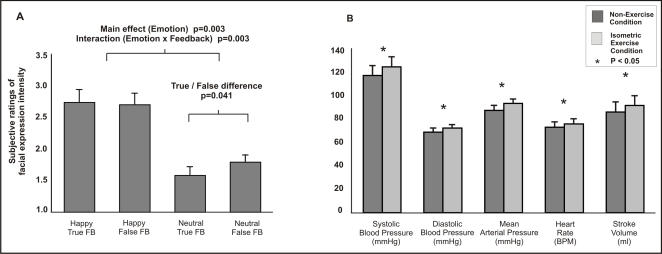
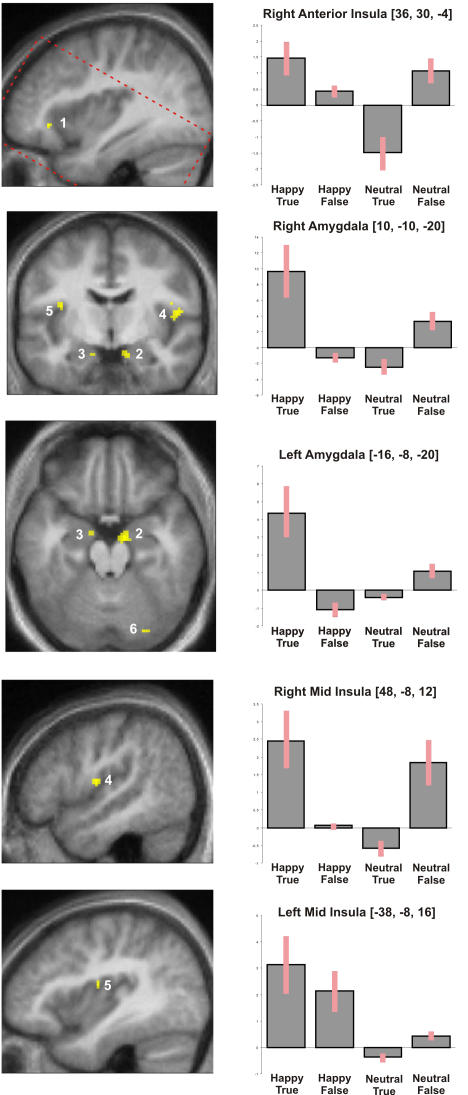
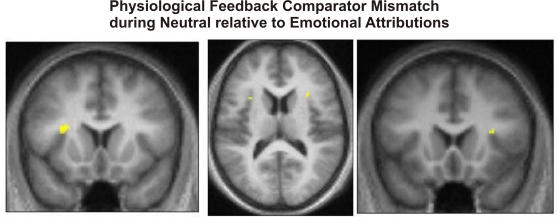
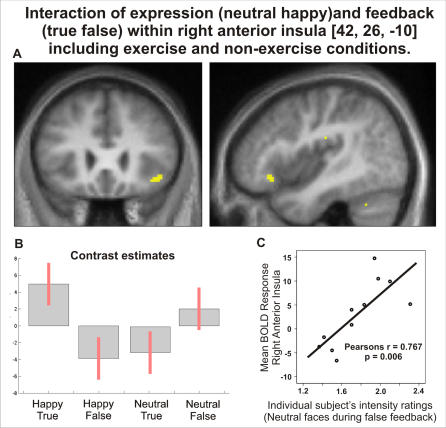
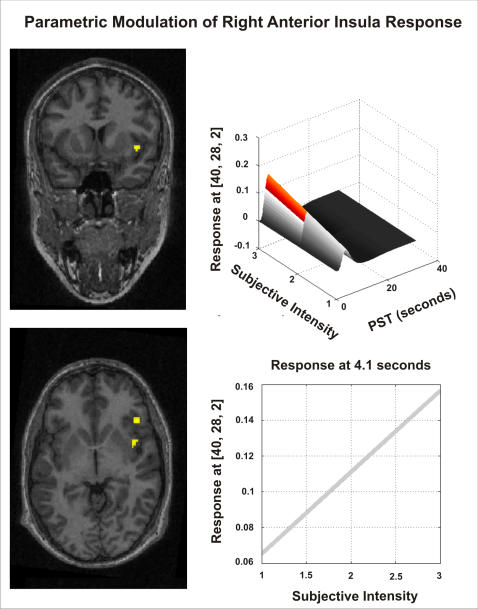
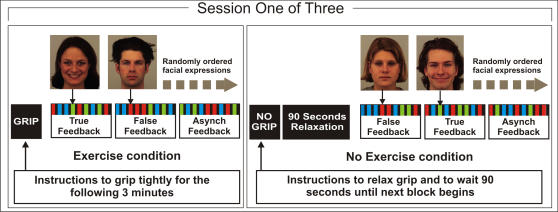
BACKGROUND: James and Lange proposed that emotions are the perception of physiological reactions. Two-level theories of emotion extend this model to suggest that cognitive interpretations of physiological changes shape self-reported emotions. Correspondingly false physiological feedback of evoked or tonic bodily responses can alter emotional attributions. Moreover, anxiety states are proposed to arise from detection of mismatch between actual and anticipated states of physiological arousal. However, the neural underpinnings of these phenomena previously have not been examined. METHODOLOGY/PRINCIPAL FINDINGS: We undertook a functional brain imaging (fMRI) experiment to investigate how both primary and second-order levels of physiological (viscerosensory) representation impact on the processing of external emotional cues. 12 participants were scanned while judging face stimuli during both exercise and non-exercise conditions in the context of true and false auditory feedback of tonic heart rate. We observed that the perceived emotional intensity/salience of neutral faces was enhanced by false feedback of increased heart rate. Regional changes in neural activity corresponding to this behavioural interaction were observed within included right anterior insula, bilateral mid insula, and amygdala. In addition, right anterior insula activity was enhanced during by asynchronous relative to synchronous cardiac feedback even with no change in perceived or actual heart rate suggesting this region serves as a comparator to detect physiological mismatches. Finally, BOLD activity within right anterior insula and amygdala predicted the corresponding changes in perceived intensity ratings at both a group and an individual level. CONCLUSIONS/SIGNIFICANCE: Our findings identify the neural substrates supporting behavioural effects of false physiological feedback, and highlight mechanisms that underlie subjective anxiety states, including the importance of the right anterior insula in guiding second-order "cognitive" representations of bodily arousal state.
Overview
The claims and statistics of this paper haven’t been checked yet.
Free: it reads the open-access text and checks the first 5 claims that cite a source we can check. Create a free account to check every claim.
Integrity signals
Registry
Cites
Statistics
Figures
Verification
Claims the paper makes
The claims and statistics of this paper haven’t been checked yet.
Free: it reads the open-access text and checks the first 5 claims that cite a source we can check. Create a free account to check every claim.
Claims other papers make about this one
Each is checked against this paper’s own text: does it say what the citing paper says it does?
The source backs part of the claim, not all of it — or backs it for a different population, condition or comparison.
In the citing paper
“The region is also implicated in normal affective processing48–51, and emotional symptomatology in psychiatric disorders52–54, notably anxiety55–57.”
From Beyond bendy joints: number of variant connective tissue features predicts neurodivergent characteristics in hypermobile individuals with anxiety (2026) · cites this paper as [56]
Experimental — accuracy not yet measuredThe source backs part of the claim, not all of it — or backs it for a different population, condition or comparison.
In the citing paper
“The experimental induction of mismatch between predicted and actual interoceptive signals by false physiological feedback enhances activation of right AIC (Gray et al., 2007), showing the region to be a comparator”
From An Interoceptive Predictive Coding Model of Conscious Presence (2012) · cites this paper as Gray et al., 2007
Experimental — accuracy not yet measuredThe source backs part of the claim, not all of it — or backs it for a different population, condition or comparison.
In the citing paper
“this AIC activation, in conjunction with amygdala, is associated with an increased emotional salience attributed to previously unthreatening stimuli, consistent with revision of top-down interoceptive predictions in the face of unexplained error”
From An Interoceptive Predictive Coding Model of Conscious Presence (2012) · cites this paper as Gray et al., 2007
Experimental — accuracy not yet measuredThe cited source says what the claim attributes to it.
In the citing paper
“Gray and colleagues, who found that false cardiac feedback led to increased fMRI responses in the right AIC and that enhanced AIC activity during false feedback correlated with increased emotional salience attributed to previously unthreatening stimuli [41].”
From Interoceptive inference, emotion, and the embodied self (2013) · cites this paper as [41]
The cited source says what the claim attributes to it.
In the citing paper
“Emotional disorders like alexithymia are relatively straightforward to explain in terms of atypical interoception, while more complex and heterogeneous constructs like anxiety have been considered in terms of interoceptive prediction error for more than a decade [53,83,101].”
From Active interoceptive inference and the emotional brain (2016) · cites this paper as [101]
Self-check
Percentages, sums and reported differences re-computed from the paper’s own numbers.
The self-check needs the paper’s full text.
Citations
Cites
Ashburner, J., & Friston, K. J. (2005) · NeuroImage · doi:10.1016/j.neuroimage.2005.02.018 · Cited by 7,507
Cognitive, social, and physiological determinants of emotional state.
Schachter, S., & Singer, J. (1962) · Psychological Review · doi:10.1037/h0046234 · Cited by 6,223
Core affect and the psychological construction of emotion.
Russell, J. A. (2003) · Psychological Review · doi:10.1037/0033-295x.110.1.145 · Cited by 6,113
How do you feel? Interoception: The sense of the physiological condition of the body
Craig, A. D. (2002) · Nature Reviews Neuroscience · doi:10.1038/nrn894 · Cited by 6,006 · cited 5×
“junction with orbital and dorsolateral prefrontal cortices [24,26,27,30].”
BackgroundInfluentialNeural systems supporting interoceptive awareness
Critchley, H. D., Wiens, S., Rotshtein, P., Öhman, A., & Dolan, R. J. (2004) · Nature Neuroscience · doi:10.1038/nn1176 · Cited by 3,406 · cited 3×
“In addition, neuroimaging evidence in healthy individuals suggests a specialized role of right anterior insula in conscious awareness of interoceptive state [23,27,30].”
BackgroundSelf-citationInteroception: the sense of the physiological condition of the body
(Bud) Craig, A. (2003) · Current Opinion in Neurobiology · doi:10.1016/s0959-4388(03)00090-4 · Cited by 2,556
Whalen, P. J., Rauch, S. L., Etcoff, N. L., McInerney, S. C., Lee, M. B., & Jenike, M. A. (1998) · The Journal of Neuroscience · doi:10.1523/jneurosci.18-01-00411.1998 · Cited by 2,205 · cited 1×
“Most models ascribe to the amygdala a primary, phenomenological, level within the hierarchy of emotional processing, and amygdala responses can be evoked without the need for conscious appraisal [48–49].”
BackgroundSubcortical and cortical brain activity during the feeling of self-generated emotions
Damasio, A. R., Grabowski, T. J., Bechara, A., Damasio, H., Ponto, L. L. B., Parvizi, J., & Hichwa, R. D. (2000) · Nature Neuroscience · doi:10.1038/79871 · Cited by 2,117 · cited 1×
“the interpretation is that bodily prediction error signals are attributed to ambiguous environmental stimuli and neutral faces become potential threats. Insula activation is observed during other conditions that engender emotional arousal, for example emotional recall”
BackgroundFunctional imaging of ‘theory of mind’
Gallagher, H. L., & Frith, C. D. (2003) · Trends in Cognitive Sciences · doi:10.1016/s1364-6613(02)00025-6 · Cited by 2,092 · cited 1×
“STG activity was modulated by false feedback in a manner that corresponded to the behavioural modulation of emotional intensity consistent with engagement of STG in enhanced top-down (attention-driven) processing of salience from faces [53].”
BackgroundA subcortical pathway to the right amygdala mediating “unseen” fear
Morris, J. S., Öhman, A., & Dolan, R. J. (1999) · Proceedings of the National Academy of Sciences · doi:10.1073/pnas.96.4.1680 · Cited by 1,349
Research works printed but not linked: 1
- Misovich S Charis PC 1974 Information need, affect, and cognition of autonomic activity. Journal of Experimental Social Psychology 10 274 283 · DOI
Cited by
How do you feel — now? The anterior insula and human awareness
(Bud) Craig, A. D. (2009) · Nature Reviews Neuroscience · doi:10.1038/nrn2555 · Cited by 6,657
Interoceptive inference, emotion, and the embodied self
Seth, A. K. (2013) · Trends in Cognitive Sciences · doi:10.1016/j.tics.2013.09.007 · Cited by 1,816
A common role of insula in feelings, empathy and uncertainty
Singer, T., Critchley, H. D., & Preuschoff, K. (2009) · Trends in Cognitive Sciences · doi:10.1016/j.tics.2009.05.001 · Cited by 1,270
“Moreover, when ‘interoceptive mismatch’ is induced experimentally using false physiological feedback, enhanced AI activity correlates with increased emotional salience attributed to previously unthreatening neutral stimuli [ 26 ].”
Self-citationVisceral influences on brain and behavior
Critchley, H. D., & Harrison, N. A. (2013) · Neuron · doi:10.1016/j.neuron.2013.02.008 · Cited by 1,177
“Inducing mismatch between predicted and actual interoceptive signals via false physiological feedback further endorses this role of insular cortex (Gray et al., 2007).”
Self-citationDistinct cerebellar contributions to intrinsic connectivity networks
Habas, C., Kamdar, N., Nguyen, D., Prater, K., Beckmann, C. F., Menon, V., & Greicius, M. D. (2009) · Journal of Neuroscience · doi:10.1523/jneurosci.1868-09.2009 · Cited by 1,115
“Frontoinsular and anterior cingulate activations have been detected during interoceptive awareness (Critchley et al., 2004) and physiological mismatch (Gray et al., 2007); notably, Gray et al. (2007) found activation in the vermis of lobule VI.”
BackgroundAn Interoceptive Predictive Coding Model of Conscious Presence
Seth, A. K., Suzuki, K., & Critchley, H. D. (2012) · Frontiers in Psychology · doi:10.3389/fpsyg.2011.00395 · Cited by 950
“In the presence component, prediction errors could be manipulated by subliminal presentation of emotive stimuli prior to target stimuli (Tamietto and de Gelder, 2010) or by false physiological feedback (Gray et al., 2007).”
BackgroundResultInfluentialSelf-citationActive interoceptive inference and the emotional brain
Seth, A. K., & Friston, K. J. (2016) · Philosophical Transactions of the Royal Society B: Biological Sciences · doi:10.1098/rstb.2016.0007 · Cited by 945
The role of anterior insular cortex in social emotions
Lamm, C., & Singer, T. (2010) · Brain Structure and Function · doi:10.1007/s00429-010-0251-3 · Cited by 566
Suzuki, K., Garfinkel, S. N., Critchley, H. D., & Seth, A. K. (2013) · Neuropsychologia · doi:10.1016/j.neuropsychologia.2013.08.014 · Cited by 476
Self-citationAnterior insula integrates information about salience into perceptual decisions about pain
Wiech, K., Lin, C.-S., Brodersen, K. H., Bingel, U., Ploner, M., & Tracey, I. (2010) · The Journal of Neuroscience · doi:10.1523/jneurosci.2087-10.2010 · Cited by 470
“Findings from these and related studies suggest that the anterior insula plays a key role in interoception which involves the monitoring of sensations that are important for the integrity of the internal body state including the arousal level (Gray et al., 2007) and connecting to systems that are important for allocat…”
BackgroundResultThe neurobiology of interoception in health and disease
Quadt, L., Critchley, H. D., & Garfinkel, S. N. (2018) · Annals of the New York Academy of Sciences · doi:10.1111/nyas.13915 · Cited by 434
Self-citationHerbert, B. M., Herbert, C., & Pollatos, O. (2011) · Journal of Personality · doi:10.1111/j.1467-6494.2011.00717.x · Cited by 437
Allostatic Self-efficacy: A Metacognitive Theory of Dyshomeostasis-Induced Fatigue and Depression
Stephan, K. E., Manjaly, Z. M., Mathys, C. D., Weber, L. A. E., Paliwal, S., Gard, T., Tittgemeyer, M., Fleming, S. M., Haker, H., Seth, A. K., et al. (2016) · Frontiers in Human Neuroscience · doi:10.3389/fnhum.2016.00550 · Cited by 437
“…to both the body and the physical and social world outside the body; this is for notational brevity only and not meant to disregard differences in how bodily, social and physical states can influence brain activity in general and the emergence of fatigue in particular; a topic we return to below.”
BackgroundJabbi, M., Bastiaansen, J., & Keysers, C. (2008) · PLoS ONE · doi:10.1371/journal.pone.0002939 · Cited by 362
“Thus in addition to deficits in disgust perception and experience, lesions of IFO has been shown to result in marked reduction of feelings of craving for cigarettes in long term smokers [30,31], anosognosia [32] and amusia [33].”
BackgroundFear from the heart: sensitivity to fear stimuli depends on individual heartbeats
Garfinkel, S. N., Minati, L., Gray, M. A., Seth, A. K., Dolan, R. J., & Critchley, H. D. (2014) · The Journal of Neuroscience · doi:10.1523/jneurosci.3507-13.2014 · Cited by 338
Self-citationPsychophysiology of neural, cognitive and affective integration: fMRI and autonomic indicants
Critchley, H. D. (2009) · International Journal of Psychophysiology · doi:10.1016/j.ijpsycho.2009.01.012 · Cited by 323
“Group data are plotted on orthogonal sections of a normalized echoplanar image (see Gray et al., 2007).”
BackgroundMethodSelf-citationImaging the default mode network in aging and dementia
Hafkemeijer, A., van der Grond, J., & Rombouts, S. A. R. B. (2012) · Biochimica et Biophysica Acta (BBA) - Molecular Basis of Disease · doi:10.1016/j.bbadis.2011.07.008 · Cited by 313
Strigo, I. A., Simmons, A. N., Matthews, S. C., Craig, A. D. (., & Paulus, M. P. (2008) · Archives of General Psychiatry · doi:10.1001/archpsyc.65.11.1275 · Cited by 271
“Neuroanatomical and functional neuroimaging evidence shows that the AI plays a major role in detecting the mismatch between cognitive and interoceptive states, reflecting subjects’ awareness of the perceived (and not the actual) interoceptive state.(44,48,49) Increased AI activation during anticipation of pain in our…”
Koelsch, S., & Jäncke, L. (2015) · European Heart Journal · doi:10.1093/eurheartj/ehv430 · Cited by 264
“Such sensory information modulates autonomic outflow, and contributes to emotional experience as interoceptive information.(9) Owing to these mechanisms, music-evoked emotions have effects on the regulation of regional heart activity, heart rate (HR), heart rate variability (HRV), BP, and respiratory rate (RR).”
BackgroundAffective and physiological responses to the suffering of others: Compassion and vagal activity.
Stellar, J. E., Cohen, A., Oveis, C., & Keltner, D. (2015) · Journal of Personality and Social Psychology · doi:10.1037/pspi0000010 · Cited by 271
“A few studies have found support for the claim that physiology can shape emotional experience (e.g. Gray, Harrison, Wiens, & Critchley, 2007).”
Dyspnea and pain share emotion-related brain network
von Leupoldt, A., Sommer, T., Kegat, S., Baumann, H. J., Klose, H., Dahme, B., & Büchel, C. (2009) · NeuroImage · doi:10.1016/j.neuroimage.2009.06.015 · Cited by 257
“Experimental findings confirmed this model by showing close associations between the perception of cardiovascular activity and activations of the insula, but also of the ACC and amygdala (Craig, 2002; Critchley et al., 2004; Pollatos et al., 2005, 2007; Gray et al., 2007).”
Sang, L., Qin, W., Liu, Y., Han, W., Zhang, Y., Jiang, T., & Yu, C. (2012) · NeuroImage · doi:10.1016/j.neuroimage.2012.04.011 · Cited by 257
“, 2003, 2004), interoceptive awareness (Gray et al., 2007), and the experience of pleasure (Turner et al.”
BackgroundResultCaria, A., Sitaram, R., Veit, R., Begliomini, C., & Birbaumer, N. (2010) · Biological Psychiatry · doi:10.1016/j.biopsych.2010.04.020 · Cited by 244
Neural systems underlying approach and avoidance in anxiety disorders
Robin L., A., & Martin, P. P. (2010) · Dialogues in Clinical Neuroscience · doi:10.31887/dcns.2010.12.4/raupperle · Cited by 227
Interaction between cognition, emotion, and the autonomic nervous system
(2013) · Handbook of Clinical Neurology · doi:10.1016/b978-0-444-53491-0.00006-7 · Cited by 230
Self-citationThe insular cortex and the regulation of cardiac function
Oppenheimer, S., & Cechetto, D. (2016) · Comprehensive Physiology · doi:10.1002/cphy.c140076 · Cited by 191
Inferior frontal gyrus activity triggers anterior insula response to emotional facial expressions.
Jabbi, M., & Keysers, C. (2008) · Emotion · doi:10.1037/a0014194 · Cited by 190
“This interpretation is also supported by studies showing that the IFO is involved in experiencing the participant’s own feeling states (Craig, 2004; Critchley, 2005; Damasio, 1999, 2003; Gray et al., 2007).”
ResultCitron, F. M. M., Gray, M. A., Critchley, H. D., Weekes, B. S., & Ferstl, E. C. (2014) · Neuropsychologia · doi:10.1016/j.neuropsychologia.2014.01.002 · Cited by 189
Self-citationThe neural substrates of mindfulness: An fMRI investigation
Ives-Deliperi, V. L., Solms, M., & Meintjes, E. M. (2011) · Social Neuroscience · doi:10.1080/17470919.2010.513495 · Cited by 183
“Interestingly, lesions to the right anterior insula have been shown to result in significant reductions in addictive behavior (Naqvi, Rudrauf, Damasio & Bechara, 2007) and less intense emotional reactivity (Gray et al., 2007).”
BackgroundThe Insula Mediates Access to Awareness of Visual Stimuli Presented Synchronously to the Heartbeat
Salomon, R., Ronchi, R., Dönz, J., Bello-Ruiz, J., Herbelin, B., Martet, R., Faivre, N., Schaller, K., & Blanke, O. (2016) · The Journal of Neuroscience · doi:10.1523/jneurosci.4262-15.2016 · Cited by 178
“, 2010), and emotional (Gray et al., 2007; Gray et al., 2012; Garfinkel et al., 2014) processing.”
BackgroundEmotions and the Right Hemisphere: Can New Data Clarify Old Models?
Gainotti, G. (2019) · The Neuroscientist · doi:10.1177/1073858418785342 · Cited by 173
Activation of Anterior Insula during Self-Reflection
Modinos, G., Ormel, J., & Aleman, A. (2009) · PLoS ONE · doi:10.1371/journal.pone.0004618 · Cited by 172
“The insular cortex is predominantly regarded as associated with interoceptive awareness [23], emotional salience [44], awareness over subjective feeling [45] and bodily arousal states [46], and has been reported in self-referential tasks in the emotional domain [21].”
BackgroundEmotional appraisal is influenced by cardiac afferent information
Gray, M. A., Beacher, F. D., Minati, L., Nagai, Y., Kemp, A. H., Harrison, N. A., & Critchley, H. D. (2012) · Emotion · doi:10.1037/a0025083 · Cited by 163
Self-citationThe neuropsychological impact of insular cortex lesions
Jones, C. L., Ward, J., & Critchley, H. D. (2010) · Journal of Neurology, Neurosurgery & Psychiatry · doi:10.1136/jnnp.2009.193672 · Cited by 158
“to be integrated with beliefs about one's physiological state (eg, based on false cardiac feedback), to guide emotional attributions.”
BackgroundSelf-citationFollowing One's Heart: Cardiac Rhythms Gate Central Initiation of Sympathetic Reflexes
Gray, M. A., Rylander, K., Harrison, N. A., Wallin, B. G., & Critchley, H. D. (2009) · The Journal of Neuroscience · doi:10.1523/jneurosci.3363-08.2009 · Cited by 155
“Previous functional imaging suggests differential insula response to cardiac timed stimuli during interoception (Critchley et al., 2004; Gray et al., 2007).”
BackgroundSelf-citationThe role of emotions on pacing strategies and performance in middle and long duration sport events
Baron, B., Moullan, F., Deruelle, F., & Noakes, T. D. (2009) · British Journal of Sports Medicine · doi:10.1136/bjsm.2009.059964 · Cited by 192
“The mechanisms by which afferent sensory feedback from the periphery interact with the so-called higher mental functions have been studied extensively. William James was one of the first to postulate that viscero-afferent feedback is closely linked to emotional experience, stating that “bodily changes follow directly…”
BackgroundHerbert, B. M., Pollatos, O., Flor, H., Enck, P., & Schandry, R. (2010) · Psychophysiology · doi:10.1111/j.1469-8986.2009.00931.x · Cited by 146
Multisensory Presence in Virtual Reality: Possibilities & Limitations
Gallace, A., Ngo, M. K., Sulaitis, J., & Spence, C. (2012) · Multiple Sensorial Media Advances and Applications · doi:10.4018/978-1-60960-821-7.ch001 · Cited by 137
O’Doherty, J. P. (2014) · Neuroscience & Biobehavioral Reviews · doi:10.1016/j.neubiorev.2014.03.027 · Cited by 129
“However, the construct of salience is often used to refer to other effects such as changes in the emotional intensity of a response to a stimulus, or in terms of the motivational properties of a stimulus for action, that would not be captured by such a specific definition (Berridge, 2012; Gray et al., 2007).”
BackgroundThe calming effect of a new wearable device during the anticipation of public speech
T. Azevedo, R., Bennett, N., Bilicki, A., Hooper, J., Markopoulou, F., & Tsakiris, M. (2017) · Scientific Reports · doi:10.1038/s41598-017-02274-2 · Cited by 131
The common link between functional somatic syndromes may be central sensitisation
Bourke, J. H., Langford, R. M., & White, P. D. (2015) · Journal of Psychosomatic Research · doi:10.1016/j.jpsychores.2015.01.003 · Cited by 145
“The insula appears to act as the integration centre formultimodal inputs involved in pain [47], interoception [48], threat detection associated with bodily arousal [49], emotional regulation [50] and motivational salience in learning models [51].”
BackgroundA social Bayesian brain: how social knowledge can shape visual perception
Otten, M., Seth, A. K., & Pinto, Y. (2017) · Brain and Cognition · doi:10.1016/j.bandc.2016.05.002 · Cited by 124
Predictions, perception, and a sense of self
Picard, F., & Friston, K. (2014) · Neurology · doi:10.1212/wnl.0000000000000798 · Cited by 118
“, reference 29) and may result in feelings of uncertainty and discomfort.(30,31) The aberrant modulation of (attention to) prediction errors may also be associated with anxiety disorders(32) and has been proposed as the basis of hysterical or functional medical symptoms.”
BackgroundVeit, R., Singh, V., Sitaram, R., Caria, A., Rauss, K., & Birbaumer, N. (2012) · Social Cognitive and Affective Neuroscience · doi:10.1093/scan/nsr061 · Cited by 117
Koelsch, S., & Skouras, S. (2014) · Human Brain Mapping · doi:10.1002/hbm.22416 · Cited by 114
“These connections might be related to somatosensory aspects, and thus to the subjective feeling component, of emotion [Gray et al., 2007; Harrison et al., 2010; Herwig et al., 2010].”
BackgroundRecognition Profile of Emotions in Natural and Virtual Faces
Dyck, M., Winbeck, M., Leiberg, S., Chen, Y., Gur, R. C., & Mathiak, K. (2008) · PLoS ONE · doi:10.1371/journal.pone.0003628 · Cited by 115
“To confirm this model, physiological reactions such as heart rate, skin conductance and respiration, as well as measures of facial expressiveness to virtual and natural faces could be compared [37].”
BackgroundGinestet, C. E., & Simmons, A. (2011) · NeuroImage · doi:10.1016/j.neuroimage.2010.11.030 · Cited by 112
An interoceptive illusion of effort induced by false heart-rate feedback
Iodice, P., Porciello, G., Bufalari, I., Barca, L., & Pezzulo, G. (2019) · Proceedings of the National Academy of Sciences · doi:10.1073/pnas.1821032116 · Cited by 100
“A previous study that manipulated participants’ physiological feedback during exercise reported that emotional intensity and salience of neutral faces was enhanced by false feedback of increased HR (50).”
BackgroundKoelsch, S., Skouras, S., & Jentschke, S. (2013) · PLoS ONE · doi:10.1371/journal.pone.0077196 · Cited by 101
Affective neural circuitry and mind–body influences in asthma
Rosenkranz, M. A., & Davidson, R. J. (2009) · NeuroImage · doi:10.1016/j.neuroimage.2009.05.042 · Cited by 99
“Grey et al. (2007) did the inverse of this experiment and showed that neutral facial expressions were perceived to have significantly more emotional intensity when presented with the false feedback of elevated heart rate, and further, activation of the right anterior insula strongly predicted the…”
Liu, Q., Cui, H., Li, J., & Dong, D. (2024) · Journal of Psychology in Africa · doi:10.1080/14330237.2024.2371737 · Cited by 98
Frontoparietal Functional Connectivity in the Common Marmoset
Ghahremani, M., Hutchison, R. M., Menon, R. S., & Everling, S. (2016) · Cerebral Cortex · doi:10.1093/cercor/bhw198 · Cited by 95
Self-regulation of the anterior insula: Reinforcement learning using real-time fMRI neurofeedback
Lawrence, E., Su, L., Barker, G. J., Medford, N., Dalton, J., Williams, S., Birbaumer, N., Veit, R., Sitaram, R., Bodurka, J., et al. (2013) · NeuroImage · doi:10.1016/j.neuroimage.2013.10.069 · Cited by 99
“As others have pointed out it is difficult to know what the ideal control group is for rtfMRI neurofeedback studies (Li et al., 2012), bearing in mind that extensive activation can often accompany false physiological feedback (Gray et al., 2007; Johnson et al., 2012).”
Lane, R. D., Waldstein, S. R., Critchley, H. D., Derbyshire, S. W. G., Drossman, D. A., Wager, T. D., Schneiderman, N., Chesney, M. A., Jennings, J. R., Lovallo, W. R., et al. (2009) · Psychosomatic Medicine · doi:10.1097/psy.0b013e318198a11f · Cited by 90
“Importantly for psychosomatic medicine, individual differences in interoceptive awareness measured using heartbeat detection tasks also predict day-to-day anxiety symptoms (51), cardiac focus in heart patients, and more general sensitivity and “pathologization” of bodily sensations (49).”
BackgroundSelf-citationInteractions between visceral afferent signaling and stimulus processing
Critchley, H. D., & Garfinkel, S. N. (2015) · Frontiers in Neuroscience · doi:10.3389/fnins.2015.00286 · Cited by 89
“Anterior insular cortex therefore responded to mismatched timing between internal and external signals.”
BackgroundResultInfluentialSelf-citationGaebler, M., Daniels, J. K., Lamke, J.-P., Fydrich, T., & Walter, H. (2013) · Biological Psychology · doi:10.1016/j.biopsycho.2013.06.009 · Cited by 117
Abnormal autonomic and associated brain activities during rest in autism spectrum disorder
Eilam-Stock, T., Xu, P., Cao, M., Gu, X., Van Dam, N. T., Anagnostou, E., Kolevzon, A., Soorya, L., Park, Y., Siller, M., et al. (2014) · Brain · doi:10.1093/brain/awt294 · Cited by 84
“False physiological feedback affects emotional attributions (Valins, 1966; Liebhart, 1977), and emotional interpretation of ambiguous stimuli (Truax, 1983; Gray et al., 2007).”
BackgroundA historical review of investigations on laterality of emotions in the human brain
Gainotti, G. (2018) · Journal of the History of the Neurosciences · doi:10.1080/0964704x.2018.1524683 · Cited by 93
“And Gray et al. (2007) stressed the importance of the right AIC in guiding second-order “cognitive” representations of bodily arousal state.”
BackgroundThe Central Autonomic Network and Regulation of Bladder Function
Roy, H., & Green, A. L. (2019) · Frontiers in Neuroscience · doi:10.3389/fnins.2019.00535 · Cited by 86
Conditioned respiratory threat in the subdivisions of the human periaqueductal gray
Faull, O. K., Jenkinson, M., Ezra, M., & Pattinson, K. T. (2016) · eLife · doi:10.7554/elife.12047 · Cited by 77
“DOI: 10.7554/eLife.12047 8 of 19 emotional component of resistance anticipation (Critchley et al., 2004; Gray et al., 2007).”
BackgroundInfluentialOwens, A. P., Friston, K. J., Low, D. A., Mathias, C. J., & Critchley, H. (2018) · Autonomic Neuroscience · doi:10.1016/j.autneu.2018.01.001 · Cited by 86
Self-citationBaroreceptor activation attenuates attentional effects on pain-evoked potentials
Gray, M. A., Minati, L., Paoletti, G., & Critchley, H. D. (2010) · Pain · doi:10.1016/j.pain.2010.09.028 · Cited by 74
Self-citation“I Didn’t Know I Looked Angry”: Characterizing Observed Emotion and Reported Affect at Work
Kaur, H., McDuff, D., Williams, A. C., Teevan, J. B., & Iqbal, S. T. (2022) · CHI Conference on Human Factors in Computing Systems · doi:10.1145/3491102.3517453 · Cited by 90
“There are other afect signal alternatives to consider, for example, facial heat patterns [62], wearable sensors (e.g., smart eyewear [109]; EEG, EMG, and GSR sensors [44, 106]), fMRI scans [46], AER technology that relies on crowd-and expert-tagged facial [4, 129] and voice [94] markers, etc.”
BackgroundNeural correlates of somatoform disorders from a meta-analytic perspective on neuroimaging studies
Boeckle, M., Schrimpf, M., Liegl, G., & Pieh, C. (2016) · NeuroImage Clinical · doi:10.1016/j.nicl.2016.04.001 · Cited by 78
“, 2002), interception (Craig, 2003a) emotional regulation (Gray et al., 2007), and motivation (Balleine and Dickinson, 2000), and on the other hand, the striatum (Zink et al.”
State of belief, subjective certainty and bliss as a product of cortical dysfunction
Picard, F. (2013) · Cortex · doi:10.1016/j.cortex.2013.01.006 · Cited by 66
Aucouturier, J., Johansson, P., Hall, L., Segnini, R., Mercadié, L., & Watanabe, K. (2016) · Proceedings of the National Academy of Sciences · doi:10.1073/pnas.1506552113 · Cited by 116
“Instead, we suggest to explain this unpredicted outcome by looking at the appraisal context of the experiment (38).”
BackgroundSimmons, A., Strigo, I. A., Matthews, S. C., Paulus, M. P., & Stein, M. B. (2009) · Psychosomatic Medicine · doi:10.1097/psy.0b013e3181a56ed8 · Cited by 64
“Specifically, the AI seems to represent the intensity of the predicted subjective state and not necessarily the valence of the related affect (15).”
BackgroundSubstance-specific environmental influences on drug use and drug preference in animals and humans
Badiani, A. (2013) · Current Opinion in Neurobiology · doi:10.1016/j.conb.2013.03.010 · Cited by 60
Breathlessness and the body: Neuroimaging clues for the inferential leap
Faull, O. K., Hayen, A., & Pattinson, K. T. S. (2017) · Cortex · doi:10.1016/j.cortex.2017.07.019 · Cited by 58
Lindegren, M., Blenckner, T., & Stenseth, N. C. (2012) · Global Change Biology · doi:10.1111/j.1365-2486.2012.02799.x · Cited by 59
Lenggenhager, B., Azevedo, R. T., Mancini, A., & Aglioti, S. M. (2013) · Experimental Brain Research · doi:10.1007/s00221-013-3647-5 · Cited by 59
“Finally, it is worth noting that presenting feedback of one’s own heart sound is substantially different from providing feedback of heart rate by means of an auditory tone or light flash at the occurrence of a heartbeat (Gray et al. 2007).”
BackgroundResultMacCormack, J. K., & Lindquist, K. A. (2016) · Emotion Review · doi:10.1177/1754073916639664 · Cited by 63
Ictal alterations of consciousness during ecstatic seizures
Picard, F., & Kurth, F. (2013) · Epilepsy & Behavior · doi:10.1016/j.yebeh.2013.09.036 · Cited by 54
“, prediction error) has been associated with generating negative emotional arousal or anxiety [31–33].”
BackgroundKawamichi, H., Yoshihara, K., Sasaki, A. T., Sugawara, S. K., Tanabe, H. C., Shinohara, R., Sugisawa, Y., Tokutake, K., Mochizuki, Y., Anme, T., et al. (2014) · Social Neuroscience · doi:10.1080/17470919.2014.954732 · Cited by 67
“Because emotionally relevant experiences are evaluated by retrieving appropriate cues (Gray et al., 2007; Schachter & Singer, 1962), the positive feelings aroused by receiving active listening might act as cues for emotional reappraisal.”
BackgroundLoss aversion is associated with bilateral insula volume. A voxel based morphometry study
Markett, S. A., Heeren, G., Montag, C., Weber, B., & Reuter, M. (2016) · Neuroscience Letters · doi:10.1016/j.neulet.2016.03.029 · Cited by 56
An active inference perspective on the negative symptoms of schizophrenia
Jeganathan, J., & Breakspear, M. (2021) · The Lancet Psychiatry · doi:10.1016/s2215-0366(20)30527-7 · Cited by 46
Letzen, J. E., Craggs, J. G., Perlstein, W. M., Price, D. D., & Robinson, M. E. (2013) · Journal of Pain · doi:10.1016/j.jpain.2013.04.003 · Cited by 48
Banellis, L., & Cruse, D. (2020) · Cerebral Cortex Communications · doi:10.1093/texcom/tgaa060 · Cited by 44
Neurodegeneration and the Cerebellum
Samson, M., & Claassen, D. O. (2017) · Neurodegenerative Diseases · doi:10.1159/000460818 · Cited by 45
Correction: Recognition Profile of Emotions in Natural and Virtual Faces
Dyck, M., Winbeck, M., Leiberg, S., Chen, Y., Gur, R. C., & Mathiak, K. (2008) · PLoS ONE · doi:10.1371/annotation/b1a62b84-2d44-4250-b985-915211361ce2 · Cited by 43
Transcranial direct current stimulation enhances soothing positive affect and vagal tone
Petrocchi, N., Piccirillo, G., Fiorucci, C., Moscucci, F., Iorio, C. D., Mastropietri, F., Parrotta, I., Pascucci, M., Magrì, D., & Ottaviani, C. (2017) · Neuropsychologia · doi:10.1016/j.neuropsychologia.2017.01.028 · Cited by 44
Galles, C., Prez, G., Penkov, S., Boland, S., Porta, E. O. J., Altabe, S., Labadié, G. R., Schmidt, U. G., Knölker, H., Kurzchalia, T. V., et al. (2018) · Scientific Reports · doi:10.1038/s41598-018-24925-8 · Cited by 43
Craig, A. D. B. (2018) · Handbook of clinical neurology · doi:10.1016/b978-0-444-63912-7.00019-9 · Cited by 49
Associations between the perception of dyspnea, pain, and negative affect
Schön, D., Dahme, B., & Leupoldt, A. V. (2008) · Psychophysiology · doi:10.1111/j.1469-8986.2008.00704.x · Cited by 36
“of the insular and anterior cingulate cortices (Craig, 2002; Critchley et al., 2004; Gray et al., 2007; Pollatos et al., 2005).”
BackgroundBrain mechanisms of perceiving tools and imagining tool use acts: A functional MRI study
Wadsworth, H. M., & Kana, R. K. (2011) · Neuropsychologia · doi:10.1016/j.neuropsychologia.2011.03.010 · Cited by 40
Cerebellum and Emotion Processing
Baumann, O., & Mattingley, J. B. (2022) · Advances in experimental medicine and biology · doi:10.1007/978-3-030-99550-8_3 · Cited by 44
Neural correlates of anxiety sensitivity during masked presentation of affective faces
Killgore, W. D. S., Britton, J. C., Price, L. M., Gold, A. L., Deckersbach, T., & Rauch, S. L. (2011) · Depression and Anxiety · doi:10.1002/da.20788 · Cited by 33
“[16] The insula is one of the key cortical structures involved in interoceptive perception—the subjective sense of the physiological status of the body.[17,18] According to Paulus and Stein,[16] individuals who are high in AS show exaggerated interoceptive prediction signaling within the anterior insula regarding expe…”
BackgroundTinnitus- related distress: evidence from fMRI of an emotional stroop task
Golm, D., Schmidt‐Samoa, C., Dechent, P., & Kröner‐Herwig, B. (2016) · BMC Ear Nose and Throat Disorders · doi:10.1186/s12901-016-0029-1 · Cited by 33
“Higher activity within the right anterior insula was associated with higher emotionality ratings during false feedback [81].”
Oosterwijk, S., Lindquist, K. A., Adebayo, M., & Barrett, L. F. (2016) · Social Cognitive and Affective Neuroscience · doi:10.1093/scan/nsv088 · Cited by 28
“For instance, Gray et al. (2007) found that false heart rate feedback influenced participants’ affective judgments of neutral faces and led to corresponding changes in the anterior insula and amygdala.”
BackgroundCortical processing of breathing perceptions in the athletic brain
Harrison, O. K., Cox, P. J., & Pattinson, K. T. S. (2018) · NeuroImage · doi:10.1016/j.neuroimage.2018.06.021 · Cited by 34
“, 2006; Ling and Carrasco, 2006) and interoceptive ability (Gray et al., 2007; Critchley et al., 2013; Mallorqui-Bague et al., 2016; Garfinkel et al., 2016b) are thought to influence this system, either by altering the prior expectations or incoming sensory information.”
BackgroundStoica, T., & Depue, B. E. (2020) · Frontiers in Human Neuroscience · doi:10.3389/fnhum.2020.571070 · Cited by 37
Emotion perception and electrophysiological correlates in Huntington’s disease
Croft, R. J., McKernan, F., Gray, M. A., Churchyard, A., & Georgiou‐Karistianis, N. (2014) · Clinical Neurophysiology · doi:10.1016/j.clinph.2013.12.111 · Cited by 28
“These types of behavioural changes are likely the result of basal ganglia dysfunction together with alterations in prefrontal function (Georgiou-Karistianis et al., 2013a, Georgiou-Karistianis et al., 2013c, Gray et al., 2013).”
Self-citationError-related cardiac response as information for visibility judgements
Łukowska, M., Sznajder, M., & Wierzchoń, M. (2018) · Scientific Reports · doi:10.1038/s41598-018-19144-0 · Cited by 26
Neuroanatomical substrates for the volitional regulation of heart rate
Jones, C. L., Minati, L., Nagai, Y., Medford, N., Harrison, N. A., Gray, M. A., Ward, J., & Critchley, H. (2015) · Frontiers in Psychology · doi:10.3389/fpsyg.2015.00300 · Cited by 31
“Anterior insula, along with anterior cingulate and amygdala, is implicated in ‘translating’ interoceptive bodily signals into feeling states (Craig, 2002, 2009; Critchley et al., 2004; Gray et al., 2007; Singer et al., 2009).”
BackgroundSelf-citationRodríguez‐Alarcón, S., Rodríguez, N., Pineda-Rincón, I., & Camacho, R. L. (2018) · Landscape Ecology · doi:10.1007/s10980-018-0719-8 · Cited by 29
Basile, B., Bassi, A., Calcagnini, G., Strano, S., Caltagirone, C., Macaluso, E., Cortelli, P., & Bozzali, M. (2012) · Human Brain Mapping · doi:10.1002/hbm.22013 · Cited by 26
“These brain structures have been consistently associated to interceptive sensitivity [Gray et al., 2007], with the insula being particularly implicated in representations of cardiac physiology.”
BackgroundAberrant Cardiac Interoception in Psychosis
Jeganathan, J., Campbell, M. E. J., Legrand, N., Allen, M., & Breakspear, M. J. (2024) · Schizophrenia Bulletin · doi:10.1093/schbul/sbae078 · Cited by 27
Changes in emotional processing following interoceptive network stimulation with rTMS
Mai, S., Braun, J., Probst, V., Kammer, T., & Pollatos, O. (2019) · Neuroscience · doi:10.1016/j.neuroscience.2019.03.014 · Cited by 30
Köteles, F. G. (2024) · Clinical Psychology Review · doi:10.1016/j.cpr.2024.102382 · Cited by 26
Altered auditory processing in patients with panic disorder: A pilot study
Pfleiderer, B., Zinkirciran, S., Michael, N., Hohoff, C., Kersting, A., Arolt, V., Deckert, J., & Domschke, K. (2010) · The World Journal of Biological Psychiatry · doi:10.3109/15622975.2010.490273 · Cited by 26
“The insular region has been described to be part of a neuronal network that processes and integrates interoceptive visceral stimuli, particularly heart beat perception, as anxiety-relevant internal sensory stimuli (e.g. Critchley et al. 2004; Gray et al. 2007).”
Background
Metadata
- Authors
- Gray, M. A., Harrison, N. A., Wiens, S., & Critchley, H. D.
- Affiliations
- Brighton and Sussex Medical School (GB)
- University College London (GB)
- Stockholm University (SE)
- Corresponding author
- Gray, Marcus A.
- Venue
- PLoS ONE
- Publisher
- Public Library of Science (PLoS)
- Published
- 2007-06-20
- Volume
- 2
- Issue
- 6
- Pages
- e546
- ISSN
- 1932-6203 (ISSN-L)
- PMC
- PMC1890305
- OpenAlex
- W2058228403
- Cited by
- 170
- References
- 62
- Citations by year
- 2026: 4 · 2025: 6 · 2024: 16 · 2023: 5 · 2022: 6 · 2021: 9 · 2020: 8 · 2019: 6 · 2018: 10 · 2017: 8 · 2016: 17 · 2015: 10 · 2014: 10 · 2013: 13 · 2012: 5
- FWCI
- 5.84
- Type
- journal article
- Language
- en
- Open access
- gold
- doi.org
- Locations
- PLoS ONE (publishedVersion, cc-by)
- PubMed Central (publishedVersion, cc-by)
- PubMed (publishedVersion)
- ORCA Online Research @Cardiff (Cardiff University) (acceptedVersion)
- Figshare (submittedVersion, cc-by)
- Sussex Research Online (University of Sussex) (submittedVersion)
- DOAJ (DOAJ: Directory of Open Access Journals) (submittedVersion, cc-by-sa)
- UCL Discovery (University College London) (submittedVersion)
- Funders
- Wellcome Trust
- University College London
- Topics
- Health Sciences › Medicine › Psychiatry and Mental health › Psychosomatic Disorders and Their Treatments
- Life Sciences › Neuroscience › Cognitive Neuroscience › Neural and Behavioral Psychology Studies
- Life Sciences › Neuroscience › Cognitive Neuroscience › Face Recognition and Perception
- Keywords
- emotional appraisal, James-Lange theory, anterior insula, amygdala, heart rate feedback, anxiety, face perception
- MeSH terms
- Adult, Anxiety, Biofeedback, Psychology, Brain Mapping, Consciousness, Emotions, Facial Expression, Female, Heart Rate, Humans, Magnetic Resonance Imaging, Male, Exercise, Feedback, Sensory
About these checks
Registry, retraction, Cites and statistics results are computed, not judged, with one exception: a printed reference that no index lists is read once by a model before it counts as a citation error. Claims are extracted by a model and kept only when their quote appears verbatim in the text; each cited source is then checked, with a model’s help, for whether it says what the claim relies on. Those verdicts can be wrong — read the claim’s quote and the cited source before relying on one.
Statistics and arithmetic are recomputed, not judged.
Confidence bands are shown only for fields calibrated on our annotated test set. None is calibrated yet, so no band is shown.
What counts as a claim ›How we measure confidence ›How we check this ›
Are you an author, or do you see a problem with this page? Request a review
Data sources
Bibliographic data: Semantic Scholar, OpenAlex, Crossref.
Contains information from the Semantic Scholar Academic Graph Datasets, made available under the ODC Attribution License (ODC-BY 1.0).
Semantic Scholar’s data is described in: Kinney, R., et al. (2023). The Semantic Scholar Open Data Platform. arXiv:2301.10140.
