

Aseptic Meningitis in Children: Analysis of 506 Cases
Open accessThe DOI matches its Crossref record; 23 of the 23 references it cites were found in a registry or an index; 1 of the 8 sources its claims cite were checked for support.
Abstract
BACKGROUND: Non-polio human enteroviruses are the leading cause of aseptic meningitis in children. The role of enterovirus PCR for diagnosis and management of aseptic meningitis has not been fully explored. METHODOLOGY/PRINCIPAL FINDINGS: A retrospective study was conducted to determine the epidemiological, clinical, and laboratory characteristics of aseptic meningitis and to evaluate the role of enterovirus PCR for the diagnosis and management of this clinical entity. The medical records of children who had as discharge diagnosis aseptic or viral meningitis were reviewed. A total of 506 children, median age 5 years, were identified. The annual incidence rate was estimated to be 17/100,000 children less than 14 years of age. Most of the cases occurred during summer (38%) and autumn (24%). The dominant clinical symptoms were fever (98%), headache (94%) and vomiting (67%). Neck stiffness was noted in 60%, and irritation in 46% of the patients. The median number of CSF cell count was 201/mm(3) with polymorphonuclear predominance (>50%) in 58.3% of the cases. Enterovirus RNA was detected in CSF in 47 of 96 (48.9%) children tested. Children with positive enterovirus PCR had shorter hospitalization stay as compared to children who had negative PCR or to children who were not tested (P = 0.01). There were no serious complications or deaths. CONCLUSIONS: Enteroviruses accounted for approximately one half of cases of aseptic meningitis. PCR may reduce the length of hospitalization and plays important role in the diagnosis and management of children with aseptic meningitis.
Overview
CoChat Summary
TL;DR
This retrospective study of 506 children with aseptic meningitis found that enteroviruses accounted for about half of PCR-tested cases and that PCR-positive children stayed in hospital for a shorter time. The authors conclude that enterovirus PCR can help diagnose and manage pediatric aseptic meningitis.
Key findings
- Of 532 identified records, 506 children were included; median age was 5 years, and the estimated annual incidence was 17/100,000 children under 14 years.
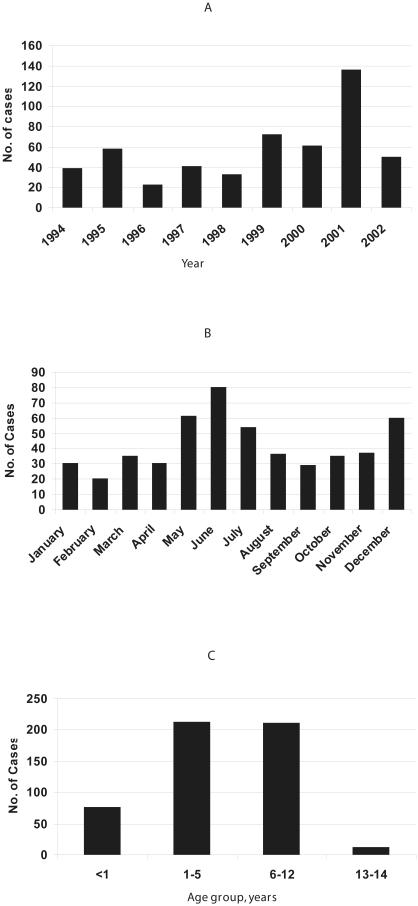
- Cases clustered in summer and autumn: 38% occurred in June–August and 24% in September–November; the peak month was June (86 cases, 17%).
- Common features were fever (98%), headache (94%), vomiting (67%), neck stiffness (60%), and irritation/lethargy (46%).
- Enterovirus RNA was detected in 47 of 96 CSF samples tested (48.9%); PCR-positive children had shorter hospitalization than PCR-negative or untested children (P = 0.01).
- No serious complications or deaths occurred; no fatalities, serious complications, or sequelae were reported among hospitalized patients.
Methods
- Retrospective review of medical records from a tertiary children’s hospital in Athens of children hospitalized from January 1994 to December 2002 with discharge diagnoses of aseptic or viral meningitis.
- Included children aged 1 month to 14 years who met CSF criteria for aseptic meningitis or had confirmed viral meningitis; excluded children who had received antibiotics before CSF examination. Total sample: 506 children.
- Main analyses used descriptive statistics and group comparisons (chi-square, t-test, Mann-Whitney U, Kruskal Wallis), plus linear regression for monthly temperature vs. viral meningitis hospitalizations; incidence was calculated using the hospital catchment population.
Limitations
- The paper states it was retrospective and based on medical records, which limits available information and is an inherent study limitation.
- The incidence is likely underestimated because it was based on patients presenting to the index hospital, while some children may have sought care elsewhere.
- PCR testing was ordered by physicians rather than by predefined criteria, which may have affected hospitalization length; the paper also notes that the impact on cost-benefit strategy and optimal PCR use frequency remains unanswered.
Model-written summary. Check it against the paper before relying on it.
Integrity signals
Registry
Cites
Statistics
Figures
Verification
Claims the paper makes
1 Valid · 0 Not valid · 6 Not checked · 45 Own results and interpretations
A result the paper reports from its own data — it cites no other source for it, so there is none to check. The quote shows it is in the paper.
In the paper
“The annual incidence rate was estimated to be 17/100,000 children less than 14 years of age.”
- Also stated in: § Epidemiology · hedged
“The mean annual incidence rate for the hospitalized aseptic meningitis cases in the region of Athens was estimated to be 17/100,000 children less than 14 years of age”
§ Aseptic Meningitis in Children: Analysis of 506 Cases > Abstract > Methodology/Principal Findings
hedgedn = 506- Asserted: passes — The authors put it forward as true.
- Checkable: passes — It can be checked against evidence.
- Load-bearing: unclear — It is unclear whether the paper’s conclusions depend on it.
- Based: passes — The paper gives a reason why it holds.
- Also stated in: § Epidemiology · hedged
A result the paper reports from its own data — it cites no other source for it, so there is none to check. The quote shows it is in the paper.
In the paper
“the highest incidence was observed in the age group of 1–5 years (26/100,000 children)”
§ Aseptic Meningitis in Children: Analysis of 506 Cases > Results > Epidemiology
plainstates an associationn = 506- Asserted: passes — The authors put it forward as true.
- Checkable: passes — It can be checked against evidence.
- Load-bearing: unclear — It is unclear whether the paper’s conclusions depend on it.
- Based: passes — The paper gives a reason why it holds.
A result the paper reports from its own data — it cites no other source for it, so there is none to check. The quote shows it is in the paper.
In the paper
“the lowest in the age group of 13–14 years (7/100,000 in children).”
§ Aseptic Meningitis in Children: Analysis of 506 Cases > Results > Epidemiology
plainn = 506- Asserted: passes — The authors put it forward as true.
- Checkable: passes — It can be checked against evidence.
- Load-bearing: unclear — It is unclear whether the paper’s conclusions depend on it.
- Based: passes — The paper gives a reason why it holds.
A result the paper reports from its own data — it cites no other source for it, so there is none to check. The quote shows it is in the paper.
In the paper
“A total of 506 children, median age 5 years, were identified.”
- Also stated in: § Epidemiology · plain
“A total of 506 patients were included in the analysis.”
§ Aseptic Meningitis in Children: Analysis of 506 Cases > Abstract > Methodology/Principal Findings
plainn = 506- Asserted: passes — The authors put it forward as true.
- Checkable: passes — It can be checked against evidence.
- Load-bearing: passes — The paper’s conclusions depend on it.
- Based: passes — The paper gives a reason why it holds.
- Also stated in: § Epidemiology · plain
A result the paper reports from its own data — it cites no other source for it, so there is none to check. The quote shows it is in the paper.
In the paper
“The peak calendar month over the 9-year period was June with a total of 86 cases (17%).”
§ Aseptic Meningitis in Children: Analysis of 506 Cases > Results > Epidemiology
plainn = 86- Asserted: passes — The authors put it forward as true.
- Checkable: passes — It can be checked against evidence.
- Load-bearing: unclear — It is unclear whether the paper’s conclusions depend on it.
- Based: passes — The paper gives a reason why it holds.
30 more claims
Create a free account to see all 52 claims and every source verdict.
- Probably not a substantial claim. 7
- It may state two separate claims as one. 12
Citations
Cites
Enteroviral infections of the central nervous system.
Rotbart, H. A. (1995) · Clinical Infectious Diseases · doi:10.1093/clinids/20.4.971 · Cited by 312 · cited 15×
“All children who had an acute illness with 10 or more white blood cells (WBC) in the CSF in the absence of microorganism on Gram stain and on routine culture, negative latex agglutination tests for bacterial antigens, and clinical course consistent with aseptic meningitis as well as those who had confirmed viral menin…”
BackgroundInfluentialNigrovic, L. E. (2007) · JAMA · doi:10.1001/jama.297.1.52 · Cited by 306 · cited 1×
“There are studies that have developed clinical prediction algorithms to help excluding the possibility for bacterial meningitis [14].”
BackgroundRamers, C. (2000) · JAMA · doi:10.1001/jama.283.20.2680 · Cited by 291 · cited 2×
“The polymerase chain reaction (PCR) has been shown to be an effective alternative to viral culture in diagnosing NPHEV meningitis and its use may reduce the hospital related cost by rapid diagnosis and earlier discharge from the hospital [3,7–12].”
BackgroundMethodTemporal and Geographic Patterns of Isolates of Nonpolio Enterovirus in the United States, 1970-1983
Strikas, R. A., Anderson, L. J., & Parker, R. A. (1986) · Journal of Infectious Diseases · doi:10.1093/infdis/153.2.346 · Cited by 238 · cited 1×
“Most of the cases occur in epidemics during summer and autumn although sporadic cases can occur throughout the year [3,5,6].”
BackgroundAseptic Meningitis in Infants <2 Years of Age: Diagnosis and Etiology
Berlin, L. E., Rorabaugh, M. L., Heidrich, F., Roberts, K., Doran, T., & Modlin, J. F. (1993) · Journal of Infectious Diseases · doi:10.1093/infdis/168.4.888 · Cited by 174 · cited 2×
“Non-polio human enteroviruses (NPHEV) are the leading recognizable cause of aseptic meningitis accounting for 80% to 92% of all cases in which a pathogen is identified [1–3].”
BackgroundSAWYER, M. H., HOLLAND, D., AINTABLIAN, N., CONNOR, J. D., KEYSER, E. F., & WAECKER, N. J. (1994) · The Pediatric Infectious Disease Journal · doi:10.1097/00006454-199403000-00002 · Cited by 171 · cited 1×
“CSF examination also does not always help to distinguish aseptic from bacterial meningitis since the number of cells vary from few to thousands and early in the course of the disease, in some cases, there is polymorphonuclear predominance [12,15,16].”
BackgroundIshiko, H., Shimada, Y., Yonaha, M., Hashimoto, O., Hayashi, A., Sakae, K., & Takeda, N. (2002) · The Journal of Infectious Diseases · doi:10.1086/339298 · Cited by 152 · cited 1×
“Enteroviruses constitute a genus of the picornavirus family which includes poliovirus types 1, 2, 3, and human enterovirus A, B, C, and D [4].”
BackgroundROBINSON, C. C., WILLIS, M., MEAGHER, A., GIESEKER, K. E., ROTBART, H., & GLODÉ, M. P. (2002) · The Pediatric Infectious Disease Journal · doi:10.1097/00006454-200204000-00005 · Cited by 131 · cited 1×
“In another study, although the time of reporting PCR results (less or more than 24 hours) had no significant reduction in antibiotic use or length of hospitalization, the earlier report of results reduced by 37% the hospital related expenses [23].”
ResultEnterovirus infections: diagnosis and treatment.
SAWYER, M. H. (1999) · The Pediatric Infectious Disease Journal · doi:10.1097/00006454-199912000-00002 · Cited by 127
Schlesinger, Y., Sawyer, M. H., & Storch, G. A. (1994) · Pediatrics · doi:10.1542/peds.94.2.157 · Cited by 99
Cited by
Viral diseases of the central nervous system
Swanson, P. A., & McGavern, D. B. (2015) · Current Opinion in Virology · doi:10.1016/j.coviro.2014.12.009 · Cited by 314
Wolthers, K. C., Benschop, K. S. M., Schinkel, J., Molenkamp, R., Bergevoet, R. M., Spijkerman, I. J. B., Kraakman, H. C., & Pajkrt, D. (2008) · Clinical Infectious Diseases · doi:10.1086/589752 · Cited by 252
“It has been shown that rapid diagnosis of EV infection by PCR can reduce hospital stay and duration of antibiotic use [26–28]; therefore, the addition of an HPeVspecific PCR could further reduce duration of antibiotic use and duration of hospital stay in children with sepsislike illness or CNS symptoms.”
BackgroundMiyamoto, S., Inoue, H., Nakamura, T., Yamada, M., Sakamoto, C., Urata, Y., Okazaki, T., Marumoto, T., Takahashi, A., Takayama, K., et al. (2012) · Cancer Research · doi:10.1158/0008-5472.can-11-3185 · Cited by 222
“Furthermore, most non-polio enteroviruses are common and highly prevalent, and are mainly associated with asymptomatic infection or mild disease (12).”
BackgroundEnterovirus infections of the central nervous system
Rhoades, R. E., Tabor-Godwin, J. M., Tsueng, G., & Feuer, R. (2011) · Virology · doi:10.1016/j.virol.2010.12.014 · Cited by 212
“Non-polio EVs are known to target the central nervous system (CNS) and are responsible for numerous clinical manifestations, including encephalitis, and meningitis (Michos et al., 2007).”
BackgroundNeuroinvasion and Inflammation in Viral Central Nervous System Infections
Dahm, T., Rudolph, H., Schwerk, C., Schroten, H., & Tenenbaum, T. (2016) · Mediators of Inflammation · doi:10.1155/2016/8562805 · Cited by 155
“000 per year [2, 3].”
Aseptic Meningitis and Viral Myelitis
Irani, D. N. (2008) · Neurologic Clinics · doi:10.1016/j.ncl.2008.03.003 · Cited by 139
“In one series, patients with positive CSF EV PCR assays had shorter durations of antibiotic coverage and hospitalization compared with patients with negative results or in whom the assay was not performed [51].”
Neurotropic Enterovirus Infections in the Central Nervous System
Huang, H.-I., & Shih, S.-R. (2015) · Viruses · doi:10.3390/v7112920 · Cited by 130
Archimbaud, C., Chambon, M., Bailly, J. L., Petit, I., Henquell, C., Mirand, A., Aublet‐Cuvelier, B., Ughetto, S., Beytout, J., Clavelou, P., et al. (2009) · Journal of Medical Virology · doi:10.1002/jmv.21330 · Cited by 105
Viral meningitis: current issues in diagnosis and treatment
McGill, F., Griffiths, M. J., & Solomon, T. (2017) · Current Opinion in Infectious Diseases · doi:10.1097/qco.0000000000000355 · Cited by 97
Enterovirus Infections of the Central Nervous System in Children: An Update
Rudolph, H., Schroten, H., & Tenenbaum, T. (2016) · Pediatric Infectious Disease Journal · doi:10.1097/inf.0000000000001090 · Cited by 87
“It is caused by EVs in 48–95% of the cases in which a causative virus is identified in high-income settings.(1,2) In contrast, the frequency was considerably lower (6%) in a recent but rare report from a resource-poor setting.”
BackgroundMartin, N. G., Iro, M. A., Sadarangani, M., Goldacre, R., Pollard, A. J., & Goldacre, M. J. (2016) · The Lancet Infectious Diseases · doi:10.1016/s1473-3099(16)30201-8 · Cited by 78
Procalcitonin: The marker of pediatric bacterial infection
Memar, M. Y., Varshochi, M., Shokouhi, B., Asgharzadeh, M., & Kafil, H. S. (2017) · Biomedicine & Pharmacotherapy · doi:10.1016/j.biopha.2017.11.149 · Cited by 77
Lévêque, N., Haecke, A. V., Renois, F., Boutolleau, D., Talmud, D., & Andréoletti, L. (2011) · Journal of Clinical Microbiology · doi:10.1128/jcm.01214-11 · Cited by 63
“Human enteroviruses (HEVs) are the most common cause of aseptic meningitis outbreaks in children during the summer season (1, 23).”
BackgroundEmergency Department Management of Meningitis and Encephalitis
Fitch, M. T., Abrahamian, F. M., Moran, G. J., & Talan, D. A. (2008) · Infectious Disease Clinics of North America · doi:10.1016/j.idc.2007.10.001 · Cited by 69
“On the other hand, 30% to 50% of patients with viral meningitis have a CSF neutrophil predominance, a finding typically described in bacterial disease [20,38,39].”
BackgroundSeven-fold increase in viral meningo-encephalitis reports in England and Wales during 2004–2013
Kadambari, S., Okike, I., Ribeiro, S., Ramsay, M. E., Heath, P. T., Sharland, M., & Ladhani, S. N. (2014) · Journal of Infection · doi:10.1016/j.jinf.2014.05.012 · Cited by 58
Host Immune Response to Tuberculous Meningitis
Visser, D. H., Solomons, R., Ronacher, K., van Well, G. T. J., Heymans, M. W., Walzl, G., Chegou, N. N., Schoeman, J. F., & van Furth, A. M. (2014) · Clinical Infectious Diseases · doi:10.1093/cid/ciu781 · Cited by 55
“VM was diagnosed when either a viral pathogen was confirmed by PCR or the clinical outcome was favorable with only supportive and/or antiviral therapy and CSF leukocyte count of ≥10 ×10/L and other causes of meningitis were excluded [17, 18].”
MethodStructural and Functional Analysis of Coxsackievirus A9 Integrin α v β 6 Binding and Uncoating
Shakeel, S., Seitsonen, J. J. T., Kajander, T., Laurinmäki, P., Hyypiä, T., Susi, P., & Butcher, S. J. (2013) · Journal of Virology · doi:10.1128/jvi.02989-12 · Cited by 58
“Picornaviruses that belong to the Human enterovirus B species (HEV-B) in the family Picornaviridae are the major cause of aseptic meningitis (1, 2).”
BackgroundViral etiology of aseptic meningitis among children in Southern Iran
Hosseininasab, A., Alborzi, A., Ziyaeyan, M., Jamalidoust, M., Moeini, M., Pouladfar, G., Abbasian, A., & Kadivar, M. R. (2011) · Journal of Medical Virology · doi:10.1002/jmv.22056 · Cited by 45
“As shown in a previous report, the incidence of aseptic meningitis depends more on the yearly outbreaks as well as the yearly trends [Michos et al., 2007].”
BackgroundResultLogotheti, M., Pogka, V., Horefti, E., Παπαδάκος, Κ. Σ., Giannaki, M., Pangalis, A., Sgouras, D. N., & Mentis, A. F. (2009) · Journal of Clinical Virology · doi:10.1016/j.jcv.2009.07.019 · Cited by 56
Kadambari, S., Bukasa, A., Okike, I. O., Pebody, R. G., Brown, D. W., Gallimore, C. I., Xerry, J., Sharland, M., & Ladhani, S. N. (2014) · Clinical Microbiology and Infection · doi:10.1111/1469-0691.12753 · Cited by 48
“As a consequence, most individuals with central nervous system infections now have aseptic meningitis [3,4], which is usually of viral aetiology [5,6].”
BackgroundEnterovirus infections are associated with white matter damage in neonates
Wu, T., Fan, X., Wang, W., & Yuan, T. (2014) · Journal of Paediatrics and Child Health · doi:10.1111/jpc.12656 · Cited by 42
Clinical and virological features of an aseptic meningitis outbreak in North-Eastern France, 2005
Brunel, D., Lévêque, N., Jacques, J., Renois, F., Motte, J. E., & Andréoletti, L. (2008) · Journal of Clinical Virology · doi:10.1016/j.jcv.2008.02.008 · Cited by 38
Long, L., Xu, L., Xiao, Z., Hu, S., Luo, R., Wang, H., Lu, X., Xu, Z., Yao, X., Zhou, L., et al. (2016) · Scientific Reports · doi:10.1038/srep23444 · Cited by 42
Experts’ opinion about the pediatric secondary headaches diagnostic criteria of the ICHD-3 beta
Özge, A., Abu‐Arafeh, I., Gelfand, A. A., Goadsby, P. J., Cuvellier, J. C., Valeriani, M., Сергеев, А. В., Barlow, K. M., Uludüz, D., Yalın, O. Ö., et al. (2017) · The Journal of Headache and Pain · doi:10.1186/s10194-017-0819-x · Cited by 38
“These symptoms are missing in some cases of pediatric intracranial infection [41].”
BackgroundHenquell, C., Mirand, A., Richter, J., Schuffenecker, I., Böttiger, B. E., Diedrich, S., Terletskaia‐Ladwig, E., Christodoulou, C., Peigue‐Lafeuille, H., & Bailly, J. (2013) · Journal of Virology · doi:10.1128/jvi.02075-13 · Cited by 44
“The enteroviruses (EVs; family Picornaviridae) are the leading cause of acute meningitis (1), hand, foot, and mouth disease (2), and upper respiratory infections (3).”
BackgroundEnteroviral infections in the first three months of life
Sandoni, M., Ciardo, L., Tamburini, C., Boncompagni, A., Rossi, C., Guidotti, I., Garetti, E., Lugli, L., Iughetti, L., & Berardi, A. (2022) · Pathogens · doi:10.3390/pathogens11010060 · Cited by 34
“EVs meningitis is almost three-fold more frequent than bacterial meningitis and the estimated incidence in high-income countries is 12–19 cases per 100,000 population per year [44,45].”
BackgroundTveitnes, D., Natås, O. B., Skadberg, Ø., & Øymar, K. A. A. (2012) · Archives of Disease in Childhood · doi:10.1136/archdischild-2011-300526 · Cited by 36
“Vomiting, n (%) 5 (4) 10 (59) 22 (49) <0.”
Shen, H., Zhu, C., Liu, X., Ma, D., Song, C., Zhou, L., Wang, Z., Ou, Y., Ma, W., Shi, X., et al. (2019) · BMC Infectious Diseases · doi:10.1186/s12879-019-4162-5 · Cited by 36
Clinical features of gingivostomatitis due to primary infection of herpes simplex virus in children
Huang, C.-W., Hsieh, C.-H., Lin, M.-R., & Huang, Y. (2020) · BMC Infectious Diseases · doi:10.1186/s12879-020-05509-2 · Cited by 28
Human Astrocytic Cells Support Persistent Coxsackievirus B3 Infection
Zhang, X., Zheng, Z., Shu, B., Liu, X., Zhang, Z., Liu, Y., Bai, B., Hu, Q., Mao, P., & Wang, H. (2013) · Journal of Virology · doi:10.1128/jvi.02090-13 · Cited by 32
“In addition, EVs are the most frequent etiological agents of central nervous system (CNS) infections, which lead to aseptic meningitis and encephalitis, predominantly in the very young (6, 7).”
BackgroundMace, S. E. (2010) · Emergency Medicine Clinics of North America · doi:10.1016/j.emc.2010.03.002 · Cited by 38
Enterovirus Encephalitis Increases the Risk of Attention Deficit Hyperactivity Disorder
Chou, I., Lin, C.-C., & Kao, C. (2015) · Medicine · doi:10.1097/md.0000000000000707 · Cited by 29
“Several previous large studies on encephalitis cases have found that EVs are among the major known causes of encephalitis.(12,13) EV encephalitis generally has a favorable prognosis(14); however, in 1998, an epidemic of hand-foot-and-mouth disease caused by EV71 affected thousands of children in Taiwan.”
BackgroundMolecular Epidemiology of Enterovirus in Children with Central Nervous System Infections
Posnakoglou, L., Tatsi, E., Chatzichristou, P., Siahanidou, T., Kanaka‐Gantenbein, C., Syriopoulou, V., & Michos, A. G. (2021) · Viruses · doi:10.3390/v13010100 · Cited by 30
Self-citationClinical characteristics, risk factors and pre‐surgical evaluation of post‐infectious epilepsy
Sellner, J., & Trinka, E. (2012) · European Journal of Neurology · doi:10.1111/j.1468-1331.2012.03842.x · Cited by 29
“tic meningitis [41,42], and the risk for epilepsy is in the same range as the incidence of epilepsy in the general population [7].”
BackgroundCytotoxic and antiviral activities of the essential oils from Tunisian Fern, Osmunda regalis
Bouazzi, S., Jmii, H., Mokni, R. E., et al. (2018) · South African Journal of Botany · doi:10.1016/j.sajb.2018.06.015 · Cited by 27
Vidal, L. R., de Almeida, S. M., Messias-Reason, I., Nogueira, M. B., Debur, M. D. C., Pessa, L. F. C., Pereira, L. A., Rotta, I., Takahashi, G. R. D. A., da Silveira, C. S., et al. (2011) · Arquivos de Neuro-Psiquiatria · doi:10.1590/s0004-282x2011000400013 · Cited by 30
Strain-dependent effects of clinical echovirus 30 outbreak isolates at the blood-CSF barrier
Dahm, T., Adams, O., Boettcher, S., Diedrich, S., Morozov, V., Hansman, G. S., Fallier‐Becker, P., Schädler, S., Burkhardt, C. J., Weiß, C., et al. (2018) · Journal of Neuroinflammation · doi:10.1186/s12974-018-1061-4 · Cited by 26
Viral infections of the central nervous system in Africa
Kakooza‐Mwesige, A., Tshala-Katumbay, D. D., & Juliano, S. L. (2019) · Brain Research Bulletin · doi:10.1016/j.brainresbull.2018.12.019 · Cited by 28
Jmii, H., Fisson, S., Aouni, M., & Jaïdane, H. (2020) · Reviews in Medical Virology · doi:10.1002/rmv.2191 · Cited by 23
Nahdi, I., Boukoum, H., Abid, N., Romdane, F. B., Hammami, S., Chebel, S., Frih-Ayed, M., Guediche, M. N., Chakroun, M., Aouni, M., et al. (2011) · Journal of Medical Virology · doi:10.1002/jmv.23192 · Cited by 27
de Oliveira, D. B., Candiani, T. M. S., Franco-Luiz, A. P. M., Almeida, G. M. D. F., Abrahão, J. S., Rios, M., Coimbra, R. S., & Kroon, E. G. (2017) · Journal of the Neurological Sciences · doi:10.1016/j.jns.2017.02.025 · Cited by 31
Rudolph, H., Dernbach, R. P., Walka, M., Rey-Hinterkopf, P., Melichar, V. O., Muschiol, E., Schweitzer‐Krantz, S., Richter, J. W., Weiss, C., Böttcher, S., et al. (2017) · European Journal of Clinical Microbiology & Infectious Diseases · doi:10.1007/s10096-017-2979-7 · Cited by 24
“In line with published data, NPEV infections were the major cause of viral meningitis in our patient cohort and E-30 was the prevalent NPEV serotype [3, 16, 18].”
ResultMenasalvas, A. I., Salvador-García, C., Moreno‐Docón, A., Miguélez, S. A., Cánovas, C. P., & Sánchez‐Solís, M. (2012) · Enfermedades Infecciosas y Microbiología Clínica · doi:10.1016/j.eimc.2012.07.007 · Cited by 24
Shi, C., Liu, J., Shi, P., Ji, H. L., Shen, Y. L., & Qian, Y.-H. (2018) · BMC Infectious Diseases · doi:10.1186/s12879-018-3385-1 · Cited by 23
Amoxicillin-induced aseptic meningoencephalitis
Bowirrat, A., & Shahien, R. (2010) · International Journal of General Medicine · doi:10.2147/ijgm.s11577 · Cited by 19
Update on Viral Infections Involving the Central Nervous System in Pediatric Patients
Autore, G., Bernardi, L., Perrone, S., & Esposito, S. (2021) · Children · doi:10.3390/children8090782 · Cited by 27
“The incidence rate of CNS viral infections ranges from 10 to 20 cases per 100,000 children per year in high-income countries [4,5].”
BackgroundMeningitis Secondary to Ruptured Epidermoid Cyst: Case-Based Review
Velamati, R., Hageman, J. R., & Bartlett, A. H. (2013) · Pediatric Annals · doi:10.3928/00904481-20130522-12 · Cited by 19
Siafakas, N., Attilakos, A., Vourli, S., Stefos, E., Meletiadis, J., Nikolaidou, P., & Zerva, L. (2011) · Molecular and Cellular Probes · doi:10.1016/j.mcp.2011.06.001 · Cited by 18
“So far, the only information about pediatric enterovirus infections in Greece refers to a number of outbreaks of viral meningitis [8,11,13,27,28].”
BackgroundDrysdale, S. B., & Kelly, D. F. (2016) · Archives of Disease in Childhood Education & Practice · doi:10.1136/archdischild-2016-310632 · Cited by 19
Pietrasanta, C., Ronchi, A., Bassi, L., Carli, A. D., Caschera, L., Russo, F. M. L., Crippa, B. L., Pisoni, S., Crimi, R., Artieri, G., et al. (2024) · Journal of Clinical Virology · doi:10.1016/j.jcv.2024.105664 · Cited by 17
Development of a enterovirus diagnostic assay system for diagnosis of viral myocarditis in humans
Lim, B., Ju, E., Lao, D. H., Yun, S., Lee, Y., Kim, D., & Jeon, E. (2013) · Microbiology and Immunology · doi:10.1111/1348-0421.12028 · Cited by 15
Toczyłowski, K., Bojkiewicz, E., Barszcz, M., Wozinska-Klepadlo, M., Potocka, P., & Sulik, A. (2020) · Journal of Clinical Medicine · doi:10.3390/jcm9082324 · Cited by 18
“Similarly, in retrospective studies from Greece [21], Sweden [6], UK [22] and Germany [23], enteroviruses were the major causative agents of aseptic meningitis.”
ResultFarshadpour, F., & Taherkhani, R. (2021) · Journal of NeuroVirology · doi:10.1007/s13365-021-00973-1 · Cited by 20
Berardi, A., Sandoni, M., Toffoli, C., Boncompagni, A., Gennari, W., Bergamini, M. B., Lucaccioni, L., & Iughetti, L. (2019) · The Italian Journal of Pediatrics/Italian journal of pediatrics · doi:10.1186/s13052-019-0689-8 · Cited by 16
Picornavirus Identified in Alzheimer’s Disease Brains: A Pathogenic Path?
Niklasson, B., Lindquist, L., Klitz, W., Bank, N. B., & Englund, E. M. (2020) · Journal of Alzheimer s Disease Reports · doi:10.3233/adr-200174 · Cited by 16
“Among these viruses, poliovirus is best known, while other non-polio picornaviruses account for approximately one half of aseptic meningitis cases in children [32].”
BackgroundMeningitis and a Febrile Vomiting illness Caused by Echovirus Type 4, Northern Territory, Australia
Markey, P. G., Davis, J. S., Harnett, G. B., Williams, S. H., & Speers, D. J. (2009) · Emerging infectious diseases · doi:10.3201/eid1601.081519 · Cited by 14
“Confusion/irritability 16 (57) 2 (33) 2 (11) 7 (17) 27 (29)”
Coxsackievirus B4 infection and interneuronal spread in primary cultured neurons
Jmii, H., Halouani, A., Maâtouk, M., Ghédira, L. C., Aouni, M., Fisson, S., & Jaïdane, H. (2020) · Microbial Pathogenesis · doi:10.1016/j.micpath.2020.104235 · Cited by 13
Wolfaardt, M., Büchner, A., Myburgh, M., Avenant, T., du Plessis, N., & Taylor, M. B. (2014) · Journal of Clinical Virology · doi:10.1016/j.jcv.2014.08.001 · Cited by 13
“5 days) in a large analysis of aseptic meningitis in children [38].”
BackgroundLong-term outcomes of pediatric enterovirus infection in Taiwan: a population-based cohort study
Tseng, J.-J., Lin, C.-H., & Lin, M.-C. (2020) · Frontiers in Pediatrics · doi:10.3389/fped.2020.00285 · Cited by 12
Martínez, A. A., Castillo, J., Sanchez, M. C., Zaldívar, Y. L., Mendoza, Y., Tribaldos, M., Acosta, P., Smith, R. E., & Pascale, J. M. (2012) · The Journal of Infection in Developing Countries · doi:10.3855/jidc.2615 · Cited by 12
“As reported in other enterovirus outbreaks involving patients aged under 20 years [12,13], male patients were observed more frequently than female patients (1.”
ResultEpidemiological study on hand, foot and mouth disease in Tongzhou District, Beijing, 2013–2017
Liu, X.-F., Sun, X.-M., Sun, X.-W., et al. (2019) · Journal of International Medical Research · doi:10.1177/0300060519841974 · Cited by 12
“causing fulminant cardiorespiratory failure or even death.(5,6) Since 2008, approximately”
Backgroundda Rocha, L. C., Estofolete, C. F., Milhim, B. H. G. D. A., Augusto, M. T., Zini, N., da Silva, G. C. D., Ferraz, H. C., Brienze, V. M. S., Liso, E., Cunha, M. S., et al. (2020) · Journal of Medical Virology · doi:10.1002/jmv.26216 · Cited by 13
Akya, A., Ahmadi, K., Zehtabian, S., Salimi, A., Elahi, A., & Madani, S. H. (2015) · Jundishapur Journal of Microbiology · doi:10.5812/jjm.22639 · Cited by 12
“Although in our study a small number of the samples were positive, most of these infections occurred between May and July, a timeframe similar to those given in other reports indicating a higher occurrence of viral meningitis during spring and summer (22-24).”
ResultLee, J., Choi, A., Kim, K., Bin, J. H., Eom, T. H., Yoo, I. H., Yoon, D. H., Kim, S., & Kim, Y.-H. (2022) · Frontiers in Pediatrics · doi:10.3389/fped.2022.810616 · Cited by 12
Wang, Y., Guo, X.-T., Zhu, M.-Y., Mao, Y.-C., Xu, X., Hua, Y., Xu, L., Jiang, L.-H., Zhao, C.-Y., Zhang, X., et al. (2023) · Frontiers in Cellular and Infection Microbiology · doi:10.3389/fcimb.2023.1104858 · Cited by 14
“The incidence rate of VE and/or VM is 10–20 cases/ 100,000 children/year globally (Hviid and Melbye, 2007; Michos et al., 2007).”
BackgroundRoshdy, W. H., Kandeil, A., Fahim, M., Naguib, N. Y., Mohsen, G., Shawky, S., El-Fattah, M. M. A., Naguib, A. M., Salamony, A., Shamikh, Y. I., et al. (2023) · Virology Journal · doi:10.1186/s12985-023-02079-y · Cited by 12
“6 cases of aseptic meningitis per 100,000 persons was recorded and most of cases caused by viruses [1, 5].”
BackgroundNervous System Complications of Systemic Viral Infections
Greenlee, J. (2014) · Elsevier eBooks · doi:10.1016/b978-0-12-407710-2.00043-6 · Cited by 14
Study of different diagnostic markers used to differentiate septic from aseptic meningitis
El-Yamany, S. A., Mayah, W. W., Jiman-Fatani, A. A., Saadany, S. A. E., Hassanien, M. A., Hasan, A., & Abo-Hagar, H. H. (2013) · Journal of Microscopy and Ultrastructure · doi:10.1016/j.jmau.2013.06.007 · Cited by 10
“Acute meningitis in children is mainly aseptic and does not require antibiotic treatment [1].”
BackgroundRisk Classification for Enteroviral Infection in Children With Meningitis and Negative Gram Stain
zakhour, R. G., Aguilera, E. A., Hasbun, R., & Wootton, S. H. (2016) · Pediatric Emergency Care · doi:10.1097/pec.0000000000000912 · Cited by 10
Acute viral infections of the central nervous system, 2014‐2016, Greece
Papa, A., & Papadopoulou, E. (2017) · Journal of Medical Virology · doi:10.1002/jmv.24997 · Cited by 9
“9%) children with aseptic meningitis.(12) In a study among”
BackgroundNational surveillance for non-polio enteroviruses in Canada: Why is it important?
Booth, T., Grudeski, E., & McDermid, A. (2015) · Canada Communicable Disease Report · doi:10.14745/ccdr.v41is1a03 · Cited by 8
Schwer verlaufende Meningitis und Enzephalitis bei Kindern und Jugendlichen
Rudolph, H., Porto, L., & Tenenbaum, T. (2022) · Monatsschrift Kinderheilkunde · doi:10.1007/s00112-022-01610-9 · Cited by 9
“Enteroviren wie Echovirus 11, 13 und 30, die Kleinraumepidemien im Sommer und im Herbst auslösen [19, 22, 23].”
BackgroundAngez, M., Shaukat, S., Zahra, R., Sharif, S., Alam, M. M., Khurshid, A., Rana, M. S., & Zaidi, S. S. Z. (2015) · Scientific Reports · doi:10.1038/srep17456 · Cited by 10
Immunopathology in the brain of mice following vertical transmission of Coxsackievirus B4
Jmii, H., Halouani, A., Abdeli, M., Aouni, M., Fisson, S., & Jaïdane, H. (2020) · Microbial Pathogenesis · doi:10.1016/j.micpath.2020.103965 · Cited by 6
Chinese Phytopharmacology in dermatology - A Systematic Review
Rodrigues, J. M., Santos, C., Ribeiro, V., Alvarenga, A., & Santos, R. V. (2023) · Pharmacological Research - Modern Chinese Medicine · doi:10.1016/j.prmcm.2023.100255 · Cited by 7
Braunová, A., Krbková, L., Rainetová, P., Musílek, M., Čapovová, I., Klapačová, L., Musil, V., Homola, L., Kravalová, T., Bednářová, J., et al. (2019) · Biomedical Papers · doi:10.5507/bp.2018.082 · Cited by 8
Outbreak of central nervous system infections among children in Thai Binh, Viet Nam
Phi, D. L., Tran, X. D., To, M. M., Dang, H. Y., Pham, D. T., Vu, T. T. T., Tran, T. K., Dung, M., Vu, T. T., Ranque, S., et al. (2022) · Emerging Microbes & Infections · doi:10.1080/22221751.2022.2088405 · Cited by 9
“Apart from EV-A71, the short-term prognosis of meningitis due to EV is favourable [23].”
BackgroundXie, Y., Hu, Q., Jiang, W., Ji, W., Chen, S., Jin, Y., & Duan, G. (2022) · Vaccines · doi:10.3390/vaccines10111829 · Cited by 8
“HFMD is a mild, self-limiting disease, but a number of patients develop severe disease, with central nervous systems (CNS) complications [6].”
BackgroundPrete, R. D., Taranto, A. M. D., Lipsi, M. R., Natalicchio, M. I., Antonetti, R., & Miragliotta, G. (2009) · PubMed · Cited by 6
Bacterial Meningitis in Childhood
Sadarangani, M., & Pollard, A. J. (2011) · Advances in experimental medicine and biology · doi:10.1007/978-1-4614-0204-6_16 · Cited by 7
Central nervous system infection following vertical transmission of Coxsackievirus B4 in mice
Jmii, H., Halouani, A., Elmastour, F., Ifie, E., Richardson, S. J., Sané, F., Mokni, M., Aouni, M., Hober, D., & Jaïdane, H. (2016) · Pathogens and Disease · doi:10.1093/femspd/ftw096 · Cited by 4
“CV-B infections mainly cause meningitis and encephalitis in infants (Kamei et al. 1990; Kumar et al. 2012; Michos et al. 2007) but have been also linked to other neurological manifestations such as limb paralysis (Yui & Gledhill, 1991), acute transverse myelitis (Minami et al. 2004), and…”
BackgroundRai, A., Ammi, Z., Anes-Boulahbal, D. L., Assadi, A. A., Amrane, A., Baaloudj, O., & Mouni, L. (2024) · Viruses · doi:10.3390/v16020170 · Cited by 7
“This strain belongs to the NPHEV, known as the major cause of all cases of aseptic meningitis in which the pathogen is identified [27,28,65].”
BackgroundNdiaye, N., Teixeira, D., Dia, N., et al. (2025) · Virology Journal · doi:10.1186/s12985-025-02621-0 · Cited by 4
“Mixed infections by HHV, CMV and EV, were often detected in a case of meningitis [26].”
The polio eradication endgame: Why immunization and continued surveillance is critical
Booth, T. F., Grudeski, E., McDermid, A., & Rotondo, J. (2015) · Canada Communicable Disease Report · doi:10.14745/ccdr.v41i10a03 · Cited by 5
Wami, A. A., Hundie, G. B., Ambachew, R., Berhe, Z. G., Abrha, A., Abebe, W., Tefera, D. A., Geteneh, A., Mihret, A., & Mulu, A. (2021) · PLoS ONE · doi:10.1371/journal.pone.0258652 · Cited by 5
“This is in agreement with the study in Greece [32], China [37], South Korea [8], and Egypt [13] where fever, headache, and vomiting were the most common clinical symptoms in the majority of patients.”
ResultEvaluation of using urine reagent strips in the diagnosis of childhood meningitis
Abdelmotaleb, G. S., Abdo, M. K., Behiry, E. G., & Mahmoud, M. I. (2016) · Medical Research Journal · doi:10.1097/01.mjx.0000511316.35322.38 · Cited by 4
Meningitis aséptica aguda: muchas causas a considerar
Oteo, J. A. (2012) · Enfermedades Infecciosas y Microbiología Clínica · doi:10.1016/j.eimc.2012.05.004 · Cited by 4
Good hearing outcome in children recovering from non‐polio enteroviral meningitis
Choong, C. T., Lee, E. Y., Tan, H. K. K., Lazaroo, D., & Tan, N. W. (2021) · Journal of Paediatrics and Child Health · doi:10.1111/jpc.15505 · Cited by 5
COVID-19-Associated Acute Necrotizing Encephalopathy: A Case Report.
Fazelnia, F., Hasani, S., Zamani, F., & Shabanian, R. (2023) · Iranian journal of child neurology. · doi:10.22037/ijcn.v17i4.38029 · Cited by 4
Romero, J. R. (2016) · ASM Press eBooks · doi:10.1128/9781555819439.ch46 · Cited by 3
Okur, D. Ş., Ümran, P. O. T. A., Güngör, O., & Öner, S. Z. (2022) · Pamukkale Medical Journal · doi:10.31362/patd.1104844 · Cited by 4
Wang, J., Yu, P., Xie, Z., Yan, T.-F., Chen, C., Shen, X., Chen, X., Li, L., Wang, X., Sun, S., et al. (2017) · Archives of Virology · doi:10.1007/s00705-017-3550-7 · Cited by 4
“The clear majority of aseptic meningitis cases are caused by enterovirus (EV) species that mostly target children [4].”
BackgroundViral Infections of the Central Nervous System
Chávez‐Pavoni, J. H. (2018) · Wiley eBooks · doi:10.1002/9780470015902.a0027172 · Cited by 3
Echovirus 30 in Bulgaria during the European Upsurge of the Virus, 2017–2018
Georgieva, I., Stoyanova, A., Stoitsova, S., & Nikolaeva–Glomb, L. (2024) · Pathogens · doi:10.3390/pathogens13020143 · Cited by 3
Chansaenroj, J., Vichaiwattana, P., Puenpa, J., Thatsanathorn, T., Sudhinaraset, N., Wanlapakorn, N., & Poovorawan, Y. (2024) · Cureus · doi:10.7759/cureus.54997 · Cited by 2
“EVs are also the most frequent cause of pediatric aseptic meningitis [2-4].”
BackgroundHaas, H. (2009) · Médecine et Maladies Infectieuses · doi:10.1016/j.medmal.2009.02.025 · Cited by 4
Dashti, A. S., Khalifeh, M., Yousefifar, E., Kadivar, M. R., Jamalidoust, M., Namayandeh, M., & Abdinia, B. (2020) · Archives of Clinical Infectious Diseases · doi:10.5812/archcid.100850 · Cited by 2
“Enterovirus was reported as the most common causative agent of VM in many studies (2, 7, 10, 12, 18).”
BackgroundGökkılıç, B., Çiçek, C., Zeytinoğlu, A., & KARTAL, E. (2021) · Türk Mikrobiyoloji Cemiyeti Dergisi · doi:10.5222/tmcd.2021.74508 · Cited by 2
Echovirus-30-bedingte Meningitiden: Potenzial für regionale Erkrankungshäufungen
Beyrer, K., Korn, K., Raab, K., Schaffer, A., & Windorfer, A. (2010) · Monatsschrift Kinderheilkunde · doi:10.1007/s00112-009-2134-3 · Cited by 2
Hassan, A. M., Abo-Hagar, H. H., & Saadany, S. A. E. (2011) · The Egyptian Journal of Pediatric Allergy and Immunology · Cited by 1
Metadata
- Authors
- Michos, A. G., Syriopoulou, V. P., Hadjichristodoulou, C., Daikos, G. L., Lagona, E., Douridas, P., Mostrou, G., & Theodoridou, M.
- Affiliations
- National and Kapodistrian University of Athens (GR)
- University of Thessaly (GR)
- Venue
- PLoS ONE
- Publisher
- Public Library of Science (PLoS)
- Published
- 2007-08-01
- Volume
- 2
- Issue
- 8
- Pages
- e674
- ISSN
- 1932-6203 (ISSN-L)
- PMC
- PMC1933255
- OpenAlex
- W2016972426
- Semantic Scholar
- 68b280a63ef5aa63832bc9acca7caeb8a2cc7b34
- Cited by
- 147
- References
- 23
- Citations by year
- 2026: 3 · 2025: 4 · 2024: 8 · 2023: 7 · 2022: 10 · 2021: 7 · 2020: 12 · 2019: 9 · 2018: 5 · 2017: 11 · 2016: 12 · 2015: 9 · 2014: 8 · 2013: 12 · 2012: 8
- FWCI
- 3.04
- Type
- journal article
- Language
- en
- Open access
- gold
- doi.org
- Locations
- PLoS ONE (publishedVersion, cc-by)
- PubMed Central (publishedVersion, cc-by)
- PubMed (publishedVersion)
- DOAJ (DOAJ: Directory of Open Access Journals) (submittedVersion, cc-by-sa)
- University of Thessaly Institutional Repository (University of Thessaly) (submittedVersion)
- Topics
- Health Sciences › Medicine › Infectious Diseases › Viral Infections and Immunology Research
- Health Sciences › Medicine › Infectious Diseases › Infectious Encephalopathies and Encephalitis
- Health Sciences › Medicine › Public Health, Environmental and Occupational Health › Mosquito-borne diseases and control
- Keywords
- aseptic meningitis, non-polio enteroviruses, cerebrospinal fluid, incidence, clinical symptoms, length of hospital stay, seasonal variation
- MeSH terms
- Adolescent, Child, Child, Preschool, Enterovirus Infections, Enterovirus, Female, Greece, Humans, Male, Meningitis, Aseptic, Retrospective Studies, Seasons, Incidence, Polymerase Chain Reaction
About these checks
Registry, retraction, Cites and statistics results are computed, not judged, with one exception: a printed reference that no index lists is read once by a model before it counts as a citation error. Claims are extracted by a model and kept only when their quote appears verbatim in the text; each cited source is then checked, with a model’s help, for whether it says what the claim relies on. Those verdicts can be wrong — read the claim’s quote and the cited source before relying on one.
The claim verdicts this report counts are experimental: their accuracy is not yet measured.
A language model drew the claims from the paper on 2026-10-11, under version 3 of the claim definition (model deepseek-v4.1-flash, prompt extract-v3).
A second model labelled each claim on 2026-10-11 (model jev-1.13-20260917, definition revision gold-guideline-v0.2).
Statistics and arithmetic are recomputed, not judged.
Confidence bands are shown only for fields calibrated on our annotated test set. None is calibrated yet, so no band is shown.
What counts as a claim ›How we measure confidence ›How we check this ›
Are you an author, or do you see a problem with this page? Request a review
Data sources
Bibliographic data: Semantic Scholar, OpenAlex, Crossref.
Contains information from the Semantic Scholar Academic Graph Datasets, made available under the ODC Attribution License (ODC-BY 1.0).
Semantic Scholar’s data is described in: Kinney, R., et al. (2023). The Semantic Scholar Open Data Platform. arXiv:2301.10140.
