

The DOI matches its Crossref record; 51 of the 54 references it cites were found in a registry or an index.
Chemical Magnetoreception: Bird Cryptochrome 1a Is Excited by Blue Light and Forms Long-Lived Radical-Pairs
Open accessAbstract
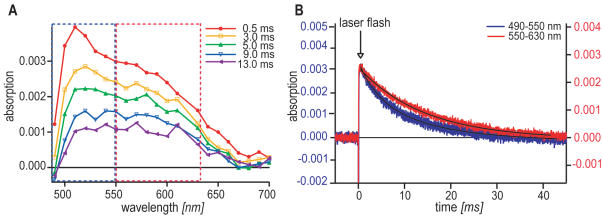
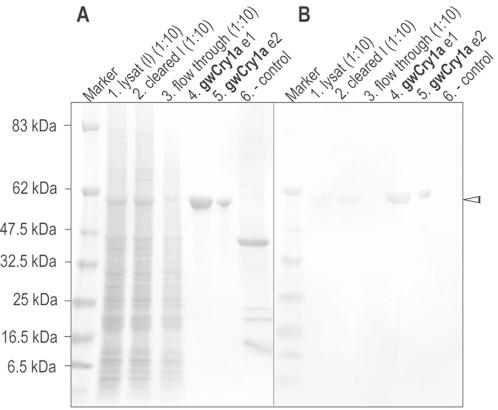
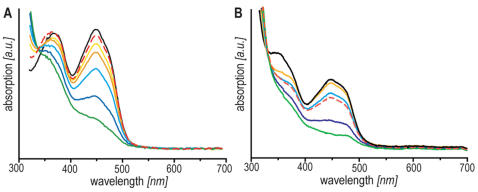
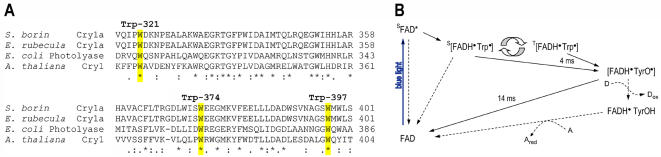
Cryptochromes (Cry) have been suggested to form the basis of light-dependent magnetic compass orientation in birds. However, to function as magnetic compass sensors, the cryptochromes of migratory birds must possess a number of key biophysical characteristics. Most importantly, absorption of blue light must produce radical pairs with lifetimes longer than about a microsecond. Cryptochrome 1a (gwCry1a) and the photolyase-homology-region of Cry1 (gwCry1-PHR) from the migratory garden warbler were recombinantly expressed and purified from a baculovirus/Sf9 cell expression system. Transient absorption measurements show that these flavoproteins are indeed excited by light in the blue spectral range leading to the formation of radicals with millisecond lifetimes. These biophysical characteristics suggest that gwCry1a is ideally suited as a primary light-mediated, radical-pair-based magnetic compass receptor.
Overview
The claims and statistics of this paper haven’t been checked yet.
Run the check — free, no account needed. It reads the open-access text and checks the sources it cites.
Integrity signals
Registry
Cites
Statistics
Figures
Verification
Claims the paper makes
The claims and statistics of this paper haven’t been checked yet.
Run the check — free, no account needed. It reads the open-access text and checks the sources it cites.
Claims other papers make about this one
Each is checked against this paper’s own text: does it say what the citing paper says it does?
In the citing paper
“It seems a logical next step to more complex living creatures, especially since four different types of cryptochrome have been confirmed in the eyes of migratory birds [103] and cryptochromes from the migratory garden warbler form radicals with millisecond lifetimes under the influence of the blue spectral range [104].”
From The future of quantum biology (2018) · cites this paper as [104]
Self-check
Percentages, sums and reported differences re-computed from the paper’s own numbers.
The self-check needs the paper’s full text.
Citations
Cites
Magnetic field effects in chemical kinetics and related phenomena
Steiner, U. E., & Ulrich, T. (1989) · Chemical Reviews · doi:10.1021/cr00091a003 · Cited by 1,660
HY4 gene of A. thaliana encodes a protein with characteristics of a blue-light photoreceptor
Ahmad, M., & Cashmore, A. R. (1993) · Nature · doi:10.1038/366162a0 · Cited by 1,279
A Model for Photoreceptor-Based Magnetoreception in Birds
Ritz, T., Adem, S., & Schulten, K. (2000) · Biophysical Journal · doi:10.1016/s0006-3495(00)76629-x · Cited by 1,176 · cited 4×
“This led to the suggestion that photochemical reactions in the birds’ eyes could produce spin-correlated radical pairs as the primary sensor in a magnetic field-dependent signalling cascade [7,8], based on the fact that the recombination reactions of spin-correlated radical pairs are known to be magnetic field-sensiti…”
BackgroundInfluentialCryptochromes: Blue Light Receptors for Plants and Animals
Cashmore, A. R., Jarillo, J. A., Wu, Y., & Liu, D. (1999) · Science · doi:10.1126/science.284.5415.760 · Cited by 1,027
Trends in the Development of Baculovirus Expression Vectors
Luckow, V. A., & Summers, M. D. (1988) · Nature Biotechnology · doi:10.1038/nbt0188-47 · Cited by 1,016
Magnetic Compass of European Robins
Wiltschko, W., & Wiltschko, R. (1972) · Science · doi:10.1126/science.176.4030.62 · Cited by 752
Structure and function of DNA photolyase
Sancar, A. (1994) · Biochemistry · doi:10.1021/bi00167a001 · Cited by 664
Resonance effects indicate a radical-pair mechanism for avian magnetic compass
Ritz, T., Thalau, P., Phillips, J. B., Wiltschko, R., & Wiltschko, W. (2004) · Nature · doi:10.1038/nature02534 · Cited by 617 · cited 1×
“The hypothesis that the avian magnetic compass is based on a radical pair mechanism is strongly supported by the observation that magnetic compass orientation of migratory birds can indeed be disturbed by weak radiofrequency magnetic fields with frequencies in the MHz range [17,18].”
BackgroundCrystal Structure of DNA Photolyase from Escherichia coli
Park, H.-W., Kim, S., Sancar, A., & Deisenhofer, J. (1995) · Science · doi:10.1126/science.7604260 · Cited by 584
Baculovirus Diversity and Molecular Biology
Blissard, G. W., & Rohrmann, G. F. (1990) · Annual Review of Entomology · doi:10.1146/annurev.en.35.010190.001015 · Cited by 535
Cited by
Sorted by citations
Items 101–183 of 183
Cryptochrome expression in the eye of migratory birds depends on their migratory status
Fusani, L., Bertolucci, C., Frigato, E., & Foà, A. (2014) · Journal of Experimental Biology · doi:10.1242/jeb.096479 · Cited by 27
An open quantum system approach to the radical pair mechanism
Adams, B., Sinayskiy, I., & Petruccione, F. (2018) · Scientific Reports · doi:10.1038/s41598-018-34007-4 · Cited by 26
Heyers, D., Musielak, I., Haase, K., Herold, C., Bolte, P., Güntürkün, O., & Mouritsen, H. (2022) · Brain Structure and Function · doi:10.1007/s00429-022-02566-y · Cited by 19
Self-citationFriis, I., Sjulstok, E., & Solov’yov, I. A. (2017) · Scientific Reports · doi:10.1038/s41598-017-13258-7 · Cited by 25
Molecular Insights into Variable Electron Transfer in Amphibian Cryptochrome
Sjulstok, E., Lüdemann, G., Kubař, T., Elstner, M., & Solov’yov, I. A. (2018) · Biophysical Journal · doi:10.1016/j.bpj.2018.04.014 · Cited by 26
Genetically Encoded Circuit for Remote Regulation of Cell Migration by Magnetic Fields
Mosabbir, A. A., & Truong, K. (2018) · ACS Synthetic Biology · doi:10.1021/acssynbio.7b00415 · Cited by 24
Denton, M. C. J., Smith, L. D., Xu, W., Pugsley, J., Toghill, A., & Kattnig, D. R. (2024) · Nature Communications · doi:10.1038/s41467-024-55124-x · Cited by 23
Hellinger, J., & Hoffmann, K. (2012) · Journal of Comparative Physiology A · doi:10.1007/s00359-012-0732-3 · Cited by 23
Solov’yov, I. A., & Greiner, W. (2009) · Physical Review E · doi:10.1103/physreve.80.041919 · Cited by 23
Orientational behavior of animals with the geomagnetic field and mechanisms of magnetoreception
Крылов, В. В., Osipova, E. A., & Izyumov, Y. G. (2015) · Izvestiya Atmospheric and Oceanic Physics · doi:10.1134/s0001433815070051 · Cited by 22
Primary processes in sensory cells: current advances
Frings, S. (2008) · Journal of Comparative Physiology A · doi:10.1007/s00359-008-0389-0 · Cited by 25
On the optimal relative orientation of radicals in the cryptochrome magnetic compass
Atkins, C., Bajpai, K., Rumball, J., & Kattnig, D. R. (2019) · The Journal of Chemical Physics · doi:10.1063/1.5115445 · Cited by 22
Radical-pair model of magnetoreception with spin–orbit coupling
Lambert, N., Liberato, S. D., Emary, C., & Nori, F. (2013) · New Journal of Physics · doi:10.1088/1367-2630/15/8/083024 · Cited by 21
Magnetic Noise Enabled Biocompass
Xiao, D.-W., Hu, W.-H., Cai, Y., & Zhao, N. (2020) · Physical Review Letters · doi:10.1103/physrevlett.124.128101 · Cited by 21
Cryptochromes in mammals: a magnetoreception misconception?
Zhang, L., & Malkemper, E. P. (2023) · Frontiers in Physiology · doi:10.3389/fphys.2023.1250798 · Cited by 21
Photocycle dynamics of the E149A mutant of cryptochrome 3 from Arabidopsis thaliana
Zirak, P., Penzkofer, A., Moldt, J., Pokorny, R., Batschauer, A., & Essen, L. (2009) · Journal of Photochemistry and Photobiology B Biology · doi:10.1016/j.jphotobiol.2009.08.005 · Cited by 18
Quantum phenomena in biological systems
Alvarez, P. H., Gerhards, L., Solov’yov, I. A., & de Oliveira, M. C. (2024) · Frontiers in Quantum Science and Technology · doi:10.3389/frqst.2024.1466906 · Cited by 21
The mechanism of the avian magnetic compass
Wiltschko, W., Wiltschko, R., & Ritz, T. (2011) · Procedia Chemistry · doi:10.1016/j.proche.2011.08.035 · Cited by 17
Quantum Sensing and Control of Spin-State Dynamics in the Radical-Pair Mechanism
Finkler, A., & Dasari, D. (2021) · Physical Review Applied · doi:10.1103/physrevapplied.15.034066 · Cited by 17
Different responses in two strains of chickens (Gallus gallus) in a magnetic orientation test
Freire, R., Munro, U. H., Rogers, L. J., Sagasser, S., Wiltschko, R., & Wiltschko, W. (2008) · Animal Cognition · doi:10.1007/s10071-008-0147-2 · Cited by 17
Hong, G., & Pachter, R. (2015) · The Journal of Physical Chemistry B · doi:10.1021/jp508871h · Cited by 16
Coherent chemical kinetics as quantum walks. I. Reaction operators for radical pairs
Chia, A., Tan, K. C., Pawela, Ł., Kurzyński, P., Paterek, T., & Kaszlikowski, D. (2016) · Physical review. E · doi:10.1103/physreve.93.032407 · Cited by 16
Role of chiral-induced spin selectivity in the radical pair mechanism of avian magnetoreception
Tiwari, Y., & Poonia, V. S. (2022) · Physical review. E · doi:10.1103/physreve.106.064409 · Cited by 17
The Effect of Spin Relaxation on Magnetic Compass Sensitivity in ErCry4a
Grüning, G., Gerhards, L., Wong, S. Y., Kattnig, D. R., & Solov’yov, I. A. (2024) · ChemPhysChem · doi:10.1002/cphc.202400129 · Cited by 15
Bischof, H., Nießner, C., Peichl, L., Wiltschko, R., & Wiltschko, W. (2011) · Communicative & Integrative Biology · doi:10.4161/cib.17338 · Cited by 15
Thöni, V., Oliva, R., Mauracher, D., & Egg, M. (2021) · Chronobiology International · doi:10.1080/07420528.2021.1910288 · Cited by 18
Analysis of zebrafish cryptochrome 2 and 4 expression in UV cone photoreceptors
Balay, S. D., Widen, S. A., & Waskiewicz, A. J. (2020) · Gene Expression Patterns · doi:10.1016/j.gep.2020.119100 · Cited by 13
Experimental observation of preferential solvation on a radical ion pair using MARY spectroscopy
Pal, K., Kattnig, D. R., Grampp, G., & Landgraf, S. (2012) · Physical Chemistry Chemical Physics · doi:10.1039/c2cp23858f · Cited by 13
Murray, A. T., Challinor, J. D., Gulácsy, C. E., Luján, C., Hatcher, L. E., Pudney, C. R., Raithby, P. R., John, M. P., & Carbery, D. R. (2016) · Organic & Biomolecular Chemistry · doi:10.1039/c6ob00361c · Cited by 13
The Flavin–Tryptophan Dyad F10T as a Cryptochrome Model Compound: Synthesis and Photochemistry
Paul, S., Meng, L., Berger, S. T. A., Grampp, G., Matysik, J., & Wang, X. (2016) · ChemPhotoChem · doi:10.1002/cptc.201600025 · Cited by 13
Light‐dependent reactions of animal circadian photoreceptor cryptochrome
Öztürk, N. (2021) · FEBS Journal · doi:10.1111/febs.16273 · Cited by 13
Du, X., Wang, J., Pan, W., Liu, Q., Wang, X., & Wu, W. (2014) · Photochemistry and Photobiology · doi:10.1111/php.12276 · Cited by 12
Cryptochrome expression in avian UV cones: revisiting the role of CRY1 as magnetoreceptor
Pinzon-Rodriguez, A., & Muheim, R. (2021) · Scientific Reports · doi:10.1038/s41598-021-92056-8 · Cited by 12
Nuclear polarization effects in cryptochrome-based magnetoreception
Wong, S. Y., Solov’yov, I. A., Hore, P. J., & Kattnig, D. R. (2021) · The Journal of Chemical Physics · doi:10.1063/5.0038947 · Cited by 11
Self-citationTong, T., Zhou, Y., Fei, F., Zhou, X., Guo, Z., Wang, S., Zhang, J., Zhang, P., Cai, T., Li, G., et al. (2022) · Frontiers in Molecular Biosciences · doi:10.3389/fmolb.2022.1051943 · Cited by 9
Functional window of the avian compass
Poonia, V. S., Kondabagil, K. R., Saha, D., & Ganguly, S. (2017) · Physical review. E · doi:10.1103/physreve.95.052417 · Cited by 9
Xu, J., Zhang, Y.-C., Wu, J., Wang, W., Li, Y., Wan, G., Chen, F., Sword, G. A., & Pan, W. (2017) · Insect Science · doi:10.1111/1744-7917.12546 · Cited by 8
Novir, S. B., Tirandaz, A., & Lotfipour, H. S. (2020) · Journal of Molecular Liquids · doi:10.1016/j.molliq.2020.114646 · Cited by 8
On the energetic differences of avian cryptochromes 4 from selected species
Hanić, M., Frederiksen, A., Schuhmann, F., & Solov’yov, I. A. (2022) · The European Physical Journal D · doi:10.1140/epjd/s10053-022-00520-5 · Cited by 8
A robust synthesis of 7,8-didemethyl-8-hydroxy-5-deazariboflavin
Bender, M., Mouritsen, H., & Christoffers, J. (2016) · Beilstein Journal of Organic Chemistry · doi:10.3762/bjoc.12.89 · Cited by 9
Self-citationXu, J., Ameerjan, A. B. P., Hungerland, J., Langebrake, G., Ravnsborg, T., Jensen, O. N., Schmidt, J., Bartölke, R., Kasahara, T., Satish, B., et al. (2025) · Journal of The Royal Society Interface · doi:10.1098/rsif.2025.0176 · Cited by 7
Self-citationCRY1 Gene Polymorphism and Racing Performance of Homing Pigeons
Dybus, A., KULIG, H., Yu, Y., Lanckriet, R., Proskura, W. S., & Cheng, Y.-H. (2021) · Animals · doi:10.3390/ani11092632 · Cited by 7
Xu, L., & Zhu, G. (2010) · Journal of Nucleic Acids · doi:10.4061/2010/794782 · Cited by 8
Structure of European robin cryptochrome 1 reveals a role in circadian rhythms, not magnetoreception
Wickramaratne, A. C., Rasmussen, E. S., Chelliah, Y., Schuhmann, F., Solov’yov, I. A., Mouritsen, H., Green, C. B., Zoltowski, B. D., & Takahashi, J. S. (2025) · iScience · doi:10.1016/j.isci.2025.114015 · Cited by 6
Self-citationThe Light-Dependent Magnetic Compass
Muheim, R., & Liedvogel, M. (2014) · Springer eBooks · doi:10.1007/978-1-4939-1468-5_20 · Cited by 6
Self-citationDirekte Detektion eines lichtinduzierten Radikalpaars in einem Cryptochrom‐Blaulichtrezeptor
Biskup, T., Schleicher, E., Okafuji, A., Link, G., Hitomi, K., Getzoff, E. D., & Weber, S. (2008) · Angewandte Chemie · doi:10.1002/ange.200803102 · Cited by 6
Self-citationChirality-bolstered quantum Zeno effect enhances radical pair-based magnetoreception
Smith, L. D., Tallapudi, S., Denton, M. C. J., & Kattnig, D. R. (2025) · AVS Quantum Science · doi:10.1116/5.0277712 · Cited by 5
Vӧlker, L. A., Herb, K., Merchant, D. A., Bechelli, L., Degen, C. L., & Abendroth, J. M. (2024) · Nano Letters · doi:10.1021/acs.nanolett.4c03064 · Cited by 5
Anisotropic and Coherent Control of Radical Pairs by Optimized RF Fields
Tateno, A., Masuzawa, K., Nagashima, H., & Maeda, K. (2023) · International Journal of Molecular Sciences · doi:10.3390/ijms24119700 · Cited by 5
Self-citationQuantum Coherence in Biological Systems
Rieper, E. (2011) · Cited by 5
Relationship between Avian Magnetic Compass and Photoreception: Hypotheses and Unresolved Questions
Astakhova, L. A., Rotov, A. Y., Kavokin, K. V., Chernetsov, N., & Firsov, M. L. (2020) · Biology Bulletin Reviews · doi:10.1134/s2079086420010028 · Cited by 5
Kinetics of cone specific G-protein signaling in avian photoreceptor cells
Yee, C., Görtemaker, K., Wellpott, R., & Koch, K. (2023) · Frontiers in Molecular Neuroscience · doi:10.3389/fnmol.2023.1107025 · Cited by 4
Lovrinčević, V., Guo, Y., Vuk, D., Škorić, I., Ma, J., & Basarić, N. (2023) · The Journal of Organic Chemistry · doi:10.1021/acs.joc.3c01678 · Cited by 4
Proposal to use superparamagnetic nanoparticles to test the role of cryptochrome in magnetoreception
Worster, S. B., & Hore, P. J. (2018) · Journal of The Royal Society Interface · doi:10.1098/rsif.2018.0587 · Cited by 4
Self-citationElucidation of a distinct photoreduction pathway in class II Arabidopsis thaliana photolyase
Zhou, Z., Chen, Z., Kang, X., Ding, B., Zou, S., Tang, S., Zhou, Y., Wang, B., & Zhong, D. (2024) · Proceedings of the National Academy of Sciences · doi:10.1073/pnas.2416284121 · Cited by 3
Possibility of two-dimensional ordering of cryptochrome 4a from European robin
Arai, S., Kobayashi, R., Adachi, M., Kimura, K., & Masai, H. (2024) · Biochemical and Biophysical Research Communications · doi:10.1016/j.bbrc.2024.150513 · Cited by 3
Cryptochrome Expression in the Zebrafish Retina: Potential Implications for Magnetoreception
Balay, S. D. (2018) · ERA: Education and Research Archive (University of Alberta) · doi:10.7939/r3959cq36 · Cited by 3
6-4 photolyase differentially modulates transcription in the vertebrate circadian clock
Li, H., Scheitle, C., Hu, X., Kaiber, J. J., Todo, T., Vallone, D., Fischer, R., & Foulkes, N. S. (2025) · PLoS Genetics · doi:10.1371/journal.pgen.1011971 · Cited by 2
Radical pair mechanism in magnetobiology: state of the art
Binhi, V. N. (2025) · Physics-Uspekhi · doi:10.3367/ufne.2025.09.040032 · Cited by 2
Thoss, F., & Bartsch, B. (2017) · Biological Cybernetics · doi:10.1007/s00422-017-0725-y · Cited by 2
Können Vögel das Erdmagnetfeld sehen?
Feil, S. (2008) · Chemie in unserer Zeit · doi:10.1002/ciuz.200890000 · Cited by 1
Light-Activated Magnetic Compass in Birds
Solov’yov, I. A., & Greiner, W. (2013) · Springer eBooks · doi:10.1007/978-3-319-00047-3_38 · Cited by 1
Primary Processes in Sensory Cells: Current Advances
Frings, S. (2012) · Advances in experimental medicine and biology · doi:10.1007/978-1-4614-1704-0_3 · Cited by 1
Transduction Mechanisms in Magnetoreception
Kobylkov, D. (2020) · Elsevier eBooks · doi:10.1016/b978-0-12-805408-6.00004-x · Cited by 1
Illuminating a bird’s world : effects of artificial light at night on avian ecology
de Jong, M. (2016) · doi:10.18174/380651 · Cited by 1
Leberecht, B., Satish, B., Schwigon, L., Venkatraman, L., Borowsky, L., Orthmann, J., Ippen, F., Wynn, J., Hore, P. J., & Mouritsen, H. (2026) · bioRxiv (Cold Spring Harbor Laboratory) · doi:10.64898/2026.05.21.726905 · Cited by 1
Self-citationLong-distance navigation and magnetosensory mechanisms in migratory songbirds
Kishkinev, D. (2011) · Carl von Ossiezky University of Oldenburg
Cryptochrome Magnetoreception Mechanism Indicates a New Kind of Magnetometer
Du, X., Wang, X., & Wu, W. (2010) · Advances in natural science/Advances in natural sciences · doi:10.3968/j.ans.1715787020100302.038
Wahrnehmung elektrischer und magnetischer Felder; Infrarotortung
Müller, W. A., Frings, S., & Möhrlen, F. (2015) · Springer eBooks · doi:10.1007/978-3-662-43942-5_18
LA MAGNÉTORÉCEPTION, UN NOUVEAU CHAPITRE DE LA
Sensorielle, P. (2009)
A Proposal for an Electron-Transfer Mechanism of Avian MagnetoreceptionPreprint
Zhang, S. (2017) · arXiv (Cornell University) · doi:10.48550/arxiv.1705.00735
Proteins In The Eyes Of Birds May Let Them See Earth's Magnetic Field
Nelson, D. (2018) · Science Trends · doi:10.31988/scitrends.15233
The Radical Pair Mechanism and the Avian Chemical Compass: Quantum Coherence and Entanglement
Zhang, Y., Administration, U. A. S. F. H. R. A., Kais, S., & Berman, G. P. (2015) · doi:10.2172/1169159
Photoactivation of Cryptochromes Invokes Competing Inter- and Intramolecular Electron TransferPreprint
Tazhigulov, R. N., Provazza, J., Coker, D. F., & Bravaya, K. B. (2020) · ChemRxiv · doi:10.26434/chemrxiv.12613865.v1
Photoactivation of Cryptochromes Invokes Competing Inter- and Intramolecular Electron TransferPreprint
Tazhigulov, R. N., Provazza, J., Coker, D. F., & Bravaya, K. B. (2020) · ChemRxiv · doi:10.26434/chemrxiv.12613865
Wahrnehmung elektrischer und magnetischer Felder; Infrarotortung
Müller, W. A., & Frings, S. (2009) · Springer-Lehrbuch · doi:10.1007/978-3-642-00462-9_21
Fascinating Natural and Biological Traits of Birds
Maina, J. N. (2023) · Zoological monographs · doi:10.1007/978-3-031-35180-8_1
Perplexing Cats and Demons: Pointers to the Quantum-Physical Foundations of Life
Knoflacher, M. (2024) · Springer eBooks · doi:10.1007/978-3-662-69423-7_4
Radical pair mechanism in magnetobiology: state of the art
Binhi, V. N. (2025) · Uspekhi Fizicheskih Nauk · doi:10.3367/ufnr.2025.09.040032
Blondeau, M. (2014) · theses.fr (ABES) · doi:10.70675/1848138bz6864z4a7fza39bz5e2534c1b5e7
The biological effects of applied magnetic fields on cryptochrome and response
Pooam, M. (2020) · theses.fr (ABES) · doi:10.70675/d5955fa9z16bez47adzaeb4z930a88bfab43
Microscopic dissection of chirality-induced spin selectivity in cryptochrome
Denton, M. C. J., Pearse, C. D., Kattnig, D. R., & Smith, L. D. (2026) · The Journal of Chemical Physics · doi:10.1063/5.0348452
Thöni, V., & Egg, M. (2026) · Biomolecules · doi:10.3390/biom16111576
Metadata
- Authors
- Liedvogel, M., Maeda, K., Henbest, K., Schleicher, E., Simon, T., Timmel, C. R., Hore, P. J., & Mouritsen, H.
- Affiliations
- Carl von Ossietzky Universität Oldenburg (DE)
- University of Oxford (GB)
- Freie Universität Berlin (DE)
- Corresponding author
- Liedvogel, Miriam
- Maeda, Kiminori
- Henbest, Kevin
- Schleicher, Erik
- Simon, Thomas
- Timmel, Christiane R.
- Hore, P. J.
- Mouritsen, Henrik
- ORCID
- Venue
- PLoS ONE
- Publisher
- Public Library of Science (PLoS)
- Published
- 2007-10-31
- Volume
- 2
- Issue
- 10
- Pages
- e1106
- ISSN
- 1932-6203 (ISSN-L)
- PMC
- PMC2040520
- OpenAlex
- W2163169468
- Cited by
- 183
- References
- 54
- Citations by year
- 2026: 3 · 2025: 7 · 2024: 7 · 2023: 6 · 2022: 7 · 2021: 11 · 2020: 9 · 2019: 3 · 2018: 12 · 2017: 12 · 2016: 14 · 2015: 11 · 2014: 11 · 2013: 8 · 2012: 11
- FWCI
- 7.68
- Type
- journal article
- Language
- en
- Open access
- gold
- doi.org
- Locations
- PLoS ONE (publishedVersion, cc-by)
- PubMed Central (publishedVersion, cc-by)
- PubMed (publishedVersion)
- MPG.PuRe (Max Planck Society) (submittedVersion, other-oa)
- DOAJ (DOAJ: Directory of Open Access Journals) (submittedVersion, cc-by-sa)
- Max Planck Digital Library (submittedVersion, other-oa)
- Figshare (submittedVersion, cc-by)
- Lund University Publications (Lund University) (submittedVersion)
- Refubium (Universitätsbibliothek der Freien Universität Berlin) (submittedVersion, cc-by)
- Funders
- Carl von Ossietzky Universität Oldenburg
- Royal Society
- EMF Biological Research Trust
- Deutsche Forschungsgemeinschaft (FOR 526, MO 1408/1-2, FOR 701)
- Volkswagen Foundation
- Engineering and Physical Sciences Research Council (GR/T05424/01)
- Topics
- Life Sciences › Biochemistry, Genetics and Molecular Biology › Biophysics › Electromagnetic Fields and Biological Effects
- Physical Sciences › Chemistry › Spectroscopy › Electron Spin Resonance Studies
- Life Sciences › Neuroscience › Endocrine and Autonomic Systems › Circadian rhythm and melatonin
- Keywords
- radical pairs, blue light absorption, flavoprotein, magnetic compass orientation, bird migration, garden warbler, transient absorption spectroscopy, recombinant protein expression
- MeSH terms
- Animals, Birds, Cell Line, Cloning, Molecular, Flavoproteins, Free Radicals, Insecta, Light, Magnetics, Models, Biological, Magnetic Resonance Spectroscopy, Recombinant Proteins, Ultraviolet Rays, Protein Structure, Tertiary, Animal Migration, Cryptochromes
About these checks
Registry, retraction, Cites and statistics results are computed, not judged, with one exception: a printed reference that no index lists is read once by a model before it counts as a citation error. Claims are extracted by a model and kept only when their quote appears verbatim in the text; each cited source is then checked, with a model’s help, for whether it says what the claim relies on. Those verdicts can be wrong — read the claim’s quote and the cited source before relying on one.
Statistics and arithmetic are recomputed, not judged.
Confidence bands are shown only for fields calibrated on our annotated test set. None is calibrated yet, so no band is shown.
What counts as a claim ›How we measure confidence ›How we check this ›
Are you an author, or do you see a problem with this page? Request a review
