

Bt Crop Effects on Functional Guilds of Non-Target Arthropods: A Meta-Analysis
Open accessThe DOI matches its Crossref record; 57 of the 64 references it cites were found in a registry or an index.
Abstract
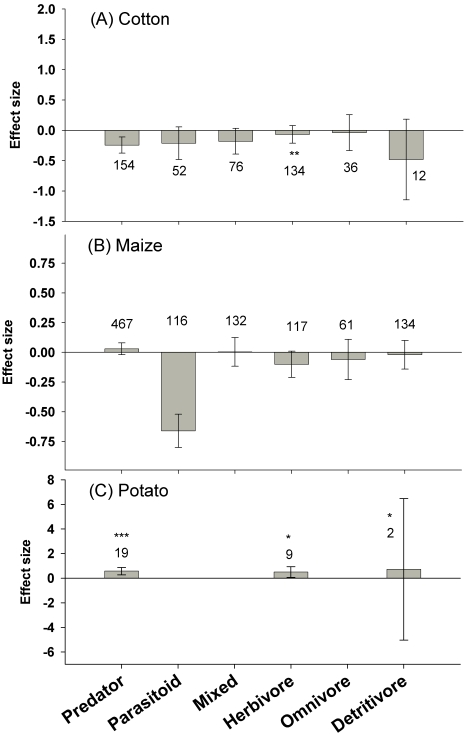
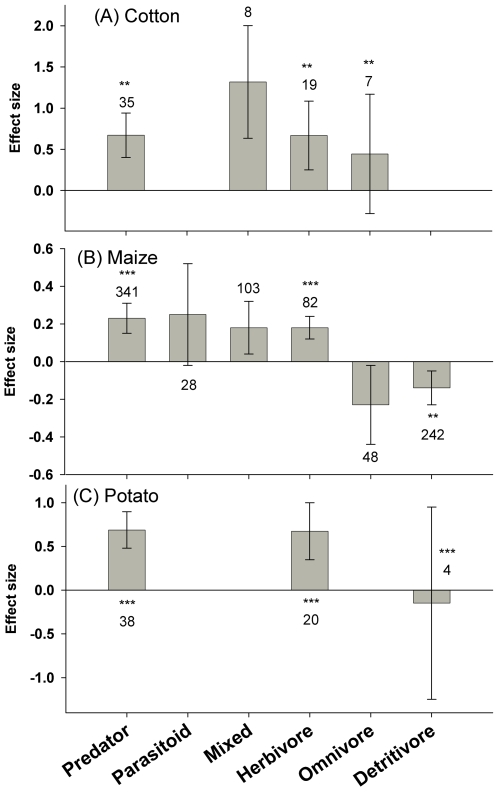
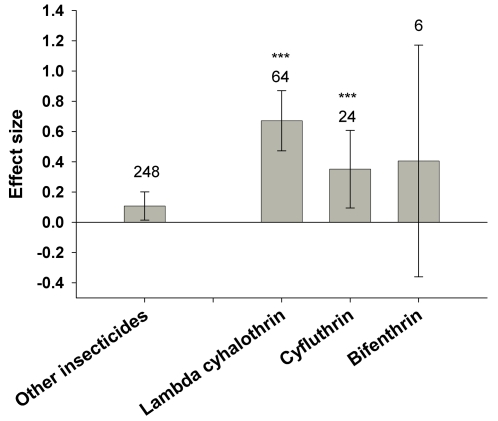
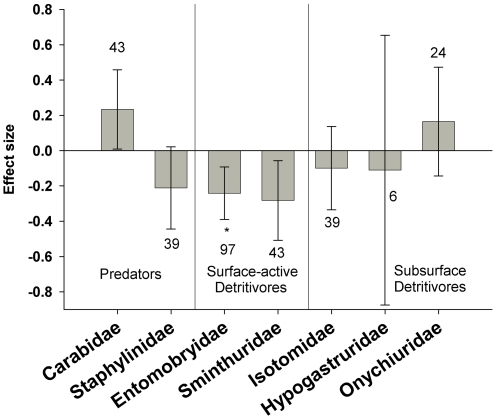
BACKGROUND: Uncertainty persists over the environmental effects of genetically-engineered crops that produce the insecticidal Cry proteins of Bacillus thuringiensis (Bt). We performed meta-analyses on a modified public database to synthesize current knowledge about the effects of Bt cotton, maize and potato on the abundance and interactions of arthropod non-target functional guilds. METHODOLOGY/PRINCIPAL FINDINGS: We compared the abundance of predators, parasitoids, omnivores, detritivores and herbivores under scenarios in which neither, only the non-Bt crops, or both Bt and non-Bt crops received insecticide treatments. Predators were less abundant in Bt cotton compared to unsprayed non-Bt controls. As expected, fewer specialist parasitoids of the target pest occurred in Bt maize fields compared to unsprayed non-Bt controls, but no significant reduction was detected for other parasitoids. Numbers of predators and herbivores were higher in Bt crops compared to sprayed non-Bt controls, and type of insecticide influenced the magnitude of the difference. Omnivores and detritivores were more abundant in insecticide-treated controls and for the latter guild this was associated with reductions of their predators in sprayed non-Bt maize. No differences in abundance were found when both Bt and non-Bt crops were sprayed. Predator-to-prey ratios were unchanged by either Bt crops or the use of insecticides; ratios were higher in Bt maize relative to the sprayed non-Bt control. CONCLUSIONS/SIGNIFICANCE: Overall, we find no uniform effects of Bt cotton, maize and potato on the functional guilds of non-target arthropods. Use of and type of insecticides influenced the magnitude and direction of effects; insecticde effects were much larger than those of Bt crops. These meta-analyses underscore the importance of using controls not only to isolate the effects of a Bt crop per se but also to reflect the replacement of existing agricultural practices. Results will provide researchers with information to design more robust experiments and will inform the decisions of diverse stakeholders regarding the safety of transgenic insecticidal crops.
Overview
The claims and statistics of this paper haven’t been checked yet.
Free: it reads the open-access text and checks the first 5 claims that cite a source we can check. Create a free account to check every claim.
Integrity signals
Registry
Cites
Statistics
Figures
Verification
Claims the paper makes
The claims and statistics of this paper haven’t been checked yet.
Free: it reads the open-access text and checks the first 5 claims that cite a source we can check. Create a free account to check every claim.
Claims other papers make about this one
Each is checked against this paper’s own text: does it say what the citing paper says it does?
The source backs part of the claim, not all of it — or backs it for a different population, condition or comparison.
In the citing paper
“while effects on predators, herbivores, omnivores, detritivores and mixed feeders were insignificant [13].”
From Does the growing of Bt maize change abundance or ecological function of non-target animals compared to the growing of non-GM maize? A systematic review (2022) · cites this paper as [13]
Experimental — accuracy not yet measuredThe cited source says what the claim attributes to it.
In the citing paper
“The observed decrease of Braconidae, mostly represented by M. cingulum (98% of observations), in GE crops is in line with other findings18 that showed a decrease of populations belonging to the functional guild of parasitoids.”
From Impact of genetically engineered maize on agronomic, environmental and toxicological traits: a meta-analysis of 21 years of field data (2018) · cites this paper as [18]
The cited source says what the claim attributes to it.
In the citing paper
“Previous meta-analyses came to the same conclusion [13, 14].”
From Does the growing of Bt maize change abundance or ecological function of non-target animals compared to the growing of non-GM maize? A systematic review (2022) · cites this paper as [13]
The cited source says what the claim attributes to it.
In the citing paper
“Previous meta-analyses [10, 12–14] selected data on the finest available taxonomic level.”
From Does the growing of Bt maize change abundance or ecological function of non-target animals compared to the growing of non-GM maize? A systematic review (2022) · cites this paper as [13]
The cited source says what the claim attributes to it.
In the citing paper
“Follow-up analyses of the same dataset by functional guilds confirmed that Bt maize (data for Cry1Ab- and Cry3Bb-producing maize combined) compared to untreated non-Bt maize reduced parasitoid abundance”
From Does the growing of Bt maize change abundance or ecological function of non-target animals compared to the growing of non-GM maize? A systematic review (2022) · cites this paper as [13]
3 more claims about this paper
Create a free account to see every claim other papers make about this one.
Self-check
Percentages, sums and reported differences re-computed from the paper’s own numbers.
The self-check needs the paper’s full text.
Citations
Cites
Statistical Methods for Meta-Analysis
Wasserman, S., Hedges, L. V., & Olkin, I. (1988) · Journal of Educational Statistics · doi:10.2307/1164953 · Cited by 10,326
Decomposition in Terrestrial Ecosystems
Swift, M. J., Heal, O. W., & Anderson, J. M. (1979) · University of California Press eBooks · doi:10.1525/9780520407114 · Cited by 4,582
The Economic Value of Ecological Services Provided by Insects
LOSEY, J. E., & VAUGHAN, M. (2006) · BioScience · doi:10.1641/0006-3568(2006)56[311:tevoes]2.0.co;2 · Cited by 1,942 · cited 1×
“These services and others in natural and managed habitats amount to an estimated $57 billion annually [25].”
BackgroundQUANTITATIVE METHODS IN THE REVIEW OF EPIDEMIOLOGIC LITERATURE1
GREENLAND, S. (1987) · Epidemiologic Reviews · doi:10.1093/oxfordjournals.epirev.a036298 · Cited by 1,644 · cited 1×
“We tested for publication bias using a weighted histogram of effect sizes [31] and by a funnel plot that diagrams effect size as a function of sample size [32].”
MethodAn Introduction to the Study of Insects
(1954) · AIBS Bulletin · doi:10.1093/aibsbulletin/4.5.11f · Cited by 1,614
McAlpine, J. F., Peterson, B. V., Shewell, G. E., Teskey, H. J., Vockeroth, J. R., & Wood, D. M. (1981) · Research Branch, Agriculture Canada, eBooks · Cited by 1,611
Summing up: The Science of Reviewing Research
Wilkinson, I., Light, R. J., & Pillemer, D. B. (1987) · Journal of Educational Statistics · doi:10.2307/1164691 · Cited by 1,471
Summing Up: The Science of Reviewing Research
Light, R. J., & Pillemer, D. B. (1984) · Harvard University Press eBooks · doi:10.4159/9780674040243 · Cited by 1,427
Cumulative Meta-Analysis of Therapeutic Trials for Myocardial Infarction
Lau, J., Antman, E. M., Jimenez-Silva, J., Kupelnick, B., Mosteller, F., & Chalmers, T. C. (1992) · New England Journal of Medicine · doi:10.1056/nejm199207233270406 · Cited by 1,140 · cited 1×
“Growers throughout the world are rapidly adopting genetically-engineered (GE) crops with 102 million hectares produced globally in 2006 [2].”
BackgroundSTATISTICAL ISSUES IN ECOLOGICAL META-ANALYSES
Gurevitch, J., & Hedges, L. V. (1999) · Ecology · doi:10.1890/0012-9658(1999)080[1142:siiema]2.0.co;2 · Cited by 1,081
Research works printed but not linked: 3
- Pilcher CD Rice ME Obrycki JJ 2005 Impact of transgenic Bacillus thuringiensis corn and crop phenology on five non-target arthropods. Environ Entomol 34 1302 1316 · DOI · Paper page
- Williams MR 2006 Cotton insect losses 2005. Proceedings of the Beltwide Cotton Conferences. Memphis, TN National Cotton Council 1151 1204
- Osenberg CW Mary CMS 1998 Meta-analysis: synthesis or statistical subjugation? Integrative Biology Issues, News and Views 1 43 48
Cited by
Items 101–200 of 324
Sanvido, O., Romeis, J., & Bigler, F. (2011) · Transgenic Research · doi:10.1007/s11248-011-9524-8 · Cited by 33
“…of risk of GM crops considering the results of a number of recent studies which have shown that GM crops often have smaller environmental impacts than the conventional agricultural management practices they have replaced (Romeis et al. 2006; Sanvido et al. 2007; Wolfenbarger et al. 2008; NRC 2010).”
ResultLi, G., Feng, H., McNeil, J. N., Liu, B., Chen, P., & Qiu, F. (2011) · Crop Protection · doi:10.1016/j.cropro.2011.08.015 · Cited by 28
Neher, D. A., Muthumbi, A. W. N., & Dively, G. P. (2014) · Soil Biology and Biochemistry · doi:10.1016/j.soilbio.2014.05.019 · Cited by 29
“Numerous laboratory tests have indicated no acute adverse effects on many nontarget organisms and results of 47 field studies have shown no unexpected ecological risks to above-ground insect communities (in reviews by O'Callaghan et al., 2005; Romeis et al., 2006; Marvier et al., 2007; Wolfenbarger et al., 2008).”
BackgroundSugarcane borers: species, distribution, damage and management options
Li, A., Chen, Z., Liao, F., Zhao, Y. B., Qin, C., Wang, M., Pan, Y.-Q., Wei, S.-L., & Huang, D. (2024) · Journal of Pest Science · doi:10.1007/s10340-024-01750-9 · Cited by 34
Rauschen, S., Schaarschmidt, F., & Gathmann, A. (2009) · Transgenic Research · doi:10.1007/s11248-009-9351-3 · Cited by 35
“There has been no definitive report on a consistent negative impact on ladybirds in field studies with genetically modified Bt-plants: Wolfenbarger et al. (2008) in their metaanalysis demonstrated effects of Bt-cotton on Coccinellidae as a whole group.”
BackgroundDoes Bt rice pose risks to non‐target arthropods? Results of a meta‐analysis in China
Dang, C., Lu, Z., Wang, L., Chang, X., Wang, F., Yao, H., Peng, Y., STANLEY, D. W., & Yè, G. (2017) · Plant Biotechnology Journal · doi:10.1111/pbi.12698 · Cited by 29
“This effect differed from results with other transgenic crops, because Bt maize and Bt cotton did not impact detritivore abundance (Wolfenbarger et al., 2008).”
BackgroundResultRaybould, A. F., Graser, G., Hill, K., & Ward, K. (2010) · Journal of Applied Entomology · doi:10.1111/j.1439-0418.2010.01601.x · Cited by 29
“Extensive field data confirm inferences from laboratory studies of the effects of Cry proteins for non-target effects of Bt maize (e.g. Naranjo et al. 2005; Romeis et al. 2006; Wolfenbarger et al. 2008).”
BackgroundLundgren, J. G., & McCravy, K. W. (2011) · Terrestrial Arthropod Reviews · doi:10.1163/187498311x565606 · Cited by 35
“Bhatti et al. ( 2005 ) and Wolfenbarger et al. ( 2008 ) investigated potential eff ects of Bt crops on nontarget invertebrates, including carabids.”
BackgroundSelf-citationPlant Breeding for Harmony between Modern Agriculture Production and the Environment
Dias, J. S. (2015) · Agricultural Sciences · doi:10.4236/as.2015.61008 · Cited by 31
“Reductions ranging from 14% to 75% of total active ingredients have been reported for Bt crops compared to conventional crops in Argentina, Australia, China, India, and the United States [142].”
BackgroundInfluentialCampbell, J. F., Buckman, K. A., Fields, P. G., & Subramanyam, B. (2015) · Journal of Economic Entomology · doi:10.1093/jee/tov215 · Cited by 29
Lean, M. M. (2011) · Environmental Biosafety Research · doi:10.1051/ebr:2012003 · Cited by 27
“This reduction can be explained by an absence of prey rather than other effects of the Cry1Ab protein (Wolfenbarger et al., 2008; Naranjo, 2009).”
InfluentialBai, Y., Yan, R.-H., Ye, G. Y., Huang, F., & Cheng, J. A. (2010) · Environmental Entomology · doi:10.1603/en09149 · Cited by 27
“…Yu et al. 1997, Al-Deeb et al. 2003, CandolÞ et al. 2004, Bitzer et al. 2005, Dively 2005, Huang 2005, Naranjo 2005, Clark and Coats 2006, GrifÞths et al. 2006, Heckmann et al. 2006, Cortet et al. 2007, Debeljak et al. 2007, de Vaußeury et al. 2007, Zwahlen et al. 2007, Wolfenbarger et al. 2008).”
BackgroundTruter, J.-M., van Hamburg, H., & den Berg, J. V. (2014) · Environmental Entomology · doi:10.1603/en12177 · Cited by 27
“…crops have focused on limited numbers of species (Wilson et al. 1992, Hardee and Bryan 1997, Wold et al. 2001, Liu et al. 2003, Schoenly et al. 2003, Wolfenbarger et al. 2008), it is important to also study effects 1 Unit of of Environmental Sciences and Management, North-West University, Private…”
BackgroundAn assessment of the risk of Bt-cowpea to non-target organisms in West Africa
Ba, M. N., Huesing, J. E., Tamò, M., Higgins, T. J. V., Pittendrigh, B. R., & Murdock, L. L. (2018) · Journal of Pest Science · doi:10.1007/s10340-018-0974-0 · Cited by 26
“Extensive testing was also independently conducted in academic laboratories to assess the safety of Cry1A and Cry2A Bt toxins against NTO beneficial insects including the predators Chrysoperla carnea (Neuroptera: Chrysopidae) and Hippodamia convergens (Coleoptera: Coccinellidae), the parasitic wasp Nasonia vitripennis…”
BackgroundResultA review of the environmental safety of the Cry1Ac protein
Lean, M. M. (2011) · Environmental Biosafety Research · doi:10.1051/ebr/2012002 · Cited by 26
Effect of Bt maize on the plant-aphid-parasitoid tritrophic relationships
Lumbierres, B., Starý, P., & Pons, X. (2011) · BioControl · doi:10.1007/s10526-010-9317-7 · Cited by 25
“These potential changes in plant and host quality due to the genetic modification of maize plants could affect the host location process and the growth, development and mortality of aphid parasitoids ( Vinson 1976; Oliver et al. 2005; Bukovinszky et al. 2008).”
Backgroundde Magalhães, G. O., Vacari, A. M., de Laurentis, V. L., Bortoli, S. A. D., & Polanczyk, R. A. (2014) · Journal of Applied Entomology · doi:10.1111/jen.12180 · Cited by 28
“…failure to increase predation performance on moribund larvae or between those with reduced body size after treatment with Bt commercial products or those found on Bttransgenic plants (Nascimento et al. 1998; Bell et al. 2003; Torres et al. 2006b; Torres and Ruberson 2008; Wolfenbarger et al. 2008).”
BackgroundTian, J., Wang, X.-P., Long, L.-P., Romeis, J., Naranjo, S. E., Hellmich, R. L., & Shelton, A. M. (2013) · Transgenic Research · doi:10.1007/s11248-013-9748-x · Cited by 29
Self-citationLi, X., & Liu, B. (2013) · PLoS ONE · doi:10.1371/journal.pone.0061670 · Cited by 25
“Functional analyses and indices such as those used in ecological studies have proven relatively useful in detecting the true effects of the cultivation of transgenic plants [18,34,62].”
BackgroundScheepmaker, J. W. A., & van de Kassteele, J. (2011) · Biocontrol Science and Technology · doi:10.1080/09583157.2011.594952 · Cited by 25
Li, G., Feng, H., Chen, P., Wu, S., Liu, B. Y., & Qiu, F. (2010) · Environmental Entomology · doi:10.1603/en09223 · Cited by 25
“…assertion that currently used transgenic Bt crops have little or no direct negative effect on nontarget arthropods (Sisterson et al. 2004; Dively 2005; Naranjo 2005, 2009; Whitehouse et al. 2005; Cattaneo et al. 2006; Ma et al. 2006; Marvier et al. 2007; Duan et al. 2008; Wolfenbarger et al. 2008).”
BackgroundImpact of coleopteran targeting toxin (Cry3Bb1) of Bt corn on microbially mediated decomposition
Lawhorn, C. N., Neher, D. A., & Dively, G. P. (2009) · Applied Soil Ecology · doi:10.1016/j.apsoil.2008.12.003 · Cited by 28
“Numerous laboratory tests have indicated no acute adverse effects on many nontarget organisms and results of 47 field studies have shown no unexpected ecological risks to above-ground insect communities (in reviews by O’Callaghan et al., 2005; Romeis et al., 2006; Marvier et al., 2007; Wolfenbarger et al., 2008).”
BackgroundImpacts of SixBtRice Lines on Nontarget Rice Feeding Thrips Under Laboratory and Field Conditions
Akhtar, Z. R., Tian, J., Chen, Y., Fang, Q., Hu, C., Chen, M., Peng, Y., & Ye, G. Y. (2010) · Environmental Entomology · doi:10.1603/en09095 · Cited by 25
Higgins, L. S., Babcock, J. M., Neese, P. A., Layton, R. J., Moellenbeck, D. J., & Storer, N. P. (2009) · Environmental Entomology · doi:10.1603/022.038.0135 · Cited by 24
“Meta analyses conducted onBtmaize containing Cry1 proteins such as those reported in Marvier et al. (2007) and Wolfenbarger et al. (2008) also support the conclusion that Cry1 activity is limited to selected lepidopteran insects, and impacts to nontarget organisms are largely attributable to…”
BackgroundBt rice does not disrupt the host-searching behavior of the parasitoid Cotesia chilonis
Liu, Q., Romeis, J., Yu, H., Zhang, Y., Li, Y., & Peng, Y. (2015) · Scientific Reports · doi:10.1038/srep15295 · Cited by 25
Conservation Biological Control of Insect Pests
Rayl, R., Shields, M. W., Tiwari, S., & Wratten, S. D. (2018) · Sustainable agriculture reviews · doi:10.1007/978-3-319-90309-5_3 · Cited by 32
Pott, A., Otto, M., & Schulz, R. (2018) · Science of The Total Environment · doi:10.1016/j.scitotenv.2018.04.013 · Cited by 22
Wach, M., Hellmich, R. L., Layton, R., Romeis, J., & Gadaleta, P. G. (2016) · Transgenic Research · doi:10.1007/s11248-016-9945-5 · Cited by 22
“Lack of activity against a NTA surrogate species within the same order as the target species, such as Hymenoptera, provides assurance that species in more distantly related orders, such as Hemiptera, are also very unlikely to be affected.”
BackgroundInfluentialAssessing Potential Impact of Bt Eggplants on Non-Target Arthropods in the Philippines
Navasero, M. V., Candano, R. N., Hautea, D. M., Hautea, R. A., Shotkoski, F. A., & Shelton, A. M. (2016) · PLoS ONE · doi:10.1371/journal.pone.0165190 · Cited by 24
Representative taxa in field trials for environmental risk assessment of genetically modified maize
Albajes, R., Lumbierres, B., Pons, X., & Comas, J. (2013) · Bulletin of Entomological Research · doi:10.1017/s0007485313000473 · Cited by 22
“A systematic study of the influence of the trial characteristics and experimental design used to analyse the power (EFSA, 2010) or the power-increasing effects of a meta-analysis approaches (Marvier et al., 2007; Wolfenbarger et al., 2008; Shelton et al., 2009) is being conducted with the results of the 14 field trial…”
Method(GMO), E. P. O. G. M. O. (2011) · EFSA Journal · doi:10.2903/j.efsa.2011.2428 · Cited by 21
Impact of C ry1 A b toxin expression on the non‐target insects dwelling on maize plants
Habuštová, O. S., Doležal, P., Spitzer, L., Svobodová, Z., Hussein, H. M., & Sehnal, F. (2012) · Journal of Applied Entomology · doi:10.1111/jen.12004 · Cited by 23
“…studies that generally disclosed no effect on the non-target plantdwelling arthropods (Candolfi et al. 2004; Novillo et al. 2004; De la Poza et al. 2005; Dively 2005; Romeis et al. 2006; Marvier et al. 2007; Rauschen et al. 2008, 2010; Wolfenbarger et al. 2008; Naranjo 2009; Meissle et al. 2011).”
BackgroundSvobodová, Z., Habuštová, O. S., Hutchison, W. D., Hussein, H. M., & Sehnal, F. (2015) · PLoS ONE · doi:10.1371/journal.pone.0130656 · Cited by 21
“Results of several other studies were reviewed and meta-analysed to show no significant reduction of parasitoids not specialized for target pests of Btmaize [28,53].”
ResultA community and ecosystem genetics approach to conservation biology and management
Whitham, T. G., Gehring, C. A., Evans, L. M., LeRoy, C. J., Bangert, R. K., Schweitzer, J. A., Allan, G. J., Barbour, R. C., Fischer, D. G., Potts, B. M., et al. (2010) · Cambridge University Press eBooks · doi:10.1017/cbo9780511777592.004 · Cited by 20
“observed (Wolfenbarger et al. 2008).”
Yang, H., Peng, Y., Tian, J., Wang, J., Hu, J., Song, Q., & Wang, Z. (2017) · Plant Cell Reports · doi:10.1007/s00299-017-2108-1 · Cited by 20
(EFSA), E. F. S. A. (2009) · EFSA Journal · doi:10.2903/j.efsa.2009.1149 · Cited by 69
Diversity and Defence: Plant–Herbivore Interactions at Multiple Scales and Trophic Levels
Horgan, F. G. (2012) · Wiley eBooks · doi:10.1002/9781118231838.ch15 · Cited by 20
(GMO), E. P. O. G. M. O. (2013) · EFSA Journal · doi:10.2903/j.efsa.2013.3135 · Cited by 36
(GMO), E. P. O. G. M. O. (2012) · EFSA Journal · doi:10.2903/j.efsa.2012.2705 · Cited by 22
“Lower- and higher-tier studies showed minimal to undetectable changes in non-target terrestrial arthropods (e.g., Marvier et al., 2007; Duan et al., 2008; Meissle and Romeis, 2008; Wolfenbarger et al., 2008; Malone and Burgess, 2009; Naranjo, 2009).”
Recovery in environmental risk assessments at EFSA
Ockleford, C. (2016) · Cited by 19
Advances in Managing Pest Resistance to Bt Crops: Pyramids and Seed Mixtures
Carrière, Y., Fabrick, J. A., & Tabashnik, B. E. (2016) · Springer eBooks · doi:10.1007/978-3-319-31800-4_14 · Cited by 19
Using meta-analysis to inform risk assessment and risk management
Marvier, M. (2011) · Journal of Consumer Protection and Food Safety · doi:10.1007/s00003-011-0675-6 · Cited by 19
“These meta-analyses have synthesized field studies by taxonomic group (Marvier et al. 2007) and by functional group ( Wolfenbarger et al. 2008 ).”
MethodHofs, J.-L., Schoeman, A. S., & Pierre, J. S. (2008) · International Journal of Tropical Insect Science · doi:10.1017/s1742758408201682 · Cited by 18
Arthropod Abundance and Diversity in Transgenic Bt Soybean
Yu, H., Li, Y., Li, X., & Wu, K. (2014) · Environmental Entomology · doi:10.1603/en13337 · Cited by 18
Yao, Y., Han, P., Niu, C., Dong, Y., Gao, X., Cui, J., & Desneux, N. (2016) · PLoS ONE · doi:10.1371/journal.pone.0166771 · Cited by 17
Corrales Madrid, J. L., Martínez Carrillo, J. L., Osuna Martínez, M. B., Durán Pompa, H. A., Alonso Escobedo, J., Javier Quiñones, F., Garzón Tiznado, J. A., Castro Espinoza, L., Zavala García, F., Espinoza Banda, A., et al. (2018) · Journal of Applied Entomology · doi:10.1111/jen.12499 · Cited by 17
Insect Pest Management and Environmental Risk
Peterson, R. K. D. (2024) · Annual Review of Entomology · doi:10.1146/annurev-ento-121123-021252 · Cited by 24
Andow, D. A., Löveï, G. L., & Arpaia, S. (2009) · Environmental Entomology · doi:10.1603/022.038.0602 · Cited by 17
“…(2), we recover the right-hand side of equation (1), proving that our statistic is equal to scaled HedgesÕ g. Hedges’ g and Hedges’ d. Marvier et al. (2007), Wolfenbarger et al. (2008), Duan et al. (2008), Nguyên et al. (2008), and Naranjo (2009) used HedgesÕ d as a measure of scaled effect size.”
BackgroundMethodInfluentialPezzini, D. T., Taylor, K. L., Reisig, D., & Fritz, M. L. (2024) · Proceedings of the National Academy of Sciences · doi:10.1073/pnas.2319838121 · Cited by 20
No Direct Effects of Two Transgenic Bt Rice Lines, T1C-19 and T2A-1, on the Arthropod Communities
Lu, Z., Tian, J., Han, N., Hu, C., Peng, Y. F., STANLEY, D. W., & Ye, G. Y. (2014) · Environmental Entomology · doi:10.1603/en14089 · Cited by 17
Leslie, T. W., Biddinger, D. J., Rohr, J. R., & Fleischer, S. J. (2010) · Environmental Entomology · doi:10.1603/en10049 · Cited by 22
Punt, M., & Wesseler, J. (2015) · World Economy · doi:10.1111/twec.12353 · Cited by 16
Bio‐safety evaluation of Cry1Ac, Cry2Ab, Cry1Ca, Cry1F and Vip3Aa on Harmonia axyridis larvae
Ali, I., Zhang, S., & Cui, J. (2016) · Journal of Applied Entomology · doi:10.1111/jen.12309 · Cited by 16
Mulligan, E. A., Ferry, N., Jouanin, L., Romeis, J., & Gatehouse, A. M. R. (2009) · Pest Management Science · doi:10.1002/ps.1879 · Cited by 17
Mason, C. E., Sheldon, J. K., Pesek, J., Bacon, H., Gallusser, R., Radke, G., & Slabaugh, B. (2008) · Journal of Agricultural and Urban Entomology · doi:10.3954/1523-5475-25.4.265 · Cited by 15
Risk Analysis of Gene Flow from Cultivated, Addictive, Social-Drug Plants to Wild Relatives
Campbell, L. G., Blanchette, C. M., & Small, E. (2019) · The Botanical Review · doi:10.1007/s12229-019-09206-x · Cited by 13
“For instance, Cry1ab proteins are unlikely to negatively affect non-lepidopteran herbivores (Glare&O’Callaghan, 2000, US Environmental Protection Agency (USEPA), 2001; Wolfenbarger et al., 2008).”
BackgroundSkevas, T., Kikulwe, E., Papadopoulou, E., Skevas, I., & Wesseler, J. (2012) · Agbioforum · Cited by 22
The impact of Bt maize expressing the Cry1Ac protein on non-target arthropods
Xing, Y., Qin, Z., Feng, M., Li, A., Zhang, L., Wang, Y., Dong, X., Zhang, Y., Tan, S., & Shi, W. (2019) · Environmental Science and Pollution Research · doi:10.1007/s11356-018-4025-4 · Cited by 15
Wang, G., Wang, X., Sun, Y., & Ge, F. (2014) · Entomologia Experimentalis et Applicata · doi:10.1111/eea.12214 · Cited by 15
“Some studies reported no effect (Dogan et al., 1996; Pilcher et al., 1997; Naranjo, 2005), whereas others demonstrated impact of Bt-crops on non-target insects or natural enemies (Dutton et al., 2002; Wolfenbarger et al., 2008).”
Insect-damaged corn stalks decompose at rates similar to Bt-protected, non-damaged corn stalks
Lehman, R. M., Osborne, S. L., Prischmann‐Voldseth, D. A., & Rosentrater, K. A. (2010) · Plant and Soil · doi:10.1007/s11104-010-0364-8 · Cited by 17
“direct effects of the modified Bt endotoxins on soil macrobiota ( Wolfenbarger et al. 2008 ) or microorganisms (Icoz et al. 2008).”
BackgroundGuo, Y.-Y., Tian, J.-C., Shi, W.-P., Dong, X.-H., Romeis, J., Naranjo, S. E., Hellmich, R. L., & Shelton, A. M. (2016) · Transgenic Research · doi:10.1007/s11248-015-9917-1 · Cited by 14
Self-citationMeissle, M., Naranjo, S. E., & Romeis, J. (2022) · BMC Research Notes · doi:10.1186/s13104-022-06021-3 · Cited by 15
Self-citationLi, X., Ding, C., Wang, X., & Liu, B. (2015) · Scientific Reports · doi:10.1038/srep08739 · Cited by 17
Putative effects of Cry1Ab to larvae of Adalia bipunctata - reply to Hilbeck et al. (2012)
Romeis, J., Álvarez‐Alfageme, F., & Bigler, F. (2012) · Environmental Sciences Europe · doi:10.1186/2190-4715-24-18 · Cited by 23
“ladybird beetles or any other non-Lepidoptera species under field conditions [21-23].”
BackgroundJiang, Y., Pan, S., Cai, M., Li, C., Zhan, M., Wang, J., Mohamed, I., & Cao, C. (2013) · Field Crops Research · doi:10.1016/j.fcr.2013.09.011 · Cited by 14
Neonicotinoid insecticides disrupt predation on the eggs of turf-infesting scarab beetles
Peck, D. C., & Olmstead, D. L. (2010) · Bulletin of Entomological Research · doi:10.1017/s0007485310000040 · Cited by 14
“As highlighted by recent scrutiny of Btinsecticidal crops and conventional insecticide applications (Dively, 2005; Marvier et al., 2007; Wolfenbarger et al., 2008), the salient question for guiding agricultural decision-making is how the unintended effects of a technology compare to *Author for correspondence Fax: +1-…”
BackgroundSustainability assessment of GM crops in a Swiss agricultural context
Speiser, B., Stolze, M., Oehen, B., GESSLER, C., Weibel, F., Bravin, E., Kilchenmann, A., Widmer, A., Charles, R., Lang, A., et al. (2012) · Agronomy for Sustainable Development · doi:10.1007/s13593-012-0088-7 · Cited by 17
Meissle, M., Naranjo, S. E., Kohl, C., Riedel, J., & Romeis, J. (2014) · Environmental Evidence · doi:10.1186/2047-2382-3-7 · Cited by 13
“[11] did not find an indication for publication bias in their meta-analyses.”
BackgroundMethodSelf-citationvon Burg, S., MÜLLER, C. B., & Romeis, J. (2010) · Basic and Applied Ecology · doi:10.1016/j.baae.2010.02.003 · Cited by 14
The Importance of Maize Management on Dung Beetle Communities in Atlantic Forest Fragments
Campos, R. C., & Hernández, M. I. M. (2015) · PLoS ONE · doi:10.1371/journal.pone.0145000 · Cited by 13
Crop Protection for Agricultural Intensification Systems in Sub-Saharan Africa
Ratnadass, A. (2020) · Sustainable agriculture reviews · doi:10.1007/978-3-030-38881-2_1 · Cited by 14
Visser, A., & den Berg, J. V. (2020) · Journal of Integrated Pest Management · doi:10.1093/jipm/pmaa014 · Cited by 13
Liu, Y., Han, S., Yang, S., Chen, Z., Yin, Y., Xi, J., Liu, Q. F., Yan, W., Song, X., Zhao, F., et al. (2022) · Scientific Reports · doi:10.1038/s41598-022-16426-6 · Cited by 14
Yin, Y., Xu, Y., Cao, K., Qin, Z., Zhao, X., Dong, X., & Shi, W. (2020) · Environmental Science and Pollution Research · doi:10.1007/s11356-020-08665-9 · Cited by 14
“(Table 2) was shown in our result which was consistent with previous studies (Wolfenbarger et al. 2008; Guo et al. 2016; Xing et al. 2019).”
ResultWill gene-edited and other GM crops fail sustainable food systems?
Wilson, A. K. (2020) · Elsevier eBooks · doi:10.1016/b978-0-12-816410-5.00013-x · Cited by 18
Risk Assessment of Bt Transgenic Crops
Kaur, S. (2012) · Springer eBooks · doi:10.1007/978-94-007-3021-2_3 · Cited by 14
Li, X., Liu, B., Wang, X., Han, Z., Cui, J., & Luo, J. (2012) · Journal of Environmental Monitoring · doi:10.1039/c2em10378h · Cited by 11
Ali, I., Zhang, S., Muhammad, M. S., Iqbal, M., & Cui, J. (2017) · Neotropical Entomology · doi:10.1007/s13744-017-0526-y · Cited by 13
“ECOLOGY, BEHAVIOR AND BIONOMICS”
BackgroundUSDA-ARS, U., Naranjo, S. E., Hellmich, R. L., USDA-ARS, U., Romeis, J., Agroscope, S., Shelton, A. M., & Vélez, A. M. (2019) · Burleigh Dodds series in agricultural science · doi:10.19103/as.2019.0047.10 · Cited by 18
“There is a sound body of literature showing that in systems where insecticidal GE varieties replace insecticides, non-target organisms and biological control, in particular, benefits (Romeis et al., 2006; Wolfenbarger et al., 2008; Naranjo, 2009; Lu et al., 2012).”
BackgroundMethodSelf-citationBahar, M. H., Stanley, J. N., Gregg, P. C., Socorro, A. P. D., & Kristiansen, P. E. (2011) · Journal of Applied Entomology · doi:10.1111/j.1439-0418.2011.01652.x · Cited by 12
“Studies of tri-trophic interactions between predators, Bt-targeted prey and Bt transgenic plants have focused on the question of whether Bt is directly or indirectly toxic to the predators (Dutton et al. 2002; Romeis et al. 2006; Marvier et al. 2007; Wolfenbarger et al. 2008; Lawo et al. 2010).”
BackgroundIdentification of relevant non-target organisms exposed to weevil-resistant Bt sweetpotato in Uganda
Rukarwa, R. J., Mukasa, S. B., Odongo, B., Ssemakula, G. N., & Ghislain, M. (2013) · 3 Biotech · doi:10.1007/s13205-013-0153-1 · Cited by 14
Pálinkás, Z., Kiss, J. G., Zalai, M., Szénási, Á., Dorner, Z., North, S. M., Woodward, G., & Balog, A. (2017) · Ecology and Evolution · doi:10.1002/ece3.2848 · Cited by 14
Lami, F., Masetti, A., Neri, U., Lener, M., Staiano, G., Arpaia, S., & Burgio, G. (2016) · Archivio istituzionale della ricerca (Alma Mater Studiorum Università di Bologna) · Cited by 18
Selection of ideotype to increase yield potential of GM and non-GM rice cultivars
Dastan, S., Ghareyazie, B., & da Silva, J. A. T. (2020) · Plant Science · doi:10.1016/j.plantsci.2020.110519 · Cited by 11
Bredeson, M. M., & Lundgren, J. G. (2015) · Journal of the Kansas Entomological Society · doi:10.2317/0022-8567-88.3.305 · Cited by 10
Self-citationPlácido, A., Bragança, I., Marani, M. M., de Araújo, A. R., Vasconcelos, A. G., Batziou, K., Domingues, V. F., Eaton, P. J., Leite, J. R. S. A. A., & Delerue-Matos, C. M. (2017) · Materials Science and Engineering C · doi:10.1016/j.msec.2017.02.027 · Cited by 9
“Meta-analysis of field studies suggests that the cultivation of GM products containing Cry1Ab does not affect the abundance of non-target organisms [15].”
BackgroundMarques, L. H. D. S. F., Lepping, M. D., Castro, B. A., dos Santos, A. C., Rossetto, J., Nunes, M. Z., Silva, O. A. B. N., Moscardini, V. F., de Sá, V. G. M., Nowatzki, T. M., et al. (2021) · PLoS ONE · doi:10.1371/journal.pone.0251134 · Cited by 10
“[35] also concluded that the application of insecticides in cotton, maize and potato crops had a greater impact on NTAs compared with Bt technologies.”
BackgroundResultInsects, nematodes, and other pests
Watkins, P. R., Huesing, J. E., Margam, V. M., Murdock, L. L., & Higgins, T. J. V. (2011) · Elsevier eBooks · doi:10.1016/b978-0-12-381466-1.00023-7 · Cited by 14
Standardising the environmental risk assessment of genetically modified plants in the EU.
Dolezel, M., Miklau, M., Eckerstorfer, M. F., Hilbeck, A., Heissenberger, A., & Gaugitsch, H. (2009) · Cited by 10
Pessoa, R., Rossi, G. D., & Busoli, A. C. (2015) · Neotropical Entomology · doi:10.1007/s13744-015-0336-z · Cited by 11
“…effects of transgenic plants on non-target herbivores and their natural enemies have been investigated in numerous studies (Torres & Ruberson 2008, Wolfenbarger et al 2008, Kumar et al 2014), little is known regarding the interaction of Bt cotton cultivars, B. tabaci and their Encarsia spp.…”
BackgroundSaeed, R., Razaq, M., Rehman, H. M. U., Waheed, A., & Farooq, M. (2018) · Journal of Economic Entomology · doi:10.1093/jee/toy161 · Cited by 8
Insect Diversity in Conventional and Bt Cottons in the Comarca Lagunera, Mexico
Ávila-Rodríguez, V., Nava-Camberos, U., García‐Hernández, J. L., Martínez-Carrillo, J. L., & Blanco, C. A. (2019) · Southwestern Entomologist · doi:10.3958/059.044.0203 · Cited by 8
Abbate, S. L., Madeira, F., Silva, H., Altier, N., & Pons, X. (2022) · Agriculture Ecosystems & Environment · doi:10.1016/j.agee.2022.108027 · Cited by 11
Role of Genetically Modified Insect-Resistant Crops in IPM
Mohankumar, S., & Ramasubramanian, T. (2013) · Elsevier eBooks · doi:10.1016/b978-0-12-398529-3.00020-8 · Cited by 15
Arbuscular mycorrhizal fungi colonisation of Cry3 toxin-producing Bt maize and near isogenic maize
Seres, A., Kiss, I., Nagy, P., Sály, P., Darvas, B., & Bakonyi, G. (2014) · Plant Soil and Environment · doi:10.17221/674/2014-pse · Cited by 8
“According to the recently accepted view, Cry toxins seem to have few or no toxic effects on most of the soil organisms (Wolfenbarger et al. 2008).”
BackgroundArpaia, S., Schmidt, J. E. U., Leo, G. M. D., & Fiore, M. C. (2009) · Biocontrol Science and Technology · doi:10.1080/09583150903243896 · Cited by 8
“Most of our knowledge on the ecology of agro-ecosystems including genetically modified plants is based on studies conducted with maize and cotton (Marvier, McCreedy, Regetz, and Kareiva 2007 ; Wolfenbarger, Naranjo, Lundgren, Bitzer, and Watrud 2008 ; Naranjo 2009 ).”
BackgroundBiotechnology, environmental forcing, and unintended trophic cascades
Mulder, C., & Lotz, L. A. P. (2009) · Arthropod-Plant Interactions · doi:10.1007/s11829-009-9063-x · Cited by 10
Peterson, J. A., Obrycki, J. J., & Harwood, J. D. (2016) · Biocontrol Science and Technology · doi:10.1080/09583157.2016.1193591 · Cited by 10
“While the majority of these studies have found no significant negative impacts on non-target beneficial organisms (see meta-analyses by Marvier et al., 2007; Peterson et al., 2011; Wolfenbarger et al., 2008), risk assessment of genetically modified crops continues to be an important field of study.”
Julian-Chávez, B., Siqueiros-Cendón, T., Torres‐Castillo, J. A., Sinagawa‐García, S. R., Abraham‐Juárez, M. J., González-Barriga, C. D., Rascón-Cruz, Q., Siañez-Estrada, L. I., Arévalo‐Gallegos, S., & Espinoza-Sánchez, E. A. (2024) · Insects · doi:10.3390/insects15121000 · Cited by 7
Cry Toxins in Transgenic Plants Have Direct Effects on Natural Enemies in the Laboratory
Andow, D. A., & Löveï, G. L. (2012) · Environmental Entomology · doi:10.1603/en11238 · Cited by 7
Metadata
- Authors
- Wolfenbarger, L. L., Naranjo, S. E., Lundgren, J. G., Bitzer, R. J., & Watrud, L. S.
- Affiliations
- University of Nebraska at Omaha (US)
- Agricultural Research Service (US)
- Iowa State University (US)
- Environmental Protection Agency (US)
- Corresponding author
- Naranjo, Steven E.
- Venue
- PLoS ONE
- Publisher
- Public Library of Science (PLoS)
- Published
- 2008-05-07
- Volume
- 3
- Issue
- 5
- Pages
- e2118
- ISSN
- 1932-6203 (ISSN-L)
- PMC
- PMC2346550
- OpenAlex
- W1999263082
- Cited by
- 324
- References
- 64
- Citations by year
- 2026: 1 · 2025: 6 · 2024: 7 · 2023: 4 · 2022: 17 · 2021: 6 · 2020: 12 · 2019: 15 · 2018: 21 · 2017: 15 · 2016: 17 · 2015: 21 · 2014: 29 · 2013: 29 · 2012: 27
- FWCI
- 2.55
- Type
- journal article
- Language
- en
- Open access
- gold
- doi.org
- Locations
- PLoS ONE (publishedVersion, cc-by)
- PubMed Central (publishedVersion, cc-by)
- PubMed (publishedVersion)
- RePEc: Research Papers in Economics (submittedVersion)
- DOAJ (DOAJ: Directory of Open Access Journals) (submittedVersion)
- Figshare (submittedVersion, cc-by)
- Funders
- U.S. Environmental Protection Agency
- U.S. Department of Agriculture
- Topics
- Life Sciences › Agricultural and Biological Sciences › Insect Science › Insect-Plant Interactions and Control
- Life Sciences › Biochemistry, Genetics and Molecular Biology › Molecular Biology › Insect Resistance and Genetics
- Life Sciences › Agricultural and Biological Sciences › Plant Science › Genetically Modified Organisms Research
- Keywords
- Bt crops, Bacillus thuringiensis, non-target arthropods, functional guilds, predators, parasitoids, insecticides, Bt cotton, Bt maize, predator-prey ratio, herbivores, omnivores, detritivores, environmental risk assessment
- MeSH terms
- Bacillus thuringiensis Toxins, Animals, Animal Feed, Arthropods, Bacillus thuringiensis, Bacterial Proteins, Zea mays, Gossypium, Solanum tuberosum, Sensitivity and Specificity, Crops, Agricultural, Plants, Genetically Modified
About these checks
Registry, retraction, Cites and statistics results are computed, not judged, with one exception: a printed reference that no index lists is read once by a model before it counts as a citation error. Claims are extracted by a model and kept only when their quote appears verbatim in the text; each cited source is then checked, with a model’s help, for whether it says what the claim relies on. Those verdicts can be wrong — read the claim’s quote and the cited source before relying on one.
Statistics and arithmetic are recomputed, not judged.
Confidence bands are shown only for fields calibrated on our annotated test set. None is calibrated yet, so no band is shown.
What counts as a claim ›How we measure confidence ›How we check this ›
Are you an author, or do you see a problem with this page? Request a review
Data sources
Bibliographic data: Semantic Scholar, OpenAlex, Crossref.
Contains information from the Semantic Scholar Academic Graph Datasets, made available under the ODC Attribution License (ODC-BY 1.0).
Semantic Scholar’s data is described in: Kinney, R., et al. (2023). The Semantic Scholar Open Data Platform. arXiv:2301.10140.
