

Bt Crop Effects on Functional Guilds of Non-Target Arthropods: A Meta-Analysis
Open accessThe DOI matches its Crossref record; 57 of the 64 references it cites were found in a registry or an index.
Abstract
BACKGROUND: Uncertainty persists over the environmental effects of genetically-engineered crops that produce the insecticidal Cry proteins of Bacillus thuringiensis (Bt). We performed meta-analyses on a modified public database to synthesize current knowledge about the effects of Bt cotton, maize and potato on the abundance and interactions of arthropod non-target functional guilds. METHODOLOGY/PRINCIPAL FINDINGS: We compared the abundance of predators, parasitoids, omnivores, detritivores and herbivores under scenarios in which neither, only the non-Bt crops, or both Bt and non-Bt crops received insecticide treatments. Predators were less abundant in Bt cotton compared to unsprayed non-Bt controls. As expected, fewer specialist parasitoids of the target pest occurred in Bt maize fields compared to unsprayed non-Bt controls, but no significant reduction was detected for other parasitoids. Numbers of predators and herbivores were higher in Bt crops compared to sprayed non-Bt controls, and type of insecticide influenced the magnitude of the difference. Omnivores and detritivores were more abundant in insecticide-treated controls and for the latter guild this was associated with reductions of their predators in sprayed non-Bt maize. No differences in abundance were found when both Bt and non-Bt crops were sprayed. Predator-to-prey ratios were unchanged by either Bt crops or the use of insecticides; ratios were higher in Bt maize relative to the sprayed non-Bt control. CONCLUSIONS/SIGNIFICANCE: Overall, we find no uniform effects of Bt cotton, maize and potato on the functional guilds of non-target arthropods. Use of and type of insecticides influenced the magnitude and direction of effects; insecticde effects were much larger than those of Bt crops. These meta-analyses underscore the importance of using controls not only to isolate the effects of a Bt crop per se but also to reflect the replacement of existing agricultural practices. Results will provide researchers with information to design more robust experiments and will inform the decisions of diverse stakeholders regarding the safety of transgenic insecticidal crops.
Overview
The claims and statistics of this paper haven’t been checked yet.
Free: it reads the open-access text and checks the first 5 claims that cite a source we can check. Create a free account to check every claim.
Integrity signals
Registry
Cites
Statistics
Figures
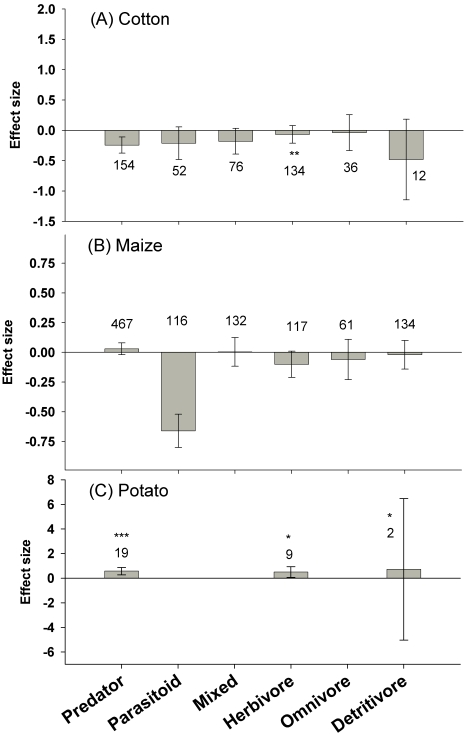
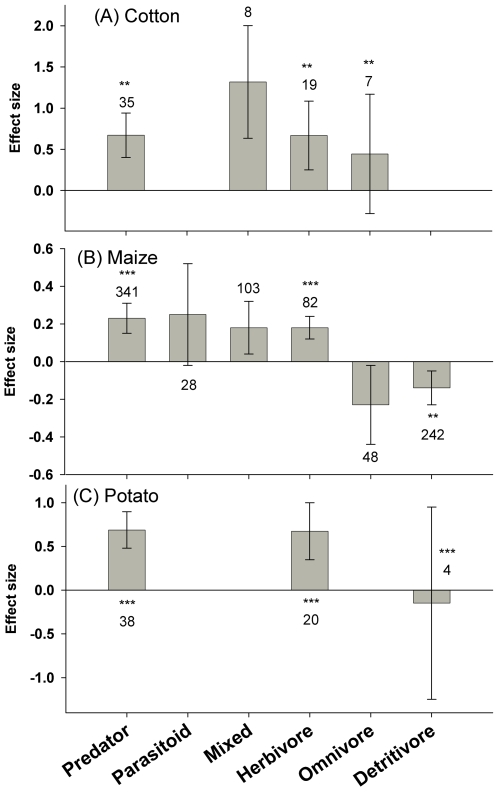
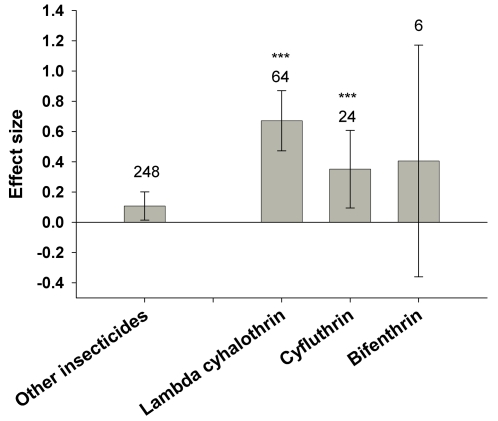
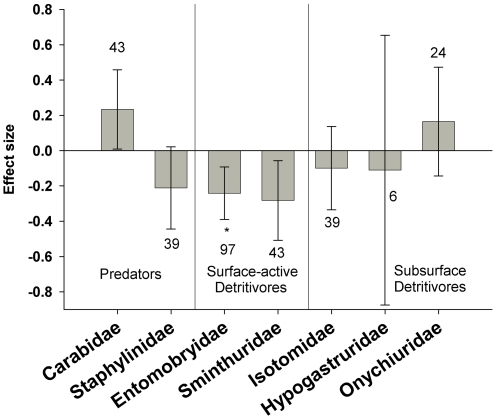
Verification
Claims the paper makes
The claims and statistics of this paper haven’t been checked yet.
Free: it reads the open-access text and checks the first 5 claims that cite a source we can check. Create a free account to check every claim.
Claims other papers make about this one
Each is checked against this paper’s own text: does it say what the citing paper says it does?
The source backs part of the claim, not all of it — or backs it for a different population, condition or comparison.
In the citing paper
“while effects on predators, herbivores, omnivores, detritivores and mixed feeders were insignificant [13].”
From Does the growing of Bt maize change abundance or ecological function of non-target animals compared to the growing of non-GM maize? A systematic review (2022) · cites this paper as [13]
Experimental — accuracy not yet measuredThe cited source says what the claim attributes to it.
In the citing paper
“The observed decrease of Braconidae, mostly represented by M. cingulum (98% of observations), in GE crops is in line with other findings18 that showed a decrease of populations belonging to the functional guild of parasitoids.”
From Impact of genetically engineered maize on agronomic, environmental and toxicological traits: a meta-analysis of 21 years of field data (2018) · cites this paper as [18]
The cited source says what the claim attributes to it.
In the citing paper
“Previous meta-analyses came to the same conclusion [13, 14].”
From Does the growing of Bt maize change abundance or ecological function of non-target animals compared to the growing of non-GM maize? A systematic review (2022) · cites this paper as [13]
The cited source says what the claim attributes to it.
In the citing paper
“Previous meta-analyses [10, 12–14] selected data on the finest available taxonomic level.”
From Does the growing of Bt maize change abundance or ecological function of non-target animals compared to the growing of non-GM maize? A systematic review (2022) · cites this paper as [13]
The cited source says what the claim attributes to it.
In the citing paper
“Follow-up analyses of the same dataset by functional guilds confirmed that Bt maize (data for Cry1Ab- and Cry3Bb-producing maize combined) compared to untreated non-Bt maize reduced parasitoid abundance”
From Does the growing of Bt maize change abundance or ecological function of non-target animals compared to the growing of non-GM maize? A systematic review (2022) · cites this paper as [13]
3 more claims about this paper
Create a free account to see every claim other papers make about this one.
Self-check
Percentages, sums and reported differences re-computed from the paper’s own numbers.
The self-check needs the paper’s full text.
Citations
Cites
Statistical Methods for Meta-Analysis
Wasserman, S., Hedges, L. V., & Olkin, I. (1988) · Journal of Educational Statistics · doi:10.2307/1164953 · Cited by 10,326
Decomposition in Terrestrial Ecosystems
Swift, M. J., Heal, O. W., & Anderson, J. M. (1979) · University of California Press eBooks · doi:10.1525/9780520407114 · Cited by 4,582
The Economic Value of Ecological Services Provided by Insects
LOSEY, J. E., & VAUGHAN, M. (2006) · BioScience · doi:10.1641/0006-3568(2006)56[311:tevoes]2.0.co;2 · Cited by 1,942 · cited 1×
“These services and others in natural and managed habitats amount to an estimated $57 billion annually [25].”
BackgroundQUANTITATIVE METHODS IN THE REVIEW OF EPIDEMIOLOGIC LITERATURE1
GREENLAND, S. (1987) · Epidemiologic Reviews · doi:10.1093/oxfordjournals.epirev.a036298 · Cited by 1,644 · cited 1×
“We tested for publication bias using a weighted histogram of effect sizes [31] and by a funnel plot that diagrams effect size as a function of sample size [32].”
MethodAn Introduction to the Study of Insects
(1954) · AIBS Bulletin · doi:10.1093/aibsbulletin/4.5.11f · Cited by 1,614
McAlpine, J. F., Peterson, B. V., Shewell, G. E., Teskey, H. J., Vockeroth, J. R., & Wood, D. M. (1981) · Research Branch, Agriculture Canada, eBooks · Cited by 1,611
Summing up: The Science of Reviewing Research
Wilkinson, I., Light, R. J., & Pillemer, D. B. (1987) · Journal of Educational Statistics · doi:10.2307/1164691 · Cited by 1,471
Summing Up: The Science of Reviewing Research
Light, R. J., & Pillemer, D. B. (1984) · Harvard University Press eBooks · doi:10.4159/9780674040243 · Cited by 1,427
Cumulative Meta-Analysis of Therapeutic Trials for Myocardial Infarction
Lau, J., Antman, E. M., Jimenez-Silva, J., Kupelnick, B., Mosteller, F., & Chalmers, T. C. (1992) · New England Journal of Medicine · doi:10.1056/nejm199207233270406 · Cited by 1,140 · cited 1×
“Growers throughout the world are rapidly adopting genetically-engineered (GE) crops with 102 million hectares produced globally in 2006 [2].”
BackgroundSTATISTICAL ISSUES IN ECOLOGICAL META-ANALYSES
Gurevitch, J., & Hedges, L. V. (1999) · Ecology · doi:10.1890/0012-9658(1999)080[1142:siiema]2.0.co;2 · Cited by 1,081
Research works printed but not linked: 3
- Pilcher CD Rice ME Obrycki JJ 2005 Impact of transgenic Bacillus thuringiensis corn and crop phenology on five non-target arthropods. Environ Entomol 34 1302 1316 · DOI · Paper page
- Williams MR 2006 Cotton insect losses 2005. Proceedings of the Beltwide Cotton Conferences. Memphis, TN National Cotton Council 1151 1204
- Osenberg CW Mary CMS 1998 Meta-analysis: synthesis or statistical subjugation? Integrative Biology Issues, News and Views 1 43 48
Cited by
Insect pathogens as biological control agents: Back to the future
Lacey, L. A., Grzywacz, D., Shapiro-Ilan, D. I., Frutos, R., Brownbridge, M., & Goettel, M. S. (2015) · Journal of Invertebrate Pathology · doi:10.1016/j.jip.2015.07.009 · Cited by 1,569
Reaping the Benefits: Science and the sustainable intensification of global agriculture
Davies, B., Baulcombe, D. C., Crute, I. R., Dunwell, J. M., Gale, M. D., Jones, J., Pretty, J., Sutherland, W. J., & Toulmin, C. (2009) · Lancaster EPrints (Lancaster University) · Cited by 890
Widespread adoption of Bt cotton and insecticide decrease promotes biocontrol services
Lu, Y., Wu, K., Jiang, Y., Guo, Y., & Desneux, N. (2012) · Nature · doi:10.1038/nature11153 · Cited by 799
An overview of the last 10 years of genetically engineered crop safety research
Nicolia, A., Manzo, A., Veronesi, F., & Rosellini, D. (2014) · Critical Reviews in Biotechnology · doi:10.3109/07388551.2013.823595 · Cited by 413
“Negative impacts of Bt plants on non-target arthropods and soil microfauna have not been reported in recent papers (e.g. de Castro et al., 2012; Devos et al., 2012; Lu et al., 2012; Verbruggen et al., 2012 Wolfenbarger et al., 2011).”
BackgroundOptimizing pyramided transgenic Bt crops for sustainable pest management
Carrière, Y., Crickmore, N., & Tabashnik, B. E. (2015) · Nature Biotechnology · doi:10.1038/nbt.3099 · Cited by 388
Evolutionary ecology of insect adaptation to Bt crops
Carrière, Y., Crowder, D. W., & Tabashnik, B. E. (2010) · Evolutionary Applications · doi:10.1111/j.1752-4571.2010.00129.x · Cited by 317
“Negative impacts on nontarget insects are generally lower for Bt crops than for broad-spectrum insecticides (Cattaneo et al. 2006; Romeis et al. 2006; Marvier et al. 2007; Wolfenbarger et al. 2008; Naranjo 2009).”
BackgroundNutritional aspects of non-prey foods in the life histories of predaceous Coccinellidae
Lundgren, J. G. (2009) · Biological Control · doi:10.1016/j.biocontrol.2009.05.016 · Cited by 266
Self-citationImpacts of Bt crops on non-target invertebrates and insecticide use patterns.
Naranjo, S. E. (2009) · CABI Reviews · doi:10.1079/pavsnnr20094011 · Cited by 252
“[39] describe the screening process and analytical methods used to eliminate non-independent data and analyses and those rules were applied to the 53 additional studies added here.”
BackgroundMethodResultInfluentialSelf-citationAphidophagy by Coccinellidae: Application of biological control in agroecosystems
Obrycki, J. J., Harwood, J. D., Kring, T. J., & O’Neil, R. J. (2009) · Biological Control · doi:10.1016/j.biocontrol.2009.05.009 · Cited by 240
“crease in densities of Coccinellidae in Bt cotton compared to nonBt cotton (Wolfenbarger et al., 2008).”
BackgroundInfluentialCan Pyramids and Seed Mixtures Delay Resistance to Bt Crops?
Carrière, Y., Fabrick, J. A., & Tabashnik, B. E. (2016) · Trends in Biotechnology · doi:10.1016/j.tibtech.2015.12.011 · Cited by 237
Biological Control in Brazil: an overview
Parra, J. R. P. (2014) · Scientia Agricola · doi:10.1590/0103-9016-2014-0167 · Cited by 234
“11 - Transgenic Plants: An extensive land area (40 million ha) is now planted with transgenic plants (Bt technology), which can control lepidopteran and coleopteran pests, but not sucking insects (Wolfenbarger et al., 2008; Hagenbucher et al., 2014).”
BackgroundGenetically engineered crops help support conservation biological control
Romeis, J., Naranjo, S. E., Meissle, M., & Shelton, A. M. (2019) · Biological Control · doi:10.1016/j.biocontrol.2018.10.001 · Cited by 231
“…and summarized in narrative reviews (Romeis et al., 2006; Sanvido et al., 2007; Lundgren et al., 2009) and several quantitative syntheses (Comas et al., 2014; Dang et al., 2017; Marvier et al., 2007; Naranjo, 2009; Pellegrino et al., 2018; Peterson et al., 2011; Wolfenbarger et al., 2008).”
BackgroundSelf-citationThe food and environmental safety of Bt crops
Koch, M. S., Ward, J. M., Levine, S. L., Baum, J. A., Vicini, J. L., & Hammond, B. G. (2015) · Frontiers in Plant Science · doi:10.3389/fpls.2015.00283 · Cited by 225
“Wolfenbarger et al. (2008) performed an analysis using 45 field studies across cotton, maize, and potato and found no uniform effects of Bt plantincorporated protectants on the functional guilds of non-target arthropods.”
MethodImpacts of Bt Transgenic Cotton on Integrated Pest Management
Naranjo, S. E. (2011) · Journal of Agricultural and Food Chemistry · doi:10.1021/jf102939c · Cited by 180
Self-citationPellegrino, E., Bedini, S., Nuti, M., & Ercoli, L. (2018) · Scientific Reports · doi:10.1038/s41598-018-21284-2 · Cited by 177
Seeds of Change: Corn Seed Mixtures for Resistance Management and Integrated Pest Management
Onstad, D. W., Mitchell, P. D., Hurley, T. M., Lundgren, J. G., Porter, R. P., Krupke, C. H., Spencer, J. L., Difonzo, C. D., Baute, T. S., Hellmich, R. L., et al. (2011) · Journal of Economic Entomology · doi:10.1603/ec10388 · Cited by 154
“…consistently documented toxicological effects of Cry toxins expressed in commercial Bt corn against predators or parasitoids (Marvier et al. 2007, Wolfenbarger et al. 2008, Duan et al. 2010), but Bt corn certainly changes the corn environment relative to non-Bt habitats, and these changes could…”
BackgroundSelf-citationFactors affecting food security and contribution of modern technologies in food sustainability
Jagadeesan, P. (2011) · Journal of the Science of Food and Agriculture · doi:10.1002/jsfa.4666 · Cited by 182
RNAi-Based Insecticidal Crops: Potential Effects on Nontarget Species
Lundgren, J. G., & Duan, J. J. (2013) · BioScience · doi:10.1525/bio.2013.63.8.8 · Cited by 143
“…et al. 2010), and, arguably, the commercialization of Bt crops has had few if any consistent direct effects on the abundance of nontarget organisms under field conditions (Marvier et al. 2007, Duan et al. 2008, Wolfenbarger et al. 2008, Lundgren et al. 2009, Naranjo 2009, Peterson et al. 2011).”
BackgroundSelf-citationImpact of GM crops on biodiversity
Carpenter, J. E. (2011) · GM Crops · doi:10.4161/gmcr.2.1.15086 · Cited by 138
Comas, C., Lumbierres, B., Pons, X., & Albajes, R. (2014) · Transgenic Research · doi:10.1007/s11248-013-9737-0 · Cited by 129
Peterson, J. A., Ode, P. J., Oliveira-Hofman, C., & Harwood, J. D. (2016) · Frontiers in Plant Science · doi:10.3389/fpls.2016.01794 · Cited by 146
“…relatives of cotton do have leaf domatia (Fryxell, 1978) and molecular mapping has been used to identify the genes that affect pubescence in cotton (Wright et al., 1999), allowing for the selective expression of pubescence at the leaf vein axils (domatia) that could positively affect natural…”
Pesticides do not significantly reduce arthropod pest densities in the presence of natural enemies
Janssen, A., & van Rijn, P. C. J. (2021) · Ecology Letters · doi:10.1111/ele.13819 · Cited by 133
“We also included studies mentioned in Marvier et al. (2007) and Wolfenbarger et al. (2008) and studies referred to in the papers found above.”
Extrapolating non-target risk of Bt crops from laboratory to field
Duan, J. J., Lundgren, J. G., Naranjo, S., & Marvier, M. (2010) · Biology Letters · doi:10.1098/rsbl.2009.0612 · Cited by 127
“(2010) hosts (Wolfenbarger et al. 2008).”
Self-citationRomeis, J., Raybould, A., Bigler, F., Candolfi, M. P., Hellmich, R. L., Huesing, J. E., & Shelton, A. M. (2013) · Chemosphere · doi:10.1016/j.chemosphere.2012.09.035 · Cited by 119
“Thus, ERAs based on results of these NTA ecotoxicological tests provide protection of biological control organisms and other non-pest species in and around fields of GE crops (Romeis et al., 2006; Marvier et al., 2007; Wolfenbarger et al., 2008; Naranjo, 2009; Duan et al., 2010).”
BackgroundRecombinant protease inhibitors for herbivore pest control: a multitrophic perspective
Schlüter, U., Benchabane, M., Munger, A., Kiggundu, A., Vorster, J., Goulet, M., Cloutier, C., & Michaud, D. (2010) · Journal of Experimental Botany · doi:10.1093/jxb/erq166 · Cited by 115
“, 2009a, b), it is usually considered that the direct unintended effects of Bt toxin-expressing plants on nontarget organisms are negligible owing to the intrinsic functional specificity of Cry toxins, toxin concentrations in plant tissues below the thresholds required for significant side-effects, and a limited persi…”
BackgroundMain, A. R., Webb, E. B., Goyne, K. W., & Mengel, D. C. (2018) · Ecological Applications · doi:10.1002/eap.1723 · Cited by 116
Li, Y., Hallerman, E. M., Wu, K., & Peng, Y. (2019) · Annual Review of Entomology · doi:10.1146/annurev-ento-011019-025039 · Cited by 116
“Reviews of results from numerous studies suggest that the insecticidal proteins produced by Bt corn and cotton have a very narrow spectrum of activity, and that planting Bt crops poses a negligible risk to nontarget species (27, 45, 62, 78, 87, 100, 121).”
BackgroundResultDouglas, M. R., & Tooker, J. F. (2016) · PeerJ · doi:10.7717/peerj.2776 · Cited by 120
“Our meta-analysis was guided to some extent by 134 previous meta-analyses that characterized the influence of Bt crops on populations of non-target 135 arthropods (Marvier et al. 2007; Naranjo 2009; Wolfenbarger et al. 2008).”
BackgroundMethodResultInfluentialTrading biodiversity for pest problems
Lundgren, J. G., & Fausti, S. W. (2015) · Science Advances · doi:10.1126/sciadv.1500558 · Cited by 104
Self-citationYu, H., Li, Y., & Wu, K. (2011) · Journal of Integrative Plant Biology · doi:10.1111/j.1744-7909.2011.01047.x · Cited by 133
Álvarez-Alfageme, F., Bigler, F., & Romeis, J. (2011) · Transgenic Research · doi:10.1007/s11248-010-9430-5 · Cited by 103
“…provides no indication that the currently grown Bt maize varieties cause direct adverse effects on arthropods that are not closely taxonomically related to the target pest (Romeis et al. 2006; Wolfenbarger et al. 2008; Meissle and Romeis 2008; Naranjo 2009; Ricroch et al. 2010; Duan et al. 2010).”
BackgroundHagenbucher, S., Olson, D. M., Ruberson, J. R., Wäckers, F. L., & Romeis, J. (2013) · Critical Reviews in Plant Sciences · doi:10.1080/07352689.2013.809293 · Cited by 101
“…the high specificity of the expressed Cry proteins together with the decline in insecticide use had significant positive effects on the arthropod fauna in cotton fields (Romeis et al., 2006; Marvier et al., 2007; Wolfenbarger et al., 2008; Naranjo et al., 2008; Naranjo, 2011; Lu et al., 2012).”
BackgroundMeissle, M., & Romeis, J. (2009) · Plant Biotechnology Journal · doi:10.1111/j.1467-7652.2009.00431.x · Cited by 90
Ecological compatibility of GM crops and biological control
Lundgren, J. G., Gassmann, A. J., Bernal, J. S., Duan, J. J., & Ruberson, J. R. (2009) · Crop Protection · doi:10.1016/j.cropro.2009.06.001 · Cited by 103
“…produced by hemipterans may be Hilbeck et al. (1998a, 1999), Zwahlen et al. (2000), Duan et al. (2006, 2007, 2008b), Torres and Ruberson (2007 (2008) lowered (Rao et al., 1998; Kanrar et al., 2002), unaffected (Shieh et al.,1994), or increased (Bernal et al., 2002a; Faria et al., 2007) on GM…”
Self-citationIndian Bt Cotton Varieties Do Not Affect the Performance of Cotton Aphids
Lawo, N. C., Wäckers, F. L., & Romeis, J. (2009) · PLoS ONE · doi:10.1371/journal.pone.0004804 · Cited by 84
“PLoS ONE | www.plosone.org 1 March 2009 | Volume 4 | Issue 3 | e4804 herbivores and arthropod natural enemies in recent years confirming the highly selective mode of action of the deployed Bt Cry proteins [12, 13 ].”
BackgroundBt maize and integrated pest management ‐ a European perspective
Meissle, M., Romeis, J., & Bigler, F. (2011) · Pest Management Science · doi:10.1002/ps.2221 · Cited by 82
The Present and Future Role of Insect-Resistant Genetically Modified Cotton in IPM
Naranjo, S. E., Ruberson, J. R., Sharma, H. C., Wilson, L., & Wu, K. (2008) · Springer eBooks · doi:10.1007/978-1-4020-8373-0_6 · Cited by 81
“Recent meta-analyses based on the extant literature suggest that these results are consistent among broad taxonomic groups and feeding guilds and should apply to ecologically equivalent taxa worldwide (Marvier et al., 2007; Wolfenbarger et al., 2008).”
Self-citationIs the German suspension of MON810 maize cultivation scientifically justified?
Ricroch, A., Bergé, J. B., & Kuntz, M. (2010) · Transgenic Research · doi:10.1007/s11248-009-9297-5 · Cited by 80
“In another meta-analysis, Wolfenbarger et al. (2008) also observed that insecticide effects were much larger than those of Bt crops.”
BackgroundNatural Enemies Delay Insect Resistance to Bt Crops
Liu, X., Chen, M., Collins, H. L., Onstad, D. W., Roush, R. T., Zhang, Q., Earle, E. D., & Shelton, A. M. (2014) · PLoS ONE · doi:10.1371/journal.pone.0090366 · Cited by 99
The impact of secondary pests on Bacillus thuringiensis (Bt) crops
Catarino, R., Ceddia, G., Areal, F., & Park, J. R. (2015) · Plant Biotechnology Journal · doi:10.1111/pbi.12363 · Cited by 97
“sufficient in some cases to keep secondary pest populations under economic injury thresholds (Hardin et al., 1995; Wolfenbarger et al., 2008).”
InfluentialWhen bad science makes good headlines: Bt maize and regulatory bans
Romeis, J., McLean, M. A., & Shelton, A. M. (2013) · Nature Biotechnology · doi:10.1038/nbt.2578 · Cited by 77
Shelton, A. M., Naranjo, S. E., Romeis, J., Hellmich, R. L., Wolt, J. D., Federici, B. A., Albajes, R., Bigler, F., Burgess, E. P. J., Dively, G. P., et al. (2009) · Transgenic Research · doi:10.1007/s11248-009-9260-5 · Cited by 73
“A total of at least 63 field studies assessing arthropod non-target effects of Bt crops have been published as of late 2008 and several field-level meta-analyses have been completed (Marvier et al. 2007; Wolfenbarger et al. 2008; Naranjo 2009).”
BackgroundSelf-citationLang, A., & Otto, M. (2010) · Entomologia Experimentalis et Applicata · doi:10.1111/j.1570-7458.2010.00981.x · Cited by 73
“…the NCEAS database (http://delphi. nceas.ucsb.edu/btcrops/), as well as the reference lists of published review articles (Dolezel et al., 2005; Lövei & Arpaia, 2005; O’Callaghan et al., 2005; Romeis et al., 2006; Marvier et al., 2007; Wolfenbarger et al., 2008; Lövei et al., 2009; Naranjo, 2009).”
BackgroundLi, Y., Meissle, M., & Romeis, J. (2008) · PLoS ONE · doi:10.1371/journal.pone.0002909 · Cited by 70
Valuing financial, health, and environmental benefits of Bt cotton in Pakistan
Kouser, S., & Qaim, M. (2013) · Agricultural Economics · doi:10.1111/agec.12014 · Cited by 67
“A recent meta-analysis suggests that negative environmental impacts of chemical pesticides are much larger than those of Bt crops (Wolfenbarger et al., 2008).”
BackgroundBt Cotton, Pesticide Use and Environmental Efficiency in Pakistan
Abedullah, Kouser, S., & Qaim, M. (2014) · Journal of Agricultural Economics · doi:10.1111/1477-9552.12072 · Cited by 83
Lawo, N. C., Wäckers, F. L., & Romeis, J. (2010) · Journal of Insect Physiology · doi:10.1016/j.jinsphys.2010.06.012 · Cited by 66
Arpaia, S., Birch, A. N. E., Kiss, J., van Loon, J. J. A., Messéan, A., Nuti, M., Perry, J. N., Sweet, J. B., & Tebbe, C. C. (2017) · Science of The Total Environment · doi:10.1016/j.scitotenv.2017.01.039 · Cited by 62
“The scientific literature dealing with NTO effects has increased rapidly in recent years (Arpaia, 2010; Romeis et al., 2008; Wolfenbarger et al., 2008).”
BackgroundPerry, J. N., Devos, Y., Arpaia, S., Bartsch, D., Ehlert, C., Gathmann, A., Hails, R. S., Hendriksen, N. B., Kiss, J., Messéan, A., et al. (2012) · Journal of Applied Ecology · doi:10.1111/j.1365-2664.2011.02083.x · Cited by 61
“Wolfenbarger et al. (2008) viewed Bt crops as a tool for integrated pest management with resulting environmental impact on non-target organisms that depends on the management applied within agricultural production systems.”
BackgroundFourteen Years ofBtCotton Advances IPM in Arizona
Naranjo, S. E., & Ellsworth, P. C. (2010) · Southwestern Entomologist · doi:10.3958/059.035.0329 · Cited by 60
Self-citationPest trade-offs in technology: reduced damage by caterpillars in Bt cotton benefits aphids
Hagenbucher, S., WÄCKERS, F. L., Wettstein, F. E., Olson, D. M., Ruberson, J. R., & Romeis, J. (2013) · Proceedings of the Royal Society B Biological Sciences · doi:10.1098/rspb.2013.0042 · Cited by 59
Campos, R. C., & Hernández, M. I. M. (2014) · Ecological Indicators · doi:10.1016/j.ecolind.2014.09.043 · Cited by 56
“A number of articles have reported no effects, while others have described significant negative effects on various invertebrate species (Duan et al., 2010; Hilbeck and Schmidt, 2006; Hilbeck et al., 2008; Obrycki et al., 2001; Wolfsbarger et al., 2008; Zwahlen and Andow, 2005; Harwood et al., 2005; Obrist et al., 2006…”
BackgroundHalsch, C. A., Code, A., Hoyle, S. M., Fordyce, J. A., Baert, N., & Forister, M. L. (2020) · Frontiers in Ecology and Evolution · doi:10.3389/fevo.2020.00162 · Cited by 58
Recent Advances in Entomological Research: From Molecular Biology to Pest Management
Liu, T., & Kang, L. (2011) · Springer eBooks · doi:10.1007/978-3-642-17815-3 · Cited by 82
Li, Y., Romeis, J., Wu, K., & Peng, Y. (2014) · Insect Science · doi:10.1111/1744-7917.12044 · Cited by 51
“These results are thus in agreement with the evidence available from many years of field experiments with different IRGM crops in different parts of the world (Wolfenbarger et al., 2008; Duan et al., 2008b, 2010; Naranjo, 2009).”
ResultTian, J. C., Liu, Z. C., Chen, M., Chen, Y., Chen, X. X., Peng, Y., Hu, C., & Ye, G. Y. (2010) · Environmental Entomology · doi:10.1603/en10003 · Cited by 51
Recovery in environmental risk assessments at EFSA
EFSA Scientific Committee (2016) · EFSA Journal · doi:10.2903/j.efsa.2016.4313 · Cited by 68
“…have a narrow activity spectrum for insects, the large body of literature provides no indication that the currently grown Bt plants cause direct adverse effects on arthropods that are not closely taxonomically related to the target (Wolfenbarger et al., 2008; Naranjo, 2009; Romeis et al., 2014).”
BackgroundHan, P., Velasco-Hernández, M. C., Ramírez‐Romero, R., & Desneux, N. (2016) · Journal of Pest Science · doi:10.1007/s10340-016-0791-2 · Cited by 55
“…review articles have discussed the effects of IRGM crops on non-target arthropods (O’Callaghan et al. 2005; Marvier et al. 2007; Romeis et al. 2008; Wolfenbarger et al. 2008; Duan et al. 2010), specifically on natural enemies (Lövei and Arpaia 2004; Romeis et al. 2006; Lövei et al. 2009;…”
BackgroundUse of a Pollen-Based Diet to Expose the Ladybird Beetle Propylea japonica to Insecticidal Proteins
Zhang, X., Li, Y., Romeis, J., Yin, X., Wu, K., & Peng, Y. (2014) · PLoS ONE · doi:10.1371/journal.pone.0085395 · Cited by 56
“In summary, our study results are consistent with the laboratory studies that have reported a lack of direct toxic effects of Cry1 proteins on ladybird beetles as well as with the results from many field studies conducted with Bt maize or cotton that have provided no evidence for direct adverse effects on ladybird bee…”
ResultBt-maize event MON 88017 expressing Cry3Bb1 does not cause harm to non-target organisms
Devos, Y., de Schrijver, A., CLERCQ, P. D., Kiss, J. G., & Romeis, J. (2012) · Transgenic Research · doi:10.1007/s11248-012-9617-z · Cited by 50
“Overall, minimal to undetectable changes in natural enemies due to cultivation of Diabrotica-resistant Bt-maize events were reported (Marvier et al. 2007; Wolfenbarger et al. 2008; Naranjo 2009).”
BackgroundProdhan, M. Z. H., Hasan, M. T., Chowdhury, M. M. I., Alam, M. S., Rahman, M. L., Azad, A. K., Hossain, M. J., Naranjo, S. E., & Shelton, A. M. (2018) · PLoS ONE · doi:10.1371/journal.pone.0205713 · Cited by 46
Self-citationRaybould, A. F., & Quemada, H. D. (2010) · Food Security · doi:10.1007/s12571-010-0066-3 · Cited by 51
“The reduction in pesticide use has resulted in increased biodiversity within Bt fields compared with non-Bt fields treated with conventional insecticides (Marvier et al. 2007; Duan et al. 2008; Wolfenbarger et al. 2008; National Research Council 2010).”
BackgroundBalog, A., Kiss, J. G., Szekeres, D., Szénási, Á., & Markó, V. (2010) · Crop Protection · doi:10.1016/j.cropro.2009.12.020 · Cited by 48
Li, Y., Hu, L., Romeis, J., Wang, Y., Han, L., Chen, X., & Peng, Y. (2013) · Biological Control · doi:10.1016/j.biocontrol.2013.10.017 · Cited by 48
Lundgren, J. G., Hesler, L. S., Clay, S. A., & Fausti, S. W. (2012) · Crop Protection · doi:10.1016/j.cropro.2012.08.005 · Cited by 49
“, 2009; Seagraves and Lundgren, 2012) and other crops (Marvier et al., 2007; Wolfenbarger et al., 2008) can reduce some or all natural enemy species present within a habitat.”
BackgroundSelf-citationInteractions of transgenic Bacillus thuringiensis insecticidal crops with spiders (Araneae)
Peterson, J. A., Lundgren, J. G., & Harwood, J. D. (2011) · Journal of Arachnology · doi:10.1636/m10-98.1 · Cited by 48
“, gut pH and toxin receptor sites in the midgut) and thus intuitively pose less risk to non-target species than broad-spectrum insecticides (Marvier et al. 2007; Wolfenbarger et al. 2008; Naranjo 2009; Duan et al. 2010).”
BackgroundMethodSelf-citationSanvido, O., Romeis, J., & Bigler, F. (2008) · Journal of Applied Entomology · doi:10.1111/j.1439-0418.2008.01367.x · Cited by 52
“Consequently, considerable scientific knowledge is available on non-target effects of Bt-maize (EPA 2001; Mendelsohn et al. 2003; Romeis et al. 2006; Wolfenbarger et al. 2008).”
BackgroundResultLi, Y., Meissle, M., & Romeis, J. (2009) · Journal of Insect Physiology · doi:10.1016/j.jinsphys.2009.09.011 · Cited by 47
Meissle, M., Naranjo, S. E., & Romeis, J. (2022) · Environmental Evidence · doi:10.1186/s13750-022-00272-0 · Cited by 41
“Similar to previous meta-analyses [10, 13, 14], we accepted this level of data-duplication.”
InfluentialSelf-citationAhmad, A., Negri, I., de Oliveira, W. S., Brown, C., Asiimwe, P., Sammons, B., Horak, M. J., Jiang, C., & Carson, D. B. (2015) · Transgenic Research · doi:10.1007/s11248-015-9907-3 · Cited by 48
Szénási, Á., Pálinkás, Z., Zalai, M., Schmitz, O. J., & Balog, A. (2014) · Scientific Reports · doi:10.1038/srep05315 · Cited by 39
Tian, J.-C., Long, L.-P., Wang, X.-P., Naranjo, S. E., Romeis, J., Hellmich, R. L., Wang, P., & Shelton, A. M. (2014) · Environmental Entomology · doi:10.1603/en13184 · Cited by 38
Self-citationMarques, L. H. D. S. F., dos Santos, A. C., Castro, B. A., Storer, N. P., Babcock, J. M., Lepping, M. D., de Sá, V. G. M., Moscardini, V. F., Rule, D. M., & Fernandes, O. A. (2018) · PLoS ONE · doi:10.1371/journal.pone.0191567 · Cited by 41
Integrated farming: why organic farmers should use transgenic crops
Ammann, K. (2008) · New Biotechnology · doi:10.1016/j.nbt.2008.08.012 · Cited by 43
Genetically modified crops deserve greater ecotoxicological scrutiny
Desneux, N., & Bernal, J. S. (2010) · Ecotoxicology · doi:10.1007/s10646-010-0550-8 · Cited by 39
Leslie, T. W., Biddinger, D. J., Mullin, C. A., & Fleischer, S. J. (2009) · Environmental Entomology · doi:10.1603/022.038.0348 · Cited by 41
Management matters: A comparison of ant assemblages in organic and conventional vineyards
Masoni, A., Frizzi, F., Brühl, C. A., Zocchi, N., Palchetti, E., Chelazzi, G., & Santini, G. (2017) · Agriculture Ecosystems & Environment · doi:10.1016/j.agee.2017.05.036 · Cited by 52
Tian, J.-C., Collins, H. L., Romeis, J., Naranjo, S. E., Hellmich, R. L., & Shelton, A. M. (2012) · Transgenic Research · doi:10.1007/s11248-012-9604-4 · Cited by 37
Self-citationRomeis, J., Lawo, N. C., & Raybould, A. (2009) · Journal of Applied Entomology · doi:10.1111/j.1439-0418.2009.01423.x · Cited by 37
The end of a myth—Bt (Cry1Ab) maize does not harm green lacewings
Romeis, J., Meissle, M., Naranjo, S. E., Li, Y., & Bigler, F. (2014) · Frontiers in Plant Science · doi:10.3389/fpls.2014.00391 · Cited by 43
“Similar observations have been made for many other natural enemies (Wolfenbarger et al., 2008; Naranjo, 2009).”
BackgroundSelf-citationA review of the environmental safety of the CP4 EPSPS protein
Center for Environmental Risk Assessment, I. R. F. (2011) · Environmental Biosafety Research · doi:10.1051/ebr/2012001 · Cited by 36
Huesing, J. E., Romeis, J., Ellstrand, N. C., Raybould, A., Hellmich, R. L., Wolt, J. D., Ehlers, J. D., Dabiré-Binso, L. C., Fatokun, C. A., Hokanson, K. E., et al. (2011) · GM Crops · doi:10.4161/gmcr.2.3.18689 · Cited by 35
Zeilinger, A. R., Olson, D. M., & Andow, D. A. (2011) · Entomologia Experimentalis et Applicata · doi:10.1111/j.1570-7458.2011.01165.x · Cited by 43
“, 2009), which should result in greater or equivalent populations of natural enemies and little change in their ability to control pest populations (Marvier et al., 2007; Wolfenbarger et al., 2008).”
BackgroundPriestley, A. L., & Brownbridge, M. (2008) · Transgenic Research · doi:10.1007/s11248-008-9234-z · Cited by 39
“, by reducing the number of (Bt-susceptible) prey species available, can also impact population development and abundance (Wolfenbarger et al. 2008).”
BackgroundSvobodová, Z., Shu, Y., Habuštová, O. S., Romeis, J., & Meissle, M. (2017) · Proceedings of the Royal Society B Biological Sciences · doi:10.1098/rspb.2017.0440 · Cited by 42
Why farming with high tech methods should integrate elements of organic agriculture
Ammann, K. (2009) · New Biotechnology · doi:10.1016/j.nbt.2009.06.933 · Cited by 38
Devos, Y., Ortiz‐García, S., Hokanson, K. E., & Raybould, A. F. (2018) · Agriculture Ecosystems & Environment · doi:10.1016/j.agee.2018.02.032 · Cited by 47
Chapter 7 The Environmental Benefits and Costs of Genetically Modified (GM) Crops
Wesseler, J., Scatasta, S., & Fall, E. H. (2011) · Frontiers of economics and globalisation · doi:10.1108/s1574-8715(2011)0000010012 · Cited by 42
Dutra, C. C., Koch, R. L., Burkness, E. C., Meissle, M., Romeis, J., Hutchison, W. D., & Fernandes, M. G. (2012) · PLoS ONE · doi:10.1371/journal.pone.0044867 · Cited by 35
Bt cotton, damage control and optimal levels of pesticide use in Pakistan
Kouser, S., & Qaim, M. (2013) · Environment and Development Economics · doi:10.1017/s1355770x1300051x · Cited by 37
“…effects of Bt crops, including enhanced biocontrol services through higher diversity of beneficial insects, and better soil and groundwater quality through lower pesticide contamination (Shelton et al., 2002; Knox et al., 2006; Morse et al., 2006; Wolfenbarger et al., 2008; Lu et al., 2012).”
BackgroundEvidence for multi-trophic effects of pesticide seed treatments on non-targeted soil fauna
Atwood, L. W., Mortensen, D. A., Koide, R. T., & Smith, R. G. (2018) · Soil Biology and Biochemistry · doi:10.1016/j.soilbio.2018.07.007 · Cited by 43
The role of fungi and invertebrates in litter decomposition in mitigated and reference wetlands
Gingerich, R. T., Panaccione, D. G., & Anderson, J. T. (2015) · Limnologica · doi:10.1016/j.limno.2015.07.004 · Cited by 32
“We identified invertebrates to family, classified to FFG, and allied individuals by using previously described methods and esources (Bland and Jaques, 1978; Dindal, 1990; Peckarsky et al., 990; Stehr, 1991; Chu and Cutkomp, 1992; Merritt and Cummins, 996; Ubick et al., 2005; Wolfenbarger et al., 2008).”
MethodTiwari, S., Mishra, D. K., Chandrasekhar, K., Singh, P. K., & Tuli, R. (2010) · Pest Management Science · doi:10.1002/ps.2041 · Cited by 32
The Cultivation of Bt Corn Producing Cry1Ac Toxins Does Not Adversely Affect Non-Target Arthropods
Guo, Y., Feng, Y., Yang, G., Tetreau, G., Chen, X., Dong, X., & Shi, W. (2014) · PLoS ONE · doi:10.1371/journal.pone.0114228 · Cited by 31
Assandri, G., Bogliani, G., Pedrini, P., & Brambilla, M. (2017) · Ecological Indicators · doi:10.1016/j.ecolind.2017.05.012 · Cited by 35
Bortolotto, O. C., Silva, G. V., Bueno, A. D. F., Pomari, A. F., Martinelli, S., Head, G., Carvalho, R. A., & Barbosa, G. C. (2014) · Bulletin of Entomological Research · doi:10.1017/s0007485314000546 · Cited by 44
“Although risks and benefits of insect management strategies with the use of Bt plants are not fully explored, risks seem to be lower than with chemical technologies and benefits seem to be greater (Wolfenbarger et al., 2008; Naranjo, 2009).”
BackgroundShelton, A. M., Naranjo, S. E., Romeis, J., Hellmich, R. L., Wolt, J. D., Federici, B. A., Albajes, R., Bigler, F., Burgess, E. P. J., Dively, G. P., et al. (2009) · Environmental Entomology · doi:10.1603/022.038.0603 · Cited by 32
“Published By: Entomological Society of America DOI: http://dx.doi.org/10.1603/022.038.0603 URL: http://www.bioone.org/doi/full/10.1603/022.038.0603 BioOne (www.bioone.org) is a nonprofit, online aggregation of core research in the biological, ecological, and environmental sciences.”
BackgroundInfluentialSelf-citationIntegrated management of insect pests
Kogan, M., & Higley, L. G. (2019) · doi:10.1201/9780429275395 · Cited by 32
Myhr, A. I. (2010) · Journal of Agricultural and Environmental Ethics · doi:10.1007/s10806-010-9234-x · Cited by 43
“Over the years many laboratory studies have been performed to measure effects on target and non-targets insects by Bt. While most of these studies show that there are no indications for nontarget effects of Bt-crops on different insect groups (Duan et al. 2008; Romeis et al. 2008; Wolfenbarger et al. 2008 ) some indic…”
BackgroundThe impact of Cry3Bb Bt-maize on two guilds of beneficial beetles
Stephens, E., Losey, J. E., Allee, L. L., DiTommaso, A., Bodner, C., & Breyre, A. (2012) · Agriculture Ecosystems & Environment · doi:10.1016/j.agee.2012.05.002 · Cited by 34
Metadata
- Authors
- Wolfenbarger, L. L., Naranjo, S. E., Lundgren, J. G., Bitzer, R. J., & Watrud, L. S.
- Affiliations
- University of Nebraska at Omaha (US)
- Agricultural Research Service (US)
- Iowa State University (US)
- Environmental Protection Agency (US)
- Corresponding author
- Naranjo, Steven E.
- Venue
- PLoS ONE
- Publisher
- Public Library of Science (PLoS)
- Published
- 2008-05-07
- Volume
- 3
- Issue
- 5
- Pages
- e2118
- ISSN
- 1932-6203 (ISSN-L)
- PMC
- PMC2346550
- OpenAlex
- W1999263082
- Cited by
- 324
- References
- 64
- Citations by year
- 2026: 1 · 2025: 6 · 2024: 7 · 2023: 4 · 2022: 17 · 2021: 6 · 2020: 12 · 2019: 15 · 2018: 21 · 2017: 15 · 2016: 17 · 2015: 21 · 2014: 29 · 2013: 29 · 2012: 27
- FWCI
- 2.55
- Type
- journal article
- Language
- en
- Open access
- gold
- doi.org
- Locations
- PLoS ONE (publishedVersion, cc-by)
- PubMed Central (publishedVersion, cc-by)
- PubMed (publishedVersion)
- RePEc: Research Papers in Economics (submittedVersion)
- DOAJ (DOAJ: Directory of Open Access Journals) (submittedVersion)
- Figshare (submittedVersion, cc-by)
- Funders
- U.S. Environmental Protection Agency
- U.S. Department of Agriculture
- Topics
- Life Sciences › Agricultural and Biological Sciences › Insect Science › Insect-Plant Interactions and Control
- Life Sciences › Biochemistry, Genetics and Molecular Biology › Molecular Biology › Insect Resistance and Genetics
- Life Sciences › Agricultural and Biological Sciences › Plant Science › Genetically Modified Organisms Research
- Keywords
- Bt crops, Bacillus thuringiensis, non-target arthropods, functional guilds, predators, parasitoids, insecticides, Bt cotton, Bt maize, predator-prey ratio, herbivores, omnivores, detritivores, environmental risk assessment
- MeSH terms
- Bacillus thuringiensis Toxins, Animals, Animal Feed, Arthropods, Bacillus thuringiensis, Bacterial Proteins, Zea mays, Gossypium, Solanum tuberosum, Sensitivity and Specificity, Crops, Agricultural, Plants, Genetically Modified
About these checks
Registry, retraction, Cites and statistics results are computed, not judged, with one exception: a printed reference that no index lists is read once by a model before it counts as a citation error. Claims are extracted by a model and kept only when their quote appears verbatim in the text; each cited source is then checked, with a model’s help, for whether it says what the claim relies on. Those verdicts can be wrong — read the claim’s quote and the cited source before relying on one.
Statistics and arithmetic are recomputed, not judged.
Confidence bands are shown only for fields calibrated on our annotated test set. None is calibrated yet, so no band is shown.
What counts as a claim ›How we measure confidence ›How we check this ›
Are you an author, or do you see a problem with this page? Request a review
Data sources
Bibliographic data: Semantic Scholar, OpenAlex, Crossref.
Contains information from the Semantic Scholar Academic Graph Datasets, made available under the ODC Attribution License (ODC-BY 1.0).
Semantic Scholar’s data is described in: Kinney, R., et al. (2023). The Semantic Scholar Open Data Platform. arXiv:2301.10140.
