

The DOI matches its Crossref record; 51 of the 51 references it cites were found in a registry or an index.
Detection and Molecular Characterization of 9000-Year-Old Mycobacterium tuberculosis from a Neolithic Settlement in the Eastern Mediterranean
Open accessAbstract
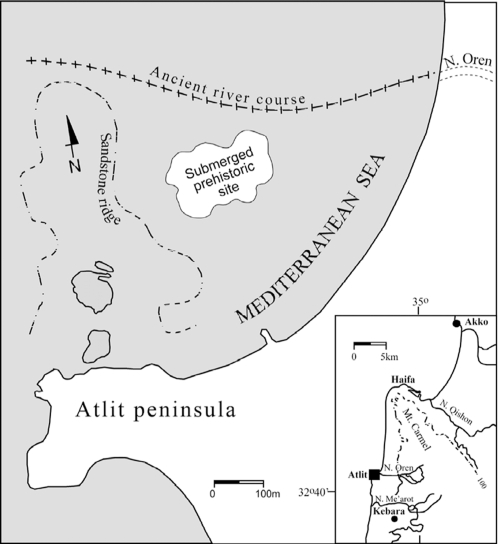
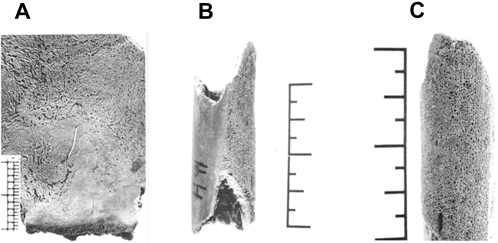
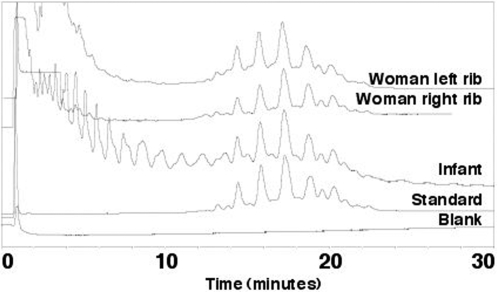
BACKGROUND: Mycobacterium tuberculosis is the principal etiologic agent of human tuberculosis. It has no environmental reservoir and is believed to have co-evolved with its host over millennia. This is supported by skeletal evidence of the disease in early humans, and inferred from M. tuberculosis genomic analysis. Direct examination of ancient human remains for M. tuberculosis biomarkers should aid our understanding of the nature of prehistoric tuberculosis and the host/pathogen relationship. METHODOLOGY/PRINCIPAL FINDINGS: We used conventional PCR to examine bone samples with typical tuberculosis lesions from a woman and infant, who were buried together in the now submerged site of Atlit-Yam in the Eastern Mediterranean, dating from 9,250-8,160 years ago. Rigorous precautions were taken to prevent contamination, and independent centers were used to confirm authenticity of findings. DNA from five M tuberculosis genetic loci was detected and had characteristics consistent with extant genetic lineages. High performance liquid chromatography was used as an independent method of verification and it directly detected mycolic acid lipid biomarkers, specific for the M. tuberculosis complex. CONCLUSIONS/SIGNIFICANCE: Human tuberculosis was confirmed by morphological and molecular methods in a population living in one of the first villages with evidence of agriculture and animal domestication. The widespread use of animals was not a source of infection but may have supported a denser human population that facilitated transmission of the tubercle bacillus. The similarity of the M. tuberculosis genetic signature with those of today gives support to the theory of a long-term co-existence of host and pathogen.
Overview
The claims and statistics of this paper haven’t been checked yet.
Run the check — free, no account needed. It reads the open-access text and checks the sources it cites.
Integrity signals
Registry
Cites
Statistics
Figures
Verification
Claims the paper makes
The claims and statistics of this paper haven’t been checked yet.
Run the check — free, no account needed. It reads the open-access text and checks the sources it cites.
Claims other papers make about this one
Each is checked against this paper’s own text: does it say what the citing paper says it does?
The source backs part of the claim, not all of it — or backs it for a different population, condition or comparison.
In the citing paper
“The identification of M. tuberculosis from an individual approximately 2,000 years ago is consistent with our current understanding of Mycobacterium infection and transmission between humans and in humans and domesticated animals [40].”
From Molecular Exploration of the First-Century Tomb of the Shroud in Akeldama, Jerusalem (2009) · cites this paper as [40]
Experimental — accuracy not yet measured
Self-check
Percentages, sums and reported differences re-computed from the paper’s own numbers.
The self-check needs the paper’s full text.
Citations
Cites
Kamerbeek, J., Schouls, L. M., Kolk, A. H. J., van Agterveld, M., van Soolingen, D., Kuijper, S., Bunschoten, A., Molhuizen, H. O. F., Shaw, R. J., Goyal, M., et al. (1997) · Journal of Clinical Microbiology · doi:10.1128/jcm.35.4.907-914.1997 · Cited by 2,871
Identification of Pathological Conditions in Human Skeletal Remains
Ortner, D. J. (2003) · Elsevier eBooks · doi:10.1016/b978-0-12-528628-2.x5037-6 · Cited by 2,526
A new evolutionary scenario for the Mycobacterium tuberculosis complex
Brosch, R., Gordon, S. V., Marmiesse, M., Brodin, P. M., Buchrieser, C., Eiglmeier, K., Garnier, T., Gutierrez, C., Hewinson, R. G., Kremer, K., et al. (2002) · Proceedings of the National Academy of Sciences · doi:10.1073/pnas.052548299 · Cited by 1,645
Paleopathology at the Origins of Agriculture.
Dennell, R., Cohen, M. N., & Armelagos, G. J. (1986) · Man · doi:10.2307/2803166 · Cited by 1,336
Identification of pathological conditions in human skeletal remains
Ortner, D. J., & Putschar, W. G. J. (1985) · Smithsonian contributions to anthropology · doi:10.5479/si.00810223.28.1 · Cited by 1,059
Sreevatsan, S., Pan, X., Stockbauer, K. E., Connell, N. D., Kreiswirth, B. N., Whittam, T. S., & Musser, J. M. (1997) · Proceedings of the National Academy of Sciences · doi:10.1073/pnas.94.18.9869 · Cited by 1,035
The epidemiology of Mycobacterium bovis infections in animals and man: A review
O'Reilly, L. M., & Daborn, C. J. (1995) · Tubercle and Lung Disease · doi:10.1016/0962-8479(95)90591-x · Cited by 835
Daniel, T. M. (2006) · Respiratory Medicine · doi:10.1016/j.rmed.2006.08.006 · Cited by 765
Eisenach, K. D., Donald Cave, M., Bates, J. H., & Crawford, J. T. (1990) · Journal of Infectious Diseases · doi:10.1093/infdis/161.5.977 · Cited by 748
Social and environmental risk factors in the emergence of infectious diseases
Weiss, R. A., & McMichael, A. J. (2004) · Nature Medicine · doi:10.1038/nm1150 · Cited by 714
Research works printed but not linked: 1
- DE Minnikin, 1987, Mass spectrometric analysis of multimethyl branched fatty acids and phthiocerols from clinically-significant mycobacteria., Proc Jap Soc Med Mass Spectrom, 12, 23
Cited by
Sorted by citations
Items 301–400 of 543
Aseffa, A., Mihret, A., Habte, A., Abebe, M., Wassie, L., Tschopp, R., Beyene, D., Ameni, G., Berg, S., Doherty, T. M., et al. (2013) · African Journal of Microbiology Research · doi:10.5897/ajmr12.1209 · Cited by 2
Donoghue, H. D., Pap, I., Szikossy, I., & Spigelman, M. (2020) · Springer eBooks · doi:10.1007/978-981-15-1614-6_21-1 · Cited by 2
Self-citationThe role of macrophages in tuberculosis
Sikder, M. H., Hossen, M. J., Matin, M. A., Rahman, M., Ahmed, M. S., Asadazzuaman, M., & Islam, A. (2022) · Elsevier eBooks · doi:10.1016/b978-0-12-822368-0.00017-7 · Cited by 2
Silicosis and silicotuberculosis: Ancient diseases that are still not conquered
Meintjes, W. A. J. (2023) · African Journal of Thoracic and Critical Care Medicine · doi:10.7196/ajtccm.2023.v29i3.1495 · Cited by 2
Innovations in Tuberculosis Disease Screening
Yousif, D., Mesilhy, R., Aly, R., Hegazi, S., Yousif, Z. B., Cyprian, F. S., & Abdallah, A. (2024) · Springer eBooks · doi:10.1007/978-3-031-59967-5_5 · Cited by 2
Tuberculosis: Ancient History, Modern Scourge
Rosenthal, M. E. (2013) · Journal of Ancient Diseases & Preventive Remedies · doi:10.4172/2329-8731.1000104 · Cited by 2
Singh, R. P., Kumar, A., Lal, A., & Mahto, S. P. (2019) · Journal of Evolution of Medical and Dental Sciences · doi:10.14260/jemds/2019/416 · Cited by 2
Tuberculosis: Image Segmentation Approach Using OpenCV
Khan, A. A. (2018) · Sukkur IBA Journal of Computing and Mathematical Sciences · doi:10.30537/sjcms.v2i2.235 · Cited by 2
Biedenharn, A. M. (2015) · Journal of Bioresource Management · Cited by 2
TB Vaccines: State of the Art and Progresses
Rosada, R. S., Rodrigues, R. F., Frantz, F. G., Arnoldi, F. G. C., de la Torre, L. G., & Silva, C. L. (2013) · Springer eBooks · doi:10.1007/978-3-7091-1419-3_13 · Cited by 2
Cytotoxic response persists in subjects treated for tuberculosis decades ago
Savolainen, L. E., Koskivirta, P., Kantele, A., Valleala, H., Pusa, L., Tuompo, R., Westerlund‐Wikström, B., & Tuuminen, T. (2013) · BMC Infectious Diseases · doi:10.1186/1471-2334-13-573 · Cited by 2
Protecting the antibiotic miracle
Greener, M. (2012) · Nurse Prescribing · doi:10.12968/npre.2012.10.6.288 · Cited by 2
Bacterial Lung Disease and COPD
Sanjay, S., & O’Toole, R. (2016) · Journal of Pulmonary & Respiratory Medicine · doi:10.4172/2161-105x.1000338 · Cited by 2
Mahmood, N., Abbas, S. N., Faraz, N., & Shahid, S. (2019) · Journal of Infection and Public Health · doi:10.1016/j.jiph.2019.01.056 · Cited by 2
Prevalence study of tuberculosis among basrah population through 2011-2015 : prospective study
Alsaimary, I. E. (2019) · Journal of Physics Conference Series · doi:10.1088/1742-6596/1294/6/062087 · Cited by 2
Trends in Ancient Populations’ Osteobiography during the Holocene: the Levantine Perspective
Hershkovitz, I., Sarig, R., & May, H. (2021) · Paléorient · doi:10.4000/paleorient.907 · Cited by 2
Self-citationPaleopathology of Human Infections: Old Bones, Antique Books, Ancient and Modern Molecules
Dutour, O. (2016) · ASM Press eBooks · doi:10.1128/9781555819170.ch10 · Cited by 2
Kumar, A., & Gupta, K. (2022) · Rare diseases of the immune system · doi:10.1007/978-3-031-05002-2_12 · Cited by 2
Antibacterial Effects of New Zealand Plant Extracts against Mycobacteria
Earl, E. A. (2010) · doi:10.26686/wgtn.16984666 · Cited by 2
Mugusi, S. F. (2013) · Figshare · Cited by 2
Gafar, M. (2013) · Cited by 2
The Immunological Mysteries of Tuberculosis
Sabbagh, D., Beasley, R. W., & Marks, G. B. (2019) · The Journal of Allergy and Clinical Immunology In Practice · doi:10.1016/j.jaip.2018.10.011 · Cited by 2
Identification of Anti-tubercular Compounds in Marine Organisms from Aotearoa
Dasyam, N. (2014) · Open Access Victoria University of Wellington | Te Herenga Waka (Figshare) · doi:10.26686/wgtn.17008141 · Cited by 2
Kumar, A., Sharma, S., Kaur, J., Pal, A., Aggarwal, A. N., & Verma, I. (2025) · bioRxiv (Cold Spring Harbor Laboratory) · doi:10.1101/2025.01.16.633312 · Cited by 2
Towards On-Site Paleogenomics: Application and Perspective of Nanopore Sequencing with Ancient DNAPreprint
Ishiya, K., Odongoo, R., Kasai, K., Machida, K., Nakagome, S., Tarumoto, S., Yamamoto, T., Tsujimura, T., & Gakuhari, T. (2025) · bioRxiv (Cold Spring Harbor Laboratory) · doi:10.64898/2025.12.29.696801 · Cited by 2
Rothschild, B. M., Surmik, D., & Bertozzo, F. (2023) · Springer eBooks · doi:10.1007/978-3-031-28624-7_9 · Cited by 1
Professor David Minnikin Memorial Lecture: An era of the mycobacterial cell wall lipid biomarkers
Lee, O. Y.-C., Wu, H. H. T., & Besra, G. S. (2023) · Tuberculosis · doi:10.1016/j.tube.2023.102415 · Cited by 1
Self-citationBacPROTAC approach for tuberculosis drug discovery
Bonjorno, A. F., Pavan, A. R., Lopes, J. R., Prates, J. L. B., de Souza, M. M., Scarim, C. B., & dos Santos, J. L. (2024) · Annual reports in medicinal chemistry · doi:10.1016/bs.armc.2024.10.004 · Cited by 1
Shivanoori, J., Baldha, M., Kolli, S. K., Kapavarapu, R., & Pal, M. (2025) · Tetrahedron Green Chem · doi:10.1016/j.tgchem.2025.100080 · Cited by 1
Díaz‐Navarro, S., Santos, A. L., Maurandi, J. L., Sánchez, M. D. N., Casas‐Ferreira, A. M., Pavón, J. L. P., & Uriarte, M. H. (2026) · International Journal of Paleopathology · doi:10.1016/j.ijpp.2026.04.001 · Cited by 1
Rachmawaty, F. J., Julianto, T. S., & Tamhid, H. A. (2018) · AIP conference proceedings · doi:10.1063/1.5033384 · Cited by 1
Nair, V., Patil, S., Pratinidhi, A., Pawar, B., Jadhav, A., Gaikwad, R., & Raje, V. (2018) · Journal of Evolution of Medical and Dental Sciences · doi:10.14260/jemds/2018/662 · Cited by 1
Turgut, M., Turgut, A. T., & Akhaddar, A. (2017) · Springer eBooks · doi:10.1007/978-3-319-50712-5_15 · Cited by 1
Public Health Surveillance for Tuberculosis
Armstrong, L., & Miramontes, R. (2014) · Wiley eBooks · doi:10.1002/9781118928646.ch14 · Cited by 1
Masquerading Mycobacterium: Rectal Growth or Tuberculosis?
Choudhury, N., & Hagjer, S. (2013) · Cited by 1
Paleogenetic analysis in archeological studies
Сергеевич, П. А., & Молодин, В. И. (2011) · Russian Journal of Genetics Applied Research · doi:10.1134/s2079059711010047 · Cited by 1
Newer Diagnostic Methods in Tuberculosis Detection
Narreddy, S., & Muthukuru, S. (2014) · Apollo Medicine · doi:10.1016/j.apme.2014.05.008 · Cited by 1
A Study of Drug Resistance TB among Patients with New Sputum Smear Positive Pulmonary Tuberculosis
Kumarnatarajan, & Dr.Bharathiraja, G. (2016) · IOSR Journal of Dental and Medical Sciences · doi:10.9790/0853-1509074153 · Cited by 1
Tuberculosis Control in Jiangsu Province, China
Li, Y. (2016) · Journal of Infectious Diseases and Epidemiology · doi:10.23937/2474-3658/1510013 · Cited by 1
Progress in the Prevention and Treatment of AIDS Associated with Tuberculosis
He, W., Li, R., & Wang, Y. (2016) · Infection International/Infection International (Electronic Edition) · doi:10.1515/ii-2017-0129 · Cited by 1
Genes and Genetics of Tuberculosis
Pandit, B. (2017) · International Journal of Pulmonary & Respiratory Sciences · doi:10.19080/ijoprs.2017.01.555567 · Cited by 1
Tuberculose respiratória: histórico, atualização do diagnóstico e dificuldades do tratamento
Venceslau, K. F. R., de Abreu, K. D., Andrade, S. P., de Carvalho, A. V., Rodrigues, F. A., & Guimarães, A. P. M. (2017) · Scire Salutis · doi:10.6008/spc2236-9600.2017.001.0004 · Cited by 1
Paléomicrobiologie de la tuberculose
Barbieri, R., & Drancourt, M. (2017) · Revue Francophone des Laboratoires · doi:10.1016/s1773-035x(17)30374-x · Cited by 1
UNDERSTANDING OF MYCOBACTERIUM TUBERCULOSIS EVOLUTION
Добин, В. Л. (2018) · Tuberculosis and lung diseases · doi:10.21292/2075-1230-2018-96-8-59-65 · Cited by 1
Jeon, A. B., Basaraba, R. J., Borlee, B., Gustafson, D., Jackson, M., Melander, C., & Obregón-Henao, A. (2017) · Digital Collections of Colorado (Colorado State University) · doi:10.25675/3.020311 · Cited by 1
Mahmood, T., Dwivedi, P., Shukla, A. D., Jain, A. K., & Verma, A. K. (2019) · SAARC Journal of Tuberculosis Lung Diseases and HIV/AIDS · doi:10.3126/saarctb.v17i1.25019 · Cited by 1
Medical paleomicrobiology: problems and prospects
Goncharov, A. Е., & Kolodzhieva, V. V. (2021) · Antibiot Khimioter = Antibiotics and Chemotherapy · doi:10.37489/0235-2990-2021-66-5-6-72-77 · Cited by 1
Archéologie de la santé, anthropologie du soin
Thomas, A. (2019) · La Découverte eBooks · doi:10.3917/dec.frome.2019.01.0030 · Cited by 1
Mycobacteria, Immunoregulation, and Autoimmunity
Rook, G. A. W. (2018) · Elsevier eBooks · doi:10.1016/b978-0-12-814603-3.00009-4 · Cited by 1
Las enfermedades infecciosas en la Prehistoria: diversos casos de estudio
León-Cristóbal, A. (2022) · Memoria y Civilización · doi:10.15581/001.25.012 · Cited by 1
Matsumoto, M. (2022) · NIPPON SUISAN GAKKAISHI · doi:10.2331/suisan.wa2934 · Cited by 1
Multidrug Resistance and Extensively Drug-Resistant Tuberculosis: Diagnosis and Management Protocols
Jasani, V., Abdelaal, A., & Mohamed, M. (2022) · Springer eBooks · doi:10.1007/978-981-16-9495-0_14 · Cited by 1
Childhood Tuberculosis: Historical Perspectives, Recent Advances, and a Call to Action
Campbell, J. I., Dubois, M. M., Husson, R. N., & Lamb, G. S. (2022) · Journal of the Pediatric Infectious Diseases Society · doi:10.1093/jpids/piac051 · Cited by 1
Neha, K., & Malik, J. K. (2022) · South Asian Research Journal of Pharmaceutical Sciences · doi:10.36346/sarjps.2022.v04i05.001 · Cited by 1
Raj, A., Parves, H., Kumar, A., Prabasheela, B., & Dhandayuthapani, S. (2022) · Santosh University Journal of Health Sciences · doi:10.4103/sujhs.sujhs_40_22 · Cited by 1
Lipid biomarkerek HPLC-HRMS vizsgálata történeti embertani minták tbc diagnosztikája során
Váradi, O. A. (2022) · Anthropologiai Közlemények · doi:10.20330/anthropkozl.2022.63.97 · Cited by 1
ADAMOWICZ, D., Łopuszyńska, I., Zembala, J., Stańczyk, J., Meliksetian, A., Wosińska, A., PAZIK, D., KOSECKA, K., Cieślik, A., & Jargieło, A. (2023) · Journal of Education Health and Sport · doi:10.12775/jehs.2023.22.01.009 · Cited by 1
Giuffra, V., Minozzi, S., Aringhieri, G., Campana, S., & Riccomi, G. (2023) · International Journal of Paleopathology · doi:10.1016/j.ijpp.2023.09.004 · Cited by 1
A scientometric analysis and visualization of Pott's disease; 2000-2021
Yılmaz, S., Alkan, S., Öner, S. K., Demirkıran, N. D., Kuyubaşı, S. N., & ARSLAN, C. (2023) · Journal of Health Sciences and Medicine · doi:10.32322/jhsm.1334167 · Cited by 1
Probable cases of tuberculosis in Early Medieval pastoralists of Eastern Europe
Buzhilova, A. (2023) · Tuberculosis · doi:10.1016/j.tube.2023.102365 · Cited by 1
La evolución de la cirugía torácica vista desde su origen en México
Morales-Gómez, J. (2024) · NCT Neumología y Cirugía de Tórax · doi:10.35366/114799 · Cited by 1
Clinico-epidemiological profile of 75 cases of TB meningitis in children and adoloscents
Sharma, S., Agarwal, A., & Khanna, A. K. (2024) · Indian Journal of Tuberculosis · doi:10.1016/j.ijtb.2024.03.005 · Cited by 1
Skeletal Tuberculosis- Review of Literature and Few case reports
Chittiboyina, S., & Arundhathi, B. (2018) · Pulmonary and Respiratory Medicine International Journal · doi:10.30881/prmij.00008 · Cited by 1
Donoghue, H. D., Pap, I., Szikossy, I., & Spigelman, M. (2021) · Springer eBooks · doi:10.1007/978-981-15-1614-6_21-2 · Cited by 1
Self-citationPaleomicrobiology of Human Tuberculosis
Donoghue, H. D. (2016) · ASM Press eBooks · doi:10.1128/9781555819170.ch12 · Cited by 1
Self-citationTuberculosis and Other Mycobacteria
Yadav, J. S., & Kapoor, R. (2012) · Wiley eBooks · doi:10.1002/0471435139.tox021.pub2 · Cited by 1
Characterization of diagnostic biomarkers for Mycobacterium tuberculosis infection
Savolainen, L. E. (2014) · Työväentutkimus Vuosikirja · Cited by 1
Altaf, M. (2012) · Open Access Victoria University of Wellington | Te Herenga Waka (Figshare) · doi:10.26686/wgtn.17003413.v1 · Cited by 1
Epidemiological and awareness study of tuberculosis in Batu Pahat, Johor, Malaysia
Sanusi, S. B. (2014) · UTHM Institutional Repository (Universiti Tun Hussein Onn Malaysia) · Cited by 1
Navarro-Ballester, A. (2017) · doi:10.6035/14032.2017.568251 · Cited by 1
Bartolucci, M. (2017) · Digital Access to Scholarship at Harvard (DASH) (Harvard University) · Cited by 1
Improving point-of-care diagnosis of tuberculosis: development and evaluation of novel technologies
Moodley, V. M. (2017) · Open University of Cape Town (University of Cape Town) · Cited by 1
Tuberculosis: new era for diagnosis and surveillance using whole-genome sequencing-based approaches
Macedo, A. R. F. (2019) · Portuguese National Funding Agency for Science, Research and Technology (RCAAP Project by FCT) · Cited by 1
Váradi, O. A. (2021) · SZTE Repository of Dissertations (University of Szeged) · doi:10.14232/phd.10740 · Cited by 1
ParA: A Novel Target for Anti-Tubercular Drug Discovery
Nisa, S. (2010) · Open Access Victoria University of Wellington | Te Herenga Waka (Figshare) · doi:10.26686/wgtn.16971664 · Cited by 1
Genomic signatures of increasing disease burden in recent prehistoryPreprint
Harris, K. D., Talmor, Y., Nof, M. B. Y., Marom, N., Jaffe, Y. Y., Slon, V., & Greenbaum, G. (2025) · bioRxiv (Cold Spring Harbor Laboratory) · doi:10.1101/2025.07.22.666087 · Cited by 1
Exploring Prehistoric Tuberculosis in Britain: A Combined Macroscopic and Biomolecular Approach
McCarrison, K. E. (2012) · Durham e-Theses (Durham University) · Cited by 1
Montgomery, R. M. (2025) · Preprints.org · doi:10.20944/preprints202504.1304.v1 · Cited by 1
Lozada, I., & Matias, M. (2013) · Journal of Bioresource Management
Molecular epidemiology of tuberculosis in selected sites across Papua New Guinea
Ley, S. D. (2014) · edoc (University of Basel) · doi:10.5451/unibas-006275629
TOWARDS THE TOTAL SYNTHESIS OF THE CAPURAMYCIN FAMILY OF NATURAL PRODUCTS
Jacobsen, J. M. (2011) · UKnowledge (University of Kentucky)
Structural enzymology of dormancy related proteins from Mycobacterium tuberculosis
Ågren, D. (2009) · Figshare
Smith, J. (2010) · University Libraries (University of Maryland)
Manipulation of cysteine cathepsins during Mycobacterium tubersulosis infection of human macrophages
Pombo, J. P. N. (2013) · Portuguese National Funding Agency for Science, Research and Technology (RCAAP Project by FCT)
Rao, M. (2013) · Universitätsbibliothek der FU Berlin Hochschulschriftenstelle u. Dokumentenserver · doi:10.17169/refubium-7489
Tuberculous Osteomyelitis of the Hyoid Bone: A Case Report
Emerson, P., Philip, A., Varghese, G. M., & Thomas, R. (2013) · Case Reports in Otolaryngology · doi:10.1155/2013/549564
Synthesis and screening of potential antimicrobial compounds
Gunthey, P. P. (2014) · Aston Publications Explorer (Aston University) · doi:10.48780/publications.aston.ac.uk.00024361
Effector and Regulatory CD4 T Cells During Mycobacterium tuberculosis Infection
Green, A. M. (2010) · D-Scholarship@Pitt (University of Pittsburgh)
Molecular characterization of mycobacterium tuberculosis complex isolates from Sweden
Ghebremichael, S. (2010) · Figshare
Epidemiological and immunological studies of environmental mycobacteria
Jönsson, B. (2009)
Context for a Bioarchaeology of Care
Tilley, L. (2015) · Bioarchaeology and social theory · doi:10.1007/978-3-319-18860-7_3
A statistical investigation of the risk factors for tuberculosis
van Woerden, I. (2013) · UC Research Repository (University of Canterbury) · doi:10.26021/6505
Mundorff, A. Z., Kiley, S., Latham, K. E., Haak, W., & Gilson, T. P. (2013) · MPG.PuRe (Max Planck Society)
Sanyi, R. H. H. (2016) · Figshare
The barriers and countermeasures for the development of new energy industry in China
Gan, Z., Lv, H. J., Liu, X., Shang, Y., & Cao, N. (2013) · WIT transactions on engineering sciences · doi:10.2495/meee131021
Domestication, Agriculture, and the Rise of the State
Brooke, J. L. (2014) · Cambridge University Press eBooks · doi:10.1017/cbo9781139050814.020
7000 éves dél-magyarországi tuberkulózis esetek oszteológiai és molekuláris biológiai vizsgálata
Masson, M., Bereczki, Z., Molnár, E., Donoghue, H. D., & Minnikin, D. E. (2016) · Anthropologiai Közlemények · doi:10.20330/anthropkozl.2016.57.17
Self-citation
Metadata
- Authors
- Hershkovitz, I., Donoghue, H. D., Minnikin, D. E., Besra, G. S., Lee, O. Y.-C., Gernaey, A. M., Galili, E., Eshed, V., Greenblatt, C. L., Lemma, E., Bar-Gal, G. K., & Spigelman, M.
- Affiliations
- University College London (GB)
- University of Birmingham (GB)
- University of Salford (GB)
- Israel Antiquities Authority (IL)
- Tel Aviv University (IL)
- Hebrew University of Jerusalem (IL)
- Corresponding author
- Donoghue, Helen D.
- ORCID
- Venue
- PLoS ONE
- Publisher
- Public Library of Science (PLoS)
- Published
- 2008-10-15
- Volume
- 3
- Issue
- 10
- Pages
- e3426
- ISSN
- 1932-6203 (ISSN-L)
- PMC
- PMC2565837
- OpenAlex
- W2052515110
- Cited by
- 506
- References
- 51
- Citations by year
- 2026: 11 · 2025: 13 · 2024: 26 · 2023: 37 · 2022: 30 · 2021: 30 · 2020: 29 · 2019: 42 · 2018: 30 · 2017: 39 · 2016: 40 · 2015: 33 · 2014: 26 · 2013: 36 · 2012: 25
- FWCI
- 167.98
- Type
- journal article
- Language
- en
- Open access
- gold
- doi.org
- Locations
- PLoS ONE (publishedVersion, cc-by)
- Europe PMC (PubMed Central) (publishedVersion, cc-by)
- PubMed Central (publishedVersion, cc-by)
- PubMed (publishedVersion)
- DOAJ (DOAJ: Directory of Open Access Journals) (submittedVersion, cc-by-sa)
- UCL Discovery (University College London) (submittedVersion)
- Figshare (submittedVersion, cc-by)
- University of Birmingham Research Portal (University of Birmingham) (submittedVersion, other-oa)
- Funders
- Leverhulme Trust
- Deutsche Forschungsgemeinschaft
- Dan David Prize
- Topics
- Social Sciences › Arts and Humanities › Archeology (arts and humanities) › Paleopathology and ancient diseases
- Health Sciences › Medicine › Infectious Diseases › Tuberculosis Research and Epidemiology
- Social Sciences › Archeology › Archaeology and ancient environmental studies
- Keywords
- Mycobacterium tuberculosis, Neolithic, ancient DNA, host-pathogen coevolution, tuberculosis transmission, animal domestication, human remains, Eastern Mediterranean
- MeSH terms
- Adult, Bone and Bones, DNA, Bacterial, Female, Humans, Infant, Mycobacterium tuberculosis, Tuberculosis, Polymerase Chain Reaction, Mediterranean Region, History, Ancient
About these checks
Registry, retraction, Cites and statistics results are computed, not judged, with one exception: a printed reference that no index lists is read once by a model before it counts as a citation error. Claims are extracted by a model and kept only when their quote appears verbatim in the text; each cited source is then checked, with a model’s help, for whether it says what the claim relies on. Those verdicts can be wrong — read the claim’s quote and the cited source before relying on one.
Statistics and arithmetic are recomputed, not judged.
Confidence bands are shown only for fields calibrated on our annotated test set. None is calibrated yet, so no band is shown.
What counts as a claim ›How we measure confidence ›How we check this ›
Are you an author, or do you see a problem with this page? Request a review
