

Metabolic Profiling of the Response to an Oral Glucose Tolerance Test Detects Subtle Metabolic Changes
Open accessThe DOI matches its Crossref record; 55 of the 56 references it cites were found in a registry or an index.
Abstract
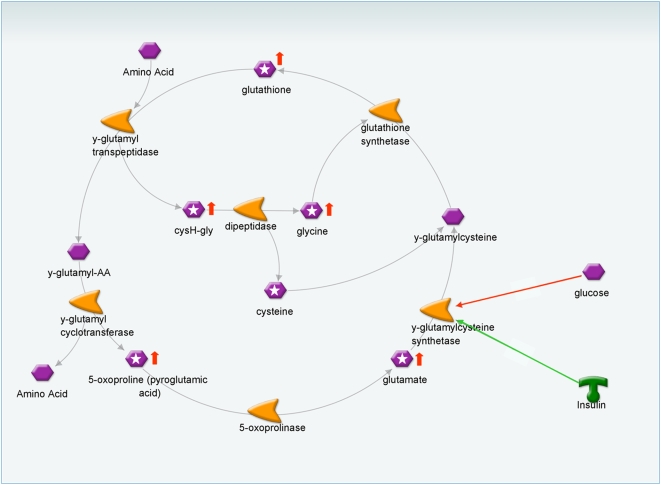
BACKGROUND: The prevalence of overweight is increasing globally and has become a serious health problem. Low-grade chronic inflammation in overweight subjects is thought to play an important role in disease development. Novel tools to understand these processes are needed. Metabolic profiling is one such tool that can provide novel insights into the impact of treatments on metabolism. METHODOLOGY: To study the metabolic changes induced by a mild anti-inflammatory drug intervention, plasma metabolic profiling was applied in overweight human volunteers with elevated levels of the inflammatory plasma marker C-reactive protein. Liquid and gas chromatography mass spectrometric methods were used to detect high and low abundant plasma metabolites both in fasted conditions and during an oral glucose tolerance test. This is based on the concept that the resilience of the system can be assessed after perturbing a homeostatic situation. CONCLUSIONS: Metabolic changes were subtle and were only detected using metabolic profiling in combination with an oral glucose tolerance test. The repeated measurements during the oral glucose tolerance test increased statistical power, but the metabolic perturbation also revealed metabolites that respond differentially to the oral glucose tolerance test. Specifically, multiple metabolic intermediates of the glutathione synthesis pathway showed time-dependent suppression in response to the glucose challenge test. The fact that this is an insulin sensitive pathway suggests that inflammatory modulation may alter insulin signaling in overweight men.
Overview
The claims and statistics of this paper haven’t been checked yet.
Free: it reads the open-access text and checks the first 5 claims that cite a source we can check. Create a free account to check every claim.
Integrity signals
Registry
Cites
Statistics
Figures
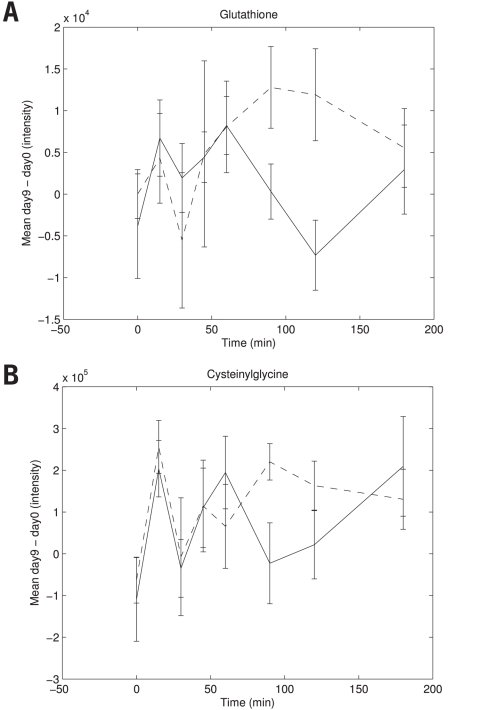
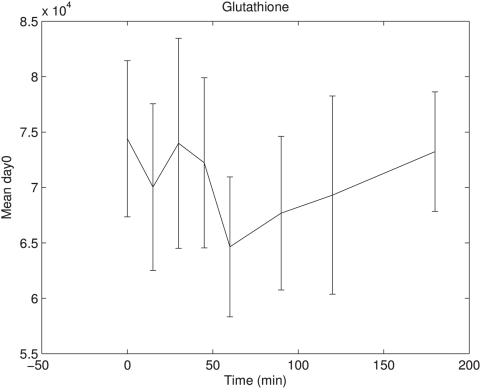
Verification
Claims the paper makes
The claims and statistics of this paper haven’t been checked yet.
Free: it reads the open-access text and checks the first 5 claims that cite a source we can check. Create a free account to check every claim.
Claims other papers make about this one
Each is checked against this paper’s own text: does it say what the citing paper says it does?
In the citing paper
“Recent cross-sectional studies have documented differences in blood metabolite profiles before and after glucose loading15-17 and in obese compared with lean individuals14.”
From Metabolite profiles and the risk of developing diabetes (2011) · cites this paper as [16]
Self-check
Percentages, sums and reported differences re-computed from the paper’s own numbers.
The self-check needs the paper’s full text.
Citations
Cites
Inflammation, Atherosclerosis, and Coronary Artery Disease
Hansson, G. K. (2005) · New England Journal of Medicine · doi:10.1056/nejmra043430 · Cited by 8,773
Goodall, C. (1988) · Technometrics · doi:10.1080/00401706.1988.10488412 · Cited by 8,675
Jolliffe, I. T. (1986) · Springer Series in Statistics · doi:10.1007/978-1-4757-1904-8 · Cited by 8,273
Glutathione Metabolism and Its Implications for Health
Wu, G., Lupton, J. R., Turner, N. D., Fang, Y.-Z., & Yang, S. (2004) · The Journal of Nutrition · doi:10.1093/jn/134.3.489 · Cited by 3,842 · cited 1×
“Interestingly, it is known that insulin action increases and glucose decreases the regulation of GSH synthesis by GCS [48–50].”
Partial least squares for discrimination
Barker, M., & Rayens, W. (2003) · Journal of Chemometrics · doi:10.1002/cem.785 · Cited by 2,841
Inflammation: the link between insulin resistance, obesity and diabetes
Dandona, P. (2004) · Trends in Immunology · doi:10.1016/j.it.2003.10.013 · Cited by 2,170 · cited 1×
“This inflammatory state has been associated with cardiovascular diseases [1], diabetes, insulin resistance [2] and cancer [3].”
Regulation of glutathione synthesis
Lu, S. C. (2009) · Molecular Aspects of Medicine · doi:10.1016/j.mam.2008.05.005 · Cited by 2,116 · cited 3×
“Interestingly, it is known that insulin action increases and glucose decreases the regulation of GSH synthesis by GCS (Townsend et al., 2003; Lu, 2000; Wu et al., 2004).”
Handbook of Chemometrics and Qualimetrics: Part A
(1998) · Data Handling in Science and Technology · doi:10.1016/s0922-3487(97)x8000-1 · Cited by 2,027
The importance of glutathione in human disease
Townsend, D. M., Tew, K. D., & Tapiero, H. (2003) · Biomedicine & Pharmacotherapy · doi:10.1016/s0753-3322(03)00043-x · Cited by 2,004 · cited 2×
“GSH synthesis is predominantly regulated by activity of c - glutamylcysteine synthetase (GCS) and availability of the rate-limiting substrate cysteine [48].”
Multivariate Analysis: Methods and Applications
Dillon, W. R., & Goldstein, M. (1984) · CERN Document Server (European Organization for Nuclear Research) · Cited by 1,905
Cited by
Items 101–123 of 123
Targeting Foodome-Metabolome Interactions: A Combined Modeling Approach
Zhao, S., & Mechanick, J. I. (2015) · The Endocrine Society eBooks · doi:10.1210/mn1.9781936704842.ch11 · Cited by 2
The Importance of Metabolites in Modulating Insulin Sensitivity
Meiliana, A., Dewi, N. M., & Wijaya, A. (2022) · The Indonesian Biomedical Journal · doi:10.18585/inabj.v14i3.1872 · Cited by 1
“Recent studies found variations in blood metabolite profiles before and after glucose loading (10-12) as well”
BackgroundThan, M. M., Thazin, M., & Latt, T. S. (2013) · Journal of the ASEAN Federation of Endocrine Societies · doi:10.15605/jafes.028.01.12 · Cited by 3
Munguía‐Realpozo, P., Pinto, C. M., García‐Carrasco, M., Escarcega, R. O., Berra‐Romani, R., Etchegaray‐Morales, I., Pérez-Aquino, L., Ramírez-Hernández, A., Méndez‐Martínez, S., & Cervera, R. (2022) · Lupus · doi:10.1177/09612033221128433 · Cited by 2
“Metabolomics is an emerging analytical technology that may potentially identify new biomarkers that are highly discriminatory for biological alterations or disease.18 Crosssectional analyses have reported associations between altered metabolites and obesity,19 IR,20 prediabetes, and overt DM.21,22 Quantose IR is a tes…”
BackgroundNganou, N. D., Sonwa, E. T., Sokamte, A. T., Beumo, M. T. N., Nodem, S. F. S., & Tatsadjieu, L. N. (2020) · International Journal of Current Microbiology and Applied Sciences · doi:10.20546/ijcmas.2020.908.009 · Cited by 1
“This technique has proven to be effective and has convincing results, but has devastating repercussions on the environment and human health through acute or chronic intoxication, allergies and even cancers (Wopereis et al., 2009).”
BackgroundMetabolomics Applications in Human Nutrition
Daniel, H., & Sailer, M. (2012) · Springer eBooks · doi:10.1007/978-1-4614-1689-0_9 · Cited by 2
Hiyoshi, N., Enomoto, T., Uefune, F., Kato, Y. S., Wu, Y., Araki, K., Sakano, D., Shiraki, N., & Kume, S. (2023) · Biochemical and Biophysical Research Communications · doi:10.1016/j.bbrc.2023.08.064 · Cited by 1
Bondia‐Pons, I., & Hyötyläinen, T. (2013) · Wiley eBooks · doi:10.1002/9781118537282.ch12 · Cited by 1
Metabolomics for the Individualized Therapy of Androgen Deficiency Syndrome in Male Adults
Haring, R., Budde, K., & Wallaschofski, H. (2012) · Springer eBooks · doi:10.1007/978-1-4614-1689-0_10
Yingchang, Y. L. (2011) · doi:10.18174/181557
“Besides these rare mutations, polymorphisms in the NPC1L1 gene have been associated with variation in LDL cholesterol lowering response to ezetimibe (65-68).”
BackgroundMetabolomics analyses to better understand complex phenotypes
Yu, Z. (2013) · Elektronische Hochschulschriften der LMU München (Ludwig-Maximilians-Universität München) · doi:10.5282/edoc.17273 · Cited by 1
Novel Metabolic Markers for the Risk of Diabetes Development in
Zhao, J., Zhu, Y., Hyun, N., Zeng, D., Uppal, K., Tran, V., Yu, T., Jones, D. P., He, J., Lee, E. T., et al. (2015)
Heinrich, D. K. (2015) · Electronic Theses of LMU Munich (Ludwig-Maximilians-Universität München) · doi:10.5282/edoc.19059
Metabolomics of Weight Loss and Weight Maintenance in Obese Humans
Geidenstam, N. (2016) · Lund University Publications (Lund University)
Targeting PPARs in metabolic risk management: A pharmacological and nutritional approach
Bragt, M. C. E. (2011) · Research Publications (Maastricht University) · doi:10.26481/dis.20111214mb
van Wietmarschen, H., Schro雗, Y., Kallen, V., Steijaert, M. N., de Graaf, A. A., & van der Greef, B. V. O. A. J. (2017) · World Journal of Traditional Chinese Medicine · doi:10.15806/j.issn.2311-8571.2016.0024
Mallu, A. C. T., Sivagurunathan, S., Paul, D., Aggarwal, H., Nathan, A. A., Ravi, M. M., Boppana, R., Jagavelu, K., Santra, M. K., & Dixit, M. (2021) · bioRxiv (Cold Spring Harbor Laboratory) · doi:10.1101/2021.10.13.464163
“[25] Wopereis S, Rubingh CM, van Erk MJ, Verheij ER, van Vliet T, Cnubben NHP, et al.”
BackgroundSmilde, A. K., Næs, T., & Liland, K. H. (2022) · Wiley eBooks · doi:10.1002/9781119600978.biblio
Self-citationCagan, R. L. (2011) · Faculty Opinions – Post-Publication Peer Review of the Biomedical Literature · doi:10.3410/f.9581961.10242060
Personalised and patient-centred diabetes care
den Ouden, H. (2023) · Utrecht University Repository (Utrecht University) · doi:10.33540/1762
González‐Domínguez, Á., Domínguez‐Riscart, J., Savolainen, O. I., Lechuga-Sancho, A., Landberg, R., & González‐Domínguez, R. (2024) · Figshare · doi:10.6084/m9.figshare.26860627
González‐Domínguez, Á., Savolainen, O. I., Domínguez‐Riscart, J., Landberg, R., Lechuga-Sancho, A., & González‐Domínguez, R. (2024) · Figshare · doi:10.6084/m9.figshare.27000741
Izundegui, D. G., Miller, P. E., Shah, R. V., Clish, C. B., Walker, M. E., Mitchell, G. F., Gerszten, R. E., Larson, M. G., Vasan, R. S., & Nayor, M. G. (2022) · Figshare · doi:10.6084/m9.figshare.21343190
Metadata
- Authors
- Wopereis, S., Rubingh, C. M., van Erk, M. J., Verheij, E. R., van Vliet, T., Cnubben, N. H. P., Smilde, A. K., van der Greef, J., van Ommen, B., & Hendriks, H. F. J.
- Affiliations
- Netherlands Organisation for Applied Scientific Research (NL)
- University of Amsterdam (NL)
- Corresponding author
- Wopereis, Suzan
- Venue
- PLoS ONE
- Publisher
- Public Library of Science (PLoS)
- Published
- 2009-02-26
- Volume
- 4
- Issue
- 2
- Pages
- e4525
- ISSN
- 1932-6203 (ISSN-L)
- PMC
- PMC2643463
- OpenAlex
- W2074399756
- Cited by
- 123
- References
- 56
- Citations by year
- 2025: 1 · 2024: 5 · 2023: 3 · 2022: 12 · 2021: 6 · 2020: 7 · 2019: 1 · 2017: 4 · 2016: 7 · 2015: 10 · 2014: 12 · 2013: 14 · 2012: 15
- FWCI
- 5.50
- Type
- journal article
- Language
- en
- Open access
- gold
- doi.org
- Locations
- PLoS ONE (publishedVersion, cc-by)
- PubMed Central (publishedVersion, cc-by)
- PubMed (publishedVersion)
- Leiden Repository (Leiden University) (submittedVersion)
- TNO Repository (submittedVersion)
- Data Archiving and Networked Services (DANS) (submittedVersion, other-oa)
- UvA-DARE (University of Amsterdam) (submittedVersion, other-oa)
- DOAJ (DOAJ: Directory of Open Access Journals) (submittedVersion, cc-by-sa)
- Repository hosted by TU Delft Library (TU Delft) (submittedVersion)
- Topics
- Life Sciences › Biochemistry, Genetics and Molecular Biology › Molecular Biology › Metabolomics and Mass Spectrometry Studies
- Health Sciences › Medicine › Endocrinology, Diabetes and Metabolism › Adipokines, Inflammation, and Metabolic Diseases
- Health Sciences › Medicine › Endocrinology, Diabetes and Metabolism › Diet, Metabolism, and Disease
- Keywords
- metabolite profiling, oral glucose tolerance test, overweight, low-grade inflammation, C-reactive protein, plasma metabolites, insulin signaling, metabolic perturbation
- MeSH terms
- Blood Glucose, C-Reactive Protein, Glucose Tolerance Test, Glutathione, Humans, Inflammation, Insulin, Male, Mass Spectrometry, Overweight, Metabolic Networks and Pathways, Metabolome
About these checks
Registry, retraction, Cites and statistics results are computed, not judged, with one exception: a printed reference that no index lists is read once by a model before it counts as a citation error. Claims are extracted by a model and kept only when their quote appears verbatim in the text; each cited source is then checked, with a model’s help, for whether it says what the claim relies on. Those verdicts can be wrong — read the claim’s quote and the cited source before relying on one.
Statistics and arithmetic are recomputed, not judged.
Confidence bands are shown only for fields calibrated on our annotated test set. None is calibrated yet, so no band is shown.
What counts as a claim ›How we measure confidence ›How we check this ›
Are you an author, or do you see a problem with this page? Request a review
Data sources
Bibliographic data: Semantic Scholar, OpenAlex, Crossref.
Contains information from the Semantic Scholar Academic Graph Datasets, made available under the ODC Attribution License (ODC-BY 1.0).
Semantic Scholar’s data is described in: Kinney, R., et al. (2023). The Semantic Scholar Open Data Platform. arXiv:2301.10140.
