

Metabolic Profiling of the Response to an Oral Glucose Tolerance Test Detects Subtle Metabolic Changes
Open accessThe DOI matches its Crossref record; 55 of the 56 references it cites were found in a registry or an index.
Abstract
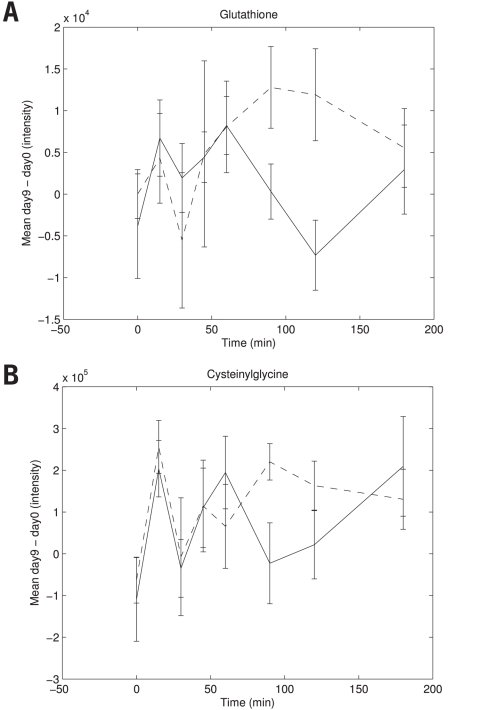
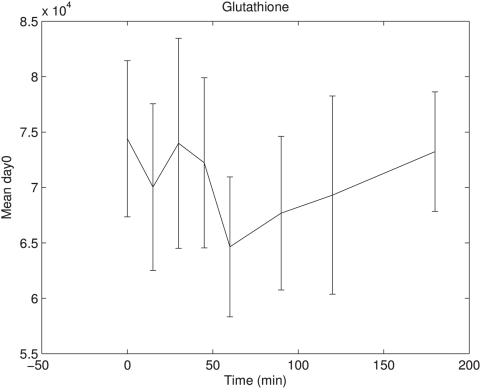
BACKGROUND: The prevalence of overweight is increasing globally and has become a serious health problem. Low-grade chronic inflammation in overweight subjects is thought to play an important role in disease development. Novel tools to understand these processes are needed. Metabolic profiling is one such tool that can provide novel insights into the impact of treatments on metabolism. METHODOLOGY: To study the metabolic changes induced by a mild anti-inflammatory drug intervention, plasma metabolic profiling was applied in overweight human volunteers with elevated levels of the inflammatory plasma marker C-reactive protein. Liquid and gas chromatography mass spectrometric methods were used to detect high and low abundant plasma metabolites both in fasted conditions and during an oral glucose tolerance test. This is based on the concept that the resilience of the system can be assessed after perturbing a homeostatic situation. CONCLUSIONS: Metabolic changes were subtle and were only detected using metabolic profiling in combination with an oral glucose tolerance test. The repeated measurements during the oral glucose tolerance test increased statistical power, but the metabolic perturbation also revealed metabolites that respond differentially to the oral glucose tolerance test. Specifically, multiple metabolic intermediates of the glutathione synthesis pathway showed time-dependent suppression in response to the glucose challenge test. The fact that this is an insulin sensitive pathway suggests that inflammatory modulation may alter insulin signaling in overweight men.
Overview
The claims and statistics of this paper haven’t been checked yet.
Free: it reads the open-access text and checks the first 5 claims that cite a source we can check. Create a free account to check every claim.
Integrity signals
Registry
Cites
Statistics
Figures
Verification
Claims the paper makes
The claims and statistics of this paper haven’t been checked yet.
Free: it reads the open-access text and checks the first 5 claims that cite a source we can check. Create a free account to check every claim.
Claims other papers make about this one
Each is checked against this paper’s own text: does it say what the citing paper says it does?
In the citing paper
“Recent cross-sectional studies have documented differences in blood metabolite profiles before and after glucose loading15-17 and in obese compared with lean individuals14.”
From Metabolite profiles and the risk of developing diabetes (2011) · cites this paper as [16]
Self-check
Percentages, sums and reported differences re-computed from the paper’s own numbers.
The self-check needs the paper’s full text.
Citations
Cites
Inflammation, Atherosclerosis, and Coronary Artery Disease
Hansson, G. K. (2005) · New England Journal of Medicine · doi:10.1056/nejmra043430 · Cited by 8,773
Goodall, C. (1988) · Technometrics · doi:10.1080/00401706.1988.10488412 · Cited by 8,675
Jolliffe, I. T. (1986) · Springer Series in Statistics · doi:10.1007/978-1-4757-1904-8 · Cited by 8,273
Glutathione Metabolism and Its Implications for Health
Wu, G., Lupton, J. R., Turner, N. D., Fang, Y.-Z., & Yang, S. (2004) · The Journal of Nutrition · doi:10.1093/jn/134.3.489 · Cited by 3,842 · cited 1×
“Interestingly, it is known that insulin action increases and glucose decreases the regulation of GSH synthesis by GCS [48–50].”
Partial least squares for discrimination
Barker, M., & Rayens, W. (2003) · Journal of Chemometrics · doi:10.1002/cem.785 · Cited by 2,841
Inflammation: the link between insulin resistance, obesity and diabetes
Dandona, P. (2004) · Trends in Immunology · doi:10.1016/j.it.2003.10.013 · Cited by 2,170 · cited 1×
“This inflammatory state has been associated with cardiovascular diseases [1], diabetes, insulin resistance [2] and cancer [3].”
Regulation of glutathione synthesis
Lu, S. C. (2009) · Molecular Aspects of Medicine · doi:10.1016/j.mam.2008.05.005 · Cited by 2,116 · cited 3×
“Interestingly, it is known that insulin action increases and glucose decreases the regulation of GSH synthesis by GCS (Townsend et al., 2003; Lu, 2000; Wu et al., 2004).”
Handbook of Chemometrics and Qualimetrics: Part A
(1998) · Data Handling in Science and Technology · doi:10.1016/s0922-3487(97)x8000-1 · Cited by 2,027
The importance of glutathione in human disease
Townsend, D. M., Tew, K. D., & Tapiero, H. (2003) · Biomedicine & Pharmacotherapy · doi:10.1016/s0753-3322(03)00043-x · Cited by 2,004 · cited 2×
“GSH synthesis is predominantly regulated by activity of c - glutamylcysteine synthetase (GCS) and availability of the rate-limiting substrate cysteine [48].”
Multivariate Analysis: Methods and Applications
Dillon, W. R., & Goldstein, M. (1984) · CERN Document Server (European Organization for Nuclear Research) · Cited by 1,905
Andersson, C. A., & Bro, R. (2000) · Chemometrics and Intelligent Laboratory Systems · doi:10.1016/s0169-7439(00)00071-x · Cited by 1,229 · cited 1×
“All analyses were performed using Matlab Version 7.0.4 R14 (The Mathworks, Inc.) and the n-way toolbox version 2.11 [32].”
InfluentialMulti‐Way Analysis with Applications in the Chemical Sciences
Smilde, A., Bro, R., & Geladi, P. (2004) · Wiley eBooks · doi:10.1002/0470012110 · Cited by 1,176
Self-citationA causal role for uric acid in fructose-induced metabolic syndrome
Nakagawa, T., Hu, H., Zharikov, S., Tuttle, K. R., Short, R. A., Glushakova, O., Ouyang, X., Feig, D. I., Block, E. R., Herrera-Acosta, J., et al. (2006) · American Journal of Physiology-Renal Physiology · doi:10.1152/ajprenal.00140.2005 · Cited by 1,104 · cited 1×
“Subsequently, elevated levels of uric acid are associated with inflammation and oxidative stress [42,43,46].”
Handbook of Chemometrics and Qualimetrics
Massart, D. L., Vandeginste, B. G. M., Buydens, L. M. C., Lewi, P. J., Smeyers-Verbeke, J., & Jong, S. D. (1998) · Cited by 1,085
Multivariate Analysis-Methods and Applications.
Cranley, R., Dilon, W. R., & Goldstein, M. (1985) · Applied Statistics · doi:10.2307/2347476 · Cited by 942 · cited 1×
“Basic multivariate data analysis tools like Principal Component Analysis (PCA; [23,24,25,26]) and Partial Least Squares Discrimant analysis (PLS-DA; [21]) are not sufficient to analyze the data sets, since these methods do not separate the time factor from the metabolites.”
A fast non-negativity-constrained least squares algorithm
Bro, R., & de Jong, S. (1997) · Journal of Chemometrics · doi:10.1002/(sici)1099-128x(199709/10)11:5<367::aid-cem481>3.0.co;2-i · Cited by 909 · cited 1×
“Therefore, the multi-way generalization of these two-way techniques, nPLS-DA, [27,28] was used for the analyses.”
Large-Scale Human Metabolomics Studies: A Strategy for Data (Pre-) Processing and Validation
Bijlsma, S., Bobeldijk, I., Verheij, E. R., Ramaker, R., Kochhar, S., Macdonald, I. A., van Ommen, B., & Smilde, A. K. (2006) · Analytical Chemistry · doi:10.1021/ac051495j · Cited by 867 · cited 3×
“The single value was taken when only one of the duplicates was above zero [15].”
Self-citationMultiway calibration. Multilinear PLS
Bro, R. (1996) · Journal of Chemometrics · doi:10.1002/(sici)1099-128x(199601)10:1<47::aid-cem400>3.0.co;2-c · Cited by 714 · cited 1×
“Therefore, the multi-way generalization of these two-way techniques, nPLS-DA, [27,28] was used for the analyses.”
Metabolomics: A Global Biochemical Approach to Drug Response and Disease
Kaddurah-Daouk, R., Kristal, B. S., & Weinshilboum, R. M. (2008) · Annual Review of Pharmacology and Toxicology · doi:10.1146/annurev.pharmtox.48.113006.094715 · Cited by 670 · cited 1×
“Metabolic profiling has been shown to be a valuable tool to quantify nutritional metabolic homeostasis and disease mechanisms associated with metabolic stress and metabolic syndrome [11,12,13].”
Martens, H., & Næs, T. (1984) · Chemometrics · doi:10.1007/978-94-017-1026-8_5 · Cited by 597
Voilley, N., de Weille, J., Mamet, J., & Lazdunski, M. (2001) · The Journal of Neuroscience · doi:10.1523/jneurosci.21-20-08026.2001 · Cited by 528 · cited 1×
“Diclofenac is known to inhibit and activate several enzymes and transporters (Boelsterli, 2003; Choi et al., 2005; Mano et al., 2005; Masubuchi et al., 2002; Peretz et al., 2005; Uchaipichat et al., 2004; Voilley et al., 2001; Wade et al., 1997; Ware et al., 1998).”
PARAFAC: Parallel factor analysis
Harshman, R. A., & Lundy, M. E. (1994) · Computational Statistics & Data Analysis · doi:10.1016/0167-9473(94)90132-5 · Cited by 522 · cited 1×
“By performing the scaling step after the centering step, the prior centering remained unaffected [29,30,31].”
Diclofenac-induced liver injury: a paradigm of idiosyncratic drug toxicity
Boelsterli, U. (2003) · Toxicology and Applied Pharmacology · doi:10.1016/s0041-008x(03)00368-5 · Cited by 403 · cited 1×
“Diclofenac is known to inhibit and activate several enzymes and transporters [33–41].”
Shaham, O., Wei, R., Wang, T. J., Ricciardi, C., Lewis, G. D., Vasan, R. S., Carr, S. A., Thadhani, R., Gerszten, R. E., & Mootha, V. K. (2008) · Molecular Systems Biology · doi:10.1038/msb.2008.50 · Cited by 399 · cited 1×
“Plasma metabolic profiling combined with a glucose challenge has already been successfully used to differentiate between healthy individuals and individuals with an impaired glucose tolerance [14].”
Hayden, M. R., & Tyagi, S. C. (2004) · Nutrition & Metabolism · doi:10.1186/1743-7075-1-10 · Cited by 397 · cited 2×
“Subsequently, elevated levels of uric acid are associated with inflammation and oxidative stress [42,43,46].”
Serum uric acid and cardiovascular disease: Recent developments, and where do they leave us?
Baker, J. F., Krishnan, E., Chen, L., & Schumacher, H. R. (2005) · The American Journal of Medicine · doi:10.1016/j.amjmed.2005.03.043 · Cited by 354 · cited 1×
“Elevated serum uric acid levels are positively associated with metabolic syndrome, insulin resistance and diabetes type II [42,43] and has been proposed as risk factor for hypertension and cardiovascular diseases [44,45].”
Uchaipichat, V., Mackenzie, P. I., Guo, X.-H., Gardner-Stephen, D., Galetin, A., Houston, J. B., & Miners, J. O. (2004) · Drug Metabolism and Disposition · doi:10.1124/dmd.32.4.413 · Cited by 335 · cited 1×
“Diclofenac is known to inhibit and activate several enzymes and transporters (Boelsterli, 2003; Choi et al., 2005; Mano et al., 2005; Masubuchi et al., 2002; Peretz et al., 2005; Uchaipichat et al., 2004; Voilley et al., 2001; Wade et al., 1997; Ware et al., 1998).”
Microbial Metabolomics with Gas Chromatography/Mass Spectrometry
Koek, M. M., Muilwijk, B., van der Werf, M. J., & Hankemeier, T. (2006) · Analytical Chemistry · doi:10.1021/ac051683+ · Cited by 316 · cited 1×
“The GC-MS method used for analyzing a broad range of metabolites was identical to the method reported for microbial metabolic profiling [20], except for the sample type.”
Yetukuri, L., Katajamaa, M., Medina-Gomez, G., Seppänen-Laakso, T., Vidal-Puig, A., & Orešič, M. (2007) · BMC Systems Biology · doi:10.1186/1752-0509-1-12 · Cited by 263
Regulation of glutathione synthesis
(2001) · Current Topics in Cellular Regulation · doi:10.1016/s0070-2137(01)80004-2 · Cited by 238
Peretz, A., Degani, N., Nachman, R., Uziyel, Y., Gibor, G., Shabat, D., & Attali, B. (2005) · Molecular Pharmacology · doi:10.1124/mol.104.007112 · Cited by 218 · cited 1×
“Diclofenac is known to inhibit and activate several enzymes and transporters (Boelsterli, 2003; Choi et al., 2005; Mano et al., 2005; Masubuchi et al., 2002; Peretz et al., 2005; Uchaipichat et al., 2004; Voilley et al., 2001; Wade et al., 1997; Ware et al., 1998).”
BackgroundResurrection of Uric Acid as a Causal Risk Factor in Essential Hypertension
Johnson, R. J., Feig, D. I., Herrera-Acosta, J., & Kang, D.-H. (2005) · Hypertension · doi:10.1161/01.hyp.0000150785.39055.e8 · Cited by 217 · cited 1×
“Elevated serum uric acid levels are positively associated with metabolic syndrome, insulin resistance and diabetes type II [42,43] and has been proposed as risk factor for hypertension and cardiovascular diseases [44,45].”
The Art and Practice of Systems Biology in Medicine: Mapping Patterns of Relationships
van der Greef, J., Martin, S., Juhasz, P., Adourian, A., Plasterer, T., Verheij, E. R., & McBurney, R. N. (2007) · Journal of Proteome Research · doi:10.1021/pr0606530 · Cited by 201
Self-citationHyperuricemia and Associated Diseases
Becker, M. A., & Jolly, M. (2006) · Rheumatic Disease Clinics of North America · doi:10.1016/j.rdc.2006.02.005 · Cited by 162 · cited 2×
“Subsequently, elevated levels of uric acid are associated with inflammation and oxidative stress [42,43,46].”
Three-way component analysis: Principles and illustrative application.
Kiers, H. A. L., & Mechelen, I. V. (2001) · Psychological Methods · doi:10.1037/1082-989x.6.1.84 · Cited by 147 · cited 1×
“By performing the scaling step after the centering step, the prior centering remained unaffected [29,30,31].”
Validation of biomarkers as early predictors of disease
Bonassi, S., Neri, M., & Puntoni, R. (2001) · Mutation research. Fundamental and molecular mechanisms of mutagenesis · doi:10.1016/s0027-5107(01)00194-4 · Cited by 131 · cited 1×
“Since the early 1990s [4], considerable effort has been made to discover and validate biomarkers with diagnostic or prognostic utility for lifestyle associated diseases [5,6,7].”
Biomarkers of Obesity and Subsequent Cardiovascular Events
Musaad, S. M. A., & Haynes, E. N. (2007) · Epidemiologic Reviews · doi:10.1093/epirev/mxm005 · Cited by 117 · cited 1×
“Since the early 1990s [4], considerable effort has been made to discover and validate biomarkers with diagnostic or prognostic utility for lifestyle associated diseases [5,6,7].”
A prospective study of weight change and systemic inflammation over 9 y
Fogarty, A., Glancy, C., Jones, S. G., Lewis, S., McKeever, T. M., & Britton, J. R. (2008) · American Journal of Clinical Nutrition · doi:10.1093/ajcn/87.1.30 · Cited by 115 · cited 1×
“This inflammatory state has been associated with cardiovascular diseases [1], diabetes, insulin resistance [2] and cancer [3].”
Integrative Biological Analysis of the APOE∗3-Leiden Transgenic Mouse
Clish, C. B., Davidov, E., Oresic, M., Plasterer, T. N., Lavine, G., Londo, T., Meys, M., Snell, P., Stochaj, W., Adourian, A., et al. (2004) · OMICS: A Journal of Integrative Biology · doi:10.1089/153623104773547453 · Cited by 112 · cited 1×
“Data were processed with TNO comprehensive peak picking software (IMPRESS, [18,19] to find consistent features in the LC-MS files.”
Self-citationVerhoeckx, K. C. M., Bijlsma, S., Jespersen, S., Ramaker, R., Verheij, E. R., Witkamp, R. F., van der Greef, J., & Rodenburg, R. J. (2004) · International Immunopharmacology · doi:10.1016/j.intimp.2004.07.008 · Cited by 70 · cited 1×
“Plasma lipids and free fatty acids (FFA) were analyzed with electrospray LC-MS [15,16].”
Self-citationDiclofenac-Induced Inactivation of CYP3A4 and Its Stimulation by Quinidine
Masubuchi, Y., Ose, A., & Horie, T. (2002) · Drug Metabolism and Disposition · doi:10.1124/dmd.30.10.1143 · Cited by 70 · cited 1×
“Diclofenac is known to inhibit and activate several enzymes and transporters (Boelsterli, 2003; Choi et al., 2005; Mano et al., 2005; Masubuchi et al., 2002; Peretz et al., 2005; Uchaipichat et al., 2004; Voilley et al., 2001; Wade et al., 1997; Ware et al., 1998).”
Translating genomic biomarkers into clinically useful diagnostics
Ginsburg, G. S., & Haga, S. B. (2006) · Expert Review of Molecular Diagnostics · doi:10.1586/14737159.6.2.179 · Cited by 63 · cited 1×
“Alternatively, such a biomarker may provide a more comprehensive insight into pathophysiological processes not previously attainable with traditional biomarkers [8,9,10].”
Ware, J. A., Graf, M. L. M., Martin, B. M., Lustberg, L. R., & Pohl, L. R. (1998) · Chemical Research in Toxicology · doi:10.1021/tx970182j · Cited by 62 · cited 1×
“Diclofenac is known to inhibit and activate several enzymes and transporters [33–41].”
Wade, L. T., Kenna, J. G., & Caldwell, J. (1997) · Chemical Research in Toxicology · doi:10.1021/tx960153t · Cited by 62 · cited 1×
“Diclofenac is known to inhibit and activate several enzymes and transporters [33–41].”
Yu, Y.-M., Ryan, C. M., Fei, Z.-W., Lu, X.-M., Castillo, L., Schultz, J. T., Tompkins, R. G., & Young, V. R. (2002) · American Journal of Physiology-Endocrinology and Metabolism · doi:10.1152/ajpendo.00206.2001 · Cited by 55 · cited 1×
“Higher clearance of plasma L-5-oxoproline is known in case of lower GSH synthesis [47].”
Role of monocarboxylic acid transporters in the cellular uptake of NSAIDs
Choi, J., Jin, M. J., & Han, H.-K. (2005) · Journal of Pharmacy and Pharmacology · doi:10.1211/jpp.57.9.0013 · Cited by 54 · cited 1×
“Diclofenac is known to inhibit and activate several enzymes and transporters (Boelsterli, 2003; Choi et al., 2005; Mano et al., 2005; Masubuchi et al., 2002; Peretz et al., 2005; Uchaipichat et al., 2004; Voilley et al., 2001; Wade et al., 1997; Ware et al., 1998).”
Rajaram, V., Pandhya, S., PATEL, S. N., Meyer, P., Goldin, M. D., Feinstein, M. J., Neems, R., Liebson, P. R., Fiedler, B. M., Macioch, J. E., et al. (2004) · The American Journal of Cardiology · doi:10.1016/j.amjcard.2004.02.004 · Cited by 53 · cited 1×
“Since the early 1990s [4], considerable effort has been made to discover and validate biomarkers with diagnostic or prognostic utility for lifestyle associated diseases [5,6,7].”
Biomarkers of outcome from cardiovascular disease
Khuseyinova, N., & Köenig, W. (2006) · Current Opinion in Critical Care · doi:10.1097/01.ccx.0000244119.16377.75 · Cited by 51 · cited 1×
“Since the early 1990s [4], considerable effort has been made to discover and validate biomarkers with diagnostic or prognostic utility for lifestyle associated diseases [5,6,7].”
Genomic approach to biomarker identification and its recent applications
He, Y. D. (2006) · Cancer Biomarkers · doi:10.3233/cbm-2006-23-404 · Cited by 44
Wang, S.-J., Cohen, N., Katz, D. A., Ruaño, G., Shaw, P. M., & Spear, B. (2006) · The Pharmacogenomics Journal · doi:10.1038/sj.tpj.6500363 · Cited by 32 · cited 1×
“Alternatively, such a biomarker may provide a more comprehensive insight into pathophysiological processes not previously attainable with traditional biomarkers [8,9,10].”
Towards a systems level analysis of health and nutrition
Naylor, S., Culbertson, A., & Valentine, S. J. (2008) · Current Opinion in Biotechnology · doi:10.1016/j.copbio.2008.02.009 · Cited by 30 · cited 1×
“Metabolic profiling has been shown to be a valuable tool to quantify nutritional metabolic homeostasis and disease mechanisms associated with metabolic stress and metabolic syndrome [11,12,13].”
Mano, Y., Usui, T., & Kamimura, H. (2004) · Biopharmaceutics & Drug Disposition · doi:10.1002/bdd.430 · Cited by 25
van der Greef, J., van der Heijden, R., & Verheij, E. R. (2004) · Advances in Mass Spectrometry · Cited by 25
Self-citationGonzález-Ortı́z, M., Pascoe-González, S., Esperanzamartínez-Abundis, Kam-Ramos, A. M., & Hernández-Salazar, E. (2005) · Metabolic Syndrome and Related Disorders · doi:10.1089/met.2005.3.95 · Cited by 21
Handbook of Chemometrics and Qualimetrics.
Vandeginste, B. M. G. (1998) · VUBIR (Vrije Universiteit Brussel) · Cited by 14
Cited by
Metabolite profiles and the risk of developing diabetes
Wang, T. J., Larson, M. G., Vasan, R. S., Cheng, S., Rhee, E. P., McCabe, E., Lewis, G. D., Fox, C. S., Jacques, P. F., Fernandez, C., et al. (2011) · Nature Medicine · doi:10.1038/nm.2307 · Cited by 3,143
Floegel, A., Stefan, N., Yu, Z., Mühlenbruch, K., Drogan, D., Joost, H.-G., Fritsche, A., Häring, H.-U., Hrabě de Angelis, M., Peters, A., et al. (2013) · Diabetes · doi:10.2337/db12-0495 · Cited by 988
“Cross-sectional studies have linked alterations in metabolic profiles with obesity (10), glucose tolerance (11), and prevalent diabetes (12–14).”
BackgroundNovel biomarkers for pre-diabetes identified by metabolomics
Wang‐Sattler, R., Yu, Z., Herder, C., Messias, A. C., Floegel, A., He, Y., Heim, K., Campillos, M., Holzapfel, C., Thorand, B., et al. (2012) · Molecular Systems Biology · doi:10.1038/msb.2012.43 · Cited by 701
Rhee, E. P., Cheng, S., Larson, M. G., Walford, G. A., Lewis, G. D., McCabe, E., Yang, E., Farrell, L., Fox, C. S., O’Donnell, C. J., et al. (2011) · Journal of Clinical Investigation · doi:10.1172/jci44442 · Cited by 647
“These findings were not appreciated during recent metabolomic surveys of oral glucose ingestion (9, 16, 17).”
BackgroundZhou, B., Xiao, J. F., Tuli, L., & Ressom, H. W. (2011) · Molecular BioSystems · doi:10.1039/c1mb05350g · Cited by 639
Metadata
- Authors
- Wopereis, S., Rubingh, C. M., van Erk, M. J., Verheij, E. R., van Vliet, T., Cnubben, N. H. P., Smilde, A. K., van der Greef, J., van Ommen, B., & Hendriks, H. F. J.
- Affiliations
- Netherlands Organisation for Applied Scientific Research (NL)
- University of Amsterdam (NL)
- Corresponding author
- Wopereis, Suzan
- Venue
- PLoS ONE
- Publisher
- Public Library of Science (PLoS)
- Published
- 2009-02-26
- Volume
- 4
- Issue
- 2
- Pages
- e4525
- ISSN
- 1932-6203 (ISSN-L)
- PMC
- PMC2643463
- OpenAlex
- W2074399756
- Cited by
- 123
- References
- 56
- Citations by year
- 2025: 1 · 2024: 5 · 2023: 3 · 2022: 12 · 2021: 6 · 2020: 7 · 2019: 1 · 2017: 4 · 2016: 7 · 2015: 10 · 2014: 12 · 2013: 14 · 2012: 15
- FWCI
- 5.50
- Type
- journal article
- Language
- en
- Open access
- gold
- doi.org
- Locations
- PLoS ONE (publishedVersion, cc-by)
- PubMed Central (publishedVersion, cc-by)
- PubMed (publishedVersion)
- Leiden Repository (Leiden University) (submittedVersion)
- TNO Repository (submittedVersion)
- Data Archiving and Networked Services (DANS) (submittedVersion, other-oa)
- UvA-DARE (University of Amsterdam) (submittedVersion, other-oa)
- DOAJ (DOAJ: Directory of Open Access Journals) (submittedVersion, cc-by-sa)
- Repository hosted by TU Delft Library (TU Delft) (submittedVersion)
- Topics
- Life Sciences › Biochemistry, Genetics and Molecular Biology › Molecular Biology › Metabolomics and Mass Spectrometry Studies
- Health Sciences › Medicine › Endocrinology, Diabetes and Metabolism › Adipokines, Inflammation, and Metabolic Diseases
- Health Sciences › Medicine › Endocrinology, Diabetes and Metabolism › Diet, Metabolism, and Disease
- Keywords
- metabolite profiling, oral glucose tolerance test, overweight, low-grade inflammation, C-reactive protein, plasma metabolites, insulin signaling, metabolic perturbation
- MeSH terms
- Blood Glucose, C-Reactive Protein, Glucose Tolerance Test, Glutathione, Humans, Inflammation, Insulin, Male, Mass Spectrometry, Overweight, Metabolic Networks and Pathways, Metabolome
About these checks
Registry, retraction, Cites and statistics results are computed, not judged, with one exception: a printed reference that no index lists is read once by a model before it counts as a citation error. Claims are extracted by a model and kept only when their quote appears verbatim in the text; each cited source is then checked, with a model’s help, for whether it says what the claim relies on. Those verdicts can be wrong — read the claim’s quote and the cited source before relying on one.
Statistics and arithmetic are recomputed, not judged.
Confidence bands are shown only for fields calibrated on our annotated test set. None is calibrated yet, so no band is shown.
What counts as a claim ›How we measure confidence ›How we check this ›
Are you an author, or do you see a problem with this page? Request a review
Data sources
Bibliographic data: Semantic Scholar, OpenAlex, Crossref.
Contains information from the Semantic Scholar Academic Graph Datasets, made available under the ODC Attribution License (ODC-BY 1.0).
Semantic Scholar’s data is described in: Kinney, R., et al. (2023). The Semantic Scholar Open Data Platform. arXiv:2301.10140.
