

Mesenchymal Stem Cell Transition to Tumor-Associated Fibroblasts Contributes to Fibrovascular Network Expansion and Tumor Progression
Open accessThe DOI matches its Crossref record; 57 of the 57 references it cites were found in a registry or an index.
Abstract
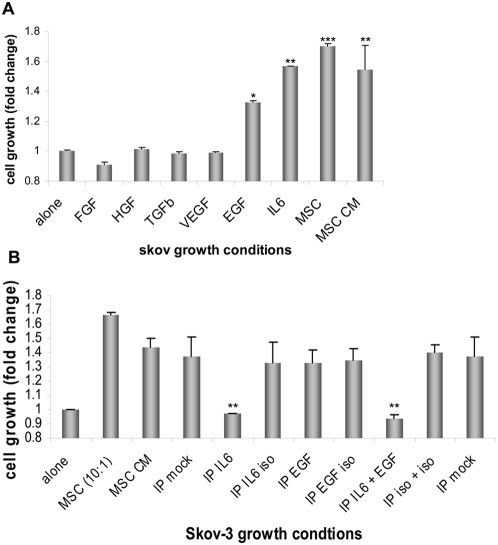
BACKGROUND: Tumor associated fibroblasts (TAF), are essential for tumor progression providing both a functional and structural supportive environment. TAF, known as activated fibroblasts, have an established biological impact on tumorigenesis as matrix synthesizing or matrix degrading cells, contractile cells, and even blood vessel associated cells. The production of growth factors, cytokines, chemokines, matrix-degrading enzymes, and immunomodulatory mechanisms by these cells augment tumor progression by providing a suitable environment. There are several suggested origins of the TAF including tissue-resident, circulating, and epithelial-to-mesenchymal-transitioned cells. METHODOLOGY/PRINCIPAL FINDINGS: We provide evidence that TAF are derived from mesenchymal stem cells (MSC) that acquire a TAF phenotype following exposure to or systemic recruitment into adenocarcinoma xenograft models including breast, pancreatic, and ovarian. We define the MSC derived TAF in a xenograft ovarian carcinoma model by the immunohistochemical presence of 1) fibroblast specific protein and fibroblast activated protein; 2) markers phenotypically associated with aggressiveness, including tenascin-c, thrombospondin-1, and stromelysin-1; 3) production of pro-tumorigenic growth factors including hepatocyte growth factor, epidermal growth factor, and interleukin-6; and 4) factors indicative of vascularization, including alpha-smooth muscle actin, desmin, and vascular endothelial growth factor. We demonstrate that under long-term tumor conditioning in vitro, MSC express TAF-like proteins. Additionally, human MSC but not murine MSC stimulated tumor growth primarily through the paracrine production of secreted IL6. CONCLUSIONS/SIGNIFICANCE: Our results suggest the dependence of in vitro Skov-3 tumor cell proliferation is due to the presence of tumor-stimulated MSC secreted IL6. The subsequent TAF phenotype arises from the MSC which ultimately promotes tumor growth through the contribution of microvascularization, stromal networks, and the production of tumor-stimulating paracrine factors.
Overview
The claims and statistics of this paper haven’t been checked yet.
Free: it reads the open-access text and checks the first 5 claims that cite a source we can check. Create a free account to check every claim.
Integrity signals
Registry
Cites
Statistics
Figures
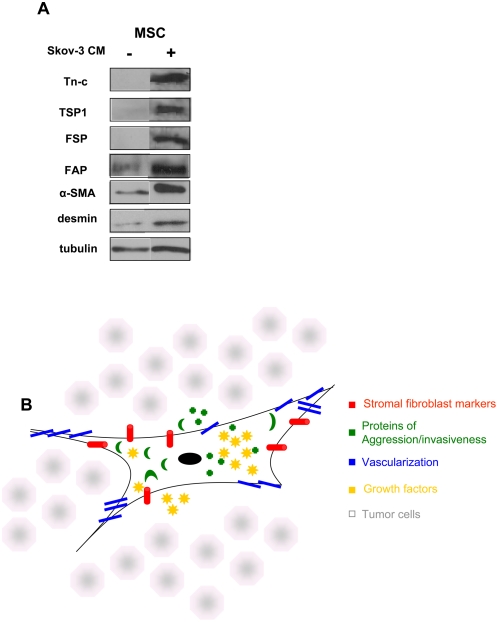
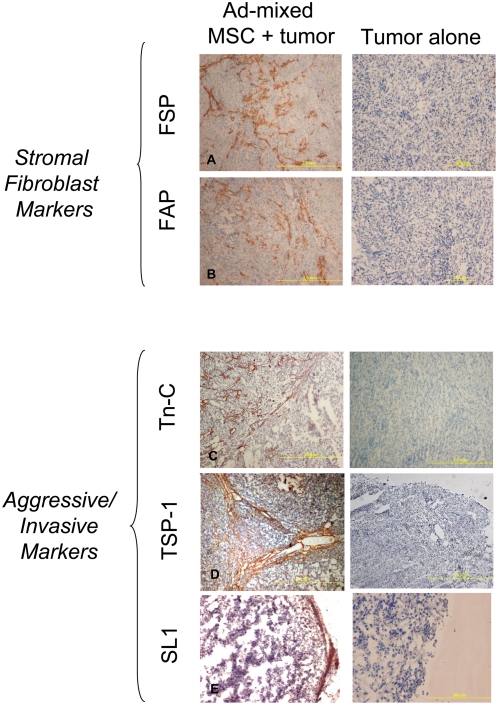
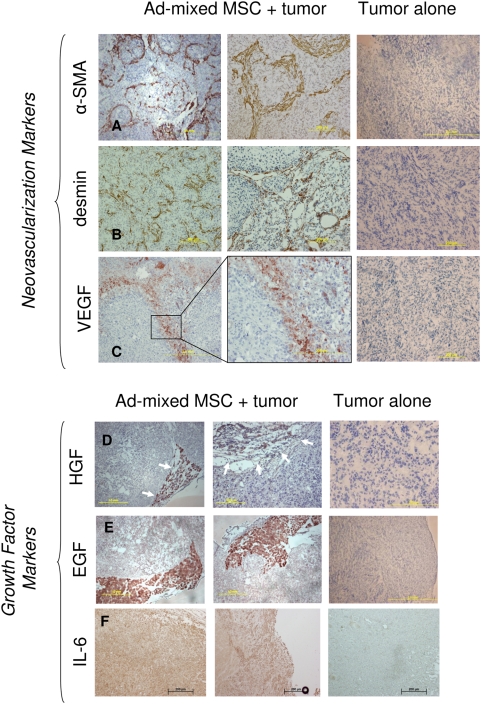
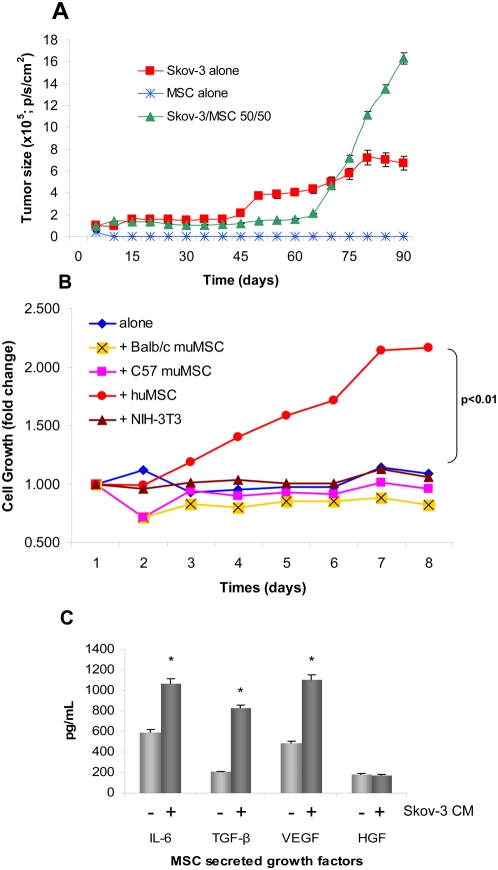
Verification
Claims the paper makes
The claims and statistics of this paper haven’t been checked yet.
Free: it reads the open-access text and checks the first 5 claims that cite a source we can check. Create a free account to check every claim.
Claims other papers make about this one
Each is checked against this paper’s own text: does it say what the citing paper says it does?
The source backs part of the claim, not all of it — or backs it for a different population, condition or comparison.
In the citing paper
“Secretion of elevated levels of IL-6 by MSC has been detected upon interaction with malignant cells in several epithelial, hematopoietic and mesenchymal cancers (Table 2) [43, 69, 76, 77, 82, 115–119].”
From Mesenchymal stem cell secretome and regenerative therapy after cancer (2013) · cites this paper as [82]
Experimental — accuracy not yet measuredThe source backs part of the claim, not all of it — or backs it for a different population, condition or comparison.
In the citing paper
“Another mechanism that could increase the aggressiveness of a tumour is the potential differentiation of MSCs to tumour associated fibroblasts that are capable of increasing neovascularization within the tumour stroma and the metastatic rate [76], [77].”
From Mesenchymal stromal cells for bone sarcoma treatment: Roadmap to clinical practice (2019) · cites this paper as [77]
Experimental — accuracy not yet measuredThe cited source says what the claim attributes to it.
In the citing paper
“There they can potentiate further tumorigenesis via differentiation into tumor-nurturing stroma (TAF, myofibroblasts) [82, 104], direct cell contact interaction with cancer cells [105, 106] or release of paracrine factors (Table 2).”
From Mesenchymal stem cell secretome and regenerative therapy after cancer (2013) · cites this paper as [82]
Self-check
Percentages, sums and reported differences re-computed from the paper’s own numbers.
The self-check needs the paper’s full text.
Citations
Cites
Dominici, M., Le Blanc, K., Mueller, I., Slaper-Cortenbach, I., Marini, F. C., Krause, D. S., Deans, R. J., Keating, A., Prockop, D. J., & Horwitz, E. M. (2006) · Cytotherapy · doi:10.1080/14653240600855905 · Cited by 17,766
Self-citationKalluri, R., & Zeisberg, M. (2006) · Nature Reviews Cancer · doi:10.1038/nrc1877 · Cited by 4,538 · cited 1×
“The second characteristic is the degree of expression of the proteins of ‘‘aggression’’ such as SL-1, otherwise known as MMP3, a degradative enzyme highly expressed by fibroblasts [42] and utilized in tissue remodeling by TAF [21].”
BackgroundTumors: Wounds That Do Not Heal
Flier, J. S., Underhill, L. H., & Dvorak, H. F. (1986) · New England Journal of Medicine · doi:10.1056/nejm198612253152606 · Cited by 4,391 · cited 1×
“The tropism of MSC for tumors is thought to be due to similarity in factors secreted by wounds and tumors [13], substantiating the concept that tumors are ‘‘wounds that never heal’’ [14,15].”
BackgroundMesenchymal stem cells within tumour stroma promote breast cancer metastasis
Karnoub, A. E., Dash, A. B., Vo, A. P., Sullivan, A., Brooks, M. W., Bell, G. W., Richardson, A. L., Polyak, K., Tubo, R., & Weinberg, R. A. (2007) · Nature · doi:10.1038/nature06188 · Cited by 3,206 · cited 1×
“[33].”
Vascular Channel Formation by Human Melanoma Cells in Vivo and in Vitro: Vasculogenic Mimicry
Maniotis, A. J., Folberg, R., Hess, A., Seftor, E. A., Gardner, L. M. G., Pe'er, J., Trent, J. M., Meltzer, P. S., & Hendrix, M. J. C. (1999) · The American Journal of Pathology · doi:10.1016/s0002-9440(10)65173-5 · Cited by 2,043 · cited 1×
“Typically, the cells associated with the abnormal, tumorassociated, fibrovascular septa are not the archetypal vascular endothelial cells classified by factor VIII, CD31 and CD34, but instead are networks consisting of collagen and laminin subtypes in addition to activated fibroblasts and macrophages [45].”
BackgroundMesenchymal Stem Cells Can Be Differentiated Into Endothelial Cells In Vitro
Oswald, J., Boxberger, S., Jørgensen, B., Feldmann, S., Ehninger, G., Bornhäuser, M., & Werner, C. (2004) · STEM CELLS · doi:10.1634/stemcells.22-3-377 · Cited by 1,317 · cited 1×
“a-SMA positivity has been used previously to identify differentiated MSC [44].”
MethodDevelopment of a self-inactivating lentivirus vector
Miyoshi, H., Blömer, U., Takahashi, M., Gage, F. H., & Verma, I. M. (1998) · Journal of Virology · doi:10.1128/jvi.72.10.8150-8157.1998 · Cited by 1,196 · cited 1×
“Skov-3 tumor cells were stably transduced using a lentivirus expressing red fluorescent protein and renilla luciferase (rLuc) [56,57].”
MethodHuman Bone Marrow–Derived Mesenchymal Stem Cells in the Treatment of Gliomas
Nakamizo, A., Marini, F., Amano, T., Khan, A., Studeny, M., Gumin, J., Chen, J., Hentschel, S., Vecil, G., Dembinski, J., et al. (2005) · Cancer Research · doi:10.1158/0008-5472.can-04-1874 · Cited by 1,035 · cited 2×
“In those and subsequent studies, we demonstrated that MSC, administered intravenously, were able to integrate and persist within tumor stroma of pre-established human melanoma, breast cancer and glioma xenografts [11,12,16].”
BackgroundSelf-citationPeister, A., Mellad, J. A., Larson, B. L., Hall, B. M., Gibson, L. F., & Prockop, D. J. (2004) · Blood · doi:10.1182/blood-2003-09-3070 · Cited by 994 · cited 1×
“Murine MSC (mMSC) cell lines from C57/B6, balb/C were isolated as described previously [55] Fibroblast 3T3 cells and mMSC were cultured in alpha-MEM containing 20% FBS and 10% LPS.”
MethodSelf-citation(2002) · PubMed · Cited by 903
Self-citation
Research works printed but not linked: 1
- Studeny M Marini FC Zompetta C Champlin RE Filder IJ 2001 Bone marrow derived mesenchymal stem cells serve as precursors for stromal fibroblasts in malignant tumors and show potential for cancer therapy. Blood 98
Cited by
Items 701–800 of 891
Stromal promotion of metastasis by erythroid differentiation regulator 1
Mango, R. L. (2010) · Carolina Digital Repository (University of North Carolina at Chapel Hill) · doi:10.17615/etv1-h445 · Cited by 2
Integrating In-Silico Models with In-Vitro Data to Generate Novel Insights into Biological Systems
Conway, D. (2019) · Liverpool John Moores University · doi:10.24377/ljmu.t.00010163 · Cited by 2
Angiotensin System Inhibition in Pancreatic Ductal Adenocarcinoma
Liu, H. (2017) · Digital Access to Scholarship at Harvard (DASH) (Harvard University) · Cited by 2
Photoaged Skin Therapy with Adipose-Derived Stem Cells
Zhao, Y., Dai, Q., & Xiao, R. (2021) · Plastic & Reconstructive Surgery · doi:10.1097/prs.0000000000008242 · Cited by 2
Chen, J., Ji, T., Wu, D., Jiang, S., Zhao, J., Lin, H. P., & Cai, X. (2019) · Cell Death and Disease · doi:10.1038/s41419-019-1721-z · Cited by 2
Meyer, T. J., Hackenberg, S., Herrmann, M., Gehrke, T. E., Steber, M., Hagen, R., Kleinsasser, N. H., & Scherzad, A. (2022) · Oncology Letters · doi:10.3892/ol.2022.13570 · Cited by 1
Neuroblastoma Tumor Microenvironment: Non-Immune Cells and Exosomes
Borriello, L., Blavier, L., & DeClerck, Y. A. (2024) · Pediatric oncology · doi:10.1007/978-3-031-51292-6_9 · Cited by 1
Zhang, Z., Xu, A., Zhou, Q., Wen, F., Chen, F., Chen, H., Wang, H., Chen, L., Ju, Z., & Ge, Y. (2024) · Stem Cells Translational Medicine · doi:10.1093/stcltm/szae065 · Cited by 1
“19,20 24-26 Even though lack of evidence in carcinogenesis, careful study of the tumorigenic safety of MSC transplantation is still needed.”
Interaction of nanodrug delivery systems via fibroblasts in colorectal cancer
Wang, W., Li, M., Liu, Y., & Weigmann, B. (2025) · Expert Opinion on Drug Delivery · doi:10.1080/17425247.2025.2593979 · Cited by 1
Tabu, K., Taga, T., & Tanak, S. (2011) · InTech eBooks · doi:10.5772/21016 · Cited by 1
“Although whether stromal fibroblasts could affect GSCs behaviors is not yet so clear, it is worth noting that some MSCs are exactly detected as a tumor-stimulating component around the blood vessels and closely associated with endothelial cells/pericytes in tumor xenograft models (Spaeth et al., 2009).”
BackgroundThe molecular mechanisms of breast cancer metastasis
Ugenskienė, R., & Juozaitytė, E. (2013) · Biologija · doi:10.6001/biologija.v58i4.2601 · Cited by 1
Stem Cell Characters in Primary and Metastatic Tumour Establishment
Tsekrekou, M., Mavroudis, D., Kafetzopoulos, D., & Vassou, D. (2011) · Springer eBooks · doi:10.1007/978-94-007-2801-1_25 · Cited by 1
Hoshino, A., Aimoto, T., Suzuki, H., Mizutani, S., Ishii, H. H., Mishima, K., Wada, Y., Kuroda, S., Yagi, A., Shimizu, T., et al. (2014) · Journal of Nippon Medical School · doi:10.1272/jnms.81.179 · Cited by 1
Mesenchymal Stem/Stromal Cells and the Tumor Immune System
Walker, N. D., Nahas, G. R., Munoz, J. L., Lucas, J., Pobiarzyn, P. W., & Rameshwar, P. (2016) · Elsevier eBooks · doi:10.1016/b978-0-12-803102-5.00017-3 · Cited by 1
The role of mesenchymal stromal cells in human brain tumors
Kerrigan, B. C. P., Shahar, T., Yamashita, S., & Lang, F. F. (2016) · Wiley eBooks · doi:10.1002/9781118907474.ch60 · Cited by 1
Avellini, C., Cesselli, D., Beltrami, A. P., Orsaria, M., Marzinotto, S., Morassi, F., & Uzzau, S. (2013) · InTech eBooks · doi:10.5772/56951 · Cited by 1
Sano, M., & Fukuda, K. (2009) · Cancer Biology & Therapy · doi:10.4161/cbt.8.13.8996 · Cited by 1
The Role of Mesenchymal Cells in Cancer: Contribution to Tumor Stroma and Tumorigenic Capacity
Shoshani, O., & Zipori, D. (2010) · Springer eBooks · doi:10.1007/978-90-481-9531-2_5 · Cited by 1
“In addition, co-injection of human MSCs with Skov-3 tumor cells (50:50) resulted in expedited tumor growth, which necessitated the sacrifice of the mice 70 days prior to regular tumor growth (Skov-3 alone) [ 45 ].”
BackgroundCancer Associated Fibroblasts and Hepatocellular Carcinoma
Lau, E. Y.-T., Ng, I. O., & Lee, T. K. (2012) · Journal of Liver Disease & Transplantation · doi:10.4172/2325-9612.1000e104 · Cited by 1
Browne, C. M., Chung, T.-L., & Atkinson, K. (2012) · Humana Press eBooks · doi:10.1007/978-1-62703-200-1_4 · Cited by 1
Origin, activation and heterogeneity of fibroblasts associated with pancreas and breast cancers
Han, L., Seward, C., Leone, G. W., & Ostrowski, M. C. (2022) · Advances in cancer research · doi:10.1016/bs.acr.2022.03.003 · Cited by 1
Diagnostic and Therapeutic Mesenchymal Stem Cells for Breast Cancer Treatment
Dwyer, R. M. (2013) · Wiley eBooks · doi:10.1002/9781118660423.ch11 · Cited by 1
“local stimuli [73, 74] and have been implicated in promotion of tumor cell entry into bone marrow and development of bone”
Background(2012) · Transfusion Medicine and Hemotherapy · doi:10.1159/000170956 · Cited by 1
Breast cancer stroma and its components: Implication in diagnostic and therapeutic
Sharma, R., Kumar, P., Kumar, V., Singh, S. P., Garg, V. K., Okpala, C. O. R., Thakur, S., Singh, H., Nim, D. K., Buttar, H. S., et al. (2025) · Elsevier eBooks · doi:10.1016/b978-0-443-24838-2.00004-5 · Cited by 1
El‐Deeb, N. M., Ibrahim, O. M., Kamel, A., Gomaa, A. I., & Kenawy, A. M. A. (2025) · BMC Complementary Medicine and Therapies · doi:10.1186/s12906-025-04772-7 · Cited by 1
“…majority research efforts of the chemotherapeutic resistance has focused on the cancer cells themselves, while now research reports that there are other cell types, particularly hMSCs, can act as “co-conspirators” within the tumor microenvironment, guarding cancer cells from treatment [55, 56].”
Microvesicular Transfer of MicroRNA in Tumor Microenvironment
Vallabhaneni, K. C., Penfornis, P., Orr, J. G., Chauhan, K. M., & Pochampally, R. R. (2014) · Springer eBooks · doi:10.1007/978-1-4899-8065-6_17 · Cited by 1
Martínez, J. M.-Q. (2010) · Dipòsit Digital de la Universitat de Barcelona (Universitat de Barcelona) · Cited by 1
Mesenchymal Stem/Stromal Cells as Cellular Vehicles for Tumor Targeting
Marini, F. C., Studeny, M., Dembinski, J. L., Watson, K., Kidd, S. M., Spaeth, E. L., Zeng, Z., Ling, X., Klopp, A. H., Lang, F. F., et al. (2010) · Springer eBooks · doi:10.1007/978-1-4419-6102-0_8 · Cited by 1
Self-citationPasquier, J., Guerrouahen, B. S., Al-Thawadi, H., Kaoud, N. A., Maleki, M., Foll, F. L., & Rafii, A. (2013) · Clinical Cancer Research · doi:10.1158/1078-0432.ovca13-b69 · Cited by 1
“These various cell types are recruited to the tumor site and through the modulation of different pathways contribute to tumor growth and metastasis [4-10].”
BackgroundMolecular mechanisms and tumour heterogeneity in breast cancer
Khan, S. (2014) · Arrow@dit (Dublin Institute of Technology) · doi:10.13025/16816 · Cited by 1
Leary, L. O. (2012) · Arrow@dit (Dublin Institute of Technology) · doi:10.13025/17611 · Cited by 1
Untersuchung von Krebsstammzelleigenschaften im Prostatakarzinom und im Pankreaskarzinom
Labsch, S. (2014) · heiDOK (Heidelberg University) · doi:10.11588/heidok.00017118 · Cited by 1
“Bis heute gibt es für diese Form des Prostatakrebses keine effektive Behandlungsmethode und grundsätzlich ist diese Erkrankung auch von der Progression, der Metastasierung und dem Tod des Patienten geprägt [3].”
BackgroundInfluentialBallotta, V. (2014) · TU/e Research Portal · doi:10.6100/ir780925 · Cited by 1
Targeting the Growth of Ovarian Cancer Cells
Miettinen, S. (2009) · Tampere University Institutional Repository (Tampere University) · Cited by 1
Role of MicroRNAs in determining the cancer-associated fibroblast phenotype
Abidin, I. Z., & Amalina, S. (2017) · White Rose eTheses Online (University of Leeds, The University of Sheffield, University of York) · Cited by 1
Müller, A. M. (2017) · Electronic Theses of LMU Munich (Ludwig-Maximilians-Universität München) · doi:10.5282/edoc.21128 · Cited by 1
Tejchman, A. (2017) · theses.fr (ABES) · doi:10.70675/c66cab0bz93c1z4199za2fdz0cbfb889d2c3 · Cited by 1
“This process was accompanied by theexpression of markers associated with aggressiveness such as α-SMA, FAP, tenascin-c and thrombospondin-1[29][21].”
BackgroundIntegrated Mathematical and Experimental Study of Cell Migration and Shape
He, X. (2018) · Digital Archive @ GSU · doi:10.57709/12009854 · Cited by 1
Engineered mesenchymal stem cells In tumor therapy
Hagenhoff, A. (2018) · Electronic Theses of LMU Munich (Ludwig-Maximilians-Universität München) · doi:10.5282/edoc.22209 · Cited by 1
da Silva, L. P. (2019) · Americanae (AECID Library) · Cited by 1
Mesenchymal stem cells homing to tumour sites: Cancer biology and therapy
Vangala, G. (2020) · Otago University Research Archive (University of Otago) · Cited by 1
On chip complex breast tumour microenvironment: application to research in nanomedicine
Blondé, J.-B. (2020) · doi:10.3990/1.9789036550598 · Cited by 1
Virus induced mechanism contributing to CD8+ T cell mediated cytotoxicity
Zhou, F. (2020) · DuEPublico (University of Duisburg-Essen) · doi:10.17185/duepublico/73514 · Cited by 1
Hyaluronan and its role in melanomagenesis : from melanocytes to metastatic melanoma
Takabe, P. (2019) · UEF eRepo (University of Eastern Finland) · Cited by 1
Sompairac, N. (2021) · theses.fr (ABES) · doi:10.70675/29ef22e2z9e94z437cz91fezb85ecc2f3dae · Cited by 1
Ferrand, J. (2009) · theses.fr (ABES) · doi:10.70675/9769bd24z3ad6z4eb3z8f10z266e89086288 · Cited by 1
Multipotential Aspects of Breast Periprosthetic Capsule Stem Cells
Orciani, M., Bolletta, E., Scalise, A., Gorbi, S., Lazzarini, R., Gioacchini, M., & Benedetto, G. D. (2014) · Springer eBooks · doi:10.1007/978-3-642-45207-9_38
The Interrelationship of BRCA1 185delAG, Interleukin-1β, and Ovarian Oncogenesis
Woolery, K. T. (2014) · Digital Commons - University of South Florida (University of South Florida)
ELUCIDATING THE ROLE OF CD44 EXPRESSION ON MESENCHYMAL STEM CELLS WITHIN THE TUMOR MICROENVIRONMENT
Spaeth, E. L. (2010) · Digital Commons-TMC (Texas Medical Center)
Self-citationStem-cell Based Therapies for Epidermolysis Bullosa
Roop, D. R. (2013) · Defense Technical Information Center (DTIC) · doi:10.21236/ada590831
Zgheib, A. (2013) · Archipel (Université du Québec à Montréal)
Role of the Hedgehog pathway in the pancreatic tumour microenvironment
Saini, F. (2014) · Nottingham ePrints (University of Nottingham)
Mesenchymal Stem Cells in Prostate Cancer
Chanda, D., & Ponnazhagan, S. (2013) · Wiley eBooks · doi:10.1002/9781118660423.ch13
Bone Marrow Derived Mesenchymal Stem/Stromal Cells and Tumor Growth
Mishra, P. J., & Banerjee, D. (2010) · Springer eBooks · doi:10.1007/978-1-4419-6615-5_13
Carrion, B. (2013) · Deep Blue (University of Michigan)
Proulx‐Bonneau, S. (2011) · Archipel (Université du Québec à Montréal)
Mesenchymal Stem Cells For Cellular Therapies
Madeira, C. G., dos Santos, F., Andrade, P. Z., da Silva, C. L., & Cabral, J. M. S. (2011) · Springer eBooks · doi:10.1007/978-94-007-2415-0_17
Tissue Regeneration in Dentistry
Tanne, K., Papagerakis, P., Papaccio, G., Kitamura, C., & Tanimoto, K. (2012) · International Journal of Dentistry · doi:10.1155/2012/586701
Hall, B. (2010) · Oncogene · doi:10.1038/onc.2010.45
“Furthermore, we have shown that IL-6 is a potent growth factor for breast and ovarian epithelial tumor cell lines in 3D and in vivomodels (Sasser et al., 2007a, b; Studebaker et al., 2008; Spaeth et al., 2009).”
BackgroundSelf-citationBussadori, G. (2015) · OpenstarTs (Univeristy of Trieste https://www.units.it/)
Worth the Weight: Adipose Stem Cells in Human Disease
Heneidi, S. G., & Chazenbalk, G. D. (2011) · Springer eBooks · doi:10.1007/978-94-007-2801-1_15
Development of Novel Models to Study Ovarian Cancer Stem Cells.
Ojeda, B., & Vanesa, D. (2014) · Deep Blue (University of Michigan)
Microenvironmental Control of Metastatic Progression
Roskelley, C. D. (2014) · Cancer metastasis · doi:10.1007/978-3-319-12136-9_6
Mathonnet, M., Perraud, A., Blondy, S., Christou, N., Akil, H., Battu, S., & Jauberteau, M. (2015) · Stem cell biology and regenerative medicine · doi:10.1007/978-3-319-21702-4_9
Murine CD248 and its cytoplasmic domain : characterising a novel tumour and inflammation marker
Juhász, M. L. W. (2012) · cIRcle (University of British Columbia) · doi:10.14288/1.0072855
Extracellular Matrix Mechanobiology Of Breast Tumor Stroma
Wang, K. (2015) · eCommons (Cornell University)
Functional Regeneration of Laryngeal Muscle Using Bone Marrow Derived Stromal Cells
Kanemaru, S., Kitani, Y., Ohono, S., Kojima, T., Ishikawa, S., Hirano, S., Nakamura, T., & Dezawa, M. (2011) · Koutou (THE LARYNX JAPAN) · doi:10.5426/larynx.23.66
Filopodia and stromal extracellular matrix as regulators of cancer cell invasion and growth
Kaukonen, R. (2016) · UTUPub (University of Turku)
Huh, J. W., Kim, S., Lee, J.-H., Lee, J., Ta, Q. V., Jun, S., Oh, Y., Lee, Y., & Lee, S. (2011)
McDonald, L. T., Laws, D. A., Kelly, R. R., Xiong, Y., Motamarry, A., Patel, R. K., Jones, J. A., Watson, P. M., Turner, D. P., Watson, D. K., et al. (2015) · Molecular Cancer Therapeutics · doi:10.1158/1538-8514.tumang15-b13
“Further, studies have demonstrated that this crosstalk is necessary for CAF phenotype and function [10,11].”
BackgroundMesenchymal Stromal/Stem Cells from Tissue Repair to Destruction of Tumor Cells
Bussolari, R., Grisendi, G., Cafarelli, L., Loschi, P., Scarabelli, L., Frassoldati, A., Maur, M., Santis, G. D., Paolucci, P., Conte, P., et al. (2010) · Royal Society of Chemistry eBooks · doi:10.1039/9781849732246-00141
Charakterisierung von Tumor- und Tumorassoziierten Zellen aus peripheren Blut
Wagner, K. (2012) · Common Library Network (Der Gemeinsame Bibliotheksverbund)
Meleshina, A. V., Cherkasova, E. I., Sergeeva, E., Shirmanova, M. V., Balalaeva, I. V., Ev, K., & Загайнова, Е. В. (2013) · Genes and Cells
Angiogenesis in Gynecologic Cancers: The Promise of Innovative Therapies
Growdon, W., Foster, R., & Bradford, L. S. (2013) · CRC Press eBooks · doi:10.1201/b14842-11
Stroma and vessel characteristics in cancer : impact on prognosis and response to treatment
Mezheyeuski, A. (2016) · Figshare
Mesenchymal Stem/Stromal Cell Recruitment by Central Nervous System Tumors
Kerrigan, B. C. P., & Lang, F. F. (2016) · Elsevier eBooks · doi:10.1016/b978-0-12-803102-5.00010-0
The implications of multipotent mesenchymal stromal cells in tumor biology and therapy
Hernanda, P. Y., Peppelenbosch, M. P., & Pan, Q. (2016) · Wiley eBooks · doi:10.1002/9781118907474.ch28
Proteomic Identification of Mediators Implicated in the Metastatic Progression of Ovarian Cancer
Musrap, N. (2015) · TSpace (University of Toronto)
Nanotechnology-based Strategies To Enhance Chemo-and Radiation Therapy In Breast Cancer
Prasad, P. (2014) · TSpace (University of Toronto)
Anand, P. (2017) · DR-NTU (Nanyang Technological University) · doi:10.32657/10356/70579
Meseanchymal stem cell mediated sodium iodide symporter gene therapy of breast cancer
Ryan, J. (2014) · Arrow@dit (Dublin Institute of Technology) · doi:10.13025/17208
de Souza, L. E. B. (2017) · Digital Library of Theses and Dissertations (Universidade de São Paulo) · doi:10.11606/d.17.2017.tde-10012017-111618
Rodini, C. D. O. (2016) · Digital Library of Theses and Dissertations (Universidade de São Paulo) · doi:10.11606/t.41.2016.tde-17052016-164444
Bollrath, J. (2010) · mediaTUM (Technical University of Munich)
Atay, Ç. (2013) · mediaTUM (Technical University of Munich)
Cellular interactions in the tumour microenvironment during inflammation-associated carcinogenesis
O’Malley, G. (2017) · Arrow@dit (Dublin Institute of Technology) · doi:10.13025/17618
The tumor microenvironment: insight into fibroblasts pathophysiological functions
Santi, A. (2014) · Florence Research (University of Florence)
Development of a Mathematical Model to Understand, Design & Improve Oncolytic Virus Therapies
Batenchuk, C. (2014) · uO Research (University of Ottawa) · doi:10.20381/ruor-3780
“To identify the secreted factor(s) that mediate the sensitization of 786-0 cells to viral oncolysis, we tested a defined set of cytokines and growth factors known to be commonly expressed within the tumour milieu (35, 59, 296, 307-310).”
MethodMesenchymal stem cells in inflammatory bowel disease and cancer
Miller, S. (2017) · Victoria University Research Repository (Victoria University)
Role of Mesenchymal Stromal Cells in High-Grade Serous Ovarian Cancer
Opinato, V. M. (2018) · ArTS Archivio della ricerca di Trieste (University of Trieste https://www.units.it/)
Παπακώστα, Σ. (2014) · University of Thessaly Institutional Repository (University of Thessaly) · doi:10.26253/heal.uth.3884
Multipotent Stromal Cells in a Tumor Microenvironment
Bruna, F. (2019) · IntechOpen eBooks · doi:10.5772/intechopen.77345
“The innate tropism of MSCs to injured sites, including established tumors, has been widely reported, although the mechanism behind it has not yet been fully elucidated that the proinflammatory cytokines secreted by the reactive stroma are involved [24].”
BackgroundResultPancreatic Diseases: The Role of Stem Cells
Apostolou, K. G. (2019) · Stem cell biology and regenerative medicine · doi:10.1007/978-3-030-11965-2_4
Mateos, E. D., Arriazu, R., & Perticone, M. Á. R. (2015) · LA Referencia (Red Federada de Repositorios Institucionales de Publicaciones Científicas)
Ali, M. S. (2018) · ThinkTech (Texas Tech University)
Papel del pericito en la inmunidad innata y en el microambiente tumoral
Ortiz, R. N. (2019) · LA Referencia (Red Federada de Repositorios Institucionales de Publicaciones Científicas)
Metadata
- Authors
- Spaeth, E. L., Dembinski, J. L., Sasser, A. K., Watson, K., Klopp, A., Hall, B., Andreeff, M., & Marini, F.
- Affiliations
- The University of Texas MD Anderson Cancer Center (US)
- Abigail Wexner Research Institute (US)
- Corresponding author
- Marini, Frank
- Venue
- PLoS ONE
- Publisher
- Public Library of Science (PLoS)
- Published
- 2009-04-07
- Volume
- 4
- Issue
- 4
- Pages
- e4992
- ISSN
- 1932-6203 (ISSN-L)
- PMC
- PMC2661372
- OpenAlex
- W1979704965
- Cited by
- 807
- References
- 56
- Citations by year
- 2026: 18 · 2025: 14 · 2024: 29 · 2023: 41 · 2022: 26 · 2021: 48 · 2020: 50 · 2019: 47 · 2018: 43 · 2017: 40 · 2016: 60 · 2015: 59 · 2014: 66 · 2013: 69 · 2012: 71
- FWCI
- 32.78
- Type
- journal article
- Language
- en
- Update notices
- correction (2013-03-19)
- Open access
- gold
- doi.org
- Locations
- PLoS ONE (publishedVersion, cc-by)
- PubMed Central (publishedVersion, cc-by)
- PubMed (publishedVersion)
- DOAJ (DOAJ: Directory of Open Access Journals) (submittedVersion, cc-by-sa)
- Figshare (submittedVersion, cc-by)
- Funders
- U.S. Department of Defense
- Susan G. Komen for the Cure
- National Cancer Institute (P50CA116199, CA-16672, CA-55164, R01CA109451, P01CA049639, 16672, P01CA055164, Ca-116199, RC1CA146381, BC083397, CA109451, P30CA016672, CA 49639)
- Topics
- Health Sciences › Medicine › Oncology › Cancer Cells and Metastasis
- Life Sciences › Biochemistry, Genetics and Molecular Biology › Cell Biology › Mesenchymal stem cell research
- Life Sciences › Biochemistry, Genetics and Molecular Biology › Molecular Biology › TGF-β signaling in diseases
- Keywords
- mesenchymal stem cells, cancer-associated fibroblasts, tumor progression, ovarian carcinoma, breast adenocarcinoma, pancreatic ductal adenocarcinoma, paracrine signaling, interleukin-6, microvascularization, tumor microenvironment, SKOV3 cells, xenograft models
- MeSH terms
- Animals, Cell Division, Female, Fibroblasts, Humans, Ovarian Neoplasms, Transplantation, Heterologous, Disease Progression, Cell Lineage, Mesenchymal Stem Cells
About these checks
Registry, retraction, Cites and statistics results are computed, not judged, with one exception: a printed reference that no index lists is read once by a model before it counts as a citation error. Claims are extracted by a model and kept only when their quote appears verbatim in the text; each cited source is then checked, with a model’s help, for whether it says what the claim relies on. Those verdicts can be wrong — read the claim’s quote and the cited source before relying on one.
Statistics and arithmetic are recomputed, not judged.
Confidence bands are shown only for fields calibrated on our annotated test set. None is calibrated yet, so no band is shown.
What counts as a claim ›How we measure confidence ›How we check this ›
Are you an author, or do you see a problem with this page? Request a review
Data sources
Bibliographic data: Semantic Scholar, OpenAlex, Crossref.
Contains information from the Semantic Scholar Academic Graph Datasets, made available under the ODC Attribution License (ODC-BY 1.0).
Semantic Scholar’s data is described in: Kinney, R., et al. (2023). The Semantic Scholar Open Data Platform. arXiv:2301.10140.
