

Mesenchymal Stem Cell Transition to Tumor-Associated Fibroblasts Contributes to Fibrovascular Network Expansion and Tumor Progression
Open accessThe DOI matches its Crossref record; 57 of the 57 references it cites were found in a registry or an index.
Abstract
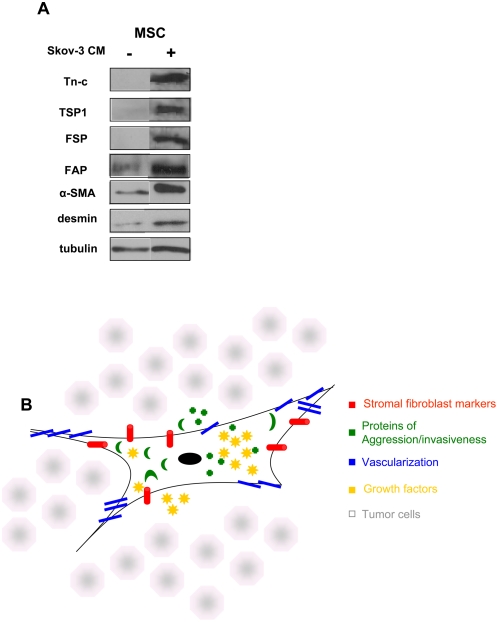
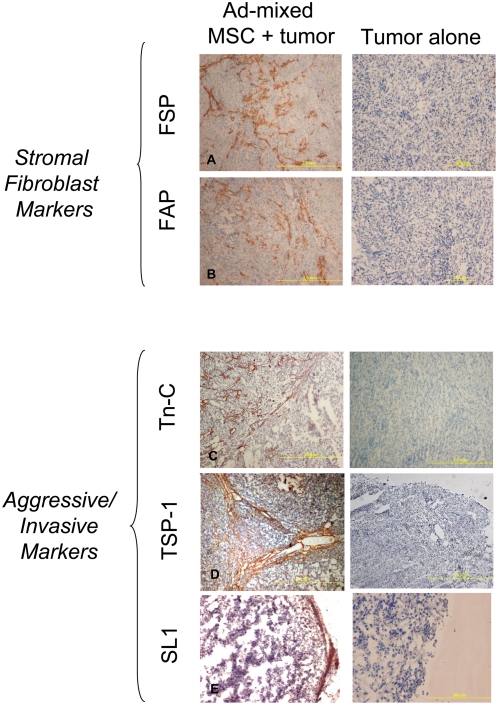
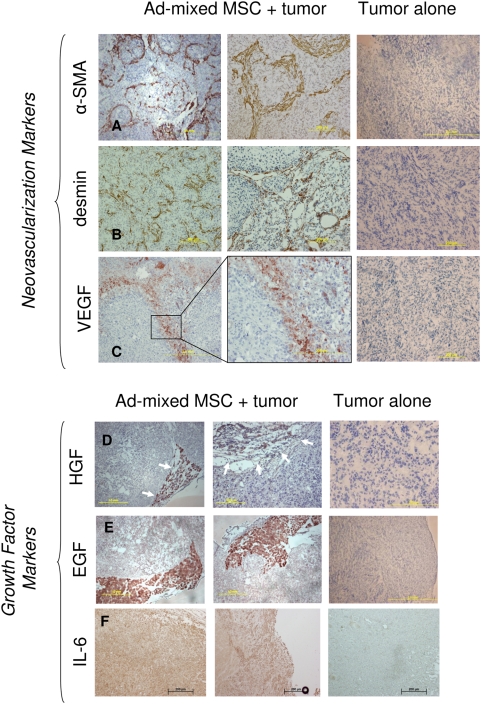
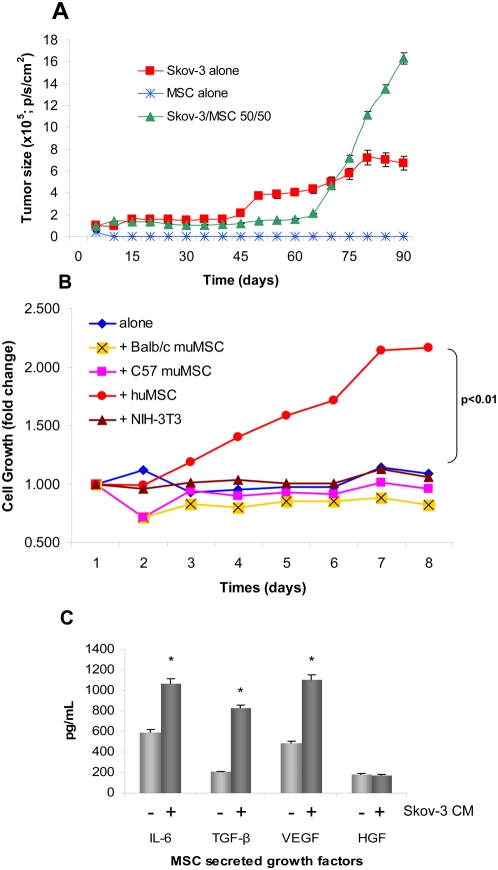
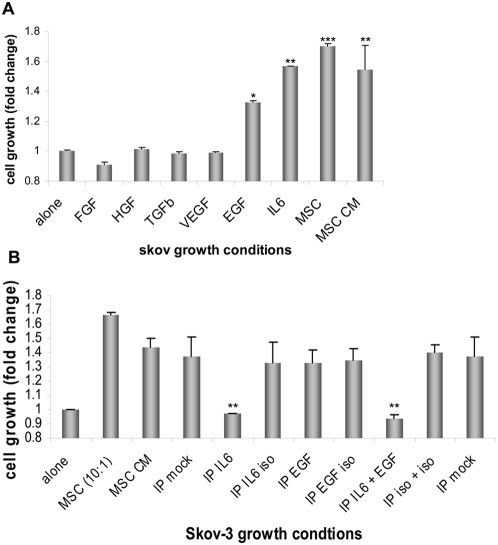
BACKGROUND: Tumor associated fibroblasts (TAF), are essential for tumor progression providing both a functional and structural supportive environment. TAF, known as activated fibroblasts, have an established biological impact on tumorigenesis as matrix synthesizing or matrix degrading cells, contractile cells, and even blood vessel associated cells. The production of growth factors, cytokines, chemokines, matrix-degrading enzymes, and immunomodulatory mechanisms by these cells augment tumor progression by providing a suitable environment. There are several suggested origins of the TAF including tissue-resident, circulating, and epithelial-to-mesenchymal-transitioned cells. METHODOLOGY/PRINCIPAL FINDINGS: We provide evidence that TAF are derived from mesenchymal stem cells (MSC) that acquire a TAF phenotype following exposure to or systemic recruitment into adenocarcinoma xenograft models including breast, pancreatic, and ovarian. We define the MSC derived TAF in a xenograft ovarian carcinoma model by the immunohistochemical presence of 1) fibroblast specific protein and fibroblast activated protein; 2) markers phenotypically associated with aggressiveness, including tenascin-c, thrombospondin-1, and stromelysin-1; 3) production of pro-tumorigenic growth factors including hepatocyte growth factor, epidermal growth factor, and interleukin-6; and 4) factors indicative of vascularization, including alpha-smooth muscle actin, desmin, and vascular endothelial growth factor. We demonstrate that under long-term tumor conditioning in vitro, MSC express TAF-like proteins. Additionally, human MSC but not murine MSC stimulated tumor growth primarily through the paracrine production of secreted IL6. CONCLUSIONS/SIGNIFICANCE: Our results suggest the dependence of in vitro Skov-3 tumor cell proliferation is due to the presence of tumor-stimulated MSC secreted IL6. The subsequent TAF phenotype arises from the MSC which ultimately promotes tumor growth through the contribution of microvascularization, stromal networks, and the production of tumor-stimulating paracrine factors.
Overview
The claims and statistics of this paper haven’t been checked yet.
Free: it reads the open-access text and checks the first 5 claims that cite a source we can check. Create a free account to check every claim.
Integrity signals
Registry
Cites
Statistics
Figures
Verification
Claims the paper makes
The claims and statistics of this paper haven’t been checked yet.
Free: it reads the open-access text and checks the first 5 claims that cite a source we can check. Create a free account to check every claim.
Claims other papers make about this one
Each is checked against this paper’s own text: does it say what the citing paper says it does?
The source backs part of the claim, not all of it — or backs it for a different population, condition or comparison.
In the citing paper
“Secretion of elevated levels of IL-6 by MSC has been detected upon interaction with malignant cells in several epithelial, hematopoietic and mesenchymal cancers (Table 2) [43, 69, 76, 77, 82, 115–119].”
From Mesenchymal stem cell secretome and regenerative therapy after cancer (2013) · cites this paper as [82]
Experimental — accuracy not yet measuredThe source backs part of the claim, not all of it — or backs it for a different population, condition or comparison.
In the citing paper
“Another mechanism that could increase the aggressiveness of a tumour is the potential differentiation of MSCs to tumour associated fibroblasts that are capable of increasing neovascularization within the tumour stroma and the metastatic rate [76], [77].”
From Mesenchymal stromal cells for bone sarcoma treatment: Roadmap to clinical practice (2019) · cites this paper as [77]
Experimental — accuracy not yet measuredThe cited source says what the claim attributes to it.
In the citing paper
“There they can potentiate further tumorigenesis via differentiation into tumor-nurturing stroma (TAF, myofibroblasts) [82, 104], direct cell contact interaction with cancer cells [105, 106] or release of paracrine factors (Table 2).”
From Mesenchymal stem cell secretome and regenerative therapy after cancer (2013) · cites this paper as [82]
Self-check
Percentages, sums and reported differences re-computed from the paper’s own numbers.
The self-check needs the paper’s full text.
Citations
Cites
Dominici, M., Le Blanc, K., Mueller, I., Slaper-Cortenbach, I., Marini, F. C., Krause, D. S., Deans, R. J., Keating, A., Prockop, D. J., & Horwitz, E. M. (2006) · Cytotherapy · doi:10.1080/14653240600855905 · Cited by 17,766
Self-citationKalluri, R., & Zeisberg, M. (2006) · Nature Reviews Cancer · doi:10.1038/nrc1877 · Cited by 4,538 · cited 1×
“The second characteristic is the degree of expression of the proteins of ‘‘aggression’’ such as SL-1, otherwise known as MMP3, a degradative enzyme highly expressed by fibroblasts [42] and utilized in tissue remodeling by TAF [21].”
BackgroundTumors: Wounds That Do Not Heal
Flier, J. S., Underhill, L. H., & Dvorak, H. F. (1986) · New England Journal of Medicine · doi:10.1056/nejm198612253152606 · Cited by 4,391 · cited 1×
“The tropism of MSC for tumors is thought to be due to similarity in factors secreted by wounds and tumors [13], substantiating the concept that tumors are ‘‘wounds that never heal’’ [14,15].”
BackgroundMesenchymal stem cells within tumour stroma promote breast cancer metastasis
Karnoub, A. E., Dash, A. B., Vo, A. P., Sullivan, A., Brooks, M. W., Bell, G. W., Richardson, A. L., Polyak, K., Tubo, R., & Weinberg, R. A. (2007) · Nature · doi:10.1038/nature06188 · Cited by 3,206 · cited 1×
“[33].”
Vascular Channel Formation by Human Melanoma Cells in Vivo and in Vitro: Vasculogenic Mimicry
Maniotis, A. J., Folberg, R., Hess, A., Seftor, E. A., Gardner, L. M. G., Pe'er, J., Trent, J. M., Meltzer, P. S., & Hendrix, M. J. C. (1999) · The American Journal of Pathology · doi:10.1016/s0002-9440(10)65173-5 · Cited by 2,043 · cited 1×
“Typically, the cells associated with the abnormal, tumorassociated, fibrovascular septa are not the archetypal vascular endothelial cells classified by factor VIII, CD31 and CD34, but instead are networks consisting of collagen and laminin subtypes in addition to activated fibroblasts and macrophages [45].”
BackgroundMesenchymal Stem Cells Can Be Differentiated Into Endothelial Cells In Vitro
Oswald, J., Boxberger, S., Jørgensen, B., Feldmann, S., Ehninger, G., Bornhäuser, M., & Werner, C. (2004) · STEM CELLS · doi:10.1634/stemcells.22-3-377 · Cited by 1,317 · cited 1×
“a-SMA positivity has been used previously to identify differentiated MSC [44].”
MethodDevelopment of a self-inactivating lentivirus vector
Miyoshi, H., Blömer, U., Takahashi, M., Gage, F. H., & Verma, I. M. (1998) · Journal of Virology · doi:10.1128/jvi.72.10.8150-8157.1998 · Cited by 1,196 · cited 1×
“Skov-3 tumor cells were stably transduced using a lentivirus expressing red fluorescent protein and renilla luciferase (rLuc) [56,57].”
MethodHuman Bone Marrow–Derived Mesenchymal Stem Cells in the Treatment of Gliomas
Nakamizo, A., Marini, F., Amano, T., Khan, A., Studeny, M., Gumin, J., Chen, J., Hentschel, S., Vecil, G., Dembinski, J., et al. (2005) · Cancer Research · doi:10.1158/0008-5472.can-04-1874 · Cited by 1,035 · cited 2×
“In those and subsequent studies, we demonstrated that MSC, administered intravenously, were able to integrate and persist within tumor stroma of pre-established human melanoma, breast cancer and glioma xenografts [11,12,16].”
BackgroundSelf-citationPeister, A., Mellad, J. A., Larson, B. L., Hall, B. M., Gibson, L. F., & Prockop, D. J. (2004) · Blood · doi:10.1182/blood-2003-09-3070 · Cited by 994 · cited 1×
“Murine MSC (mMSC) cell lines from C57/B6, balb/C were isolated as described previously [55] Fibroblast 3T3 cells and mMSC were cultured in alpha-MEM containing 20% FBS and 10% LPS.”
MethodSelf-citation(2002) · PubMed · Cited by 903
Self-citation
Research works printed but not linked: 1
- Studeny M Marini FC Zompetta C Champlin RE Filder IJ 2001 Bone marrow derived mesenchymal stem cells serve as precursors for stromal fibroblasts in malignant tumors and show potential for cancer therapy. Blood 98
Cited by
Items 801–891 of 891
Loftus, P. (2019) · Arrow@dit (Dublin Institute of Technology) · doi:10.13025/16346
Roger, M. (2010) · OpenGrey (Institut de l'Information Scientifique et Technique)
Targeting the tumour microenvironment
Schmohl, K. A. (2019) · Electronic Theses of LMU Munich (Ludwig-Maximilians-Universität München) · doi:10.5282/edoc.25452
The role of human bone marrow mesenchymal stromal cells in pancreatic cancer growth
Antoon, R. (2017) · TSpace (University of Toronto)
Ye, T., Ye, F., & Qiu, F. (2020) · Chinese Physics B · doi:10.1088/1674-1056/ab85c1
Basic pathology and etiology of tumor
Jain, S., Raza, K., Agrawal, A. K., & Vaidya, A. (2020) · Elsevier eBooks · doi:10.1016/b978-0-12-817846-1.00001-1
Karakaş, D. (2017) · Bursa Uludag University - AVESIS
Amini, M. A. (2019) · TSpace (University of Toronto)
Moyano‐Galceran, L. (2021) · Figshare
A Case Report: Efficacy of SC-PWJSC for Static and Diabetic Foot Ulcer
Tan, S. T., & Firmansyah, Y. (2022) · Scholars Journal of Medical Case Reports · doi:10.36347/sjmcr.2022.v10i03.019
Ex vivo Inducing Apoptotic Mesenchymal Stem Cell by High Hydrostatic PressurePreprint
Le, T. M., Morimoto, N., Ly, N. T. M., Mitsui, T., Notodihardjo, S. C., Kakudo, N., & Kusumoto, K. (2020) · Research Square · doi:10.21203/rs.3.rs-36051/v1
Szebeni, G. J. (2012) · SZTE Repository of Dissertations (University of Szeged) · doi:10.14232/phd.1523
Yang, W., Bella, A. É., Xu, B., Zou, J., Zhu, H., Su, C., Xiang, A. P., Wang, T., & Chen, Z. (2019) · Research Square · doi:10.21203/rs.2.12251/v1
Rodríguez-Pardo, V. M. (2020) · Repositorio Institucional (Pontificia Universidad Javeriana) · doi:10.11144/javeriana.10554.11764
Updates of Role of Stem Cells in Cancer Therapy
Naser, M., Mn, M., & Shehata, L. H. (2022) · International Journal of Progressive Sciences and Technologies · doi:10.52155/ijpsat.v34.1.4557
“Additionally, expanding evidences recommend that MSCs advance cancer angiogenesis through their capability to differentiate into pericytes or endothelial-like cells as well as by their secretion of trophic factors and cytokines, proangiogenic factors, plasminogen activator, and growth factors [42, 43].”
BackgroundRole of Mesenchymal Stem/Stromal Cells in Cancer Development
Castro-Manrreza, M. E., & Martínez, I. (2023) · Interdisciplinary cancer research · doi:10.1007/16833_2022_103
Klopp, A. H., Zhang, Y., Solley, T. N., Amaya‐Manzanares, F., Marini, F. C., Andreeff, M., Debeb, B. G., Woodward, W. A., Schmandt, R. E., Broaddus, R. R., et al. (2023) · doi:10.1158/1078-0432.c.6519938
Self-citationLi, H., Reinhardt, F., Herschman, H. R., & Weinberg, R. A. (2023) · doi:10.1158/2159-8290.22528659
Fuli, 张. Z., Huaqin, 田. T., Hongliang, 李. L., & Xunbin, 魏. W. (2024) · Laser & Optoelectronics Progress · doi:10.3788/lop232407
Pro- and Anti-Cancer Behaviors of Mesenchymal Stem Cells
Abu-Shahba, N., Kiwan, H. S., & ElHefnawi, M. (2024) · Elsevier eBooks · doi:10.1016/b978-0-443-15717-2.00128-1
Sharma, M., Sobti, R. C., & Rai, S. (2024) · Springer eBooks · doi:10.1007/978-981-99-6263-1_49
Zonula occludens proteins and their impact on the cancer microenvironment
Kim, M.-H., & Cha, H. (2024) · Kosin Medical Journal · doi:10.7180/kmj.24.136
Cancer Stem Cells in Gastrointestinal Cancers
Li, M., Li, J., He, D., & Liu, M. (2024) · Stem cell biology and regenerative medicine · doi:10.1007/978-3-031-74842-4_12
A narrative review on tumor microenvironment in malignant tumors
Doğanyiğit, Z., Eroğlu, E., Okan, A., & Yılmaz, S. (2025) · Postępy Higieny i Medycyny Doświadczalnej · doi:10.2478/ahem-2025-0005
The Application of 3D Cell Culture for Melanoma in vitro ModelsPreprint
Xu, K., Wu, J., Li, Z., Chen, W., Wei, P., & Wu, M. (2025) · SSRN Electronic Journal · doi:10.2139/ssrn.5354081
Indoleamine 2,3-Dioxygenase (IDO) and Cancerous Cells
Safdarian, A. R., Farhangnia, P., & Rezaei, N. (2025) · Springer eBooks · doi:10.1007/978-3-032-00759-9_72
Designing Targeted Therapies for Lymphomas and Leukemias
Jones, D. (2009) · Humana Press eBooks · doi:10.1007/978-1-60761-384-8_38
“One problem of such an approach is devising mechanisms to inactive these cells once the desired effect has been achieved since MSC can expand and shift phenotypes in vivo under influence of the tumor [ 69 ].”
BackgroundMacrophage-Related Interaction Pathways in Tumor Stroma
Gusenbauer, S. (2012) · mediaTUM (Technical University of Munich)
Dravida, S., & Indarapu, R. K. (2014) · Springer eBooks · doi:10.1007/978-81-322-2110-4_13
The Hedgehog epithelial-stromal crosstalk in triple negative breast cancer
Hui, M. (2017) · UNSWorks (UNSW Sydney) · doi:10.26190/unsworks/3288
Alvarez, M. J. P. V., Gutiérrez, L. M., Bayo, J., Cantero, M. J., Garcia, M., & Bolontrade, M. F. (2023) · Research Square · doi:10.21203/rs.3.rs-3471838/v1
Böhm, S. K. (2025) · Online Publication Service of Würzburg University (Würzburg University) · doi:10.25972/opus-40182
Plavá, J., Buríková, M., Cihova, M., Trnkova, L., Smolková, B., Babál, P., Krivošíková, L., Janega, P., Rojikova, L., Drahošová, S., et al. (2021) · Figshare · doi:10.6084/m9.figshare.16689632
Wan, W., Miao, Y., Niu, Y., Zhu, K., Ma, Y., Pan, M., Ma, B., & Wei, Q. (2023) · Figshare · doi:10.6084/m9.figshare.22619555
Wan, W., Miao, Y., Niu, Y., Zhu, K., Ma, Y., Pan, M., Ma, B., & Wei, Q. (2023) · Figshare · doi:10.6084/m9.figshare.22619558
Nuovi approcci basati su TRAIL ed MSC per \nla terapia delle malattie oncoematologiche
Caruso, L. (2012) · EprintsUnife
Sattiraju, A. (2018) · WakeSpace Scholarship (Wake Forest University)
Arter, A. L. (2014) · WakeSpace Scholarship (Wake Forest University)
Adenocarcinoma polmonare: interazione tra microambiente e cellule staminali mesenchimali
Poggi, C. (2018) · IRIS Research product catalog (Sapienza University of Rome)
Peppicelli, S. (2014) · Florence Research (University of Florence)
NOVEL PERIPHERALLY DERIVED NEURAL-LIKE STEM CELLS AS DRUG DELIVERY VEHICLES FOR GLIOBLASTOMA
Sattiraju, A. (2015) · WakeSpace Scholarship (Wake Forest University)
Shisgal, P. (2018) · CSUN ScholarWorks (California State University, Northridge)
Мезенхимальные стволовые клетки и канцерогенез
Лисяный, Н. И. (2013) · The scientific electronic library of periodicals of the National Academy of Sciences of Ukraine (National Academy of Sciences of Ukraine)
Papineau, L. (2020) · Knowledge UdeS (Institutional Deposit of the University of Sherbrooke)
(2015) · Institutional Research Information System (University of Udine)
Balsamo, M. (2015) · Electronic Theses and Dissertations Repository (University of Pisa)
A Mechanistic Investigation of the Role of RhoA and RKIP in Breast Cancer Invasion and Metastasis
Kalpana, G. (2019) · OhioLink ETD Center (Ohio Library and Information Network)
Giorello, M. B., Borzone, F. R., Sanmartin, M. C., Martinez, L. M., Sarkar, M., Sarkar, T. R., Labovsky, V., Wernicke, A., & Chasseing, N. A. (2026) · Frontiers in Endocrinology · doi:10.3389/fendo.2026.1766643
Molekuliniai krūties vėžio metastazavimo mechanizmai
Ugenskienė, R., & Juozaitytė, E. (2012) · Lithuanian University of Health Sciences
腫瘍中に存在する間葉系前駆細胞のがん進展に及ぼす機能解明
須田, 義. (2017) · Institutional Repositories DataBase (IRDB) · doi:10.15083/00076138
Caicedo, A. (2013) · theses.fr (ABES) · doi:10.70675/68880db7z37a4z44c9z9b74z4e3f8d1d6d76
Importance of CD105(+)/CD34(-) stromal mesenchymal cells in breast cancer progression
Giorello, M. B. (2024) · Repositorio Digital Institucional de la Universidad de Buenos Aires (Universidad de Buenos Aires)
Mechanisms of Tenascin-C dependent tumor angiogenesis
Rupp, T. (2015) · theses.fr (ABES) · doi:10.70675/59851f94zf75az478azb54dza9262a24db92
Etude de la reprogrammation métabolique de l' adénocarcinome canalaire pancréatique
Olivares, O. (2015) · theses.fr (ABES) · doi:10.70675/ef2c6a2czab6dz4a68z8004z1ade8605dadc
In silico mutagenesis and 3D culture appraoch to define molecular targets in ovarian cancer
Farsi, H. F. A. (2015) · theses.fr (ABES) · doi:10.70675/b4758e4dz4de9z4b05zb96bz96145726cda9
Benyahia, Z. (2016) · theses.fr (ABES) · doi:10.70675/52b76651za30az4adfz9312zbc88a5bd6892
de Jong, D. (2018) · theses.fr (ABES) · doi:10.70675/27595e3bzbf8ez4196zb9b4z036b359e6b5c
Caractérisation de cellules dérivées d'ostéosarcomes humains
Nail, L. L. (2017) · theses.fr (ABES) · doi:10.70675/ef987e59zca4cz426ez80fbz33cf2ef7e86e
Immuno-modulatory functions of tenascin-C in a tumor progression model
Murdamoothoo, D. (2018) · theses.fr (ABES) · doi:10.70675/0ebddce2z280az4c92z9177z76ee60326851
Gargiulo, E. (2021) · theses.fr (ABES) · doi:10.70675/6478ae68zac8bz4d6dz994cz48cf61b11fc3
NK cell and bone marrow microenvironment cross-interactions over the course of MDS evolution to sAML
Schell, B. (2024) · theses.fr (ABES) · doi:10.70675/a35edd5cze3eaz4322z8c6fz5ac9c44f4830
Soluble CD248 in the tumor microenvironment: From stromal byproduct to functional decoy
Bedoui, Y., Pothin, E., Imara, M., Brochard, C., Delattre, A., Khettab, M., & Ah-Pine, F. (2026) · Biomedicine & Pharmacotherapy · doi:10.1016/j.biopha.2026.119521
Kitano, H., Yuge, R., Shikuma, H., Yukihiro, K., Hatayama, T., Nakano, Y., Tasaka, S., Okazaki, M., Nomura, N., Tasaka, R., et al. (2026) · Cancers · doi:10.3390/cancers18111716
Biomaterial-based Platforms for Modeling the Pre-metastatic Niche
Halim, M. S. A., Nadernezhad, A., Kopecky, C., Hauser, S., Kilian, K. A., & Loessner, D. (2026) · Elsevier eBooks · doi:10.1016/b978-0-443-30151-3.00005-x
Targeting the tumor vasculature using mesenchymal stem cells in cancer therapy: New perspectives
Sikander, M., Malik, S., Yallapu, M. M., & Chauhan, S. C. (2026) · Elsevier eBooks · doi:10.1016/b978-0-443-27731-3.00002-4
25 Years of Cancer Immunoediting: Dendritic Cells and Macrophages Filled the Missing Gap
Kumar, V., & Stewart, J. H. (2026) · Cancers · doi:10.3390/cancers18162672
Salati, N. A. (2025) · University Journal of Dental Sciences · doi:10.21276/ujds.2025.v11.i3.24
Alqarni, A., Hosmani, J., Arem, S. A., Almubarak, H. M., Assiri, H. A., Meer, R. M., & Patil, S. (2026) · Cells · doi:10.3390/cells15171538
Biomimetic Scaffold‐Based 3D Models for Decoding Cancer Biology and Advancing Therapy
Zhao, H., Han, Y., Li, J., Luo, P., Qi, L., Xia, Z., Li, X., Cheng, Q., Huang, C., Wu, W., et al. (2026) · Advanced Science · doi:10.1002/advs.77715
Topalova, L., Stoyanova, T., García-Parra, N., Ribelles, J. L. G., Todinova, S. J., & Altankov, G. (2026) · Cells · doi:10.3390/cells15191775
“Subsequent studies demonstrated that once within the tumor microenvironment, MSCs undergo profound transcriptional, epigenetic, and functional reprogramming, acquiring immunosuppressive, angiogenic, and metastasis-supporting properties [6–9].”
Mareschi, K. (n.d.) · Institutional Research Information System University of Turin (University of Turin)
Mo, H., Han, H., O'Dwyer, M. E., Reidy, E., & Ryan, A. E. (2026) · The Journal of Physiology · doi:10.1113/jp291166
Zaman, M., NAZARE, T., Sarkar, A., & Mirzapourshafiyi, F. (2026) · Biomaterials · doi:10.1016/j.biomaterials.2026.124696
Barash, I. (2026) · Frontiers in Cell and Developmental Biology · doi:10.3389/fcell.2026.1982804
Phenotypic and functional similar ities between mesenchymal stem cells and fibroblasts in cancer
Asgari, M., Heris, H. K., Raeisi, M., Tariverdian, T., Seddighi, N., Abbasi, K., Hasanzadeh, Z., & Mehdizadeh, A. (2026) · Scientific Reviews · doi:10.1038/s44573-026-00020-2
Chinnadurai, R., Porter, A. P., Patel, M., Lipat, A. J., Forsberg, M. H., Rajan, D., Hematti, P., Capitini, C. M., & Bruker, C. (2021) · doi:10.3389/fcell.2021.715905.s001
Développement de vecteurs ciblants pour la détection et la thérapie des tumeurs
Karageorgis, A. (2014) · theses.fr (ABES) · doi:10.70675/61bc9f2dz7ff0z445cza839zc78baeb1139f
“Ainsi, il s’avère que les CSM ont un tropisme naturel pour les zones tumorales, quel que soit le type de tumeur : gliome (Birnbaum, Roider et al. 2007), pancréas (Kidd, Caldwell et al. 2010), colon (Zielske, Livant et al. 2009), poumons (Birnbaum, Roider et al. 2007; Kidd, Spaeth et al. 2009; Kosztowski, Zaidi et al.…”
BackgroundCellular responses to dental extracellular matrix molecules
Smith, J. G. W. (2012) · University of Birmingham Institutional Research Archive (University of Birmingham)
Use of Bone Marrow Mesenchymal Stem Cells as Tumor Specific Delivery Vehicles
Zhang, T., & Li, G. (2012) · Springer eBooks · doi:10.1007/978-94-007-5645-8_19
Metadata
- Authors
- Spaeth, E. L., Dembinski, J. L., Sasser, A. K., Watson, K., Klopp, A., Hall, B., Andreeff, M., & Marini, F.
- Affiliations
- The University of Texas MD Anderson Cancer Center (US)
- Abigail Wexner Research Institute (US)
- Corresponding author
- Marini, Frank
- Venue
- PLoS ONE
- Publisher
- Public Library of Science (PLoS)
- Published
- 2009-04-07
- Volume
- 4
- Issue
- 4
- Pages
- e4992
- ISSN
- 1932-6203 (ISSN-L)
- PMC
- PMC2661372
- OpenAlex
- W1979704965
- Cited by
- 807
- References
- 56
- Citations by year
- 2026: 18 · 2025: 14 · 2024: 29 · 2023: 41 · 2022: 26 · 2021: 48 · 2020: 50 · 2019: 47 · 2018: 43 · 2017: 40 · 2016: 60 · 2015: 59 · 2014: 66 · 2013: 69 · 2012: 71
- FWCI
- 32.78
- Type
- journal article
- Language
- en
- Update notices
- correction (2013-03-19)
- Open access
- gold
- doi.org
- Locations
- PLoS ONE (publishedVersion, cc-by)
- PubMed Central (publishedVersion, cc-by)
- PubMed (publishedVersion)
- DOAJ (DOAJ: Directory of Open Access Journals) (submittedVersion, cc-by-sa)
- Figshare (submittedVersion, cc-by)
- Funders
- U.S. Department of Defense
- Susan G. Komen for the Cure
- National Cancer Institute (P50CA116199, CA-16672, CA-55164, R01CA109451, P01CA049639, 16672, P01CA055164, Ca-116199, RC1CA146381, BC083397, CA109451, P30CA016672, CA 49639)
- Topics
- Health Sciences › Medicine › Oncology › Cancer Cells and Metastasis
- Life Sciences › Biochemistry, Genetics and Molecular Biology › Cell Biology › Mesenchymal stem cell research
- Life Sciences › Biochemistry, Genetics and Molecular Biology › Molecular Biology › TGF-β signaling in diseases
- Keywords
- mesenchymal stem cells, cancer-associated fibroblasts, tumor progression, ovarian carcinoma, breast adenocarcinoma, pancreatic ductal adenocarcinoma, paracrine signaling, interleukin-6, microvascularization, tumor microenvironment, SKOV3 cells, xenograft models
- MeSH terms
- Animals, Cell Division, Female, Fibroblasts, Humans, Ovarian Neoplasms, Transplantation, Heterologous, Disease Progression, Cell Lineage, Mesenchymal Stem Cells
About these checks
Registry, retraction, Cites and statistics results are computed, not judged, with one exception: a printed reference that no index lists is read once by a model before it counts as a citation error. Claims are extracted by a model and kept only when their quote appears verbatim in the text; each cited source is then checked, with a model’s help, for whether it says what the claim relies on. Those verdicts can be wrong — read the claim’s quote and the cited source before relying on one.
Statistics and arithmetic are recomputed, not judged.
Confidence bands are shown only for fields calibrated on our annotated test set. None is calibrated yet, so no band is shown.
What counts as a claim ›How we measure confidence ›How we check this ›
Are you an author, or do you see a problem with this page? Request a review
Data sources
Bibliographic data: Semantic Scholar, OpenAlex, Crossref.
Contains information from the Semantic Scholar Academic Graph Datasets, made available under the ODC Attribution License (ODC-BY 1.0).
Semantic Scholar’s data is described in: Kinney, R., et al. (2023). The Semantic Scholar Open Data Platform. arXiv:2301.10140.
