

Mesenchymal Stem Cell Transition to Tumor-Associated Fibroblasts Contributes to Fibrovascular Network Expansion and Tumor Progression
Open accessThe DOI matches its Crossref record; 57 of the 57 references it cites were found in a registry or an index.
Abstract
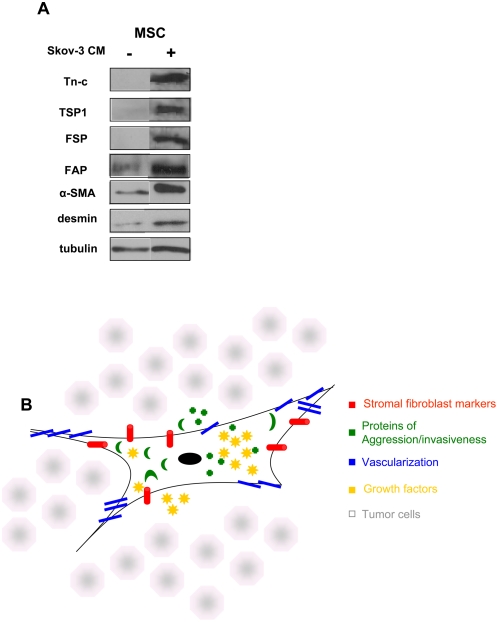
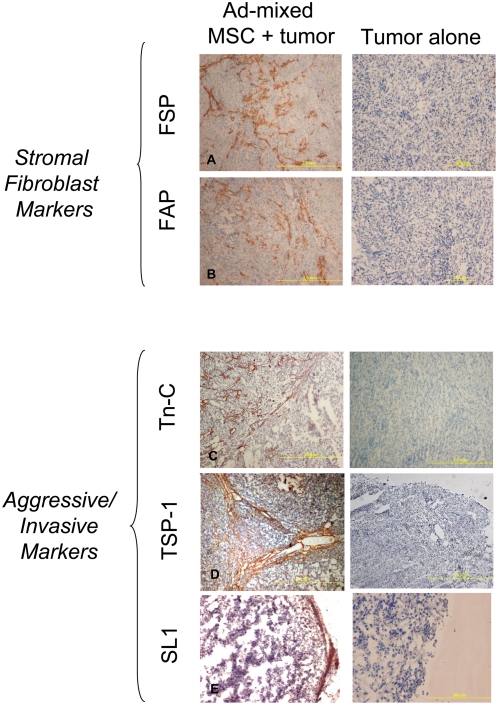
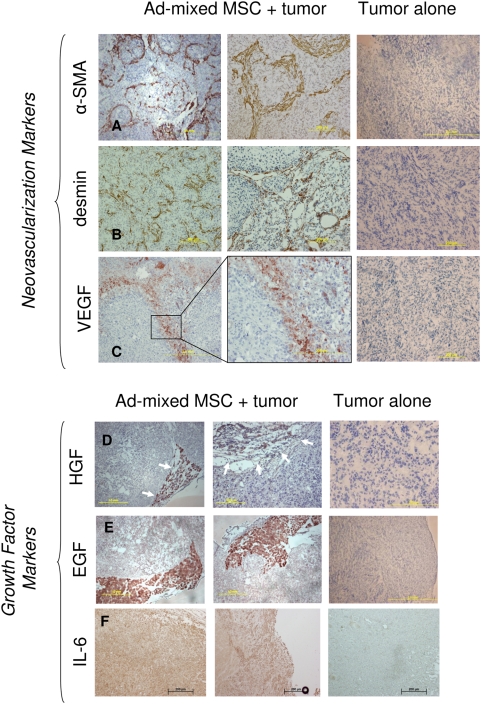
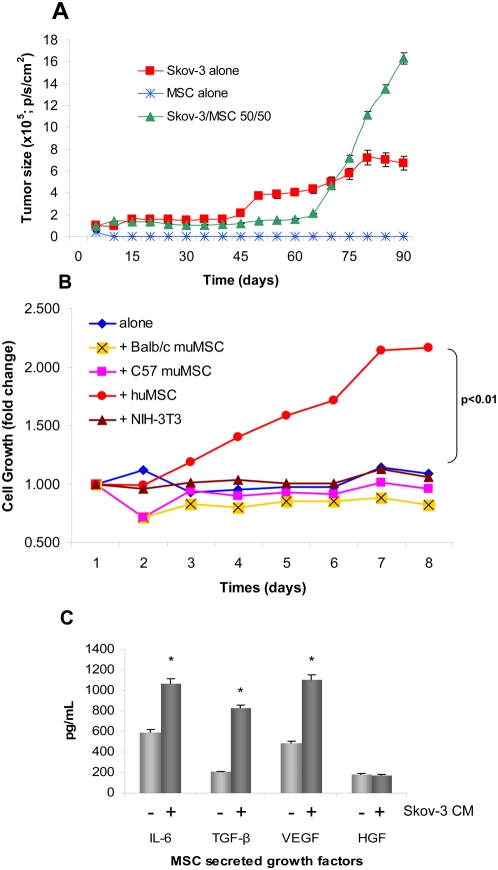
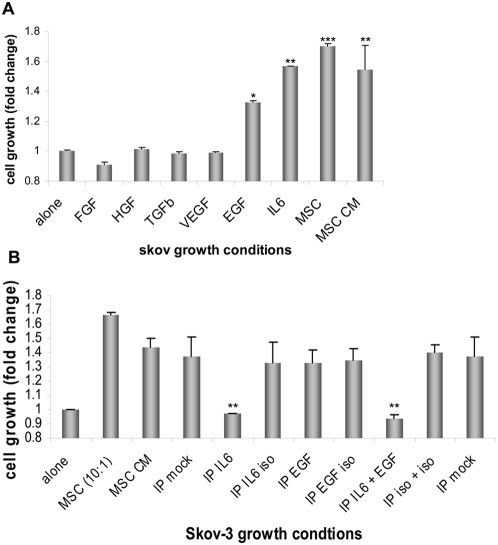
BACKGROUND: Tumor associated fibroblasts (TAF), are essential for tumor progression providing both a functional and structural supportive environment. TAF, known as activated fibroblasts, have an established biological impact on tumorigenesis as matrix synthesizing or matrix degrading cells, contractile cells, and even blood vessel associated cells. The production of growth factors, cytokines, chemokines, matrix-degrading enzymes, and immunomodulatory mechanisms by these cells augment tumor progression by providing a suitable environment. There are several suggested origins of the TAF including tissue-resident, circulating, and epithelial-to-mesenchymal-transitioned cells. METHODOLOGY/PRINCIPAL FINDINGS: We provide evidence that TAF are derived from mesenchymal stem cells (MSC) that acquire a TAF phenotype following exposure to or systemic recruitment into adenocarcinoma xenograft models including breast, pancreatic, and ovarian. We define the MSC derived TAF in a xenograft ovarian carcinoma model by the immunohistochemical presence of 1) fibroblast specific protein and fibroblast activated protein; 2) markers phenotypically associated with aggressiveness, including tenascin-c, thrombospondin-1, and stromelysin-1; 3) production of pro-tumorigenic growth factors including hepatocyte growth factor, epidermal growth factor, and interleukin-6; and 4) factors indicative of vascularization, including alpha-smooth muscle actin, desmin, and vascular endothelial growth factor. We demonstrate that under long-term tumor conditioning in vitro, MSC express TAF-like proteins. Additionally, human MSC but not murine MSC stimulated tumor growth primarily through the paracrine production of secreted IL6. CONCLUSIONS/SIGNIFICANCE: Our results suggest the dependence of in vitro Skov-3 tumor cell proliferation is due to the presence of tumor-stimulated MSC secreted IL6. The subsequent TAF phenotype arises from the MSC which ultimately promotes tumor growth through the contribution of microvascularization, stromal networks, and the production of tumor-stimulating paracrine factors.
Overview
The claims and statistics of this paper haven’t been checked yet.
Free: it reads the open-access text and checks the first 5 claims that cite a source we can check. Create a free account to check every claim.
Integrity signals
Registry
Cites
Statistics
Figures
Verification
Claims the paper makes
The claims and statistics of this paper haven’t been checked yet.
Free: it reads the open-access text and checks the first 5 claims that cite a source we can check. Create a free account to check every claim.
Claims other papers make about this one
Each is checked against this paper’s own text: does it say what the citing paper says it does?
The source backs part of the claim, not all of it — or backs it for a different population, condition or comparison.
In the citing paper
“Secretion of elevated levels of IL-6 by MSC has been detected upon interaction with malignant cells in several epithelial, hematopoietic and mesenchymal cancers (Table 2) [43, 69, 76, 77, 82, 115–119].”
From Mesenchymal stem cell secretome and regenerative therapy after cancer (2013) · cites this paper as [82]
Experimental — accuracy not yet measuredThe source backs part of the claim, not all of it — or backs it for a different population, condition or comparison.
In the citing paper
“Another mechanism that could increase the aggressiveness of a tumour is the potential differentiation of MSCs to tumour associated fibroblasts that are capable of increasing neovascularization within the tumour stroma and the metastatic rate [76], [77].”
From Mesenchymal stromal cells for bone sarcoma treatment: Roadmap to clinical practice (2019) · cites this paper as [77]
Experimental — accuracy not yet measuredThe cited source says what the claim attributes to it.
In the citing paper
“There they can potentiate further tumorigenesis via differentiation into tumor-nurturing stroma (TAF, myofibroblasts) [82, 104], direct cell contact interaction with cancer cells [105, 106] or release of paracrine factors (Table 2).”
From Mesenchymal stem cell secretome and regenerative therapy after cancer (2013) · cites this paper as [82]
Self-check
Percentages, sums and reported differences re-computed from the paper’s own numbers.
The self-check needs the paper’s full text.
Citations
Cites
Dominici, M., Le Blanc, K., Mueller, I., Slaper-Cortenbach, I., Marini, F. C., Krause, D. S., Deans, R. J., Keating, A., Prockop, D. J., & Horwitz, E. M. (2006) · Cytotherapy · doi:10.1080/14653240600855905 · Cited by 17,766
Self-citationKalluri, R., & Zeisberg, M. (2006) · Nature Reviews Cancer · doi:10.1038/nrc1877 · Cited by 4,538 · cited 1×
“The second characteristic is the degree of expression of the proteins of ‘‘aggression’’ such as SL-1, otherwise known as MMP3, a degradative enzyme highly expressed by fibroblasts [42] and utilized in tissue remodeling by TAF [21].”
BackgroundTumors: Wounds That Do Not Heal
Flier, J. S., Underhill, L. H., & Dvorak, H. F. (1986) · New England Journal of Medicine · doi:10.1056/nejm198612253152606 · Cited by 4,391 · cited 1×
“The tropism of MSC for tumors is thought to be due to similarity in factors secreted by wounds and tumors [13], substantiating the concept that tumors are ‘‘wounds that never heal’’ [14,15].”
BackgroundMesenchymal stem cells within tumour stroma promote breast cancer metastasis
Karnoub, A. E., Dash, A. B., Vo, A. P., Sullivan, A., Brooks, M. W., Bell, G. W., Richardson, A. L., Polyak, K., Tubo, R., & Weinberg, R. A. (2007) · Nature · doi:10.1038/nature06188 · Cited by 3,206 · cited 1×
“[33].”
Vascular Channel Formation by Human Melanoma Cells in Vivo and in Vitro: Vasculogenic Mimicry
Maniotis, A. J., Folberg, R., Hess, A., Seftor, E. A., Gardner, L. M. G., Pe'er, J., Trent, J. M., Meltzer, P. S., & Hendrix, M. J. C. (1999) · The American Journal of Pathology · doi:10.1016/s0002-9440(10)65173-5 · Cited by 2,043 · cited 1×
“Typically, the cells associated with the abnormal, tumorassociated, fibrovascular septa are not the archetypal vascular endothelial cells classified by factor VIII, CD31 and CD34, but instead are networks consisting of collagen and laminin subtypes in addition to activated fibroblasts and macrophages [45].”
BackgroundMesenchymal Stem Cells Can Be Differentiated Into Endothelial Cells In Vitro
Oswald, J., Boxberger, S., Jørgensen, B., Feldmann, S., Ehninger, G., Bornhäuser, M., & Werner, C. (2004) · STEM CELLS · doi:10.1634/stemcells.22-3-377 · Cited by 1,317 · cited 1×
“a-SMA positivity has been used previously to identify differentiated MSC [44].”
MethodDevelopment of a self-inactivating lentivirus vector
Miyoshi, H., Blömer, U., Takahashi, M., Gage, F. H., & Verma, I. M. (1998) · Journal of Virology · doi:10.1128/jvi.72.10.8150-8157.1998 · Cited by 1,196 · cited 1×
“Skov-3 tumor cells were stably transduced using a lentivirus expressing red fluorescent protein and renilla luciferase (rLuc) [56,57].”
MethodHuman Bone Marrow–Derived Mesenchymal Stem Cells in the Treatment of Gliomas
Nakamizo, A., Marini, F., Amano, T., Khan, A., Studeny, M., Gumin, J., Chen, J., Hentschel, S., Vecil, G., Dembinski, J., et al. (2005) · Cancer Research · doi:10.1158/0008-5472.can-04-1874 · Cited by 1,035 · cited 2×
“In those and subsequent studies, we demonstrated that MSC, administered intravenously, were able to integrate and persist within tumor stroma of pre-established human melanoma, breast cancer and glioma xenografts [11,12,16].”
BackgroundSelf-citationPeister, A., Mellad, J. A., Larson, B. L., Hall, B. M., Gibson, L. F., & Prockop, D. J. (2004) · Blood · doi:10.1182/blood-2003-09-3070 · Cited by 994 · cited 1×
“Murine MSC (mMSC) cell lines from C57/B6, balb/C were isolated as described previously [55] Fibroblast 3T3 cells and mMSC were cultured in alpha-MEM containing 20% FBS and 10% LPS.”
MethodSelf-citation(2002) · PubMed · Cited by 903
Self-citation
Research works printed but not linked: 1
- Studeny M Marini FC Zompetta C Champlin RE Filder IJ 2001 Bone marrow derived mesenchymal stem cells serve as precursors for stromal fibroblasts in malignant tumors and show potential for cancer therapy. Blood 98
Cited by
Accessories to the Crime: Functions of Cells Recruited to the Tumor Microenvironment
Hanahan, D., & Coussens, L. M. (2012) · Cancer Cell · doi:10.1016/j.ccr.2012.02.022 · Cited by 4,632
“…factor-1 (SDF-1/CXCL12), and a variety of FGFs—with the capability to stimulate cancer cell proliferation (Cirri and Chiarugi, 2011; Erez et al., 2010; Franco et al., 2010; Kalluri and Zeisberg, 2006; Orimo et al., 2005; Rä sä nen and Vaheri, 2010; Rosen and MacDougald, 2006; Spaeth et al., 2009).”
The Tumour Microenvironment after Radiotherapy: Mechanisms of Resistance and Recurrence
Barker, H. E., Paget, J. T. E., Khan, A. A., & Harrington, K. J. (2015) · Nature Reviews Cancer · doi:10.1038/nrc3958 · Cited by 2,144
Targeting cancer stem cell pathways for cancer therapy
Yang, L., Shi, P., Zhao, G., Xu, J., Peng, W., Zhang, J., Zhang, G., Wang, X., Dong, Z., Chen, F., et al. (2020) · Signal Transduction and Targeted Therapy · doi:10.1038/s41392-020-0110-5 · Cited by 1,906
“502 The possible mechanism is related to the spontaneous fusion between cancer cells and MSCs.”
BackgroundThe tumor microenvironment at a glance
Balkwill, F. R., Capasso, M., & Hagemann, T. (2012) · Journal of Cell Science · doi:10.1242/jcs.116392 · Cited by 1,857
“CAFs can derive from multiple resident precursors, such as endothelial cells, smooth muscle cells and myoepithelial cells, or mesenchymal stem cells (Brittan et al., 2002; Spaeth et al., 2009; Tomasek et al., 2002; Willis et al., 2006).”
BackgroundGuidelines for the welfare and use of animals in cancer research
An ad hoc committee of the National Cancer Research Institute, Workman, P., Aboagye, E. O., Balkwill, F., Balmain, A., Bruder, G., Chaplin, D. J., Double, J. A., Everitt, J., Farningham, D. A. H., et al. (2010) · British Journal of Cancer · doi:10.1038/sj.bjc.6605642 · Cited by 1,442
“…angiogenic factors (Collado et al, 2007), cancer-associated fibroblasts (Noel et al, 1993; Orimo et al, 2005) or mesenchymal stem cells (Karnoub et al, 2007; Spaeth et al, 2009) can increase tumorigenicity, better recapitulate the human tumour microenvironment and enhance metastatic potential.”
BackgroundThe biology of ovarian cancer: new opportunities for translation
Bast, R. C., Hennessy, B., & Mills, G. B. (2009) · Nature Reviews Cancer · doi:10.1038/nrc2644 · Cited by 1,358
“Haematopoietic mesenchymal stem cells have been shown to home to ovarian cancer xenografts and differentiate into fibroblasts, contributing to microvascularization, stromal networks and production of tumour-stimulating cytokines (for example, IL-6”
BackgroundArneth, B. (2019) · Medicina · doi:10.3390/medicina56010015 · Cited by 1,250
Pancreatic cancer stroma: an update on therapeutic targeting strategies
Hosein, A. N., Brekken, R. A., & Maitra, A. (2020) · Nature Reviews Gastroenterology & Hepatology · doi:10.1038/s41575-020-0300-1 · Cited by 950
The roles of TGFβ in the tumour microenvironment
Pickup, M., Novitskiy, S., & Moses, H. L. (2013) · Nature Reviews Cancer · doi:10.1038/nrc3603 · Cited by 917
Mesenchymal Stem Cells as Therapeutics
Parekkadan, B., & Milwid, J. M. (2010) · Annual Review of Biomedical Engineering · doi:10.1146/annurev-bioeng-070909-105309 · Cited by 759
Tumor-associated stromal cells as key contributors to the tumor microenvironment
Bussard, K. M., Mutkus, L., Stumpf, K., Gomez-Manzano, C., & Marini, F. C. (2016) · Breast Cancer Research · doi:10.1186/s13058-016-0740-2 · Cited by 746
“This is primarily due to the recruitment of nearby non-cancerous host stromal cells, including bone-marrow mesenchymal stromal cells (MSCs), adipocytes, and endothelial cells, that secrete a plethora of mediators and growth factors for the tumor that help facilitate tumor progression [3].”
BackgroundSelf-citationWeiss, A. R. R., & Dahlke, M. H. (2019) · Frontiers in Immunology · doi:10.3389/fimmu.2019.01191 · Cited by 695
“Human bone marrow-derived MSCs (BM-MSCs) were shown to adopt a CAF-like phenotype with similar functional properties after prolonged exposure to tumorconditioned medium (100, 101).”
BackgroundCancer-related inflammation: Common themes and therapeutic opportunities
Balkwill, F. R., & Mantovani, A. (2012) · Seminars in Cancer Biology · doi:10.1016/j.semcancer.2011.12.005 · Cited by 685
“TAFs are hought to arise from mesenchymal stem cells [22] but recent data uggest that other bone marrow cells can regulate their activity.”
BackgroundKidd, S., Spaeth, E., Dembinski, J. L., Dietrich, M., Watson, K., Klopp, A., Battula, V. L., Weil, M., Andreeff, M., & Marini, F. C. (2009) · Stem Cells · doi:10.1002/stem.187 · Cited by 679
Self-citationStromal cells in tumor microenvironment and breast cancer
Mao, Y., Keller, E. T., Garfield, D. H., Shen, K., & Wang, J. (2013) · Cancer and Metastasis Reviews · doi:10.1007/s10555-012-9415-3 · Cited by 671
“The third source of CAFs is malignant tumor cells that undergo EMT changes [3, 16].”
Cancer associated fibroblasts: the dark side of the coin.
Cirri, P., & Chiarugi, P. (2011) · Europe PMC (PubMed Central) · Cited by 669
How mesenchymal stem cells interact with tissue immune responses
Shi, Y., Su, J., Roberts, A. I., Shou, P., Rabson, A. B., & Ren, G. (2012) · Trends in Immunology · doi:10.1016/j.it.2011.11.004 · Cited by 633
“Additionally, MSCs have a potential to enhance tumor development, due to their immunosuppressive activities or to their conversion into tumor-associated fibroblasts, as has been shown in mouse carcinoma models [38,98].”
BackgroundBreast cancer stem cells are regulated by mesenchymal stem cells through cytokine networks
Liu, S., Ginestier, C., Ou, S. J., Clouthier, S. G., Patel, S. H., Monville, F., Korkaya, H., Heath, A., Dutcher, J., Kleer, C. G., et al. (2011) · Cancer Research · doi:10.1158/0008-5472.can-10-0538 · Cited by 611
“It has been shown that MSCs can produce IL6 (9, 10) and can stimulate tumor growth through the paracrine production of secreted IL6 (11).”
BackgroundKlopp, A. H., Gupta, A., Spaeth, E., Andreeff, M., & Marini, F. (2011) · Stem Cells · doi:10.1002/stem.559 · Cited by 562
Self-citationThe Pros and Cons of Mesenchymal Stem Cell-Based Therapies
Musiał-Wysocka, A., Kot, M., & Majka, M. (2019) · Cell Transplantation · doi:10.1177/0963689719837897 · Cited by 534
Mesenchymal stem cells: key players in cancer progression
Ridge, S. M., Sullivan, F. J., & Glynn, S. A. (2017) · Molecular Cancer · doi:10.1186/s12943-017-0597-8 · Cited by 526
“, 2009 [61] Bone marrow Human Adherence to plastic CD105, CD90, CD44, CD146, CD140b, CD166, CD31, CD34 and CD45.”
BackgroundInfluentialAspects of the Tumor Microenvironment Involved in Immune Resistance and Drug Resistance
Khalaf, K., Hana, D., Chou, J. T.-T., Singh, C., Mackiewicz, A., & Kaczmarek, M. (2021) · Frontiers in Immunology · doi:10.3389/fimmu.2021.656364 · Cited by 513
Pasquier, J., Guerrouahen, B. S., Al Thawadi, H., Ghiabi, P., Maleki, M., Abu-Kaoud, N., Jacob, A., Mirshahi, M., Galas, L., Rafii, S., et al. (2013) · Journal of Translational Medicine · doi:10.1186/1479-5876-11-94 · Cited by 502
“These various cell types are recruited to the tumor site and through the modulation of different pathways contribute to tumor growth and metastasis [4-10].”
BackgroundActivation of fibroblasts in cancer stroma
Räsänen, K., & Vaheri, A. (2010) · Experimental Cell Research · doi:10.1016/j.yexcr.2010.04.032 · Cited by 499
Dynamic reciprocity in the wound microenvironment
Schultz, G. S., Davidson, J. M., Kirsner, R. S., Bornstein, P., & Herman, I. M. (2011) · Wound Repair and Regeneration · doi:10.1111/j.1524-475x.2011.00673.x · Cited by 490
Exosomes derived from human bone marrow mesenchymal stem cells promote tumor growth in vivo
Zhu, W., Huang, L., Li, Y., Zhang, X., Gu, J., Yan, Y., Xu, X., Wang, M., Qian, H., & Xu, W. (2012) · Cancer Letters · doi:10.1016/j.canlet.2011.10.002 · Cited by 488
Ahmed, N., & Stenvers, K. L. (2013) · Frontiers in Oncology · doi:10.3389/fonc.2013.00256 · Cited by 482
“A recent study has provided evidence of the inter-conversion of CAFs into MSCs required for promoting tumor growth by paracrine production of inflammatory cytokines (88).”
BackgroundAldehyde dehydrogenase 1 is a putative marker for cancer stem cells in head and neck squamous cancer
Chen, Y.-C., Chen, Y.-W., Hsu, H.-S., Tseng, L.-M., Huang, P.-I., Lu, K.-H., Chen, D.-T., Tai, L.-K., Yung, M.-C., Chang, S.-C., et al. (2009) · Biochemical and Biophysical Research Communications · doi:10.1016/j.bbrc.2009.05.048 · Cited by 476
“provided evidence that tumor-associated fibroblasts are derived from MSC; these cells in tumors promote growth through their contribution to microvascularization, stromal networks, and the production of tumor-stimulating paracrine factors [24].”
BackgroundCancer-Associated Fibroblasts as Another Polarized Cell Type of the Tumor Microenvironment
Augsten, M. (2014) · Frontiers in Oncology · doi:10.3389/fonc.2014.00062 · Cited by 427
“Furthermore, CAFs play an important role in remodeling of the extracellular matrix by expressing a wide variety of matrix-components and matrix-remodeling enzymes such as neuron glial antigen (NG2), tenascin C, type I collagen, fibronectin, or MMP-1/stromelysin-1 (8, 9).”
BackgroundLu, C., Rong, D., Zhang, B., Zheng, W., Wang, X., Chen, Z., & Tang, W. (2019) · Molecular Cancer · doi:10.1186/s12943-019-1047-6 · Cited by 418
“CAFs stimulate tumor cells through FGF and produces fibrosis [98, 99].”
BackgroundBollrath, J., & Greten, F. R. (2009) · EMBO reports · doi:10.1038/embor.2009.243 · Cited by 383
“In addition to immune cells, cancer-associated fibroblasts (CAFs) have an important role during tumour progression, as they can be a main source of IL-6, VEGF, TGFβ”
BackgroundMcLean, K., Gong, Y., Choi, Y., Deng, N., Yang, K., Bai, S., Cabrera, L., Keller, E., McCauley, L., Cho, K. R., et al. (2011) · Journal of Clinical Investigation · doi:10.1172/jci45273 · Cited by 380
Kidd, S., Spaeth, E., Watson, K., Burks, J., Lu, H., Klopp, A., Andreeff, M., & Marini, F. C. (2012) · PLoS ONE · doi:10.1371/journal.pone.0030563 · Cited by 371
“Varying reports in the literature have indicated conflicting data concerning the origins of tumor associated stromal cells [1,7,15,20,25,57,58].”
BackgroundResultSelf-citationKato, T., Noma, K., Ohara, T., Kashima, H., Katsura, Y., Sato, H., Komoto, S., Katsube, R., Ninomiya, T., Tazawa, H., et al. (2018) · Clinical Cancer Research · doi:10.1158/1078-0432.ccr-18-0205 · Cited by 367
Patel, S. A., Meyer, J. R., Greco, S. J., Corcoran, K. E., Bryan, M., & Rameshwar, P. (2010) · The Journal of Immunology · doi:10.4049/jimmunol.0903143 · Cited by 363
Ren, G., Zhao, X., Wang, Y., Zhang, X., Chen, X., Xu, C., Yuan, Z.-R., Roberts, A. I., Zhang, L., Zheng, B., et al. (2012) · Cell Stem Cell · doi:10.1016/j.stem.2012.08.013 · Cited by 361
“MSCs are one of the major components of the tumor stroma and are also believed to be the precursors of tumorassociated fibroblasts (Mishra and Merlino, 2008; Quante et al., 2011; Spaeth et al., 2009; Studeny et al., 2004).”
BackgroundBone marrow-derived mesenchymal stem cells and the tumor microenvironment
Bergfeld, S. A., & DeClerck, Y. A. (2010) · Cancer and Metastasis Reviews · doi:10.1007/s10555-010-9222-7 · Cited by 345
“Primary and metastatic tumors actively attract MSC from the bone marrow and other sites where they become tumor-associated fibroblasts (TAF) and contribute to the tumor microenvironment; vice versa, MSC S. A. Bergfeld Department of Pathology, USC Keck School of Medicine, Los Angeles, CA, USA Y. A. DeClerck Department…”
BackgroundInfluentialTGF-beta in CAF-mediated tumor growth and metastasis
Calon, A., Tauriello, D. V. F., & Batlle, E. (2014) · Seminars in Cancer Biology · doi:10.1016/j.semcancer.2013.12.008 · Cited by 342
El Omar, R., Beroud, J., Stoltz, J.-F., Menu, P., Velot, E., & Decot, V. (2014) · Tissue Engineering Part B: Reviews · doi:10.1089/ten.teb.2013.0664 · Cited by 330
The role of reactive oxygen species and metabolism on cancer cells and their microenvironment
Costa, A., Scholer-Dahirel, A., & Mechta-Grigoriou, F. (2014) · Seminars in Cancer Biology · doi:10.1016/j.semcancer.2013.12.007 · Cited by 324
“Recent data from human breast cancers and animal models established that myofibroblasts can derive from bone marrow derived cells, such as fibrocytes or mesenchymal stem cells [58–63].”
BackgroundEffect of Stromal Cells in Tumor Microenvironment on Metastasis Initiation
Guo, S., & Deng, C.-X. (2018) · International Journal of Biological Sciences · doi:10.7150/ijbs.25720 · Cited by 315
Microvesicles Derived from Human Bone Marrow Mesenchymal Stem Cells Inhibit Tumor Growth
Bruno, S., Collino, F., Deregibus, M. C., Grange, C., Tetta, C., & Camussi, G. (2013) · Stem Cells and Development · doi:10.1089/scd.2012.0304 · Cited by 309
“MV administration may have some advantages in respect to MSCs, as MVs inhibit cell cycle progression of tumor cells without the risk of MSCs to differentiate into stromal fibroblasts that may favor tumor growth [40,41].”
Mesenchymal stem cells enhance growth and metastasis of colon cancer
Shinagawa, K., Kitadai, Y., Tanaka, M., Sumida, T., Kodama, M., Higashi, Y., Tanaka, S., Yasui, W., & Chayama, K. (2010) · International Journal of Cancer · doi:10.1002/ijc.25440 · Cited by 308
“CAFs are known to promote tumor growth and metastasis, and phenotypes of CAFs are distinct from those of normal fibroblasts.(43,44) CAFs may arise from fibroblasts residing in local tissues,(18) periadventitial cells including pericytes and vascular smooth muscle cells,(45) endothelial cells(46) or bone marrow–derived…”
BackgroundMesenchymal Stromal Cells: Facilitators of Successful Transplantation?
English, K., French, A., & Wood, K. J. (2010) · Cell Stem Cell · doi:10.1016/j.stem.2010.09.009 · Cited by 303
The role of tumor microenvironment in therapeutic resistance
Son, B., Lee, S., Youn, H., Kim, E., Kim, W., & Youn, B. (2017) · Oncotarget · doi:10.18632/oncotarget.13907 · Cited by 300
“Furthermore, the MSCs-to-CAFs transition in the tumor microenvironment promoted tumor growth through the upregulation of microvascularization and the production of tumor-stimulating paracrine factors [89].”
BackgroundReciprocal leukemia-stroma VCAM-1/VLA-4-dependent activation of NF-κB mediates chemoresistance
Jacamo, R., Chen, Y., Wang, Z., Ma, W., Zhang, M., Spaeth, E. L., Wang, Y., Battula, V. L., Mak, P. Y., Schallmoser, K., et al. (2014) · Blood · doi:10.1182/blood-2013-06-511527 · Cited by 282
Self-citationTumor-Associated Macrophages in Osteosarcoma: From Mechanisms to Therapy
Cersosimo, F., Lonardi, S., Bernardini, G., Telfer, B., Mandelli, G. E., Santucci, A., Vermi, W., & Giurisato, E. (2020) · International Journal of Molecular Sciences · doi:10.3390/ijms21155207 · Cited by 280
“TME induces the M2-polarization of tumor-associated macrophages (TAMs) and a high M2/M1 ratio is clinically associated with poor prognosis in many types of cancers [82].”
BackgroundInfluentialDembinski, J. L., & Krauss, S. (2009) · Clinical & Experimental Metastasis · doi:10.1007/s10585-009-9260-0 · Cited by 271
Self-citationChinnadurai, R., Copland, I. B., Patel, S. R., & Galipeau, J. (2014) · The Journal of Immunology · doi:10.4049/jimmunol.1301828 · Cited by 266
Fibroblasts as architects of cancer pathogenesis
Marsh, T., Pietras, K., & McAllister, S. S. (2013) · Biochimica et Biophysica Acta (BBA) - Molecular Basis of Disease · doi:10.1016/j.bbadis.2012.10.013 · Cited by 264
“ovarian cancer cell-line, Skov3, admixed with human MSCs, the resulting tumor microenvironment harbored abundant cells with both CAF and pericyte-like phenotypes [57]; however, this study did not determine whether the CAFs arose from the implanted MSCs or from recruitment of other host cells that gave rise to the CAF…”
BackgroundCrosstalk of Inflammatory Cytokines within the Breast Tumor Microenvironment
Habanjar, O., Bingula, R., Decombat, C., Diab-Assaf, M., Caldefie-Chezet, F., & Delort, L. (2023) · International Journal of Molecular Sciences · doi:10.3390/ijms24044002 · Cited by 263
“In breast cancer, cancer cells are directly in contact with the adipose microenvironment and reciprocal interactions with immunocompetent cells, immune cells, infiltrating immune cells (TANs, M2, TAMs) [6], fibroblasts, cancer-associated fibroblasts (CAFs) [26], and endothelial cells, have been revealed, particularly…”
BackgroundAdipocyte biology in breast cancer: From silent bystander to active facilitator
Choi, J., Cha, Y. J., & Koo, J. S. (2018) · Progress in Lipid Research · doi:10.1016/j.plipres.2017.11.002 · Cited by 255
Cancer and the Complement Cascade
Rutkowski, M. J., Sughrue, M. E., Kane, A. J., Mills, S. A., & Parsa, A. T. (2010) · Molecular Cancer Research · doi:10.1158/1541-7786.mcr-10-0225 · Cited by 250
“These tumor-associated fibroblasts and myofibroblasts have unique genotypic and phenotypic profiles that further promote tumorigenesis, proliferation, invasion, and angiogenesis (136-138).”
BackgroundMesenchymal Stromal Cells Promote Tumor Growth through the Enhancement of Neovascularization
Suzuki, K., Sun, R., Origuchi, M., Kanehira, M., Takahata, T., Itoh, J., Umezawa, A., Kijima, H., Fukuda, S., & Saijo, Y. (2011) · Molecular Medicine · doi:10.2119/molmed.2010.00157 · Cited by 244
“MSCs can differentiate into fibro blasts, myofibroblasts or pericyte-like cells and induce neoangiogenesis, resulting in the promotion of tumor growth in vivo (24,25).”
InfluentialCancer Associated Fibroblasts: The Architects of Stroma Remodeling
Santi, A., Kugeratski, F. G., & Zanivan, S. (2018) · PROTEOMICS · doi:10.1002/pmic.201700167 · Cited by 244
The double edge sword of fibrosis in cancer
Chandler, C., Liu, T., Buckanovich, R., & Coffman, L. G. (2019) · Translational Research · doi:10.1016/j.trsl.2019.02.006 · Cited by 242
Latifi, A., Luwor, R. B., Bilandzic, M., Nazaretian, S., Stenvers, K., Pyman, J., Zhu, H., Thompson, E. W., Quinn, M. A., Findlay, J. K., et al. (2012) · PLoS ONE · doi:10.1371/journal.pone.0046858 · Cited by 240
“Tumor-associated MSC have been shown to be derived from circulatory MSC’s or resident tissue stem cells [29–30], and have been shown to differentiate into fibroblast-like cells within the tumor stroma [29].”
BackgroundChemokines at the crossroads of tumor-fibroblast interactions that promote malignancy
Mishra, P., Banerjee, D., & Ben-Baruch, A. (2010) · Journal of Leukocyte Biology · doi:10.1189/jlb.0310182 · Cited by 239
“vitro and in an in vivo coimplantation model [45, 47].”
BackgroundNanoparticle-Mediated Remodeling of the Tumor Microenvironment to Enhance Immunotherapy
Musetti, S., & Huang, L. (2018) · ACS Nano · doi:10.1021/acsnano.8b05893 · Cited by 239
Tumor-associated fibroblasts predominantly come from local and not circulating precursors
Arina, A., Idel, C., Hyjek, E. M., Alegre, M.-L., Wang, Y., Bindokas, V. P., Weichselbaum, R. R., & Schreiber, H. (2016) · Proceedings of the National Academy of Sciences · doi:10.1073/pnas.1600363113 · Cited by 238
Tumor microenvironment components: Allies of cancer progression
Ribeiro Franco, P. I., Rodrigues, A. P., de Menezes, L. B., & Pacheco Miguel, M. (2020) · Pathology - Research and Practice · doi:10.1016/j.prp.2019.152729 · Cited by 237
Jotzu, C., Alt, E., Welte, G., Li, J., Hennessy, B. T., Devarajan, E., Krishnappa, S., Pinilla, S., Droll, L., & Song, Y.-H. (2011) · Cellular Oncology · doi:10.1007/s13402-011-0012-1 · Cited by 236
“Bone marrow derived mesenchymal stem cells have recently been found to integrate into the tumor associated stroma and differentiated into myofibroblasts which act in a paracrine fashion on the cancer cells to enhance their invasion [21].”
BackgroundThe Tumor Microenvironment in Cholangiocarcinoma Progression
Fabris, L., Sato, K., Alpini, G., & Strazzabosco, M. (2021) · Hepatology · doi:10.1002/hep.31410 · Cited by 235
Mesenchymal stem cells promote growth and angiogenesis of tumors in mice
Huang, W.-H., Chang, M.-C., Tsai, K.-S., Hung, M.-C., Chen, H.-L., & Hung, S.-C. (2013) · Oncogene · doi:10.1038/onc.2012.458 · Cited by 227
Weber, C. E., Kothari, A. N., Wai, P. Y., Li, N. Y., Driver, J., Zapf, M. A. C., Franzen, C. A., Gupta, G. N., Osipo, C., Zlobin, A., et al. (2015) · Oncogene · doi:10.1038/onc.2014.410 · Cited by 226
Three-Dimensional Cell Cultures: The Bridge between In Vitro and In Vivo Models
Urzì, O., Gasparro, R., Costanzo, E., De Luca, A., Giavaresi, G., Fontana, S., & Alessandro, R. (2023) · International Journal of Molecular Sciences · doi:10.3390/ijms241512046 · Cited by 224
“At present, spheroids have been developed using various cell types, such as hepatocytes [12], mesenchymal stem cells (MSCs) [13], neurons [14], lung cells [15], pre-osteoblasts [16], and several cancer cells [17–19].”
BackgroundInfluentialWu, S., Ju, G.-Q., Du, T., Zhu, Y.-J., & Liu, G.-H. (2013) · PLoS ONE · doi:10.1371/journal.pone.0061366 · Cited by 224
“Several groups reported no transformation of MSC after long term culture [41], however, other researchers have reported spontaneous transformation of hMSC, which may favor tumor growth [7,42].”
BackgroundYin, W., Wang, J., Jiang, L., & Kang, Y. J. (2021) · Experimental Biology and Medicine · doi:10.1177/15353702211005390 · Cited by 222
Gu, J., Qian, H., Shen, L., Zhang, X., Zhu, W., Huang, L., Yan, Y., Mao, F., Zhao, C., Shi, Y., et al. (2012) · PLoS ONE · doi:10.1371/journal.pone.0052465 · Cited by 220
“CAFs that express fibroblast activating protein (FAP) and a-smooth muscle actin (aSMA) could create a niche for cancer cells and promote their motility [6,7].”
BackgroundMesenchymal Stem Cell-Mediated Effects of Tumor Support or Suppression
Rhee, K.-J., Lee, J., & Eom, Y. (2015) · International Journal of Molecular Sciences · doi:10.3390/ijms161226215 · Cited by 214
“CAFs/TAFs are abundant in most invasive tumors and are composed mainly of cells expressing α-smooth muscle actin (α-SMA) [58].”
BackgroundInfluentialBreast cancer models: Engineering the tumor microenvironment
Bahcecioglu, G., Basara, G., Ellis, B. W., Ren, X., & Zorlutuna, P. (2020) · Acta Biomaterialia · doi:10.1016/j.actbio.2020.02.006 · Cited by 213
Anderson, P., Souza-Moreira, L., Morell, M., Caro, M., O'Valle, F., Gonzalez-Rey, E., & Delgado, M. (2013) · Gut · doi:10.1136/gutjnl-2012-302152 · Cited by 210
Cancer Stem Cells and Targeting Strategies
Barbato, L., Bocchetti, M., Di Biase, A., & Regad, T. (2019) · Cells · doi:10.3390/cells8080926 · Cited by 209
Carcinoma‐associated fibroblasts: Non‐neoplastic tumour‐promoting mesenchymal cells
Polanska, U. M., & Orimo, A. (2013) · Journal of Cellular Physiology · doi:10.1002/jcp.24347 · Cited by 208
“…cells, preadipocytes (Kidd et al., 2012) and bone marrow-derived cells, such as fibrocytes and mesenchymal stem cells (MSCs) (Ishii et al., 2003; Direkze et al., 2004; Guo et al., 2008; Jeon et al., 2008; Mishra et al., 2008; Spaeth et al., 2009; Paunescu et al., 2011; Quante et al., 2011) (Fig.”
BackgroundIDO Expression in Cancer: Different Compartment, Different Functionality?
Meireson, A., Devos, M., & Brochez, L. (2020) · Frontiers in Immunology · doi:10.3389/fimmu.2020.531491 · Cited by 205
CAFs Interacting With TAMs in Tumor Microenvironment to Enhance Tumorigenesis and Immune Evasion
Gunaydin, G. (2021) · Frontiers in Oncology · doi:10.3389/fonc.2021.668349 · Cited by 202
Mesenchymal stem cells in tumor development: Emerging roles and concepts
Cuiffo, B. G., & Karnoub, A. E. (2012) · Cell Adhesion & Migration · doi:10.4161/cam.20875 · Cited by 201
Kidd, S., Caldwell, L., Dietrich, M., Samudio, I., Spaeth, E. L., Watson, K., Shi, Y., Abbruzzese, J., Konopleva, M., Andreeff, M., et al. (2010) · Cytotherapy · doi:10.3109/14653241003631815 · Cited by 201
Self-citationTumor cell behaviour modulation by mesenchymal stromal cells
Kucerova, L., Matuskova, M., Hlubinova, K., Altanerova, V., & Altaner, C. (2010) · Molecular Cancer · doi:10.1186/1476-4598-9-129 · Cited by 200
“Mutual tumor/MSC interplay leads to functional MSC changes even under tumor-cell produced soluble factors [14,32].”
BackgroundAdvances in regenerative therapy: A review of the literature and future directions
Ntege, E. H., Sunami, H., & Shimizu, Y. (2020) · Regenerative Therapy · doi:10.1016/j.reth.2020.01.004 · Cited by 194
“MSCs can be attracted to sites of tissue injury as well as tumor microenvironments, and are able to differentiate into myofibroblasts known to promote tumor growth; such features are key contributors to tumor aggression and invasiveness in breast lipofilling [211,212].”
BackgroundGMP-Compliant Isolation and Large-Scale Expansion of Bone Marrow-Derived MSC
Fekete, N., Rojewski, M. T., Fürst, D., Kreja, L., Ignatius, A., Dausend, J., & Schrezenmeier, H. (2012) · PLoS ONE · doi:10.1371/journal.pone.0043255 · Cited by 193
“We observed absence of VEGFR/CD309 and RANTES and low expression levels of PDGF receptor a/CD140a (#0.4”
BackgroundResultInfluentialThe multifaceted role of mesenchymal stem cells in cancer
Timaner, M., Tsai, K. K., & Shaked, Y. (2020) · Seminars in Cancer Biology · doi:10.1016/j.semcancer.2019.06.003 · Cited by 193
Schauer, I. G., Sood, A. K., Mok, S., & Liu, J. (2011) · Neoplasia · doi:10.1593/neo.101720 · Cited by 155
“Originof theOvarianCancerTumorMicroenvironment Although the origin of stroma in ovarian cancer is largely unknown, recent evidence frommouse xenograft models of multiple human cancer cell types (including ovarian) points to activation of tissue-resident fibroblasts, recruitment of hematopoietic precursors or mesenchym…”
BackgroundDel Fattore, A., Luciano, R., Saracino, R., Battafarano, G., Rizzo, C., Pascucci, L., Alessandri, G., Pessina, A., Perrotta, A., Fierabracci, A., et al. (2015) · Expert Opinion on Biological Therapy · doi:10.1517/14712598.2015.997706 · Cited by 185
“MSCs are intimately involved in tumor growth, since they contribute both to tumor stromal support and vascularization by differentiating into fibroblasts and vascular pericytes [2,3].”
BackgroundSutendra, G., Dromparis, P., Kinnaird, A., Stenson, T. H., Haromy, A., Parker, J. M. R., McMurtry, M. S., & Michelakis, E. D. (2013) · Oncogene · doi:10.1038/onc.2012.198 · Cited by 184
Notch signaling: targeting cancer stem cells and epithelial-to-mesenchymal transition
Miele, L., Espinoza, I., Pochampally, Watabe, & Xing, F. (2013) · OncoTargets and Therapy · doi:10.2147/ott.s36162 · Cited by 183
“MSCs are recruited to the tumor microenvironment in response to various cytokines, which are secreted by tumor cells and their associated stroma and act as precursors for pericytes and carcinoma cancer-associated fibroblasts.(77,88,89) MSCs promote tumor cell proliferation indirectly through their immunosuppressive pr…”
Tumour-associated fibroblasts and mesenchymal stem cells: more similarities than differences
Paunescu, V., Bojin, F. M., Tatu, C. A., Gavriliuc, O. I., Rosca, A., Gruia, A. T., Tanasie, G., Bunu, C., Crisnic, D., Gherghiceanu, M., et al. (2011) · Journal of Cellular and Molecular Medicine · doi:10.1111/j.1582-4934.2010.01044.x · Cited by 150
“Recent studies have shown that cancer cells in suspension, injected into immunodeficient animals, are able to generate tumours at the site of injection and tumour growth only when associated with their stromal compartment [6], reinforcing again the importance of the supportive role of the stromal background for the ma…”
BackgroundTumor microenvironment: Bone marrow-mesenchymal stem cells as key players
Barcellos-de-Souza, P., Gori, V., Bambi, F., & Chiarugi, P. (2013) · Biochimica et Biophysica Acta (BBA) - Reviews on Cancer · doi:10.1016/j.bbcan.2013.10.004 · Cited by 180
“BM-MSC-induced tumor neovascularization The pro-tumor behavior of BM-MSC may be due to their combined effect on tumor proliferation, tumor dissemination, and vessel distribution [21,23,66].”
BackgroundInfluentialMesenchymal stem cells as a double-edged sword in tumor growth: focusing on MSC-derived cytokines
Liang, W., Chen, X., Zhang, S., Fang, J., Chen, M., Xu, Y., & Chen, X. (2021) · Cellular & Molecular Biology Letters · doi:10.1186/s11658-020-00246-5 · Cited by 180
“Various studies indicate that tumor angiogenesis is promoted by MSCs that differentiate into pericytes or endothelial-like cells and then secrete proangiogenic factors, trophic factors, cytokines, plasminogen activators and growth factors [88, 121, 122].”
BackgroundInfluentialBorriello, L., Nakata, R., Sheard, M. A., Fernandez, G. E., Sposto, R., Malvar, J., Blavier, L., Shimada, H., Asgharzadeh, S., Seeger, R. C., et al. (2017) · Cancer Research · doi:10.1158/0008-5472.can-16-2586 · Cited by 180
“In cancer, experiments inmice have suggested that BM-MSCs can be recruited by primary tumors where they can transition into CAFs (7, 9, 10).”
Osteopontin promotes CCL5-mesenchymal stromal cell-mediated breast cancer metastasis
Mi, Z., Bhattacharya, S. D., Kim, V. M., Guo, H., Talbot, L. J., & Kuo, P. C. (2011) · Carcinogenesis · doi:10.1093/carcin/bgr009 · Cited by 179
Klopp, A. H., Zhang, Y., Solley, T., Amaya-Manzanares, F., Marini, F., Andreeff, M., Debeb, B., Woodward, W., Schmandt, R., Broaddus, R., et al. (2012) · Clinical Cancer Research · doi:10.1158/1078-0432.ccr-11-1916 · Cited by 178
“To compare the extent of vasculature maturation in tumors recruiting different types of MSC, we analyzed tumor sections for expression of desmin, a marker of pericytes (33).”
Self-citationSalaudeen, M. A., Bello, N., Danraka, R. N., & Ammani, M. L. (2024) · Biomolecules · doi:10.3390/biom14030305 · Cited by 175
Mesenchymal Stem Cells Promote Formation of Colorectal Tumors in Mice
Tsai, K., Yang, S., Lei, Y., Tsai, C., Chen, H., Hsu, C., Chen, L., Wang, H., Miller, S. A., Chiou, S., et al. (2011) · Gastroenterology · doi:10.1053/j.gastro.2011.05.045 · Cited by 175
Mesenchymal Stem Cell treatment for autoimmune diseases: a critical review
Figueroa, F. E., Carrión, F., Villanueva, S., & Khoury, M. (2012) · Biological Research · doi:10.4067/s0716-97602012000300008 · Cited by 174
“Long term safety concerns remain an issue, given the description of in-vitro malignant MSC transformation (Miura et al., 2006) and the unknown interaction of regular immunosupressants with single or repeated MSC therapy (Spaeth et al., 2009).”
BackgroundCancer-associated fibroblasts in hepatocellular carcinoma
Kubo, N., Araki, K., Kuwano, H., & Shirabe, K. (2016) · World Journal of Gastroenterology · doi:10.3748/wjg.v22.i30.6841 · Cited by 173
Hass, R., von der Ohe, J., & Ungefroren, H. (2020) · Cancers · doi:10.3390/cancers12123716 · Cited by 173
“For instance, macrophages, particularly M2-type macrophages, are converted to TAMs (tumor-associated macrophages) [22,23] and MSCs can differentiate into CAFs (cancer-associated fibroblasts) [24,25] displaying mostly tumor-supportive properties (Figure 1).”
BackgroundMesenchymal stroma: Role in osteosarcoma progression
Cortini, M., Avnet, S., & Baldini, N. (2017) · Cancer Letters · doi:10.1016/j.canlet.2017.07.024 · Cited by 171
Mesenchymal Stem Cells: Angels or Demons?
Wong, R. S. Y. (2011) · BioMed Research International · doi:10.1155/2011/459510 · Cited by 149
“(3) The use of MSCs in cancer patients: further exploration of the use of MSCs in cancer patients, especially those with haematological malignancies and those requiring MSCs for GVHD, is necessary.”
MethodMesenchymal stem cell secretome and regenerative therapy after cancer
Zimmerlin, L., Park, T. S., Zambidis, E. T., Donnenberg, V. S., & Donnenberg, A. D. (2013) · Biochimie · doi:10.1016/j.biochi.2013.05.010 · Cited by 168
“TAF, myofibroblasts) often possess augmented ability to promote tumor growth [45, 75, 77, 82] and invasion [74, 75] compared with healthy donor MSC via superior angiogenesis [75, 77, 80, 82, 89], or abnormal immunomodulation [76, 79, 81], resulting in increased release of cytokines/growth factors including hepatocyte…”
BackgroundInfluential
Metadata
- Authors
- Spaeth, E. L., Dembinski, J. L., Sasser, A. K., Watson, K., Klopp, A., Hall, B., Andreeff, M., & Marini, F.
- Affiliations
- The University of Texas MD Anderson Cancer Center (US)
- Abigail Wexner Research Institute (US)
- Corresponding author
- Marini, Frank
- Venue
- PLoS ONE
- Publisher
- Public Library of Science (PLoS)
- Published
- 2009-04-07
- Volume
- 4
- Issue
- 4
- Pages
- e4992
- ISSN
- 1932-6203 (ISSN-L)
- PMC
- PMC2661372
- OpenAlex
- W1979704965
- Cited by
- 807
- References
- 56
- Citations by year
- 2026: 18 · 2025: 14 · 2024: 29 · 2023: 41 · 2022: 26 · 2021: 48 · 2020: 50 · 2019: 47 · 2018: 43 · 2017: 40 · 2016: 60 · 2015: 59 · 2014: 66 · 2013: 69 · 2012: 71
- FWCI
- 32.78
- Type
- journal article
- Language
- en
- Update notices
- correction (2013-03-19)
- Open access
- gold
- doi.org
- Locations
- PLoS ONE (publishedVersion, cc-by)
- PubMed Central (publishedVersion, cc-by)
- PubMed (publishedVersion)
- DOAJ (DOAJ: Directory of Open Access Journals) (submittedVersion, cc-by-sa)
- Figshare (submittedVersion, cc-by)
- Funders
- U.S. Department of Defense
- Susan G. Komen for the Cure
- National Cancer Institute (P50CA116199, CA-16672, CA-55164, R01CA109451, P01CA049639, 16672, P01CA055164, Ca-116199, RC1CA146381, BC083397, CA109451, P30CA016672, CA 49639)
- Topics
- Health Sciences › Medicine › Oncology › Cancer Cells and Metastasis
- Life Sciences › Biochemistry, Genetics and Molecular Biology › Cell Biology › Mesenchymal stem cell research
- Life Sciences › Biochemistry, Genetics and Molecular Biology › Molecular Biology › TGF-β signaling in diseases
- Keywords
- mesenchymal stem cells, cancer-associated fibroblasts, tumor progression, ovarian carcinoma, breast adenocarcinoma, pancreatic ductal adenocarcinoma, paracrine signaling, interleukin-6, microvascularization, tumor microenvironment, SKOV3 cells, xenograft models
- MeSH terms
- Animals, Cell Division, Female, Fibroblasts, Humans, Ovarian Neoplasms, Transplantation, Heterologous, Disease Progression, Cell Lineage, Mesenchymal Stem Cells
About these checks
Registry, retraction, Cites and statistics results are computed, not judged, with one exception: a printed reference that no index lists is read once by a model before it counts as a citation error. Claims are extracted by a model and kept only when their quote appears verbatim in the text; each cited source is then checked, with a model’s help, for whether it says what the claim relies on. Those verdicts can be wrong — read the claim’s quote and the cited source before relying on one.
Statistics and arithmetic are recomputed, not judged.
Confidence bands are shown only for fields calibrated on our annotated test set. None is calibrated yet, so no band is shown.
What counts as a claim ›How we measure confidence ›How we check this ›
Are you an author, or do you see a problem with this page? Request a review
Data sources
Bibliographic data: Semantic Scholar, OpenAlex, Crossref.
Contains information from the Semantic Scholar Academic Graph Datasets, made available under the ODC Attribution License (ODC-BY 1.0).
Semantic Scholar’s data is described in: Kinney, R., et al. (2023). The Semantic Scholar Open Data Platform. arXiv:2301.10140.
