

Mesenchymal Stem Cell Transition to Tumor-Associated Fibroblasts Contributes to Fibrovascular Network Expansion and Tumor Progression
Open accessThe DOI matches its Crossref record; 57 of the 57 references it cites were found in a registry or an index.
Abstract
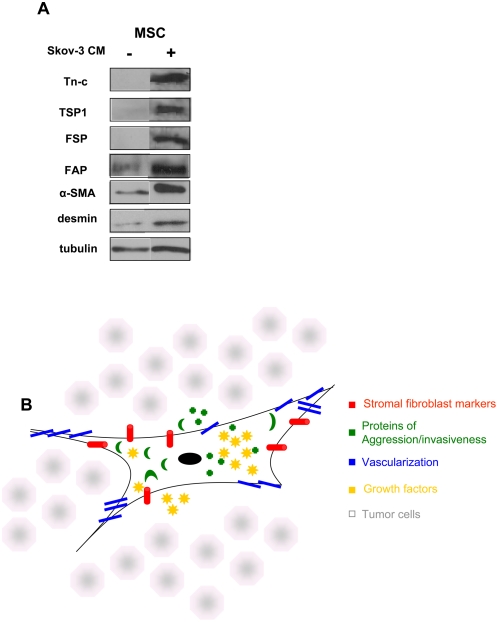
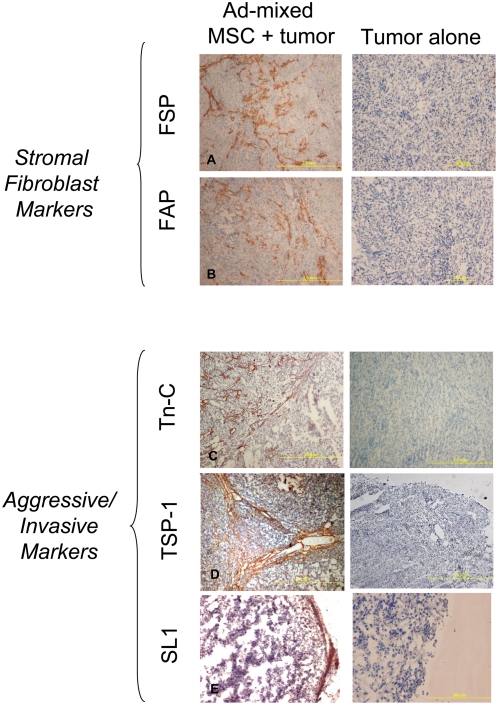
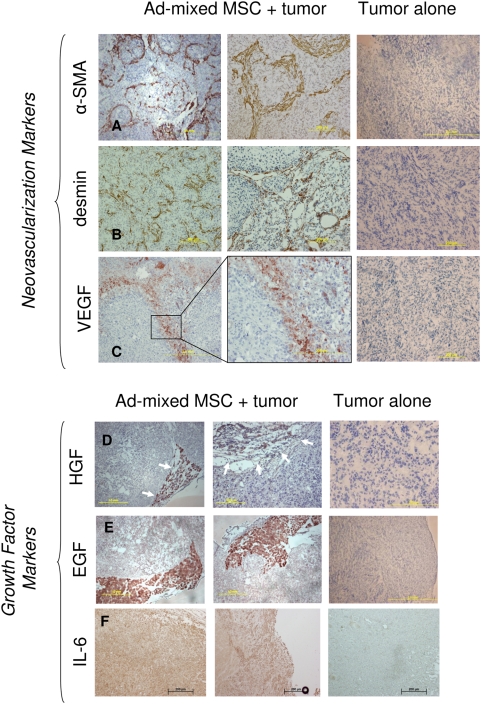
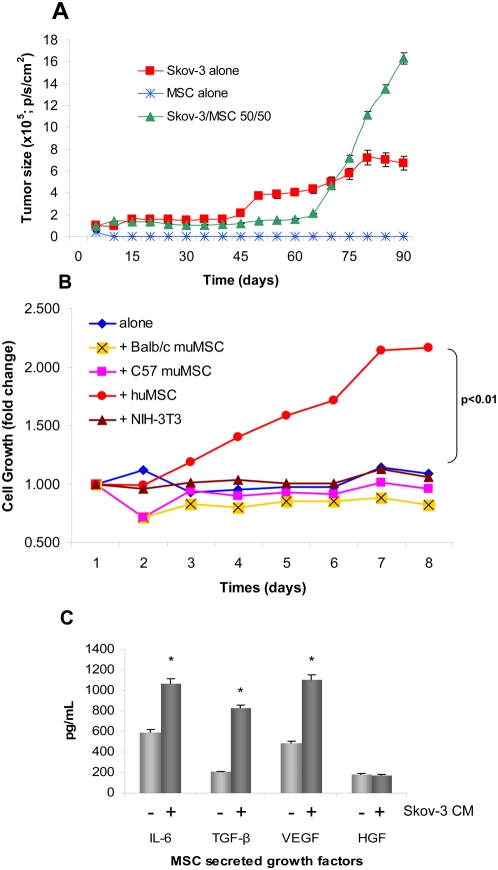
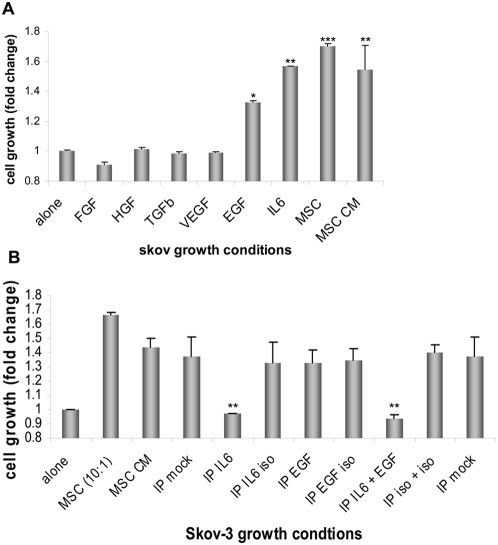
BACKGROUND: Tumor associated fibroblasts (TAF), are essential for tumor progression providing both a functional and structural supportive environment. TAF, known as activated fibroblasts, have an established biological impact on tumorigenesis as matrix synthesizing or matrix degrading cells, contractile cells, and even blood vessel associated cells. The production of growth factors, cytokines, chemokines, matrix-degrading enzymes, and immunomodulatory mechanisms by these cells augment tumor progression by providing a suitable environment. There are several suggested origins of the TAF including tissue-resident, circulating, and epithelial-to-mesenchymal-transitioned cells. METHODOLOGY/PRINCIPAL FINDINGS: We provide evidence that TAF are derived from mesenchymal stem cells (MSC) that acquire a TAF phenotype following exposure to or systemic recruitment into adenocarcinoma xenograft models including breast, pancreatic, and ovarian. We define the MSC derived TAF in a xenograft ovarian carcinoma model by the immunohistochemical presence of 1) fibroblast specific protein and fibroblast activated protein; 2) markers phenotypically associated with aggressiveness, including tenascin-c, thrombospondin-1, and stromelysin-1; 3) production of pro-tumorigenic growth factors including hepatocyte growth factor, epidermal growth factor, and interleukin-6; and 4) factors indicative of vascularization, including alpha-smooth muscle actin, desmin, and vascular endothelial growth factor. We demonstrate that under long-term tumor conditioning in vitro, MSC express TAF-like proteins. Additionally, human MSC but not murine MSC stimulated tumor growth primarily through the paracrine production of secreted IL6. CONCLUSIONS/SIGNIFICANCE: Our results suggest the dependence of in vitro Skov-3 tumor cell proliferation is due to the presence of tumor-stimulated MSC secreted IL6. The subsequent TAF phenotype arises from the MSC which ultimately promotes tumor growth through the contribution of microvascularization, stromal networks, and the production of tumor-stimulating paracrine factors.
Overview
The claims and statistics of this paper haven’t been checked yet.
Free: it reads the open-access text and checks the first 5 claims that cite a source we can check. Create a free account to check every claim.
Integrity signals
Registry
Cites
Statistics
Figures
Verification
Claims the paper makes
The claims and statistics of this paper haven’t been checked yet.
Free: it reads the open-access text and checks the first 5 claims that cite a source we can check. Create a free account to check every claim.
Claims other papers make about this one
Each is checked against this paper’s own text: does it say what the citing paper says it does?
The source backs part of the claim, not all of it — or backs it for a different population, condition or comparison.
In the citing paper
“Secretion of elevated levels of IL-6 by MSC has been detected upon interaction with malignant cells in several epithelial, hematopoietic and mesenchymal cancers (Table 2) [43, 69, 76, 77, 82, 115–119].”
From Mesenchymal stem cell secretome and regenerative therapy after cancer (2013) · cites this paper as [82]
Experimental — accuracy not yet measuredThe source backs part of the claim, not all of it — or backs it for a different population, condition or comparison.
In the citing paper
“Another mechanism that could increase the aggressiveness of a tumour is the potential differentiation of MSCs to tumour associated fibroblasts that are capable of increasing neovascularization within the tumour stroma and the metastatic rate [76], [77].”
From Mesenchymal stromal cells for bone sarcoma treatment: Roadmap to clinical practice (2019) · cites this paper as [77]
Experimental — accuracy not yet measuredThe cited source says what the claim attributes to it.
In the citing paper
“There they can potentiate further tumorigenesis via differentiation into tumor-nurturing stroma (TAF, myofibroblasts) [82, 104], direct cell contact interaction with cancer cells [105, 106] or release of paracrine factors (Table 2).”
From Mesenchymal stem cell secretome and regenerative therapy after cancer (2013) · cites this paper as [82]
Self-check
Percentages, sums and reported differences re-computed from the paper’s own numbers.
The self-check needs the paper’s full text.
Citations
Cites
Dominici, M., Le Blanc, K., Mueller, I., Slaper-Cortenbach, I., Marini, F. C., Krause, D. S., Deans, R. J., Keating, A., Prockop, D. J., & Horwitz, E. M. (2006) · Cytotherapy · doi:10.1080/14653240600855905 · Cited by 17,766
Self-citationKalluri, R., & Zeisberg, M. (2006) · Nature Reviews Cancer · doi:10.1038/nrc1877 · Cited by 4,538 · cited 1×
“The second characteristic is the degree of expression of the proteins of ‘‘aggression’’ such as SL-1, otherwise known as MMP3, a degradative enzyme highly expressed by fibroblasts [42] and utilized in tissue remodeling by TAF [21].”
BackgroundTumors: Wounds That Do Not Heal
Flier, J. S., Underhill, L. H., & Dvorak, H. F. (1986) · New England Journal of Medicine · doi:10.1056/nejm198612253152606 · Cited by 4,391 · cited 1×
“The tropism of MSC for tumors is thought to be due to similarity in factors secreted by wounds and tumors [13], substantiating the concept that tumors are ‘‘wounds that never heal’’ [14,15].”
BackgroundMesenchymal stem cells within tumour stroma promote breast cancer metastasis
Karnoub, A. E., Dash, A. B., Vo, A. P., Sullivan, A., Brooks, M. W., Bell, G. W., Richardson, A. L., Polyak, K., Tubo, R., & Weinberg, R. A. (2007) · Nature · doi:10.1038/nature06188 · Cited by 3,206 · cited 1×
“[33].”
Vascular Channel Formation by Human Melanoma Cells in Vivo and in Vitro: Vasculogenic Mimicry
Maniotis, A. J., Folberg, R., Hess, A., Seftor, E. A., Gardner, L. M. G., Pe'er, J., Trent, J. M., Meltzer, P. S., & Hendrix, M. J. C. (1999) · The American Journal of Pathology · doi:10.1016/s0002-9440(10)65173-5 · Cited by 2,043 · cited 1×
“Typically, the cells associated with the abnormal, tumorassociated, fibrovascular septa are not the archetypal vascular endothelial cells classified by factor VIII, CD31 and CD34, but instead are networks consisting of collagen and laminin subtypes in addition to activated fibroblasts and macrophages [45].”
BackgroundMesenchymal Stem Cells Can Be Differentiated Into Endothelial Cells In Vitro
Oswald, J., Boxberger, S., Jørgensen, B., Feldmann, S., Ehninger, G., Bornhäuser, M., & Werner, C. (2004) · STEM CELLS · doi:10.1634/stemcells.22-3-377 · Cited by 1,317 · cited 1×
“a-SMA positivity has been used previously to identify differentiated MSC [44].”
MethodDevelopment of a self-inactivating lentivirus vector
Miyoshi, H., Blömer, U., Takahashi, M., Gage, F. H., & Verma, I. M. (1998) · Journal of Virology · doi:10.1128/jvi.72.10.8150-8157.1998 · Cited by 1,196 · cited 1×
“Skov-3 tumor cells were stably transduced using a lentivirus expressing red fluorescent protein and renilla luciferase (rLuc) [56,57].”
MethodHuman Bone Marrow–Derived Mesenchymal Stem Cells in the Treatment of Gliomas
Nakamizo, A., Marini, F., Amano, T., Khan, A., Studeny, M., Gumin, J., Chen, J., Hentschel, S., Vecil, G., Dembinski, J., et al. (2005) · Cancer Research · doi:10.1158/0008-5472.can-04-1874 · Cited by 1,035 · cited 2×
“In those and subsequent studies, we demonstrated that MSC, administered intravenously, were able to integrate and persist within tumor stroma of pre-established human melanoma, breast cancer and glioma xenografts [11,12,16].”
BackgroundSelf-citationPeister, A., Mellad, J. A., Larson, B. L., Hall, B. M., Gibson, L. F., & Prockop, D. J. (2004) · Blood · doi:10.1182/blood-2003-09-3070 · Cited by 994 · cited 1×
“Murine MSC (mMSC) cell lines from C57/B6, balb/C were isolated as described previously [55] Fibroblast 3T3 cells and mMSC were cultured in alpha-MEM containing 20% FBS and 10% LPS.”
MethodSelf-citation(2002) · PubMed · Cited by 903
Self-citation
Research works printed but not linked: 1
- Studeny M Marini FC Zompetta C Champlin RE Filder IJ 2001 Bone marrow derived mesenchymal stem cells serve as precursors for stromal fibroblasts in malignant tumors and show potential for cancer therapy. Blood 98
Cited by
Items 101–200 of 891
Jia, C.-C., Wang, T.-T., Liu, W., Fu, B.-S., Hua, X., Wang, G.-Y., Li, T.-J., Li, X., Wu, X.-Y., Tai, Y., et al. (2013) · PLoS ONE · doi:10.1371/journal.pone.0063243 · Cited by 155
Cell Carriers for Oncolytic Viruses: Fed Ex for Cancer Therapy
Willmon, C., Harrington, K., Kottke, T., Prestwich, R., Melcher, A., & Vile, R. (2009) · Molecular Therapy · doi:10.1038/mt.2009.194 · Cited by 167
Reciprocal cellular cross-talk within the tumor microenvironment promotes oncolytic virus activity
Ilkow, C. S., Marguerie, M., Batenchuk, C., Mayer, J., Ben Neriah, D., Cousineau, S., Falls, T., Jennings, V. A., Boileau, M., Bellamy, D., et al. (2015) · Nature Medicine · doi:10.1038/nm.3848 · Cited by 165
Galland, S., & Stamenkovic, I. (2020) · The Journal of Pathology · doi:10.1002/path.5357 · Cited by 165
“[17] Bone marrow Human Ovarian cancer (‘SKOV-3’ cell line) Promoting IL-6; transition to CAF”
BackgroundMesenchymal Stem Cells and Cancer: Clinical Challenges and Opportunities
Lin, W., Huang, L., Li, Y., Fang, B., Li, G., Chen, L., & Xu, L. (2019) · BioMed Research International · doi:10.1155/2019/2820853 · Cited by 165
“Also, increasing evidences suggest that MSCs promote tumor angiogenesis through their potential to differentiate into pericytes or endothelial-like cells as well as by their secretion of trophic factors and cytokines, proangiogenic factors, growth factors, and plasminogen activator [42, 43].”
BackgroundSecchiero, P., Zorzet, S., Tripodo, C., Corallini, F., Melloni, E., Caruso, L., Bosco, R., Ingrao, S., Zavan, B., & Zauli, G. (2010) · PLoS ONE · doi:10.1371/journal.pone.0011140 · Cited by 148
Katanov, C., Lerrer, S., Liubomirski, Y., Leider-Trejo, L., Meshel, T., Bar, J., Feniger-Barish, R., Kamer, I., Soria-Artzi, G., Kahani, H., et al. (2015) · Stem Cell Research & Therapy · doi:10.1186/s13287-015-0080-7 · Cited by 138
“Such MSCs, originating in bone marrow (BM) or adipose tissues generally have pro-cancerous effects that promote malignancy in many tumor systems, including breast cancer [5-12].”
BackgroundPenfornis, P., Vallabhaneni, K. C., Whitt, J., & Pochampally, R. (2016) · International Journal of Cancer · doi:10.1002/ijc.29417 · Cited by 154
Targeting fibroblast activation protein in cancer ndash Prospects and caveats
Sedo, A. (2018) · Frontiers in Bioscience · doi:10.2741/4682 · Cited by 161
“It has been further shown that FAP-expressing stromal cells are a major source of growth factors including hepatocyte growth factor (HGF), IL-6, IL-11, epidermal growth factor (EGF), fibroblast growth factor (FGF) 1, FGF2 or transforming growth factor (TGF) beta (111, 125, 137-139).”
BackgroundHaga, H., Yan, I. K., Takahashi, K., Wood, J., Zubair, A., & Patel, T. (2015) · Journal of Extracellular Vesicles · doi:10.3402/jev.v4.24900 · Cited by 159
Human mesenchymal stem cells play a dual role on tumor cell growth in vitro and in vivo
Li, L., Tian, H., Yue, W., Zhu, F., Li, S., & Li, W. (2011) · Journal of Cellular Physiology · doi:10.1002/jcp.22511 · Cited by 148
“…hMSCs favor tumorigenesis and tumor growth in vivo by several means, including differentiating into tumor stromal fibroblasts (Studeny et al., 2004; Spaeth et al., 2009), promoting tumor vessel formation (Galmiche et al., 1993; Al-Khaldi et al., 2003; Hung et al., 2005; Zhu et al., 2006; Liu et…”
BackgroundCancer stem cell niche models and contribution by mesenchymal stroma/stem cells
Melzer, C., von der Ohe, J., Lehnert, H., Ungefroren, H., & Hass, R. (2017) · Molecular Cancer · doi:10.1186/s12943-017-0595-x · Cited by 148
“At tumor sites, MSC can differentiate into cancer-associated fibroblasts (CAFs) which in turn favor tumor development [97, 98].”
BackgroundYan, X., Fu, C., Chen, L., Qin, J., Zeng, Q., Yuan, H., Nan, X., Chen, H., Zhou, J., Lin, Y.-L., et al. (2011) · Breast Cancer Research and Treatment · doi:10.1007/s10549-011-1577-0 · Cited by 157
“BM-MSCs can be induced to differentiate into myofibroblast-like cells that support tumorigenesis by prolonged exposure to tumor cells in vitro [6].”
Ovarian cancer stem cells: Working towards the root of stemness
Foster, R., Buckanovich, R. J., & Rueda, B. R. (2012) · Cancer Letters · doi:10.1016/j.canlet.2012.10.023 · Cited by 157
Multipotent Mesenchymal Stromal Cell Therapy and Risk of Malignancies
Casiraghi, F., Remuzzi, G., Abbate, M., & Perico, N. (2012) · Stem Cell Reviews and Reports · doi:10.1007/s12015-011-9345-4 · Cited by 160
“Human ovarian carcinoma BM/human Immunodeficient mice 1:1 Promoting Differentiation in TAF [82]”
InfluentialObesity and gastrointestinal cancer: the interrelationship of adipose and tumour microenvironments
O'Sullivan, J. N., Lysaght, J., Donohoe, C. L., & Reynolds, J. V. (2018) · Nature Reviews Gastroenterology & Hepatology · doi:10.1038/s41575-018-0069-7 · Cited by 157
Roles of the CXCL8-CXCR1/2 Axis in the Tumor Microenvironment and Immunotherapy
Han, Z., Li, Y.-B., Yang, L., Cheng, H., Liu, X., & Chen, H. (2021) · Molecules · doi:10.3390/molecules27010137 · Cited by 155
“CAFs can also derive from multiple resident precursors, such as smooth muscle cells or mesenchymal stem cells [39].”
BackgroundJena, B. C., Sarkar, S., Rout, L., & Mandal, M. (2021) · Cancer Letters · doi:10.1016/j.canlet.2021.08.002 · Cited by 152
Pancreatic cancer stromal biology and therapy
Xie, D., & Xie, K. (2015) · Genes & Diseases · doi:10.1016/j.gendis.2015.01.002 · Cited by 138
Bone marrow cells repair cigarette smoke-induced emphysema in rats
Huh, J. W., Kim, S.-Y., Lee, J. H., Lee, J.-S., Van Ta, Q., Kim, M., Oh, Y.-M., Lee, Y.-S., & Lee, S.-D. (2011) · American Journal of Physiology-Lung Cellular and Molecular Physiology · doi:10.1152/ajplung.00253.2010 · Cited by 143
Gandellini, P., Andriani, F., Merlino, G., D’Aiuto, F., Roz, L., & Callari, M. (2015) · Seminars in Cancer Biology · doi:10.1016/j.semcancer.2015.08.008 · Cited by 149
Stroma in breast development and disease
Arendt, L. M., Rudnick, J. A., Keller, P. J., & Kuperwasser, C. (2010) · Seminars in Cell & Developmental Biology · doi:10.1016/j.semcdb.2009.10.003 · Cited by 134
“In addition, bone marrow derived-mesenchymal stem cells (MSCs) have also been shown to differentiate into αSMA positive cells with CAF-like characteristics [72,73].”
BackgroundLi, L., Piontek, K., Ishida, M., Fausther, M., Dranoff, J. A., Fu, R., Mezey, E., Gould, S. J., Fordjour, F. K., Meltzer, S. J., et al. (2017) · Hepatology · doi:10.1002/hep.28735 · Cited by 139
Coffman, L. G., Choi, Y.-J., McLean, K., Allen, B. L., di Magliano, M. P., & Buckanovich, R. J. (2016) · Oncotarget · doi:10.18632/oncotarget.6870 · Cited by 127
“Similarly, MSCs can impact the host cells in the tumor microenvironment promoting ovarian cancer growth via increased angiogenesis [52] and suppression of the anti-tumor immune responses [53].”
BackgroundRojewski, M., Fekete, N., Baila, S., Nguyen, K., Furst, D. E., Antwiler, D., Dausend, J., Kreja, L., Ignatius, A. A., Sensebé, L., et al. (2012) · Cell Transplantation · doi:10.3727/096368912x657990 · Cited by 142
Zhang, Q., Yamaza, T., Kelly, A., Shi, S., Wang, S., Brown, J., Wang, L., French, S. W., Shi, S., & Le, A. D. (2009) · PLoS ONE · doi:10.1371/journal.pone.0007798 · Cited by 140
“In response to the unique tumor microenvironment of chronic inflammation [77,78], BMMSCs may acquire the cancer-associated fibroblast (CAF) phenotype and subsequently promote tumor growth and metastasis via the production of pro-angiogenic and tumor stimulating paracrine factors [79,80].”
BackgroundMesenchymal stem cells: From regeneration to cancer
Li, P., Gong, Z., Shultz, L. D., & Ren, G. (2019) · Pharmacology & Therapeutics · doi:10.1016/j.pharmthera.2019.04.005 · Cited by 134
“This process was largely dependent on the TGFβ/Smad signaling axis (Barcellos-de-Souza et al., 2016; Mishra et al., 2008; Quante et al., 2011; Shangguan et al., 2012; Spaeth et al., 2009; Spaeth et al., 2013).”
BackgroundMesenchymal Stem Cells in the Tumor Microenvironment
Atiya, H. I., Frisbie, L. G., Pressimone, C. A., & Coffman, L. G. (2020) · Advances in experimental medicine and biology · doi:10.1007/978-3-030-37184-5_3 · Cited by 138
Tumor organoid models in precision medicine and investigating cancer-stromal interactions
Xu, R., Zhou, X., Wang, S., & Trinkle, C. (2021) · Pharmacology & Therapeutics · doi:10.1016/j.pharmthera.2020.107668 · Cited by 134
The roles of tumor- and metastasis-promoting carcinoma-associated fibroblasts in human carcinomas
Mezawa, Y., & Orimo, A. (2016) · Cell and Tissue Research · doi:10.1007/s00441-016-2471-1 · Cited by 139
“CAFs originate from progenitor cells including resident fibroblasts, mesenchymal stem cells (MSCs), hepatic and pancreatic stellate cells and endothelial cells (Direkze et al. 2004; Erez et al. 2010; Ishii et al. 2003; Jaster 2004; Jeon et al. 2008; Kojima et al. 2010; Mishra et al. 2008; Quante et al. 2011; Ronnov-Je…”
BackgroundOhkouchi, S., Block, G. J., Katsha, A. M., Kanehira, M., Ebina, M., Kikuchi, T., Saijo, Y., Nukiwa, T., & Prockop, D. J. (2012) · Molecular Therapy · doi:10.1038/mt.2011.259 · Cited by 120
New and Paradoxical Roles of Matrix Metalloproteinases in the Tumor Microenvironment
Noël, A., Gutiérrez‐Fernández, A., Sounni, N. E., Behrendt, N., Maquoi, E., Lund, I. K., Cal, S., Høyer‐Hansen, G., & López-Otín, C. (2012) · Frontiers in Pharmacology · doi:10.3389/fphar.2012.00140 · Cited by 133
“…switch” (Bergers et al., 2000), quantitative and qualitative changes in the extracellular matrix (ECM), and the recruitment of resident fibroblastic cells (Kalluri and Zeisberg, 2006), bone marrow-derived mesenchymal stem cells (Spaeth et al., 2009) and inflammatory cells (Coussens and Werb, 2001).”
BackgroundHOXA9 promotes ovarian cancer growth by stimulating cancer-associated fibroblasts
Ko, S. Y., Barengo, N., Ladanyi, A., Lee, J.-S., Marini, F., Lengyel, E., & Naora, H. (2012) · Journal of Clinical Investigation · doi:10.1172/jci62229 · Cited by 132
“MSCs are another potential source of CAFs in many types of tumors, including EOC (14, 16, 17, 22).”
Self-citationLi, W., Liu, Q., Shi, J., Xu, X. M., & Xu, J. (2023) · Frontiers in Immunology · doi:10.3389/fimmu.2023.1074863 · Cited by 132
“On the one hand, MSCs can promote tumor initiation and development by: 1) suppressing the immune response and enhancing the invasiveness of tumor cells (73); 2) secreting multiple trophic factors and cytokines to promote tumor vascularization (74); 3) increasing tumor cell drug resistance by paracrine mechanisms (75);…”
BackgroundWang, H., Wang, T., Yan, S., Tang, J., Zhang, Y., Wang, L., Xu, H., & Tu, C. (2024) · Molecular Cancer · doi:10.1186/s12943-024-02183-9 · Cited by 133
“Cancer cells directly engage with the TME and interact with non-cancerous elements, including infiltrating immune cells like TANs and TAMs, CAFs, and the extracellular matrix [101, 102].”
Niess, H., Bao, Q., Conrad, C., Zischek, C., Notohamiprodjo, M., Schwab, F., Schwarz, B., Huss, R., Jauch, K.-W., Nelson, P. J., et al. (2011) · Annals of Surgery · doi:10.1097/sla.0b013e3182368c4f · Cited by 119
Advances in mesenchymal stem cell-mediated gene therapy for cancer
Dwyer, R. M., Khan, S., Barry, F. P., O'Brien, T., & Kerin, M. J. (2010) · Stem Cell Research & Therapy · doi:10.1186/scrt25 · Cited by 115
“MSCs were shown to integrate into the tumour stroma and were demonstrated to exert their eff ects at least partly through secretion of paracrine factors including CCL5, IL-6 and SDF-1α [64,65, 68 ].”
BackgroundInfluentialRole of cancer-associated fibroblasts in breast cancer development and prognosis
Aboussekhra, A. (2011) · The International Journal of Developmental Biology · doi:10.1387/ijdb.113362aa · Cited by 119
“MSCs are known to migrate to and engraft at tumor sites (El-Haibi and Karnoub, 2010; Spaeth et al., 2009).”
BackgroundLing, X., Marini, F. C., Konopleva, M. Y., Schober, W. D., Shi, Y., Burks, J. K., Clise-Dwyer, K., Wang, R., Zhang, W., Yuan, X., et al. (2010) · Cancer Microenvironment · doi:10.1007/s12307-010-0041-8 · Cited by 127
“Recently, it is also reported that MSC may involve in transition to tumorassociated fibroblasts and contributes to fibrovascular network expansion and tumor progression [ 52 ].”
BackgroundSelf-citationBone-marrow-derived mesenchymal stem cell therapy for neurodegenerative diseases
Sadan, O., Melamed, E., & Offen, D. (2009) · Expert Opinion on Biological Therapy · doi:10.1517/14712590903321439 · Cited by 116
“A sub-population of cells that are attracted by chemokines and support epithelial tumor growth and progression have been characterized as bonemarrow-derived MSCs, termed carcinoma-associated fibroblasts (CAFs) [114-116].”
BackgroundMesenchymal Stem Cells in Tissue Growth and Repair
Kalinina, N., Sysoeva, V., Rubina, K. A., Parfenova, Y. V., & Va, T. (2011) · Acta Naturae · doi:10.32607/20758251-2011-3-4-30-37 · Cited by 124
Mesenchymal stem cells in preclinical cancer cytotherapy: a systematic review
Christodoulou, I., Goulielmaki, M., Devetzi, M., Panagiotidis, M., Koliakos, G., & Zoumpourlis, V. (2018) · Stem Cell Research & Therapy · doi:10.1186/s13287-018-1078-8 · Cited by 122
“Support of tumor vasculature and fibrovascular network Α significant amount of in vivo experimental data, including labeled MSC tracking, support the contribution of MSC to the tumor vascular and fibrovascular network, either directly by differentiating into pericytes, fibroblasts, and myofibrobasts that transform int…”
BackgroundResultInfluentialDEC1 and DEC2 Crosstalk between Circadian Rhythm and Tumor Progression
Sato, F., BHAWAL, U. K., Yoshimura, T., & Muragaki, Y. (2015) · Journal of Cancer · doi:10.7150/jca.13748 · Cited by 122
“MSCs interact with tumor cells, promoting tumor progression [37, 38].”
BackgroundDe Luca, A., Gallo, M., Aldinucci, D., Ribatti, D., Lamura, L., D'Alessio, A., De Filippi, R., Pinto, A., & Normanno, N. (2011) · Journal of Cellular Physiology · doi:10.1002/jcp.22548 · Cited by 113
“These cells differ from a normal fibroblastic phenotype by exhibiting specificmyofibroblastic characteristics and representing a richer source of tumor-growth-promoting factors, including pro-angiogenic molecules (Mishra et al., 2008; Spaeth et al., 2009).”
BackgroundTGFβ pathway inhibition in the treatment of non-small cell lung cancer
Eser, P. Ö., & Janne, P. A. (2017) · Pharmacology & Therapeutics · doi:10.1016/j.pharmthera.2017.11.004 · Cited by 122
Lis, R., Touboul, C., Mirshahi, P., Ali, F., Mathew, S., Nolan, D. J., Maleki, M., Abdalla, S. A., Raynaud, C. M., Querleu, D., et al. (2011) · International Journal of Cancer · doi:10.1002/ijc.25619 · Cited by 113
“Indeed, co-culture of MSC with ovarian cancer cell lines induced the expression of tumor associated fibroblast markers such as TnC, TSP-a, FSP and increased the expression of alpha-SMA, FAP and desmin.(38,39) We therefore used the TAMC isolated from ovarian cancer aggregates.”
MethodLi, W., Zhou, Z., Zhou, X., Khoo, B. L., Gunawan, R., Chin, Y. R., Zhang, L., Yi, C., Guan, X., & Yang, M. (2023) · Advanced Healthcare Materials · doi:10.1002/adhm.202202609 · Cited by 119
The future of mesenchymal stem cell-based therapeutic approaches for cancer – From cells to ghosts
Mohr, A., & Zwacka, R. M. (2017) · Cancer Letters · doi:10.1016/j.canlet.2017.11.025 · Cited by 120
Regulation of Ovarian Cancer Prognosis by Immune Cells in the Tumor Microenvironment
Drakes, M. L., & Stiff, P. J. (2018) · Cancers · doi:10.3390/cancers10090302 · Cited by 121
“In an epithelial ovarian-cancer (EOC) xenograft model, human bone-marrow mesenchymal stem cells were shown to give rise to CAFs that produced IL-6 to enhance tumor growth [158].”
BackgroundFerrand, J., Noël, D., Lehours, P., Prochazkova‐Carlotti, M., Chambonnier, L., Ménard, A., Mégraud, F., & Varon, C. (2011) · PLoS ONE · doi:10.1371/journal.pone.0019569 · Cited by 118
“In addition, the presence of MSC in the tumoral environment could also favor cancer development by differentiation into tumor-associated fibroblasts contributing to angiogenesis and metastasis formation [28–30], although this role remains controversial [31–33].”
Recent discoveries concerning the tumor - mesenchymal stem cell interactions
Lazennec, G., & Lam, P. Y. (2016) · Biochimica et Biophysica Acta (BBA) - Reviews on Cancer · doi:10.1016/j.bbcan.2016.10.004 · Cited by 117
“Co-culture of MSCs with tumor cells led to elevated production of - 15 - angiogenic factors such as VEGF and IL-6 [27].”
BackgroundInfluentialDe Boeck, A., Hendrix, A., Maynard, D., Van Bockstal, M., Daniëls, A., Pauwels, P., Gespach, C., Bracke, M., & De Wever, O. (2013) · PROTEOMICS · doi:10.1002/pmic.201200179 · Cited by 105
“In an ovarian cancer model, bone marrow-derived MSC were shown to ultimately lead to an enhancement of tumor growth via differentiation into myofibroblasts, which supported angiogenesis and tumor growth [9].”
BackgroundInfluence of BMI on Level of Circulating Progenitor Cells
Bellows, C. F., Zhang, Y., Simmons, P. J., Khalsa, A. S., & Kolonin, M. G. (2011) · Obesity · doi:10.1038/oby.2010.347 · Cited by 105
“Although the exact molecular networks driving migration of cells in disease and obesity are unknown at present, it is likely that inflammation and hypoxia signals are important (30).”
BackgroundRole of MSC in the Tumor Microenvironment
Hass, R. (2020) · Cancers · doi:10.3390/cancers12082107 · Cited by 116
“By contrast, tumor-promoting activities of MSC evolve following adaptation to the tumor environment and transformation into CAFs, which alters the tumor stroma and contributes to enhanced tumor growth [28].”
BackgroundTumor-educated mesenchymal stem cells promote pro-metastatic phenotype
Hill, B. S., Pelagalli, A., Passaro, N., & Zannetti, A. (2017) · Oncotarget · doi:10.18632/oncotarget.20265 · Cited by 104
Frassanito, M. A., Rao, L., Moschetta, M., Ria, R., Marzo, L. D., Luisi, A. D., Racanelli, V., Catacchio, I., Berardi, S., Basile, A., et al. (2013) · Leukemia · doi:10.1038/leu.2013.254 · Cited by 116
Mesenchymal stem cell-released oncolytic virus: an innovative strategy for cancer treatment
Darestani, N. G., Rudova, A., Al-Gazally, M. E., Zekiy, A. O., Ansari, M. J., Zabibah, R. S., Jawad, M. A., Al-Shalah, S. A. J., Rizaev, J. A., Alnassar, Y. S., et al. (2023) · Cell Communication and Signaling · doi:10.1186/s12964-022-01012-0 · Cited by 115
Bianchi, G., Borgonovo, G., Pistoia, V., & Raffaghello, L. (2011) · PubMed · doi:10.14670/hh-26.941 · Cited by 115
Jotzu, C., Alt, E., Welte, G., Li, J., Hennessy, B. T., Devarajan, E., Krishnappa, S., Pinilla, S., Droll, L., & Song, Y.-H. (2010) · Analytical Cellular Pathology · doi:10.1155/2010/695162 · Cited by 114
Nikoo, S., Ebtekar, M., Jeddi‐Tehrani, M., Shervin, A., Bozorgmehr, M., Vafaei, S., Kazemnejad, S., & Zarnani, A.-H. (2014) · Molecular Human Reproduction · doi:10.1093/molehr/gau044 · Cited by 114
“…fact, there is evidence suggesting that through pathways such as interaction with tumor cells and production of soluble factors (e.g. cytokines), stromal cells provide a microenvironment suitable for development and metastasis of epithelial ovarian cancers (Rafii et al., 2008; Spaeth et al., 2009).”
BackgroundMesenchymal stem cells at the intersection of cell and gene therapy
Myers, T. J., Granero‐Moltó, F., Longobardi, L., Li, T., Yan, Y., & Spagnoli, A. (2010) · Expert Opinion on Biological Therapy · doi:10.1517/14712598.2010.531257 · Cited by 114
“In this model MSCs were localized to the stromal periphery of the tumor suggesting that MSCs may also affect the tumor niche by adding structural support for tumor proliferation by differentiation into fibroblasts [187].”
Du, T., Ju, G., Wu, S., Cheng, Z., Cheng, J., Zou, X., Zhang, G., Miao, S., Liu, G., & Zhu, Y. (2014) · PLoS ONE · doi:10.1371/journal.pone.0096836 · Cited by 100
“Immunosuppressive action [6,7], trans-differentiation toward the direction of mesenchymal cells [8,9] as well as various bioactive factors secreted from MSCs [10] have been proposed to be potential effectors.”
BackgroundParacrine tumor signaling induces transdifferentiation of surrounding fibroblasts
Heneberg, P. (2015) · Critical Reviews in Oncology/Hematology · doi:10.1016/j.critrevonc.2015.09.008 · Cited by 110
“Paracrine signaling of the tumor can induce their homing, survival and differentiation into CAFs or myofibroblasts, fibrocytes or pericytes (Spaeth et al., 2009; Quante et al., 2011; Ogawa et al., 2006).”
BackgroundCancer-Associated Fibroblasts as Targets for Immunotherapy
Kakarla, S., Song, X.-T., & Gottschalk, S. (2012) · Immunotherapy · doi:10.2217/imt.12.112 · Cited by 103
The Role of Adipose-Derived Stem Cells in Breast Cancer Progression and Metastasis
Schweizer, R., Tsuji, W., Gorantla, V. S., Marra, K. G., Rubin, J. P., & Plock, J. A. (2015) · Stem Cells International · doi:10.1155/2015/120949 · Cited by 110
“BM-MSCs and ADSCs have been shown to differentiate into CAFs in vivo and in vitro [103, 105–109].”
BackgroundStromal Cell PD-L1 Inhibits CD8+ T-cell Antitumor Immune Responses and Promotes Colon Cancer
O’Malley, G., Treacy, O., Lynch, K., Naicker, S. D., Leonard, N. A., Lohan, P., Dunne, P. D., Ritter, T., Egan, L. J., & Ryan, A. E. (2018) · Cancer Immunology Research · doi:10.1158/2326-6066.cir-17-0443 · Cited by 109
Hallmarks in colorectal cancer: Angiogenesis and cancer stem-like cells
Mathonnet, M., Perraud, A., Christou, N., Akil, H., Mélin, C., Battu, S., Jauberteau, M., & Denizot, Y. (2014) · World Journal of Gastroenterology · doi:10.3748/wjg.v20.i15.4189 · Cited by 109
Buoso, E., Masi, M., Racchi, M., & Corsini, E. (2020) · International Journal of Molecular Sciences · doi:10.3390/ijms21239229 · Cited by 108
Toward Brain Tumor Gene Therapy Using Multipotent Mesenchymal Stromal Cell Vectors
Bexell, D., Scheding, S., & Bengzon, J. (2010) · Molecular Therapy · doi:10.1038/mt.2010.58 · Cited by 109
Ogata, K., Katagiri, W., Osugi, M., Kawai, T., Sugimura, Y., Hibi, H., Nakamura, S., & Ueda, M. (2015) · Bone · doi:10.1016/j.bone.2015.01.011 · Cited by 107
“Some studies have reported that an intravenous injection of MSCs improved BRONJ [18,19], but tumorigenesis of the cells is also possible [20,21].”
BackgroundLevesque, C., & Nelson, P. S. (2017) · Cold Spring Harbor Perspectives in Medicine · doi:10.1101/cshperspect.a030510 · Cited by 107
“2010), recruitment of bone marrow derived progenitor cells (Ishii et al. 2003; Direkze et al. 2004; Spaeth et al. 2009; Quante et al. 2011; Zhang et al. 2013), or trans-differentiation from an endothelialmesenchymal (Zeisberg et al.”
BackgroundPeripheral glial cell differentiation from neurospheres derived from adipose mesenchymal stem cells
Radtke, C., Schmitz, B., Spies, M., Kocsis, J. D., & Vogt, P. M. (2009) · International Journal of Developmental Neuroscience · doi:10.1016/j.ijdevneu.2009.08.006 · Cited by 106
Tumor Engineering: The Other Face of Tissue Engineering
Ghajar, C. M., & Bissell, M. J. (2010) · Tissue Engineering Part A · doi:10.1089/ten.tea.2010.0135 · Cited by 96
Cancer Associated Fibroblasts: Naughty Neighbors That Drive Ovarian Cancer Progression
Dasari, S., Fang, Y., & Mitra, A. K. (2018) · Cancers · doi:10.3390/cancers10110406 · Cited by 103
“Similarly, CAFs were shown to be derived from mesenchymal stem cells in ovarian cancer and supported tumor growth through the secretion of the paracrine factor IL-6 [22].”
BackgroundRaghavan, S. A., Snyder, C. S., Wang, A., McLean, K., Zamarin, D., Buckanovich, R. J., & Mehta, G. (2020) · Cancers · doi:10.3390/cancers12082063 · Cited by 105
Wang, W., Zhong, W., Yuan, J., Yan, C., Hu, S., Tong, Y., Mao, Y., Hu, T., Zhang, B., & Song, G. (2015) · Oncotarget · doi:10.18632/oncotarget.5514 · Cited by 92
“Many reports described that MSCs can home and engraft to different types of solid tumors, such as breast [10, 11], prostate [12], lung [13], and ovarian [14].”
BackgroundMesenchymal Stem Cells Induce Directional Migration of Invasive Breast Cancer Cells through TGF-β
McAndrews, K. M., McGrail, D. J., Ravikumar, N., & Dawson, M. R. (2015) · Scientific Reports · doi:10.1038/srep16941 · Cited by 89
Shin, S. Y., Nam, J., Lim, Y., & Lee, Y. H. (2010) · Journal of Biological Chemistry · doi:10.1074/jbc.m110.128124 · Cited by 105
Song, L., Smith, M. A., Doshi, P., Sasser, K., Fulp, W., Altiok, S., & Haura, E. B. (2014) · Journal of Thoracic Oncology · doi:10.1097/jto.0000000000000193 · Cited by 97
CCL2/CCL5 secreted by the stroma induce IL-6/PYK2 dependent chemoresistance in ovarian cancer
Pasquier, J., Gosset, M., Geyl, C., Hoarau-Véchot, J., Chevrot, A., Pocard, M. D., Mirshahi, M., Lis, R., Rafii, A., & Touboul, C. (2018) · Molecular Cancer · doi:10.1186/s12943-018-0787-z · Cited by 103
“IL6 is an important cytokine in the ovarian cancer cytokine network [33].”
BackgroundRhodes, L. V., Antoon, J. W., Muir, S. E., Elliott, S., Beckman, B. S., & Burow, M. E. (2010) · Molecular Cancer · doi:10.1186/1476-4598-9-295 · Cited by 101
“This is most likely due to changes in the secretory profile of “activated” cells versus that of naïve cells [56].”
BackgroundResultBarrett, A. N., Fong, C., Subramanian, A., Liu, W., Feng, Y., Choolani, M. A., Biswas, A., Rajapakse, J. C., & Bongso, A. (2018) · Stem Cells and Development · doi:10.1089/scd.2018.0132 · Cited by 103
Cancer Associated Fibroblasts and Tumor Growth: Focus on Multiple Myeloma
Veirman, K. D., Rao, L., Bruyne, E. D., Menu, E., Valckenborgh, E. V., Riet, I. V., Frassanito, M. A., Marzo, L. D., Vacca, A., & Vanderkerken, K. (2014) · Cancers · doi:10.3390/cancers6031363 · Cited by 102
“Fibroblast specific protein 1 (FSP-1) [10,15] Alpha smooth muscle actin (αSma) [23] Vimentin [10,16] Podoplanin [14] Fibroblast activating protein (FAP) [9,17] Thrombospondin (Tsp-1) [10] Thy1 (CD90) [13] Tenascin C (TN-C) [10] Matrix metalloproteinase (MMP) [19] Neuron glial antigen 2 (NG2) [12] Periostin [20] Pallad…”
BackgroundSpecific inhibition of fibroblast activation protein (FAP)-alpha prevents tumor progression in vitro
Teichgräber, V., Monasterio, C., Chaitanya, K., Boger, R. J., Gordon, K., Dieterle, T., Jäger, D., & Bauer, S. (2015) · Advances in Medical Sciences · doi:10.1016/j.advms.2015.04.006 · Cited by 104
“cancerassociated fibroblasts (CAF) [2,3].”
Knoop, K., Kolokythas, M., Klutz, K., Willhauck, M. J., Wunderlich, N., Draganovici, D., Zach, C., Gildehaus, F., Böning, G., Göke, B., et al. (2011) · Molecular Therapy · doi:10.1038/mt.2011.93 · Cited by 101
Chen, J., Ji, T., Wu, D., Shi, J., Zhao, J., Lin, H. M., & Cai, X. (2019) · Cell Death and Disease · doi:10.1038/s41419-019-1622-1 · Cited by 101
Kučerová, L., Miklikova, S., Matúšková, M., Boháč, M., & Kozovská, Z. (2013) · BMC Cancer · doi:10.1186/1471-2407-13-535 · Cited by 102
“differentiate into tumor-associated fibroblasts [13-15] and even create a cancer stem cell niche [16] when exposed to tumor-conditioned medium.”
BackgroundMesenchymal stem cell signaling in cancer progression
Torsvik, A., & Bjerkvig, R. (2013) · Cancer Treatment Reviews · doi:10.1016/j.ctrv.2012.03.005 · Cited by 100
Babajani, A., Soltani, P., Jamshidi, E., Farjoo, M. H., & Niknejad, H. (2020) · Frontiers in Bioengineering and Biotechnology · doi:10.3389/fbioe.2020.00748 · Cited by 99
“Moreover, β-III tubulin isotype forms more dynamic microtubules during mitosis of MSCs, and its hyperdynamicity inhibits taxol effects on the division process (Stengel et al., 2010).”
BackgroundMesenchymal stem cells enhance lung cancer initiation through activation of IL-6/JAK2/STAT3 pathway
Hsu, H., Lin, J.-H., Hsu, T.-W., Su, K., Wang, C.-W., Yang, K., Chiou, S., & Hung, S. (2011) · Lung Cancer · doi:10.1016/j.lungcan.2011.07.001 · Cited by 99
Mesenchymal stem cell-secreted soluble signaling molecules potentiate tumor growth
Zhu, W., Huang, L., Li, Y., Qian, H., Shan, X., Yan, Y., Mao, F., Wu, X., & Xu, W. (2011) · Cell Cycle · doi:10.4161/cc.10.18.17638 · Cited by 97
“The stroma mainly consists of mesenchymal cell types, which are fibroblasts and myofibroblasts or tumor-associated fibroblasts (TAFs) which can be derived from MSCs.(6-9) The stromal cells are mobilized into the circulation and incorporated into the tumor microenvironment.”
BackgroundSpaeth, E. L., LaBaff, A. M., Toole, B. P., Klopp, A. H., Andreeff, M., & Marini, F. C. (2013) · Cancer Research · doi:10.1158/0008-5472.can-13-0087 · Cited by 97
“(7, 8) They are often referred to as activated (myo)fibroblasts or TAF and have been shown to originate from multiple sources including local tissue-derived fibroblasts, local tissuederived MSC (9), bone marrow-derived MSC (4), and cancer cells through the epithelial to mesenchymal transition (EMT)(10, 11).”
BackgroundSelf-citationSubramanian, A., Shu‐Uin, G., Kae‐Siang, N., Gauthaman, K., Biswas, A., Choolani, M. A., Bongso, A., & Chui-Yee, F. (2012) · Journal of Cellular Biochemistry · doi:10.1002/jcb.24057 · Cited by 97
“There are various cell types in the tumor microenvironment such as fibroblasts, endothelial cells, blood cells and pericytes, and these cells interact with the tumor cells via the secretion of cytokines, hormones, chemokines, and proteases [Spaeth et al., 2009].”
BackgroundResultInfluentialHendrayani, S., Al‐Khalaf, H. H., & Aboussekhra, A. (2014) · Journal of Biological Chemistry · doi:10.1074/jbc.m114.594044 · Cited by 96
Mhawech-Fauceglia, P., Yan, L., Sharifian, M., Ren, X., Liu, S., Kim, G., Gayther, S. A., Pejovic, T., & Lawrenson, K. (2015) · Cancer Microenvironment · doi:10.1007/s12307-014-0153-7 · Cited by 95
Tu, B., Zhu, J., Liu, S., Wang, L., Fan, Q., Hao, Y., Fan, C., & Tang, T.-T. (2016) · Oncotarget · doi:10.18632/oncotarget.10219 · Cited by 95
“Accumulating evidence suggests that CAFs/TAFs in the tumor microenvironment are derived from MSCs [24, 25].”
BackgroundMesenchymal Stem/Stromal Cells in Stromal Evolution and Cancer Progression
Cammarota, F., & Laukkanen, M. O. (2015) · Stem Cells International · doi:10.1155/2016/4824573 · Cited by 96
“Cancer-associated fibroblasts (CAFs) are derived from both mesenchymal stem/stromal cells and local fibroblasts [60, 65], thus supporting observations suggesting the presence of primitive undifferentiated MSCs even in advanced cancers.”
Construction of tumor organoids and their application to cancer research and therapy
Lv, J., Du, X., Wang, M., Su, J., Wei, Y., & Xu, C. (2024) · Theranostics · doi:10.7150/thno.91362 · Cited by 97
“Mesenchymal stem cells (MSCs) are postulated to differentiate into CAFs in the TME [35].”
BackgroundQiao, A., Gu, F., Guo, X., Zhang, X., & Fu, L. (2016) · Frontiers of Medicine · doi:10.1007/s11684-016-0431-5 · Cited by 95
Liew, L. C., Katsuda, T., Gailhouste, L., Nakagama, H., & Ochiya, T. (2017) · International Immunology · doi:10.1093/intimm/dxx002 · Cited by 89
Metadata
- Authors
- Spaeth, E. L., Dembinski, J. L., Sasser, A. K., Watson, K., Klopp, A., Hall, B., Andreeff, M., & Marini, F.
- Affiliations
- The University of Texas MD Anderson Cancer Center (US)
- Abigail Wexner Research Institute (US)
- Corresponding author
- Marini, Frank
- Venue
- PLoS ONE
- Publisher
- Public Library of Science (PLoS)
- Published
- 2009-04-07
- Volume
- 4
- Issue
- 4
- Pages
- e4992
- ISSN
- 1932-6203 (ISSN-L)
- PMC
- PMC2661372
- OpenAlex
- W1979704965
- Cited by
- 807
- References
- 56
- Citations by year
- 2026: 18 · 2025: 14 · 2024: 29 · 2023: 41 · 2022: 26 · 2021: 48 · 2020: 50 · 2019: 47 · 2018: 43 · 2017: 40 · 2016: 60 · 2015: 59 · 2014: 66 · 2013: 69 · 2012: 71
- FWCI
- 32.78
- Type
- journal article
- Language
- en
- Update notices
- correction (2013-03-19)
- Open access
- gold
- doi.org
- Locations
- PLoS ONE (publishedVersion, cc-by)
- PubMed Central (publishedVersion, cc-by)
- PubMed (publishedVersion)
- DOAJ (DOAJ: Directory of Open Access Journals) (submittedVersion, cc-by-sa)
- Figshare (submittedVersion, cc-by)
- Funders
- U.S. Department of Defense
- Susan G. Komen for the Cure
- National Cancer Institute (P50CA116199, CA-16672, CA-55164, R01CA109451, P01CA049639, 16672, P01CA055164, Ca-116199, RC1CA146381, BC083397, CA109451, P30CA016672, CA 49639)
- Topics
- Health Sciences › Medicine › Oncology › Cancer Cells and Metastasis
- Life Sciences › Biochemistry, Genetics and Molecular Biology › Cell Biology › Mesenchymal stem cell research
- Life Sciences › Biochemistry, Genetics and Molecular Biology › Molecular Biology › TGF-β signaling in diseases
- Keywords
- mesenchymal stem cells, cancer-associated fibroblasts, tumor progression, ovarian carcinoma, breast adenocarcinoma, pancreatic ductal adenocarcinoma, paracrine signaling, interleukin-6, microvascularization, tumor microenvironment, SKOV3 cells, xenograft models
- MeSH terms
- Animals, Cell Division, Female, Fibroblasts, Humans, Ovarian Neoplasms, Transplantation, Heterologous, Disease Progression, Cell Lineage, Mesenchymal Stem Cells
About these checks
Registry, retraction, Cites and statistics results are computed, not judged, with one exception: a printed reference that no index lists is read once by a model before it counts as a citation error. Claims are extracted by a model and kept only when their quote appears verbatim in the text; each cited source is then checked, with a model’s help, for whether it says what the claim relies on. Those verdicts can be wrong — read the claim’s quote and the cited source before relying on one.
Statistics and arithmetic are recomputed, not judged.
Confidence bands are shown only for fields calibrated on our annotated test set. None is calibrated yet, so no band is shown.
What counts as a claim ›How we measure confidence ›How we check this ›
Are you an author, or do you see a problem with this page? Request a review
Data sources
Bibliographic data: Semantic Scholar, OpenAlex, Crossref.
Contains information from the Semantic Scholar Academic Graph Datasets, made available under the ODC Attribution License (ODC-BY 1.0).
Semantic Scholar’s data is described in: Kinney, R., et al. (2023). The Semantic Scholar Open Data Platform. arXiv:2301.10140.
